Skip to content
  • Home
  • Subscribe / donate
  • Events calendar
  • Business Directory
  • FAQ
  • News
    • Local
    • National
    • Israel
    • World
    • עניין בחדשות
      A roundup of news in Canada and further afield, in Hebrew.
  • Opinion
    • From the JI
    • Op-Ed
  • Arts & Culture
    • Performing Arts
    • Music
    • Books
    • Visual Arts
    • TV & Film
  • Life
    • Celebrating the Holidays
    • Travel
    • The Daily Snooze
      Cartoons by Jacob Samuel
    • Mystery Photo
      Help the JI and JMABC fill in the gaps in our archives.
  • Community Links
    • Organizations, Etc.
    • Other News Sources & Blogs
  • JI Chai Celebration
  • JI@88! video

Recent Posts

  • Federation now across BC
  • Israel fighting for its existence
  • Deal strengthens Iran
  • Patriotic belonging diminishes
  • A campaign to engage
  • Upstanders’ first live event
  • Responding to Carney
  • Having your own home
  • Music a family tradition
  • Musical to warm heart
  • Community milestones … June 2026
  • Sharing her passion for Israel
  • Or Shalom reopens its doors
  • JFS from past to future
  • Need holistic approach
  • Sharing stories, advice
  • Journalist shares fears
  • Skills to live together
  • Road to independence
  • Cutting grass with scissors
  • Zionism as a solution
  • Deceit, desire & the divine
  • Reclaiming sacredness
  • Creative project ideas
  • Summer squares and cobbler
  • Thou shalt … summer commandments
  • Legal help for students
  • Revisiting myth of Lilith
  • Wrong person rebuked
  • Canada’s mixed messages
  • Questions for museum
  • Symposium on antizionism
  • Making soccer political
  • CJPAC lauds Pulver’s impact
  • City recognizes Vrba’s legacy  
  • Organ donation saves lives

Archives

Follow @JewishIndie
image - CJN box ad Rockowers 2026

Tag: tikkun olam

JNF honours Pollocks at Negev

JNF honours Pollocks at Negev

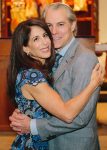
This year’s Jewish National Fund, Pacific Region, Negev Dinner honourees are Michelle and Neil Pollock. (photo from Pollock family)

For their contributions to a diverse range of philanthropic causes, Neil and Michelle Pollock are being honoured at this year’s Negev Dinner.

“Jewish National Fund of Canada, Pacific Region, is proud to have Dr. Neil and Michelle Pollock as our 2018 Negev Dinner honourees on the occasion of the 70th anniversary of the state of Israel,” said Ilan Pilo, shaliach and executive director of JNF Pacific Region. “Their longtime contribution to the community and their leadership are widely recognized, as they are inspirational philanthropists who go above and beyond to involve the community in creative ways to fund critically important projects. We are very pleased they have chosen to work with JNF and ALEH Jerusalem on the Outdoor Terrace Project and the Hydrotherapy Pool, which will benefit seriously disabled children and youth in Israel.”

ALEH Jerusalem provides 82 children and young adults with comprehensive professional care, including special education, as well as medical, supportive and therapeutic care.

“I’m honoured, as I know Michelle is, for us to have been recognized and included in this legacy of community leaders and builders, a few of whom I have been privileged to meet, and who have been mentors and role models for myself and others in our community,” said Neil Pollock. “I look forward to having the opportunity to contribute to the cultivation of future leadership in our community in a similar way.”

The Jewish National Fund is important to the family, said Michelle Pollock, because the projects it supports focus on infrastructure in Israel.

“They’re all reflective of Jewish values and helping with the viability and integrity of the Jewish state,” she said.

Michelle Pollock is a lawyer who practised litigation in Vancouver before devoting herself full-time to their family. She is the immediate past president of the board of the Jewish Community Centre of Greater Vancouver, and has co-chaired the Jewish Federation of Greater Vancouver annual campaign’s women’s division Lion of Judah category for six years. She has been involved with Jewish education and a host of other causes.

Dr. Neil Pollock is chief surgeon and medical director of Pollock Clinics. Over more than 20 years, he has developed minimally invasive techniques for vasectomy, circumcision and frenulectomy procedures. The Pollock Technique has a greater than 99.9% success rate and results in decreased risk of post-vasectomy pain. He has undertaken teaching missions to Rwanda, Congo and Haiti, where he trains local doctors in circumcision, and said the work he has done in Africa and Haiti is among the most meaningful contributions he could make to humanity.

“Our team successfully gave our surgical colleagues in those countries the surgical training, as well as the equipment and supplies, to safely carry out surgical procedures that will save, over the years to come, thousands of lives by reducing HIV transmission,” he said. “Circumcision has been scientifically shown to reduce HIV transmission by 60%. It has been equated to providing protection equivalent to a vaccine against the disease. Sharing my technique provided the mechanism to offer in those countries, for the first time, a safe, quick, painless approach for circumcision that families would happily and readily accept. I continue to search out places around the globe where myself and my team could have similar impact for communities at risk. God willing, there will be more surgical missions in our future.”

Pollock has also developed a unique surgical training program for mohelim, who perform brit milot. He is a mohel himself and, in lieu of accepting fees for his work, advises families to donate to the

Pollock Family Philanthropy Fund at the Vancouver Foundation in honour of the lifecycle event and to support those in need in the community. The philanthropy fund supports the surgical teaching missions to the developing world, as well as organizations including the Arthritis Society, B.C. Cancer Foundation, schools, social service and community agencies.

Pollock’s involvement with the Jewish Federation of Greater Vancouver includes four years as head of the major gifts division and, in 2015, he served as chair of the general campaign, which raised $8.3 million.

“Michelle and Neil Pollock are among the most committed volunteers in our community,” said Karen James, chair of the board of Jewish Federation. “When asked to help, they step up. The Pollocks have been involved with countless initiatives we’ve undertaken at Jewish Federation to address vital community needs…. In response to his work, Neil has been recognized by Jewish Federation’s board with the Woogman Award, for his consistent and conscientious leadership by example. The Pollocks truly help to make our community stronger.”

In addition to their shared involvement with Jewish Federation, the Pollocks support Jewish Family Services. Neil Pollock has served as a board and executive member and is a Friend for Life, a category of donors with lifetime giving of $100,000 or more. The couple also provide an annual matching gift for the Innovators Lunch to inspire philanthropy; these funds are dedicated to the Jewish Food Bank.

They additionally support the Ohel Ya’akov Community Kollel, where Neil Pollock is a member of the board of governors and of the fundraising and building committee. He described the Kollel as one of the “less visible but most critical, vibrant and productive organizations in our community today, providing inspirational and educational programming through lectures, social events connecting Jewish youth, hosting Shabbat and Jewish holiday celebrations, all in a safe and accepting environment where everyone can feel comfortable – from Reform to Orthodox.

“I personally am deeply grateful to the founder of the Kollel, Rabbi [Avraham] Feigelstock, for the many hours of teaching, counseling and support that he has quietly provided for me and so many others I know,” said Pollock. “He has sought to help us develop the leadership skills and sound judgment, through both his core Jewish teachings and by cultivating menshlichkeit values, that he hopes we can be guided by in our personal, business and community work, in turn, helping us to be better equipped to meaningfully give back to our community for the years to come.”

Rabbi Shmulik Yeshayahu, director of the Kollel, said Michelle and Neil Pollock have truly embraced the concept of tikkun olam.

“They both contribute meaningfully; not only financially, but also give time, expertise and insight,” said Yeshayahu. “Their personal involvement in the Jewish community is priceless. We so appreciate their community involvement and care, vision and leadership, and wish them continued success in all that they undertake.”

“It was through the JNF, in my elementary school years, that I was given my earliest opportunities to participate in and contribute directly to the growth and well-being of the state of Israel,” said Neil Pollock. “This helped me to appreciate the importance for Jews to be interested in and responsible for doing our part for our homeland, which has remained with me to this day. And now, again through the JNF, we have been given this very gratifying opportunity to personally identify and support a phenomenal project – ALEH Jerusalem – to again help the state and its people in need, in a very meaningful way.”
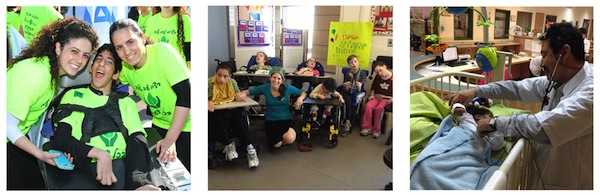
photos - ALEH Jerusalem provides 82 children and young adults with comprehensive professional care, including special education, as well as medical, supportive and therapeutic care
ALEH Jerusalem provides 82 children and young adults with comprehensive professional care, including special education, as well as medical, supportive and therapeutic care. (photos from JNF Pacific Region)

Michelle Pollock’s connection to JNF and Israel stem from her family’s history. Her mother’s father was sent from Poland to Canada, alone, at the age of 14, to make enough money to send for the rest of the family.

“It took him too long,” she said, “and his family was wiped out.”

Pollock’s mother, as a result, was raised in a home clouded by survivor’s guilt and where the past was not discussed. But Zionism was at its core.

“Support and survival of the Jewish state was a complete, tangible imperative because of her father’s experience,” said Pollock. “I see this now, reflecting back.”

The lessons of Jewish statelessness are embedded in her family.

“I can’t separate my Jewish sense of self from my support of Israel,” she said. “It’s all tied together. It’s one and the same.”

Neil Pollock’s philanthropic vision is both local and global.

“I have seen firsthand through my many years of volunteering with Federation, culminating in chairing the 2015 annual campaign, how critical the JFGV is for our community,” he said. “It is so important to have an organization to canvass so effectively the support of our community while carefully researching and assessing the needs of our community and its constituent organizations and thoughtfully allocating our resources in a balanced way, ensuring all facets of our diverse community needs are supported.”

Supporting JFS, and specifically the Jewish Food Bank, he added, “aligns with our core values regarding our responsibility to support those less fortunate and in need of the essentials, like food, shelter, medical care…. There is so much affluence in our community that, in our minds, there cannot and will never be, any justification for leaving anyone, any vulnerable individuals, behind.”

Most of the honourees at the Negev Dinner over the years have been older than the Pollocks, who have three children in high school. Far from approaching the end of their philanthropic endeavours, both talk enthusiastically about future plans.

Michelle Pollock has been very committed to Jewish education, originally when her kids were at Vancouver Talmud Torah and, more recently, supporting King David High School.

“The kids that go there and come out of there are so proud of their cultural heritage,” she said. “It’s an interesting thing to see in teenagers. It moves me greatly.”

Now she is turning more of her focus to Holocaust education and Israel advocacy, which her family history has taught her are closely interrelated. She plans to deepen her involvement with the Vancouver Holocaust Education Centre.

“I think Holocaust education is important. But, at this critical point, where we still have survivors, it’s imperative. Every single non-Jew that you touch with the story of a survivor, that is an invaluable experience. I think we all have a duty to do whatever we can to support Holocaust education.”

“The VHEC … all I can say is wow. For the past few years, I’ve been going to their symposium at UBC. It’s really unbelievable … being at UBC and being in this very secular place and looking at all these kids that have traveled by bus all day from all over the Lower Mainland, and watching them hear the stories of survivors and ask their questions. I think Holocaust education is important,” she said. “But, at this critical point, where we still have survivors, it’s imperative. Every single non-Jew that you touch with the story of a survivor, that is an invaluable experience. I think we all have a duty to do whatever we can to support Holocaust education. And I’m a huge fan of the [Holocaust] centre.”

She also recently joined the Israel and overseas affairs committee of Federation and hopes to advocate for Israel through that and other avenues.

“I see my focus for the next long while in those two areas because I really see them tied together,” she said. “Holocaust education and Israel advocacy. I think it will grow and change. I’ll just keep finding ways to contribute.”

As immediate past president of the JCC, she is continuing a commitment that began 14 years ago, when she first joined the board. Part of her motivation is that, coming originally from Montreal, she finds it can be more difficult to stay Jewishly connected in places like Vancouver, where the community is not as deeply rooted.

“I definitely think it’s easier in some of the older, more established Jewish communities and I think my personal passion is to do whatever we can to make it easier to be Jewish and live Jewish,” she said. “I think the JCC has all the programming and all the events that help you touch on Judaism in your daily life. But, even more than that, just walking in that building makes you smile in a uniquely Jewish way.”

Also from away, in his case, Winnipeg, Neil Pollock said he is grateful for being “so graciously welcomed and accepted in this community, and for the wonderful network of friends that we are lucky enough to be surrounded by.”

He is philosophical about his plans, hoping, he said with a laugh, to get better with age, “like the great wines in my cellar.”

“Every day we wake up, we are slightly different people, remolded and growing with all-new experiences,” he said. “Hopefully, we capture and deploy the insights we gain to allow us to be more mature and effective leaders.”

He continued: “While my kids are young and at home, they will continue to be my top priority. My business has now moved to a global level, so … I am more engaged, involved and excited now about future potential than ever.

“Often, I feel over-committed with my career, family and other things that happen in my life, but, at these moments, I try to remember that I also have a greater purpose and a greater responsibility and that is the one to my community,” he said. “I believe we all have an obligation to care for others and help those who are in need. We also must ensure that our Jewish traditions and values are maintained for generations that will follow, through our support of Jewish education and local Jewish institutions.”

He wants his experience to demonstrate that anyone can have an impact on the community.

“I hope that the great diversity of backgrounds amongst our community leaders serves as an example and inspiration to the many truly talented members of our community who may have ever questioned their ability to get involved and make a difference.”

“Some community members may believe that, in order to be an influential leader and have a meaningful impact, one must come from a family with a strong history of leadership and/or affluence,” he said. “This is not the case in our community. And I hope that the great diversity of backgrounds amongst our community leaders serves as an example and inspiration to the many truly talented members of our community who may have ever questioned their ability to get involved and make a difference.”

He added: “I want to thank all the community organizations that have welcomed us and provided us with the opportunity to become involved and give back.”

Asked about how he would like people to think of him in future, Pollock said, “I would like to be thought of and remembered in a similar way, I’m sure, to [how] most people would: as an individual concerned with things other than those that are immediately self-gratifying, and who is interested and active in doing his small part to ensure that opportunities to help others were not missed, and that meaningful efforts were undertaken to ensure the Jewish community and broader community in which we lived thrived.”

The JNF’s Negev Dinner takes place June 3. Honourary chairs of the event are Alex and Jodi Cristall and Harvey and Jody Dales. For tickets and more information, visit jnf.ca/index.php/vancouver.
Format ImagePosted on May 18, 2018May 16, 2018Author Pat JohnsonCategories LocalTags ALEH Jerusalem, Israel, JNF, Negev Dinner, philanthropy, Pollock, tikkun olam
On a mitzvah mission

On a mitzvah mission

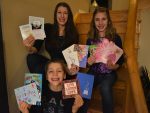
Jessica Cohn and her kids, Tamara and Jeremy, created the Friend Send to help others across Canada. (photo from Jessica Cohn)

Last October, Jessica Cohn, a Vaughan, Ont., mother of 10-year-old twins Tamara and Jeremy, was scrolling through Facebook when she found messages by other mothers that disturbed and saddened her.

“They were saying their kids were down because no one had come to their birthday parties,” Cohn recalled. “I told my kids and they immediately wanted to attend those parties, which was impossible because the children were located all over Canada.” Instead, the trio opted for the next best thing: to send those children birthday cards so they would feel less alone and more cared for. They got to work right away.

That initiative turned into the Friend Send, the Cohns’ personal mitzvah mission, which quickly extended beyond birthday cards to children 12 and under experiencing bullying or feeling friendless and lonely. Cohn and her children have sent 240 cards across the country.

“My kids have written on almost every card, and they love doing this,” she told the Independent. “We have a huge card box and they go through it to select a card they think a particular child would like. Once they’ve written their message, I add my own.”

When Annie Miron first heard about the idea, she was skeptical, but the Nanaimo mom was worried about her daughter, Trinity, 12, who was having a hard time making friends. “People were picking on her behind her back and she was really depressed, thinking all kids are mean,” she said. “A couple months ago, when I told Jessica what Trinity was going through, she sent a card and a letter in the mail.”

The card was deeply meaningful to her daughter, said Miron. “It told her that she mattered and that people cared about her, so she understood there are nice kids out there. After that, her attitude changed drastically and everything turned around for her at school. This positive message really does work and Jessica and her children saved our family.”

Dawn Chouinard, a Westbank, B.C., mother, has also seen a change in her 13-year-old daughter, Kate-lynn Grist, who was being bullied at school and was feeling friendless.

“She was so ecstatic when she received a card and it made such a difference to know that people were rooting for her,” Chouinard told the Independent. “The Friend Send is a really good idea because it can make a big difference to a child when a stranger gives you that boost, and it doesn’t come from mom or dad. Kate-lynn is a little more confident at school now, and I’ve noticed that, if she sees someone else struggling, she might be more inclined to offer them a word of encouragement now.”

Cohn has used Facebook to spread word of the Friend Send, and has heard some heartbreaking stories of children experiencing harrowing times. It’s her hope that the cards will give them the lift they need, the reminder that there are caring people out there offering support and encouragement, and that the bullying or isolation they are experiencing on the playground or sports field are not representative of the world at large.

“What surprised me was how many requests we get for cards for boys – way more than what we get for girls,” she said. She shared the experience of Cody, a child who started playing hockey later in life because his parents couldn’t afford the lessons. He was less skilled than the other kids and, as a result, they wouldn’t let him join their game. “It made me so sad, because he loved the game so much, and for him to be excluded because he was less skilful was heartbreaking,” Cohn said.

“I spend a long time talking with the parents on Facebook, especially the mothers, because I find they often don’t have anyone to support or understand them. People don’t understand how hard it is to see your child coming home crying every day. When their children receive some encouragement, this support means so much to them.”

If there’s one message Cohn wants to convey to parents of children who are being bullied, it’s not to be embarrassed about what is going on. “I wish I could tell every parent out there how special their children are, and how much love and respect they deserve,” Cohn said.

To find out more about the Friend Send, to request a card or to become a card-writer, visit facebook.com/thefriendsend.

Lauren Kramer, an award-winning writer and editor, lives in Richmond. To read her work online, visit laurenkramer.net.

Format ImagePosted on May 18, 2018May 16, 2018Author Lauren KramerCategories NationalTags bullying, Friend Send, Jessica Cohn, tikkun olam
Investing in community

Investing in community

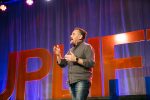
Leonard Brody talks about The Great Rewrite at the Jewish Family Services Innovators Lunch April 24. (Rhonda Dent Photography)

Sitting in the JFS client base are this community’s greatest and most hopeful assets,” said Jewish Family Services Innovators Lunch keynote speaker Leonard Brody. Donating to JFS is not charity, he said, but rather an investment with high returns.

The 600-plus attendees at the JFS’s main annual fundraising event obviously agreed. At press time, more than $350,000 had been raised for the agency’s work, and donations were still coming in, making this year’s lunch the most successful Innovators yet.

Event co-chairs Shannon Ezekiel and Candice Stein Thal welcomed those gathered at the Hyatt Regency Vancouver on April 24, and gave a brief overview of the JFS and of the organization’s new logo and look, which, they said, “inspired the theme for this year’s lunch: ‘Uplifting Lives.’”

Rabbi Jonathan Infeld of Congregation Beth Israel, who is the Rabbinical Association of Vancouver representative on the JFS board, did the blessing over the bread. “This week’s biblical portion is Acharei Mot-Kedoshim,” he said. “Kedoshim is really the essence of why we are here – ‘You shalt be holy,’ the portion begins, and then it gives us a litany of laws in which we are able to bring holiness into this world. A number of those laws do not ask, but demand, that we take care of those who are in need. And one of those laws in particular demands that we feed those who are hungry. Many of us here are hoping to make a difference in this world. We are here, maybe with the idea in mind of a business connection, but, really, the essence of what the JFS is all about is bringing holiness into this world by helping those who are in need.”

After a video, which told the stories of three individuals who were helped by JFS in some way, JFS board chair Bill Kaplan said a few words, stressing that, “most importantly, our volunteers and staff treat our clients with a respect and warmth that uplifts them, makes them feel part of the community and, if you ever visited, you’ll see, it becomes a social highlight for their week.”

All of the lunch guests were given a bag full of items – including some packaged food, toiletries, a poncho and gloves – and asked to give it to someone on their way to work or to a JFS client. The bags were packed by more than 80 kids and their families at Beth Israel a few weeks earlier.

Among those who Ezekiel and Stein Thal thanked were the event’s corporate sponsorship committee, chaired by Audrey Chan; the more than 40 sponsors at the lunch, who had “helped contribute over $183,500 … a record in sponsorship for this event”; the 28 table families; day-of-event chair Dr. Sherry Wise; and JFS’s Maya Dimapilis and her team. The lunch was co-presented by the Diamond Foundation, Austeville Properties Ltd. and Shay Keil; Neil and Michelle Pollock matched every new or increased portion of a donation raised through the lunch, up to $25,000, which was dedicated for the Jewish Food Bank.

photo - Jewish Family Services executive director Richard Fruchter, left, and entrepreneur, venture capitalist and author Leonard Brody
Jewish Family Services executive director Richard Fruchter, left, and entrepreneur, venture capitalist and author Leonard Brody. (Rhonda Dent Photography)

JFS executive director Richard Fruchter spoke about JFS, its history and the expanding services it provides. It is because of this growth in the demand for JFS’s services, he said, that “it became important for us to be more visible in the community and tell our story to a much wider audience …. we’ve updated our logo and our name to reflect that. Our logo is a simple, elegant symbol – it conveys the warmth and heart of what we do here at Jewish Family Services.”

“For me, this is not just an amazing lunch with a marquee speaker,” said Keil before he introduced Brody. “It’s an opportunity for me to stand before you and proudly announce my support of the Jewish Family Services, and to thank the army of staff and volunteers … [for their] work in the community.”

Brody’s talk was on The Great Rewrite, a book he is creating with Forbes Magazine, based on a documentary series they produced. “Really what we’re doing this morning,” said the entrepreneur, venture capitalist and author when he took to the stage, “is talking about an evolution, an evolution in us, in our human story.”

Based on about a decade’s worth of research, he said, The Great Rewrite began with the question, “How is this moment in time different? We’ve been through a lot of innovation cycles, from the web and mobile, and now entering into AI and robotics… Is this vast amount of change that we’re all experiencing … substantively different from anything we’ve been through before? Is this a fourth industrial revolution?”

Humanity is “literally rewriting this planet from the ground up,” he said, arguing that we are currently undergoing “pretty much the largest institutional shift in the history of our species.”

The co-founder of four companies, Brody said, “The concept of this rewrite has nothing to do, for me, with just theory – it started as a theory but it’s really what we do and what I do every day for a living at CAA [Creative Artists Agency].”

Before looking at what we can expect in the next 730 days – the next two years – Brody explained how we, the humans of today, are nothing like the people of 100 years ago. For example, he said, the average person now lives 2.7 times longer and is three to four inches taller; the rate of poverty has been reduced from 90% in 1900 to 10% now, literacy increased from 12% to 85% and access to basic education risen from 17% to 86%. We are also “living in the lowest point of human death [caused by any factor] since we could record it, since 1400,” he said, and “the average human being living on this planet works about half the number of hours than someone living in 1900.”

We are fundamentally different people now, said Brody, and herein lies the challenge. “The houses we built don’t fit the people who live here any more,” he said. “We built institutions – I’m talking about all the institutions that govern your life, education, government, religion, work, the family unit – they are all going through massive pressure points today because they are structures based on assumptions, often technological, some patriarchal, that are just no longer true.”

So, he said, “The whole essence of this rewrite is you are living in the disconnect between the people we have become, the technological tools available to us today and the failure of our institutions to keep pace with that.”

One of the reasons for this, he explained, is “inversion.” Most of our institutions are organized as pyramids, with, for example, a head of state or religious figure at the top; however, the internet has flipped this power structure. Up to the mid-1990s, all the methods of communication, from radio to the telephone, had limited reach and were regulated by government, he said, but, with the internet, it “was the first time where millions of people could speak with millions of other people with virtually no hit on their disposable income” and where it was “impossible for governments to regulate.”

With respect to the internet, said Brody, “the average North American spends two-thirds of their working day in their virtual identity and not their physical one. The average Canadian, by the way, spends 63% of their time with close friends and family in their virtual identity and not their physical one, meaning not face-to-face. So, the virtual form of yourself is now the predominant human form, not the physical.”

And our behaviours are different online than in person. “You do things in your virtual identity that you would never dream of in your physical and vice versa,” he said. For example, the average internet user is four times more trusting than they are in person. He illustrated this using a question he asked his 83-year-old uncle: “When your children were babies, would you post their baby pictures on the lamp posts in your neighbourhood?” The response was an emphatic no. “So, then, why do you post hundreds of photographs of your granddaughter on Facebook and Flickr, which is a globally open, searchable and highly manipulated light post, and his face just went totally blank.”

As for how the internet has changed our institutions, Brody gave the example of marriage. As of the end of 2017, he said, “two-thirds of all new marriages in the Western world originated online” – and, for those who met their spouse online, the likelihood of divorce is 15 to 20% less. “The algorithms on these dating sites work from a data perspective,” he said. And, connected to the institution of marriage, he noted that, in the 2016 census, about 40% of Canadian adults reported themselves as living alone, while, in 1955, that statistic was four percent.

Brody went on to explain what CAA was doing in the field of entertainment with virtual reality and how, “in the next decade, roughly 30% of all ‘live’ entertainment will come from performers who are no longer living. You will take your children to go watch the Beatles and Michael Jackson and Elvis Presley – in fact, the Elvis tour has just begun; the estate just signed off on it.”

Currently, there are up to three-and-a-half billion people on the internet, he said, and, over the next two years, another billion people will join. This new billion will be “one of the most significant economic events in human history, if not the most significant,” he said, noting the amount of money to be made from e-commerce.

This coming two-year period, he added, “is the very beginning of a long journey in the rewrite of currency.” He said that traditional wealth generators, such as home ownership and the stock market, will not be profitable in the future, so currency “will become the new stock.”

Brody spoke about the fact that we’re about a decade away from creating machines able to think for themselves, and how computers can now create, for example, a Rembrandt painting that can fool the computers that detect fraud at top auction houses. “The reason I share that with you,” he said, “is because the very thing that makes us human is art. And, once machines begin to make art, you get a very clear indication of how different this world is going to be, and very clearly that we are on a path where humans may no longer be the predominant species on this planet. So, we have very important decisions to make in the next decade about how we regulate the ethics of artificial intelligence.”

He concluded, “Why are we talking about The Great Rewrite and the rewrite of this planet at a JFS Innovators Lunch? There are two specific reasons. The first is this massive shift in institutional power that’s coming…. And the second has to do with math, pure math; in particular, the number 70. Why 70? According to StatsCan, 70% of all charitable donations in this country come from primary donors – 70% come from a small group that make up the vast majority of the donations. So, I started to do a little bit of digging and I brought in my friends and partners at Forbes to help me out on it. It turns out, if you look through the Forbes millionaire and billionaire list, which many Canadians sit on, it turns out that … 70% of that [primary donors] group came from nothing” and could have been clients of an organization like JFS at one point in their lives.

“Benevolence and charity were the wrong lens” with which to look at giving, Brody said. “The right lens was investment. If it’s true, which it is, that the vast majority of donations to charitable causes in this country … and the vast majority of those individuals [who are giving] were, at some point in their lives, disadvantaged and downtrodden, then the math and the investment is very simple. An investment made in JFS today has the greatest statistical likelihood of identifying the next pillars in this community and the next great funders.”

Format ImagePosted on May 4, 2018May 2, 2018Author Cynthia RamsayCategories LocalTags Forbes, Innovators Lunch, Jewish Family Services, JFS, Leonard Brody, The Great Rewrite, tikkun olam
Operation Ezra update

Operation Ezra update

Khalaf and Gawre’s family is the 10th to come to Winnipeg thanks to Operation Ezra. (photo from Michel Aziza)

What started as a small local initiative has grown to be a leader, by example, and a reminder of what can be achieved when an intention is set and action is taken.

About a year ago, the Jewish Independent ran a story about Operation Ezra in Winnipeg that, at the time, was aiming to sponsor five Yazidi refugee families. Led by Michel Aziza, a local businessman and once a refugee himself (from Morocco), and a small group of individuals connected to the Jewish community, the initiative was a response to the plight of the Yazidi people being viciously persecuted by ISIS in Iraq.

Nafiya Naso, now a young woman, who came to Winnipeg as a child with her family, has been an instrumental figure in Operation Ezra.

“She was reaching out to people outside their community to raise awareness of the genocide that was going on, March of 2015,” said Aziza, recalling Naso’s early involvement. “I was semi-retired and looking for something to occupy myself, and this was a good opportunity for me to get involved with a volunteer-type of project. Essentially, that’s what I have been involved with over the last almost three years.

“At the beginning,” he said, “we knew nothing about the Yazidi people. After talking with Nafiya, we identified a family of eight people and thought we could raise the necessary funds to submit a sponsorship application. We started lining up a few speaking engagements for Nafiya…. We started speaking to people, making calls, and … the original target was $34,000 for this family of eight … [and] within three or four weeks, we raised $34,000. And that number kept on growing as people talked to other people.”

To date, with the generous help of people in Winnipeg and elsewhere, Operation Ezra has raised just over $500,000. This has made it possible for them to sponsor 10 Yazidi families – 55 people – with the last family having arrived in March.

“As soon as we realized this was bigger than a grassroots project, we decided to incorporate Operation Ezra within the organized Jewish community,” said Aziza.

Jewish Child and Family Service (JCFS) saw this as an opportunity to do something in line with what they were already doing – helping with the settlement of immigrants and refugees – so they came on board, gradually reaching out to other organizations and agencies.

Gray Academy of Jewish Education and the Jewish Foundation of Manitoba joined the effort and, currently, Operation Ezra is an umbrella group of some 20 different agencies and organizations. Most of the members are Jewish, but not all. There are two churches involved, the Salvation Army and a number of corporate partners, with IKEA being the biggest name.

Many volunteers help Operation Ezra in various aspects of the settlement process. Naso has been hired by JCFS to manage everything.

One service Operation Ezra offers is an English-as-an-additional-language (EAL) program, which takes place at a synagogue every Thursday, with 70 to 80 refugees attending and about 20 volunteer teachers. Some Yazidi participants are government-sponsored.

Out of the total 250 refugees who are government-sponsored, about 100 have asked for help from Operation Ezra. “So, we are touching the lives of about 200 people,” said Aziza. “We have organized and have helped organize many community events for the Yazidi people. We celebrated Yazidi New Year’s 6768 on April 18, 2018, with a very large number of people coming out for that dinner,” he said by way of example. “We’re trying to help this group of newcomers to get organized, and to organize themselves as a community … to socialize and to help each other and so on.”

According to Aziza, Operation Ezra is the only multifaith group doing this work in North America.

One recipient family of Operation Ezra is Majid and Safya, along with their children. They shared their thoughts on their experience to date, with translating help as needed from Naso.

“My name is Majid. I was born and raised in a small village…. I am married with two kids – one boy who is 4 and one girl who is 6. My wife, Safya, and I are currently enrolled in EAL classes, hoping to learn English and find work in the near future.

“On August 3rd, 2014, at around 9 a.m., my family, community members and I fled to Mount Sinjar. We were lucky to have escaped when we did. If we had stayed any longer, I would be in a mass grave with many other Yazidis. I can still hear the rapid gunfire as ISIS members surrounded everyone who wasn’t able to flee and started shooting.

“We then reached Mount Sinjar, where we stayed for seven days with little to no food or water. As we were coming down the mountain closer to the Kurdistan region, we were able to hop into a truck. But, soon after, we saw ISIS members driving at us, firing round after round. I still don’t know how we escaped that day. Everything was such a blur. All I really remember was covering my kids and wife, hoping they would make it. Fortunately, we all made it to a refugee camp in Dohuk.

“The conditions in the camp were very scary. We were always worried about getting enough to eat, drink … about medical treatment. And we stayed for a few months, but couldn’t make it. So, we left for Turkey hoping for better living conditions.

“After spending almost two years in Turkey,” he said, “we heard about Operation Ezra and reached out. And, by some miracle, we were sponsored. Everything felt like it was going to be OK after we received confirmation we would be coming to Canada.

“I will never forget the welcome we received coming down at the airport. I was in awe of all the people who had come to greet us and welcome us into their community.”

Majid said they arrived in Canada in December 2016. “My experience in Canada has been great and could not be any better!” he said. “I have many friends and family who are in refugee camps in Iraq and Turkey who call me and tell me that the situation in the camp is getting worse by the day. My dreams are that my family and I are able to live in Canada without the fear we faced back home – the constant fear for our lives, hate and discrimination we faced because of our religious beliefs.

“I encourage all Canadians to reach out to Operation Ezra and learn about this amazing program, the only program of its kind in the world today. We have thousands of Yazidi still living in segregated refugee camps, fearing for their lives and waiting for anyone to reach out and lend a helping hand. I also encourage the Canadian government to support groups like Operation Ezra to help out more refugees.”

Khalaf and Gawre’s family are the most recent Operation Ezra arrivals to Winnipeg. (Although they were the last family Operation Ezra had planned to sponsor, the group has unanimously decided to continue their efforts.)

“My name is Khalaf and I arrived in Winnipeg on March 29th with my mother, who is 83 years old, my wife, and five kids – two boys and three girls, ages ranging from 12 to 24. I was ripped away from my four older kids after ISIS attacked our village (Dugere).

“At 8 a.m., we heard gunshots and got calls from other Yazidi villages that ISIS had murdered hundreds of men and was kidnapping all the women and young girls. Ten minutes later, my family and I started walking toward the mountain. My mom and dad were so lucky they were able to get rides to the refugee camp in Dohuk. My wife, Gawre, and five children were stranded on the mountain for seven days.

“We were able to escape the mountain with the help of PKK [Kurdistan Workers’ Party]. We lived in a refugee camp on Dohuk for six months. The conditions were horrible and heartbreaking. Many people died in the camps, because there was no humanitarian aid, no water and no medical care. My father passed away, because we could not get him the medical attention he needed.

“Shortly after, we decided to go to Turkey. It was no better there, but we did not have a choice and could not afford to move back to Iraq again.

“My sister and her family were sponsored by Operation Ezra just over a year ago. We got on the list when we heard about this amazing project from the people in the refugee camp.

“Months after contacting Nafiya [Naso] and Asmaeil, we were told we would be sponsored! My family and I definitely won the lottery here. We will always be grateful for everyone who made this possible.

“My dream is to see my family and Yazidis around the world live free of persecution. We hope and encourage all Canadian and other countries around the globe to support groups like Operation Ezra and help them in saving lives.”

Naso added, “Operation Ezra is working to raise more funds and keep sponsoring Yazidi refugees. There are thousands waiting who are in desperate need of help. They have no voice, so we must be a voice for them and speak out for them.”

For more information and to make a donation, email [email protected] or visit jewishwinnipeg.org/community-relations/operation-ezra.

Rebeca Kuropatwa is a Winnipeg freelance writer.

Format ImagePosted on May 4, 2018May 2, 2018Author Rebeca KuropatwaCategories NationalTags immigration, Iraq, ISIS, Michel Aziza, Nafiya Naso, Operation Ezra, refugees, terrorism, tikkun olam, Winnipeg, Yazidi
Success in comedy biz

Success in comedy biz

Mark Breslin (photo from Temple Sholom)

Yuk Yuk’s co-founder Mark Breslin is excited to be entertaining Jewish Vancouverites at Temple Sholom’s annual spring fundraiser May 6.

“I can’t get enough Jews in my life,” he told the Independent. “I’m married to a Catholic woman but I’m a Jew through and through. Any time I can talk about Jews and Jewishness, and my unique views on that, I jump at the opportunity because comedy is the jazz of our people. That’s how I express my Jewishness in the biggest way, not by keeping kosher or going to Israel each year, but through comedy.”

Breslin opened his first Yuk Yuk’s location in 1976. Today, he has 15 Yuk Yuk’s franchises across the country, has published four books, produced programs for television and radio, and appeared in theatrical productions. He’s a sought-after public speaker and, in December 2017, he was awarded the Order of Canada.

“Comedy is not usually something people respect, so it’s gratifying that some bureaucrats in Ottawa see what I’ve done with my life and think it has value,” he said. “But all the people I’d like to lord this over are dead now.”

Those people include a high school principal who informed Breslin he was a menace to society, as well as his aunts and uncles, who refused to attend his shows “because they thought I was wasting my life.”

Back when he started Yuk Yuk’s, Breslin said he received no support or encouragement from the people closest to him. “My mother was a child actress in the Yiddish stage in 1920, so you’d think she would be thrilled about what I was trying to build in comedy, but instead she was appalled by it right to the grave. My father was more ambivalent. He respected Yuk Yuk’s as a business and was proud of me, though he didn’t find the comedy funny. Even my friends thought I was nuts.”

When he began the first Yuk Yuk’s location, in Toronto, Breslin said his main goal was to avoid law school. “I thought I’d do comedy for a couple of years and find something else to do when it ran out of steam,” he admitted. “I never thought it would become my life!”

Initially, the Toronto Yuk Yuk’s was known as “that Jewish club,” because the names of the performing comedians were all Jewish. “When standup started, it was a very Jewish thing to do,” explained Breslin. “A lot of the comedians at that time were my friends from high school or university, and they gravitated to Yuk Yuk’s because they knew me.”

Today, standup is a mainstream phenomenon and Yuk Yuk’s is no longer known as a Jewish club. One thing that’s remained unchanged from the get-go, however, is Breslin’s insistence that his clubs be uncensored. “I’ve never censored an act in the 42 years I’ve been in business,” he said. “Being uncensored is important because the clubs are small enough that no one can control them. We have an obligation to be the official opposition and, these days, it’s more important than ever.” While he conceded that most comics exercise their right of free speech to talk about sex, not politics, he said, “Still, the opportunity is there.”

Yuk Yuk’s has two locations in British Columbia: Abbotsford and Vancouver. The Vancouver club opened in 1988 and is located on Cambie Street, near City Hall. It’s always been a success, said Breslin. “I measure success by some level of profitability, but also by how impactful our product is on the wider community and on comedy in general,” he said.

Among the comedians who got their start at Yuk Yuk’s are Russell Peters, Jim Carrey, Howie Mandel, Mike Bullard and Gerry Dee.

Breslin said that, on May 6, at the Temple Sholom event, he plans to talk about how each Jew has their own unique form of Jewishness and how we treat our culture as a Chinese buffet, picking what we want from it.

“I’m going to talk about the golden age of Judaism, 1950 to 1975, when it was cool and sexy to be a Jew,” he said. “I’ll try to figure out what happened between then and now, and why we’re a people in need of a good PR person. I’ll also reveal a lot of fun stuff about my life, my family and things I’ve done, relating that to comedy in general and what it means as a Jewish art form.”

For event details, visit templesholom.ca/inspired. The evening at Performance Works on Granville Island is titled Inspired to Act and includes comedy, music by Adrienne Robles and Liel Amdour, and the 2018 Tikkun Olam Youth Awards.

Lauren Kramer, an award-winning writer and editor, lives in Richmond. To read her work online, visit laurenkramer.net.

Format ImagePosted on April 20, 2018April 18, 2018Author Lauren KramerCategories Performing ArtsTags comedy, Mark Breslin, Temple Sholom, tikkun olam, Yuk Yuk's
Remembering Sam Belzberg

Remembering Sam Belzberg

Samuel Belzberg

Businessman and philanthropist Samuel Belzberg died on March 30 in Vancouver, after suffering a stroke several days earlier.

Belzberg, 89, was the chair and chief executive officer of Gibralt Capital Corp., which is based in Vancouver.

After moving here in 1968, Belzberg formed Western Realty with his brothers, which they sold in 1973, according to the Vancouver Sun. In 1970, he formed First City Financial, which adapted through the years, operating until 1991.

In his 60s, Belzberg reinvented himself as a private equity investor, quickly amassing significant successes. He bought out and revived the Keg restaurant chain. He also financed a Quebec-based vaccine manufacturer called ID Biomedical and took on real estate projects in Nova Scotia, California, Oregon and elsewhere.

In his later years, he became more known for his generous philanthropy. Belzberg’s parents had immigrated to Alberta from Poland just before many of their friends and family were sent to Nazi concentration camps, and it was the immigrant experience that inspired him to help others.

“Mom and Dad lost so many of their brothers and sisters, yet Canada took them in,” he told the Sun in 2003. “This country takes people in, so why shouldn’t we help people? It’s our responsibility to help. I think about it every day.”

Belzberg headed the initial $13.5 million campaign to build Simon Fraser University’s (SFU’s) Downtown Vancouver campus, a space that has since become an integral part of the city’s urban life.

SFU president Andrew Petter told the Vancouver Sun that Belzberg will have a lasting legacy at SFU. “Sam was a larger-than-life figure,” said Petter. “He was one of the builders of SFU.”

Both Belzberg and his wife, Frances, have been honoured by SFU for their leadership and contributions.

Belzberg also donated the initial $500,000 to start the Simon Wiesenthal Centre in Los Angeles in 1977 and served as its founding chairman. “Sam was both a visionary and proud Jew,” Rabbi Marvin Hier, who founded the centre, said in a statement.

On top of that, Belzberg helped found Yeshiva University High School of Los Angeles and was an active supporter of the Jewish community in Vancouver.

“Countless organizations in our community benefited from his vision and his philanthropy, including ours,” said Ezra Shanken, chief executive officer of the Jewish Federation of Greater Vancouver. “He had such a youthful energy about him and, every time we met, he was always open to new ideas and new ways to help Jewish life flourish. He truly cared about this community and he appreciated others who valued tikkun olam and tzedakah as he did. He and [his wife] Fran were a team and they have instilled those values in their family from one generation to the next.”

In 2001, Belzberg created Action Canada, which, in partnership with the federal government, endows 20 fellowships each year to Canadians “who want to make a difference in the world.” He also founded the Dystonia Medical Research Foundation– a cause that was very personal to him. In the 1970s, his daughter, Cheri Belzberg, was diagnosed with the rare neurological condition, which impacted her mobility and speech. “Nobody knew the first thing about it in those days,” Belzberg told the Jewish Independent in 2014.

Belzberg received the Governor General of Canada Award in 1992 and, in 2002, was promoted to Officer of the Order of Canada. In 2009, he was awarded the Order of British Columbia for his extraordinary philanthropy and community leadership.

Belzberg is survived by Frances, his wife of 68 years, his four children, 16 grandchildren and 12 great-grandchildren.

Matthew Gindin is a freelance journalist, writer and lecturer. He is Pacific correspondent for the CJN, writes regularly for the Forward, Tricycle and the Wisdom Daily, and has been published in Sojourners, Religion Dispatches and elsewhere. He can be found on Medium and Twitter. A version of this article was originally published by CJN.

Format ImagePosted on April 13, 2018April 11, 2018Author Matthew GindinCategories LocalTags business, philanthropy, Sam Belzberg, tikkun olam
How to cope with technology

How to cope with technology

Entrepreneur, venture capitalist, author and media visionary Leonard Brody is the keynote speaker at this year’s JFS Innovators Lunch April 24. (photo from JFS Vancouver

On Tuesday, April 24, Jewish Family Services (JFS) will be hosting its annual Innovators Lunch. The event, which encourages people to think as innovators and uplift lives to bring about meaningful and lasting social change, raises essential funds that go directly to serve JFS clients, programs and services. It has attracted more than 600 people in each of its 14 years.

This year, the keynote speaker is Leonard Brody, chair of Creative Labs, a joint-venture with Creative Artists Agency, the largest sport and entertainment agency in the world. He and his team are building new ventures and companies for some of the biggest celebrities and sports personalities in the world. He acts as principal in several venture capital funds throughout the world, and is behind the financing and creation of dozens of start-up companies every year. He is also one of the owners of Coventry City Football Club in England.

The award-winning entrepreneur, venture capitalist, bestselling author and two-time Emmy nominated media visionary has been called “a controversial leader of the new world order.” His upcoming book, in partnership with Forbes Magazine, is The Great Rewrite. In it, he addresses the rapid pace of change, innovation and disruption brought about by the internet and how to respond to its profound changes on our social and economic ways of life.

“Everything we do, from how we speak, how we buy, how we employ people, is being rewritten,” he told JFS. “The internet is the first time in our history where millions of people can speak directly to millions of other people at little cost, no regulation; the first time in our species that we have owned our communication at mass scale on a global level. The tools for innovation are nothing, the playing field is now level.”

Wherein lies the controversy? Brody argues that the resulting change in communication is “a massive disconnect between the institutions we’ve created and the people we’ve become.” He contends that it is the largest level of institutional shift in human history.

“Our world is inverted,” he explained. “We are fundamentally different than the people we were 100 years ago.” The institutions that run society are traditionally top down, he said. Take, for example, politics, with a prime minister at the top and the people at the bottom. Once the internet became ubiquitous, the power pyramids started to flip, or invert.

The pace can be disorienting, and Brody seeks to raise the level of our dialogue and provide a useful framework for action that people can look to and use. Through concrete stories, he provides many answers, ultimately offering a playbook on how we can engage in the world that’s being rewritten around us.

For tickets to JFS’s Innovators Lunch on April 24 at the Hyatt Regency Vancouver, visit jfsvancouver.ca/innovators. There is a limited number available, so book your space early.

Format ImagePosted on April 13, 2018April 11, 2018Author Jewish Family Services VancouverCategories LocalTags business, fundraiser, Innovators Lunch, internet, Jewish Family Services, JFS, Leonard Brody, technology, tikkun olam
Whole new Israel experience

Whole new Israel experience

Itay Asaf, far left, with a group he led on a tour of Jaffa, where they visited the areas in which his dad grew up. This particular group was in Israel for eight days. (photo from Itay Asaf)

Esperanso is a recently established, socially responsible tourism company based in the United States that offers private tours to Israel. Created by Itay Asaf and his brother, Eyal, who are both are former kibbutzniks, the tours include a volunteering component.

“I led Birthright trips to Israel,” Itay Asaf told the Independent. “And I realized the trips are really nice and very fun for the students, but there was something missing for me, as an educator. I felt like the students are not really getting the true face of Israel, and they’re not really given the chance to give back.

“I wanted them to be very involved socially and to see sites they don’t usually get to see on trips. I found a social justice extension trip where I took the students, and I used tourism as a tool to empower local communities in south Tel Aviv, refugees and LGBTQ [for example]. And then I saw the impact and what it does for the students. Some even came back to Israel, and some are considering making aliyah.”

At that point, Eyal had a tourism company in Israel, so, together, the brothers built the concept for Esperanso. The name of the company reflects their family heritage – coming from Turkey and having a Spanish name – and it is a play on the word esperanza, meaning hope.

“One of the reasons I wanted to combine social work and social justice in everything I did, is my aunt,” said Itay. “She grew up in a village for people with special needs, Kfar Tikva. My brother and I wanted to take the experience we had with tourism and growing up with my aunt, and I saw the potential of the tourists that already come to Israel. We approach [them] and we say, ‘We welcome everyone. We accept groups. We accept youth. We invite people to celebrate bar mitzvahs.’ But, what we add is, ‘When you travel with us, you are actually empowering communities.’

“We took social organizations that we were personally connected to and we combined them into the itineraries with each of our trips,” he explained. “Not only do you support them by the activities during your trip, we also promise the organizations that five percent of the cost of your trip will go to one of them; that we will donate, based on your choice. This way, we ensure those organizations are empowered, socially and economically. We can take any trip you desire to do in Israel and make it into a socially responsible one.”

Esperanso connects with the various organizations ahead of time, with the goal of having participants get an inside view. The Asafs’ hope is that some visitors will make a deeper connection with the organizations and create partnerships, or set up longer-term volunteering with them.

“There are a variety of organizations just waiting for tourists to come and see what they do and support them,” said Itay. “That’s our pleasure – connecting and introducing you to those organizations.

“When I started,” he said, “I had a student who, two months after the trip, came to me and said she is going back to Israel to volunteer for a year. I almost cried I was so happy. This is what I wanted. It’s amazing to see. She was attached to it and she saw what she could do.”

The groups Esperanso leads vary in size, but, most important for Itay is connecting with interesting people and finding ways to create the trip they want together. So far, he has been on all the trips as the guide, but that might change. Depending on volume and availability, his brother might step in and guide some tours. As his brother lives in Israel, Eyal is the one taking care of everything on the ground until Itay lands with the group.

“We are very competitive cost-wise in the market,” said Itay. “We are aware that part of what we are making is going to these organizations, and we are completely, honestly, OK with that, happy with that.

“I’d say, if someone wants to go to Israel and do the journey with the hotels, the bus and everything, I think we are offering a very competitive package. They can just contact us, come to Israel and have everything ready for them in a socially responsible approach.”

The Asafs see Esperanso as something more than just a tourism company. For them, it is part of the future, of the new economy.

“I think we should support companies and organizations that care about the surroundings,” said Itay. “I think that, if everyone would care a little bit more, we could find ways to also profit the communities around us. If we make the right connections, we can change the world…. I urge everyone to look for ways to direct your money just a little bit to help people in need.”

For more information, visit esperanso.com.

Rebeca Kuropatwa is a Winnipeg freelance writer.

Format ImagePosted on April 13, 2018April 11, 2018Author Rebeca KuropatwaCategories IsraelTags Esperanso, Israel, Itay Asaf, social enterprise, tikkun olam, tourism

Be a builder, dreamer

Temple Sholom is hosting Inspired to Act. The event will feature the comedy of Yuk Yuk’s co-founder Mark Breslin, plus the music of young local artists Liel Amdour and Adrienne Robles, and will honour the winners of the 2018 Tikkun Olam Youth Awards.

This annual spring fundraising event will take place the evening of May 6 at Performance Works on Granville Island. It will be an uplifting night of entertainment and inspiration, and the recognition of Vancouver’s Jewish youth’s efforts to repair the world, or tikkun olam.

Yuk Yuk’s is the largest chain of comedy clubs in Canada, and Breslin will keep the audience in stitches. He will also share his view that comedy is a way of life. “You don’t just perform comedy; you live it,” he said. “It’s something you do onstage and off; whether you’re in the business or not.”

After Breslin’s performance, the 2018 Tikkun Olam Youth Awards will be presented to two teenage members of the Metro Vancouver Jewish community. These young community leaders will be honoured for their vision to heal and their passion to make the world a better place. The winner of the Dreamer category will have envisioned an action plan to address an issue in need of repair, while the winner of the Builder category will have volunteered at the grassroots level to cause change.

Community members have until April 9 to nominate a candidate, who is a member of the Jewish community between 13 and 19 years of age. The Dreamers Award is $1,800, while the Builders Award is $270, and the awards are funded by the generosity of the Neil and Michelle Pollock Family Foundation. For more information and the online application, visit templesholom.ca/youth-award.

The entire community is invited to Inspired to Act. For more information, tickets or to make a donation, visit templesholom.ca/inspired.

Posted on March 30, 2018March 29, 2018Author Temple SholomCategories LocalTags comedy, Inspired to Act, Mark Breslin, Pollock, Temple Sholom, tikkun olam, youth
$10K to Jewish Food Bank

$10K to Jewish Food Bank

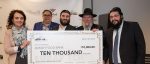
Chabad Lubavitch BC’s 40th Annual Gold Plate Celebration raised $10,000 for the Jewish Food Bank. (photo courtesy)

photo - Chabad Lubavitch BC director Rabbi Yitzchak Wineberg and his wife, Henia
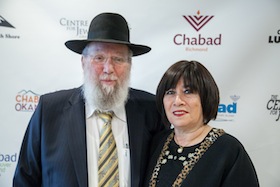
Chabad Lubavitch BC director Rabbi Yitzchak Wineberg and his wife, Henia. (photo courtesy)

Lubavitch BC held its 40th Annual Gold Plate Celebration on March 15, 2018. The dinner celebrated 43 years of Chabad Lubavitch service to British Columbia.

Instead of having a sit-down affair this year, Chabad Lubavitch BC had a cocktail reception and donated the money raised (the costs saved by not having a sit-down dinner) – $10,000 – to the JFS Vancouver Jewish Food Bank to help those in need.

There was also a raffle for the grand cash prize of $18,000.

Format ImagePosted on March 30, 2018March 29, 2018Author Chabad Lubavitch BCCategories LocalTags Chabad, Jewish Food Bank, tikkun olam

Posts pagination

Previous page Page 1 … Page 18 Page 19 Page 20 … Page 30 Next page
Proudly powered by WordPress