Skip to content
  • Home
  • Subscribe / donate
  • Events calendar
  • News
    • Local
    • National
    • Israel
    • World
    • עניין בחדשות
      A roundup of news in Canada and further afield, in Hebrew.
  • Opinion
    • From the JI
    • Op-Ed
  • Arts & Culture
    • Performing Arts
    • Music
    • Books
    • Visual Arts
    • TV & Film
  • Life
    • Celebrating the Holidays
    • Travel
    • The Daily Snooze
      Cartoons by Jacob Samuel
    • Mystery Photo
      Help the JI and JMABC fill in the gaps in our archives.
  • Community Links
    • Organizations, Etc.
    • Other News Sources & Blogs
    • Business Directory
  • FAQ
  • JI Chai Celebration
  • JI@88! video

Recent Posts

  • המלחמות של נתניהו וטראמפ
  • Zionism wins big in Vegas
  • Different but connected
  • Survival not passive
  • Musical celebration of Israel
  • Shoppe celebrates 25 years
  • Human “book” event
  • Reclaiming Jewish stories
  • Bema presents Perseverance
  • CSS honours Bellas z”l
  • Sheba Promise here May 7
  • Reflections from Be’eri
  • New law a desecration
  • Resilient joy in tough times
  • Rescue dog brings joy
  • Art chosen for new museum
  • Reminder of hope, resilience
  • The national food of Israel?
  • Story of Israel’s north
  • Sheltering in train stations
  • Teach critical thinking
  • Learning to bridge divides
  • Supporting Iranian community
  • Art dismantles systems
  • Beth Tikvah celebrates 50th
  • What is Jewish music?
  • Celebrate joy of music
  • Women share experiences 
  • Raising funds for Survivors
  • Call for digital literacy
  • The hidden hand of hate
  • Tarot as spiritual ritual
  • Students create fancy meal
  • Encouraging young voices
  • Rose’s Angels delivers
  • Living life to its fullest

Archives

Follow @JewishIndie
image - The CJN - Visit Us Banner - 300x600 - 101625

Tag: medicine

Teaching about death

Teaching about death

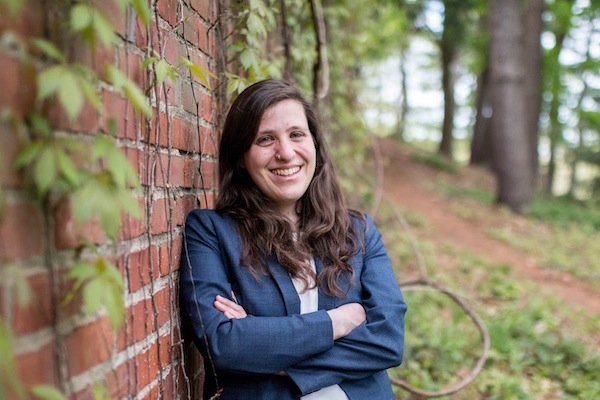
Dr. Jessica Zitter has both written a book and a movie about death and dying. (photo by Rikki Ward Photography)

Dr. Jessica Zitter, who works as an attending physician at a public hospital in Oakland, Calif., struggled with her job’s protocols for years. Until the day a nurse opened her eyes to the possibility that there was a better way, one that involved more compassion in the treatment of patients.

Zitter comes from a long line of doctors.

“They were into the art of medicine,” she said of the mentors she had when she first began her studies. “By that, I mean the art of surgery and intervening, and of doing things in a very precise way. There was something about that that I found heroic, and I wanted to be part of that world.

“So, I went to medical school – pulmonary and critical medicine – which I thought of as the most heroic of the specialties. I went on to start to focus on the machines, technologies, protocols and things that were part of the trade of being a pulmonary critical care physician. I tried to really perfect them … [thinking that,] if I use these perfectly, I’ll be able to help a lot of people.”

But, as she went along, she started to think differently. At first, she suppressed the feeling. “It was truly uncomfortable,” she said. “It caused me a lot of suffering.”

Zitter was using techniques and protocols on people who were not going to benefit from them, knowing full well that they would not benefit from them. Not only was she following her training, but she also wanted to please her patients – give them mainly good news and information about various procedures, instead of telling them the whole truth about their condition.

“I didn’t want to tell them, ‘Hey, I don’t think you’ll survive,’” said Zitter. “I didn’t want to say that because it’s too sad. I would communicate about things that were more practical like, if this happens, we will try this.”

A pivotal moment

Zitter’s approach changed after an encounter in the intensive care unit with a nurse from the family support team, called Power to Care.

“One day, I was about to put in a line [catheter] into someone who was really, really sick and likely dying, and the woman who headed that family support team was standing in the doorway watching…. I was about to put the needle in and she put her hand up to her face and she said, ‘Call the police,’ on a pretend telephone…. She said, ‘Call the police. They’re torturing a patient in the ICU,’” said Zitter. “And that was my epiphany moment. All these moments, I had this doubt. This was like a relief – you’re right, I am torturing the patient. What the heck? There was a clarity there that was really powerful.

“But, the sad truth is that I still put that needle in. I still put that catheter in that woman. The force of what I call the end-of-life conveyor belt is so powerful … not only the conveyor belt itself, but the drive to ‘protocolize,’ heaping on treatments … the culture in the hospital. It’s hard to break out. It’s hard to stop and take a pause, and say, ‘Wait a minute. What the heck?’”

The intervening nurse, Pat Murphy, in some ways became Zitter’s mentor on what it meant to be a doctor.

“I came to it late and from a place of profound dissatisfaction and moral distress, and I was just extremely lucky that I happened to be in one of four hospitals where this movement was starting to take hold,” Zitter told the Independent.

“And, I happened to have been open to it,” she added. She was able to get over her “human defence of not wanting to look stupid or like I didn’t understand … and to be able to say, ‘OK. Teach me.’

“I feel lucky that those two things were in check at that time,” said Zitter. “Not to say that I wasn’t filled with shame and embarrassment about what I’d been doing all that time, but the psychology…. Once you admit there’s a problem, then find a way to fix it.”

After years of immersing herself in this new paradigm, Zitter felt ready to share what she had learned. She published a book about it, called Extreme Measures: Finding a Better Path to the End of Life, in 2017.

As she was writing it, Zitter realized that, if a picture can impart a thousand words, maybe a movie would be able to convey even more. So, she put together a 24-minute documentary, Extremis.

Of the award-winning film, Zitter said, “It really shows the issues that come up in an ICU…. There is also a discussion guide that goes with it, so people can watch it and then come away from it with some lessons learned.

“This movie reaches a wide audience about really advanced care planning,” she said. “A lot of synagogues are using it, medical schools and nursing schools.”

Death education

Zitter was asked to teach sex education at both of her daughters’ schools.

“I want them to be able to make the best decisions they can make about their bodies and their health, and to be empowered to live the best they can,” she said.

But what about death education?

Extremis came out in late 2016. “It was nominated for the Oscars and a lot of my kids’ friends were watching it. And all these kids were really blown away by the movie and they were having a positive response to it,” said Zitter. “It made me think, ‘Why the heck aren’t we teaching kids about death? Why aren’t we having a conversation in high school, just like with sex ed?’ So, a friend of mine designed ‘death ed.’ We did it in her kids’ and my kids’ schools. It was really impactful.”

Zitter would love to see such a class in every school in the United States and Canada, along with other heath education classes, so everyone can have the opportunity to learn about a range of issues and discuss them.

Both the teachers and the students appreciated the lesson on death education, said Zitter. “There were no negative responses. Although some kids cried, and it was terrifying at first, they would then say, ‘That was sad, but I’m OK.’

“I was like, ‘It is sad that we are all going to die.’ But, you know what? It’s really good for these kids too, [because] it’s part of life. If we pretend no one’s going to die and don’t let our kids go to funerals, etc., we aren’t doing anyone a service.”

So far, Extremis has been translated into 90 languages and has been shown in 160 countries.

“We’ve got to tell people what’s actually happening and try to understand,” said Zitter. “I use myself as a prime example…. Why was I putting that catheter into a woman I knew was dying? What are these factors that are propelling me to do things that don’t make sense to me? The idea is to be more conscious of it, aware of it, and change it.”

For more information about the movie and the book, visit jessicazitter.com. The film trailer can be found on YouTube.

Rebeca Kuropatwa is a Winnipeg freelance writer.

Format ImagePosted on November 23, 2018November 20, 2018Author Rebeca KuropatwaCategories Books, TV & FilmTags death, dying, education, Extremis, healthcare, Jessica Zitter, medicine
Jumping gene research

Jumping gene research

Dr. Gideon Rechavi, who founded Sheba Cancer Research Centre, was in Vancouver in January for an international conference at which he presented new findings on “jumping genes.” (photo from Sheba Cancer Research Centre)

Dr. Gideon Rechavi, who founded Sheba Cancer Research Centre, in Ramat Gan, Israel, was in Vancouver in January for an international conference on DNA and RNA methylation.*

“I described a new work we just published, regarding ‘jumping genes,’” he told the Independent about his presentation at the conference. “Forty-five percent of our genome, part of what people used to call ‘junk DNA,’ is composed of genes that can jump from one place to another.”

As far as what this means for the functioning of a body, he explained, “When they jump, they can activate genes and they can also inactivate genes, and it’s a random process. Actually, when I was PhD student in ’82 at the Weizmann Institute, I found the first example of such an event in mammals.” And, he added, “We were also the first to show the role of such events in cancer.”

Rechavi explained, “In cancer, there is a set of genes called oncogenes, genes that usually are normal genes in our genome but, when they are over-activated or activated in the wrong cell or at the wrong time, they can push the cell to proliferate and can cause cancer.”

Now, he said, many years later, using advanced technologies based on whole genome sequencing, they have found that, “in a variety of neurodevelopmental disorders, such as autism and Rett syndrome and similar diseases, there is a basic gene defect in the family or in the affected child. However, the clinical presentation can differ even between identical twins. Nobody understands why the same genome and the same genetic background will result in such a difference, one patient will be affected by epilepsy, the other one by autism or mental retardation.

“The mechanism that we show is that, in the brain, there is, normally, a constant level of jumping of such genes and, probably, it’s essential for diversity of neurons and brain plasticity and activity.”

This is happening all the time in neuronal stem cells, he said. “During the differentiation of neuronal stem cells … there is a very precise time window of 48 hours when such transposition events can take place. And, probably, it’s essential, because you find it in mice, in monkeys and in humans. However, in all the diseases that we are studying, there is over-activation of the mechanism, so you have many more jumping events.”

We have neuronal stem cells dividing in the brain our whole life, said Rechavi. “In the past, we used to think that all of the neurons are created during pregnancy or soon after, but now, in the last 20 years or so, we know there are also adult neuronal stem cells. When you do gymnastics or when you take Prozac, there are more neuronal stem cells. And, in these neuronal stem cells, these transposable elements – jumping genes – are jumping and probably contribute to brain function.”

The process seems to be quite regulated, he said. “The mechanism we suggest, we call it the ‘lightning rod’ mechanism or hypothesis.”

He explained, “The majority of jumping events occur in sequences in the genome where integration will not cause harm. So, in a normal level of jumping, we expect it will be beneficial, and the chance for damage is low. Although, if, in a variety of diseases, there is uncontrolled activation of this mechanism, so there are many more jumps, then it can saturate the lightning rod safeguard mechanism and then affect genes that are relevant to neuronal diseases, and we have a lot of examples where such things happened.”

To study this, said Rechavi, they sequenced the genomes of 100 samples, which included normal, diseased and control brain samples. “We were able to show that there is a particular normal level of transposition … and, then, over-activation, with many more transposition events, in the brains of disease-affected children.”

From these results, he said, we know that “the genes affected by such insertions from these transpositions, you see that many of them are relevant to neuronal functioning, neural development and a variety of neuronal disorders, such as autism and schizophrenia.”

By understanding the biochemical mechanism in these patients, what activates the jumping, “then you can intervene,” said Rechavi. For example, perhaps a drug could be developed that would decrease the level of transposition.

“This is the next step,” he said. “Now, we have several patients where we know the gene defect involved in the syndrome and, therefore, is involved in the enhanced transposition, so now we have to find a way to shut it off, to lower the activity.”

Rechavi said his lab is researching these jumping genes and their effects in both cancer and neuronal disorders, and that they are currently looking for funding to study the involvement of such genes in Alzheimer’s and in aging.

The purpose of the jumping genes is not certain. “What people suggest,” said Rechavi, “is that it has to do with diversity.” Recalling that it is a random process, he explained, “So, instead of having all the neurons in a particular part of the brain being identical, now you have diversity and probably the diversity increases the efficiency of the brain circuits, etc. It can also be relevant to plasticity. We know that specific brain regions can take over following damage or following a kind of environmental influence and change the activity and perform new activities. So, maybe the ability to create diversity in the brain is an advantage.

“A similar model has to do with the immune system,” he added. “With the immune system, we know that there are genetic mechanisms that increase diversity and, then, the cells of the immune system of an individual can respond to any virus and any bacteria.”

The main focus of his lab at Sheba Medical Centre, he said, is to find new genetic and epigenetic mechanisms, “and then to ask, what is their relevance to normal physiology and what’s their relevance to diseases. That’s how this story that started with cancer research turned out to be very relevant to neuronal disorders and psychiatric disorders.”

Rechavi said the phenomenon of jumping genes, or transposable elements, was first identified by American scientist Barbara McClintock (1902-1992) in experiments with maize. (She won the Nobel Prize in 1983 for this and other contributions to the study of genetics.) “She found it in maize,” he said. “We found it in mammals.”

Conferences like the one Rechavi was attending in Vancouver when he spoke to the Independent by phone Jan. 23 from his room at the Fairmont Hotel Vancouver, where the conference was being held, are useful for several reasons.

“Some people, after my talk, came and they wanted to collaborate, they want to learn the methodologies. Some people suggested samples we could analyze…. This is the basis for scientific collaboration, the main reason to do scientific meetings. You can read everything on the internet,” he said, “but when you discuss with people the findings and you drink coffee together and discuss the details, you can get new information, new non-published information, and also collaborations and friendships.”

Sheba Medical Centre doesn’t have many partnerships with Canadian institutions, said Rechavi. The centre’s main collaboration in Canada, he said, is with Toronto’s Hospital for Sick Children, especially in the field of brain tumours, because one of Rechavi’s former trainees, Dr. Uri Tabori, went to SickKids to study such tumours and stayed there.

Before obtaining his PhD at the Weizmann Institute of Science, in Rehovot, Rechavi earned his doctor of medicine at Tel Aviv University’s Sackler School of Medicine. He is a professor of hematology at Sackler School and heads the Cancer Research Centre at Sheba Medical Centre, the largest hospital in Israel, which serves as a university teaching hospital (affiliated with Sackler) and as a tertiary referral centre. He has published more than 450 scientific papers.

In addition to treating some 1.5 million patients annually, Sheba Medical Centre has 75 laboratories and more than 2,000 ongoing clinical trials; 30% of Israeli medical research is performed at Sheba, which files, on average, 15 biomedical patent applications per year.

In October 2017, Sheba Medical Centre inaugurated the Wohl Institute for Translational Medicine. The idea, said Rechavi, is to take the “findings emerging from basic research and try to translate it into taking care of patients; to better diagnose, to [develop] better treatments.”

* Methylation, explained Dr. Gideon Rechavi, “is the addition of a chemical group known as methyl on the four basic letters of the genetic material (DNA and RNA) to generate a new expanded ‘alphabet.’”

Format ImagePosted on February 16, 2018February 14, 2018Author Cynthia RamsayCategories IsraelTags aging, Alzheimer's, cancer, DNA, Gideon Rechavi, health, jumping genes, medicine, methylation, neurodevelopmental disorders, science, Sheba Medical Centre
Artworks on healing

Artworks on healing

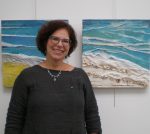
Gail Dodek Wenner conceived the group exhibit Physician Heal Thyself … and Others, which is at Zack Gallery until June 25. (photo by Olga Livshin)

The new exhibition at Zack Gallery, Physician Heal Thyself … and Others, includes four artists, all of them local physicians near retiring or recently retired. Regular visitors to the gallery probably will be familiar with the work of two of them – Ian Penn and Carl Rothschild, who have exhibited at the gallery before – but maybe not that of Arturo Manes and Gail Dodek Wenner.

Rothschild’s contribution to the show is a selection of small, colourful paintings, which look like snapshots of his garden or a street around the corner. Each one is accompanied by a poem written by the artist. Together, they represent his impression of his home city and its healing potential.

photo - “Preventative Medicine” by Carl Rothschild
“Preventative Medicine” by Carl Rothschild. (photo by Olga Livshin)

Penn’s part of the show is more dramatic. It includes a video and several photographed pages from his journal, where he documented the before and after of his complicated spinal surgery in 2016. His display fits the theme of the show almost too perfectly for comfort.

Manes’ paintings – his method of spiritual healing – are based on Roman Vishniac’s book of black-and-white photographs, A Vanished World.

“The Shoah has been for me a defining event not only in Jewish history but human behaviour, which I’m trying to come to grips with,” Manes said in an email interview. “Black-and-white photographs in Vishniac’s book impressed me greatly…. I used those images of my people prior to the Holocaust as a template for my paintings. By adding colour and a free rendering, I hoped to express the feelings the photographs have evoked.”

He said Physician Heal Thyself is the first exhibit in which he has participated, although he has been painting since childhood. “I’m not an artist – I’m a physician who paints. I was honoured to be invited by Dr. Gail Wenner to be a part of this show.”

Dodek Wenner invited the other doctors to participate in the show, as well. It was she who came up with the theme.

“I always loved art, but I loved science, too,” she told the Independent. “I chose medicine as my career, but art has always been my hobby.”

As an artist, she is very versatile. At one point or another, she has tried various media: painting, ceramics, textiles, photography, Hebrew calligraphy. In practising medicine, however, she stayed true to one direction: mothers and babies. “In the past 26 years, I delivered 2,000 babies,” she said. “But I made the decision to stop delivering. It’s time for a change.”

One of the precursors of her decision was going back to school, to Emily Carr University. In 2009, she received a diploma in fine art technique.

photo - “Weaver” by Arturo Manes
“Weaver” by Arturo Manes. (photo by Olga Livshin)

“I took a class, Business of Art,” she recalled. “One of the assignments was to pitch an idea for a show to an art gallery. I chose a theme: healing, what it means to be a doctor and what Judaism says about healing. I chose the Zack Gallery, and I decided to invite several Jewish physicians to participate. All for a school assignment. I didn’t actually do it at that time. I did mention it to Yosef Wosk, who is a friend, and he said it was a great idea.”

A few years later, Wosk reminded her of the idea, and she finally contacted Zack Gallery director Linda Lando. “I pitched the idea to Linda in 2016,” Dodek Wenner said. “We brainstormed it and came up with a few names of Jewish physicians who were artists.”

That was the first step. The next step was to determine what she wanted to paint for the show. “I needed to explore what healing meant to me,” Dodek Wenner explained. “Personally, I always went to my parents’ beach house when I needed to do some healing. So, I thought, what was it about the ocean that healed me?”

After some contemplation, she came up with four steps of healing. “The first one is the acknowledgement: yes, there is a problem. There is a fear, and a doctor has to acknowledge that fear in her patient. Next comes compassion, which leads to the doctor assuring her patient: I can help you. The third one is wisdom. Doctors have a huge body of knowledge. They study for many years, and they share their knowledge with the patient, use what they know for healing. Last is comfort. Comforting the patient is very important at every stage of the healing process.”

After formulating these concepts in her head, she explored what Judaism says about healing. “I looked in the siddur, the Jewish prayer book, and found all four of those concepts of healing, both body and soul, in the first couple pages,” she said.

She knew she was on the right track but wasn’t sure how to showcase her ideas through art. “I went to the beach house again, walked along the shore, and I knew,” she said. “The ocean represents all four facets of healing, too.”

Her paintings, two distinct series of five paintings, are all different interpretations of the shoreline. The ocean is sometimes quiet, sometimes turbulent and the colours of the waves fluctuate from light blue to deep green. The foam, created with the use of medical gauze, plays in the sand among the shells. The shells are real, collected by the artist along the same beach she loves so much. “I scooped them with a cup,” she said.

“My paintings don’t show one particular place,” she added. “They are the essence of a shoreline. Each piece is different, but they all connect.”

Physician Heal Thyself opened on May 25 and continues until June 25.

Olga Livshin is a Vancouver freelance writer. She can be reached at [email protected].

Format ImagePosted on June 2, 2017May 31, 2017Author Olga LivshinCategories Visual ArtsTags art, Arturo Manes, Gail Dodek Wenner, healing, medicine, Zack Gallery
Serving Israel with their life

Serving Israel with their life

From left to right: Murray Palay, Canadian Friends of the Hebrew University national chair; Israel Defence Forces Unit 669 reserve combat soldiers Leehou Porat and Gai Ben Dor; Prof. Yaacov Nahmias, director of the Alexander Grass Centre for Bioengineering at Hebrew U; 669 reserve combat soldiers Bar Reuven and Dotan Braun; CFHU Vancouver chapter president Randy Milner; and CFHU national vice-chair Phil Switzer. (photo from CFHU Vancouver)

Dina Wachtel, executive director of Canadian Friends of the Hebrew University’s Western region, describes the recent fundraising event that attracted more than 300 people to Congregation Beth Israel on July 17 as “a wonderful success.”

The sold-out event raised scholarship funds for outstanding student-soldiers. These individuals are pursuing degrees at the Hebrew University of Jerusalem, as well as performing their miluim, or reserve duty, in the Israel Defence Forces’ elite airborne rescue and evacuation unit known as “669.” The Vancouver event drew a diverse and engaged crowd from the community and included academics and members of local search and rescue groups.

Prof. Yaakov Nahmias, director of the Alexander Grass Centre for Bioengineering at the Hebrew University, kicked off the formal part of the evening’s program with an overview of Hebrew U’s history and accomplishments. Founded in 1918 – 30 years before the establishment of the state of Israel – by illustrious historical figures, such as Albert Einstein, Sigmund Freud and Chaim Weizmann, Hebrew U ranks as one of the world’s leading universities and boasts seven Nobel Prize laureates. According to Nahmias, “when Hebrew U calls, you answer!”

The Grass Centre was established in 2010. Nahmias, who was at Harvard University before returning to Israel, has won several academic awards for his work in liver research and he is particularly proud of the centre’s successes in “educat[ing] a new generation of multidisciplinary innovators and entrepreneurs at the cutting edge of biotechnology and medical science.” He noted that the centre’s 44 affiliated faculty members undertake research that winds up in the world’s leading scientific journals; interest-catching pursuits such as building a liver outside of a body, predicting in vitro fertilization pregnancy rates, and determining “idiosyncratic drug toxicity” (hitherto unexpected adverse reactions to drugs).

Nahmias also outlined the “startup” element of the centre’s work – an aspect that appeals to students with academic ambitions, as well as giving them market experience and engendering an entrepreneurial spirit. The Israeli government has invested $20 million US in BioJerusalem, or “Silicon Wadi,” to support technological innovation. The outcome? Israel is a global leader in medical devices and pharmaceuticals, he said, and this attracts intellectually curious science students who are also seeking opportunities in business, medicine and engineering. The biodesign program feeds directly into Israel’s economic success and reputation as a technological powerhouse. Remarkable and revolutionary projects to date, he said, include the creation of a specialized infrared gun to facilitate intravenous insertions; digitally made dentures that are inexpensive and quick to produce; and a new 60-second life-saving procedure that improves stabbing victims’ chances of survival by preventing suffocation caused by collapsed lungs.

Nahmias concluded his presentation by highlighting bioengineering as “one of the most fascinating areas, especially for the future of Jerusalem as a city and Hebrew University as the leading university in Israel.” He announced that plans are underway to build a large, new institute on the Givat Ram campus to house the biodesign program.

photo in Jewish Independent - Event emcee and Hebrew University alumna Nava Rosenberg
Event emcee and Hebrew University alumna Nava Rosenberg. (photo from CFHU Vancouver)

The evening’s lecture was punctuated with a musical interlude from Vancouver-based Israeli composer and guitarist Itamar Erez. Recipient of the Landau Prize in 2014, as well as the ACUM Prize for special achievement in jazz, Erez’s musical talents blend jazz, flamenco and the sounds of the Middle East.

Following Erez’s performance, four extraordinary young Israelis took centre stage. They detailed their personal experiences serving in the IDF’s 669 and how the service has impacted their lives.

The unit, which accepts only 50 recruits each year out of 10,000 applicants, was established in 1974 following the Yom Kippur War. It is referred to as the “guardian angel of the Jewish people” because it rescues soldiers and civilians alike, both within and beyond Israel’s borders. The unit’s motto is, “Thou didst call in trouble and I rescued thee” and, in the last 40 years, the unit has rescued more than 10,000 injured and saved thousands of lives. Rescue operations are generally extremely difficult and dangerous.

Bar Reuven, Leehou Porat, Dotan Braun and Gai Ben Dor impressed upon the crowd the unique and challenging lifestyle of a Unit 669 reservist, who is “on-call 24/7” and serves an average of 30 to 45 days a year “in peacetime.” When summoned, a civilian university student is instantly transformed into an elite reservist on a mission that can be anywhere in the world. All personal commitments are immediately set aside.

According to Reuven, 27, who served as an officer in 669 and founded an alumni association designed to provide much-needed support to discharged soldiers from 669 transitioning to civilian life, you “can go from eating shakshuka [in Tel Aviv] to Gaza in 30 minutes.”

Thirty-year-old Braun, a fifth-year medical student at Hebrew U and a reserve combat soldier and paramedic in 669, recounted walking to class in July 2012, when he received a command to present himself on base within the next 30 minutes. He soon learned that he would be traveling to Burgas, Bulgaria, to treat and evacuate some 42 Israeli tourists who had been targeted in a bus bombing. (Tragically, five Israelis and a Bulgarian bus driver were murdered in that terror attack.)

Serving in the 669 instils Braun with a profound sense of pride in Israel, as “there is no other country that cares about the security of all its citizens and at all times,” he said. He – like others in 669 – is also called upon to come to the aid of non-citizens in life-threatening situations, including rescuing sailors in the Mediterranean or treating casualties of natural disasters in far-flung corners of the world.

Braun emphasized that life for 669 reservists, in particular, “is never routine.” Porat, 28, who is both a reserve combat soldier in Unit 669 and a student at Hebrew U, underscored this fact by recounting – with the aid of select video footage – a harrowing evening of back-to-back rescue missions that included evacuating an Israeli soldier from Gaza who had been gravely wounded in an axe attack; responding to a serious car accident that caused seven fatalities; assisting a pregnant Bedouin woman in the advanced stages of labor and whose house had just been washed away by floods; and rescuing a number of individuals trapped in or on cars swirling in raging floodwaters and high winds.

Despite the challenges of balancing the responsibilities of school, work, family, volunteerism and reserve duty, Reuven, Porat, Braun and Ben Dor were all steadfast in their commitment to their unit, and to serving their country and fellow citizens in times of crisis.

It was evident that these four speakers have indeed internalized the core values of the unit, described by Reuven as assisting those in need, social responsibility, and helping make Israel and her people stronger. He engages these values to guide him in managing his Cat 669 Alumni Association, a group that provides emotional, psychological and financial guidance, career mentoring and other material support to fellow unit members transitioning – sometimes with great difficulty – to civilian life. This group also draws upon its superior skill set to “pay it forward” in local communities by, for example, teaching emergency first aid.

Thirty-two-year-old Ben Dor is an accountant and lawyer at KPMG in Israel. As part of 669, he is another example of the positive contributions that 669 reservists make to Israeli society. An avid long-distance runner in his teens, Ben Dor responded to an online ad seeking “a runner with soul.” Beza, a blind Ethiopian immigrant wanted to take up running, and Ben Dor (and his father, also a runner) coached Beza over the next several years. Beza competed in a number of international marathons, and ultimately qualified to compete at the Beijing Paralympics, representingIsrael. Ben Dor, his father and Beza have since climbed to Everest Base Camp together and Ben Dor has established an Israeli not-for-profit organization called 180 Degrees, which hosts running groups for people with physical or cognitive disabilities.

Listening to these four young Israelis who are serving their country in truly meaningful ways and learning about the cutting-edge research taking place at the Hebrew University, it is not surprising that the evening’s fundraising event – to support the reserve soldiers in Unit 669 studying at Hebrew U by relieving them of financial worries – was a “wonderful success.”

Format ImagePosted on August 19, 2016August 18, 2016Author Alexis PavlichCategories LocalTags CFHU, fundraising, Hebrew University, IDF, Israel Defence Forces, medicine, R&D, soldier-student

Posts pagination

Previous page Page 1 Page 2 Page 3
Proudly powered by WordPress