Skip to content
  • Home
  • Subscribe / donate
  • Events calendar
  • News
    • Local
    • National
    • Israel
    • World
    • עניין בחדשות
      A roundup of news in Canada and further afield, in Hebrew.
  • Opinion
    • From the JI
    • Op-Ed
  • Arts & Culture
    • Performing Arts
    • Music
    • Books
    • Visual Arts
    • TV & Film
  • Life
    • Celebrating the Holidays
    • Travel
    • The Daily Snooze
      Cartoons by Jacob Samuel
    • Mystery Photo
      Help the JI and JMABC fill in the gaps in our archives.
  • Community Links
    • Organizations, Etc.
    • Other News Sources & Blogs
    • Business Directory
  • FAQ
  • JI Chai Celebration
  • JI@88! video

Recent Posts

  • המלחמות של נתניהו וטראמפ
  • Zionism wins big in Vegas
  • Different but connected
  • Survival not passive
  • Musical celebration of Israel
  • Shoppe celebrates 25 years
  • Human “book” event
  • Reclaiming Jewish stories
  • Bema presents Perseverance
  • CSS honours Bellas z”l
  • Sheba Promise here May 7
  • Reflections from Be’eri
  • New law a desecration
  • Resilient joy in tough times
  • Rescue dog brings joy
  • Art chosen for new museum
  • Reminder of hope, resilience
  • The national food of Israel?
  • Story of Israel’s north
  • Sheltering in train stations
  • Teach critical thinking
  • Learning to bridge divides
  • Supporting Iranian community
  • Art dismantles systems
  • Beth Tikvah celebrates 50th
  • What is Jewish music?
  • Celebrate joy of music
  • Women share experiences 
  • Raising funds for Survivors
  • Call for digital literacy
  • The hidden hand of hate
  • Tarot as spiritual ritual
  • Students create fancy meal
  • Encouraging young voices
  • Rose’s Angels delivers
  • Living life to its fullest

Archives

Follow @JewishIndie
image - The CJN - Visit Us Banner - 300x600 - 101625

Tag: democracy

NGOs should flaunt funding

The Transparency Bill, also known as the NGO Bill, received cabinet approval in December and is, therefore, closer to becoming law in Israel. The bill requires any Israeli nongovernmental organization receiving more than half its funding from foreign governments to disclose this in all written communications with elected officials; to declare it orally when meeting in places where public officials gather; and, perhaps most chillingly, to require these NGO representatives to wear a badge indicating this funding whenever they visit the Knesset. The government’s coalition members have already agreed to support the bill when it is presented to the Knesset.

It’s no wonder left-wing NGOs and their supporters are bristling at the bill, seeing it, rightly, as targeting them specifically. Right-wing NGOs tend to get their foreign funding from individuals (who are often more difficult to track) rather than from governments. Given the current composition of the Israeli government, right-wing NGOs also naturally seek to support and intensify existing government policies, whereas left-wing NGOs are more likely to challenge the government’s policies. The bill is also somewhat redundant, since all NGOs are already required to declare their funding sources.

Nonetheless, should the bill pass, NGOs should wear their scarlet letter proudly. Unlike the literary figure Hester Prynne who flouted her community’s norms by committing adultery, Israeli NGOs are not only upholding the democratic norms of their own country, but are indeed enacting the norms of a much larger world than their own: specifically, global international society.

Consider the foreign government funding sources of ACRI, Israel’s premier civil liberties association. These donor countries are exclusively democracies. Ditto the country donors to B’Tselem, Israel’s premier human rights organization. Adalah, New Israel Fund, Sikkuy: all of these rights groups in Israel receive funding not from authoritarian regimes who trade in tyranny and persecution, but from democracies.

What do democracies have in common? Namely, a mission to uphold the practices that define them: openness, transparency, protection of the individual and of minorities, human rights, civil liberties and freedom. Expressing these norms is one of the main explanations for one of the most enduring features of the international system: the tendency for democracies to never go to war with one another. In believing that fellow democracies act with similar degrees of openness and debate, democratic governments inherently trust one another to solve disputes peacefully.

Democratic governments also have another unique quality: by design, they speak for their majority. Right now, the donor countries to these NGOs are mostly European. (Some United Nations bodies are represented, as well as USAID.) Imagine if every democracy in the world chose to funnel some of their foreign aid budget to Israeli NGOs: these Israeli groups would then be acting as an extension of global democratic society writ large, the best slice of human capital the world currently boasts.

On the day of the vote, the Zionist Union wore protest tags declaring “a Jew doesn’t mark another Jew: a Jew doesn’t mark another human being.” Galei Tzahal, Israel’s army radio, has revealed that 98% of Netanyahu’s campaign donations are from donors abroad. An American petition is circulating urging “President Obama and Congress to support U.S. legislation and regulations that would ensure that similar restrictions to whatever is enacted in the Knesset against ‘foreign funding’ of Israeli human rights groups are applied in the U.S. to private U.S. funding of the Israeli right and the settler movement.” And now, a group of American citizens have filed a lawsuit against the U.S. Treasury, attempting to rescind the nonprofit status of 150 American NGOs that apparently send billions of dollars to the settlements and to the Israel Defence Forces.

These are understandable rearguard actions. But perhaps supporters of human rights and civil liberties are looking the wrong way.

The Israeli government worries about Israel being “delegitimized” in international circles. The best hope for Israel is for the country’s fellow democracies to believe in Israeli civil society enough to continue to boost it. Until the upholders of democratic values give up on Israel altogether – and I sure hope that does not happen – Israeli NGOs should boast proudly of their foreign democratic government funding. It follows, too, that the Israeli government should be grateful for it. Amid all the delegitimization stemming from Israel’s running of a patently undemocratic regime in the West Bank, which regularly flouts human rights and civil liberties, the good work of these Israeli NGOs – the cornerstone of Israeli civil society – is the best reminder that there is hope for democratic Israel yet.

Mira Sucharov is an associate professor of political science at Carleton University. She is a columnist for Canadian Jewish News and contributes to Haaretz and the Jewish Daily Forward, among other publications. A version of this article was originally published on haartez.com.

Posted on February 5, 2016February 4, 2016Author Mira SucharovCategories Op-EdTags delegitimization, democracy, Israel, NGO Bill, Transparency Bill

Democracy and choice

The sublime thing about liberal democracies is that they are based on the rights and responsibilities of individuals rather than groups. Unlike the kind of sectarian societies imploding in civil war in the Middle East, in a liberal democracy, it is the individual who chooses to go to the ballot box (or abdicate) or to attend a protest (or go to the movies), and it is the individual who must abide by the law or face punishment.

In robust multicultural societies like Canada’s, individuals are given another opportunity – to identify as an ethnic, religious or cultural group. While these groups are considered a boon to the fabric of society, all rights and responsibilities remain solely with the person. Which is why calls for Muslims in Canada and the United States to publicly denounce acts of terrorism committed by the Islamic State (ISIS) and others inspired by them, is understandable – but ultimately wrong.

Here’s where it’s understandable. Terrorism – defined as the targeting of civilians for political ends – is morally distasteful. When committed by a fellow citizen, the action is especially corrosive, leading to distrust and paranoia. When an act of terrorism is committed by a person or group claiming to act on behalf of a particular religion, it’s tempting to want everyone else from that religion to denounce the action.

Here’s where it’s wrong. As a Jew, I regularly urge my fellow Jews to stand up for injustice as Jews, to stand up against an array of Israeli policies that I find objectionable. I encouraged my Jewish community centre (when I was a board member) to undertake staff training around LGBTQ awareness, thus enabling it to declare itself an “LGBTQ safe zone,” as facilitated by the Jewish LGBTQ organization Keshet. As a Jew, and as a Jewish columnist in the Jewish press, I stand up for religious freedom in Israel, for human rights, for an end to the occupation and for racial and ethnic equality.

But let’s recall an incident last summer with Jewish pop singer Matisyahu. Organizers attempted to ban Matisyahu from performing at a music festival in Spain unless he denounced the Israeli occupation. Matisyahu is an American, not an Israeli. His only association with the Jewish state is that he himself is Jewish.

It was a distasteful act of political theatre on the part of the organizers precisely because they drew a faulty line of logic: Israeli occupation is morally objectionable to them, so all Jews (or at least famous ones) must take a public stand because they are Jews. (After a public outcry, the festival organizers backtracked.)

In a liberal democracy, whatever collective identities we hold – sexual, religious, ethnic and so on – are the domain of the private sphere unless we choose, as individuals, to act otherwise. So, while I hope my fellow Jews will take a stand against an array of social ills, and am aware that some don’t, I would be disgusted and disturbed if, say, a work colleague or a politician or a journalist in a local or national daily were to demand that I, because I happen to be Jewish, denounce one thing or another.

The upshot? Community conversations about dynamics relating to that community are crucial to have. But they are just that: community conversations. We must leave members of synagogues, mosques, churches, JCCs and other organizations to debate among themselves whether and how to publicly denounce actions committed in their name. The pages of the community newspaper may indeed be one useful forum among many for these tough conversations.

And perhaps the Jewish community, being more integrated, prosperous and secure than the Muslim community in North America, may even serve as a model. But demanding that sort of stand taking by others in a civic forum violates the delicate multicultural balance that is intrinsic to a liberal democracy, where the individual is the only meaningful object and subject of political action.

Mira Sucharov is an associate professor of political science at Carleton University. She is a columnist for Canadian Jewish News and contributes to Haaretz and the Jewish Daily Forward, among other publications. This article was originally published in the CJN.

Posted on January 29, 2016January 26, 2016Author Mira SucharovCategories Op-EdTags democracy, Israel, Matisyahu, Muslims, terrorism
Ensuring fair, legal elections

Ensuring fair, legal elections

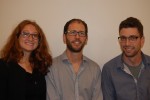
Kara Mintzberg (B.C. regional director of CJPAC), Ron Laufer, centre, and Michael Schwartz. (photo from Jewish Museum and Archives of British Columbia)

With Canada’s 2015 federal election so closely contested, Jewish community organizations continued to the dying days of the long campaign to try to encourage volunteerism and interest in the electoral process. One such point of community engagement was the talk Observing Democracy by Ron Laufer on Oct. 8 at the Jewish Museum and Archives of British Columbia. Presented in conjunction with the Canadian Jewish Political Affairs Committee (CJPAC), the evening was a chance for people to hear about the challenging conditions under which elections run in a variety of countries around the world.

Laufer works as an election observer and administrator. He has administered private elections locally, in the case of court-ordered elections of nonprofit organizations such as the Guru Nanak Sikh Temple, for example. His international experience includes primarily work for the Organization for Security and Cooperation in Europe (OSCE). He has acted as an election analyst, polling station advisor and deputy head of mission for many international elections. Some of these elections were not particularly democratic while others, although complex in their execution, were perhaps surprisingly democratic in their process.

The Afghan election in 2005 was an example of a logistically complicated election. Not only was the concept of democratic elections new, but also a large proportion of the population is both illiterate and isolated in places unreachable by motorized vehicle.

“We used hundreds of donkeys, camels and horses to transport election materials,” said Laufer. The ballots were sometimes seven broadsheet pages on which voters needed to cast seven votes, no more, no less, in order for the ballot to be valid.

Laufer worked on this election on the ground in Afghanistan for six months in order to help educate the population, organize the ballots and the voting, and assess the results afterward. From the slides he showed, another challenge was keeping the election observers safe. “One trip included two international observers, with about 18 others between the interpreters and the security staff.”

Just a sampling of the countries Laufer has visited to help in some fashion with their elections includes Turkmenistan, India, Nigeria, Iceland, Hungary, Kosovo, Uzbekistan, Ukraine, Austria, Tunisia, Malta and Albania. With the exception of Nigeria, these countries are all member states of OSCE. Much of his work as an observer has been for the OSCE, since all member states are required to have observers of their elections. There are 57 states who have signed on to the OSCE, so this keeps Laufer quite busy, considering the length of his missions can range from one week to observe an election day to a long-term mission of up to six months.

Membership in OSCE is, in some cases, a screen for undemocratic states, such as Turkmenistan, and countries like Hungary and Bulgaria, which are becoming increasingly less democratic, said Laufer.

While he offered many examples of countries in which elections are no more than a show put on by the ruling dynasty, he also gave examples of countries whose systems seem to be improving. His fairly recent trip to Sierra Leone was a bright spot. He said, “They went through hell and back and now it feels like they are moving forward. Their election was fairly smooth.” He acknowledged that elections are only a small part of democracy but said that, without properly run elections, democracy cannot be achieved.

After Laufer answered questions from the floor, Michael Schwartz, JMABC coordinator of programs and development, gave a short presentation that was followed by Kara Mintzberg, B.C. regional director of CJPAC, who spoke briefly on the ways in which Jewish Canadians can “punch above our weight” in an election.

As a community, she said, we represent only 1.1% of the Canadian population and are spread out all over the country; only five percent of all ridings in the federal election were potentially influenced by a concentration of Jewish population in those areas. In general,

CJPAC encourages members of the community to volunteer, and facilitates the introduction of a volunteer who signs up with CJPAC to the volunteer’s choice of campaign, thus alerting the candidate to the participation and interest of a Jewish volunteer. This knowledge, it is hoped, will make the candidates more aware of the Jewish and/or pro-Israel presence and support in his or her riding.

Among CJPAC’s activities leading up to the Oct. 19 federal election was an all-candidates meeting on Oct. 1 at Beth Israel Synagogue with more than 500 in attendance. CJPAC’s mission of fostering Jewish and pro-Israel political leadership is not limited to election time.

For more information on the JMABC, visit jewishmuseum.ca. To become involved in political advocacy through CJPAC, visit cpjac.ca.

Michelle Dodek is a freelance writer living in Vancouver.

Format ImagePosted on October 23, 2015October 22, 2015Author Michelle DodekCategories WorldTags CJPAC, democracy, elections, JMABC, Ron Laufer
Don’t vote for Momma!

Don’t vote for Momma!

A few weeks ago, I sat in the High Holy Day services looking around the room at the omany folks who make their annual pilgrimage to the synagogue that time of year. Most of them are there out of guilt or a sense of obligation instilled in them from when they were kids. Momma said, “You go to services on the High Holy Days!” And that was that! Most of them also hang onto a sense of Jewish identity and feel that attending that service once a year keeps them connected and fulfilled.

A few rabbis might wince as they read this, but I say there is nothing wrong with that. Religion is whatever we each want, need or don’t need it to be. It is personal. However we wish to acknowledge or pay attention to it is up to us. We don’t owe our beliefs or religious commitments to anyone but ourselves – and maybe our mommas.

This certainly isn’t just a Jewish-specific behavior. All sorts of folks in all sorts of religions follow a similar path, engaging at certain key times of the year to fulfill their personal obligations or commitments.

Unfortunately, too many Canadians carry on a similar mentality when it comes to national politics, with election time being the one time they feel compelled to celebrate their democratic rights by heading to the polling stations and voting.

While participating in a religious service without understanding the issues or knowing what it’s really about can still offer personal benefits, influencing politics and voting without knowing what it’s really about is concerning.

Everywhere I look on social media for the past month I see folks pleading with the country to show up and vote. We live in a democracy, after all. We are lucky to have the opportunity and the right to vote and, thus, we should. Many people sacrificed their lives so that we can have these choices today, with the right and freedom to vote for our leaders.

But it’s not just about stepping up to a pole and filling out a ballot. Important decisions are being made while every single vote carries the same weight.

It’s not just about the action of voting. It’s about contributing. It’s about respecting the rights and privileges we once fought for and now defend in this country. So please, don’t vote blind. Don’t vote based on the color of the lawn post you prefer. Don’t vote because the person in your riding has the same first name as you. Don’t vote because your momma told you who to vote for.

Everyone should vote! But if you can’t find some time to have at least a basic understanding of who or what you are voting for I am suggesting that you do not vote.

If you think you might fall under that category, take the time to read the posts linked here – both great places to start. Then get out there and vote!

Everything you need to know about the platforms, and JI interviews with the Liberals, Conservatives, Greens and NDP for all you need to about the federal leaders’ views on Israel, Iran, security, and more. And there’s even more at Federal Election 2015.


Format ImagePosted on October 18, 2015October 19, 2015Author Kyle BergerCategories It's Berger Time!Tags Canada, Canadian election, democracy, Election, Federal, vote

Make sure you vote

Voting always matters. But this election is among the least predictable in living memory. British Columbians’ choices could tip the balance to one party or another, or determine whether the next government is a majority or a minority.

In a world where journalists are advised to write to a Grade 8 reading level, the Jewish Independent is proud to treat our readers like adults. We will certainly not suggest for whom you should vote nor deliver a civics lesson on the importance of voting. We merely remind you that polls are open this Monday, Oct. 19, from 7 a.m. to 7 p.m. If you have not received your voting card in the mail, visit elections.ca for details on how to vote.

We also invite you to review the four articles we have run in recent weeks, featuring representatives of the four parliamentary parties. At jewishindependent.ca, you can find interviews with the leaders of the Liberal party, the NDP and the Green party, as well as a senior Conservative cabinet minister. Each makes their case directly to Independent readers and we urge you, if you have not already, to take the time to review these pieces, since Canada’s top political leaders took the time to speak with us in order to get their messages directly to you.

Posted on October 16, 2015October 14, 2015Author The Editorial BoardCategories From the JITags democracy, elections

“Threat” term problematic

When it comes to Israel, many Diaspora Jews harbor a double standard. They want their own countries to embrace pluralism and multiculturalism, owing to the kind of fluid immigration that allowed their own grandparents and great-grandparents to build a better life in America and Canada and many other places across the West. But, when it comes to Israel, they are comfortable articulating their desire to maintain a Jewish majority. Israelis – even those on the left – have a term for this need: they openly refer to Palestinians (whether in the West Bank, whether refugees living abroad or whether Palestinian citizens of Israel itself) as a “demographic threat.”

Palestinian citizens of Israel are pouncing on this usage more than ever. Ayman Oudeh, head of the Joint List, has called it offensive. He wants Israeli citizens to view their Palestinian citizen brethren as partners in nation-building. Still, he is not looking for a melting-pot version of Israeli identity: he demands that Israel grant the Palestinian citizens “collective rights.” Since they already have their own school system, presumably, by collective rights he means at the very least equal funding for schools and towns, including removing the unequal bureaucratic barriers to gaining building permits, something I’ve written about at the Globe and Mail.

Yousef Munayyer is also distressed by the term “demographic threat,” and concludes that it is intrinsic to Zionism. Instead of having a demographic problem, Israel has a Zionism problem, he argued last March in The Nation. This, as Bibi was whipping up fear against the Arab minority on election day, claiming they were coming to the polls “in droves.”

The scope of the issue is more complex than these critiques – as important as they are – allow. There are at least three aspects at play.

First, strategy. There are reasons why a peace activist may choose to use the term “demographic threat” to sell the idea of withdrawal from the West Bank, for example. This kind of reasoning may appeal to those on the centre or even the right who, unfortunately, aren’t moved by human rights imperatives. When it comes to language and lobbying, we must not forget the game of persuasion.

This connects to the second aspect: emotions. Here, the question is this: without undermining democracy, can a majority population privately desire to maintain its majority status? And, in the event that these private desires are shared publicly – through art or literature, say – should the users be chastised as being anti-democratic?

Here, we need to recall what may be motivating these feelings. It may not be anti-democratic tendencies or racism or even a sense of national superiority. As a national liberation movement, Zionism was acutely concerned with Jewish self-determination, more than it was with undermining any other national group in its midst. And, along with the material gains of statehood has come the desire to sustain a modern Jewish national culture, most markedly in the form of Hebrew. To contemplate becoming a minority in one’s country is to consider the attrition of one’s national language, at the very least, if not the possibility of collective safety and self-determination. Even if the fears are unfounded, even, if, somehow, a post-Zionist Israel can engage in a project of radical multiculturalism such that Hebrew culture maintains its treasured place alongside Palestinian culture and Arabic language, the impulse is still understandable.

Finally, there are the public policies themselves. On this, there is clearly much room for improvement. Oudeh’s call for a high-profile “civics conference” in the tradition of other annual conferences in Israel on issues – including security, social issues and economics – is a good one. As is the urgent need to close the funding gap to Arab schools and towns, and to educate against casual racism, including some landlords not renting to Arabs and “social suitability” committees determining who can live where, the kind of practices outlined by Amjad Iraqi in +972 Magazine. These attitudes and the practices that stem from them are corrosive to democracy.

All this is to say that the creation and maintenance of national identity, particularly in a state as young as Israel, is an enormous project. Using the term “demographic threat” as a way of describing the actual collective emotions and preferences of some citizens is as useful as any analytic phrase. To censor it completely, therefore, would be anti-intellectual and anti-democratic. But, when it comes to policy advocacy, thoughtful Israelis should consider thinking twice about using these words. As citizens of democracies, we should at least strive to hear things as our fellow citizens hear them.

Mira Sucharov is an associate professor of political science at Carleton University. She blogs at Haaretz and the Jewish Daily Forward. A version of this article was originally published on haartez.com.

Posted on August 21, 2015August 19, 2015Author Mira SucharovCategories Op-EdTags Arab-Israeli conflct, democracy, Diaspora, Palestinians, Zionism

Posts pagination

Previous page Page 1 … Page 8 Page 9
Proudly powered by WordPress