Skip to content
  • Home
  • Subscribe / donate
  • Events calendar
  • Business Directory
  • FAQ
  • News
    • Local
    • National
    • Israel
    • World
    • עניין בחדשות
      A roundup of news in Canada and further afield, in Hebrew.
  • Opinion
    • From the JI
    • Op-Ed
  • Arts & Culture
    • Performing Arts
    • Music
    • Books
    • Visual Arts
    • TV & Film
  • Life
    • Celebrating the Holidays
    • Travel
    • The Daily Snooze
      Cartoons by Jacob Samuel
    • Mystery Photo
      Help the JI and JMABC fill in the gaps in our archives.
  • Community Links
    • Organizations, Etc.
    • Other News Sources & Blogs
  • JI Chai Celebration
  • JI@88! video

Recent Posts

  • SFU honours Gloria Gutman
  • Lifting people’s spirits
  • Wedding a ray of light
  • Indigeneity and Zionism
  • Rule of law broken: councilor
  • Football and its roles
  • The burden of defence
  • Fish Café returns after fire
  • All right in what goes wrong
  • Nuns & mermaids at TUTS
  • Camp offers holiday retreat
  • Students and mentors inspire
  • Once-in-a-lifetime trip
  • 100 dancers, one heart
  • Money for the sciences
  • What “Jewish food” means
  • Have a cookie, schnitzel too
  • Federation now across BC
  • Israel fighting for its existence
  • Deal strengthens Iran
  • Patriotic belonging diminishes
  • A campaign to engage
  • Upstanders’ first live event
  • Responding to Carney
  • Having your own home
  • Music a family tradition
  • Musical to warm heart
  • Community milestones … June 2026
  • Sharing her passion for Israel
  • Or Shalom reopens its doors
  • JFS from past to future
  • Need holistic approach
  • Sharing stories, advice
  • Journalist shares fears
  • Skills to live together
  • Road to independence

Archives

Follow @JewishIndie
image - CJN box ad Rockowers 2026

Tag: dementia

Dementia panel covers range

Dementia panel covers range

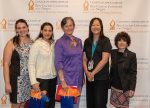
Left to right: Laura Feldman, Dr. Deborah Toiber, Joanne Haramia, Dr. Janet Kushner Kow and Dr. Gloria Gutman. (photo from CABGU)

Alzheimer’s, Dementia and You, an event presented by Canadian Associates of Ben-Gurion University of the Negev on June 5 at the Rothstein Theatre, featured a panel of experts whose presentations and discussion provided insights to both those seeking information and those seeking support.

Keynote speaker Dr. Deborah Toiber of Ben-Gurion University’s department of life sciences, described her approach to neurodegenerative aging as the key factor in understanding diseases like Alzheimer’s. (See jewishindependent.ca/bgu-finds-key-protein.)

Moderated by Simon Fraser University professor emerita Dr. Gloria Gutman, the panel represented a wealth of experience. Dr. Janet Kushner Kow, a geriatrician associated with Providence Health Care and the University of British Columbia, answered questions from the medical perspective. Laura Feldman, with 10 years of grassroots experience at the Alzheimer Society of British Columbia, spoke about the need to seek knowledge and support. Joanne Haramia recounted how families she has cared for through Jewish Family Services have found it easier to cope when they have support from the community. People stayed after the event to mingle and talk to the panelists and ask more questions.

Prior to the event, there was a reception, catered by Nava Creative Kosher Cuisine, for sponsors and partners. Sponsors were InstaFund and Annie Du and Aeron Evans of National Bank Financial, Wealth Management; co-sponsors were the Jewish Community Centre of Greater Vancouver, Jewish Family Services, Louis Brier Home and Hospital, and Jewish Seniors Alliance, with community partners being the Alzheimer Society of B.C., SFU Gerontology Research Centre and the Jewish Independent as media partner.

– Courtesy of Canadian Associates of Ben-Gurion University of the Negev

Format ImagePosted on June 22, 2018June 19, 2018Author Canadian Associates of BGUCategories LocalTags Alzheimer's, Ben-Gurion University, CABGU, dementia, health, science
BGU finds key protein

BGU finds key protein

Ben-Gurion University’s Dr. Deborah Toiber will be part of a panel in Vancouver called Alzheimer’s, Dementia and You: Research, Risk Reduction and Resources. (photo from CABGU)

Alzheimer’s affects about six percent of people over the age 65 worldwide. For years, scientists have been searching for ways to treat it and to discover its roots, but without much success, until recently.

A group of Ben-Gurion University researchers, under the leadership of Dr. Deborah Toiber, is among those who have made breakthroughs. They have discovered that a certain protein, SIRT6, necessary for DNA repair, is largely missing from the brains of people with Alzheimeir’s. The absence of this protein and the gradual decline in its production by the human body as we age might be what triggers the disease.

On June 5, Toiber will be the keynote speaker at Alzheimer’s, Dementia and You: Research, Risk Reduction and Resources. She will be joined in a panel discussion by Laura Feldman from the Alzheimer Society of British Columbia and Joanne Haramia of Jewish Family Services; Simon Fraser University professor emeritus Dr. Gloria Gutman, one of the founders of SFU’s Gerontology Research Centre, will be the moderator. The event, which will be held at the Rothstein Theatre, is being presented by the Canadian Associates of Ben-Gurion University (CABGU) in partnership with the Jewish Independent, the Jewish Community Centre of Greater Vancouver’s Adults 55+ program, the Alzheimer Society of B.C., Louis Brier Home and Hospital, Jewish Family Services, Jewish Seniors Alliance, and L’Chaim Adult Day Care.

According to David Berson, executive director of CABGU, British Columbia and Alberta Region, “the purpose of the panel is to increase the awareness and understanding of Alzheimer’s disease, dementia and neurodegenerative diseases.”

“Deborah was coming to Canada to visit the community in Winnipeg for a similar event,” Berson told the Independent. “We had a wonderful opportunity to bring the young and dynamic researcher to Vancouver and we jumped at it…. Toiber’s research, as I understand it, is part of a race to discover, isolate and understand the characteristics, components and mechanisms of DNA that will allow us to identify and treat neurodegenerative diseases prior to onset.”

In her email interview with the Independent, Toiber talked about her work and her group’s discovery. She said that DNA deteriorate with age. “It is not something genetic or environmental,” she said. “We repair our DNA and continue going on, but the repairs are not perfect. Some DNA remain unrepaired. As we get older, unrepaired DNA accumulate, and their ability to produce proteins diminishes.”

She further explained: “If the DNA is damaged, and a cell feels it is too dangerous to continue with this damaged DNA, the cell may activate a self-destruct mechanism. If too many cells do this, the tissue with the dying cells will deteriorate, such as the brain.” Essentially, the deterioration of the DNA and the reduced production of SIRT6 protein mark “the beginning of the chain that ends in neurodegenerative diseases in seniors. In Alzheimer’s patients, SIRT6 is almost completely gone.”

Toiber said scientists should be focusing on how to maintain the production of SIRT6 and how to improve the repair capacity of the damaged DNA, because that is what causes Alzheimer’s and similar diseases. Unfortunately, it is impossible to introduce the needed protein directly into the brain. “There is a blood barrier that prevents things from passing into the brain,” she said. “But we are trying to find a way to increase the expression of the protein into the brain.”

Toiber has always been fascinated by the molecular biology of the human brain. “I chose this field because I wanted to understand in-depth how the brain works, to investigate what happens when things stop working,” she said. “I think that molecular biology is the answer to all those questions. It’s like being a detective on the molecular level.”

She realizes that a detective’s work is never easy or fast. “Results take years to build, as they are based on previous findings, ours and other scientists’. My current group, where I am the principal researcher, is about three years old. It is a new lab.”

The research is multifaceted and multidirectional. “We do basic science,” she said. “We use animal models and cells to understand what is happening as we age, what is the cause of disease and what can we learn from this to develop treatments or preventive actions. We also collaborate with medical professionals and other scientists to get a fuller picture of various aspects of aging and neurodegeneration, particularly Alzheimer’s disease.”

Toiber’s group doesn’t work on the pharmaceutical angle of how to introduce the protein into patients’ bodies. Instead, she explained, “We are interested in the molecular causes of aging, such as DNA damage accumulation, and how this leads to disease. We work in experimental biology. These experiments are expensive and difficult. It can take a long time to see and understand the results, but it is also rewarding. Molecular processes help us understand how our organisms work and what happens when things go wrong. We have to be optimistic and keep trying.”

Many scientists in related fields of study are interested in Toiber’s work. “I have talked about our research at the international neurochemistry meeting in Paris and at conferences in Crete and Israel,” she said.

To hear her speak in Vancouver, register at eventbrite.ca. There is no cost to attend.

Olga Livshin is a Vancouver freelance writer. She can be reached at [email protected].

Format ImagePosted on May 25, 2018May 23, 2018Author Olga LivshinCategories IsraelTags Alzheimer's, Ben-Gurion University, BGU, CABGU, Deborah Toiber, dementia, healthcare, science
Victoria is alive and kicking!

Victoria is alive and kicking!

Dulcinea Langfelder, being carried by Eric Gingras, in Victoria, which is at Massey Theatre for two shows only next week. (photo from Dulcinea Langfelder & Co.)

Victoria is coming to New Westminster next week for two shows only. Created and performed by Dulcinea Langfelder, a versatile dancer, multimedia performer and award-winning choreographer from Montreal, Victoria is about old age and young spirit, about laughter in the face of tragedy.

Langfelder started her life in New York. She studied ballet and pantomime, singing and acting. After a few years in Europe, including London and Paris, she moved to Montreal in 1978 to join La Troupe Omnibus. Since then, Montreal has been her home. In 1985, she founded her own company, Virtuous Circle Dance Theatre. In 1997, the company changed its name to Dulcinea Langfelder & Co.

Langfelder loves Montreal and can’t imagine living anywhere else. “The city is effervescent, young culturally compared to New York or Paris,” she said. “Fewer boundaries between categories, and close enough to New York to visit my mom. Why on earth would I want to live elsewhere?”

The same philosophy applies to her choreography and performing. Why on earth would she do anything else? “For the moment, I can still do what I love to do, and I believe that it’s important to see older people on stage. Art has always been the most effective way to influence our attitudes. Victoria gives voice to those who have ‘disappeared’ through aging – but we are still alive and kicking!”

Although it’s hard to pinpoint Victoria’s exact theatrical classification, Langfelder said, “It is a multidisciplinary and multimedia work for the stage. There really is no major discipline. I work with the elements on my palette: movement (I guess I do always put that one first), text, humour, dramatic – through line, projected imagery, music and a bit of puppetry. Everything is choreographed, not just the movement.”

The heroine, Victoria, is “a wheelchair-bound 90-year-old, suffering from the loss of memory, autonomy and just about everything else,” reads the press release. But Langfelder melds poignant and funny in this show of an elderly woman’s courage. Victoria premièred in 1999, and Langfelder told the Independent about its origins.

“In 1994, an actor friend of mine, Charles Fariala, who also worked as an orderly and knew that I have a penchant for tragicomedy, called me to say, ‘You must meet Victor, an old man in a wheelchair who’s lost his memory; sometimes I wonder if he’s just gaga or if he’s discovered Nirvana.’ I immediately responded, ‘We’ll call her Victoria!’ I was intrigued by the question: Where do we find our mental victory when we we’ve lost our physical power?”

Inspired by the concept, Fariala and Langfelder started working on the project. “Charles wrote pages of text, which I re-worked,” said Langfelder. “I also incorporated a lot of text that came from Angel Petrilli, a woman who became the principal model for the character, although there were other people as well, including my own father. But this piece is multidisciplinary and multimedia, so the ‘script’ is composed of text, choreography, song and projected imagery. It was written in concert with all of my collaborators; I created the choreography.”

One of the most unusual aspects of the show is that the protagonist is bound to her wheelchair. “It is hard to tame the wheelchair beast,” Langfelder admitted, “but fascinating for a mover!”

The show’s success and longevity – 18 years now – surprises even its creator. “I didn’t think it would fly at all, with such taboo subject matter,” she said. “But I discovered that audiences had been starving to have this conversation in a non-depressing way. While treating this subject as accurately as I can, Victoria is an uplifting piece, because there really are rich, poetic and hilarious moments when dealing with dementia and the end of life. We just underline those moments, without taking the subject matter lightly.”

Like every performer, Langfelder knows that art must change with time, that an actor should be flexible in her communication with different audiences. Victoria is no exception to this rule. “It changed a lot in the first years,” Langfelder explained, “then subtle changes. It adapted to different languages and cultures, though it clearly reminds us of what we have in common around the world. We’ve done this piece everywhere from Japan to Zimbabwe, in seven languages.”

One of the latest changes was adding another actress to play the title role. “I recently realized that this piece could live longer than I will,” said Langfelder. “I trained Anne Sabourin in the role. She plays Victoria in French.”

Langfelder herself plays Victoria in English in every show, in every country, and the reception has been overwhelmingly favourable, but that is not enough for the actress. “The Victoria project is about touring the piece for the general audience it was designed for,” she said. “Plus, we work hard to get those who can most benefit, and are the least likely to frequent the theatre: seniors and family/professional caregivers. The way we get them to the theatre, and Victoria can’t be done anywhere else, is that we go to them first. We offer workshops that answer their immediate needs, like non-verbal communication, movement for seniors and seminars on creativity, humour and dementia. Then we use the opportunity to make them understand that theatre can actually be useful, even more useful than workshops. We invite them to the theatre.”

Like her heroine, Langfelder meets her challenges with a smile. “I love making people laugh at difficult situations,” she said. “It makes me feel useful. My father’s last words to me, before his stroke, were in response to me complaining about my challenges. He said, ‘You mustn’t get discouraged, because what you do is so important! You put human dilemma on stage and allow us to laugh at it; what could be more important than that?’ I had just begun working on Victoria, and he never saw it. I become him when I play Victoria.”

Victoria is at the Massey Theatre in New Westminster on Oct. 27 and 28. For tickets, visit ticketsnw.ca or call 604-521-5050.

Olga Livshin is a Vancouver freelance writer. She can be reached at [email protected].

Format ImagePosted on October 20, 2017October 19, 2017Author Olga LivshinCategories Performing ArtsTags aging, dementia, Dulcinea Langfelder, theatre
Books for people with dementia

Books for people with dementia

Eliezer Sobel created L’Chaim: Pictures to Evoke Memories of Jewish Life with his parents in mind. (photo from Shutterstock)

Eliezer Sobel’s new book, L’Chaim: Pictures to Evoke Memories of Jewish Life, was born from personal experience.

Sobel is an artist at heart and has spent his life finding ways to interact with people – through writing, facilitating workshops and running retreats over the past three decades. Three years ago, on his parents’ 67th anniversary, things took a turn for the worse.

“My mother is in her 17th year of Alzheimer’s and is 93,” Sobel told the Independent. “My dad was fine and taking care of her at home until he was 90. On their 67th wedding anniversary, he fell down the stairs. He fell on his head and almost died. Overnight, there were two dementia patients in the house.

“Prior to that, he was driving, cooking and shopping, as well as hiring and handling the payroll for a team of seven aides. He was amazing with it. Suddenly, overnight, I had a brain-damaged dad at 90 years old.”

Sobel and his wife lived in Virginia at the time, which is seven to eight hours away from New Jersey, where his parents lived. After the accident, however, they moved into his parents’ home.

photo - Writer Eliezer Sobel’s parents, Manya and Max, in 2016. They were the inspiration for Sobel’s series of picture books for readers with dementia
Writer Eliezer Sobel’s parents, Manya and Max, in 2016. They were the inspiration for Sobel’s series of picture books for readers with dementia. (photo by Eliezer Sobel)

“We stayed in the house for 10 months, taking care of my parents and trying to get the right kind of help in the house that would enable us to eventually move out,” explained Sobel. “But we stayed nearby so we could monitor and manage the scene.”

His dad recovered a substantial amount of his cognitive and physical ability, but passed away this past November.

The work on the book goes back to 2011. “She didn’t speak English words anymore,” said Sobel of his mother at the time. “She would sometimes make up her own language and sounds. She stopped reading, as far as we knew.

“One day, I came upon her accidentally…. She was flipping through a magazine and I overheard her reading the big print headlines out loud, in English, correctly. I was totally floored. Mom can still read, even if it’s just a three-word phrase.”

Sobel wanted to run out and buy his mom a picture book, one designed for Alzheimer’s and dementia sufferers, but he couldn’t find one anywhere. His next thought was to use a children’s picture book, but he was unsure whether his mother could negotiate a book with a storyline. He wanted each page to stand on its own, so it would not require the reader to recall what had happened on a previous page.

“I called up the national Alzheimer’s association and spoke with their chief librarian for the whole U.S. and her response to me was to say that there were 20,000 books for caregivers of those with memory loss,” said Sobel. “I said, ‘I am not looking for [a book for] the caregiver, I’m looking for my mother, the patient. There was dead silence on the other end of the line. She couldn’t think of any such book. Eventually, she did mention one other author who has since become an acquaintance of mine who had a few books, but they weren’t really what I wanted, so I realized I had to do this myself.

“I first did a book that wasn’t just for Jews. It was for anyone with memory loss. It was called Blue Sky, White Clouds, and came out in 2012.”

Sobel – who has also written a novel and a memoir – received such a positive response to this first picture book that he decided to make it into a series.

“My mother got to enjoy the first book a lot,” said Sobel. “Her aides would use it with her almost daily. We would observe that she would zero in on particular photos, ignore certain pages, find a photo – particularly one of a married elderly couple – and contemplate it for 20 minutes and caress the faces.

“These books are for a particular stage of dementia,” he said. “They’re appropriate for someone who’s got enough memory loss and dementia that they won’t be offended or have awareness that this is kind of a simplistic picture book, they’ll just be interested. But they can’t be too far gone, like my mother now, who can’t even look at my face, let alone my book.”

Caregivers often struggle with how to engage people with Alzheimer’s.

photo - A page from L’Chaim: Pictures to Evoke Memories of Jewish Life
A page from L’Chaim: Pictures to Evoke Memories of Jewish Life. (photo by Olaf Herfurth)

“It’s very hard to find activities to do with someone in that condition,” said Sobel. “So, what I was trying to accomplish was to give caregivers something they could share with the patient … or give patients something they could use on their own…. It was an opportunity for sharing to occur, an activity of quality time. For certain pages, in the earlier stages [of dementia], it stimulates memories, conversations, reminiscences or free association.

“I’m from the creative right brain of things, so I could find things to do with my mother, like empty a box of coins on the table and we’d spend an hour playing with them – pennies over here, stacking the quarters, making a picture of a house with the dimes. Then, I’d say to my dad, ‘See, Dad! There are lots of things you can do with Mom. You could put these coins away and do the same thing tomorrow. She won’t remember.’

“He would call me the next day, and say, ‘Ah, it didn’t work. She didn’t know the difference between a penny and a nickel.’ That was the point. He’s a mathematician and very linear … [he] could not break into the play mode. If you’re someone who’s good with little kids, you can do that with someone like my mom.”

In some ways, Sobel often finds himself feeling grateful to Alzheimer’s, because it made it possible for him and his mother to grow closer – at least for the first 10 years of her disease.

At the beginning, Sobel saw her become more available. As a Holocaust refugee, she had always been very insulated, private and afraid of others. Sobel said he went to a psychic early on in her disease, worried that his mother was losing her memories, and the psychic thought she’d be happier without them.

“It was true,” Sobel reflected. “She transformed from that scared refugee into an open, childlike, loving, laughing angel. People would feel blessed to be around her. She was delightful – greeting strangers and striking up conversations that made no sense. She and I laughed about who knows what. She and my father would dance to music. A lot of things were happy about her Alzheimer’s experience.

“I’m not saying there weren’t nightmarish times. We had our share of those as well,” he added. “She went through a violent period where she was chasing people with steak knives. We had to put her into a psych ward for 10 days.”

That was the exception, though, and Sobel said, “I had an opportunity to finally heal my relationship with her.”

Rebeca Kuropatwa is a Winnipeg freelance writer.

Format ImagePosted on May 19, 2017May 17, 2017Author Rebeca KuropatwaCategories BooksTags Alzheimer's, dementia, Eliezer Sobel, health care, Holocaust, Judaism
סדר עדיפויות שונה

סדר עדיפויות שונה

ג’סטין טרודו יחמיץ את טקס השבעתו של דונלד טראמפ. (צילום: Alex Guibord)

לראש ממשלת קנדה, ג’סטין טרודו, יש סדר עדיפויות משלו והוא בחר שלא יגיע לטקס השבעתו של הנשיא החדש של ארה”ב, דונלד טראמפ, שיערך ב-20 בחודש בוושינגטון הבירה. זאת כיוון שהוא יהיה עסוק בסיור ברחבי קנדה בעותה עת. טרודו ישלח משלחת קנדית רמת דרג לטקס במקומו אך עדיין לא פורסם מי הם חבריה.

טרודו יבקר בחמש פרובינציות בין ה-17 ל-20 בחודש ויפגש עם תושבים מקומיים כדי לשמוע את דעתם בנושאים שונים, לקראת השנה שנייה של הליברלים בשלטון. לאחר מכן הוא יתארגן לנהל את ישיבות הקבינט שיערכו באלבטרה (23-24) ויעסקו בתקציב הפדרלי. וכן בסוגיה: כיצד להיערך למדיניות של השלטון החדש בארה”ב בראשות טראמפ, שמבקש בין היתר לבטל את הסכם הסחר החופשי בין ארה”ב, קנדה ומקסיקו.

מחקר קנדי ממליץ שלא לגור ליד כבישים סואנים שמזיקים לבריאות

מחקר קנדי חדש ממליץ לתושבים שלא לגור באזורים רועשים ובעלי רמת זיהום גבוהה כמו כבישים סואנים, כיוון שזה עלול לגרום לנזקים בריאותיים קשים. המחקר המקיף נערך במחוז אונטריו במשך אחד עשר שנים. הוא עקב אחר 4.4 מיליון צעירים בגילאים שבין 20-55, וכן אחר 2.2 מיליון מבוגרים בגילאים שבין 55-85. המחקר פורסם ב-4 בחודש בכתב העת הרפואי היוקרתי הבריטי “לנסט”.

לפי תוצאות המחקר מגורים בסביבה רועשת מעלים את הסיכון לחלות במחלת הדמנציה. אלו שגרים במרחק של כחמישים מטר מכביש סואן מעלים את רמת הסיכון שלהם לחלות במחלה בשיעור של שבעה אחוזים. אלו שגרים במרחק של מעל חמישים מטר ועד מאה מטר מכביש סואן מעלים את רמת הסיכון שלהם לחלות בארבעה אחוזים, ואילו שחיים במרחק של מעל מאה מטר ועד מאתיים מטר מגדילים את רמת הסיכון שלהם בשני אחוזים בלבד.

עורכי המחקר מציינים כי החשיפה ההולכת וגדלה לתנועת רכבים שמגבירה את זיהום האוויר והרעש, תוך גידול באחוז האוכלוסייה שגרה ליד כבישים, יכולים להפוך לנטל בריאותי ציבורי גדול. מדי שנה מתים בעולם כשלושה מיליון איש רק מתוצאה של זיהום אוויר (שמגביר את הסיכון לחלות במחלות שונות בהן: מחלת לב, מחלת ריאות, מחלות נשימה וסרטן). להערכת מומחים בריטים מדובר במחקר מעניין וחשוב מאוד, וזה בהחלט הגיוני שהמגורים ליד כבישים סואנים מגבירים את הסיכוי לחלות בדמנציה. וזאת כיוון שזיהומים ורעשים מרכבים עשוים להשפיע על פעילות המוח לאורך זמן. ולכן ברור שלא מומלץ לאוכלוסייה לגור ליד כבישים סואנים.

דמנציה (בעברית שיטיון או קהיון) היא מחלה שגורמת לפגיעה רחבת היקף בתפקודו הקוגנטיבי של האדם. התפקוד הקוגנטיבי כולל את כל היכולות המוחיות הגבוהות של בני האדם, בהם: שפה, זיכרון, תפיסה, יכולת למידה, יכולת לבצע אנליזה וסינתזה (ובכך להבין את המציאות היום יומית). הגורם השכיח ביותר לדמנציה הוא מחלת אלצהיימר, שבה מתנוונים ומתים תאים מייצרי אצטילכולין באזורים שונים של המוח, ויוצרים פגיעה משמעותית ומתקדמת בתפקוד הקוגנטיבי. גורמים נוספים למחלה הם: פרקינסון, הנטינגטון, איידס, שימוש בסמים, השמנה, טרשת עורקים, רמות גבוהות של חומצת אמינו, לחץ דם גבוה או נמוך, חולשה, עישון, סכרת, פגיעות ראש, דום נשימה בשינה, עששת, מחסור בוויטמין די ומחסור בוויטמין בי-12. בדרך כלל מחלת הדמנציה פורצת בגילאים מבוגרים. כאחוז וחצי מכלל האוכלוסייה יחלו בדמנציה עד גיל 65, ועשרים אחוז מהאוכלוסייה יחלו במחלה מעל גיל 85. לפי נתוני הסטטיסיקה בעולם יש כיום כחמישים מיליון חולי דמנציה ומדי שנה מתווספים כשמונה מיליון חולים נוספים.

Format ImagePosted on January 11, 2017January 11, 2017Author Roni RachmaniCategories עניין בחדשותTags dementia, health, noise, pollution, Trudeau, Trump, בריאות, דמנציה, זיהום, טראמפ, טרודו, רעש

Good news on Alzheimer’s

For the last three years, I have been researching, interviewing and writing articles for Senior Line, the magazine published three times a year by Jewish Seniors Alliance of Greater Vancouver. In that capacity, I read everything I can about dementia, especially Alzheimer’s disease, medical care for seniors and residential facilities for seniors.

A year ago, I succumbed and started paying for a digital subscription to the New York Times. Using their “alerts” system, my inbox is filled with relevant, current articles on these topics. I scour the media (Vancouver Sun, Zoomer Magazine, Jewish Independent, CBC News Network, CNN, documentary channels, movies portraying Alzheimer’s disease, and online newsletters from organizations such as CARP and COSCO) searching out information about these senior issues. I also began visiting the Louis Brier Home and Hospital regularly, interacting with people with dementia (with the assistance of Davka, my Standard Poodle).

Why was I obsessed with Alzheimer’s disease? The truth is that I was swimming in a turbulent sea of fear, dread and panic – analyzing every forgetful moment and constantly measuring my intellectual capacities, to be sure that I wasn’t “losing it.” This had been going on for the past five years.

My feelings and thought processes began to evolve as I gained knowledge and understanding of the causes, the progression of this condition and, of utmost importance, the changes in attitude towards the management of seniors residences and the programs offered to seniors with dementia. Most surprisingly, among the gloom and doom scenarios of “the grey tsunami” and “the stark demographic shift,” I began to understand that there is actually good news about dementia and Alzheimer’s disease. Yes, you heard me: good news!

Today, reaching the age of 100 is no longer shocking. I personally know three people who have reached that age. Seniors of my generation, and the Boomers and Zoomers, are living longer. Within this large cohort, dementia is a product of the natural aging process. The longer we live, the higher the probability of dementia. Is there anyone among you who wants to die at 65 or 71 (the risk of Alzheimer’s begins to increase dramatically at the age of 65)? Wouldn’t you rather live to 86 or 94? Of course! Well then, your chances of having dementia will increase.

At 77, I am more active and more productive than I have ever been. I know that, at any time, I may begin to deteriorate. The influence of genes is crucial: one grandmother had dementia, the other did not. My aunt has Alzheimer’s and, recently, a close relative was diagnosed with the early signs of the disease. I am shocked and saddened, but now I am able to accept the possibility, putting it in the context of the result of aging well and living longer.

What have I learned? Maria Shriver, in her Feb. 25 article on WebMD “We can handle the truth: the facts on Alzheimer’s,” writes “try to put your denial impulse aside and take a hard look at the truth about Alzheimer’s. Because the fear that causes you to deny things – like our risk of getting this mind-blowing disease – can actually be the motivator you need to stop ignoring the facts….” We know the risks and the consequences, but we are in denial and unprepared to deal with it – personally, financially and as a society. It seems that by pushing through my ignorance and my fear, I have come to a place of harsh reality and hope.

The intense desire for the discovery of a cure for dementia, or a preventive strategy for Alzheimer’s disease, is universal. Exciting research is happening in labs across the globe but, until a “miracle cure” is found, let us not refuse to act because there is no cure. Denial is the enemy of hope.

How much do you want to know about your risk of getting the disease? Here is a list of ways to learn more:

  • Review your family history with your doctor.
  • Review lifestyle factors like diet and exercise with your doctor.
  • Review your medical history with your doctor, including questions about brain trauma.
  • Take a genetic test to determine whether you have genes that raise your odds of getting the disease.
  • Get a brain scan to spot signs of the disease.

But, if you are like 41% of the people in the survey “Insight into Alzheimer’s Attitudes and Behaviors,” you have not – or are not willing to – take any of the proposed steps, according to a Feb. 25 article by Ashley Hayes on WebMD. Another 46% say they aren’t worried about getting Alzheimer’s in the future, mainly because they take care of their health and also because they can’t do anything about it. Thirty-four percent of respondents say they’re concerned about getting the disease in the future and, of those, 69% say they’re concerned because they don’t want to become a burden to their family, with 60% concerned because there’s no cure.

Michael Smith, MD, WebMD’s chief medical editor, states, “There is great concern about the impact of this disease, but denial, fear or other unknown factors seem to be preventing us from taking the necessary steps to prepare.”

People do not seem to realize that they can lower their risk. A few suggestions are offered: stay mentally or intellectually active, eat a healthy diet, take vitamins or supplements, exercise at least three times a week and stay socially active.

There is a positive link between physical exercise and brain health. There is a relationship between the foods, drugs, alcohol and nicotine we ingest and their impact on the brain. Hopefully, more informed, more realistic children will notice when a parent’s mental capacities are diminishing (if you haven’t), and they will get us to the physician or gerontologist early, wasting no time; perhaps to participate in a clinical trial or to get a new drug that could slow its progression. Plans must be made, contingency scenarios must be worked out. The best way to break through denial is to challenge it.

The good news

Dementia rates have been plunging. It took a few reports and more than a decade before many people believed it, but data from the United States and Europe are becoming hard to wave off. The latest report finds a 20% decline in dementia incidence per decade, starting in 1977.

A recent American study, for example, reports that the incidence among people over age 60 was 3.6 per 100 in the years 1986-1991 but, by the years 2004-2008, it had fallen to 2.0 per 100 over age 60. With more older people in the population every year, there may be more cases in total, but an individual’s chance of getting dementia has gotten lower and lower, as Gina Kolata reported in a July 8 New York Times article.

The psychological definition of “denial” is an unconscious defence mechanism characterized by refusal to acknowledge painful realities, thoughts or feelings. My anxiety, fear and dread have disappeared. I have faced the dreaded monster, I have embraced the enemy. I now visit with people suffering from Alzheimer’s. I have spoken to my children frankly about my wishes if I should become incapable of handling my affairs. I have decided where I wish to live if I must move into a seniors residence to receive care. I am aware of the newer approaches to residential care and housing arrangements. I have informed myself of the resources that my community can offer me.

Now, every day is an invitation to excel, to learn and to enjoy. I have become ambitious, physically stronger and more committed than ever to appreciate my good health and sense of well-being.

Dolores Luber, a retired psychotherapist and psychology teacher, is editor of Jewish Seniors Alliance’s Senior Line magazine and website (jsalliance.org). She blogs for yossilinks.com and write movie reviews for the Isaac Waldman Jewish Public Library website.

Posted on November 18, 2016November 15, 2016Author Dolores LuberCategories Op-EdTags aging, Alzheimer's, dementia, health
Dealing with memory loss

Dealing with memory loss

Artwork from a participant in an exhibit by the Society for the Arts in Dementia Care. (photo by Baila Lazarus)

As the population ages, there will be more adult children, caregivers, seniors homes and other centres caring for loved ones or patients whose memories are failing.

For many years, it’s been believed that there is little that can be done to slow such degeneration. We’re told that, if we challenge ourselves with puzzles or other intellectual games, this might have an effect. But, one woman has been investigating a different option – one that started out facing a lot of skepticism by those working in the field but has been slowly gaining acceptance.

Dalia Gottlieb-Tanaka didn’t set out to become an expert in the conditions of dementia, but life brought her onto this path, which she embraces with passion … and compassion.

Born in Israel, Gottlieb-Tanaka actually started out in a drafting career with the Israeli navy and studied at the Bezalel Academy of Arts and Design, where she met her husband, Mineo, who was from the Okanagan. They came back to Canada in 1975 to study at the University of British Columbia, where she did a master’s degree in architecture. The two are both semi-retired now and share their residency between Vernon and Vancouver.

In 1990, Gottlieb-Tanaka volunteered to spend time with a woman living with dementia and that subsequently led to her present occupation. This was a pivotal turning point in Gottlieb-Tanaka’s career.

“I went there and fell in love with this woman. She was so lovely and we could talk about anything in the world,” said Gottlieb-Tanaka.

photo - Dalia Gottlieb-Tanaka
Dalia Gottlieb-Tanaka (photo from Dalia Gottlieb-Tanaka)

Over time, Gottlieb-Tanaka noticed there were situations in which the woman demonstrated a lack of memory and no conception of the consequences of certain actions.

“Then it clicked,” she said. “It’s unpredictable. There are good and bad days.”

She became fascinated and started to immerse herself in the study of what she refers to as a medical condition, not a disease.

She learned that there are 72 different types of dementia, of which Alzheimer’s affects the largest number of people; that dementia is characterized by confusion and memory loss; and that it can be brought on by stress or depression.

“You can meet people with dementia who are very, very normal, but they might have memory issues,” she explained. “It doesn’t mean they’re mentally ill, and only now people are understanding the difference.”

Eventually, Gottlieb-Tanaka took her studies to UBC, where she completed a PhD in the Institute of Health Promotion Research and the Interdisciplinary Studies Program. In 2011, she completed a post-doctoral fellowship with the department of psychology.

Her goal was to assess the creative abilities – singing, art, flower arrangement, among others – of people with memory loss to determine how those activities were affected, and whether an increase in those activities could make a difference in staving off the development of these medical conditions.

“So what if someone has memory loss?” she said. “Does it mean they don’t like listening to music?”

Despite a steep learning curve, Gottlieb-Tanaka started to make inroads. She eventually developed the Creative Expression Activities Program for seniors with dementia, for which she won an award from the American Society on Aging. She also founded the Society for the Arts in Dementia Care in British Columbia, which just celebrated a 10-year anniversary.

Among the activities of the society are exhibits of artwork by people suffering from dementia. In its first year, the society’s exhibit was held in North Vancouver and 4,000 people came.

“They were amazed by the results,” said Gottlieb-Tanaka.

The society also runs an annual international conference on creativity and aging, which takes place this year in Vernon, Sept. 8-10.

Trying to pursue her research has been an uphill struggle because Gottlieb-Tanaka was constantly breaking new ground. In some cases, people thought she was crazy. Slowly, however, her ideas are gaining acceptance.

Originally, her work focused on bringing the arts to dementia sufferers; now, she’s looking at how such activities might prevent the onset of those conditions, and she’s showing that such memory loss might be delayed by up to two years.

As her research becomes more known, Gottlieb-Tanaka is trying to pass the torch to those working with people with dementia – nurses, art therapists, music therapists, elder-care facilitators and seniors advocates. That’s the goal of the upcoming conference in Vernon, which offers presentations and hands-on workshops and includes a keynote by Isobel Mackenzie, seniors advocate with the B.C. government. It’s been a 25-year battle, but it seems people are finally starting to take notice.

For more information on the conference, visit cecd-society.org.

Baila Lazarus is a freelance writer and media trainer in Vancouver. Her consulting work can be seen at phase2coaching.com.

Format ImagePosted on August 26, 2016August 28, 2016Author Baila LazarusCategories LocalTags Alzheimer's, art therapy, dementia, Gottlieb-Tanaka, memory loss
Raising awareness of abuse

Raising awareness of abuse

Earlier this year, Winnipeg’s Jewish Child and Family Services (JCFS) premièred the short film Not in My Family, to raise awareness on the topic of elder abuse.

JCFS executive director Al Benarroch greeted the approximately 150 attendees that filled the Berney Theatre of the Asper Jewish Community Centre on Feb. 13.

“This film serves as a springboard for discussion and to help educate groups on how they might handle the issue of elder abuse,” said Benarroch. “It also provides a lot of valuable resources available in our community. Along with the film, we’ve created a kit with a booklet that provides information and also a discussion guide with some specific questions to be used following the viewing of the film. We envision this package having widespread application as a tool for organizations and professionals who work with seniors, who are educators, and other community professionals in regular contact with seniors, either individually or in groups.”

Developed by the JCFS, the project was funded by the Government of Canada’s New Horizons for Seniors Program. The 13-minute video is available from the World Elder Abuse Awareness Day Manitoba website (weaadmanitoba.ca/resources.asp?t=4), as is the accompanying resource guide.

Following the screening was a panel discussion with Jamie Kinaschuk from A & O Support Services for Older Adults Inc.; Sharon Tod, chair of the elder law section of the Manitoba Bar Association; and Dara Maternick, coordinator of Prevent Elder Abuse Manitoba.

“Every situation is different,” said Tod. “So, you have to tailor the answer to the particular problem. It’s an excellent resource to have a lawyer that you trust. The other thing I will urge you to do is make sure you have everything in place early on in the process. I’m talking about powers of attorney. Because, if you do it while you are fully competent and can assess properly who is the best person(s) to be your attorney, that is way better than what we often see in my profession, which is someone who is already in the early stages of dementia and in a vulnerable position who is then talked into appointing someone as their attorney … who is the exact wrong person for the job.”

According to Canadian research, between four and 10% of seniors are subject to some form of abuse. In addition to that, experts believe that, for every report of elder abuse, there are another four cases that are never reported. Most of the seniors who reach out for help say they are being financially abused.

Maternick said the best way to deal with the problem is through a team approach that respects the individuals and their choices. “We are proud to be here today in partnership with the JCFS to launch this valuable resource,” she told attendees. The film and its guide were highlighted at World Elder Abuse Awareness Day (June 15) events.

As Benarroch opened the discussion for audience questions, an elderly woman asked how to deal with abuse by home-care workers.

Kinaschuk suggested contacting her case supervisor, saying that, if she fails to get somewhere with that route, she can always call their supervisor. Benarroch advised that she contact the JCFS to have their social workers help guide her through the process of launching a complaint if need be.

Another audience member shared his situation. “My father’s been taken for $95,000 in the past two years, sending money to Jamaica and Dubai,” he said. “While he has been talking about giving me power of attorney, he has the full capacity to do it himself. Where would I go with that?”

Tod suggested that the son talk to his father’s lawyer, and then went on to share a story about one of her own clients. “He was at a stage where he was vulnerable, but competent, so we couldn’t force him to do things he didn’t want to,” she said. “So, I sat down with him and his son. We had a discussion.

“It’s difficult to talk about, because he was embarrassed that he had been taken for this money. But, we did, we sat down and talked about it and, ultimately, what we did was, he agreed voluntarily that his son would take over his affairs under the power of attorney, and the son took a number of steps to prevent the father from being contacted by these scam artists again.”

The steps, according to Tod, included the son changing his father’s phone number to unlisted, having all of his father’s mail redirected to his home and ensuring that his father had access to only one bank account with a limited amount of money in it, so that, if he was taken advantage of, at least the loss would be limited.

In another situation, Tod was appointed with the power of attorney, to prevent a son from threatening his mom for money. “Now, when the son came to her, she could say that she doesn’t know where her bank is anymore, that he would have to talk to her lawyer,” said Tod.

Tod spoke about capacity and how difficult it can be to determine, pointing out that it is part of a lawyer’s responsibility. “Before we have people sign documents, we have to make sure we are comfortable that the clients understand what the documents mean,” she said. “But, there are different capacity tests for different legal documents that you sign.

“It’s even difficult for doctors to determine someone’s capacity. Some doctors say someone has capacity while other doctors disagree. It also depends on the specific thing you’re looking at. People may have fairly good cognitive function, but their judgment may be impaired.”

Family members or social workers usually end up making these determinations and, if there are concerns, a doctor should be consulted.

Kinaschuk pointed out that, when the abuser is a family member, it catches one off guard. “You don’t expect a family member to be the abuser, so your guard isn’t up,” he said. “In this case, in the film, the grandson is telling grandma, ‘No, you’re wrong, you didn’t give me the money.’ And, she’s like, ‘Maybe I didn’t.’”

Even when an abuse situation is identified, Kinaschuk added, it is still very difficult to take action, as the victims come up with excuses for their abusers. “They’ll say things like, ‘He or she is having a tough time. They just need a little help until they get a job.’ And, it goes on and on. We provide support, discuss options and help them recognize what’s going on, but it is up to them to take it further.”

According to Maternick, it takes a lot for people to reach out for help. “The type of circumstance for elder abuse will be different for everybody,” she explained. “It becomes very difficult to answer these questions because you need to dig into the situation to understand what’s happening. There’s complexity with all these issues.”

Maternick suggested that a good place to start is by calling the senior support line. “The reason that line is so important is because it allows you to access information and resources to better understand what your options are,” she said. “There is no single answer that’s going to apply to every situation.”

In British Columbia, the Jewish Seniors Alliance can be reached at 604-732-1555 and a list of where to go for help, including for instances of abuse, is available at jsalliance.org/resources/where-to-go. Among the contacts listed by the JSA is the B.C. Centre for Elder Advocacy and Support’s elder law clinic (604-437-1940 or via bcceas.ca).

Rebeca Kuropatwa is a Winnipeg freelance writer.

 

Format ImagePosted on June 17, 2016June 16, 2016Author Rebeca KuropatwaCategories NationalTags dementia, elder abuse, seniors
Expert on sundowning

Expert on sundowning

Dr. Brian Goldman (photo from Brian Goldman)

While most people have heard of dementia, many of us won’t have heard the term sundowning before.

According to Dr. Brian Goldman, emergency physician at Mount Sinai Hospital in Toronto, sundowning is generally part and parcel with dementia of various kinds.

“Sundowning refers to a person who is sleepy during the day and very active at night,” he explained. “Almost as soon as the sun goes down, that’s when they become active. The activity can be not just when awake and walking about in an agitated or restless state.… For sundowning to have its maximum impact on the patient and others – the caregivers and care providers – you have to have dementia [as well].

“A person who is cognitively intact, who is simply sleeping during the day and being up all night, would have the cognitive reserve to be able to handle that. They might feel they have a problem, need to see a doctor, or they might rearrange their lives because, when everyone’s sleeping, they’re up, [but] they’d be able to cognitively make sense of it.”

Goldman explained dementia as “a chronic disorder caused by a brain disease or injury. It is characterized or marked by impaired cognition or thinking, memory and personality changes.”

Goldman – who grew up in Toronto’s North York, the heart of the Jewish community – said he is seeing more elderly people with dementia. Often he is one of the first people to notice the symptoms.

“As an emergency physician,” he said, “I would say that an increasing percentage of the patients I see in the emergency department are frail seniors. When I started out in the 1980s, we would see an occasional patient over the age 90, but now it’s commonplace.

“I have professional experience, but I also have personal experience. Both my parents have passed away in the last two years and they both reached frail senior years. My mother had dementia. My father did not.”

Why some dementia patients also suffer from sundowning while others do not, Goldman said, remains a mystery. As well, the number of people who suffer from this newly defined condition of sundowning is also unknown, with estimates ranging from as low as two to three percent of people with dementia up to more than 60%.

“It has been said that sundowning tends to occur when the person is in unfamiliar surroundings, though it can also occur in the home,” said Goldman. “It’s well known that some people with dementia have damage to the pathways to their brain that recognize light coming in through their eyes and stimulating a part of the brain called the pineal gland. The pineal gland secretes the hormone melatonin.”

Melatonin is secreted somewhere around 2 or 3 a.m. every morning. It resets your body’s circadian rhythm. If that pathway is disrupted, it makes sense that your sleep-wake cycles would be seriously disrupted.

Another theory is that people who sundown are dreaming vividly. They are flipping between the awake and dreaming states quickly and frequently. And, again, because they don’t have the cognitive reserve, they do not know if they are dreaming or awake.

There is not yet a lot known about sundowning and another phenomenon known as delirium.

According to Goldman, delirium is confusion associated with the activation of the fight or flight response along with symptoms that include tremors, shaking, a fast heart rate, sweating and dilated pupils. These symptoms are sometimes also referred to as “toxic delirium.” People with toxic delirium have a rapid, traumatic change in their demeanor. Triggers of toxic delirium are often fever, urinary infection, pneumonia, flu, or even a heart attack.

“You recognize it if you see a sudden change from what the person was doing a week ago,” explained Goldman. “They look sick, sweaty … something seriously wrong … and there is an underlying cause. Treat the cause and the toxic delirium goes away.

“Sundowning is a more chronic pattern that can go on for months. There is no vast dramatic change. The only change in pattern you might notice, wherein dad or mom wander off at night once a month, then it becomes once a week, then every night. It’s a gradual pattern.”

Ways to help this condition, according Goldman, include regularizing a sundowner’s routine: having meals at set times, a set time for exercise (but not at night), set times for bathing and toileting (like washing in the morning or before bed), and the like.

“The experts say that caffeine should be avoided,” he added. “You want people to walk. Walking is good for them. Visitors are good, but probably not close to the time they’re going to bed. Also, reduce noise from TVs and radios and address the lighting in the room, ensuring you don’t have harsh lighting that could cast disturbing shadows on the wall.”

Besides these steps and before turning to sleep medication, Goldman advised exploring some other preventive approaches. Light therapy has shown some promise, he said, affecting patients in a similar way as those with seasonal affective disorder. This involves getting special light-generating therapy units, which are available without a prescription and come with instructions on use.

When it comes to lost brain pathways, Goldman sees the technique as especially helpful when approached in a “use it or lose it” fashion. “If you want to build up a reserve, this might be a way of doing that, with year-round light therapy,” he said.

“Certainly, making them busier during the day with exercise and other stimulation is the way to go. Somebody with dementia wants adventures in the same way that everyone wants adventures, something new. Keeping to the same routine everyday is helpful for structure, but the novelty factor can be helpful as well.”

Goldman said these practices can offer some relief of the effects of dementia, including Alzheimer’s, the most common cause and form of dementia.

Rebeca Kuropatwa is a Winnipeg freelance writer.
Format ImagePosted on May 20, 2016May 18, 2016Author Rebeca KuropatwaCategories NationalTags aging, Alzheimer's, dementia, mental health, sundowning
Dementia, cinema’s darling

Dementia, cinema’s darling

Julianne Moore as Alice in Still Alice. (photo by Jojo Whilden, courtesy of Sony Pictures Classics)

Fifteen years ago, the subject of dementia was the “elephant in the room,” a very large issue that everyone is acutely aware of, but nobody wants to talk about. If you or a member of your family developed symptoms such as forgetfulness or confusion, you kept it quiet as long as you could. The first time your grandfather found himself somewhere and did not know why he was there was but the coup de grâce, the decisive stroke that heralded the end of a lifestyle as he knew it. This was the beginning of a terrifying and tragic journey towards senility and death.

I remember my paternal grandmother; she was a wonderful cook, Polish style. Her husband took care of her until she had to be placed in a seniors residence. The topic of her illness never came up at home. My father visited her every week. My brother and I did not go with him. Then there was the telephone conversation with my aunt: she was surprised to hear that I lived in Vancouver (I had moved here eight years prior). I knew then that she had Alzheimer’s disease. It was a shock.

During the last 10 years, things have changed. Articles about dementia, in terms of statistics, symptoms, prevention strategies, caregivers and residential settings, abound in our newspapers, magazines, on the radio and on the internet. Seminars, forums, courses, self-help and support groups are readily available – and world cinema has made up for lost time. For the last few years, I have been tracking American, Canadian, British, European and Israeli films that feature people who are suffering from some form of dementia, especially Alzheimer’s. These movies show the impact of their condition on caregivers, whether they be spouses, sons, daughters or friends.

photo - Jim Broadbent with Judi Dench in Iris
Jim Broadbent with Judi Dench in Iris. (photo from Everett Collection / Rex Features)

The British film Iris (2001) reveals the true story of the lifelong romance between novelist Iris Murdoch and her husband John Bayley, and her gradual deterioration due to Alzheimer’s disease.

The Canadian movie Away from Her (2006) follows a loving couple; she acknowledges her condition and moves into a seniors residence, and the husband must cope with his wife’s new romantic attachment to a male resident of the facility. Still Mine (2012), also a Canadian movie, is an old-age love story told with minimal sentimentality and spiky integrity. She has Alzheimer’s, he wants to build her a smaller house, with his own hands; complications ensue.

Amour (2012), a French film, gives us an unflinching vision of dementia caused by stroke and the complex relationship between the members of the octogenarian couple. It was widely acclaimed and nominated for several Academy Awards.

The British comedy Quartet (2013) brings together four superb actors in a magnificent seniors residence for musicians. Each member of the ensemble has his or her own impairments and talents. Somehow they cope and produce beautiful music together.

The American movie Still Alice (2014) shocked and educated every viewer who stayed until the end. We watch as early-onset dementia gradually overcomes the heroine’s intelligence and independence. Her strategies and courage educate and enrich our lives as she struggles with her loss of memory and mental abilities. Julianne Moore won an Academy Award for her performance.

In the American documentary Glen Campbell … I’ll be Me (2015), the legendary singer agrees to a final North American tour knowing that he has Alzheimer’s. The family supports, encourages and devises ways in which he can continue to perform despite the debilitating effects of the disease. A superb real-life drama that makes one appreciate how drastically the disease affects everyone close to the struggling singer.

photo - Christopher Plummer in Remember
Christopher Plummer in Remember. (photo from Serendipity Point Films)

In the Canadian movie Remember (2015), two residents of a seniors home seek revenge against the Nazi killer of their families in the Holocaust. With Alzheimer’s robbing him of his capacity to remember, one old man goes forth, with detailed instructions in hand, to find and kill his tormentor. He struggles with his inadequacies and perseveres.

Then there is the Israeli drama The Farewell Party (2015), which deals with the topic of assisted suicide and dementia. Notwithstanding the topic, it is a sweet, funny and sad tale that teaches us compassion and acceptance.

I recommend all of these movies to you, no matter at what stage of life you find yourself. But you might say, why should I watch these movies, why should I care? I am not there yet. It is not my issue, I don’t need to know about all this. It is too depressing. I defy readers to tell me they do not know someone who is suffering or has suffered from dementia. One in nine people over the age of 65 will develop some form of dementia. We must acquire knowledge of the disease, we must become familiar with the signs and symptoms, we must acquaint ourselves with the various paths that dementia takes.

How can we understand, empathize and assist these people, our grandparents, our parents, our friends, in their journey? As ethical human beings, it is our obligation and privilege to make the disease and those who suffer from it an integral part of our society. Watching these movies will provide you with the tools and strategies to be informed, to be helpful and to be accepting of this condition. After all, you or I may receive the diagnosis of dementia tomorrow.

Dolores Luber is a retired psychotherapist and psychology teacher living in Vancouver. She writes regular columns for Senior Line, blogs for Yossilinks and writes movie reviews for Isaac Waldman Jewish Public Library. This article was originally published on yossilinks.com.

Format ImagePosted on February 26, 2016February 25, 2016Author Dolores LuberCategories TV & FilmTags Alzheimer's, dementia

Posts pagination

Previous page Page 1 Page 2 Page 3 Next page
Proudly powered by WordPress