נגד השנאה והגזענות

למזל בודדים השתתפו בהפגנת ארגוני הימין הקיצוני נגד ההגירה לקנדה, ביום שבת מול בית עיריית ונקובר. מולם עמדו כארבעת אלפים אזרחים שהגיעו למחות נגדם. (צילום: Cynthia Ramsay)

ראשי הקהילה היהודית בקנדה פרסמו בימים האחרונים הודעות פומביות המגנות נחרצות את השנאה והגזענות בקנדה, ארה”ב וספרד. זאת לאור האירועים האחרונים שהתרחשו בצפון אמריקה ובאירופה.

יו”ר מועצת המנהלים של הפדרציה היהודית של אזור מטרו ונקובר, קרן ג’יימס אמרה בהודעתה: “אנו מקפידים להביע גינוי נגד כל הביטויים של אפליה, שנאה, גזענות, שנאת זרים, הומופוביה ואנטישמיות בחברה שלנו. הם מאיימים על החברה הרב-תרבותית שלנו שהיא מסבירת פנים, אוהבת ומגוונת. ובמיוחד הם מתנגדים למחויבות שלנו לקבל ולהכליל שהם הערכים שהקהילה היהודית תמיד דוגלת בהם. אנו מביעים דאגה עמוקה ביותר מהאירועים שאורגנו על ידי הארגונים התומכים בעליונות הגזע הלבן והמתנגדים להגירה, בונקובר. צריך שיהיה ברור שאנו מגנים בצורה חד משמעית את העצרת הגזענית הזו. הקהילה שלנו יודעת היטב, כי כל ביטויי השינאה המכוונים למיעוטים בסופו של דבר מאיימים על החברה כולה. צריך לגלות אפס סובלנות לכל הביטויים הגזעניים בחברה שלנו. עלינו לזכור שקנדה אינה חסינה מאתגרים של אפליה, שנאה, גזענות, שנאת זרים, הומופוביה ואנטשימיות. בואו נעבוד ביחד כדי להבטיח שכולם ירגישו רצויים בעיר שלנו”.

מנכ”ל הפדרציה היהודית של אזור מטרו ונקובר, עזרא שנקן, אמר בהודעתו: “אני חייב קודם כל לנצל הזדמנות זו כדי לגנות את אירועי האלימות בשרלוטסוויל ובספרד בשבוע שעבר. אני בטוח שאתם מזדעזעים כמוני על השנאה והגזענות, הרצח חסר הטעם של הת”ר הייר בשרלוטסוויל ושל שלושה עשר האנשים בספרד, כאשר עשרות נוספים נפצעו. אפשר להרגיש זאת בקלות גם בקנדה, בזמן שאנו מתגאים כל כך במרקם הרב תרבותי של ארצנו, ואנחנו גם מתחלחלים מעצרות שנאה כמו זו שהייתה בשרלוטסוויל. למרבה הצער אנו לא חסינים לגמרי וכפי שאתם יודעים התקיימה עצרת של הימין הקיצוני ביום שבת האחרון מול בניין עיריית ונקובר. הפדרציה שלנו בשותפות עם המרכז לענייני היהודים וישראל בקנדה פרסמנו הודעה המגנה את עצרת הימין הקיצוני. אנו תמיד נשמיע את קולנו במחאה כאשר אנחנו רואים גזענות ושנאה, ואנו גם שמחים לראות שגם ראש העיר של ונקובר, גרג רוברטסון, היה קולני בהתנגדותו ואמר כי לשנאה ולגזענות אין מקום בעיר הזו”.

למזל בודדים השתתפו בהפגנת ארגוני הימין הקיצוני נגד ההגירה לקנדה, ביום שבת מול בית עיריית ונקובר. מולם עמדו כארבעת אלפים אזרחים שהגיעו למחות נגדם. כוחות מתוגברים של המשטרה נכחו במקום והם תארו את האירועים “כידידותיים”. בסך הכל רק חמישה מפגינים נעצרו על ידי המשטרה ושניים נוספים הובלו אל מחוץ לאזור ההפגנה.

מנכ”ל המרכז לענייני היהודים וישראל בקנדה, שמעון פוגל, אמר בהודעתו בין היתר את הדברים הבאים: “אנו מזועזעים מן הדימויים העולים משרלוטסוויל. תצוגה של נאצים והתומכים בעליונות של הגזע הלבן מזעזעת ומגעילה, את כל בני הרצון הטוב. עבור הקהילה שלנו, ובמיוחד עבור ניצולי השואה זה במיוחד צורם ומזכיר לנו את הרגעים האפלים ביותר בהיסטוריה שלנו. עבור אלה שמחוץ לקהילה היהודית, שרלוטסוויל צריכה לשמש תזכורת נחרצת לכך שהאינטישמיות היא אמיתית, הרסנית וקשורה קשר הדוק עם צורות אחרות של גזענות ושנאה. הקהילה היהודית מכירה היטב את השפעת השנאה הזאת. גם במדינה פלורליסטית כמו קנדה, היהודים נותרו הקהילה הדתית הממוקדת ביותר לפשעי השאה. ברור שאנו לא חסינים, אבל אנחנו לא לבד. קנדה היא בין המקומות הטובים ביותר בעולם להיות בו יהודים. יש לזכור שהמצב הביטחוני שלנו בקנדה לא השתנה גם היום”.

Celebration of Venice

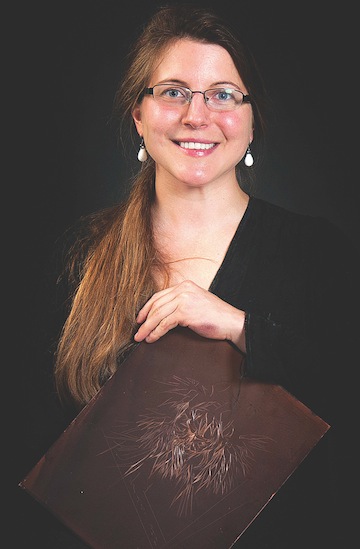
Artist Iza Radinsky at Zack Gallery. (photo by Olga Livshin)

Just over 500 years ago, in 1516, the Venetian Republic forcibly moved 700 Venetian Jews to an island, the abandoned site of a 14th-century foundry. In doing so, they created the first ghetto. The word ghetto means “foundry” in the old Venetian dialect.

photo - Rachel Singel
Rachel Singel (photo from Rachel Singer)

The Venetian ghetto had two access bridges, both guarded at night, and boats also patrolled the canals. Despite the isolation and other restrictions, the republic was relatively tolerant. Inside the ghetto, Jews were free to practise their religion and traditions; they were not forced to convert, as was the case in Spain and many other places throughout Europe. The ghetto became known as a place of study and scholarship, and its population grew from 700 in 1516 to more than 6,000 a hundred years later. The area – which existed until 1797, when Napoleon conquered the republic and gave equality to all citizens – remains a centre of Jewish culture.

Many Jewish and Italian organizations in North America and Europe have commemorated the 500th anniversary of the Venetian ghetto in some way. Here in Vancouver, Zack Gallery, in conjunction with Il Museo at the Italian Cultural Centre, are presenting Stories from the Stones of Venice: The Art of Rachel Singel and Iza Radinsky. The exhibit was the brainchild of Singel, an artist, printmaker and assistant professor at the University of Louisville, in Kentucky.

“The year 2016 marked the 500th year since the establishment of the Jewish ghetto in Venice,” she said in an email interview with the Jewish Independent. “To honour the historical anniversary and the influence of this uniquely urban space, I worked onsite in Venice for two months to create a series of etchings illustrating the buildings, structures and streets of the ghetto.”

That was not Singel’s first visit to Venice. “I first went to Venice in 2012 for an artist residency,” she said. “I have had the opportunity to return to Venice every year since. My artworks have been increasingly influenced by Venice and its fragile state…. The last two years, I have also brought my students to the Scuola Internazionale di Grafica Venezia.”

photo - “The Corner Synagogue” by Rachel Singel
“The Corner Synagogue” by Rachel Singel. (photo from Rachel Singer)

Singel has exhibited her 10 ghetto prints at the international school and at the Jewish community centre in Louisville.

“Each of the 10 images seeks to call attention to the Venetian ghetto’s importance, not only as an architectural complex within the confines of Venice, but also its worth internationally. Its structures are resonantly symbolic, representing the community’s resolute will to survive and prosper in what was an exceedingly hostile social environment.”

When Singel heard about the exhibition that was being planned at Il Museo – The Venetian Ghetto: A Virtual Reconstruction 1516-2017, which opened on July 25 – she looked into the possibility of engaging with their event. “I reached out to the Zack Gallery director, Linda Lando, about exhibiting my prints at the JCC,” Singel said.

Lando liked the idea of a Venice exhibition, but 10 small prints were not enough to fill the Zack, so Lando invited Radinsky, a local artist, to exhibit her paintings of Venice in the same show.

“Linda Lando saw five of my paintings of Venice before,” Radinsky said. “She asked me if I had more and if I would like to participate in a two-artist show together with Rachel Singel. I was happy to.”

Radinsky’s 14 large paintings and Singel’s prints form the Zack exhibit.

“I love Venice,” Radinsky said. “I first visited it in 2006, with my 86-year-old father. I was awed by the city. It was as beautiful as in the old masters’ paintings I admired as a child in the museums of Moscow and St. Petersburg, even better. Afterwards, every time I go to Europe, I visit Venice. It draws me. It’s quiet there, no cars. People walk and gondolas float on the canals. Nothing artificial, just earthy colours, red roofs, water and sky – and reflections in the canals.”

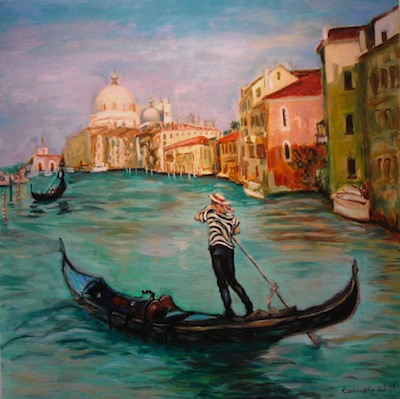
photo - “Gondolier” by Iza Radinsky
“Gondolier” by Iza Radinsky. (photo from Iza Radinsky)

In her paintings, gondolas and gondoliers look as intrinsic to the ancient city as the sunlight and shadows, the unique water streets and multiple bridges of Venice. The muted colours coalesce into one another, creating combinations that have no names. The sky and the water blend together, weaving one fantastic, living canvas.

“Venice is built on water,” Radinsky explained. “Because of the dampness, it’s hard to maintain the paint of the outside walls of the buildings. The paint often flakes off, and green mold grows close to the water. But gondolas – those look luxurious. Lots of gilt and bright colours, golden ornaments and lush fabrics and cushions for the passengers. Every gondola is an amazing piece of art. In the past, gondolas were part of the Venetian fleet. They could ram into an enemy ship, and their sharp iron bows could cut like knifes. Now, they are tourist attractions, and gondoliers are very friendly and knowledgeable. They wear special hats and traditional striped shirts. They have to study long and hard to learn manoeuvring in the narrow canals. They have to pass an exam and get a licence.”

The artist’s eyes glowed with enthusiasm as she talked about her beloved Venice. “I’ve been there four times already and I want to go again,” said Radinsky.

Stories from the Stones of Venice opened at Zack Gallery on July 27 and continues until Sept. 3.

Olga Livshin is a Vancouver freelance writer. She can be reached at olgagodim@gmail.com.


Charlottesville a turning point?

(photo by Ryan M. Kelly via cbc.ca)

Last weekend, in Charlottesville, Va., hundreds of white supremacists, Ku Klux Klanners, neo-Nazis and other racists and antisemites rallied and brought violence to the hometown of Thomas Jefferson.

The images that emerged are bone-chilling. Men (mostly) carrying torches, swastikas and Confederate flags, screaming the ugliest epithets imaginable against African-Americans, gays and Jews. When the city of Charlottesville eventually ordered the racists to disperse (the racists were authorized to rally until things got violent), one of them got in his car and rammed it through a crowd of counter-demonstrators, killing one young woman and injuring many. The violence could have been infinitely worse, it should be noted, as scores of racists in battle fatigues were seen carrying combat weapons on their way to the rally, as is their Second Amendment right in that open-carry state.

Anyone who spent any time on social media or watching cable news in the succeeding days knows that the events and the issues raised by the rally and the preceding march through the University of Virginia have been assessed from multiple angles. The delayed and impotent response of President Donald Trump has been singled out as among the more worrying aspects.

The president of the United States responded by blaming “many sides” for the violence, an appalling equivocation that diminishes the office even further than the depths to which he has debased it in the past eight months. Items of Trump paraphernalia, notably “Make America great again” caps, were prominent among the racist ralliers and some commentators think the president’s remarks were tempered so as not to upset a political base that includes the very worst elements in American society.

David Duke, the former head hood of the KKK, said the rally was a step toward fulfilling Trump’s promises and, after Trump’s bland statement on events, Duke crowed that, essentially, his guy is in the White House. Meanwhile, Maxine Waters, an African-American congresswoman and outspoken critic of Trump, dubbed it the White Supremacists’ House.

The American Civil Liberties Union advocated for the right of the racists to express themselves and, while Canada has different laws and customs around this, we would not contest the idea of racists expressing themselves peacefully, primarily because suppression can metastasize bad ideas the way mold grows in darkness. The answer to bad speech, we have been arguing in this space for decades, is not no speech, but more speech. Indeed, many Americans and others have been motivated by their revulsion at events in Charlottesville to recognize the racial and cultural problems it represents, and have engaged in the civil discourse on the side of good.

We admit, though, that free speech works best when decent people are in leadership. So, for instance, when white supremacists and neo-Nazis rally and murder, a U.S. president should arouse the country’s best instincts as the leading voice for unity in diversity and basic human decency. That didn’t happen after Charlottesville.

Also, police preparations may have been inadequate. When African-Americans have peacefully marched in recent years, militaristic counter-measures have been put in place, as in Ferguson, Mo., after the shooting death of Michael Brown. In Charlottesville, gun-swinging, fatigue-festooned, swastika-waving white people were met with limited police presence, to the extent that they were permitted to physically attack counter-protesters.

An additional factor – perhaps the only one not adequately hashed over – is the subdued reaction to the antisemitism permeating the event. The poster for the rally featured a Magen David about to be smashed by a sledgehammer. A recurring chant at the rally, premised on the idea of white culture being subsumed, was “You will not replace us … Jew will not replace us!” Seig heil salutes and chants of “blood and soil,” a Nazi slogan, were part of the show.

The president notwithstanding, most American leaders have condemned the racism of the event, but condemnations of antisemitism in particular have been far less prominent in the aftermath. Hopefully, people feel that their statements against bigotry encompass antisemitism; less optimistically, perhaps there is a feeling that, while other forms of hatred are anathema to American ideals, displays of antisemitism are less surprising and, therefore, less requiring of explicit denunciation. This is something that needs further consideration and discussion.

If, as former president Barack Obama was fond of saying (quoting Dr. Martin Luther King, Jr.), “the arc of the moral universe is long but it bends toward justice,” Charlottesville may turn out to be a positive turning point in a long and tragic history of racism, antisemitism and xenophobia in America. Optimists among us hope that the political awareness of erstwhile apathetic Americans will be awakened by the sight of torch-wielding Nazis in American streets – and spurred to action by the fact that this reality doesn’t elicit swift and strong condemnation from the most powerful person in the country and, indeed, in the world.

As Canadians, we have our own shameful history of racism and antisemitism to reckon with and should not allow ourselves any smugness when assessing our neighbour’s current spasm of hate. The passing of German-Canadian Holocaust-denier and Nazi-sympathizer Ernst Zundel this month in Germany – to which he was extradited in 2005 and convicted for inciting racial hatred – and a scan of Canadian web commenters around these subjects remind us that we remain far from some bigotry-free beacon to the world.

Still, it is only when these things are out in the open that they can be challenged and debunked. So, as debilitating as it may be to see and hear these ugly ideas and actions, it gives us the opportunity to counter them – if, unlike the president of the United States, we choose to do so sincerely.

Prejudiced reasoning

On June 24, as part of gay pride festivities taking place in cities around the world, an incident occurred at a “dyke march” in Chicago that rightfully caught the attention of people everywhere. A group of Jews who were attending the event with rainbow pride flags emblazoned with the Star of David were asked to leave.

There are at least two galling aspects to this incident. The first and most obvious is the unabashed bigotry of throwing people out of what is ostensibly a human rights march because they belong to an identifiable group. The second is the misrepresentation of victim and victimizer – Jews were asked to leave because some other participants might feel “triggered” or “unsafe.”

To understand the reasoning, such as it is, we need to recognize how concepts of minority and human rights have altered in recent years – and how these changes bode ill for Jews.

Among the varied forms of antisemitism is one that sees Jews as the embodiment of privilege. This is because antisemitism differs from many other forms of discrimination in part by how the perpetrators view their target. White supremacy, which also seems to be having a renaissance in the United States, is a strain of discrimination that allows the perpetrator to feel better about themselves by positioning themselves (in their minds) above members of another group. Antisemitism, at present at least, differs in that the perpetrators often attribute to Jews a sense of superiority. Review the comments section of almost any news story involving Jews and see how ubiquitous the term “Chosen people” is in the screeds of antisemites. There is a prevalent idea that Jews think they are better than other people – and deserve to be brought down a notch.

In Chicago, people who see themselves as victims turned what limited power they had onto a group that they miscategorized through a crude and racist ideological lens: the powerful Jews may oppress Palestinians and control Hollywood, Washington, the banks, the media and what not, but, at the very least, we can promote equality and justice by kicking them out of our dyke march. There is actually a logic to it, if you recognize the prejudiced reasoning behind it.

Economic inequality experienced by minorities, police violence, systemic discrimination, growing social intolerance, a rise of open racism and xenophobia and a vast range of other problems are real. The idea that anyone was “unsafe” because Jews were present in a lesbian march is not. This type of thinking diminishes the credibility of these movements. It also undermines the foundation of the entire social justice movement, which talks constantly about “allies.” When it comes to Jews, it seems, talk is all it is.

Kimmel plays Shylock

Bard on the Beach’s The Merchant of Venice is set in modern times, where the character of Shylock, played by Warren Kimmel, is a high-powered businessman. (photo by David Cooper)

Among the Shakespearean works being presented by Bard on the Beach this season is The Merchant of Venice, which is being complemented with a short run of local playwright and Jewish community member Mark Leiren-Young’s one-man show Shylock. Fellow Jewish community member Warren Kimmel has taken on the daunting task of playing Shylock in both the main production and its eponymous companion piece.

There is continuing controversy over whether or not theatrical companies should produce Merchant. There are those who say the play should be relegated to the dustbin of history while others champion it as an opportunity for meaningful dialogue about outsiders and otherness.

In Merchant, Bassanio, an eligible Venetian bachelor, wishes to “wed wealthily” and woo the beautiful heiress Portia. To do so, he needs money. Enter his friend, Antonio, a successful merchant of Venice, who can guarantee a loan. Jewish moneylender Shylock is approached. Shylock, who has been ridiculed and despised by the citizens of Venice, especially Antonio, sees an opportunity for revenge and agrees to make the loan in return for Antonio’s bond, which, if forfeit, would give Shylock a “pound of Antonio’s flesh.”

Meanwhile, Portia’s father has devised a test for eligible suitors to win his daughter’s hand. The antics of the three suitors vying for the prize provide some comic relief for the tragedy that follows. Bassanio wins his lady but learns that Antonio’s ships have all been wrecked at sea and that the merchant cannot pay back the loan. Shylock is insisting upon his “pound of flesh” so Bassanio makes haste back to Venice.

This leads to a powerful courtroom scene where Portia, disguised as a young lawyer, makes an emotional plea in her “quality of mercy” speech. However, Shylock insists upon his legal rights and wins the suit. Just as he is about to take his “prize,” Portia points out to him that he is restricted to exactly one pound of flesh and not one drop of Christian blood is to be shed, or else Shylock will forfeit his own life. Shylock agrees to walk away but is nonetheless systematically stripped of all his possessions and forced to convert to Christianity.

“I was very flattered when Christopher Gaze, the artistic director, asked me to play Shylock in both plays,” Kimmel told the Independent. “This will be my Bard debut and the first time that I have played a really serious dramatic role in Canada, as my background has mostly been in musicals.”

Kimmel, born in South Africa, was trained in classical theatre at the Royal Academy of Dramatic Art in London, England. He compared Shakespeare’s iambic pentameter verses to the rhythm in songs, so there is no problem there, but he has been grappling with how to present this iconic character to audiences.

“The problem I have with the play is the portrayal of Shylock,” he said. “It is very complicated because it is antisemitic. But, at the same time, it is not just black and white. Shylock is not a nice guy, he is a piece of work – but a complicated one. On one side, he is an aggressive businessman but, on the other, he lost his wife, had a hell of a life and loves his daughter more than anything, perhaps too much … to the point that she wants to escape and does so by taking his money and running off with a gentile. So, I have an inner conflict to resolve to get into the character so that it makes sense to me.”

“That really is the central question, isn’t it – is this play sympathetic or not? This is the first time a Jew on stage has been portrayed as anything close to human and we can say Shakespeare is amazing for doing this. Or, let’s be honest, it is an antisemitic piece and the guy is basically cast as the villain for whom you have absolutely no sympathy.”

Some productions portray Shylock in a sympathetic light, while others paint him as the quintessential villain. “That really is the central question, isn’t it – is this play sympathetic or not? This is the first time a Jew on stage has been portrayed as anything close to human and we can say Shakespeare is amazing for doing this. Or, let’s be honest, it is an antisemitic piece and the guy is basically cast as the villain for whom you have absolutely no sympathy.”

This is the fourth time Bard will have produced Merchant and Kimmel is the third Jewish actor to take on the role. “You don’t have to be Jewish to play Shylock, just like you don’t have to be black to play Othello. However, I do believe there is a cultural sensitivity that a Jewish actor brings to the role,” said Kimmel.

Many with even only a passing knowledge of literature know who Shylock is, and the iconic “Hath not a Jew eyes” soliloquy is as well known as Hamlet’s “To be or not to be.”

“Funnily enough,” said Kimmel, “doing that soliloquy is not what worries me about the piece…. You can do it as a plea for justice or you can do it with more of an aggressive tone,” he said, paraphrasing the speech’s main point, “But what about us? We are the same as you, so we don’t need to take this from you anymore.”

“I have decided that I am not going to play it as a victim,” said Kimmel.

As to the courtroom scene where Shylock demands his “pound of flesh,” he said, “I think I have to play him there as a vengeful kind of guy, I just don’t see any other way to do it. Some productions try to show the struggle between the good soul and the bad soul, but I see him as unrelenting in his quest for the forfeit, even though he has been offered up to three times the original amount of the loan and even though he is aware that what he is doing is wrong, fully aware, but he can’t stop himself.

“That is what happens with big emotions like revenge – one gets tunnel vision. I sing a piece of the [Maurice] Ravel Kaddish, which is very ornate, just before the courtroom scene. The point of that is to show Shylock’s mindset, ‘Look, my wife is dead, my daughter is dead [to me], I have nothing left to live for, I am going to take this man’s pound of flesh.’ I think that I would like to play the character as sinister but understandable – that this is a steely, powerful guy who is saying, just because people are prejudiced against you, does not mean you have to be a victim.”

Bard on the Beach’s Merchant is being set in modern-day Venice.

“It is a pretend world, it has to be,” said Kimmel. “It is a corporate banking world of suits that centres around a group of high-powered businessmen. Shylock is one of them. He is savvy and a very powerful guy by virtue of the fact that he has a lot of money. There is a tension there in the play itself as, despite his money, he is treated as a second-class citizen. We are not playing up the religious aspect in terms of costuming so that the only outwardly visible sign of his Judaism will be the yarmulke that I will be wearing – he is a modern Jew.”

On the issue of whether or not the play is too offensive for contemporary sensitivities, Kimmel is thoughtful.

“I don’t think you should look at it with post-Holocaust eyes,” he said. “The fact that this version is set in modern times makes it even more difficult to digest. In the actual period, 1500, Jews were essentially reviled wherever they lived, and Shakespeare was just reflecting the animus of the time.”

Despite the antisemitism, Kimmel feels that the play is one of the great works of literature and that it is important to see it.

“I feel that, as actors, if we are not doing something that is offending someone, why are we doing it? We are supposed to provoke dialogue and conversation.”

Noting that “there is way too much political correctness in the world right now,” he said, “I feel that, as actors, if we are not doing something that is offending someone, why are we doing it? We are supposed to provoke dialogue and conversation. For example, when people are spitting on Shylock and calling him a dirty Jew, that has to be part of the story so you get what is going on. You can’t ask, does it offend you because people are spitting on you? That’s the story and that is part of why he goes and tries to cut someone’s heart out. You have to be driven to that, so what would drive you to do that? Once you get the back story, then you see the context of his actions.”

Kimmel believes audiences will get something different out of this version of the play than from the three previous productions. One of the reasons for this belief, he said, is that the director, Nigel Shawn Williams, is playing on the theme that we are all outsiders at one point or another. Kimmel wants people to leave the theatre challenged to sort out their feelings about what they have just seen.

Shylock will run for one week in September. In this work, the actor who plays Shylock comes out after the final performance of Merchant – the play has been shut down due to public pressure and, as part of a talk-back, the actor defends his participation in it as a Jew and explains why it is important to stage Shakespeare’s play.

“I am more excited about that piece because, with it, I know exactly where I am at and I get the arguments from both sides,” said Kimmel. “It was written specifically for Bard and Vancouver to run alongside its 1996 Merchant production with local community member David Berner playing the Jewish actor.”

Kimmel said, “The play seems to say that you can’t censor something just because it offends you. Why can’t you have a Jewish villain? Why don’t we just stop doing anyone who is in any way compromised?”

Audiences will be exposed to a range of perspectives on history, censorship, identity and the meaning of art in this intensive 90-minute offering, which is being directed by first-time Bard director Sherry Yoon, who will be fleshing (pun intended) out the play with projections and sound effects.

“Shylock is a character that has endured for over 400 years. He is the best-known Jewish character in literature. There are people the world over who know what a shylock is. That is because he is so fascinating. Jews are fascinating people.”

“This is the first great Shakespearean character,” said Kimmel of Merchant’s Shylock. “After this comes Othello, Hamlet and Lear. It is really the first time Shakespeare goes from silly comedies with twins with mistaken identities to serious roles that fascinate humanity through time. Shylock is a character that has endured for over 400 years. He is the best-known Jewish character in literature. There are people the world over who know what a shylock is. That is because he is so fascinating. Jews are fascinating people.”

The play had been used to incite hatred against Jews – the Nazis in particular promoted it because it fit in with their worldview.

“That is exactly why it is important for everyone to see Merchant for themselves,” said Kimmel, “so you don’t get the story secondhand – you should be exposed to it, not told about it.”

Bard on the Beach runs until Sept. 24. Its other productions this season are Much Ado About Nothing, Winter’s Tale and Two Gentleman of Verona. For the full schedule and tickets, visit bardonthebeach.org.

Tova Kornfeld is a Vancouver freelance writer and lawyer.

Ignorance and power

Rebecca Katzman is graduating from the School of Social Work at Ryerson University in Toronto this spring. Now that she is leaving the institution, she has decided to go public with an incident that happened when she applied for a field education placement at a Jewish agency.

The story emerged recently and Katzman shared the experience firsthand in the Canadian Jewish News last week.

For her third-year work experience placement, she asked the school’s coordinator to investigate possible opportunities at UJA Federation or the Prosserman Jewish Community Centre. The school official responsible, Heather Bain, denied Katzman’s request, telling her that her choices were incompatible with the values of the school.

“I did not follow up with Prosserman JCC or UJA because after looking into them, some of their values seem to be in opposition to the values of the school,” Bain wrote in an email to Katzman, adding that the agencies both appear to have a “strong anti-Palestinian lean.” Later, Katzman said, Bain suggested that Katzman could work with the Jewish organizations only if she came in with an agenda to “bring a critical awareness to the setting.”

“It seemed that she implied that I could only work at these agencies if I came in with an anti-Israel agenda,” Katzman wrote in CJN.

When pressed by Katzman, Bain acknowledged that she did not do her own investigation into the organizations, but relied on the advice of colleagues who are members of Jews Against Israeli Apartheid. She added that she might change her position if she discovered that “both agencies (were) supporters of Palestinian solidarity movements.”

It turns out Bain may have underestimated who she was dealing with. Katzman was not only active in student organizations supporting Israel and opposing antisemitism on campus, she was a StandWithUs Emerson Fellow, part of what is described as a “prestigious one-year fellowship program that recruits, trains, educates and inspires pro-Israel college students to become an elite cadre of leaders on college campuses across North America.”

StandWithUs provided Katzman with pro bono legal counsel. Even so, despite legal assistance and a history of involvement in Jewish activism, Katzman did not go public until her time at Ryerson was over. How many students in Canada have had similar experiences but lacked the resources or fortitude to stand up to it?

It is clear that Bain’s extraordinary decision was based on almost complete ignorance of the reality of the organizations she besmirched, having been arrived at on the advice of individuals who come from an extreme anti-Israel position. For a person in a position of power to set policies, this is disgraceful.

It takes courage to stand up to this sort of injustice. Those who choose – or who, like Katzman – are forced to confront it deserve our encouragement, support and gratitude.

גידול באנטישמיות בקנדה

(צילום: Steven W. Dengler)

גידול משמעותי נרשם באירועים אנטישמיים נגד יהודים בקנדה. לדברי ארגון בני ברית קנדה אשתקד אירעו 1,728 אירועים אנטישמיים במדינה וזהו גידול של 26% לעומת 2015. מדובר רק במקרים המדווחים וקרוב לוודאי שבפועל מספר האירועים האנטישמיים אף גבוה יותר.

בפועל מדי יום מתרחשים 4-5 אירועי שינאה נגד יהודים בקנדה שכוללים אלימות, הטרדות והשחתת ציוד (בהם ציורים של צלבי קרס וסיסמאות שינאה). ב-20% מהאירועים מעורבים מכחישי השואה בהם גורמים איסלמים קיצוניים, לעומת 5% ב-2015.

בבני ברית מציינים כי מעולם בקנדה לא אירעו כל כך הרבה אירועים אנטישמיים וזה מטריד במיוחד, לאור העובדה שהיא נחשבת לאחת מהמדינות הסובלניות ביותר בעולם. בארגון מוסיפים עוד כי לדעתם האנטישמיות בקנדה היא אינה יבוא מארה”ב, ולא קשורה לבחירתו לנשיא של דונלד טראמפ.

לדברי מומחה מקומי לנושא פשעי שינאה העלייה באינטישמיות בקנדה היא חלק ממגמה עולמית בעולם המערבי, במקביל לעליית כוחן של תנועות הימין הקיצוניות. יצויין כי בקנדה גרים כיום למעלה מ-400 אלף יהודים ומדובר בקהילת היהודית הרביעית בגדולה בעולם.

סקס ופוליטיקה: חברי מועצת העיר קיבלו אימייל עם תמונה של בחורה עירומה מחברם שמכחיש כי הוא השולח

כמאה חברת מועצת העיר סנט קטרין, ראשי מערך ביטחון של אוניברסיטת ברוק המקומית ותחנות הרדיו באזור שבמחוז אונטריו, קיבלו לפני מספר ימים אימייל יוצא דופן מחבר המועצה אנדי פטרובסקי. מדוע? כיוון שצורפה לו תמונה של בחורה בלונדינית בעירום מלא שיושבת על כיסא, ידיה שלובות מאחורי גבה ורגליה מפוסקות. זאת, בתגובה להחלטת מועצת העיר לסגור את אחד הנתיבים שעל גשר בורגויין שבעיר. לאימייל של פטרובסקי צורפו המילים: “צריכה להיות מכירה בשווי של מולטי מיליון דולר במימון הציבור של הקשתות הלא המתפקדות שעל הגשר. נחש מי השיג את המימון שלהן מהממשלה הפדרלית? נכון אתה צודק. אילו הם טפשים. איזה בדיחה”.

כמה חברי מועצה אומרים בתגובה שהאימייל של פטרובסקי הוא מגונה ומדובר בהתנהגות שאינה מקובלת עליהם, והם דורשים ממנו להתפטר מיידית. בתגובה שלח פטרובסקי אימייל עם התנצלות “על האימייל הלא מקובל והלא הולם”. לטענתו לא הוא שלח את האימייל, אלא מישהו אנונימי שניצל את העובדה שהאייפד שלו היה פתוח, והוא זה ששלח אותו עם תמונת העירום. פטרובסקי לא מקבל את הדין לגבי זהות כותב האימייל הטורדני, שנשלח לדבריו בטעות. ראש העירייה, וולטר סנזיק, אומר כי היה בהלם מהאימייל ולדבריו הוא תומך בקריאות להתפטרותו המיידית של פטרובסקי. ראש העירייה הוסיף: “כשאתה מסתכל על השפה בה נכתב האימייל זה מזכיר בברור את סגנון כתיבתו הידוע והמיוחד של פטרובסקי”.

אין זו בעצם הפעם הראשונה שפטרובסקי מסתבך בשליחת מסרים בעיתיים. בינואר 2016 הוא הואשם בשליחת הודעת טקסט מהטלפון שלו, למפקד משטרת מחוז ניאגרה פול, ג’ף מקווגיר, בה נכתב: “הלו ליצן. האם אתה עריץ?”. באותה עת פטרובסקי שימש חבר הנהלת מועצת המשטרה של ניאגרה. גם אז הוא עשה טען בתגובה הטלפון שלו נשאר פתוח, ומישהו אלמוני שלח את הטקסט הבעייתי למפקד המשטרה.

ועוד ממעללי פטרובסקי: הוא נחקר בימים אלה על פרסום שש הודעות פוגעניות בחשבון טוויטר שלו. לדברי הממונה על הנציבות בעיריית סנט קטרין, במעשיו פטרובסקי פגע בקודים של העירייה. הממונה ממליץ לחברי המועצה לקרוא לו להתנצל באופן פומבי על מעשיו, ולאסור עליו להשתתף בישיבות המועצה, עד שיקח חלק בקורס מקצועי מיוחד שבו ילמד על הבעיות בהתנהגותו.

Trump supporters meet

Left to right, Larry Elder, Dennis Prager and Hugh Hewitt at the Unite Inland Empire Conservative Conference on April 30. (photo by Dave Gordon)

Eight hundred supporters of U.S. President Donald Trump gathered in a Los Angeles-area venue recently – before the controversy this week over Trump’s sharing of classified information with Russia – to hear four major U.S. media figures discuss why, in their opinion, the president had thus far made impressive executive choices.

The April 30 event – the fourth annual Unite Inland Empire Conservative Conference – was entitled Trump’s First 100 Days.

Panelists were talk radio hosts Larry Elder, Hugh Hewitt and Dennis Prager and senior editor-at-large of Breitbart News, Joel Pollak.

Trump was praised by all speakers for his Supreme Court choice of Neil Gorsuch, his strike on Syria, his efforts to overturn Obamacare and the newest Iran sanctions. The two Jewish speakers – Prager and Pollak – told the Independent that the president has, in a very short time, done much for Israel.

Appointing a U.S. ambassador to the United Nations who is critical of the world body’s treatment of the Jewish state should be seen as significant in itself, Prager said. “Why isn’t Nikki Haley enough for a Jew?” he asked.

The author of seven books, including the recently released Ten Commandments: Still the Best Moral Code, Prager said Trump should divest the United States entirely from the UN, however.

“It is a morally bad organization. It does more harm than good,” he said. “You can have aid agencies without the UN. Think we need UN peacekeepers? You can talk about Rwanda. What good has the Security Council done? It is the most anti-Jewish institution in the world. What more do you need to know? My whole life I have understood Jew-hatred as the barometer of the world’s health.”

In terms of reported rising Jew-hatred in the United States, Prager said some of it is fabricated and some is an imminent threat.

“All of the Jewish centres’ bomb threats – this was hysteria – all because of a black radical and a disturbed Jewish kid in Israel. It wasn’t 40 antisemitic incidents; but maybe one or two.”

To those who accuse the president of attracting those who bear ill will towards the Jews, Prager added, “It’s a world of lies that Trump has increased antisemitism and that he is an antisemite and that he has let antisemites in his administration.”

The true menace, he said, was “the transformation of the university to the most Israel-hating institution in America. Jews don’t want to acknowledge this because they adore the university.”

Antisemitism might be among the reasons Trump has waffled on his promise to move the U.S. embassy to Jerusalem, Prager said, adding, “I 100% excuse him on it.”

It is Prager’s belief that Israel may be reticent, at this point, to deal with the potential blowback.

“The Arab world is a passion-based, hate-filled world,” he said. “The hatred of Israel is the food of the Arab world. There’s no joy in saying this.”

However, it was important that Trump said that while campaigning, argued Prager. “I believe [the promise] didn’t say, ‘I am going to open an embassy in Israel.’ It said, ‘I care about Israel,’ unlike the previous president.”

photo - Joel Pollak, senior editor-at-large at Breitbart News, addresses the conference
Joel Pollak, senior editor-at-large at Breitbart News, addresses the conference. (photo by Dave Gordon)

Meanwhile, Pollak thinks that the president may follow through with moving the embassy to Jerusalem at some point in the future.

“I don’t see it as a back pedal,” said Pollak. “David Friedman [U.S. ambassador to Israel] is going to live in Jerusalem, even though the embassy is in Tel Aviv. It indicates which of the two cities the U.S. considers is Israel’s capital.”

In terms of the peace process, the new administration will not be mirroring that of Barack Obama, who “took the Palestinian side, and that was destabilizing,” said Pollak.

On the UN, Pollak said it was a forum for enemies to hash out their differences, but its Human Rights Council – where many dictatorships have representatives – should be dismantled.

In agreement with Prager, he said the pressing danger to U.S. Jews is the surge of university-based antisemitism.

“Students are being exposed to anti-Israel activities that they’re ill-equipped to counter,” said Pollak. “It has gotten so bad that now discrimination is happening on religion, not just for supporting Israel.”

Last year, U.S. campuses saw a 45% increase in anti-Jewish sentiments, according to Tel Aviv University researchers and the AMCHA Initiative, which investigates antisemitism on college campuses.

The issue will worsen, Pollak said, as more young people remain ignorant of the Holocaust – a tragedy all-too-often invoked and misused by those who compare the Final Solution to the Palestinian situation.

For attendee Evan Sayet, author of Kindergarten of Eden, the “single most important thing” for American Jews to do is to rebuke government-funded universities, “twisting the screws against the lies and antisemitism in the guise of academia.”

He said, “You might not think of American campuses, because it doesn’t seem like an existential threat. You might think academia is just a place of words. Obviously, this is the next generation who are infused with antisemitism. It bodes ill for the Jews. Antisemitism is an evil that is placated in the Arab world and, now, other places in the world, including Europe.”

Dave Gordon is a Toronto-based freelance writer whose work has appeared in more than 100 publications around the world.

מספר היהודים החיים כיום בעולם

נתוני הלשכה המרכזית לסטטיסטיקה בישראל: 14.4 מיליון יהודים חיים בעולם ומהם כארבע מאות אלף נמצאים בקנדה. (צילום: Cynthia Ramsay)

הלשכה המרכזית לסטטיסטיקה בישראל פירסמה בימים האחרונים דוח על מספר היהודים החיים כיום בעולם. הנתונים בנויים על הערכות בלבד של המדור לדמוגרפיה וסטטיסטיקה של היהודים באוניברסיטה העברית בירושלים, מתבססים על שנת 2015, ומתפרסמים כרגיל לרגל יום הזיכרון לשואה ולגבורה.

אם כן כיום לפי הערכה של המדור לדמוגרפיה וסטטיסטיקה באוניברסיטה העברית, חיים בעולם כ-14.4 מיליון יהודים. זאת לעומת 16.6 מיליון יהודים שהיו בעולם ערב מלחמת העולם השנייה ומאורעות השואה הקשים. לפיכך העם היהודי למרות השנים שעברו שבעים ושתיים שנים, לא הצליח לחזור לגודלו לפני אירועי השואה, שהביאו להשמדת שישה מליון יהודים. יצויין כי גם בשנות העשרים של המאה הקודמת חיו בעולם כמו כיום כ-14.4 מיליון יהודים.

מטבע הדברים ריכוז היהודים הגדול בעולם (44 אחוז) נמצא בישראל ועומד על 6.33 מיליון. אחריה המדינה השנייה עם מספר היהודים הגדול ביותר כרגיל היא ארצות הברית, שבה גרים עם 5.7 מיליון יהודים. המדינות הנוספות בעולם בהן יש את הריכוז הגבוה ביותר של יהודים אחרי ארה”ב הן: במקום השלישי צרפת עם כ-460 אלף יהודים, במקום הרביעי קנדה עם כ-388 אלף יהודים, במקום החמישי בריטניה עם כ-290 אלף יהודים, במקום השישי ארגנטינה עם כ-181 אלף יהודים, במקום השביעי רוסיה עם כ-180 אלף יהודים, במקום השמיני ברזיל עם כ-120 אלף יהודים, במקום התשיעי גרמניה עם כ-117 אלף יהודים, במקום העשירי אוסטרליה עם כ-113 אלף יהודים. לפי הערכות לא מבוססות במקום האחד עשר נמצאת דרום אפריקה ובה חיים כ-80 אלף יהודים.

והיכן קיימות הקהילות הקטנות של יהודים בעולם: באיראן למשל חיים כעשרת אלפים יהודים, בבירוביג’ן חיים רק כחמשת אלפים יהודים, ביפאן חיים כאלף יהודים בלבד, בבהאמס חיים רק כשלוש מאות יהודים ואילו בקוריאה הדרומית יש כמאה יהודים בלבד.

על פי סקר של ההסתדרות הציונית העולמית שנעשה לאחרונה יש גידול משמעותי ביותר באנטישמיות ברחבי העולם, ואחד מכל שלושה יהודים חש את הצורך להסתיר את יהדותו. ועוד ממצאי הסקר: 85 אחוז מהיהודים היו עדים לאנטישמיות במהלך חייהם, 50 אחוז מיהודי המערב (מדובר על מדינות אירופה וצפון אמריקה) חוו אירוע אנטישמי במהלך השנה האחרונה, 73 אחוז היו עדים לאלימות פיזית ו-70 אחוז מיהודי אירופה חגגו לבד את החגים בשל הפחד מפעילות אנטישמית.

יש לזכור שיש גם כיום בישראל המפוצלת מאוד מבחינה חברתית כיום יהודים שונאים יהודים ובצורה גלויה. להלן סיפור מזעזע: יהודי תושב ירושלים בן 55 נחקר החודש במשטרת ירושלים לאחר שהביעה תמיכה ברורה בהשמדת יהודים אשכנזים. אותו ישראלי נחמד כתב בין היתר בדף הפייסבוק שלו: “אני מדמיין שיש לי את הכוח של היטלר, יושב על כסא עם בקבוק יין ומכניס אותם אחד אחד לתנור של אלף מעלות, ודואג שייצאו אפר. כמה שאני שונא אותם אלוהים”. האזרח הירושלמי לא התבייש להוסיף עוד מילות חמות על היהודים האשכנזים: “היטלר צדק שעשה מאימא שלכם סבון, והוא צדק שחיסל אתכם זבלים בני זבלים”. חברת פייסבוק חסמה מייד את הפרופיל של האזרח היקר. המשטרה המשיכה לחקור אותו והודיעה כי יוגש כתב אישום חמור נגדו.

ומהן תגובות הגולשים לאור הנתונים על מספר היהודים בעולם?: “הדת היהודית מזמן סיימה את דרכה. זה רק שאריות”. “בגלל ההתבוללות של היהודי בעולם. לולא זאת היה מספר היהודים כפול! ההתבוללות הגדולה ביותר באמריקה!”