Cynicism and realism

Last week, thousands of Germans of all faiths and identities participated in a “kippa march,” standing in solidarity with German Jews who feel endangered in the current political climate. In 2017, there were 1,468 reported antisemitic attacks in Germany, most perpetrated by members of the far-right.

The gesture is lovely. However we cannot help wondering if the whole “Je suis Charlie,” “We are all Muslims” or the “Ich bin Eine Jude” movements that pop up as gestures of solidarity are not at least slightly misplaced.

We will leave it to others to speak for their communities. But we would note that there may be a degree of comfort among some people in Europe and North America to criticize Jews. Since Christianity is descended from Judaism, it seems that there is felt more freedom to criticize Jewish behaviours, including the policies of the Jewish state. After all, the thinking might go, we are all part of the same family; it’s practically constructive self-criticism. Yet this ignores millennia of significantly divergent experiences and theology.

While the idea that donning a kippa will help keep Jewish neighbours in Germany safe, recent European history should give us reason to worry that today’s gesture of solidarity could be repurposed as a cover for criticism tomorrow on the pleasant idea that Ich bin Eine Jude.

This is a cynical response to a kind gesture, we realize. But sometimes cynicism and realism are not unrelated.

Antisemitism exposed

It recently came to light that Jeremy Corbyn, the leader of the Labour Party in the United Kingdom, was a member of at least one closed Facebook group where antisemitic rhetoric and hatred, including the most ridiculous assertions based on the Protocols of the Learned Elders of Zion and other such bunkum, was liberally purveyed.

David Collier, an independent British researcher, released an in-depth analysis of the kind of content that appeared in the group to which Corbyn and other leading Labour activists belonged. Members of the group routinely threw around phrases like “Jewnazi” and “Zionazi.” Members posted articles about the “Rothschild Empire,” the “Zionist agenda and New World Order” and “Jewish organ trafficking,” the latter, as the title implies, being a modern incarnation of blood libel.

About Mein Kampf, one poster urged: “Everybody should be forced to read it, especially Jews who have their own agenda as to why they were not liked.” Members have claimed that Hitler “supported Zionism” and that the Holocaust is being exploited so that Jews can oppress others – all the while shielding themselves with the assertion that “criticizing Israel isn’t the same as antisemitism.”

When caught, Corbyn, who has called Hamas and Hezbollah “friends,” defended his online association with antisemitism by saying, “Had I seen [evidence of antisemitism], of course, I would have challenged it straight away, but I actually don’t spend all my time reading social media.” In fact, even the most cursory glance at the page would indicate this is a site with which no legitimate public figure should be associated.

An older incident was made public about the same time, in which Corbyn defended the artist in a case where a local government opted to paint over an overtly antisemitic mural on a public wall. Later, Corbyn would claim he hadn’t really looked at the mural, which clearly depicts stereotypically Jewish looking men divvying up money on the backs of the oppressed, while the symbol of the Illuminati, a figment of the antisemitic movement’s imagination, hovers above them.

The fact that overt antisemitism, which has existed in the Labour Party for some time, has finally had a bright light shone on it, has brought some surprising reactions. Some MPs and other Labour activists have called for MPs who attended a rally against antisemitism to be blackballed from the party. You read that right.

Those whose dogged campaigning has brought the unseemly underbelly of antisemitism on the British left to light seem to now face the daunting task of ensuring that the blame for the problem – and the task of fixing it – falls to the perpetrators, not the victims.

Faculty boycott Hillel

Hillel House building at the University of British Columbia. (photo from Hillel BC)

The University of British Columbia Geography Students Association (GSA) recently canceled a gala that was to take place in rental space owned by UBC’s Hillel chapter, due to pressure from some of the faculty in the department of geography.

The faculty members said they insisted on boycotting the event because of what they called the “controversial” and “political” nature of Hillel, according to numerous reports. The faculty members had not been publicly identified as of press time and could, therefore, not be located to clarify their position.

The Centre for Israel and Jewish Affairs (CIJA) has accused them of boycotting the GSA gala based on the perception that Hillel supports the state of Israel, which CIJA is calling discriminatory.

“Boycotting Jews or a Jewish organization simply because you object to the state of Israel’s policies is classic antisemitism,” said Nico Slobinsky, CIJA’s director for the Pacific region.

“It is hard to believe that there is such blatant antisemitism on a Canadian university campus in 2018. There should be zero tolerance for any expressions of discrimination, racism and antisemitism on campus and anywhere else in Canada.”

Samuel Heller, the assistant executive director of Hillel BC, told the CJN that, “The actions of these faculty members have resulted in a de facto boycott of the Jewish student centre on campus. To boycott Jews based on one’s political views about Israel is discriminatory and antisemitic. Their actions have led to the resignation of the lone Jewish student on the executive of the GSA, as he felt marginalized and discriminated against because of his Jewishness.”

Addressing the claim that Hillel is a controversial and political space, Heller said, “Hillel doesn’t have any politics. What these faculty members really object to is Hillel’s support of Israel’s existence. We are a Jewish organization and Israel is a part of Jewish identity.… To demand that Jews disavow parts of our identity to placate faculty members is wrong and discriminatory.”

But not everyone accepts Heller’s characterization of Hillel as “having no politics.” The Progressive Jewish Alliance at UBC (PJA) released a statement on Facebook on March 16, saying: “While we recognize the right of the GSA to move the gala based on political considerations, we urge the GSA to recognize that Hillel is the physical Jewish space on campus, alongside having a political position. While we wait for a statement from the GSA, we would like to point out that the ramifications of their decision are alienating Jewish students on campus. Likewise, we encourage Hillel to consider how their political positions, such as an opposition to all boycotts of Israel, can alienate other Jewish and non-Jewish organizations and students.”

The PJA is referring to Hillel International’s Standards of Partnership, which state that Hillel will not partner with, house or host organizations, groups or speakers that deny the right of Israel to exist as a Jewish and democratic state with secure and recognized borders; delegitimize, demonize or apply a double standard to Israel; or support the boycott of, divestment from or sanctions against the state of Israel.

In 2012, concerns about Hillel’s refusal to partner with Jewish organizations that support the BDS movement led to the formation of Open Hillel, an organization that agitates for Hillel to end the Standards of Partnership.

Numerous controversies have broken out over Hillel boycotting groups or individuals in recent years. In one example, in March 2017, B’nai Keshet, a queer Jewish group at Ohio State University, co-sponsored a Purim fundraiser for LGBTQ refugees in the Columbus area. Because Jewish Voices for Peace, an organization that supports BDS, was one of the sponsoring groups, OSU Hillel cut ties with B’nai Keshet, due to pressure from Hillel International, prompting students on numerous American campuses to hold “solidarity Shabbats” with the LGBTQ group. In June, a letter calling for the end of the standards was signed by more than 100 rabbis and submitted to Hillel.

The UBC Progressive Jewish Alliance hopes that the controversy will not only provoke change in the GSA, but in Hillel, as well.

“We hope that both organizations take this opportunity to engage in genuine dialogue around the complexity of politics and place,” it concluded in a statement.

Philip Steenkamp, the vice-president of external relations at UBC, told the CJN that the university is “aware of concerns that have been expressed by CIJA” and “are looking into this matter and will follow due process to ensure it is appropriately addressed.”

Matthew Gindin is a freelance journalist, writer and lecturer. He writes regularly for the Forward and All That Is Interesting, and has been published in Religion Dispatches, Situate Magazine, Tikkun and elsewhere. He can be found on Medium and Twitter. This article was originally published by the CJN.

Londres foresaw fate of Jews

Albert Londres was a Parisian journalist born in 1884. He became an international reporter who chose to chronicle human suffering and expose injustice and cruelty. He denounced inhuman conditions in mental asylums, the ordeals of black workers, conditions in a penal colony. His journalistic philosophy: “our profession is not to give pleasure nor to do harm; it is to twist the pen into the wound.”

Why was I drawn to Londres’ The Wandering Jew Has Arrived (Gefen Publishing House, 2017)? For one, I had spotted it in Israel and it was produced by Gefen, a familiar name in the publishing world. Its founder, Murray Greenfield, his late wife, Hana, and I once visited Terezin together and his son, Ilan Greenfield, published a book about the Buchenwald boys I co-wrote with Judith Hemmendinger back in 2000.

Secondly, I quickly read the introduction by Rav Daniel Epstein. He described Londres as a non-Jewish Parisian reporter with an insatiable curiosity. He wanted to inform his French readers, “nurtured for centuries on a teaching of contempt and antisemitic clichés,” about the world of Jews, a world he also did not understand. So he learned. He observed. He made a brief visit to Poland in 1926 and was exposed to the reality of pogroms and ghettos (his word for shtetls). Who would not want to join him on his journey?

In 1929, he began to familiarize himself with the London Jewish community of Whitechapel. Then he traveled to Poland, Russia and Romania. He described observant and secular Jews, Zionists and anti-Zionists, Torah scholars, yeshivah students. From all that he observed and experienced, Londres concludes “the passion for learning is uniquely Jewish,” and links this passion as “undoubtedly the real mystery of Israel and the secret of its survival.”

He discussed the dangerous circumstances of Jews living among hostile nations in 1929. “The Jew,” he writes, “is guilty of one crime; that of being Jewish.” He elaborates, “A Pole or Russian chases a Jew from a pavement as though the Jew who is passing by, is stealing his air.” Londres travels as well to Palestine to witness and observe a “metamorphosis: the cowering Jew of the ghetto now holds his head high … he finds the wandering Jew in Jerusalem.”

Londres’ translator, Helga Abraham, writes, “Still widely read in France, the book came to my attention when the Hebrew translation was published in 2008 (Nahar Books). Surprisingly, I discovered that no English translation was available. An English translation had been published in 1932 but soon was out of print. I use the word surprisingly because it is hard to read this work without being arrested by its enormous significance – as a unique eyewitness account by a non-Jew of a pivotal period in Jewish history, as a major literary work in itself and as a masterful example of journalism at its best.”

Let me take you through some of his journey. In the opening chapter, “A Bizarre Personage,” he describes meeting in London the Jew who would squire him on his journey – a Polish Galician rabbi on a fundraising mission in London.

Londres wrote, “But I had to begin in London. Why? Because England, 11 years ago, had proclaimed to the Jews the same words that God, sometime before, had proclaimed to Moses on Mount Horeb,” assigning him the land of milk and honey.

This time the proclamation had come from Lord Balfour. Londres records both proclamations adding, “England knew how to defend its interests better than God His: God had given Palestine and Transjordan in one stroke. Lord Balfour kept Transjordan.”

image - The Wandering Jew Has Arrived book coverLondres writes of the 1917 Balfour declaration as well as the betrayal of the Jews following the declaration, because, although the San Marino conference legalized the promise, by 1922, 78% of the British Palestine mandate was severed from becoming a potential Jewish area. And, only 10 years later, in 1939, unbeknown to Londres, who died in 1932 in a fire that broke out on the boat returning him from Shanghai, the slaughter of Europe’s Jews began.

It is all forecast by him, as he describes Jewish history to that time and modern Jewish history from the days of Theodor Herzl (1860-1904). Herzl became a journalist in Paris, where he witnessed the Dreyfus Affair. He wrote a book called The Jewish State. He was particularly shocked by hearing the cry, “Death to the Jews” in Paris, particularly in France where, “if the suspicion that rested on an individual (Alfred Dreyfus) was projected onto all, it meant that a Jew, even in this privileged country was not in his own home.”

Herzl set out to convince monarchs and leaders to establish a home for the Jews. He visited heads of state, royalty and philanthropists, and reunited Israel as a nation, in Basel, for the First Zionist Congress. In London, 10,000 Jews came to hear him. In Vienna, another 10,000.

His schedule was hectic, his leadership challenged and he succumbed to illness at age 44. Londres notes: “Herzl is dead. His dream lives on!” Londres writes, “Three thousand two hundred forty-seven years after Moses, he succeeded Moses.” And, “He awoke a people that had slumbered for nineteen centuries.”

And so, Londres embarks on his mission to describe “the state of the Jews in the world to the French.” In London, he speaks with immigrant Jews and recognizes that, in countries like Poland and Romania, due to antisemitism, “A Jew over there is always a Jew. He may be a man, but he is neither a Romanian nor a Pole. And if he is a man, he must be prevented from growing.”

Londres places into historical perspective the Lord’s designation of Abraham as the patriarch and assigning to him the land of Canaan around 1920 BCE, and the assignation of the land at the San Remo conference, also in 1920, but CE. At San Remo, the Supreme Allied Council gave England the mandate to establish a “Jewish national home” in Palestine. Londres notes wryly that from 1920 BCE to 1920 CE, “the Arabs have not stopped creating an uproar. They deny that Palestine is the cradle of the Jews.”

Londres describes the development of Jew-hatred; the loathing of Jewish adherence to the laws of the Torah, followed by the birth of Christianity and then dispersion to hostile nations. They were ghettoized, marked with yellow badges, forced to give up Judaism in Spain and blamed for cholera in Germany, whereupon they moved to Poland followed by Chmielnicki, the leader of Ukrainian Cossacks, who “passed through all the ghettos to massacre 300,000 Jews.”

The French Revolution led to greater acceptance of Jews, less so in Vienna. But Londres was familiar with the Jews of the West. He wanted to see those in the East, and journeyed to Prague and followed others to Mukachevo, in Subcarpathian Russia. Jews were driven from their homes in Moravia, Poland and Russia into misery and poverty, all described by Londres, the roving journalist.

Even in Prague, in a more civil society in the heart of Europe, he notes, “Chased, beaten, mocked, unable to leave their concentration camp, accused of witchcraft, sorcery, illnesses, their garments marked with a yellow badge, they walk stooped, pale and thin, beards flowing, down the little alleys of yore, with big strides, heads bent, toward this old synagogue. It was their sole homeland.”

What is the vision that prompts him to use the words “concentration camp” for the Jewish area they cannot leave and the yellow badge to mark them, in the year 1929?

The reader will soon enough discover what Londres began to envision. For he discusses as well the absence of Jewish rights, their lack of political power combined with the ever-increasing torment of pogroms, forced conscription and soul-destroying laws. Londres emphasizes that Jews without a land of their own create a space in which to worship and temporarily escape the travails of their wretched lives. He knows there is no future for these Eastern European Jews who happen to number six million, without including those in Germany, France and the Netherlands.

He describes the pogroms of Kishinev in 1903 and the great pogrom of 1918-1920 in Ukraine and eastern Galicia, where 150,000 Jews were murdered and 300,000 wounded. Londres notes there is no particular reason for pogroms except one: “the fundamental cause of pogroms is loathing of Jews. Then come the pretexts.” In Bessarabia, he meets a chalutz (pioneer) from Palestine urging Jews to leave their misery. Alter Fischer had survived a Cossack pogrom and fled to Palestine. Now a proud Palestinian Jew on a mission, he attempts to inspire the Jews of Kishinev. At one point, he rages, “By dint of waiting for him [the Messiah], they will all end up slaughtered. They are like the inhabitants of Stromboli, waiting for the volcano to erupt.”

In contrast to “the wild Jews of the Marmarosh Mountains, the frightened Jews of Transylvania, of Bessarabia and of Bukovina, the begging, beaten Jews of Lwow” stands Warsaw, which is, in Londres’ words, “the Jewish queen of Europe.” Three hundred and sixty thousand Jews – but living in a country where, “One of the main pillars of Poland’s political program is to ‘crunch the Jews.’ A Jew cannot work for the government, or the army, or a university.”

Londres’ descriptions of the depth and intensity of Jewish life reflect an admiration of the commitment to study and education. But, he worries. His travel companion from Prague, Ben, offers these words, “The Jews of Russia? They know they are enjoying a truce now. Bolshevism has brought them peace. But every regime that follows Bolshevism will bring them war. And they will pay the price. It will be even worse than Petliura’s pogroms. Everyone knows this and it will be ghastly. In Poland? The situation is worse than it’s ever been. In Romania, the antagonism is blatant. In Czechoslovakia, there is neutrality but also neglect. That’s the picture. Who wouldn’t want to get out?” Ben adds, “All of us here are not at home. But we are no more than guests wherever we live.” It is 1929.

Londres travels to Palestine on a vessel, the Sphinx. He exclaims, “Here is the sun! I left Warsaw in the year 5690” (on the Hebrew calendar). “Now I enter year 10” (roughly a decade after the Balfour declaration). Londres exults in the discovery of “Herzl Street! Edmond de Rothschild Boulevard! Max Nordau Street! The synagogue, the main monument in the process of being completed, seems to say it all. It is like a flag, floating over a camp. The sole, unrivaled flag. No crosses in its shadow, no minarets in its radius. Just as when the Temple dominated Jerusalem, before the Church of the Holy Sepulchre and the Mosque of Omar.”

In discussing the defeat of the Ottoman Empire and its 400-year occupation, Londres states simply, “Victory came. England puffed its cheeks and exhaled. The Arab kingdom vanished. Israel took its place.” He writes, “There is no point labouring over historical texts. Whether the settlement of the Jews in Palestine is called a ‘national home’ rather than a ‘Jewish state’ does not alter the fact. And the fact is this: this time, the Jews were arriving not as beggars, but as citizens. They were no longer asking for hospitality – they were taking possession of the land. They would no longer be a tolerated people, but equal.”

Londres’ remarkable work – of a period of time wedged in between two world wars, the latter resulting in the destruction of European Jewry – deserves a wide readership. Londres, the journalist, captures the essence of Jewish life and foreshadows what is to come through his awareness that Jewish survival is not possible and that the wandering Jew is destined to return home.

Dr. Robert Krell is professor emeritus, department of psychiatry, University of British Columbia, distinguished life fellow of the American Psychiatric Association and founding president of the Vancouver Holocaust Education Centre.


When will it be enough?

For a people who make up a fraction of one percent of the world’s population, Jews sure do gather a lot of attention and get credit for an extraordinary amount of bad doings on the planet.

Last week, Russian President Vladimir Putin, who evidence suggests directly meddled in American politics and is partly (if not entirely) responsible for Donald Trump’s election, said maybe it was “Jews” who meddled in the election.

Why wouldn’t he? It’s a strategy that has worked in Europe for centuries. In trouble? Look around. Find a Jew. Blame them.

About the same time, Trump was giving a farewell address to Gary Cohn, his erstwhile chief economic adviser, who resigned last week because of disagreements over tariff policy.

In his toast to Cohn, Trump said: “He may be a globalist but I still like him.” An untrained ear could hear the president’s remarks and assume Cohn is a free trade proponent in an administration filled with economic protectionists. But anyone familiar with alt-right radio broadcasts and white supremacist dialectics knows exactly what it means: Jew.

Jonathan Greenblatt, national director of the Anti-Defamation League, says the term was adopted in extremist and white supremacist circles as a euphemism for a stereotype of someone engaged in a global conspiracy. And the president of the United States feels confident he can use it with impunity.

Also at the same time – because fighting antisemitism these days is rather like the carnival game Whack-a-Mole – the leader of the United Kingdom’s Labour Party, Jeremy Corbyn, was found to have been an active participant on a hidden Facebook page called Palestine Live, where overt antisemitism, Holocaust denial and white supremacism were rampant. He even hosted an event at Westminster for the leaders of the secret group. Now, confronted with his past association with it, Corbyn’s response is, essentially, “What? I didn’t see any antisemitism. I don’t spend all day reading social media.” This comes as Corbyn’s supporters are being investigated for and purged from his party by the head office over seemingly incessant expressions of Jew-hatred and repetition of classical antisemitism. A glance at the evidence being presented online by anti-hate wings of the Labour party include every imaginable accusation against Jews – and plenty more that are beyond the imaginings of a healthy mind.

Then there is Louis Farrakhan. The head of the American-based Nation of Islam held his annual Saviour’s Day event in late February. There, Farrakhan declared Jews his enemy, “the mother and father of apartheid,” claimed that Jews have chemically induced homosexuality in black men through marijuana and are “responsible for all of this filth and degenerate behaviour that Hollywood is putting out, turning men into women and women into men.” He added: “When you want something in this world, the Jew holds the door.” Most chilling, and self-aggrandizingly, he declared: “Farrakhan … has pulled the cover off the eyes of that Satanic Jew, and I’m here to say your time is up, your world is through.”

Oddly, rather than holding Farrakhan to account for his words, perhaps because that is deemed a futile endeavour, most of the fallout has been around the association leaders of the Women’s March have with Farrakhan. Individuals like Linda Sarsour and Tamika Mallory have attended Saviour’s Day events and refused to condemn Farrakhan’s latest broadside on Jews. The march organization issued a statement, saying that his words were “not aligned with the Women’s March Unity Principles.” (By contrast, organizers of the Women’s March in Canada issued an unequivocal repudiation of Farrakhan and his remarks.)

Yet another notable incident happened recently. Residents of the Montreal borough of Outremont attended a public meeting to complain about a network of buses used by their Chassidic neighbours. Some of their complaints seemed justified. It appears the buses cause congestion on neighbourhood streets. But some of the residents appeared at the meeting wearing strips of yellow tape on their clothing. The allusion was obvious to anyone. This was meant to invoke the Nazi “Jude” star.

Some residents defended their choice, saying, effectively, “What? No! The yellow tape represents the buses that are disturbing our neighbourhood.” But one forgot to follow the script. “[The Jews] always bring up their painful past,” Ginette Chartre said. “They do it to muzzle us.”

In this month’s issue of The Atlantic, Armando Iannucci, an acute political observer who created the satirical TV program Veep and the recent film The Death of Stalin, noted: “Things are being said now that you wouldn’t have tolerated 10 year ago.”

As we approach Passover, we reflect on our history and celebrate our freedom. It is simplistic and insufficient to say that history and freedom have seen their ups and downs. But this time of year does invite us to put today’s events in a broader context. As much as the situation has worsened for us, we are not the only targeted minority, and oppressors to rival Pharaoh still abound. When we toast to next year in Jerusalem, we might also add wishes for the strength and wisdom to help bring about a tipping point at which people of goodwill say “Enough!” – and work even harder to ensure that our better natures win out.

What is anti-Zionism?

Last year, the Students’ Society of McGill University, in Montreal, barred the reelection of three Jewish members of the board of directors. The issue, according to a report undertaken on behalf of the university, was not the students’ Jewishness, but their Zionism. It was, the report concluded, a political issue, not one of discrimination against Jews. There is a great deal to unpack in this story.

B’nai Brith Canada has launched a petition calling for a comprehensive investigation into antisemitism on the campus, noting that the SSMU incident was far from the only concerning episode in recent years.

Sometimes, antisemitism is unequivocal. Swastika graffiti and statements that overtly target Jews for condemnation or murder are uncontestable. But, in many cases, unwitting perpetrators are so unaware of the history of antisemitism and its associated symbols and tropes that they employ antisemitic concepts without consciously knowing it. For example, many images and much of the language of the anti-Zionist movement dovetails with traditional images of scheming Jews merely recast as scheming Zionists or Israelis. Note the term “Israel lobby,” which does not imply a legitimate political position but rather suspect coercion.

With the McGill situation, part of the problem is that “anti-Zionism is not antisemitism” is often stated as a self-evident truth. A more accurate statement would be “anti-Zionism is not necessarily antisemitism.” Because, sometimes it is. For example, the most casual perusal of online discussions about Israel turns up volumes of images evoking blood libels of the Middle Ages. And the equation of Zionism with Nazism, which can plausibly be denied as explicitly antisemitic, intentionally rubs salt in the most painful of Jewish historical memories. Label such comments as one will, they have the very deliberate effect of inflicting pain on Jews.

And this is the important point here. People can defend their positions by saying that their criticisms are of Israel, not of Jews; that their positions are political, not based on ethnicity or religion. But, as we have said in this space before, outcome matters as well as intent. Israel may be the intended target but Jews feel the effects.

It doesn’t matter that not all Jews are Zionists. It would not matter even if most Jews opposed Zionism. The fact is that opposition to the existence of a Jewish state – which is the definition of “anti-Zionism” – is arguably de facto antisemitic. There are all sorts of defences, of course. Some people claim to oppose all forms of nationalism, yet the practical application of their ideology is to start by boycotting the Jewish state rather than, say, the Mexican, Malaysian or Dutch nations. As well, opposing Zionism, while knowing the historical impacts of Jewish statelessness, including history that took place in the memory of living generations, could be viewed as such disregard for Jewish individual and collective security as to be antisemitic.

Others claim they support Israel’s right to exist, but then take positions that defy these words, such as denying Israel’s right to defend itself, which in effect is a denial of, if not statehood outright, the right of Israeli citizens to live free from terrorist murder and missiles. What name should we give that?

When Jews say they feel singled out because of their Jewish identity or because of their support for a Jewish state, they are met with responses ranging from outright denial of the legitimacy of their experiences to accusations that they are fabricating their concerns as a political weapon. The idea that anti-Zionism is not rife with antisemitism would be more believable if its purveyors acknowledged that such a thing does exist, and condemned it.

Tracking down haters

Israel’s Ministry of the Diaspora recently announced what it calls the most advanced system of its kind in the world to track antisemitic content on social media.

The Anti-Semitism Cyber Monitoring System, or ACMS, can find relevant posts that are antisemitic (using the definition devised by the International Holocaust Remembrance Alliance) on Facebook and Twitter in English, French, German, Arabic. It can see who posted and shared the comments. Other languages and social media platforms are expected to be added to the system as it progresses.

In a month-long trial run, the system identified 409,000 antisemitic posts by 30,000 individuals. Whether the system can or cannot catch every instance of antisemitism online is less significant than the fact that it is a tool to identify trends. In the trial, the system identified the world’s “most antisemitic cities” as Santiago, Chile; Dnipro, Ukraine; and Bucharest, Romania. Western cities that topped the online antisemitism list were Paris and London.

This is relevant research. It would be useful to know where Vancouver or Canada falls in such a ranking. That kind of information could help our community work with governments and other agencies to address the topic and devote resources to education and countering hatred.

But information is power. And power can corrupt. There is a difference between accumulating information that is (or can be) anonymized to allow for research into the topic. It is also fair to use such a system to identify individuals who should be reported to authorities for investigation for potential contravention of hate laws or for exhibiting potential for violence. But the words from Israel’s Diaspora Affairs Ministry Naftali Bennett were not reassuring. According to the Times of Israel, Bennett said the system would expose online antisemites “for all to see.”

“The time has come to put a mirror in front of our haters and expose the ugly face of modern antisemitism,” Bennett went on. “From now on, we’ll know who every antisemitic inciter is.”

Anyone who has spent time online and confronted the sorts of nastiness that exists there might find a sort of satisfaction at the idea that some of the people who are purveying the worst Jew-hatred will no longer get off scot-free. But let’s take a step back.

It is one thing for an intelligence agency – or a responsible nongovernmental organization such as the Southern Poverty Law Centre – to accumulate information like this for the purposes of research, monitoring dangers and notifying appropriate authorities. It would be quite another if, as Bennett seems to suggest, a government (or other agency) were to make public an online database of people who express offensive or racist comments online.

There is a website called Canary Mission, which, according to its self-definition, “documents people and groups that promote hatred of the USA, Israel and Jews on North American college campuses.”

The site is a compendium of individuals who have made comments online or been seen at events of various types and includes links to their LinkedIn, Facebook, Twitter and other social media pages.

Some of the comments Canary Mission has assembled are indeed disturbing. “I swear if [a] Jew gets within 5 feet from me at the protest and says a word, straight murder,” one person wrote. “Ima kill a jew in a month,” wrote another.

There is also no doubt that, among these people, most of whom are university students, are some who have been drawn into anti-Israel movements and have made, as many of us do, occasional untoward comments on social media. It may be fine to call these comments out, but it is not acceptable to assemble in one place a group of people who vary widely – from those who should be reported to authorities for posing a danger to society to some who are probably legitimately attempting to make a peaceful political statement, however misguided we may think that message is.

This approach encourages vigilantism. It is the sort of tactic that has been used in the past by anti-abortion terrorists who have murdered or attempted to murder healthcare providers, including one right here in Vancouver who was shot through a window in his home.

Consider – and there is absolutely no reason to view this as far-fetched – that a website was set up to aggregate information about you, your parents, your children and anyone else you know who has traveled to Israel, donated to Zionist causes or attended pro-Israel events. There are a lot of irrational people in the world and a project like this could help them act out in potentially catastrophic ways.

Again, there is value and importance in accumulating this information. It should be shared with relevant authorities, including the universities, police, FBI, CSIS and so forth. But we should not be encouraging the public dissemination of this material. It is an extremely hazardous game.


אתגרי הביטחון

לאור אתגרי הביטחון השונים הג’ואיש פדריישן של אזור מטרו ונקובר מינתה לאחרונה את דניאל היידנריך, לתפקיד מנהל הביטחון של הארגון. (צילום: jewishvancouver.com)

אנטישמיות בקנדה: גם בית כנסת בוויקטוריה קיבל מכתב שנאה

לרשימת בתי הכנסת ברחבי קנדה שקיבלו מכתבי שנאה מצטרף גם בית הכנסת קהילת עמנואל בוויקטוריה. לפי הערכה למעלה מאחד עשר בתי כנסת ברחבי קנדה קיבלו עד כה את מכתבי השנאה האנונימיים המדוברים. מחלקות פשעי שנאה של משטרות קנדה בערים השונות, פתחו בחקירה לבדוק את זהות שולחי מכתבי השנאה לבית כנסת ברחבי המדינה בחודש האחרון. עד כה ידוע שהמכתבים נשלחו למוסדות היהודים בערים הבאות: טורונטו (ארבעה בתי כנסת), מונטריאול (שני בתי כנסת), אוטווה, המילטון, קינגסטון, קלגרי, אדמונטון (שני בתי כנסת) וכן כאמור ויקטוריה.

המכתבים כוללים ציור של צלב קרס על מגן דוד צהוב עם דם נוטף, בצרוף הסלוגן “היהודים חייבים במיתה” גן כן עם דף נוטף. בשלב זה לא ברור האם קמפיין השנאה היה קשור לחג החנוכה שחל באותם ימים, או להכרזתו החד צדדית של נשיא ארה”ב דונלד טראמפ, כי ירושלים היא בירת ישראל, או שמדובר בפעילות אנטשימית “רגילה”.

ראש ממשלת קנדה, ג’סטין טרודו, אמר בתגובה לפרשה החמורה: “למעשי שנאה ואנטישמיות אלה אין מקום במדינתנו ואנו לא נסבול זאת”. לפי נתוני הלשכה המרכזית לסטטיסטיקה מכלל פשעי השנאה ברחבי קנדה כשלושה עשר אחוז מתבצעים כנגד הקהילה היהודית המקומית.

בבני ברית קנדה מציינים כי בשנת 2016 נרשמה עלייה משמעותית בהיקף של עשרים ושישה אחוז בפשעי שנאה נגד יהודים במדינה (1728 מקרים בסך הכל), לעומת השנה החולפת (2015). בבני ברית מוסיפים עוד כי 2016 הוותה שנת שיא בפעולות האנטישמיות מתוך 35 השנים האחרונות, שבהן הארגון מנהל רשום בנושא.

מכחישת שואה קנדית נעצרה בגרמניה

משטרת גרמניה עצרה לפני מספר ימים את מוניקה שייפר, מכחישת השואה שגרה בעיירה גא’ספר שבאלברטה. המשטרה המקומית חוקרת את שייפר לאור טענותיה שהשואה לא התקיימה – דבר הנחשב לעבירה פלילית בגרמניה. שייפר הגיעה למינכן כדי לתמוך במכחישת שואה אחרת סילביה סטולץ, שמשפטה מתנהל בימים אלה. סטולץ שימשה בעברה עורכת דין הורשעה כבר על הכחשת השואה. לטענת שייפר (שהיא בת להורים מגרמניה) השואה היא השקר העיקש ביותר בתולדות העולם. היא מציינת כי לא נהרגו בשואה שישה מיליון יהודים והיא אומרת בפשטות כי זהו שקר השישה מיליון.

לראשונה: מנהל ביטחון בפרדציה היהודית של ונקובר

לאור אתגרי הביטחון השונים הג’ואיש פדריישן של אזור מטרו ונקובר מינתה לאחרונה את דניאל היידנריך, לתפקיד מנהל הביטחון של הארגון. בתוכנית של עדיפויות אסטרטגיות ל-2020 נקבע כי יש צורך למנות מנהל מיוחד לעניניי ביטחון.

היידנריך שמכהן בתפקיד מאז חודש אוקטובר האחרון, הספיק להיפגש עם ראשי למעלה מעשרים ארגונים שונים שפועלים בקהילה, כדי לעמוד מקרוב על צרכי הביטחון שלהם, שיבואו לידי ביטוי בבקשותיהם לקבלת תקציבים כספיים מהממשלה הפדרלית. במקביל נעשה מאמץ לחזק את הקשר בין הארגונים לבין כוחות הביטחון המקומיים.

בתפקידו בפדרציה היידנריך מתמקד בשלושה תחומים עיקריים: אבטחה שוטפת של הקהילה היהודית והמוסדות השונים המסונפים אליה, קיום סדנאות מקצועיות כדי לסייע ולהדריך את הארגונים היהודים בנושא רמת הביטחון הנדרשת לאבטחתם, הפעלת רשת מתנדבי ביטחון לסייע למערך הביטחון של הארגונים השוינם ובעיקר באירועים.

היידנריך שירת במשך כעשרים שנה בצבא הבריטי. לאחר מכן שימש במשך כשלוש עשרה שנים יועץ לענייני ביטחון בארגונים שונים בעולם (בהם בעיראק ואפגניסטן, קפריסין ודרום אפריקה). בוונקובר הוא שימש בין היתר ראש האבטחה של קניון אוקרידג’ ולאחר מכן מנהל הביטחון של מלון הדירות טראמפ ונקובר.

אנטישמיות בקנדה

המכתבים נשלחו למוסדות היהודים בערים הבאות: טורונטו (ארבעה בתי כנסת), מונטריאול (שני בתי כנסת), אוטווה, המילטון, קינגסטון, קלגרי ואדמונטון (שני בתי כנסת).

מחלקת פשעי שנאה של משטרת קנדה פתחה בחקירה לבדוק את זהות שולחי מכתבי השנאה לבית כנסת ברחבי המדינה. עד כה ידוע כבר על לפחות עשרה בתי כנסת שקיבלו מכתבי שנאה אנונימיים בימים האחרונים. המכתבים נשלחו למוסדות היהודים בערים הבאות: טורונטו (ארבעה בתי כנסת), מונטריאול (שני בתי כנסת), אוטווה, המילטון, קינגסטון, קלגרי ואדמונטון (שני בתי כנסת).

המכתבים כוללים ציור של צלב קרס על מגן דוד צהוב עם דם נוטף, בצרוף הסלוגן “היהודים חייבים במיתה” גן כן עם דף נוטף. בשלב זה לא ברור האם קמפיין השנאה היה קשור לחג החנוכה שחל באותם ימים, או להכרזתו החד צדדית של נשיא ארה”ב דולנד טראמפ, כי ירושלים היא בירת ישראל, או שמדובר בפעילות אנטשימית “רגילה”.

ראש ממשלת קנדה, ג’סטין טרודו, אמר בתגובה לפרשה החמורה: “למעשי שנאה ואנטישמיות אלה אין מקום במדינתנו ואנו לא נסבול זאת”.

בבני ברית קנדה מציינים כי בשנת 2016 נרשמה עלייה משמעותית בהיקף של עשרים ושישה אחוז בפשעי שנאה נגד יהודים במדינה (1728 מקרים בסך הכל), לעומת השנה החולפת (2015). בבני ברית מוסיפים עוד כי 2016 הוותה שנת שיא בפעולות האנטישמיות, מתוך 35 השנים האחרונות, בהן הארגון מנהל רשום בנושא.

כלבים כלבים בואו הביתה: נהגי משאיות מחזירים הביתה כלבים שהלכו לאיבוד ברחבי קנדה

מי אמר שלנהגי משאיות לא איכפת משום דבר חוץ מעבודתם. מתברר שבשנים האחרונות נהגי משאיות שנוסעים ברחבי המדינה הגדולה הזו מחזירים לביתם הרבה כלבים שהלכו לאיבוד. האיחוד מחדש עם בעלי הכלבים מרגש ביותר. הנהגים עושים זאת ללא שום עלויות וכולם שמחים.

מרגרט פוסטר-הייד (ממחוז אונטריו) שהייתה בעברה בעצמה נהגת משאית כבדה, החליטה שיש מקום לנצל את ההזדמנות שנהגי משאיות נוסעים בכל רחבי קנדה, לשם החזרת כלבים אבודים הביתה. היא הקימה לפני כארבע שנים רשת באינטרנט בשם “גיבורי הכביש מעופפים נודדים”, שמקשרת בין בעלי כלבים שאבדו וקיבלו מידע שהם נמצאו במרחק גדול מביתם, לבין נהגים שעובדים בכל רחבי קנדה. בעלי הכלבים ממלאים את פרטי הכלבים שאבדו, היכן הם אבדו, היכן נמצאו והיכן הם גרים. המידע נמסר לנהגים בשטח שמקבלים מידע מפורט היכן לאסוף את הכלבים שנמצאו. הם מעלים אותם לתא הנהג במשאיות שלהם ומסיעים אותם לאחר כבוד לנקודת המפגש עם בעליהם.

כאמור הנהגים כמו גם פוסטר-הייד לא גובים שום כסף על השרות המבורך שהם מספקים. בעלי הכלבים שלא נדרשים לשלם על החזרת כלביהם הביתה, בדרך כלל מכבדים את הנהגים במתנות וכרטיסי שי לשימוש בבתי קפה ומסעדות.

לדברי פוסטר-הייד עד כה הרשת של נהגי המשאיות עזרו בהחזרת לא פחות מארבע מאות כלבים לבעליהם המודאגים. רק בימים האחרונים נהג בשם סקוט סטיבנס, החזיר ממחוז בריטיש קולומביה למחוז אלברטה כלב בשם פרנקי. הכלב הלך לאיבוד לפני כחמישה חודשים (במהלך קיץ האחרון), נמצא בריא ושלם מרחק של לא פחות מ-1,200 ק”מ מביתו. מדובר בכלב טיפולי מיוחד שברח מהבייביסיטר שלו לאחר שזה שיחרר אותו מהרצועה, בזמן שבעליו אשלי פאור (אם יחידה לילדה קטנה בת שלוש) שהתה בבית החולים. פרנקי יודע להריח את רמת הסוכר בדמה של פאור וכן הוא עוזר לה להירגע מהחרדות הרבות שלה. סטיבנס שמח מאוד להחזיר את פרנקי במשאית שלו לבית בעליו. פרנקי במפגש עם פאור ובתה קפץ משמחה ולקיק את שתיהן ממושכות. אכן הוא שמח לחזור הביתה.

Isaac shaped Vatican II

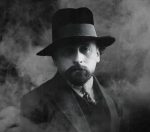
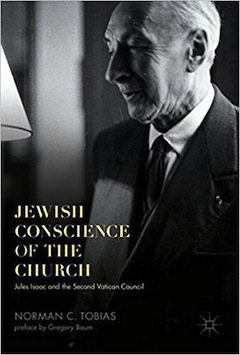
Jewish Conscience of the Church: Jules Isaac and the Second Vatican Council by Norman C. Tobias (Palgrave Macmillan, 2017) is an extraordinary book about the volte face that the Catholic Church executed at Vatican II in 1963 when, as a result principally of the intellectual exertions of Jules Isaac, former inspector general of education in France, the Church radically altered its negative teachings about Jews and Judaism and repudiated its malignant doctrine of Jewish responsibility for deicide.

There are many anomalies highlighted in this meticulously researched and comprehensive survey of one of the most important developments in the 20th century. Tobias is, by profession, a skilled tax lawyer, who taught at Queen’s University in Kingston, Ont., and who latterly earned a PhD in religious studies at the University of Toronto.

The focus of his doctoral dissertation, Isaac, was a man of many talents. Isaac’s textbooks on French and general history were staples of the high school curriculum in France, and regarded as authoritative sources for those subjects. That he would become the driving force after the Second World War towards the re-direction of Catholic doctrines vis-à-vis Jews is not something one would have expected from the high position he had occupied, quite comfortably, in France.

That comfort disappeared during the Nazi invasion of the country, and the occupation that followed. Almost 70,000 Jews were deported by the Nazis, most of whom perished in the concentration camps. Isaac himself narrowly escaped capture and survived only through the goodwill of friends, who hid him from both French collaborators and German troops. His wife and daughter, however, succumbed to the Nazi dragnet and he never saw them again.

book cover - Jewish Conscience of the ChurchAnother element that makes it even more startling that Isaac authored a number of treatises on the image of Jews in official Catholic doctrine is that Isaac had really little sympathy for Judaism. In fact, as Tobias reveals, Isaac once indicated that he much preferred paganism as a religious code. His indifference to the sancta of Judaism, a secularism that was quite common among many French Jews in the 1920s and 1930s, may explain why his son converted to Christianity.

It was during the Nazi occupation of France that Isaac, who had been a close associate of Charles Peguy, an early 20th-century sensitive Catholic poet, essayist and editor, began to analyze the sources that had contributed to the hatred that targeted his wife and daughter. He came to the not illogical conclusion that certain theological constructions in Catholicism were responsible for the teaching of contempt for Jews and Judaism.

Isaac, of course, as a gifted historian, knew that antisemitism existed before Christianity (as his Catholic interlocutors pointed out to him in later years) but he instinctively knew that pagan distaste for Jews was incidental, and recorded in minor chords, compared to the 2,000-year-old assault on Jews and Judaism first enshrined in Christian scripture and repeated century after century by the fathers of the Church and thereafter from Church pulpits especially in Europe. Isaac also knew that economic, political and social prejudices were sometimes hidden in the religious vernacular but his purpose was to show that it might be possible to alter the religious narrative through patient argument and persuasion.

The late Gregory Baum, a Catholic theologian of high repute, who wrote a warm introduction to the Tobias volume, originally responded to Isaac’s powerful Jesus and Israel (1948) by saying, in the early 1960s, that the New Testament was not antisemitic; it was an interpretation problem. Later, in the 1970s, Baum re-read Isaac’s work and reported that racial antisemitism was indeed present in parts of the New Testament.

For his carefully calibrated work, Isaac consulted with knowledgeable people and, during the decade from the end of the war, he organized his thinking in order to hone his criticism of the Christian texts with antisemitic tonalities and to suggest changes that would improve the image of Jews and Judaism. Isaac, in typical French style, created formats listing points to be analyzed like an explication de texte, that wonderful exegetical instrument.

It is not possible in a review to go through all of the points that Isaac deployed in his polemic but the major ones deal with the New Testament’s cruel caricature of Judaism as a corrupt and decadent civilization, its cavalier indictment of all Jews as being responsible for the crucifixion when most Jews actually lived in the Diaspora, and its horrendous “blood libel,” in which Jewish participants in the deicide legitimize their own punishment in perpetuity.

In the various encounters he had in print with respondents and in conversations with Catholic representatives in the 1940s and 1950s at various conferences in Europe – the descriptions of which Tobias offers with generous details, including a footnote apparatus I think should in some places have been inserted into the text – Isaac was always firm in his advocacy. His reputation as a sober, informed and flexible partisan of change in Church doctrines preceded him.

One of the most intriguing parts of the Tobias chronicle pivots on the road to Vatican II and the response to Isaac’s Jesus and Israel, just one of several of Isaac’s impressive works. Tobias has ferreted out the major reviews of the book that appeared in prestigious French journals. Not all were favourable, as might have been expected. One of the most acerbic criticisms focused on Isaac’s alleged memory lapse in not questioning Jewish unbelief after the crucifixion – as if this had anything to do with Isaac’s indictment of the New Testament’s “pogromist” attitude to Jews.

The Vatican II deliberations on Jews and other religions in 1963 incorporated, as far as Jews and Judaism were concerned, Isaac’s plangent plea for changes in statements about both. Isaac unfortunately passed away before it became official Church teaching but it was a wonderful posthumous reward.

On a personal note, in 1964, this reviewer heard Father Gregory Baum deliver a lecture at the University of Waterloo, in Ontario. I asked Father Baum how long it would take for Vatican II’s message to seep down to the parish level. He replied, “300 years.”

Arnold Ages is Distinguished Professor Emeritus, University of Waterloo.