Skip to content
  • Home
  • Subscribe / donate
  • Events calendar
  • News
    • Local
    • National
    • Israel
    • World
    • עניין בחדשות
      A roundup of news in Canada and further afield, in Hebrew.
  • Opinion
    • From the JI
    • Op-Ed
  • Arts & Culture
    • Performing Arts
    • Music
    • Books
    • Visual Arts
    • TV & Film
  • Life
    • Celebrating the Holidays
    • Travel
    • The Daily Snooze
      Cartoons by Jacob Samuel
    • Mystery Photo
      Help the JI and JMABC fill in the gaps in our archives.
  • Community Links
    • Organizations, Etc.
    • Other News Sources & Blogs
    • Business Directory
  • FAQ
  • JI Chai Celebration
  • JI@88! video

Recent Posts

  • Eby touts government record
  • Keep lighting candles
  • Facing a complex situation
  • Unique interview show a hit
  • See Annie at Gateway
  • Explorations of light
  • Help with the legal aspects
  • Stories create impact
  • Different faiths gather
  • Advocating for girls’ rights
  • An oral song tradition
  • Genealogy tools and tips
  • Jew-hatred is centuries old
  • Aiding medical research
  • Connecting Jews to Judaism
  • Beacon of light in heart of city
  • Drag & Dreidel: A Queer Jewish Hanukkah Celebration
  • An emotional reunion
  • Post-tumble, lights still shine
  • Visit to cradle of Ashkenaz
  • Unique, memorable travels
  • Family memoir a work of art
  • A little holiday romance
  • The Maccabees, old and new
  • My Hanukkah miracle
  • After the rededication … a Hanukkah cartoon
  • Improving the holiday table
  • Vive la différence!
  • Fresh, healthy comfort foods
  • From the archives … Hanukkah
  • תגובתי לכתבה על ישראלים שרצו להגר לקנדה ולא קיבלו אותם עם שטיח אדום
  • Lessons in Mamdani’s win
  • West Van Story at the York
  • Words hold much power
  • Plenty of hopefulness
  • Lessons from past for today

Archives

Follow @JewishIndie
image - The CJN - Visit Us Banner - 300x600 - 101625

Friendships via music

Friendships via music

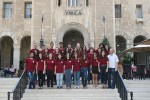
The YMCA Jerusalem Youth Chorus prior to their 10-day tour of Japan in August 2014. (photo from Micah Hendler)

There are many creative ways to bring about a peaceful dialogue between Israelis and Palestinians. In one particular case, an American Jew by the name of Micah Hendler combined choral singing and dialogue to help bring Palestinian and Israeli teens to a place of trust in Jerusalem.

Hendler, originally from Bethesda, Md., has been singing for as long as he can remember.

“For me, singing is a very powerful way of connecting to other people and creating communities, a sense of common identities, all the things that make people feel close to one another,” he said.
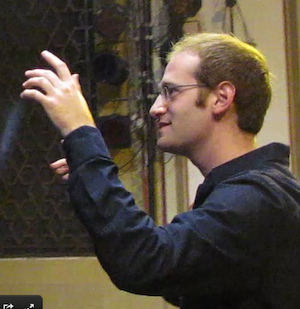
photo - YMCA Jerusalem Youth Chorus founder and conductor Micah Hendler
YMCA Jerusalem Youth Chorus founder and conductor Micah Hendler. (photo from Micah Hendler)

In his high school years, Hendler participated in Seeds of Peace, a program for teens from conflict regions around the world. For the first time, he had the opportunity to hear the stories of both Palestinians and Israelis.

“It made me realize the power of talking to others who are different, the power of showing people there are other ways to see things, more complete ways to see things,” he said of Seeds of Peace. “That’s what really got me interested in the Israeli-Palestinian conflict. In many ways, this was in contrast to the education I’d received.”

Over the years that followed, as Hendler continued his involvement with Seeds of Peace, he thought about ways in which he could create a new community, and decided on a singing group.

“I thought that would be really cool,” said Hendler, now in his 30s. “I could empower people and show them that they could sing and be part of something like this. For me, I thought … this is a way I can do things I really love to do in the context of needing ways for people to come together.”

When Hendler was ready to kick things off, he had just graduated from Yale. “I thought, if I’m ever going to do this, now’s the time.”

With degrees in music and international studies, and a host of other experience, both in music and in conflict transformation, Hendler moved to Jerusalem. He spent the first couple of months having coffee with anyone and everyone. He also spent a lot of time at high schools, sharing information about the choir, the YMCA Jerusalem Youth Chorus. Eighty youth auditioned, with the majority coming from East Jerusalem.

“There were so few extracurricular options in East Jerusalem at all, let alone singing options,” said Hendler. “For kids that liked to sing, I was one of the very few possibilities around.”

Hendler accepted 30 kids (ages 14-18), an even split of Israelis and Palestinians.

A friend connected Hendler with Israeli singer/songwriter David Broza, who was working on the album East Jerusalem/West Jerusalem at the time. Broza invited the chorus to be part of it. “It’s pretty amazing – that was three months into the choir, and we were recording with David Broza in the studio,” said Hendler.

The YMCA Jerusalem Youth Chorus program begins and ends with singing, with dialogue embedded in the middle. It does not take long for the kids to mingle. “They were in a completely unstructured context, already hanging out across linguistic and national lines,” said Hendler. “A lot of girls were singing pop songs on the piano and the guys were doing their thing, and different people were talking.”

The cost for the program is covered by the Jerusalem Foundation and private donors in and outside of Israel; the kids pay a symbolic fee to attend, as long as they are able.

Hendler’s main focus now is on ensuring that the kids feel part of a group, which is a moving target as the chorus grows. Currently, there are 44 kids divided into three dialogue groups, but Hendler is looking at other options. “There’s a limit of how big the choir could be in terms of what is manageable,” he said. “But, it would be possible to have multiple ensembles at different levels.”

When selecting kids for the chorus, Hendler looked for kids who wanted to meet new people and experience new things. As well, potential members needed both to be able to express any opinions they may have, as well as listen to those of others. “We also, of course, wanted people suited for singing,” he added.

Rehearsals are 3.5 hours and take place once a week. From as early as the second rehearsal, he said, “it was amazing that the kids were so open to one another. Obviously, with the linguistic and social challenges, the group had gone through a lot, but fundamentally there’s this openness and a joy that’s pretty inspiring.”

The dialogue is run by professional facilitators, “but I still have a good sense of what goes on,” said Hendler. “And, it’s actually really beyond inspiring, the way they listen to each other and create a space. The kids are real with each other, sharing their fears and hopes … but what’s really been amazing is that even outside the choir, the kids have started to speak up in their communities.”

Israeli high schooler Avital said of the program, “You get to know the other side, you get to be together, to see what it’s like being with kids different than you.” Shifra, another Israeli participant, said, “[Before] I only knew Israelis, I had never met any Arabs before I came here. I didn’t know what I was going to see … I wasn’t sure what I expected, but what I realized was that we’re all the same.”

Palestinian high schooler Alaa commented, “I learned from the sessions how not to stay silent, to express myself.” And Ameer, another Palestinian participant, said, “The choir is beautiful and we enjoy it, because we are Arabs and Jews, together at the same time.”

Rebeca Kuropatwa is a Winnipeg freelance writer.



Format ImagePosted on January 30, 2015January 29, 2015Author Rebeca KuropatwaCategories IsraelTags David Broza, dialogue, Israeli-Palestinian conflict, Micah Hendler, music, YMCA Jerusalem Youth Chorus
Safe options for pet lovers

Safe options for pet lovers

When it comes to cases of domestic violence, wanting to keep our pets has particularly dangerous implications; it can potentially put both children and adults at risk. (photo from commons.wikimedia.org)

Times are tough. Difficult financial circumstances and/or acts of violence force all kinds of people to seek shelter outside their homes. As if leaving one’s home in the wake of such challenges isn’t bad enough, sometimes this leave-taking involves the very painful question of what to do with the individual or family’s pet.

Many of us can well appreciate the desire to hold on to our animals. When it comes to cases of domestic violence, however, wanting to keep our pets has particularly dangerous implications; it can potentially put both children and adults at risk.

Dr. Frank Ascione provides this eye-opening statistic: “In 12 independent surveys, between 18 percent and 48 percent of battered women have delayed their decision to leave their batterer, or have returned to their batterer, out of fear for the welfare of their pets or livestock.” (Violence Against Women, 13(4), 2007)

Why are these pet owners willing to go to extremes to hold on to their animals? Genevieve Frederick of the U.S. organization Pets of the Homeless elaborates on her nonprofit’s website, “Their pets are nonjudgmental; provide comfort and an emotional bond of loyalty. In some cases, they provide the homeless with protection and keep them warm.”

In addition, Dr. Andrew Gardiner, who helps run free veterinary clinics at two homeless hostels in Edinburgh, Scotland, offers this interesting observation: “… many homeless people say that having a pet is what gives them hope….”

Critically, keeping the family dog or cat is vital to children’s continued emotional stability. In her groundbreaking paper for the National District Attorneys Association (NDAA), Allie Phillips states, “When a child has been abused or traumatized, it can be the nonjudgmental comfort from an animal that helps the child heal…. Children often love their pets like family members and, if a pet is threatened, harmed or killed, this can cause psychological trauma to the children.”

Moreover, Jewish law requires us to be pro-active in cases of domestic abuse as well in situations of cruelty to animals. In a 2007 article entitled “Few are guilty, but all are responsible: The obligations to help survivors of abuse,” Rabbi Mark Dratch (executive vice-president of the Rabbinical Council of America and founder of Jsafe) writes: “… the physical, emotional and spiritual dangers that result from perpetrators of abuse and violence … obligate each of us to protect potential victims from them.” Among the texts he uses to base his conclusions about Jewish responsibilities toward people in domestic violence situations are Leviticus 19:16 and Deuteronomy 22:2 and, in the case of cruelty to animals, Exodus 23:5 and Deuteronomy 22:4.

According to the Jewish Coalition Against Domestic Abuse: “Domestic abuse occurs in Jewish families at about the same rate as in the general community – about 15 percent – and the abuse takes place among all branches of Judaism and at all socioeconomic levels. Studies show that abuse occurs in every denomination of Judaism in equal percentages, and we see abuse in all communities including the unaffiliated.”

But the Jewish community in particular, and the community at large, have thus far established few shelters for pet-owning domestic violence victims. In 2014 (during two days of census taking), Vancouver had 1,820 individuals living in emergency or transitional facilities, 957 people living on the streets (homelesshub.ca/community-profiles/british-columbia/vancouver) and 88 children (under the age of 19) in the company of a parent. Of those people living in transition homes, 116 were women and children fleeing violence (vancouver.ca/files/cov/results-of-the-2014-metro-vancouver-homeless-count-july-31-2014.pdf).

Another complication once someone is able to transition back to a more stable living situation is access to affordable, pet-friendly rental accommodations. Vancouver has one of the lowest vacancy rates in Canada. Moreover, in British Columbia, there is no law permitting tenants to have a pet. In fact, the existing Residential Tenancy Act explicitly gives landlords the right to refuse pets, or to charge an extra deposit for accepting pets. Many renters have a hard time finding rental apartments and pet-owning residents have an even harder time locating suitable housing. People are often forced to choose between their pet and a roof over their head.

What then is available to these needy residents and their animals? The Salvation Army’s Centre for Hope in Abbottsford is currently working on becoming pet friendly. Shilo St. Cyr, program supervisor of Sheena’s Place, an Elizabeth Fry Society facility in Vancouver, reports: “We don’t accommodate women and children who have pets. We usually try to arrange for a dog sitter/shelter.”

Jodi Dunlop, Vancouver branch manager of British Columbia’s Society for the Prevention of Cruelty to Animals, reports: “Currently, our branches offer a two-week compassionate board for the animals. This gives the person leaving the violent situation a chance to find accommodation and not have to worry about the care and safety of their pet. In some cases, we have extended the care for the animal. It is dependent on each situation and also the animal’s welfare while in our care. There is no charge for this service. Our goal is to always reunite the animal with their owner.”

No doubt the animals are kept safe in foster care. But individuals and family members must temporarily deal with separation, both from their physical home and from the most cherished parts of that former home life.

Indeed, the flipside of this human attachment is such that dogs and cats of homeless people are also very attached to their owners. Gardiner points out: “The pet and the person spend so much time interacting with each other that the human/animal bond is incredibly strong. If these pets are taken from their owners, it is not uncommon for them to suffer separation anxiety or demonstrate other behavioral problems. In the worst case, a dog that is unable to adjust could end up being put down. That would be a terrible outcome.”

Nationwide, the number of Canadian domestic violence shelters offering pet facilities is still very small. While individual Vancouver cat and dog owners might find shelter for themselves and their pets at either 412 Women’s Emergency Shelter or St. Elizabeth’s-St. James Community Service Society, it appears the family member seeking temporary shelter in Vancouver would do best to contact either the BCSPCA branches in the Vancouver area or, as St. Cyr advises, contacting 211. Additionally, for more non-pet-related inquiries, the Women’s Safety and Outreach Program recently opened a weekday hotline between 5 p.m. and 1 a.m. – it can arrange transportation for women fleeing violence to housing (transition, shelter). As of this writing, the telephone number is 604-652-1010.

Deborah Rubin Fields is an Israel-based features writer. She is also the author of Take a Peek Inside: A Child’s Guide to Radiology Exams, published in English, Hebrew and Arabic.

Format ImagePosted on January 30, 2015January 29, 2015Author Deborah Rubin FieldsCategories LifeTags Andrew Gardiner, domestic violence, Frank Ascione, homeless, Jodi Dunlop, Mark Dratch, pets, Shilo St. Cyr, women

Bibi, Obama: Grow up

Iran’s propaganda machine Press TV on Monday reported that U.S. President Barack Obama had “unfriended” Israeli Prime Minister Binyamin Netanyahu on Facebook.

Predictably, it turned out the report was a hoax. Iran’s humorless propagandists reported as fact a joke from an Israeli satire site. And yet, despite the big journalistic oops (as if they care), the Iranian voice box made a legitimate point. The two men, ostensibly leading figures in world diplomacy, have in recent weeks been behaving like sulky teenagers.

Netanyahu unwisely accepted an invitation from the speaker of the U.S. House of Representatives, John Boehner, to address Congress, specifically to pressure the Americans to increase sanctions on Iran. The fact that this visit would take place at the height of the Israeli election campaign has been criticized by some, with others noting that former president Bill Clinton hosted Shimon Peres during an election cycle. The fact that the invitation came from the speaker of the house, rather than from the president, whose responsibilities include being the country’s foremost voice on foreign affairs – and its head of state and commander in chief – is a significant protocol breech, but a deliberate one.

We are becoming almost inured to successive hyperbolic assertions that bilateral relations between the United States and Israel are at their lowest ebb. But this time, it seems true, although a result of such foolishness that it seems almost comical, as well as tragic. These two men, whose seeming dislike for each other they are not even mature enough to hide or deny, are submerging the best interests of the relationship, shootings spitballs at each another across the divide.

Critics of Obama’s motivations allege that he does not pass the “kishkes” question; that his commitment to Israel’s security, such as it may be, is based a political imperatives or strategic demands, rather than a personal commitment to the idea of the Jewish state. To many others, these criticisms don’t hold water.

But what of Netanyahu? What on earth is he thinking, deliberately provoking his country’s most important international ally by inserting himself squarely into a constitutional tight spot, pitting the executive and legislative branches of the U.S. government against each other? Especially when Israel’s own intelligence service, the Mossad, has made clear that it is in Israel’s interest to allow negotiations with Iran to proceed, rather than to undermine them with additional immediate sanctions.

We are driven to ask, does Netanyahu know something we don’t? Does he know something the Mossad does not? Or is he driven merely by the hawkish demands of his domestic political constituency?

And why does he think that picking a fight – a very public, nasty and juvenile fight – with the president who was reelected with the support of 70 percent of American Jewish voters, would be a wise strategic or ideological move?

Greater minds can dissect the realpolitik motivations of these two strong figures. Wise figures in the think tanks of Washington and Tel Aviv are dissecting the nuance and nonsense the two leaders have displayed recently.

From where we sit, however, their behavior simply looks like they are putting their immature dislike for each other as individuals ahead of the interests of their countries. And, there is Speaker Boehner, ready to take political advantage.

Barrels of ink are being spilled this week on this topic, with the best minds of our generation advising both these men how to proceed. Our advice is simple, but it should be said: Just grow up.

Posted on January 30, 2015January 29, 2015Author The Editorial BoardCategories From the JITags Barack Obama, Binyamin Netanyahu, Iran, Israel, John Boehner, United States

Why is media Israel obsessed?

More senseless violence has hit Jerusalem in recent months, with the brutal murder of four worshippers at a synagogue in the Har Nof neighborhood late last year and multiple stabbings and car attacks. Some folks, while on the one hand wanting to ensure the world learns of these heinous acts, will, on the other hand, continue to ask why the media is so obsessed with Israel.

I was reminded of this question not too long ago via a short CNN video clip with journalist Matti Friedman in which he discusses an article he wrote for Tablet last summer that’s taken on a new life online. To make his case that the media is unfairly biased against Israel, Friedman cites the 2013 death toll in Jerusalem compared to Portland (more deaths in Portland), and the century-long Arab-Israeli conflict toll compared to the ongoing carnage in Syria (more lives lost in Syria). He adds that, in the overall reporting on the Israeli-Palestinian saga, Israel is unfairly portrayed as the aggressor while the Palestinians are cast as victims rather than as agents of their own fate.

The question of presumed agency is a key one in the conflict: how the conflict actors themselves see it, and how others can serve to reinforce these roles. It’s a fair point.

However, to truly understand why individuals, media markets, foreign policy actors and international organizations devote so much time and energy to the Israeli-Palestinian nexus, we’d need some in-depth research to really understand their motivations. For now, here are several plausible reasons that seek to raise the discussion beyond the reductionist assumption that there is a “media bias against Israel” and the related, if unspoken, accusation that the world simply hates the Jewish state.

Perhaps most importantly, American taxpayers provide a significant annual sum of money to Israel, via the $3 billion in annual U.S. aid granted to Israel. It’s natural that the government and the voters in that country at least would disproportionately concern themselves with the region.

Second, the Israel-Palestine core is the heartland of the three main monotheistic religions. The role of religious symbolism in Western art, literature, film and culture in general is significant. The region, in short, has long captured the imagination of many.

Third, Israel – unlike Syria – is a democracy. Citizens of democracies tend to hold other democracies to democratic standards. That means that violence committed in the name of democratic values – for better or worse – sometimes gets more airtime.

Fourth, as others have written before, Israel is seen by many as a colonial transplant. There are very good arguments against a simplistic understanding of Israel as a colonial project. (There is no core state to which settlers send extracted resources, for example.) But there is no getting around the fact that Israel’s birth was precipitated in part by Europe’s carving up of the region into mandate territories after the First World War. The shred of the colonial shadow succeeds in galvanizing a certain political consciousness that other conflicts, especially civil ones within non-democracies, simply don’t, unfortunately perhaps.

Fifth, once Israel came into existence, it was seen by many as a plucky state surviving against all odds. It’s a narrative that Israel and the engines of Diaspora Jewry have themselves succeeded in promoting. That the world continues its fascination with Arab-Israeli geopolitics, played out now partly through the Palestinians, is, therefore, not surprising.

Sixth, Jews tend to punch above their collective weight in many aspects of popular culture: entertainment, the arts, literature and so on. That the Jewish state and its goings-on figure so prominently in the media can be seen as a benign extension of this. Add to this the fact that some of the players in the contemporary Israeli-Palestinian saga also hold American citizenship (three of the victims of the Har Nof synagogue attack held dual Israeli-U.S. citizenship, while the fourth was British Israeli) and the effect is magnified.

Finally, as for Friedman’s comparison between the disproportionate attention given to death and destruction in Israel compared to, say, in Portland, one could say that political violence naturally garners more international concern – again, sadly for those who are ignored – than death caused by typical urban ills such as poverty, petty crime, drugs or traffic accidents.

In sum, I’ve suggested seven plausible reasons why the world might be “obsessed” with Israel, none of them having to do with base hatred of the country or of Jews. Of course, there’s nothing saying that any of these possible reasons obviate the need to look antisemitism in the eye wherever it genuinely appears, or to spend more time analyzing the Palestinian part of the equation. But let’s at least consider the array of possibilities out there before we assume that the world is against us.

Mira Sucharov is an associate professor of political science at Carleton University. She blogs at Haaretz and the Jewish Daily Forward. A version of this article was originally published on haartez.com.


Posted on January 30, 2015January 29, 2015Author Mira SucharovCategories Op-EdTags antisemitism, Israel, Israeli-Palestinian conflict, Palestine
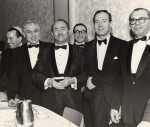
Mystery photo … Jan. 30/15

Mystery photo … Jan. 30/15

Group of men in evening dress, Congregation Schara Tzedeck, 1965. (JWB fonds; JMABC L.14380)

If you know someone in this photo, please help the JI fill the gaps of its predecessor’s (the Jewish Western Bulletin’s) collection at the Jewish Museum and Archives of B.C. by contacting [email protected].

Format ImagePosted on January 30, 2015January 29, 2015Author JI and JMABCCategories Mystery PhotoTags JMABC, Schara Tzedeck

Azrieli music prizes

The Azrieli Music Project (AMP), established to celebrate, foster and create opportunities for the performance of high-quality new orchestral music on a Jewish theme or subject, is launching two new prizes: the Azrieli Prize in Jewish Music, an international prize for a recently composed or performed work by a living composer, and the Azrieli Commissioning Competition, for a Canadian composer of any age. Each prize is for a new work of Jewish orchestral music and carries a value of $50,000.

The Azrieli Prize in Jewish Music is an international prize, awarded to the living composer of a recently composed and/or performed work of orchestral Jewish music of between 15 and 25 minutes duration. The work must have been written in the last 10 years (after Jan. 1, 2005) and have never been commercially recorded. Composers may be of any age, experience level, nationality, faith, background or affiliation. This prize is limited to Canadian citizens or permanent residents. The deadline for submissions by open nomination is Jan. 1, 2016. A written proposal of the work to be composed, plus two excerpts of three-minutes each from previously completed works (score and recording) must be submitted by March 15, 2015. The deadline for the completed composition will be July 1, 2016.

The AMP is delighted to confirm its partnership with the Orchestre symphonique de Montréal and maestro Kent Nagano, who will perform the winning works at the Azrieli Music Project Gala Concert at Maison symphonique on Oct. 19, 2016, in Montreal.

Dr. Sharon Azrieli Perez, noted operatic soprano and scholar in Jewish and cantorial music, spearheaded the creation of the new prize. “Music has always played an important role in the development of cultural identities,” she said. “Whether through folk traditions, in liturgical settings or in the concert hall, music reflects history and soul. In creating this extraordinary opportunity for composers of Jewish orchestral music, we hope to sustain music’s vital continuity through the long and rich history of Jewish people and culture. The Azrieli Music Project will become the medium for innovation, creation and risk-taking by today’s most inspired orchestral composers.”

The question “What is Jewish Music?” is at the heart of a constantly evolving cultural dialogue. Taking into account the rich and diverse history of Jewish musical traditions, the AMP defines “Jewish music” as music that incorporates a Jewish thematic or Jewish musical influence. Jewish themes may include biblical, historical, liturgical, secular or folk elements. Defining Jewish music as both deeply rooted in history and tradition and forward-moving and dynamic, the AMP encourages themes and content drawn from contemporary Jewish life and experience. The AMP challenges orchestral composers of all faiths, backgrounds and affiliations to engage creatively and critically with this question in submitting their work.

Joseph Rouleau, one of the world’s foremost operatic basses and honorary president of Jeunesses Musicales Canada, will serve as chair of the AMP advisory council. He said, “It is a tremendous pleasure to help launch this significant new prize, which offers such extraordinary opportunities – for the two composers who will have their work performed by Maestro Nagano and the OSM, and for the public, who will benefit from the creation of two new works of art on the fascinating theme of Jewish music.”

Rouleau is joined on the advisory council by Azrieli Perez, Canadian composer Ana Sokolović, Judge Barbara Seal, CM, and classical music philanthropist David Sela. The AMP jury will be announced at a later date.

For details, score guidelines, deadlines and the online application form, visit azrielifoundation.org/music.

Posted on January 30, 2015January 29, 2015Author Azrieli FoundationCategories MusicTags AMP, Azrieli Commissioning Competition, Azrieli Music Project, Jewish music, Joseph Rouleau, Sharon Azrieli Perez

Yuzyk Award nominations open

Canadians are invited to submit nominations for the seventh annual Paul Yuzyk Award for Multiculturalism. New this year, candidates may now be nominated in one of three categories: youth, organization (private or nonprofit) or lifetime achievement/outstanding achievement. One recipient can be chosen in each of the three categories.

Citizenship and Immigration Canada added new categories for youth and organizations to allow for the recognition of a wider range of Canadians. With these changes, youth aged 15 to 24 who have contributed to the success of Canada’s pluralism can now be nominated. In addition, Canadian businesses and other organizations may also be nominated for their contributions to multiculturalism.

These two new award categories are in addition to the lifetime achievement/outstanding achievement category, which has been awarded annually since 2009. The achievement category recognizes an individual or group that has recently made a significant contribution to promoting and embracing Canada’s long tradition of peaceful pluralism. It honors an individual who has demonstrated the same dedication over a period of at least 10 years. Each award recipient will receive a $10,000 grant to be directed to a registered not-for-profit Canadian organization of their choice.

The deadline for 2015 Paul Yuzyk Award for Multiculturalism nominations is March 31, 2015. All entries must be postmarked by that date to be considered for the 2015 award. Late entries will not be considered. Visit CIC’s website for all the details and nomination forms.

The award commemorates the legacy of the late Senator Paul Yuzyk, who was a member of the Senate of Canada from February 1963 to July 1986 and played a key role in the development of Canadian multiculturalism policy.

Posted on January 30, 2015January 29, 2015Author Citizenship and Immigration CanadaCategories NationalTags multiculturalism, Paul Yuzyk, pluralism

Contribute to Legacies

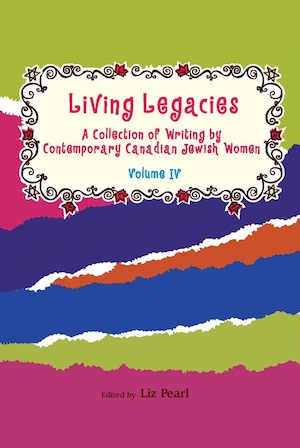
PK Press is now accepting submissions for the fifth volume of Living Legacies: A Collection of Writing by Contemporary Canadian Jewish Women. Edited by Liz Pearl – a Toronto-based educator and therapist specializing in psychogeriatrics and the expressive art therapies – the collection includes personal narratives, mini-memoirs and legacy writing from women across the country.

image - Living Legacies Vol. 4 cover
PK Press is now accepting submissions for the fifth volume of Living Legacies.

“What Living Legacies clearly indicates is that, in fact, we do not need to open our TV sets or buy glossy magazines to find inspiration. It is truly in our midst and we seem to have forgotten that our most profound life lessons can come from our mothers, sisters, girlfriends, children and, yes, ourselves. Liz has brought new meaning to the word legacy by making it so contemporary and alive. Her notion that we need to celebrate the legacies in our midst is unique; we all need to look around ourselves and rejoice in this wisdom,” writes Ina Fichman, president/producer of Intuitive Pictures Montreal, in the foreword to the fourth volume, which was published last year. One of the contributors to that collection is Lillian Boraks-Nemetz, with a story called “Sacrifice.”

Each volume of Living Legacies is available for purchase at a cost of $20 per copy plus shipping, and there is an order form online (at.yorku.ca/pk/ll-order.htm). PK Press updates are on Facebook, facebook.com/PKPress. For submission guidelines, email Pearl at [email protected].

Posted on January 30, 2015January 29, 2015Author PK PressCategories BooksTags Ina Fichman, Lillian Boraks-Nemetz, Living Legacies, Liz Pearl, women
Preserving culture, heritage

Preserving culture, heritage

Israeli food critic Gil Hovav, left, and Jack Gottlieb. (photo by Shahar Azran)

The newly formed World Jewish Heritage Fund (WJH) recently unveiled a planned global digital platform to protect and promote Jewish cultural heritage around the world during an event at the haute Israeli eatery Balaboosta in the heart of New York’s Soho neighborhood.

WJH founder Jack Gottlieb, an American expatriate based in Tel Aviv, introduced the ambitious project at the trendy restaurant on Jan. 14 night with the e-book Israel’s Top 100 Ethnic Restaurants serving as a digital appetizer to a wider menu of planned technology, including mobile applications, that will put the power of online, collaborative communications in the hands of the Jewish community to preserve Jewish heritage.

“We decided that what was needed was a kind of UNESCO for Judaism,” Gottlieb said. “Think of us as a cross between UNESCO, Wikipedia and Trip Advisor, with Jewish heritage and culture being the unique components tying it all together.”

Gottlieb founded the WJH as a nonprofit to preserve and protect the world’s Jewish heritage sites after he realized that no other organization was solely dedicated to that mission. After a trip to see Jewish sites in Belarus and Ukraine, Gottlieb said he realized “they had no voice; no one knew about them and they were falling into disrepair. I thought, ‘Can we do something about this?’” he said.

So, Gottlieb set out to build what he calls the World Jewish Heritage Preservation Model. “Using digital-tourism tools in order to push more and more visitors to Jewish heritage sites and cultural events will create incentives for countries, local authorities and organizations to keep preserving and investing in their Jewish heritage assets, which will further promote tourism to these sites and events, creating an eco-system of Jewish heritage tourism,” he explained.

The first type of heritage the organization is set up to preserve is Jewish culinary heritage, via its new e-book about Israel’s hidden ethnic culinary gems, and an e-book series to follow, about Jewish cuisine in North America and Europe. “We chose food as the first aspect of our heritage we’re trying to preserve, as it represents such an important part of our culture,” Gottlieb said. “It’s the stories behind the food, and behind the people who make it, that are the gateway to so many other aspects of our heritage.”

WJHtravel, a travel app, is currently in beta testing, and is available at the App Store; the WJHpedia, a community-based resource, fully integrated with both the app and the e-book, is available online for users to share their experiences of Jewish heritage travel all around the world.

To help celebrate the event, Balaboosta offered classic and modern Israeli foods, like fried olives, mini falafel, kubeh, bourekas, Moroccan carrot salad and a lemony cocktail made with arak. Also telling the WJH story was Israeli food critic, author and TV personality Gil Hovav, who regaled a crowd of food bloggers and other foodies with stories about his life in Israeli cuisine.

To learn more about WJH, visit worldjewishheritage.com.

Format ImagePosted on January 30, 2015January 29, 2015Author World Jewish Heritage FundCategories WorldTags Balaboosta, Gil Hovav, Jack Gottlieb, WJHtravel
Hospital hears about ASA

Hospital hears about ASA

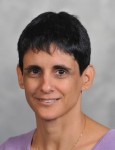
Dr. Ayelet Erez (photo from weizmann.ac.il)

Dr. Ayelet Erez, a visiting clinician scientist from the Weizmann Institute in Rehovot, Israel, was invited to speak at B.C. Children’s Hospital earlier this month.

The group was comprised of clinicians, researchers and clinical lab scientists. The event was organized by Dr. Hilary Vallance, a Weizmann Vancouver chapter member, who is director of the B.C. Newborn Screening Program and the Biochemical Genetics Lab within the department of pathology at the hospital.

Erez gave a talk on argininosuccinic aciduria (ASA), a rare inherited disorder caused by a lack of the functional gene necessary to make an enzyme called argininosuccinate lyase. Her talk led to a discussion with members of the hospital’s metabolic division in attendance regarding various aspects of her research and how her findings could potentially improve the practice of treating patients with argininosuccinate lyase deficiency here in British Columbia.

For more information on Erez or Weizmann Canada events in Vancouver, contact Jan Goldenberg, [email protected], or call 1-855-337-9611.

Format ImagePosted on January 30, 2015January 29, 2015Author Weizmann CanadaCategories LocalTags argininosuccinic aciduria, ASA, Ayelet Erez, Hilary Vallance, Weizmann Institute

Posts pagination

Previous page Page 1 … Page 585 Page 586 Page 587 … Page 650 Next page
Proudly powered by WordPress