Skip to content
  • Home
  • Subscribe / donate
  • Events calendar
  • News
    • Local
    • National
    • Israel
    • World
    • עניין בחדשות
      A roundup of news in Canada and further afield, in Hebrew.
  • Opinion
    • From the JI
    • Op-Ed
  • Arts & Culture
    • Performing Arts
    • Music
    • Books
    • Visual Arts
    • TV & Film
  • Life
    • Celebrating the Holidays
    • Travel
    • The Daily Snooze
      Cartoons by Jacob Samuel
    • Mystery Photo
      Help the JI and JMABC fill in the gaps in our archives.
  • Community Links
    • Organizations, Etc.
    • Other News Sources & Blogs
    • Business Directory
  • FAQ
  • JI Chai Celebration
  • JI@88! video

Recent Posts

  • Eby touts government record
  • Keep lighting candles
  • Facing a complex situation
  • Unique interview show a hit
  • See Annie at Gateway
  • Explorations of light
  • Help with the legal aspects
  • Stories create impact
  • Different faiths gather
  • Advocating for girls’ rights
  • An oral song tradition
  • Genealogy tools and tips
  • Jew-hatred is centuries old
  • Aiding medical research
  • Connecting Jews to Judaism
  • Beacon of light in heart of city
  • Drag & Dreidel: A Queer Jewish Hanukkah Celebration
  • An emotional reunion
  • Post-tumble, lights still shine
  • Visit to cradle of Ashkenaz
  • Unique, memorable travels
  • Family memoir a work of art
  • A little holiday romance
  • The Maccabees, old and new
  • My Hanukkah miracle
  • After the rededication … a Hanukkah cartoon
  • Improving the holiday table
  • Vive la différence!
  • Fresh, healthy comfort foods
  • From the archives … Hanukkah
  • תגובתי לכתבה על ישראלים שרצו להגר לקנדה ולא קיבלו אותם עם שטיח אדום
  • Lessons in Mamdani’s win
  • West Van Story at the York
  • Words hold much power
  • Plenty of hopefulness
  • Lessons from past for today

Archives

Follow @JewishIndie
image - The CJN - Visit Us Banner - 300x600 - 101625

NDP drops candidate

Three federal NDP candidates are under intense scrutiny – and one has resigned – for controversial comments each made about Israel.

Hans Marotte, the NDP candidate in Quebec’s Saint-Jean riding; Morgan Wheeldon, who was, until stepping aside Aug. 9, running in the Nova Scotia riding of Kings-Hants; and David McLaren, running in Bruce-Grey-Owen Sound, were among the NDP candidates featured, alongside past comments they made, on a Conservative Party of Canada’s attack website titled “Meet the NDP.”

Marotte, a lawyer and well-known former separatist, is flagged on the site for a statement he made in his 1990 book Un Pays à Faire (A Country to Make): “When a Palestinian comes to ask me to sign his declaration of support for the intifada, and tells me how happy he is to have my name on his list, I see how important it is that we not close in on ourselves.”
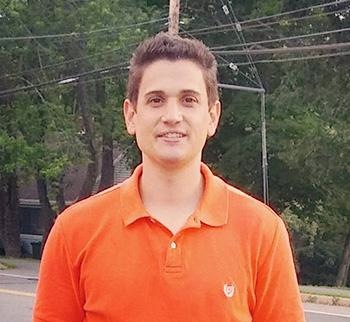
photo - Until he stepped aside, Morgan Wheeldon was running in the Nova Scotia riding of Kings-Hants
Until he stepped aside, Morgan Wheeldon was running in the Nova Scotia riding of Kings-Hants. (photo from Facebook via cjnews.com)

Wheeldon, whose website has been wiped of all content, is featured on the Conservative site for a comment in an August 2014 Facebook post, made in the context of a discussion about British MP George Galloway, who had been physically attacked in London allegedly for his anti-Israel views.

The quote reads: “One could argue that Israel’s intention was always to ethnically cleanse the region – there are direct quotations proving this to be the case. Guess we just swept that under the rug. A minority of Palestinians are bombing buses in response to what appears to be a calculated effort to commit a war crime.”

McLaren, meanwhile, is quoted as saying it isn’t principled to take sides in the Israeli-Palestinian conflict because it is like picking a side in “a telephone booth packed with dynamite.”

In a statement to the Canadian Jewish News, the NDP’s senior campaign adviser, Brad Lavigne, said the party’s “position on the conflict in the Middle East is clear, as [leader] Tom Mulcair expressed clearly in [the recently televised Maclean’s] debate. Mr. Wheeldon’s comments are not in line with that policy, and he is no longer our candidate. We were made aware of some information that had not previously been disclosed. When we approached Mr. Wheeldon with this information, he submitted his resignation.”

The NDP did not offer a comment on Marotte’s or McLaren’s statements.

Wheeldon himself told the CJN via Twitter that his Facebook statement “referred to how information sources affect framing of the conflict. I also attacked terrorism and said neither side was solely at fault, but pointed out the alternate perspective. I said ‘one could argue.…’ I’ve been called an antisemite, and it’s pretty upsetting for me and my family.”

Michael Mostyn, CEO of B’nai Brith Canada, said that it was appropriate for Wheeldon to offer his resignation following his “libelous smears against the Jewish state.”

“Israel is a democracy where all its citizens enjoy rights and freedoms unimaginable anywhere else in the Middle East,” said Mostyn. “Mr. Wheeldon should use some of his newfound free time to advocate against actual ethnic cleansing taking place on a daily basis in the terrorist Islamic State, which continues to massacre Christians, Yazidis, gays and other minorities.”

Mostyn also noted that B’nai Brith is trying to track down a copy of Marotte’s book, and reach out to him to verify the accuracy of the quote and whether his opinion has changed over the 25 years since he wrote the book.

He added that “the quote in question displays a certain naiveté about the fact that one does not sign a petition to support an intifada, jihad or any other extremist act of violence. Seeking to promote a pluralistic society in Canada does not translate to supporting calls for violence against innocent civilians.”

Joe Oliver, the Tory MP for the Toronto riding of Eglinton-Lawrence, also condemned the remarks.

“These radical anti-Israeli comments are just another example of the NDP’s troubling lack of support for a democratic friend and ally,” Oliver said. “They stand in stark contrast to Prime Minister Stephen Harper’s unwavering support for Israel’s security and right to defend itself against international terrorism. Reckless comments on matters of international relations make it abundantly clear how inexperienced and risky the NDP would be for Canada’s future and its standing in the world.”

– For more national Jewish news, visit cjnews.com.

 

Posted on August 21, 2015August 19, 2015Author Jodie Shupac CJNCategories NationalTags Conservatives, David McLaren, federal election, Hans Marotte, Israel, Morgan Wheeldon, NDP
MPs reception guests

MPs reception guests

Left to right: The Hon. Alice Wong, Conservative MP; Erinn Broshko Conservative candidate, Vancouver Granville; Bonnie and Allan Belzberg; and the Hon. Jason Kenney, Conservative MP. (photo by L. Broshko)

Conservative Party of Canada MPs Jason Kenney and Alice Wong were special guests at a reception held on Aug. 9 at the home of Allan and Bonnie Belzberg. Erinn Broshko, the Conservative candidate in the Vancouver Granville riding, addressed the gathering and introduced Kenney, Canada’s minister of national defence and multiculturalism. Kenney spoke about the federal government’s support for Israel, foreign policy and other topics of interest to the group. His remarks were candid and well received by the approximately 35 people in attendance.

While Kenney was in Vancouver, he participated in the most recent Canada Decides 2015 townhall organized by Temple Sholom and the Centre for Israel and Jewish Affairs.


Format ImagePosted on August 21, 2015August 19, 2015Author Norman FranksCategories LocalTags Centre for Israel and Jewish Affairs, CIJA, Conservatives, federal election, Jason Kenney, Temple Sholom
Be involved in election

Be involved in election

B.C. Generation students in Ottawa earlier this year. (photo from CJPAC-BC)

This summer, CJPAC, the Canadian Jewish Political Affairs Committee, celebrated the first anniversary of its British Columbia office. The multi-partisan organization, which already had offices in Toronto, Montreal and Edmonton, recently expanded its presence with offices in Vancouver and Winnipeg.

CJPAC’s mandate is to engage Jewish and pro-Israel Canadians in the democratic process and to foster active political participation. It is dedicated to helping community members build relationships within the Canadian political arena.

In the last year, CJPAC’s B.C. office has hosted a number of events, including Vancouver Connect: Meet Your Next Mayor, which was an opportunity for 100 participants to meet with mayoral and city council candidates in advance of the municipal election, and the second annual Women in Politics gathering, at which 45 community members heard about working in politics from five female politicians and political staffers.

In addition, last May, 11 B.C. high school students traveled to Ottawa as part of CJPAC’s Generation program for two days of networking and training sessions. While in Ottawa, the students had a tour of Parliament Hill, observed Question Period and met with elected officials from all parties.

“In a little over a year, CJPAC has had a tremendous impact on the B.C. community,” said Karen James, CJPAC board member. “Its staff has addressed over 700 people at synagogues throughout Vancouver, as well as 200 campers, 90 high school students and 60 seniors. They have also visited community members in Nanaimo, Kamloops, Kelowna and Victoria.”

CJPAC’s ultimate goal is to help the Jewish and pro-Israel community have an impact beyond its numbers by encouraging as many of its members as possible to get engaged in politics, particularly through volunteering.

“Our unique programs are aimed at all age groups and are designed to make people comfortable with volunteering, even if it’s for the very first time,” said Kara Mintzberg, B.C. regional director. “In this federal election year, it is important that our community volunteers in high numbers. It doesn’t have to be a huge time commitment; just a few hours can make a significant difference to a campaign.”

According to recent research, only 10% of Canadians have volunteered in an election. However, in the last federal election, 101 – one-third of ridings – changed parties and 51 ridings had a margin of victory of five percent or less. Volunteers are hugely important, particularly in close ridings, and campaigns need people for all kinds of tasks: envelope stuffing, door knocking, making phone calls, putting up lawn signs and identifying and getting voters to polling stations on election day.

Bill Kaplan, CJPAC board member, noted that “recent polls indicate that the federal election could be very close, particularly in B.C., which means that our community – although small relative to the rest of the Canadian population – has the ability to make a real difference just by volunteering, regardless of the party or candidate individual members choose to support.”

During the last federal election, CJPAC connected more than 900 community members with campaigns.

“We would be happy to help connect you with the candidate or party of your choice in 2015,” said Mintzberg. “If you’re not sure who you would like to volunteer with, we can help with that, too. The important thing is to get involved and ensure our community has a significant impact this election.”

For more information on how to connect with the campaign of your choice, contact Mintzberg at [email protected] or 604-343-4126. To learn more about CJPAC and its programs, visit cjpac.ca.

Format ImagePosted on August 21, 2015August 19, 2015Author Canadian Jewish Political Affairs Committee-BCCategories LocalTags Canadian Jewish Political Affairs Committee, CJPAC, federal election, Kara Mintzberg

Pledge reflects motives

In June, the Spanish government passed a law granting descendants of Sephardi Jews forced from that country in the 15th century the right to dual Spanish citizenship.

Only someone unfamiliar with the toing and froing of Jewish migrations and expulsions could be blind to the magnificence with which this move dovetails with history. For millennia, princes and fiefs, kings and counts expelled the Jews from their realms in one generation and then enticed them back in successive ones, when their perceived value rebounded or when the duchy or kingdom was in financial peril. Sometimes it took a generation, sometimes it took 600 years, as in the case of Spain, which, it should be noted, is now just a few notches above Greece on the financial solvency scale.

But Jews who consider taking up Spain’s generous offer will be taking a sober second look after recent events. OK, the events were a relatively small-scale tempest – a reggae festival in Valencia – but the lessons are wide-ranging and deeply telling.

Matisyahu, the once Chassidic, now just Jewish, reggae rapper, was disinvited from the Rototom Sunsplash Festival after he refused to sign a pledge in support of a Palestinian state. The boycott, divestment and sanctions movement had convinced the festival organizers that participants should be forced to commit to the Palestinian cause.

The quality of the performers or the wishes of the audience were secondary to the political positions of the musicians, apparently. Why this obscure music festival should become a flashpoint for a kerfuffle over the Middle East may seem baffling, but the strategy of the movement has been to demand loyalty oaths from anyone at any time in any place. Canadian film festivals, including the Toronto International Film Festival and the Vancouver Queer Film Festival, have been roiled over the topic in the past. These efforts at a “cultural boycott” are atrocious enough, but the worst tactics of the movement promote an academic boycott, which is as close as we can come to literal book-burning.

Is it additionally appalling that Matisyahu is not Israeli, but American? Sort of. The boycotters have attacked Israelis for the most part, but now they are turning their cannons on anyone who might think that Israel has a right to exist alongside a Palestinian state. (Note that the oath did not address a two-state solution. Coexistence is not top of the agenda for BDSers.)

Not all Jews are Zionists and, indeed, some Jews support the BDS movement. However, if you believe in the right of self-determination for the Palestinian people, but not for the Jewish people, then you are at the least a hypocrite.

The BDS movement, while a relatively new phenomenon, has its historical antecedents in the people who would paint Stars of David on Jewish shop windows. It is a mob of bullies for the most part, which calls itself pro-Palestinian, but exhibits nothing positive, only hatred and vilification of Israel.

Although a reggae festival might seem an odd place to start, the BDSers and the larger “pro-Palestinian” contingent could buy themselves some legitimacy by taking an oath themselves: to work together with all people to find a peaceful resolution so that two peoples can live in coexistence in Jewish and Palestinian states. It’s a pledge the Jewish people accepted in 1947-48 and have reiterated throughout the ensuing seven decades. The Matisyahu brouhaha is an example of the answer the Jewish people have received to that olive branch.

Posted on August 21, 2015August 19, 2015Author The Editorial BoardCategories From the JITags antisemitism, BDS, boycott, Israeli-Palestinian conflict, Matisyahu, Rototom Sunsplash Festival, Sephardi, Spain, two-state solution

“Threat” term problematic

When it comes to Israel, many Diaspora Jews harbor a double standard. They want their own countries to embrace pluralism and multiculturalism, owing to the kind of fluid immigration that allowed their own grandparents and great-grandparents to build a better life in America and Canada and many other places across the West. But, when it comes to Israel, they are comfortable articulating their desire to maintain a Jewish majority. Israelis – even those on the left – have a term for this need: they openly refer to Palestinians (whether in the West Bank, whether refugees living abroad or whether Palestinian citizens of Israel itself) as a “demographic threat.”

Palestinian citizens of Israel are pouncing on this usage more than ever. Ayman Oudeh, head of the Joint List, has called it offensive. He wants Israeli citizens to view their Palestinian citizen brethren as partners in nation-building. Still, he is not looking for a melting-pot version of Israeli identity: he demands that Israel grant the Palestinian citizens “collective rights.” Since they already have their own school system, presumably, by collective rights he means at the very least equal funding for schools and towns, including removing the unequal bureaucratic barriers to gaining building permits, something I’ve written about at the Globe and Mail.

Yousef Munayyer is also distressed by the term “demographic threat,” and concludes that it is intrinsic to Zionism. Instead of having a demographic problem, Israel has a Zionism problem, he argued last March in The Nation. This, as Bibi was whipping up fear against the Arab minority on election day, claiming they were coming to the polls “in droves.”

The scope of the issue is more complex than these critiques – as important as they are – allow. There are at least three aspects at play.

First, strategy. There are reasons why a peace activist may choose to use the term “demographic threat” to sell the idea of withdrawal from the West Bank, for example. This kind of reasoning may appeal to those on the centre or even the right who, unfortunately, aren’t moved by human rights imperatives. When it comes to language and lobbying, we must not forget the game of persuasion.

This connects to the second aspect: emotions. Here, the question is this: without undermining democracy, can a majority population privately desire to maintain its majority status? And, in the event that these private desires are shared publicly – through art or literature, say – should the users be chastised as being anti-democratic?

Here, we need to recall what may be motivating these feelings. It may not be anti-democratic tendencies or racism or even a sense of national superiority. As a national liberation movement, Zionism was acutely concerned with Jewish self-determination, more than it was with undermining any other national group in its midst. And, along with the material gains of statehood has come the desire to sustain a modern Jewish national culture, most markedly in the form of Hebrew. To contemplate becoming a minority in one’s country is to consider the attrition of one’s national language, at the very least, if not the possibility of collective safety and self-determination. Even if the fears are unfounded, even, if, somehow, a post-Zionist Israel can engage in a project of radical multiculturalism such that Hebrew culture maintains its treasured place alongside Palestinian culture and Arabic language, the impulse is still understandable.

Finally, there are the public policies themselves. On this, there is clearly much room for improvement. Oudeh’s call for a high-profile “civics conference” in the tradition of other annual conferences in Israel on issues – including security, social issues and economics – is a good one. As is the urgent need to close the funding gap to Arab schools and towns, and to educate against casual racism, including some landlords not renting to Arabs and “social suitability” committees determining who can live where, the kind of practices outlined by Amjad Iraqi in +972 Magazine. These attitudes and the practices that stem from them are corrosive to democracy.

All this is to say that the creation and maintenance of national identity, particularly in a state as young as Israel, is an enormous project. Using the term “demographic threat” as a way of describing the actual collective emotions and preferences of some citizens is as useful as any analytic phrase. To censor it completely, therefore, would be anti-intellectual and anti-democratic. But, when it comes to policy advocacy, thoughtful Israelis should consider thinking twice about using these words. As citizens of democracies, we should at least strive to hear things as our fellow citizens hear them.

Mira Sucharov is an associate professor of political science at Carleton University. She blogs at Haaretz and the Jewish Daily Forward. A version of this article was originally published on haartez.com.

Posted on August 21, 2015August 19, 2015Author Mira SucharovCategories Op-EdTags Arab-Israeli conflct, democracy, Diaspora, Palestinians, Zionism
At home anywhere in world

At home anywhere in world

Playwright, cyclist and world traveler Ira Cooper. Among his many endeavors has been teaching English in China. (photo from Ira Cooper)

“I lust to travel, to see places, to meet people and do theatre,” said Ira Cooper.

In everything he does, he forges his own path; he is not one for conforming to the rules. Even his professional definition is sprouting in all directions. He is an actor and a playwright, an educator and a world traveler, a poet and a filmmaker. In the few years since he graduated from the University of British Columbia theatre program, he has worked with children at the Jewish Community Centre of Greater Vancouver, taught English in China, worked as an actor in the Czech Republic, produced films and written plays.

“I have been writing for a long time, poems and short stories,” he said in an interview with the Jewish Independent. “I never tried to publish anything. If you do, everyone could see who you are.

“Then, after university, I worked as an actor for the Nelson Historical Theatre Society. In 2007, we produced a play about Charlie Chaplin, and there was a gap in the play. The director asked me if I could write a scene for it, and I agreed. It was produced and well received.”

His latest play, Sid: The Handsome Bum, a one-woman show about homelessness in Vancouver, was written and first performed in 2014. The play will be part of this year’s Victoria Fringe Festival.

“I wanted to show that homelessness is not general, it’s personal,” Cooper said. “We listen to Sid because she is in a show. Would we listen to her otherwise?… I was privileged growing up, but not everyone is. I talked to homeless people in downtown, wanted to figure out who they are. My mom taught me that there is no ‘us’ and ‘them.’ It’s all ‘us.’ One of the problems homeless people face is that nobody is listening to them. They want to talk, and I listened. There is a community there, like everywhere else. There is beauty there, not just ugliness.”

The play germinated in his head for several years. In 2014, Cooper and two friends, both UBC graduates, Joanna Rannelli and Hilary Fillier, organized a new theatre company – Spec Theatre – to produce the play.

“We wanted this theatre to be for a non-theatre audience. Everybody should be able to enjoy a theatre, but not everybody can afford expensive venues. A theatre could perform anywhere: in a bedroom, in a garden, in non-theatre spaces. Our theatre is accessible to everybody.”

However, theatre is a tough way to generate an income, he acknowledged. “Our theatre is a labor of love. It’s fulfilling. It’s somewhere between a hobby and a profession. I’d say, I have a relationship with theatre, not a career.”

Like Spec Theatre, the play was a collaborative effort.

“We traded ideas,” Cooper explained. “I would receive feedback from Joanna and Hilary and rewrite. In the beginning, I planned it for a male actor, but later that changed. Joanna is playing the title role, which includes five different characters. We hired the director, Kayla Doerksen, and first performed the show in 2014, in the Little Mountain Studio. It’s a small space, 45 seats, but it was sold out most nights.”

This year, Spec is remounting the play for a bigger audience at the Victoria Fringe. “I don’t know anyone there,” Cooper confided. “It’s terrifying. Here, in Vancouver, many friends came to the show, but there, we have to promote.”

They also have to do all the other jobs a play requires besides acting and directing: lighting, stage management, producing and so on. As in any relationship, in Cooper’s relationship with theatre, no job is too small, and collaboration is extremely important.

“I always wanted to collaborate with passionate people on our own projects, not jump into the industry at the entry level and work my way to the top.”

Cooper’s interests are broad, and he doesn’t confine himself to one area of the arts. In the last few years, he also has created several short films, taught English in China, and traveled by bicycle to Mexico and through Europe.

His enthusiasm for cycling is comparatively recent. “It happened around 2010,” he said. “My mom and I talked, and she said that I was smart but not very physical. I wanted to be physical, too, and I thought biking would be right for me. I did some research and joined a group bicycle trip from Amsterdam to Istanbul. But I had to prepare for such a long trip, so I biked from Vancouver to Mexico. It took about two months. I stopped where I wanted, talked to people. It was all about exploration, not the destination.”

His next long bicycle trip will happen in a couple of years – he will be going to Beijing.

“I’m planning parts of the trip now,” he said. “I will bike from Vancouver to Newfoundland, and from there to Argentina. Then, I’ll take a ship to South Africa and, from there, travel north on my bike, through Africa and the Middle East, tentatively Russia, to China. I started a special website and blog for the trip, and I want my readers to suggest where I should go next. It will be an interactive trip.” (His bicycle trip website is pedaleachmile.com.)

Cooper is also planning to stop and work along the way. One of his more definitive plans is to teach English in Saudi Arabia.

“There is a stigma attached to traveling through Africa or Muslim countries,” he said, “and, in part, that’s what my trip is about: removing the stigmas from people, cultures and places. The same about homelessness – I wanted to remove the stigma. They are just people, like everyone else.”

Sid: The Handsome Bum will be performed Aug. 29 to Sept. 5 in Victoria. For more information, visit spectheatre.wordpress.com.

Olga Livshin is a Vancouver freelance writer. She can be reached at [email protected].

Posted on August 21, 2015August 19, 2015Author Olga LivshinCategories Performing ArtsTags cycling, Hilary Fillier, homeless, Ira Cooper, Joanna Rannelli, Kayla Doerksen, Spec Theatre, Victoria Fringe
New take on old fables

New take on old fables

Liz Lorie, left, and Amanda Krystal. (photo by Hayley Bouchard, Little Cat Photography)

Writers of romance, fantasy, science fiction and horror reinvent many a classical tale with a slant towards their chosen genres. The new play by Lisa Simon, A Modern Fairy Tale, is yet another such retelling, and it has an original twist. This musical parody spins the old tales in a new light, inclusive of LGBTQ concerns and gender-neutral terms.

For starters, a romance is blooming between a female Wolf and Red Riding Hood, but they encounter several roadblocks on their love journey. Granny mistrusts Wolf – the animal-people’s rights are at stake here. Other beloved fairy tale characters populate the play – Snow White and Boots the Cat, gay princes Chuck and Cinder, Alice and Hatter – each one with their own set of problems.

Many of the performers are amateurs, attracted to the project by their love for musical theatre and their social convictions. Among them are Jewish community members Amanda Krystal and Liz Lorie, two young University of British Columbia students.

“We met at the show, didn’t know each other before,” Krystal said.

“Now, we do many things together,” added Lorie. Both provided the Independent with the inside scoop on the show.

Krystal, a microbiology student, is playing Alice. “It’s a pretty big role,” she said proudly. “I’d call it a supporting lead.”

Krystal learned about the auditions for the play through the Vancouver Public Library audition list. “I took dance and music theatre classes at school and I’m still doing tap dance. I wanted to audition for musical theatre so I left my email with the library list. I wanted to be in the Fringe, but the shows of the Fringe are all during midterms. When I learned about the auditions for this show, I thought it would be great, and not interfere with my studies.”

Lorie is in the play as part of the ensemble. She is studying English and thinking about the master’s program. She came to Vancouver from Toronto via the fine arts program at UBC Okanagan.

“Originally, I wanted to study art at Queen’s University in Ontario,” she said, “but they canceled the art program I wanted because there was not enough money for the arts. I got into the Okanagan program, and it was very good but, like in Queen’s, there was not enough funding. Interesting courses got canceled, the instructors left, so I switched to English in Vancouver.”

She noted that art programs are not getting sufficient funding anywhere in Canada. “Art is so important, specifically theatre arts. We are all isolated, but theatre brings us together. It’s therapeutic.”

She encountered the same problem – a limited budget – with this show, but despite the lack of monetary recompense, everyone is very enthusiastic and pitching in wherever they can, she said.

Krystal, besides performing, is an assistant choreographer. “My sister is into professional dancing,” she said. “She and I and Damon [Jang] choreographed three tap dances for the show.”

Lorie, with her artistic background, helped with numerous artistic tasks. “I worked on the posters and on the stage sets,” she said. “There are several sets: a ballroom, a book shop, a hat store, a cottage and a couple of others. It’s a complicated set. I also made my ice crown – I play the Snow Queen.”

Excited to be in the world première of the show, both Krystal and Lorie pointed out that the novelty of the play, while liberating, can be nerve-wracking, too.

“We improv a lot,” said Krystal. “There is no history of famous actors playing our roles. I would do something new, not in the script, and Lisa [Simon, who is also the director] would say: ‘Oh, good, keep it.’ I never know what will happen at the next rehearsal. We all come from different directions to this play, and it’s fascinating to see it coming together. But it adds some pressure, too.”

The fairy tale aspect of the show unites the participants.

“Using fairy tales was a great idea,” said Krystal. “Everyone knows them, can relate to them. Most of us first met them in the Disney versions but, in this play, seeing them from a different perspective is interesting. Some of the changes are in your face, while others are not.”

Lorie elaborated: “Fairy tales are for everyone, and we all draw from them, but they allow lots of creative leeway. In the end, it all comes to the concept of acceptance, to finding out who we are and standing for who we are, to accepting everyone despite their racial or sexual differences.”

The philosophical spotlight of this production translates well into the performers’ experience.

“It’s a light musical comedy,” Krystal said, “but it touches on many dark topics: bullying, anxiety, depression, various sexual orientations. The story focuses on the imaginary animal-people rights, but we all can recognize someone we know.”

“It’s geared towards the LGBTQ crowd, but we hope it won’t turn off the other audience,” said Lorie. “It’s a very eye-opening show for everyone, much more than just an LGBTQ event.”

The play will be on at Metro Theatre Aug. 19-30.

Olga Livshin is a Vancouver freelance writer. She can be reached at [email protected].

Format ImagePosted on August 21, 2015August 19, 2015Author Olga LivshinCategories Performing ArtsTags Amanda Krystal, Damon Jang, LGBTQ, Lisa Simon, Liz Lorie, Metro Theatre
This week’s cartoon … Aug. 21/15

This week’s cartoon … Aug. 21/15

For more cartoons, visit thedailysnooze.com.

Format ImagePosted on August 21, 2015August 24, 2015Author Jacob SamuelCategories The Daily SnoozeTags counting sheep, thedailysnooze.com
Rumshinsky operetta rediscovered

Rumshinsky operetta rediscovered

Joseph Rumshinsky’s Yiddish operetta Di Goldene Kale premièred 92 years ago at Kessler’s Second Avenue Theatre in New York, and was still being performed as late as 1948. The Aug. 5 perfomance at Nicholas Music Centre was the first since then. (image from masongross.rutgers.edu)

It is not often that a neglected or forgotten artistic treasure is rediscovered. But it happened recently at a theatre in New Brunswick, N.J. – a concert version, with full orchestra, of Joseph Rumshinsky’s 1923 musical comedy Di Goldene Kale (The Golden Bride). This joyful, melodically blessed operetta was co-presented with Mason Gross School of the Arts by another treasure, the National Yiddish Theatre Folksbiene, the oldest continuous theatre in New York. Founded in 1915 on the Lower East Side, the theatre is now celebrating its centenary.

Di Goldene Kale’s plot is above the usual standard banal fare of Yiddish plays: it involves a young woman who is heir to a fortune and now has several suitors after her and her money. But she loves Misha and ends up with him, after the usual ups and downs of musical comedy narrative.

Rumshinsky (1881-1956), one of the giants of Yiddish theatre during its heyday in the 1920s and ’30s, continued to work and compose until the year of his death. His operetta is full of memorable tunes, which the audience took to immediately. His musical traditions include influences from the Yiddish theatre, American musicals, European operettas and American popular music, most notably the opening chorus of George M. Cohan’s 1917 First World War song, “Over There.” Yiddish theatre was known for having at least one joyous religious occasion onstage, often a wedding, which nostalgically brought back an aspect of traditional Yiddishkeit to now-secular Jews, who were usually watching the performance on a Friday night, and Di Goldene Kale has a very moving Friday night Kiddush, a lovely melody that the soloists and chorus expand via theme and variations.

After its 1923 première, Di Goldene Kale toured the United States, Europe and South America. It was still being performed as late as 1948. The Aug. 5 show at Nicholas Music Centre was the first performance in Yiddish (with English and Russian supertitles) and full orchestra in 70 years.

The stunning cast was led by the gorgeous operatic voice of Dani Marcus, who plays Goldie, the goldene kale, and the fine baritone, Eyal Sherf – a trained cantor – who plays her boyfriend, Misha. The producer and director was Motl Didner, and Michael Ochs edited the orchestral score from manuscripts dating back to the 1923 première. National Yiddish Theatre Folksbiene artistic director Zalmen Mlotek conducted the young, attractive cast, all seasoned in singing, acting and comedy. To find first-rate singers who also act superbly and know Yiddish was a minor miracle and a major achievement. At the show’s end, the full house stood up and applauded. The orchestra and cast then reprised one of the operetta’s songs and everybody went out singing.

***

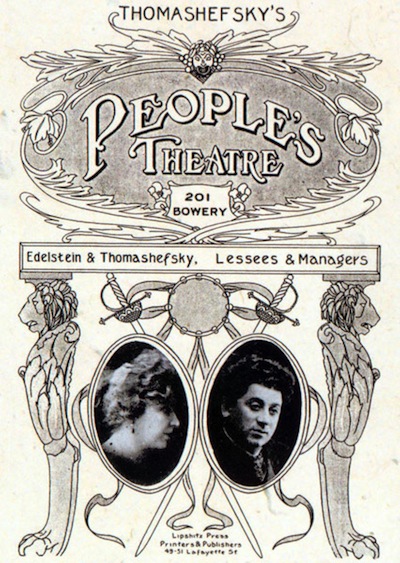
Classical American Yiddish theatre was also recently the subject of a program hosted by Michael Tilson Thomas, music director of the San Francisco Orchestra, who celebrated the career of his legendary grandparents, Boris Thomashefsky (1868-1939) and Bessie Thomashefsky (1873-1962), who were illustrious Yiddish theatre personalities.

image - poster, Bessie and Boris Thomashefsky, the legendary grandparents of Michael Tilson Thomas, music director of the San Francisco Orchestra, are the focus of the show The Thomashevksys: Music and Memories of a Life in the Yiddish Theatre
Bessie and Boris Thomashefsky, the legendary grandparents of Michael Tilson Thomas, music director of the San Francisco Orchestra, are the focus of the show The Thomashevksys: Music and Memories of a Life in the Yiddish Theatre. (image from thomashefsky.org)

Titled The Thomashevksys: Music and Memories of a Life in the Yiddish Theatre, the show included four singer/actors and members of the Boston Symphony Orchestra at Tanglewood playing selections from Yiddish theatre music.

On the morning after his program, I walked down from our room at the Apple Tree Inn across the street to the Tanglewood grounds, where I met Thomas. I began in Yiddish: “Reb Mekhl” – the name his bobbe Bessie used for him – “ken ikh mit eykh redn a bisl vegn ayer program?” (“Reb Michael, can I talk to you a bit about your program?”)

By speaking Yiddish I wanted a) to know if he understood Yiddish and b) to separate myself from a group of people near him. Born in 1944, Thomas – his father shortened the original name – never met his famous grandfather, but the conductor told me that Grandma Bessie spent her old age near the family in California. Since she lived to be 89, she was a presence in Michael’s life until he was 18.

“She would show me around in Hollywood and take me to screenings,” Thomas recalled. “She called me Mekhl or Mekhele and would often jibe at my parents: ‘You’re too conventional. But Mekhele is not going to be that way.’”

When Boris’ infidelities became too intolerable, Bessie simply walked out on him in 1912 (she never did divorce him) and opened a rival theatre and became a success on her own.

“My grandmother used to say of her marriage to Boris: ‘We were a mistake – but a beautiful mistake,’” shared Thomas.

One of the most touching of personal anecdotes is Thomas’ strudel story.

“How did my grandmother make strudel? Here is her recipe: ‘You go home, you put on a clean apron, you wash your hands and you bake a strudel.’ And that’s what I do when I prepare for a concert. I make my way to the hall, I put on a clean tux, I wash my hands and I go out there and bake a strudel.”

The Tanglewood program also included a slide show that added lustre to the narration and a brief clip from the only film that Boris ever made, wherein he sings a Yiddish song. Along with sparkling orchestral numbers, the conductor and four singers offered musical selections and scenes from the couple’s real-life drama.

When Franz Kafka, early in the 20th century, brought a Yiddish troupe to Prague and told his audience, “Ladies and gentlemen, you know Yiddish better than you think,” he may have had the Tanglewood audience in mind for, with every Yiddish joke, most of them broke into laughter.

The highlight of the program was Thomas singing the once-popular song “Thomashefsky,” about the actor himself. The conductor pranced on stage, doing all the riffs and gestures of a veteran Yiddish music hall star, with the song’s memorable refrain, “Who do you think is going to marry my sister?” No doubt Grandma Bessie’s spirit was guiding her einikl in performing this enchanting song.

Curt Leviant’s most recent book is Zix Zexy Ztories. His ninth novel, King of Yiddish, will be published in December.

Format ImagePosted on August 21, 2015August 19, 2015Author Curt LeviantCategories Performing ArtsTags Di Goldene Kale, Joseph Rumshinsky, Michael Tilson Thomas, National Yiddish Theatre Folksbiene, Thomashefsky, Yiddish
Student is CEO of tech firm

Student is CEO of tech firm

Iddo Gino at the 2014 World Hackathon Day in Tel Aviv. (photo from israel21c.org)

There’s something unusual about one of the startups renting co-working space in the newly opened WeWork building in Herzliya: its CEO is still in high school.

Iddo Jonathan Gino, 17, is a senior at the Hebrew Reali School in Haifa and hopes to finish an undergraduate degree in computer science at the Open University next year. When he’s not studying in school and online, he heads RapidPay, a year-old company whose four employees have created a mobile in-store and online payment platform for customers – mainly fellow teenagers – who don’t have a credit card or bank account.

“I try to manage my time as well as possible,” he said.

Having lived with his family in New Zealand for a couple of years before high school, Iddo speaks English fluently and has a working knowledge of Italian, as well as programming languages such as JavaScript, PHP and Python.

“When I was about 11, I went with my dad to his workplace and I sat with one of the programmers and saw all the cool stuff he was doing,” Iddo related. “He showed me a program he made to sort out seating for his son’s bar mitzvah automatically. Then he gave me a book to learn how to program. And, from there, one thing led to another.”

Iddo began with “some cool little projects,” learning how to build online management systems, interactive websites and iOS apps. Last summer, he had an internship at a tech startup in Israel.

“I got to experience how a startup works, and then I opened my own,” he explained.

Last year, Iddo teamed with students from the American Hebrew Academy in Greensboro, N.C., to develop a predictive app, SmartAlarm, which uses traffic data, flight changes and other real-time information to determine the appropriate time for the user’s alarm to ring in order to get to a destination at the right time. They hope to get funding to launch the app.

“Today, many people are referring to the so-called ‘Age of Context,’ where everything will be connected and every product or service will be enhanced using data and technology from elsewhere,” he said. “SmartAlarm is a great concept that utilizes contextual technology and real-time data sources to give users a true benefit.”

This project was part of a long-distance collaboration between the two high schools. Reali, one of Israel’s oldest private schools, boasts many distinguished alumni.

“Reali is a really great school that has allowed me to do college courses and have my own startup, and we have opportunities in school to create stuff, too,” said Iddo, a computer science and physics major.

Last May, he and fellow teen entrepreneur Gil Maman – CEO of HealthBelly and an award-winning veteran of several hackathons – helped organize the Israeli branch of World Hackathon Day, held at the Google Campus in Tel Aviv. This global initiative was the brainchild of Innovation Israel co-founder and wearable technology evangelist Nir Kouris, 32.

With the help of an ROI micro-grant and corporate sponsorships, Kouris and two Netherlands-based co-founders connected Israeli teen techies with peers abroad as they hacked apps for health, finance, music, charity and travel. Hundreds participated in the weekend event last May, leading to some potential partnerships and products.

Behind the scenes, the hackathon also afforded organizational experience to enterprising teens like Iddo and Gil, and their counterparts in Holland, India, Spain, Morocco and Germany.

Iddo said he’s motivated by “all the awesome futuristic stuff out there, like GetTaxi and Waze,” both founded by young Israeli entrepreneurs, though perhaps not quite as young as he is.

“One of my role models is Mark Zuckerberg, the founder of Facebook,” said Iddo. “He went to university but didn’t stay there long. He had one good idea to pursue and went with it.”

Iddo also admires Israeli tech legend Dov Moran, one of the early pioneers of portable data storage. “I like the way he created something nobody believed he could, and now we can’t live without flash memory.”

The Haifa whiz kid muses: “One of the things about the Israeli personality and culture is that it enables you to grow quickly and is very open-minded. I could talk to investors when I was 15, and they took me seriously. I don’t know if that’s something that could happen abroad.”

Israel21C is a nonprofit educational foundation with a mission to focus media and public attention on the 21st-century Israel that exists beyond the conflict. For more, or to donate, visit israel21c.org.

Format ImagePosted on August 21, 2015August 19, 2015Author Abigail Klein Leichman ISRAEL21CCategories IsraelTags high-tech, Iddo Jonathan Gino, RapidPay, Reali School, SmartAlarm, technology

Posts pagination

Previous page Page 1 … Page 547 Page 548 Page 549 … Page 650 Next page
Proudly powered by WordPress