Skip to content
  • Home
  • Subscribe / donate
  • Events calendar
  • News
    • Local
    • National
    • Israel
    • World
    • עניין בחדשות
      A roundup of news in Canada and further afield, in Hebrew.
  • Opinion
    • From the JI
    • Op-Ed
  • Arts & Culture
    • Performing Arts
    • Music
    • Books
    • Visual Arts
    • TV & Film
  • Life
    • Celebrating the Holidays
    • Travel
    • The Daily Snooze
      Cartoons by Jacob Samuel
    • Mystery Photo
      Help the JI and JMABC fill in the gaps in our archives.
  • Community Links
    • Organizations, Etc.
    • Other News Sources & Blogs
    • Business Directory
  • FAQ
  • JI Chai Celebration
  • JI@88! video

Recent Posts

  • Eby touts government record
  • Keep lighting candles
  • Facing a complex situation
  • Unique interview show a hit
  • See Annie at Gateway
  • Explorations of light
  • Help with the legal aspects
  • Stories create impact
  • Different faiths gather
  • Advocating for girls’ rights
  • An oral song tradition
  • Genealogy tools and tips
  • Jew-hatred is centuries old
  • Aiding medical research
  • Connecting Jews to Judaism
  • Beacon of light in heart of city
  • Drag & Dreidel: A Queer Jewish Hanukkah Celebration
  • An emotional reunion
  • Post-tumble, lights still shine
  • Visit to cradle of Ashkenaz
  • Unique, memorable travels
  • Family memoir a work of art
  • A little holiday romance
  • The Maccabees, old and new
  • My Hanukkah miracle
  • After the rededication … a Hanukkah cartoon
  • Improving the holiday table
  • Vive la différence!
  • Fresh, healthy comfort foods
  • From the archives … Hanukkah
  • תגובתי לכתבה על ישראלים שרצו להגר לקנדה ולא קיבלו אותם עם שטיח אדום
  • Lessons in Mamdani’s win
  • West Van Story at the York
  • Words hold much power
  • Plenty of hopefulness
  • Lessons from past for today

Archives

Follow @JewishIndie
image - The CJN - Visit Us Banner - 300x600 - 101625

Welcoming new rabbi

Welcoming new rabbi

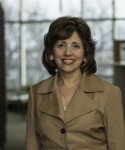
Rabbi Hannah Dresner wants “to come to know my congregation and the culture of Jewish Vancouver, to understand what the needs are and draw from our great tradition.” (photo from Rabbi Hannah Dresner)

Vancouver’s Congregation Or Shalom welcomed Rabbi Hannah Dresner as its spiritual leader this summer, recruiting her from Berkeley, Calif., where she was working part-time for Congregation Netivot Shalom, teaching niggun and meditation, and traveling broadly to hold spiritual retreats.

Dresner, a mother of three who grew up in Springfield, Mass., was ordained in January 2014 and worked previously as a visual artist and professor of fine arts. At Northwestern University, she taught painting and visual aspects of directing for graduate students in theatre direction.

“My artwork has always had a spiritual content, but I felt I needed further enrichment in developing the content of my work,” she said of her decision to seek ordination in the Jewish Renewal movement. “I began to study, got caught up in the study of Chassidic texts and became very enchanted with the imagery and worldview. I see the resultant shift of my professional energy to the rabbinate as another aspect of being an artist. I’m building my life as a work of art, and this is just another way of reaching people in a more direct manner.”

Her spiritual leadership at Or Shalom comes at an important time, she added, because it follows the recent death of Zalman Schachter-Shalomi, the founder of Jewish Renewal. Dresner has tremendous respect for the congregation’s founding rabbis, Daniel Siegel and Hanna Tiferet Siegel, and for Laura Duhan Kaplan, the rabbi who stepped back just over a year ago. “I consider them to be visionary people and I feel like, because of its strong rabbinical leadership in the past, Or Shalom is a community that’s primed and ripe for learning – head, heart, body and spirit,” said Dresner, who took over the congregation’s spiritual leadership from Louis Sutker, rabbi during the transition period.

Dresner grew up the child of a Frankfurt-born mother with an Orthodox background, and a father from the American Midwest, from a highly assimilated family. “Ours was a hybrid family that embraced an observant culture and engaged in a lot of social activism,” she noted.

She plans to develop Or Shalom’s musical davening program and Shabbat observance, to strengthen its b’nai mitzvah program, and to present varied adult education programs “that reach out not just to enrichment of our intellects but also offer points of entry that are more heart-centred.”

This fall, there is a midrash program on women in the Bible, beginning with the character of Tamar. Another new program is on spiritual eldering. “It will begin with a life review and talk about an evaluation of our lives, looking to the end of life with the perspective of wanting to live into our very fullest selves,” she said.

Dresner is also planning a davening laboratory where congregants can learn parts of the liturgy and practise their davening skills.

“As a rabbi, I think about Judaism as a treasure chest that speaks to all our human concerns,” she reflected. “I want to come to know my congregation and the culture of Jewish Vancouver, to understand what the needs are and draw from our great tradition – halachic, agadic, liturgical and Chassidic – in answering our real, current, human questions and concerns. I think these are very deep wells of wisdom that remain alive if we keep them alive.”

Lauren Kramer, an award-winning writer and editor, lives in Richmond, B.C. To read her work online, visit laurenkramer.net.
Format ImagePosted on November 6, 2015November 4, 2015Author Lauren KramerCategories LocalTags Hannah Dresner, Jewish Renewal, Judaism, Or Shalom
Kids can find own art path

Kids can find own art path

Shula Klinger (photo by Shahar Ben Halevi)

When artist and mother Shula Klinger was searching for ways to inspire her own two boys, she learned how important it is to let a child find their own creative path. She has translated this lesson – and her artistic expertise – into a new in-home class for young children.

“I provide the space and the stimulations but I let each child discover what triggers him to create art,” said the illustrator and writer. “I follow a simple principle that art is everywhere, we don’t have to use our mind to find it, we don’t have to work our brain to call inspiration, we just need to open up our eyes and let our senses lead us.

“We are all different but we still use the same methods to express ourselves,” she continued. “I invite the child into my house, into my very own working space, where he can find his very own creative space. I let the child lead the process, I don’t follow common doctrines of art educators who show children a painting and ask them to paint the same way. I teach them to think about the process and not about the product.”

Klinger moved to Vancouver from England in 1997 to do her PhD in education at the University of British Columbia. She met her husband Graham Harrington in Kitsilano and the couple moved to North Vancouver, where they are raising their two young boys, Benjamin, 8, and Joel, 4.

Klinger has published a young adult’s novel, The Kingdom of Strange (2008) and illustrated a graphic novel, Best Friends Forever: A World War II Scrapbook (2010), with author Beverly Patt. At the moment, her focus is on the in-home classes, as well as the launch of a video series called Art is Everywhere, co-created and co-hosted with Andrea Benton of Raising Boys TV.

“We want to provide an alternative to the art children have been learning in commercial art schools,” said Klinger. “We want to let them explore, search, discover, play, experiment and learn – mostly learn the how and why of creating their very own art. This is why we are all here. Ever since the caveman left his handprint on the walls of his habitat, we are all looking for ways to leave our mark, sound our voice, tell our story. We just need the freedom to find our own path. That’s what I try to teach.”

For more information about Klinger, visit shulaklinger.com. The video series can be purchased at raisingboys.tv/artiseverywhere.

Shahar Ben Halevi is a writer and filmmaker living in Vancouver.

Format ImagePosted on November 6, 2015November 16, 2015Author Shahar Ben HaleviCategories LocalTags Andrea Benton, art, Raising Boys TV, Shula Klinger

Tone is important

Once we’ve watched the videos of our new prime minister Bhangra dancing, scrolled through the rehashed pics of him shirtless at the weigh-in for his boxing bout against Senator Patrick Brazeau and perused the swooning of global commentators, we may turn our attention to Justin Trudeau’s policies in his first days as our leader-designate.

One of his first acts was to inform U.S. President Barack Obama by telephone that Canada would withdraw from combat missions against ISIS. This was a central part of Trudeau’s election platform and Canadians voted for him strongly, so this move was consistent with what he said he would do.

Canada’s role in the fight has not been insignificant, though we are by no means the foremost military in this battle. In the past year, six Canadian CF-18 jets have been involved in more than 180 airstrikes against ISIS targets. Trudeau promises this will end. He says, though, that Canada will remain a part of the 65-country coalition by increasing humanitarian aid and continuing to train Iraqi security forces.

On other matters of foreign affairs, Trudeau says that his government will restore diplomatic relations with Iran. We do not know yet whether the multipartite agreement intended to prevent Iran from constructing nuclear weapons will meet this objective. It will be years before we can conclusively answer this. But we wrote in this space when the Conservative government cut diplomatic ties with the Islamic Republic – long before negotiations over the nuclear program even began – that it was wrong to do so.

If you want to make peace, you don’t talk to your friends. You talk to your enemies. These were the wise words of Moshe Dayan. More to the point, from a practical standpoint, diplomatic relations will improve the situation for Canadians of Iranian descent and those with families there, who were probably punished more than the government in Tehran by the diplomatic break.

Continuing on foreign affairs, circling from ISIS to Iran and around to Israel – Trudeau spoke by phone to Israeli Prime Minister Binyamin Netanyahu four days after the election.

The specifics of the conversation are private, but Israel’s ambassador to Canada, Rafael Barak, said he is optimistic Canada’s friendship with Israel will be unchanged.

“Mr. Trudeau has been very consistent from the very beginning of his campaign, in expressing his support for Israel,” Barak told Canadian Press. “I’m sure maybe the style will change. But I don’t feel there will be a change on the substance. I’m really reassured.”

A Trudeau spokesperson said “there would be a shift in tone, but Canada would continue to be a friend of Israel’s.”

We will watch closely, of course, to see what “a shift in tone” looks like. As we noted in this space two weeks ago, the Liberal party ran an ad in the last days of the election campaign in Canadian Jewish News promising, “On Oct. 19, our government will change. What won’t change is Canada’s support for Israel.”

That is an unequivocal statement and it probably reassured a great many voters who believed a change of government was desirable but a change in approach toward Israel was not.

The importance of a potential “shift in tone” is that, frankly, tone is just about all we have to offer. The impact we had under the Conservatives – for better or for worse, depending on one’s politics – was based almost exclusively on our words.

Proud as we may be of our significant sacrifices and achievements during the First and Second World Wars, which we will mark next week on Remembrance Day, and significant as our contribution has been in Afghanistan, Canada’s impact on the global stage today is mostly one of principled voice. We are not a major military power. We have economic power, but less than our major trading allies. Agree or disagree with the content, former prime minister Stephen Harper showed that a Canadian voice – even a lonely one in the wilderness, as it often was when he defended Israel – can have powerful resonance.

Tone matters a lot.

Posted on November 6, 2015November 4, 2015Author The Editorial BoardCategories From the JITags Iran, ISIS, Israel, Justin Trudeau, Liberals

Need different view of Jerusalem

Sirens always make me pause. I fall silent and count one off, praying that there won’t be another. Because two sirens, as we used to say, are not women in labor.

Distant memories from the Intifada segue into those of summer last. Somehow, the rise of conflict in Jerusalem always comes along with the rising temperatures. But after the emergency meetings, the touring politicians, the dramatic headlines, there comes the first rain, and everything calms down. Then the countdown begins for next summer.

Some, though, aren’t content with just counting the days. Jeremy made aliya from D.C. six years ago. A reserve paratrooper officer, he rides his bike to work, halfway across town, each time reassuring his mother, thousands of miles away, that he wasn’t anywhere near the most recent attack. Last month, he joined a crowd of 5,000 to watch Matisyahu, the famous Jewish-American rapper, perform beneath the Old City walls. “Jerusalem If I Forget You gets a whole new meaning these days,” he tweeted, referring to the ancient prayer borrowed by Matisyahu for one of his songs.

Michal is a mother of four. At night, after putting her own children to bed, she has been going downtown, where she volunteers for a group seeking out dialogue with angst-filled youth bent on revenge. To her ever-concerned sister, she vows never to leave Jerusalem, with its crisp, cool air and still-low crime rates. It’s her husband who drops off the kids at school the following morning, where they are taught about the complexities of living in a mixed city, where you have to defend yourself with one hand and reach out to your would-be enemies with the other.

Another person is Ibrahim, a Hebrew University law student, and also a resident of Ras el-Amud, a Palestinian suburb shaken by recent events. Intimidating glares by Hamas supporters notwithstanding, he goes online every day, trying to convince people to stop the cycle of violence. Despite the long-standing advice of friends to relocate to Ramallah or the United States, he clings on to his naïve faith that there’s still hope in this conflict. Meanwhile, he alerts the authorities to suspicious happenings and, a few weeks back, confiscated a knife off of a 15-year-old brainwashed neighbor kid.

Then there’s Batia. She is an ultra-Orthodox woman. Every day she walks to work at City Hall. Despite having recently bought a canister of tear gas as a precaution, she prefers to put her faith in G-d and in the ubiquitous policemen. Just before Shabbat, she often goes up to them, to deliver fish, meat and chicken and to make their shift a little more pleasant.

Jerusalem keeps going, not through pompous statements, but through the hard work and devotion of its people, some elected officials, some social entrepreneurs and some ordinary citizens, united by relentless optimism and a profound love for their city. When things started getting really bad, I put out a call for an emergency meeting of Jerusalem civil society organizations. Within three hours, representatives from 33 organizations sat around a conference table at City Hall. It came as no surprise; even during “normal” times, the amount of people willing to sign up for civilian “reserve duty” is astounding.

There are teenagers handing out Israeli flags. Elderly people handing out small gifts to security personnel. Psychologists supporting youth in distress, activists helping out local businesses, and a string of independent online campaigns. These ordinary citizens allow the city to keep on living its life: thousands of students going back to school, the basketball team fighting to retain its championship title, and Buzz Aldrin, the second man on the moon, joining 2,000 people at the International Astronautical Congress last month.

This energy, this drive to take responsibility and think out of the box, are precisely what is needed to resolve the complexity of current events. We have to crack down on violence, while empowering moderate leaders; fight incitement on both sides and defend the right of every man and woman for freedom of worship; and make sure East and West Jerusalem get their share in infrastructure investments.

It’s time for this fresh perspective to rise from the bottom up. We are tired of instant solutions, quickly denounced by this side or the other of the political map. We are tired of those who take turns making political gains out of our hardship. Jerusalem is a different place, and requires a different point of view. The one we, young people of Jerusalem, discovered 10 years ago, when everyone else said the city was lost, and we formed Wake Up Jerusalem.

From this point of view, there is a lot of good to see. And even more to do.

Hanan Rubin is a Jerusalem city councilor and a co-founder of the solution-oriented political movement Wake Up Jerusalem, which focuses on quality of life issues for all Jerusalem residents.

Posted on November 6, 2015November 4, 2015Author Hanan RubinCategories Op-EdTags Arab-Israeli conflct, Israel, Jerusalem, peace, terrorism

Learning from the Holocaust

The following remarks have been slightly modified from the original address given at the closing session of the interdisciplinary conference Global Connections: Critical Holocaust Education in a Time of Transition, which took place at the University of Victoria Sept. 1-3. Participants “had the opportunity to discuss how decades of research on the Holocaust can be used to help understand and educate about other human rights issues and, in turn, how local histories can shed light on the way the Holocaust is represented and taught.”

I would like to thank the organizers for imagining and then managing a complex, well-structured, well-organized and thought-provoking conference that allowed us to think and talk about one of the most disturbing dimensions of human and political history.

In the last three days, the scholars and community members who gathered for our Global Connections conference have traveled great distances in time and space. We have moved from the meeting rooms of Versailles to the war rooms of Berlin, from Jewish homes to death camps throughout Europe, all the way to 1990s Rwanda, and then to present-day Turtle Island and the borders of Hungary and Macedonia.

We have learned about the pedagogical challenges facing Holocaust educators in North America and Europe. We have heard heartbreaking stories from survivors, from the children of survivors, from the grandchildren of survivors, from the children and loved ones of heroes, and from people deeply affected by the dehumanization of colonialism.

We have talked and we have listened. We have heard poetry and music and watched films. And now it falls to me to do that impossible thing – to offer some final words. It is impossible, of course, not just because I am surrounded by scholars who have spent their whole careers studying genocide, but also because I am surrounded by individuals and also by family members and by communities scarred and burned and torn apart by suffering that precludes closure.

In the face of such suffering, sometimes the right thing to say is nothing – sometimes that is the most fitting way to honor the missing parents, the lost siblings, the worlds that were not created because of these violent ruptures. But, in Europe, Rwanda, North America, Armenia, Cambodia, or the many other places torn asunder by inhumanity, silence colludes with geography and distraction, and prevents us from seeing, feeling and knowing things we must see, must feel, must know.

So, speaking is inadequate, but necessary. And so, like a good yeshiva student, I will respond to what I have been taught by posing questions. I would like, in particular, to leave you this afternoon with four questions or issues to consider. There are others one might pose, of course, but these four seem to capture many of the general themes we explored in the last three days.

First, what does it mean to talk about the Holocaust or any other genocide here, in Victoria, on what I only half-jokingly call Fantasy Island? One of the conference speakers reflected upon her students at Smith College, whose approach to the Holocaust often surprises and disappoints her. Many of us here on Vancouver Island who teach about the Holocaust experience similar things. After all, many of our students feel they have won a kind of political lottery by being born, or at least now living, in one of the most peaceful societies on earth. How might we reach such students, make them uncomfortable with their privilege, make them aware of the blood on the ground, the dark clouds hovering over the world for centuries – and still?

Second, the past has been made present in this room – but so, too, has the present seemed to haunt our discussions of the past. Every day, almost every hour, someone drew attention to the current refugee crisis that is stirring up so many anxieties not just in Europe but, as Wassilis Kassis (professor of educational sciences, University of Osnabrück, Germany) insisted, in the world. Of course, there are so many differences between the Europe of the Shoah and the Europe of today’s refugee crisis, but perhaps it is at this moment that we will see some of what we have learned from the Holocaust. If we fail this test, then we will have more people beside us when, in the coming decades, we ask ourselves why we did so little.

Third, we have mostly avoided talking about the ways people come to take possession of great catastrophes even when the individuals are only remotely connected to them. What kind of social capital and political momentum are generated by such attachments? To put it another way: what should we make of people who feed upon the misery of others in this way? The flipside of this question, of course, is what we should make of – and how we should respond to – the will to forget, the drive, the public demand, just to move on, to turn the page. The answer is not obvious, but the question needs to be asked.

Fourth and finally, we have been looking at mutilated bodies and mangled politics and sadistic ideologies, but where can one finally locate the pathologies that led to this pain? Is the origin economic inequality? Religion? Ignorance? Capitalism? Colonialism? Patriarchy? Fascism? Stalinism? Xenophobia? Racism? Yes. No. Partly.

I have heard many tidy post facto explanations of why such and such an act of colossal cruelty happened in place X, or why it didn’t happen in place Y. They are all good and interesting explanations, and we need more of them. We need to continue to improve the ways we explain both singular convulsions of violence, as well as systematic campaigns of extermination. Nonetheless, no matter how well we build our explanations for why an event occurred in a particular place, with particular actors in a particular historical period, some mystery always remains. I must confess that I worry that these accounts give us a false sense of the predictability of human behavior and the preventability of future genocides.

Perhaps this underlines the value of simply sometimes standing at the edge of the abyss and confessing ignorance. This is not to suggest we ought to throw up our hands, but rather that we must sometimes invite deeper, more humble, more sustained investigations of the dark corners of the human heart.

I thank you all for taking part in these investigations, for helping us see better how the heart can break and how the heart, nonetheless, continues to beat. Thank you for joining us in these conversations.

Paul Bramadat is director of the Centre for Studies in Religion and Society, Department of History and the Religious Studies Program, University of Victoria.

Posted on November 6, 2015November 4, 2015Author Paul BramadatCategories Op-EdTags Global Connections, Holocaust, Wassilis Kassis
From Israel to Poland

From Israel to Poland

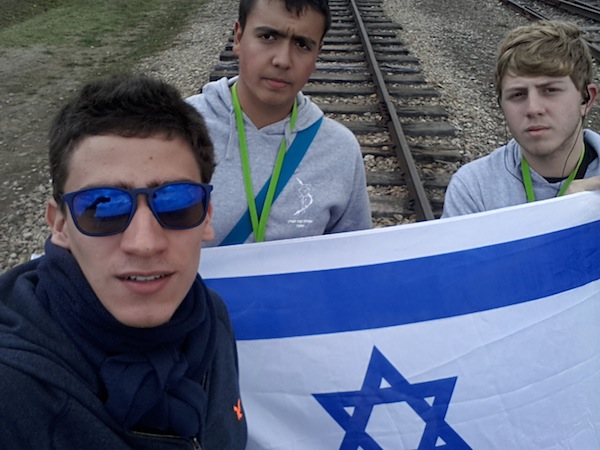
Dor Brown wrapped in the Israeli flag as he approaches Treblinka death camp. (photo from Dor Brown)

Israel’s Journey to Poland – the equivalent of the Diaspora’s March of the Living, but without the Israel portion – is organized by the Israel Education Ministry and funded mainly by the parents.

Sept. 4, 2015

Every year in Israel, senior classes from high schools across the country have the option to travel to Poland on an organized tour of those terrible, yet important, Holocaust death camps. I chose to join my class and am now writing this from the bus on my way back from the Majdanek death camp. It’s probably been one of the most difficult and emotional days of my life.

We were in Majdanek for a grisly four hours. Going into the “showers.” The barracks. The room where the Nazis burned the dead bodies. At the end of the tour, we held a very touching ceremony near the mountain of the ashes. Yes, a literal mountain.

With my hand on my heart, this trip is a must for every Jew worldwide. Until you go to Poland and see firsthand these horrific sights, you really cannot fully understand the depth of the horrors and misery and death.

A snapshot. One hundred fifty students from my school crying their hearts out while looking at those terrible sights. Weeping while holding the Israeli flag. While crying out loud, we were all shouting together in our hearts and minds and with great pride: “Am Yisrael chai!”

photo - Left to right: Dor Brown, Alex Katz and Oren Bizuener
Left to right: Dor Brown, Alex Katz and Oren Bizuener. (photo from Dor Brown)

Sept. 7, 2015

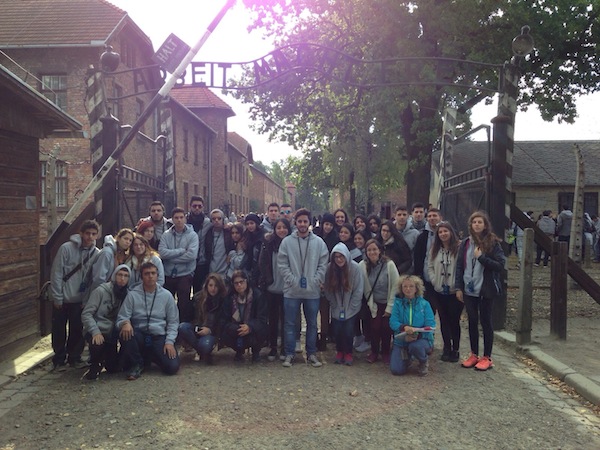
Today, we were in Auschwitz I, the labor camp and concentration camp that is now a museum. It was very difficult and very moving. Piles of hair. Piles of discarded shoes. Piles of glasses. It was unbelievably difficult to look at. An experience we should all have, however tough, to really understand how low civilization stooped.

After Auschwitz, we boarded our buses to the Plaszow labor camp. What remains is basically a beautiful memorial site. Amon Goeth was the cruel, barbaric and sadistic commander of this camp. He was the one who famously shot Jews for fun and practice. And tortured them in terrible ways.

Wrapping up the tour, our guide shared a story about a certain Jewish prisoner.

One morning, a Nazi guard came to this prisoner and told him he must run to his bunk. The prisoner did as he was told. When he arrived, he was greeted by Goeth. His meagre belongings were strewn across his thin cot.

Goeth was hunkering over his stuff with a picture in his hands. The picture was of Binyamin Ze’ev Herzl. “Who is this!” Goeth barked.

“Theodor Herzl,” replied the prisoner.

Goeth mocked, “The crazy Jew from Vienna who thinks there will be a Jewish country?!”

The prisoner was shaking with fear. He thought his death was near.

Goeth laughed and spat out, “The chances that it will happen are as slim as you becoming a cabinet member in that country’s government, or an ambassador.” With that, Goeth struck the man so hard that the poor prisoner blacked out.

Forty years later, that prisoner – Zvi Zimmerman – fulfilled Goeth’s prophecy. During his life, he not only was ambassador to New Zealand and a Knesset member in four Israeli governments but was also a deputy speaker of the Israeli parliament.

Upon finishing his story, the guide – with tears in his eyes – shouted, “Am Yisrael chai!”

For the rest of the day, we were all Zvi Zimmerman.

photo - The whole group at Auschwitz concentration camp under the infamous sign, “Arbeit Macht Frei,” “Work Makes You Free.”
The whole group at Auschwitz concentration camp under the infamous sign, “Arbeit Macht Frei,” “Work Makes You Free.” (photo from Dor Brown)

Sept. 9, 2015

Our last day in Poland. We woke up at 6:30 a.m. and headed to Auschwitz-Birkenau, the largest of the death camps. The largest death camp the world has ever seen. And, hopefully, the last death camp the world will ever know.

We saw lots of difficult places and sights over the past week but this was the toughest. I can’t describe the chills of dread going through my body as we entered the gate. The images of death running through my mind as I walked through the camp, the death place of my ancestors.

“Work Makes You Free.” Indeed.

The camp is huge. And beautiful. The surrounding trees are tall and green. To think that those trees were the last sight that almost one million of our people ever saw. How dare the camp be so beautiful today.

At the end of the tour, we had a ceremony where we each had to read out loud the names of persons who died in the Holocaust. It was a sad and exhausting roll call.

As the ceremony wrapped up, with tears pouring down our cheeks like rain, with hearts and souls broken, we all shouted together our rallying cry of the week: “Am Yisrael chai!”

As Yigal Alon said: a country that doesn’t know its past will have an uncertain present and future.

Dor Brown is the son of Bruce Brown, who immigrated to Israel more than 20 years ago from Canada. Dor and his family live in Rehovot. Dor is finishing high school this year, and will enter the Israel Defence Forces in October 2016.


Format ImagePosted on November 6, 2015November 4, 2015Author Dor BrownCategories Op-EdTags Auschwitz, Holocaust, Journey to Poland, Majdanek
Million Jews mark Shabbat

Million Jews mark Shabbat

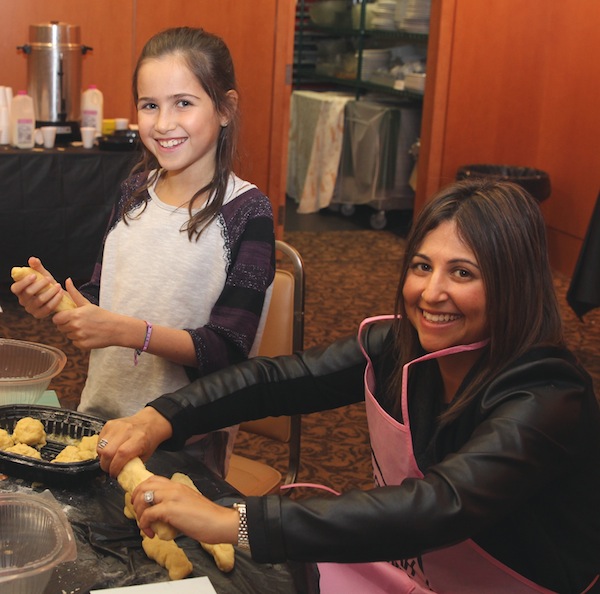
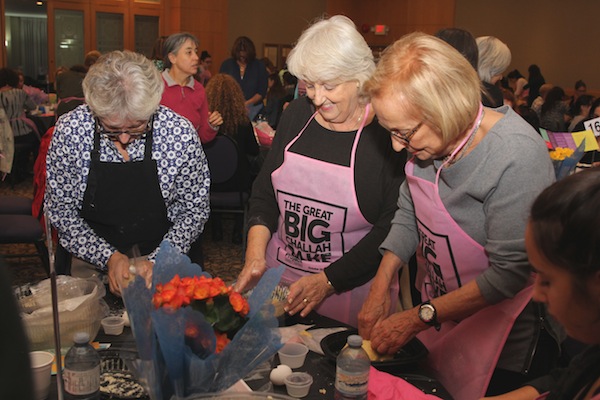
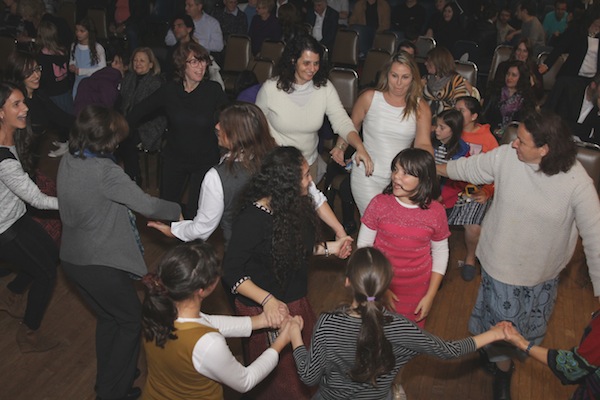
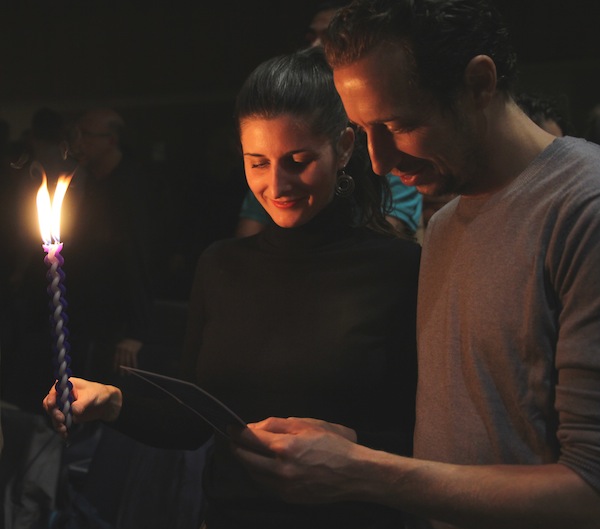
Vancouver was one of the 550 cities worldwide that participated in the Shabbat Project this year. Activities included the Great Big Challah Bake, attending services, hosting Shabbat meals and get-togethers, and a Havdalah concert. (all photos by Sydney Switzer)

More than a million Jews in 550 cities in 65 countries participated in the Shabbat Project this year. The project is a unity initiative that was started two years ago in South Africa by the country’s chief rabbi, Rabbi Warren Goldstein, who challenged Jews to keep the Shabbat of Oct. 23-24.

photo - Great Big Challah Bake 1In Vancouver, the weekend kicked off with 400 people coming together at the Great Big Challah Bake on Thursday, Oct. 22. Ilana Rubinstein from Toronto led the event, and everyone prepared and braided dough. The braided challot were taken home to be baked for Shabbat. The warmth and excitement was palpable, as everybody knew that this was the opening event for the Shabbat Project, and that they were participating in an event that was being shared by tens of thousands of other Jews around the globe.

Shabbat is a time to reenergize physically, emotionally and spiritually and to connect to our families, to friends and to G-d. Friday night dinner and Shabbat lunch are perfect times for this and many families in and around Vancouver, Richmond and other parts of the Lower Mainland hosted Shabbat meals.

photo - Great Big Challah Bake 2 Many organizations hosted special events for the Shabbat Project, from communal Shabbat meals to kumzitz (from the Yiddish “Kum, zitz,” “Come, sit,” a relaxed gathering). The energy of the weekend spilled into the Havdalah concert starring Yitzy Fink, a musician from New York.

One family for whom the Shabbat Project experience made an impact was the Bresslers. Dalia and Brian Bressler decided early on to connect with their nearby friends. A few days before Shabbat, they planned the menu and discussed the logistics of serving and cleaning up a big dinner while observing Shabbat. They were five families with 15 children singing songs; saying brachot, including blessing all the children and the wives; and enjoying a delicious dinner. Seeing kids of all ages enjoying being together, talking and playing games without any electronic distractions was wonderful.

Havdalah 1Of going to shul on Saturday morning, Dalia Bressler said, “It is rare that all of us go to shul at the same time. Sometimes only a couple of us go and sometimes we go at different times. We all decided to go to shul as a family and we walked. It was a beautiful morning, which made the experience even better. After services, we stayed for a really nice Kiddush lunch and chatted with friends. There were many families at shul because of the Shabbat Project.” She said it was great to see everyone so connected through the project.

photo - Havdalah 2The Bresslers and their group of friends ended Shabbat at their friends’ down the street, who hosted all the families in their neighborhood for a late afternoon get-together. When Shabbat was over, they all gathered around the kitchen and did Havdalah.

What made this Shabbat Project experience so special for the Bresslers and many others in the community was being together with family, friends and the community, everyone observing Shabbat together with a million other Jewish people around the world. Many of those who participated, including the Bresslers, have committed to keeping Shabbat together again in the future.

Format ImagePosted on November 6, 2015November 4, 2015Author Shabbat Project VancouverCategories LocalTags Bressler, Great Big Challah Bake, Ilana Rubinstein, Shabbat Project, Yitzy Fink
Working in community

Working in community

Sidney Shmilovitch retired this July from Jewish National Fund, Pacific Region, after 19 years. (photo from Sidney Shmilovitch)

Being at the forefront of the baby boom generation, I was born in Vancouver after my father returned from serving overseas. The opportunity of work on Vancouver Island saw our family move and live in the small communities of Maple Bay and Departure Bay for the next 10 years. Moving back to the Lower Mainland, my parents and I settled in West Vancouver, where I graduated from West Vancouver Secondary. I then attended B.C. Institute of Technology and graduated with a diploma in X-ray technology, followed by a two-year stint as a Cuso volunteer working in small hospitals in the north and south of Nigeria.

Upon returning to Canada, and after a number of years working in Toronto, I moved back to the West Coast. Living in Abbotsford, I met and married Dan Shmilovitch, who was heading efforts to form what eventually became known as Ha’Emek Jewish Community. Holiday programming in the community was enhanced by the services of Chabad rabbis from Vancouver. When our children became of school age, we began attending Jewish events in Vancouver. A wise rabbi there told us that if we wanted our children to remain Jewish, we had to move to the city, join a synagogue and put our children in Hebrew school. So we did, in 1987, which marked the beginning of our relationship with the Jewish communities of Richmond and Vancouver.

In 1988, I began my first job in the Jewish community, working in Richmond as part-time secretary for Eitz Chaim Synagogue. This was my first experience working in the Jewish religious world and learning the complexities of growing a young congregation. Two years later, searching for full-time work, I was hired for a joint position with the Canadian Zionist Federation, Camp Miriam and the World Zionist Organization aliya department at their shared office space at the Jewish Community Centre of Greater Vancouver. The five years I spent working with these organizations introduced me to the important work of Jewish professionals, dedicated board members and volunteers.

In 1996, I joined Jewish National Fund, following in the footsteps of Maisie Myerthall, who was retiring after 26 years. And now, after 19 busy years working with JNF, it was my turn to retire this July. I will miss the special working relationships I had with colleagues in JNF offices from Vancouver to Montreal, especially of course, Ilan Pilo, Moran Nir and Liisa King in the Vancouver office – all part of the JNF family. It was a privilege for me to work with six JNF shlichim (emissaries) over the years, all of whom I admired for their humanity, love of life, energy, drive and determination.

As for me, now that I’m retired, I will volunteer with the JNF, and am considering other volunteer opportunities in the community – I’m open to ideas! And we will travel. So far, Dan and my travel plans revolve around visiting our kids and grandchildren on the east and west coasts of the United States.

I have many thanks to send. To my friends at the JCC, some of whom I have known for 25 years – keep up the good work! My sincere appreciation to the staff of communal organizations, synagogues and schools who were so accommodating and helpful to me. My love and thanks to the members of the JNF executive and board for all their support, hard work and devotion to Israel, and for being so enjoyable to work with. A thank you to all the leaders who have built a strong, vibrant and exciting community that will go from strength to strength. And, to the philanthropists, kol hakavod for your vision and inspirational generosity that make it all happen.

Format ImagePosted on November 6, 2015November 4, 2015Author Sidney ShmilovitchCategories Op-EdTags community, Jewish National Fund, JNF, retirement
Research in genetics

Research in genetics

Dr. Cheryl Rockman-Greenberg (photo from Dr. Cheryl Rockman-Greenberg)

“There are approximately 7,000 rare diseases, each individually very rare. But, when you look at them as an aggregate, rare genetic metabolic disorders, they affect approximately one in 15, or two million, Canadians.”

Although there are various ways to define what constitutes a “rare genetic disorder,” Winnipeg-based Dr. Cheryl Rockman-Greenberg told the Independent, “One definition is that a rare disease is one that only affects one in 12 or fewer individuals in the general population, or some have defined it as disorders affecting a maximum of 1,000 to 2,000 individuals.”

Rockman-Greenberg specializes in medical genetics and genetic metabolic disorders. She said rare diseases represent a disproportionally large percentage of Canada’s medical, health-care and pycho-social burden.

Children who have a genetic rare disease experience high morbidity and mortality in the first two years of life. Phenylketonuria (PKU) is one of the more well known and, before a newborn baby leaves a hospital, he/she undergoes a heel poke. According to the Mayo Clinic website, PKU is an “inherited disorder [that] causes an amino acid called phenylalanine to build up in your body. PKU is caused by a defect in the gene that helps create the enzyme needed to break down phenylalanine. Without the enzyme necessary to process phenylalanine, a dangerous buildup can develop when a person with PKU eats foods that are high in protein.”

“Every baby born in Manitoba is screened for a whole series of rare metabolic diseases,” said Rockman-Greenberg.

Newborn screening programs have been in place across Canada since the 1960s and have expanded over time as treatment options, and the ability to diagnose disorders right after a baby is born, have increased.

“PKU only affects one in 15,000 children, but it’s an important metabolic disorder,” said the doctor. “Untreated children with PKU have severe developmental problems.”

Through research, it was discovered that PKU can be controlled by providing a special diet and, if treatment is started early, any damage can be completely prevented.

“These are all hereditary disorders. These metabolic disorders I treat or that are screened for at birth are all caused by one single gene pair, where there is a mutation in both copies of the gene,” said Rockman-Greenberg.

“Remember, genes come in pairs as two copies of the gene. And, if there is a misprint in each copy, if the child has misprints in both copies of the gene, then that condition is manifested. The genetic abnormality is the most significant factor for what causes the signs and symptoms. The environment plays little role overall.”

In the last few decades, more resources have been put into research. A big step in this direction was in the United States, with the Orphan Drug Act of 1983, which gave incentive to companies to develop treatments for rare metabolic diseases. Canada does not yet have such a policy.

“If you can imagine developing a treatment when there may be 50 patients in the whole country,” said Rockman-Greenberg. “It’s, first of all, a very expensive venture. For the industry, it’s much more profitable to do a drug trial for a common disease that may affect thousands and thousands of people.”

Regardless, the number of drugs that have been developed by companies prepared to invest in the research of rare diseases has increased.

“For many of these rare diseases, there are or have been excellent clinical trials over the past decade,” said Rockman-Greenberg. “And when the clinical trials have shown that a treatment is effective and safe, then more and more of these drugs get licensed and become available to treat patients.

“And then industry has stepped in and shown a commitment for drug development. This has greatly increased the number of diseases, rare metabolic diseases, that were not amenable to treatment but now have the potential for an effective treatment. So, a lot of the barriers have been removed … [because of] good research by industry and basic research by university scientists.”

Another factor that has helped change the landscape is the development of national patient groups.

“Parents and patient groups are extremely effective,” said Rockman-Greenberg. “They have really brought together the rare disease community that, in the past, has been very fragmented. Now, there’s a national voice through the Canadian Organization for Rare Diseases (CORD), Canada’s national network for organizations representing all those with rare diseases.”

“There are many disorders – rare, ultra-rare diseases – where we had seen babies die early of the disease. Now, the potential of treatment, viable and good quality survival, good quality of life … that’s what being a doctor is all about.”

Of these changes that have enabled her to provide better care for patients, Rockman-Greenberg said, “It’s wonderful. There are many disorders – rare, ultra-rare diseases – where we had seen babies die early of the disease. Now, the potential of treatment, viable and good quality survival, good quality of life … that’s what being a doctor is all about.”

Looking ahead, Rockman-Greenberg is optimistic. “In general, there are more and more incentives for drug development for rare metabolic diseases, so I see the metabolic community continuing to participate in clinical trials,” she said. “The development of therapies and, then, another major role that we as doctors have is to help ensure that patients have access to these promising therapies.

“We have to make sure that there are programs in places in all the provinces and territories that are going to allow patients to have access to these treatments. So, there’s lots of work that needs to be done and physicians have to be part of this dialogue with industry, governments and stakeholders to ensure we can make real change for patients with rare diseases.

“It’s one thing to find the cause for a rare disease. It’s another thing to prove a treatment is effective through clinical trials. But, at the end of the day, we have to make sure patients who aren’t candidates for treatment trials have access to care.

“We need to make sure as many people as possible are aware of the existence of rare metabolic diseases and how complicated they are, what a burden these diseases have on the patients and their families, but also about the many programs being developed to help research and develop new treatments, and help them connect to patient support groups that assist rare-disease patients.”

Rockman-Greenberg is the director of the metabolic service and a clinical geneticist in the program in genetics and metabolism of the Winnipeg Regional Health Authority. She is also a professor in the department of pediatrics and child health, and the department of biochemistry and medical genetics at the University of Manitoba. She grew up in Montreal and moved to Winnipeg in 1978. In January 1979, she began working at Winnipeg Children’s Hospital. As both a pediatrician and medical geneticist, she sees patients throughout their lifespan.

Rebeca Kuropatwa is a Winnipeg freelance writer.

Format ImagePosted on November 6, 2015November 8, 2015Author Rebeca KuropatwaCategories NationalTags Cheryl Rockman-Greenberg, genetics, PKU, rare diseases
Technology for clean water

Technology for clean water

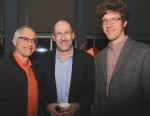
Weizmann Canada event speaker Dr. Brian Berkowitz, centre, with attendees David Berson, left, and Raffi Reitzik. (photo by Sydney Switzer)

Everyone who attended the Oct. 15 lecture The Quest for Clean Water left the intimate theatre at Science World with a thoughtful look, still digesting the sheer mass of information Weizmann Institute of Science Prof. Brian Berkowitz shared.

The event was introduced by local Weizmann Canada chapter member Dr. Hillary Vallance, a medical biochemist at B.C. Children’s Hospital and a professor at the University of British Columbia. UBC Prof. Jonathan Berkowitz took the stage next to give a more in-depth and personal introduction of the speaker, who happens to be his brother.

Brian Berkowitz heads the department of earth and planetary sciences at the Weizmann Institute in Rehovot, Israel. His talk took many twists and turns, the topics ranging from recent developments in his lab around technologies in water purification, to nanoparticles in sunscreen. He took the audience into the world of hydrology (the study of water), sharing facts, advice and stories.

He began with the message of how interconnected everything is on the planet. But one example is the regular occurrence of a dust cloud from the Sahara blowing minerals to the Amazon to enrich the soil in the rainforests there. He believes that “greening” the Sahara would kill the Brazilian rainforests. In addition, he predicts that, within as little as a decade, parts of Europe and North America will become much cooler because of interference of the melting glaciers in Greenland with an oceanic current.

The Weizmann Institute has some 2,700 staff and students who explore basic science, he explained. And it is this freedom to delve into basic science that has produced so many breakthroughs, including those in the area of water purification.

“Working at the Weizmann Institute is a dream job,” he said. “I know my research will be supported, that I can get expensive equipment if I need it, with no pressure. The only thing I need to do is be the very best in the world at what I’m doing.”

Diving into the topic of the evening, Berkowitz said that, in northern Alberta, there are vast pools of water made highly toxic by its use in oil production. The water came from the Athabasca River and sits in pools, contaminating the environment, untreated.

Berkowitz has discovered a technology that would not only decontaminate this water, but could make it so clean that it would be drinkable. Why is it not being used? “The technology is expensive,” he said. “More importantly, it is difficult to change people’s perception about where the water came from, so they don’t want it back into their water systems even though it’s been purified.”

He gave the example of an experiment where people were asked first to swallow regularly a number of times. Then they were asked to spit into a glass of water and drink their own saliva mixed with the water. The subjects found it difficult to stomach their own saliva. This simple study illustrated the difficulty in convincing governments to give the go ahead on releasing water that was once toxic waste.

Another challenge with the technologies that his and other labs produce is the expense of getting them to market. Berkowitz said investors are looking for a big, quick return and, at this stage, making clean water does not generate the kind of money necessary for the capital required. Even governments are not yet prepared to invest. Eventually, there will be little choice but, for now, much of Berkowitz’s technology stays with the Weizmann Institute, ready for the future.

Although it is frustrating that existing technology sits idle instead of cleaning up environmental disasters, Berkowitz had some good news. He discussed ways in which perceived water shortages can be mitigated. “Most cities waste 30% of their clean, treated water through leaky pipes,” he said. “It’s not so much an issue of shortage, as a distribution problem.” He also encouraged people to eat less beef. “It takes 15,000 litres of clean water to produce one kilogram of beef. If people ate less meat, we’d save a lot of water.”

Berkowitz explained how he has made a number of groundbreaking discoveries by being in the right place at the right time. He spoke of an experiment that caused an explosion in his lab when he was out for lunch – and led to the discovery of a technique using nano-disruptive technology to purify very polluted water completely in eight hours.

Berkowitz then took questions from the audience, which led to a discussion on the organic food movement and the dangers associated with the “natural” elemental chemicals used in organic farming that he believes are, in many cases, more harmful than manufactured pesticides. He also opened other cans of worms with examples of how pharmaceuticals are polluting the world’s water supply; which foods absorb toxins through groundwater; why sunscreen is scary; and his new project that uses MRIs of rocks to predict how long an oil spill will take to reach groundwater. All topics, hopefully, of future Weizmann lectures.

For more information on how you can become involved with the Vancouver chapter of Weizmann Canada, contact development associate Camille Wenner at 604-260-8506 or 604-315-4430 (cellphone), [email protected] or via weizmann.ca.

Michelle Dodek is a freelance writer living in Vancouver.

Format ImagePosted on November 6, 2015November 4, 2015Author Michelle DodekCategories LocalTags Brian Berkowitz, water, Weizmann Canada

Posts pagination

Previous page Page 1 … Page 533 Page 534 Page 535 … Page 650 Next page
Proudly powered by WordPress