Skip to content
  • Home
  • Subscribe / donate
  • Events calendar
  • News
    • Local
    • National
    • Israel
    • World
    • עניין בחדשות
      A roundup of news in Canada and further afield, in Hebrew.
  • Opinion
    • From the JI
    • Op-Ed
  • Arts & Culture
    • Performing Arts
    • Music
    • Books
    • Visual Arts
    • TV & Film
  • Life
    • Celebrating the Holidays
    • Travel
    • The Daily Snooze
      Cartoons by Jacob Samuel
    • Mystery Photo
      Help the JI and JMABC fill in the gaps in our archives.
  • Community Links
    • Organizations, Etc.
    • Other News Sources & Blogs
    • Business Directory
  • FAQ
  • JI Chai Celebration
  • JI@88! video

Recent Posts

  • Sharing her testimony
  • Fall fight takes leap forward
  • The balancing of rights
  • Multiple Tony n’ Tina roles
  • Stories of trauma, resilience
  • Celebrate our culture
  • A responsibility to help
  • What wellness means at JCC
  • Together in mourning
  • Downhill after Trump?
  • Birth control even easier now
  • Eco-Sisters mentorship
  • Unexpected discoveries
  • Study’s results hopeful
  • Bad behaviour affects us all
  • Thankful for the police
  • UBC needs a wake-up call
  • Recalling a shining star
  • Sleep well …
  • BGU fosters startup culture
  • Photography and glass
  • Is it the end of an era?
  • Taking life a step at a time
  • Nakba exhibit biased
  • Film festival starts next week
  • Musical with heart and soul
  • Rabbi marks 13 years
  • Keeper of VTT’s history
  • Gala fêtes Infeld’s 20th
  • Building JWest together
  • Challah Mom comes to Vancouver
  • What to do about media bias
  • Education offers hope
  • Remembrance – a moral act
  • What makes us human
  • המלחמות של נתניהו וטראמפ

Archives

Follow @JewishIndie
image - The CJN - Visit Us Banner - 300x600 - 101625

Category: News

Chabad honors Rebbe

Chabad honors Rebbe

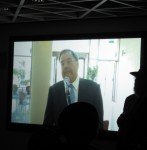
Rabbi Shlomo Riskin speaks to the Vancouver audience via webcast. (photo by Cynthia Ramsay)

Empowerment. Scholarship. Connection. Each of these words was used more than once to describe the Rebbe – Rabbi Menachem Mendel Schneerson, z”l – and his impact during the July 9 community commemoration of the 20th year since his passing.

At Chabad Lubavitch at Oak and 41st, the six B.C. Chabad Houses hosted a night of learning, with workshops and dinner, followed by a speech, via webcast, from Rabbi Shlomo Riskin, chief rabbi of Efrat, Israel, and chancellor of Ohr Torah Stone in Israel, and the video The Rebbe: Marching Orders.

Timeless Leadership: An Evening of Inspiration offered two sets of workshops from which attendees could choose. The first set comprised Turning Lubavitch Outward by Rabbi Yitzchok Wineberg of Chabad Lubavitch BC; The Rebbe’s Melodies by Rabbi Falik Schtroks of the Centre for Judaism in White Rock; and Stories of the Rebbe by Rabbi Yechiel Baitelman of Chabad of Richmond. The second set was The Wisdom of the Lubavitcher Rebbe by Rabbi Binyomin Bitton of Chabad of Downtown, and The Rebbe’s Advice by Rabbi Dovid Rosenfeld of Camp Gan Israel; Rabbi Meir Kaplan of Chabad of Vancouver Island, was unable to attend.

Among the handouts was a timeline of Schneerson’s life prior to his becoming the Rebbe. Born in Ukraine in 1902, Schneerson was considered a child prodigy and, by the time he was in his teens, he was exchanging letters with respected scholars. He married Chaya Mushka, the daughter of the sixth Lubavitcher Rebbe, Rabbi Yosef Yitzchak Schneersohn, in Poland in 1928. He then went to the University of Berlin, followed by the ESTL engineering school and the Sorbonne in Paris, while also giving Torah classes and the like. When the Nazis conquered Paris, the Rebbe and his wife managed to escape, by ship from Lisbon to New York. At his father-in-law’s behest, Schneerson became a director of multiple Lubavitch organizations and began to publish his thoughts on Chassidic tracts and write responsa. In 1951, a year after his father-in-law died, Schneerson became the Rebbe.

Wineberg, who gave a brief overview of Chabad’s history, called Schneerson “a Rebbe for our times.” A more critical problem in our age – the last 65, and especially the last 30-35, years – than assimilation, said Wineberg, has been low self-esteem. In this context, he highlighted the Rebbe’s belief that, “There is no such thing as a small Jew.” The Rebbe took what was an insular, study-focused organization and, while keeping the foundation of Torah and study, broadened its vision to include all Jews, said Wineberg, noting that the Rebbe connected with every single person he encountered. The Rebbe, he said, was the inspiration behind Chabad heading to campuses, to welcoming Jews to dinner, to prayer, to don tefillin.

Bitton provided some statistics on the Rebbe’s outreach and his scholarly contributions: he spoke on 31,393 occasions, for example, and 11,700 of his letters have been published so far; there are tens of thousands of pages of his writings. The Rebbe’s unique approach to learning, explained Bitton, is that he connected talmudic understanding with its kabbalistic translation. When the Rebbe analyzed an idea, said Bitton, he peeled its exterior layers away and got to the pure essence of the idea, the quintessential idea that was at the root of the discussion. For the Rebbe, he said, kol haTorah inyan echad, the entire Torah is one “topic.”

In telling the stories of his encounters with the Rebbe, Riskin echoed some of the sentiments shared by the local Chabad rabbis in their presentations. He compared the Rebbe to Moses, in that, as Moses is still alive in a sense because his teachings continue to be studied, the same is true of the Rebbe. “Certainly for me,” said Riskin, “because not only did he change my life, but he gave me fundamental messages by which I live my life, and which informed my world of education … and my world of the rabbinate.”

Riskin shared how he became the founding rabbi of Lincoln Square Synagogue in the mid-1960s. Having attended Yeshivah University on scholarships, he wanted to repay the institution and agreed to do some speaking engagements after receiving his ordination, one of which was at “a kind of Rosh Hashanah-Yom Kippur synagogue” that didn’t have its own building and was in what was then a poor neighborhood. They had a rabbi and were relatively satisfied but not completely, so they approached YU and, after Riskin came for one Motzei Shabbat, they wanted to hire him. When deciding whether or not to accept the pulpit, Riskin was conflicted and received conflicting advice. So, he asked for a meeting with the Rebbe, who told him to listen to his own rebbe (Rav Joseph B. Soloveitchik, z”l), adding that, “In every battle, there are people who have to get dressed like the enemy and go into the enemy territory … and you will not only win the battle, you will win the war.”

When Riskin argued that his future congregants have no background and that he would have nothing with which to work, the Rebbe said, “You can never say about a Jew that he has no background. Every Jew has a kingly background; every Jew is, after all, a descendant of Avraham, Yitzchak, Yaakov, of Sarah, Rivka, Rachel and Leah…. I left the Rebbe’s presence awestruck, and with a very profound sense of empowerment.”

Another encounter with the Rebbe took place after Riskin had spent time working with an eccentric, wealthy man who, when he met Riskin was non-observant and married to a non-Jew. After that initial meeting, Riskin accepted the man as a single member of the shul (i.e. without his wife) but later found himself doubting that decision. When he asked the Rebbe about it, the Rebbe never told Riskin whether he’d made the right decision, but rather said, “No one is able to truly evaluate the profound value of the Jewish soul.” This meant, said Riskin, that “every Jew has an affinity to Torah and you can never give up on any Jew no matter how far away he may have went. And that, too, has become a very important part of my teaching.”

When Riskin was making aliyah, he could not meet with the Rebbe directly – because of the Rebbe’s ill health following a heart attack – but he received his blessing through Soloveitchik at a farbrengen (Chassidic gathering) they were all attending. To the blessing, the Rebbe added that, in Efrat, Riskin “must produce shluchim, emissaries, who are modern on the outside and Chabad on the inside.” Riskin credits the Rebbe for his having been able to establish Ohr Torah Stone, which has, among other programs, hundreds of shluchim.

Format ImagePosted on July 18, 2014July 17, 2014Author Cynthia RamsayCategories LocalTags Binyomin Bitton, Chabad, Lubavitch, Menachem Mendel Schneerson, Ohr Torah Stone, Rebbe, Shlomo Riskin, Yitzchok Wineberg
Israel faces rising jihadist threats

Israel faces rising jihadist threats

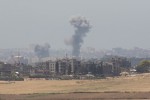
Smoke rises in Gaza after an Israeli airstrike on the second day of Operation Protective Edge, July 9, 2014. (photo by Yonatan Sindel/Flash90)

With the launch of the Israeli army’s Operation Protective Edge in Gaza, much of the public’s attention has focused on Hamas, which has escalated its rocket fire on Israel. But the threats the Jewish state faces from Gaza may not be as clear-cut as they seem.

While Hamas is still extremely deadly, it has seen a weakening of its grip on the coastal enclave over the past few years, due to challenges from other Islamic terror groups and isolation from its former patrons in the Muslim world.

“Hamas has been on the brink of collapse,” explained Jonathan Schanzer, vice-president for research at the Foundation for Defence of Democracies. “It has become very isolated politically and economically.

“It is very difficult to figure out what Hamas’ calculus is [in its current escalation with Israel],” Schanzer added. “Hamas may have nothing to lose but, on the other hand, they could have really overplayed their hand, which could lead to complete devastation of their assets.”

Since taking control of Gaza in 2007, Hamas has seen a steady decline in its support from the

Palestinian people and the rise of other Islamic terrorist groups there, including its main Palestinian rival, Islamic Jihad, as well as al-Qaeda-inspired Salafi global jihadist groups.

In February, leaders of the Salafist factions known as the Al-Quds Mujahideen Shura Council in Gaza issued a statement pledging allegiance to Islamic State in Iraq and Greater Syria (ISIS), which has made global headlines for its brutality and swift victories in the Syrian civil war and in Iraq. These Gaza-based Salafi jihadist groups have often been at odds with Hamas and have been targeted by Hamas’ internal security forces. At the same time, these groups have been responsible for rocket fire on Israel, both from Gaza and Salafi groups operating in the Sinai Peninsula. This includes rockets fired on the southern Israeli city of Eilat in January 2014.

Meanwhile, recent reports indicate that jihadists from ISIS – now also known simply as “Isamic State” – have attempted to infiltrate Gaza from Egypt, the Gatestone Institute reported.

Read more at jns.org.

Format ImagePosted on July 18, 2014July 17, 2014Author Sean Savage JNS.ORGCategories IsraelTags Foundation for Defence of Democracies, Gaza, ISIS, Israel, jihad, Jonathan Schanzer, Operation Protective Edge
Sderot residents hope Tel Aviv finally understands them

Sderot residents hope Tel Aviv finally understands them

Motorists in Tel Aviv take cover from an incoming terrorist rocket. (photo from IDF Spokesperson’s Unit via Ashernet)

In Sderot, Simone Mizrachi wearily follows her two-year-old grandson as he happily jumps on the bouncy castle in a large indoor playground. A balloon pops and she jumps. The playground has four large underground bomb shelters in case of rocket attacks.

“Enough already,” said Mizrachi about the dozens of rockets fired at this small town in recent days. “My grandson is the second generation already living through these rockets. When we see smoke from the rockets, I try to tell him, ‘Look at the clouds up there,’ but he knows it’s not clouds. At age 2, he already knows what’s going on.”

Mizrachi has lived in this lower-middle-class town of 24,000 for 32 years and has raised her four children here. For the past 13 years, she said, Sderot has been under constant rocket fire. Because it is less than a mile to the border with the Gaza Strip, there are only 15 seconds to get to a shelter after the siren sounds. The Israeli government has spent hundreds of millions of dollars to build bomb shelters here – at bus stops, schools and in private homes.

Now, for the first time, rockets are hitting Tel Aviv. Mizrachi said she hopes Israel can end the rocket fire all over the country. But, she added, there is a certain satisfaction in the idea that Israelis in bourgeois Tel Aviv now understand what Sderot has been living with all this time.

“Where have they been for the past 13 years?” she asks angrily. “Now, they are finally getting a taste of what it is like to live here. There are times that we get 60 rockets a day. Maybe now that they feel it, the government will finally do something.”

Read more at themedialine.org.

Format ImagePosted on July 18, 2014July 17, 2014Author Linda Gradstein TMLCategories IsraelTags bombing, Sderot, Simone Mizrachi

Haaretz conference provides platform for renewing peace push

To some, it was a (peace) camp reunion. To others, it served notice that peace with the Palestinians has returned to its place atop the agenda of Israel’s political left following its dalliance with socioeconomic issues. To the more than 2,000 participants in Haaretz newspaper’s Israel Peace Conference held last week at Tel Aviv’s David InterContinental Hotel, it was an elegant opportunity to mingle with the iconic stewardship of days past – topped by Shimon Peres – while honing the movement’s agenda among those poised to embrace the next wave of leadership, such as opposition head and Labor Party leader Isaac Herzog and activist-turned-politician Stav Shaffir, who personifies the bridge from social activism to the politics of peace.

The history of the Israeli Peace Conference was itself microcosmic of the fortunes of the movement it supports. The idea began amid optimism born of word of U.S. Secretary of State John Kerry’s peace mission, according to conference chief executive officer, journalist Akiva Eldar. “The original idea was to push [Israeli] Prime Minister Binyamin Netanyahu and Palestinian Authority President Mahmoud Abbas to say ‘yes’ to Kerry but, around April, everything came to a halt,” he told this reporter.

“We kept pushing it off, finally setting it for July,” said Eldar, senior columnist for Al-Monitor. But, by the time the date rolled around, a new set of obstacles had presented themselves in the form of the kidnapping and murder of three Israeli teens followed by the killing of a Palestinian youth. The atmosphere became more toxic to the point where key Palestinian participants, chief negotiator Sa’ib Erakat and businessman Munib Al-Masri, pulled out of the conference. Yet, the decision was made to continue as planned. According to Eldar, “We decided we don’t give veto power to terrorists on both sides.”

Read more at themedialine.org.

Posted on July 18, 2014August 27, 2014Author Felice Friedson TMLCategories IsraelTags Akiva Eldar, Haaretz, Israeli Peace Conference
Israel master chef hopes to foster peace through cooking

Israel master chef hopes to foster peace through cooking

Nof Atamna-Ismaeel reacts to her win. (photo by Yonatan Sindel/Flash90 from israel21c.org)

“This is the most exciting night of my life,” said a grinning, teary-eyed Nof Atamna-Ismaeel, upon her selection as winner of the fourth season of Master Chef Israel.

The April 5 broadcast had more than a third of Israel staying at home on a Saturday night to see who among the remaining three finalists would be crowned this year’s culinary champion of the most popular show on local television, even beating its close competition, Chef Games, which debuted this fall.

Israeli-Arab Atamna-Ismaeel ended up besting competitors Ido Kronenberg, a businessman from Savyon, and Meseret Woldimikhal, an Ethiopian-born immigrant in the process of converting from Catholicism to Judaism, who lives in Rishpon.

Atamna-Ismaeel was a judges’ favorite from the get-go. This year’s auditions for the show, based on the British reality program of the same name, involved two steps: a blind tasting of a sandwich prepared behind the scenes by a wannabe contestant, and a second dish cooked on screen by those whose sandwiches met with the judges’ approval.

Read more at israel21c.org.

Format ImagePosted on July 11, 2014July 9, 2014Author Ruthie Blum ISRAEL21CCategories IsraelTags Master Chef Israel, Nof Atamna-Ismaeel
Healing effects of medical clowns

Healing effects of medical clowns

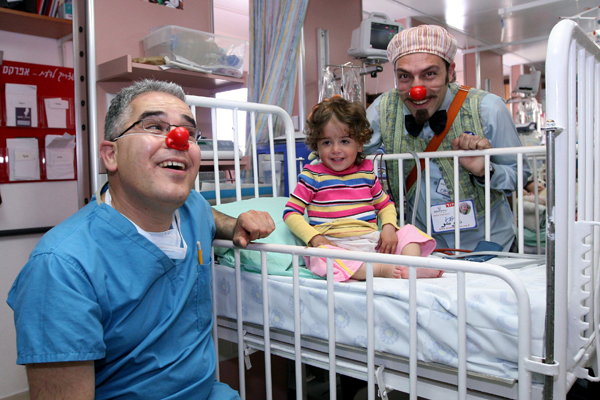
Talia Safra and Nimrod Eisenberd of Hadassah Mt. Scopus Hospital in Jerusalem interact with a patient. (photo from Dream Doctors Project)

While clowns have brought smiles to the faces of many children, both healthy and sick, the latter clowning generally has been done on a volunteer basis and without the presence of a medical team. Recently, however, Israel became the first place in the world to recognize the medical benefits associated with positive attitude and laughter. Most Israeli hospitals now offer clown therapy and, due to its growing acceptance and success, the University of Haifa will be the first to offer a clown degree.

This all started with Jacob Shriqui, an Israeli shaliach to Geneva who went on to work in Israel’s health-care industry. Once he retired, Shriqui returned to visit some friends in Geneva and was invited to a meeting in a hospital in Lausanne. When he entered the hospital, he got lost and, in his wandering, he happened to walk by the pediatric department. To his surprise, he saw a giggling child out of the corner of his eye. Upon further investigation, he noticed the clown who was making the child smile.

“The idea came to him that if there is a thing like that, it should also be in Israel, because, until then, there was no medical clowning in Israel,” said Daniel Shriqui, Jacob’s son and past director of the Dream Doctor Project.

When he returned to Israel, Jacob Shriqui used his connections from the time he was stationed in Geneva to create the Magi Foundation, with its main function being the Dream Doctors Project in Israel. Built with the help of philanthropic members of the Jewish community in Geneva, in September 2001, the project started off with three clowns. After a year of experiments and positive feedback, he went from hospital to hospital proposing the concept.

“This is how we grew from three clowns to 127 today, in nearly every hospital in Israel,” said his son. “The main thing was, when my father came to the hospital, he said, ‘Look, we have a tool. It’s called a medical clown. We’re going to give him all the best training we can, and you’re going to try this tool like any other medical device. We don’t know exactly what it does or whether or not it will be effective. If it’s not, you can end the project whenever you want. If it is, you have to take on the responsibility of operating it.’”

From the start, the medical clowns in the hospitals were part of the medical team, a situation desired both by the hospitals and by the clowns.

“We work as part of the medical team because we believe that medical clowning is a medical profession, just like any other, and that it can be very successful,” said Daniel Shriqui. “But first, we had to convince the doctors and nurses of the benefits of having a clown when you take blood from the veins of a child. The child doesn’t cry because the clown is acting and playing with him.

photo - David Shilman (Dream Doctors) playing with his patient, and the nurse at Rambam Medical Centre, Haifa
David Shilman (Dream Doctors) playing with his patient, and the nurse at Rambam Medical Centre, Haifa. (photo from Dream Doctors Project)

“Another example is when a child is taken for a repair surgery after being sexually abused. Typically, the first test after that is done by the doctor, and by the clown paralleling, and everything is recorded.

“We see it really facilitating the work, and being able to work more smoothly with the children, [and] with the parents, too.”

Another part of the hospital-clown agreement is that the hospital gets the clowns’ services for one year for free with no obligation and no contract. If after one year, the hospital is happy with the results and wants to continue with the project, the hospital needs to start participating in the payment for the clown services.

“We knew we were here to stay when, last year, the head of the Ministry of Health in Israel called and said, ‘I need your clowns immediately,’” explained Shriqui. “‘We’re going to vaccinate all the children in Israel under nine years old for polio. We’re going to open almost 1,000 vaccination stations and I need all your staff, more than 100 clowns, to be present in the station to help us to do this.’” For the first three months, most of the clowns went from station to station and helped the nurses vaccinate the children.

“I suggested to one of the biggest hospitals in Israel, two years ago, that they use a clown in the oncology department for adults,” said Shriqui. “A few months ago, there was a budget problem and the hospital told the department we have to stop the clown service. A week later, the hospital manager received a letter signed by 70 patients, doctors and nurses, protesting against no longer having the clowns come to the unit twice a week. They explained why it is so very important, that the clowns transform the unit from a sad [one] to more positive.”

The increasing demand for hospital clowns is coming from within the medical field. The project works to fill the requests for services, but sometimes hospital budgets do get in the way.

“Especially in the oncology department, the children often are in the hospital for a really long time,” said Shriqui. “Unfortunately, many times it ends by the death of the child. But, during these months, sometimes years, there is a special relationship formed between the clown and the child, because our clowns work at the same place for years.

“In Israel, it’s a bit different…. The clown gives their own private cellphone numbers to the parents. I remember one case where the parents called a clown when he was off duty, at home, and said, ‘Listen, tomorrow we have to go to chemo and we’d like you to come assist, because the child asked that you to be there.’”

The project held a conference in October 2011, where clowns from around the world came to Israel.

“We help many clowns that come from all over the world and work with us to learn how to do this work better with medical teams, and then to be really involved in the processes and the medical treatments,” said Shriqui. “My philosophy is that a clown has to work freely. To get the best from the clown, you have to free him to be part of the team – and we have proof that if you free the clown, even to be in the operating room, you get unbelievable results.”

Rebeca Kuropatwa is a Winnipeg freelance writer.


Format ImagePosted on July 11, 2014July 9, 2014Author Rebeca KuropatwaCategories IsraelTags Daniel Shriqui, Dream Doctors, Jacob Shriqui, medical clowns
Evidence for and against pot

Evidence for and against pot

Standing, from left to right, are panel facilitator Michael Levy, CFHU board member Stav Adler, Rabbi Andrew Rosenblatt, Prof. Raphael Mechoulam and Dr. Kathryn Selby. (photo by Michelle Dodek)

It may be a common occurrence in many parts of the city, but it is still a rare thing to pass through marijuana smoke while entering an Orthodox synagogue. But that was the case on June 24, when a panel discussion took place at Schara Tzedeck on the topic Should I Change My Mind About Weed? A small number of attendees, unsatisfied with a merely academic consideration of the topic, opted for a more psychoactive engagement.

The director of the local Canadian Friends of the Hebrew University, Dina Wachtel, was inspired to convene a panel on marijuana after watching Dr. Sanjay Gupta’s CNN documentary on the topic.

Prof. Raphael Mechoulam, a Hebrew University chemist and a leading expert on the subject, said that marijuana has been used in societies from India and China to the Middle East “forever.” Queen Victoria’s doctor, J. Russell Reynolds, used it to treat the queen’s migraines.

Mechoulam said that cannabidiol (CBD), a component in marijuana, may have medical uses “in almost all diseases affecting humans.” Unlike tetrahydrocannabinol (THC), the component that causes a high, CBD does not deliver a high and has no known side effects. However, there have been almost no clinical trials on humans, probably because pharmaceutical corporations would not be able to patent it and governments, for various reasons, have avoided the matter.

Cannabinoid receptors are abundant in multiple brain regions, he said, including those affecting movement control, learning and memory, stress, cognitive function and links between cerebral hemispheres. Marijuana can impact appetite, blood pressure, cerebral blood flow, the immune system and inflammation.

In tests on mammals, such as mice, marijuana reduced brain trauma and reduced or eliminated cancerous tumors. There was a clinical trial on its use around epilepsy and its effect on patients experiencing 10 to 30 seizures per day. Cannabinoids were tested on people for whom existing drugs do not work and resulted in positive outcomes in large numbers of adult patients. “This is the only clinical trial that has ever been reported – 35 years ago,” he said.

Infants undergoing cancer treatment that causes vomiting were given small amounts of THC. “We saw a complete stop of all vomiting and nausea,” with no side effects, he said.

In treatment of schizophrenia, current drugs have some extremely unpleasant side effects, he noted, while CBD has none. Even so, in most jurisdictions, marijuana is in the same legal category as heroin.

Dr. Kathryn Selby, a clinical professor in the University of British Columbia’s pediatrics department specializing in developmental neurosciences, spoke on marijuana’s effect on the adolescent brain. She spoke of the “enormous plasticity of the teen brain” and said that THC can alter the brain’s structure and function, and that the neurotoxic effects can be lifelong. Maturing of the human brain continues into the 20s, she explained, and the prefrontal cortex, which involves judgment and executive functions, develops last. There are two peaks in brain maturation and cerebral volume, happening in early childhood and then, for boys, at age 14-and-a-half and, for girls, at 11-and-a-half. Trauma, stress, substance abuse and sedentary habits can negatively affect development.

The effects of marijuana use in the short term can be loss of motivation, fatigue and, in about 10 percent of users, addiction. Neuroimaging indicates that the longer-term impact of marijuana use by adolescents is strongly associated with psychoses such as schizophrenia later in life. Selby said there is a 40 percent increase in prevalence of psychosis among users, with a 50 to 200 percent increase in psychoses among heavy users and, among those who use marijuana daily during high school, there is a 600 percent increase in depression and anxiety later in life. Correlations also include lowered IQ, intellectual and emotional issues.

The frontal lobe, which is not completely formed by adolescence, is also the most affected by alcohol and drugs and leaves users vulnerable to the “adverse developmental, cognitive, psychiatric and addictive effects of marijuana.” Selby recommended that, if marijuana is used at all, that it be “as late and as little as possible.”

Rabbi Andrew Rosenblatt, Schara Tzedeck Synagogue’s spiritual leader, also has a biochemistry degree. Although the Torah does not say anything specifically about marijuana, Rosenblatt made the comparison to what the Torah and Talmud say about other forms of altered states, particularly drunkenness. If there were any questions about the severity of potential outcomes from inebriation, Rosenblatt said, the drunkenness and castration of Noah is a cautionary tale.

Rosenblatt also mentioned the story of Lot, whose daughters got him drunk and seduced him, resulting in Amnon and Moab, who were both Lot’s sons and grandsons. Rosenblatt cited it as an indication that drunkenness and disinhibition is to be avoided.

The holiday of Purim is of particular interest in this discussion and Rosenblatt said there is a modern interpretation of the old dictum that Jews should become so drunk on Purim that they cannot tell the difference between the names of the villain Haman and the hero Mordechai. The modern view, the rabbi said, is to drink a little, get tired, fall asleep and, when asked who is Haman and who is Mordechai, to roll over and snore.

Rabbis in recent years have overwhelmingly concurred that use of, say, morphine for terminal patients is justified, but the use of untested alternative measures is not.

“Anecdotal evidence is anecdotal evidence,” said Rosenblatt. If studies indicate that marijuana were clinically proven to assist in recovery or treatment for various diseases, he said, it would almost certainly become acceptable.

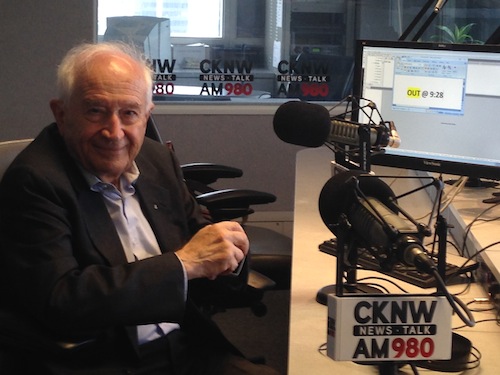
photo - Raphael Mechoulam at CKNW
Prof. Raphael Mechoulam at CKNW. (photo from CFHU)

The panel was moderated by Michael Levy, CKNW radio and Global TV personality. Stav Adler, president of CFHU Vancouver chapter, introduced the evening. Hodie Kahn, president of Schara Tzedeck, invited the audience to stay around for munchies after the event.

Were minds changed? After Mechoulam’s presentation, he received an enthusiastic standing ovation from about half the audience of 200 or so. After her presentation, Selby was greeted with polite applause, while one man jumped to his feet.

Pat Johnson is a Vancouver writer and principal in PRsuasiveMedia.com.

Format ImagePosted on July 4, 2014July 2, 2014Author Pat JohnsonCategories LocalTags Andrew Rosenblatt, CBD, CFHU, Kathryn Selby, marijuana, Michael Levy, pot, Raphael Mechoulam, THC
ISIS looking to Jordan

ISIS looking to Jordan

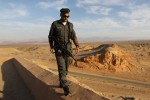
An Israeli border policeman patrols the area of the Judean desert, near the Jordan border. After swift victories in Iraq, the Islamic State in Iraq and Greater Syria (ISIS) terrorist group is setting its sights on Jordan, threatening to drag Israel into the global jihadist conflict. (photo by Nati Shohat/FLASH90) 

Emerging from the chaos of the Syrian civil war, the Islamic State in Iraq and Syria (ISIS) terrorist group has gained the world’s attention for its brutal medieval-style justice and its swift victories in Iraq, threatening to overrun the weak U.S.-backed government there. But now ISIS is also setting its sights on Jordan, threatening to drag Israel into the global jihadist conflict.

“They are a vicious and brutal group, and have even done some things that al-Qaeda thought were unwise,” Elliot Abrams, who served as deputy national security advisor for former President George W. Bush and is currently a senior fellow at the Council on Foreign Relations, told this reporter. “More people, more money and more guns. They do constitute a real threat.”

The goals of ISIS are clear from its name. Alternatively translated as the Islamic State in Iraq and al-Sham (the Arabic name for the Levant region) or the Islamic State in Iraq and the Levant (ISIL), the group seeks to control the entire region, which, in addition to Iraq and Syria, includes Jordan, Lebanon, and even Israel and the Palestinian territories.

Read more at jns.org.

Format ImagePosted on July 4, 2014July 2, 2014Author Sean Savage JNS.ORGCategories WorldTags Elliot Abrams, ISIL, ISIS, Islamic State in Iraq and Syria
NCSY Vancouver celebrates organization’s 60 years

NCSY Vancouver celebrates organization’s 60 years

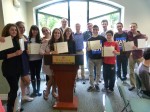
Graduates of NCSY’s Impact leadership program at the spring regional awards banquet in Harrison Hot Springs, with Rabbi Samuel Ross. (photo from Rabbi Samuel Ross)

In a Jewish community with one of the highest assimilation rates, the role of youth groups such as the Vancouver chapter of the National Conference of Synagogue Youth (NCSY) has become more important over the years. NCSY Vancouver’s parent organization was founded in 1954 and the local chapter, which emerged about a decade later, is helping celebrate the 60th anniversary milestone.

NCSY works to develop a connection with Jewish youth before they embark on their university and professional lives. Rabbi Samuel Ross, NCSY Vancouver director, spoke about the “unique, beautiful situation” in which the chapter works. He said they “cater to anyone and everyone, which is an ongoing challenge but it’s really reaping rewards.” Indeed, many of those who join or take part in NCSY activities develop lifelong connections to Judaism and Israel, which was Nicole Grubner’s experience.

Grubner grew up in West Vancouver and became involved with NCSY when she was in Grade 9. She started attending their Shabbatons, and loved the warm atmosphere and Jewish connection that she felt at these events. By the end of high school, she was on the NCSY student leadership board, began keeping Shabbat, and had signed up for a post-graduate year at a seminary in Israel.

“I think the goal of NCSY is for it to be a jumping off point for you, so I used it as that and continued my Jewish education after high school,” said Grubner, 25. “It brought a lot of meaning into my life and week and I enjoyed the sense of community that it brought.”

NCSY Vancouver hosts a mix of educational and social programs, everything from a mock casino night to sushi in the sukkah to Shabbatons, trips and leadership programs.

“The city is growing, the chapter is exploding, I wouldn’t want to be anywhere else. I’m actually bringing in someone else to come work for me next year,” said Ross, who has been leading NCSY Vancouver for the past three years. “We do the best we can to inspire them enough so that they’ll want to continue their Jewish growth once they get to university.”

In Grubner’s case, after her year in Israel, she studied at Stern College in New York, returning to Israel every year.

“I actually went back to NCSY and staffed summer programs in Israel for three years,” she said. “I had an amazing Israel experience and it was important for me to give that to someone else.”

Her love of Israel and connecting with the Jewish people didn’t dampen after university ended. In October 2012, she made aliyah.

“In Vancouver, we know that assimilation is a really huge problem, so NCSY is really important to the Jewish community in Vancouver because it’s a connection point, one that many kids don’t get the opportunity to be a part of.”

“It had a very big impact on my life, so much so that I made my best friends and closest connections in NCSY. I’m really grateful for the base it gave me, for the fact that I was able to get so involved and so connected in high school,” she said. “In Vancouver, we know that assimilation is a really huge problem, so NCSY is really important to the Jewish community in Vancouver because it’s a connection point, one that many kids don’t get the opportunity to be a part of. NCSY has really changed the face of Vancouver’s Jewish community,” she said.

NCSY is a globally recognized organization that connects Jewish youth through social, recreational, educational and spiritual programs.

“It’s about connecting kids to their roots and to their Jewish identity. Whether kids become religious or not, to me, that’s almost less important than kids thinking about their Judaism and it being something important to them in whatever way they choose to practise,” said Grubner. “It shouldn’t be a part of their identity that passes them by because of apathy or lack of knowledge.”

In Vancouver, the number of Jewish youth involved in NCSY programming has been growing. This year, they’re sending 16 youth to programs in Israel. Some of their programs draw 100 kids, and there are already 25 applicants this year for the NCSY Vancouver youth board.

“When I first came three years ago, we had to beg kids to be on that board,” said Ross. “Now, it’s really hard to get on. The kids have to write an essay why they like NCSY and what they can add, and it’s beautiful. You see how they write how Judaism has made such a difference in their lives and how passionate they are and how much they enjoy coming.”

Vicky Tobianah is a freelance writer and editor based in Toronto. Connect with her on Twitter, @vicktob, or at [email protected].

Format ImagePosted on July 4, 2014July 2, 2014Author Vicky TobianahCategories LocalTags NCSY, NCSY Vancouver, Nicole Grubner, Samuel Ross
Community memorial for Eyal Yifrach, Gilad Shaar and Naftali Fraenkel

Community memorial for Eyal Yifrach, Gilad Shaar and Naftali Fraenkel

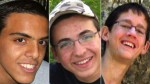
Eyal Yifrach, Gilad Sha’er and Naftali Fraenkel z”l (photo from mfa.gov.il)

On Monday, June 30, the bodies of Eyal Yifrach, 19, Gilad Shaar, 16, Naftali Fraenkel, 16, who were kidnapped June 12, were found northwest of Hebron. The sad discovery was the result of an extensive search effort led by the Israel Defence Forces, the Israel Security Agency and the Israel Police. A joint funeral was held July 1. Jewish groups and others around the world join in mourning.

In Vancouver, there will be a community memorial service, coordinated by the Rabbinical Association of Vancouver and led by Rabbi Berger, Rabbi Moskovitz and Cantor Szenes-Strauss, on Thursday, July 3, at the Jewish Community Centre of Greater Vancouver at 7:30 p.m.

As well, to share your thoughts and express your condolences to the families of the boys, visit the Jewish Federations of North America’s “Remember Our Boys” page.

Format ImagePosted on July 2, 2014July 9, 2014Author Cynthia RamsayCategories Israel, LocalTags Eyal Yifrach, Gilad Shaar, memorial, Naftali Fraenkel

Posts pagination

Previous page Page 1 … Page 316 Page 317 Page 318 … Page 326 Next page
Proudly powered by WordPress