Skip to content
  • Home
  • Subscribe / donate
  • Events calendar
  • News
    • Local
    • National
    • Israel
    • World
    • עניין בחדשות
      A roundup of news in Canada and further afield, in Hebrew.
  • Opinion
    • From the JI
    • Op-Ed
  • Arts & Culture
    • Performing Arts
    • Music
    • Books
    • Visual Arts
    • TV & Film
  • Life
    • Celebrating the Holidays
    • Travel
    • The Daily Snooze
      Cartoons by Jacob Samuel
    • Mystery Photo
      Help the JI and JMABC fill in the gaps in our archives.
  • Community Links
    • Organizations, Etc.
    • Other News Sources & Blogs
    • Business Directory
  • FAQ
  • JI Chai Celebration
  • JI@88! video

Recent Posts

  • Story of Israel’s north
  • Sheltering in train stations
  • Teach critical thinking
  • Learning to bridge divides
  • Supporting Iranian community
  • Art dismantles systems
  • Beth Tikvah celebrates 50th
  • What is Jewish music?
  • Celebrate joy of music
  • Women share experiences 
  • Raising funds for Survivors
  • Call for digital literacy
  • The hidden hand of hate
  • Tarot as spiritual ritual
  • Students create fancy meal
  • Encouraging young voices
  • Rose’s Angels delivers
  • Living life to its fullest
  • Drawing on his roots
  • Panama City welcoming
  • Pesach cleaning
  • On the wings of griffon vultures
  • Vast recipe & story collection
  • A word, please …
  • מארק קרני לא ממתין לטראמפ
  • On war and antisemitism
  • Jews shine in Canucks colours
  • Moment of opportunity
  • Shooting response
  • BC budget fails seniors
  • Ritual is what makes life holy
  • Dogs help war veterans live again
  • Remain vital and outspoken
  • An urgent play to see
  • Pop-up exhibit popular
  • An invite to join JWest

Archives

Follow @JewishIndie
image - The CJN - Visit Us Banner - 300x600 - 101625

Category: News

Green leader condemns BDS

Green leader condemns BDS

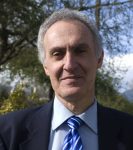
B.C. Green party leader Andrew Weaver, MLA for Oak Bay-Gordon Head. (photo from Andrew Weaver)

Andrew Weaver calls the two-party system that typifies B.C. politics a “dichotomy of dysfunction.” As leader of the provincial Green party, he hopes to hold the balance of power in the next legislature so that his party can “hold to account either the B.C. Liberals or the B.C. NDP.”

“That would be a very, very wonderful situation,” Weaver told the Independent. While he is ostensibly running to be premier of the province, the scientist and MLA for Oak Bay-Gordon Head acknowledged he would be satisfied with a lesser role. Some opinion polls have suggested that Weaver, the first and only Green elected to the B.C. legislature, may be joined by other Green colleagues after the May 9 election. If the race between the Liberals and the NDP remains close across the province, that could put the Green party in an enviable position in the next legislature.

“I’d be very pleased,” Weaver said of the potential to hold the balance of power in a minority government. “One of the reasons why that’s important for people to know is, frankly, people don’t trust the Liberals right now. I see that all around. But they also don’t trust the B.C. NDP. Our role, if we should if we form the balance of power, is to actually hold to account either the B.C. Liberals or the B.C. NDP because they can trust us. The others can’t be trusted but we are convinced that people could get behind us and trust us to actually ensure that the others, if we were in a balance of power, actually follow through with what they say they would do.”

While touting his party’s comprehensive platform, which he urges Jewish Independent readers to review online, he also emphasized the quality of candidates the party has recruited.

“They’re not career politicians, they are stepping aside from their careers because, honestly, they can’t stand by and watch what’s going on anymore, this dichotomy of dysfunction,” he said.

Weaver, who was elected MLA in 2013 and became party leader in 2015, was the Canada Research Chair in climate modeling and analysis in the School of Earth and Ocean Sciences at the University of Victoria. He has been at UVic for 25 years and has degrees from UVic and Cambridge University and a PhD in applied mathematics from the University of British Columbia.

On issues of community security and culturally appropriate delivery of services, Weaver insisted that, before committing to any actions affecting ethnocultural groups, his party would consult with the communities in question.

“The first thing you would do is consult with those ethnocultural groups to ensure that what you think is the best approach is also what they think the best approach is,” he said. “I think that, in government, we do not have all the solutions.”

On threats and violence against minority groups, such as the desecration of the Jewish cemetery in his hometown of Victoria, Weaver said leaders have a role in shaping public opinion by “expressing clear and unequivocal disdain for hatred – hatred in all forms. There is nothing positive that can ever come of it.”

Supporting cultural events and other avenues where communities can learn about one another is critical to society’s cohesion, he said.

“Celebrating our diversity is one of the strongest things that can happen,” said Weaver, noting that his wife, who is Greek, grew up when Greeks were discriminated against in Canada and his mother, who is Ukrainian, faced discrimination growing up in Montreal.

“Celebrating our diversity is critical to embracing diversity,” he said. We have cultural festivals in Victoria and Vancouver – these need to be supported and celebrated because you break down barriers when people meet each other. When people get together and they talk … they share more commonalities than they do actual things that they disagree on. What’s important is the celebration of our multicultural values, ensuring that there are funds available, ensuring that there are places available that will bring cultures together, rather than apart.”

Education is another key to multicultural success, Weaver added.

“We’ve gone through extensive reevaluation of the curriculum to ensure that indigenous values and rights and culture is covered appropriately in our K-to-12 system, but that should be true of all multicultural values,” he said. “When a child is born, they don’t even understand what prejudice is. Prejudice is a learned concept, it’s not something that a child understands. So, if one is able to develop an educational system that promotes tolerance, promotes respect for diversity, promotes multicultural values, promotes religious tolerance, you’re not dealing with any perceived kinds of barriers to inclusion early on. [The Green party has] a major investment that we propose in the K-to-12 system and one of the things we’re hoping to do is ensure that teachers can deliver the new curriculum, which does have more multicultural values expressed in it, and to ensure that barriers early on are not put up.”

Involving cultural communities in the delivery of social services is good for the communities and the government, Weaver added.

“You are going to get a lot further partnering, for example, with the Jewish community to provide social support for those who share the Jewish values, culture, religion, than you would trying to impose a one-size-fits-all model,” he said.

This extends to Green support for independent schools.

“Continued funding for the independent system is critical because there are people who determine that their children are best served by an education system that provides the curriculum – because that’s provincially mandated – but does so in a manner that shares the values and cultures that the child is being educated in. So, for example, a Jewish school, we would support the independent funding to continue there, same with a Sikh school, same with a Christian school. It’s important though that the province maintain control of the curriculum to ensure that it’s consistently taught across society.”

Weaver has been an outspoken opponent of the anti-Israel boycott, divestment and sanctions movement.

“Solutions to complex issues come through dialogue and bringing people together, not dividing and picking winners or losers,” he said.

Last year, the federal Green party passed a resolution endorsing BDS. Weaver condemned it forcefully and publicly.

“It’s just not my style,” he said. “It’s not the B.C. Greens’ style to be divisive and hurtful. We are here to be inclusive and bring people together…. You’re there to actually broker solutions and that’s what troubled me so much about the federal Green party. What had happened there, clearly, was they had had a large sign-up of members going into the convention and it was just outrageous that this policy – I’m not a member of the federal Green party, just so you know – but it was outrageous that this would end up on the floor for discussion.… It’s not something that would have made it to the floor of the B.C. Greens, it would never have got past our policy committee.”

He is particularly passionate on this matter in part because of the experience of his mother’s family in Ukraine.

“They were kulaks,” he said, referring to a category of independent peasant farmers who were declared “class enemies” under Stalinism. The family’s farm was collectivized, Weaver’s grandfather was sent to Siberia and his mother and grandmother were interned in a camp.

Another experience that impacted him was meeting a survivor of the Holocaust who came to see him when a billboard in the Victoria area, paid for by a group called Friends of Cuba, called for a boycott of Israel.

“She was devastated,” Weaver recalled of the meeting. “People who live these horrific stories and bring them home, when you hear them, you can only imagine what they’ve gone through. And when you see people really taking positions that I don’t think are fully informed, comments that are divisive positions … they don’t understand the hurt that they are doing. By putting that up, they don’t understand that they are hurting people.… It is tone deaf.

“Everybody recognizes that the situation in the Middle East is one where there is a lot of tension. But we also have to recognize that there is one stable democracy in the Middle East and we have to work with that democracy and ensure that the values that we instil within our society are consistent with the embrace of inclusive values that we expect others to follow.… We need to be very careful about how we approach the situation. It’s very volatile and we need to understand it better before we just start blindly picking winners and losers.”

The Independent invited the leaders of the B.C. Liberals, the New Democratic Party and the Greens to be interviewed for our election coverage. The Liberal campaign did not make their leader available. An interview with NDP leader John Horgan appeared in the March 31 issue and is available at jewishindependent.ca.
Format ImagePosted on April 28, 2017April 26, 2017Author Pat JohnsonCategories LocalTags Andrew Weaver, British Columbia, elections, Green party, politics
NDP values in kishkes

NDP values in kishkes

Selina Robinson, current MLA and NDP candidate for Coquitlam-Maillardville. (photo from Selina Robinson)

Coquitlam is not known as a hotbed of Jewish life, yet Selina Robinson notes that the area has been represented by three Jewish members of the legislature over the past few decades.

Riding boundaries frequently change, but the area was represented by Dave Barrett, when he was premier of the province, later by Norm Levi and, since 2013, by Robinson, in the riding now called Coquitlam-Maillardville. She appeared initially to lose last time around, but won by 41 votes in a recount. She’s not counting on a landslide this time, she said – she’ll be happy just to win on election night.

Robinson’s roots run deep in the Jewish community. Moving from Montreal to Richmond as a teen (she was Selina Dardick then), she remembers standing in the school hallway with a boy in a turban – two non-Christians excused every morning while their classmates recited the Lord’s Prayer. After high school, she went to Israel for a year, where she did an ulpan and Livnot U’Lehibanot, a program exploring Israel and Jewish heritage through hiking, community service, seminars and interactions with Israelis.

Returning to British Columbia, she was an administrator for Habonim Camp Miriam and later ran Lubavitch’s Camp Gan Israel. Meanwhile, she was studying at Simon Fraser University, obtaining a master’s degree and beginning a career in family therapy. She was headhunted to become director of counseling at the Jewish Family Service Agency and later served as associate executive director there. Her political career began on Coquitlam city council. In the legislature, she has been the New Democratic Party spokesperson for local government, sports and seniors.

She understands issues of affordability, she said, because she and her husband were on the Jewish cutting-edge putting down stakes in Coquitlam when they married 30 years ago. Part of the solution to affordability, she said, is providing more diversity of housing. Now that her kids are grown, they do not require the single-family suburban family home and could free it up for a larger family. They want to stay in the neighbourhood, where they are longtime active members of the Burquest Jewish community, but there are no townhouses or other appropriate options for them.

Different kinds of housing, such as the co-op model that is more secure than rental and not as expensive as individual homeownership, could improve the situation, she said. “We need to look at purpose-built rental and how to influence and encourage market-built rental.”

Affordable, accessible daycare in the province is also a pillar of affordability, according to Robinson, who calls daycare expenses “another mortgage payment every month.”

Another issue where Robinson has a personal perspective is her party’s promise to reinstate the B.C. Human Rights Commission, which the B.C. Liberals disbanded more than a decade ago.

“It speaks volumes that we take this seriously and there is a place for you to go to if you believe you’ve been discriminated against,” Robinson said. She was a surrogate mother for a friend’s baby and, in 2001, went to the Human Rights Commission over the legal definition of who was the baby’s mother.

“I had to register the birth under my name as the mother,” she said, even though she was not genetically related, as the baby she carried was conceived from the mother’s egg and the father’s sperm.

“Fatherhood is determined based on genetics but motherhood is based on from whom the baby was ‘expelled or extracted.’ That’s discriminatory. It should be based on genetics. So we took the government to court and the Human Rights Commission accepted the claim and then the government caved.”

Without the commission, someone who feels discriminated against would be required to go to court at their own expense, she said.

Robinson commends the provincial government for providing $100,000 to the Jewish community for increased security, and she recently signed a letter of support for a mosque in her area that is also seeking security funding.

“I think we have to address immediate risk,” she said. “But I think there’s a lot of work for us to do around making sure that people understand that this isn’t tolerated and to challenge discriminatory practices that do exist.”

Cuts to education over the past 16 years, she said, have led to reductions in things that might be considered “extras,” like taking opportunities to explore other cultures. Combined with these reductions, there are more families in which both parents are working, so few can get involved in providing extracurricular activities, as Robinson did when her kids were young, inviting classes to their sukkah and visiting to discuss Jewish topics with their public school classes.

“Those are the things that went by the wayside,” she said. “It allows for ‘others’ to be unfamiliar and, therefore, to be not trusted. And, therefore, hate can grow because of that gap.”

As NDP spokesperson for seniors, Robinson visits facilities and appreciates the role ethnocultural communities play in the delivery of social services.

“The fact that we have the Louis Brier and that it’s so established, and the Weinberg [Residence] … it’s so important,” she said, “for this community and not all communities have that.… I think government should support that, in helping ethnic groups make sure that their seniors have the comforts that they need and they can live their lives as the people that they are and how they’ve lived their entire lives.”

On the movement to boycott, divest from and sanction Israel, Robinson said she has “real problems with it.”

“My understanding of the BDS movement is to destroy the state of Israel,” she said. “I think that’s not OK. I support the state of Israel. I think the idea of not having a state of Israel is destructive and I do think that’s antisemitic.”

While she opposes BDS, she emphasized that people are free to make choices about where they invest or spend, and she defended the right of people to criticize any government.

“I didn’t like what [Stephen] Harper was doing. It doesn’t make me anti-Canadian, it just makes me an engaged person, an engaged Jew who is paying attention to what’s going on in the world around me.”

As British Columbia addresses economic development issues, Robinson urges them to look to Israel.

“When people talk about resource development here in Canada, particularly here in British Columbia, and they say, ‘Well, what else would we do?’ I say, ‘Well, take a look at Israel.’ They have no resources except people and they invest in their people and their people are amazing.… I want to see British Columbia take parts of that model – yes, we have resources and we should develop them wisely – but we have people and, when we invest in people, anything and everything is possible, and I think Israel’s an excellent example of that. I think we have a lot to learn from Israel. I would like to see a lot more of that.”

As Jewish voters ponder their options for the May 9 election, Robinson insists the NDP is the natural choice.

“I think that, in our hearts, our Jewish hearts, in our kishkes, we are New Democrats,” she said. “Jewish values are New Democrat values.”

Format ImagePosted on April 28, 2017April 26, 2017Author Pat JohnsonCategories LocalTags British Columbia, elections, NDP, politics, Selina Robinson
Apartheid impacted views

Apartheid impacted views

Michael Barkusky, Green candidate for Vancouver-Quilchena. (photo from Michael Barkusky)

Michael Barkusky was a teenager when he canvassed for Helen Suzman’s anti-apartheid Progressive Party in South Africa’s 1970 election. Now, he is the Green party candidate in Vancouver-Quilchena. An old friend told him, “You were always good at spotting trends ahead of time.”

“I thought that was a great compliment,” Barkusky told the Independent. “I’m kind of used to being with small parties that everybody writes off as not really relevant yet that, over time, become very relevant.”

He has given a great deal of thought to the ethical behaviour of governments.

“If you were a morally aware individual, you kind of knew that there was this huge moral question about how the whole society ran in South Africa,” he said.

Barkusky left South Africa in 1980 and came to Vancouver to do a master’s in business administration at the University of British Columbia. He obtained a certified general accountant designation in 1985, the same year he became a Canadian citizen. He has run an accounting practice since then, while also at times working for nongovernmental organizations like the Rainforest Solutions Project and the Coastal First Nations alliance.

While he said the Green party is seeing a surge in the campaign – a recent poll showed the party in first place on Vancouver Island – Barkusky admitted his bid is a longshot. He is running in one of the safest Liberal seats in the province. Vote-splitting may result in interesting upsets in some ridings, but Quilchena would be a shocker.

“I’ve taken on a very tough riding,” said Barkusky, who served with incumbent Liberal MLA Andrew Wilkinson on the board of the B.C. Mountaineering Club. “What I want to do is have a very issue-oriented, respectful-of-my-opponents contest in which we talk about ideas and we talk about where the province is heading.”

He wants British Columbians to see the environment and the economy as inextricably related.

“People often tend to think of the environment as a side issue, a minor issue in politics, and tend to say, well, the Green party is mostly for that, so it’s not really concerned about the economy,” he said. “In my view, these things are all very closely interconnected. We believe in an economic strategy that will give us prosperity but not at the expense of our future, and my worry is that the B.C. Liberals, in particular, with their focus on traditional economic indicators – particularly what will make the GDP go up the most – give up a tremendous amount in terms of stewardship of our natural capital, or the innate riches that make British Columbia such a spectacular place to live.”

Addressing recent incidents in Canada and elsewhere, in which Muslims and Jews have been targeted, Barkusky said there are opportunities for intercultural solidarity, adding that it is important that communities stand together at times like these.

“Some of those who are threatening both vulnerable groups are the same people with the same racist attitudes,” he said.

Confronting prejudice is a matter of education, but it can also be a matter of modeling behaviour, he suggested.

“We should look to what we can do through education because dealing with it through criminal law is really the last resort. It’s what you do when all else has failed,” he said. “The education area is where we should be most active. I think we’re doing quite well, really, in teaching tolerance in the schools in a jurisdiction like B.C. I think we can perhaps model it a bit better in our public life and the way we conduct politics. A slightly less sneering, adversarial style of politics would be helpful. In the Jewish community, we can do that, too, in the way that we have our own internal debate as Jews about Israel.”

Barkusky is well versed in the diversity of discourse in the Jewish community.

“I went to a Jewish high school in Cape Town, Herzlia High School, and our headmaster was probably more of a Likudnik than a labour Zionist, but my mother was more of a labour Zionist. So, there were always debates … about South Africa, about Israel, about other things that were going on in the world.”

Growing up in the apartheid era caused ambivalent feelings, he said, because Jews “had to deal with our role in a society in which we were actually legally classified with the privileged.

“It was a complex history because Jews were very prominent in the struggle against apartheid, but there were plenty of Jews who thought, ‘thank God they’re persecuting someone except us.’ They were maybe not enthusiastically participating in making the lives of black people miserable, but they weren’t too concerned about it and were more concerned about whether the establishment of the time might dislike them if they were too strong in their opposition. Those tensions ran through the Jewish community of South Africa the whole time that I lived there.”

Barkusky has a nuanced perspective on the use of the apartheid label against Israel.

“To me, apartheid wasn’t just a monstrous system that I read about in a book,” he said. “It’s a system that I saw in action.”

Even so, he rejects the idea that comparisons can’t be made.

“You can compare anything to anything,” he said. “The point is, what conclusions do you draw when you compare it?… I don’t like a simpleminded comparison because the situation is different in a number of ways, the history is different, but I don’t think it’s something that should be silenced.”

There may, in fact, be something to be learned, he said. The way the current constitution in South Africa was arrived at may have some lessons for a resolution of the Israeli-Palestinian situation, he suggested.

On the issue of the movement to boycott, divest from and sanction Israel, Barkusky said he doesn’t agree, but avoids getting on a moral high horse about it.

“I personally think it’s not the greatest way to conduct politics,” he said. “Persuasion, discussion and education, thinking things through, looking at the evidence, makes much more sense.”

Boycotts can also harm the people they are intended to help, he warned.

“I continued to buy South African wines after I moved here from South Africa, not because I particularly wanted to support the government but because I thought that boycotting the wines would put farm workers out of work and the farm workers were mostly not white,” he said.

Barkusky blames the Israeli government for some of the criticism aimed at the country.

“I do find the current government in Israel so far to the right that it’s very hard to not see them as, in some sense, the author of their own misfortune,” he said, but added: “I think a situation in which Israel is treated as the worst example of human rights abuses on the planet is really just ridiculous. It’s just not in keeping with the evidence.”

Format ImagePosted on April 28, 2017April 26, 2017Author Pat JohnsonCategories LocalTags British Columbia, elections, Green party, Michael Barkusky, politics
Affordability a priority

Affordability a priority

Gabe Garfinkel, Liberal candidate for Vancouver-Fairview. (photo from Gabe Garfinkel)

Whether the B.C. Liberals or the NDP win the riding of Vancouver-Fairview in the May 9 provincial election – and any other result would upend every prognostication – the riding will have a Jewish MLA.

There has never been a great number of Jewish politicians in British Columbia – though some, like David Oppenheimer and Dave Barrett have made history – and so it is an unusual situation that two members of the province’s Jewish community find themselves head to head in this election.

The riding has been held since 2013 by New Democrat George Heyman, who was profiled in the Independent’s April 7 issue. Gabe Garfinkel, a former assistant to Premier Christy Clark, won the Liberal nomination for the riding in February; Louise Boutin is the Green party candidate in Fairview, Phil Johnston is the Libertarian and Joey Doyle is running for Your Political Party of British Columbia.

Garfinkel was profiled by the Independent during his nomination run (Dec. 2, 2016). For the Independent’s election coverage, we posed to him the same questions we asked all candidates we interviewed.

Responding to threats to ethnocultural communities, Garfinkel said security should be a partnership between government and the community.

“When Premier Clark announced $100,000 of security funding for the Jewish community, I think that makes a tangible difference because it allows us to hire security,” he said, adding that incidents of threats and violence have had the unintended consequence of building bridges between communities. “When we heard about the devastating attacks in the mosque in Quebec, that really gave the Jewish community and the Muslim community an opportunity to work together to address racism and hatred and intolerance.”

Having strong representation in the legislature, he said, is important in times like these.

“We need to work as a community to ensure these voices are heard in government and to ensure that we have the right representation out there standing up for our interests, which is what I plan on doing,” said Garfinkel. “As we look across the world at the instability and the insecurity in some areas, and even in our own backyard, we must be united and we must have an effective voice in government that is able to look after us.”

Changes to the education curriculum that increase attention to indigenous issues including residential schools is a good thing, he said, and further exploring the histories of B.C. multicultural communities will make the province better.

On partnerships between the government and multicultural communities, Garfinkel said the Jewish community is a model.

“The Jewish community has always been a community that takes care of those who most need our support,” he said. “That’s what makes our community who we are and makes us so strong. That’s why I’m so pleased to join Premier Clark and her team, who have continuously funded these services, which are funded by the strong economy.”

Affordability is an issue all parties are addressing and Garfinkel said he takes it personally because his family has been in Vancouver-Fairview for four generations.

“My great-grandparents lived here, my grandmother grew up here and then my parents did as well,” he said. “I want to stay in the community I live in today. Being able to find affordable housing is a difficult challenge that I’m facing personally as well. I can relate to a lot of other people in our community who are going through the same thing.”

He highlighted initiatives of the provincial government aimed at improving affordability, including a 15% foreign homebuyers tax, the B.C. Home Owner Mortgage and Equity (HOME) Partnership program, which he said will get 42,000 families into the housing market while also making rental space available, as well as the first-time homebuyers grant.

“At the same time,” he said, “housing affordability is a complex issue and there is no one-size-fits-all solution.” He said the government will see if there are ways to work with Metro Vancouver municipalities to expedite the permitting process on 100,000 housing units currently in the planning stages.

While foreign affairs is a federal matter, the boycott, divest from and sanction movement against Israel seeks to target Israel at every level of politics and society.

“I am absolutely 100% against BDS and I have no problem saying that,” Garfinkel said. “Israel needs more friends in this world and B.C. as a province, under the leadership of Premier Clark and International Trade Minister Teresa Wat, has increased and promoted trade with Israeli companies and also its universities and government.”

In addition, Garfinkel said the BDS movement demonstrates that “we have to teach more about antisemitism.”

“We have to talk about the harmful and hateful rhetoric that we’re hearing on campuses across our continent,” he said. “I’ve dedicated my life so far to serving my community, working with CIJA [Centre for Israel and Jewish Affairs] as well as Federation and CJPAC [Canadian Jewish Political Affairs Committee] to help increase our voice against harmful forces like BDS and I want to continue doing that at the legislature and I want to continue fighting antisemitism there.”

Format ImagePosted on April 28, 2017April 26, 2017Author Pat JohnsonCategories LocalTags British Columbia, elections, Gabe Garfinkel, Liberals, politics
Gathering in solidarity

Gathering in solidarity

Attendees spoke to one another at their tables, following a list of questions to guide discussion. (photo from Rabbi Laura Duhan Kaplan)

A small group of Jews and Christians gathered at the Jewish Community Centre of Greater Vancouver on April 4.

After the first bomb threat at the JCC, Richard Topping, principal of Vancouver School of Theology, reached out to the Jewish community. He approached Laura Duhan Kaplan, director of Inter-Religious Studies at VST and rabbi emerita of Congregation Or Shalom. Yael Levin of the Centre for Israel and Jewish Affairs and JCCGV executive director Eldad Goldfarb then organized the dialogue, at which members of the United, Anglican and Presbyterian churches were present.

The evening opened with the singing of an egalitarian version of “Hinei Mah Tov” – “How good it is when brothers dwell together as one,” with achim, brothers, changed to kulanu, everyone. Topping then took the podium.

“When the first bomb threat was made at the JCC,” he said, “people at VST began asking is there anything we can do to show our solidarity with the Jewish community? We understand that a hoax like this is scary and it makes our friends feel vulnerable. In a post-Holocaust world, we don’t want to wait and see how a threat turns out. We want to assure you that we stand in solidarity with you against antisemitism. We are here to assure you that we stand with you against violence and against threats of violence.”

Sharon Dweck, development director of the JCCGV, gave an overview of the JCCGV’s activities within the Jewish community and beyond. She then shared her recollections of the first threat. “I broke my rule about keeping my nose out of daycare and rushed to hug my child,” she said. “Days after, as ‘manager on call’ after the bomb threat, I felt afraid and vulnerable, as well as a great sense of responsibility. ‘Would another threat come on my watch?’”

In total, the JCC received two threats, both of which were hoaxes.

Attendees spoke to one another at their tables, following a list of questions to guide discussion. People talked about everything from the importance of tikkun olam to Jewish humour, people they knew in common, their Jewish or Christian upbringings, and concerns over the then-upcoming vote to support the boycott, divest from and sanction Israel movement at the University of British Columbia, which was defeated.

Matthew Gindin is a freelance journalist, writer and lecturer. He writes regularly for the Forward and All That Is Interesting, and has been published in Religion Dispatches, Situate Magazine, Tikkun and elsewhere. He can be found on Medium and Twitter.

Format ImagePosted on April 28, 2017April 26, 2017Author Matthew GindinCategories LocalTags bomb threats, interfaith, JCC, Vancouver School of Theology, VST
Levi’s first haircut

Levi’s first haircut

Levi Mochkin celebrated his third birthday and his first haircut last month. (photo by Shula Klinger)

On March 26, Mendy and Miki Mochkin of Chabad North Shore celebrated their son Levi’s upshernish (or “cutting”). This occasion marked both Levi’s third birthday and his first haircut.

In the Orthodox tradition, a boy’s hair is not cut until his third birthday. This is because the Torah compares the little boy to a tree – the tree does not bear fruit until it has grown for three years. The upshernish is a community affair; all of the guests are invited to cut off a section of the child’s hair.

With the start of his formal education, the 3-year-old can begin to share his unique gifts with his family and community. And, just like the tree, a child must be nurtured consistently if he is to flourish in later life.

This is the time when the son receives his kippah and tzitzit. He also begins his Jewish studies in earnest. Along with learning the aleph-bet, he is taught to recite blessings and say the Shema.

At Levi’s upshernish, a booklet shared Torah passages from Deuteronomy and Genesis. These were a selection from the 12 verses that the Lubavitcher Rebbe taught children to recite each day. According to Rabbi Mochkin, “they contain many of Judaism’s foundational beliefs and principles.”

The Mochkins hosted the upshernish at their West Vancouver home, with members of their extended family from New York. Members of the Chabad community from Vancouver, East Vancouver and the University of British Columbia were also present, along with many local families.

Shula Klinger is an author, illustrator and journalist living in North Vancouver. Find out more at niftyscissors.com.

Format ImagePosted on April 28, 2017April 26, 2017Author Shula KlingerCategories LocalTags Chabad, Judaism, Lubavitch, upshernish
Yom Hashoah in Israel

Yom Hashoah in Israel

Vehicles at a standstill alongside the ancient walls of Jerusalem’s Old City on April 24, as drivers honor the memory of the six million Jews who were murdered in the Holocaust. At 10 a.m., sirens sounded throughout Israel, and pedestrian and car traffic stopped to remember. (photo from Ashernet)

Format ImagePosted on April 28, 2017April 26, 2017Author Edgar AsherCategories IsraelTags Israel, Yom Hashoah
מספר היהודים החיים כיום בעולם

מספר היהודים החיים כיום בעולם

נתוני הלשכה המרכזית לסטטיסטיקה בישראל: 14.4 מיליון יהודים חיים בעולם ומהם כארבע מאות אלף נמצאים בקנדה. (צילום: Cynthia Ramsay)

הלשכה המרכזית לסטטיסטיקה בישראל פירסמה בימים האחרונים דוח על מספר היהודים החיים כיום בעולם. הנתונים בנויים על הערכות בלבד של המדור לדמוגרפיה וסטטיסטיקה של היהודים באוניברסיטה העברית בירושלים, מתבססים על שנת 2015, ומתפרסמים כרגיל לרגל יום הזיכרון לשואה ולגבורה.

אם כן כיום לפי הערכה של המדור לדמוגרפיה וסטטיסטיקה באוניברסיטה העברית, חיים בעולם כ-14.4 מיליון יהודים. זאת לעומת 16.6 מיליון יהודים שהיו בעולם ערב מלחמת העולם השנייה ומאורעות השואה הקשים. לפיכך העם היהודי למרות השנים שעברו שבעים ושתיים שנים, לא הצליח לחזור לגודלו לפני אירועי השואה, שהביאו להשמדת שישה מליון יהודים. יצויין כי גם בשנות העשרים של המאה הקודמת חיו בעולם כמו כיום כ-14.4 מיליון יהודים.

מטבע הדברים ריכוז היהודים הגדול בעולם (44 אחוז) נמצא בישראל ועומד על 6.33 מיליון. אחריה המדינה השנייה עם מספר היהודים הגדול ביותר כרגיל היא ארצות הברית, שבה גרים עם 5.7 מיליון יהודים. המדינות הנוספות בעולם בהן יש את הריכוז הגבוה ביותר של יהודים אחרי ארה”ב הן: במקום השלישי צרפת עם כ-460 אלף יהודים, במקום הרביעי קנדה עם כ-388 אלף יהודים, במקום החמישי בריטניה עם כ-290 אלף יהודים, במקום השישי ארגנטינה עם כ-181 אלף יהודים, במקום השביעי רוסיה עם כ-180 אלף יהודים, במקום השמיני ברזיל עם כ-120 אלף יהודים, במקום התשיעי גרמניה עם כ-117 אלף יהודים, במקום העשירי אוסטרליה עם כ-113 אלף יהודים. לפי הערכות לא מבוססות במקום האחד עשר נמצאת דרום אפריקה ובה חיים כ-80 אלף יהודים.

והיכן קיימות הקהילות הקטנות של יהודים בעולם: באיראן למשל חיים כעשרת אלפים יהודים, בבירוביג’ן חיים רק כחמשת אלפים יהודים, ביפאן חיים כאלף יהודים בלבד, בבהאמס חיים רק כשלוש מאות יהודים ואילו בקוריאה הדרומית יש כמאה יהודים בלבד.

על פי סקר של ההסתדרות הציונית העולמית שנעשה לאחרונה יש גידול משמעותי ביותר באנטישמיות ברחבי העולם, ואחד מכל שלושה יהודים חש את הצורך להסתיר את יהדותו. ועוד ממצאי הסקר: 85 אחוז מהיהודים היו עדים לאנטישמיות במהלך חייהם, 50 אחוז מיהודי המערב (מדובר על מדינות אירופה וצפון אמריקה) חוו אירוע אנטישמי במהלך השנה האחרונה, 73 אחוז היו עדים לאלימות פיזית ו-70 אחוז מיהודי אירופה חגגו לבד את החגים בשל הפחד מפעילות אנטישמית.

יש לזכור שיש גם כיום בישראל המפוצלת מאוד מבחינה חברתית כיום יהודים שונאים יהודים ובצורה גלויה. להלן סיפור מזעזע: יהודי תושב ירושלים בן 55 נחקר החודש במשטרת ירושלים לאחר שהביעה תמיכה ברורה בהשמדת יהודים אשכנזים. אותו ישראלי נחמד כתב בין היתר בדף הפייסבוק שלו: “אני מדמיין שיש לי את הכוח של היטלר, יושב על כסא עם בקבוק יין ומכניס אותם אחד אחד לתנור של אלף מעלות, ודואג שייצאו אפר. כמה שאני שונא אותם אלוהים”. האזרח הירושלמי לא התבייש להוסיף עוד מילות חמות על היהודים האשכנזים: “היטלר צדק שעשה מאימא שלכם סבון, והוא צדק שחיסל אתכם זבלים בני זבלים”. חברת פייסבוק חסמה מייד את הפרופיל של האזרח היקר. המשטרה המשיכה לחקור אותו והודיעה כי יוגש כתב אישום חמור נגדו.

ומהן תגובות הגולשים לאור הנתונים על מספר היהודים בעולם?: “הדת היהודית מזמן סיימה את דרכה. זה רק שאריות”. “בגלל ההתבוללות של היהודי בעולם. לולא זאת היה מספר היהודים כפול! ההתבוללות הגדולה ביותר באמריקה!”

Format ImagePosted on April 26, 2017April 26, 2017Author Roni RachmaniCategories עניין בחדשותTags antisemitism, Holocaust, Jewish population, World Zionist Organization, אנטישמיות, ההסתדרות הציונית העולמית, העם היהודי, שואה
Dialogue needed

Dialogue needed

Robert Singer, chief executive officer of World Jewish Congress, addressed more than 100 Jewish Federation of Greater Vancouver donors at an event hosted by Gary Averbach and sponsored by Garry Zlotnik of ZLC Financial. (photo from WJC)

The professional head of World Jewish Congress says Diaspora Jews and Israelis are too wrapped up in their own worlds and need to strengthen the dialogue between the two components of the global Jewish community.

Speaking to the Independent during his first-ever visit to Vancouver, Robert Singer said relations remain strong in terms of Diaspora support for Israeli organizations. Programs like Birthright, through which young Jews experience Israel, and Masa, which offers young adults gap-year, study-abroad and other opportunities, also enhance connections. But there must be more person-to-person contacts like these, he said, which foster real conversations across the divide.

“I’m not sure that both sides are talking,” said Singer. “I think both sides are busy with their own stuff. Israelis are busy with stuff in Israel and Diaspora Jews are today busy with their survival, in many cases, both financial and community survival.”

World Jewish Congress is an organization that can facilitate dialogue, he added.

WJC was founded in Geneva in 1936 and now represents Jews in 100 countries, focusing on issues including protecting the memory of the Holocaust, advocating for the recognition of the experiences of Jews from Arab lands, combating antisemitism and encouraging interfaith dialogue. The Congress is headed by Ronald Lauder, president of the executive committee. Singer, who has been the chief executive officer of WJC since 2013, previously served 14 years as the director general and CEO of World ORT, one of the largest nongovernmental education and training providers in the world. Singer was born in Ukraine and made aliyah at age 15.

While in Vancouver, Singer met with rabbis, representatives of the Centre for Israel and Jewish Affairs, Jewish Federation of Greater Vancouver and other communal organizations. He also met with Russian-speaking members of the community and said he was impressed with Vancouver’s flourishing Jewish life. He acknowledged that British Columbia’s Jewish community faces challenges common to many similar-sized communities.

“The main thing that struck me is the issue of assimilation and how to deal with this,” he said. “Being more inclusive, bringing more people of non-Jewish faith into the community, issues of education, issues of fighting BDS and antisemitism on campuses, and issues of relations between Israel and the Diaspora.”

Interviewed days after many young Jews blockaded the AIPAC conference in Washington, D.C., Singer rejected the idea that younger Jews are alienated from Zionism.

“It’s very different,” Singer said of the way young Jews relate to Israel. Previous generations, he said, were Holocaust survivors or their descendants who knew a world without Israel. “For somebody who is now 20 years old, all this is now either history or they just don’t remember the situation where there was a world without a Jewish state.” This generation cannot be expected to have the same visceral connection to Zionism, he said. “I think it’s just a different approach. Different technologies, different approach.”

He compared the suggestion of declining Zionism with the situation among young Israelis.

“In Israel all the time they say that the previous generation was much more patriotic,” he said. Yet, when young people are conscripted into the Israel Defence Forces today, more – not fewer – are requesting assignment to the most difficult combat and elite units, he said.

“It shows that this generation of young Israelis is at least as good as the people before them and I think it’s the same in the Diaspora,” Singer said, citing the Jewish Diplomatic Corps, a WJC program of about 200 young adults from 43 countries, including international lawyers, businesspeople, parliamentarians, professors and others who meet with government leaders and international agencies.

“They are outstanding young people,” said Singer. “I’m sure that, on an intellectual, Jewish and pro-Zionist level, they are at least as good as the leadership of the people who went before.”

On external threats, Singer said it is too soon to make a determination about long-range impacts of contemporary antisemitism. A new WJC study indicates an antisemitic comment is posted to social media every 82 seconds.

“It’s very bad,” he said. But, he added, it may be less a matter of growing antisemitism than attitudes that were already there merely finding expression.

The situation in Europe is concerning, he said. Antisemitic and neo-Nazi parties are seeing unprecedented public support in France, Germany, Hungary and Greece. “This is a real danger,” Singer said.

On the impacts of U.S. President Donald Trump’s policies, Singer said it is too soon to judge. He is impressed, however, that Trump’s appointee as U.S. ambassador to the United Nations, Nikki Haley, has adopted a very different approach from her recent predecessors.

While the United Nations General Assembly is a wasteland at present, Singer said, Canada and the United States should remain active there, “because there is a stage there and you can have some influence.”

Of the new Canadian government, Singer said he is pleased that relations between Israel and Canada remain close and that this is something that transcends politics.

Format ImagePosted on April 21, 2017April 20, 2017Author Pat JohnsonCategories WorldTags antisemitism, Diaspora, Israel, WJC
Fighting for children

Fighting for children

Bernard Richard, left, Cindy Blackstock and Jerry Nussbaum. (photo from Janusz Korczak Association of Canada)

As executive director of the First Nations Child and Family Caring Society of Canada, Dr. Cindy Blackstock initiated a human rights complaint against the Government of Canada, alleging that the country discriminates against First Nations by consistently underfunding child welfare services on reserves, a complaint her agency filed jointly with the Assembly of First Nations. After nine years of waiting for a decision, Blackstock, who is also a professor of social work at McGill University, was attending a graduation ceremony when she received an email with an attachment bearing the decision of the Canadian Human Rights Tribunal.

“I read the first words of the decision and it said, ‘This decision is about children,’ underlined. I knew it was a good decision,” Blackstock told an audience at a Richmond hotel April 12, where she was honoured with the Janusz Korczak Medal for Children’s Rights Advocacy.

She left the ceremony and went home to put on her gumboots and collect a teddy bear, named Spirit Bear, who she said had witnessed the nine-year process with her. Then she bought a bouquet of flowers and drove to Ottawa’s Beechwood Cemetery.

“I walked through the snow down a little valley to a modest tombstone with the name Peter Henderson Bryce on it,” she recalled. Bryce was a federal civil servant in the Indian Affairs Department at the turn of the last century who blew the whistle on Canada’s treatment of indigenous peoples, particularly alerting the government and the public to the mortality rate of 14% to 24% at residential schools and a 42% infant mortality rate on reserves. His report, The Story of a National Crime: Being a Record of the Health Conditions of the Indians of Canada from 1904 to 1921, was never made public by the government and Bryce was fired.

“He sacrificed his career and was retaliated [against] for it, but he would not be silent,” said Blackstock. “He kept talking even if nobody was listening because he knew that it was our job as adults to stand up for kids, to love children more than we fear for ourselves.”

At the cemetery, she read the tribunal decision, which determined that Ottawa discriminates against children on reserves by spending less on child welfare solely because of race and national or ethnic background. As a result, the decision stated, First Nations children suffer adverse impacts from funding service gaps, delays and denials.

After she read the ruling at the gravesite, she looked back up the hill from where she had just walked.

“And I saw the one set of footsteps in the snow and although those were made with me and my gumboots and the Spirit Bear, I knew that they also had the spirits of people like Dr. Korczak, of all the families who had stood up to protect their kids and hide them in the bush or prayed for them when they were in the schools, of the people, the non-aboriginal people like Dr. Bryce, who had been allies of justice for the children. So, I hugged his tombstone and I said, ‘Justice, Dr. Bryce, finally justice.’”

Blackstock, a member of the Gitxsan nation in northern British Columbia, said she was honoured to have her name mentioned in the same sentence as Korczak, who is viewed as the founder of children’s rights. Before she was presented with the medal by Jerry Nussbaum, president of the Janusz Korczak Association of Canada, Korczak was described by Lillian Boraks-Nemetz of the Korczak association as “a children’s advocate, their doctor, their friend and teacher.”

“He penned his own index of children’s rights, which is reflected in the United Nations Charter,” she said. “His Warsaw Ghetto diary and other writings inform us how he, through self-examination and experience, became a man with deep concern and compassion for a child’s welfare, a child’s healing not only of the body but also of the soul.”

Korczak ran his orphanage in Warsaw as a microcosmic laboratory, Boraks-Nemetz said, “where he practised and researched his philosophy on how to love a child and on children’s rights. There, he conducted a child’s court, where children expressed their grievances in front of the judges and jury made up of children.”

She spoke of her own experience implementing Korczak’s theories.

“When my children were small, my own children, I adopted this method partially and invited my own children to the family room once a week where they would express their grievances to us, their parents,” she said to laughter from the audience. “We would hear them out and discuss solutions to all sorts of problems and this worked very well, as our children needed to gain confidence in themselves and to express their feelings and thoughts, to be treated fairly with an acknowledgement of their rights to justice.”

Korczak’s philosophy, she said, was that 100 children are 100 human beings – “not some day, not ‘not yet,’ not tomorrow. They are human beings now.”

She then told the story of Korczak’s ultimate heroism.

“He would not desert the 200 orphans he cared for in the Warsaw Ghetto during the Second World War,” she said. “This was at the time when the orphanage was marked for Nazi deportations of Jews.… Korczak was offered a reprieve from being deported, but he said, ‘My children need me’ and went with them to Treblinka death camp, where they all perished.”

Boraks-Nemetz quoted Irena Sendler, a Polish rescuer of ghetto children, who said, “When, on Aug. 6, 1942, I saw that tragic parade in the street, those innocent children walking obediently in the procession of death and listening to the doctor’s optimistic words, I do not know why, for me and for all the other eyewitnesses, our hearts did not break.”

Bernard Richard, British Columbia’s Representative for Children and Youth, said some might think it difficult to make comparisons between a Polish Jewish man who died in the Holocaust and an indigenous Canadian woman who is still living – “and kicking, some would say.”

“But Cindy Blackstock is being given the medal for children’s rights advocacy because her work – and her life – has embodied the spirit of the man for whom the medal is named,” Richard said. Throughout the nine-year process, he added, “She was tenacious, and persistent, determined, passionate and committed, all characteristics shared with Janusz Korczak.”

Marvin Bernstein, UNICEF Canada’s chief policy advisor, said Canada has a longstanding pattern of underfunding child welfare services for First Nations children living on reserves, affecting 165,000 First Nations children and their families. The tribunal decision on Jan. 26, 2016, was a turning point for the country.

“It’s clear to UNICEF Canada that Cindy has been on the right side of history from the very beginning and has left an enduring legacy of advancing First Nations children’s rights.”

Format ImagePosted on April 21, 2017April 20, 2017Author Pat JohnsonCategories LocalTags children's rights, Cindy Blackstock, First Nations, Janusz Korczak Association

Posts pagination

Previous page Page 1 … Page 219 Page 220 Page 221 … Page 322 Next page
Proudly powered by WordPress