Skip to content
  • Home
  • Subscribe / donate
  • Events calendar
  • Business Directory
  • FAQ
  • News
    • Local
    • National
    • Israel
    • World
    • עניין בחדשות
      A roundup of news in Canada and further afield, in Hebrew.
  • Opinion
    • From the JI
    • Op-Ed
  • Arts & Culture
    • Performing Arts
    • Music
    • Books
    • Visual Arts
    • TV & Film
  • Life
    • Celebrating the Holidays
    • Travel
    • The Daily Snooze
      Cartoons by Jacob Samuel
    • Mystery Photo
      Help the JI and JMABC fill in the gaps in our archives.
  • Community Links
    • Organizations, Etc.
    • Other News Sources & Blogs
  • JI Chai Celebration
  • JI@88! video

Recent Posts

  • SFU honours Gloria Gutman
  • Lifting people’s spirits
  • Wedding a ray of light
  • Indigeneity and Zionism
  • Rule of law broken: councilor
  • Football and its roles
  • The burden of defence
  • Fish Café returns after fire
  • All right in what goes wrong
  • Nuns & mermaids at TUTS
  • Camp offers holiday retreat
  • Students and mentors inspire
  • Once-in-a-lifetime trip
  • 100 dancers, one heart
  • Money for the sciences
  • What “Jewish food” means
  • Have a cookie, schnitzel too
  • Federation now across BC
  • Israel fighting for its existence
  • Deal strengthens Iran
  • Patriotic belonging diminishes
  • A campaign to engage
  • Upstanders’ first live event
  • Responding to Carney
  • Having your own home
  • Music a family tradition
  • Musical to warm heart
  • Community milestones … June 2026
  • Sharing her passion for Israel
  • Or Shalom reopens its doors
  • JFS from past to future
  • Need holistic approach
  • Sharing stories, advice
  • Journalist shares fears
  • Skills to live together
  • Road to independence

Archives

Follow @JewishIndie
image - CJN box ad Rockowers 2026

Byline: Tikva Housing

Having your own home

Having your own home

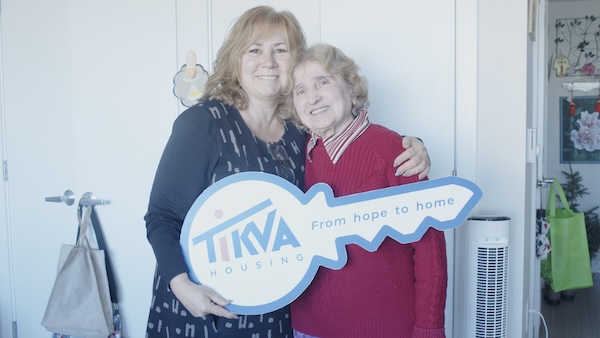
Lovena Galyide, left, and Polina Gruzinov took part in Tikva Housing’s recent fundraising campaign. (photo from Tikva Housing)

Polina Gruzinov sits in her Richmond apartment surrounded by photos of loved ones and artwork made by her daughter, Lovena Galyide, who lives in the same building just a few floors above her.

At 87, Gruzinov is living independently. “I have always dreamed of having a place of my own,” she said.

Born to a Jewish family in eastern Ukraine in 1939, Gruzinov was just 2 years old when her family fled advancing Nazi forces during the Second World War. Her mother came from Novo-Kovno, a Jewish agricultural colony, and neighbours had warned the family that Jews were in danger as the occupation approached.

“The only thing I still remember is when we were evacuating by train; it was shelled, and it was very loud,” she said.

That traumatic displacement began a journey that would take her family thousands of kilometres across the Soviet Union into Central Asia, where her mother worked in a hospital. During those years, Gruzinov’s father died in battle and her younger brother disappeared while attending boarding school in Kazakhstan.

After the war, stability remained elusive. When the family returned to Dnepropetrovsk, Ukraine, much of the city had been destroyed. Promised housing never materialized, and Gruzinov’s mother settled for a tiny apartment where the family shared cramped quarters with another woman and her child.

Gruzinov says she and her mother rarely discussed the suffering they experienced during the war years.

“The Holocaust wasn’t really talked about,” she said.

For Talia Mastai, associate managing director of the Vancouver Holocaust Education Centre – which has documented the testimonies of hundreds of Holocaust survivors in British Columbia – stories like Gruzinov’s are an important reminder of the varied experiences of survivors.

“It wasn’t just limited to people in camps, people who were in hiding or people who were rescued,” Mastai said.

In the years that followed, Gruzinov built a career in telemechanics, married and gave birth to her daughter. Yet secure housing remained difficult to find. At one point, she lived with her husband, daughter, mother and aunt in just 20 square metres of living space.

The family later moved to Chechen-Ingushetia for her husband’s work assignment, where they lived in harsh conditions without many basic comforts. From their small temporary hut, they had to walk far to fetch water from a well, and heated the home with coal and wood.

“I couldn’t even let the child crawl on the floor,” she said.

Gruzinov eventually returned to Dnepropetrovsk and the marriage to her husband ended. 

On her own, she continued to work while raising her daughter and caring for her mother. Then, in retirement, worsening economic conditions following the collapse of the Soviet Union forced her to consider a new life elsewhere.

“The situation in Ukraine was very difficult,” she said. “The pension was small; it wasn’t enough to live on. At that time, all the shelves were empty.”

In 1995, Gruzinov immigrated to Israel, settling in Ashkelon, about 20 kilometres from Gaza. Although she eventually moved into a retirement residence, instability remained part of daily life. From her window, she could see explosions in the distance during periods of conflict.

When her daughter settled in Vancouver, Gruzinov followed, arriving in Canada in 2016. But the high cost of living in Metro Vancouver meant the family’s housing struggles continued.

“When Mom came to Canada, I gave her my bedroom. The second bedroom was for my son, and I was sleeping in the living room,” Galyide said. “This was very tight for us, but rent was so expensive that I could not afford something bigger.”

Gruzinov continued to hope for a place of her own and, the following year, that dream became reality when she secured an apartment with Tikva Housing, which provides affordable housing solutions for Jewish individuals and families across Metro Vancouver. Today, Gruzinov lives independently in one of Tikva’s buildings, with her daughter close by and a renewed connection to the Jewish community.

“It’s very nice to have my own space but also having my daughter living in the same building,” she said.

Gruzinov is one of several Holocaust survivors supported by Tikva, where assistance from the Azrieli Foundation helps ensure they can age with dignity, financial security and connection.

“For many Holocaust survivors, housing stability is not something that can be taken for granted. Affordable housing allows them to remain connected to their communities and access the support they need,” said Anat Gogo, executive director of Tikva Housing, which owns 213 affordable units in eight buildings across Metro Vancouver and operates a rent relief program that provides short-term subsidies to people experiencing temporary financial crisis. 

“Many survivors have experienced profound loss and displacement. While we cannot change what they endured, we can help ensure they have comfort, housing security and community in their later years,” said Gogo.

In 2025, Tikva first received funding from the Azrieli Foundation to support Holocaust survivors living in its housing units, helping the organization maintain significant rental subsidies in one of North America’s least affordable markets.

photo - Naomi Azrieli, chair of the Azrieli Foundation
Naomi Azrieli, chair of the Azrieli Foundation. (photo from Azrieli Foundation)

The initiative is part of the Azrieli Foundation’s broader commitment to supporting low-income Holocaust survivors across Canada. In addition to Vancouver, the foundation supports housing programs in Montreal, Ottawa and Toronto, working with local agencies that already serve survivors in their communities.

For Naomi Azrieli, chair of the Azrieli Foundation, those partnerships are essential.

“We always want to work with the trusted local agencies that are already there doing the work,” Azrieli said. “They know how best to respond to the specific needs of the populations they serve and they really help us maximize the impact of our funding.”

Azrieli has a deep understanding of the experiences of Holocaust survivors. Her own father, David Azrieli, has a story with remarkable similarities to that of Gruzinov and her family. Born in Poland, he fled to the USSR and eventually to Central Asia in 1941, shortly after the Nazi invasion – and he lived in Israel before building a successful international enterprise in Canada and Israel.

An equally ambitious philanthropist, in 1989 he established the Azrieli Foundation, which supports education, healthcare and research, Jewish life, the arts and Holocaust commemoration.
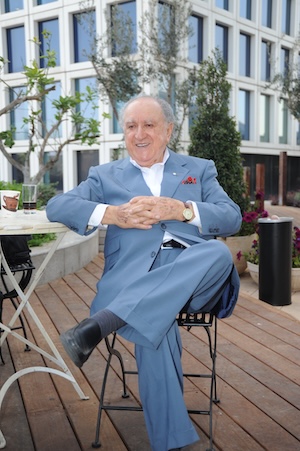
photo - David Azrieli was a Holocaust survivor who was both an entrepreneur and philanthropist. "He always remembered the people who helped him along the way and, as a result, his legacy really highlights how resilience can pair with responsibility," said his daughter, Naomi Azrieli
David Azrieli was a Holocaust survivor who was both an entrepreneur and philanthropist. “He always remembered the people who helped him along the way and, as a result, his legacy really highlights how resilience can pair with responsibility,” said his daughter, Naomi Azrieli. (photo from Azrieli Foundation)

“He always remembered the people who helped him along the way and, as a result, his legacy really highlights how resilience can pair with responsibility,” said Azrieli.

Last year, the Azrieli Foundation provided financial support to well over 1,600 low-income Holocaust survivors. Nearly 30% of the survivors helped were over the age of 90 – an age when housing stability, access to care and community connection become increasingly important.

Azrieli emphasized that the support is not charity.

“It is a reflection of respect and responsibility. It is because of our gratitude for all that survivors have endured and all that they have contributed,” she said. “They deserve care, they deserve dignity and they deserve to live in comfort today and always.”

In 2026, Tikva’s initiative expanded through a partnership with Jewish Family Services Vancouver, a Claims Conference partner organization, to identify Holocaust survivors living in market rentals who could benefit from additional support.

“Supporting survivors means ensuring they have access to the services and relationships they need to age with dignity,” said Tanja Demajo, executive director of JFS, which supports more than 160 Holocaust survivors through care management, financial assistance, home support, advocacy and social programs. “Remembrance is important, but so is responding to the realities survivors face today,” she said.

“What’s most meaningful for me,” said Galyide, “is that my mom struggled all her life, and now, at this moment, she is really happy.” 

– Courtesy Tikva Housing

Format ImagePosted on June 26, 2026June 24, 2026Author Tikva HousingCategories LocalTags affordable housing, Anat Gogo, Azrieli Foundation, Holocaust, JFS, Lovena Galyide, Naomi Azrieli, Polina Gruzinov, survivors, Tanja Demajo, Tikva Housing

Tikva campaign to start

The most vulnerable members of the Jewish community are struggling. The lack of affordable housing and a persistent high inflation rate are causing individuals and families to exhaust their income, which can lead to homelessness. The reality poses a major crisis that affects more than 350 people in the Jewish community who need a safe, secure and affordable home. 

photo - Anat Gogo, executive director at Tikva Housing
Anat Gogo, executive director at Tikva Housing. (photo from Tikva Housing)

The Jewish community witnessed Tikva Housing’s significant growth in 2023, as the organization’s portfolio grew from 98 to 168 units. Also, in keeping with its mission, it increased the monthly maximum rent subsidies available for families, couples and individuals in an effort to reduce the effects of market rental increases. But such hopeful news is overshadowed by growing demand. Vancouver’s vacancy rate is below 0.9%, and, as an example, two-bedroom rents grew by 8.6% on average. Substantial increases in rents of units at turnover drove this growth, and the outlook is not encouraging. The Canada Mortgage and Housing Corporation reported: “Affordability worsened for low-income households: vacancy rates for the most affordable units were lower than average, and these households already spend a greater share of their income on rent.”

“In the last three years, we saw an increase of 458% in people registered with the Jewish Housing Registry,” said Anat Gogo, executive director at Tikva Housing.

The Jewish Housing Registry (JHR) was launched in 2020 to provide affordable-housing seekers with a convenient point of application. It also serves housing providers with demographic information, therefore, a studied approach to future housing developments and partnerships.

“Today, we know that, among those over 350 individuals and families waitlisted, 84 are families with children, 72 are applicants with disabilities, and 129 are seniors over 65 years old,” said Gogo.

Housing is a human right, and we all have a role in ensuring that more people have the dignity and safety of an affordable home. From Feb. 26 to March 11, support Tikva Housing’s annual fundraising campaign. Visit tikvahousing.org. 

– Courtesy Tikva Housing

Format ImagePosted on February 23, 2024February 22, 2024Author Tikva HousingCategories LocalTags affordable housing, fundraising, Tikva Housing, Vancouver
Tikva gets new building

Tikva gets new building

Al and Lola Roadburg (photo from Tikva Housing)

With the help of a $10 million donation from the Al Roadburg Foundation, a four-storey apartment building has been purchased that will allow Tikva Housing Society to offer more affordable housing in Vancouver’s Jewish community.

Situated on West 41st Avenue in the Kerrisdale neighbourhood, the 20-unit building will be home to nearly 30 individuals. Tikva currently provides housing solutions to more than 300 people, in 128 rental units in Vancouver and Richmond. With this recent addition and 20 new units in Burnaby to be completed by summer 2023, Tikva will expand its portfolio to 168 units in seven housing developments. However, the need for affordable housing is enormous – there are 302 applicants on the Jewish Housing Registry waiting for affordable homes, including 65 people with disabilities.

“This addition will be a huge step forward to providing more people with safe, secure and affordable homes,” said Anat Gogo, executive director at Tikva Housing Society. “The building was acquired through an extraordinary and unparalleled donation of $10 million by the Al Roadburg Foundation. It is the single largest donation received by Tikva and is critical to address housing insecurity.”

In gratitude for the donation, Tikva has named the building the Al and Lola Roadburg Residences.

“Secure housing is essential for individuals and families to thrive,” said Robert Matas, chair of the Al Roadburg Foundation. “We’re deeply honoured to be part of a broad network of Tikva Housing Society supporters who contribute to making housing within the Jewish community more accessible for individuals and families throughout Greater Vancouver.”

“By acquiring an existing apartment building, we are preserving a property that still has many years of life, rather than demolishing and building new,” added Alice Sundberg, director of housing development at Tikva. “Also, we are protecting rental affordability for the future. Al and Lola Roadburg Residences will be a long-term community asset protected from the pressures of our escalating real estate market.”

Al Roadburg (1913-2002) and Lola Roadburg (1922-2011) had a lifelong commitment to Israel and to Jewish organizations in Vancouver. The Al Roadburg Foundation aims to ensure their estates are used to create a legacy that benefits the community where they lived and raised their family.

– Courtesy Tikva Housing

Format ImagePosted on April 14, 2023April 12, 2023Author Tikva HousingCategories LocalTags affordable housing, Al Roadburg Foundation, Alice Sundberg, Anat Gogo, philanthropy, Robert Matas, Tikva Housing
A shidduch like none other

A shidduch like none other

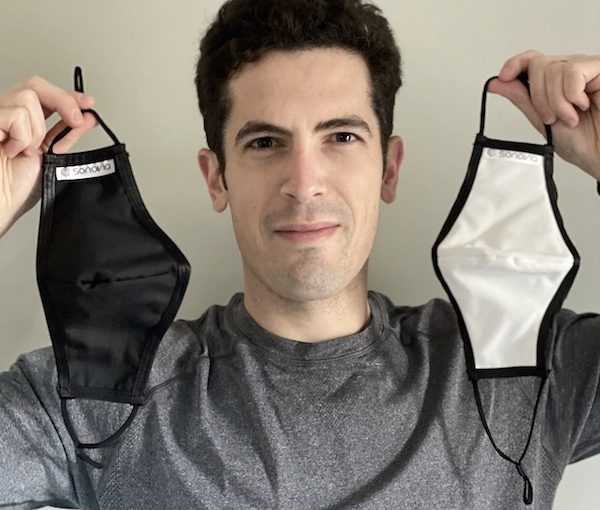
Brad Chenkis shows off a couple Sonovia masks. (photo from Tikva Housing)

It all began when Boris Chenkis, owner of After Five Fashions, was watching Israel Daily TV (ILTV) and saw an interview with Liat Goldhammer, the chief technology officer of an Israeli startup called Sonovia. She was talking about a new fabric-finishing technology for textile manufacturing developed at Bar-Ilan University, explaining that the technology could repel and kill bacteria located on clothing. Because it was in early January, a few weeks before COVID-19 became a worldwide pandemic, Chenkis just listened with interest.

On ILTV March 18, Dr. Jason Migdal, a microbiology researcher in Israel, discussed how the Sonovia technology mechanically impregnates metal nanoparticles into masks that destroy microorganisms in fabric. This was verified by two independent labs. It was also durable and washable. Now Chenkis was very interested.

With COVID becoming widespread, Sonovia had positively impacted Israeli doctors and health professionals by providing them with the technologically advanced masks. On May 12, Chenkis saw another interview about the Sonovia mask technology on ILTV – and an opportunity to get involved.

During his teenage years, Chenkis lived in Israel, studying and working at Kibbutz Rosh Hanikra. With this connection to Israel that never left his heart, he wanted to support an Israeli startup and so he purchased some masks to keep his family, friends and community safe. Soon after, he received an email from Sonovia, offering him an opportunity to help distribute the masks in Canada. Chenkis said yes. The masks were shipped from Ramat Gan to Vancouver and, within days, he was delivering hundreds to friends and family.

One of those who received the Sonovia mask was Yosef Wosk. Being both pleased and impressed with the technology, Wosk, like Chenkis, saw an opportunity to help not only the community here but also Israel. Wosk wondered how the masks could be made available locally to community members who might not be able to afford them, as they cost $65 each.

Wosk spoke with Shelley Karrel, chair of Tikva Housing, who contacted Tanja Demajo, chief executive officer of Jewish Family Services Vancouver. The need for the masks was confirmed and the shidduch almost complete.

Working with Chenkis’s son, Brad Chenkis, and with Wosk’s help, Tikva has acquired and will distribute 500 masks to residents of Tikva Housing, as well as clients of Jewish Family Services. It’s a win, win and win – tikkun olam, tzedakah and chesed.

For more information about the Sonovia masks, contact Brad Chenkis directly at [email protected].


Format ImagePosted on November 13, 2020November 11, 2020Author Tikva HousingCategories LocalTags After Five Fashions, Chenkis, coronavirus, COVID-19, health, Israel, Jewish Family Services, JFS, Shelley Karrel, Sonovia, Tanja Demajo, tikkun olam, Tikva Housing, tzedakah, Yosef Wosk
Trying to meet needs

Trying to meet needs

Left to right: Anat Gogo, Tikva Housing administrator; Philip Dayson, donor; Shirley Barnett, donor; Heather Kenny, Tikva board member; Alice Sundberg, Tikva director of operations; Eric Fefer, Tikva development committee member; Shelley Karrel, Tikva board chair; and Kasimir Kish, Tikva board member. (photo from Tikva Housing)

There is so much in the news about Vancouver’s housing crisis – unaffordable rents, no vacancies and reno-viction notices. Having a safe, secure and affordable home is one of the most basic needs, which helps people to feel a sense of belonging and well-being. Many in our community lack this basic right.

On a daily basis, Tikva administrator Anat Gogo hears about people looking for affordable housing.

“It might be because they are in an abusive situation and need to make a change, or they are paying almost 50% of their monthly income on housing,” she said. “Whatever the reason, we do what we can.”

Thanks to the generosity of donors, Tikva has two residences that are fully occupied – Dany Guincher House and the Diamond Residences – and soon to open is the Ben and Esther Dayson Residences in the Fraserview district. These 32 new townhomes include two-, three- and four-bedroom units and, in adjacent towers, there is a common room where tenants will be able to gather for special events like Shabbat dinners and holiday celebrations.

In addition, more than 35 individuals and families are supported through the Esther Dayson Rent Subsidy Program.

Alice Sundberg, director of operations and housing development at Tikva, said the need to continue to increase “inventory” is constant.

For more information and to find out how you can help, contact Tikva Housing at 778-998-4582 or visit tikvahousing.org.

Format ImagePosted on November 9, 2018November 7, 2018Author Tikva HousingCategories LocalTags affordability, Anat Gogo, housing, Tikva Housing
Proudly powered by WordPress