Skip to content
  • Home
  • Subscribe / donate
  • Events calendar
  • News
    • Local
    • National
    • Israel
    • World
    • עניין בחדשות
      A roundup of news in Canada and further afield, in Hebrew.
  • Opinion
    • From the JI
    • Op-Ed
  • Arts & Culture
    • Performing Arts
    • Music
    • Books
    • Visual Arts
    • TV & Film
  • Life
    • Celebrating the Holidays
    • Travel
    • The Daily Snooze
      Cartoons by Jacob Samuel
    • Mystery Photo
      Help the JI and JMABC fill in the gaps in our archives.
  • Community Links
    • Organizations, Etc.
    • Other News Sources & Blogs
    • Business Directory
  • FAQ
  • JI Chai Celebration
  • JI@88! video

Recent Posts

  • Sharing her testimony
  • Fall fight takes leap forward
  • The balancing of rights
  • Multiple Tony n’ Tina roles
  • Stories of trauma, resilience
  • Celebrate our culture
  • A responsibility to help
  • What wellness means at JCC
  • Together in mourning
  • Downhill after Trump?
  • Birth control even easier now
  • Eco-Sisters mentorship
  • Unexpected discoveries
  • Study’s results hopeful
  • Bad behaviour affects us all
  • Thankful for the police
  • UBC needs a wake-up call
  • Recalling a shining star
  • Sleep well …
  • BGU fosters startup culture
  • Photography and glass
  • Is it the end of an era?
  • Taking life a step at a time
  • Nakba exhibit biased
  • Film festival starts next week
  • Musical with heart and soul
  • Rabbi marks 13 years
  • Keeper of VTT’s history
  • Gala fêtes Infeld’s 20th
  • Building JWest together
  • Challah Mom comes to Vancouver
  • What to do about media bias
  • Education offers hope
  • Remembrance – a moral act
  • What makes us human
  • המלחמות של נתניהו וטראמפ

Archives

Follow @JewishIndie
image - The CJN - Visit Us Banner - 300x600 - 101625

Byline: Dave Gordon

Glavin fights falsehoods

Glavin fights falsehoods

Terry Glavin (photo from Terry Glavin)

A self-described “man of the left,” journalist Terry Glavin discovered he was an “accidental Zionist” during the Israel-Hezbollah war in 2006, when he noticed how the mood of the antiwar movement on the left was “almost hysterical,” and that it was not, in fact, antiwar, but rather pro-Hezbollah.

“There was something deeply toxic about the phenomenon that described itself as antiwar,” he told the Independent, adding that, irrespective of one’s viewpoint on Israeli policy, “if one was to choose the only principled, progressive position, it would have been to be on Israel’s side.” And, he noted, “Arab friends and Palestinian activists [have] gravitated towards the same idea.”

The Irish-Canadian said he has since “been associated with a sturdy defence of Israel in Canada,” in his columns, which have appeared in the National Post, Vancouver Sun, Globe and Mail, Georgia Straight and Ottawa Citizen.

Glavin will be among the speakers at this year’s FEDtalks on Sept. 22 at Queen Elizabeth Theatre, helping to launch the Metro Vancouver Jewish community’s annual campaign.

In addition to his vast and varied published subject matter, Glavin’s work as a journalist has taken him around the globe. His talk will examine, among other ideas, what Canada could contribute for healing the world, as well as what it means to be an “accidental Zionist,” a phrase he said he borrowed from Martin Sampson of the Centre for Israel and Jewish Affairs.

In his work, Glavin strives to clarify the clashes in Israel, to help people understand them better.

“It’s not an Israeli-Palestinian conflict. The war is with Hamas,” he said. “Who are the worst enemies of Palestinian freedom? It’s not Bibi Netanyahu. The most devoted committed enemy of Palestinian sovereignty, Palestinian liberty, rule of law, democracy, freedom are Hamas, Islamic jihad, Hezbollah and Tehran.

“Anyone who apologizes for them, reiterates their propaganda lines, is an enemy of the Palestinians and their freedoms.”

Having researched and written about the hatred of Jews and Israel, he concludes, “There is something unique about antisemitism.

“It’s not just another bigotry. This talk of Israel eliminationism – if it’s not antisemitism, what is it? It might not be Judenrein (free of Jews), but it’s Judenstaatrein, no Jewish state,” he said.

“The Jews are unique, entitled to a nation-state of their own … [as much,] if not more, than any other nationality on earth.”

The liberal left, moreover, has some self-reflecting to do, to know that “certain postures, certain habits of speech, are now unacceptable, and some obsessive preoccupations are no longer tolerated,” he said.

In his opinion, these statements include using the term Zionist as a pejorative, “a term of abuse”; saying that “Israel is the primary impediment to peace in the Middle East”; and claiming the “false idea that criticism of Israel is automatically antisemitic.”

Seeking to bust this latter myth, in a bulk email to journalist colleagues, Glavin asked if any of them could offer an example where a legitimate critique of Israel has been denounced as antisemitism.

“It didn’t exist,” said Glavin. “I could not find any reputable Jewish or Israel organization or individuals who ever introduced a legitimate criticism of Israel as antisemitic. It’s a canard.”

Meanwhile, another falsehood emanating from the left and from leaders of the Arab world, he said, is the idea that Israel is to blame for the region’s – and, sometimes, the world’s – ills.

“This is what one Arab dictator after the next has forced down the throats of generations of Arabs to explain their own destitution and dysfunction,” he said.

Some are rejecting that narrative, however.

“The people have begun to discover they’ve been lied to – that Israel isn’t the problem,” said Glavin. “The jackboot on [their] neck is Baathist, not Israel.”

For tickets to FEDtalks and information on all of the speakers, visit jewishvancouver.com/fedtalks2016.

Dave Gordon is a Toronto-based freelance writer whose work has appeared in more than a hundred publications around the world.

Format ImagePosted on September 2, 2016August 31, 2016Author Dave GordonCategories LocalTags antisemitism, FEDtalks, Glavin, Hamas, Israel
Summit’s sage advice

Summit’s sage advice

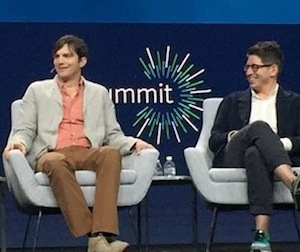
Gwyneth Paltrow, left, and Zooey Deschanel at the Sage Summit in July. (photo by Dave Gordon)

Some 15,000 entrepreneurs gathered in Chicago July 26-29 for the Sage Summit, to hear keynote speakers, network and browse the exhibitors’ stations, which spanned the length of 10 football fields, according to Sage chief executive officer Stephen Kelly, who oversees the accounting software giant.

Celebrity speakers included entrepreneurs and actors Gwyneth Paltrow, Zooey Deschanel and Ashton Kutcher, all of whom have Jewish connections.

Paltrow, most known lately for her role as Pepper Potts in the Iron Man film series, was also the head of Goop, which touts itself as a “weekly lifestyle publication.” (She left the publication days after the Summit.)

photo - Some 15,000 entrepreneurs gathered in Chicago July 26-29 for the Sage Summit
Some 15,000 entrepreneurs gathered in Chicago July 26-29 for the Sage Summit. (photo by Dave Gordon)

“The more you create a vision of where you’re going, the more you can create a vertical. Where do you want it to be, where do you imagine it to be, and ask people ‘where do you want it to go?’ – that’s how you form an execution strategy,” she advised entrepreneurs at the Chicago gathering.

She also offered a morale boost for budding entrepreneurs.

“Unwavering self-belief is everything. Everyone’s going to tell you why you can’t do it, and you have to know in your bones that you can do it … and take disappointments with as much grace as you can,” said the actress, whose late father, film director Bruce Paltrow, was Jewish.

Paltrow’s co-panelist, Deschanel of television’s New Girl, is founder of the website Hello Giggles, an online magazine for young women launched five years ago and acquired by Time Inc. in 2015. She has also invested in a hydroponics company that grows sustainable and eco-friendly organic food.

“Trust your gut and be yourself – and watch your bottom line. Customers will thank you for that,” said Deschanel, who converted to Judaism last November.

Chiming in about knowing one’s limits – and about social media engagement – was Kutcher, who has invested in high-tech ventures including Skype, FourSquare and Airbnb.

“I learned by sitting in the rooms being the dumbest person in there and asking a lot of questions,” he said.

Kutcher last year married Jewish actress Mila Kunis. He has been a student of kabbalah and has visited Israel several times.

“I was aggressively into social media early on,” he said at the summit. “From a business perspective, I think it’s valuable from a customer service, customer relations perspective. Building a social media environment for their feedback in a dramatic and visible way creates transparency and delivers a high-quality product and service. From a marketing perspective, if used right, it can be beneficial.”

But, he noted, there’s a critical caveat regarding marketers.

photo - Aston Kutcher with Yancey Strickler of Kickstarter
Aston Kutcher with Yancey Strickler of Kickstarter (photo by Dave Gordon)

“They come up with these elaborate social media marketing plans, which inevitably fail along the way,” he said, “because marketers tend to forget it’s a conversation, and they don’t account for feedback.”

Kutcher cautioned against having fingers in several social media platforms, noting it’s more about quality than quantity.

“I feel a lot of people aggressively chase the latest in social media marketing and waste a lot of time in it. It’s this sort of race to be on the cutting edge, but, in another sense, it’s time on inefficient platforms. It’s like in acting – the fans don’t go to the actor, the actor should go to where the fans are.”

Twitter, Instagram and Facebook already have “huge swaths of people and have really great tools for targeting,” he added.

Co-panelist Yancey Strickler, one of the three founders of Kickstarter, which he described as “the world’s largest funding platform for creative projects,” has also been the crowdfunding site’s CEO for the past three years.

Despite Kickstarter’s online base, Strickler had his own warning about social media.

“I think social media is bad for our brains, and it’s hard to have introspection on these platforms.… I wouldn’t doubt, in 20 years, if they found what social media does to our brains is what smoking does to our lungs.”

“I’m worried about my brain now,” Kutcher retorted.

Dave Gordon is a Toronto-based freelance writer whose work has appeared in more than a hundred publications around the world. He is the managing editor of landmarkreport.com.


Format ImagePosted on August 19, 2016August 18, 2016Author Dave GordonCategories WorldTags Ashton Kutcher, entrepreneurship, Gwyneth Paltrow, investing, Sage Summit, Zooey Deschanel
Living Jewishly in isolation

Living Jewishly in isolation

It was a life-changing day for Sei Mang Khong Sai, a 35-year-old man from Sazal, India. Inside the mud and bamboo hut on stilts with him were community leaders, his family and guests. They chanted tribal prayers to the beat of a lap drummer.

In this village, hours away from any major city, they were preparing for the barhote, the bris. Sei Mang was about to enter the covenant. In an area of warfare, poverty and drug-running, he was seeking Judaism’s deeper connection to a peaceable life.

Before the ceremony was complete, however, he was to be given his Jewish name. The honor was spontaneously given to visiting stranger Bryan Schwartz, from Oakland, Calif. The first thing that came into Schwartz’s head was Menashe, and so Menashe it was.

A kippah was placed on Menashe’s head, the hut’s doors were thrown open and the assembled outside were informed of the new name, to cheers of “siman tov!” and “mazal tov!”

As the history is told, seven Jewish couples were shipwrecked off the Konkan coast in India, south of Bombay, some 2,000 years ago, the progenitors of today’s Bnei Israel of India’s Maharashtra province.

“It was a pretty astonishing moment for me that brought home both the commonality, the amount that we share even in the most diverse corners of the world, and also how different some Jewish lives are from the one that I have,” said Schwartz, a civil rights attorney.

Sei Mang’s story and many others – from Schwartz’s travels to 30 countries and more than 100 villages – are chronicled in Schwartz’s recent book, Scattered Among the Nations: Photographs and Stories of the World’s Most Isolated Jewish Communities, which he put together with Jay Saul and Sandy Carter.

Scattered Among the Nations is the culmination of a 15-year journey that began in 1999 when Schwartz was a law student and was planning a spring break trip to North Africa. He stumbled upon a listing for Jews in the index of his Lonely Planet guidebook, including historical descriptions of the island of Djerba in the Mediterranean off the coast of Tunisia. Jews there claim not only to have in their possession the oldest Torah, but a past extending directly to ancestors fleeing the destruction of the Second Temple. It is believed that some high priests – kohanim – found refuge on the island, bringing with them one of the gates of the Temple, which they later buried. Legend has it, a synagogue, which still stands today, was built overtop the burial site. Schwartz learned there were 15 synagogues on the island.

“I’m reading all of this and I’m just blown away that there is this place that is so fascinating, and a story that is so colorful and beautiful, and that I have never heard of it,” he told the Independent. “I decided there must be places like this all around the world that I could visit and, as a writer and photographer, capture some of it and share it with other Jewish people.”

Prior to embarking on this ambitious quest, he contacted some communities by fax and mail and connected with global Jewish outreach centre Kulanu, which has ties to Jews in far-off corners. He also researched the “lost” communities, reading Hillel Halkin’s book on the Bnei Menashe, Across the Sabbath River, and Tudor Parfitt’s The Lost Tribes of Israel and Journey to the Vanished City, about the Lemba tribe of southern Africa, who maintain Jewish practices and share kohanic DNA. He took special note of the 1999 documentary film by Simcha Jacobovici, Quest for the Lost Tribes of Israel.

“Some of these communities exist in places so geographically and culturally distant from other Jews that they must struggle daily to maintain the religion of their ancestors,” he said.

Scattered Among the Nations contains more than 500 color photographs. Over the course of two years, Schwartz’s articles and talks have gained attention globally in the media, learning institutions, houses of worship and Jewish museums.

“I wanted to show the full diversity of the Jewish world,” he said. In Sefwi Wiawso, Ghana, for example, Jews don’t know how they got there – perhaps an ancient Israelite exile or Ethiopian Jewish traders. But what’s certain is that the community of 200, who call themselves the House of Israel, is dedicated to living a Jewish life.

“They embrace Judaism with such love. They have this tiny Torah that somebody delivered to the community,” said Schwartz. “And then, to return home and to see in my synagogue the wall of Torahs in the ark … Torahs draped in silver and velvet, and realize how very fortunate we are to have the kind of resources that we have.”

An “extraordinary part of the journey,” said Schwartz, was showing up, not knowing a single soul, “and just by virtue of this Jewish faith that was shared, that I would be treated like a long lost cousin and brought in, and I could stay with a family for Shabbat or for a whole week or for several weeks, and nothing be asked of me at all, other than to join them.”

In fact, he said, even members of economically disadvantaged communities offered him the best room in the house in which to stay, three meals a day and touring.

In Ghana, for instance, he stayed in Joseph Arma’s house – one of the wealthier community members – where only one room had electricity. The home had an outhouse.

Arma’s nephew was staying with them, but Arma kept referring to him as his son. Confused, Schwartz asked for clarification. It was explained that the tradition is that people who have kinship with one another can be called son – and that its what this American visitor would soon be called, as well. “That’s how it is here in Africa,” he was told.

“This is how I was treated in a lot of communities, like I was the son of the community and as much a part of the family as anyone else,” he said.

Meanwhile, more than 100 people of the Shona Jewish community convene each Shabbat morning at their synagogue outside Rusape, Zimbabwe. It is there they sing original Afro-Jewish melodies, gospel-style, in Hebrew, Shona and English.

The Ebo Jews in Nigeria, on the other hand, consist of several thousand members.

In each locale, their practices are recognizably Jewish, though continued observance of said practices often requires outside assistance.

The Inca Jews in Peru, as they identify themselves, have struggled to maintain the traditions.

“They don’t have teachers, they don’t have clergy, they don’t have books and the resources to buy kosher foods that they want for holidays,” Schwartz said. They are by necessity vegetarian, he explained – not by choice, but due to the fact that kosher meat is unavailable.

This is one of the many reasons that it wasn’t enough for Schwartz to simply publish his book and hope that these communities would be able to continue practising Judaism despite their lack of resources. Instead, he has also launched Scattered Among the Nations, Inc., a nonprofit organization that is designed, among other things, to assist isolated Jewish communities in gaining the recognition and resources to meet their needs. The organization, for example, has helped the Inca Jews buy kosher meat for Pesach and the High Holidays.

A number of communities – including the Inca Jews – don’t have kosher Torahs and, at one point, the community in northeastern India had to use a toy Torah, the kind bar mitzvah kids are given, said Schwartz. After reading an article about this situation, septuagenarian Chicagoan Sam Pfeffer stepped up to the plate, offering to purchase a Torah. But it’s not as though the scroll could be mailed or couriered. To avoid the reams of red tape, the only route was to deliver it personally. And so it was that this community, for the first time in perhaps several hundred years, leined from a fresh, new Torah.

“Nothing in the world could have meant more to them,” said Schwartz. “In northeastern India, you know, there is just not enough hope. Economically there, life is a struggle and to get to Shabbat really is a salvation every week.”

Whole communities – including the Bnei Menashe and Inca Jews – have expressed a strong desire to make aliyah in order to live fuller Jewish lives. But they haven’t necessarily been met with the warmest of receptions.

“It felt to me like an injustice that this [Inca] community has been actively and deliberately practising Judaism for decades, and really struggle to gain attention from the outside Jewish world. They’re fighting to get the attention of the [rabbinical authorities], to practise and make aliyah,” said Schwartz. “That was a fight that felt like … social justice that I engage in my law practice as well. Some of what I have seen … has felt like discrimination to me, and I think it’s something we need to confront and address.”

After some of the first members of the Inca community made aliyah, an Israeli newspaper wrote editorials suggesting that these Peruvians were just the pawns of an Orthodox establishment trying to use them in the war against the Palestinians, recalled Schwartz. “Which, to me, is an incredibly … bigoted way to look at a group of people, to suggest they were sort of evil-minded, or did not have their own free will to exercise their own passionate conserving of Judaism.

“In fact, nothing could be farther from the truth. The community actually struggled for a long time to gain any recognition for their own very devoted Jewish practice … to the point where they were photocopying pages of the Chumash and sticking it to parchment, to make it a ‘Torah.’ It’s hard for most of us to imagine.”

The Bnei Menashe of Myanmar (Burma) and India only recently gained official recognition as a “lost tribe” from religious authorities.

“It was so fundamental to their identity that they were part of a lost tribe,” said Schwartz, puzzled at the inconsistencies. Why, he wondered, when so many Soviet Jews “were welcomed with open arms in Israel, despite so few devoted in their Jewish practice,” do Bnei Menashe, in contrast, “not have the same reception? I think that’s something that we need to continue to confront as a community.”

It seems that clashes with so-called mainstream Jewish life have become the rule, rather than the exception. In the 1980s and 1990s, for example, Jews in Mexico and Portugal emerged from centuries of isolation, “coming out” for the first time since the Spanish Inquisition, as Schwartz explained. “Now that they no longer are forced to hide their Jewish practice, that they’re not as isolated as they once were, while it is a blessing, it also causes challenges.”

Reconnecting to the Jewish world meant newfound (to them) rabbinical insight that often conflicted with their own traditions, he explained. Portuguese prayers would make way for Hebrew prayers; kashrut meant a whole other list of laws and strictures. The Jewish community in Portugal had been, for hundreds of years, developing secret (to us) Jewish practices, including a Shavuot they referred to as Ascension Wednesday, a gathering in the field to celebrate.

“It was a struggle in the community as to what extent to embrace modern Jewish practice, or to keep going with their … practices that they’ve had for centuries,” said Schwartz. “Suddenly, you’ve come face to face with the entire Jewish world and realized that the way you’re practising is not entirely consistent with the way the other communities are practising and you have to make decisions.”

Schwartz couldn’t help but be affected by the faith of these communities, in light of what would often be harsh circumstances.

“In visiting these communities,” he said, “I realized the struggle that some people have to get to survive every week, and how meaningful it is to really live the whole week, to arrive at Shabbat. It is just inspiring. It made me realize the gift that it is to be Jewish, and it makes me want to pray every day, and be grateful every day, in a way that I certainly wasn’t before.”

Dave Gordon is a Toronto-based freelance writer whose work has appeared in more than a hundred publications around the world. He is the managing editor of landmarkreport.com.

Format ImagePosted on June 17, 2016June 16, 2016Author Dave GordonCategories BooksTags aliyah, Bnei Menashe, Diaspora, Inca Jews, Israel, Scattered Among the Nations
Making your own cheeses

Making your own cheeses

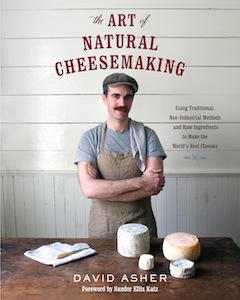
Once a full-time organic farmer, David Asher offers workshops through his Black Sheep School of Cheesemaking. He has also recently published his own book, The Art of Natural Cheesemaking. (photo by Kelly Brown)

Have you ever wanted your own cheese cave? If not, David Asher might convince you to crave one.

Based on British Columbia’s Gulf Islands, the former full-time organic farmer is the author of the recently published The Art of Natural Cheesemaking: Using Traditional, Non-Industrial Methods and Raw Ingredients to Make the World’s Best Cheeses (Chelsea Green). His book covers all the details one needs to know to make a variety of cheeses at home – and, yes, creating a “cave” to age it. Step-by-step recipes include paneer, cheddar, feta, blue cheeses, gouda, and about a dozen others.

“It’s as easy to make cheese at home as it is to make good bread at home,” he said.

For the past seven years, Asher has been offering workshops through his Black Sheep School of Cheesemaking to teach others the “lost” art of creating their own natural cheeses without unnecessary additives. But he wasn’t always a cheese fan – in fact, for most of his life, just the opposite.

“We weren’t a cheese-eating family. We only ate that stack of kosher cheese slices stuck together without plastic wrapping in a slab. I suffered through really terrible cheese as a child,” he said.

Like his favorite food, though, his taste has ripened with age.

As a young boy, he was introduced to “Italian immigrants’ guerrilla gardens” by Montreal’s railroad tracks, where he would relish plucking carrots and harvesting kale. Eventually, he created his own garden and, by his 20s, he was volunteering at community farms.

It was during an organic farming apprenticeship, traveling around visiting other farms, that he met a home cheesemaker, who was “making some inspiring rounds of moldy goat’s cheese” in her home with milk from her very own goats.

“She made this alchemy happen,” he said. “To make this beautiful cheese … without any specialized tools or equipment, I thought, ‘I can do this.’”

On a mission, Asher consulted the go-to cheesemaking guidebooks to find out how to start creating, but he was not inspired by the recipes or by the techniques suggested. Part of the problem, he said, was that the recipes called for freeze-dried packaged cultures.

book cover - The Art of Natural Cheesemaking

“I didn’t want to have to purchase these culture starter packages to make my cheese, because I knew that traditional cheesemakers didn’t use these,” he said. “I knew there had to be a better way, but there weren’t really any resources.… There were no references as to how traditional cheesemakers grew their white rinds, their camembert, almost as if that information had been lost.” Truly, he was “feta” up with the lack of “gouda” details.

Through trial and error, he explored and learned natural methods used long ago, for want of a mentor. And then, much like a wheel of provolone, things came full circle.

“After years of experimenting, I felt confident with my techniques. I then decided that I’d write a book,” he said, adding that it also serves as a resource for his students.

Asked if he thought any decent commercially made cheese can be found in mainstream supermarkets, he responded with a deep sigh. “You don’t want me to answer that,” he said. “Call me when you’re ready to make your own.”

For those wanting to make their own, there are three cheesemaking seminars this month: with the Clever Crow Sea Salt Co. in Black Creek May 7-8, with Linnaea Farm on Cortes Island May 14-15 and in Chilliwack at the Valley Permaculture Guild on May 28-29. For more information, visit theblacksheepschool.com.

Dave Gordon is a Toronto-based freelance writer whose work has appeared in more than a hundred publications around the world. He is the managing editor of landmarkreport.com.

Format ImagePosted on May 6, 2016May 5, 2016Author Dave GordonCategories BooksTags artisanal, Asher, cheese, farming
A continuing pursuit of justice

A continuing pursuit of justice

Irwin Cotler told those at the launch of the Pearson Centre for Progressive Policy’s Pursuing Justice Project on March 31 that his current focus is the Raoul Wallenberg Centre for Human Rights in Montreal. (photo by Dave Gordon)

Irwin Cotler was honored on March 31 for his dedication to human rights activism. Attendees at the Pearson Centre for Progressive Policy event learned how Jewish values drove, and intersected, with Cotler’s career in pursuing justice.

“My father used to say to me: the pursuit of justice is equal to all the commandments combined. This is what you must teach to your children,” said Cotler.

The gala at Toronto’s Omni King Edward Hotel served to launch the Pearson Centre’s Pursuing Justice Project, “which is focused on increasing the understanding of Canadians about justice, diversity and inclusion.” The centre describes itself as a centrist think tank, addressing policy issues related to justice, health and social services, with the goal “to engage Canadians in an active dialogue about a progressive future for Canada.”

Among the speakers offering introductory remarks at the launch were former prime ministers John Turner and, via video, Paul Martin.

“John Turner had the temerity to give me my first job out of law school,” Cotler shared.

In addition to serving as Liberal member of Parliament for Mount Royal in Montreal from 1999 to 2015, Cotler also served as federal minister of justice and attorney general during his career.

In a discussion with Indira Naidoo-Harris, Liberal member of the Legislative Assembly for Halton, Ont., Cotler spoke about a 10-year-old idea that never bore fruit, wherein justice ministers from Israel, the Palestinian Authority, Jordan and Egypt all agreed to convene with Canada’s justice minister, in Canada, to foster dialogue. A “justice summit” he dubbed it, “which I hoped would have a peace dividend.”

He would like the Trudeau government to revive the concept, because “educating each other in the culture of peace is important,” Cotler told the Independent. Palestinian incitement, in contrast, “is a threat to peace in the Middle East, threatens Palestinians’ right to self-determination … and glorifies terrorism.”

As an international human rights lawyer, Cotler served as counsel to many high-profile political prisoners, including South Africa’s Nelson Mandela and Israel’s Natan Sharansky, who was released from a decade in the Soviet gulag 30 years ago February, and became a member of the Knesset and an author.

Both former prisoners were beacons of “hope and the vision and the inspiration,” with respect to “two of the great human rights struggles of the second half of the 20th century,” Cotler remarked.

The release of political prisoners, he added, is “such an overriding commandment that you’re allowed to breach the Sabbath” to free them.

Cotler’s current undertaking is growing the Raoul Wallenberg Centre for Human Rights in Montreal, which he founded. Among its many objectives, he told the Independent, are “promoting human dignity, combating racism, hatred and antisemitism, and defending political prisoners.”

Dave Gordon is a Toronto-based freelance writer and the managing editor of landmarkreport.com.
Format ImagePosted on April 22, 2016April 20, 2016Author Dave GordonCategories NationalTags Cotler, human rights, Judaism, justice, Raoul Wallenberg
Making healthy eating cool

Making healthy eating cool

Adam Segal at Indigo Richmond Hill in Ontario last fall. (photo from adammichaelsegal.com)

Every parent knows how difficult it can be to cajole their children to eat their vegetables. Author Adam Michael Segal has come up with a tool he hopes will make it easier for parents – inspiring children to eat healthy, and combating the obesity epidemic.

The Toronto-based health communications expert and former elementary school teacher has penned Fartzee Shmartzee’s Fabulous Food Fest, a fun and whimsical book for children ages 4 to 7. The main character, Fartzee, is a quirky child with multicolored spiky hair on a quest to persuade his family to eat nutritious food. Through a series of hatched plans, a food festival and a sticker game, he succeeds in showing everyone in town that eating right can be fun.

The book is made more visually appealing with drawings by 20th Century Fox illustrator and animator Daniel Abramovici.

“This is an entertaining and imaginative story that educates children about healthy eating practices and behaviors,” said Dr. Samantha Witt, a pediatrician based in Maple, Ont.

Part of the inspiration for writing it, Segal told the Independent, included the lack of books specifically directed towards young children to teach them, in a fun way, about eating well.

According to the U.S. Centres for Disease Control and Prevention, obesity rates in Canada have nearly tripled in the past 40 years, with close to a third of children considered either overweight or obese. Diabetes, heart disease, stroke and some cancers are among the many issues that can arise from obesity.

“For generations, kids have been led to think of junk food as cool and fun, which has contributed significantly to the prevalence of childhood obesity,” said Segal. “With Fartzee, I am trying to completely shift the paradigm to obesity prevention, empowering kids to discover that nutritious food is cool, fun and delicious.”

Segal said he flipped through scores of children’s books to get a feel for what his target age group would find compelling. This is one reason why, in his book, “food is all over the place; it’s kind of messy but fun.”

For some parents, the main character’s name might sound too coarse for a child, but Segal said, so far, parents and educators haven’t had any problems.

“I was a little concerned and nervous,” he admitted, when initially sending out the book to a Grade 2 teacher, a librarian and a parent. “Not a single one had an issue with it. They said that there are already books, at least 10 others, with a character that did farts. It’s not anything unusual or out of the norm. Even someone from the ministry of education reviewed the manuscript and didn’t flinch at it, and they were a teacher for 30 years.”

The book has been read to more than 5,000 students at 15 schools across the Toronto area thus far, according to Segal. He’s finding that kids aren’t as resistant to eating right as we might have thought.

“I ask them why we eat healthy food, and they really get it. Even a 6-year-old will say it gives energy, helps you grow, it’s good for your body and brain,” he said. “At a young age, they actually understand a lot more about the benefits of nutrition than I would have thought when I wrote it.”

Fartzee Shmartzee’s Fabulous Food Fest is available through adammichaelsegal.com or amazon.com.

Dave Gordon is a Toronto-based freelance writer and the managing editor of landmarkreport.com.

Format ImagePosted on April 15, 2016April 13, 2016Author Dave GordonCategories BooksTags Fartzee Shmartzee, health, obesity

One of the new “dragons”

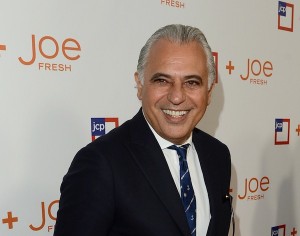
Soft-spoken, reserved, thoughtful. Hardly the epitome of a dragon. Yet, Joe Mimran’s definitely a dragon – one of the newest on the panel of investors on Dragons’ Den, CBC’s hit entrepreneur reality show.

The Canadian fashion designer, clothier and entrepreneur is best known for launching the Club Monaco and Joe Fresh brands. He is also a partner in Gibraltar Ventures, investing in early-stage digital businesses.

photo - Joe Mimran
Joe Mimran (photo from Joe Mimran)

The 63-year-old, Moroccan-born immigrant has spent nearly his entire life immersed in business, in ventures on his own or with family members, particularly in the clothing industry.

At an early age, he assisted his mother, Esther – who was a couturier in Morocco – in her Toronto-based boutique garment outlet. That business grew, necessitating the purchase of a small factory in Toronto’s garment district in the mid-1970s. Mimran joined to lead operations, manufacturing and finance.

“I was inspired by the design and esthetic world,” he said. “I like designing products, building stores.” He was “inspired by great prints, inspired to want to be entrepreneur.”

That inspiration evolved into Ms. Originals, tailoring suits and pants for women and, soon thereafter, Mimran and brother Saul hired designer Alfred Sung, with a goal to create their own clothing line. The Alfred Sung collection swiftly soared in popularity across the continent.

By the mid-1980s, he launched yet another line, based on the idea that a plain, white, quality cotton shirt was unavailable in the market – and Club Monaco brand was born.

“If you’re not a risk taker and abhor taking risks, entrepreneurship is not for you,” said Mimran.

“There were many people along the way of my career who said, ‘You’re crazy, don’t do this or don’t do that. What do you waste your time for doing that?’ I have stuck to my guns. Sometimes you need to say to naysayers that you have to pursue your dream.”

Unfortunately, the plan didn’t go smoothly at first. The Bay and Eaton’s didn’t want to carry the product.

“We realized that we had all these goods coming in and the only way we could move forward was to open our own stores,” he said.

They rolled the dice on a 5,000-square-foot store in trendy Queen Street West in Toronto, showcasing an array of attire. The day it opened in September 1985 saw their marketing campaign pay off in a major way, with line-ups to get into the store.

“From adversity comes something terrific,” said Mimran. “We realized, as we opened our own stores, we’ll cut out the wholesale margin.”

At the time, such a move was rare. Typically, retail stores bought through a wholesaler, he explained. “But, sometimes, you just have to dive in, make the mistakes, fix it, move forward, make more mistakes, and try different things.”

Mimran dived in, not only opening a flagship Club Monaco store in New York City on Fifth Avenue in 1995, but opening another 120 stores in the next four years. That success caught the eye of Polo Ralph Lauren Corp., who purchased both Club Monaco and Caban (another Mimran line) in 1999.

“A lot of businesspeople, having had lots of problems in the past, will try to dissuade somebody else,” said Mimran. “But your idea might be done in a new way, might resonate in a way that this very experienced person didn’t, couldn’t, anticipate. There’s always an idea that surprises people, and that leads to success.”

Mimran has continued that success, time and again.

Pink Tartan – a women’s line – was yet another Mimran venture, appearing in high-end retail outlets such as Holt Renfrew and Saks Fifth Avenue, as well as in its flagship store in Toronto’s Yorkville.

Mimran’s Joe Fresh Style, a private-label apparel line for Loblaw Companies Ltd., was launched in 2006. The label has since opened free-standing stores – the first Joe Fresh opened on Granville Street in Vancouver in 2010 and, soon thereafter, in New York City. Many others followed.

Mimran said the apparel industry is among the most competitive industries in the world. Because of this fact and his own experiences, he empathizes with the entrepreneurs who come to the Den having had tough breaks.

“No matter how good you are, or what you know, you can still fail in our business,” he said. “It keeps you pretty grounded.”

Today, Mimran sees a future of entrepreneurs that have opportunities that were nonexistent a generation ago.

“There’s more willingness to try by the new generation – millennials – who are asset light, where boundaries and borders are not an issue. They live in a virtual world and have the ability to take on more risk. They look at the world in a dynamic way that leads to entrepreneurship,” he explained. “Particularly in today’s world, where things are so different in terms of how one communicates with the consumer, all the new online fundraising channels that are available, what’s old is new, what’s new is old. It’s the Wild West out there.”

Dave Gordon is a Toronto-based freelance writer whose work can be found in more than 100 publications globally. His is managing editor of landmarkreport.com.

Posted on March 25, 2016March 24, 2016Author Dave GordonCategories TV & FilmTags CBC, Club Monaco, Dragons' Den, Joe Fresh, Mimran
Blue Jays CEO wants to win

Blue Jays CEO wants to win

Toronto Blue Jays new president and chief executive officer Mark Shapiro. (photo from Toronto Blue Jays)

The Toronto Blue Jays almost made it to the World Series in 2015. With spring training having just started, we’re crossing our proverbial fingers (in the most Jewish way possible) that we’ll see that same Blue Jay magic – and more – in the months to come. Eyes will particularly be on the new leader at the helm, Mark Shapiro, who officially joined the Jays as president and chief executive officer last fall.

Shapiro has arrived at a pivotal time for the franchise, which celebrates its 40th anniversary this season. Many are eager to find out in what direction he’ll take the team, but one thing is certain: he wants to win.

“Clearly, winning has to be the primary area of focus,” Shapiro told the Independent. “A relentless, obsessive commitment to building a winning team.

“Building a team isn’t just collecting talent,” he continued. “It’s about players that are committed, that are willing to take risks and commit to something bigger than themselves.”

He also said he wants to integrate more sports psychology into the team’s routine, and “build a business organization that obsesses about fan experience at every interaction and every touch point.”

Next on his list is Rogers Centre, which is in dire need of a renovation, one that may cost upwards of $400 million.

Shapiro, like anyone else who has experienced the dome, has been a fan of the awe-inspiring structure since his first Jays game, which was in 1989, soon after he completed his history degree at Princeton. “My memory is seeing this building and just being blown away at what an incredible engineering marvel it is,” he said.

Rogers Centre isn’t the only spot that needs an upgrade. The team’s spring training facility in Dunedin, Fla., is widely considered to be the worst in Major League Baseball. Shapiro has to choose between renovating or moving the Jays to a new facility when the team’s lease expires in 2017.

To make matters more difficult, team cornerstones José Bautista and Edwin Encarnación become free agents at the end of this year and the Jays’ stock of minor league prospects was depleted by last year’s trade deadline frenzy. Still, there’s every reason to believe Shapiro will hit it out of the park, given that he’s spent an entire lifetime surrounded by the game, its players, its strategy and its details.

Shapiro invested nearly a quarter-century with the Cleveland Indians, having worked his way up from player development to team president. It was there that the Sporting News named Shapiro Executive of the Year in 2005 and 2007.

His managerial style hasn’t changed all that much, he maintains. “If you have a moral compass and a set of well-defined values, those are going to be the determinacy of how you lead,” he said.

But baseball and Shapiro go farther back than Cleveland. Son of Baltimore attorney and sports agent Ronald M. Shapiro, the game was ingrained at a very early age.

“Baseball was a part of the fabric of my childhood growing up. It was a connection and a bond for me with my dad,” said Shapiro. “It’s hard to separate out baseball from my childhood, whether it was stickball, wiffleball, Little League or playing catch in the street. Maybe it was the fact that my dad, at some point in my adolescence, started representing Major League players and they started being part of my life. Baseball, informally or formally, was always a part of my life.”

Among his baseball heroes growing up was Baltimore Orioles’ Brooks Robinson, for “consistency, the way he treated people and his artistic style of play,” said Shapiro. Jewish ball player Al Rosen, aka “the Hebrew Hammer,” who played for the Cleveland Indians from 1947 to 1956, was also a role model.

The Hebrew Hammer wasn’t his only source of Yiddishkeit growing up. Shapiro said he was reared with a “strong Jewish identity,” associating most with the “education, culture, understanding of history, and the values intertwined in that history.” They include, he said, “work ethics, commitment to community, compassion and tolerance,” which, he said, were “defining attributes and values that were a part of my childhood.”

Shapiro and his wife Lissa Bockrath-Shapiro try to instil those same values in their children, son Caden, 13, and daughter Sierra, 11.

Even though today’s Jewish players are few and far between, every now and again Shapiro will run into a fellow Jew and shmooze.

“It’s obviously a rarity and, obviously, there’s a lot more front office guys, like Mike Chernoff [Cleveland Indians general manager]. When we saw a Jewish player, we’d always chuckle with pride at that player succeeding. It was a topic of conversation,” said Shapiro.

Cleveland player Jesse Levis and Shapiro used to kibbitz about being MOTs, members of the tribe. Since he began work in Toronto after the ball season was over, Shapiro has not yet met lone Jewish Jay Kevin Pillar.

Meanwhile, one item needs clarification. There’s been no shortage of times that Shapiro has been asked why he pronounces his name Sha-pie-roh instead of the usual Sha-peer-oh. For the record – and he wants to set the record straight – his name has always been that way.

“People say, ‘Are you trying to hide the fact that you’re Jewish?’ If I did, wouldn’t I call myself Smith?” he said with a laugh. “Come on, really, there’s got to be a better way to do that.”

The story is familiar to many: as immigrants coming through Ellis Island, there was a name change and a mispronunciation that stuck. Philadelphia and Cherry Hill, N.J., lay claim as the “only places in the world you’ll hear ShapIro spelled Shapiro, and you’ll hear Shapiro spelled Schapiro,” he explained.

To be sure, fans are less concerned about the name than they are about the game. And, if he could impart one message, it would be that he’s here to win.

“My favorite Blue Jays stories are waiting to be written,” he said.

Dave Gordon is a Toronto-based freelance writer whose work can be found in more than a hundred publications globally. He is managing editor of landmarkreport.com.
Format ImagePosted on March 18, 2016March 17, 2016Author Dave GordonCategories NationalTags baseball, Blue Jays, Mark Shapiro
Cooking healthy, eating well

Cooking healthy, eating well

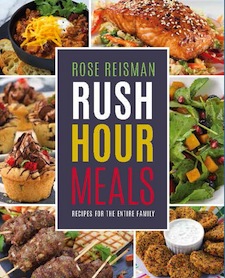
Rose Reisman’s newest cookbook is Rush Hour Meals: Recipes for the Entire Family. (photo from Rose Reisman)

Cookbook author, chef, television personality and columnist Rose Reisman helps people make better lifestyle choices.

After self-publishing a cookbook in 1988, she focused on healthy eating with Rose Reisman Brings Home Light Cooking (1993), which sold more than 400,000 copies. Since then, she’s been an oft-quoted expert on eating well, has appeared on TV and radio, worked as a teacher, and acted as a health and wellness consultant to businesses.

Reisman attended the Canadian School of Natural Nutrition to become a registered nutritional consultant. The mother of four ran a cooking school for four years, and then launched Rose Reisman Catering in 2004. She is also a nutritionist and adjunct professor at York University’s faculty of health, where she is a founding member of the university’s obesity task force.

Reisman also helps people eat well through the Personal Gourmet, a daily food delivery service launched in 2008 that offers both weight loss and healthy living plans she developed with the help of dieticians and weight management doctors. She has been a spokesperson for the national campaign of Breakfast for Learning and the national awareness campaign for the Canadian Breast Cancer Foundation, and has been an ambassador for the Canadian Diabetes Association.

book cover - Rush Hour Meals: Recipes for the Entire FamilyIn coming weeks, Reisman’s newest cookbook will be released, Rush Hour Meals: Recipes for the Entire Family. It will be her 18th – chai – book guiding readers to a better life.

When she first started cooking, she told the Independent, she was making “very delicious, high-fat foods when everybody flocked to my home. I continued to do that and I became a good cook using loads of butter and cream and chocolate…. But then I found my own family history wasn’t that healthy. I had lost my dad to heart disease in his 50s, my grandmother at 52 to diabetes type 2. Everybody had high blood pressure, high cholesterol and obesity, and I was an overweight child.

“This was all going on in my early 30s. I was slim and running every day, and I had lost the weight I had as a kid, and I figured I was fine. But then I went for a routine physical and my cholesterol was literally off the charts like somebody in their 60s or 70s who’d been eating steak every day.

“I realized that what I ate, even though I exercised and maintained a healthy weight, was still clogging my arteries, and my family history was such that I couldn’t afford to do it. It was then that I turned around, in 1993. I started researching healthier cooking, and I started to write my first book in healthy cooking. I’d written three or four books before that in higher fat meals.”

Like Reisman once did, many people equate being thin with being healthy.

“If you have skinny children, you kind of turn away as they’re eating junk because you think it’s not going to hurt them,” she said. “But what I started to learn is that cholesterol, diabetes, all of these things start when they’re children. Today, they’re finding kids in their early teens who have already got blocked arteries, high blood pressure, diabetes.”

She said that one child out of three born after 2000 will have diabetes type 2.

“I really encourage parents to be the role models at home,” she said. “I used to set the most delicious meals on the table, and they were good. I wasn’t talking vegan style, poached or steamed, but it was heart-healthy fat, and my kids would often turn up their noses. But, over the years, they picked it up, it was in the back of their minds and, today, all four of them, they’re adults, they’re really good eaters, they exercise.

“That’s one of the reasons that I launched into the books, the media, the catering company, the restaurant consulting,” she said, “because it’s really a great way to spread your message.”

It’s also a great way to spread less healthy messages. There are dozens of TV shows on food – a whole network, in fact.

“They call it ‘food porn,’” said Reisman. “It started back when I was entering the food world. I had my own TV show in 1998 to 2002. That was when the Food Network was just starting to get launched. I thought a show like that would never be successful, I thought no one would watch 24 hours a day of food. Boy, was I wrong. People loved it. And the shows got crazier and crazier, and more reality and more extreme.

“They’ve done these studies from Harvard that people who watch these shows are actually heavier than other people. Nobody really wants to watch a healthy cooking show. There’s only one or two healthy cooking shows…. It’s ridiculous. You’re piling up butter to your elbow when you’re mixing, and people just love watching that decadence.

“But, when Paula Deen came out, and she was diabetic, all of a sudden people went, ‘you know, you can’t be that heavy.’

“You don’t see in seniors homes obesity in people in their 80s. If you notice that, people die off in their 70s, 60s, from cancer, heart disease or stroke, or diabetes when you’re obese.”

For people just starting to cook for themselves, a mistake they make, said Reisman is “they can just whip something off, and not measure and not read the recipe.” She said that’s not really possible, “unless you really have a food gene,” and there are only “a handful of people like that. I’d say 99% of us can’t do that.”

Even with years of experience, Reisman still finds new foods that she both enjoys and that are healthy.

“A couple of foods that I like, that allow me to maintain a really healthy body weight, are quinoa and Greek yogurt,” she said. “Quinoa is the only seed-grain that’s considered a complete protein: a half a cup is equal to three ounces of chicken or fish. So, on the day that you don’t want to eat the hormone-injected chicken or the farm-raised fish, you can have quinoa. Put dressing on it, make it with tomato sauce, and it is a powerhouse of nutrients.

“But, the most important thing is, after you eat a bowl of quinoa versus say white rice in a Chinese food situation, [where] you burp, you eat again, you burp … with quinoa, you walk away full and you’ll find you won’t get hungry for about three hours. That’s because the glycemic index, your blood sugar, is rising very slowly, whereas with white rice or with white starch, what I call an empty grain, it’s rising quickly and then it crashes, which means you need more of that food.”

As for Greek yogurt, she said, “you can have it plain or mix it with berries for breakfast. You can even have Greek yogurt with quinoa. Greek yogurt has 18 grams of protein for three-quarters of a cup, which is unbelievable, more than you could ever imagine in eating fish or chicken in the morning, so it’s a super breakfast.”

And what about that morning coffee?

“I think coffee by itself is great, and the studies now prove more and more that it lowers cholesterol, it’s got some great antioxidant powers,” said Reisman. “The key is, you can’t be drinking coffee after coffee after coffee. If you’re starting to get anxious, or you’re not sleeping at night, you’re drinking too much!

“The problem is that coffee shops are mixing in whipping cream and syrup and tons of sugar,” she added. “If you have two double doubles every day, you’ll gain something like 12 to 13 pounds in a year, just from the cream and sugar in those two drinks. It’s not coffee. It’s candy.”

Dave Gordon is a Toronto-based freelance writer whose work can be found in more than 100 publications globally. His is managing editor of landmarkreport.com.

Format ImagePosted on March 11, 2016March 10, 2016Author Dave GordonCategories BooksTags health, Reisman
Election bid put into context

Election bid put into context

U.S. Senator Bernie Sanders speaking at a town meeting at the Phoenix Convention Centre in Arizona in July 2015. While a Jewish American president would be a first, many other countries have had Jewish leaders. (photo from Flickr user Gage Skidmore via commons.wikimedia.org)

U.S. presidential candidate Bernie Sanders is the first Jew to win a presidential primary and, given that he is only one of two Democratic hopefuls in the race, there is the possibility of a Jewish president after this fall’s election.

But this milestone isn’t such a milestone when one looks around the world, and the United States – with its approximately seven-million-strong Jewish population (including children) – could be considered behind the curve. After all, Italy, France, New Zealand, Panama, Peru and Russia all have had multiple Jewish heads of state or heads of government in the past century or so. Such places as El Salvador, Honduras, Guyana, the Dominican Republic and Norway, with relatively few Jews, have all had Jewish heads of state.

We know some of the stories of antiquity, with Jewish leaders of lands other than Israel. The most famous are Joseph, as viceroy of Egypt; Moses, the prince of Egypt; and, in the fifth-century BCE, Queen Esther in Persia. Among others are:

  • In the early first century, Queen Julia Bernice II, married the Cilician king, Polemon II of Pontus.
  • Queen Shushandukht ruled Persia (and some of Mesopotamia) in the fifth century.
  • Beginning around the fourth century, Jewish kings and queens reigned in Ethiopia for about a millennia.
  • King Abu Karib ruled Yemen in the fifth century and, a hundred years later, King Dhu Nowas.
  • Queen Dahiya Kahina reigned in Algeria in the early eighth century.

In modernity, there are/were dozens of Jewish prime ministers, presidents and vice-presidents outside of Israel. As best as we can figure, with some latitude for converts, those born Jewish but raised in another religion, high-ranking officials that were a heartbeat (or two) from becoming head of state, and those who came close, there have been roughly three dozen Jewish leaders outside Israel, with about a dozen “almosts.”

Great Britain/United Kingdom

  1. Benjamin Disraeli, prime minister in 1868 and 1874-80 (converted to Anglicanism)
  2. Rufus Isaacs, 1st Marquess of Reading, viceroy of India, 1921-26
  3. Almost: Ed Miliband, opposition leader of Great Britain, 2010-15; and Prime Minister David Cameron, elected in 2010, who in a speech to the Knesset, said his great-great-grandfather was a German Jew

Switzerland

  1. Ruth Dreifuss, president, 1999

France

  1. Leon Blum, prime minister, 1936-37, 1938, 1946-47
  2. René Mayer, prime minister, 1953
  3. Pierre Mendès France, prime minister, 1954-55
  4. Michel Debré, prime minister, 1959-62 (convert to Catholicism)
  5. Laurent Fabius, prime minister, 1984-86 (raised Roman Catholic)
  6. Nicolas Sarkozy, president, 2007-12 (born to a Jewish father)

Spain

  1. Juan Álvarez Mendizábal, prime minister, 1835-36 (raised Roman Catholic)

Italy

  1. Alessandro Fortis, prime minister, 1905-06
  2. Sidney Sonnino, prime minister, in 1906 and 1909-10 (raised Anglican)
  3. Luigi Luzzatti, prime minister, 1910-11

Eastern Europe

  1. Kurt Eisner, president of Bavaria, 1918-19
  2. Paul Hirsch, president of Prussia, 1918-20
  3. Zigfrids Anna Meierovics, prime minister of Latvia, 1921-24
  4. Petre Roman, prime minister of Romania, 1989-91 (raised Romanian Orthodox)
  5. Jan Fischer, prime minister of Czech Republic, 2009-10

Scandinavia

  1. Jo Benkow, president of Norway, 1985-93
  2. Dorrit Moussaieff, first lady of Iceland since she married President Ólafur Ragnar Grímsson in 2003

Russia

  1. Yevgeny Primakov, prime minister of Russia, 1999
  2. Mikhail Fradkov, prime minister, 2004-07 (Russian Orthodox)

New Zealand

  1. Sir Julius Vogel, premier, 1873-76
  2. Sir Francis Bell, prime minister, 1925 (raised Anglican)
  3. John Key, prime minister since 2008

Africa

  1. Sir Roy Welensky, prime minister of the Federation of Rhodesia and Nyasaland (Zimbabwe), 1956-63 (raised Anglican)

Central/South America (one-offs)

  1. Francisco Henríquez y Carvajal, president of the Dominican Republic, 1916
  2. Janet Jagan, president of Guyana, 1997-99
  3. Mike Eman, prime minister of Aruba since 2009
  4. Nicolás Maduro, president of Venezuela (raised Roman Catholic) since 2013

Honduras

  1. Juan Lindo y Zelaya, president of El Salvador, 1841-42; and president of Honduras, 1847-52 (raised Roman Catholic)
  2. Ricardo Maduro, president of Honduras, 2002-06 (raised Roman Catholic)

Panama

  1. Max Delvalle, president, for one week in April 1967, because the National Guard General did not approve of his succeeding his predecessor
  2. Eric Arturo Delvalle, president, 1985-88 (in 1988, he attempted to remove Manuel Noriega as the de facto military dictator, but instead Noriega overthrew him; Delvalle fled to the United States and died in Cleveland at age 78)

Peru

  1. Efraín Goldenberg Schreiber, prime minister, 1994-95
  2. Yehude Simon Munaro, prime minister, 2008-09
  3. Salomón Lerner Ghitis, prime minister, 2011

Costa Rica (almosts)

  1. Rebeca Grynspan Mayufis, vice-president of Costa Rica, 1994-98
  2. Saul Weisleder, president of Costa Rica’s Legislative Assembly, 1997-98
  3. Luis Liberman Ginsburg, vice-president of Costa Rica, 2010-14 (the grandson of the first mohel of Costa Rica’s Jewish community)

North America (almosts)

  1. Barry Goldwater, GOP presidential candidate, 1964 (Jewish father)
  2. Henry Kissinger, as secretary of state (fourth in line of succession), 1973-77
  3. Madeleine Albright, as secretary of state, 1997-2001
  4. Joe Lieberman, 257 votes away from U.S. vice-president in 2000
  5. Eric Cantor, former speaker of the House (third in line to the presidency), 2011-14
  6. Herb Gray, deputy prime minister of Canada, 1997-2002 (Canada’s first Jewish federal cabinet minister, one of only a few conferred the title “right honorable” who were not prime ministers, and the longest continuously serving member of Parliament in Canadian history)

Dave Gordon is a Toronto-based freelance writer whose work can be found in more than 100 publications globally. His is managing editor of landmarkreport.com.

Format ImagePosted on March 4, 2016March 3, 2016Author Dave GordonCategories WorldTags politics, Sanders, U.S. election, world leaders

Posts pagination

Previous page Page 1 … Page 4 Page 5 Page 6 Next page
Proudly powered by WordPress