Exodus reinvents Moses saga

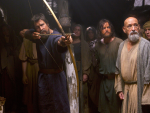
Moses (Christian Bale) and Nun (Ben Kingsley) star in Exodus. (photo from exodusgodsandkings.com/#)

Moses, as best I recall from Hebrew school and The Ten Commandments, was a reluctant prophet with a speech impediment who was ultimately persuaded by the unspeakable, unceasing suffering of his people – and God’s fearsome support – to confront Pharaoh and lead the Hebrews out of slavery.

My, how (biblical) times have changed. The much-anticipated Hollywood epic Exodus: Gods and Kings reinvents the saga of a people’s miraculous liberation as one rugged individualist’s journey of self-discovery, identity and profound purpose.

The fundamental matter of spirituality, which might be defined in this context as the courage and power of faith, comes up in conversation a few times but not in ways that impact the movie-goer’s experience. Your post-film repartee is more likely to centre on the curious and disconcerting form in which God (or is it an angel acting as his emissary?) appears.

Exodus: Gods and Kings, which opened everywhere Dec. 12, is a sun-blistered chunk of glowering, male-centric mythmaking. Aside from its oddly anti-climactic ending – recognizing that it’s a tough call how many desert miles and years to continue the tale after the Red Sea – this is a well-paced, continuously engaging piece of mainstream entertainment with the requisite amount of impressive visual effects (in 3D). Just don’t go expecting to be awed, or to have a religious encounter.

Title cards inform us at the outset that the year is 1300 BCE and the Hebrews have been slaves in Egypt for four centuries. However, “God has not forgotten them.”

Omitting the standard baby, basket and bullrushes, director Ridley Scott and screenwriter Steven Zailian (Schindler’s List) introduce Moses (Christian Bale) as a general and Ramses II (Joel Edgerton) as his best friend since childhood and heir to Pharaoh’s throne.

Exodus immediately launches into a full-scale, screen-filling battle scene – a preemptive attack that might be construed as a comment on the Iraq War – in which the seed of Ramses II’s paranoia and jealousy of Moses is planted. This section is designed to excite male viewers but also to inoculate them against the ensuing hours of banter, revelation, wilderness wandering and domesticity before the warrior hero returns to Egypt to blow things up real good. (You think I’m kidding, but Exodus boasts fiery explosions like any other self-respecting, would-be action movie.)

Even if he was raised as a prince of Egypt, the portrayal of Moses as self-confident and militarily adept takes some getting used to. It does explain, however, his disbelief when the gutsy Jewish elder Nun (Ben Kingsley) informs him that he was a lowly Hebrew infant smuggled upriver toward the Pharaoh’s palace.

The biblical story is quite familiar to us, of course, even if creative licence is employed via verbal flashbacks and narrative compression. Consequently, Exodus is most intriguing from a Jewish perspective for the ways it alternately evokes and evades the dominant events in the modern Jewish world – the Holocaust and Israel (its founding, existence and current relationship vis-a-vis the Palestinians).

The 20th-century genocide of Jews is alluded to in myriad ways, from the burning of the corpses of slaves to the Egyptians lined up to insult the Hebrews as they leave. (The Exodus is presented as complying with Ramses II’s order to get out, so it is a deportation.)

An earlier sequence, in which Ramses’ soldiers knock down doors and brutalize Hebrew families in an effort to find (and kill) Moses, inevitably, recalls the Nazis.

When The Ten Commandments opened in 1956, the Holocaust was so recent, and raw, that it didn’t need to be referenced. The horrific genocide did inform the movie, however, in that the general public needed no help rooting unequivocally for the Hebrews’ freedom.

Another key factor was the new state of Israel’s status as a universal symbol of hope and rebirth. That image no longer holds sway, and the filmmakers acknowledge the contemporary perception that the oppressed have become oppressors.

While Moses and Joshua strategize how to cross the Red Sea, and Ramses’ chariots thunder in pursuit, they take a moment to ponder the Hebrews’ eventual return to Canaan. Now numbering 400,000, Moses points out, “We would be seen as invaders.”

This is an unexpected acknowledgement of power, one that Arab audiences (in Jordan, Lebanon, Iraq, Kuwait, United Arab Emirates, Oman, Qatar and Egypt, where Exodus: Gods and Kings opens Dec. 25 or shortly thereafter) will welcome. Evangelical Christians in the United States, another large target market, will have the opposite response, presumably.

Jews, of course, will interpret and respond to the film from yet another perspective. The Torah does lend itself to various readings, after all. So does this robust movie, even if it is unlikely to inspire study groups.

Michael Fox is a writer and film critic living in San Francisco.
Precursors to menorah are many

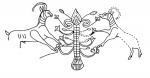
A menorah-like drawing from Kuntillet Ajrud. Source: “The Asherah, the Menorah and the Sacred Tree” by J. E. Taylor, Journal for the Study of the Old Testament (1995).

Though the religious symbolism of the menorah is consistent with Jewish mythology and ideology, the archeological record suggests that the significance of this symbol was influenced by surrounding religions of the region, which would have been preceded the conception of the menorah. For instance, lamps from the Middle Bronze Age composed of a bowl with seven sprouts for wicks on the rim have been found in Israel at Ta’anach and Nahariya. Such findings suggest that the precedent for a seven-branched oil lamp would have existed in the region.

Tree worship is common in religions throughout the world, and may have held particular significance in the Middle East due to their limited distribution. It’s not difficult to imagine, in a region constrained by water resources, the presence of a tree would indicate the presence of water and food, and would thus come to symbolize life. Furthermore, the generation-spanning longevity of trees, and their seasonal “rebirth” would perhaps lead some to associate trees with immortality. In fact, there is evidence to suggest that the Tree of Life, which Jews are familiar with from the story of the Garden of Eden, is based on a Mesopotamian religious myth.

Mesopotamian depictions of the Tree of Life resemble the menorah, leading many scholars to speculate that the design of the menorah was influenced by Mesopotamian iconography. The Mesopotamians believed that the Tree of Life grew on a cosmic mountain; similarly, the branching menorah arises from a clearly defined base. The image of a tree on a mountain is also featured in the Hebrew flood myth (which may borrow heavily from Sumerian mythology), in which Noah’s dove retrieved an olive branch from a tree on a sacred mountain. We grant special significance to the central lamp on the menorah, which we call the shamash. Interestingly, Shamash is also the name of the Mesopotamian sun god. These are more than mere coincidences; these are evidence of cultural influence.

Ancient Semitic peoples, who lived in what is now modern-day Israel, Syria and Iraq, had a pantheon that included a goddess called Asherah, or sometimes called Athirat or Elat. Asherah was a fertility goddess, and believed to be the mother of the gods. Asherah is described in cuneiform documents from the first Babylonian dynasty as the bride of the king of heaven, and a mistress of sexual vigor and rejoicing. An Ugaritic text found at Ras Shamra, Syria, describes Asherah as the bride of El, creator of the world. Asherah was often depicted as a tree, usually with an ibex on either side. For example, a pitcher dated to the 13th century BC found at the archeological site of Tel Lachish in Israel bears a stylized depiction of a tree reminiscent of the menorah, with an inscription dedicated to the goddess Asherah. At an archeological site in the Sinai called Kuntillet Ajrud, a drawing was found of a lion with a menorah-like tree with ibexes on either side of it, bearing the inscription “Yahweh of Samaria and his asherah.”

An asherah is something described in both the mishnah and Babylonian Talmud as a sacred tree. Some scholars speculate that an asherah was a living, pruned sacred tree used during Canaanite cultic practices. Recall that the original description of the menorah used the term almond. The biblical name for almond was luz, which is also the name of the site in the Tanach in last week’s parashah, where Jacob had a dream in which a ladder reached toward heaven (like the branches of a tree/menorah), and afterward he erected an altar and renamed the site “the House of God,” Beit El, now thought to be the site Bethel. Archeological excavations at Bethel reveal it was a Canaanite centre for worship of the goddess Asherah. Scholars speculate that there may have been a pruned almond tree used in cultic practices dedicated to the goddess, and the menorah is a symbol of that specific tree. The Latin name for almond trees, Amygdalus, is likely derived from a Semitic root word for “great mother”; Asherah was considered by the Canaanites to be the great mother of the gods. The blooming of almond trees precedes spring, and Asherah was a fertility goddess. Tu b’Shevat, which once involved the lighting of the menorah, celebrates the blooming of the almond trees.

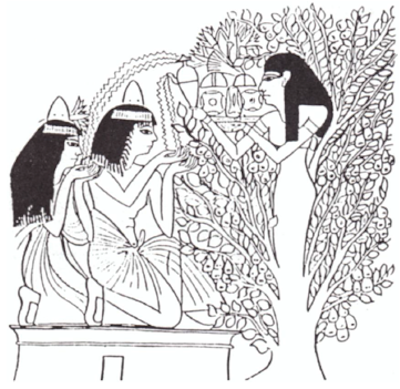
image - A Hathor tree giving food and life to humans
A Hathor tree giving food and life to humans. Source: “The Lachish Ewer and the Asherah” by Ruth Hestrin, Israel Exploration Journal (1987).

Sacred trees are important in Egyptian mythology, too. The Egyptians also believed in a Tree of Life, the acacia tree, which was also associated with the goddess Iusaset, the grandmother of the gods. Iusaset wore a solar disk on her crown, which harkens the shamash as the crown of the menorah. There was also an Egyptian goddess called Hathor, who was often interchangeably represented as a sycamore tree. Hathor was a mother goddess, the “living soul of trees,” and could take the form of a lion. In Egyptian art, the Hathor tree would often be depicted giving life and food to humans. When Egypt occupied Canaan, the cult of Hathor became entrenched in the region, and Hathor began to be correlated with the goddess Asherah. Another name used to describe a Canaanite/Egyptian tree mother goddess was Qetesh. Plaques recovered at archeological sites in Israel and Egypt depict Qetesh with ibexes by her side, above a lion, wearing a Hathor wig. Perhaps it is no coincidence, either, that the Hebrew word for holy is kadosh.

At some point in history, the ancient Jews took the deeply religious symbolism that was already present in the region and amalgamated it into the abstracted form of the menorah. Do these pre-Judaic influences somehow invalidate our culture? To the contrary, the archeological record only confirms that the symbolism and mythology of our culture are truly ancient. More importantly, the ancient Israelites did not live in a vacuum. They lived in a complex and cosmopolitan world, much like today. We were not alone, we coexisted with other diverse peoples and ideologies. And, after Sumer and Babylon fell into ruin, when the Sphinx and Ozymandias lay buried in the sand, and the library of Alexandria burned to the ground, we continued to tell our stories. When we light the candles of our chanukiyot this holiday, we continue a legacy that is thousands of years old. And that is cause to celebrate.

Ben Leyland is an Israeli-Canadian writer, and resident of Vancouver. This article is the second of a short series examining the menorah.

Call to genocide (yawn)

Sheik Omar Abu Sara gave a rousing call to genocide on Nov. 28, during a sermon at Al-Aqsa Mosque on the Temple Mount in Jerusalem. “I say to the Jews loud and clear: The time for your slaughter has come. The time to fight you has come. The time to kill you has come…. Please do not leave in our hearts a single grain of mercy towards you, oh Jews, because when the day of your slaughter arrives, we shall slaughter you without mercy.” His audience is heard responding with amens.

At the same spot a few days earlier, another speaker called for the elimination of “the Jews, the most vile of creatures.”

The Abu Sara video was translated and made available by MEMRI, the Middle East Media Research Institute, an organization that works to bring to light many of the worst things being said about Jews and Israel in the region – including, in this case, in the heart of Jerusalem. The people at MEMRI must wonder sometimes what the point is, though, for all the work they do in shining a torch into these moral recesses, most of the world responds with a yawn. Reactions to this sort of rhetoric among many Jews in Israel and the Diaspora, however, are founded on the knowledge of where this sort of talk can lead, a cultural and historical reality that is dismissed as just more of the persecution complex for which we are stereotyped.

Still, the fact that this sort of exhortation even makes the news is news of a sort. Warnings of an impending mass murder of Jews are so common on the internet, in certain sectors of Arab societies, among extremist Islamists and even among “mainstream” leaders of Palestinian society that it has become just a sort of white noise.

But there are plenty of people who are very capable of following through. This sort of rhetoric undoubtedly motivates people like those who have used vehicles, screwdrivers and knives to attack and kill civilians in Israel recently and, earlier this month, at the Chabad headquarters in New York.

Leaders of the anti-Israel movement might be expected to tsk-tsk these words, if only to preserve some political legitimacy for their BDS campaign. But they can’t even be depended on to do that. While some in that movement might draw the line at calling Jews “the most vile of creatures,” that is precisely the message they direct toward Israelis.

Those who strive for any sort of mainstream political relevance are careful to distinguish between Israelis and Jews. In most of the world, such niceties are quaintly unnecessary. While rose-tinted observers like to imagine the undeniable growth of antisemitism simply as a temporary, possibly unfortunate mutation of anti-Zionism, the reality in most of the world – where the language is most violent and the violence is most real – is exactly the opposite.

Ten years of chanting

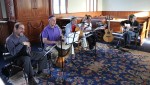
The Chanting and Chocolate band, from left: Charles Cohen, Lorne Mallin, Charles Kaplan, John Federico and Martin Gotfrit. (photo from Dave Kauffman)

On the last Sunday of every month, you can find a group of people gathered around a band of musicians, chanting Hebrew text to the rhythm of beautiful, rich melodies of the likes of Rabbi Shefa Gold and Rabbi Andrew Hahn (also known as the Kirtan Rabbi). It is a deceptively simple concept with surprisingly diverse results.

These harmonies of chant, through the repetition of just a few words, seem to have the power to carry you away from the daily hustle and bustle into a realm of music and spirit. This is Chanting and Chocolate, Lorne Mallin’s creation, which just celebrated its 10-year anniversary.

“In the summer of 2004, I began a two-year training called Kol Zimra (Voice of Praise) with Rabbi Shefa Gold of Jemez Springs, N.M.,” said Mallin about how Chanting and Chocolate came to be. “During our first gathering, Shefa encouraged us to create chant circles where we live and so, on Nov. 28th of that year, I began offering monthly evenings of sacred Hebrew chanting in Vancouver, initially called Evenings of Jewish Chant, which were then held at Sourcepoint shiatsu centre on Heather Street.”

This became a monthly tradition until Mallin moved to Uganda to live with the Abayudaya Jews in 2009. Not one to let geography, language or architectural challenges stand in his way, he was intent on sharing his passion for Jewish chant with the Abayudaya.

“At the mud-brick synagogue in the village of Nabugoye Hill, I led Shefa’s Nishmat Kol Chai, using the Luganda translation of ‘The breath of all life blesses you,’ ‘Okuusa kwebilamu kukutendereza.’ I tried to start a chant circle but, at the first announced session in the shul, I drummed and chanted alone until there was one arrival – a clucking hen skittered into the room.”

Fifteen months later, and back in Vancouver, Mallin and his band started the monthly evenings again.

“One regular participant brought tea and some baking to celebrate,” he recalled. “I noticed people enjoyed the opportunity to linger and get to know each other, so I began baking triple-chocolate brownies and rebranded the evenings Chanting and Chocolate. Two years ago, we moved to Or Shalom Synagogue at Fraser Street and East 10th Avenue.”

Beyond the good it does to its participants (naches to the soul and an uplifting of the spirit), Chanting and Chocolate is also a tikkun olam project on another level: the musicians perform for love, with the proceeds from admissions going to support the education of four Abayudaya orphans.

So, after a decade, what is it about Chanting and Chocolate that keeps Mallin going?

“For me, nothing creates a space for connecting with the Divine like chanting. The chants combine short sacred texts, beautiful melodies and deep spiritual intention. They often last 10 minutes, which strengthens the intention and clears the mind. After each chant, we give time for inner silence and connection, which is the most profound experience of the practice of chanting.”

Although Mallin has been the driving force behind this monthly undertaking, bringing it together and making it happen is very much a group effort.

“I am very grateful to my beloved teacher Shefa, the holy Kol Zimra community, Or Shalom, our band – Charles Cohen, John Federico, Martin Gotfrit and Charles Kaplan – and the lovely people who come to chant with us.”

While Mallin and the band have recorded little so far, they are planning to record their first CD in February, so stay tuned. In the meantime, to experience a unique kind of musical Yiddishkeit, attend the next Chanting and Chocolate, which will be held at its regular venue on Sunday, Dec. 28, at 7:30 p.m., with Rabbi Laura Duhan Kaplan as a special guest. Since no previous singing or chanting experience is needed, all you need to bring is some kavanah and yourself. And maybe a friend.

For more information, visit chantingandchocolate.com.

Gold Plate celebration

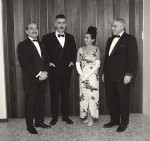
This year’s Gold Plate Dinner marks 40 years that Lubavitch B.C., led by Rabbi Yitzchak Wineberg, third from the right, has been in Vancouver. (photos from facebook.com/LubavitchBC)

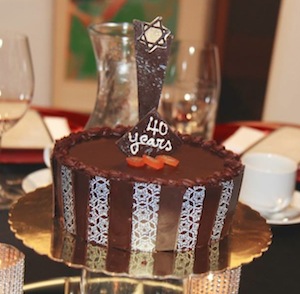
photo - 39th Annual Gold Plate Dinner cakeChabad Lubavitch BC held its 39th Annual Gold Plate Dinner, paying tribute to the Rebbe, his vision and 40 years in British Columbia on Dec. 2, at Schara Tzedeck Synagogue. Guests enjoyed a reception, followed by a five-course meal, during which several speakers shared how Chabad Lubavitch has impacted their lives. Throughout the evening, several prizes were raffled, including hockey tickets, vacation packages, 40-year-old scotch and the grand prize of a 2014 BMW i3. The evening concluded with an entertaining performance by comedian Marc Schiff.

For more photos of the event, visit facebook.com/LubavitchBC; for a video, youtube.com/watch?v=gzWVr9iVY-g.

Inclusivity is a priority at Camp Shalom

Working side by side with the inclusion services department at the Jewish Community Centre of Greater Vancouver, the Camp Shalom team is looking at a modified version of its counselor-in-training program, as several of the campers have stated they would be interested in participating. Camp Shalom is determined to keep committed Jewish youth engaged, and help them develop and grow in the community.

Camp Shalom has been providing a unique and memorable experience for all campers that come through its doors, including those campers living with special needs. As Camp Shalom has grown in size over the last few years, so has its inclusion program, now serving approximately 10 families. The Camp Shalom inclusive program integrates campers with special needs into the general camp program alongside other campers each week. This would not be able to happen without the dedication of the staff members.

“I was fortunate enough to work with three girls over the summer. From sharing our stories to sharing laughs, they taught me a lot of things about life. They taught me to be patient and to live my life to the fullest. The bond we created is a bond that can never be broken,” said one staff member after her first summer with Camp Shalom.

Ensuring that all campers get to participate in activities fully and receive a robust camp experience is the goal of the inclusivity program. Before each camp session begins, the camp director team and specific counselors meet with families so that children with special needs have a chance to meet their counselors and familiarize themselves with the JCCGV prior to the first day at camp.

The program has an effect not just on the campers, but the counselors, as well.

“Working with Tal this summer was one of the most rewarding experiences of my life,” said Mischa Smolkin. “His positive energy and joy made every single day at camp special. Tal made a hugely positive impact on my life and has changed my perspective. Overall, working with him so closely created a bond that I have yet to experience in a summer camp setting and will treasure for years to come.”

The Camp Shalom inclusive program is possible thanks to the contributions of the Snider Foundation, Diamond Foundation, Lohn Foundation and Jewish Federation of Greater Vancouver.

Win for inclusion

The Ramah Camping Movement and the Ruderman Family Foundation have announced the winners of TIPTOE (The Inclusion Project: Through Our Eyes), an inclusion-themed video contest for participants from Jewish camps. The goal of TIPTOE is to increase awareness of the inclusion work happening at Jewish camps across North America. The Ruderman Family Foundation has awarded cash prizes to the top three winners and is making donations to the inclusion program at the winners’ camps.

Campers and college-aged staff members who participated in a North American Jewish summer camp program in 2014 submitted videos that showed their view of inclusion of children with disabilities at their Jewish camp. Representatives from the Ruderman Family Foundation and the Foundation for Jewish Camp selected the winners based on three criteria: demonstrating inclusion, creativity and visual appeal.

The top three winners are:

  • First place ($1,000): Simone Rotman, Oakland, Calif. A $1,750 donation is being made to Ramah California.
  • Second place ($500): Jenna Freeman, Los Angeles, Calif. A $1,000 donation is being made to Ramah California.
  • Third place ($250): David Sharif, Los Angeles, Calif. A $500 donation is being made to Camp JRF.

“This contest proves that the people who really get the importance of inclusion are the ones who experience it firsthand,” said Jay Ruderman, president of the Ruderman Family Foundation. “The wonderful videos submitted by Jewish campers across the country show that the inclusion of children with disabilities makes the camping experience a better one for all campers.”

According to Rabbi Mitchell Cohen, national Ramah director, “We received many inspirational and creative videos that clearly demonstrate the importance of inclusion at Jewish camps across North America. As we share these videos with the larger Jewish community, we hope that they will promote further discussion, raise awareness, and encourage all of our camps to become more inclusive.”

The top 10 videos can be viewed on the contest website or by searching social media for #TIPTOE2014.

Ramah is the camping arm of Conservative Judaism. The Ramah Camping Movement is a pioneer in the field of inclusion for Jewish campers with a wide range of disabilities. Tikvah, Breira B’Ramah and Camp Yofi comprise the National Ramah Tikvah Network of programs. For more information, visit campramah.org.

Seven sins of weight loss

Hands up if you like to eat!

Now hands up if the fact that you like to eat has made you want to throw the other half of the apple pie you just ingested across the room because IT WON’T LET YOU LOSE THE WEIGHT YOU ALWAYS WANTED TO LOSE!

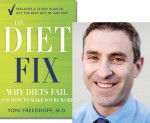
Recently, as part of the Jewish Book Festival at the JCC, Dr. Yoni Freedhoff, known (maybe only by me) as Dr. Diet, presented about his new book The Diet Fix. The book details why more than 90% of diets fail, leaving people with frustration and/or apple pie all over their living room. (For a review of the book, see jewishindependent.ca/jewish-book-fest-in-a-week)

As someone who personally struggled with excess weight for most of his adult life – likely as a result of too much McDonald’s for most of his teenage life – before managing to kick it back to the drive-through a few years ago, I was intrigued to listen to and meet Dr. Diet to see what new concepts he could teach me. I wanted to see what he could tell me that, quite frankly, I hadn’t already learned from my dear friend Google.

While he didn’t get into the meat and potatoes (or cake and cookies) of dieting tricks, strategies and science, he did talk a lot about the psychology of dieting and how our society responds to it. More of a what-NOT-to-do presentation.

The good doctor presented what he called the seven deadly sins of dieting. Essentially, this is a list if misunderstandings or misdirections society has placed on the path to eating healthy and losing weight.

In no particular order (except for the one he presented them in), here they are for your consumption.

1. If you’re not hungry, you’re not losing weight. WRONG!
Starving yourself isn’t the key to weight loss, Freedhoff explained. As a matter of fact, he suggested that waiting until starvation kicks in before feeding yourself will more likely make bad cookies…I mean, choices (darn auto-correct!).

2. You must make sacrifices to lose weight. WRONG!
If you are constantly making sacrifices you aren’t likely to make this work on any long-term basis. It should be a choice of preference, not a sacrifice.

3. You need willpower to succeed. WRONG!
The reality is that we only have a limited supply of willpower. So if we are depending on that for success we are likely to fail at some point. Try having a long, hard, stressful day at work, then coming home looking for willpower in the crunchy, salty snack cupboard.

4. You should accept blind restrictions. DON’T DO IT!
A lot of people follow fad diets. They read that this new Garcinia Cambogiolawala plant can help you lose weight if you eat only that and a pickle for five days straight.

Despite my undying faith in pickles, if you don’t know why or how a diet will work, don’t do it!

5. You need to sweat it out. SO WRONG!
Reality weight loss shows like Biggest Loser preach that if you’re not pushing your self to barf-inducing levels you won’t succeed. On the contrary, Dr. Freedhoff said, if it’s not enjoyable, much like point #2 and #3, it’s not likely to last long.

As a point of perspective, he added that it takes running a full marathon to burn 1 pound of fat. Yet it takes only one hour sitting on your tuchus at the neighborhood pub to put it back on. The line, “You can’t outrun your fork” is one I will use again and again from now on.

6. You need perfection to succeed. WRONG AGAIN!
According to Dr. Freedhoff, people accept doing their best in just about every facet of their life except dieting. When someone is on a diet they believe they must be perfect in order to succeed. Obsession leads to unrealistic expectations. Once again, it won’t last. And you don’t need to call them cheat days. Maybe just try “living life days!”

7. We must calmly remain in denial. DENIED!
We avoid dealing with our true feelings about how we are struggling with our weight or eating habits. If we fool ourselves about what we really want to do or can do we are just denying ourselves the chance to find confidence in our abilities to succeed. The consequences of struggling are guilt, shame and despair. Which often leads to? Binging!

Bottom line: It seams that what the Diet Doctor is saying is that it’s more important to tackle our weight issues with our heads than it is with a program or a set of diet rules.

Set clear goals that you know you can work with long term and take them on one step at a time. Otherwise, well, we’ll see you again at the next diet meeting!

עמר ארבל – היוצאות דופן והחדשניות

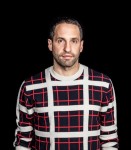
עמר ארבל (צלם: Gwenael Lewis)

עמר ארבל שנולד בירושלים שנחשב לאחד האדריכלים והמעצבים הבולטים כיום בקנדה

עמר (בלי וו) ארבל בן ה-37 נחשב כיום לאחד האדריכלים והמעצבים הבולטים ביותר בקנדה, ובזכות עבודותיו היוצאות דופן והחדשניות הוא רכש לעצמו גם שם עולמי. ארבל זכה ביותר מ-30 פרסים חשובים וזה הרבה בהתחשב בגילו הצעיר. עבודתיו מוצגות במוסדות האמנות החשובים ביותר בעולם בהם בניו יורק, לונדון ומילאנו. ויש לו לקוחות בכל קצוות העולם כולל מהמזרח הרחוק.

בעצם ארבל במשולב מעצב תעשייתי, מעצב תאורה ואדריכל בתים. ולמרבית ההפתעה הוא פועל בוונקובר, שנחשבת לעיר שרחוקה מעיצוב, קריאטיביות ואמנות. “ממש מדבר תרבותי כאן ואתה בוודאי נחשב לחלוץ”, אני אומר, בראשית הפגישה עימו בסטודיו הגדול שלו, שממוקם בקומה שישית במבנה תעשייתי צבוע לבן, ומלא חללים משונים שלא נגמרים. ארבל: “אכן זה מדבר ולאף אחד כאן לא אכפת מאמנות ועיצוב. למרות הכל זו עיר יפה ורגועה ומשפחתי כאן ולכן זה ביתי”.

ארבל עבר עם הוריו ואחותו מירושלים לוונקובר בגיל 13. המשפחה חילונית ולהורים נמאס מתהליך ההתחרדות והחיים במתח בישראל. הוא מסביר כי דווקא בוונקובר יכל היה ליצור דברים חדשים למרות שאין כאן קהילת יוצרים, ואין לקוחות שעבודותיו יעניינו אותם. “לא היה ממי ללמוד כאן, לא ללכת עם זרם מסויים או להתנגד לו. התחלתי מאפס וזה אילץ אותי לחפש חדשנות תוך ביצוע מחקר מקיף ללא השפעה מהסביבה. העסק שהקמנו כאן הוא הקהילה היוצרת שלנו ואחד מפרה את השני”.

לאחר שסיים אדריכלות באוניברסיטת ווטרלו ורכש ניסיון מעשי בברצלונה, חזר לוונקובר ועבד כשכיר בשני משרדי ארדריכלים, ב-2005 פתח בקריירה עצמאית. אחד מסיפורי ההצלחה הראשונים שלו הוא כיסא מיוחד שעיצב. ארבל טוען שהפרוייקט נכשל אך תלוי מי שואלים. הוא יצר רק 20 כיסאות כי נגמר לו הכסף והם נחטפו על ידי אספנים שונים. שני כיסאות מוצגים קבוע במוזיאון אטצ’נום בשיקגו ובגלריה לאמנות של ונקובר. ארבל: “עוד כשכיר בשעות הפנאי התחלתי להשתעשע בניסיונות בחומרים שונים בהם ניפוח זכוכית”. הוא מראה לי יצירות שנולדו מהנסיונות שלו, מחזיק בגופי תאורה משונים ויפים ומלטף אותם כמו ילד שעבר ממשחקי לוגו, למשחקי יצירה ועיצוב, תוך שהוא מקבל השראה מהחומרים עימם הוא עובד. כך החל המסע הארוך והמעניין שלו לעיצוב גופי תאורה חדשניים. ב-2005 נולדה החברה לעיצוב ‘בוצ’י’ בה הוא שותף עם היזם רנדי בישוף’, שאחראי על הצד הפיננסי, שהביאה לעיצובי התאורה, הרהיטים ומוצרים נוספים של ארבל – הכרה בינלאומית והצלחה מסחרית. “אצלנו התהליך מתחיל מהאיכויות הפנימות של החומרים ולא מהרעיון. קודם כל אנו מבצעים ניסיונות כימיים ומכניים במוצרים שכמחציתם אגב נכשלים. ולאחר מכן מגיע שלב העיצוב והפיסול, ובסוף היישום הטכנולוגי. כך שאנו שולטים בכל התהליך מתחילתו ועד סופו. כמעט את כל המכונות הייצור בנינו בעצמנו. וזאת בניגוד למעצבים אחרים שמשאירים את היצור לגופים אחרים”. בוצ’י שמוצריה נחשבים לאיכותיים ויקרים נמכרים בכל העולם. בחברה מועסקים כ-40 עובדים ויש לה סניפים בלונדון וברלין.

ארבל שהושפע מאוד מהבאוהאוס הגרמני יודע שבתל אביב יש הרבה בתים בסגנון זה. במקביל לעבודתו בבוצ’י הוא מעצב בתים, ולדבריו שני התחומים דווקא משתלבים זה בזה ותורמים זה לזה. הפרסים לא מעניינים אותו ולעומתם חשובים לו ההישגים. בהם: מייצג תאורה מרשים בגובה 30 מטר, שכולל סבך של עשרות חוטים ומנורות צבעוניות, שהוצב באולם הכניסה למוזיאון וקיטוריה ואלברט בלונדון. מייצג תאורה שנראה חללי ומורכב מסט מנורות בשלל צבעים וגדלים שמוקם בכניסה למרכז לעיצוב לומינייאר בשיקגו (ארבל נתבקש גם לקיים הרצאה בשיקגו). ובית יחודי בצורת משולש שבנוי על 100 קורות ענקיות מעץ, שעיצב לא הרחק מכאן – בעיר סרי, וזיכה אותו ‘בפרס רון תום להישגי תכנון מוקדמים’. ארבל עיצב גם את המדליות לאולימפיאדת החורף ונקובר 2010.

לסיום אני שואל מתי ביקר בישראל והאם ירצה לעבוד בה?. ארבל: “לפני כשש שנים ביקרתי בארץ. ישראל מאוד מעניינית מבחינת עיצוב, אדריכלות וקריאטיביות. ובצלאל נחשב למוסד ברמה גבוהה מאוד. אולי יום אחד אעצב בארץ בית בגלל הרגשה סנטימנטלית שלי ולא דווקא מהבחינה מקצועית”.