Skip to content
  • Home
  • Subscribe / donate
  • Events calendar
  • News
    • Local
    • National
    • Israel
    • World
    • עניין בחדשות
      A roundup of news in Canada and further afield, in Hebrew.
  • Opinion
    • From the JI
    • Op-Ed
  • Arts & Culture
    • Performing Arts
    • Music
    • Books
    • Visual Arts
    • TV & Film
  • Life
    • Celebrating the Holidays
    • Travel
    • The Daily Snooze
      Cartoons by Jacob Samuel
    • Mystery Photo
      Help the JI and JMABC fill in the gaps in our archives.
  • Community Links
    • Organizations, Etc.
    • Other News Sources & Blogs
    • Business Directory
  • FAQ
  • JI Chai Celebration
  • JI@88! video

Recent Posts

  • Story of Israel’s north
  • Sheltering in train stations
  • Teach critical thinking
  • Learning to bridge divides
  • Supporting Iranian community
  • Art dismantles systems
  • Beth Tikvah celebrates 50th
  • What is Jewish music?
  • Celebrate joy of music
  • Women share experiences 
  • Raising funds for Survivors
  • Call for digital literacy
  • The hidden hand of hate
  • Tarot as spiritual ritual
  • Students create fancy meal
  • Encouraging young voices
  • Rose’s Angels delivers
  • Living life to its fullest
  • Drawing on his roots
  • Panama City welcoming
  • Pesach cleaning
  • On the wings of griffon vultures
  • Vast recipe & story collection
  • A word, please …
  • מארק קרני לא ממתין לטראמפ
  • On war and antisemitism
  • Jews shine in Canucks colours
  • Moment of opportunity
  • Shooting response
  • BC budget fails seniors
  • Ritual is what makes life holy
  • Dogs help war veterans live again
  • Remain vital and outspoken
  • An urgent play to see
  • Pop-up exhibit popular
  • An invite to join JWest

Archives

Follow @JewishIndie
image - The CJN - Visit Us Banner - 300x600 - 101625

Author: Pat Johnson

Equalizing access to tech

Equalizing access to tech

Dafna Lifshitz, CEO of Appleseed Academies, is part of the FEDtalks lineup on Sept. 17. (photo from Dafna Lifshitz)

Israel is known as the “startup nation,” the incubator for much of the world’s most advanced technological, medical, scientific, cultural and other innovative advancements. But Dafna Lifshitz saw a different Israel that doesn’t fit that mold – and she set out to fix the problem.

Lifshitz is one of four speakers at FEDtalks, a series of short, intense speeches on diverse topics that will launch the Jewish Federation of Greater Vancouver’s annual campaign on Sept. 17 at Queen Elizabeth Theatre.

“In the past decade, Israel has reached incredible heights with the growth of our high-tech industry,” Lifshitz told the Independent in an email interview. “We are a world leader in R&D spending, per capita [venture capital] investment and multinational R&D centres.”

But this activity has been concentrated in the centre of the country, remains in the hands of the privileged few and is creating “a dangerous digital divide between the centre and the periphery,” she said. To leverage Israel’s success to even greater levels, access to relevant technological education must be made more widely available.

“Technology education is a tool to make Israel stronger, more vibrant and more equitable,” she explained. “First, from an economic perspective, future economic growth in Israel is all technology-based. To participate in the workforce and gain access to the best opportunities, everyone in Israel must be able to work online, write code and build technology solutions. Second, from a quality-of-life perspective, we know that those who have access to technology and use it effectively will receive better health care, financial services, and much more. Finally, communities who use technology tools to interact with each other and their leaders are stronger and more vibrant.”

People in disadvantaged communities, including those in Israel’s geographic periphery, suffer from lack of access to technology and opportunities in the tech sector, Lifshitz said. “Our challenge is to turn Israel from the startup nation of the few to the startup nation for all.”

And this will be the topic of her FEDtalk – “building a biotech hub in northern Israel.”

As CEO of Appleseed Academies since 2002, Lifshitz has helped a million people in Israel and the developing world access technological education programs through the nonprofit organization.

In Israel, the agency works especially with women, ultra-Orthodox Jews, youth-at-risk, new olim and members of minority communities. Appleseed Academies has 350 centres across Israel. Lifshitz has been dubbed one of Israel’s 100 most influential people by Haaretz and was awarded the Prime Minister’s Prize for Initiatives and Innovation in 2014.

The success of the program in Israel led Appleseed to expand its work to 93 locations in eight African countries through a partnership with Cisco and the Clinton Global Initiative.

“We have managed to build and learn so much in Israel and, from my perspective, if we can share our model with new partners in the developing world, it’s our responsibility to do so,” Lifshitz said. “As importantly, we learn so much from working with cultures different from our own – when I watch how entrepreneurs in Zimbabwe or South Africa work with our models, I’m filled with new inspiration for driving our mission back at home.”

Appleseed Academies partners with the biggest, most successful tech companies in Israel, including Cisco, Intel, Microsoft, Google and Bezeq, as well as with government agencies, municipalities and philanthropists.

“We have learned that when disadvantaged communities prosper, our whole society prospers,” she said.

Her own story undergirds the success of Appleseed Academies.

“It probably started with my choice to transition from a religious to a secular lifestyle, along with my decision to study law and start a law firm with a neighborhood friend,” she said. “As a result of my journey, I realized that I can lead change not just on a personal level, but on a broader scale, as well. As one of my close mentors, Cisco VP Zika Abzuk, and Spiderman like to say: with power comes responsibility. I know I can lead change, and simply cannot ignore that responsibility to do so.”

For more information about and tickets to FEDtalks, visit jewishvancouver.com. An interview with Irwin Cotler appeared in last week’s Independent and Eli Winkelman will be featured next.

Format ImagePosted on August 28, 2015September 2, 2015Author Pat JohnsonCategories LocalTags Appleseed Academies, Dafna Lifshitz, FEDtalks, Jewish Federation of Greater Vancouver
Bard play becomes musical

Bard play becomes musical

Erika Babins, choreographer, and Zach Wolfman, actor, in Awkward Stage Productions’ Titus, written by Andrew Wade and Jenny Andersen. (photo by Corwin Ferguson)

In its sixth appearance at the Vancouver Fringe Festival, Awkward Stage Productions is presenting its first original work: Titus: The Light and Delightful Musical Comedy of Titus Andronicus, written by Andrew Wade and Jenny Andersen.

“Young William Shakespeare wants a hit,” reads the musical’s description. “After cutesy romances and sweeping histories, the young bard is attempting to fold together another blockbuster. He bemoans that no one seems to care for his Titus Andronicus! It seems the violence is not what people want – or at least they won’t admit it. Perhaps it just needs to be presented a little more lightly and delightfully?” Enter Wade and Andersen.

The idea came to Wade when he was acting in a fundraiser production of Titus Andronicus at the University of Victoria.

“I was playing Aemilius and Quintus, and it struck me as so ridiculous how there is a scene where people around him are deciding his fate – accusing him of murder and then sentencing him to be beheaded – and he doesn’t have a single line in his own defence,” Wade told the Independent. “The original play is full of strange, silly moments like that…. During the closing night gathering for that show, I sketched out a one-page brainstorm of ideas if the silly elements to this deeply tragic play were to be highlighted and set to music. I then put that page in a folder and left it alone for four years. And then I pitched the show to Awkward Stage.

“Titus Andronicus has been an excellent vehicle for lampooning [or] sending-up musicals, Shakespeare and our society’s selective obsession with violence as entertainment. The Shakespearean play is so riddled with issues, plot holes and strange character choices, and yet it is also so very, very compelling and touching and human. And what a strange and wonderful musical comedy it turns out to be.”

This is the first writing collaboration between Wade and Andersen, though they have acted together previously.

“While a part of that show,” said Wade, “she mentioned how she might want to write music for a musical at some point.” He made a note to follow up on that discussion and, when he started the first draft of Titus with a different composer and it wasn’t working out, Andersen came aboard, “and our styles clicked.”

“For most of the music, I started by writing some lyrics and sent them her way,” he explained. “Some songs, I added a little voice recording of what it ‘could’ sound like. For others, I included little taglines like ‘sounds like an instructional song from The Sound of Music, but sexier.’ A few of the songs, all I sent her were the words, and Jenny created musical masterpieces from those words, which blew me away.

“And then we would massage the lyrics back and forth for musicality and staging purposes, her telling me I need to cut or add a stanza here or there, me realizing the character needs to elaborate more here and there – a solid, near-egoless workshopping experience. We both dearly treasure what we have created, but we are also both willing to get rid of whatever isn’t working, or fix whatever needs tweaking. I am super-happy with how the collaborative process has gone thus far.”

When Andersen came on board, she said, “a first draft of the book/lyrics had already been written, and I was asked to set it musically.” So, she had no input into the musical’s topic and, she admitted, “a work from the Shakespearean canon would not have been the text I’d have settled on for my first foray into musical theatre composition.”

However, as she has worked with the story, she said, “I’m increasingly realizing the genius in picking this specific play. I think if we had made a musical comedy out of any other Shakespearean work, we would have received polite nods and moderate interest. When we say we’re setting Titus Andronicus as a musical, however, the (nearly universal) response is, ‘That play? How do you make a musical comedy out of that play?!’

“The fact that it’s widely recognized as Shakespeare’s darkest tragedy gives us a few advantages. Of course, people are curious to see how the original text is turned on its ear. More importantly, I think it serves as a statement of what we as a society find funny, what we find acceptable and what we still find as gruesome as we did in Shakespearean times. Why can we often find ourselves laughing at violence, mutilation, murder as comedic tropes, when other issues are still off limits as comedic fodder? Why should any of it be funny, really? What does that say about ourselves as a society?”

Since Andersen came later into the creative process, she said, “For the most part, in my first musical draft, I took Andrew’s lyrics, edited them slightly for smoother musical form/phrasing/syllabic purposes and tried to capture the overall mood of plot and character. We then sat down and parsed out the lyrics to make them universally relevant, to clean up the form and to make sure they were saying what we needed them to say about each situation. For the music, that meant everything from small lyrical tweaks to brand new sections and complete rewrites of certain songs. We went back and forth after that point (often electronically; I think we were in the same room a total of three or four days!) to finesse the flow of the piece. (We literally wrote one of the songs two days before rehearsal started for Fringe!)”

Awkward Stage was created in 2010 “to fill a perceived void of real-life performance and production opportunities for youth in that awkward transition from play acting to professional employment.” As with all its productions, Titus features a cast, crew and creative team “aged 15 to 30ish.”

“Titus has a wide range of ages and experience levels in the show and it’s great to be able to watch them all come together as a cast,” said Awkward artistic associate Erika Babins, who choreographed the musical. “The teenagers in the show are fearless and dive right into the comedic and dramatic high points in the text. During any down time in the rehearsal hall, you’ll find cast members lending their strengths to each other to bring up the overall level of the show.”

When asked about any highlights she could share, she said, “It’s hard to describe some of the funniest moments of choreography without giving away a whole bunch of spoilers but there is a super-serious rhythmic gymnastic dance (as serious as you can be while flitting about with a ribbon), communication through tap dancing, and both life-size and miniature deer prancing around the forest.”

Zach Wolfman plays Bassianus, the late emperor Caesar’s son, younger brother to Saturninus. For the role, he said, “I definitely draw inspiration from my relationship to my brother Jake, who is two years younger than me, and into everything that I’m not – he’s the athlete, sport guy, and I’m the theatrical one. We are both kind of fighting for attention from our parents: my parents divide their time between watching him and my sister in sports games, and me in theatre.

“Professionally, I had a fair amount of Shakespeare training at UBC and through Canada’s National Voice Intensive. It’s fun to examine the Shakespearean qualities that permeate through Andrew Wade’s script, and then go back and look at Shakespeare’s original play.

“I’ve played a lot of wimpy, ineffective princes, who are fighting to prove themselves in some manner or another, and that helps,” he added. “The idealism of Bassianus and the fantasy world that he lives in remind me of a lot of other roles I’ve played – characters falling in love for the first time, young love in a really tender, awkward stage. That kind of new romance seems to breed a certain over-optimistic viewpoint, or rose-tinted perspective in people. Things are new and fresh and awesome, so it’s easy to forget that everyone around you wants to kill you.

“The most challenging aspect of this show is finding the balance between truth and comedy. The show is so fast and funny that you have to fight hard to keep up while you’re laughing. It helps a lot that Andy Toth, our director, is on the side of finding the real heart and truth in this show. Andy opened a rehearsal one day by showing us a great TED Talk by Peter McGraw called What Makes Things Funny. McGraw basically says that, for something to stand out as funny, it needs to step outside of the norm, or background of normal, everyday reality. This show is a roller coaster that goes far off the rails, but is still grounded in characters with real wants, desires and ambitions. Although the show is very dark, at the core, it is a delightful comedy.”

About the most fun aspect of the show, Wolfman said, it “lies in the people I get to work with. Working on this show with three other classmates from UBC is a treat. I feel lucky to be learning so much from Jenny Anderson and Andy Toth every day in rehearsal. Andy drops wisdom bombs left, right and centre and is the perfect person to be directing new work because he asks the tough questions. Andy, Jenny and Erika Babins really bring Andrew Wade’s script to life. Everyone is crazy talented, and I am often in flux between laughter and utter shock.”

Titus is at the Firehall Arts Centre Sept. 10-20. For times, tickets ($14 plus one-time $5 Fringe membership) and the full Fringe schedule, visit vancouverfringe.com.

Format ImagePosted on August 28, 2015August 27, 2015Author Cynthia RamsayCategories Performing ArtsTags Andrew Wade, Awkward Stage, Erika Babins, Jenny Andersen, Shakespeare, Titus, Vancouver Fringe Festival, Zach Wolfman

Researcher moves to London

The Canadian government’s policies toward local research and innovation are being streamlined with industry, making it so researchers are no longer free to look outside the box. This is one of the reasons Dr. Robert Brownstone gives for his decision to leave Canada to live in England and teach at the University College of London.

photo - Dr. Robert Brownstone
Dr. Robert Brownstone (photo from Dr. Robert Brownstone)

Brownstone, who was born and raised in Winnipeg, has spent most of his research career in Canada. He is a neurosurgeon who has treated people with movement disorders, pain and epilepsy, and who researches neural circuits that control movement. Prior to recently leaving the country, he was working as a professor of surgery (neurosurgery) and medical neuroscience at Dalhousie University.

“While it could be argued that there have been no cuts to the Canadian Institutes and Health Research (CIHR), funding has been flat (which is in effect a cut) and funding has been directed to specific programs (which is a cut to investigator-driven fundamental research),” said Brownstone in an interview with the Independent.

Minister of State (Science and Technology) spokesperson Scott French challenged this claim, however. “Since being elected in 2006, our government has made record investment in science, technology and innovation to push the frontiers of knowledge, create jobs and improve the quality of life of Canadians – including providing over $1 billion in funding toward neuroscience research alone,” he said.

French added that CIHR directs two-thirds of its funding envelope to basic or discovery science to strengthen Canada’s position as a world leader in health research.

photo - Dr. John Bergeron
Dr. John Bergeron (photo from Dr. John Bergeron)

McGill University’s Dr. John Bergeron – researcher, professor and chair of anatomy and cell biology for 13 years – explained the issue using a hockey analogy. “For whatever reason,” he said, “we decided that talent and accountability to genuine discovery would not be part of our funding mechanism. That decision was made by administrators and, in my mind at least, it’s sort of like saying, ‘We’re going to get the best logos in hockey and that will make us win the championship, the NHL cup, or whatever.’ And saying, ‘We don’t need talent…. We just need to look good on camera.’ Of course, that’s not sensible.”

Bergeron acknowledged that generous sums of public money are targeted for research and development. However, he said that an accountability mechanism should be considered to see if that money is targeting talent that generates genuine discoveries.

“By any deductive measure, Canada is not doing well,” said Bergeron. “The most recent is the latest rankings of research universities (viewable at shanghairanking.com). We’ve had zero Nobel Prizes in medicine since our one and only award in 1923 (for the discovery of insulin). All big pharma pre-clinical research labs have left Canada and we have only one living Lasker Award winner – James Till of Toronto.

“It is the university presidents and heads of our funding agencies who have failed the Canadian taxpayer. It is young, genuine talent that is needed across Canada, and the lack of accountability of our university presidents and heads of funding agencies is what is holding us back.”

Bergeron said we are shooting ourselves in the foot by funding research without having an infrastructure to apply the discoveries and reap the rewards of our efforts. “One of my goals is to try to use the Merck labs, get them going to put together a world-class institute to exploit genuine discoveries that are made here in Canada.”

As an example, Bergeron pointed to the work of McGill University Canadian-Israeli educator Dr. Nahum Sonenberg.

“With Dr. Sonenberg’s basic science discovery, he went from figuring out all of the machinery involved in making proteins to stumbling across the fact that if you target a small molecule with some of the proteins he’s discovered, it improves memory. So, colleagues in the U.S. and Britain teamed up with biotechs and big pharmas and have now used this discovery to develop drugs to treat senility, Alzheimer’s, memory loss.

“This is going to be a market creating hundreds of millions of dollars that we’re not going to exploit [in Canada]…. We don’t have any infrastructure to do this, all because these crazy administrators know nothing about what real discoveries have been historically.”

Bergeron sits on grant panels for the European Commission that provide 10 million euro grants a year, as well as U.S. funding agencies panels that give out more than a million dollars in grants per year.

“When you’re in Canada, the average grant in the last competition for the open operating grant averaged out to about $125,000 a year per investigator,” said Bergeron. “That’s serious taxpayer money, but it’s not competitive with what’s going on in the rest of the world. We’re spending over $30 billion a year in research and development, yet we don’t use peer review. Funding decisions are made by administrators that know nothing about discovery.”

photo - Jim Woodgett
Jim Woodgett (photo from Jim Woodgett)

Jim Woodgett, investigator and director of research of the Lunenfeld-Tanenbaum Research Institute at Toronto’s Mount Sinai Hospital Joseph and Wolf Lebovic Health Complex, also said that funding has been stagnant in recent years and that restructuring at CIHR has resulted in further hoops researchers need to jump through to access funding.

“To access funds here, in Canada, you have to bring to the table equivalent funds from other sources,” said Woodgett. “They can be philanthropic sources, etc. These types of programs, the government has been quite keen on promoting as a means of leveraging additional support. And some types of research just don’t have that kind of accessibility or the researchers don’t have accessibility to those matching funds, so that does become a bit of a limiting problem.”

Woodgett said there needs to be a balance, and better ways to access funding that do not require fundraising. “You need to balance discovery research and applied research, otherwise what happens is you just dry up after awhile,” he said. “All the ideas dry up and there’s nothing then to translate into applied research.

“You can argue you should spend 10 percent of your funds on discovery and 90 percent on applied … and say that the private sector shouldn’t be funding basic science … they should be only funding applied science.”

Internationally, many government-supported research funds go toward the discovery end of the spectrum. Canada needs to do the same if it wants to retain top researchers, said Brownstone.

Acknowledging that he is not a politician nor an economist, he said, “I feel there is intrinsic value in knowledge or a knowledge economy. Good things come from knowledge. Just look at leaders in the field, like Switzerland and Silicon Valley, unlike oil economies, such as Saudi Arabia.”

As far as creating change and reinventing research in Canada, Brownstone said, “Changing culture is hard, but it can be done with leadership. Look at [U.S. President John F.] Kennedy and landing a man on the moon.”

Rebeca Kuropatwa is a Winnipeg freelance writer.

Posted on August 28, 2015August 27, 2015Author Rebeca KuropatwaCategories NationalTags anadian Institutes and Health Research, CIHR, Jim Woodgett, John Bergeron, Nahum Sonenberg, Robert Brownstone, science, technology
Adler amends bio, posters

Adler amends bio, posters

The photo tweeted Aug. 16 by Walrus editor Jonathan Kay of Mark Adler’s original campaign office sign. (photo from @jonkay)

Conservative MP Mark Adler has removed a reference in his online biography in which he described himself as the first child of a Holocaust survivor to be elected to Parliament.

The move came after an Aug. 17 Canadian Jewish News story revealed that Raymonde Folco, a Liberal who served as a Montreal-area MP from 1997 to 2011, preceded Adler in that distinction, and that Folco was herself a child survivor of the Holocaust.

The Adler campaign also changed a large building sign outside his campaign office that contained a reference to the candidate being the son of a Holocaust survivor, which was removed and replaced with a message about “keeping our taxes low.”

The York Centre MP found himself at the centre of controversy after Walrus editor Jonathan Kay tweeted a picture Aug. 16 of Adler’s original campaign office sign containing his claim about being the son of a survivor. “And who needs Yad Vashem when Holocaust awareness is now being promoted on partisan Conservative signage?” Kay tweeted with the photo.

Adler’s current online biography continues to describe him as “a child of a Holocaust survivor … [who] has passionately dedicated his time to raise awareness about discrimination and antisemitism throughout the world.”

In a prepared statement, Adler said, “Throughout my life, I have advocated for Holocaust remembrance – so that all Canadians will remember the great evil of the Second World War and never forget. My father came to Canada after surviving the horrors of a Nazi death camp, and chose Canada based on the values that continue to unite us: democracy, freedom, human rights and the rule of law.

“I am proud to serve our country and deliver on the priorities of residents in York Centre – including advocacy for the security of the state of Israel and the promotion of democratic values abroad. I share the concern of many residents who are alarmed by the global campaign to isolate and denounce Israel, and the moral relativism that was embraced by past governments who equivocated on the defence of the Jewish state.”

Adler’s NDP opponent, Hal Berman, a palliative care physician, criticized the MP on his own Twitter feed, saying, “Shame on you using #Holocaust for political gain. #yorkcentre deserves better – I am in this for voters.”

Ironically, Berman is also the child of Holocaust survivors. In his own web bio, the Montreal-born Berman points out his “grandparents and mother arrived to start a new life after the Holocaust.”

Meanwhile, Folco said she found it “disgusting” for Adler “to use the Holocaust in this way, for personal ends.” As an MP, she never publicized her status as a child of Holocaust survivors, while Adler is “profiting” from it.

“Whether he is the first or 15th, I should think it is your record that matters: what you’ve done and what you intend to do for Canadians, when elected,” she told the CJN.

Adler is far from the first politician to draw attention to unique circumstances in their personal background.

In Vancouver, Liberal candidate Harjit Sajjan, who served in the Canadian Armed Forces and received the Order of Military Merit, noted in his web biography that he “is the first Sikh to receive this award and continues to be a role model for youth across the country as he prepares to serve his country in new ways.”

Retired senator Vivienne Poy, a Liberal, is described on the parliamentary website as the “First Canadian of Chinese origin appointed to the Senate.” She notes on her own website that she “was the first Canadian of Asian descent to be appointed to the Senate of Canada.”

High-profile NDP candidate Olivia Chow mentions her unique circumstances in her online biography, as well: “Olivia was born in Hong Kong and moved to Toronto with her parents when she was 13. In 1991, Olivia became the first Asian-born woman elected as a Metro Toronto councilor.”

And, south of the border, Hillary Clinton, the front-running Democratic Party presidential candidate, in a statement designed to appeal to new Americans, said during the campaign that her grandparents had immigrated to the United States. However, that comment was inaccurate. Three of her grandparents were born in the United States and the fourth immigrated to the country as a young child.

– For more national Jewish news, visit cjnews.com.

Format ImagePosted on August 28, 2015August 27, 2015Author Paul Lungen CJNCategories NationalTags Conservatives, federal election, Holocaust, Mark Adler, Raymonde Folco

Resignation, apology

Ala Buzreba, the 21-year-old Liberal candidate in Calgary Nose Hill, has withdrawn from the federal election campaign after vicious tweets attacking readers were revealed.

Buzreba apologized on Aug. 18 for the tweets, saying they were “made a long time ago, as a teenager, but that is no excuse.”

“They do not reflect my views, who I am as a person or my deep respect for all communities in our country,” she stated on her Twitter page.

The University of Calgary student announced her withdrawal later that evening, on the same day she tweeted how proud she was to be part of Liberal Leader Justin Trudeau’s team promoting real change.

“After the unfolding of today’s events, I have decided to step down as the Liberal candidate for Calgary Nose Hill,” she stated.

Speaking during a campaign appearance in Sault Ste. Marie, Ont., Trudeau said, “When someone makes a mistake, it’s important that they own up to it and they apologize.

“Ala has unreservedly apologized for her comments and I think it’s important to point out that she was a teenager and that we all make mistakes.”

The tweets that prompted Buzreba’s apology and withdrawal employ vicious language to attack a variety of targets. One is a supporter of Israel, who in a 2011 tweet is told his mother should have used a coat hanger for an abortion. Another insults gay women, when Buzreba said her new haircut made her look like “a flipping lesbian.” And, in a third, she wrote, “Go blow your brains out you waste of sperm.”

Responding to critics, Buzreba tweeted that “young people, myself included, have learned a lot of lessons about social media. Those 2009-2012 tweets reflect a much younger person.”

Ironically, earlier this month Buzreba retweeted a tweet from Jerome James, Liberal candidate for Calgary Shepard, who spoke at an anti-bullying rally. It is, he stated, “An important cause to support.”

– For more national Jewish news, visit cjnews.com.

Posted on August 28, 2015August 27, 2015Author Paul Lungen CJNCategories NationalTags Ala Buzreba, federal election, Israel, Liberals
New addictions study

New addictions study

Winnipeg’s Jewish Child and Family Services executive director Al Benarroch. (photo from Al Benarroch)

Although the problem of alcohol and substance abuse in the Jewish community is not new, it is often kept hidden and even ignored. A recent study by Winnipeg’s Jewish Child and Family Services (JCFS) hopes to expose the problem and dispel the stigma.

Led by executive director Al Benarroch, JCFS has increased its activity in raising awareness about addictions in the Jewish community over the past five-plus years. These efforts have included giving lectures, writing articles, building JCFS staff’s capacity to address addiction issues, hosting speakers, holding a conference on the topic, and launching and supporting the local chapter of JACS (Jewish Alcoholics, Chemically Dependent Persons and Significant Others), a Jewish 12-step recovery group.

“As a result of all this work, stigma has been reduced and our community has become more open to discuss this significant social issue,” said Benarroch. “Many more Jewish families and individuals are now willing to seek out support and assistance from JCFS.”

These initiatives were mainly funded through grants from the Jewish Foundation of Manitoba and private donors. In 2011, JCFS received core funding from the Jewish Federation of Winnipeg to hire a dedicated staff person to oversee the development of future addiction recovery services.

JCFS has created a standing strategic advisory group on addictions (SAGA), which has prioritized main areas of focus, including the expansion of services and resources for youth and families. The continuum of services could include education (workshops, etc.), the provision of counseling, the opening of a Jewish recovery resource centre, offering Jewish transitional sober housing for individuals leaving in-patient treatment and requiring extended time to foster lasting sobriety and, ultimately, Jewish in-patient recovery services.

With all of these goals in mind, JCFS was faced with a problem: little or no research had been conducted on the incidence and nuances of addiction and addiction recovery in Jewish communities.

“However, anecdotal information and reports from other communities and their agencies mirror the experiences of Winnipeg,” said Benarroch. “Specifically, that there are many Jewish individuals and families struggling with a wide array of addiction issues, and that these numbers and [the] intensity of problems likely mirror the general population.”

Nonetheless, JCFS set about to gather some hard data about addiction in its community. The recent study, Alcohol and Substance Use in the Jewish Community – A Pilot Study, was proposed as the first in a series of studies on this topic.

“This study was a partnership between JCFS and the University of Winnipeg’s (U of W) department of psychology (Dr. Gary Rockman),” said Benarroch. “One of Dr. Rockman’s former students, who was also a former summer student case aide at JCFS, Melanie Baruch, expressed an interest in this topic and in conducting research. Together, I, as representative from JCFS, Melanie and

Dr. Rockman developed a survey that was sent out to a random sample of existing JCFS clients.”

The pilot study on the incidence of addiction-related issues among existing JCFS clients has been completed and researchers have embarked on a second phase, which is exploring the narrative themes of the journey of Jews in recovery. For this phase, Canadian and American Jewish individuals in various stages of the addiction recovery process are being recruited and interviewed.

“It is hoped that this study will shed light on what sorts of educational resources and treatment resources our community can offer to be most effective,” Benarroch said.

A third phase also has been proposed. It would involve an attitudinal survey sent out to Jewish communities across Canada, the United States and abroad, exploring various attitudes that exist within Jewish communities with regard to addictions.

The pilot’s findings

Almost 20% of the respondents to the JCFS survey had used drugs other than those required for medical reasons. Nearly 15% of respondents could not get through the day without using drugs, yet only nine percent of respondents had sought help.

photo - Ivy Kopstein coordinates JCFS’s addictions services
Ivy Kopstein coordinates JCFS’s addictions services. (photo from Ivy Kopstein)

“This is an area we would like to explore further – what is preventing individuals from seeking help,” said Ivy Kopstein, the social worker JCFS hired to coordinate its addictions services. “Is it lack of information, stigma, lack of services?”

Respondents had used general, rather than specifically Jewish, services more often, yet 70% said they would attend JACS if they knew it existed.

“This leads us to believe that respondents may not be aware of Jewish-focused addiction recovery services,” said Kopstein.

Almost 24% of respondents reported having a family history of alcohol or drug abuse and 41% reported knowing someone currently struggling with addiction. There was no difference when it came to marital status or education in who reported drinking frequently or infrequently, which is consistent with findings in the general population.

“A common theme when doing research on this subject is the stigma and sensitivity to the problem of addiction,” said Kopstein. “This includes concerns over anonymity, even though confidentiality was clearly expressed at the outset. So, we will continue with education and awareness programs to address the stigma and encourage those affected to seek help.”

Currently, SAGA is working on programs for youth and parents, as well as developing other clinical and cultural services.

“We are hoping to learn what helps individuals enter and maintain recovery and how Jewish culture, community and spirituality enhances (or detracted from) each individual’s journey,” said Kopstein. “This information will provide a microscopic view into recovery, which will assist us in further planning Jewish recovery resources.”

Rebeca Kuropatwa is a Winnipeg freelance writer.

Format ImagePosted on August 28, 2015August 27, 2015Author Rebeca KuropatwaCategories NationalTags addiction, Al Benarroch, alcoholism, Ivy Kopstein, JACS, JCFS, Jewish Child and Family Services
Bible Museum in the works

Bible Museum in the works

An artist’s impression of the interior of the new Museum of the Bible in Washington, D.C. (all photos from Ashernet)

image - An artist’s impression of the exterior of the new Museum of the Bible in Washington, D.C.
An artist’s impression of the exterior of the new Museum of the Bible in Washington, D.C.

The Museum of the Bible, which will open in Washington, D.C., in November 2017, will display a large collection on loan from the Israel Antiquities Authority (IAA). The museum will cover an area of 48,000 square metres and use advanced techniques to illustrate Bible stories. Following an agreement with IAA, the new $400 million privately funded museum will devote a whole floor to a revolving selection of items from the two million held by IAA in Israel.

The museum also will house the Green Collection, the world’s largest private collection of rare biblical texts and artifacts. Steve Green is the founder and president of the 600-branch U.S.-based Hobby Lobby craft store chain. The museum building, which was formerly the home of the Washington Design Centre, was purchased by Green for $50 million in 2012.

From the Israel Antiquities Authority’s collection, glass objects found in a 2,000-year-old burial cave in Jerusalem.
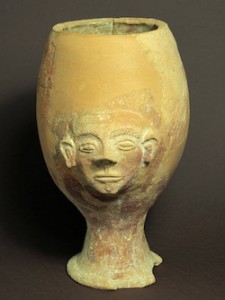
photos - From the Israel Antiquities Authority’s collection, glass objects found in a 2,000-year-old burial cave in Jerusalem and a pottery cup from the late Canaanite period, 13th-century BCE. (photo from Ashernet)
Also from IAA, a pottery cup from the late Canaanite period, 13th-century BCE.


Format ImagePosted on August 28, 2015August 27, 2015Author Edgar Asher ASHERNETCategories WorldTags archeology, IAA, Israel, Israel Antiquities Authority, Museum of the Bible, Steve Green
VTT Class Act honors

VTT Class Act honors

The Shia Ismaili community, St. Augustine’s Catholic School and Vancouver Talmud Torah students assembled gifts of hope and compassion, and distributed them – along with 2,000 servings of food items courtesy of Tim Horton’s – to residents on the Downtown Eastside. (photo from Vancouver Talmud Torah)

Random Acts’ Class Act is an annual award program for schools worldwide, intended to inspire acts of kindness around the world. The winner is the group that is the most creative and inventive in performing an act of kindness in their community and receives $3,000 US for their school.

Last year, Shoshana Burton and Jessie Claudio, then of Richmond Jewish Day School and Az-Zahraa Academy, respectively, won the Class Act award for Abraham’s Tent: Using Diversity as a Base for Unity, a joint Jewish and Muslim service learning project. Together, they planned a week of giving: teachers and students alike spent the week handing out scarves, shoes and bag lunches in one of Vancouver’s poorest neighborhoods and performing other acts of generosity in their community.

This year, with both Burton and Claudio at Vancouver Talmud Torah, they and their students were runners-up to the award for their Kindness Project.

With the organizational efforts of the sixth and seventh grade students of VTT, local community members were gifted with myriad kind gestures over a span of several months. Among the projects were a Random Acts of Chesed Race, in which students and their families gathered together to spread kindness across the city through a series of small acts; a holiday gift exchange with a neighboring Catholic school, during which students shared in one another’s traditions; and a donation drive for a nonprofit working to provide shoes to children in Haiti and the Dominican Republic (Ruben’s Shoes), for which the group collected more than 710 pairs. In addition, the group also paired up this spring with the local Catholic school and the Muslim Shia Ismaili community to distribute care packages to the homeless community in Vancouver – a project that not only helped the homeless, but the students as well.

“The focus was not only on handing out necessities and food to needy people but also to interact with them with compassion and restore their hope to make sure they understand that they are not forgotten,” wrote Burton to Random Acts, adding that the projects were meant to “build bridges of understanding that we are more of the same than different.”

“Jewish education includes many lessons about doing chesed, being generous, being compassionate, being nonjudgmental and inclusive from a very young age,” Burton said. “Our goal at VTT is not only to teach about it but also to provide students with enduring real-life opportunities to apply those so they can see and feel the great impact of their kind actions…. When we allow them to have a voice in how we will do things, they become empowered and literally unstoppable. They want to do more and we continue to be amazed and touched, seeing them inspired and inspiring all who are around them, including parents and teachers. The younger students watch the enthusiasm of the older ones and want to do it, too – it becomes contagious and takes a life of its own.

“Kids are not only compassionate but also curious to know more about the world, other cultures and faiths,” she added. “Our Grade 7 students had three projects with Muslim and Catholic students. They did not only learn to see similarities and common practices between faiths but also found themselves teaching about Judaism, feeling proud to tell the world who they are. Another example of building bridges with other cultures was when we invited a First Nations cultural group from Alert Bay to come learn about and participate in a Havdalah ceremony. When we were done with the Havdalah, we participated in one of their traditional drum circles, it was fascinating and moving.”

Format ImagePosted on August 28, 2015August 27, 2015Author Random Acts and VTTCategories LocalTags chesed, Jessie Claudio, kindness, Random Acts, Shoshana Burton, Vancouver Talmud Torah, VTT

Rapper makes us proud

Matisyahu, the reggae rapper whose refusal to be bullied into a political pledge resulted in his being removed from the lineup of a Spanish music festival, was eventually allowed to perform last weekend.

Global outrage over the politicizing of the musical event – and the potential whiff of antisemitism – led organizers of the Rototom Sunsplash Festival to reverse their demand that the Jewish American musician pledge support for an independent Palestine. (Not a two-state solution, mind you, or a negotiated settlement of the conflict.)

After he received an apology, Matisyahu accepted the invitation to play after all. He mounted the stage to heckles and chants of “out, out,” from multiple audience members waving large Palestinian flags.

“Let music be your flag,” he urged the audience as he proceeded with his 45-minute set, ending with a spine-tingling rendition of “Jerusalem,” a defiant anthem of Jewish survival and resilience: “3,000 years with no place to be / And they want me to give up my milk and honey,” he sang. “Don’t you see, it’s not about the land or the sea / Not the country but the dwelling of His majesty … Rebuild the Temple and the crown of glory / Years gone by, about sixty / Burn in the oven in this century / And the gas tried to choke, but it couldn’t choke me / I will not lie down, I will not fall asleep.… Afraid of the truth and our dark history / Why is everybody always chasing we?”

The incident was a nasty one, certainly, but its lesson is beautiful. Do not let bullies win, whether they attack you because of who you are or the ideas you carry. It is an issue we reflected on locally earlier this summer when outside forces attacked our community for hosting speakers from the New Israel Fund and it is an issue we face continually from the BDS movement, which, in the Matisyahu imbroglio, has shown its true colors.

Matisyahu also showed his. And it was a thing to see.


Posted on August 28, 2015August 27, 2015Author The Editorial BoardCategories From the JITags anti-Israel, antisemitism, BDS, Matisyahu, Palestine, Rototom Sunsplash Festival, Spain

Adler’s action unseemly

The memory of the Holocaust is frequently misused and abused. Enemies of Israel exploit the memory and imagery of the Shoah, using it against Zionists to deliberately cause pain. Many people unintentionally diminish this history by nonchalantly throwing around terms associated with the Nazi era.

Earlier this year, Project Democracy, a group that aims to convince Canadians to vote for the candidate in their riding most likely to defeat the Conservative candidate, produced a meme with a picture of Prime Minister Stephen Harper and the words: “Canadians fought fascism from 1939 to 1945. Why vote for it now?” This from an organization that has as the first line on its Facebook page: “Our objective … is to *raise* the bar of Canadian political discourse, not *lower* it.” Fail.

It may be especially bewildering to see those who, of all people, should know better, exploit tragic history. Recently, there was a tempest involving Ontario Conservative MP Mark Adler (again).

Adler was the MP who embarrassed himself, his party and the prime minister while on a trip to Israel last year. Harper was praying at the Western Wall when Adler, in perfect proximity to a media microphone, urged one of the PM’s handlers to let Adler get in the picture.

“This, it’s the reelection,” said Adler, whose riding has a significant concentration of Jewish voters. “This is the million-dollar shot.”

The incident undermined the Conservative party’s insistence that its support for Israel is principled, not political.

Last week, Adler was criticized for appearing to exploit his family’s own history when he advertised himself as a son of a Holocaust survivor.

This is not irrelevant information. Being Jewish and being a son of a Holocaust survivor almost certainly has an impact on the manner in which Adler’s worldview has been shaped. It was pointed out, in his defence, that other people have proudly declared their own unique heritage such as, in one instance, being the first Canadian of Asian heritage appointed to the Senate. Fair enough.

But Adler’s fault here is twofold. First, he proclaimed himself the first child of a Holocaust survivor elected to Parliament, which was quickly corrected by former Liberal MP Raymonde Folco. Folco, who represented a Montreal-area riding from 1997 to 2011, is not only a child of Holocaust survivors but a child survivor herself. She told Canadian Jewish News (see story on page 4) that it was “disgusting” for Adler “to use the Holocaust in this way, for personal ends.” She did not publicize her family’s experience before, she said, accusing Adler of “profiting” from his.

Ouch. But being incorrect on whether he was the first or second child of survivors pales when compared with the form of his use of this family history. On a large banner printed for the window of his campaign office – which has since been changed – there were four points he wanted voters to take away: “Son of a Holocaust survivor” topped the list. This was followed by “Raising my family in Bathurst Manor” (a heavily Jewish neighborhood), “Strong supporter of Israel” and “Keeping our community and the economy strong.” On another banner, the wording and order varied, but the messages were the same.

We get it. You like us. You’re one of us. But this is just unseemly.


Posted on August 28, 2015August 27, 2015Author The Editorial BoardCategories From the JITags federal election, Holocaust, Mark Adler, Project Democracy, Raymonde Folco

Posts pagination

Previous page Page 1 … Page 558 Page 559 Page 560 … Page 661 Next page
Proudly powered by WordPress