Author: Jacob Samuel


Capester reports violations
Capester offers a platform that allows users to report parking violations by filming and submitting legally admissible videos anonymously. (screenshot)
A great idea for an app was born out of a maddening experience for Ohad Maislish, an Israeli who walked with crutches for years following a skydiving accident. When he arrived for Shabbat dinner at his brother’s house, the sole handicap spot was occupied by a car without the proper permit. Since parking inspectors don’t work on Friday nights, he had to go to a police station and file a report, wait for the case to be processed and face the possibility of testifying in court in front of the offender.
Why couldn’t he simply use his smartphone to document the incident? The police explained that because videos can be doctored, such evidence wouldn’t stand up in court. So, Maislish, who started work at Microsoft’s Haifa research and development centre at age 17, called upon his background in computer science – and some friends with digital security and legal expertise – to create Capester, a platform enabling users to report parking violations by filming and submitting legally admissible videos anonymously.
In October 2014, with seed investment from BRM Capital and OurCrowd First, the founders spent 18 months perfecting a mobile app that would meet the court’s standards, assuring that the videos cannot be fabricated or altered. They worked closely with lawyers, including digital evidence expert Haim Ravia, chair of the internet, cyber and copyright group of the Pearl Cohen law firm in Herzliya.
Capester authenticates the video and sends it to the relevant local authority, which then determines whether to ticket the vehicle owner.
“We approached municipalities and each one had its own general counsel examine our legal opinion before approving Capester,” Maislish told Israel21c.
The app is available for Android and iOS from Google Play and the App Store. For each properly documented violation video, Capester – which is based in Petah Tikva – makes a donation to Access Israel, a nonprofit organization promoting accessibility and improved quality of life for people with disabilities in Israel.
“As a private company, we can’t issue tickets but only provide a platform for supplying evidence,” Maislish stressed. “If you record a violation in India, for example, it has to be in a place where we have an agreement with the relevant authority.”
He is not ready to reveal details of future marketing plans. “We are constantly looking to expand our services,” he said.
Moving violations
In related news, two new apps also help Israeli motorists stay safer on the roads.
The National Road Safety Authority, the Israel Police Traffic Department and the nonprofit Nativ Batuach (Safe Lane) organization have partnered to create the Guardians of the Road program. Using an app developed for the project at the Technion-Israel Institute of Technology, approved volunteers continuously photograph the road and vehicles visible through their windshield. When they see a traffic violation, they prompt the system by voice to deliver a video report to a control centre in the National Road Safety Authority for further evaluation and possible action by the police.
As well, a private startup, Nexar, has launched what it calls the world’s first AI (artificial intelligence) dashcam app. Nexar employs machine vision and sensor fusion algorithms to leverage a smartphone’s sensors to analyze and understand the car’s surroundings and provide documentation in case of accidents. Using this vehicle-to-vehicle network, Nexar also can warn users in real time of dangerous situations beyond their line of sight, effectively giving drivers more time to react. Founded by Eran Shir and Bruno Fernandez-Ruiz in early 2015, the company raised $10 million from Aleph, Mosaic Ventures, True Ventures and Slow Ventures. It has offices in Tel Aviv, New York and San Francisco.
Israel21c is a nonprofit educational foundation with a mission to focus media and public attention on the 21st-century Israel that exists beyond the conflict. For more, or to donate, visit israel21c.org.

Automakers in Israel
The 911 Turbo S Exclusive Series, Porsche Museum, Stuttgart, 2017. (photo from newsroom.porsche.com)
Porsche is establishing an innovation office in Tel Aviv, investing an eight-figure sum in the Magma and Grove venture capital funds. Further investments in start-ups and funds are planned. “Israel is a key market for IT experts and engineers. It has more start-ups per capita than any other country in the world. This talent and technological know-how coupled with the great expertise offered by our employees creates the ideal breeding ground for future business models,” said Porsche’s Lutz Meschke. He added that close collaboration with Israeli experts is necessary so that the company can quickly assess new technologies, develop good relationships and pilot appropriate solutions.
The Magma Venture (MV) fund is focused on artificial intelligence and automotive: with investments in numerous start-ups, like Waze, MV is one of the major venture capital (VC) funds in Israel and has $600 million US under management. Grove Ventures is a VC company with a volume of $100 million US; its primary early-stage investment areas are the internet of things (IoT), Cloud technologies and artificial intelligence.
– porsche.com
***
Mercedes Benz, General Motors, BMW, Ford, Honda, Uber, Volkswagen, Renault and Volvo also have opened R&D centres in Israel and/or invested in Israeli technology since 2016. The Honda Silicon Valley Lab, Volvo, Hertz International and Israel’s Ituran are sponsoring DRIVE, a new smart-mobility accelerator, co-working space and prototyping lab in Tel Aviv.
Jerusalem-headquartered Mobileye, prominent in the engineering of self-driving cars, was acquired by Intel in March for $15.3 billion US. Mobileye is partnering with the Massachusetts Institute of Technology and corporations including Microsoft to establish an international transportation lab in the Israeli port city of Ashdod.
– Abigail Klein Leichman, Israel21c
***
Prof. Yoram Shiftan, head of transportation research at the Technion-Israel Institute of Technology, said Israel “is one of the major contributors to driverless automated car technology.”
– JNS.org
Check out JI’s Summer Celebration calendar!
אובמה דיבר במונטריאול
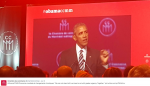
שלום חבר: אלפים באו לשמוע את ברק אובמה כדי להיזכר בימים טובים יותר של הבית הלבן. (צילום: twitter.com/@chambremontreal)
ברק אובמה, נשיא ארה”ב לשעבר, בפני קהל אלפים אוהד במונטריאול בשבוע שעבר, העביר את המסרים המרכזיים שלו על כל דבר, החל משינויי האקלים ועד למצב הדמוקרטיה. זאת באירוע שאורגן על ידי מועצת המסחר של מטרופולין מונטריאול. כל ששת אלפים הכרטיסים לאירוע החם נמכרו בתוך חמש עשרה דקות. כרטיסים בקדמת האולם עלו 300 דולר ליחיד וגם הם נחטפו במהירות.
אובמה אמר לקהל שהעולם עומד בפני אתגרים קשים כמו נטל הטרור, אי-שוויון גדול יותר מול גלובליזציה ותגובת פופוליסטית גוברת. הסיכוי הטוב ביותר לשגשוג בעתיד הוא עדיין הסדר הבינלאומי שהיה במקום מאז מלחמת העולם השנייה. לדבריו זה כולל סחר חופשי, כלכלת שוק ומדינת הרווחה החברתית שעניקה לאנשים הזדמנות שווה, יחד עם שלטון החוק, ההגירה וכמובן שיתוף הפעולה הבינלאומי. “ארה”ב וכן קנדה עזרו להוביל את המאמץ הזה, שיתפו פעולה יחדיו כדי להפוך את העולם למקום בטוח יותר, צודק ומשגשג”, אמר והוסיף: “ההיסטוריה שלנו, המאמצים המשותפים שלנו, מדברים על מערכת ערכים משותפת שנמשכת שנים על גבי שנים”.
באירוע אובמה לא הזכיר ולו פעם אחת במישרין את את נשיא ארה”ב הנוכחי, דונלד טראמפ, אבל המילים שלו שנבחרו בקפידה בכל זאת כללו ביקורת על הכיוון שאליו נקלע יורשו בחודשים ספורים מאז הוא בתפקיד. אובמה: “אנחנו נמצאים בסביבה שבה אנו מקבלים מידע רק על סמך מהן דעותינו, במקום לבסס את דעותנו על מידע של עובדות שאנו מקבלים, סיבות והגיון”.
אובמה הביע דאגה כי ארה”ב זנחה עכשיו את הסכם האקלים בפריז שהוא עזר רבות להשיגו, ולחתום עליו ביחד עם מדינות משמעותיות ברמת הזיהום שלהן, בהן סין והודו. “ברור שאני מאוכזב”, אמר אובמה. הוא ציין כי חלק גדול מהיסוד שהוטל בהבאת העסקה ההיסטורית הזו בפריז, יבטיח את קיומה. מדינות אחרות ומנהיגי התעשייה תופסים עתה את הלפיד וממשיכים בדרך. הוא אמר כי ההשקעות המשמעותיות שהממשל שלו עשה בתחום החשוב הזה, גורמות לכך שהאנרגיות הירוקות הן בחירות כלכליות נבונות ומתחדשות, שמבוססות על שימוש בשמש והרוח. “אנו פשוט נצטרך לפעול בדחיפות רבה יותר”, אמר אובמה בנוגע לשינוי האקלים. “אני מצפה שארה”ב תהיה המנהיגה ותלך קדימה ולא תעמוד מהצד”.
הנאום של הנשיא לשעבר במונטריאול היה אחד הנאומים הבינלאומיים הראשונים שלו, מאז עזב את המשרד בינואר. העיתוי של האירוע במונטריאול העלה את העניין לגבי מה שהוא אמר, בעקבות החלטת טראמפ לפרוש מהסכם האקלים.
שעות ספורות לפני שאובמה דיבר במונטריאול, יצאה שרת החוץ הקנדית, כריסטיה פרילנד, ואמרה כי קנדה אינה יכולה להסתמך עוד על ארה”ב להגנתה, ולכן עליה להשקיע בצבא שלה. דבריה היווו שינוי משמעותי במדיניות החוץ הקנדית.
לדברי אובמה אמנם יש חוק לא כתוב כי פוליטיקאים לשעבר לא מגיבים על עניינים הנוכחיים, אך הוא הצהיר כי לאחר שיעזוב הבית הלבן, ידבר אם זה יהיה הכרחי. “חשבתי שזה הולך להיות יותר שקט בשבילי במהלך השנה הראשונה”, הוא אמר.
אובמה הוסיף עוד כי זה מסוכן לפקפק בקמוקרטיה, למרות שיש לה פגמים. “אלה שמאמינים בערכים אלה ומאמינים בדמוקרטיה, צריכים לדבר עם שכנוע עמוק. זו הבחירה היחידה שלנו וזה מה שמביא אותנו עד כה”.
האירוע במקור היה אמור להיות סגור לתקשורת, אך שבוע לפני שנערך, קיבלו המארגנים בקשה מאובמה לפתוח אותו למדיה. ולפיכך הנאום הועבר בשידור ישיר ברשת הסי.אן. אן וברשתות השידור הקנדיות.
Interfaith efforts recognized
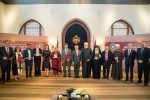
The winners of the 2017 King Abdullah II World Interfaith Harmony Week Prize with King Abdullah, centre, at Al Husseiniya Palace in Amman, Jordan. (photo from worldinterfaithharmonyweek.com)
On April 30, the leaders of the Calgary Interfaith Council were in Amman, Jordan, to receive the 2017 King Abdullah Award for World Interfaith Harmony’s first prize from the king himself.
The council’s co-chairs – Rabbi Shaul Osadchey of Beth Tzedec Congregation, Debra Faulk of the Unitarian Church of Calgary and Imam Fayaz Tilley, a chaplain at the University of Calgary and board member of the Muslim Council of Calgary – were invited to attend the ceremony at the Royal Hashemite Palace. They were presented with the award by King Abdullah II. It included a cheque for $25,000 US to put toward their continuing work in Calgary.
Osadchey described the experience as “memorable, momentous, impactful.”
“The Calgary Interfaith Council (CIC) was reconstituted in February as part of the launch of the United Nations World Interfaith Harmony Week program,” Osadchey told the Independent. “The CIC is now the amalgamated body of five or six other smaller interfaith organizations in Calgary. It was launched as the central voice of the interfaith community here, so we decided to première that with the United Nations World Interfaith Harmony Week.
“We organized a week of programs that highlighted interfaith cooperation and strength of the community. We did a program that began with an opening ceremony at city hall. The mayor had issued a proclamation for the city that designated the week of Feb. 1st to the 7th as UN World Interfaith Harmony Week in Calgary, and he personally came and spoke.”
They had 15 different religious communities involved in the festivities, which included interfaith breakfasts, a weekend open house, and people were welcomed into various congregations for workshops and tours. There were also two “build days,” where participants volunteered to build a house with Habitat for Humanity.
“We raised $15,000 for the Habitat project,” said Osadchey. “It was a program with depth.”
The Calgary Interfaith Council submitted what they did to the website that oversees the worldwide program of activities, said Osadchey. “There were over 1,000 events worldwide and we were selected as the outstanding program for 2017 and won first prize, the gold medal. What that meant was that they asked us to send three representatives to receive the award in Jordan, along with the second- and third-place winners – the second-place winners were from Bosnia and the third-place winners were from London, England. We were flown to Jordan and spent three days there.”
According to the prize’s press release, the International Forum Bosnia’s Centre for Interfaith Dialogue was honoured “for their efforts toward dialogue and cooperation among ethnic and religious groups in Bosnia and Herzegovina” and the London-based nonprofit PL84U Al Suffa for “providing meals and services to the homeless, elderly and others in need in an atmosphere of interfaith respect and cooperation.”
At the Sunday morning awards ceremony, both King Abdullah II and Prince Ghazi ibn Muhammad were in attendance, with the latter giving a talk. Osadchey was asked to give a three-minute speech on behalf of the winning delegation.
Osadchey was the first Jew and rabbi to be part of one of the award ceremonies. “They were very respectful, very interested and engaged in the conversation about Judaism and about the Jewish experience in the interfaith arena,” he said. “Both the king and the prince were pleased to have me as a delegate and acknowledged that the interfaith dimension of the program had taken a significant expansion by having Jews included.
“I was looking forward to being able to convey some comments to the king. I began by reciting the brachah [blessing] that is said when you’re in the presence of the king or head of state. I recited it to the king in Hebrew and then translated it into English. And my comments were about how religious literacy is a necessary component for creating interfaith harmony.
“I suggested to the king that the World Interfaith Harmony Initiative develop a youth component that would focus on religious literacy among the youth of the world. And, when I received the medal from him and we had a few moments to exchange some words, he asked me to follow up on that proposal, as did the prince.”
Osadchey said he is in the process of writing a proposal to create this youth component, and added that he is looking forward to running a youth interfaith harmony week in Calgary. He hopes that others will use his model and do likewise in their communities.
“I think it’s important that not only adult leaders engage in creating relationships, but that we begin developing those among the next generation,” he said. “If we can do that, then the road to true harmony will be a lot easier to create.”
Since the world interfaith award was created in 2010, said Osadchey, there have been two other Canadian cities that have won awards – Toronto and Halifax, both achieving third place in their respective years.
The Calgary Interfaith Council is hoping to inspire a national designation of Feb. 1-7 as World Interfaith Harmony Week across the country and to bring other Canadian cities and communities into the picture. They are starting with their home province, encouraging their leaders to issue a proclamation designating it throughout Alberta. “We’re pretty close to getting that done,” said Osadchey. “Then, we’ve got an MP that’s working in Ottawa to do the same.”
Osadchey returned from Jordan full of hope and was impressed by the respect, interest and welcoming response of the Jordanian people he encountered. Nonetheless, he thought that, while interfaith activity might take place among the upper echelons of Jordanian society, he suspected that the general population is likely not as open or accepting. “That would have to do with probably lower levels of literacy, education, just in general,” he said.
He added, “The fact that their neighbour is Israel – and even though they have a fairly good relationship with Israel – it is still tinged with the Palestinian issue as well. I don’t think the ‘man on the street’ really cares about interfaith relationships in Jordan, but the leadership and the king certainly are trying to push the country more toward an acceptance of that.”
In Jordan, dialogue is mainly with the Christian world and does not seem to have any links with the Jewish world, but Osadchey is hopeful it may happen as a consequence of his visit.
“We’ll see how that takes place, but they’re reaching out,” he said. “The fact that the king of Jordan is the one responsible for this initiative…. They are trying to project a different image internationally.
“It’s really been very positive…. It’s had a positive effect on the Calgary community, both Jewish and non-Jewish, seeing this as a great recognition of our efforts in the interfaith community. It’s garnered a lot of recognition locally and spurred people to get more involved in our program, so that’s been a really positive benefit.”
For more information and to see more photos from the ceremony in Jordan, visit worldinterfaithharmonyweek.com/2017-prize-awarding-ceremony.
Rebeca Kuropatwa is a Winnipeg freelance writer.
Have a business idea?
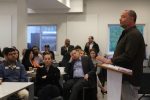
Gilad Babchuk of Groundswell speaks at Shtick Tank on April 27. (photo by Lior Noyman)
The Shtick Tank is a new platform for young Jewish entrepreneurs to pitch their ideas for the community and gain funding, support and mentorship to develop a start-up. At the showcase celebration on April 27 at the Ohel Ya’akov Community Kollel, four finalists – chosen from a variety of pitches – presented their business ideas to the 50-plus community members who attended the event.
Of the finalists – Alice Henry, Oded and Alon Aminov, Jarred Joffe and Tamir Barzilai – the audience selected Barzilai as the winner of the prize funding and mentorship by Gilad Babchuk of Groundswell and its Social Venture Incubator Program.
Henry presented an app called Equip, which helps users obtain the equipment they need for the experiences they want, and the Aminov brothers showcased PinPointRC, which offers worldwide drone tracking from the user’s phone. Joffe presented a smartphone application that can be used for field engineers to enhance recordkeeping, while Barzilai shared the concept of his app called Honeycomb, which identifies nearby restaurants based on dietary preferences.
The crowd seemed enthusiastic about all the ideas, asking questions of each participant after their pitch, often focusing on marketability and revenue-generation. Barzilai’s Honeycomb appeared to receive the most enthusiasm because of its utility and the potential to increase its scale by getting restaurants and food and hotel chains to register to be featured on the app.
In addition to potential market value, Barzilai’s knowledge of the market and of the artificial intelligence used by his app generated interest in the crowd. Honeycomb can be followed on Twitter (@honeycombapp) and is available in the App Store.
Shtick Tank is also a networking opportunity for future business leaders and it is run with the help of a committee of young Jewish professionals. The organizing committee has been spearheaded by Stephanie Mrakovich and includes Brent Davis, Andrea Hirsch, Simon Krakovsky, Zach Sagorin, Alex Shafran and Adelle Tepper, with support from Alana Mizrahi and Rabbi Shmulik Yeshayahu, who serves as the director of the Kollel.
Yeshayahu said the Kollel works “to reach out to non-affiliated and disengaged adults ages 24-50 by creating and promoting exciting and meaningful social, cultural and educational programs that invite people to experience Judaism (sometimes for the first time) in an inclusive, comfortable, joyful and nonjudgmental environment.”
He described the organization’s mandate as one of “connection” and said that the Business Network and Shtick Tank are perfect opportunities “to support individuals to realize their dream, while providing a platform for all applicants, attendees, sponsors and community members to connect with each other and network effectively.”
Shtick Tank, which is sponsored by Barry and Lauri Glotman and Dax Dasilva of Lightspeed, is currently accepting applications for its next event. Interested community members must submit their business ideas within technology, urban agriculture, social justice, social entrepreneurship, education, the arts, etc., by June 30, 7:30 p.m., to thekollel.com/events/shtick-tank-application-deadline. As with the first program, four finalists will be chosen to present their ideas (at the end of the summer) and the idea with the most votes will receive mentoring with Groundswell and some seed money.
Zach Sagorin is a Vancouver freelance writer. He is on the organizing committee of Shtick Tank.

Hand for Hand to God
Oliver Castillo plays both the human, Jason, and the puppet, Tyrone. (photo by David Cooper)
Supplementary education programs, or “afternoon schools,” as they’re commonly referred to, instil teens with an understanding of their Jewish heritage, including Hebrew language teaching, Judaic curricula, social activities and an opportunity to connect meaningfully with other Jewish teens. While Hand to God does not take place in a Jewish-oriented environment (in fact, it’s in the basement of a church), it still addresses the common issues of how to teach teens the value of their religion and heritage – and it does so hilariously.
Teacher Margery (the wonderful Jennifer Lines) tries to get three students – Jason, Timothy and Jessica – to pull together a hand-puppet show based on stories of the Hebrew Bible. The play starts with the youths creating their puppets and, at first, all things appear normal, but the disruptive bunch has other ideas.
The brash Timothy has little interest in the puppets but attends the classes because he has a crush on Margery (and is not shy about expressing his feelings) and Jessica seems relatively engaged with the concept. The timid and introverted Jason, Margery’s son, not only embraces the use of puppets but creates a second persona – Tyrone – within his doll.
Margery’s husband has recently died and Jason uses Tyrone to express the feelings of anger and abandonment he has toward his mother. While this dual identity seems rather innocuous at first – and Margery even pleads with Jason to support her in the puppet idea – it gets out of hand. Tyrone’s personality begins to overwhelm that of Jason’s until the unruly mannequin takes over entirely. At times, Jason’s extroverted alter ego is a benefit, helping him convey his attraction to Jessica. At other times, it becomes a raving maniac capable of serious destruction.
As the children deal with their own issues, Margery is dealing with hers. Devastated by the loss of her husband, she feels rudderless and alone. She hopes to find some fulfilment and pleasure in her work with the teens, but that disintegrates quickly as Timothy’s advances and Jason’s/Tyrone’s shenanigans descend into chaos and violence.
Meanwhile, the minister also has feelings for Margery, which puts her in an awkward position, feeling manipulated and lacking support from the one person she feels should be understanding.
Lines gives a credible performance as the confused Margery; and Oliver Castillo is amazing as he carries out the simultaneous roles of Jason and Tyrone.
The play is somewhat autobiographical in that playwright Robert Askins lived in a small town of conservative and religious family values. His mother actually did have an after-school puppet theatre in which Askins participated until his mid-teens, when his father died, after which he turned his back on his faith and became cynical about all things religious.
Though the production will have you laughing from the start, it tackles serious issues, such as the loss of loved ones, the loss of faith, feelings of betrayal and resentment, love and forgiveness. The subject matter will have you wondering how you might deal with similar situations, such as how far do you let a child go in creating a second personality? Is it harmful or helpful, and how do you know when to draw the line?
Hand to God runs at BMO Theatre Centre until June 25. Visit artsclub.com for tickets and showtimes. Warning: there is serious offensive language.
Baila Lazarus is a Vancouver-based freelance writer and photographer. She teaches businesses how to get coverage in mainstream media. More information can be found at phase2coaching.com.
Ignorance and power
Rebecca Katzman is graduating from the School of Social Work at Ryerson University in Toronto this spring. Now that she is leaving the institution, she has decided to go public with an incident that happened when she applied for a field education placement at a Jewish agency.
The story emerged recently and Katzman shared the experience firsthand in the Canadian Jewish News last week.
For her third-year work experience placement, she asked the school’s coordinator to investigate possible opportunities at UJA Federation or the Prosserman Jewish Community Centre. The school official responsible, Heather Bain, denied Katzman’s request, telling her that her choices were incompatible with the values of the school.
“I did not follow up with Prosserman JCC or UJA because after looking into them, some of their values seem to be in opposition to the values of the school,” Bain wrote in an email to Katzman, adding that the agencies both appear to have a “strong anti-Palestinian lean.” Later, Katzman said, Bain suggested that Katzman could work with the Jewish organizations only if she came in with an agenda to “bring a critical awareness to the setting.”
“It seemed that she implied that I could only work at these agencies if I came in with an anti-Israel agenda,” Katzman wrote in CJN.
When pressed by Katzman, Bain acknowledged that she did not do her own investigation into the organizations, but relied on the advice of colleagues who are members of Jews Against Israeli Apartheid. She added that she might change her position if she discovered that “both agencies (were) supporters of Palestinian solidarity movements.”
It turns out Bain may have underestimated who she was dealing with. Katzman was not only active in student organizations supporting Israel and opposing antisemitism on campus, she was a StandWithUs Emerson Fellow, part of what is described as a “prestigious one-year fellowship program that recruits, trains, educates and inspires pro-Israel college students to become an elite cadre of leaders on college campuses across North America.”
StandWithUs provided Katzman with pro bono legal counsel. Even so, despite legal assistance and a history of involvement in Jewish activism, Katzman did not go public until her time at Ryerson was over. How many students in Canada have had similar experiences but lacked the resources or fortitude to stand up to it?
It is clear that Bain’s extraordinary decision was based on almost complete ignorance of the reality of the organizations she besmirched, having been arrived at on the advice of individuals who come from an extreme anti-Israel position. For a person in a position of power to set policies, this is disgraceful.
It takes courage to stand up to this sort of injustice. Those who choose – or who, like Katzman – are forced to confront it deserve our encouragement, support and gratitude.

BBQ party for Lag b’Omer
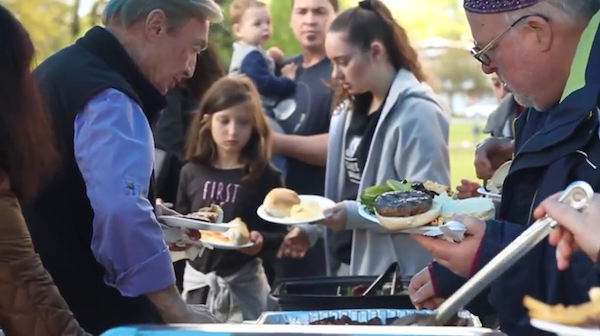
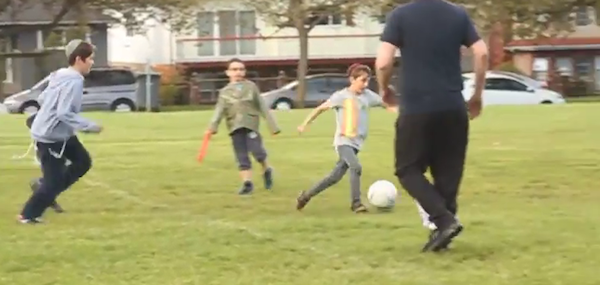
Approximately 300 people celebrated Lag b’Omer at David Livingstone Park on May 14. (all images are screenshots from the video by LNP)
Chabad East Van, Chabad of Richmond, Chabad Lubavitch BC, Ohel Ya’akov Community Kollel, Tzivos Hashem Vancouver (a Kollel program) and Chabad of Downtown hosted a community BBQ at David Livingstone Park in honour of Lag b’Omer on May 14. Approximately 300 people attended and kids from Tzivos Hashem did a presentation and led a short program. There was food, music, prizes and sports. A video by Lior Noyman Productions, which captures some of the afternoon’s highlights, can be found on YouTube.