Peddlers in new light

The award-winning Canadian film Lies My Father Told Me begins with a hunched over man on a horse-drawn wagon moving slowly through the snowy narrow streets of old Montreal. His grandson runs through the streets shouting Zayde, Zayde, as he tries to catch up with the wagon. The peddler occasionally cries out, rags, clothes, bottles. It’s a poignant scene that reflects the stereotypical view of how the first Jewish immigrants established themselves in the new world. However, the scene is misleading.

In one of the first histories to look at the role of the Jewish peddler in society, author and academic Hasia R. Diner in Roads Taken: The Great Jewish Migrations to the New World and the Peddlers Who Forged the Way (Yale University Press, 2015) says that most Jewish immigrants who started off as peddlers were young men who headed out to the countryside with suitcases of merchandise, not weary old men with wagons.

More than three million Jewish people left home in search of a better life from the late 1700s to the early 1900s. They came from the Ottoman Empire, North Africa, Eastern Europe and Germany. They headed out to countless isolated corners of the world – Canada, the United States, Cuba, Mexico, Argentina, Peru, Ireland, Wales and southern Africa. Peddling became the engine that fostered migration. A mass of ordinary people in their ordinariness made history. The peddlers were foot soldiers in a vast army of migrants that gave modern Jewish life much of its shape.

Diner, an award-winning professor of American Jewish history at New York University, does not tell the history of any single person, place or time. She relies on an academic approach rather than colorful storytelling, jumping across continents looking for similarities. She discovers them in abundance.

She finds that, regardless of where they came from or their destination, the experience of the Jewish immigrant was remarkably consistent.

On arrival, the Jewish immigrant – almost always a young man – connected with family members, friends or sometimes just a member of the Jewish community who helped them settle into the new world. The “greenhorn” would learn a few phrases in the new language and would be given merchandise to take on the road.

The new peddler did not carry the necessities of life. Rather, he sold a higher standard of living – sheets and pillowcases, picture frames, needles, threads, buttons, tablecloths, eyeglasses or suspenders. As he became more successful, he carried heavier items for sale in a horse-drawn wagon, such as stoves and bathtubs.

While in the countryside, the peddlers bought scrap, rags, metal, paper or anything else to be brought back to the city and sold. Many offered instalment plans to help their customers pay for their purchases. Within a few years, most peddlers opened their own stores in the city or moved on to other work. Their success encouraged family and friends to join them in the new land.

Diner contends that the waves of migration had a significant impact on the development of the countries that took them in. Industrialization, urbanization and social upheavals were transforming those societies at that time, and Diner says that Jewish immigration to the remote countryside played a significant role in the transformation that has previously not been acknowledged.

The Jewish peddlers solidified European colonialism in remote areas, bringing the city’s latest styles in clothing, furniture and tchotchkes to remote farms, mines, plantations, and logging and fishing camps.
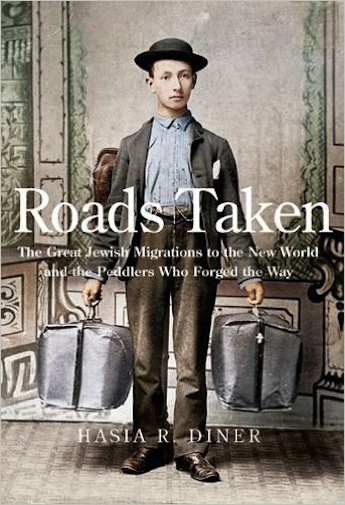
image - Roads Taken by Hasia R. Diner book cover, fullThe peddlers crossed economic, social and religious divisions. They blunted social isolation with news of the outside world, helped break down class barriers, spread the gospel of consumption and encouraged individual choice in communities where there was little.

Diner even detects an impact on the evolution of women’s rights. The peddlers dealt mostly with women while men were at work. Women decided which goods to buy, and when and how to pay for the merchandise. In other circumstances at that time, women were mostly in the background while men made the decisions. Meanwhile, in the Old Country, the women left behind temporarily, to care for families, assumed responsibilities previously carried out by their husbands and fathers.

Diner also knocks down several shibboleths about Jewish immigration to the new world.

Contrary to widely held perceptions, Diner found that most Jewish migration was not a response to pogroms, hatred and antisemitism. She disputes that Jewish immigrants went into business as a result of discrimination and that the immigrants relied on the Jewish community for financing their dreams because local banks would not do business with them.

Invariably, as Diner travels the world, several references to Canada pop up.

She writes about Max Vanger, who relied on peddling outside Halifax and Saint John in the early 20th century to provide him “with the bedrock upon which to get started in his new world.” The Finkelsteins’ store in Winnipeg in the 1880s provided merchandise for the new Jewish immigrants who went off to trade with “the Indians and English” in the surrounding territory.

The Baron de Hirsch Institute in the 1880s lent money to peddlers in Montreal. The Jewish Colonization Association had a committee to give out loans across Canada to peddlers to pay for licences and to help the immigrants establish themselves. The Toronto Mail and Empire newspaper in 1897 wrote about the number of Jewish peddlers who go about the city and out among the farmers in the country.

Similar to Jewish immigration in numerous other countries, peddlers in Canada moved on to shopkeeping, financing and other work. Isaac Cohen in Kingston, Ont., started out as a peddler, became a scrap-iron dealer and eventually built up one of the largest scrap-metal firms in Canada.

Peddlers in Canada, as in other countries, occasionally ran up against racism. Reflecting the attitudes of the times, Anne of Green Gables, the legendary children’s book set in Prince Edward Island, describes a devious crook as a German Jewish peddler.

Diner does an impressive job of placing the traditional image of the Jewish peddler in a new context. She convincingly transforms the lonely immigrant peddler into a leading actor in the social, religious and economic upheavals over a 150-year period. However, she should have spent more time on the personal anecdotes of the peddlers. More academic than writer, she leaves it up to the reader to imagine the emotional conversations and inner struggles that might have taken place. She reduces the lives of the immigrants to sweeping generalizations that sometimes feel like exaggerations to prove a point. She passes lightly over the difficulties in conditions in countries that the peddlers left behind, leaving many questions unanswered.

Occasionally, errors creep in that chip away at her credibility. She confuses Saint John, N.B., and St John’s, Nfld.; she says Reform Judaism was founded in the United States, not Germany.

On the whole, however, Diner provides a fascinating account of an overlooked and often misunderstood aspect of Jewish history. Hopefully, her work will lead to more books on Jewish migration and the history of peddling.

Robert Matas, a Vancouver-based writer, is a former journalist with the Globe and Mail. This review was originally published on the Isaac Waldman Jewish Public Library website and is reprinted here with permission. To reserve this book or any other, call 604-257-5181 or email library@jccgv.bc.ca. To view the catalogue, visit jccgv.com and click on Isaac Waldman library.
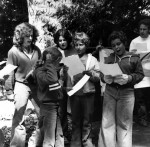
Mystery photo … Aug. 28/15

Children singing, Camp Miriam, Gabriola Island, B.C., 1979. (photo from JWB fonds; JMABC L.09623)

If you know someone in these photos, please help the JI fill the gaps of its predecessor’s (the Jewish Western Bulletin’s) collection at the Jewish Museum and Archives of B.C. by contacting archives@jewishmuseum.ca or 604-257-5199. To find out who has been identified in the photos, visit jewishmuseum.ca/blog.

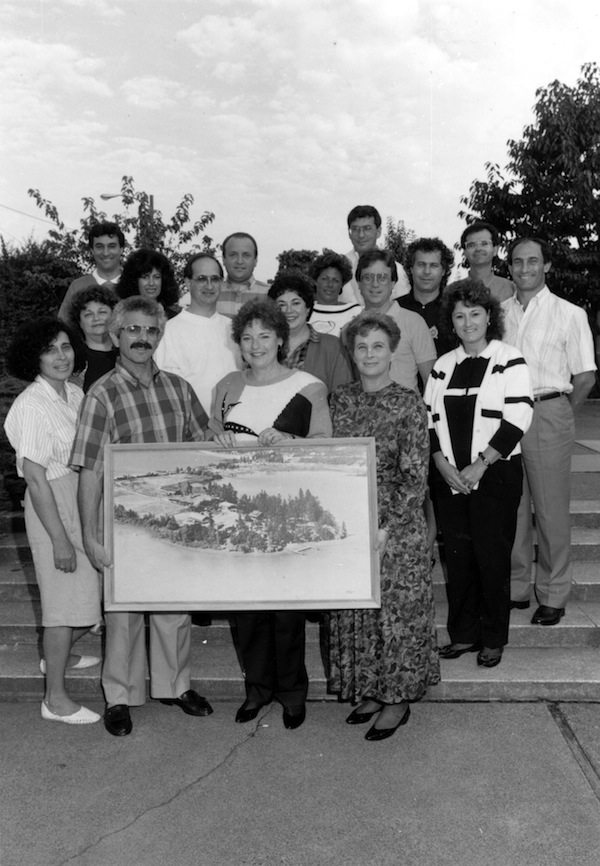
photo - Group with a drawing of Camp Hatikvah, 1988
Group with a drawing of Camp Hatikvah, 1988. (photo from JWB fonds; JMABC L.09611)
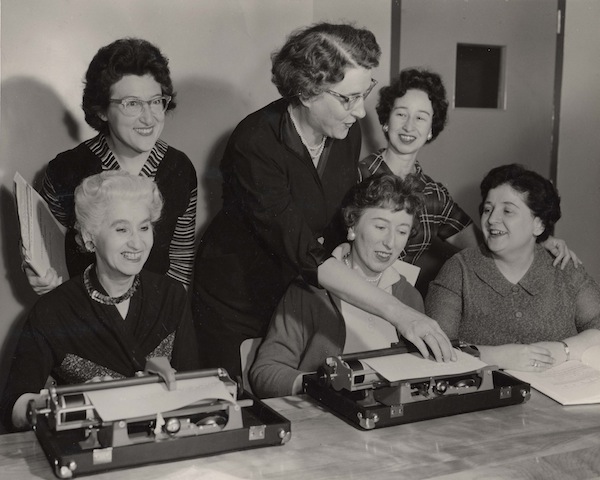
photo - Women using typewriters, National Council of Jewish Women, circa 1955
Women using typewriters, National Council of Jewish Women, circa 1955. (photo from JWB fonds; JMABC L.13953)
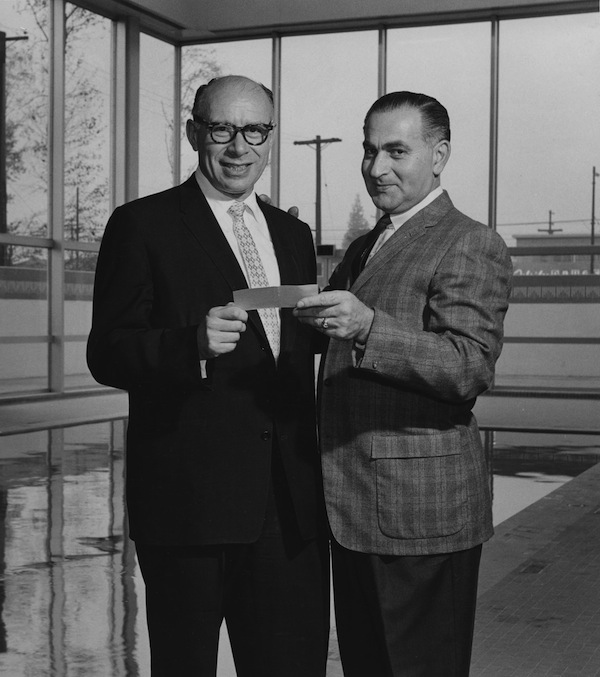
photo - Two unidentified men at the Vancouver Jewish Community Centre, circa 1962
Two unidentified men at the Vancouver Jewish Community Centre, circa 1962. (photo from JWB fonds; JMABC L.11516)

תינוקת ומאה וחמישים תנינים נמצאו

 במאי נמצא תנין משוטט ברחבי העיר קיסריה, לאחר שברח מחוות תנינים שבישוב בית חנניה שסמוך אליה.(צילום: YouTube screenshot)

תינוקת בוכיה נמצאה נעולה בכספת: איש האחזקה של בית מלון שיחרר אותה ללא פגע

בשבוע שעבר חדרנית של בית המלון הווארד ג’ונסון באזור הניאגרה פול של קנדה, נדהמה שממה שזוג שגר באחד החדרים סיפר לה. שני האורחים ממוצא אסייתי תוך שהם מנתנשפים ובאנגלית עילגת וכמעט בלתי מובנת, אמרו לה שהתינוקת שלהם שהיא כמעט בת שנה, ננעלה בכספת שבחדרם. לאחר שהתעשתה, החדרנית הזעיקה את איש האחזקה של המלון, שהגיע בריצה מטורפת הישר לחדר של ההורים עם ארגז הכלים שלו. הוא הצליח תוך מספר דקות ארוכות לפתוח את הכספת, ולחלץ ממנה את התינוקת הבוכייה כשלמזלם שכולם היא בריאה ושלמה. הנהלת בית המלון הספיקה בינתיים לדווח על המקרה המוזר למשטרה הפדרלית (האר.סי.אם.פי) ועוד בטרם השוטרים הגיעו, ההורים המבויישים ביחד עם התינוקת ושני אחיה המבוגרים יותר, נכנסו לרכבם ונעלמו אל תוך החשכה. לאחר מכן התברר למשטרה כי המשפחה בשל החוויה הקשה שעברה עליה ומאימת אמצעי התקשורת, העדיפה לעבור וללון אצל חברים שגרים בעיר מרקהאם שליד טורונטו.

המשטרה פתחה בחקירה מואצת לאתר את ההורים והתינוקת. בשלב ראשון התברר בחקירה כי רכבם של ההורים נושא לוחית זיהוי אמריקנית (של מדינת ניו ג’רסי), הם גרים בברוקלין והגיעו לחופשה של מספר ימים בקנדה. לחקירה צורפה עתה גם המשטרה הפדרלית האמריקנית (האף.בי.איי), והודעה נמסרה אף למשטרות הגבולות של קנדה וארה”ב, כדי שיעצרו את הזוג כאשר ינסו לחצות את הגבול ולחזור לארה”ב.

לאחר ששמעו באמצעי התקשורת הרבים כי הם מבוקשים לחקירה ע”י המשטרה הפדרלית, שמחפשת אחריהם במרץ, ההורים המבוהלים התקשרו ביוזמתם לתחנת המשטרה המקומית. בחקירתם שהתבצעה בעזרת מתורגמן, סיפרו השניים כי שלושת ילדיהם שיחקו במחבואים בחדר שבמלון, והתינוקת מצאה לנכון להתחבא דווקא בכספת. אך לרוע המזל הדלת של הכספת ננעלה והם לא ידעו כיצד לפתוח אותה. לאחר שנשמעה גירסת ההורים לאירוע ומשהתברר שהתינוקת לא נפגעה אלא רק בכתה, הוחלט במשטרה שאין מדובר כאן במעשה פלילי. ולכן לא היה מקום להעמיד את ההורים לדין והם שוחררו לדרכם, וחזרו לארה”ב.

מאה וחמישים תנינים נמצאו בבית אחד: הם הועברו לחוות תנינים ללא פגע

בעל חווה וגן חיות לגידול תנינים שנמצא מרחק כשעתיים נסיעה מטורונטו, נדהם מטלפון שקיבל לפני מספר ימים. על הקו היה אזרח העיר שגידל בביתו לא פחות ממאה וחמישים תנינים, וביקש את עזרתו המידית לפנותם. הוא גידל את התנינים במשך כעשר שנים, אך כבר לא היה מסוגל להשתלט עליהם כיוון שגדלו, וחלקם אף הגיע לאורך של שלושה מטר ויותר. שמו של בעל התנינים וכתובתו נשארו חסויים. בגן החיות ציינו שביתו נמצא בתוך אזור מגורים בטורונטו, והתנינים חיו בתוך אקווריומים גדולים. בעל החווה הודה לו על שביקש להעביר את התנינים לגן החיות ואף העביר תרומה כספית גדולה למימון אחזקתם היקרה.

מבצע פינוי והעברת התנינים היה ארוך ומסובך ונמשך למעלה מארבע שעות, בהשתתפות יותר מעשרים מתנדבים שמנוסים בטיפול בזוחלים האגרסיביים. לאחר שלסתותיהם נקשרו וראשם כוסה בבד יוטה עבה, הועברו התנינים לתוך תיבות מיוחדות וגדולות שהועלו למשאיות. לאחר מכן הם הוסעו אחר כבוד לביתם החדש והנוח יותר בגן החיות.

במאי נמצא תנין משוטט ברחבי העיר קיסריה, לאחר שברח מחוות תנינים שבישוב בית חנניה שסמוך אליה. המשטרה נקראה למקום והזעיקה את בעל החווה. הוא לכד את התנין והחזירו לחווה. לטענתו מישהו פרץ לחווה ושבר את מנעול הכלוב בה שהה התנין, וזה ברח.

Cotler speaks at FEDtalks

Irwin Cotler, left, with Bob Rae. Cotler is one of four speakers who will participate in FEDtalks, the Jewish Federation of Greater Vancouver’s annual campaign launch on Sept. 17. (photo from irwincotler.liberal.ca)

Irwin Cotler, one of the foremost figures in international human rights, will speak here next month on global trends impacting the Jewish community. He is one of four guest speakers at FEDtalks, an innovative new opening event for the Jewish Federation of Greater Vancouver’s annual campaign.

When the new Parliament is sworn in after the Oct. 19 election, Cotler’s career as an elected politician will end. He has served as MP for the Montreal riding of Mount Royal since 1999, and as minister of justice and attorney general for Canada. He is not seeking reelection.

His proudest achievements in politics, he told the Independent, include legislation against human trafficking, particularly of women and children. He also cited the legislated equality of marriage for gays and lesbians, which he shepherded through the House. “We were at the time only the fourth country in the world, in 2005, to do so and it was very divisive at the time,” Cotler said of the civil marriage law.

He also takes pride in being the attorney general when Steven Truscott’s conviction for rape and murder was overturned and declared a miscarriage of justice. Truscott was a 14-year-old Ontario boy sentenced to death in 1959 for the rape and murder of a classmate. His death sentence was commuted to life imprisonment and he was jailed for a decade before being paroled, but it was another four decades before his name was cleared and he was acquitted by the Ontario Court of Appeal.

In addition to landmark acts, Cotler said his proudest roles in public office have included helping individuals in ways that never make the news. “I think the one [achievement] that remains unheralded and that is true for all MPs is the one in which we try as best we can on a daily basis to act as an ombudsperson for the constituents in our riding,” he said.

After he leaves office, he will devote more time to the defence of political prisoners, he said. In his role as an international human rights lawyer, Cotler has been central to some of the most prominent cases in the world, including those of Andrei Sakharov, Nathan Sharansky and Nelson Mandela. He is currently on the legal team for Chinese Nobel Peace laureate Liu Xiaobo, the imprisoned Saudi blogger Raif Badawi, the Venezuelan political prisoner Leopoldo López and the Iranian Shi’ite cleric Ayatollah Boroujerdi. He has been recognized with numerous honorary degrees and other awards, including Parliamentarian of the Year by his colleagues in the House of Commons. He chaired the International Commission of Inquiry into the Fate and Whereabouts of Raoul Wallenberg.

“I am even exploring establishing a Raoul Wallenberg Centre for International Justice named after the first [Canadian] honorary citizen, a unique international consortium of politicians, scholars and jurists, human rights defenders, NGOs united in the pursuit of justice, inspired by and anchored in Wallenberg’s humanitarian legacy,” he said. “Those are some of the things I’m looking forward to.”

At the FEDtalks event, Cotler said he will address “mega-trends” affecting the Jewish people worldwide, foremost being what he calls the “Iranian five-fold threat.”

The nuclear agreement between Iran and the P5+1 powers, “both in the process of arriving at the agreement with Iran and the agreement itself, has overshadowed, if not sanitized, the other four threats,” he said.

Those overshadowed or sanitized threats, he continued, include Iran being the leading sponsor of international terrorism, “the hegemonic threat in terms of its destabilization of the Middle East and beyond,” the danger posed by Iran’s state-sanctioned incitement to hate and to genocide, and the “massive domestic repression” in Iran.

“While the nuclear negotiations have been going on, for example, Iran, which already was executing more people per capita than any other country in the world in the time of [Mahmoud] Ahmadinejad, has almost doubled the execution rate and yet we hear very little about it, and that’s only one example,” said Cotler. “I’ll be speaking about the criminalization of dissent, the prosecution and persecution of Baha’is and other religious and ethnic minorities.”

The second mega-theme, he said, will be terrorism, security and human rights, including how we combat terrorism without undermining civil liberties, and a third theme will probably address antisemitism in what he calls its old and new forms. “The old, or classic, antisemitism being the discrimination against, denial of, assault upon the rights of Jews to live as equal citizens within any society that they inhabit,” he explained, “and the new antisemitism being the discrimination against, denial of and assault upon the right of Israel and the Jewish people to live as an equal member among the family of nations or, at its worst, to even to live.”

FEDtalks, the opening event of the annual campaign for the Jewish Federation of Greater Vancouver, takes place Sept. 17 at Queen Elizabeth Theatre. More information is available at jewishvancouver.com and tickets are available at ticketpeak.com/JFGV. Interviews with the other speakers will appear in successive issues of the Independent.

Fighter returns to Israel

Former British Columbian Gill Rosenberg spent nine months fighting the Islamic State in Iraq and Syria. (photo from Gill Rosenberg)

Gill Rosenberg returned to Israel a month ago, after spending nine months fighting the Islamic State in Iraq and Syria (ISIS).

Born in Surrey, Rosenberg, 31, grew up in White Rock and graduated from King David High School before continuing her studies at B.C. Institute of Technology, finishing a program in airport operations management. She moved to Israel in 2006 to serve in the Israel Defence Forces, volunteering through a program called Mahal (the overseas volunteer IDF program). During the course of her service, she made aliya. She now lives in Jerusalem.

“I served as a search and rescue NCO (non-commissioned officer) and as an instructor at the Search, Rescue and Civil Defence School,” Rosenberg told the Independent. “It was a great experience.”

She also spent time training the Kenyan Armed Forces and helped them establish a disaster response unit in their country.

Growing up in British Columbia taught Rosenberg “to respect the diversity of culture, beliefs and religion,” she said. “As well, being raised Jewish, I had a strong education on the Shoah and participated in the March of the Living, visiting the concentration camps in Poland.”

After that experience, Rosenberg was invited to speak at the B.C. Legislature on behalf of Jewish youth when the government voted to enact Holocaust Memorial Day legislation, when Ujjal Dosanjh was premier.

Intolerance and totalitarianism are two things that she has vowed to never tolerate. “I fully believe that when we say ‘Never again,’ we don’t mean just for us Jews,” she said. “We can’t stand by and stay silent to any genocide taking place – and that’s what I saw happening to the Yazidi population on Sinjar Mountain. The Christians and Yazidis in Iraq have lost the most in this war.”

Rosenberg fought in Syria with the YPG/YPJ (Kurdish militia groups) for three months and then headed to Iraq for six months, fighting with the Assyrian Christian militia, Dwekh Nawsha.

“In Syria, I was in Serekaniye and it was a pretty static front over the winter months,” she said. “It was bitterly cold, always raining, muddy, and darkness like I’ve never experienced anywhere else.

“There’d be a firefight at least once a day, but it was mostly from a distance of over one kilometre. My first day on the frontline, a suicide bomber blew himself up about 50 feet from our checkpoint. He intended to get closer, but because of the deep mud, his vehicle got stuck and, thank God, he was the only casualty that day.

“In Iraq,” she continued, “I was at a frontline 25 kilometres from the city centre of Mosul. They were in Baqofa and Telskuf, and the next town over, called Batnay, was already Daesh-occupied.

“The Daesh [ISIS] are hitting that position with mortars, Katyusha rockets and heavy machine gun fire daily and especially at night. They attempt to ambush, but both Dwekh Nawsha and the Peshmerga at that frontline have prevented any advancement of ISIS forces.”

Rosenberg said she was treated with the utmost respect and not any differently than other fighters. “They feel like the world has forgotten them, so for an Israeli Jewish woman to pick up a weapon and stand with them on the frontlines meant a lot to them,” she said. “I still keep in touch with the leader there and he tells me I’ll be a part of them forever, that we’re family.”

As she was fighting, Rosenberg wore the Canadian flag on her uniform proudly. “I feel that Canada is one of few countries that still stands tall and supports democracy and freedom, and it isn’t afraid to condemn those committing evil in this world. And that’s something to be very proud of.”

Earlier in the interview, she noted, “Stephen Harper is the only world leader condemning the nuclear deal with Iran and speaking out against the evils of this world and standing with our best allies.”

Since returning to Israel, Rosenberg has met with several members of the Knesset and shared with them some of her experiences. She also has been approached by several nongovernmental organizations working in Syria and Iraq for her help with their efforts.

“I want to continue helping women and children in Syria and Iraq,” she said, “so I have to determine where my experience and abilities can be best put to use. As far as returning to the frontline, I have no plans to return at this stage.”

Rosenberg was very clear that she does not see herself as a recruiter. “I very adamantly would advise against anyone traveling to the region to fight,” she said. “There are many ways to help, including a Montreal Jewish foundation called CYCI (the Liberation of Christian and Yazidi Children of Iraq), which are buying and liberating the children that are sold like sheep in the market in ISIS-controlled areas.

Pikuach nefesh [to save a life] is an obligation we have as Jews, and the Talmud even requires us to spend money to save a life if we have that ability,” she said. “This organization [CYCI] gives us that ability.”

Another Canadian organization, also coming from the Jewish community, is Rape Is No Joke (RINJ). This group provides medical care to women and children who have been victims of rape and other brutality in Syria and Iraq.

From what Rosenberg has been hearing, the dynamics on the battlefield have changed in recent weeks, with the Iranians making gains in Iraq against ISIS. However, she was quick to add, “They might be fighting ISIS just as I was, but, ultimately, they’re not a friend and I believe they’re a much greater threat than is ISIS.”

Reiterating her discouragement of anyone traveling to the region to fight, Rosenberg said, “I believe that if we don’t stop ISIS now, they’ll be at our doorstep before we know it. ISIS are geniuses at social media and media and know how to look strong and strike fear in the hearts of the West.

“I can tell you, from my personal experience on the ground, that they fight in a very cowardly manner and often run away when challenged. This is especially true when it’s the women of the YPJ. Their beliefs are such that they think if they’re killed by a woman, they will go to hell. So, my only question is this, What happens to them when that woman is also Jewish and Israeli?”

Rebeca Kuropatwa is a Winnipeg freelance writer.

NDP drops candidate

Three federal NDP candidates are under intense scrutiny – and one has resigned – for controversial comments each made about Israel.

Hans Marotte, the NDP candidate in Quebec’s Saint-Jean riding; Morgan Wheeldon, who was, until stepping aside Aug. 9, running in the Nova Scotia riding of Kings-Hants; and David McLaren, running in Bruce-Grey-Owen Sound, were among the NDP candidates featured, alongside past comments they made, on a Conservative Party of Canada’s attack website titled “Meet the NDP.”

Marotte, a lawyer and well-known former separatist, is flagged on the site for a statement he made in his 1990 book Un Pays à Faire (A Country to Make): “When a Palestinian comes to ask me to sign his declaration of support for the intifada, and tells me how happy he is to have my name on his list, I see how important it is that we not close in on ourselves.”

photo - Until he stepped aside, Morgan Wheeldon was running in the Nova Scotia riding of Kings-Hants
Until he stepped aside, Morgan Wheeldon was running in the Nova Scotia riding of Kings-Hants. (photo from Facebook via cjnews.com)

Wheeldon, whose website has been wiped of all content, is featured on the Conservative site for a comment in an August 2014 Facebook post, made in the context of a discussion about British MP George Galloway, who had been physically attacked in London allegedly for his anti-Israel views.

The quote reads: “One could argue that Israel’s intention was always to ethnically cleanse the region – there are direct quotations proving this to be the case. Guess we just swept that under the rug. A minority of Palestinians are bombing buses in response to what appears to be a calculated effort to commit a war crime.”

McLaren, meanwhile, is quoted as saying it isn’t principled to take sides in the Israeli-Palestinian conflict because it is like picking a side in “a telephone booth packed with dynamite.”

In a statement to the Canadian Jewish News, the NDP’s senior campaign adviser, Brad Lavigne, said the party’s “position on the conflict in the Middle East is clear, as [leader] Tom Mulcair expressed clearly in [the recently televised Maclean’s] debate. Mr. Wheeldon’s comments are not in line with that policy, and he is no longer our candidate. We were made aware of some information that had not previously been disclosed. When we approached Mr. Wheeldon with this information, he submitted his resignation.”

The NDP did not offer a comment on Marotte’s or McLaren’s statements.

Wheeldon himself told the CJN via Twitter that his Facebook statement “referred to how information sources affect framing of the conflict. I also attacked terrorism and said neither side was solely at fault, but pointed out the alternate perspective. I said ‘one could argue.…’ I’ve been called an antisemite, and it’s pretty upsetting for me and my family.”

Michael Mostyn, CEO of B’nai Brith Canada, said that it was appropriate for Wheeldon to offer his resignation following his “libelous smears against the Jewish state.”

“Israel is a democracy where all its citizens enjoy rights and freedoms unimaginable anywhere else in the Middle East,” said Mostyn. “Mr. Wheeldon should use some of his newfound free time to advocate against actual ethnic cleansing taking place on a daily basis in the terrorist Islamic State, which continues to massacre Christians, Yazidis, gays and other minorities.”

Mostyn also noted that B’nai Brith is trying to track down a copy of Marotte’s book, and reach out to him to verify the accuracy of the quote and whether his opinion has changed over the 25 years since he wrote the book.

He added that “the quote in question displays a certain naiveté about the fact that one does not sign a petition to support an intifada, jihad or any other extremist act of violence. Seeking to promote a pluralistic society in Canada does not translate to supporting calls for violence against innocent civilians.”

Joe Oliver, the Tory MP for the Toronto riding of Eglinton-Lawrence, also condemned the remarks.

“These radical anti-Israeli comments are just another example of the NDP’s troubling lack of support for a democratic friend and ally,” Oliver said. “They stand in stark contrast to Prime Minister Stephen Harper’s unwavering support for Israel’s security and right to defend itself against international terrorism. Reckless comments on matters of international relations make it abundantly clear how inexperienced and risky the NDP would be for Canada’s future and its standing in the world.”

– For more national Jewish news, visit cjnews.com.


MPs reception guests

Left to right: The Hon. Alice Wong, Conservative MP; Erinn Broshko Conservative candidate, Vancouver Granville; Bonnie and Allan Belzberg; and the Hon. Jason Kenney, Conservative MP. (photo by L. Broshko)

Conservative Party of Canada MPs Jason Kenney and Alice Wong were special guests at a reception held on Aug. 9 at the home of Allan and Bonnie Belzberg. Erinn Broshko, the Conservative candidate in the Vancouver Granville riding, addressed the gathering and introduced Kenney, Canada’s minister of national defence and multiculturalism. Kenney spoke about the federal government’s support for Israel, foreign policy and other topics of interest to the group. His remarks were candid and well received by the approximately 35 people in attendance.

While Kenney was in Vancouver, he participated in the most recent Canada Decides 2015 townhall organized by Temple Sholom and the Centre for Israel and Jewish Affairs.


Be involved in election

B.C. Generation students in Ottawa earlier this year. (photo from CJPAC-BC)

This summer, CJPAC, the Canadian Jewish Political Affairs Committee, celebrated the first anniversary of its British Columbia office. The multi-partisan organization, which already had offices in Toronto, Montreal and Edmonton, recently expanded its presence with offices in Vancouver and Winnipeg.

CJPAC’s mandate is to engage Jewish and pro-Israel Canadians in the democratic process and to foster active political participation. It is dedicated to helping community members build relationships within the Canadian political arena.

In the last year, CJPAC’s B.C. office has hosted a number of events, including Vancouver Connect: Meet Your Next Mayor, which was an opportunity for 100 participants to meet with mayoral and city council candidates in advance of the municipal election, and the second annual Women in Politics gathering, at which 45 community members heard about working in politics from five female politicians and political staffers.

In addition, last May, 11 B.C. high school students traveled to Ottawa as part of CJPAC’s Generation program for two days of networking and training sessions. While in Ottawa, the students had a tour of Parliament Hill, observed Question Period and met with elected officials from all parties.

“In a little over a year, CJPAC has had a tremendous impact on the B.C. community,” said Karen James, CJPAC board member. “Its staff has addressed over 700 people at synagogues throughout Vancouver, as well as 200 campers, 90 high school students and 60 seniors. They have also visited community members in Nanaimo, Kamloops, Kelowna and Victoria.”

CJPAC’s ultimate goal is to help the Jewish and pro-Israel community have an impact beyond its numbers by encouraging as many of its members as possible to get engaged in politics, particularly through volunteering.

“Our unique programs are aimed at all age groups and are designed to make people comfortable with volunteering, even if it’s for the very first time,” said Kara Mintzberg, B.C. regional director. “In this federal election year, it is important that our community volunteers in high numbers. It doesn’t have to be a huge time commitment; just a few hours can make a significant difference to a campaign.”

According to recent research, only 10% of Canadians have volunteered in an election. However, in the last federal election, 101 – one-third of ridings – changed parties and 51 ridings had a margin of victory of five percent or less. Volunteers are hugely important, particularly in close ridings, and campaigns need people for all kinds of tasks: envelope stuffing, door knocking, making phone calls, putting up lawn signs and identifying and getting voters to polling stations on election day.

Bill Kaplan, CJPAC board member, noted that “recent polls indicate that the federal election could be very close, particularly in B.C., which means that our community – although small relative to the rest of the Canadian population – has the ability to make a real difference just by volunteering, regardless of the party or candidate individual members choose to support.”

During the last federal election, CJPAC connected more than 900 community members with campaigns.

“We would be happy to help connect you with the candidate or party of your choice in 2015,” said Mintzberg. “If you’re not sure who you would like to volunteer with, we can help with that, too. The important thing is to get involved and ensure our community has a significant impact this election.”

For more information on how to connect with the campaign of your choice, contact Mintzberg at kmintzberg@cjpac.ca or 604-343-4126. To learn more about CJPAC and its programs, visit cjpac.ca.

Pledge reflects motives

In June, the Spanish government passed a law granting descendants of Sephardi Jews forced from that country in the 15th century the right to dual Spanish citizenship.

Only someone unfamiliar with the toing and froing of Jewish migrations and expulsions could be blind to the magnificence with which this move dovetails with history. For millennia, princes and fiefs, kings and counts expelled the Jews from their realms in one generation and then enticed them back in successive ones, when their perceived value rebounded or when the duchy or kingdom was in financial peril. Sometimes it took a generation, sometimes it took 600 years, as in the case of Spain, which, it should be noted, is now just a few notches above Greece on the financial solvency scale.

But Jews who consider taking up Spain’s generous offer will be taking a sober second look after recent events. OK, the events were a relatively small-scale tempest – a reggae festival in Valencia – but the lessons are wide-ranging and deeply telling.

Matisyahu, the once Chassidic, now just Jewish, reggae rapper, was disinvited from the Rototom Sunsplash Festival after he refused to sign a pledge in support of a Palestinian state. The boycott, divestment and sanctions movement had convinced the festival organizers that participants should be forced to commit to the Palestinian cause.

The quality of the performers or the wishes of the audience were secondary to the political positions of the musicians, apparently. Why this obscure music festival should become a flashpoint for a kerfuffle over the Middle East may seem baffling, but the strategy of the movement has been to demand loyalty oaths from anyone at any time in any place. Canadian film festivals, including the Toronto International Film Festival and the Vancouver Queer Film Festival, have been roiled over the topic in the past. These efforts at a “cultural boycott” are atrocious enough, but the worst tactics of the movement promote an academic boycott, which is as close as we can come to literal book-burning.

Is it additionally appalling that Matisyahu is not Israeli, but American? Sort of. The boycotters have attacked Israelis for the most part, but now they are turning their cannons on anyone who might think that Israel has a right to exist alongside a Palestinian state. (Note that the oath did not address a two-state solution. Coexistence is not top of the agenda for BDSers.)

Not all Jews are Zionists and, indeed, some Jews support the BDS movement. However, if you believe in the right of self-determination for the Palestinian people, but not for the Jewish people, then you are at the least a hypocrite.

The BDS movement, while a relatively new phenomenon, has its historical antecedents in the people who would paint Stars of David on Jewish shop windows. It is a mob of bullies for the most part, which calls itself pro-Palestinian, but exhibits nothing positive, only hatred and vilification of Israel.

Although a reggae festival might seem an odd place to start, the BDSers and the larger “pro-Palestinian” contingent could buy themselves some legitimacy by taking an oath themselves: to work together with all people to find a peaceful resolution so that two peoples can live in coexistence in Jewish and Palestinian states. It’s a pledge the Jewish people accepted in 1947-48 and have reiterated throughout the ensuing seven decades. The Matisyahu brouhaha is an example of the answer the Jewish people have received to that olive branch.

“Threat” term problematic

When it comes to Israel, many Diaspora Jews harbor a double standard. They want their own countries to embrace pluralism and multiculturalism, owing to the kind of fluid immigration that allowed their own grandparents and great-grandparents to build a better life in America and Canada and many other places across the West. But, when it comes to Israel, they are comfortable articulating their desire to maintain a Jewish majority. Israelis – even those on the left – have a term for this need: they openly refer to Palestinians (whether in the West Bank, whether refugees living abroad or whether Palestinian citizens of Israel itself) as a “demographic threat.”

Palestinian citizens of Israel are pouncing on this usage more than ever. Ayman Oudeh, head of the Joint List, has called it offensive. He wants Israeli citizens to view their Palestinian citizen brethren as partners in nation-building. Still, he is not looking for a melting-pot version of Israeli identity: he demands that Israel grant the Palestinian citizens “collective rights.” Since they already have their own school system, presumably, by collective rights he means at the very least equal funding for schools and towns, including removing the unequal bureaucratic barriers to gaining building permits, something I’ve written about at the Globe and Mail.

Yousef Munayyer is also distressed by the term “demographic threat,” and concludes that it is intrinsic to Zionism. Instead of having a demographic problem, Israel has a Zionism problem, he argued last March in The Nation. This, as Bibi was whipping up fear against the Arab minority on election day, claiming they were coming to the polls “in droves.”

The scope of the issue is more complex than these critiques – as important as they are – allow. There are at least three aspects at play.

First, strategy. There are reasons why a peace activist may choose to use the term “demographic threat” to sell the idea of withdrawal from the West Bank, for example. This kind of reasoning may appeal to those on the centre or even the right who, unfortunately, aren’t moved by human rights imperatives. When it comes to language and lobbying, we must not forget the game of persuasion.

This connects to the second aspect: emotions. Here, the question is this: without undermining democracy, can a majority population privately desire to maintain its majority status? And, in the event that these private desires are shared publicly – through art or literature, say – should the users be chastised as being anti-democratic?

Here, we need to recall what may be motivating these feelings. It may not be anti-democratic tendencies or racism or even a sense of national superiority. As a national liberation movement, Zionism was acutely concerned with Jewish self-determination, more than it was with undermining any other national group in its midst. And, along with the material gains of statehood has come the desire to sustain a modern Jewish national culture, most markedly in the form of Hebrew. To contemplate becoming a minority in one’s country is to consider the attrition of one’s national language, at the very least, if not the possibility of collective safety and self-determination. Even if the fears are unfounded, even, if, somehow, a post-Zionist Israel can engage in a project of radical multiculturalism such that Hebrew culture maintains its treasured place alongside Palestinian culture and Arabic language, the impulse is still understandable.

Finally, there are the public policies themselves. On this, there is clearly much room for improvement. Oudeh’s call for a high-profile “civics conference” in the tradition of other annual conferences in Israel on issues – including security, social issues and economics – is a good one. As is the urgent need to close the funding gap to Arab schools and towns, and to educate against casual racism, including some landlords not renting to Arabs and “social suitability” committees determining who can live where, the kind of practices outlined by Amjad Iraqi in +972 Magazine. These attitudes and the practices that stem from them are corrosive to democracy.

All this is to say that the creation and maintenance of national identity, particularly in a state as young as Israel, is an enormous project. Using the term “demographic threat” as a way of describing the actual collective emotions and preferences of some citizens is as useful as any analytic phrase. To censor it completely, therefore, would be anti-intellectual and anti-democratic. But, when it comes to policy advocacy, thoughtful Israelis should consider thinking twice about using these words. As citizens of democracies, we should at least strive to hear things as our fellow citizens hear them.

Mira Sucharov is an associate professor of political science at Carleton University. She blogs at Haaretz and the Jewish Daily Forward. A version of this article was originally published on haartez.com.