At home anywhere in world

Playwright, cyclist and world traveler Ira Cooper. Among his many endeavors has been teaching English in China. (photo from Ira Cooper)

“I lust to travel, to see places, to meet people and do theatre,” said Ira Cooper.

In everything he does, he forges his own path; he is not one for conforming to the rules. Even his professional definition is sprouting in all directions. He is an actor and a playwright, an educator and a world traveler, a poet and a filmmaker. In the few years since he graduated from the University of British Columbia theatre program, he has worked with children at the Jewish Community Centre of Greater Vancouver, taught English in China, worked as an actor in the Czech Republic, produced films and written plays.

“I have been writing for a long time, poems and short stories,” he said in an interview with the Jewish Independent. “I never tried to publish anything. If you do, everyone could see who you are.

“Then, after university, I worked as an actor for the Nelson Historical Theatre Society. In 2007, we produced a play about Charlie Chaplin, and there was a gap in the play. The director asked me if I could write a scene for it, and I agreed. It was produced and well received.”

His latest play, Sid: The Handsome Bum, a one-woman show about homelessness in Vancouver, was written and first performed in 2014. The play will be part of this year’s Victoria Fringe Festival.

“I wanted to show that homelessness is not general, it’s personal,” Cooper said. “We listen to Sid because she is in a show. Would we listen to her otherwise?… I was privileged growing up, but not everyone is. I talked to homeless people in downtown, wanted to figure out who they are. My mom taught me that there is no ‘us’ and ‘them.’ It’s all ‘us.’ One of the problems homeless people face is that nobody is listening to them. They want to talk, and I listened. There is a community there, like everywhere else. There is beauty there, not just ugliness.”

The play germinated in his head for several years. In 2014, Cooper and two friends, both UBC graduates, Joanna Rannelli and Hilary Fillier, organized a new theatre company – Spec Theatre – to produce the play.

“We wanted this theatre to be for a non-theatre audience. Everybody should be able to enjoy a theatre, but not everybody can afford expensive venues. A theatre could perform anywhere: in a bedroom, in a garden, in non-theatre spaces. Our theatre is accessible to everybody.”

However, theatre is a tough way to generate an income, he acknowledged. “Our theatre is a labor of love. It’s fulfilling. It’s somewhere between a hobby and a profession. I’d say, I have a relationship with theatre, not a career.”

Like Spec Theatre, the play was a collaborative effort.

“We traded ideas,” Cooper explained. “I would receive feedback from Joanna and Hilary and rewrite. In the beginning, I planned it for a male actor, but later that changed. Joanna is playing the title role, which includes five different characters. We hired the director, Kayla Doerksen, and first performed the show in 2014, in the Little Mountain Studio. It’s a small space, 45 seats, but it was sold out most nights.”

This year, Spec is remounting the play for a bigger audience at the Victoria Fringe. “I don’t know anyone there,” Cooper confided. “It’s terrifying. Here, in Vancouver, many friends came to the show, but there, we have to promote.”

They also have to do all the other jobs a play requires besides acting and directing: lighting, stage management, producing and so on. As in any relationship, in Cooper’s relationship with theatre, no job is too small, and collaboration is extremely important.

“I always wanted to collaborate with passionate people on our own projects, not jump into the industry at the entry level and work my way to the top.”

Cooper’s interests are broad, and he doesn’t confine himself to one area of the arts. In the last few years, he also has created several short films, taught English in China, and traveled by bicycle to Mexico and through Europe.

His enthusiasm for cycling is comparatively recent. “It happened around 2010,” he said. “My mom and I talked, and she said that I was smart but not very physical. I wanted to be physical, too, and I thought biking would be right for me. I did some research and joined a group bicycle trip from Amsterdam to Istanbul. But I had to prepare for such a long trip, so I biked from Vancouver to Mexico. It took about two months. I stopped where I wanted, talked to people. It was all about exploration, not the destination.”

His next long bicycle trip will happen in a couple of years – he will be going to Beijing.

“I’m planning parts of the trip now,” he said. “I will bike from Vancouver to Newfoundland, and from there to Argentina. Then, I’ll take a ship to South Africa and, from there, travel north on my bike, through Africa and the Middle East, tentatively Russia, to China. I started a special website and blog for the trip, and I want my readers to suggest where I should go next. It will be an interactive trip.” (His bicycle trip website is pedaleachmile.com.)

Cooper is also planning to stop and work along the way. One of his more definitive plans is to teach English in Saudi Arabia.

“There is a stigma attached to traveling through Africa or Muslim countries,” he said, “and, in part, that’s what my trip is about: removing the stigmas from people, cultures and places. The same about homelessness – I wanted to remove the stigma. They are just people, like everyone else.”

Sid: The Handsome Bum will be performed Aug. 29 to Sept. 5 in Victoria. For more information, visit spectheatre.wordpress.com.

Olga Livshin is a Vancouver freelance writer. She can be reached at olgagodim@gmail.com.
Rumshinsky operetta rediscovered

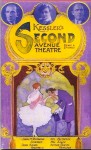
Joseph Rumshinsky’s Yiddish operetta Di Goldene Kale premièred 92 years ago at Kessler’s Second Avenue Theatre in New York, and was still being performed as late as 1948. The Aug. 5 perfomance at Nicholas Music Centre was the first since then. (image from masongross.rutgers.edu)

It is not often that a neglected or forgotten artistic treasure is rediscovered. But it happened recently at a theatre in New Brunswick, N.J. – a concert version, with full orchestra, of Joseph Rumshinsky’s 1923 musical comedy Di Goldene Kale (The Golden Bride). This joyful, melodically blessed operetta was co-presented with Mason Gross School of the Arts by another treasure, the National Yiddish Theatre Folksbiene, the oldest continuous theatre in New York. Founded in 1915 on the Lower East Side, the theatre is now celebrating its centenary.

Di Goldene Kale’s plot is above the usual standard banal fare of Yiddish plays: it involves a young woman who is heir to a fortune and now has several suitors after her and her money. But she loves Misha and ends up with him, after the usual ups and downs of musical comedy narrative.

Rumshinsky (1881-1956), one of the giants of Yiddish theatre during its heyday in the 1920s and ’30s, continued to work and compose until the year of his death. His operetta is full of memorable tunes, which the audience took to immediately. His musical traditions include influences from the Yiddish theatre, American musicals, European operettas and American popular music, most notably the opening chorus of George M. Cohan’s 1917 First World War song, “Over There.” Yiddish theatre was known for having at least one joyous religious occasion onstage, often a wedding, which nostalgically brought back an aspect of traditional Yiddishkeit to now-secular Jews, who were usually watching the performance on a Friday night, and Di Goldene Kale has a very moving Friday night Kiddush, a lovely melody that the soloists and chorus expand via theme and variations.

After its 1923 première, Di Goldene Kale toured the United States, Europe and South America. It was still being performed as late as 1948. The Aug. 5 show at Nicholas Music Centre was the first performance in Yiddish (with English and Russian supertitles) and full orchestra in 70 years.

The stunning cast was led by the gorgeous operatic voice of Dani Marcus, who plays Goldie, the goldene kale, and the fine baritone, Eyal Sherf – a trained cantor – who plays her boyfriend, Misha. The producer and director was Motl Didner, and Michael Ochs edited the orchestral score from manuscripts dating back to the 1923 première. National Yiddish Theatre Folksbiene artistic director Zalmen Mlotek conducted the young, attractive cast, all seasoned in singing, acting and comedy. To find first-rate singers who also act superbly and know Yiddish was a minor miracle and a major achievement. At the show’s end, the full house stood up and applauded. The orchestra and cast then reprised one of the operetta’s songs and everybody went out singing.

***

Classical American Yiddish theatre was also recently the subject of a program hosted by Michael Tilson Thomas, music director of the San Francisco Orchestra, who celebrated the career of his legendary grandparents, Boris Thomashefsky (1868-1939) and Bessie Thomashefsky (1873-1962), who were illustrious Yiddish theatre personalities.

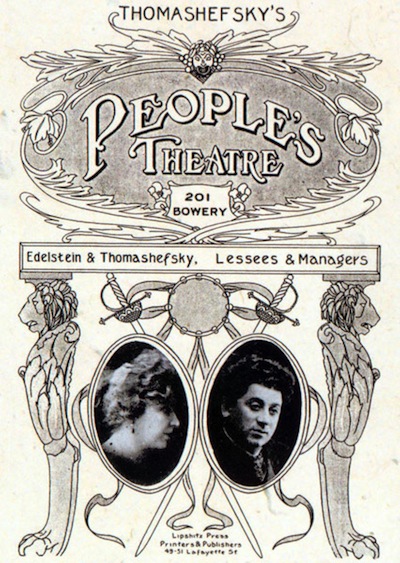
image - poster, Bessie and Boris Thomashefsky, the legendary grandparents of Michael Tilson Thomas, music director of the San Francisco Orchestra, are the focus of the show The Thomashevksys: Music and Memories of a Life in the Yiddish Theatre
Bessie and Boris Thomashefsky, the legendary grandparents of Michael Tilson Thomas, music director of the San Francisco Orchestra, are the focus of the show The Thomashevksys: Music and Memories of a Life in the Yiddish Theatre. (image from thomashefsky.org)

Titled The Thomashevksys: Music and Memories of a Life in the Yiddish Theatre, the show included four singer/actors and members of the Boston Symphony Orchestra at Tanglewood playing selections from Yiddish theatre music.

On the morning after his program, I walked down from our room at the Apple Tree Inn across the street to the Tanglewood grounds, where I met Thomas. I began in Yiddish: “Reb Mekhl” – the name his bobbe Bessie used for him – “ken ikh mit eykh redn a bisl vegn ayer program?” (“Reb Michael, can I talk to you a bit about your program?”)

By speaking Yiddish I wanted a) to know if he understood Yiddish and b) to separate myself from a group of people near him. Born in 1944, Thomas – his father shortened the original name – never met his famous grandfather, but the conductor told me that Grandma Bessie spent her old age near the family in California. Since she lived to be 89, she was a presence in Michael’s life until he was 18.

“She would show me around in Hollywood and take me to screenings,” Thomas recalled. “She called me Mekhl or Mekhele and would often jibe at my parents: ‘You’re too conventional. But Mekhele is not going to be that way.’”

When Boris’ infidelities became too intolerable, Bessie simply walked out on him in 1912 (she never did divorce him) and opened a rival theatre and became a success on her own.

“My grandmother used to say of her marriage to Boris: ‘We were a mistake – but a beautiful mistake,’” shared Thomas.

One of the most touching of personal anecdotes is Thomas’ strudel story.

“How did my grandmother make strudel? Here is her recipe: ‘You go home, you put on a clean apron, you wash your hands and you bake a strudel.’ And that’s what I do when I prepare for a concert. I make my way to the hall, I put on a clean tux, I wash my hands and I go out there and bake a strudel.”

The Tanglewood program also included a slide show that added lustre to the narration and a brief clip from the only film that Boris ever made, wherein he sings a Yiddish song. Along with sparkling orchestral numbers, the conductor and four singers offered musical selections and scenes from the couple’s real-life drama.

When Franz Kafka, early in the 20th century, brought a Yiddish troupe to Prague and told his audience, “Ladies and gentlemen, you know Yiddish better than you think,” he may have had the Tanglewood audience in mind for, with every Yiddish joke, most of them broke into laughter.

The highlight of the program was Thomas singing the once-popular song “Thomashefsky,” about the actor himself. The conductor pranced on stage, doing all the riffs and gestures of a veteran Yiddish music hall star, with the song’s memorable refrain, “Who do you think is going to marry my sister?” No doubt Grandma Bessie’s spirit was guiding her einikl in performing this enchanting song.

Curt Leviant’s most recent book is Zix Zexy Ztories. His ninth novel, King of Yiddish, will be published in December.

Student is CEO of tech firm

Iddo Gino at the 2014 World Hackathon Day in Tel Aviv. (photo from israel21c.org)

There’s something unusual about one of the startups renting co-working space in the newly opened WeWork building in Herzliya: its CEO is still in high school.

Iddo Jonathan Gino, 17, is a senior at the Hebrew Reali School in Haifa and hopes to finish an undergraduate degree in computer science at the Open University next year. When he’s not studying in school and online, he heads RapidPay, a year-old company whose four employees have created a mobile in-store and online payment platform for customers – mainly fellow teenagers – who don’t have a credit card or bank account.

“I try to manage my time as well as possible,” he said.

Having lived with his family in New Zealand for a couple of years before high school, Iddo speaks English fluently and has a working knowledge of Italian, as well as programming languages such as JavaScript, PHP and Python.

“When I was about 11, I went with my dad to his workplace and I sat with one of the programmers and saw all the cool stuff he was doing,” Iddo related. “He showed me a program he made to sort out seating for his son’s bar mitzvah automatically. Then he gave me a book to learn how to program. And, from there, one thing led to another.”

Iddo began with “some cool little projects,” learning how to build online management systems, interactive websites and iOS apps. Last summer, he had an internship at a tech startup in Israel.

“I got to experience how a startup works, and then I opened my own,” he explained.

Last year, Iddo teamed with students from the American Hebrew Academy in Greensboro, N.C., to develop a predictive app, SmartAlarm, which uses traffic data, flight changes and other real-time information to determine the appropriate time for the user’s alarm to ring in order to get to a destination at the right time. They hope to get funding to launch the app.

“Today, many people are referring to the so-called ‘Age of Context,’ where everything will be connected and every product or service will be enhanced using data and technology from elsewhere,” he said. “SmartAlarm is a great concept that utilizes contextual technology and real-time data sources to give users a true benefit.”

This project was part of a long-distance collaboration between the two high schools. Reali, one of Israel’s oldest private schools, boasts many distinguished alumni.

“Reali is a really great school that has allowed me to do college courses and have my own startup, and we have opportunities in school to create stuff, too,” said Iddo, a computer science and physics major.

Last May, he and fellow teen entrepreneur Gil Maman – CEO of HealthBelly and an award-winning veteran of several hackathons – helped organize the Israeli branch of World Hackathon Day, held at the Google Campus in Tel Aviv. This global initiative was the brainchild of Innovation Israel co-founder and wearable technology evangelist Nir Kouris, 32.

With the help of an ROI micro-grant and corporate sponsorships, Kouris and two Netherlands-based co-founders connected Israeli teen techies with peers abroad as they hacked apps for health, finance, music, charity and travel. Hundreds participated in the weekend event last May, leading to some potential partnerships and products.

Behind the scenes, the hackathon also afforded organizational experience to enterprising teens like Iddo and Gil, and their counterparts in Holland, India, Spain, Morocco and Germany.

Iddo said he’s motivated by “all the awesome futuristic stuff out there, like GetTaxi and Waze,” both founded by young Israeli entrepreneurs, though perhaps not quite as young as he is.

“One of my role models is Mark Zuckerberg, the founder of Facebook,” said Iddo. “He went to university but didn’t stay there long. He had one good idea to pursue and went with it.”

Iddo also admires Israeli tech legend Dov Moran, one of the early pioneers of portable data storage. “I like the way he created something nobody believed he could, and now we can’t live without flash memory.”

The Haifa whiz kid muses: “One of the things about the Israeli personality and culture is that it enables you to grow quickly and is very open-minded. I could talk to investors when I was 15, and they took me seriously. I don’t know if that’s something that could happen abroad.”

Israel21C is a nonprofit educational foundation with a mission to focus media and public attention on the 21st-century Israel that exists beyond the conflict. For more, or to donate, visit israel21c.org.

Reading aloud aids learning

An important tip from Israeli experts: children recall information better when they repeat the material aloud. This is the conclusion of a study conducted at Israel’s Ariel University by Prof. Michal Ichet from the department of communication disorders in collaboration with Prof. Yaniv Mama from the department of psychology and behavioral sciences.

They found that when children hear new information and then repeat it loudly and clearly, this significantly improves their ability to remember the words, compared with their memory of words spoken by someone else.

This simple “listen and repeat” method can be used to help even pre-reading students learn and memorize information – including facts, vocabulary and foreign languages – more effectively.

The study was conducted in Hebrew but is applicable to any other language of instruction, say the researchers.

“I personally have always thought that repeating something aloud helps me commit it to memory. Now we’ve found that the research that supports this theory is indisputable,” Ichet said.

The learning is not as effective if the children hear the words spoken by someone else or if they repeat the words to themselves quietly or silently.

Previous studies on the “listen and repeat” technique have focused mostly on adults who have the ability to read and write. The increase in an adult’s capacity to remember information using this method is about 20%. In the 5-year-olds tested by Ichet and Mama, the increase was as high as 35%. They theorize that repeating words aloud creates a pathway in the brain. These words then receive “preferential status” when being set into memory and thus become more familiar.

The researchers suggest that teachers, parents and caregivers take this tip to heart in order to improve young children’s mastery of new information.

Israel21C is a nonprofit educational foundation with a mission to focus media and public attention on the 21st-century Israel that exists beyond the conflict. For more, or to donate, visit israel21c.org.

סטטיסטיקה של עשירים בעלי מזל

פיטר מקאסי ודיאנה מילר. (צילום: @AL_Lottery)

סטטיסטיקה של עשירים בעלי מזל : קנדי שניצל ממכה של ברק זכה במכה של הלוטו

כל פעם לפני הגרלת לוטו עם פרס גדול מציינים המומחים לסטטיסטיקה בהרחבה באמצעי התקשורת, שיש סיכוי גדול יותר להיפגע מברק מאשר לזכות בלוטו. לפי הסטטיסטיקה המצויה כידוע זה כמעט בלתי אפשרי גם להיפגע מכת ברק וגם לזכות בהגרלת לוטו. אך הסיפור הבא מוכיח דווקא את ההפך. תושב העיר מונקטון שבמזרח המדינה נפגע מברק כשהיה ילד, ולאחרונה הוא זכה בהגרלת הלוטו המקומית.

כשפיטר מקאסי היה בן 14 הוא שט בסירה ביחד עם משפחתו באגם באחד מימי הקיץ, בזמן שענן אחד גדול נע בשמיים. פתאם נחתה עליהם מכת ברקים חזקה, ברק אחד עבר דרך העצים ופגע בו, ולמזלו הגדול לא קרה לו דבר.

לפני כשבוע מקאסי ודיאנה מילר שעובדת עימו, זכו במשותף בהגרלת הלוטו בפרס בן מיליון דולר. מקאסי ומילר משתפים פעולה ביחד בהגרלת הלוטו מזה שנה. ומה שעוד יותר מעניין הוא שמקאסי ומילר רכשו את הכרטיס הזוכה בחנות של מקאסי, כך שהוא קיבל בנוסף בונוס שמן של עשרת אלפים דולר מאטלנטיק לוטו קורפורשיין.

וכדי להוכיח שכבר הכל אפשרי לפני מספר שנים גם בתו של מקאסי נפגעה ממכת ברק, וגם לה ולא קרה שום דבר. ומי יודע אולי יום אחד גם היא תזכה בהגרלת הלוטו.

פרופסור סופי לג’ר מהמחלקה למתמטיקה באוניברסיטת מונקטון, הופתעה משתי המכות שנחתו על מקאסי במהלך השנים. לדבריה הסיכוי להיפגע מברק ולזכות בלוטו הוא 1 ל-2.6 טריליון.

סטטיסטיקה של עניים חסרי מזל: בשל מצוקת הדיור אנשים גרים באוהלים בחצרות של בתים

תנועת האוהלים חייה וקיימת. לא מדובר בתנועת המחאה של שנות השבעים שפעלה אז בירושלים, אלא בזו של צעירים קנדים שלא יכולים עוד הרשות לעצמם לשלם שכר הדירה, שרק עולה ועולה. גם מטיילים שלא מסוגלים לשלם עבור חדרים בבתי המלון שגם מתייקרים כל העת, מצטרפים אף הם לתנועת האוהלים החדשה. במקביל כך מתברר ישנם בעלי בתים עם חצרות גדולות, שמחפשים לעצמם מקורות הכנסה נוספים. הם מציעים להשכיר את חצרותיהם למי שמוכן להקים בהן אוהל, ולגור ממש בתנאים של קמפינג, לתקופות קצרות או ארוכות. במזרח ונקובר בעל בית מפרסם בימים אלה מודעה באתר של קרייגסליסט, ומציע להשכיר את חצרו תמורת 500 דולר לחודש. ומה יקבל עוד השוכר בתמורה לתשלום: ציוד קמפינג, אפשרות למקלחת חמה בבית, הכנת ארוחות במטבח, שימוש במכונת הכביסה ובמייבש הכביסה וחיבור המחשב הנייד לרשת הווי פיי של הבית.

סטודנט ממונטריאול (בן 24) שלומד לתואר שני בפיזיקה בעיר מנצ’סטר שבאנגליה, לא יכל לשלם שכר דירה בנוסף לשכר הלימוד הגבוה. לפיכך הוא הגיע להסדר עם בעלת בית צעירה שאיפשרה לו להקים אוהל בחצרה. בתמורה הוא עוזר לה בלימודי מתמטיקה ובשאר המקצועות הריאליים. במקרה של הסטודנט הקנדי, הוא יכול להשתמש רק בשירותים שבבית ובמכונת הכביסה והמייבש. אך אין לו כניסה לחדר האמבטיה ואת המקלחות הוא עושה בקמפוס.

ואילו בעמק הסיליקון שבקליפורניה שצעיר (בן 22) שעובד כמפתח תוכנה, פרסם לאחרונה מודעה באתר להשכרת מגורים אייר בי אנד בי, והציע להשכיר את החצר בית הוריו למגורים, תמורת 900 דולר.

אגב לאור האמרת מחירי בתי המלון נמצאה עוד אלטרנטיבה לתיירים שמחפשים מקומות לינה זולים במיוחד. בעלי רכבים גדולים בניו יורק מציעים את רכבם ללינה בחניונים מוסדרים. כמובן שעל השוכרים למצוא בנפרד מקלחות ושירותים.

תוגברו אמצעי הביטחון

ג’ון נוטל ואמנדה מרי קורודי, שתכננו לפוצץ את בית המחוקקים של המחוז בוויקטוריה. (צילום: RCMP)

תוגברו אמצעי הביטחון בקהילה היהודית לאור פרשת הזוג נוטל וקורודי שהתאסלמו ותכננו להרוג ילדים יהודים 

זוג קנדי שהתאסלם תכנן להסתנן לאחד מבתי בית כנסת יהודיים באזור ונקובר, כדי להרוג ילדים, כך עולה מחקירת שוטר סמוי במסגרת דיוני בית המשפט העליון של מחוז בריטיש קולומביה. מדובר בפרשת ג’ון נוטל ואמנדה מרי קורודי, שתכננו לפוצץ את בית המחוקקים של המחוז בוויקטוריה, ביום העצמאות הקנדי ב-1 ביולי 2013. השניים שהתאסלמו תכננו לפוצץ את הבניין באמצעות חומרי נפץ תוצרת בית שיוטמנו בסירי לחץ. הם הציבו את הפצצות הביתיות מחוץ לבית המחוקקים, אך השוטרים שעקבו אחריהם דאגו לנטרלן ולא נגרם שום נזק. הזוג הטרוריסטי טכננו לבצע פעולות טרור נוספות ולהרוג מספר אזרחים לא ידוע. השוטר הסמוי אמר עוד בחקירתו המעניינת, שנוטל וקורודי חשבו “שרצח של ילדים יהודים, שלדבריהם מחונכים רק לשנוא ערבים ומוסלמים, דווקא יעשה להם טובה. כי אז הם יגיעו לגן עדן”. לפי תפיסתם המעוותת לעומתם הילדים “יהודים מבוגרים לאחר מותם מגיעים הישר להגיהנום”. הזוג האמין שכיוון שהם לבנים לא התהיה להם בעייה להצטרף לאחד מבתי הכנסת על תקן של חברים, לאחר שיתחזו ליהודים. כך ירכשו את אמון המתפללים האחרים.

נוטל וקורודי נעצרו לפני כשנתיים לאחר חקירה מורכבת וממושכת של משטרה הפדרלית, סוכנות הביון הקנדית וסוכנות הריגול הקנדית. השניים הפכו לג’יהאדים קיצוניים לאחר שהושפעו מהתעמולה של ארגון אל-קעידה. הם רצו להשתתף במלחמת הקודש נגד מדינות המערב, “לאור מה שהן עושות לאיסלאם”. לטענת נוטל וקורודי הם הופללו על ידי שוטרי המשטרה הפדרלית, שאף עודדו אותם והאיצו בהם לבצע את פעולות הטרור. שני הנאשמים הורשעו כבר והדיונים בית המשפט העליון לקביעת עונשם יתחדשו בחודש אוקטובר.

לאור פרשה החמורה של נוטל וקורודי הוחלט בפדרציה היהודית של אזור מטרו ונקובר להגביר את הביטחון בקרב הקהילה היהודית, תוך שיתוף פעולה מלא עם הארגונים היהודים השונים.

מנכ”ל הפדרציה היהודית, עזרא שאנקן, מציין כי הפדרציה לוקחת את האיומים כנגד הקהילה היהודית באופן רציני ביותר. עם זאת הוא מדגיש כי לא ידוע בשלב זה על גידול כלשהו בסכנה לקהילה היהודית. שאנקן אומר עוד שלפדרציה יש כיום פרוטוקולים מסודרים וברורים לנושאי ביטחון, ונעשה בהם שימוש ברגע שיש התראות ביטחוניות. לדבריו לפדרציה יש קשרים טובים מאוד עם סוכנויות המשטרה השונות באזור ונקובר בהן המשטרה הפדרלית, והיא בקשר קבוע וישיר עימם בכל הנוגע לאיומים על הקהילה היהודית.

מנכ”ל הפדרציה היהודית המקומית אומר כי הארגון נקט לאחרונה במספר פעולות מורכבות בתחום הביטחון. בהן: פיקוח, בידוק וביקורות על תחום הביטחון בארגונים היהודים השונים באזור, שידרוג מערך הביטחון של ארגונים אלה תוך הקצאת משאבים כספיים ואחרים על ידי הפדרציה, המשך אספקת מערכי תדרוך, הכשרה, תרגול ותמיכה בארגונים בתחום הביטחון. כן הוחלט לאחרונה על הקמת ועדה מיוחדת בנושא תחום הביטחון בפדרציה היהודית, שתעזור ותייעץ בקביעת מדיניות הביטחון הרחבה, כולל קבלת החלטות ומימון בהמשך הדרך.

עזרא שאנקן אומר כי לאור צורך בפעילות ביטחונית בקרב הקהילה היהודית באופן שוטף ומתמשך, נדרש מימון יציב וקבוע לנושא חשוב זה. ולכן לדבריו יש מקום להשיג את מקורות התקציב, במסגרת הקמפיין השנתי החדש של הפדרציה לשנה זו (ערב הפתיחת הקמפיין של 2015 נקבע ל-17 בחודש ספטמבר). שאנקן אומר עוד כי הקצאת משאבים כספיים מהקמפיין השנתי החדש, היא אחת מהדרכים החדשות בה נוקטת הפדרציה היהודית, שמתאימה עצמה לדרישות המשתנות של הקהילה המקומית.

הצגת היחיד

 הצגת היחיד “מיי פירסט סוני” עם רועי הורוביץ. (צילום: Erez Schwarzbaum)

הצגת היחיד “מיי פירסט סוני” של בני ברבש עם רועי הורוביץ תשתתף בפסטיבל הפרינג’ בוונקובר

הצגת היחיד “מיי פירסט סוני” תשתתף בפסטיבל הפרינג’ של ונקובר בחודש הבא. ההצגה תועלה בשפה האנגלית שש פעמים באולם ‘סטודיו 1398′, שנמצא בגרנוויל איילנד בספטמבר: ביום שישי (11) בשעה 10:15 בערב, למחרת שבת (12) ב-4:45 אחר הצהריים, ביום ראשון (13) שהוא ערב ראש השנה ב-1 אחר הצהריים, ביום שני ראש השנה (14) ב-6:40 בערב, ביום חמישי (17) ב-8.40 בערב, וכן בשבת (19) בשעה 8:15 בערב.

פסטיבל הפרינג’ של ונקובר שקיים מזה שלושים שנה, יערך השנה בין 10-20 בספטמבר. הוא יכלול 800 הצגות במהלך אחד עשר הימים ובהשתתפות 91 אמנים.

לאחר ונקובר תועלה “מיי פירסט סוני” גם בשתי ערים נוספות במרכז קנדה: טורונטו ומונטריאול. במסגרת הסיבוב בצפון אמריקה היא תוצג גם בסיאטל.

“מיי פירסט סוני” על פי ספרו של בני ברבש, מוצגת על ידי רועי הורוביץ, הבימאית היא דפנה וידנפלד-נגלר, ומנהלת ההצגה (והאחראית על סיורים בעולם) היא ערגה נץ.

ההצגה מציגה את התפוררותה של משפחה מתל אביב מנקודת ראות של אחד הילדים (יותם לזר בן האחד עשרה), שהחליט להקליט ברשמקול שלו “מיי פירסט סוני” אותו קיבל מאביו, את כל קורותיה הסבוכים של משפחתו. הילד עוקב באובססיביות מרובה אחר מריבות הקשות בין אביו לאימו, השיחות המעניינות והעסיסיות בין האם לחברותיה הטובות, הבגידות של האב. כן ישנם מעט מאוד רגעים טובים של המשפחה. יותם עוקב ומדווח בדייקנות מרובה אחר הנעשה במשפחתו וכמובן מקליט את הכל, ובעיקר את סיפור הפרידה בין האב לאם שמסתיים באסון.

ספרו של ברבש יצא לאור בשנת 1994 (בהוצאת הספרייה החדשה), ותורגם למספר שפות: אנגלית, צרפתית, איטלקית, גרמנית, יוונית וסינית. ההצגה עלתה לראשונה בפסטיבל תיאטרונטו בשנת 1996, ומאז היא מוצגת במשך תשע עשרה שנים ברציפות בישראל ובקומות שונים בעולם. ובהם: קנדה (היא השתתפה בפסטיבל הפרינג’ של אדמונטון), ארה”ב, גרמניה, הולנד, אוסטרליה, צ’כיה, סלובקיה, דרום אפריקה ומצרים.

הורוביץ שמשמש גם במאי ומרצה לתיאטרון הוא בוגר הסטודיו למשחק בהנהלת ניסן נתיב, מחזיק בתואר ראשון ושני בהצטיינות בחוג לתיאטרון באוניברסיטת תל אביב, וכן סיים לימודי תעודת הוראה בבית הספר לחינוך של אוניברסיטת תל אביב. הוא השתתף מספר גדול של הצגות (בהן: “קומדיה של טעויות” ו”הקפטן”), וכן שימש במאי של הרבה הצגות (בהן: “דוממים” ו”שני חדרים”).

היסטוריה בקוקויטלם: הפצצה יצאה מהארון

שיפוצניק בעיר קוקויטלם נדהם לגלות לפני מספר ימים שפצצה מונחת לה בהחבא באחד הארונות, בדירה בה עבד. הדירה הריקה הייתה שייכת לאדם מבוגר שנפטר וקרוביו הגיעו למסקנה שיש לערוך בה שיפוץ רציני. הקרובים לא ידעו כלל שסב המשפחה החביא לא פחות מאשר פצצה בארון הפרטי שלו. השיפוצניק לאחר שהתעשת הזעיק את המשטרה המקומית, שהזעיקה יחידה צבאית לפירוק פצצות של חיל הים הקנדי.

צוות של היחידה הימית הצליח בזהירות רבה להרחיק מהבית את הפצצה שמשקלה 5.2 ק”ג, ולנטרל אותה בשטח פתוח ללא פגע. לאחר שחקרו ובדקו את חלקיה מצאו שהיא יוצרה בתקופת מלחמת העולם השנייה. בהמשך החקירה בשיתוף המשטרה התברר עוד שהקשיש שגר בבית, נמנה בשעתו על חיל האוויר הקנדי, ומשום מה החליט להחביא בביתו את אחת מהפצצות ששימשו לתרגול.

במשטרת קוקויטלם אומרים כי מעולם לא קיבלו קריאה מאזרחים לחלץ פצצה מבית. השוטרים ציינו לשבח את השיפוצניק שהזעיק אותם ולדבריהם: “עשה בדיוק את הדבר הנכון”.