
Skip to content
  • Home
  • Subscribe / donate
  • Events calendar
  • News
    • Local
    • National
    • Israel
    • World
    • עניין בחדשות
      A roundup of news in Canada and further afield, in Hebrew.
  • Opinion
    • From the JI
    • Op-Ed
  • Arts & Culture
    • Performing Arts
    • Music
    • Books
    • Visual Arts
    • TV & Film
  • Life
    • Celebrating the Holidays
    • Travel
    • The Daily Snooze
      Cartoons by Jacob Samuel
    • Mystery Photo
      Help the JI and JMABC fill in the gaps in our archives.
  • Community Links
    • Organizations, Etc.
    • Other News Sources & Blogs
    • Business Directory
  • FAQ
  • JI Chai Celebration
  • JI@88! video

Recent Posts

  • Legal help for students
  • Revisiting myth of Lilith
  • Wrong person rebuked
  • Canada’s mixed messages
  • Questions for museum
  • Symposium on antizionism
  • Making soccer political
  • CJPAC lauds Pulver’s impact
  • City recognizes Vrba’s legacy  
  • Organ donation saves lives
  • Theodore’s March premiere
  • A healing Shabbaton
  • Supplying healthy food
  • A chime of metal tags
  • Yellowknife seder a first
  • Ishai energizes, unifies
  • A Lag b’Omer to remember
  • Expanding the healing
  • Hannah Senesh – a unique hero
  • Community milestones … May 2026
  • Sharing her testimony
  • Fall fight takes leap forward
  • The balancing of rights
  • Multiple Tony n’ Tina roles
  • Stories of trauma, resilience
  • Celebrate our culture
  • A responsibility to help
  • What wellness means at JCC
  • Together in mourning
  • Downhill after Trump?
  • Birth control even easier now
  • Eco-Sisters mentorship
  • Unexpected discoveries
  • Study’s results hopeful
  • Bad behaviour affects us all
  • Thankful for the police

Archives

Follow @JewishIndie
image - The CJN - Visit Us Banner - 300x600 - 101625

Month: February 2015

Using art to bridge peoples

Using art to bridge peoples

The gallery includes work by Almagul Menlibayeva of Kazakhstan. (photo from AMOCAH)

When people in Israel saw that Belu-Simion Fainaru and his partner Avital Bar-Shay were considering opening yet another art museum/gallery, some eyebrows were raised. But what this dynamic duo in life and in art had in mind was much more than another one-dimensional art space. Their far-reaching ideas will likely quiet the doubts of any naysayers.

Fainaru and Bar-Shay, both Jewish artists living in Haifa, decided to create an art meeting space for Jewish, Christian, Muslim, Bedouin and Druze artists – a place where they could display their art alongside one another. They created the Arab Museum of Contemporary Art and Heritage (AMOCAH) in Sakhnin in the Lower Galilee, which was declared a city in 1995 and has a population of 25,000 of mostly Muslims and a minority of Christians. It also is home to a significant population of Sufis, Muslims who adhere to a mystical stream of Islam.

Bar-Shay and Fainaru originally met in Israel. Fainaru made aliyah from Romania in 1973. A successful visual artist, he has curated exhibits around the world, making international connections along the way. Bar-Shay is an Israeli-born artist, designer and architect. She has exhibited in Israel and abroad and has vast experience in public art, working as a cultural entrepreneur. She specializes in artistic activity in the periphery.

The idea for AMOCAH started with Fainaru and Bar-Shay initiating and curating the Haifa Mediterranean Biennale four years ago. This led to a second biennale in 2013, which took place in Sakhnin. At the Haifa biennale, they used shipping containers to exhibit the artwork. In Sakhnin, the biennale was held in a building that the town’s mayor offered for the occasion.

“Right now in Israel, a lot of … Jewish people feel a special energy when it comes to Sakhnin,” said Fainaru. “So, we did this big project in the Sakhnin area, where a lot of Jewish people are already using various art mediums to bring communities together.”

Fainaru said that the various communities do not usually do things together and, even within the Arab community, Muslims and Christians generally keep to themselves.

“The art will have an urban dimension and we can approach art for a population that’s not very familiar with contemporary art,” said Fainaru. “We think it’s important to decentralize the art scene in Israel.”

Going with the biennale (Italian for every two years) concept seemed the most feasible, with politics and budgets in Israel regularly being in flux. “We had a big project with the Ministry of Education, but a few months after we decided to move ahead with [the minister], he [had] just resigned,” noted Fainaru, as an example.

While the idea of a biennale was born 100 years ago in Venice, Fainaru and Bar-Shay wanted to go with that premise and added a new twist – creating a biennale melting pot of cultures, and eventually transform that into a permanent museum in Sakhnin.

“We think countries around Israel and the Mediterranean should cooperate and exchange ideas in the area of contemporary art,” said Fainaru. “We put a lot of emphasis on education and doing workshops with artists from abroad.
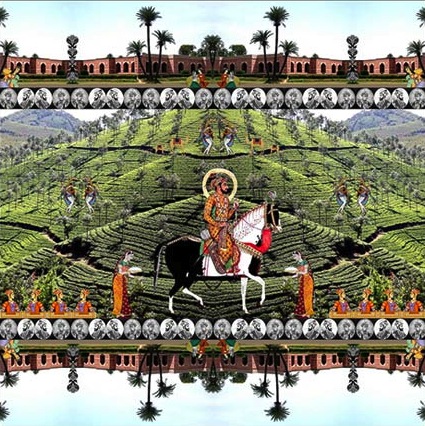
photo - Afghani-German artist Jeanno Gaussi’s work is at AMOCAH
Afghani-German artist Jeanno Gaussi’s work is at AMOCAH. (photo from mfa.gov.il)

“We want to develop projects under the umbrella of the biennale and museum, also with Jewish and Arab children – the next generation – to communicate and get to know each other, have fewer misconceptions, and make a better living here not based on violence.”

It took some time and meetings with the right people to get the Sakhnin museum off the ground. Fainaru and Bar-Shay met with the mayor of Sakhnin, Mazin G’Nayem, who was open to the idea. The mayor spoke with his culture deputy and the pieces began to fall into place.

“He [the mayor] thinks it’s important to have contact between Jews and Arabs, as we have to live together,” said Fainaru. “He understands that art will help the people of Sakhnin and promote coexistence between Jews and Arabs. He saw that with the football team he put together that has Jews and Arabs playing together.”

During the first biennale in Sakhnin in 2013, Sakhnin was flooded with people coming to participate in the festivities. AMOCAH is open to the public and, so far, the majority of the visitors have been students of contemporary art. The educational component of the museum is still being developed. “We hope, with these educational activities with the biennale, Israel’s sense of art will become known to people all around,” Fainaru said.

AMOCAH carries art from the various cultures in the region and from different religions, but Fainaru is especially proud of the art coming from countries without political ties to Israel, like Syria, Iraq, Iran, Afghanistan and Turkey.

“Normally, relations between Israel and Turkey are very bad,” he said. “Even I was dismissed from a biennale exhibition in Turkey, because of war between Israel and Gaza [last] summer.”

To facilitate cooperation between the Jews and Arab artists involved, the biennale and the museum are being organized by both communities.

“Tel Aviv-area people are self-sufficient in art, culture, cinema, food … in life,” said Fainaru. “They don’t feel they have to go to another place inside Israel. But, in the periphery, what we’re doing is creating an alternative activity in art in Israel and having an influence on life here – making a change and bringing art to people while incorporating cooperation between Jews and Arabs and neighbors around. This is just a beginning.”

The next Sakhnin biennale is scheduled for the end of 2015, with Fainaru and Bar-Shay already working to bring in the works of many new artists from Israel and abroad.

Rebeca Kuropatwa is a Winnipeg freelance writer.
Format ImagePosted on February 27, 2015February 26, 2015Author Rebeca KuropatwaCategories IsraelTags AMOCAH, art, Avital Bar-Shay, Belu-Simion Fainaru, Israel, Sakhnin biennale
Halper talks across Canada

Halper talks across Canada

Dr. Jeff Halper speaks at the University of Manitoba on Feb. 9. (photo by Rebeca Kuropatwa)

Dr. Jeff Halper, an Israeli anthropologist and Nobel Peace Prize nominee, spoke on four different occasions in Winnipeg over two days, Feb. 8 and 9, as part of a cross-Canada speaking tour, which also brought him to Vancouver Feb. 10-12. He is the head of the Israeli Committee Against House Demolitions (ICAHD), an organization self-described as “dedicated to ending the Israeli occupation and [that] advocates for a just peace between Israel and the Palestinian people.”

The first of Halper’s Winnipeg talks was An Israeli in Palestine, and it was held at Crescent Fort Rouge United Church. He then spoke at the University of Manitoba on Academic Freedom and the Israeli-Palestinian Conflict, reprised An Israeli in Palestine at the University of Winnipeg and, finally, did an interview with Jewish Post & News editor Bernie Bellan at the Free Press News Café (which can be found at icahd.org/node/568).

The U of M lecture on Feb. 9 was sponsored by the department of history, the Centre for Professional and Applied Ethics, and the Global Political Economy program. Halper began this talk by saying that “the side” most people are aware of is the one that “only demolishes houses of terrorists and that is trying really hard to make a fair peace with the Palestinians.” But, he said, people are not very aware of the side that is “building settlements in the West Bank and refusing to issue building permits to Palestinians in the West Bank.”

According to Halper, Israel has been working for years to physically eliminate the proposition of a two-state solution by creating in the West Bank a Palestinian territory that is so fragmented with Israeli settlements that such an option is no longer viable. “A solution that the Israeli peace camp, including myself, supported for many years … the solution accepted by the international community … U.S., Canada, the UN, the Palestinians and every Arab country, is gone,” he said.

Halper believes that the two-state solution is “tremendously pro-Israeli.” He said, “If Israel in fact wants peace and security, it could have had that 27 years ago. And, it could have kept 78 percent of the country. This two-state solution was adopted unanimously by the Arab League. Every Arab country said that if Israel relinquishes the occupation, we will not only make peace with Israel, we’ll integrate Israel into the region. There was even talk of Israel joining the Arab League.”

In Halper’s view, “Israel has always said no and never seriously considered a two-state solution…. In 1993, there were 200,000 settlers. By the year 2000, after seven years of negotiation, there were 400,000 settlers. Today, there are 600,000 settlers. In four years from now, there will be a million Israelis living in the occupied territory.

“What Israel has done to ensure its permanent control, to ensure that the Palestinians are imprisoned in areas, is not a bi-national state … heaven forbid, because it has to be a Jewish state…. There’s no chance Israel will be forced out of the occupied territory. Israel has laid over the West Bank what I call ‘a matrix of control.’”

Halper argued, “There is no more West Bank: it’s gone. There are today more Israelis living in east Jerusalem than there are Palestinians. And whether it’s east Jerusalem or the West Bank, Palestinian territory is completely fragmented.

“Also, out of the 600 checkpoints in the West Bank, only 17 are actually between the West Bank and Israel. All the others are inside the West Bank, preventing Palestinian movement, confining them to these islands.

“How will a Palestinian state emerge from this?” he asked. “The whole idea of the two-state solution was based on a north/south axis, here’s Israel and, alongside, it’s a Palestinian state.”

Halper sees Israel as “working to force Palestinians out of homes located in the ‘wrong’ place, largely through house demolition. None of those homes had anything to do with security.”

As an example, Halper used the house of ICAHD member Salim Shawamreh. To date, said Halper, that home has been demolished and rebuilt by the ICAHD six times. “They bought a small plot of land in the town of Anata, which is right next to Jerusalem,” said Halper. “The land is registered. When they went to apply for a building permit, the answer was ‘no.’ Israel has zoned the entire West Bank as agricultural land so, when a Palestinian comes to build a home on land he owns, the answer is ‘Sorry, but this is agricultural land.’ It applies to Jews and Arabs.”

Beside Anata is the Israeli town of Ma’ale Adumim, which, Halper said, is built on the same agricultural land with a permit. “You have 50,000 Israelis living in government-built cities on the same land,” said Halper. “If you want to rezone from agricultural to residential, it takes a second.”

Many families build without a permit, said Halper, and Shawamreh “decided to build his house without a permit and the Israeli authority sent a demolition order with a dozen solders. They aren’t coming to arrest him. They’re coming to demolish his home…. Salim resisted and was taken out by force. His wife, Arabiya, managed to lock the door and stayed inside with the children. So, the soldiers broke the windows and threw in tear gas to flush the family out. Arabiya was taken out unconscious, the kids running and screaming in every direction. We get into the act if we can. She managed to call us … [and] we resist the demolition of homes.

“We rebuild homes as political acts of resistance,” he continued. “We’ve rebuilt 587 homes over the last 14 years or so … 587 joint acts of resistance. We refuse to be enemies. That’s one of our slogans.”

Halper’s tour, organized by United Network for Justice and Peace in Palestine/Israel and Independent Jewish Voices-Canada, as well as various local groups, fundraised for ICAHD’s building of a house for a Palestinian family whose home was demolished. Admission to events was free, though donations were welcomed.

Rebeca Kuropatwa is a Winnipeg freelance writer.
Format ImagePosted on February 27, 2015February 26, 2015Author Rebeca KuropatwaCategories NationalTags ICAHD, Israel, Israeli-Palestinian conflict, Jeff Halper, Palestinians, Salim Shawamreh

Taking care of elders

Cindy Greenlay, therapeutic recreation manager at Winnipeg’s Simkin Centre, is one of the first to admit that no one plans to retire and move into a care home. But, she explained, “Circumstances happen and the support we’re able to provide here is something needed in the community.”

On Feb. 18, the women’s philanthropy of Combined Jewish Appeal (CJA) in Winnipeg hosted an educational evening at the Simkin Centre on the centre’s programming. Daniela Jacobson, co-chair of women’s philanthropy, began the event, noting that the Simkin Centre “is our newest agency to the Jewish Federation of Winnipeg.” She then gave the floor to Greenlay.

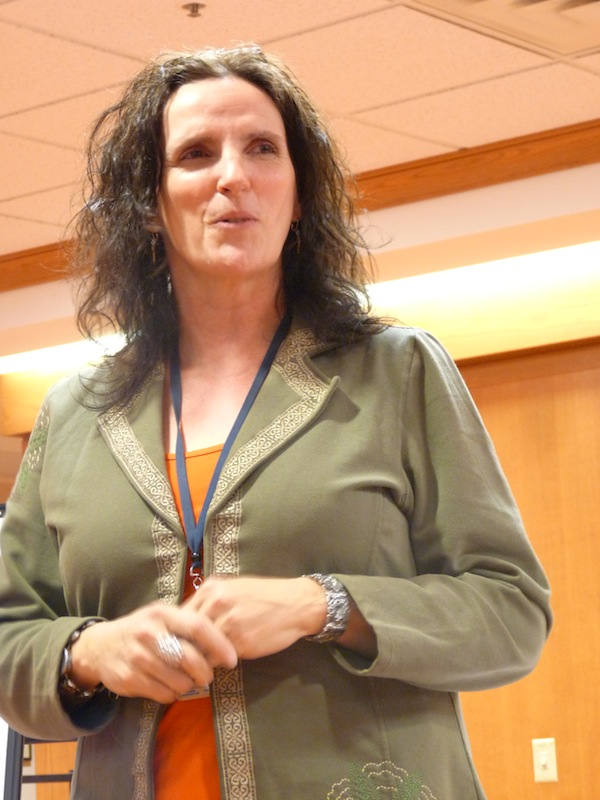
photo - Simkin Center’s therapeutic recreation manager, Cindy Greenlay
Simkin Center’s therapeutic recreation manager, Cindy Greenlay. (photo by Rebeca Kuropatwa)

According to Greenlay, people don’t come to the Simkin Centre at the end of their lives to die – they come to continue living. Something about which the centre staff feel strongly is the importance of getting to know each of the residents individually. “We don’t assume that everyone who is 75 likes to play Bingo,” said Greenlay by way of example.

The staff meet with each resident several times and gather as much information about what he/she likes to do, so they can build activities to match. One of the most important things to understand, said Greenlay, is that residents have a lot of free time on their hands and the centre needs to fill that time with relevant programming.

“We need to do that every single day – 13 hours a day,” she said. “As 80 percent of our population is cognitively impaired, so we have some people here who make those choices…. We’re all trained in specific areas to adapt to different disabilities…. We have one recreation staff for every 40 residents. That person works five days a week to fill up this big piece of the pie.”

The centre’s programming is funded by the local Jewish federation and private donors.

“To brag a little bit, our facility is chosen every year by Red River College to bring the recreation students to,” said Greenlay. “The students come here every fall to see what they want to be when they ‘grow up.’ They shadow our staff every fall to see what the programs are supposed to look like.”

Until a year ago, Simkin’s spiritual health care was led by Rabbi Neal Rose, and it was based on a chaplaincy model. “Once Rabbi Rose retired, the board met and did some rethinking,” said Barb Findlay, the centre’s spiritual health care practitioner. “They researched what spiritual health could look like going forward. I think that in the whole world – and the Jewish world is not different – generally, people today are less religious and more spiritual. People use yoga and meditation and different ways to access the Divine. It’s interesting, as I go around and meet new residents and introduce myself, I get one refrain that I hear all the time, ‘Wait a minute. I’m not too Jewish.’ And, you know, actually, they are very Jewish.”

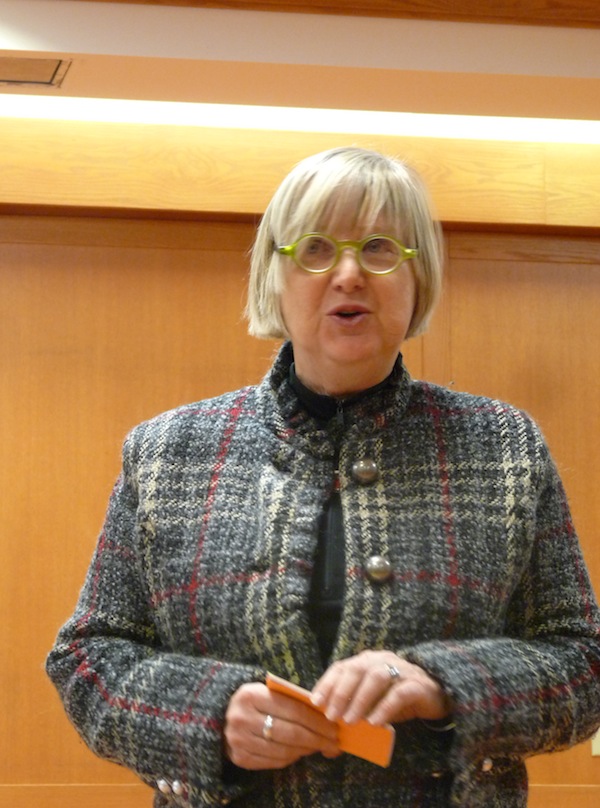
photo - Barb Findlay, Simkin Centre’s spiritual health care practitioner
Barb Findlay, Simkin Centre’s spiritual health care practitioner. (photo by Rebeca Kuropatwa)

Spiritual health has been recognized by the Canadian Medical Association and the Winnipeg Regional Health Authority (WRHA) as an integral part of the health profile, which includes physical and emotional health.

“Spirituality is defined as that which gives meaning and purpose to life, besides the physical,” explained Findlay. “The purpose of spiritual health is to symbolically walk beside people and to occupy that liminal space between what’s known and what’s not known in life.”

Although the overwhelming majority of people at the Simkin Centre are Jewish, the centre operates as the Victoria Hospital emergency placement location. As such, the spiritual health personnel have to provide support for people from all religions, including Buddhists, Catholics, Evangelical Christians and First Nations.

“What is important is their belief system and helping them to boost that and work with that for whatever needs they have,” said Findlay. “Israel has embraced this new profession. They named it the ‘livui ruchani,’ which is Hebrew for ‘spiritual accompaniment.’

“The Simkin population is roughly 200, and about 15 percent aren’t Jewish,” she continued. “The average age is 90, and about 85 percent of our people have some element of dementia. Ninety-six percent of elders live out their lives in the community with or without some supports, so, what we have here is a very small percentage of our elderly population – about four or five percent.”

Dr. Harvey Chochinov, a geriatric psychiatrist in Winnipeg, has dedicated much of his work focus to end-of-life care, and has found that distress at the end of life is usually connected with people feeling as though they are a burden.

“He’s developed a whole process which involves questioning and reflection, so we can help people review and rebuild, and hopefully move away from feeling they’re a burden for their loved ones,” said Findlay.

The evening’s talk ended off on a lively and light note, with Cindy Bass, the centre’s music therapist demonstrating how she engages residents. “Music memory is one of the last remaining faculties for the elderly population with Alzheimer’s disease,” said Bass. “For example, if you take a song like ‘My Bonnie Lies Over the Ocean,’ everybody knows it. And it’s been shown that some people who can’t speak anymore can still sing, which is also why it works well as therapy for stroke victims, helping them relearn to speak.”

Music can increase attention span and be very useful for the cognitively impaired, she added, as it opens new brain pathways, evidence of which has been seen using MRIs.

Bass led the crowd in a few songs to illustrate the power of music and she explained the many benefits gained through music, including the building of community ties and increased socialization, as well as its use in prayer and to enhance self-expression.

“Music,” she said, “provides people of all ages, regardless of disability, with ample opportunity for meaningful responses to all aspects of our environment.”

Rebeca Kuropatwa is a Winnipeg freelance writer.
Posted on February 27, 2015February 26, 2015Author Rebeca KuropatwaCategories NationalTags Barb Findlay, Cindy Greenlay, Daniela Jacobson, elderly, health care, Jewish Federation of Winnipeg, Simkin Centre
Brush up kids’ STEM

Brush up kids’ STEM

(photo from e2 Young Engineers)

The Israeli education revolution is here. e2 Young Engineers, which started operating in 2008, is pioneering the concept of “edutainment” in the classroom, combining education and entertainment. The edutainment method is used to develop children’s knowledge and understanding of STEM (science, technology, engineering and mathematics) subjects. In turn, Young Engineers is helping foster the next generation of engineers.

e2 Young Engineers was founded by Amir Asor, a young Israeli entrepreneur. Asor, who dealt with learning difficulties as a child, understood from firsthand experience that the way schools teach STEM does not engage all children, challenge them or give them the desire to continue learning these subjects. Inspired to change this reality, Asor began to develop the Young Engineers’ curricula. In its first year of operation, the company opened 10 centres across Israel. During the following year, 2009, the company grew to 90 centres.

The curricula created by Asor are aimed at children between the ages of 4 and 15, and operate in community centres, after-school programs, private schools, teen centres, private homes and more. e2 Young Engineers lessons are built on a logical progression of teaching theoretical material in a lively way – using engaging stories, demonstrations and experiments – and then giving the children the opportunity to build a K’nex (for the younger age group) or LEGO bricks model that illustrates the principle being studied in that lesson. At the end of the year, children who have participated in a e2 Young Engineers lesson will be able to explain, for example, what transmission is, the difference between a power-increasing transmission and a speed-increasing transmission, what centripetal and centrifugal force are and how Bernoulli’s Law works. These concepts and basic principles of physics and engineering are not sufficiently covered by traditional school curricula, and e2 Young Engineers’ courses give children great exposure and access to these professions.

e2 Young Engineers operates from north to south in Israel, and continues to grow. International recognition arrived for the company in 2011, when Asor was awarded the Youth Business International Entrepreneur of the Year prize, presented by YBI’s founder, HRH Prince Charles. Building on this, e2 Young Engineers’ franchise operation was launched in 2012; in the space of two years, franchisees from 15 different countries spanning five continents signed up, forming a family of 40 franchisees – a number that is still growing. In addition, the University of Carnegie Mellon has chosen to market Young Engineers courses through its subsidiary, iCarnegie.

The company is continuing to develop its curricula at both the technological and pedagogical levels. An intensive project to bring digital technology to the classroom is nearing completion, with the development of a 3-D application exclusive to e2 Young Engineers. The application, which is used on a tablet, contains all the building stages for every model, which can be viewed 360°. It also contains pop quizzes, fun and educational cartoons (featuring Eureka, the e2 Young Engineers mascot), and a very popular function that allows the child take a photo of themselves with the model they built and email it to their parents – or whomever they choose – via the app. In this way, parents can receive instant insight into what their child is learning and how much they are enjoying themselves.

As an Israeli company, Young Engineers has a particularly special connection with Jewish communities worldwide and, to this end, has generated much interest from Jewish schools and educators across the world, supported by the company’s active approach to cultivating such ties. The Jewish community in Vancouver – and the wider British Columbia area – has been identified as having potential for being a flag-bearer for the company in Canada. The company is open to potential franchisees from across British Columbia. Find out more by visiting youngeng.net/franchise or by emailing [email protected].

Format ImagePosted on February 27, 2015February 26, 2015Author e2 Young EngineersCategories IsraelTags Amir Asor, e2 Young Engineers, education, engineering, Israel, mathematics, science, STEM, technology

The Incredible Jewish Press

image - The Incredible Jewish Press 8 Adar 5775 - Purim Spoof 2015
Click to enlarge. Happy Purim!
Posted on February 27, 2015March 16, 2016Author FreelancerCategories Celebrating the HolidaysTags Netanyahu, Obama, Purim
And, why the poppy seeds?

And, why the poppy seeds?

Poppy seed hamantashen from owl-at-home.blogspot.ca.

Purim has its share of food customs as it is observed by Jewish communities around the world, but for this article, I will narrow my question to one: why the poppy seeds – particularly in hamantashen?

A little research indicates that Esther ate seeds as part of her efforts to maintain a kosher diet. They are also said to have been the only food Esther ate during the three-day fast before she went to see the king.

Another interpretation indicates that poppy seeds symbolize the promise G-d made to Abraham (Genesis 22:17): “I will bless thee and, in multiplying, I will multiply thy seed as the stars of the heaven, and as the sand which is upon the seashore …” because this is the antithesis of the annihilation planned by Haman.

Mohn, the Yiddish word for poppy seed, was combined with milk, sugar or honey and sometimes raisins and nuts and used as a filling as early as medieval times. Tasch is German for pocket, so the original name was mohntaschen, pockets filled with poppy seeds. Why pockets? Because of Haman’s coat pockets, where he carried the lots (purim) he cast to determine on which day the Jews would be killed.

When Jews fled Germany for Eastern Europe, in the Middle Ages, they took the poppy seed pastry with them and added the Yiddish prefix ha, thus making it hamohntaschen.

By the way, if you plant poppy seeds, you end up with poppy flowers. Their unripe seed capsules, when processed, are the source of heroin, opium and morphine. It is said that if you consume poppy seed-filled cake or pastry, including hamantashen, you could test positive on a drug test. Many years ago, a state police crime lab in Oregon tested the driving ability of subjects who had consumed 25 grams of poppy seeds baked into a bundt cake and found that their driving ability was not impaired – however, they did test positive for opiates. Another bit of research indicated that eating two poppy seed bagels could cause failure of a drug test!

Poppy seeds contain high amounts of oil and are best refrigerated when not being used. They are also an excellent source of calcium. But don’t eat too many, as a 50-gram hamantash may have 200 calories.

Speaking of poppy seeds, poppy seed cookies, or mohn kichel, are also popular for Purim, as is mohn torte, or poppy seed cake where two layers of pastry dough are filled with a mixture of poppy seeds, sugar or honey, ground almonds and raisins.

Another interesting note: for Purim, some people make challah shaped into a very long braid – to symbolize the rope used to hang Haman. And, in keeping with tradition, why not add some poppy seeds to it?

Sybil Kaplan is a journalist, foreign correspondent, lecturer, food writer and book reviewer who lives in Jerusalem. She also does the restaurant features for janglo.net and leads weekly shuk walks in English in Jerusalem’s Jewish food market.

Format ImagePosted on February 27, 2015February 26, 2015Author Sybil KaplanCategories Celebrating the HolidaysTags hamantashen, poppy seeds, Purim
Purim story delivers heroes

Purim story delivers heroes

Megillat Esther, the Book of Esther, receives rave reviews. (photo from Chefallen via Wikimedia Commons)

Recently discovered among ancient Persian manuscripts and just smuggled out of Tehran in time for Purim, an anonymous writer analyzes the story of the Book of Esther.

Our community of Jews here in Shushan, Persia, has just happily read the newly written account of events of last year, 350 BCE, in our capital city and other towns in Ahasuerus’ kingdom; how evil Haman rose up against us and, with Mordecai and Queen Esther’s help, we defeated him and all our enemies and now make merry on the great day we call Purim.

This wonderful scroll, megillah in Hebrew, the Book of Esther, has circulated widely and I now offer you my view of this wonderful narrative.

The Book of Esther is an outstanding example of storytelling that will be found in every Jewish household. This tale contains all the timeless literary devices, which we Persian Jews adore: a great story, conflict and suspense, believable characters, foreshadowing and a harmonious structure.

At the opening royal feast, we meet Ahasuerus, the mighty king of Persia and see how hastily he disposes of his wife, Queen Vashti, when she disobeys him, foreshadowing the haste with which he later orders the Jews condemned to death.

Our king doesn’t enjoy being lonely, so he must find a new queen. (At this point I must modestly say that I gave him the suggestion for a beauty contest.) Once it is announced, our lovely Esther – advised by her cousin, Mordecai, not to reveal her Jewishness – wins and marries the monarch. Soon, Mordecai (end of Chapter Two), a minor court official, unearths an assassination plot against the king. Instead of informing Ahasuerus directly, Mordecai lets Esther bring the news. Thus both can win favor with the ruler. Mordecai’s discovery, inscribed in the king’s Book of Chronicles, is pertinent to the story’s development.

The main protagonists – the foolish king, the lovely Esther, the wise Mordecai – have made their appearance. Now, for conflict and tension enter the villain, Haman, in Chapter Three. Everyone must bow to him, but Mordecai refuses. When Haman realizes that Mordecai won’t bow to him because it is against Mordecai’s Jewish faith, he plans to destroy all the Jews as punishment. Lots – purim in Hebrew – are cast to decide the day to carry out his murderous scheme, and the pre-spring month of Adar is chosen for the draw.

To vent his hatred against one recalcitrant Jew, why should Haman want to kill all Jews? But since one woman’s action (Vashti) prompted a law for all women, a precedent has been set for mass retaliation for an individual’s misdemeanor.

Since the insubordinate Mordecai is Jewish, Haman infers that all Jews are disobedient, that their “laws are diverse.” (3:8) Haman persuades Ahasuerus by promising as a result much silver to the royal treasury – booty from the slain Jews.

The chapter concludes. “The king and Haman sat down to drink, but the city of Shushan was perplexed….” (3:15) This passage contains a hint that people in our great city realize that a wrong had been committed against the Jews.

In contrast to the opening revelry, Chapter Four begins with mourning and pathos. Mordecai tells Esther of the coming disaster and asks her to intercede. Fearing for her own life, she hesitates, for she knows no one may come before the king uninvited, on pain of death. Mordecai counters: your fate and that of the Jews are one, he tells her. Perhaps it is for this very reason that she has been made queen.

Esther asks the Jews in Shushan to fast three days; then she will go to the king. Here, at mid-point of the story (5:2), the reversal starts; the heroes rise, and the villain Haman’s fall, commences.

That evening, Esther prepares a banquet for the king, Haman and herself, and postpones her appeal until the following day, when all three will dine again. This artful delay adds suspense and permits the inclusion of yet another strand to the story.

Good narrative demands that some strands that later intersect should at first be left dangling. Three appear at the beginning of Chapter Six. Can Esther save the Jews at the banquet? Will Haman hang Mordecai? Has Mordecai’s loyal service to the king been forgotten?

The writer picks up strand number three. After Esther’s dinner, the insomniac king calls for the Book of Chronicles and realizes that Mordecai hasn’t been rewarded for saving his life once upon a time. The king asks who is in the court. Haman is just about to request that Mordecai be hanged for treason. The king, however, asks Haman how to bestow honors upon a deserving man. The vain Haman, assuming he’s being considered for a reward, suggests that man should ride through Shushan royally clad on horseback while all praise him. Then do so to Mordecai, the king tells Haman. The evil Haman, high-spirited the previous day, hastens home in mourning.

At the second banquet, Esther petitions for her people. The king asks her who is the perpetrator of the planned genocide? Esther points to Haman. Ahasuerus, enraged, leaves. Haman falls on Esther’s couch to beg for mercy. When the king returns, he assumes Haman is attacking the queen. Ahasuerus orders Haman hanged on the gallows that Haman had built for Mordecai.

At the close of the narrative, the villain has been destroyed, but the evil he has set into motion must be stopped – the planned execution of the Jews will go on as Persian law states that a royal edict cannot be recalled. The most the king can do is give the Jews the right of self-defence. Again, the couriers hasten to deliver the news.

In Chapter Nine the story ends. The Jews defend themselves and are victorious. To the end of the tale, an epilogue is appended. Purim is established as a holiday for all time, a day “of fasting and joy, and of sending portions to another and gifts to the poor.” (9:22)

In our story, all the characters act of their own volition. Inner human drives move them. Unlike other biblical stories, there is no deus ex machina. Not only is God not mentioned in the Book of Esther – the only book in the Bible without the word “God” – there is no hint of any supernatural force.

The book opens with feasting and joy in Shushan and in the palace; it concludes with feasting and joy for the Jews of the realm. Upon this artistically harmonious note concludes the Book of Esther, one of the most perfect narratives in the Bible.

As a child, Curt Leviant spoke ancient Persian fluently. Today he can barely say hello. His most recent book is the short story collection, Zix Zexy Ztories.

Format ImagePosted on February 27, 2015February 26, 2015Author Anonymous; as translated from the ancient Persian by Curt LeviantCategories Celebrating the HolidaysTags Ahasuerus, Megillah, Purim, Shushan

Purim’s got it all

On a cloudless, heavenly morning, well before the Almighty turned the dust of the earth into man, he announced the holy days to the assembled Heavenly Hosts. The angels listened solemnly, especially to Yom Kippur. After a few moments of meditation, they burst into a perfectly sublime harmonious hallelujah. The holy days were fashioned; a string of pearls to decorate creation.

There was Rosh Hashanah and Yom Kippur for the pious and meditative; Tu b’Shevat for the nature lovers. Simchas Torah for the joyous Chassids; Chanukah for the chauvinists. Passover pleased several groups; the bright-eyed lovers of matzoh balls, and the historically minded.

Yes, all the angels and cherubim and sages yet to be, thundered a mighty “Amen” as the Almighty announced the holiday lineup. All except one, that is. One of the younger angels, his wings still fluffy with down.

“What about the children?” he blurted out. “What about a holiday for the children? It should be a happy day of games and, of course, some special delectable food. And, most of all, noise! It should be the one day in the year when kids may shout to their heart’s content without a giant, adult hand muffling their mouth.”

The Holy One listened with compassionate attention. Then He pronounced, “Yes, I shall invent a happy day just for the children. I shall create an historical situation that seems destined for tragedy, but at the last minute dissolves into deliverance.” (“Just like the Red Sea and the Exodus,” whispered the excited Heavenly Hosts in unison.) “There shall be the essence of evil in the form of a tyrant.” (“Good,” thought the angels, even children must know about evil.) “And the young shall eat triangular cakes and shout as loud as they like at the evil name.” (“If they’re going to be loud and noisy, they may as well holler at evil,” said the Hallelujah Chorus.)

So, on the festival Megillah – the great scroll of the holidays – He who made time itself, inscribed Purim, a holiday for children.

My friend, Herb, a childlike celebrant who’d swap two Passovers and a Chanukah for one Purim, says that if Purim occurred daily, he’d attend shul all year round, as faithfully as the Ner Tamid, the eternal light that shines on the bima. Purim’s got it all, says Herb. “A love story like Ruth, but spiced with suspense. And all the joy of Simchas Torah, with a plot line.”

Herb may be right. Esther is one of the great triumvirates of Jewish heroines. Her two sister heroines are, who else? The militant Yael and Judith. The latter two, you’ll recall, dispatch two of Israel’s enemies to that special Gehenna where Amalekites sing Hatikvah on our holidays. This daring, dynamic duo were simple straight shooters like Annie Oakley. But Esther – ah, there’s a woman of subtlety as well as valor. You won’t find Hadassah ruining her manicure with tent pegs or swords. She’s behind the scenes orchestrating, directing. Totally invisible to her antagonists, she’s the ghostess with the mostest, you might say.

Once Cousin Mordechai alerts her to the peril facing her people, she swings into action. Two lavish banquets – not one, but two – she throws for the king, and Haman of all people. It’s the first Purim Oneg. And, although the Megillah does not spell out the menu, I’m sure Esther laid out a nice kosher spread with plenty of Persian slivovitz and followed by platters of those crisp, little, layered honey cakes.

Esther’s eyes caress the king, those succulent cakes melt in his mouth. They’re eating high on the challah, so to speak.

Haman, the quintessential Amalekite, sits in a corner daydreaming of the gibbet for the Jew, Mordechai. Esther, the supplicant who fantasizes a special Gehenna for Haman, in which he eternally grates potatoes for all the Chanukahs yet to come, pleads with the king for her people, Israel. She gazes tearfully at the king like he’s a titanic honey cake. In the background, we can almost hear a silvery “Taps” – with a klezmer lilt – for Haman the Agegite.

My good friend, Herb, loves to hear this Megillah. As I say, he’s a Purim regular. There he is, every year, with his own grogger, just like the Minyan Club members have their own tallis and tefillin. And he’s carrying one of those neat, silver hip flasks just to make sure he obeys the talmudic injunction to be sufficiently zonked so you can’t tell Haman from Mordechai. Over the whole year – 613 mitzvah opportunities available to him – this is Herb’s finest moment of observance.

Well, I love Purim as much as Herb. On what other holiday can you make obnoxious noises and even talk more than the rabbi without being shushed. I guess, like Herb, I’m a Purim Jew.

Ted Roberts is a freelance writer and humorist living in Huntsville, Ala.

Posted on February 27, 2015February 26, 2015Author Ted RobertsCategories Celebrating the HolidaysTags hamantashen, Megillah, Purim
One-stop planning and sharing app

One-stop planning and sharing app

Wedivite founder and groom-to-be Ben Novak. (photo from israel21c.org)

Within a couple months of its alpha launch in June last year, more than 7,000 couples around the world had already used Wedivite, the first free socially integrated digital platform exclusively for weddings. As of last week, nearly 36,000 couples had used it.

Conceived and built by Israeli groom-to-be Ben Novak, Wedivite enables sending invitations via email, Facebook, Twitter, Google+, SMS or WhatsApp, or adding a QR code to a printed invitation. There’s an option to create a custom page for a wedding registry, too.

Guests can click to RSVP, add the event to their Google calendar, get directions to the wedding, send greetings and gifts, recommend songs for the playlist and add photos to the online album and live wedding slideshow.

Additional features have since been added, such as a dedicated gift registry, integration with Google contacts and Dropbox (for photo storage and printing), text reminders for guests and designer invitation templates.

“We’re connecting everything to make it more comfortable for couples to engage guests and to make it cheaper and fun,” said the 29-year-old founder, who is bootstrapping the venture by working as a digital marketing consultant.

From Israel with love

Wedivite’s website and mobile app were launched in beta in January 2013 and became an instant hit with couples in India, the United States, South Africa, the United Kingdom and Canada. A Spanish-language version was added before the alpha launch, due to demand from users in Spain, Latin America and the United States.

Novak also introduced a Korean beta version of Wedivite, he said.

“Three months ago [prior to August 2014], a wedding organizer from South Korea emailed me and said online mobile invitations are big in Korea but they don’t have everything I am offering, and she wanted to translate all the material for me [in return for putting] her link on my website in Korea,” he explained.

While his fiancée was scouting out a gown and a hall for the couple’s May 2015 nuptials, Novak was knee-deep in the technical side of pending matrimony, learning that vast cultural differences require him to tweak Wedivite for specific audiences.

In South Korea, for instance, nobody uses PayPal or Google Maps, which are integral to Wedivite. And because Koreans don’t dance at weddings, there’s no need for a song-suggestion feature.

“One of my dreams is to create a big infographic or PDF with cultural differences between weddings that I have learned about,” said Novak, a Tel Aviv resident.

But some things are universal, such as the increasingly digital components surrounding the romance of engagements and weddings.

Mashable’s social and tech wedding survey in 2012 revealed that “relationship status” is the digital age’s version of flaunting a new diamond ring, as 31 percent of engaged women update their status within hours of accepting a marriage proposal.

Other trends show that couples are forgoing classic wedding formats in favor of ceremonies and receptions that reflect their personal tastes and create a positive experience for guests while keeping costs down.

“Wedivite is here to re-set the standard of wedding invitations from the traditional to the digital,” said Novak. “By putting social-media integration at the forefront of our platform, we recognize the influence that social media and digital presence has in the lives of today’s couples.”

Novak was inspired to start Wedivite by a conversation with a newly married friend whose wedding photographer had failed to take a picture of the groom’s mother. Though many guests take their own photos at weddings, these couldn’t easily be added to an official album.

“My idea was to make a shareable photo album for weddings, but I decided, why not make it a lot cooler?” Novak said. “Eventually, it became what it is today.”

Novak possessed the requisite skills to realize his idea, because he has been a graphic designer and web developer since age 14, and has experience working for an ad agency and as marketing director for New Media College in Tel Aviv.

“I always had my own businesses on the side, but now I am 100 percent working on Wedivite around the clock,” he said. That, and planning his own wedding.

For details, visit wedivite.com.

Israel21C is a nonprofit educational foundation with a mission to focus media and public attention on the 21st-century Israel that exists beyond the conflict. For more, or to donate, visit israel21c.org.

***

In addition to the wedding invitation and all its aspects, wedivite.com also offers a lot of other information for planning your big day. Among its blog categories are love quotes, if you’re looking for inspiration, or a few pithy phrases to round out your vows; do-it-yourself ideas on a host of topics, such as reception themes, food offerings, flower decorations, etc.; and wedding tips on photography, budgeting and more. It is from this latter section that the following advice on budgeting comes.

One of the first things that you will notice when you begin perusing wedding magazines and guides is the amount of cash that most people sacrifice to their big day. If the average $27,000 price tag has you rethinking your nuptials, rest assured that there is a better – and less expensive – way.

Beginning married life with a burden of debt may not be in the best interest of your relationship, so find some ways to have a fabulous time within a beautiful venue without breaking the bank.

Choose an off-season date

Not only will this offer you greater availability of the locations and services that you would like to reserve, you are likely to get a better price than you would if you were married in the peak month of June. You will also enjoy savings when you plan your honeymoon.

Select a gorgeous venue

This may seem counterintuitive since a lovely location may come with a hefty price tag. However, if you choose a venue that is beautiful as-is, you can skip the decorations and make the most of what your venue offers. Historic sites and outdoor locations are wonderful choices for venues that do not require additional décor.

Bargain shop

Chances are that your marriage will be just as amazing if you are married in a dress from last year’s collection for a fraction of the price of the latest styles. This single purchase offers you the opportunity to save hundreds of dollars. Shop clearance racks, online sales and reusable party supply sites for great deals on the stuff you need.

Get creative with catering

What are your priorities when it comes to food at your reception? If a sit down, multicourse meal is a necessity, be sure to budget for it. This is a potential area to save serious money by planning a buffet. Consider your favorite restaurants as caterers rather than only those who specialize in weddings.

Forget the favors

Party favors are one of those things that everyone buys and nobody wants. Your guests will not feel less loved or important if they do not go home with a piece of tchotchke that will collect dust for a few weeks before they finally through it in the trash.

Use a Wedivite invitation

Save hundreds of dollars in printing costs and postage by using Wedivite’s digital wedding invitations to communicate with guests rather than old-fashioned snail mail. It’s free and comes with a lot of cool features like a social wedding album, songs suggestion, directions for guests, wedding registries and more.

 – From wedivite.com

Format ImagePosted on February 27, 2015February 26, 2015Author Abigail Klein Leichman ISRAEL21CCategories LifeTags Ben Novak, Israel, weddings, Wedivite

Nine things you probably didn’t know about the month of Adar

The Jewish month of Adar began last Friday, Feb. 20. Known as a month of celebration and happiness, Adar contains the joyous holiday of Purim that takes place mid-month. Purim, however, isn’t the only thing that makes Adar special.

  1. Be happy now!

The Talmud tells us that “when the month of Adar arrives, we increase in joy” to welcome a season of miracles. Accordingly, the Talmud tells us that this month is fortuitous for the Jewish people.

  1. What’s in a name?

The Hebrew name Adar is related to the word adir, which denotes strength and power. The Rebbe, Rabbi Menachem M. Schneerson, of righteous memory, points out that the term adir is used to refer to the Jewish people. What could be more apropos for the month when the Jewish people’s fortunes are strong?

  1. Double your joy, double your fun.

Adar is the only month in the Jewish calendar that comes back for seconds. The Jewish leap year, or shanah me’uberet (literally pregnant year in Hebrew), occurs approximately once every three years. In order to assure that the lunar months of the Jewish year stay in sync with the solar calendar, an additional month of Adar is added. In a leap year, Purim is celebrated in the second Adar.

Read more at chabad.org.

Posted on February 27, 2015February 26, 2015Author CHABAD.ORGCategories Celebrating the HolidaysTags Adar, Chabad, Purim

Posts pagination

Previous page Page 1 Page 2 Page 3 … Page 7 Next page
Proudly powered by WordPress