Skip to content

  • Home
  • Subscribe / donate
  • Events calendar
  • News
    • Local
    • National
    • Israel
    • World
    • עניין בחדשות
      A roundup of news in Canada and further afield, in Hebrew.
  • Opinion
    • From the JI
    • Op-Ed
  • Arts & Culture
    • Performing Arts
    • Music
    • Books
    • Visual Arts
    • TV & Film
  • Life
    • Celebrating the Holidays
    • Travel
    • The Daily Snooze
      Cartoons by Jacob Samuel
    • Mystery Photo
      Help the JI and JMABC fill in the gaps in our archives.
  • Community Links
    • Organizations, Etc.
    • Other News Sources & Blogs
    • Business Directory
  • FAQ
  • JI Chai Celebration
  • JI@88! video
image - Weizmann Canada Physics Tournament 2025
image - The CJN - Visit Us Banner - 300x600 - 101625

Recent Posts

  • היהירות היא אחד האויבים הגדולים ביותר של ישראל
  • Vrba monument is unveiled
  • Music to build bridges
  • A better future possible
  • Anne Frank exhibit on now
  • Human rights in sport
  • Telling the story of an icon
  • Crawl bigger than ever
  • JCC Maccabi in Toronto
  • A way to meet fellow Jews
  • Time to include
  • Add Jewish joy to the mix
  • Reminder of humanity’s light
  • From the archives … editorials
  • Year-round holiday recipes
  • מדוע עזבתי את ישראל ואינני חושב לחזור ארצה
  • OJC hosts Oct. 7 memorial
  • A journey beyond self
  • Antisemitism a problem
  • Young man is missed
  • Orr action sparks complaint
  • Prison sentence for hate
  • Etgar Keret comes to Vancouver
  • New fall lecture series
  • Series explores music
  • Doc on Zapiro screens Nov. 6
  • Joy of shared existence
  • Community milestones … October 2025
  • MAID vs Jewish values
  • Cheshvan a great month, too
  • Bull, bear or bubble?
  • From the archives … a coin, etc.
  • מדוע האנטישמיות הולכת וגואה בעולם
  • New bio gives Vrba his due
  • Joy brighter than ever
  • When approaches differ

Archives

Follow @JewishIndie

Tag: United Nations

More Canadas needed

More Canadas needed

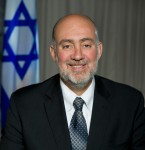
Israeli Ambassador to the United Nations Ron Prosor speaks in Vancouver on Feb. 3 and in Victoria on Feb. 4. (photo from Ron Prosor via Jewish National Fund Vancouver)

Israel’s ambassador to the United Nations says Canada’s foreign policy is at the “heart of the world’s moral compass.”

In an email interview with the Jewish Independent, Ambassador Ron Prosor credited Canada as being a voice of reason and justice.

“Prime Minister [Stephen] Harper and Foreign Minister John Baird have proven time and again to be true friends to Israel,” Prosor said. “They are at the heart of the world’s moral compass.… Canada is standing with Israel as we stand on the frontline in the battle against terror. They are often the first to denounce the anti-Israel bias and stand up as the voice of justice and reason. There are many examples of this bond: Canada was a strong proponent of the effort to make Yom Kippur an official UN holiday; it partnered with us to organize the upcoming special session in the General Assembly on antisemitism; and was one of the few countries to condemn the Syrian delegate … for comparing Israel’s policy to that of the Nazis.”

Prosor spoke to the paper in advance of his visit here in early February, hosted by Jewish National Fund of Canada, British Columbia. He will speak Feb. 3 in Vancouver at Congregation Beth Israel, at 7:30 p.m., and in Victoria the following day, at 7:30 p.m., at Congregation Emanu-El.

Prosor criticized efforts by the Palestinian Authority to gain recognition at the UN and at the International Criminal Court, saying it is an effort to avoid a negotiated resolution to the conflict.

“The Palestinians have found every possible opportunity to avoid direct negotiations with Israel,” he said. “They have engaged in a never-ending string of political games, literally shooting in all directions and missing the real target. The fact of the matter is that their habit of bypassing negotiations by taking unilateral action and blaming everyone but themselves will only move us further from peace. It’s time for the Palestinians to aim higher and find constructive solutions – beginning by engaging in meaningful dialogue.”

The United Nations is the body that, in 1947, passed the Partition Resolution intended to create a Jewish and an Arab state in Palestine. Israel’s critics routinely note that the very agency that is responsible for its existence is repeatedly on record condemning Israeli policies. Prosor responds that the UN is not the same body it was nearly 70 years ago.

“The landscape of the UN has changed dramatically since its founding,” Prosor said. “Today, fewer than half of its member states are democracies. The halls of the UN used to ring with calls for human rights and human dignity; today, they ring with voices demonizing and delegitimizing the Jewish state. This year, the UN passed 20 resolutions condemning Israel. In comparison, the world’s worst human rights abusers – Iran, Syria, and North Korea – each received one condemnation. This anti-Israel bias pervades the UN system.”

Many of the UN’s most vociferous condemnations of Israel emanate from the UN Human Right Council (UNHRC).

“For years, the Human Rights Council has singled out Israel for condemnation,” Prosor said. “I have to note that some of the world’s most repressive regimes, including Saudi Arabia and Cuba, are members of the Human Rights Council.”

Saudi Arabia is currently in the international spotlight for carrying out the first of 20 court-ordered floggings of democracy blogger Raif Badawi. After Friday prayers a week ago, Badawi, who created the blog Free Saudi Liberals, was lashed 50 times over the course of 15 minutes in a public square in front of a mosque in Jeddah. He is scheduled to receive the same punishment for a total of 20 successive Fridays, or 1,000 lashes. This is in addition to his sentence of 10 years in prison.

Despite this immediate example and other atrocities perpetrated by elected members of UNHRC, the body’s attentions are overwhelmingly focused on the Jewish state, Prosor said.

“To date, there have been 22 emergency meetings of the HRC to deal with situations around the world – 33 percent of them dealt with Israel,” Prosor said. “Additionally, Israel is singled out during regular sessions. Article 4 of the Council’s agenda examines the abuses of every single country in the world, except one. Israel – and Israel alone – has its own permanent place on the agenda: Article 7. This isn’t just a double standard, it’s a triple standard. One standard for democracies, one standard for dictators and a whole other impossible standard for Israel.”

“Another example is the UN’s UNISPAL [UN Information System on the Question of Palestine] website,” Prosor said. “It has advertised ‘apartheid tours’ in Israel and promoted a petition calling for the Canadian prime minister to cancel a visit to Israel.

“The UN could be playing a more constructive role by investing less time targeting Israel and more time advancing peace and security, economic growth, women’s rights, minority rights and so on,” he said. “None of this will be possible so long as the institution is held hostage by the world’s most repressive regimes.”

Though he is the lead representative of Israel at an organization that sometimes seems to have condemnation of the Jewish state as its primary mission, Prosor insists he is not intimidated.

“I walk the halls of this organization tall and proud of my extraordinary nation, one of the freest and more democratic countries on earth,” he said. “At the UN, I feel it is important to show the world what Israel is about beyond our conflict. We have so much innovation and ingenuity to share in agriculture, medicine, high-tech, education and more. We are a nation of just eight million that has produced 12 Nobel prizes, that sends satellites into space, puts electric cars on the road and develops the technology to power everything from cellphones to solar panels to medical devices. I feel privileged to represent Israel and the Jewish people.”

Prosor said he is bringing a message to Canada that emphasizes the parallels between the two countries.

“Israel and Canada share the same value system – we believe in democracy, justice, human rights and peace,” he said. “Together, we are standing firm amidst the stormy seas of global diplomacy to make the world a more peaceful place. The UN needs more countries like Canada – countries that are willing to take a stand and defend our common values.”

Pat Johnson is a Vancouver writer and principal in PRsuasiveMedia.com.

Format ImagePosted on January 16, 2015January 16, 2015Author Pat JohnsonCategories LocalTags Israel, Jewish National Fund, JNF, Ron Prosor, UN, United Nations

Israeli representative at UN

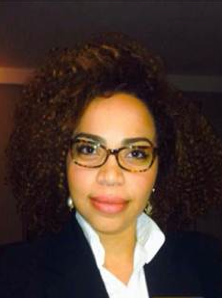
Rasha Athamni was the first Israeli selected to represent the nation as a youth delegate to the United Nations General Assembly in New York, serving during the 69th session from September through November 2014. The youth delegates program was started 1981 but, until then, Israel had not chosen to participate.

photo - Rasha Athamni was the Israeli youth delegate to the 69th session of the General Assembly, which ran from September through November 2014
Rasha Athamni was the Israeli youth delegate to the 69th session of the General Assembly, which ran from September through November 2014. (photo from undesadspd.org)

Athamni, 29, was raised in the Israeli Arab town of Baka Al-Gharbiyah, the youngest of nine children and the first in her family to graduate high school and university; her parents do not read or write. She earned a bachelor’s degree in psychology and English literature from Jerusalem’s Hebrew University and is currently working on her master’s in English literature. She also guides tours of Israel’s parliament, the Knesset. In her first interview with media, Athamni spoke with the Media Line.

TML: What prompted you to apply to become a United Nations youth delegate … and on behalf of the state of Israel, no less?

RA: Ever since I was a child, my biggest dream was to become a member in this UN society because that’s the ideal, the universality, people go out and help others that are in need. I am a citizen of Israel and I have a right to apply and to go through the interviews, and that’s what I did. When I got the acceptance letter, I was just thrilled. Hundreds applied after there was a call for applicants published on the Ministry of Foreign Affairs’ website. Only 12 or 13 were invited to go through the interview and I was one of them. And then, after the final decision, I got be the first and only youth delegate for Israel for the UN.

TML: Is there a distinction between Israeli Arabs and Palestinians living in Israel and, if so, what is the difference?

RA: Well, it’s a bit complicated – that’s the best adjective that I can use to describe it. It’s a question every Arab citizen in Israel has to answer sooner or later. On the one hand, my mother’s side is Arabic; my parents are Arabs. On the other hand, I live in the centre of Israel and I have an Israeli ID and passport. But, I’m not Jewish, so it’s very complicated. You really need to establish a sense of yourself that is solid enough to represent Israel, especially at the UN.

TML: How did you end up where you are today, studying for a second degree at Hebrew University?

RA: I was primarily motivated by my mother because, ever since I was a little kid, she told me it was very important for me to go to school because that would be the best [chance] that I would have in our society and that I should appreciate that because she herself couldn’t do it. All she really wants in life is that one of her kids becomes a doctor. I didn’t become a doctor. That was disappointment number one, but I did get a degree in psychology and English literature from the best university in Israel, and now I’m doing my master’s in English literature.

TML: How did you get involved with the Israeli government?

RA: About two years ago, the students association at the Hebrew University was looking for a coordinator for a coexistence project that brought together eight Jewish and eight Arab Israeli women students. I applied and got the job. It was a very fascinating year for me and for each one of those students that participated.

It’s very funny when you think about it. Even though they study the same courses and they go to the same classes, you’d see the majority of Jewish students would sit on one side of the hall and the minority on the other side, so there’s this psychological barrier between them. After they got to learn about each other and meet each other, then the hate recedes. That’s beyond nationality, ethnicity or religion. That’s when that barrier just disappeared and they started to sit and study with each other. The Jewish girl would go and teach the Arab girl Hebrew and the Arab girl would go and teach the Jewish girl English.

One of the girls used to work as a tour guide in the Knesset. I needed to support myself, so I got information from her and I applied for the job, and I still give tours in Arabic, Hebrew and English.

TML: How did your family react to that?

RA: My family is very apolitical. They grew up in a society where it was taboo to talk about politics because for them that meant either jail or exile. For me, now, that sounds like paranoia, being afraid to express your own opinion because of your background. There is some truth in that, but they just took it to the extreme. My family was really scared that my being involved in politics or social change or anything that has to do with the state of Israel could mean the demise of my image in my own community, and that’s a fear that they’re still experiencing. My mother, every time I call her, tells me that I shouldn’t do that and it’s never too late back out.

TML: Was there backlash from other Arabs or from Arabs who happen to be of Israeli descent?

RA: At the UN, no. They’re all very diplomatic. Whenever I introduced myself, they said, “Good job as the youth delegate of Israel,” even though that person was from Jordan, Yemen or Egypt. It just didn’t make any sense because they would attack Israel in the committee for human rights but they had no problem talking to an Israeli in the corridors.

TML: You said you represented Israel, responding to different discussions that go on in the United Nations.

RA: After I was picked to represent the youth of Israel, I had a two-month training period at the Foreign Ministry, then traveled to New York for three months, where my job was to summarize the meetings of the committee on human rights. I attended informal briefings at which UN delegates would discuss the terms and wordings of the resolutions, and would also go to events that the delegation would be invited to.

My most prominent moment came when I delivered a speech on behalf of the youth of Israel. This was at the opening of the first meeting of the human rights committee. When it was time for the youth delegation to speak, they spoke about the rights of the youth, why is it really important. Youth belong to a very strange category because they are not children and are not yet adults, so we tend to disregard their needs. A person needs to get a first degree and a second degree in order to just have the opportunity to apply for a job. These are just some of the topics that we covered, along with health, gender equality and education, which is very basic in our country but in other countries is a goal to strive for.

TML: Two of your passions are human rights and social responsibility. What issues were most challenging?

RA: Whenever I attended meetings of the committee for human rights, I had to sit in Israel’s space and, just sitting there, I felt terrified. On my first day, to my left there was Iran. In front of me was Egypt and Jordan, and behind me was Qatar. I felt what Israel feels like at the international level, being under attack even though this was my first experience hearing the attacks. What was interesting for me was how every country would attack Israel disregarding what they do within their own borders. You’d hear the delegation from Syria attacking Israel for violations on human rights, which doesn’t make much sense. A country representing their own people needs to address their own problems rather than pretending that everything is fine within their own borders, and then attack[ing] another country and join[ing] with others who are against it. That country most of the time happens to be Israel.

TML: As an Israeli citizen, how did that make you feel?

RA: It didn’t feel fair. There are always two sides to a conflict. It seemed that one side is more represented than the other side – that other side is Israel. I just felt that someone needs to be given a floor to express and talk about [the] good things that Israel is doing: the humanitarian assistance that Israel is giving to Gaza and the West Bank. There is a project called Save a Child’s Heart. Every Tuesday, a child from Gaza goes to Israel for heart surgery. There are also negatives, but you can’t just focus on that. There is much hope that is being missed when everyone focuses on the bad stuff.

Read more at themedialine.org.

Posted on January 16, 2015January 14, 2015Author Felice Friedson TMLCategories IsraelTags Israel, Rasha Athamni, UN, United Nations
סניף ונקובר של קק”ל מברך את פרושאור

סניף ונקובר של קק”ל מברך את פרושאור

image - interesting in the news Jan 1 - Ron Prosor to Vancouver, bitcoin, Tim Hortons snake incident

Format ImagePosted on January 1, 2015January 5, 2015Author Roni RachmaniCategories עניין בחדשותTags Bitcoin, Ilan Pilo, Jewish National Fund, JNF, Ron Prosor, Saskatoon, SFU, Simon Fraser University, snake, Tim Hortons, UN, United Nations, או"ם, אוניברסיטת סיימון פרייזר, אילן פילו, ביטקוין, טים הורטונס, נחש, ססקטון, קק"ל, קרן הקיימת לישראל, רון פרושאור

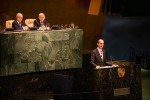
Netanyahu at UN: danger, opportunity ahead

Last week at the United Nations, Palestinian President Mahmoud Abbas once again accused Israel of heinous crimes, including “genocide.” And, once again, the global community demonstrated its collective gullibility. It was left to Israeli Prime Minister Binyamin Netanyahu Monday to stand at the same lectern before the UN General Assembly and deliver what has become an annual rebuttal to the most preposterous allegations against the Jewish state.

It was not a cheery speech, but nor was it all doom and gloom. In that half-empty assembly hall – many delegates, apparently, cannot even bear to listen to the words of an Israeli leader – Netanyahu took on one accusation after another.

“I’ve come here to expose the brazen lies spoken from this very podium against my country and against the brave soldiers who defend it,” he said, holding up the Israel Defence Forces as representative of “the highest moral values of any army in the world” and insisting that “Israel’s soldiers deserve not condemnation, but admiration … from decent people everywhere.”

He slammed the UN’s Human Rights Council, which he declared an oxymoron.

“By investigating Israel, rather than Hamas, for war crimes, the UN Human Rights Council has betrayed its noble mission to protect the innocent,” the prime minister said. “In fact, what it’s doing is to turn the laws of war upside-down. Israel, which took unprecedented steps to minimize civilian casualties – Israel is condemned. Hamas, which both targeted and hid behind civilians – that, a double war crime – Hamas is given a pass. The Human Rights Council is thus sending a clear message to terrorists everywhere: use civilians as human shields. Use them again and again and again. And you know why? Because, sadly, it works.”

Then he turned his sights toward Iran’s nuclear ambitions. He warned that, while Iran may have softened its tone, its aim is the same as that of ISIS, Hamas and other militant Islamists – world domination.

These common dangers – “a nuclear-armed Iran and militant Islamist movements gaining ground” – provide an opening for peace between Israel and its neighbors. And not only militarily, but also in terms of regional development.

“Together we can strengthen regional security,” said Netanyahu. “We can advance projects in water, agriculture, in transportation, in health, in energy, in so many fields.

“I believe the partnership between us can also help facilitate peace between Israel and the Palestinians. Many have long assumed that an Israeli-Palestinian peace can help facilitate a broader rapprochement between Israel and the Arab world. But, these days, I think it may work the other way around: namely, that a broader rapprochement between Israel and the Arab world may help facilitate an Israeli-Palestinian peace.”

If Israel’s prime minister can talk about the potential for “new opportunities” in the Middle East alongside the dangers, and of “the indispensable role of Arab states in advancing peace with the Palestinians,” perhaps it’s not so naïve to remain hopeful.

Posted on October 3, 2014October 1, 2014Author The Editorial BoardCategories From the JITags Binyamin Netanyahu, Israel, Mahmoud Abbas, Palestinians, UN, United Nations

Small changes can combat climate change

Melting ice caps, disappearing Arctic sea ice, imperiled water supplies, heat waves of unprecedented frequency and duration, torrential rains, dying coral reefs, fish and mammals migrating or going extinct. It may sound like a trailer for Hollywood’s just-released biblical fantasy epic Noah, but unfortunately, it’s real and it’s getting worse.

The Intergovernmental Panel on Climate Change, a United Nations-initiated group of thinkers, released a major report on Monday about what is happening to our global climate. The panel received the Nobel Peace Prize in 2007, with Al Gore, for aiding awareness about climate change.

Rising oceans endanger coastlines and habitats, human and animal. And the waters are becoming acidic from absorbing carbon dioxide, killing sea life and, in other cases, altering growth patterns, while industrial and automotive emissions pollute the atmosphere and increase temperatures. As polar ice caps melt, organic matter that has been frozen for millions of years thaws, then decays, causing additional greenhouse gases that compound the problem.

“Nobody on this planet is going to be untouched by the impacts of climate change,” said the chair of the panel, Rajendra K. Pachauri, in releasing the report.

The potentials caused by climate change are vast. Mass migrations of people may be unavoidable. The global health impacts are myriad. Food security may be threatened, with incalculable results to human life and social stability. Wars will be fought over water.

This may seem apocalyptic, but we are already seeing the literal costs of compensating for years of inaction. As just one recent example illustrates, after Hurricane Sandy, the power provider to most of New York City was obligated to invest $1 billion in protecting their infrastructure against flooding and other weather-related threats because this sort of superstorm is becoming more frequent.

There is still a sizable segment of the population that denies the dangers of climate change or who deny what so much evidence demonstrates. More dangerous than the skeptics, however, are the masses, the millions who do not take action individually and demand that our governments do so, as well.

It is, of course, much easier to do nothing. As individuals and as collectives – businesses, organizations, governments – human beings naturally default to what is convenient and comfortable. Change that requires sacrifice is difficult for individuals to undertake, even in self-interest. However, for groups, especially corporations, which have a financial bottom line to protect, and governments, which have a bottom line of getting reelected, the status quo can seem like a good option. Indeed, short-term thinking has led us to this point.

What impact can one person have on this global problem? A lot – and we all know it. Each of us can plainly see areas where our own behaviors can change in small ways. We can reduce the energy we use, for starters. Small changes can have large impacts: leaving our vehicles at home at least one day a week to carpool, walk, cycle or transit to work can reduce our individual energy consumption by 20 percent. Another reasonable change is to take at least one day off meat and dairy each week, a dietary adjustment that the report’s authors assert will help reverse the toll of agricultural climate pollution. Significantly, we can also make these issues a top concern when we vote and when we speak with our elected officials, so that they know we care and that we will vote based on how our representatives treat our environment.

In Pirkei Avot (Ethics of the Fathers), Rabbi Tarfon taught: “It is not your responsibility to finish the work [of perfecting the world], but you are not free to desist from it either.” One individual cannot solve this problem alone. But millions together can.

Posted on April 4, 2014May 8, 2014Author The Editorial BoardCategories From the JITags Ethics of Our Fathers, Hurricane Sandy, Intergovernmental Panel on Climate Change, Pirkei Avot, United Nations

Posts pagination

Previous page Page 1 … Page 4 Page 5
Proudly powered by WordPress