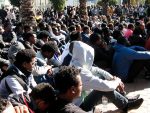
This photograph by Ziv Koren is from My Jerusalem: The Eternal City, a collection of reflections on the city by notable Israeli and Diaspora (mainly American) Jews edited by Ilan Greenfield and published by Gefen Publishing House last year.
I read a lovely quotation recently: “I met a hundred people going to Delhi. And every one of them was my brother.” I often feel that way in Israel. In the 40 years I have lived here, I have met saints and sinners, business tycoons and homemakers, and many, many others. But, by the very fact of them pulling up their roots, leaving behind their birthplaces and culture, here they become ordinary people leading extraordinary lives. I once had a friend, sadly passed on, who used to say that he stood on the corner and watched all the poems walk by.
Israel makes demands on us. We don’t just drift along acquiring more and more material possessions – a bigger home, a more luxurious car, a wardrobe of designer clothing. No matter how rich or poor we may be, when our children turn 18, they are expected to serve their country, either in the Israel Defence Forces or national service (Sherut Leumi). Almost everyone I know is a mother, father, grandparent, sister, brother, wife or daughter of a soldier, and there is always the fear for their safety, or of terrorist attacks that can occur anywhere, changing lives forever. And the six-day work week doesn’t leave much time for leisure, or keeping up with friends and family scattered around the country. Yet there is a resilience here. On the whole, we are optimists. It is almost a cliché that, if you live in Israel and don’t believe in miracles, then you are not a realist. We live on miracles and expect them – the Entebbe rescue and the Six Day War victory are just two examples.
Stand on the corner of any Jerusalem street and, in the space of 10 minutes, you can hear several languages. There might be a monk in a long habit; a soldier whose face is etched in weariness; a teenager with earrings and tattoos; tourists with cameras slung around their necks; a housewife trundling a shopping cart; a Charedi Jew with peyot; and everywhere people talking on their mobile phones. A gregarious lot contributing to the rich mosaic of our society. Each one unique.
They may be strangers, but Israelis won’t hesitate to speak to you … on a bus, waiting in a queue, sitting at your doctor’s office. They may ask you where you bought your shoes, where you work, how much you earn, and why haven’t you dressed your child warmly enough. One big family. It’s not just idle curiosity – they are really interested.
This is what’s so endearing about living in Israel. We all express our identity differently, in the way we dress and the words we speak, but, in the end, it’s a similar identity. We are bonded by birth, by choice or by belief and it creates a link – invisible perhaps but, when needed, we will help each other. It’s an unspoken commitment. How lucky we are!
Dvora Waysmanis a Jerusalem-based author. She has written 14 books, including The Pomegranate Pendant, which was made into a movie, and her latest novella, Searching for Sarah. She can be contacted at dwaysman@gmail.com or through her blog dvorawaysman.com.
Millions more could be fed by the same resources if our diets changed. (photo from wis-wander.weizmann.ac.il)
About a third of the food produced for human consumption is estimated to be lost or wasted globally. But the biggest waste, which is not even included in this estimate, may be through dietary choices that result in the squandering of environmental resources. In a study published in the Proceedings of the National Academy of Sciences of the United States of America, researchers at the Weizmann Institute of Science in Rehovot, Israel, and their colleagues have found a novel way to define and quantify this second type of wastage. The scientists have called it “opportunity food loss,” a term inspired by the “opportunity cost” concept in economics, which refers to the cost of choosing a particular alternative over better options.
Opportunity food loss stems from using agricultural land to produce animal-based food instead of nutritionally comparable plant-based alternatives. The researchers report that, in the United States alone, avoiding opportunity food loss – that is, replacing all animal-based items with edible crops for human consumption – would add enough food to feed 350 million additional people, or more than the total U.S. population, with the same land resources.
“Our analysis has shown that favouring a plant-based diet can potentially yield more food than eliminating all the conventionally defined causes of food loss,” said lead author Dr. Alon Shepon, who worked in the lab of Prof. Ron Milo in the plant and environmental sciences department. The Weizmann researchers collaborated with Prof. Gidon Eshel of Bard College and Dr. Elad Noor of ETZ Zürich.
The scientists compared the resources needed to produce five major categories of animal-based food – beef, pork, dairy, poultry and eggs – with the resources required to grow edible crops of similar nutritional value in terms of protein, calories and micronutrients. They found that plant-based replacements could produce two- to 20-fold more protein per acre.
The most dramatic results were obtained for beef. The researchers compared it with a mix of crops – soya, potatoes, cane sugar, peanuts and garlic – that deliver a similar nutritional profile when taken together in the right proportions. The land area that could produce 100 grams of protein from these crops would yield only four grams of edible protein from beef. In other words, using agricultural land for producing beef instead of replacement crops results in an opportunity food loss of 96 grams – that is, a loss of 96% – per unit of land. This means that the potential gain from diverting agricultural land from beef to plant-based foods for human consumption would be enormous.
The estimated losses from failing to replace other animal-based foods with nutritionally similar crops were also huge: 90% for pork, 75% for dairy, 50% for poultry and 40% for eggs – higher than all conventional food losses combined.
“Opportunity food loss must be taken into account if we want to make dietary choices enhancing global food security,” said Milo.
Milo’s research is supported by the Mary and Tom Beck Canadian Centre for Alternative Energy Research, which he heads; the Zuckerman STEM Leadership Program; Dana and Yossie Hollander; and the Larson Charitable Foundation. Milo is the incumbent of the Charles and Louise Gartner Professorial Chair.
For more on the research being conducted at the Weizmann Institute, visit wis-wander.weizmann.ac.il.
Israelis and tourists enjoy the beach in Tel Aviv on a hot summer day. (photo by Miriam Alster/FLASH90 via Israel21c)
A new study says that, by 2100, climate changes will extend the summer season in the eastern Mediterranean – an area that covers Israel, Egypt, Jordan, Syria, Lebanon and southern Turkey – by two full months. Winter, the rainy season, will shorten from four to two months.
The study, published in the International Journal of Climatology, was overseen by Prof. Pinhas Alpert and conducted by Assaf Hochman, Tzvi Harpaz and Prof. Hadas Saaroni, all of Tel Aviv University’s School of Geosciences.
“Pending no significant change in current human behaviour in the region, the summer is expected to extend by 25% by the middle of the century (2046-2065) and by 49% until its end (2081-2100),” Hochman said. “The combination of a shorter rainy season and a longer dry season may cause a major water problem in Israel and neighbouring countries.”
Other serious potential consequences include increased risk of brushfires, worsening pollution and altered timing and intensity of seasonal illnesses and health hazards.
“One of the main causes of these changes is the growing concentration of greenhouse gases emitted into the atmosphere as a result of human activity,” said Hochman.
The research team is currently exploring the possibility of establishing a multidisciplinary regional centre for climate adaptation.
קנדה תקלוט כאלפיים פליטים מישראל. (צילום: Wikimedia Commons)
ראש ממשלת ישראל, בנימין נתניהו, הוכיח שוב כי המדיניות שלו היא לא מדיניות באמת, וכי הוא משנה את דעתו על הזמן. וזאת בהתאם לכיוון שאליו נושבת הרוח. כך גם החלטתו האחרונה לשלוח למעלה משישה עשר אלף פליטים- מסתננים מאפריקה (ממדינות ארתיריה וסודן) שביקשו מקלט בישראל, למספר מדינות במערב. בהן לדבריו גרמניה, איטליה וקנדה. ולטענתו לאחר שכביכול הוא הגיע להסכם עם נציבות הפליטים של האו”ם בנוגע למשלוח המסתננים למדינות אלה, למרות שלהן לא היה ידוע על כך. מענין!
לפי ההסכם עם האו”ם 16,250 מבקשי מקלט מישראל יקלטו במדינות המערב. ישום ההסכם יבוצע בשלושה שלבים ויתפרש על פני חמש שנים תמימות. ובמקביל כ-16,250 מהפליטים יקבלו מעמד חוקי בישראל. הם יפוזרו באופן מאוזן ברחבי ישראל. וכן תוקם אף מינהלה מיוחדת שתעסוק בשיקום אזור דרום תל אביב הרעוע (וזאת על חשבון ההשקעה במתקן חולות לכליאת הפליטים שיסגר).
לאחר הודעתו כי הגיע להסכם ותוך שעות ספורות ביטל נתניהו בעצמו את החלטתו הקודמת, והחליט שלא לשלוח פליטים מישראל למדינות המערב. ומדוע? זאת לאור זעם במפלגות הימין בישראל שהביעו התנגדות נחרצת כי בעקבות החלטת נתניהו להעברת למעלה משישה עשר אלף הפליטים למערב, יקלטו במדינה השאר – כשמונה עשר אלף פליטים-מסתננים.
בקנדה החליטו שלא להמתין להחלטותיו התמוהות של ראש ממשלת ישראל וכיאה למדינה הקולטת כל הזמן הגירה ממדינות מצוקה, הוחלט לקלוט כאלפיים פליטים-מסתננים מישראל. וזאת במהלך עצמאי ללא בקשה של ממשלת ישראל, שהחליטה לפני מספר חודשים לגרש את הפליטים האפריקנים מישראל בחזרה לאפריקה. הארש ז’אסוול, עוזר מיוחד לשר ההגירה, הפליטים והאזרחות של הממשלה הקנדית, אחמד חוסיין, מסר את ההודעה הבאה בנושא: “הממשלה שלנו כבר הוכיחה שהיא מובילה עולמית לקבל בברכה פליטים שנמלטים ממלחמות ורדיפות. ישוב פליטים אלה הוא חלק בהמסורת ההומנטרית הגאה של קנדה. אנו מוכחים שוב כי יש לנו אחריות משותפת לסייע לאלה שנעקרו, שהם נרדפים ומרביתם זקוקים להגנה ועזרה. אנו עוקבים מקרוב אחרי המתרחש בישראל, ונמצאים בקשר ישיר עם ממשלת ישראל. הגענו להסדר עם הרשויות בישראל להשעות את גירושם ומעצרם של פליטים שהגישו בקשה לעבור לקנדה, בעזרת נותני חסויות פרטיות מקנדה – עד לשיושלם הטיפול בעניינם. אנו ממשיכים ביחד עם נותני החסויות הפרטיות שיתכן ובקשותיהם מושפעות ממה שקורה בישראל. נציגות של משרד ההגירה, הפליטים והאזרחות הקנדי בתל אביב, יספק מכתבים למבקשים בקרב הפליטים להגר לקנדה, במסגרת החסויות הפרטיות, כדי לאשר שבקשותיהם נמצאות בהליך של אישור על ידנו. הם יוכלו להציג את המכתבים האלה בפני הרשויות בישראל. נכון לשלושים ואחד בדצמבר אשתקד אנו מטפלים בקרוב לכאלפיים בקשות של פליטים אפריקנים לעבור מישראל לקנדה, כאמור במסגרת נותני חסויות פרטיות מקנדה. וללא קשר במקביל, אנו ממשיכים בהתאם להכרזת ממשלת קנדה, בקליטת כארבעת אלפים פליטים מאריתריה, עד לסוף הנה הנוכחית”.
לדברי סוכנות האו”ם לפליטים השוכנת באוטווה, יש הסכם שקנדה תקלוט השנה לא פחות מכעשרת אלפים פליטים. באופן כללי יתכן שחלקם של פליטים אלה יגיעו אפילו מישראל.
במרכז לענייני ישראל והיהודים בקנדה הזדרזו לברך את שר ההגירה, הפליטים והאזרחות הקנדי, אחמד חוסיין, על הסכמתו כביכול לקלוט פליטים מישראל. במרכז אמרו והוסיפו עוד כי: “ישובם מחדש של מבקשי מקלט מישראל, הוא אתגר בינלאומי המצריך פתרון בינלאומי. ואכן קנדה נטלה על עצמה תפקיד מוביל בנשיאה באחריות הבינלאומית לישובם מחדש”.
Shlomi Shaban will be joined by Ninet Tayeb (right) at Metro Vancouver’s celebration of Yom Ha’atzmaut on April 18 at the Chan Centre. (photo from Jewish Federation)
Two award-winning veteran musicians, not to mention good and longtime friends, will be headlining our community’s Yom Ha’atzmaut celebration on April 18 at the Chan Centre for the Performing Arts. Tel Aviv’s Shlomi Shaban will be joined by Los Angeles-based Ninet Tayeb.
“I have performed once outside the country on Yom Ha’atzmaut,” Shaban told the Independent. “It was Israel’s 60th anniversary. It was in Stockholm, Sweden. A lot of musicians and myself traveled over there, like Beri Sacharov, Eran Tzur and many others. We had a great show over there. But, beside that, I can’t remember performing outside Israel on Yom Ha’atzmaut, mostly I’m here in Israel, performing across the country or just being with my family, it depends.
“I’ve never been to Canada before, so, naturally, I’m very, very excited,” he said. “I’ve heard a lot of really great things about Vancouver and I’m really looking forward to just hang there, travel around and explore the place, although we’re going to be there for too short [a time] I’m afraid, two days, but I hope to catch as much as I can.
“I remember my friends Jane Bordeaux performing there last year,” he added, “and they came back really excited about the crowd and the place.”
Shaban was born in Tel Aviv and has lived there his whole life, except for a few years, when he was in London, England, to study classical piano. “I’m in love with Tel Aviv,” he said.
Like Tel Aviv, music has always been a part of Shaban’s life.
“I started learning how to play the piano when I was 6 years old,” he said. “I started privately, like a lot of kids. Then I went to a conservatory, and studied there for 10 years. And then, in London … I received an artist’s diploma from the Royal College of Music. I’m very proud of that, though I haven’t looked at that diploma since I got it.
“I always wrote little songs, since I was 10, I think, and always considered that as kind of a hobby, or kind of an intermission – I was practising a lot of piano, five hours a day, six hours a day, and more and more, and I always saw that as kind of a comic relief from practising…. When I was 21, I started thinking, maybe I went the wrong direction, so to speak, and the little hobby that I considered to be a comic relief, might be my main interest, and tried to publish my songs. I was very lucky, I was signed by a major label, here in Israel, of course, and faded away from the classical world, and never went back.”
Shaban now has four albums under his belt, and has won several awards for his work.
“In terms of career highlights,” he said, “I would mention two. As I said, I left the classical world but, five years ago, or six years ago, I was approached by the Israel Philharmonic. They celebrated their 75th year, and they asked me to do a concert of my music, my songs, with the orchestra.
“It was a great closure for me because, when I was 17, I played with the orchestra as a classical pianist with Maestro Zubin Mehta. I was a kid, so, naturally, very excited and very nervous, and now I came back through the main door with my own songs. It was another exciting and, again, nerve-wracking in a way, event for me. I had to practise piano again because I played my own songs and a little classical music we mixed throughout the songs. That was definitely a highlight.
“Nowadays, I’m touring with Chava Alberstein,” he continued. “She’s Israel’s, let’s say, Edith Piaf. I don’t know. She’s Chava Alberstein – she has more than 60 albums. I recorded a song with her four years ago, and asked her to consider touring with me and being her pianist – just me and her, she sings and I play…. We planned to do four or five shows, and now the tour has evolved and it’s sold out, and we are adding more and more shows. I sing only one song during the show, the song that I wrote for her…. It’s a great, great pleasure for me and I learn so much and enjoy so much doing it. So, that’s another big highlight for me.”
Shaban has been inspired by many musicians.
“I’ve covered many artists, Israelis and non-Israelis,” he said. “Mostly, I tend to cover storytelling songs, people like Bob Dylan, Leonard Cohen … I’m going to play a few songs by him in the show.
“I was trained as a classical musician and, when I left it and began hearing popular music, in a weird way, my heart went to very simple music, very text-based music, people, as I say, Dylan and Leonard Cohen, Tom Waits, Lou Reed, all that gang. And, during the years, they have remained my main love and inspiration, but I have listened to a lot of other music – new music, old music, jazz. I love jazz pianists and composers, people like [Thelonious] Monk … Miles Davis, and many, many others. I’m not interested in a specific genre, just getting as much inspiration as I can from different genres. But, as I said, my main interest always was the lyrics, funnily enough, and the story that the song conveys, and that hasn’t changed.”
In terms of his creative evolution, however, Shaban has been focusing more on the music. He described his early composing as “very functional,” something he used mainly to help the story to come across. “Nowadays,” he said, “I’m writing more rich music. I think, in that way, I’m heading backwards to the classical time and thriving on inspiration from all kinds of music, and not just folk music or rock music.”
Ninet Tayeb (photo from Jewish Federation)
Shaban is excited to be performing in Vancouver with Tayeb, who he described as “one of the best singers I have ever heard.” He added, “She’s a great friend of mine, so that’s another bonus, meeting her in Canada – she’s in L.A. now and I rarely see her, so I’m looking forward to that, and meeting you all.”
For her part, Tayeb has recorded five albums and, like Shaban, has been recognized numerous times for her work. Also like Shaban, music has been a lifelong passion.
“Music has been my life ever since I was a little girl,” she told the Independent. “I started writing my own music at the age of 23. To be able to express myself through music is the most amazing gift I could have.”
Tayeb said, “My style is a mixture between Israel, L.A., Berlin and New York, kind of a Middle Eastern rock ’n’ roll with a slight hint of electronic. Music keeps evolving all the time and so do I – thank God! – and, for me, the most important thing is to keep moving forward and keep my mind open.”
It was this drive to continually enrich her knowledge and creative spirit that took her to Los Angeles, she said. She moved there from Tel Aviv.
On Yom Ha’atzmaut, said Tayeb, “The show will be me singing with Shlomi and Shlomi will sing alone, as well. One thing I can promise you – the show will be full of love and true spirit.”
For tickets ($18) to the April 18, 7:30 p.m., concert at the Chan Centre, visit jewishvancouver.com.
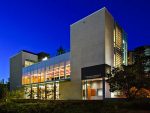
Hillel House building at the University of British Columbia. (photo from Hillel BC)
The University of British Columbia Geography Students Association (GSA) recently canceled a gala that was to take place in rental space owned by UBC’s Hillel chapter, due to pressure from some of the faculty in the department of geography.
The faculty members said they insisted on boycotting the event because of what they called the “controversial” and “political” nature of Hillel, according to numerous reports. The faculty members had not been publicly identified as of press time and could, therefore, not be located to clarify their position.
The Centre for Israel and Jewish Affairs (CIJA) has accused them of boycotting the GSA gala based on the perception that Hillel supports the state of Israel, which CIJA is calling discriminatory.
“Boycotting Jews or a Jewish organization simply because you object to the state of Israel’s policies is classic antisemitism,” said Nico Slobinsky, CIJA’s director for the Pacific region.
“It is hard to believe that there is such blatant antisemitism on a Canadian university campus in 2018. There should be zero tolerance for any expressions of discrimination, racism and antisemitism on campus and anywhere else in Canada.”
Samuel Heller, the assistant executive director of Hillel BC, told the CJN that, “The actions of these faculty members have resulted in a de facto boycott of the Jewish student centre on campus. To boycott Jews based on one’s political views about Israel is discriminatory and antisemitic. Their actions have led to the resignation of the lone Jewish student on the executive of the GSA, as he felt marginalized and discriminated against because of his Jewishness.”
Addressing the claim that Hillel is a controversial and political space, Heller said, “Hillel doesn’t have any politics. What these faculty members really object to is Hillel’s support of Israel’s existence. We are a Jewish organization and Israel is a part of Jewish identity.… To demand that Jews disavow parts of our identity to placate faculty members is wrong and discriminatory.”
But not everyone accepts Heller’s characterization of Hillel as “having no politics.” The Progressive Jewish Alliance at UBC (PJA) released a statement on Facebook on March 16, saying: “While we recognize the right of the GSA to move the gala based on political considerations, we urge the GSA to recognize that Hillel is the physical Jewish space on campus, alongside having a political position. While we wait for a statement from the GSA, we would like to point out that the ramifications of their decision are alienating Jewish students on campus. Likewise, we encourage Hillel to consider how their political positions, such as an opposition to all boycotts of Israel, can alienate other Jewish and non-Jewish organizations and students.”
The PJA is referring to Hillel International’s Standards of Partnership, which state that Hillel will not partner with, house or host organizations, groups or speakers that deny the right of Israel to exist as a Jewish and democratic state with secure and recognized borders; delegitimize, demonize or apply a double standard to Israel; or support the boycott of, divestment from or sanctions against the state of Israel.
In 2012, concerns about Hillel’s refusal to partner with Jewish organizations that support the BDS movement led to the formation of Open Hillel, an organization that agitates for Hillel to end the Standards of Partnership.
Numerous controversies have broken out over Hillel boycotting groups or individuals in recent years. In one example, in March 2017, B’nai Keshet, a queer Jewish group at Ohio State University, co-sponsored a Purim fundraiser for LGBTQ refugees in the Columbus area. Because Jewish Voices for Peace, an organization that supports BDS, was one of the sponsoring groups, OSU Hillel cut ties with B’nai Keshet, due to pressure from Hillel International, prompting students on numerous American campuses to hold “solidarity Shabbats” with the LGBTQ group. In June, a letter calling for the end of the standards was signed by more than 100 rabbis and submitted to Hillel.
The UBC Progressive Jewish Alliance hopes that the controversy will not only provoke change in the GSA, but in Hillel, as well.
“We hope that both organizations take this opportunity to engage in genuine dialogue around the complexity of politics and place,” it concluded in a statement.
Philip Steenkamp, the vice-president of external relations at UBC, told the CJN that the university is “aware of concerns that have been expressed by CIJA” and “are looking into this matter and will follow due process to ensure it is appropriately addressed.”
Matthew Gindin is a freelance journalist, writer and lecturer. He writes regularly for the Forward and All That Is Interesting, and has been published in Religion Dispatches, Situate Magazine, Tikkun and elsewhere. He can be found on Medium and Twitter. This article was originally published by the CJN.
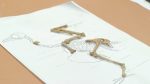
Pigeon bones from 1,500 years ago. (photo from University of Haifa via Ashernet)
Israel’s Negev Desert has not always been a dusty, almost treeless place – 1,500 years ago, many parts of the Negev were green and produced basic foods. And a new study – led by Dr. Nimrod Marom of the University of Haifa and Tel Hai College, in cooperation with Prof. Guy Bar-Oz and Dr. Yotam Tepper of the Institute of Archeology at the University of Haifa and Dr. Baruch Rosen of the Volcani Centre – reveals the first archeological evidence of the role played by pigeons in Byzantine agriculture: improving and fertilizing soil in vineyards and orchards. Among other goals, the researchers are interested in understanding how the Byzantines managed to maintain a broad-based agricultural system in the desert, and what led to the sudden abandonment and eventual collapse of these flourishing communities.
שגרירת קנדה בישראל, דברה לאיונס, נפגשה לאחרונה עם ראשי הפדרציה היהודית של ונקובר, נציגים של ארגונים יהודים ואנשי עסקים בוונקובר. השגרירה לאיונס כתבה בעקבות הביקור מכתב לפדרציה ובו אמרה בין היתר: “קנדה מאמינה בפתרון שתי המדינות והיא תמשיך לעבוד לקראת מטרה זו, כדי להשכין שלום בין בין ישראל לפלסטינים. לדברי שרת החוץ הקנדית לאור הכזרתו של נשיא ארה”ב” דונלד טראמפ, “מעמדה של ירושלים יבוא לידי פתרון רק במשא ומתן בין הצדדים. אנו ממשיכים במחויבות שלנו להשגת שלום במזרח התיכון, הכולל הקמת מדינה פלסטינית לצד ישראל”. אני עובדת מקרוב עם שגריר ארה”ב בישראל, דיוויד פדרמן, כדי שלקנדה יהיה תפקיד יעיל לתמוך בישראל ובפלסטינים, לצד הקולגות האמריקניים.
קדימה אחורה-אחורה קדימה: בית קפה בוונקובר אוסר להכניס מחשבים בסופי השבוע
בבית קפה בדאון טאון ונקובר החליטו לחזור אחורה ולעצור את הטכנולוגיה בסופי שבוע, כדי לאפשר לקהל הלקוחות כמו בעבר לנהל שיחות עם אחרים, במקום להמשיך ולהסתתר מאחורי הלפטופים שלהם.
הבעלים של קפה מוסאט ברחוב בורארד פינת רחוב הארווד, החליט בשבועיים האחרונים לשנות את המדיניות של המקום ולהנהיג טרנד ישן. מעתה נאסר על הלקוחות לבוא עם מחשבים ניידים בשבת ובראשון. במקביל חלות מגבלות על השימוש בווי פיי לחצי שעה בלבד. וזאת רק למי מהלקוחות שרכשו מוצרים בקופה. השימוש בווי פיי מעבר לכך אינו בחינם עוד בסופי שבוע. שלט על החלון בכניסה לקפה מזכיר ללקוחות להשאיר את הלפטופים בבית בשבת ובראשון.
מעבר לכוונה לאפשר ללקוחות לדבר אחד עם השני כמו פעם יש גם היבט עיסקי מאחורי המדיניות החדשה: לאפשר תחלופה גדולה יותר של לקוחות. לפני השינוי במדיניות רבים מהלקוחות שבאו עם מחשבים ניידים בשבת ובראשון העמוסים יותר, ישבו סביב השולחנות שעות רבות והתמקדו במסכים. המתבונן מהצד ראה “ים” של מסכים אלקטרוניים כאשר המשתמשים בלפטופים שלהם, פשוט הפכו את המקום למשרדם הפרטי, בזמן שאף אחד לא מדבר עם רעהו והמקום היה שקט להחריד. מעתה מאמין המנהל של בית הקפה, קולטר ג’ונס, כי התחלופה של הלקוחות תגבר ואף אחד לא יתפוס מקום לזמן רב מדי.
קפה מוסאט הפך כבר מזמן למוקד מפגש קבוע של רוכבי אופניים חובבים ומקצועים מרחבי העיר. ג’ונס חושב שהאיסור על שימוש במחשבים ניידים בסופי השבוע, יאפשר לקהל הלקוחות לנהל מפגשים של שיחות והתקשרות של אחד עם השני, בצורה נעימה יותר. הוא מציין כי הלקוחות אוהבים את השינוי המרענן ורבים יותר פוקדים את הקפה. רק מעטים כועסים והודיעו כי יחפשו לעצמם בתי קפה אחרים. והם אלה שבוודאי מסוגלים בעזרת המחשבים שלהם לכתוב ביקורת שלילית, על המדיניות החדשה של מוסאט, שלא מתאימה לאורח החיים “האלקטרוניים” שלהם.
בתי קפה נוספים בוונקובר בודקים מקרוב מה נעשה במוסאט, וגם הם שוקלים להנהיג את המדיניות החדשה-ישנה ולאסור על השימוש במכשירים האלקטרוניים בסופי שבוע. חלק מהם פנו למוסאט וביקשו לבדוק לפרטים את המדיניות החדשה שלהם.
בבתי קפה בערים אחרות בקנדה כמו טורונטו, מונטריאול והליפקס כבר נוקטים במדיניות דומה, ומגבילים את שעות השימוש במחשבים הניידים בסופי השבוע וכן בחגים, ואפילו גם בשעות אחר הצהרים העמוסות בימי השבוע הרגילים. חלק מבתי הקפה בערים אלה אף מונעים מהלקחות להטעין את הסלולות של הטלפונים הניידים שלהם. כך נעשה גם במדינות שונות באירופה בהן בריטניה ודנמרק, כאשר הטרנד הישן צובר תאוצה והלקחות מסתבר אוהבים זאת.
Left to right, Dr. Mehmet Oz, Rabbi Shmuley Boteach, Sean Spicer and Ron DeSantis, at the Champions of Jewish Values International Awards Gala in New York on March 8. (photo by Dave Gordon)
What do an American soldier, a former athlete and a former U.S. press secretary have in common? According to the World Values Network (WVN), they are all – in their own way – defenders of the Jewish people and Israel.
The Champions of Jewish Values International Awards Gala took place on March 8 in New York City at the Plaza Hotel. The event was led by well-known rabbi and author of 32 books Shmuley Boteach, director of WVN.
Several awards were given out, honouring individuals who, according to the network, have shown exemplary actions to further the causes of human rights and the defence of Israel in the public forum.
Former Olympian and reality star Caitlyn Jenner was given the Champion of Israel and Human Rights Award.
“I’ve been thinking about the Jewish community, and how it has affected me several times in my life,” she said. Her father, William Jenner, was part of the unit that liberated Buchenwald concentration camp. Later in life, he showed Caitlyn the pictures that still haunt her to this day.
Jenner broke the decathlon Olympic record in Montreal in 1976. In the 1972 Olympics in Munich, a then-22-year-old Jenner witnessed the terror activity from an adjacent dormitory.
About Israel, she said the Jewish state’s example “should be followed, as a nation that has succeeded in dissolving many of the prejudices against the trans and gay communities. It is now celebrated as having the best city in the world for gays – Tel Aviv.”
She added that Israel is one of only 19 countries where members of the trans community can serve in the army.
In an overall message of inspiration, she said, “Our communities have no borders and our love is without borders. Every person in the world deserves to receive dignity.”
The Elie Wiesel Award was posthumously given to Yonatan Netanyahu and Taylor Force. Netanyahu was killed in the line of duty in the 1976 Entebbe rescue, and Force was a U.S. soldier killed by a Palestinian terrorist in Tel Aviv on March 8, 2016, exactly two years prior to the gala event.
During his life, Wiesel, among other things, wrote the book Night, in which he narrates his own experience as a young boy in Auschwitz death camp, as well as more than 35 other publications dedicated to the subject of the Holocaust.
In introducing the award, American television show host Dr. Mehmet Oz noted, “Elie Wiesel saw a spark of dignity in everyone that he met.”
In presenting the award, Elisha Wiesel (Elie’s son), spoke about how the Force family is advocating for the cessation of American aid to the Palestinian Authority until the PA stops financially rewarding terrorist acts. It is through the Forces’ efforts that the Taylor Force Law has been passed by Congress and now only needs a signature by President Donald Trump to become law.
Accepting the awards were Yonatan’s brother, Israeli Prime Minister Binyamin Netanyahu, via a previously recorded video, and Taylor’s father, Stuart, mother, Robbi, and sister, Kristen.
“Elie Wiesel showed such devotion to our people and showed that we control our destiny,” said Netanyahu in his remarks. “Elie spoke to the soul of our consciences. He was a great warrior on the battlefield of conscience, and can inspire many of us on our own quests for justice.”
As for other honours that were given out, Florida congressman Ron DeSantis was given the Falic Family Defender of Israel Award. In his acceptance, DeSantis said he led a trip to Israel last March to look for appropriate sites for the new U.S. embassy in Jerusalem. The embassy is slated to open May 14, coinciding with the 70th birthday of Israel. DeSantis ended his speech by saying, “At least in terms of the embassy we can say, ‘this year in Jerusalem.”’
Sean Spicer, former White House press secretary, was given the Friend of Israel Award. Of Trump, he said, in regard to how the president would treat Israel, “We knew he was going to be a real friend who was going to get results.”
Dave Gordonis a Toronto-based freelance writer whose work has appeared in more than 100 publications around the world.
The Upper Galilee’s Mizpe Hayamim is a beautiful place. (photo by Karen Ginsberg)
Unless you are one of the lucky Canadians who lives in the Okanagan Valley or the Niagara Peninsula, chances are that most of the “fresh food” that you buy – particularly fruits and vegetables – travels some distance before it reaches your table. On a recent trip to Israel, my husband and I experienced how very splendid it would be to live adjacent to a 35-acre organic farm that produces everything from its own olive oil and soaps to bountiful dairy products, as well as every fruit, vegetable, grain and herb one could imagine. We enjoyed all of this at Mizpe Hayamim Spa Hotel, located on Mount Canaan, near the town of Rosh Pina, in Israel’s Upper Galilee.
Mizpe Hayamim Spa Hotel, located on Mount Canaan, near the town of Rosh Pina, is adjacent to a 35-acre organic farm. (photo from Isrotel)
The history of the 96-room hotel dates back to 1921, when a German internist, Dr. Erich Yaroslovsky (later shortened to Yaros), bought the acreage now known as Mizpe Hayamim. Yaros’ vision was to build a convalescent home based on a vegetarian diet and natural treatment methods, which he felt would best serve the rehabilitation needs of his patients. The doctor was particularly drawn to the quality of the air and the tranquility of the setting. The land was originally owned by Baron de Rothschild, who had also been captivated by the beauty and tranquility of the area.
Before realizing his dream, Yaros encountered a series of setbacks, including receiving only a modest water allotment from the town of Rosh Pina, which was developing rapidly; the need to return to Germany for several years to support aging parents; the failure of promised positions as a physician in nearby communities to materialize; and a stint in Tel Aviv serving as its only homeopathic doctor. There was also a construction prohibition order from the British army, which was then planning fortifications in the area to protect against possible Nazi invasion through Lebanon.
Notwithstanding the long series of delays, by 1968, Yaros had the building authorities, financing and his personal determination to develop Mizpe Hayamim, albeit on a more limited scale. He built his first home at the location where the current Mizpe Hayamim now stands. It included a dining room, kitchen, bedrooms for his family and 12 guest rooms for the first of his patients. In later years, he was able to expand.
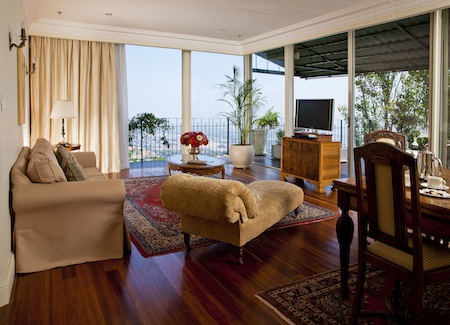
(photo from Isrotel)
In English, mizpe hayamim means a view between two bodies of water, in this case, the Sea of Galilee and the lakes of the Hula Valley. The view from the highest and most expansive terrace at the hotel includes the town of Rosh Pina just below and to the left, an Israeli military base in the middle and the tip of the Sea of Galilee to the right. Small Jordanian villages dot the horizon and were barely visible in the mist of an October morning. At the time of our visit, the “mizpe” was only partially green. We were told that, with each teef, toof (bit of winter rain), the surrounding lands would become greener and that, before long, the whole of the Upper Galilee would be lush and vibrant.
A year before he died, in 1984, Yaros sold Mizpe Hayamim to Sammy Chazzan, an Israeli who shared Yaros’s commitment to the healing powers of organic food and tranquil surroundings. For more than 35 years, Chazzan led every dimension of the development of Mizpe Hayamim – hotel and farm – until 2016, when he sold the hotel portion to the Israeli chain Isrotel. He retained stewardship of the farm.
The organic farm was the first-of-its-kind in Israel and employs nine workers. From the time he was 14, Chazzan has had an interest in organic farming – a rather unusual passion for a young man but a passion he has sustained. Until the recent sale to Isrotel, Chazzan’s daily schedule started at 4 a.m., when he would draft the day’s orders for the hotel staff and then walk over to the adjacent farm to work at whatever needed to be done there. At 8 a.m., he would return to manage the hotel and then finish the day with a few more hours spent on the farm.
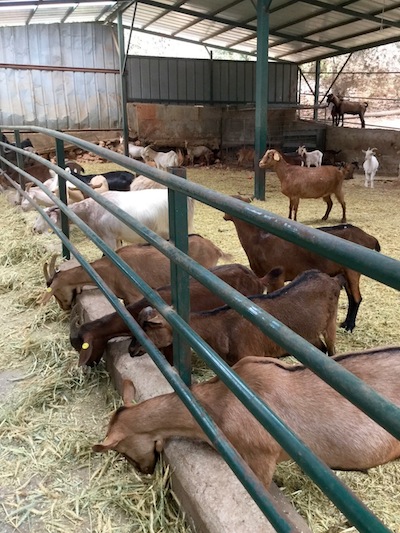
The achievements of his 35 years of agricultural experimentation are truly remarkable. The farm now includes nine large vegetable, herb and flower gardens, a herd of dairy cows and goats whose milk helps create about 40 individual dairy products – milk, yogurts, ice cream and cheeses. The animals are cared for in the most pristine of settings, feeding on grasses and able to roam about freely. Should they fall ill, they are cared for by a holistic veterinarian practitioner.
(photo by Karen Ginsberg)
Manure is recycled to fertilize the gardens, and the fruit and nut trees and flowers grow in abundance. Years of trial and error have helped establish which flowers or herbs planted alongside which vegetables reduce insect infestations, eliminating the need for pesticides of any kind. Several times a day, ripened produce is brought to the Mizpe Hayamim kitchen and finds its way to the dinner or breakfast buffets with the sort of haste that most Canadians can hardly fathom. Natural soaps are made on the farm for sale and for use in the hotel. In addition, there is a bakery and small retail outlet that sells some of the produce to guests and members of the public.
At the hotel, there is a full range of spa services for guests. Our casual conversations with other guests suggest that many Israelis come here, seeking a reprieve – nourishment and rest – from the tensions and high activity levels of city life. Guests can enjoy a coffee and tea bar all day long, with many of the farm’s fresh herbs – lemongrass, hyssop, chamomile, spearmint – available to enrich their beverages. Daily exercise classes, an art studio and evening entertainment are optional for guests and help sustain the goal of total relaxation and rejuvenation.
Isrotel plans to refurbish and update some of the hotel rooms but the essential philosophy underpinning this unique endeavour will remain the same. And Chazzan intends to continue his life’s work of building a knowledge base about organic farming and its impacts, through small-scale experimentation.
Long after their visit, guests fortunate enough to enjoy some time at Mizpe Hayamim will continue to benefit from the tranquility and beauty of the area, the organic vegetarian diet, as well as the various spa treatments on offer. For more information, contact Liad Nudelman, reception manager at Mizpe Hayamim, at liadn@isrotel.co.il, or visit isrotel.com.