Exploring the science of life

Amy Amantea and Jake Anthony in Sequence, which runs March 14-24 at Presentation House Theatre. (photo by Tim Matheson)

“To direct this play requires a willingness to grapple with the concepts, to accept that sometimes questions are more important than answers, not everything is answerable, and to be committed to entertaining possibilities. It’s heady stuff,” director Rena Cohen told the Independent about Sequence, which opens next week at Presentation House in North Vancouver.

Describing the play as “a science thriller that will challenge as much as it entertains,” Cohen, who is also managing artistic director of Realwheels Theatre, explained, “In Sequence, we follow two absorbing stories. In one, a professor confronts a student who’s defied probability by taking a multiple-choice exam only to get every answer – 150 of them – wrong (the chance of achieving this is one in a pentillion). In the second story, the ‘Luckiest Man Alive’ – his status cemented by his uncanny ability to predict the winner of the Super Bowl coin toss for 20 years running – is confronted by a young woman who claims to know his secret.

“Each of these narratives is presented coherently, cleverly and simultaneously, and it’s how they intertwine through ‘wormholes’ in the dialogue that makes the play fascinating, and mystifying. Playwright Arun Lakra compares the structure of the play to two strands of intertwining DNA. You could argue it’s comparable to a Möbius strip-like dramatic encounter. You’re following two narratives, only to have the carpet swept out from under you.”

For readers who don’t have Wikipedia or a dictionary handy, a Möbius strip, or band, is “a surface with only one side and only one edge. It can be made using a strip of paper by gluing the two ends together with a half-twist.” It’s a non-orientable surface, which means it “cannot be moved around the surface and back to where it started so that it looks like its own mirror image.” The example given for further explanation, is that “no matter what, a human right hand, cannot be rotated in such a way that it becomes a human left hand. The right hand is, therefore, orientable.”

How does one direct a play like Sequence so that it’s enjoyable and comprehensible?

“There are ways we harness the ‘language of theatre’ to capture audiences’ attention, to heighten a moment,” said Cohen. “Sometimes, it’s in the way an actor delivers a line, the way they land on a phrase containing important information. We also signal key moments using lighting and/or sound, so even if, when information doesn’t necessarily register on a conscious level, you absorb it.’”

The material of the play – “Wading into new intellectual territory, learning the mathematical concepts used to understand randomness and probability” – was initially a challenge for Cohen.

“My last physics course was in high school, the last time I studied math was in CEGEP [a post-secondary school program in Quebec] and I’ve never taken a biology course,” she said, “so some of the references in the play – regarding genetics, for example – may not be complicated to a Grade 10 biology student, but they’ve been a challenge to me.

Sequence is also very fast-paced, and there’s a ton of stage business, most of which is – incidentally – performed by Amy Amantea, our actor who lives with blindness. She’s fearless.”

And, added Cohen, “Working with an integrated cast of performing artists with disabilities and able-bodied artists means there’s a wider range of experience, and we’re challenged to become an ensemble in a few short weeks.”
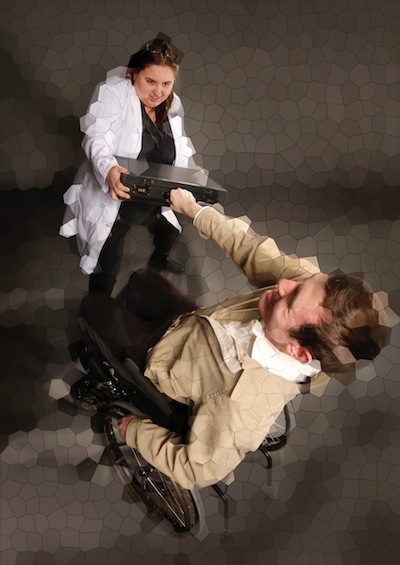
photo - Krista Skwarok and Byron Noble
Krista Skwarok and Byron Noble. (photo by Tim Matheson)

Amantea (as the professor) will be joined in the performance by actors Jake Anthony (the student), Byron Noble (the “luckiest man”) and Krista Skwarok (the woman who purports to know his secret).

“Two members of the cast live with disability: Amy is legally blind and Jake lives with autism,” said Cohen. “The casting speaks to our (Realwheels’) commitment to fostering interchange between mainstream and disability arts sectors. That means interchange between artists, and we’re all learning from each other.

“Amy Amantea has such a generous spirit, so much heart and decency and, in Sequence, she’s playing a dark, angry character. Her character is also very funny and over-the-top, and this is new territory for Amy, who left the performing arts after she lost her sight 11 years ago. Furthermore, Amy’s character lives with severe sight loss, but of a type that’s different from her own, so there’s a whole other layer of challenge. She also has the most ‘stage business.’

“Jake Anthony is a sensitive actor, and an incredible advocate for persons with autism; getting to know him means gaining appreciation for the gifts that accompany autism,” continued Cohen. “Jake is a decisive and determined individual, very focused, so lovely and respectful to everyone, and he’s bringing tremendous insight into his character, a young man of faith, and an inveterate optimist.”

Skwarok is a recent graduate of Langara College’s Studio 58 theatre program, said Cohen, “and this is her first professional gig. Such bright energy, she’s super-smart and quick and creative and game. Expect to see a lot more of her – Krista’s talent is explosive.”

As for Noble, Cohen said he “is loaded with charm.” In Sequence, she said, his character “is slick, playful and, yes, he’s a charmer – and we get to see his character grow and other unexpected qualities emerge. It’s beautiful to watch. Byron is the most seasoned actor in the Sequence company, and we’re all benefiting from his experience and generosity.”

She said this play feels made for Realwheels “because it isn’t about disability, yet disability forms the landscape against which universal issues are debated onstage.”

She explained, “The four characters in Sequence are attached to their individual frameworks of the world: faith versus science, fate versus DNA. Did God use evolution as a means of creation? If something isn’t testable, how do you justify believing it? Is there an innate rightness to biological outcomes rooted in our fundamental DNA?”

Sequence has won several awards. The playwright, Lakra, is an ophthalmologist in Calgary, where he splits his time between practising medicine and writing, said Cohen. “This is the first time,” she said, “the play is being produced with an integrated cast – professional actors with disabilities playing alongside able-bodied actors.”

Sequence runs 80 minutes with no intermission, and is not suitable for children. It is at Presentation House Theatre March 14-24 (except March 19), with proceeds from the March 14 preview going to Realwheels Society to cover production costs. For tickets ($28-$10), call 604-990-3474 or visit phtheatre.org.
Inclusion is our future

At Share the Journey on Feb. 6, before the official program started, left to right: Carmel Tanaka, Leamore Cohen, Penny Gurstein, Shane Simpson, Alisa Polsky, Tammy Kalla and Clark Levykh. (photo from JCC inclusion services)

“Inclusion is the framework for our community’s future,” said Shannon Gorski, executive member-at-large of the Jewish Community Centre of Greater Vancouver board of directors, at Share the Journey: An Evening of Inspiration. “The JCC was my second home volunteering since childhood,” she said in her opening remarks. “We want to make sure the JCC grows to support all who depend on its presence.”

The Feb. 6 event at the Rothstein Theatre was one of several initiatives being led by the JCC during Jewish Disability Awareness and Inclusion Month (JDAIM). It featured a few speakers, including Shane Simpson, provincial minister of social development and poverty reduction, as well as the screening of a video of the Bagel Club’s trip to Israel last year and of the film My Hero Brother.

The Bagel Club is a JCC inclusion services program. According to the website, the group is “a social club for adults with diverse needs that focuses on social and recreational activities while promoting Jewish heritage, education and community engagement.” Activities include yoga, Israeli dancing, arts and crafts, outings and music appreciation. The Bagel Club also runs a community kitchen focusing on creating “delicious and nutritional kosher-style meals” together. Eleven Bagel Club participants were present on the night of Feb. 6, with Lyle Lexier offering a few remarks on the use of language regarding differing abilities and David Benbaruj introducing the film screening.

photo - Left to right: Kathleen Muir, Harriet Kositsky and Shannon Gorski
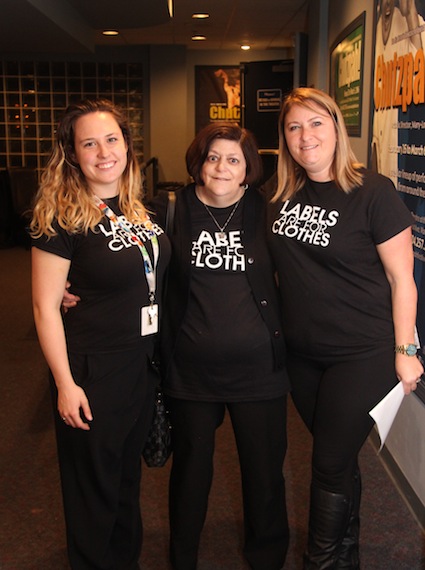
Left to right: Kathleen Muir, Harriet Kositsky and Shannon Gorski. (photo from JCC inclusion services)

Many at the event, including Simpson, when he took to the stage, were wearing the black T-shirt the JCC made for JDAIM, which says, “Labels are for clothes,” on the front. In his remarks, the minister spoke about the importance of inclusion and diversity work throughout all of the communities of British Columbia and highlighted the work of his own department, which focuses on community-building and poverty reduction within its greater mission.

Simpson shared some of the results of the fact-finding mission his ministry had recently undertaken in 28 communities in British Columbia. He highlighted the urgent situation in the province with regard to poverty and inequality: “678,000 people live in poverty in British Columbia,” he said, “which is 15% of the population. Forty percent of those are the working poor; one in five children live in poverty. If you are indigenous or have special needs, you are twice as likely to be poor.”

The minister said “social isolation is a key piece” that needs to be addressed throughout the province. “After people with disabilities in this province tell me they don’t have enough money, they tell me they want a job, they want to contribute,” he said. “When employers reach out and hire a differently abled employee, they tell me after they made the fit, they got a remarkable employee.”

Leamore Cohen, inclusion services coordinator at the JCC, introduced the video on the Bagel Club’s Israel trip. As Omer Adam’s “Tel Aviv Habibi” pulsed in the background of the video, the audience clapped to the beat.

Tammy Kalla and Penny Gurstein then read a list of Jewish Federation of Greater Vancouver Inspiring Inclusion grant recipients. Congregation Beth Israel was given funds to hire a tutor so that children with learning challenges could learn to read Torah; Beth Tikvah to hire the appropriate professionals to enable children and youth with invisible disabilities to participate fully alongside their peers in a range of programs; the JCC for a new program called Family Yoga Fundamentals; Richmond Jewish Day School to offer a fully inclusive music program; and Vancouver Hebrew Academy to instal a wheelchair ramp to the playground equipment that has been specially designed for children of all abilities.

The evening concluded with the 2016 Israeli film My Hero Brother, directed by Yonatan Nir. It follows a number of Israelis whose siblings have Down syndrome, as they take their brothers and sisters hiking in the Indian Himalayas. In introducing the screening, Benbaruj spoke beautifully about love, community and his wish that the inclusive communities we had learned about throughout the night could be a model for the world.

Matthew Gindin is a freelance journalist, writer and lecturer. He writes regularly for the Forward and All That Is Interesting, and has been published in Religion Dispatches, Situate Magazine, Tikkun and elsewhere. He can be found on Medium and Twitter.

Increasing awareness

Eldad Goldfarb, executive director of the Jewish Community Centre of Greater Vancouver, and Jewish community member Shirley Barnett show off their “Labels are for Clothes” T-shirts. (photo by Leamore Cohen)

February is Jewish Disability Awareness and Inclusion Month and the shirts are available for purchase ($18) at the JCC. The message on the back of the shirts reads, in smaller print: “100% human / Treat with care and love / Learn before you assume / Do not separate / Do not label / #jccincludesme.”


Gathering with community

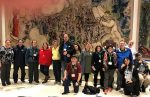
Participants in last year’s Inclusion Journey at the Knesset in Jerusalem, in front of Marc Chagall’s painting “The Exodus.” (photo from JCC inclusion services)

The Jewish Community Centre of Greater Vancouver is part of the international network of Jewish communities celebrating persons with disabilities throughout the month of February. And, on Feb. 6, the entire community is invited to Share the Journey: An Evening of Inspiration, which will feature the screening of My Hero Brother, selected as the leading film for Jewish Disability Awareness and Inclusion Month. The event will also include remarks from the Hon. Shane Simpson, the provincial minister of social development and poverty reduction, and a slideshow and presentation by Leamore Cohen, coordinator of the JCC’s inclusion services, about the trip they led to Israel last year.

Many traditions exist within the Jewish community, and we must all work to ensure the accessibility of these traditions for all members of the community. It is within this context that the JCC’s inclusion services led the first-ever Canadian JCC diverse-ability and advocacy Inclusion Journey to Israel, with the support of the Jewish Federation of Greater Vancouver, the Gesher Chai Committee and community donors.

Jewish Disability Awareness and Inclusion Month reminds us of the importance of cultural connections, inclusive community and accessibility in all traditions and for all people. For its part, the JCC’s inclusion services has organized a number of awareness and visibility initiatives throughout February, including a Ronald McDonald House volunteer initiative with the JCC’s youth programs on Feb. 4 and a “Challa-Luyah” challah bake for the Jewish Food Bank with Axis Vancouver on Feb. 8.

Starting the month’s activities off is the Feb. 6, 6:30 p.m., screening at the Rothstein Theatre. For young Israeli adults, traveling after military service is a right of passage, and My Hero Brother emphasizes that such a right must be available for all young people. In drawing a parallel between local experiences and those highlighted in the film, the JCC hopes to bring attention to the abilities of all persons when community works together.

JCC inclusion services

***

The Jewish Federation of Greater Vancouver-organized Yom Ha’atzmaut celebration is the community’s biggest gathering of the year, and the committee, led by Pam Wolfman, has booked two Israeli performers to help us celebrate Israel’s 70th anniversary: Shlomi Shaban and Ninet Tayeb.

Shaban is performing at the upcoming Red Sea Jazz Festival, where he is described as having “the ability to create buoyant virtuoso harmony between classical music, rock and pop…. His characteristic straightforward sense of humour frequently moves on a fine line between black tie concert halls and sweaty smoky rock-n-roll stages.”

Tayeb was the winner of Kochav Nolad (Israeli Idol). Music critic Garreth Browne saw her perform in New York and wrote, “it’s safe to say that the entire audience was fixated and almost hypnotized by her presence.”

Tickets went on sale this week for the April 18 celebration. Visit jewishvancouver.com.

– Courtesy of Jewish Federation of Greater Vancouver

***

The Jewish Family Services’ 2018 Innovators Lunch guest speaker will be Leonard Brody. The award-winning entrepreneur, venture capitalist and bestselling author is co-founder and executive chair of Creative Labs, a joint venture with the largest sports and entertainment agency in the world, CAA in Los Angeles. His group is responsible for building new ventures for some of CAA’s most important film, TV and sports celebrities. He also happens to be a community member in Vancouver.

Brody will be talking about The Great Re-Write, his upcoming book in partnership with Forbes magazine, which addresses this unique social and economic moment in history. With rapid social and structural changes have come many challenges for communities, but also opportunities. How do we make the most of this time to invest in our community, uplift society as a whole and ensure we don’t leave people behind? He’ll encourage people to think as innovators to bring about meaningful and lasting social change.

The Innovators Lunch will be held on April 24 at the Vancouver Hyatt. For more details, visit jfsvancouver.ca/innovators.

– Courtesy of Jewish Family Services

Improving our inclusivity

Rabbi Becky Silverstein, left, and Joanna Ware facilitated the Keshet program held in Vancouver last month. (photos from northeastern.edu and Jordyn Rozensky Photography, respectively)

Last month, a group of Greater Vancouver Jewish organizations sponsored a Keshet program for members of the community. Keshet provides training and support for Jewish clergy, educators, youth workers, counselors, allies and lay leaders to ensure that LGBTQ+ Jews are affirmed, celebrated and included in all Jewish educational and community settings.

The Oct. 22-23 weekend of training had its genesis in the efforts of Shelley Rivkin of the Jewish Federation of Greater Vancouver and Kevin Keystone, a former board member of Temple Sholom Synagogue, who has since moved to Toronto.

After the Union for Reform Judaism passed a resolution affirming the rights of LGBTQ+ people at their biennial meeting in 2015, Keystone brought a motion to the synagogue board to pass a supporting resolution, and recommended bringing Keshet to Vancouver.

“One of the most important reasons to bring in Keshet,” said Temple Sholom Rabbi Carey Brown, “was to present this important inclusion work within the framework of Jewish values and to address specific challenges within Jewish language and culture.”

When Keystone approached Federation, he found a sympathetic ear in Rivkin, who had previously attended a Keshet program. After being approached by the Vancouver Police Department about declaring the Jewish Community Centre of Greater Vancouver an LGBTQ+ safe space, Rivkin had become interested in supporting just such an initiative as Keshet, which she felt was long overdue.

Temple Sholom and Federation met with representatives of the JCCGV, Beth Israel, Or Shalom, Beth Tikvah, Har El, the Jewish Family Service Agency, Yad b’Yad, Hillel BC, and the Centre for Israel and Jewish Affairs. An agreement was reached to sponsor a training weekend, with Federation committing to contributing a significant amount of the funding.

“One of the most heartwarming things was to see how many synagogues and institutions said, ‘We want to be there, we want to help sponsor it,’” said Brown.

The two-day program was facilitated by Keshet’s Rabbi Becky Silverstein and Joanna Ware. It featured five sessions, including Beyond the (Cis)Gender Binary, which focused on youth workers and others interested in supporting youth in a variety of settings; and (Not So) Straight Talk about LGBT Inclusion, which was for Jewish communal professionals looking to explore LGBTQ+ inclusion from a Jewish perspective, and how it applies to their work. On the last day, there was a lunch and learn with Keshet at Hillel House on the University of British Columbia campus, which was open to students, faculty and community members, and two evening sessions. The Tachlis of Inclusion was billed as a more advanced look at LGBTQ+ inclusion, focusing on how board members can make their institutions more inclusive and embracing of LGBTQ+ families and individuals – participants took home an institutional self-assessment resource for further conversation within their organization. The other session, held at Suite Genius Mt. Pleasant and open to LGBTQ+ members of all ages and allies, was titled Intersections: Sharing Stories at the Intersections of Queer Jewish identities.

The community’s response to the training was favourable, with a post-event survey garnering positive responses and many people expressing gratitude for the training, said Rivkin. “Moving forward,” she said, “one thing we want to do is figure out where organizations are on a continuum towards inclusivity, and we need to look at that inventory and see where we want to be and what are some steps we can take.”

Alicia Fridkin, who self-identifies as a Jewish, queer, white settler activist and works as LGBTQ+ counsel for CIJA, had positive things to say about the event. “It was important to make some space for queer and trans Jews in Vancouver to come together around their identities, and to see that communities are committing to having a space for them,” said Fridkin. “It was a good reminder that we all have work to do, and also that we all have come a distance. It is important to give the LGBQT+ community more visibility. Also, the different Jewish communities in Vancouver tend to operate in silos. This was a good example of people coming together.”

Participants in the program are hoping to carry what they have learned into their institutional and personal lives. A group for queer and trans youth is in the planning stages at the JCCGV. Brown said Temple Sholom has begun a review of its infrastructure and communal language, and noted how the synagogue has already made some changes, such as calling people up to the Torah for aliyot according to their preferred pronouns.

Fridkin celebrates those kinds of initiatives. “People are very interested in being in a religious place that is inclusive,” she said. She hopes that these communal discussions about LGBQT+ people can be a model for becoming more inclusive and progressive on other issues, such as interfaith marriage and Israel/Palestine.

“We need to be open,” said Fridkin, “to the experience of the hurt that people in the community have who have been excluded for any reason, and work to address that.”

Matthew Gindin is a freelance journalist, writer and lecturer. He writes regularly for the Forward and All That Is Interesting, and has been published in Religion Dispatches, Situate Magazine, Tikkun and elsewhere. He can be found on Medium and Twitter.

Krembo Wings unites

Members of Krembo Wings’ Kiryat Shmona branch enjoy one of the weekly activities. (photo from Krembo Wings)

Claudia Koby co-founded Krembo Wings, the only youth movement open to all youth, regardless of ability level. It was her son, Kfir, who inspired her – seeing him battle severe disabilities and his intense desire to be part of society at large.

Kfir’s friendship with a girl without disabilities changed his and his family’s life to such a degree that his mother decided to find a way to give other kids with disabilities and their families the same simple but incredible gift.

Krembo Wings was established in 2002, growing to 11 branches serving 300 kids by 2010. That was when Merav Boaz (affectionately nicknamed “Boozy”) joined as vice-president. To date, the movement has 61 chapters.

“I knew I could give a lot from my knowledge and experience, to make the movement known in the public eyes and ears … a new idea that was not in existence in Israeli society before,” Boaz told the Independent. “I wanted everybody to know what the Krembo Wings are doing, to see how well they change the world and society. It was like a fire in my heart.

“When I joined, almost no one knew about Krembo Wings…. Today, the movement has 6,000 kids involved – from the special needs kids to the able kids that help them be part of a life-changing movement.

“It’s the kids who run the branches, guided by adults. We give them the power to do so. It’s a lot of thinking to make it happen – to do the seminars really productively, to make them understand they can create their own reality. I think that, because of the kids, we’ve made this breakthrough, this change. From a local initiative, we became a national youth movement.”

When someone has a child with a disability, said Boaz, one of the parents usually stops working and starts taking care of the child, “they look for treatment and doctors to make things better.”

When the parents take their child to register in kindergarten, she said, “They tell you he doesn’t fit, that he can’t be with other children – the ‘regular,’ ‘normal’ children – because of the disability. From this point on, you have a kid who leads a different life within the shawl of society. They don’t belong and are not a part of the kids’ society – don’t go to school with their brothers and sisters, don’t enjoy the after-school programs…. A lot of the parents don’t take the kids outside to the mall or to cafés because of their different behaviour, like slapping hands or making noises. You feel that it’s not right that you’re there…. All of a sudden, you have a kid who doesn’t have a right to take part.”

Often, children in this situation are sent to a different school. In Israel, the school is usually not in the same neighbourhood or city where they live. So, they do not make many friends and, when they become adults, few people will hire them, because no one knows them.

“Why are we so surprised that no one will hire a person with a disability?” asked Boaz. “They don’t know how, were never shown how. We want to change that one day.

“I think the next school established in Israel will be a school with kids of all abilities. We won’t have special education schools separated…. We want the kids to go to the same school and do after-school programs…. When they grow together, they will live together in the same community and care for one another. Then, it won’t be hard for a hospital, for example, to hire a secretary who is blind.”

The disability does not need to – and should not – define the person, she said. And this is where Krembo Wings helps.

“It’s good for them to know other kids, to know and develop social skills, and be part of society,” said Boaz. “How would they know how to behave in a café or at a playground if they’ve never even tried it, practised it, because they’re separated?”

Boaz shared the story of a dad from Krembo Wings’ summer camp who has twin girls, one of whom was born with cerebral palsy and has difficulty walking, so she uses a wheelchair.

“When they go out together, nobody would even notice or try to talk to the twin in the wheelchair, because – automatically – people think she’s not well in her brain,” said Boaz. “Nobody is patient enough to talk to her. No kid stops to get to know her. But, at Krembo Wings, everyone knows her. She has so many friends now, but never in her life did she have friends before. She says, ‘Krembo Wings is my life. It’s where I’m loved by other kids.’”

When kids come to Krembo Wings once a week, they feel a sense of belonging, they sing songs and play together.

“When you accept, you don’t hate. When you don’t judge, you’re tolerant of others, you become more forgiving.”

“You can see how they don’t judge, they include – not because the teacher told them and not because they read it on the walls of the school,” said Boaz. “They practise it and it becomes a part of their souls, lives and values. When you accept, you don’t hate. When you don’t judge, you’re tolerant of others, you become more forgiving.”

The children without disabilities help ensure that their mentees take part in activities. “They learn to be creative, to work with the ability that each person has,” said Boaz, and this “improves their skills and their school success. They are better friends to … friends, to their parents. It’s amazing. Imagine them as grown adults in society – they will care more.”

Parents of children who aren’t able to communicate at Krembo Wings say how big the impact is – their kids do better at school, have more self-esteem and improved communication – from being in an environment of acceptance.

“I had a 16-year-old counselor, able-bodied, who wrote an email saying that, at school, they asked him to write an essay about the person who has influenced his life the most,” said Boaz. “And, he was thinking of his grandfather, a Holocaust survivor, who was a kid when the Nazis came to Poland. He lost all of his family, but he survived. Then he thought about his mom, who had breast cancer – a survivor, too. But, he decided to write about [another] person who influenced his life, because he learned from him what the meaning of being a hero is – of knowing how to deal with tough situations, to be resourceful, smart, full of life and always positive. That person’s name is Don and he’s 10 years old. He has severe cerebral palsy. He tries every day to get up and walk. He tries to practise how to talk with a speech therapist every day, because he wants to be understood. The 16-year-old said that Don taught him the most how to be a hero – disability or not.”

For brothers and sisters of children with special needs who are in Krembo Wings, Boaz said, “They say that, for them, it’s the first time they’re not ashamed to be the brother or sister of a kid with a disability. One girl wouldn’t invite people to her house. Her brother would make gestures no one could understand. She said she prevented her friends from coming to her house. She didn’t want them to know. With Krembo Wings near her house, the youth came to meet him and she saw two girls her age, able-bodied, good-looking, popular, talking to her brother, communicating. She said she was shocked. When her brother started going to Krembo Wings, he came back so relaxed, so happy, like he had had a break. She felt it – the missing piece in his life was filled…. When she came to Krembo Wings and joined in, she had members to mediate activities and, through her connections to another mentee child, she got closer to her own brother…. She learned how to communicate, to be tolerant, to listen – and that it’s OK if he’s like that…. She now knows he has the right to be a part of society and she has the tools to help change things…. More than they have a right, there’s so much they can give to society.

“We believe this change starts with kids. But, it also changes the parents … these same parents who had problems finding a kindergarten. As one of the mothers shared, for the past 15 years, she has been told how her kid does not fit in anywhere, yet no one could tell her where he does fit. All of a sudden, there are Krembo Wings … kids pleading with her to let them take her son to an activity. We pay for transportation, pick them up for three hours and return him satisfied, happy.

“I saw a mother crying, saying the counselor told her she could go do whatever she wanted to do, that they would take care of her kid. She said, ‘I don’t remember what I like to do, how to be alone without her … I’m always taking care of everything … I don’t have friends anymore.’ It changes [a] parent’s life as well.”

“This platform is not only good with or without special needs, it’s good for any society. If it’s not Jewish and Arab, it’s Bedouin and Christian. The kids get tools and values they need. It just happens. It’s more natural for kids than separation.”

When Krembo Wings wanted to open a branch in Lod, city officials recommended they open two branches to avoid mixing Arabs and Jews, but Krembo Wings refused, saying they do not believe in separation of any kind. The city officials conceded and said they could try, but to not expect it to work.

“We opened one and it was a big success,” said Boaz. “So, this platform is not only good with or without special needs, it’s good for any society. If it’s not Jewish and Arab, it’s Bedouin and Christian. The kids get tools and values they need. It just happens. It’s more natural for kids than separation.”

The Vancouver connection

The Kiryat Shmona branch was started in the nearby mechina (pre-army training program) in kibbutz Maayan Baruch before the Jewish Federation of Greater Vancouver took it under its wing, providing space in Kiryat Shmona’s Beit Vancouver for the branch to run its activities. The Federation has also provided funding of $26,000 a year for the last two years.

“They were so sensitive toward the kids’ needs and really understood,” said Boaz. “When you have donors, sometimes the donor – out of good will – starts interfering with the way you deal with the activity or the money or whatever – but Vancouver never did that.”

According to Candace Kwinter, chair of Jewish Federation’s Israel and overseas committee, “Krembo Wings is an incredible program. It enables every child living with any type of disability to take part in enjoyable social interactions between one another and their able-bodied peers and become part of community life in Israel. As a federation, we’re proud to support this program, which is based in Beit Vancouver, and empower both the participants and the volunteers.”

Kwinter quoted one of the mothers of Krembo Wings in Kiryat Shmona, whose daughter has Rhett syndrome. “When Tom was invited to join Krembo Wings,” said the mother, “I tried to explain to the young counselors that it’s difficult to interact with her…. She doesn’t speak and interactions are complicated…. They continued smiling and said that they believe it will be worth our while, that the activities are fun and there are a lot of other children and youth at the branch, with and without disabilities. I said yes, even though I was confident they would give up quickly.

“Today, after Krembo Wings has been in our lives for almost two years, I can confidently say that, where therapists and professionals failed, a group of motivated youth filled with faith and love have succeeded. They have filled Tom’s life with happiness, friends, laughter and songs – and have made our lives infinitely better…. It is an essential part of our family.”

Even with a budget of 22 million shekels (more than $7.7 million Cdn) and 61 branches, Krembo Wings has long waiting lists and not enough money to open new branches. Half of its revenue comes from the Israeli government and municipalities and the fees they collect from members who are able to pay; they subsidize everyone who cannot pay. The other half of the budget comes from fundraising. For more information, visit e.krembo.org.il.

Rebeca Kuropatwa is a Winnipeg freelance writer.

A shift to inclusion in Israel

The 2017 Select Fashion and Totto bags’ Back to School ad campaign, in collaboration with Beyachad, featured Israeli children of varying abilities. (photo by Nechama Orah Photography)

In 2010, Gabrielle Markowitz set up a Facebook account in the name of her then-newborn daughter, Hallel. Called Hallel Mini Supermodel, the page is part of Markowitz’s goal to change the public perception of people with disabilities. And she has made some progress.

Hallel has Down syndrome. Set to start Grade 1 this September, she was chosen, along with several other Israeli children of varying abilities, to model the 2017 summer collection in Select Fashion and Totto bags’ Back to School ad campaign. The shoot was in collaboration with the Israeli organization Beyachad, which works to increase and strengthen society’s inclusion of people with disabilities.

Beyachad was started by Channie Plotnick, a New Yorker who has been concerned with this issue since she was 9 years old.

“I was living in New York,” said Plotnick, who now lives in Israel. “Not far from the home where I was growing up, there was a home for adults with disabilities. I was going to school every day and doing my thing. I’d pass by the home and I could see the people with disabilities through the windows. I could see them just sitting around and pretty much doing nothing – being locked in that home for many, many hours, just sitting around.

“I saw this a couple times a day, every day. I felt that these people are jailed in this place. I figured, I have to figure out a way to get them out of this. One day, I asked my mom if I could invite them for Shabbat morning. My mom said to give them my phone number and see. So, one Friday, they actually called and said they wanted to come over for Shabbat morning.

“I can remember myself sitting at home at the window and looking out that morning, and waiting anxiously for them to come. It was sort of a big group. I think there were eight adults with two staff accompanying them.

“We had a wonderful Shabbat meal. We played games and they became part of the family. For me, it was like a victory to see them out of jail and … part of a community, of our family.”

Plotnick has high expectations of herself as well as of others. Where some see disability, she sees ability.

As an adult, Plotnick made aliyah. She attended Tel Aviv University and earned a bachelor’s degree in psychology and a master’s in special education. From then on, it was no longer enough for Plotnick to be able to see ability in all people. It was now about figuring out how to care for these abilities and shape them toward everyday integration into society.

photo - An image from the Select Fashion and Totto bags’ Back to School ad campaign
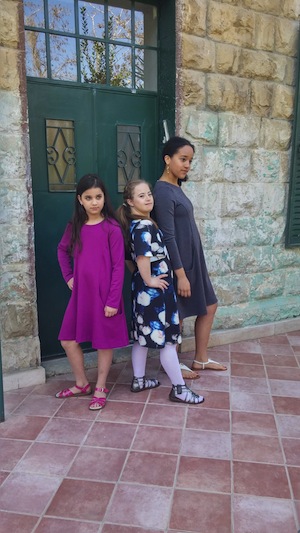
An image from the Select Fashion and Totto bags’ Back to School ad campaign. (photo by Nechama Orah Photography)

“When I came to Israel, I was working as a supervisor in a special ed school,” she told the Independent. “I saw children who I thought could learn in regular schools, with help and support. I started looking around for schools and support, and I realized there were no services for children who wanted to be integrated in regular schools.”

So, in 2008, Plotnick started up Beyachad Foundation, to aid in the empowerment and inclusion of people with special needs.

“When someone wants to be in a regular school, we help them with resources, information, advocacy and case management, connecting them to the right people, figuring out how to get them resources from different departments,” said Plotnick.

The Knesset calls Plotnick when they are considering disability inclusion-related laws.

“In Israel, there’s a lot of welfare state taking care of people with disabilities,” explained Plotnick. “I call it a ‘stifling hug,’ as they’re taking care of the needy. But, it’s a situation where they are … making it so they are dependent, as opposed to helping special needs people be independent and able to contribute to society.”

According to Plotnick, the welfare system disperses benefits according to labels – it puts people into a box labeled “Down syndrome” or “autism.” These labels carry with them a set of expectations, and the people become the label.

“Today, when a social worker gets a person in front of him/her who has Down syndrome, she/he looks at his/her lists and says, ‘OK, we have schools with special education that focus on children with Down syndrome. And, when they are adults, we have what’s called workshops. This is what we have.’ You’re not looking at individuals and their abilities. You’re looking at a person with Down syndrome. You’re not even looking at the person. On the flip side, when you complement abilities, you look at individuals. That change of looking at a person and saying, ‘You’re an individual. Let’s see what your abilities are and let’s see what you can do with your abilities.’ That’s the change we are trying to make.”

Beyachad does not want to compete with, or put out of business, special ed schools or workshops. Its aim is to offer more options.

“It’s a lot easier for us, as society, to adapt to the needs of the less-abled than it is for the less-abled to adapt to our society,” said Plotnick. “As such, we have a duty to adapt to their needs.

“I’ll give you an example. If today we go out onto the street and all of the signs are in Braille, you and I would be the ones who are disabled, as we won’t be able to read them. Society has the ability to change people into disabled – and society has the ability to create people who are more able.

“As long as we adapt things in society for people with disabilities, they will end up being less disabled. If I come to a regular school and I’m a person with disabilities and the curriculum is adapted for me and school accessibility is adapted for me, I will be less disabled.”

Change will come slowly, but Beyachad has the motto ‘If it is to be, it’s up to me,’ and they work to provide the support individuals need to make accessibility possible. For more information or to lend support, visit beyachad.org.il.

Rebeca Kuropatwa is a Winnipeg freelance writer.

Increasing inclusivity

Jay Ruderman (photo by Noam Galai)

The Ruderman Family Foundation is working to reshape societal attitudes about people with disabilities. Established in 2000 in Boston, the foundation attempts to foster inclusion by way of example, with a special focus on the Jewish community.

Jay Ruderman, a lawyer who spent nine years in Israel, has been at the helm of the foundation since 2008.

“Our first major initiative was including children with disabilities in the day school system in Boston,” Ruderman told the Independent. “We got into this issue of disability and inclusion out of a sense of fairness – principles within our family – that everyone deserves a fair shake.

“In terms of Jewish day schools, even within the same family, we began to ask why some kids were being included and enjoyed a Jewish education while others were not. Then, when I took over – my background is law and the civil rights aspect appealed to me – I began to see a broader picture and thought there was a vacuum in the Jewish community,” that advocacy was missing.

“You should know that people with disabilities are the largest minority in the world. And, not only that, they are also the poorest minority in the world and the most segregated [because of] stigmas and so forth.”

Initially, the foundation operated as a reactionary organization, wherein people would approach Ruderman’s parents for support. But, Jay Ruderman did not see this as a good way to make a positive impact.

He said that, traditionally, disability has been approached from the viewpoint of charity, and that a majority saw people with disabilities as unfortunate and in need of help. The “help” given usually led to segregation – separate schools, separate housing and separate work.

According to Ruderman, a transformation of perception was in order – the focus needed to be about each individual’s rights. He started his work to change views by doing a lot of outreach to the media, as well as awareness-raising and developing strategic working partnerships with major Jewish organizations.

“We are all connected to disability,” he said. “Everyone has a child, parent, sibling, neighbour with some sort of disability. For us, initially, we thought we didn’t really have a personal connection, but then, of course, like everyone else, I had a nephew born with autism – and my father developed a debilitating disability. It’s a widespread issue. But yet, I think the way we approached it was somewhat unique…. We’ve been doing this for a long time. It takes a long time to change attitudes.”

Within the Boston Jewish community, the foundation created an employment initiative called Transitions to Work, which has employed hundreds of people with disabilities and seen more than 100 employers hire people with disabilities. The foundation has also engaged in a community-wide synagogue inclusion project, which has spurred congregations from various denominations to be more inclusive and accepting of people with disabilities and their families.

In Israel, the foundation’s major effort has been a partnership with the government of Israel and the American Jewish Joint Distribution Committee to create a more inclusive society.

“That’s been a partnership with the Ministry of Finance, the Ministry of Health and the Ministry of Welfare, and we’ve engaged in that for many years,” said Ruderman. “Then, we began getting more involved nationally in the U.S. and looked for influential partners in the Jewish community. We developed partnerships across different streams of Judaism, the Foundation for Jewish Camp and Jewish Federations of North America.

“Internationally, we’ve had a prize called the Ruderman Prize in Inclusion, which has been awarded to communities and organizations excelling in inclusion, anywhere from Argentina to Uruguay, Mexico, all across the U.S. and Canada, England, Israel, South Africa, Australia and many different places around the world.”

Over the last few years, the foundation has developed an advocacy branch that has so far put out six white papers, garnering attention from the general media, including the New York Times, Washington Post and LA Times.

“The first paper we did was on police brutality and the fact that half the people in the country killed by the police have some form of a disability,” said Ruderman. “That’s gotten a lot of attention because, unfortunately, since the papers have come out, there’s been more people killed by the police and we’ve commented on those cases.

“We did a white paper on Hollywood and TV, as we found out that 95% of the characters with disabilities that you see on TV are played by able-bodied actors, and that really tapped into a diversity conversation in Hollywood that’s mainly focused on race. We injected disability into that conversation.”

The foundation also created the Ruderman TV Challenge, where they challenge creators to include more people with disabilities in new TV shows.

Elections are another area the foundation has examined – studying voting accessibility – as was self-driving cars and the transformative impact they could have on people with disabilities.

“People with disabilities should be thought of as these technologies develop,” said Ruderman.

The foundation also issued a paper about the murder of people with disabilities. “On average,” said Ruderman, “once a week, someone with a disability is killed by a caretaker – whether a family member or a professional.”

The foundation’s latest endeavour is called Rapid Response, where they try to respond to events more quickly, as they did when Donald Trump was running for president and mocked a reporter with a disability.

“We’ve done this too with Israeli officials and celebrities – mainly to shine a light on derogatory ways of acting or speaking about disability. So, we tend to speak out, and have developed a very active social media presence. We are now a combo of funding innovation in inclusion and doing a great deal of advocacy.”

Ruderman has found most Jewish institutions and synagogues to be very open to looking at ways of increasing inclusion, but also has heard many stories of people with disabilities and their families having been turned away by inaccessible or unwelcoming synagogues.

“I think rabbis know this is an issue,” said Ruderman. “What most don’t understand is that most solutions for accommodation are already available and, while the Ruderman Family Foundation doesn’t engage in capital financing, most communities have other foundations that do.

“I’ve always believed, we live in North America, in the wealthiest Jewish communities in the world, [and] the challenge with disability inclusion is that of willingness and awareness. To welcome a child with autism and their family, it takes some willingness to have a service that maybe is not as quiet as some congregants might like or be open to. Physical access for people using a wheelchair may be needed or, if someone is blind, they may need a Braille siddur. There are all sorts of different disabilities, but I find that when rabbis and community leaders are open, solutions can be found.

“Older generations tend to look at people with disabilities, even those in their own family, as separate and undeserving of being part of the community, but I think younger generations accept more diversity.

“My impression of Canada – I have spent some time, mainly in Eastern Canada – is that Canadians are very open-minded and progressive and there’s opportunity to find some real leadership that can reverberate across the world.”

For more information, visit rudermanfoundation.org.

Rebeca Kuropatwa is a Winnipeg freelance writer.

Resolution on full inclusion

The Reconstructionist Rabbinical Association, during its annual meeting, on March 28, overwhelmingly approved an expansive resolution affirming the full inclusion, equality and welcoming of all transgender, non-binary and gender non-conforming individuals.

The resolution commits the RRA to work for “full inclusion, acceptance, appreciation, celebration and welcome of people of all gender identities in Jewish life and in society at large.” The document also “strongly advocates for the full equality of transgender, non-binary and gender non-confirming people and for equal protections for people of all gender identities under the law, at all levels of government, in North America and Israel.”

In keeping with the ethos of Reconstructionist Judaism, the resolution’s passage followed a democratic and deliberative process. Over the past year, representatives from Reconstructionist congregations, as well as the board of governors of the Reconstructionist Rabbinical College, approved similar resolutions. All of the central organizational bodies representing Reconstructionists have now raised their collective moral voice.

The RRA vote comes about a year and a half after the Union for Reform Judaism passed its Resolution on the Rights of Transgender and Gender Non-Conforming People. The RRA is pleased to join the ranks of a growing number of Jewish religious and cultural institutions formally affirming transgender inclusion and establishing new policy guidelines.

The resolution aims to be a blueprint for action. Already, the Reconstructionist Rabbinical College has graduated rabbis who identify as transgender, non-binary or gender non-conforming. Individually, congregations have been taking steps toward the full inclusion of people of all gender identities. Congregation Bet Haverim in Atlanta, for example, is in the process of creating a fully inclusive chevra kadisha (burial society) that will ensure that Jews of all genders will have access to respectful and traditional rites throughout their entire lifecycle. Other congregations have been experimenting with methods of calling people up to Torah using non-binary and gender-neutral language.

Under the March resolution, efforts will be made to aggregate and share these innovations among the approximately 100 congregations and 350 rabbis of the Reconstructionist movement. In addition, the movement’s website for ritual resources, ritualwell.org, will be expanding its existing resources giving expression to all-gender-inclusive values.

The full resolution can be found at jewishrecon.org.

Bagel Club travels to Israel

The Bagel Club will volunteer at Shalva, the Israel Association for the Care and Inclusion of Persons with Disabilities, when they are in Israel. (photo from shalva.org)

The mission of the Jewish Community Centre of Greater Vancouver’s inclusion services is “to educate, engage, train and support members with diverse needs and their families in our community.” One of the ways in which they do this is with the Bagel Club, described as “a social club for adults with diverse needs” that promotes Jewish heritage and education. In just over a week, 11 club members will experience the ultimate Jewish heritage and educational experience – a trip to Israel.

As part of its overall mission to “enhance positive identification with Jewish life and Israel and to develop good citizenship and a sense of community and belonging through various partnerships with communities in Israel,” JCC inclusion services coordinator Leamore Cohen told the Independent that, over the last 15 years, “the JCC has arranged for various cohorts, including counselors-in-training, dance troupes and specialty interest groups to experience Israel, sometimes for the very first time. Unfortunately, many of the people with diverse needs, accessing programs through inclusion services at the JCC, had never been to Israel, and many of them are older adults.”

The idea of an inclusion trip – “to allow for this group to travel in a cohort of peers, semi-independently, for a first-time trip, much like young adults do with Birthright or Taglit” – had been percolating for awhile. “We knew we wanted it to happen. It was just a matter of timing,” said Cohen.

The group leaves on Feb. 26, and will be in Israel for 10 days.

“Visiting Israel, including sites that define Israel and the Jewish people, is such an important rite of passage for Jews living outside of Israel,” said Cohen. “The potential for self-discovery and Jewish cultural connection through a trip to Israel is immeasurable. Such trips are essential to our social, cultural and religious preservation and should be shared with all members of our community – that is why the JCC is so fully invested in this trip.”

The trip is being funded by a number of sources, she said, including “the participants, the JCC, the Jewish Federation of Greater Vancouver and Partnership2Gether – an initiative that pairs Diaspora communities with regions in Israel to strengthen ties between Canadians and Israelis – and incredibly generous community members.”

Accessibility was, of course, a main consideration in the trip’s planning. In addition to the programming, Cohen said the cost also needed to be accessible.

“The reality is that this population lives on fixed incomes and has limited income-earning capacity. We wanted to correct for that,” she said. “The trip is highly subsidized so that no one who wanted to come would be priced out of the opportunity. We wanted to do things differently and make this an inclusive trip in every sense of the word.”

What makes the Bagel Club’s 10-day trip unique, said Cohen, are “the opportunities we have developed for cross-border community-building, collaboration and disability advocacy. The programming is intended to create friendships across borders and to show an Israel that is inclusive of each individual and yet supportive of individual differences. Our intention is to empower travelers and support their agency through semi-independent travel, while at the same time emphasizing and strengthening community connections through learning collectively, exploring collectively and even volunteering collectively in the Jewish homeland.

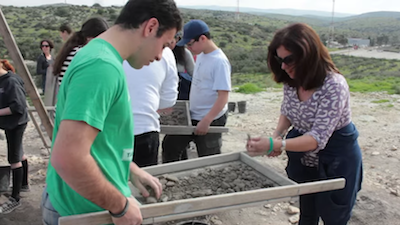
screenshot - “Every bucket could hold a treasure waiting to be discovered,” reads the caption in the brief video about Israel’s Beit Guvrin-Maresha National Park, where visitors can help with the excavations. As part of their trip to Israel, the Bagel Club will take part in the park’s Dig for a Day
“Every bucket could hold a treasure waiting to be discovered,” reads the caption in the brief video about Israel’s Beit Guvrin-Maresha National Park, where visitors can help with the excavations. As part of their trip to Israel, the Bagel Club will take part in the park’s Dig for a Day. (screenshot from mfa.gov.il)

“During our time in Israel,” she said, “we will volunteer at Shalva, the Israel Association for the Care and Inclusion of Persons with Disabilities; meet with the Access Israel disability advocacy organization; visit the Knesset, Israel’s parliament, and meet with Knesset members. We will join an established theatre group of adults with diverse needs for a drama workshop. We will visit Beit Guvrin-Maresha National Park for Dig for a Day and take part in an active dig. We will pray at the Wailing Wall and remember at Yad Vashem.

“We will also be spending part of our trip in the Galilee Panhandle, which is our partner region in Israel. During that time, we will participate in an arts and crafts workshop at [the] inclusion occupational centre Ma’arag, together will local residents. We will visit Beit Israel and meet with Krembo Wings youth group (a youth group that works with children with special needs). Also on our itinerary is a visit to the Bereshit apple factory to learn about agriculture and the production process.”

Cohen said she is “honoured to be able to experience Israel with this group.” The 11 participants are David Benbaruj, David Berger, Frederick Dexall, Marc Estrin, Mark Fugman, Julie Huber, Harriet Kositsky, Alisa Polsky, Clark Levykh, Evan Lipsky and Gail Rudin. Joining Cohen in the support-staff capacity are Kathleen Muir, assistant coordinator, inclusion services and youth services at the JCC; Shannon Gorski, managing director of the Betty Averbach Foundation and JCC board member; and Alex Krasniak, community support worker with 26 years in the field.

Cohen noted that February is Jewish Disability Awareness and Inclusion Month, “a unified effort amongst Jewish organizations worldwide to raise awareness and foster real and meaningful inclusion of people with disabilities and those who love them community-wide.”

She said the JCC is holding a traditional Birkat HaDerech (Blessing for the Way) ceremony for the Bagel Club travelers on Feb. 19, 11 a.m., at the JCC.

“The invitation is wide open,” she said. “We want to share this simchah with the whole community. It is going to be such a joyful sendoff. We’ll have the Orr Vancouver Israeli Dance troupe performing to commemorate the occasion. Can you imagine a better way to celebrate this month than helping these Jews exercise their birthright?”