Skip to content
  • Home
  • Subscribe / donate
  • Events calendar
  • News
    • Local
    • National
    • Israel
    • World
    • עניין בחדשות
      A roundup of news in Canada and further afield, in Hebrew.
  • Opinion
    • From the JI
    • Op-Ed
  • Arts & Culture
    • Performing Arts
    • Music
    • Books
    • Visual Arts
    • TV & Film
  • Life
    • Celebrating the Holidays
    • Travel
    • The Daily Snooze
      Cartoons by Jacob Samuel
    • Mystery Photo
      Help the JI and JMABC fill in the gaps in our archives.
  • Community Links
    • Organizations, Etc.
    • Other News Sources & Blogs
    • Business Directory
  • FAQ
  • JI Chai Celebration
  • JI@88! video

Recent Posts

  • BGU fosters startup culture
  • Photography and glass
  • Is it the end of an era?
  • Taking life a step at a time
  • Nakba exhibit biased
  • Film festival starts next week
  • Musical with heart and soul
  • Rabbi marks 13 years
  • Keeper of VTT’s history
  • Gala fêtes Infeld’s 20th
  • Building JWest together
  • Challah Mom comes to Vancouver
  • What to do about media bias
  • Education offers hope
  • Remembrance – a moral act
  • What makes us human
  • המלחמות של נתניהו וטראמפ
  • Zionism wins big in Vegas
  • Different but connected
  • Survival not passive
  • Musical celebration of Israel
  • Shoppe celebrates 25 years
  • Human “book” event
  • Reclaiming Jewish stories
  • Bema presents Perseverance
  • CSS honours Bellas z”l
  • Sheba Promise here May 7
  • Reflections from Be’eri
  • New law a desecration
  • Resilient joy in tough times
  • Rescue dog brings joy
  • Art chosen for new museum
  • Reminder of hope, resilience
  • The national food of Israel?
  • Story of Israel’s north
  • Sheltering in train stations

Archives

Follow @JewishIndie
image - The CJN - Visit Us Banner - 300x600 - 101625

Tag: Hamas

Place blame where due

For weeks since March, each Friday, thousands of Gazans have rallied at the border with Israel, leading to violent confrontations with the Israeli military. The objective is to build up to an incursion of such proportion that Israel’s military is unable to prevent an invasion into Israeli territory. The stated goal of the so-called March of Return is to catalyze the movement toward a “right of return,” which would have the not coincidental consequence of demographically threatening the Jewish nature of Israel.

Of course, even tens of thousands of Palestinians trying to breech the border will not result in this goal. Instead, there is an unstated goal: Hamas seeks to turn global opinion (further) against Israel. Shamefully, it seems that a few dozen Palestinian lives is a small price to pay, in Hamas’s worldview, for the PR benefits they deliver. As the New York Times reported Sunday, at least some of the protesters believe that they have nothing to lose. “It doesn’t matter to me if they shoot me or not,” said a 22-year-old protester interviewed by the paper. “Death or life – it’s the same thing.” That attitude will suit Hamas just fine.

To overseas audiences, march proponents depict it as an unarmed, peaceful, civilian-led mass action – and a peaceful protest is something we could accept, if not agree with. However, evidence shows that it is stage-managed by Hamas and anything but peaceful. Flying swastika-festooned kites with petrol bombs are sent over the border, massive tire fires are set to obscure the view of Israeli soldiers and tug-of-war lines are formed to pull down the border barrier, while crowds simultaneously hurl projectiles. At this past weekend’s action, there were reports of a few protesters armed with pistols.

Writing in the Times two days earlier, Fadi Abu Shammalah, executive director of the General Union of Cultural Centres in Gaza and a documentary film producer, insisted that he loves life, but that he is prepared to risk it to give his children a future with dignity.

A more effective means to ensure that Palestinian children live a life of dignity would be for Shammalah and others like him to write opinion pieces in the New York Times and to agitate elsewhere for the Hamas leadership to abandon both violence and their refusal to live in coexistence with the Jewish state. These are the two prerequisites to Palestinian self-determination. But such actions could well get Shammalah and others killed faster than marching against the border with Israel.

A sovereign country has the fundamental right to protect its borders from invasion. Ideally, this could be achieved without the use of live ammunition, and should minimize casualties as much as possible. Killing unarmed protesters is not acceptable.

Exclusively blaming Israel, however, is unjust. But this is more than misplaced blame: it has the precise consequence of rewarding Hamas’s strategy of sacrificing its own citizens. The more world media and activists condemn Israel and reward Hamas, the more Palestinians will be pushed toward the border. In such a scenario, the blame lies not solely with Israel or even with Hamas. The blame must be shared by these overseas enablers who, by rewarding Hamas, truly deserve part of the responsibility for the deaths and injuries.

Posted on May 4, 2018May 2, 2018Author The Editorial BoardCategories From the JITags Gaza, Hamas, Israel, Israeli-Palestinian conflict, Palestinians
IDF colonel visits Vancouver

IDF colonel visits Vancouver

Left to right: Ilan Pilo, Jewish National Fund, Pacific Region; Col. Adam Susman, Israel Defence Forces defence attaché to Canada; and Rabbi Shmulik Yeshayahu of the Ohel Yaakov Community Kollel. (photo from Community Kollel)

While acknowledging that the situation in the Middle East is constantly changing, Col. Adam Susman told those gathered at the Ohel Yaakov Community Kollel on July 18 that the biggest threat to Israel is Iran, “as it has been for years.”

Susman, who is the Ottawa-based Israel Defence Forces (IDF) defence attaché to Canada, was in Vancouver at the invitation of the Jewish National Fund of Canada, Pacific Region.

Born in the United Kingdom, Susman moved to Moshav Sde Nitzan in southern Israel at the age of 3, according to JNF’s website. He joined the IDF’s Givati Brigade in 1987 and became a battalion commander after serving as head of the anti-ballistic and training branches. In 2005, he was appointed commander of Hanegev infantry brigade and chief of staff of the Sinai division, protecting Israel’s southern border. In 2009, he became commander of the Dan district in Home Front Command, working to ensure the safety of civilians in the metro Tel Aviv area. Prior to his appointment as the defence attaché to Canada in 2014, Susman was head of the International Military Cooperation Department of the IDF General Staff.

Rabbi Shmulik Yeshayahu of the Community Kollel was the emcee of the Vancouver event. “It is fitting to have this meeting during the weekly Torah portion of Matot-Masei,” he said in his opening comments. “In this parashah, a portion of the Jewish people stays behind on the way to the Holy Land, preferring to farm on the other side of the Jordan River rather than go in and fight for the land. They stayed there while the rest of the tribes fought and, later, they joined them. In Judaism, we have great respect for those who risk their lives to protect other people, and especially our homeland.”

Before introducing Susman to those gathered, Ilan Pilo, executive director and Jerusalem emissary of JNF Canada, Pacific Region, presented a brief video about JNF’s activities throughout Israeli history. He then invited the president of Royal Canadian Legion’s Shalom Branch, Ralph Jackson, to speak. Jackson, who introduced himself as “the only Jew in the Scots Guards during World War Two,” presented a donation of $5,000 to Susman for Beit Halochem, a nonprofit that cares for disabled Israeli veterans.

Leonard Shapiro, Shalom Branch vice-president, noted how the branch was formed during a time of great prejudice, when Jews needed their own veterans organization. “It has been a long time now since we’ve gone to war, however, thank God. We don’t get many new members. If anyone here would like to join and support our organization and activities, you don’t have to have been in the army, you just need to be over 18 and not have committed any horrible crimes. Little ones, OK,” he joked.

Susman shared a bit about himself and his experience in the Givati Brigade, which was the most highly decorated brigade in the 2014 conflict, a fact no doubt known to the many IDF veterans in the audience.

Susman is one of 16 Israeli attachés around the world – a small number that, he said, was due to Israel never having been part of a military coalition with another country. He outlined the ties between the Israeli and Canadian militaries, the chief threats to Israel today and the IDF’s response.

“There is cooperation between the IDF and the Canadian military strategically and practically,” he said. “The relations between the IDF and the Canadian military are good.”

Asked if the change of Canada’s federal government to the Liberals from the Conservatives had had any effect on that relationship, Susman said it had not.

Turning to the situation in Israel’s own region, he emphasized the lack of stability.

“The Middle East is an interesting neighbourhood, always changing – what I tell you today may not be true tomorrow,” he said.

“The biggest threat is Iran, as it has been for years,” he continued. “[Mahmoud] Ahmadinejad took every opportunity to say that Israel should disappear from the map of the world. The main threat they’ve posed has been building Hezbollah – without Iran, it would be a small organization. In recent years, Hezbollah has been fighting in Syria and they’ve lost a lot of people, but they’ve also gained a lot of operational experience. They have also steadily increased in rocket capabilities and can now reach Eilat.”

Susman said that Syria had previously been a big threat to Israel, but that’s no longer the case, due to its civil war and ISIS, as well as the reduction of the country’s chemical weapons by Western countries.

Hamas in Gaza is the next biggest threat, he said, noting that it is also supported by Iran. “They only exist to fight,” he said. “They are not building up Gazans as they claim. A good example is the tunnel found during 2014 Protective Edge, kilometres of resources that could [have been used] for clinics and schools. Gaza is a piece of cheese, there is 80 metres between the top and the water table, dotted with tunnels. That’s a major challenge.

“The Sinai is also a security problem,” he added. “Nobody controls it, and so everybody is in there. There was no Egyptian military following the peace agreement, so that’s the result. The MFO (Multinational Force and Observers) was created to survey the Sinai and, by the way, there are many Canadians in it.

“Some people say the IDF is a military that has a country,” quipped Susman. “We are strong, and we are good at finding solutions.”

Susman cited Iron Dome as an example. The IDF initially divided Israel into 157 zones with two missile interceptors for each missile. That was successful, he said, but each missile cost $70,000 so that intercepting one fired missile cost $140,000. Therefore, the IDF sought improvements. Israel was divided into 254 zones, he said, and each one had only one missile interceptor per fired missile. This system has a 90% success rate stopping missiles, which is still not good enough in Susman’s view. “We will improve yet further,” he said.

During the question-and-answer period, an audience member commented, “You said Iran is the biggest threat against Israel but you didn’t say what Israel is doing against Iran.”

“That’s right,” replied Susman without further explanation, eliciting laughter from the crowd.

The evening ended with the singing of “Am Yisrael Chai,” led by Yeshayahu.

Matthew Gindin is a freelance journalist, writer and lecturer. He writes regularly for the Forward and All That Is Interesting, and has been published in Religion Dispatches, Situate Magazine, Tikkun and elsewhere. He can be found on Medium and Twitter.

Format ImagePosted on August 18, 2017August 16, 2017Author Matthew GindinCategories LocalTags Community Kollel, Hamas, IDF, Iran, Israel, Jewish National Fund, JNF, security, Shalom Branch, veterans
Glavin fights falsehoods

Glavin fights falsehoods

Terry Glavin (photo from Terry Glavin)

A self-described “man of the left,” journalist Terry Glavin discovered he was an “accidental Zionist” during the Israel-Hezbollah war in 2006, when he noticed how the mood of the antiwar movement on the left was “almost hysterical,” and that it was not, in fact, antiwar, but rather pro-Hezbollah.

“There was something deeply toxic about the phenomenon that described itself as antiwar,” he told the Independent, adding that, irrespective of one’s viewpoint on Israeli policy, “if one was to choose the only principled, progressive position, it would have been to be on Israel’s side.” And, he noted, “Arab friends and Palestinian activists [have] gravitated towards the same idea.”

The Irish-Canadian said he has since “been associated with a sturdy defence of Israel in Canada,” in his columns, which have appeared in the National Post, Vancouver Sun, Globe and Mail, Georgia Straight and Ottawa Citizen.

Glavin will be among the speakers at this year’s FEDtalks on Sept. 22 at Queen Elizabeth Theatre, helping to launch the Metro Vancouver Jewish community’s annual campaign.

In addition to his vast and varied published subject matter, Glavin’s work as a journalist has taken him around the globe. His talk will examine, among other ideas, what Canada could contribute for healing the world, as well as what it means to be an “accidental Zionist,” a phrase he said he borrowed from Martin Sampson of the Centre for Israel and Jewish Affairs.

In his work, Glavin strives to clarify the clashes in Israel, to help people understand them better.

“It’s not an Israeli-Palestinian conflict. The war is with Hamas,” he said. “Who are the worst enemies of Palestinian freedom? It’s not Bibi Netanyahu. The most devoted committed enemy of Palestinian sovereignty, Palestinian liberty, rule of law, democracy, freedom are Hamas, Islamic jihad, Hezbollah and Tehran.

“Anyone who apologizes for them, reiterates their propaganda lines, is an enemy of the Palestinians and their freedoms.”

Having researched and written about the hatred of Jews and Israel, he concludes, “There is something unique about antisemitism.

“It’s not just another bigotry. This talk of Israel eliminationism – if it’s not antisemitism, what is it? It might not be Judenrein (free of Jews), but it’s Judenstaatrein, no Jewish state,” he said.

“The Jews are unique, entitled to a nation-state of their own … [as much,] if not more, than any other nationality on earth.”

The liberal left, moreover, has some self-reflecting to do, to know that “certain postures, certain habits of speech, are now unacceptable, and some obsessive preoccupations are no longer tolerated,” he said.

In his opinion, these statements include using the term Zionist as a pejorative, “a term of abuse”; saying that “Israel is the primary impediment to peace in the Middle East”; and claiming the “false idea that criticism of Israel is automatically antisemitic.”

Seeking to bust this latter myth, in a bulk email to journalist colleagues, Glavin asked if any of them could offer an example where a legitimate critique of Israel has been denounced as antisemitism.

“It didn’t exist,” said Glavin. “I could not find any reputable Jewish or Israel organization or individuals who ever introduced a legitimate criticism of Israel as antisemitic. It’s a canard.”

Meanwhile, another falsehood emanating from the left and from leaders of the Arab world, he said, is the idea that Israel is to blame for the region’s – and, sometimes, the world’s – ills.

“This is what one Arab dictator after the next has forced down the throats of generations of Arabs to explain their own destitution and dysfunction,” he said.

Some are rejecting that narrative, however.

“The people have begun to discover they’ve been lied to – that Israel isn’t the problem,” said Glavin. “The jackboot on [their] neck is Baathist, not Israel.”

For tickets to FEDtalks and information on all of the speakers, visit jewishvancouver.com/fedtalks2016.

Dave Gordon is a Toronto-based freelance writer whose work has appeared in more than a hundred publications around the world.

Format ImagePosted on September 2, 2016August 31, 2016Author Dave GordonCategories LocalTags antisemitism, FEDtalks, Glavin, Hamas, Israel
Bleak future for Israel

Bleak future for Israel

Raphael Hoult, winner of the inaugural Barry Rubin Prize Essay Competition. (photo from Raphael Hoult)

“A Game of Clocks: An Analysis of the Situation in the Middle East and Its Effects on Israel” by Winnipeg’s Raphael Hoult is the winner of the Centre for Israel and Jewish Affairs’ inaugural Barry Rubin Prize Essay Competition.

Hoult, a physics major at the University of Winnipeg in his second year of studies, conjured up a mind-bending theory about the stability of Middle East security and consulted expert sources for his essay.

In physics, Hoult’s interests lie in the field of quantum gravitation, which attempts to combine two major theories – those of general relativity and quantum mechanics.

“These two theories don’t play well together,” said Hoult. “They conflict in places. The biggest place they conflict is in that every force in the universe has been quantized, meaning that we’ve found a very small, discrete package of it in the universe. For example, electromagnetism is delivered by something called a photon. The other forces have something that delivers them, as well. But, with gravity, we’ve found no such thing yet. What we say is we haven’t been able to quantify it, though there are a lot of theories out there for how to solve that problem. There’s string theory. Another is loop quantum gravity, that attempts to bring some parts together.

“I want to help look for a theory of quantum gravity, so we can finally resolve this dilemma … combine the two theories into one bigger theory, a more complete theory. And, hopefully, that will give us a lot more insight into the way gravity works and allow us to do more with our understanding of gravity – to utilize it more, similar to the way our deeper understanding of electricity and magnetism has allowed us to do more intricate electronics in the past couple years.”

According to Hoult, this reconciliation of quantum mechanics and general relativity has been the Holy Grail of physics for the past 50-some years, and solving it will be huge for physicists and the world as we know it.

“The proposed theoretical messenger particle for gravity is the graviton, which is something we’ve not yet observed at all,” he said. “Quantum mechanics requires there to be a graviton…. General relativity in no way makes reference to a graviton.

“The main thing is quantum mechanics works really well with very small things, general relativity works really well for really big things. Things with a lot of mass are usually very large. The problem comes when you have things that are very massive and also very small, such as neutron stars or black holes. These are very dense, have a lot of mass and exert a lot of gravitational force, but they are also very small. In the case of a black hole, they are actually on the atomic level. So, quantum mechanics is very important to the way they work, but general relativity also is in play. When our two theories don’t work and they are supposed to be working at the same time, that’s a problem and something we want to fix.”

In addition to his knowledge of physics, Hoult is also well-versed in Israeli politics. “I’ve actually never taken a political science course at university,” he acknowledged, “but I went to Gray Academy [of Jewish Education in Winnipeg], so I had a very strong basis in knowledge about Israel. I had a good grounding there. I also read the Times of Israel and Haaretz every day.”

When Hoult saw an advertisement for the Barry Rubin Essay Competition on Facebook, it piqued his interest. The contest topic was, “What does the current regional turmoil in the Middle East mean for Israel?”

In his essay, Hoult said, “The three main critical points I talked about were the constancy of Hezbollah, Hamas and Daesh (the Islamic State in Iraq and Syria [ISIS]). I wrote about the fact that Hezbollah is involved in the war in Syria, specifically as affiliates of Bashar Al-Assad. They support him and are fighting on behalf of him. On the flipside, a branch of ISIS, called Al-Wilayat Sinai, is operating in the Sinai Peninsula desert against the Egyptians, making their lives very difficult. They’ve also struck up an alliance with Hamas.”

According to Hoult, the main three players in regards to Israel involve Hezbollah in the north, Hamas in Gaza and Al-Wilayat Sinai (Daesh) in the south. Hoult does not delve into the Iranian threat in his essay, apart from Iran’s role in supporting these groups.

“My hypothesis was that these three forces are connected to one another,” he said. “And, because of the ongoing campaign against ISIS, my hypothesis is that, as soon as that campaign succeeds and breaks down ISIS, all hell will break loose for Israel.”

Hoult explained that this theory takes into account Hezbollah’s huge military arsenal, which is estimated at around 100,000 rockets, and their ability to hit every point in Israel from Metula to Eilat, combined with the southern threat from Hamas and from the Al-Wilayat Sinai, which, so far, has been mainly fighting the Egyptians.

“Once ISIS collapses in the north, the Al-Wilayat Sinai … will suddenly be like a tentacle that has been cut off from the squid,” he said. “It will have no control and will be in desperate throes to stay alive, making it likely that it will involve at least a couple cross-border raids. If those involve any Israeli deaths, it will force Israel to respond, which is an issue, due to the fact that Israel can’t cross the border without Egyptian permission.

“There is also the fact that Hamas is having another military build-up,” he added.

Hoult predicts this will likely lead to another war in 2017 and, once that war is over, he said Hezbollah would have had ample time to gather its troops and possibly attack Israel from the north. “This is not a good thing for Israel, as Hezbollah is dead set on destroying Israel if they can,” he said.

As to why Hoult thinks his essay was selected as the winner, he said he is not sure, although he imagines it may have “had something to do with all the sources cited, creating a compelling likelihood of my hypotheses coming true.”

One of his many concerns is that “the primary backer of Hezbollah and Hamas is Iran. Iran has just had billions of dollars unlocked, due to the nuclear deal … which I’m not going to condemn or support, though I’m a little bit skeptical of whether or not unlocking those funds was a good thing.”

 Rebeca Kuropatwa is a Winnipeg freelance writer.

Format ImagePosted on April 15, 2016April 13, 2016Author Rebeca KuropatwaCategories NationalTags Barry Rubin, CIJA, Daesh, Hamas, Hezbollah, Hoult, ISIS, Israel, terrorism
Israel hopes tourists return

Israel hopes tourists return

Temple Mount Western Wall on Shabbat. (photo by David Shankbone via en.wikipedia.org)

Robin and Jon Sirkin prepared to celebrate their son Eitan’s bar mitzvah in Jerusalem last weekend. There was a Dr. Who theme and an ice-cream bar planned for the reception at the synagogue after the services. As part of the celebrations, Robin Sirkin’s brother, sister, aunt and cousin were planning to make their first trip to Israel. She booked a trip to southern Israel and a meal at one of Jerusalem’s most expensive restaurants for 15 people.

Four weeks ago, just after the ceasefire was declared between Israel and Hamas, which controls the Gaza Strip, they all canceled their trips. Sirkin, who moved to Israel from Cleveland three years ago with their four children, said she tried to convince her relatives that the ceasefire would hold, but to no avail.

“It’s devastating and heartbreaking and feels unsupportive,” Sirkin told the Media Line. “I think they’re overreacting, but we have a different sense of security here.

She said they held off telling their son that his relatives had canceled, hoping that as the big day he approached he would be more excited about the ceremony and the party, and less disappointed.

“He was a little sad, but he’s trying not to focus on that,” she said.

The Sirkins are not alone. Mark Feldman, CEO of Ziontours, said that the seven weeks of fighting between Israel and Hamas over the summer has devastated tourism for the rest of the year, except for the Jewish holidays this month, and Christmas. Feldman said they lost about 2,000 bookings, and most of the time waived the cancellation fees.

“Tourism for the rest of 2014 simply doesn’t exist,” Feldman said. “Now we’re looking toward 2015, and hoping the government will begin to lay the seeds to allow tourism to begin to come back.”

Read more at themedialine.org.

Format ImagePosted on October 3, 2014October 1, 2014Author Linda Gradstein TMLCategories IsraelTags Gaza Strip, Hamas, Israel, Mark Feldman, tourism, Uzi Landau, Ziontours

Time for dynamic on-campus discourse on Israel/Palestine

With September upon us and the Gaza war behind us, university students may be facing Israel-on-campus discourse this semester with some extra trepidation. I often hear Jewish parents wondering about how we can best prepare our kids to “face” Israel opponents on campus. As a past active Jewish undergraduate student myself and now as a professor who specializes in the topic of Israel/Palestine, here are some of my thoughts about the best way to approach the topic of Israel on campus.

Critical thinking above all else. In today’s political climate, no one is served by advancing talking points rather than asking tough questions and truly listening. Jewish students should not have to see themselves as ambassadors of the Jewish state. Israel has its own cadre of hasbarah professionals. As a place to create intelligent and productive global citizens, the role of university is to help students absorb information and apply conceptual reasoning in a critically engaged way. Jewish students should not have to leave their critical faculties at the door on the subject of Israel, nor should they have to consider the classroom environment – with its natural predilection for analyzing multiple sides of a problem – as hermetically sealed from the rest of the campus, where more informal discussion and occasional activism takes place.

Put aside the labels. Students would be forgiven for believing that they must adopt a label like “pro-Israel” or “pro-Palestine” either before arriving on campus or while there. But, as I consistently try to show my students, those terms mean little. To some, being pro-Israel means supporting the settler enterprise. To others, it means spurring Israel to make peace with the Palestinian Authority. Similarly, being pro-Palestine may mean supporting Hamas’ war effort, just as it might mean supporting Mahmoud Abbas’ attempt to reach a peace agreement with the Israeli government. By assuming a monolithic stance, students mentally close out possibilities. Students who care about the region must take time to consider what is best for the individuals and nations living there.

Focus on the “why” questions. While the out-of-classroom campus climate can unfortunately tend towards the “blame game,” where activists point fingers at one side or another, students would be best served by focusing on the “why” questions. Analyzing why each set of political actors takes the actions they do is ultimately the best thing students can do to deepen their understanding of the region and perhaps to ultimately be in a position to help bring about desired outcomes. Importantly, addressing the “why” questions is not the same as providing moral justifications. “Why does Hamas shoot rockets?” could be addressed by an array of possible answers, all of which should be put on the table and evaluated using the best knowledge we have, before making gut assumptions. Focusing on these explanatory questions can also help to further dialogue with people whose instinctual political allegiances may be different.

Practice empathy. Moving from the “why” questions to the “what should be” questions is best done through a position of empathy. Understanding the narratives, experiences, and emotional and material reality of each “side” is essential to prescribing political outcomes that will stick. Just as demanding that Israel give up its Jewish identity is going to be a non-starter, so too is not recognizing that no people is going to accept living under occupation in perpetuity.

Start early. Finally, it’s all good and fine to hope that our community’s Jewish students are primed for Israel engagement on campus, but the kind of critical engagement that enables students to deploy all their intellectual and cultural tools must start early. Our community needs to ensure that spoken Hebrew instruction in our day and supplementary schools is a priority, thus paving the way for our students to engage with Israel and Israelis in a more intimate and nuanced way whether via social media or, ideally, in person. Similarly, our elementary and high schools should ensure that wide-ranging discussion on Israel and the Israeli-Palestinian relationship is encouraged, and that groupthink is avoided. An informed and critically engaged citizen will be one who can contribute most potently – and that is ultimately good for Jewish continuity, to boot.

Mira Sucharov is an associate professor of political science at Carleton University. She blogs at Haaretz and the Jewish Daily Forward. This article was originally published in the Ottawa Jewish Bulletin.

Posted on September 26, 2014September 25, 2014Author Mira SucharovCategories Op-EdTags Hamas, Israel, Israeli-Palestinian conflict, Palestine
Israel-Hamas talks necessary to rebuild Gaza

Israel-Hamas talks necessary to rebuild Gaza

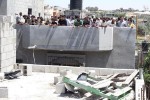
Gazan civilians on the roof of a building that had been used for terror activity. (photo from idfblog.com)

As Palestinians begin to discuss the reconstruction of the Gaza Strip after seven weeks of fighting with Israel, Israeli, Palestinian and international officials warn of the risk of another round of fighting unless there is a diplomatic agreement between the two sides as well as an agreement to rebuild Gaza.

Hamas senior official Musa Abu Marzook said that indirect talks with Israel would resume in Cairo later this month. He hinted that Hamas would be prepared to negotiate directly with Israel, saying that there is no obstacle in Muslim religious law to negotiations with Israel.

Israel, for its part, says that Hamas is a terrorist organization, and it will not negotiate either directly with Hamas or with any government that includes Hamas. This could complicate efforts for a new unity government of technocrats from Hamas and Fatah.

European Union Ambassador Lars Faaborg-Andersen warned last week that without a long-term political solution that would see Palestinian Authority President Mahmoud Abbas in charge of Gaza, violence could start anew. Israel and Hamas agreed to an Egyptian-brokered ceasefire on Aug. 26, and were expected to restart negotiations on long-term issues within a month. These expected talks come amid growing tensions between Abbas’ Fatah movement and Hamas, which is far more popular in Gaza now than it was before the war.

The issues on the table for the Cairo talks include an airport or sea port for Gaza, which Israel is expected to oppose, rebuilding Gaza, which is estimated to cost $7.8 billion, and demilitarizing the Strip, which Hamas has opposed. Cairo is also expected to host an international donors conference in October.

In the short term, the Palestinian Authority has appealed for more than $550 million in emergency aid for Gaza. Tens of thousands of Palestinians are still homeless after the fighting.

Palestinian Deputy Prime Minister Mohammed Mustafa said, “Reconstruction is the ultimate goal, but our government won’t accept a return to the status quo. We are getting to a limit that can no more be accepted. Never again, never again.”

Israeli officials said they would support the PA having control over a demilitarized Gaza Strip.

Read more at themedialine.org.

Format ImagePosted on September 19, 2014September 18, 2014Author Abdullah H. Erakat and Linda Gradstein TMLCategories WorldTags Gaza, Hamas, Israel, Palestinians

Rebuilding Gaza: Will PA and EU become more involved?

With the ceasefire between Israel and Hamas, Palestinians in the Gaza Strip are asking when and how reconstruction of the battered coastal enclave will begin. United Nations workers in Gaza say that 55,000 refugees are still taking shelter in 41 UN schools, raising questions about how the school year will begin in two weeks, already delayed from its scheduled opening in August.

Palestinian Authority (PA) Prime Minister Rami Hamdallah told representatives of several international organizations that the PA will repair homes that have been partially destroyed and will rent homes, as well as secure temporary homes and even tents, for displaced people. It was the first sign that the PA will take a more active role in Gaza, which has been controlled by Hamas since 2007. In the spring, Hamas and Fatah announced a unity government, but it has not met or functioned since the fighting began soon after the announcement.

A report by Shelter Cluster, which is co-chaired by the United Nations Relief and Works Authority (UNRWA) and the Red Cross, found that 17,000 homes were destroyed or severely damaged in the seven weeks of fighting. An additional 5,000 homes still need repair from previous rounds of fighting while, even before the latest conflict started, there was a deficit of 75,000 homes. According to Shelter Cluster, at the rate of 100 trucks with building materials crossing the border into Gaza, it would take 20 years to rebuild the densely populated strip.

Read more at themedialine.org.

Posted on September 5, 2014September 3, 2014Author Linda Gradstein TMLCategories WorldTags Gaza, Hamas, PA, Palestinian Authority, Rami Hamdallah
Tunnels pose serious threat

Tunnels pose serious threat

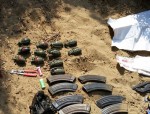
Weapons recovered from a Hamas tunnel. (photo from IDF/FLICKR)

“One hundred Israeli schoolchildren killed in Hamas attack.” Israelis say this would have been just one of many similar headlines announcing untold loss of civilian life had Operation Protective Edge not been launched last month. The goal of the operation was to silence the seemingly endless barrages of Gaza rockets aimed at Israeli cities and towns, and to detect and destroy the vast network of underground tunnels dug beneath Gaza and into Israel by the Islamist Hamas terror organization.

As details of the tunnel system became public, Israelis were at once fascinated and infuriated to learn specifics of the intricate Trojan-horse-like network lurking beneath their communities; an engineering feat so potentially lethal that the national discussion is rife with unsubstantiated worries about terrorist plans for the execution of “an Israeli 9/11.”

Frequently heard were comments like, “Surely the high-tech nation should have the ability to detect tunnels!” while others ask how such an elaborate feat of engineering and construction could have proceeded right under the noses of the military in a security-savvy country with vast counter-terrorism experience.

In October 2013, Israeli army intelligence located entrances to one such tunnel just a couple of hundred metres from the entrance to Kibbutz Ein Hashlosha, a collective community in southern Israel near the border with Gaza.

On a tour of that network, standing at ground level, one can see the tunnel split in the middle, its branches extending deep into the earth, with one entrance/exit nearly a mile away – through Israeli territory and into the Gaza Strip – and the other a mere 600 metres (almost 2,000 feet) to the right: exiting into Israeli territory.

Moving closer required man- oeuvring through a steep downward 46-foot trek, assisted by the steadying hand of an IDF officer to navigate the distance from the surface to the underground passageway itself. Crawling through the deceptively small opening and out of the desert’s summer heat into the coolness of the subterranean concrete-encased structure, it was surprising to find myself standing upright, able to see far enough to sense the vast distance it covers. Though visibility was limited by the dearth of ambient light, helped only slightly by the lighting unit attached to our camera, the immense dimension of the tunnel was perceptible, the elaborate nature of the structure striking. From the sophisticated construction to the array of cables, conduits, finished ceilings, communication lines and pulley systems, it made sense that each tunnel was estimated to have required several years and millions of dollars to build – mostly by hand, with jackhammers and shovels.

Also discovered in many of the recently destroyed tunnels was a variety of weapons, army uniforms, motorcycles, chloroform and handcuffs: macabre “kidnapping kits.”

Read more at themedialine.org.

Format ImagePosted on August 22, 2014August 27, 2014Author Felice Friedson TMLCategories IsraelTags Hamas, IDF, Israel, Israel Defence Forces, terrorism, tunnels

Our Israel connections – the need to tell our stories

The Six Day War may have been history’s most illustrative example of the limitations of a weekly newspaper. Reviewing this newspaper’s archives from 1967 shows one week’s paper filled with ominous foreboding and the next issue, triumphal jubilation.

Every year, we take a short publishing break in the usually quiet news period that is the summer doldrums. Unlike in 1967, though, we now have a spiffy new website that has allowed readers to follow some local events and commentary from abroad during these especially tumultuous few weeks.

The news has not been pleasant. Israel has somewhat successfully stanched some of the infrastructure of the Gazan terrorist regime. The cost has been tragic and the worldwide reverberations deeply disturbing.

“Victory” is difficult to discern. In the biggest picture, victory for all civilians would be peace in the region, but even the most optimistic among us see that as a long way off – the stated objective of Hamas remains the destruction of Israel. For Israel, victory has historically meant a few months or a couple of years of relative peace. By beating back the immediate threat (whether the combined Arab armies in 1948-49, 1967 and 1973, or the PLO in the 1970s and ’80s, and the assorted terrorist entities since), Israel has managed to buy a few periods of comparative peace. And, as a result of Operation Protective Edge, Israel has undermined the strength of Hamas and so that may result in a period of relative peace for Israelis and Palestinians.

There has been another battle: the battle of words around the world. It’s not all words, of course – some of the battle has been violent, with anti-Jewish attacks in Europe and elsewhere – but the discourse about Israel globally, even when largely non-violent, has been unprecedentedly grotesque and incendiary. The United Nations, reinforcing its long failure to live up to the promise of its founding charter, has made a mockery of justice and peace by condemning only Israel. Armchair commentators have declared themselves military authorities to parse Israeli actions. Cartoonists have exhumed Nazi-era imagery to employ against Israel. Street rallies around the world, while accusing Israel of bloodlust, have themselves turned into bloody and violent displays of hatred.

Even some of the more thoughtful contributors to the “debate” have exhibited assumptions that seem to rely on old familiar stereotypes. And people who have never uttered a word of concern in the past nine years while the repressive Hamas regime has tightened its grip on the people in Gaza suddenly, when Israel becomes involved, declare, “I don’t support Hamas. I support the people of Gaza.” Would that they actually did.

In Canada, things are somewhat brighter. All major federal political parties have rightly stood with Israel in its fight against terrorism. (The exception being the Green Party of Canada, but then, it isn’t “major.”) We have a fairly balanced media that has generally not succumbed to the extremism or misrepresentation we have seen in Europe. Still, Canadian opponents of Israel purvey the idea that they can denounce Israel in the most horrible terms without that level of rhetoric having an impact on Jewish Canadians or our country’s multicultural harmony.

Explaining why this type of anti-Israel action affects us as Canadian Jews is not simple. Most Diaspora Jews have a deep and passionate connection with Israel. In part, this has to do with the Holocaust. The Holocaust did not happen because of Hitler and Nazism. It happened, at least in the magnitude it did, because there was not a country on the planet (save the Dominican Republic) that was willing to welcome the imperiled Jews of Europe. The need for Israel as a nation where Jews control the immigration policy is not due to the Holocaust per se, but the world’s nonchalance toward it.

More than this, after the magnitude of the Holocaust became known to the survivors and to the entire world, the unfathomable disaster might reasonably have sunk the Jewish people into a collective depression of hopelessness and fatalism. Instead, the rebirth of the Jewish homeland in Eretz Israel allowed a people seeking some light from a catastrophic darkness to find hope and optimism. Those Jews who made aliyah – and, to no small extent, those who remained in the Diaspora – threw themselves into building the state of Israel, a task that has proven successful beyond any dreams and allowed an optimistic future to salve the horrors of the immediate past.

When street mobs, politicians, UN resolutions, cartoonists and Facebook authorities heap loathing on Israel, despite all their feeble assurances that it is Israel, not Jews, they target, the words and the hatred behind them hurt. There are other historical, cultural, familial and political reasons why Jewish Canadians and others in the Diaspora feel deeply a part of Israel. It might help our neighbors understand us if we told our personal and collective stories better.

***

The JI’s Pat Johnson spoke with David Berner about the Israel-Hamas conflict, global antisemitism and other issues on Aug. 7 2014:


Posted on August 22, 2014September 3, 2014Author The Editorial BoardCategories From the JITags Diaspora, Hamas, Holocaust, Israel, Palestinians

Posts pagination

Previous page Page 1 … Page 5 Page 6 Page 7 Next page
Proudly powered by WordPress