Skip to content
  • Home
  • Subscribe / donate
  • Events calendar
  • News
    • Local
    • National
    • Israel
    • World
    • עניין בחדשות
      A roundup of news in Canada and further afield, in Hebrew.
  • Opinion
    • From the JI
    • Op-Ed
  • Arts & Culture
    • Performing Arts
    • Music
    • Books
    • Visual Arts
    • TV & Film
  • Life
    • Celebrating the Holidays
    • Travel
    • The Daily Snooze
      Cartoons by Jacob Samuel
    • Mystery Photo
      Help the JI and JMABC fill in the gaps in our archives.
  • Community Links
    • Organizations, Etc.
    • Other News Sources & Blogs
    • Business Directory
  • FAQ
  • JI Chai Celebration
  • JI@88! video

Recent Posts

  • Story of Israel’s north
  • Sheltering in train stations
  • Teach critical thinking
  • Learning to bridge divides
  • Supporting Iranian community
  • Art dismantles systems
  • Beth Tikvah celebrates 50th
  • What is Jewish music?
  • Celebrate joy of music
  • Women share experiences 
  • Raising funds for Survivors
  • Call for digital literacy
  • The hidden hand of hate
  • Tarot as spiritual ritual
  • Students create fancy meal
  • Encouraging young voices
  • Rose’s Angels delivers
  • Living life to its fullest
  • Drawing on his roots
  • Panama City welcoming
  • Pesach cleaning
  • On the wings of griffon vultures
  • Vast recipe & story collection
  • A word, please …
  • מארק קרני לא ממתין לטראמפ
  • On war and antisemitism
  • Jews shine in Canucks colours
  • Moment of opportunity
  • Shooting response
  • BC budget fails seniors
  • Ritual is what makes life holy
  • Dogs help war veterans live again
  • Remain vital and outspoken
  • An urgent play to see
  • Pop-up exhibit popular
  • An invite to join JWest

Archives

Follow @JewishIndie
image - The CJN - Visit Us Banner - 300x600 - 101625

Category: News

Courage’s two records

Courage’s two records

Lorne Segal, chair, Courage to Come Back Awards. (photo by Cynthia Ramsay)

In its chai year, the Courage to Come Back Awards had a record night on May 5 at the Vancouver Convention Centre, with more than 1,500 guests and more than $1.43 million raised for Coast Mental Health.

In his address, Courage to Come Back chair Lorne Segal pondered the question of why the event is so popular. “Because,” he said, “at these awards, like nowhere else, we feel the extraordinary power of the ordinary spirit and the deep humanity so often lacking in our daily lives.”

He said, “We all shed a tear tonight and, whether it was a tear of joy, of hope, of love, it was not because we wanted to, but because we needed to. You see, we need to know that, even against the worst hand we could be dealt in life, we too can triumph. Because our six heroes tonight could do it, so can we.

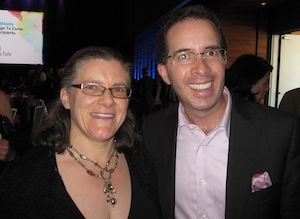
photo - Cynthia Ramsay, publisher of the Jewish Independent, and Shay Keil of Keil Investment Group of ScotiaMcLeod
Cynthia Ramsay, publisher of the Jewish Independent, and Shay Keil of Keil Investment Group of ScotiaMcLeod. (photo from Cynthia Ramsay)

“Each of us came into this room for a different reason, but we will all leave with our nourished souls tied together by one common thread: the unshakeable belief that, by seeing the very best in others – courage, faith, hope, endurance – we will somehow find the strength to face our own fears and achieve our greatest dreams. And for that, we need to thank our six superstars who are symbols of the possibilities which lie within us all.”

This year’s six honorees were Christy Campbell (in the physical rehabilitation category), Jemal Damtawe (addiction), Meredith Graham (social adversity), Dr. Barbara Harris, (mental health), Coltyn Liu (youth) and Tom Teranishi (medical). Since 1999, Courage to Come Back has now honored 103 individuals who have had the “courage to overcome serious adversity, change their lives for the better and move forward to help others do the same.”

Co-hosting the gala evening were Randene Neill and Kevin Evans, while Howard Blank emceed the fundraising portion of the proceedings. In his comments, Blank noted that Coast Mental Health helps an average of 12 clients a day and that its programs address three main pillars: housing, employment and support services.

The largest donation of the evening came from B.C. taxpayers, as Minister of Health Terry Lake donated $100,000 from the province on behalf of Premier Christy Clark and Minister of Finance Mike de Jong. The largest private donation came from Joseph and Rosalie Segal, who contributed $50,000. Many other individuals and companies made donations, several citing the Segal family as their example of what it means to give back to community.

There was no shortage of role models for giving that night, with the six honorees leading the way. There were many meaningful takeaways, including Liu’s statement: “Mom’s lesson: don’t feed the negative monster inside; rather, fight with a belief in yourself and for a reality you want.” And Graham’s reminder that, “sometimes, you can give what you didn’t get.”

“What part will you play,” she asked the crowd, “to change lives today?”

Format ImagePosted on May 13, 2016May 11, 2016Author Cynthia RamsayCategories LocalTags Courage to Come Back, mental health, Segal, tikkun olam
Home for our war veterans

Home for our war veterans

Shalom Branch 178 began as Fairview Branch 178 in 1945. (photo by Shula Klinger)

As the Second World War was drawing to a close, servicemen and -women began returning to Vancouver. Among them were Jewish veterans. As they looked for ways to reintegrate with civilian life, they found many clubs and associations closed to them on religious grounds. So, a group of them founded the B.C. Jewish Veterans’ Association. The association applied to the Canadian Legion and, on June 20, 1945, Fairview Branch 178 came into being. In 1972, thanks to the efforts of Charles Eppel, it became Shalom Branch 178. It has been a social hub for the veteran community now for more than 70 years.

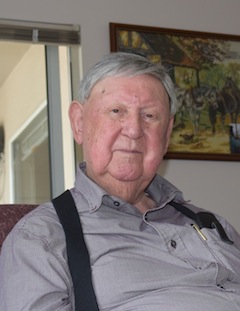
photo - Bernard Jackson, president of Shalom Branch 178
Bernard Jackson, president of Shalom Branch 178. (photo by Shula Klinger)

At the time of the legion’s original charter, membership stood at 81. By 1950, this had risen to 219 and, in 1960, a ladies’ auxiliary was founded. These days, the legion’s membership stands at 75, but it’s falling, with the passing of many veterans.

Bernard Jackson has been the president of Shalom Branch 178 since 2002. Last year, the French government awarded him the Légion d’Honneur (France’s greatest honor for military and civil merits) for his service in Normandy in 1944.

Jackson speaks proudly of the original group of veterans. “They sold lottery tickets to raise money, with the object of building homes and a legion branch,” he said. “They bought land and built a property with assistance from BC Housing. The building of 102 apartments [Maple Crest] is in full use – it’s a mix of one- and two-bedroom suites.”

Every member of the legion takes part in the annual Poppy Campaign, which raises funds for veterans and needy families. Maple Crest residents are also supported by the Jewish Family Service Agency.

In the past, the legion has given bursaries to students at the University of British Columbia, the B.C. Institute of Technology and Vancouver Talmud Torah, as well as provided grants for medical equipment to local hospitals. Shalom Branch supports the Navy League of Canada and Brock Fahrni Pavilion, which is home to many veterans of the armed forces. The legion has installed a memorial to the fallen at the Jewish Community Centre of Greater Vancouver, and Schara Tzedeck Cemetery’s war memorial was dedicated in 1990. Other achievements include the purchase of a bus for Magen David Adom in 1982.

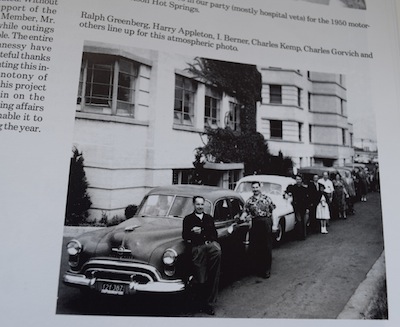
photo - A page from the program commemorating Shalom Branch 178’s 70th anniversary
A page from the program commemorating Shalom Branch 178’s 70th anniversary. (photo by Shula Klinger)

Jackson is extremely concerned about the falling membership, and is disappointed at the lack of support. “Jewish support has disappeared but the need is still there,” he said. “It’s sad to see that we have such a crisis in the provision of low-cost apartments at a time when antisemitism is on the rise.”

Mark Perl is a more recent member of the legion. Born in Cluj, Romania, he moved to Israel in 1959 and fought in the Six Day War of 1967. “We need community support for our legion – not just funding,” he said. “This is our tradition, our unique history. Who’s going to carry this on?”

Jackson is determined to see a growth in education programs for today’s youngsters. “My generation made a big mistake,” he said. “We didn’t want to talk about the war. Now, young people watch all that shooting for fun. My generation knew what it was really about, and we thought this would be the last war.”

Jackson has spoken about this issue at Jewish Seniors Alliance, of which he also a member.

Shalom Branch 178 is entirely staffed by volunteers. Located at 2020 West 6th Ave., in Vancouver, new members are welcome and the hall is also available for rentals (604-737-1033).

Shula Klinger is an author, illustrator and journalist living in North Vancouver. Find out more at niftyscissors.com.

Format ImagePosted on May 13, 2016May 11, 2016Author Shula KlingerCategories LocalTags Canadian Legion, Maple Crest, Shalom Branch, veterans
Jewish-Muslim unity efforts

Jewish-Muslim unity efforts

On March 13, members of Calgary’s Muslim community visited Congregation Beth Tzedec. Jewish community members had visited Green Dome Mosque the week prior. The events were part of the Our House is Your House program. (photo from Shaul Osadchey)

After a 2014 clash between Palestinian and Israeli supporters on the grounds of Calgary City Hall that ended violently, Imam Syed Soharwardy of Green Dome Mosque reached out to local rabbis and Jewish community leaders, and Rabbi Shaul Osadchey of Beth Tzedec responded by inviting Jewish and Muslim leaders to his synagogue for discussions.

The discussions helped make the next demonstrations peaceful. They also helped transform the general relationship between the Muslim and Jewish communities, which led to two unity events held this past March.

“From that conversation, we made a commitment to meet again and continue the conversation,” said Osadchey. “We continued to meet at Beth Tzedec monthly and, within about two months, we decided to form the Calgary Jewish Muslim Council.”

That council has been meeting for almost two years, discussing various issues that affect both communities. Through this, the rabbi proposed the concept of Our House is Your House, the program that hosted the recent unity events. The program’s purpose is to bring together lay members of the communities for table conversations – not for lectures about religion, but simply to come together to explore mutual commonalities.

On March 6, about 50 Jewish community members made their way to Green Dome Mosque in northeast Calgary for the first of two consecutive Sunday events, the second of which took place at Beth Tzedec.

“We had a very inspiring program in which the clergy spoke at the beginning and then a lot of people were then invited to ask questions and express how they felt about doing these kinds of programs and getting to know each other,” said Osadchey. “We had refreshments and people visited with each other. It was quite a significant day.”

According to Osadchey, those who attended were impressed, finding the imams forthright in explaining how they felt the use of certain quotes from the Quran, such as, “you shouldn’t make friends with Jews or Christians,” were often used out of context and not in the true spirit of Islam.

The plan is to expand Our House is Your House with the program My House is Your House, matching people up for dinners in community members’ homes. There is also another program, funded by a Beth Tzedec member, that will see Jewish and Muslim teens (15- to 16-year-olds) engage in philanthropy.

“We’ll have six to eight Jewish youth and six to eight Muslim youth meet for six sessions, alternating between the mosque and the synagogue,” said Osadchey. “They will focus on learning about charity in each other’s traditions. They’ll identify common values, and then will go through a process of selecting and then allocating funds that have been donated to organizations in Calgary that they think reflect the values that they’ve articulated. So, it’s going to be an opportunity for the teens to get together and build a relationship, and do something constructive and positive to influence the community.”

Another initiative between the communities involved the Soup Sisters, an organization that was started by two Beth Tzedec women and has grown to include chapters in many Canadian cities, as well as one in Los Angeles. (See jewishindependent.ca/soup-ladled-with-love.)

“They make soup that is then donated to abused women in shelters and other facilities,” said Osadchey. Wanting to do a soup project for Syrian refugees, “the women came to me and asked how to get halal meat. I sent an email to several imams, asking them if they knew anyone who’d be willing to donate 86 kilograms of halal meat. Within an hour or two, I got a response from an imam saying he has the name of an individual able and happy to do that and that he’s expecting my call. Again, things are working in ways that we’re able to accomplish wonderful goals to help people in the community.”

Soharwardy, who initiated the Jewish-Muslim unity talks, is also the founder of Muslims Against Terrorism and the Islamic Association of Canada. He is a Sunni Muslim who follows the Sufi tradition.

“About three months ago, Rabbi [Osadchey] and I were chatting,” said Soharwardy. “He said, ‘Let’s do something grassroots instead of a rabbi and an imam talking. Let’s involve our families, women, children, everybody.

“I think this was the first time in the history of, at least Canada, that such a large group from the Jewish community came to the mosque. They had a dialogue, they had food … we sat together for an informal discussion…. That inspired so many Muslims. It removed misunderstanding. People realized, Jewish people are not our enemies, we have so much in common.”

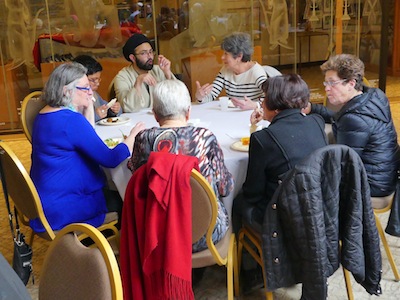
photo - About 80 or 90 members of the Muslim community went to Beth Tzedec on March 13
About 80 or 90 members of the Muslim community went to Beth Tzedec on March 13. (photo from Shaul Osadchey)

About 80 or 90 members of the Muslim community went to Beth Tzedec on March 13, he said. “We sat down, we saw the Torah, we heard three rabbis there. We were so amazed. I was happy to see we have so much in common. I’m so happy and I’m still, in my mind, still in that synagogue, listening to this rabbi and the way he was performing. I can’t call him anything except a person of faith, and his Jewish faith is very close to my faith. It’s just an amazing feeling. I don’t understand why we are enemies. I don’t think we are enemies.”

Soharwardy can hardly wait for the next step of inviting some new Jewish friends to his house to share food and conversation.

“I think, at the family level, we should start engaging ourselves,” he said. “That will build the relationship among adults as well as children … so our children will get the understanding that we are not enemies, we don’t hate each other. We are normal humans, Canadians, and neighbors.”

Osadchey added, “We recognize there’s still a lot of work to be done in both communities. There’s a lot of suspicion, a lot of stereotype and misinformation that exists in our communities about the other. To further break that down really takes people-to-people contact.

“There’s a lot of anxiety and a lot of cynicism and doubt about whether these efforts are really viable,” he continued. “I think the more that we’ve done together as two communities, the more the message is emerging that, yes, this is worth doing. We’re not under any illusion that we are going to change events in the Middle East, but we are creating an alternative model that will have a ripple effect beyond Calgary, that will say to people, having good relationships and learning about each other and respecting each other is definitely possible and desirable.

“We’re doing it with people in the Jewish community and Muslim community. We all have relatives in the Middle East. We have relatives elsewhere, too. So, to be able to model what we are doing and let people know about this will put the seed of change elsewhere … so that it goes beyond our local efforts.”

Rebeca Kuropatwa is a Winnipeg freelance writer.

Format ImagePosted on May 13, 2016May 11, 2016Author Rebeca KuropatwaCategories NationalTags Beth Tzedec, Calgary, interfaith, Jews, Muslims, Osadchey, Soharwardy
Caring for people at life’s end

Caring for people at life’s end

Henry Fersko-Weiss, president of the International End of Life Doula Association. (photo from Henry Fersko-Weiss)

Doulas offer support to expectant mothers, guiding women and their partners through the childbirth process and into their first steps of parenthood. Now, a similar concept is gaining ground to fill a need at the end of our lives.

Fear, exhaustion and uncertainty often leave us unsure of how to best support a loved one during their last days, while we also try to deal with our own impending loss.

The idea for end-of-life doulas was conceived by licensed clinical social worker Henry Fersko-Weiss, who works in hospice care in New York and New Jersey.

“There seemed to be a gap in the services that were traditionally available to people,” Fersko-Weiss told the Independent. “As wonderful as hospice is in the U.S., where most people die in their own homes – which is the ideal, unless there’s a cultural reason not to – that’s when people really need help the most.

“They recognize that death is very close and now they can’t avoid thinking about it. They are exhausted and the care demands have increased. They need more help than they were able to access through normal programs. So, I started to think about how to figure this out … and, at the time, a friend of mine was learning how to become a birth doula.”

Fersko-Weiss had not heard about doulas before then. But, as his friend shared with him what she was learning in her training, he increasingly felt this would also be an ideal way to approach the end of life.

“There are a lot of tremendous similarities between birth and death, clear differences as well,” he said. “I became intrigued and started learning more about birth doulas. And, I took the training myself, so I would learn exactly what they were learning.”

By then, Fersko-Weiss was convinced that there were many tools, techniques and principles of care from the birthing world that could be transferred in a very positive way to the end-of-life sphere. So, he went to Carolyn Cassin, the chief executive officer of Continuum Hospice Care in New York City, where he was working at the time, and presented the idea to her. She encouraged him to follow it through.

By 2015, Fersko-Weiss had established a not-for-profit organization that trains and supports end-of-life doulas.

“Currently,” he said, “my work is focused on promoting the use of end-of-life doulas through organizations that care for people at end of life, as well as training people publicly and helping them to achieve certification through the organization that I head: the International End of Life Doula Association.”

To create the program, Fersko-Weiss incorporated some of the concepts from the birth doula training, such as visualization and guided imagery, techniques used by birth doulas to help ease pain.

“I started building on that and writing the training, looking for material that would support some of the things that were important and created a model of the different phases of care that this would offer,” he said. “At that first training, I had 17 people. Once we went through that first training, which was a weekend – which has become the standard for us, about 22 hours – we went on and kept training, and developing the program, and serving patients and their families.”

There are three phases to the model Fersko-Weiss has created, the first of which is summing up and planning. This occurs as early as possible, when the patient and the family are shifting their focus to end-of-life comfort care and away from a cure.

“But, even if they were still focused, to some degree, on a cure, parts of what we do would still make sense, probably even months before somebody would be at the point of dying,” said Fersko-Weiss. “We work on exploring the meaning of their life, as they look back over their life, and help them think about what they might want to leave behind as a legacy that reflects that meaning that they’ve uncovered or what they think is important for their loved ones and friends to remember them by or to carry into their lives.”

Psychologist Erik Erikson has examined the different developmental stages that we go through within our lifespan and refers to the last of these stages as “integrity versus despair.”

“When somebody is dying and facing death, they are automatically propelled into that final developmental stage, no matter what age,” said Fersko-Weiss. “In that stage, they have to contend with coming to the point of a positive completion of their life as they go through reviewing their life. Or else, they move towards despair, anguish and feeling that their life either didn’t matter or didn’t fulfil their dreams.”

The other aspect of the first phase of Fersko-Weiss’ program is planning what one’s last days of life will look like. This entails finding out what would be most helpful to them and their family to allow those last days to unfold in a way that honors who they are, carries deeper meaning for everyone involved and makes it easier for the person to approach death.

The second phase of the program is when the person is actively dying, which generally comprises the last two to four days of life.

“We stay with people as much as possible, around the clock,” said Fersko-Weiss. “We help them understand what is coming next. We support the family emotionally and spiritually, and we assist with physical care in a basic way.

“We will stay [with the family] through the death,” he continued. “We will wait hours afterwards to give them time to process it and have the death experience sink in a bit. We sometimes call the funeral home for them, or friends, if they are too emotional. We stay with them through the body being removed from the home and also up to the point where they feel more comfortable being on their own.”

Phase three of the program has the doula returning to the family three to six weeks following the death to review and tell the story of the dying process. This helps the family see some of the many beautiful and loving things they did together during that time, reminding them how things went, as they may have not have been thinking clearly during that time due to the pain of loss.

“This is done as a way to reframe some of the negative pieces that they are carrying that may be coming back to them over and over again in their mind, and help them to begin the very early stage of grief, understand what grief work is about,” said Fersko-Weiss. “We help them through some of the early grief work and then refer them to programs in the community or within the organization that were perhaps involved with the care as well. We may, at that point, do a final ritual to bring closure to our work with them.”

The end-of-life doula service is provided primarily by hospice and out-care programs, which may be part of a hospital. Fersko-Weiss is working to spur interest in this service at assisted living facilities and nursing homes. This type of care is also starting to be done by groups of people getting together to provide the service to a dying person and their family.

Fersko-Weiss has been teaching at the Institute of Traditional Medicine in Toronto, doing a compressed form of the doula training he offers in the United States. Students attend classes one weekend a month for six months, and graduate as certified contemplative end-of-life-care practitioners.

“My understanding of hospice in Canada is that many people are very underserved,” he said. “There are a lot of people who are dying without the ability to access hospice care in Canada.”

Fersko-Weiss has also been working with a Canadian organization called the Home Hospice Association.

“They are still in the process of forming, but their intention is to provide home hospice in Canada and to solve the problem of lack of access,” he said. “Their intention is to build into that program the utilization of end-of-life doulas.”

Rebeca Kuropatwa is a Winnipeg freelance writer.

Format ImagePosted on May 13, 2016May 11, 2016Author Rebeca KuropatwaCategories WorldTags death, doula, Fersko-Weiss, health care, hospice
Changes at Shin Bet

Changes at Shin Bet

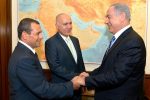
Nadav Argaman, left, is congratulated by Prime Minister Binyamin Netanyahu at the Prime Minister’s Office on May 8, as he takes over as head of Israel’s Shin Bet security service. In the centre is outgoing head Yoram Cohen, who had led the security service since 2011. Argaman became deputy head of the service in 2011. Prior to that, he was the chief of operations from 2003 to 2007 and, from 2007 to 2011, he was Shin Bet’s representative in the United States. (photo from Ashernet)

Format ImagePosted on May 13, 2016May 11, 2016Author Edgar AsherCategories IsraelTags Argaman, Netanyahu, Shin Bet
Maccabi sports camp

Maccabi sports camp

The Maccabi Sports Experience at Ontario’s Camp Northland offers a traditional overnight camp with outdoor activities, blended with multi-sports instruction. (photo from Maccabi Canada)

Maccabi Canada and Camp Northland have partnered to create a unique program for children wanting to stay involved with sports over the summer. A first of its kind, the Maccabi Sports Experience at Ontario’s Camp Northland offers a traditional overnight camp with outdoor activities, blended with multi-sports instruction over a period of three weeks. The program will debut this summer July 27-Aug. 16, during the camp’s second session.

“A lot of kids found that, at camp, they don’t get to the opportunity to really focus in on the sports that they love to play as much as they’d like,” said Simon Wolle, director of Camp Northland. “But they don’t want to give up camp either, despite that strong interest, so they end up coming to camp but kind of missing sport.… Why not try to find a way to marry the two?”

The new offering features two weeks of rotating skill development clinics in four different sports – basketball, beach volleyball, soccer and tennis – followed by a specialty week, where participants can choose one sport to focus on. Parts of each day will be dedicated to the Maccabi sports program, while also giving the group the opportunity to integrate with other campers. The program will be run by a combination of Maccabi coaches and Camp Northland staff.

Tommy Bacher, president of Maccabi Canada, called the new endeavor a natural progression of the organization’s ongoing community sports initiatives. Bacher believes launching a summer camp experience under the Maccabi banner is the perfect way to build on the weekly sports programming offered in basketball and volleyball over the past year. The eight-week programs feature grassroots learning in 90-minute sessions, where the focus is on honing skills and having fun. The camp is the next step in those growing efforts.

“It allows us to touch a lot more kids. For every kid that goes to camp, 500 [others] hear about it,” said Bacher. “For us, it’s an opportunity to bring more kids into a quality program that revolves around sport and them being Jewish. The more things we can do with that, the better. My whole goal is connecting the next generation to their past, to their heritage and to the state of Israel. And we’re using sport as a way of doing that.”

Bacher said the camp will also provide a parallel overnight setting to the Maccabiah Games in Israel, allowing participants to form bonds with each other through a shared three-week experience. Wolle is excited to provide that outlet.

“We want to create a home for every Jewish kid to find their place and make connections and stay connected to the Jewish community,” said Wolle, echoing Bacher’s sentiments. “There are kids using the medium of sport to feel more connected to the Jewish community and we wanted to create that pipeline … between sport and camp, and say you don’t have to give it up. You can have your cake and eat it, too.”

For more information, visit maccabicanada.com.

Format ImagePosted on May 13, 2016May 11, 2016Author Maccabi CanadaCategories NationalTags camp, Maccabi, Northland, sports
המציאות הקשה של פורט מקמורי

המציאות הקשה של פורט מקמורי

עלות נזקי השריפה הענקית בפורט מקמורי מוערכת כבר בתשעה מיליארד דולר. (צילום: YouTube)

העלות הגבוהה של נזקי השריפה הענקית שהפכה את פורט מקמורי לעיר רפאים, מוערכת כבר בתשעה מיליארד דולר. אין ספק שמדובר באסון הגדול ביותר בתולדות קנדה. נזקים גדולים נגרמו לרכוש, בתים, דירות, עסקים, חנויות, מוסדות, רכבים, ציוד, קווי חשמל, קווי מים, קווי ביוב ותשתיות אחרות. הליך השיקום הארוך ימשך חודשים ארוכים ואולי אף שנים.

השריפה שהחלה ביום שבת שעבר (ה-30 באפריל) והפכה תוך יומיים-שלושה לשריפה מפלצתית, גרמה לכך שממשלת מחוז אלברטה הכריזה על מצב חירום כולל וכ-90 אלף תושבים מאזור פורט מקמורי והסביבה, נאלצו לעזוב את בתיהם ולעבור למקומות בטוחים יותר. הליך פינוי התושבים נמשר מספר ימים והוא הגיע לסיומו בסוף השבוע האחרון. טורים טורים ארוכים של אלפי תושבים שממתינים בסבלנות במכוניותיהם לצאת את האזור הפגוע, הפכו לתמונת היום באמצעי החדשות, שברקע נראית השריפה הענקית שכאילו לקוחה מסרט אימה נוראי. ומצד שני התמונות הקשות של אזורים נרחבים שנחרבו לחלוטין לאחר שהשריפה עברה בהם והפכה כל דבר לאפר, מזכירים אזורי מלחמה קשים. מתברר שהמציאות הקשה של פורט מקמורי קשורה בה עולה על כל דימיון פרוע.

בשלב זה אין הערכה מתי יצליחו מאות הכבאים שהגיעו מכל רכבי קנדה, עשרות כלי הטיס (מטוסים והליקופטרים), בליווי ציוד כבד, להשתלט על השריפה שרק הולכת וגדלה. שטח השריפה נאמד כבר ביותר ממיליון וחצי דונם והיד הקשה שלה עוד נטויה. מזג האוויר החם מאוד והרוחות החזקות מנפיקים אנרגיה נוספת לשריפה, שעברה כבר את פורט מקמורי והיא נעה עתה לכיוון צפון מזרח – אל עבר מחוז ססקצ’ואן. תחזית מזג האוויר מצביעה על התקררות מה בחום אך זה לא יספיק להשתלט על השריפה. גם הגשם שצפוי לרדת באזור לא בטוח שיעזור בהרבה, כיוון שלא נראה שהוא יהיה חזק במיוחד. הליך השתלטות והכנעת השריפה הקשה הזו ימשך בוודאי עוד מספר ימים. בינתיים איכות האוויר באזור הפגוע גרועה מאוד ואפילו באזור נברסקה שבצד האמריקני של הגבול, מדווחים כבר על איכות אוויר גרועה.

פורט מקמורי היא העיר המרכזית הסמוכה לחולות הזפט בהם נמצא מאגר הנפט הגדול ביותר בקנדה, שנחשב לשני בגודלו בעולם אחרי ערב הסעודית. מרבית חברות האנרגיה באזור נאלצו להפסיק את פעילותן ולהשבית את קווי הנפט לאור החשש שהאש תגיע גם אליהם. הירידה בתפוקת הנפט מעלה את מחירו בשוק העולמי, אם כי לא נראה שזה יואיל לענף האנרגיה של אלברטה שסובל קשות בשנתיים האחרונות, מירידה דרסטית של מחירי הנפט בשוק העולמי.

גופים רבים נתרמים לעזור לעשרות אלפים התושבים שהפכו כל כך מהר להומלסים. לרבים מהם לא היה לאן לחזור והם יאלצו להתסגל למציאות קשה זו. הצלב האדום של קנדה מרכז את מרבית מאמצי העזרה לתושבים. הארגון הצליח בתוך ימים ספורים לרכז תרומות בהיקף של יותר מארבעים ושישה מיליון דולר. הממשלה הפדרלית הבטיחה לתרום למען התושבים סכום זהה לסכום שיגוייס על ידי הצלב האדום. ממשלת אלברטה מפעילה קרן חרום מיוחדת לנזקקים שהיקפה יותר מ-200 מיליון דולר.

הקהילות היהודיות ברחבי קנדה נתרמות אף הן לאזור לנפגעי פורט מקמורי והסביבה, והן מפעילות קרנות מיוחדות לגיוס כספים עבורם. מנכ”ל הפדרציה היהודית של אזור מטרו ונקובר, עזרא שנקן: “ביחד עם כל הפדרציות היהודיות בקנדה אנו מגייסים כספים לעזור לנפגעי אלברטה. מאה אחוז מהתרומות יוקצה לטובת הנפגעים באמצעות הפדרציה היהודית של אזור אדמונטון”.

Format ImagePosted on May 8, 2016Author Roni RachmaniCategories עניין בחדשותTags Ezra Shanken, Federation, fire, Fort McMurray, עזרא שנקן, פדרציה, פורט מקמורי, שריפה
Helping those at risk

Helping those at risk

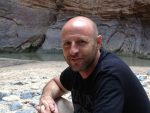
Shai Lazer, chief executive officer of Youth Futures, an organization that aids Israel’s at-risk youth. (photo from Shai Lazer)

Earlier this year, Shai Lazer, chief executive officer of Youth Futures – a program supported by the Jewish Federation of Greater Vancouver’s annual campaign, among others – visited Vancouver.

A leader in the Israeli youth-outreach movement, Lazer describes himself modestly.

“I am 36 years old, married with three kids, living in Modiin,” he told the Independent. “My hobbies are reading, traveling around the country and sports. My military service was very meaningful, as was studying in university at the Mandel Institute.”

Lazer’s modesty is deceiving, as he presides over a national organization with outposts in 36 Israeli communities.

Youth Futures endeavors to help vulnerable children, their families and their communities cope with the painful and/or challenging aspects of their daily lives. Started in 2006, Youth Futures works with all demographics of Israeli society, including every manner of Jew, Arab, Bedouin and Druze. Working with more than 12,000 people throughout Israel, Youth Futures designates around 300 professional “mentors” to facilitate the majority of the organization’s outreach. Ultimately, Youth Futures’ mission is “to give every at-risk child in Israel’s geographic and social peripheries the confidence, opportunities and skills to realize their inherent potential.”

photo - Shai Lazer, right, with Jewish Federation of Greater Vancouver chief executive officer Ezra Shanken
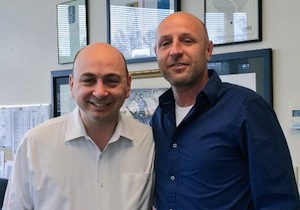
Shai Lazer, right, with Jewish Federation of Greater Vancouver chief executive officer Ezra Shanken. (photo from JFGV)

But, as Lazer explained, the organization is continually expanding. On his mid-March visit to Vancouver, he spoke with his Canadian counterparts about the direction in which Youth Futures and similar organizations are heading.

“I was received incredibly well,” said Lazer. “I felt there was a real and honest dialogue about what’s currently happening in the field, future endeavors, and meaningful conversation in private and in groups. All in all, the main feeling was that of partnerships.”

Lazer is no stranger to partnerships. Under his direction, Youth Futures’ Kiryat Shmona branch currently benefits from Vancouver (22%), the Jewish Agency (35%), the Ministry of Education (38%) and the local municipality (5%) in partnerships and investment. The organization has grown dramatically since Lazer became director of the program in 2008, and even more since he became CEO. One of his achievements has been securing more government financial backing.

Lazer became a part of Youth Futures when he was in university.

“The program was just started while I was in the second year of my studies in Mandel Institute,” he said. “I was approached to join the staff. I remember thinking that it was an interesting educational concept, and was drawn to the newness – the opportunity to create something new and redefining our approach to helping at-risk children.”

Youth Futures uniquely uses the model of having a mentor reach out to the youth and families in their national outposts. Lazer believes that the idea of the mentor is the key to the success of the organization.

“I define a professional mentor by their ability to learn,” he said. “To be able to stop, have some personal reflection and increase their learning curve – that and passion. Youth Futures chooses this model because it’s the only thing that works.”

Youth Futures has the statistics to show its effectiveness. For example, 78% of the youth showed increased self-confidence and ability to cope and 74% showed improved social skills; its alumni have a negligible school drop-out rate and 84% of them have shown the higher motivation required to qualify for more elite army units or to perform civil service. Lazer maintains that such positive numbers are directly because of Youth Futures’ role in these children’s lives.

“I think it’s because someone believed in them,” he said. “When someone believes in you, your confidence grows and you want to become part of the community. It gives you a sense of responsibility over the world you live in.”

Lazer is adamant that his organization’s model could be used in other countries to help at-risk children and the families and societies that surround them. And Youth Futures is actively looking to expand into North America.

Building on his organization’s momentum, and the foundation of 10 years of solid community outreach, Lazer believes the next decade for Youth Futures will be busy and successful.

“Ten years from now, Youth Futures is still here, constantly expanding to more communities and to new populations – early childhood and high school,” he predicted. “We’re currently in the midst of planning the celebrations of 10 years of Youth Futures and launching the next decade. We’re working on a ‘journey book,’ which will include interviews and showcase all different localities, a film, a big national event to celebrate with our participants and their families, a professional seminar, a reception to be held at the General Assembly of the Jewish Federations of North America in November, and many more. We’re also launching two new initiatives, expanding into intervention with early childhood parents, as well as starting an organization to help our alumni. It’s an exciting time and we’re looking forward to many new things coming our way.”

Jonathan Dick is a freelance writer living in Toronto. His writing has appeared in the Canadian Jewish News, and various other publications in Canada and the United States.

Format ImagePosted on May 6, 2016May 5, 2016Author Jonathan DickCategories IsraelTags at-risk youth, Israel, Lazer, mentorship, tikkun olam, Youth Futures
EcoPeace crosses borders

EcoPeace crosses borders

EcoPeace Middle East is an Israeli-Jordanian-Palestinian organization dedicated to environmental peace building, primarily through water diplomacy. (photo from EcoPeace Middle East)

EcoPeace was created by Gidon Bromberg some 22 years ago after he made the connection between ecology and the lack of cooperation between the region’s various authorities regarding water issues.

At the time, he was studying for a master’s in environmental law in Washington, D.C. When he returned to Israel, he organized the very first gathering of Israeli, Palestinian, Jordanian and Egyptian environmentalists. On the second day of the meeting, in December 1994, an agreement was struck to create EcoPeace Middle East.

Bromberg has been working together with Jordanian Munqeth Mehyar since then and Palestinian Nader Khateeb since 2001 to create an Israeli-Jordanian-Palestinian organization dedicated to environmental peace building, primarily through water diplomacy, and to the advancement – through both top-down advocacy and community-led grassroots work – of cross-border cooperation concerning shared water resources, pollution issues and sustainable development issues. Half of their programming is bottom-up community work through the Good Water Neighbors (GWN) project, now into its 15th year of operation.

“The second half of our work is advocacy aimed at influencing the Israeli, Palestinian and Jordanian governments, as well as at garnering support from the international community in advancing dialogue and cooperation between them,” Bromberg told the Independent.

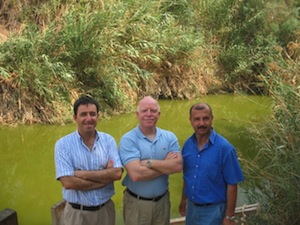
photo - The three co-directors of EcoPeace Middle East at the Jordan River. From left to right: Gidon Bromberg (Israel), Munqeth Mehyar (Jordan) and Nader Khateeb (Palestine)
The three co-directors of EcoPeace Middle East at the Jordan River. From left to right: Gidon Bromberg (Israel), Munqeth Mehyar (Jordan) and Nader Khateeb (Palestine). (photo from EcoPeace via commons.wikimedia.org)

The underlying assumption behind their efforts on all fronts is that regional cooperation is in each party’s best self-interest. “As altruism is not a common feature of foreign policy, particularly not in the midst of conflict, speaking to the self-interest of each side enables us to create political will for cooperation that ultimately serves the region as a whole,” said Bromberg.

Over the years, EcoPeace’s major areas of work have been focused on the rehabilitation of the Jordan River; a regional plan for sustainable development in the Jordan Valley; water and the peace process; Gaza’s water, sanitation and energy crisis; the water-energy nexus in the region; and the Red Sea-Dead Sea conduit.

Since its establishment, EcoPeace Middle East has seen many periods of extreme hostility and bloodshed in the region but, in the midst of that, has been able to make headway.

“Joint work of Israelis, Palestinians and Jordanians through EcoPeace’s programs has brought the leveraging of more than half a billion U.S. dollars in recent years for water supply and sanitation solutions in the GWN communities, all with a strong cross-border effect, i.e. removal of sewage from shared resources,” said Bromberg. “EcoPeace has also been able to convene Israeli, Palestinian and Jordanian government representatives together and generate dialogue between them around issues such as the Jordan River, at a time when no such meetings were taking place.”

At the community level, EcoPeace holds many cross-border youth gatherings every year, wherein kids not only learn about the interdependency of their and their neighbors’ water reality, but also about each other, in an effort to break down negative stereotypes.

One of the biggest achievements of EcoPeace in terms of bringing together people from the three countries has been the facilitation of relations between Jordan Valley mayors, who have rallied together to demand joint governmental cooperation toward rehabilitating the river.

“As far as positive ripple effects, very much due to our work, there is a growing realization amongst the various stakeholders, including decision makers, that regional sustainable development is crucial for geopolitical stability and for security in the region, for economic growth, public health and other aspects of life in the region,” said Bromberg.

EcoPeace’s notion of water as a political game changer in the region, for example, is slowly but surely becoming a part of the political discourse.

“The Jordan River is a good example of persistence that has recently started to pay off,” said Bromberg. “Ten years ago, when we were trying to convince the Israeli Water Authority (IWA) to release fresh water from the Sea of Galilee to the Jordan River, something which had then not happened for almost 60 years, one of the seniors raised his palm and said, ‘Gidon, when hair grows on this palm, that’s when fresh water will flow again from the Sea of Galilee to the Jordan River.’”

Nonetheless, by mid-2013, following years of advocacy by EcoPeace and others, the IWA released nine million cubic metres (mcm) of water into the river, committing to raise this volume to 30 mcm in the near future. This is only a drop in the bucket, however. Based on research commissioned for the project, the estimate is that 400 mcm overall is required to rehabilitate the river – and not all from the Sea of Galilee, which is in Israeli territory, but also from Jordan and Syria.

This is a very important first step, said Bromberg, who is certain of EcoPeace’s ability, with the help of many partners, to convince the relevant decision makers to allow for more significant volumes of water to flow into the river.

“Times now are particularly difficult in our region,” he said. “Hostility between Israelis and Palestinians has reached a whole new level, a frightening environment that, for the most part, does not react well to cooperation.”

Bromberg believes that, through providing youth in each of their communities with opportunities and cooperation with their neighbors, even this complex environment can be overcome.

For more information, visit foeme.org or facebook.com/ecopeacemiddleeast.

Rebeca Kuropatwa is a Winnipeg freelance writer.

Format ImagePosted on May 6, 2016May 5, 2016Author Rebeca KuropatwaCategories WorldTags Dead Sea, EcoPeace, Israeli-Palestinian conflict, Jordan River, Middle East, peace, Red Sea, water
A future he never imagined

A future he never imagined

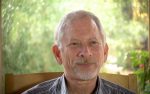
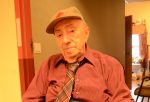
Sam Rozencwajg (photo by Drew Tapley)

Last year marked the 70th anniversary of the end of the Second World War. In a decade from now, there will be virtually no one alive with a living memory of this time in history.

Sam Rozencwajg not only lived through this time, but through the worst of it – being captured and imprisoned in various Nazi concentration camps of central Europe, including Auschwitz.

Rozencwajg, who lives in a long-term care community in Toronto, immigrated to Canada in 1952 and is very clear about what “The True North strong and free!” means to him.

“Canada is the best country in the world, where a Jew can live free and be respected,” he said, wearing a baseball hat with a red maple leaf on it.

The youngest of six siblings, Sam was born in Lodz, Poland, in 1926. He was 14 years old when German soldiers invaded his city in 1940, and his memory of the day he was taken from his home is vivid.

“When the Germans came, they put all the Jewish people in a ghetto. They didn’t tell us anything. We didn’t know where we were going. They just counted and counted us. I remember how my heart was pounding from being scared. Every Jew was scared.

“They called out to everyone to open their doors because they didn’t want to smash them in.”

One day, everyone in the ghetto was told to gather in a central location.

“They made us a lot of soup, with potatoes in it. Back then, potatoes were like diamonds because they were very hard to get. We were allowed to eat as much as we wanted because the Germans needed us to be quiet and satisfied so they wouldn’t have to fight us.

“When we were fed, they put us on trucks, which went straight to the train station. On each door of the train was a German soldier. We didn’t know where we were going.”

Sam was on the train by himself. The rest of his family was either in different carriages or different trains; and his parents were the first to be taken away.

“They took my mother and father in a truck, and I never saw them again. After the war, I looked for them, but I knew they didn’t survive.”

Sam’s twin sisters were separated. “Which probably saved their lives,” he said, “as they would likely have had medical experiments done on them.”

Both sisters survived the camps, and Sam was able to briefly see one of his three brothers again. But the reunion was bittersweet.

“I saw my oldest brother in Auschwitz, and he had a rash all over his face. I asked him what had happened, and he didn’t know what to tell me. I know he went to the gas chamber after that.”

Sam was transferred to different camps during the war. He doesn’t remember the names, but remembers them by their numbers – especially Dachau, which was divided into a series of smaller work camps with the explicit purpose of forced labor, brutality and systematic medical experiments. More than 30,000 people died there, and thousands were sick or dying when the camp was liberated in 1945.

“They didn’t know what to do with us. We were marched every day to do labor, two hours each way. The German soldiers were dressed in warm, thick coats and hats. The Jews were dressed in thin cotton pants and shirts with wooden clogs not meant for marching in.

“They made us do work just to punish us: digging holes, throwing in bodies. My father and mother could have been among the bodies. It was miserable to do those things.

“If one of the prisoners fainted, we had to carry them. They would count us out and back again to make sure no one escaped. If you managed to get away, the guards would contact the police and they would find you. It was obvious from our clothes that we came from a camp.”

During the winter, as he walked through snow and ice, the back of his clogs broke off and he came close to losing a foot to frostbite when his heel froze.

“There was a German civilian at the side of the road. I asked him, ‘Can I rest here? Look at my feet, I cannot walk.’ I spoke a little German, and showed him my foot, which was blue. He couldn’t believe it. A guard told me to move on, but the man insisted I be allowed to rest. He was a nice man. I’m not saying all the Germans were bad. Not all of them were Nazis.”

Sam said, “The buildings in the camp were built so that the Allies couldn’t see them from above. The one I was in was like a bunker with a green roof. There were maybe 20 or 25 people in one room, and I slept on wood and straw, with lice biting my body throughout the night.

“You could never speak to the guards…. Because I could understand German, I heard the words they sang about us as they marched. They hated Jewish people. They called us ‘Dirty Jew,’ but didn’t give us the facilities to wash. I remember one day I passed by a shower building and someone told me, ‘Do not be lured in there. They will tell you that you can have a shower, but instead of water they put gas.’”

Sam said that, while millions of Jews and other prisoners died in Nazi gas chambers, most of the prisoners in the camps he was held at died of either starvation or forced labor.

“We were so hungry and thought of food constantly,” he said. “I remember a little boy crying to the Germans, asking them to kill him. He couldn’t suffer anymore, and wanted them to take his life. But I was determined to stay alive and, to this day, I honestly don’t know how I did. You lived minute to minute.”

Sam was so delirious and emaciated by the time his camp was liberated that he retells it like something out of a dream.

“I woke up one day in a real bed with a white bed sheet and pillowcase. I couldn’t believe it.

Three blurred figures stood over me examining my body. Bright lights came from their bodies. I thought I had died and was in heaven.”

It was 1945, and these blurred figures were American soldiers with light reflecting off the buttons on their uniforms.

“I didn’t know that they were American at the time,” said Sam. “I had no knowledge of anything. They asked me, ‘Who did this to you?’ I was just skin and bone. Not a piece of flesh was on my body. I cannot imagine how I survived, and praise God day and night that I could live and build my own family.”

Sam was taken to a liberation camp, but was so sick that he couldn’t walk or digest food.

“I was given real food, but the next day, I had chronic diarrhea. My stomach couldn’t take good food. It happened to all of us like this.”

He soon discovered that his freedom meant there was no going back to the city and the home he once knew.

“We had no homes to go back to because Polish gentiles now occupied them. A nephew of mine went back to Poland, and I asked him to go to the house I used to live in. They had changed the locks and wouldn’t open the door to him. At the time, there was a program where you could go to a lawyer and make a claim to get your home back.”

After Sam gained more strength and weight, he was given passage to Karlstad, Sweden, with the Red Cross, where he lived with a family and was given a job pressing wedding gowns in a factory. He had mastered several languages at this point, which came in useful.

“They treated me like a son,” he said, referring to his adopted family in Sweden. “My wife worked across from me in that factory. I couldn’t stop looking at her, and thought to myself that I must take her out. We went dancing, and soon fell in love.”

Sam’s wife was from Hungary and came from a family of rabbis. They got married in Stockholm, and lived in Sweden for seven years before coming to Canada.

Like his imprisonment, liberation and evacuation to Sweden, the decision to immigrate to Canada was also something that came about suddenly when he found one of his sisters again in the street.

“We found each other, just like that; each thinking the other was dead. She was getting married and moving to Israel (then Palestine) with her new husband. At that time, Israel was calling out to the Jewish people to go and build it as a Jewish land.”

It was then that he discovered his other sister had settled in Canada, where there was a Jewish committee set up to welcome displaced Jews to work as tailors and seamstresses. He got in touch with her, and she arranged for him to come over by boat with his wife and son.

“I was glad to get out of Europe,” he said.

Sam worked in a clothing factory in downtown Toronto until he retired. He had two more sons, and has seven grandchildren.

“Lots of people came out of those camps in really poor health, and I developed a congestive heart condition that I’ve had to live with for the rest of my life,” he said. “The American authorities forced Germany to pay Jewish people restitution, and I still receive a monthly payment that goes a long way to paying for my expenses.”

Despite the hardships he endured, Sam maintains a positive outlook.

“You have to get used to this world to enjoy life,” he said. “I survived because my will was to survive. I didn’t think I would get married and have children, grandchildren and great-grandchildren, and I praise God for this. I have learned that every minute can change your life…. It is very important to me to explain my story. I’m not ashamed of it. Let Hitler be ashamed of it.”

Drew Tapley is a Toronto-based journalist.

Format ImagePosted on May 6, 2016May 5, 2016Author Drew TapleyCategories LocalTags Holocaust, Rozencwajg, survivor

Posts pagination

Previous page Page 1 … Page 254 Page 255 Page 256 … Page 322 Next page
Proudly powered by WordPress