Skip to content
  • Home
  • Subscribe / donate
  • Events calendar
  • News
    • Local
    • National
    • Israel
    • World
    • עניין בחדשות
      A roundup of news in Canada and further afield, in Hebrew.
  • Opinion
    • From the JI
    • Op-Ed
  • Arts & Culture
    • Performing Arts
    • Music
    • Books
    • Visual Arts
    • TV & Film
  • Life
    • Celebrating the Holidays
    • Travel
    • The Daily Snooze
      Cartoons by Jacob Samuel
    • Mystery Photo
      Help the JI and JMABC fill in the gaps in our archives.
  • Community Links
    • Organizations, Etc.
    • Other News Sources & Blogs
    • Business Directory
  • FAQ
  • JI Chai Celebration
  • JI@88! video

Recent Posts

  • New rabbi settles into post
  • A light for the nations
  • Killed for being Jewish 
  • The complexities of identity
  • Jews in time of trauma
  • What should governments do?
  • Annie will warm your heart
  • Best of the film fest online
  • Guitar Night at Massey
  • Partners in the telling of stories
  • Four Peretz pillars honoured
  • History as a foundation
  • Music can comfort us
  • New chapter for JFS
  • The value(s) of Jewish camp
  • Chance led to great decision
  • From the JI archives … camp
  • עשרים ואחת שנים להגעתי לונקובר
  • Eby touts government record
  • Keep lighting candles
  • Facing a complex situation
  • Unique interview show a hit
  • See Annie at Gateway
  • Explorations of light
  • Help with the legal aspects
  • Stories create impact
  • Different faiths gather
  • Advocating for girls’ rights
  • An oral song tradition
  • Genealogy tools and tips
  • Jew-hatred is centuries old
  • Aiding medical research
  • Connecting Jews to Judaism
  • Beacon of light in heart of city
  • Drag & Dreidel: A Queer Jewish Hanukkah Celebration
  • An emotional reunion

Archives

Follow @JewishIndie
image - The CJN - Visit Us Banner - 300x600 - 101625

Category: Arts & Culture

David Mamet’s Oleanna still prompts debate

David Mamet’s Oleanna still prompts debate

Susan Coodin as Carol and Anthony F. Ingram as John in Bleeding Heart’s Oleanna. (photo by Adam Blasberg)

David Mamet’s controversial play Oleanna set up home in Vancouver this spring. By coincidence, two small theatre companies programmed the two-actor drama for around the same time and the result is several weeks of heated conflict, on stage and off. For more than 20 years, audiences have argued about the play, about what really happened to Carol in John’s office. Possible answers continue to turn up as the play is produced over and over again around the world.

The Mamet on Main production ran from April 19-27 at Little Mountain Gallery. The second production, by Bleeding Heart Theatre, runs from May 6-18 at Havana Theatre on Commercial Drive.

Recently, Mamet is better known for his books of essays, polemics against antisemitism (The Wicked Son: Anti-Semitism, Self-hatred and the Jews, 2006) and against the American left (The Secret Knowledge: On the Dismantling of American Culture, 2011), but he remains one of America’s greatest 20th-century playwrights. Oleanna is among his most successful and frequently produced works, along with Glengarry Glen Ross (Pulitzer Prize 1984), American Buffalo and Speed-the-Plow. Oleanna remains current because actors and directors love to engage with the challenging piece and audiences can still be electrified by the emotional battle for power.

In the play, a young college student named Carol visits her professor, John, in his office looking for help. She’s failing his course and doesn’t know what to do. John offers to tutor her and puts a reassuring hand on her shoulder. In the next scene, we are back in John’s office but Carol is no longer looking for his help. She has filed a written complaint accusing John of sexually harassing her. He beseeches her to see reason and to withdraw the complaint. John’s job and entire future are at stake.

Was she harassed? We, the audience, were there when it happened, but nothing is clear.

According to theatre legend, back in the early 1990s when this play premièred, arguments broke out in theatre lobbies over what John had done and what he meant by it. Many saw the play as misogynistic, and an attack on feminism. The taint of that accusation remains, which may be one reason actors and directors today are eager to reconsider the play and see what is really there.

“Mamet obviously believes this is a balanced argument, a dialectic about the nature of power in our educational institutions,” said Evan Frayne, director of the Bleeding Heart production. Frayne’s other directing credits include The Verona Project and The Foreigner for Pacific Theatre. He said one big challenge with Oleanna is choreographing the moments of physical contact between the two characters.

… the only stage direction for one such moment is: “He puts his hand on her shoulder.”

“The nature of how he touches her,” said Frayne, “becomes the crux of the play.” He notes that the only stage direction for one such moment is: “He puts his hand on her shoulder.” So, the director must decide how chaste or sexual or ambiguous the touch is to be. “It’s how far and how long,” he says of the simple touch. “Can that be something more than just a hand on the shoulder, or someone comforting someone else?”

He said he regards the historic controversy around the play as specific to those earlier productions. “My interpretation of what the controversy is about is a lot of people think that the character of John is more fully realized than the character of Carol. People say she’s simply trying to take down this good professor, which I think is not true.”

To Frayne, language itself is the source of the trouble. “I see this as a language play about education,” he said. Both characters are “stuck” with English, which is full of traps, he suggested. Male dominance is built into the language, he said, especially in a university setting.

The Mamet on Main production, which has closed, made the characters equal combatants. Director Quelemia Stacey Sparrow gave us a powerfully intelligent Carol and an insecure, clueless John. Pandora Morgan played a young woman temporarily overwhelmed by the demands of first-year university. Her confidence shaken, she looks for advice and reassurance from her professor. David Bloom’s John was a nervous man more at home pontificating than speaking plainly. He wants to help his student, but is too self-absorbed to treat her with respect. Instead, he regards her as something damaged that he can fix. This insults her and gives him licence to treat her like his own child and so to inappropriately touch and console her.

Bloom, who played the professor, is a seasoned local actor who teaches on faculty at Capilano University and Langara College. He said by telephone he was initially reluctant to take the role because the production he had seen 20 years ago made the play seem pretty one-sided and he had no interest. Upon reading the script, however, “I found Carol’s arguments more compelling than I remember from when I saw the show,” he said.

He said both characters behave badly. “Both are deeply flawed human beings who do some pretty horrible things,” he said.

Mamet on Main would like to remount its production at some point, said Bloom. “We don’t feel like we’ve explored the whole thing and we’re interested in working on it further,” he said.

Susan Coodin, Carol in the current Bleeding Heart production, had never seen or read the play before embarking on the current production. The University of British Columbia graduate who has many theatre credits, including Bard on the Beach performances, said by phone she was drawn to the script by the character of Carol. She identified, she said, with Carol’s life as a young person in a university setting. She was aware that in past productions Carol has been portrayed as heartless and vindictive, but Coodin said she took a fresh look at the role.

“I knew that there was more to her than what was on the surface,” she said, “and I was really interested in finding her truth and what she believes to be true.”

Coodin sympathized with the character who needs John’s help and validation so much, but who never properly receives it. “It’s hard to come to terms with what she has to do to find herself. I wanted to find her sensitivity and her compassion and her desire to connect with John, with her professor, and she seems to be consistently denied that.”

In the end, she said, Carol finds security and a new maturity through the work she does with her “group,” an amorphous organization never fully defined for the audience. Carol is “a sensitive person, but she also comes to realize that there is a cause bigger than herself and her relationships, that gives her confidence and she comes to find herself through her cause,” said Coodin.

The artists involved with both productions agreed that Oleanna is a sophisticated, well-written drama that can support a variety of readings. This is the sign of great dramatic literature and Vancouver has been fortunate to see two different interpretations of this classic script by one of America’s greatest playwrights.

For tickets to the Bleeding Heart production, visit bleedinghearttheatre.com.

Michael Groberman is a Vancouver freelance writer.

Posted on May 9, 2014October 15, 2015Author Michael GrobermanCategories Performing ArtsTags Anthony F. Ingram, Bleeding Heart, David Bloom, David Mamet, Evan Frayne, Mamet on Main, Oleanna, Pandora Morgan, Quelemia Stacey Sparrow, Susan Coodin
Ben Ratner takes risks on and off stage

Ben Ratner takes risks on and off stage

Ben Ratner (photo from Kindred Entertainment)

Ben Ratner is a man of many talents with an impressive resumé – boxer, musician, artist, stand-up comedian, actor, writer, producer and director – a Jewish Renaissance man, but more importantly, he’s down-to-earth mensch. On a rainy Saturday afternoon, Ratner sat down with the Independent in his shabby chic east side Haven Studio to talk about his current film and theatre projects.

Hot off his success with his award-winning film Down River, which he wrote, produced and directed, he is presently at the helm of the Canadian première of Tommy Smith’s White Hot, which opened May 8 and runs until May 17 at the Shop Theatre at 125 East 2nd Ave.

Down River is a tribute to his late friend and mentor Babz Chula, a local actor who succumbed to cancer in 2010 at the age of 64. “Babz was ageless, she could bridge the gap between a kid in a sandbox and a wise old lady wrapped up in her shawl. She was this petite little thing, but so full of life and energy. In 2003, she played my mother in the first feature film I wrote and directed, Moving Malcolm. We were very close,” said Ratner.

The film is a poignant mix of humor and drama and locally shot. It tells the story of four women, who all live in the same West End apartment building, three 20-/30-somethings (Gabrielle Miller, Colleen Rennison and Jennifer Spence, Ratner’s real-life wife) and a middle-aged divorcée (Helen Shaver), each struggling with a personal crisis; the younger ones searching for their identities and life purpose and Pearl, the older character, providing guidance in the midst of battling with pancreatic cancer. The film has been described as “eschewing cliché in a thoughtful, well-acted look at several generations of women at a crossroads in their lives.”

As to the Jewish aspect of the film, Ratner pointed out, “We never actually say that Pearl is Jewish in the film, but the hints are there, the menorah in the window in her apartment and the memorial service, which we shot inside the Or Shalom Synagogue.”

Chula’s presence is felt more than just as inspiration for the subject matter of the film. Pearl wears some of Chula’s clothes in various scenes, items from her apartment are used as props, the three young women each wear one of her signature bracelets, and Spence wears her “Coke-bottle glasses.” The letter read at Pearl’s memorial service is an abridged version of what Ratner shared with attendees at Chula’s celebration of life. Ratner’s own large-scale abstract canvases are used as the art gallery props. The addition of these personal touches makes the film intimate and engaging.

Down River has garnered more accolades than Ratner imagined it would. “We had 99-percent positive reviews and a warm response from audiences, and I saw how my film could affect people. They come out of the theatre smiling but blowing their noses. This story is not about dying, it is about living without fear.” Audiences voted Down River Most Popular Canadian Film at the 2013 Vancouver International Film Festival and critics named it the Best B.C. Film of 2013. It has been nominated for 13 Leos and is presently making the rounds of the North American film festival circuit.

photo - White Hot is on stage at Shop Theatre until May 17.
White Hot is on stage at Shop Theatre until May 17. (photo from Kindred Entertainment)

While Ratner is basking in the glow of the success of his cinematic opus, he is focusing his directing talents on the intimate world of black-box theatre with White Hot. The press release describes it as “a darkly comedic psycho-drama crammed into a love triangle between a troubled woman, her opportunistic husband and her trashed sister.” Ratner explained, “I am doing this play with my colleague, Loretta Walsh, who teaches with me in my acting studio. Her character is a great part for her terrific acting skills and brings the message that one should remain hopeful and strong and dignified no matter how brutal the circumstances. It is a dark play, unapologetically harsh, violent and sexually explicit. It is a risk for us to do the play. Not everyone is going to like it. But that is not going to stop us from going there.”

Ratner quoted playwright John Patrick Shandley (Doubt) in making his point: “Theatre is a safe place to do unsafe things that need to be done.” He continued, “ We could have done a crowd pleaser, but that is not what we are all about; this play will offend. However, I do not do theatre in order to aim for the middle. I need to do something to wake up this town and challenge the actors on a level that is not just about playing a part but finding some real humanity to it. There is no resolution at the end of this play, no answer, just an acceptance by the characters of the way things are.”

Not content with only personal success, Ratner is teaching future generations of actors in his studio. “Being a teacher is the most satisfying thing I have ever done. It enables me to have a purpose beyond my own gain. It allows me to give and not just take.”

And, there are plans for the future. “Long term, I will be teaching for the rest of my life. Short term, I want to make another film and reach bigger audiences. Down River was all about women. I am now working on another film that will be about men working through their mid-life crises.” In response to whether that topic is autobiographical (Ratner is 49), he laughed, “There’s always a bit of you in everything you write.”

For information and tickets to White Hot, visit kindredentertainment.com.

Tova Kornfeld is a Vancouver freelance writer and lawyer.

Format ImagePosted on May 9, 2014May 8, 2014Author Tova KornfeldCategories Performing ArtsTags Babz Chula, Ben Ratner, Down River, Haven Studio, Kindred Entertainment, Shop Studio, Tommy Smith, White Hot
Film spotlights dance as a way to forge peace partners

Film spotlights dance as a way to forge peace partners

Dancing in Jaffa follows dance instructor Pierre Dulaine as he teaches 11-year-old Israelis and Palestinians. (photo from Tiara Blu Films)

Going back at least as far as 2001’s Promises, most recent documentaries that have opted for an optimistic slant on the Israeli-Palestinian situation have centred on children. The next generation, to be sure, is the universal embodiment of hope. But betting on today’s children to solve a problem down the road is tacit acknowledgement that today’s adults aren’t up to the task – or so those who see the Mideast glass as half-empty might say.

Both perspectives are skillfully interwoven in Dancing in Jaffa, a nuanced, feel-good study of cross-cultural fence-hopping in which the best traits in human nature vie with street-level realities.

The movie’s motor is world-champion ballroom dancer and teacher Pierre Dulaine, who returns to his hometown after many years with the self-proclaimed goal of giving something back. Perennially dressed in a starched shirt and tie, and fluent in Arabic, English and French, the grey-haired Dulaine is a cosmopolitan alien in a working-class town.

The indefatigable Dulaine is a lifelong proponent of partnered dancing as a way to develop social skills and self-confidence but, in Jaffa, he’s determined to apply his pedagogy to an even greater good. His plan is to teach merengue, rhumba and tango to 11-year-olds at various schools, culminating with young Jewish and Palestinian Israelis dancing together in a public ballroom dance competition.

“This is how you learn to work with another person,” Dulaine offhandedly remarks to one child while correcting his form. It’s a lovely sentiment, one that will gradually sink in after the student has become comfortable with the steps and can actually look at and interact with his or her partner.

There’s an unpredictability and bumpiness to Dulaine’s mission, at least initially, that negates the comforting formula that some viewers will expect. Most of the kids are shy, embarrassed and downright resistant to engaging with the opposite sex, even without the Islamic prohibition on touching someone of the opposite sex. (None of the Jewish kids are Orthodox.)

While boys will be boys and girls will be girls, Dulaine perseveres with firmness, as well as affection. Progress in the classroom can be hard to discern, however, so the film provides glimpses of the home lives of three children to suggest their individual blossoming.

Hilla Medalia, the prolific Israeli-born producer and/or director of such documentaries as To Die in Jerusalem and Numbered, again displays her talent for gaining access, winning trust and crafting small, revealing moments. The most memorable are political rather than interpersonal, and occur on the street rather than in someone’s home. The arrival in town of an intentionally intimidating group of right-wing Israelis chanting some variation of “Jaffa for the Jews” provides buzz-killing evidence that conciliation is not everyone’s goal.

An illuminating sequence contrasting the observance of Independence Day at a Jewish school with its description as the Nakba (Catastrophe) at a Palestinian Israeli school likewise underscores Medalia’s preference for presenting reality rather than peddling fantasy.

In this regard, she and Dulaine are perfectly in step. He was four years old when he left Jaffa with his Palestinian mother and Irish father during the War of Independence, and he’s chagrined but not surprised when his request to re-enter his family’s old home is summarily rejected by the Jewish owners.

Consistent with the theme that the future is more important than the past, Dulaine’s presence in the film steadily diminishes. We, and he, are left with the satisfaction that individual children have grown and glimpsed possibilities they couldn’t have imagined. A small victory, perhaps, compared to a lasting resolution to the ongoing conflict? Even a pessimist wouldn’t have the chutzpah to call a child’s transformation a “small victory.”

Dancing in Jaffa, in Hebrew, Arabic and English with English subtitles, played at the Vancouver Jewish Film Festival in November 2013 and has yet to have a Canadian release date scheduled. It’s on a limited release in the United States. The film currently has a rating of 100 percent on Rotten Tomatoes.

Michael Fox is a writer and film critic living in San Francisco.

Format ImagePosted on May 2, 2014May 2, 2014Author Michael FoxCategories TV & FilmTags Dancing in Jaffa, Hilla Medalia, Pierre Dulaine

New biography of Cornelia Hahn Oberlander focuses on her work

In 1963, landscape architect Cornelia Hahn Oberlander was appalled when she saw park workers at Jericho Beach burning logs that had broken away from booms. She called up Bill Livingston, the Vancouver Park Board superintendent, and suggested placing the logs along the sandy beaches for people to sit on. Livingston thought it was a good idea.

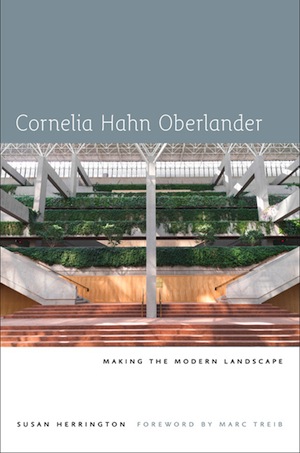
Fifty years later, it’s often hard during the summer months to find a vacant spot along one of the logs lining Vancouver’s beaches. Changing the landscape of the city’s beaches is one of many ways in which Oberlander has contributed to making Vancouver one of the world’s most livable cities. However, despite being Canada’s preeminent landscape architect, Oberlander remains unknown to most of the people who enjoy the benefits of her work, and Susan Herrington, professor of architecture and landscape architecture at the University of British Columbia, sets out to raise Oberlander’s profile with the recently released biography Cornelia Hahn Oberlander, Making the Modern Landscape.

image - Cornelia Hahn Oberlander, Making the Modern Landscape book cover
Cornelia Hahn Oberlander, Making the Modern Landscape comes after several public tributes and publications about Oberlander’s achievements.

The book comes after several public tributes and publications about Oberlander’s achievements, including an extensive oral history available online at the Cultural Landscape Foundation (tclf.org) and a biography for teens called Live Every Leaf: The Life of Landscape Architect Cornelia Hahn Oberlander (2008). Oberlander has also co-authored two books: Trees in the City (1977) and Green Roof: A Design Guide and Review of Relevant Technologies (2002).

Herrington’s fascinating book goes one step further, unraveling the numerous influences throughout Oberlander’s life that shaped her professional development. Herrington places her innovative urban designs, her use of plants and her commitment to sustainability in the context of trends in landscape architecture over the past six decades. The biography is, as Herrington asserts, as much a history of modern landscape as a portrait of Oberlander’s life.

An impressive collection of photos and landscape sketches are sprinkled throughout the book to flesh out the scholarly account. The list of stunning accomplishments in a stellar career is balanced with references to some of her grand ideas that did not work out.

But the book will disappoint those looking for a popular biography with a window into her personal life; Herrington has taken an academic approach to Oberlander’s life. We become well acquainted with what the landscape architect accomplished. We are told a few delightful anecdotes about her life. But we do not learn much about her feelings or her personal relationships. If you want to get to know her in a more personal way, check out the oral history at the Cultural Landscape Foundation.

Also, the book does not pay much attention to Oberlander’s commitment to Israel and her work within the Jewish community. One of the founding members of Temple Sholom, she held a place of honor at High Holiday services for many years, reading the story of Jonah with her late husband, architect and urban planner Peter Oberlander. She designed the synagogue’s garden as well as the biblical garden at King David High School with its plants reflecting the various species and geographic regions of the Land of Israel, as described in the Torah.

Oberlander has been involved in more than 500 projects, including the design of more than 70 playgrounds. Her mother Beate Hahn was a professional horticulturalist and author of several books about gardening with children. Oberlander from an early age did drawings for her mother’s books. She has said she decided at the age of 11 that she wanted to design gardens.

Herrington includes a design of a wooded-parkland that Oberlander completed when she was 15 years old. Already at that time, Oberlander was busy in the garden, learning from firsthand experiences about the benefits of organic gardening, companion plants and attracting birds and insects to mitigate pests.

Oberlander was born in 1921 in Mulheim, Germany, a small city along the Rhine River. Herrington’s book ignores the prominence of her grandfather in Germany (a politician and professor and the University of Berlin) and the hurdles the family faced before leaving Germany in the late 1930s. The family emigrated to the United States and Oberlander in 1940 went to Smith College, a women’s college in western Massachusetts, to study architecture and landscape architecture. By coincidence, she stayed in a room across the hall from Betty Friedan, who went on to write The Feminine Mystique. However Oberlander’s contact with strong feminists did not turn her into an outspoken crusader for women’s rights.

Herrington emphasizes the significance of Oberlander as one of the first women in a male-dominated profession, but Oberlander never claimed to be a feminist. She told Herrington she never questioned whether a woman could pursue a professional career outside the home while raising her children, she just did it.

Herrington emphasizes the significance of Oberlander as one of the first women in a male-dominated profession, but Oberlander never claimed to be a feminist. She told Herrington she never questioned whether a woman could pursue a professional career outside the home while raising her children, she just did it.

Oberlander went on to Harvard in 1943. A year later, her mother, without Oberlander’s knowledge, asked the university to allow her to take a year off to work in an architectural office. Her mother thought her drafting skills were inadequate. Together, they decided she would take a year off. (The book does not tell us how that intervention affected her relationship with her mother.) Oberlander found a drafting job but was fired three months later and returned to complete her studies. She moved to Vancouver in 1953 after marrying Peter Oberlander.

Bringing together much that has been written with original research, Herrington shows how the landscape of some of Vancouver’s most familiar places (Robson Square and the Museum of Anthropology), as well as prominent national and international landmarks (the New York Times building, National Gallery in Ottawa and chanceries for embassies in Washington and Berlin) came out of Oberlander’s experiences as a child in the Weimer Republic, her exposure to seminal thinkers in school and her contact with leading figures in the profession.

Oberlander’s commitment to exhaustive research, modern design with abstract shapes and unadorned lines, and community involvement in planning were evident from the start of her career in Philadelphia. In design work for public housing, private residents and playgrounds, she saw the role of landscape architects as working for the community, not the wealthy. She shaped spaces to spark the imagination and creativity of their users. Her innovative work on playgrounds, with informal play areas and separated spaces for different age groups and activities, became a standard for progressive play areas across North America.

Even in the early 1950s, her plans reflected strong ecological values, attributes that would become her trademark in later years. Her designs integrated current strands of trees and plants as much as possible and followed the contours of the land. Years later, she set standards of excellence with her work on green roofs and green buildings.

Oberlander paid close attention to how people reacted to landscape design, what feelings were stirred by design and color, to understand how they used the space. She created areas intended to foster creativity and imagination while relating to the local context.

Herrington tracks Oberlander’s professional development as she shapes design to incorporate ideas from psychology, art and ecology. Oberlander paid close attention to how people reacted to landscape design, what feelings were stirred by design and color, to understand how they used the space. She created areas intended to foster creativity and imagination while relating to the local context.

By the mid-1970s, she had moved from playgrounds to urban landscapes that became havens for adults in densely populated areas. Herrington writes about Oberlander’s 30-year collaboration with Arthur Erickson and influences that had an impact on her high-profile projects.

Throughout it all, Herrington writes that Oberlander never lost her commitment to serve all of society. She continued to work on modest gardens for private homes, public-housing projects, playgrounds and landscapes for people with special needs. And, Oberlander has never forgotten her past. “Why would I disregard the very reasons why I joined this profession in the first place?” she told Herrington.

Media consultant Robert Matas, a former Globe and Mail journalist, still reads books. Cornelia Hahn Oberlander, Making the Modern Landscape is available at the Isaac Waldman Jewish Public Library. To reserve this book, or any other, call 604-257-5181 or email [email protected]. To view the catalogue, visit jccgv.com and click on Isaac Waldman Library.

Posted on May 2, 2014February 11, 2015Author Robert MatasCategories BooksTags Cornelia Hahn Oberlander, Susan Herrington

Ignite! festival is youth driven, skill building

For one week each spring, the Cultch comes alive with hundreds of local artists between the ages of 13-24 for the Ignite! Youth Festival. This is the 15th year of the event.

“The festival is a great place to discover new and emerging artists across Metro Vancouver and beyond. There’s food, laughter, dancing, dressing up, exciting acts and good times,” said Ellie O’Day of O’Day Productions, which handles publicity for the annual event. The festival “was created and run by a youth panel, working countless hours to put on an amazing festival every year, showing how important it is to have an opportunity like Ignite!,” she explained.

photo - Ellie O'Day
Ellie O’Day (photo from Ellie O’Day)

Hundreds of youth are involved in what is now Vancouver’s largest youth-driven arts festival, which includes showcases of music, dance and spoken word, the world première of three one-act plays, a visual arts exhibit and a variety of other acts. Events will be held in the Historic Theatre, Vancity Culture Lab, the Cultch lobby and the café galleries from May 2-10.

Though the festival is put on by youth, it is supported by a vast network of arts professionals to mentor the youth and help build their skills. Last year, a publicity mentorship was added to the list of mentorship opportunities. Publicity mentees get the opportunity to work with O’Day, the festival’s publicist five years running.

O’Day was brought up in a Reform Jewish family in the eastern United States and launched her career on radio in the late 1970s in Vancouver. From broadcasting, she expanded into writing, arts administration and arts advocacy, teaching music business for 21 years, and then – via her work as a publicist – helping to promote some of her favorite things: media and performing artists.

“I may have been thousands of kilometres away from my family and the customs that were part of our Jewish family life for many decades, but one of the principles that has stuck with me – particularly as I did not have children myself – is that we live on in the wisdom and knowledge we share with the coming generations,” she said. “That principle is so important to me that I would feel unfulfilled without it.”

O’Day does publicity for many shows at the Cultch, which is a complex of (now) three theatre spaces. “They have invested in this youth program,” said O’Day. “On staff, there is one youth program coordinator, currently Robert Leveroos,” who serves as guide, and also oversees a group of about 20 youth panel members who serve as the organizers of the festival.

During the weekend prior to the main festival, there is a showcase for mentored songwriters, spoken word artists and dancers. During the festival itself – which begins today – three short plays are presented in repertory. The young playwrights have been mentored by professional local playwrights; the young directors have been mentored by professional local directors.

“Last year, as a nearing-retirement publicist, I suggested we ‘mentorize’ the publicity, too,” said O’Day. “Young people may be savvy about social media, but don’t really understand how traditional media works.”

The publicity mentee helps with festival publicity. “Landon Krentz’s application indicated he was already doing some arts administration work, which meant he’d have a familiarity with the general infrastructure of arts organizations, which would add to his skill set,” said O’Day about this year’s publicity mentee.

photo - Landon Krentz
Landon Krentz (photo from Ellie O’Day)

Krentz and O’Day met a few times and split up the work, contacting artists for information, sending out media releases and following up on them.

Calling O’Day “my amazing mentor,” Krentz said he decided to join the mentorship program to improve his media relations skills and to become more involved in the industry. As the president of British Columbia Rainbow Alliance of the Deaf, Krentz has been involved with accessibility coordination, as well as with serving the deaf queer communities. A fundraiser and event coordinator for the contemporary dance community by day, Krentz is one of very few bilateral profoundly deaf people working in the arts community. “I hope to become a stronger advocate for deaf members and challenge audism in every day life,” said Krentz.

Some backstage roles, like stage management, lighting design, etc., have also been included in the mentorship program more recently. This year, promotional photography is being mentored by the Cultch’s house photographer.

“We’re not mentoring people to take over our positions next year,” O’Day explained. “The idea is to disseminate our skill sets and help mentor the next generation – who will eventually take our place(s).” The festival is all about empowerment, sharing knowledge and collaboration, she added.

There is an open application process in the fall/winter, when mentorship spots become available. In total this year, there are 18 mentorships, including three each in dance, songwriting and directing, two each in spoken word, playwriting and collaborative creation, and one each in publicity, photography, lighting design and stage management. The mentors hail from various disciplines and are all practising their art/craft in their professional lives.

Jane Heyman, a veteran director and theatre educator, is among the director mentors, as is Stephen Drover, artistic director of Rumble Theatre. A new category, collaborative creation, is mentored by Barbara Adler, who worked with spoken word mentees in the past. Among the dance mentors are Amber Funk Barton and Tara Cheyenne Friedenberg.

photo - Tara Cheyenne Friedenberg
Tara Cheyenne Friedenberg (photo by Wendy D Photography)

“This program is very unique,” Friedenberg, who is a dancer, choreographer and artistic director of Tara Cheyenne Performance, told the Independent. “It’s not a training program, but more of a lab with the amazing goal of a big performance in the fabulous Cultch. It’s an opportunity to mix with other youth committed to making art and to get guidance and support from some movers and shakers in Vancouver’s vibrant arts scene.”

O’Day added, “Each mentor’s role is going to be unique. Hopefully, they will be generous to share their knowledge and to let the mentee do a lot of the work, so they get hands-on experience.”

The Ignite! Youth Festival (igniteyouthfest.ca) runs until May 10. Tickets ($2 for youths 12-19, $6 for students/seniors, $10 for adults) are available online at tickets.thecultch.com or by calling 604-251-1363.

Rebeca Kuropatwa is a Winnipeg freelance writer.

Posted on May 2, 2014May 1, 2014Author Rebeca KuropatwaCategories Performing ArtsTags Amber Funk Barton, Barbara Adler, Cultch, Ellie O’Day, Ignite! Youth Festival, Jane Heyman, Landon Krentz, O’Day Productions, Rainbow Alliance of the Deaf, Rumble Theatre, Stephen Drover, Tara Cheyenne Friedenberg.
Moments shine in Seminar

Moments shine in Seminar

Brian Cummins, standing, with, left to right, Michael Germant, Christine Wallace, Gina Leon and Brendan Riggs. (photo by Gregory Wills Photography)

Seminar, by American playwright Theresa Rebeck, is a sex comedy with occasional insights into the life of a professional artist. However, the play feels a bit thrown together and uncertain of how seriously it wants to be taken. As a drama, it is pretty weak. As a sex comedy, it is second rate. And, as a meditation on the life of an artist, it is half-baked. Still, it has moments that work.

The recent community theatre collaboration by Island Productions with Frolicking Divas and Bar S Entertainment marked the play’s Vancouver première. The show ran for five performances at PAL Studio Theatre and closed April 20. The cast comprised local film and television actors, including a couple of Jewish community members, Gina Leon and Michael Germant.

Rebeck is a successful television writer with credits like L.A. Law, Third Watch, NYPD Blue and Smash. In 2003, she was nominated (with a co-writer) for a Pulitzer Prize. In addition, she is a noted scholar who holds a doctorate in theatre from Brandeis University. Seminar ran on Broadway for 191 performances before it closed May 6, 2012. Allan Rickman played the lead character, Leonard, a washed-up novelist who teaches young writers. It’s a huge role, a character that dominates the play and all the characters in it.

Martin Cummins played that role in the local production. Four young writers have chosen to pay $5,000 each to study with this literary giant. As the group’s teacher, Leonard is a pontificating jerk and a destructive force. He is also the source of the play’s energy. Cummins’ characterization started with over-the-top bluster and pomposity, a level that gave the character no room to become increasingly arrogant and obnoxious as the play goes on. This weakened his performance and the production.

Four students and Leonard meet weekly in Kate’s apartment for a workshop with the “Great Man.” Kate (played by Leon) is a privileged young woman who lives in a huge apartment on Manhattan’s Upper West Side. She reveals her insecurity by constantly dropping the name of the exclusive college she once attended, as if this establishes her credibility as a short story writer. She’s in love with Martin (Germant), who eventually sleeps with Izzy (Christine Wallace).

Lots of low-comedy bed-hopping occurs in a play that aspires to be about the creation of art. The sex-comedy element may indicate that the playwright was too lazy to develop more sophisticated subplots, or maybe it just shows the playwright’s conviction that stock characters in age-old situations are essential to commercial Broadway success. She is likely right in the latter.

Douglas (Brendan Riggs) is eager to receive approval from his teacher, and Izzy enjoys Leonard’s accolades for what is clearly an inferior work. She succeeds on her looks alone, and ends up in a couple of beds.

And then there is Martin, the best writer in the group and the least secure. He is afraid to show his writing to anyone. When he finally shares his work, Leonard is deeply affected and moved to make the play’s best, and best-performed, speech. He warns Martin of the miserable life that lies before him should he pursue the writing career of which he is clearly capable.

In this speech, Rebeck (through Leonard) offers a cautionary tale about how a talented writer may produce a successful novel or two, but can then expect to see his or her excellent work ignored, suffer envy of less successful writers, and end up teaching creative writing to bored students at some insignificant college. Leonard is clearly describing his own rise and fall, and Cummins rose to the occasion with this speech and we saw Leonard’s bluster combined with personal pain and disappointments. A good moment for Cummins.

For the play’s final scene, Rebeck takes a more romantic view of artists, those individuals who are compelled to create. This final dialogue, between Leonard and Martin, allowed both actors to shine. Germant provided a layered version of Martin. He shifted from an angry victim who demands his money back to an artist in search of a mentor; and Leonard challenges the young writer to work hard. The play ends on a hopeful note.

The actors, for the most part, were too dependent on the script for the establishment of their characters. They should have displayed more anxiety in anticipation of Leonard’s judgment and more distress when he destroys their dreams. The actors needed also to demonstrate why their characters stick with the loathsome Leonard, why they don’t just leave the room and quit his class. Finally, the comedy would have worked better if director Mel Tuck had guided his actors into a faster pace and a greater focus on proper timing. Snappy dialogue needs to snap.

Michael Groberman is a Vancouver freelance writer.
Posted on May 2, 2014September 18, 2014Author Michael GrobermanCategories Performing ArtsTags Bar S Entertainment, Brendan Riggs, Christine Wallace, Frolicking Divas, Gina Leon, Island Productions, Martin Cummins, Michael Germant, PAL Studio, Theresa Beck
Creativity at the crossroads for Idan Raichel

Creativity at the crossroads for Idan Raichel

Idan Raichel performs for one night only at the Vogue Theatre on May 12. (photo by Eldad Rafaeli)

Vancouver audiences are in for a treat next month when Israeli musician and uber-producer Idan Raichel together with the ensemble of international musicians that comprise the Idan Raichel Project perform for one night only at the Vogue Theatre on May 12.

The IRP’s unique sound – a blend of African, Middle Eastern, Indian and Latin American rhythms and instruments, is familiar to Vancouver audiences. Their three previous tour stops here – also presented by the Chutzpah! Festival – were sold out well in advance. This time, in addition to old favorites, audiences will be treated to some songs from Raichel’s latest and most successful album to date, A Quarter to Six, released in late 2013 to enthusiastic reviews from music critics and fans, sky-rocketing to double-platinum status within two months of its release.

The album’s title, taken from a work by Israeli dramatist Yossi Banai, refers to the twilight hour, a time of transition from day to night. “This is a very special time in Israel, the change of the day … you can think about what has happened up until now, also what could happen,” explained Raichel, who spoke with the Jewish Independent from his home in Tel Aviv. “The hour of the day that is like the crossroads in life…. After 10 years with the Project, I feel we have reached this time … of change, a transition, both musically and personally.

“A Quarter to Six [is] a kind of closure,” mused the artist. “It speaks about the crossroads we have in life. I don’t know if it’s age, or different perspectives, but we all have it about life … it doesn’t have to be a matter of age, you can feel this crossroads when you are 15 or 50.”

More than a collection of songs, the album is what Raichel terms “a complete piece of art,” as it includes a booklet of small paintings that he has been working on for the past two years. This album “is a big musical journey – inside my life spiritually and outside, touring and collaborating with [musicians] from Germany, Portugal, Columbia. The thing that touches me the most is that people see each song fits … [it’s] part of a story and they are listening from start to finish, writing comments about the booklet.” The songs are “not just singles,” he continued. “Every song is a script in a movie, every scene is singing about the situation that he or she is in. At concerts, I see kids and their parents, grandparents with kids coming, it’s reaching a wide audience…. The first time this is a full album that goes deeply into the theme of crossroads in life.”

While the format of this album differs from previous recordings, what hasn’t changed is Raichel’s unique sound, created in part by the collaboration with international musicians. A Quarter to Six brings together an eclectic mix of voices, languages and musical disciplines with guest artists that include German counter tenor Andreas Scholl, Colombia’s Marta Gómez, Portuguese fado star Ana Moura, Arab-Israeli singer/songwriter Mira Awad, Malian singer and guitarist Vieux Farka Touré, and a selection of some of Israel’s top up-and-coming singers and musicians. Raichel wrote all the melodies and lyrics but collaborated with each artist, allowing them to interpret and adapt their song to their own personal style.

This latest record is a very personal album – mirroring the very real crossroads that Raichel faces at this stage of his life and career. The 36-year-old recently settled down with his steady girlfriend, became a father and – in a move that elicited some very strong reactions from fans across the world – cut off his trademark dreadlocks. Raichel agreed that in retrospect the album foreshadowed his own transition into adulthood.

image - A Quarter to Six cover
A Quarter to Six was released in late 2013 to enthusiastic reviews from music critics and fans, sky-rocketing to double-platinum status within two months of its release.

“Is it personal? When I wrote the album, I still had my dreadlocks, I was on and off in my relationship with my lady but somewhere inside I knew it was time to make decisions, to change things. I knew … I have to shave my dreadlocks after 14 years, I knew we were on and off but I knew I wanted her to be the mother of my kids.… Later on, it was natural. One month after the album was released, we knew that we were pregnant, things were happening.”

Having a child has opened Raichel up to a whole new world. Having a baby “gives me such a perspective about life…. I just enjoy this miracle, see how she develops and discovers new things every day…. It opens my appetite for more young creatures, maybe another nine or so. I wish!” But Raichel and his Austrian girlfriend, Damaris, are not planning on adding to their brood just yet. Their baby girl, Philipa Helena Damaris Raichel, remains with her mom in Israel while Raichel is on the road. “Damaris and the baby won’t tour with me…. I think it’s good to separate things. On the road, everyone has stuff to do. I don’t want them to feel forced to have to wake up early or, you know, to see the concerts every night.”

IRP’s blend of international musicians and sounds has put it at the forefront of the world music scene. In addition to that, Raichel calls the Project’s music “the soundtrack of Israel,” adding that the group plays the role of cultural ambassador for Israel. “The definition of world-music artist can change from one time to another, but world-music artists bring the soundtrack of where they come from. For example, Bob Marley is the voice of Jamaica; Edith Piaf, the voice of France; or like Miriam Makeba is the voice of South Africa. We feel honored when people describe our music as the soundtrack of Israel. If people don’t know anything about our country but can remember our music … especially people from conflict regions, then they see the other side of our culture.“

The past year has been a banner one for Raichel, who performed privately for Barack Obama during his state visit to Israel, appeared with French superstar Patrick Bruel and was awarded ACUM’s Composer of the Year 2013. To top it off, the popular Israeli entertainment magazine Pnai Plus named Raichel “Man of the Year.” Far from finding this flattering, the title made the unexpectedly humble musician feel uncomfortable. “Well, I was speechless then, and I’m speechless now,” he said. “In such a crazy country like ours, with so much happening every day, even every half day … how weird it [is] to get this recognition. I think a better Man of the Year would be … there is the story of one of the army commanders, he lost his two hands in an explosion and, a few months after that, he came back to the army to lead [his soldiers] again.” He added, “Just the struggle, even if it wasn’t an army, even if it was a soccer team … I don’t know, to see the power of good will, how strong you can be facing such trauma, how you can not give up to depression or pain or disappointment, that was an inspiration, I guess.”

Raichel said there is “a lot of good music coming from the Israeli music scene” nowadays. “It’s becoming more and more open to sounds from all over. Back in the day, you would hear less of the Yemenite roots, Middle Eastern influences,” it was “mostly Ashkenazi music.” And while he enthused about Israel’s modern musicians, mentioning DJ Avishai Cohen and Yemen Blues in particular, he still enjoys the music of Arik Einstein and Shoshana Damari. “Now, there are so many more radio stations, for more artists. Today, you hear music that more reflects the sound of the Israeli melting pot.”

Chutzpah! Festival artistic managing director Mary-Louise Albert said audiences are in for a whole new experience at the May 12 concert. “I have brought Idan back because it builds his audience here in Vancouver and I’m committed to supporting many artists beyond just presenting them one time. Artists develop and grow, so audiences get to experience this growth also when an artist performs multiple times.” With its 10-member ensemble (the largest of IRP’s Chutzpah! engagements), Albert said the Vogue Theatre is the perfect showcase for this high-energy, “plugged-in” event. “Vancouver audiences have not experienced this show before,” she said.

Opening for IRP is Vancouver’s Babe Gurr, who will showcase songs from her current album, SideDish, a unique blend of world music and her own roots style that has earned Gurr glowing reviews and a strong following.

Nicole Nozick is a Vancouver-based freelance writer and communications specialist.

Format ImagePosted on May 2, 2014May 2, 2014Author Nicole NozickCategories MusicTags A Quarter to Six, Babe Gurr, Chutzpah!, Idan Raichel, Mary-Louise Albert, SideDish
A busy year for In the House

A busy year for In the House

In the House Festival organizer Myriam Steinberg. (photo from Myriam Steinberg)

“I fell into this career by accident,” In the House Festival organizer Myriam Steinberg told the Jewish Independent in an interview about the festival, which starts its 2014 season with a production at Vancouver FanClub on weekends to the end of April, a May 8 fundraiser and the festival itself June 6-8.

Before her lucky “accident,” Steinberg tried a few professional directions. After high school, she did photography, she studied English and humanities at university, and also worked in the functional arts, but nothing clicked.

“In 2003, my friend Daniel Maté came up with the idea of putting up shows in people’s living rooms,” said Steinberg. “He called it ‘In the House Festival’ and asked me to help. I did, and loved it. I had to learn a lot. At that time, I didn’t know anything about cultural life in Vancouver. Next year, he did something else, and the festival didn’t happen, and later he moved to New York. I wanted to continue with the festival so, in 2005, I took over. Since then, I’ve organized this annual event by myself.”

This year marks the 10th festival Steinberg has created as a solo entrepreneur. According to the website, since its inception, In the House has produced more than 300 shows in 70 genres and hired about 600 different acts. All the festival performances showcase local actors and musicians.

Steinberg also produces other shows for corporate and private clients, like dinner theatre or the Haunted House in October. “But we don’t do skulls, vampires and witches,” she said. Instead, they employ original themes: Greek mythology, fairies or Atlantis. Every year is dedicated to a different theme.

“Our signature event remains In the House Festival on the first weekend of June,” she explained. “The shows all take place in people’s living rooms or backyards. People donate their spaces for the shows.”

Some of the space donors/ house owners are Steinberg’s personal friends, while others she has found while walking her neighborhood around Commercial Drive. “I would see a large house during a garage sale and introduce myself to the owners, ask them if they would want to participate. Many said yes, and they liked it. We have a 90 percent repeat rate for our host houses.”

The free performance venues enable Steinberg to keep ticket prices low and pay the actors from the ticket sales, although she didn’t say anything about getting paid herself. For her, In the House is much more about community than profit, and it is registered under the umbrella of the nonprofit society Arts in Action.

“I create connections,” she said. “Everyone needs a little ‘Wow!’ in their lives, and performing arts are the key. Whether you’re in the audience, a performer or a host, you walk away from the show with a feeling of magic.”

Steinberg conceives that magic, nurtures it and enhances it. “Over the years, many performers became my friends. I invite them to my personal gatherings, introduce them to each other. New and exciting projects are often born this way…. Actors love the festival. For them, it is a good platform to try new material. I always mix new and known names in every performance. This year, we’ll have 19 different shows in 13 houses with over 80 performers.”

Shows in 2014 will include jazz and classical music, burlesque and puppets, stand-up comedy, circus and much, much more. To organize such complex and versatile events with so many participants, Steinberg needs not only lots of imagination but also the ability to multitask and a deep well of flexibility. “Things always go wrong,” she admitted with a smile. “You have to be able to roll with the punches, to always have a Plan B and come up with solutions quickly. People skills are a must, and being pig-headed helps. You have to be stubborn, never give up. Vancouver is a slow city, arts-wise.”

Despite the challenges, Steinberg believes that the rewards far outweigh any difficulties. “I’m surrounded by amazing, innovative people, both performers and audiences,” she said. “During the shows, I like to watch the public. I see people smile, see memories created. I love having kids in the public, and almost all the shows are children-friendly. This year, only one show – burlesque – is adults-only.”

Steinberg herself never performs in her shows, with one exception – one year, she danced Cuban salsa. “It’s too much for me,” she said, laughing. “But I do everything else. I come up with themes for the shows, find performers and venues, organize equipment and décor, sometimes make props. I update our website, engage in social media, write the newsletter, do the accounting and stage managing. I set up the shows and tear them down afterwards. And, of course, fundraising. It’s always a challenge to find sponsors. I must be a little bit crazy to keep doing all that but I can’t think of anything else I want to do.”

Not that there’s time for her to think of anything else. Until the end of April at Vancouver FanClub (Friday through Sunday, 8:30 p.m.), In the House’s Space Cruise explores existential questions like, “Where is the Final Frontier? What happened to Elvis?” with interactive games, “circus, burlesque, comedy and music.” And, at Fox Cabaret on May 8, 7 p.m., is Carnival for the Festival, an In the House fundraiser.

“People should expect to dance lots, hear some fabulous music and be entertained by roving stiltwalkers,” said Steinberg about the New Orleans-themed event. “There will also be chocolate fountains and a silent auction. The fundraiser is raising money to help pay for performer fees and equipment for the 11th Annual In the House Festival.”

The breadth of the festival – the aforementioned 80-plus performers this year – “allows us to provide a perfect avenue for a cross-cultural, interdisciplinary experience that audiences wouldn’t get anywhere else,” she added. “Coming to the fundraiser and/or donating to the In the House Festival allows us to maintain a high calibre of performance and enables us to keep building audiences for deserving performers. A city that is vibrant, with solid community and a strong cultural foundation, is crucial to living in a happy, interesting and inspiring place.”

Tickets for Carnival for the Festival are $40 (includes a cocktail) and are available at inthehousefestival.com, 604-874-9325 or [email protected]. Information about In the House Festival, June 6-8, can also be found on the website.

Olga Livshin is a Vancouver freelance writer. She can be reached at [email protected].

Format ImagePosted on April 25, 2014April 27, 2014Author Olga LivshinCategories Performing ArtsTags Arts in Action, Carnival for the Festival, Daniel Maté, Fox Cabaret, In the House Festival, Myriam Steinberg, Space Cruise, Vancouver FanClub
Killer Joe depicts unhappy family’s destruction

Killer Joe depicts unhappy family’s destruction

Killer Joe tells the story of a greedy, vindictive famly. (photo by Andrew Klaver)

A crazy, violent, Texas family plots a murder in the play Killer Joe. Playwright Tracy Letts has a way with lousy families and their dangerous disputes. Letts also wrote August: Osage County, about another angry family, the recent film version of which had an all-star cast. A 2011 film version of Killer Joe starred Matthew McConaughey. With this production of the play, director Chelsea Haberlin creates a compelling portrait of an unhappy family’s destruction after it invites a devil into its midst.

Killer Joe was first produced for the stage in 1993 but it is set in the 1970s in a mobile home somewhere in Texas. This is only the second site-specific production by Vancouver’s Itsazoo Productions, and it is a great success. The site for this piece is a small, portable building in the parking lot of the Italian Cultural Centre. The interior is dressed to look like a mobile home.

The story follows a family in which Ansel (Ted Cole) and his adult son, Chris (Sebastien Archibald), conspire to kill Ansel’s former wife (Chris’ mother) to collect the insurance money. Chris’ sister, Dottie (Meaghan Chenosky), they know, is beneficiary of the $50,000 policy. They hire a hit man, Joe (Colby Wilson), who agrees to the hit but, as a retainer against full payment, demands Dottie as his sex slave. Ansel and Chris agree, and Chris’ mild-mannered, innocent sister is served up to this vile character. The balance of the play chronicles the family’s destruction at the hands of Joe. For almost the whole play, the family awaits word that the murder has occurred. Although the primary story is about a planned hit, the real story is about Dottie: how the young woman is degraded and betrayed by her own terrible family and how she survives.

The 35-member audience (a full house) is crowded into a small, temporary building decorated inside to feel like a real mobile home. The audience lines two walls, putting us only a foot or less from the action. We are the invisible inhabitants of a tiny battleground.

The real star of this show is the artistic collaboration between set, lighting and sound designers who create the home of a poverty-stricken Texas family. Set and lighting designer Lauchlin Johnston dresses the scene with ugly period furniture. Above the sink is a large Confederate flag. He cleverly turns night into day by shining “sunlight” through the mobile home’s real windows. He also manages lightning, gloom and total blackouts with dramatic effect. Sound by Mishelle Cuttler gives us thunder and rain from outside, the frequent barking of a neighbor’s dog, and poor sound quality for the country music broadcast from a cheap transistor radio that sits on the set. The effect of all this work is a perfect illusion. We are inside a mobile home in 1970s Texas.

Chenosky is excellent as the shy and innocent Dottie. In an early scene, she and Joe are alone in the kitchen as he tries to seduce her but ends up demanding her sexual obedience. We watch Chenosky operate a character who moves from shyness to fear and then to emotionless acquiescence. Her performance is devastating as she becomes emotionally numb in preparation for the inevitable (offstage) assaults. Chenosky’s Dottie captures the character’s poor self-esteem and an apparent history of mistreatment. It’s a heart-breaking portrait. The destruction of women by cruel and stupid men is a core theme of this play.

The other power in the show belongs to Joe, the hit man. Wilson is an imposing figure. He is physically large and carries himself with an air of authority. He is a cop, after all. Colby’s performance allows us to see the quiet cruelty of which humans are capable. Through movement and voice he establishes the play’s underlying tone of menace.

This production goes off the rails about 20 minutes before it ends. Once the main action of the play is resolved, the story shifts to Joe and Dottie in a way that is not supported by the direction. It becomes apparent the play is really about what will happen to Dottie, but that has been unclear to this point. That leaves the end of the play a drawn-out affair with no story left to tell.

Overall, however, this second site-specific production by Itsazoo is excellent. We can look forward to the next surprising and compelling work that takes us out of the comfort zone of a standard theatre.

Killer Joe runs until May 4 in the parking lot of the Italian Cultural Centre, 3075 Slocan St. Tickets, $20/$25, can be purchased at itsazoo.org or Brown Paper Tickets.

Michael Groberman is a Vancouver freelance writer.

Format ImagePosted on April 25, 2014August 27, 2014Author Michael GrobermanCategories Performing ArtsTags Chelsea Haberlin, Colby Wilson, Italian Cultural Centre, Itsazoo Productions, Killer Joe, Meaghan Chenosky, Sebastien Archibald, Ted Cole, Tracy Letts
Carl Sagan’s Cosmos finds new life

Carl Sagan’s Cosmos finds new life

Carl Sagan with Viking. (photo by Jet Propulsion Laboratory)

Carl Sagan fans old and new have been gazing at their televisions in awe as host Dr. Neil Degrasse Tyson’s resurrection of the science epic Cosmos takes them on a journey from the Big Bang, to microscopic one-celled organisms, to the ascent of man, to beyond the stars and planets. The return of Cosmos – which launched in March and runs for 13 episodes on the Fox network, ending June 2 – provides an opportune time to remember Sagan, the show’s Jewish creator.

An American astronomer, astrophysicist, cosmologist and author, Sagan was born to into a family of Reform Jews. According to science writer William Poundstone, author of Carl Sagan: A Life in the Cosmos, Sagan’s family celebrated the High Holidays and his parents made sure that he knew Jewish traditions.

“Both of his parents instilled in him this drive to get ahead in America, and that is something he kept all his life,” said Poundstone in an interview. “It may have been one factor in this idea that he not only wanted to be a successful astronomer, but [also] to write books, to become a celebrity and an entrepreneur. His mother particularly instilled that in him.”

Read more at jns.org.

Format ImagePosted on April 25, 2014August 27, 2014Author Robert Gluck JNS.ORGCategories TV & FilmTags A Life in the Cosmos, Carl Sagan, Neil Degrasse Tyson

Posts pagination

Previous page Page 1 … Page 155 Page 156 Page 157 … Page 160 Next page
Proudly powered by WordPress