Skip to content
  • Home
  • Subscribe / donate
  • Events calendar
  • News
    • Local
    • National
    • Israel
    • World
    • עניין בחדשות
      A roundup of news in Canada and further afield, in Hebrew.
  • Opinion
    • From the JI
    • Op-Ed
  • Arts & Culture
    • Performing Arts
    • Music
    • Books
    • Visual Arts
    • TV & Film
  • Life
    • Celebrating the Holidays
    • Travel
    • The Daily Snooze
      Cartoons by Jacob Samuel
    • Mystery Photo
      Help the JI and JMABC fill in the gaps in our archives.
  • Community Links
    • Organizations, Etc.
    • Other News Sources & Blogs
    • Business Directory
  • FAQ
  • JI Chai Celebration
  • JI@88! video

Recent Posts

  • Zionism wins big in Vegas
  • Different but connected
  • Survival not passive
  • Musical celebration of Israel
  • Shoppe celebrates 25 years
  • Human “book” event
  • Reclaiming Jewish stories
  • Bema presents Perseverance
  • CSS honours Bellas z”l
  • Sheba Promise here May 7
  • Reflections from Be’eri
  • New law a desecration
  • Resilient joy in tough times
  • Rescue dog brings joy
  • Art chosen for new museum
  • Reminder of hope, resilience
  • The national food of Israel?
  • Story of Israel’s north
  • Sheltering in train stations
  • Teach critical thinking
  • Learning to bridge divides
  • Supporting Iranian community
  • Art dismantles systems
  • Beth Tikvah celebrates 50th
  • What is Jewish music?
  • Celebrate joy of music
  • Women share experiences 
  • Raising funds for Survivors
  • Call for digital literacy
  • The hidden hand of hate
  • Tarot as spiritual ritual
  • Students create fancy meal
  • Encouraging young voices
  • Rose’s Angels delivers
  • Living life to its fullest
  • Drawing on his roots

Archives

Follow @JewishIndie
image - The CJN - Visit Us Banner - 300x600 - 101625

Author: Baila Lazarus

Travel B.C.: unique places, unique views

Travel B.C.: unique places, unique views

A ziplining selfie: Dangling over river gorges in Clayoquot Plateau Provincial Park. (photo by Baila Lazarus)

The mission: to explore British Columbia from as many geographical perspectives as possible. The means: a 10-day road trip on Vancouver Island. The locations: whatever would take us off the city or country roads. The result: eight ways to see the province like you’ve never seen it before.

From the air

1. Nothing says “new perspectives” like sleeping in a ball suspended from three trees about 15 feet in the air. Making Lonely Planet’s 2014 list of top 10 extraordinary places to stay, the Free Spirit Spheres near Horne Lake, about 45 minutes north of Nanaimo, are just that. Designer Tom Chudleigh has built three round wooden “rooms” about 10 feet in diameter, so guests can feel like they’re sleeping in a tree, but with all the amenities of a hotel room. A perfect “glamping” scenario, the rooms have electricity and are outfitted with dishes, a small fridge and a few appliances, and the site has showers, a full kitchen and even a sauna. Prices start at $155 per night. freespiritspheres.com.


photo - Having a ball: The Free Spirit Spheres near Qualicum Beach provide hotel room comfort 15 feet in the air
Having a ball: The Free Spirit Spheres near Qualicum Beach provide hotel room comfort 15 feet in the air (see below). (photo by Baila Lazarus)
photo - Having a ball: The Free Spirit Spheres near Qualicum Beach provide hotel room comfort 15 feet in the air
(photo by Baila Lazarus)

2. Search ziplines on Vancouver Island and you’re bound to come up with three: WildPlay, south of Nanaimo; Adrenaline, west of Victoria on the way to Sooke; and West Coast Wild, 45 minutes east of Ucluelet. We chose the latter due to its number of lines (six) and lack of suspension bridges (a request by my co-traveler). The $99 cost was a great deal for two hours of stunning scenery, a guided nature walk and exhilarating zipping. Even for non-risk-takers, this is a great adventure. Sit and hang on for a smooth ride or test your mettle by hanging upside down and striking a pose. wcwild.com.

3. One of the best values of the trip was a floatplane tour from Victoria Harbor with Harbour Air Seaplanes. The $100 30-minute tour takes off from in front of the Empress Hotel and flies over the Capital District, passing over the Strait of Juan de Fuca and Saanich, offering a glimpse of Butchart Gardens from the air. harbourair.com.

From the water

4. Tofino and Ucluelet – indeed, much of coastal British Columbia – are known for their whale-watching excursions. For an alternate option, try a bear-watching trip instead. These boats ply the inlets and shorelines, giving passengers a more varied view of the topography and making it easy to spot and follow wildlife. (Unlike trying to anticipate in which square metre of ocean a whale might breach.) On a tour with Jamie’s Whale Watching, we spotted a mother and two cubs and were able to watch them forage for food right by the water’s edge for about 45 minutes, giving everyone the opportunity to get a good look – and good shots. jamies.com.

photo - Bear essentials: A mother and her cub stake out the shoreline in Clayoquot Sound near Tofino
Bear essentials: A mother and her cub stake out the shoreline in Clayoquot Sound near Tofino. (photo by Baila Lazarus)

5. It’s not often you can get a view of the shoreline from a kilometre out without standing on a boat or floating platform of some kind, but at low tide near Tigh-Na-Mara in Parksville, it’s a mud-walker’s dream. Meander through ankle-deep puddles or stick to the muddy flats, examine tracks left by crabs or other marine life and lose yourself in the vastness. Turn around, and the buildings on the shoreline look like miniatures.

photo - Tigh Na Mara
The views at Tigh-Na-Mara are expansive and beautiful. (photo from Tigh-Na-Mara)

From underground

6. Don a helmet with headlamp, some sturdy shoes and gloves and you’re ready for caving in Horne Lake Provincial Park. About an hour from Nanaimo, these tours – offered through the park – give a glimpse into the world of beautiful crystal and rock formations, and geological history. Tours range from a Family Cavern 1.5-hour tour for $26 to a High Adventure four-hour tour for $125. Note this is not a walk in the park. There is very rough terrain and the caves are very cold. hornelake.com.

From high above

7. If you’re interested in getting a bird’s-eye view, but still want to be standing on terra firma, two locations near Victoria offer outstanding vistas. Driving up the Island Highway about 30 minutes from Victoria, take the turnoff to Whittaker Road and keep right to go up Ebedora Lane. At the top – where the Aerie and Prancing Horse are located – you’ll have stunning views of Saanich Inlet.

8. Across the inlet, stand in the shadow of history as you make your way up Observatory Hill. Built in 1918, the Dominion Astrophysical Observatory was, for a short period, the largest functioning observatory in the world. The road winds up the hill, offering lookouts with views to most of Saanich.

Baila Lazarus is a freelance writer, painter and photographer. Her work can be seen at orchiddesigns.net.
Format ImagePosted on July 25, 2014August 9, 2014Author Baila LazarusCategories TravelTags Free Spirit Spheres, Harbour Air Seaplanes, Horne Lake Provincial Park, Jamie’s Whale Watching, Tigh-Na-Mara, Tom Chudleigh, West Coast Wild
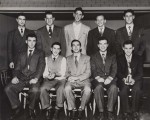
Mystery photo … July 25/14

Mystery photo … July 25/14

Unidentified group of young men, B’nai B’rith, Vancouver, 1950. (photo from JWB fonds; JMABC L.12155)

If you know someone in this photo, please help the JI fill the gaps of its predecessor’s (the Jewish Western Bulletin’s) collection at the Jewish Museum and Archives of B.C. by contacting [email protected].

Format ImagePosted on July 25, 2014July 23, 2014Author JI and JMABCCategories Mystery PhotoTags B'nai B'rith
VanDusen hosts Sculptors’ Society exhibit

VanDusen hosts Sculptors’ Society exhibit

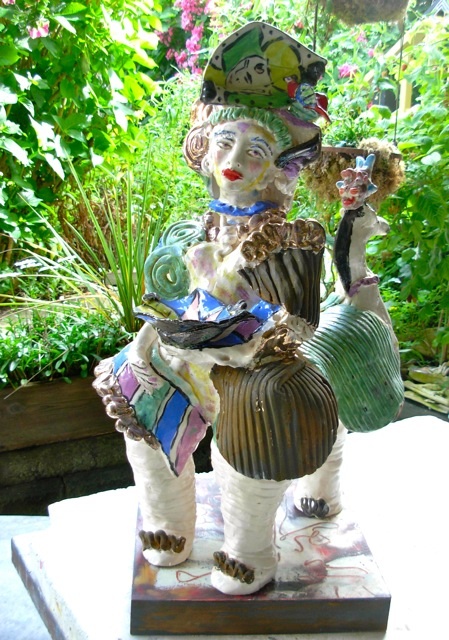
The art of Jesse Rubin, above, and Suzy Birstein will be among the work displayed at the summer exhibit of the Sculptors’ Society. (photo courtesy of Jesse Rubin)

From larger than life to the minute details of life, the artwork that will be on display at the 38th annual summer exhibit of the Sculptors’ Society of British Columbia will engage viewers with multiple aspects of life – and a lot of remarkable art.

The exhibition, which opens July 31 at VanDusen Botanical Garden, features more than 15 artists, including Jewish community members Suzy Birstein and Jesse Rubin. Looking at the difference in style and material of these two artists alone gives an idea of what diverse interest the exhibit will hold. And, as noted in the promotional material, “In some cases, this exhibition is one of the few chances you will have to see [sculptors’] work here in their home province.”

Birstein says in her artist statement for the exhibit, “As a child, I studied dance, Hollywood musicals, film noire and Rembrandt. As an adult, I’ve been seduced by the sensuality, spontaneity and intellectual activity of working with clay and color, and the essence of romance.

“I see my imagery as a marriage of my childhood and adult influences. The figure dominates my work as I endeavor to create archetypal icons … overlaid with the spirit of song and dance. I long to merge the power of Nefertiti with the spirit of Carmen Miranda.”

The magnitude of Birstein’s scope is evident in her colorful, playful sculptures that engender a larger-than-life feeling, even if they are “regular” size. Meanwhile,

Rubin operates at the other end of the spectrum, making detailed miniatures that, while also fun, are highly realistic. A self-taught artist who began sculpting 19 years ago, Rubin writes in his statement, “I try to express the inner emotion of each piece, and hopefully the viewer will get a feel for what the person or creature might actually be like.”

Nefertiti meets Miranda

photo - Suzy Birstein will be displayed at the Sculptors’ Society exhibit, July 31-Aug. 4
Suzy Birstein’s art will be displayed at the Sculptors’ Society exhibit, July 31-Aug. 4.
(photo courtesy of Suzy Birstein)

While Birstein’s name will be familiar to many JI readers, the last interview the paper carried with her was in 2008  (though she wrote about her Mia Muse workshops in 2013). Since then, Birstein told the Independent, she has created the Tap to the Muse exhibition of life-size Muses, a film that features her dancing and her sculptures, as well as “Motion Pitchers” for the Academy Awards’ ‘Everyone Wins at the Oscars’ gift bags.

“During the summer of 2008, film again serendipitously influenced my life,” she said. “I saw Mama Mia, and it took me back to my early 20s, living in Greece. After crying my way through the film with nostalgia for Greece, I was determined to go to that island.”

The island was Skopelos and, as it happens, Birstein had been forwarded website information for an art centre there. “I wrote to the two American women who founded the centre and the Mia Muse biannual workshops were created. I have been there three times since 2009 and can’t wait to return August/September 2015!” she said.

With each trip to Skopelos comes “European art adventure – Turkey, France and Spain – with new artistic influences,” said Birstein. “After France, I fell in love with painting – spent two years teaching myself to paint with oils, creating portraits of my Muses.

“After Spain in 2013, I was inspired by Velázquez’s ‘Las Meninas’ painting. Although not in Madrid to experience the original, the influence of ‘Las Meninas’ was all over Spain – at the Museu Picasso in Barcelona, in tourist art, contemporary art. My new sculptures are inspired by ‘Las Meninas’ but, as with all my art, there is never any one influence.

“India is the other place and culture that greatly fascinates me,” she added. “I am planning to create art during an artist residency in India and to explore the giant terracotta horses of Tamil Nadu. I have just begun a series of sculptures and paintings fusing these elements together.”

When asked about her desire to merge Nefertiti and Miranda, Birstein explained, “All my work is interplay of ancient and contemporary world cultures,” adding that she is “particularly fascinated with the concept of goddesses and cultural icons from Ancient Egypt to contemporary film.

“Queen Nefertiti symbolizes tradition, beauty, power, grace.

Carmen Miranda, wild, elaborate, ornate, fun, song ’n’ dance and with the hint of tragedy from personal life. The notion of transcending tragedy with absolute abandon to the joy of creativity, collaboration, performance and costume” is what draws her to both Nefertiti and Miranda.

“For me,” said Birstein, “life as art is one – my work, person, home, garden, teaching. I am mentored by art spirits and, through this, mentor my students.”

Birstein’s recent work includes 15 sculptures that will be given out as awards by the B.C. Tap Dance Society. “I have always loved tap and been inspired by Hollywood musicals – Fred Astaire, Gene Kelly,” she explained. “I went to the Tap Dance Festival 12 years ago created by VTDS and was hooked!”

She has been dancing with Vancouver Tap Dance Society ever since and is now part of Heart and Soul, their adult company.

“VTDS creates an amazing tap festival annually, on Labor Day Weekend, and this year they are having a silent auction on Aug. 28, giving 15 awards – five to tap artists, five to volunteers, five to patrons. They wanted to present meaningful/personalized awards from someone within their community and thought of me, especially because I also did this for the Academy Awards in 2008. I am creating very funky, colorful ceramic shoes.”

For Mia Muse 2015, Birstein will “have the opportunity to teach children in Skopelos at their film festival, SIFFY, followed by the Mia Muse ceramics workshop for adults. It is fabulous,” she said, to be able to “combine film/travel/art with mentoring children and adults.”

Molding his own reality

Born in Montreal, Rubin was five years old when he moved with his family to Vancouver in 1974. Here, they “opened the first bakery to sell bagels in Vancouver, the Bagel King, and, later, the Montreal Bagel Factory in Kitsilano.”

In an interview with the Independent, Rubin shared a bit about his journey to becoming an artist.

“As a kid, I enjoyed drawing, but, by the age of 13, I began playing the guitar. Music has always been a huge passion,” he said.

“I began sculpting on a whim when I was 26. I bought a pound of clay and made some whimsical cartoonish characters like goofy frogs. After a few months of getting used to working with clay in that manner, I began to sculpt parts of the human body as realistically as I could. The learning curve was fun, painful and, at times, slow. It took a few years to get the fundamentals down and, in retrospect, I could have benefited from some proper instruction. Years later, when I wanted to learn how to make silicone molds in order to reproduce my work, I turned to instructional DVDs for help.

“As far as the scale I work in,” he continued, “my father was a jeweler, so maybe it’s in the genes. I do know that I’m attracted to small-scale realistic sculpture. I like the idea of condensing all that visual information into a small space.”

Many different influences and approaches combine to form Rubin’s final creations. “First, I sculpt my piece out of Sculpey,” he explained. “It stays malleable until you bake it in the oven. (My wife does a little blessing before I bake each piece because it’s so fragile and, once it’s in the oven, it can twist, crack and, occasionally, develop small surface bubbles.) So, once I have my baked Sculpey model, I then use it to make a silicone mold. When I have the silicone mold, I reproduce the sculpture in resin. From there, I go on to the painting.”

Rubin’s art can be seen at deviantart.com, which is a communal website for artists: search for jesserubin. Birstein’s website is suzybirstein.com. For more information about the Sculptors’ Society or the exhibit, visit ssbc.ca or email [email protected]. The exhibit opens July 31, 5:30-7:30 p.m., and runs Aug. 1-4, 9 a.m.-9 p.m., at VanDusen. (Garden admission or membership is required.)

Format ImagePosted on July 18, 2014July 17, 2014Author Cynthia RamsayCategories Visual ArtsTags Jesse Rubin, Sculptors’ Society, Suzy Birstein, Vancouver Tap Dance Society, VanDusen Botanical Garden
Chabad honors Rebbe

Chabad honors Rebbe

Rabbi Shlomo Riskin speaks to the Vancouver audience via webcast. (photo by Cynthia Ramsay)

Empowerment. Scholarship. Connection. Each of these words was used more than once to describe the Rebbe – Rabbi Menachem Mendel Schneerson, z”l – and his impact during the July 9 community commemoration of the 20th year since his passing.

At Chabad Lubavitch at Oak and 41st, the six B.C. Chabad Houses hosted a night of learning, with workshops and dinner, followed by a speech, via webcast, from Rabbi Shlomo Riskin, chief rabbi of Efrat, Israel, and chancellor of Ohr Torah Stone in Israel, and the video The Rebbe: Marching Orders.

Timeless Leadership: An Evening of Inspiration offered two sets of workshops from which attendees could choose. The first set comprised Turning Lubavitch Outward by Rabbi Yitzchok Wineberg of Chabad Lubavitch BC; The Rebbe’s Melodies by Rabbi Falik Schtroks of the Centre for Judaism in White Rock; and Stories of the Rebbe by Rabbi Yechiel Baitelman of Chabad of Richmond. The second set was The Wisdom of the Lubavitcher Rebbe by Rabbi Binyomin Bitton of Chabad of Downtown, and The Rebbe’s Advice by Rabbi Dovid Rosenfeld of Camp Gan Israel; Rabbi Meir Kaplan of Chabad of Vancouver Island, was unable to attend.

Among the handouts was a timeline of Schneerson’s life prior to his becoming the Rebbe. Born in Ukraine in 1902, Schneerson was considered a child prodigy and, by the time he was in his teens, he was exchanging letters with respected scholars. He married Chaya Mushka, the daughter of the sixth Lubavitcher Rebbe, Rabbi Yosef Yitzchak Schneersohn, in Poland in 1928. He then went to the University of Berlin, followed by the ESTL engineering school and the Sorbonne in Paris, while also giving Torah classes and the like. When the Nazis conquered Paris, the Rebbe and his wife managed to escape, by ship from Lisbon to New York. At his father-in-law’s behest, Schneerson became a director of multiple Lubavitch organizations and began to publish his thoughts on Chassidic tracts and write responsa. In 1951, a year after his father-in-law died, Schneerson became the Rebbe.

Wineberg, who gave a brief overview of Chabad’s history, called Schneerson “a Rebbe for our times.” A more critical problem in our age – the last 65, and especially the last 30-35, years – than assimilation, said Wineberg, has been low self-esteem. In this context, he highlighted the Rebbe’s belief that, “There is no such thing as a small Jew.” The Rebbe took what was an insular, study-focused organization and, while keeping the foundation of Torah and study, broadened its vision to include all Jews, said Wineberg, noting that the Rebbe connected with every single person he encountered. The Rebbe, he said, was the inspiration behind Chabad heading to campuses, to welcoming Jews to dinner, to prayer, to don tefillin.

Bitton provided some statistics on the Rebbe’s outreach and his scholarly contributions: he spoke on 31,393 occasions, for example, and 11,700 of his letters have been published so far; there are tens of thousands of pages of his writings. The Rebbe’s unique approach to learning, explained Bitton, is that he connected talmudic understanding with its kabbalistic translation. When the Rebbe analyzed an idea, said Bitton, he peeled its exterior layers away and got to the pure essence of the idea, the quintessential idea that was at the root of the discussion. For the Rebbe, he said, kol haTorah inyan echad, the entire Torah is one “topic.”

In telling the stories of his encounters with the Rebbe, Riskin echoed some of the sentiments shared by the local Chabad rabbis in their presentations. He compared the Rebbe to Moses, in that, as Moses is still alive in a sense because his teachings continue to be studied, the same is true of the Rebbe. “Certainly for me,” said Riskin, “because not only did he change my life, but he gave me fundamental messages by which I live my life, and which informed my world of education … and my world of the rabbinate.”

Riskin shared how he became the founding rabbi of Lincoln Square Synagogue in the mid-1960s. Having attended Yeshivah University on scholarships, he wanted to repay the institution and agreed to do some speaking engagements after receiving his ordination, one of which was at “a kind of Rosh Hashanah-Yom Kippur synagogue” that didn’t have its own building and was in what was then a poor neighborhood. They had a rabbi and were relatively satisfied but not completely, so they approached YU and, after Riskin came for one Motzei Shabbat, they wanted to hire him. When deciding whether or not to accept the pulpit, Riskin was conflicted and received conflicting advice. So, he asked for a meeting with the Rebbe, who told him to listen to his own rebbe (Rav Joseph B. Soloveitchik, z”l), adding that, “In every battle, there are people who have to get dressed like the enemy and go into the enemy territory … and you will not only win the battle, you will win the war.”

When Riskin argued that his future congregants have no background and that he would have nothing with which to work, the Rebbe said, “You can never say about a Jew that he has no background. Every Jew has a kingly background; every Jew is, after all, a descendant of Avraham, Yitzchak, Yaakov, of Sarah, Rivka, Rachel and Leah…. I left the Rebbe’s presence awestruck, and with a very profound sense of empowerment.”

Another encounter with the Rebbe took place after Riskin had spent time working with an eccentric, wealthy man who, when he met Riskin was non-observant and married to a non-Jew. After that initial meeting, Riskin accepted the man as a single member of the shul (i.e. without his wife) but later found himself doubting that decision. When he asked the Rebbe about it, the Rebbe never told Riskin whether he’d made the right decision, but rather said, “No one is able to truly evaluate the profound value of the Jewish soul.” This meant, said Riskin, that “every Jew has an affinity to Torah and you can never give up on any Jew no matter how far away he may have went. And that, too, has become a very important part of my teaching.”

When Riskin was making aliyah, he could not meet with the Rebbe directly – because of the Rebbe’s ill health following a heart attack – but he received his blessing through Soloveitchik at a farbrengen (Chassidic gathering) they were all attending. To the blessing, the Rebbe added that, in Efrat, Riskin “must produce shluchim, emissaries, who are modern on the outside and Chabad on the inside.” Riskin credits the Rebbe for his having been able to establish Ohr Torah Stone, which has, among other programs, hundreds of shluchim.

Format ImagePosted on July 18, 2014July 17, 2014Author Cynthia RamsayCategories LocalTags Binyomin Bitton, Chabad, Lubavitch, Menachem Mendel Schneerson, Ohr Torah Stone, Rebbe, Shlomo Riskin, Yitzchok Wineberg

Internet mostly good thing

What can we possibly add to the billions of words shed on the topic of the Israel-Hamas conflict? If this paper is in your hands – or you’re reading this on our new website or in our affordable and environmentally friendly e-edition – you probably already know where we stand.

If you are on social media, you probably know where every one of your friends stands on the issue as well. There has been a barrage of posts, tweets, emails and media pieces on every conceivable aspect of this conflict, its causes, its potential solutions, the actors, the victims, the sound and the fury.

There has also been a vast amount of analysis of media coverage of the events. It is fair enough to call out media for consistently biased reporting. But it does seem excessive sometimes to catalogue every instance of poor or malicious reportage. Media outlets we have never heard of before are getting widespread attention for bad journalism. The irony is that in the PR biz there’s an old saw that there’s no such thing as bad publicity as long as they spell your name right. Some newspapers and broadcast outlets that would be best ignored are instead going viral for all the wrong reasons.

This is not to say egregious reporting should go unchecked. Organizations like CAMERA, the Committee for Accuracy in Middle East Reporting, MEMRI, the Middle East Media Research Institute, PMW, Palestinian Media Watch, and the acronym-deficient Honest Reporting, do a bang-up job keeping reporters’ feet to the fire and illuminating journalistic atrocities around real-world atrocities.

In one of the most imaginative volleys, some anti-Israel brainiac took a still from the Hollywood horror film Final Destination 4, depicting grotesquely mangled human remains, and alleged that it was the work of Operation Protective Edge. Other “evidence” of Israel’s inhumanity turned out to be photos from the Syrian civil war.

For a few hours last week, there was an online rumor that the murder of Palestinian teen Mohammed Abu Khdeir was not the work of Jewish Israelis, but an “honor killing” by his own family allegedly because he was gay. Such a scenario would have reassured us of the uprightness of our side and the baseness of the other, but the facts came out and, sadly, did neither. In either case, a boy is no less dead.

There is certainly cause for concern over fair reporting, and false accusations and misrepresentations should, of course, be challenged, but is this where so much of our energy should be going? We live in a wired world where access to information is almost beyond the human imagination of just two decades ago. No matter on what side of an issue people fall, they will find data and stories that support their views. This is what the internet does well: it provides information and makes it accessible to almost everyone. What people do with that information, if anything, is up to them.

People in some parts of the world do not have the access we do to electronic information, which makes it easier for their powers-that-be to control the message, to propagandize. In North America and Europe, though, anyone who is undecided about an issue and who truly wants to learn more has the opportunity to do so from millions of articles, blogs, newscasts and other sources. This is a good thing. We should be vigilant when major media outlets skew the facts, but we should not expect them to take our position simply because we think we’re right. (We are.)

Instead of being fearful and demanding more regulation of ideas, the reality of this still-new electronic world is that we need to learn – and we need to teach our children – to be effective media critics who can tell good sources from bad. We have the freedom to engage in dialogue and we should. For the most part, we can’t control how others present themselves and their views, but we can choose to present our own wisely and with civility.

Posted on July 18, 2014July 17, 2014Author The Editorial BoardCategories From the JITags CAMERA, Committee for Accuracy in Middle East Reporting, Honest Reporting, Israel, MEMRI, Middle East Media Research Institute, Operation Protective Edge, Palestinian Media Watch, PMW
Zach Braff’s new film funny, spiritual, existential

Zach Braff’s new film funny, spiritual, existential

Zach Braff, left, and Jim Parsons at the première for Wish I Was Here. (photo from facebook.com/wishiwasherefilm/photos_stream)

Zach Braff is unabashedly and proudly Jewish. One might not deduce that, though, from the caustic attitude toward organized Judaism expressed at the beginning of his new film, Wish I Was Here.

In his second foray as director, a decade after the indie success of Garden State, Braff plays a chronically unemployed, 30-something Los Angeles actor with a devoted wife (Kate Hudson) and two children in Jewish religious school. Braff’s Aidan Bloom is avowedly secular – his father (Mandy Patinkin) chose and pays for the kids’ education as a way of inculcating their Jewish identity – and Bloom delights in cracking cynical jokes about religion while driving his offspring to school. To underscore his disrespect, Bloom sneaks a hit on a joint after the children get out the car, only to be caught in the act by a rabbi.

“I don’t think the movie’s anti-Jewish at all,” Braff said in a recent interview in a San Francisco hotel. “My character says, ‘I’m envious of people with faith. They take comfort in their faith. I wish I had that to get me through this but, since I don’t, I’m a secular man, I need to find something that works for me.’”

The “this” is Aidan’s father’s illness and encroaching death, which throws a financial wrench in the kids’ private education and impels Aidan to become both a good son and a good parent. The film’s title refers to that dual challenge while evoking Aidan’s existential dilemma of needing something to believe in.

“If I was going to do PR for the Jews of America,” said Braff, “I would say, ‘There needs to be a more proactive way of connecting with Jews who identify with the culture and the humor and the holidays in a way that can tap into the spirituality that they have within themselves. So, any social commentary in the beginning on the yeshivah was meant to show here’s a secular guy who doesn’t know how to tap into his faith.”

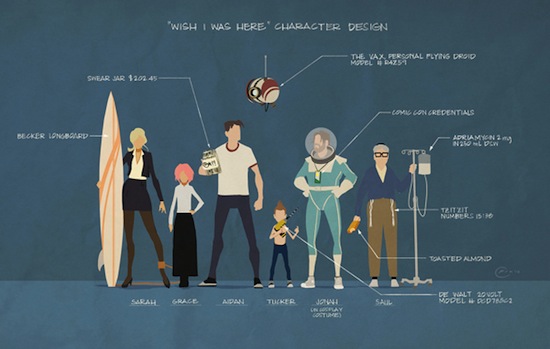
image - Concept art for the movie Wish I Was Here
Concept art for the movie Wish I Was Here. (photo from wishiwasheremovie.com/gallery/concept-art)

Wish I Was Here, like Braff himself, blends unwavering self-confidence, clever one-liners and earnest philosophizing. Many viewers will be entertained by the acerbic dialogue and moved by the sentimental family resolution, while others will find Wish I Was Here an indulgent tonal pastiche epitomized by a sight gag of an elderly rabbi on a Segway visiting an intensive care unit.

Braff, of course, became a household name in the 2000s for his role in the long-running sitcom Scrubs. Most recently, he starred in the London première of his original play All New People, before making his Broadway debut in the musical adaptation of Woody Allen’s Bullets Over Broadway. He co-wrote Wish I Was Here with his brother Adam. The New Jersey natives borrowed from the early experiences of a third brother, Joshua (who is also a writer), in developing Aidan’s character.

“My brother went to a very strict yeshivah as a child and really was alienated from it, and had a very bad experience,” Braff related. “It wasn’t until shooting this movie, in the yeshivah we actually shot in, that I saw a Modern Orthodox school. It was a wonderful school, and the rabbis that I talked to were really charming guys and we actually had some interesting conversations about religion, and the kids were all happy and having a wonderful time.”

Braff leaned forward, warming to his point.

“So, I hope that any strict religious people reading this know that the movie is not condemning orthodoxy at all. It’s saying that, from my point of view, I wished I’d had in my life someone who could help me tap into my own spirituality better, instead of saying, ‘Here are the rules. Work within these rules.’”

Wish I Was Here has some fun (as noted above) with an aged rabbi. But a younger rabbi – who Braff described as “the dream rabbi I wished I met” as a young person – makes a contribution to Aidan’s journey of reconciliation with his father, an old-school guy who harangues Aidan to provide for his family and abandon his artistic ambitions.

“I took a Hinduism class in college and loved this idea that here are a bunch of allegories and wonderful stories and gods, and you can choose to find your own path,” Braff mused. “It isn’t so much like ‘These are the rules.’ It is ‘Here’s what we believe but find your own way.’ Now, I don’t know much more about Hinduism than an intro to Hinduism class, but I remember that striking me, as someone who’d been raised very strictly Jewish and kosher.”

Braff financed Wish I Was Here through a crowd-funding campaign last year, drawing flak in the process from those who thought well-off celebrities should reach into their own wallets. Without referencing the Kickstarter controversy, Braff makes the case for consumer support of his movie.

“The studio system isn’t going to make a movie about a Jewish family,” he asserted. “A financier wasn’t going to make a movie about a Jewish family. It’s very, very hard to get – we’re two percent and shrinking – a movie about Jewish people made. If I made this in the studio system, they’d be like ‘ix-nay on the ewish-jay.’ I’d have to [dial] it down. So, I hope that Jews will show up because I’d like to make more films about my Jewish experience, and it matters if they go to the theatre or not.”

Wish I Was Here opens in Vancouver on Friday, July 18.

Michael Fox is a San Francisco film critic and journalist.

Format ImagePosted on July 18, 2014July 17, 2014Author Michael FoxCategories TV & FilmTags Kate Hudson, Mandy Patinkin, Wish I Was Here, Zach Braff

New book is first Jacob Dinezon work in English

Jacob Dinezon (1856-1919) was a Yiddish novelist and short-story writer, as famous during his lifetime as were his contemporaries, the three pillars of late-19th- and early-20th-century Yiddish literature, Mendele Mocher Sforim, Y.L. Peretz and Sholem Aleichem. All of these masters knew and were impressed with Dinezon’s work.

During his period of literary activity in the latter half of the 19th century, Dinezon at times even outshadowed the three founding fathers because his books touched thousands of readers and were more widely sold. In fact, one of his novels sold more than 200,000 copies, an unheard of success in Yiddish literature. Dinezon achieved fame at the age of 20 with the publication of his first novel and remained famous until the day he died. He was so well known and beloved that every major figure of Yiddish literature came to his funeral in 1919.

Even encyclopedias in English recognized him. The early 20th-century Jewish Encyclopedia lists Dinezon as an important Yiddish writer (like other classical Yiddish writers, he also established a reputation as a Hebrew author), praise that is echoed in the contemporary Encyclopedia Judaica.

Sometimes mazel plays a role in literary fame but, in Dinezon’s case, it seemed to express itself in income and not in posthumous regard. And now that the worldwide Yiddish-reading community is vanishing, a writer’s lot can be determined by translation, which can bring fame, and to discovery, which in turn can prompt translation. If a writer doesn’t find his translator/editor in another language, he suffers the misfortune of neglect, which is what happened with Dinezon. If you ask any knowledgeable reader familiar with Aleichem and other famous Yiddish writers if he has ever heard of Dinezon, the answer would probably be no.

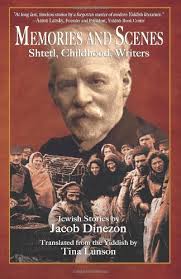
image - Memories and Scenes: Shtetl, Childhood, Writers book coverUntil now, we have not had any work by Dinezon in English. But this lacuna has been successfully filled with the wonderful book of 11 Dinezon stories, beautifully translated by Tina Lunson and edited by Scott Davis, who has also provided an illuminating introduction: Memories and Scenes: Shtetl, Childhood, Writers (Jewish Storyteller Press, 2014).

Dinezon was a social realist, accurately depicting small-town (shtetl) Jewish life. With a cinematic eye, he zeroes in on his characters, deftly telling fascinating stories while at the same time giving an accurate portrait of the mores, attitudes, speech and foibles of the men, women and children whom he depicts.

Like Dickens, Denizon wrote about the downtrodden and about poorly treated students in Hebrew schools with such realism that he actually brought about reforms. A cross section of Jewish society in Poland lives in his pages: the young and old, Chassidim and enlightened Jews, simple workingmen and rich householders. Every single one of his stories breathes with life and verisimilitude.

In this book of 11 stories, a collection published after Dinezon’s death in 1919, we have finely crafted tales – so in keeping with Jewish short-story writing at the turn of the 20th century – that recall vividly portrayed shtetl characters from Dinezon’s childhood years and memories of such literary figures as Mendele Mocher Sforim (Mendele the Bookseller, aka Sholem Abramovich), Peretz, and the playwright Avrom Goldfaden.

Dinezon also played an important historical role in the development of Yiddish as a literary language. In fact, he mentored, advised and befriended almost every major Jewish writer of his day. The list reads like a who’s who of late-19th- and early-20th-century modern Yiddish literature, including the writers mentioned above, as well as S. Ansky, David Frishman, Shimon Frug, Sholem Asch, David Pinski and Abraham Reisen.

In one of the superb stories, Mayer Yeke, we see how a boy’s great fear of the shtetl’s most righteous Jew, Mayer Yeke, turns to love and respect after he witnesses Mayer’s mitzvah assisting the town drunk. Sholem Yoyne Flask depicts a mild-mannered tailor transformed by the liquor in his flask into a fiery defender of the town’s poor folk – then something happens when a surprising discovery is made about his flask. With Motl Farber, Purimshpieler, we are introduced to a housepainter who languishes during the winter when he cannot work, but at Purim, he becomes the leader of a band of Purim players. When the troupe is arrested by the new Russian police chief, an unlikely “Esther” comes to their rescue.

A story that achieves the psychological depth of a Dostoevsky tale is Yosl Algebrenik and His Student. It tells the story of Yosl, an outstanding Talmud scholar, a genius some said, destined to become a great rabbi, who has a passion for mathematics. At age 30, for reasons no one remembers, he tosses away the Talmud and its commentaries for the study of algebra and algebraic logic. From then on, he spends all his time studying algebra, except for the few hours a week he devotes to tutoring children to eke out a living.

Another moving and profound story is called Borekh, after the name of the hero, a poor orphan living in the yeshivah. He doesn’t do well in talmudic studies but he has a talent for woodcarving, making dreidls, Purim groggers and toy animals for the children of the town. One day, he decides to leave the yeshivah and start anew, with hopes of making a great holy ark, “one that people have never seen before.” When he achieves that, he will send it to his friend in the yeshivah, who he knows will become a great scholar. He leaves without saying goodbye.

Some of Dinezon’s autobiographical sketches are as engaging as his fiction. In My First Work, he relates the childhood experience of reading his first Yiddish novel, a Jewish version of Robinson Crusoe. He is so taken by the book, he writes his own adventure story. In Sholem Yankev Abramovich, Dinezon tells how his debut novel, The Dark Young Man, was published and how he acquired his first copy in Moscow. At the same time, he learns that the Yiddish writer Mendele Mocher Sforim and the Hebrew author Sholem Abramovich are actually the same person.

It is not often that we are privileged to make a literary discovery of our own. With this book by Dinezon, the first in English, we happily encounter a master writer who deserves to be ranked with the great Yiddish writers whom he befriended and who admired him.

Curt Leviant’s most recent book is the short story collection Zix Zexy Ztories.

Posted on July 18, 2014July 17, 2014Author Curt LeviantCategories BooksTags Abraham Reisen, Avrom Goldfaden, David Frishman, David Pinski, Jacob Dinezon, Jewish Storyteller Press, Memories and Scenes, Mendele Mocher Sforim, S. Ansky, Shimon Frug, Sholem Aleichem, Sholem Asch, Y.L. Peretz, Yiddish

According to halachah, women’s role can be broad

While I have a very good Jewish background, enhanced by the hundreds of books I have reviewed over the years, I am, by no means, a scholar. However, when I heard about The Status of Women in Jewish Law: Responsa by Rabbi David Golinkin (Centre for Women in Jewish Law at the Schechter Institute of Jewish Studies, 2012), I wanted to read and review it because there are a number of issues – that appear both in the news and in other books I’ve read – that are expounded and discussed by Golinkin.

When I read Rashi’s Daughters, for example, I was intrigued by the author, Maggie Anton, writing that the daughters laid tefillin, studied Talmud and commented on their father’s responsa. The violent, aggressive behavior of certain Orthodox men and women toward the Women of the Wall, who have tried for more than 25 years to have a respectful minyan on Rosh Chodesh each month, observing their personal traditions, further motivated my reading of this book.

Rabbi Reuven Hammer, former president of the International Rabbinical Assembly, in one of his columns last year in the Jerusalem Post, wrote: “I cannot help but wonder what the problem is with the desire of some women to wear tallitot, tefillin and read from the Torah at the Western Wall. I am further amazed at the extreme statements made by the rabbi in charge of the site and by other leaders of the Charedi (ultra-Orthodox) community calling on their followers to come out and protest, as well as by the silence of moderate Orthodox authorities on this issue. I cannot believe that they really think that what these women are doing is in violation of Jewish law.

“Surely they know as well as anyone else that all of this is permitted.

“Women may not be required to do these things within traditional halachah [Jewish law], but nowhere are they prohibited from doing them, any more than they are prohibited from sitting in a sukkah!”

Hammer continued: “My only conclusion is that this … has nothing to do with Jewish law and nothing to do with the sanctity of the Wall and nothing to do with offending others, and everything to do with protecting an insular way of life…. These groups have every right to want to live that way…. But they have absolutely no right to force their practices upon others and to make the totally false claim that what they say represents the official position of traditional Judaism. It simply does not.”

He noted, “The sages in the second century CE exempted [women] from certain mitzvot, but did not prohibit them from performing them. There is no excuse for us, nearly 2,000 years later, forbidding what neither the Torah nor the sages forbade. Let us put an end to all this fuss and support the right of women to perform these mitzvot within the framework of traditional Judaism.”

image - The Status of Women in Jewish Law: Responsa  book coverIn Golinkin’s book, we learn that, while there are Orthodox rabbis who have made innovations for women, many Orthodox rabbis ignore not only non-Orthodox rulings on women in Judaism but also Orthodox rulings. We also learn that change isn’t a linear process between or within denominations.

In the book’s introduction, “The Participation of Jewish Women in Public Rituals and Torah Study,” Golinkin surveys 41 events between 1845 and 2010, regarding women in Judaism. He finds that changes did not necessarily move from Reform to Conservative to Orthodox. For example, the bat mitzvah ceremony, credited to Conservative Rabbi Mordecai Kaplan in 1922, was preceded by rabbis in Italy, France and Baghdad and by Reform Rabbi Yechezkel Karo in 1902. Women have been ordained by the Reform movement in the United States since 1972, but Regina Jonas, who could not be called Reform, was ordained as a rabbi in Germany in 1935. Women have had aliyot since 1893, including Henrietta Szold in 1922, but it was not until 1995 that 88 percent of Conservative synagogues allowed aliyot for women. Orthodox rabbis began to allow separate women’s prayer groups in the 1970s but some Conservative rabbis had done so since 1949. In broad strokes, main efforts to change women’s roles in Reform Judaism lasted from 1846 to 1972; Conservative, from 1874 to 2001; and Orthodox, from 1978 to 2010.

Golinkin writes, “The tension between halachah and modernity has caused, is causing and will continue to cause division and disagreement within the Jewish people.”

He also notes, “The status of women in halachah has begun to cause division between Modern Orthodox and the Charedi (ultra-Orthodox) camp in Israel and abroad.”

He then lists nine approaches to changing halachah: 1) those who oppose any change in Judaism; 2) opposition specifically to changes in the synagogue; 3) acknowledging equal status between men and women, expressing it through different roles and mitzvot; 4) willingness to accept certain changes so as to not drive women from Judaism; 5) change within the framework of traditional halachah; 6) adjusting discriminatory halachot according to contemporary times; 7) changing halachah with equality for women; 8) feeling halachah is not binding, and men and women are equal in Judaism; and 9) suggesting a halachic revolution.

The remaining 15 chapters of The Status of Women in Jewish Law consist of responsa to critical questions. In each case, Golinkin surveys the rabbis who wrote responsa on a particular issue – for and against – and then concludes with what he terms “practical halachah.” There is a complete bibliography after each responsa’s conclusion. In brief, they are:

Responsa 1: women and tefillin. In Golinkin’s view, the responsa show “ample halachic justification” for allowing women to wear tefillin, as long as they are worn with “the same devotion and halachic requirements which apply to men.”

Responsa 2: women and singing. Golinkin writes, “… there is no general prohibition against women singing in classic Jewish law based on the Talmud and subsequent codes and commentaries until the early 19th century.” And there is “no halachic justification for anyone walking out when women sing … it is forbidden to walk out, in order not to insult the female performers.”

Responsa 3: women in the minyan and as shlichot tzibbur (prayer leaders). Golinkin concludes that women may be counted in the minyan for shacharit, minchah, ma’ariv, musaf and ne’ilah, and may serve as shlichot tzibbur in all of these services.

Responsa 4: adding the Imahot (Sarah, Rivka, Rachel, Leah) to the Amidah (central prayer of the prayer book). Golinkin writes that the correct and traditional way is to compose a short piyyut (liturgical poem) recited in the middle of the Amidah blessings.

Responsa 5: reciting Baruch Sheptarani (the Parents’ Blessing) at a bat mitzvah. Golinkin writes that this blessing, traditionally said by the father to mark his son’s turning 13, can be recited by both parents for their daughter.

Responsa 6: aliyot for women and hearing Torah read in public. Golinkin determines that women are obligated to hear the Torah read in public and can be called for an aliyah.

Responsa 7: women reading the Megillah. Golinkin believes that women are obligated to read the Megillah in public and be counted in the minyan for the reading.

Responsa 8: reciting verses honoring Esther during the Megillah reading. Golinkin writes that this is permissible.

Responsa 9: women as mohalot (circumcisers). Golinkin believes that this is permissible.

Responsa 10: participation of women in funerals. Golinkin writes that there is no need for the separation of men and women during a eulogy, and that women should be encouraged to participate in the eulogy, funeral procession and burial, as well as the escort to the cemetery.

Responsa 11: women reciting the Mourner’s Kaddish. Golinkin finds no halachic reason to prohibit women from reciting this prayer.

Responsa 12: women participating in a marriage ceremony and the Sheva Brachot (Seven Blessings). Golinkin says that women may hold the chuppah poles, sing, read the ketubah (marriage contract), give a drash (explanation or sermon), recite the betrothal blessing and Sheva Brachot, and be counted as a “new face,” according to wishes of those involved.

Responsa 13: women on a law committee, rendering halachic decisions and writing responsa. Golinkin concludes that women may render halachic decisions, they may study halachah, teach and discuss halachah and write responsa.

Responsa 14: having a mechitza (partition dividing men and women in synagogue). Golinkin writes that it is permissible to abolish this custom.

Responsa 15: ordination of women as rabbis, holding public office, studying Torah, serving as witness. Golinkin writes that women may be ordained as rabbis “on condition that … they undertake upon themselves all PTBC (positive time-bound commandments) and to refrain from participating in batei din [rabbinical courts] for conversion or to serve as witnesses at marriages and divorces.” According to Golinkin, women are permitted “to study and teach Torah and all subjects related to the Torah” and “it is permissible for a woman to serve in public office.”

For anyone interested in the sources and issues regarding the role of women in Judaism, this book is an informative, absorbing and remarkable read. It concludes with a collection of eulogies delivered by Golinkin and a glossary.

Sybil Kaplan is a foreign correspondent, lecturer, book reviewer and food writer in Jerusalem. She has compiled nine kosher cookbooks. She leads weekly walks in English in the Jewish produce market, Machaneh Yehudah, and writes the restaurant features for Janglo, the oldest, largest website in Israel for English-speakers.

Posted on July 18, 2014July 17, 2014Author Sybil KaplanCategories BooksTags Centre for Women in Jewish Law, David Golinkin, Rabbi Reuven Hammer, Schechter Institute of Jewish Studies, The Status of Women in Jewish Law
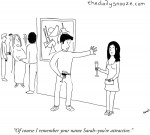
This week’s cartoon … July 18/14

This week’s cartoon … July 18/14

For more cartoons, visit thedailysnooze.com.

Format ImagePosted on July 18, 2014July 17, 2014Author Jacob SamuelCategories The Daily SnoozeTags dating, Jacob Samuel, thedailysnooze.com
Israel faces rising jihadist threats

Israel faces rising jihadist threats

Smoke rises in Gaza after an Israeli airstrike on the second day of Operation Protective Edge, July 9, 2014. (photo by Yonatan Sindel/Flash90)

With the launch of the Israeli army’s Operation Protective Edge in Gaza, much of the public’s attention has focused on Hamas, which has escalated its rocket fire on Israel. But the threats the Jewish state faces from Gaza may not be as clear-cut as they seem.

While Hamas is still extremely deadly, it has seen a weakening of its grip on the coastal enclave over the past few years, due to challenges from other Islamic terror groups and isolation from its former patrons in the Muslim world.

“Hamas has been on the brink of collapse,” explained Jonathan Schanzer, vice-president for research at the Foundation for Defence of Democracies. “It has become very isolated politically and economically.

“It is very difficult to figure out what Hamas’ calculus is [in its current escalation with Israel],” Schanzer added. “Hamas may have nothing to lose but, on the other hand, they could have really overplayed their hand, which could lead to complete devastation of their assets.”

Since taking control of Gaza in 2007, Hamas has seen a steady decline in its support from the

Palestinian people and the rise of other Islamic terrorist groups there, including its main Palestinian rival, Islamic Jihad, as well as al-Qaeda-inspired Salafi global jihadist groups.

In February, leaders of the Salafist factions known as the Al-Quds Mujahideen Shura Council in Gaza issued a statement pledging allegiance to Islamic State in Iraq and Greater Syria (ISIS), which has made global headlines for its brutality and swift victories in the Syrian civil war and in Iraq. These Gaza-based Salafi jihadist groups have often been at odds with Hamas and have been targeted by Hamas’ internal security forces. At the same time, these groups have been responsible for rocket fire on Israel, both from Gaza and Salafi groups operating in the Sinai Peninsula. This includes rockets fired on the southern Israeli city of Eilat in January 2014.

Meanwhile, recent reports indicate that jihadists from ISIS – now also known simply as “Isamic State” – have attempted to infiltrate Gaza from Egypt, the Gatestone Institute reported.

Read more at jns.org.

Format ImagePosted on July 18, 2014July 17, 2014Author Sean Savage JNS.ORGCategories IsraelTags Foundation for Defence of Democracies, Gaza, ISIS, Israel, jihad, Jonathan Schanzer, Operation Protective Edge

Posts pagination

Previous page Page 1 … Page 636 Page 637 Page 638 … Page 663 Next page
Proudly powered by WordPress