Skip to content
  • Home
  • Subscribe / donate
  • Events calendar
  • News
    • Local
    • National
    • Israel
    • World
    • עניין בחדשות
      A roundup of news in Canada and further afield, in Hebrew.
  • Opinion
    • From the JI
    • Op-Ed
  • Arts & Culture
    • Performing Arts
    • Music
    • Books
    • Visual Arts
    • TV & Film
  • Life
    • Celebrating the Holidays
    • Travel
    • The Daily Snooze
      Cartoons by Jacob Samuel
    • Mystery Photo
      Help the JI and JMABC fill in the gaps in our archives.
  • Community Links
    • Organizations, Etc.
    • Other News Sources & Blogs
    • Business Directory
  • FAQ
  • JI Chai Celebration
  • JI@88! video

Recent Posts

  • Zionism wins big in Vegas
  • Different but connected
  • Survival not passive
  • Musical celebration of Israel
  • Shoppe celebrates 25 years
  • Human “book” event
  • Reclaiming Jewish stories
  • Bema presents Perseverance
  • CSS honours Bellas z”l
  • Sheba Promise here May 7
  • Reflections from Be’eri
  • New law a desecration
  • Resilient joy in tough times
  • Rescue dog brings joy
  • Art chosen for new museum
  • Reminder of hope, resilience
  • The national food of Israel?
  • Story of Israel’s north
  • Sheltering in train stations
  • Teach critical thinking
  • Learning to bridge divides
  • Supporting Iranian community
  • Art dismantles systems
  • Beth Tikvah celebrates 50th
  • What is Jewish music?
  • Celebrate joy of music
  • Women share experiences 
  • Raising funds for Survivors
  • Call for digital literacy
  • The hidden hand of hate
  • Tarot as spiritual ritual
  • Students create fancy meal
  • Encouraging young voices
  • Rose’s Angels delivers
  • Living life to its fullest
  • Drawing on his roots

Archives

Follow @JewishIndie
image - The CJN - Visit Us Banner - 300x600 - 101625

Author: Rebeca Kuropatwa

Herzliya Science Centre students launch satellite

Herzliya Science Centre students launch satellite

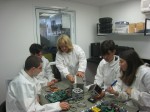
A group of Herzliya Science Centre students working on Duchifat 1 in the clean room with Dr. Ana Heller. (photo from Herzliya Science Centre)

In Israel, high school students helped launch a satellite into space – something typically reserved for university students.

“The Herzliya Science Centre (HSC) is the science campus for Herzliya’s middle and high schools,” explained Dr. Meir Ariel, the director general of the centre, which opened in 2007.

Some 1,500 students attend HSC advanced labs, studying and experimenting in physics, chemistry, electronics, biotechnology, computer science and robotics. “The jewel of the crown is our space and satellite lab, the only lab in Israel where high school students can design and build satellites and send them into space,” said Ariel.

This lab is attended by 40-50 of the brightest, most dedicated students from various schools in Herzliya and beyond.

“Duchifat 1, the first Israeli nano-satellite, weighing less than one kilogram, required multidisciplinary knowledge – from electronics to software, communications, thermodynamics and astrophysics – to construct,” he said.

Students wanting to participate began in Grade 9, with a two-year training period that provided the basic scientific knowledge needed to become candidates for membership in the space and satellite lab.

“Teenagers aren’t intimidated by technology and have little fear of failure,” said Ariel. “The success of the team relies on the ability of its members to be creative, innovative, disciplined and, most importantly, highly motivated.”

Collaboration with the Israel Aerospace Industry was crucial for the project’s success. Each team was led by an experienced engineer. Students not only learned from their mentors, but they were also exposed to state-of-the-art technology, tools and developmental procedures.

“Duchifat 1 served as a pedagogical platform, allowing high school kids from all over Israel to communicate, send commands, receive telemetry and experiment with a real satellite,” said Ariel. “Its other mission was search and rescue from space via its APRS transponder.”
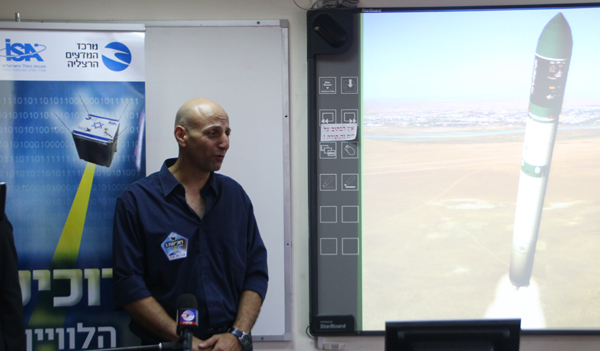
photo - Dr. Meir Ariel, HSC director, at the pre-launch briefing
Dr. Meir Ariel, HSC director, at the pre-launch briefing. (photo from Herzliya Science Centre)

Duchifat 1 was successfully launched into space aboard the Dnepr launcher a couple of months ago, on June 19.

“To reduce costs, Duchifat 1 was actually a ‘hitchhiker’ aboard a rocket that carried bigger satellites into the same orbit,” said Ariel. “Since then, Duchifat 1 has been orbiting around earth and is being tracked from the ground station at HSC by the same high school students who built it.”

Shenhav Lazarovich, 19, was one of the students who helped build Duchifat 1. She heard about the opportunity during an open day at Handasaim Herzliya High School, when learning about HSC.

“The first meeting with Dr. Anna Heller was something I won’t forget,” said Lazarovich. “She entered the room and said she’s leading a project with a goal to build a Pico satellite that will be totally designed and programmed by high school students. In that moment, I decided I want to be one of the team.”

Lazarovich had two major responsibilities in building Duchifat 1 – buying and upgrading the lab equipment (including satellite parts) and serving as the programming team’s EPS (electronic power system) programmer.

The other student on Lazarovich’s team was Ori Opher, who was responsible for finding solutions to various battery-related problems, like low battery discharge time and battery thermal issues.

“The battery is the heart of the satellite and needs to work at its best to fulfil the main goal of the satellite – saving lives (as an SOS signal transmitter),” said Lazarovich.

The satellite was launched by Dnepr 1, a Russian missile converted for space launching use. At this launch, it had 37 satellites from countries around the world.

photo - The mission patch of Duchifat 1
The mission patch of Duchifat 1. (photo from Herzliya Science Centre)

“It was an amazing experience,” said Lazarovich. “We gathered around with 37 teams all over the world and watched how our ‘baby’ made its way to fulfil its destiny. Anna [Dr. Heller] has been working on this project for more than 10 years and I was there for the last four.

“When we got signals from space, all of us started crying and laughing. We’re one of the first teams to receive satellites signals from space, not to mention the youngest team in the launching program. The excitement, the energy, is something I can’t describe with words.”

Yarden Carmel, 17, decided to take part in the Duchifat 1 project about three years ago, after switching to a different high school, where one of the mandatory classes was Satellites and Space.

“We were having our guided tour and, in one of the stops, they had Dr. Anna Heller, the project lead, talking about the project,” said Carmel. “She said something I’ll always remember, that she ‘isn’t looking for mathematicians or science geniuses, but for students with fire in their eyes.’”

Carmel and his team worked on the memory management of the satellite. “Duchifat 1 got some kilobytes flash memory, like those used in the portable flash drives, but with much less memory capacity,” he said. “Our mission was to find an algorithm that would hold the information the satellites generate (like life status) and receive (like stress signals from earth) for the longest time without being overwritten by new information.

“It had to be enough time for it to be able to fly above our ground station in Israel, so we could download all the data. It might sound easy, but remember we’re dealing with much less memory capacity than in a normal PC or a Mac. We have less than one megabyte to work with and it took us a few times to get the best algorithm.”

Carmel, who also will help build Duchifat 2, still recalls being rendered speechless when seeing the live footage of the missile going up. “It even rocked the HQ building we were in,” he said. “We were all either crying with happiness, staying stressed and silent, or just repeating, ‘Here’s Duchifat!’ and ‘We made history!’”

Duchifat 2 is one of a network of 50 miniature satellites built by university teams all over the world. “The satellites will be launched in 2016, with a mission to perform atmospheric research within the lower atmosphere (between 200 and 380 kilometres altitude), which is the least explored layer of the atmosphere,” said Ariel. “Duchifat 2 is the only satellite in this network built by high school students. All [the] other 49 satellites were built by universities.”

“During these difficult times in Israel,” said Lazarovich. “I’ve wanted to say that the key for a better future is science and education. Combining these on both sides will result only in good to the whole region and the entire world. Science is an endless source for development and making the world a better place.

“When adults are asked to do a big task, they always think about why it’s not possible to do [so].… When children [are] asked to do a big task, they just do it. They don’t see the limits that adults do. And, even if they do, they are not afraid to just try it anyway.”

The launch video, and other Duchifat 1 videos, can be seen on YouTube.

Rebeca Kuropatwa is a Winnipeg freelance writer.

Format ImagePosted on August 22, 2014August 21, 2014Author Rebeca KuropatwaCategories IsraelTags Anna Heller, Duchifat 1, Duchifat 2, Herzliya Science Centre, Meir Ariel

A grandmother reflects

On a hot Sunday in June, a grandmother climbs up to a backless seat in the bleachers of a high school gym whose air-conditioning has conked out. Students are handing out water bottles to the sweating crowd. She fans herself with a sun hat and listens to the principal testing the mic. The graduates in their caps and gowns have lined up in the corridor.

The band begins to play and the smiling graduates march in. The grandmother knows that most of them are wearing sneakers or flip-flops (except for a few girls who have saved up to buy Jimmy Choos or Manolo Blahniks). Under their robes, many wear shorts and T-shirts, not the fancy clothes she would have expected.

As the speeches begin, she waves to her grandson, who tips his cap to her. Her daughter and son-in-law hold hands as they watch the ceremony. The grandmother shifts in her uncomfortable seat and remembers the growing-up years of the young man whose achievement she has traveled 1,200 miles to celebrate.

He was such a tiny baby that the rabbi and mohel who officiated at his bris insisted on consulting a pediatrician before going ahead with the event. Now he is six feet tall. He was a friendly child who introduced himself to other kids easily at the playground when he was three or four. On holidays, he loved to lay out cookies on a platter in her kitchen but his nose barely reached the table top. Somebody had to put him on a chair to do the job.

His family moved around a lot and somehow he did not get into a Hebrew school at the right time. His great-grandfather saw to it that he was enrolled in a special program for kids who fell through the cracks and might not otherwise have received a Hebrew education. His bar mitzvah was a gala event and the grandmother remembers unexpectedly weeping with joy.

In high school, this child blossomed like a flower. His grades were excellent and he began to read voraciously, both assigned books and those she often fed him. His grandfather discussed science, astronomy, astrophysics and current events with him. His friends were children of many cultures, races and religions. He got involved in politics when the mother of a friend ran for local office and he volunteered to work on the campaign.

In the summer following his junior year, he won a scholarship to study globalization in the 21st century at Brown University. Now, he knows the facts about the issues of the day and is familiar with the problems affecting other countries. He speaks Spanish and French and is teaching himself Chinese. On a televised program with New Mexico Gov. Bill Richardson, he asked questions that prompted compliments by the governor. On his feet, the boy thinks fast and is comfortable at a lectern addressing school assemblies of 500 people.

Now, as she watches him stand with his fellow graduates and toss his cap into the air, the grandmother knows that it’s only a few months until he is gone – off to college to study international relations – probably leading to a life among people of other cultures with whom he is already quite comfortable. Undoubtedly, he will do something to make a difference in the world – something meaningful. She is proud of him. Yet, she is concerned about the economy and the job situation he will face. She worries about outside influences in the freedom of a college campus for a child who has never been on his own before. She prays that he will be safe.

Already the grandmother misses him but she has been through this leave-taking with her own three children. She missed her artistically inclined boy who drew pictures on his bedroom wall. She remembers her other little boy who stood on his bed and insisted that he saw elephants when he had a high fever. She thinks of the lovely girl who baked hamantashen from scratch in her kitchen. All three of them are married now and have children of their own, but the grandmother has not forgotten the feelings she had when they went away to college.

She remembers mailing packages of salamis, bagels and cookies. They lived in expensive dorms with cockroaches and bees. She visited them at college in sloppy rooms with all their clothing strewn across futons on the floor.

“How do you know which stuff is clean and which is dirty?” she asked. “Easy,” the boy said. “You pick it up and smell it!” He was straight-faced and serious. Yuck!

Sometimes they came home for holidays. Other times they went on trips or partied in some exotic locale that hosted spring break for young people. The grandmother had gone to college, too, but she had traveled by subway and had worked after school. At that age, she had never been anywhere but the Catskill Mountains.

Now, she looks at her daughter and son-in-law, remembering how it feels when the last child, like her grandson, goes away. There is no point in telling them that, after the child leaves, an emptiness settles on the house. The clock ticks louder. The silence in the mornings and at mealtimes is deafening. You close the door to the child’s room and do not go into it for weeks, even to clean up the mess left behind. You’re all choked up when you finally do it.

The grandmother will not tell her daughter and son-in-law that the hardest part of raising a child is the letting go.

Toby J. Rosenstrauch is an award-winning columnist and a resident of Florida. Her first novel, Knifepoint, was recently published.

Posted on August 22, 2014August 21, 2014Author Toby RosenstrauchCategories LifeTags graduation

Balancing kids high-tech wants with needs

The start of a new school year used to just mean dealing with the end-of-summer blues, figuring out which classes to take and which books to buy, and making sure you had a first-day-of-school outfit. For today’s kids, however, there’s another real challenge: keeping pace with all the other kids your age, from brand-name clothing to expensive gadgets.

Consider this: about one quarter of children aged 12 to 15 in the United Kingdom have their own tablet while, on this side of the pond, there’s been a five-fold increase in tablet ownership among kids. Couple those statistics with other trends, such as the percentage of children and teenagers who have mobile phones (78 percent) and toddlers who have used mobile devices (38 percent), and it’s evident that children growing up today want and have more technological gadgets than ever before – and that comes with a hefty price tag for their parents.

The struggle to keep up – to give your child what “every other” child seems to have, for fear of making them feel left out – can be daunting for parents. After all, buying your child a $100 mobile phone may not seem like much, until you factor in the cost of the monthly plan. The same goes for gaming systems like PS3 and Xbox, for which a couple hundred dollars now may not break the bank but, before you know it, the next version will come out and you’ll be shelling out more cash.

So, how can parents keep up with the demand, provide their children with some fancy gadgets, without breaking the bank and without spoiling their children?

 Back to school: lessons at home

In the back-to-school rush, you may be focused on all the new things your child will learn at school this year, but it’s a great time to think about the lessons you can teach your child at home, with the first one being the value of a dollar (or two). If your child sees you spend hundreds on new smartphones and tablets every two years, they get the message that it’s a normal expense and nothing out of the ordinary, like your yearly taxes or other such payments, when these devices are luxuries, not essentials (although that could be debated).

Instead, you want to show your child that you’re happy to provide them with some of the latest trends but not all of them, all the time. Consider saving the bigger-ticket items for special occasions or milestones you want to celebrate. As well, involve your child in the discussion: how much is too much for a kid’s first phone? How long do they think it takes for you to work to earn the price of that phone?

According to Kevin Sylvester, co-author of Follow Your Money: Who Gets It? Who Spends It? Where Does It Go?, parents can and should explain the value of money to children with practical examples. For example, say your son wants the new iPhone. You buy it, but explain that the purchase means no movie tickets or outings for him for the next six months, until he’s helped pay for it. One of the reasons this can be difficult for kids to understand today is because of how little they actually see real, physical money.

“Money has moved away from the physical to the abstract. [Before] kids were forced to deal with the reality of how much something cost (they had to count coins, for example) when we needed actual money to buy things,” he writes. “But with credit cards, debit cards and automatic e-transactions, that tangible relationship with money is almost gone. So, [kids] need to know the underlying ideas about ‘value,’ ‘cost’ and so on to understand what they are spending.”

To do this, he encourages parents to give kids ownership over how much they’re spending and what they’re buying, as well as discussing why saving is important – even if it means waiting until the iPhone 15 comes out.

Quiz time: self-evaluation

Dr. Jim Taylor, author of Raising Generation Tech, reminds readers that kids pick up what they see their parents doing. The average child spends more than seven hours in front of a screen per day. If you think that’s much too high, then it’s time for a back-to-school quiz: are you any better? If you’re spending hours on your phone, computer or tablet – whether it’s watching TV, working or playing games – your child learns it’s OK to spend your day in front of a screen. However, childhood should be a time to explore, imagine and wonder, which gets lost if a child has a computer doing it for them.

“How did your children develop their relationship with technology? In all likelihood, from your relationship with technology. You influence your children’s exposure to technology in two ways,” says Taylor in a blog post about creating a healthy relationship with technology. “First, whether consciously or otherwise, you determine the technology to which your children are exposed and the frequency of its use. You buy it for them, give them permission to use it, and provide them with the time and space for its use.

“Second, and perhaps more importantly, you model the presence and use of technology in your own life. In doing so, you’re constantly sending your children messages about the role that it should play in their lives. Think about how often you, for example, watch television, play video games, surf the internet or check your email, and you’ll probably see the kind of relationship that your children have or will develop with technology.”

It’s too early to tell what impact technology will ultimately have on children who don’t know life without it, but Taylor’s points remain true nonetheless: too often we think of technology as an end itself, a way to pass time, a chance to get the kids to quiet down while we finish our day’s work, but it developed as a means to an end – a way to enhance the quality of life and do more with less.

By reminding your kids and yourself of these origins, you can instil in them the value that technology can bring – efficiency, independence, ingenuity and, perhaps, a better quality of life – while showing that they don’t have to have everything at once. And that there are other ways to work and play.

Vicky Tobianah is a freelance writer and editor based in Toronto. Connect with her on Twitter, @vicktob, or at [email protected].

Posted on August 22, 2014August 21, 2014Author Vicky TobianahCategories LifeTags Jim Taylor, Kevin Sylvester
“The matzav” in Israel

“The matzav” in Israel

Gaza, July 28, 2014: An Israel Defence Forces soldier examines a newly revealed tunnel in the Gaza strip. (photo by IDF via Ashernet)

It’s been awhile since I’ve written. There’s a story I’ve been meaning to share but, unfortunately, circumstances have led me to write a different story entirely, about “the matzav.”

“The matzav” means, literally, “the situation,” but it’s used to refer euphemistically to a current bad security situation in Israel. You say it in a half whisper, the way our parents used to say, “cancer.”

“How’s business going now, with – the matzav?”

“We’re going up north for a few days because of – the matzav.”

“My mother-in-law has been with us for two weeks, thanks to – the matzav.”

It’s definitely not an easy time to be in Israel, though now, more than ever, there is no place I would rather be.

I didn’t grow up in a particularly Zionist household. Most of what I know about Judaism and Israel I learned in college. People used to say to me that being in Israel is like being with family, and making aliyah is like coming home. My family never shoved in front of me to get on buses or overcharged me for souvenirs, so I guess I just couldn’t relate.

I got a little taste of the family thing when I was visiting Israel 12 years ago on a mission during the Second Intifada, when tourism was at an all-time low. I went to the falafel stand in the Old City by the Cardo with my 10-month-old son. There were no other tourists to be found. The owner, who was usually just interested in taking orders and keeping the line moving, insisted on holding the baby while I ate. This was like my family – not always warm and fuzzy, but there for you in hard times.

These are hard times. There’s been a constant barrage of rockets in southern Israel for weeks, keeping the population within 15 seconds of a bomb shelter. As I wrote these words, four people were killed by a rocket fired from a playground in Gaza. This morning, a man on the radio was saying that he’s terrified to shower or even go to the bathroom for fear a siren will go off.

Another woman was asleep and didn’t hear a siren. She only heard the rocket hit her house. She is being treated in the hospital for wounds to the head, legs and knees, but no treatment will cure the fear you can hear in her voice, unable to speak in full sentences.

On the other side of the border, the suffering in indescribable and the media images haunting. I feel torn apart by my pain for the Palestinian losses on the one hand and the need for us to defend ourselves on the other. Then there’s the sadness for the soldiers who are trained to minimize civilian casualties, but who find themselves hurting innocent civilians, behind whom the cowardly terrorists hide.

Our “adopted” lone soldier Danna tells us stories of what her friends see who are serving in Gaza – hospitals and UN schools hiding weapons and terrorists; gunmen literally hiding behind families; terrorists shooting with a gun in one hand and a baby in the other.

As Golda Meir said to Anwar Sadat just before the peace talks with Egypt, “We can forgive you for killing our sons. But we will never forgive you for making us kill yours.”

Before the war started, I got a call one Friday afternoon.

“Hi, Emily. We’re thinking of cancelling the partnership minyan this week, but I just want to check with you, because I know you worked hard on your speech.”

“Oh, well, sure … but why?”

“We just thought it would be better for the whole community to pray together tonight because of, you know – the matzav.” (Pause) “Did you not here what happened?”

That’s how I heard about the three kidnapped soldiers.

You would think all three of them were from our kibbutz, the way people spoke of them and cried and prayed for them and organized around helping their families. The whole country was suddenly one big family. One big, sad family.

At school, the teachers held special meetings with their pupils to help them digest the news and share their feelings. They had a meeting in the evening to help parents with how to talk to their kids. All this despite the fact that the three boys were from a different part of the country and not at all connected to our school or our region, except that here everyone is connected. At these times, we’re all cousins, brothers, sons.

The news a few weeks later – that the boys were killed – hit hard. I was out for the day to Beit Shean with my son Abaye to get braces on his teeth. Abaye is very sensitive to “the matzav” and I try to keep him away from the news most of the time so we can share things with him in our own way, but there was no escape. The news was on in the dentist’s office, and staff and patients were openly crying. Afterwards, we went for ice cream and the ice cream shop was playing the tape over and over again. Everyone’s eyes were glued to the screen.

“You’re an ice cream shop!” I wanted to yell at them, but it wouldn’t have mattered. The whole country was in mourning.

Then the rockets started in the south. Everyone’s hearts turned to the families under fire. Our kibbutz Google group filled up with suggestions of where you could bring food and supplies, requests to run programs, and even invitations to drive down south into the fire to help entertain kids in bomb shelters. There were so many projects being run out of so many places that volunteers had to quickly set up a committee to manage them all.

Our area happens to be one of the safest parts of the country. We haven’t heard any sirens. We haven’t even unlocked our bomb shelters. So, everyone is opening their homes.

Several families have come to our kibbutz for a break, and our youth group organized a camp for a week with peers from a kibbutz in the south. I heard on the radio about a resort nearby that has opened its doors to another kibbutz (200 people!), feeding and housing them and running programs for the kids. And these are just a few tiny examples. Every community is doing something.

Then there are the troops fighting in Gaza.

photo - Tel Aviv, July 29, 2014: Israeli Prime Minister Binyamin Netanyahu at the press conference announcing an extension of the Gaza operation
Tel Aviv, July 29, 2014: Israeli Prime Minister Binyamin Netanyahu at the press conference announcing an extension of the Gaza operation. (photo by Ashernet)

Soldiers were sent to the border to defend our country from rocket attacks. Prime Minister Netanyahu tried to stave off a ground incursion, but the rockets kept falling and, it seems, there was work that could only be done on the ground.

When the army finally went in, they discovered a complex underground tunnel network that Hamas had built to infiltrate Israel. It seems they were planning a massive operation for the upcoming Rosh Hashanah – hundreds of terrorists were scheduled to appear from nowhere in kibbutzim and villages across the south, dressed in Israeli uniforms, for a mega terrorist attack. It’s chilling to think about what they might have done.

Several of the fatalities of this war, including the three kidnapped boys, have resulted from terrorists coming through these tunnels. They lead from private homes in Gaza right into Israeli neighborhoods, one ending directly beneath the dining hall of a kibbutz. It was reported that children on the kibbutz had been complaining they could hear someone digging under them, but adults hadn’t taken them seriously, because how could that possibly be?

So, now we are at war in Gaza until we get rid of the tunnels, of which 30 have been discovered so far, and many destroyed. Meanwhile, the number of fallen and wounded soldiers continues to rise, as well as, of course, the massive toll on both terrorist and innocent Gazans.

But I wanted to tell you about the efforts to support our troops.

Being the army of the Jewish people, the aid started with, of course, food. Fresh meals, cakes and treats – you name them. A renowned chef opened shop to provide gourmet cuisine for the soldiers.

At one point, we got the message that it’s enough food, and now could we please send personal hygiene products (soaps, deodorants, etc.) and “fresh towels with the scent of home”? In addition, children sent so many letters of love and support that the soldiers use them to wallpaper their tanks and living spaces. At the camp for Adin, my nine-year-old son, they changed the program this week so that every day was a different activity to support the soldiers – making gifts, preparing food and raising money.

And, of course, it’s difficult for soldiers to communicate with their families, so the radio has taken to running extra programs in which they can send personal messages.

“Hi Mom, Dad and, of course, my girlfriend Tal. I’m here to protect you and I’m fine, so you can sleep without worrying. I love you.”

And I’m sure Mom, Dad, Tal and half the country are crying with me.

Among the first losses of the war, we heard about the falling of two lone soldiers – people like our “adopted” daughter, who moved to Israel voluntarily to protect our country, who are here with no family. It made me sad to think these people would be buried alone, but what could anyone do? Their whole family is overseas.

A photo of one of these fallen boys, Sean Carmeli from Texas, appeared on the news in a Maccabee-Haifa soccer T-shirt. They were his favorite team. The team apparently shared my concern and made an appeal for people to attend his funeral. Twenty thousand people showed up!

You could call it a social media ploy, but I don’t think so. The next day, there was a funeral for the other lone soldier, Max Steinberg from California. I was afraid his funeral would pale in comparison to Sean’s, seeing as he wasn’t a major sports fan. But my fear was baseless. Thirty thousand people were in attendance. Those who were interviewed about why they came simply said that he made the ultimate sacrifice for them when he didn’t need to, and it was the least they could do.

Max’s family had never been to Israel before. I thought about my own mother, who did not want us to make aliyah, and who would never forgive me if, God forbid, anything happened to any of my kids. Max’s parents and siblings were overwhelmed by the turnout.

His mother Evie told the mourners, “We now know why Max fell in love with Israel. It was all because of its people. He was embraced with open arms and treated like family,” she said, “and, for that, we are eternally grateful.”

When his sister began, “We come from a very small family,” I held my breath expecting to hear her anger or sadness at having lost her brother. Instead, she continued, “But that seemed to quickly change after meeting people in Israel, who made it feel like one big family.”

This morning, I was out walking in the forest around the kibbutz when a new song came on the radio by Ariel Horowitz, son of one of Israel’s greatest singers, Naomi Shemer. The song is about the lone soldier Sean Carmeli. The writer had attended the funeral and was deeply moved. The chorus goes something like this:

20,000 people and you’re at the front.
20,00 people are behind you, Sean.
Marching in silence with flowers,
Two sisters and 20,000 brothers.

Sgt. Nissim Sean Carmeli and Sgt. Max Steinberg, and all our fallen soldiers will never be forgotten, because we don’t forget family.

Emily Singer is a teacher, social worker and freelance writer. Singer and her husband, Ross, were rebbetzin and rabbi of Vancouver’s Shaarey Tefilah congregation until 2004. The Singers spent two years in Jerusalem and then moved to Baltimore, Md., where Ross was rabbi at Congregation Beth Tfiloh and Emily taught Judaic studies at Beth Tfiloh High School, until they moved to Israel in 2010. They have four children, and live on Kibbutz Maale Gilboa.

Format ImagePosted on August 1, 2014July 31, 2014Author Emily SingerCategories Op-EdTags IDF, Israel, Israel Defence Forces, Max Steinberg, Nissim Sean Carmeli
Hockey brings peace in Israel

Hockey brings peace in Israel

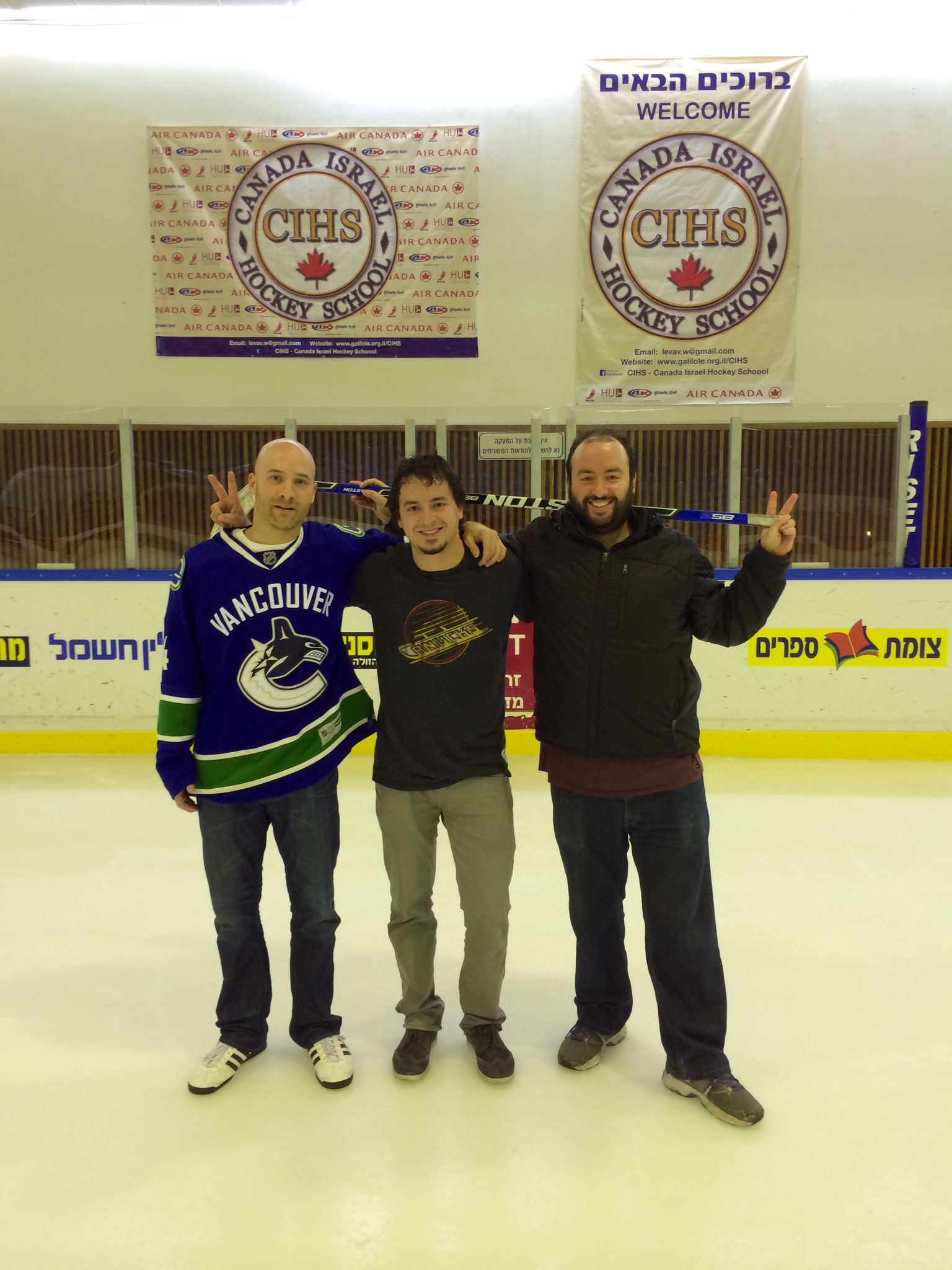
My new friends! A mixed group of Arab and Jewish kids playing hockey together in Israel.

I have to admit that it has been tough to concentrate on much these days with everything going on in Israel this month.

The country and people that I love – along with every Jew around the world – has been fighting a war of epic proportions. Both in Gaza and in the media.

As I have struggled to come to terms with the reality of how deeply rooted antisemitism currently is around the world and how gleefully willing many people are to remain ignorant and naive, I consider what I can do to contribute.

Sure, there are rallies and gatherings to attend, letters to be written to MPs, Facebook posts to share, all with hopes of spreading intelligent information and support for Israel. But I feel myself needing something more tangible to contribute to.

Those feelings and thoughts almost always take me to a program – or mission – I have already embraced the past few years I have visited Israel.

Myself with Daniel (left) and Ariel Wosk on the Canada Centre ice in Metula.

In the very northern tip of Israel, in Etzpah Hagalil – Vancouver’s P2G Partnership region, there is the lone full-sized (actually, Olympic-sized) hockey rink at Mercaz Canada (Canada Centre) in Metula. I have visited it the past three years to participate in the Israel Recreational Hockey Association Tournament (amazing event!) along with several local friends.

In 2013, while visiting, an Israeli friend told me about a new, growing program at the Canada Centre called the Canada-Israel Hockey School (CIHS). Merely 3 years old, CIHS already featured approximately 400 Israeli kids of all ages, wearing a mish-mosh of donated gear and Jerseys, learning to play Canada’s game.

Just watching these kids had already blown my mind. I was beyond enlightened when Coach Mike Mazeika, a non-Jewish Torontonian who has embraced Israeli culture in more ways than one, informed me that among those skaters was a complete mix of Jewish and Arab children. Hockey had brought Jewish teens who had never once spoken to an Arab teen, and vice-versa, together as teammates. Line mates. Eternal friends. And it was working!

Adding to that, I took a look around the stands and saw the parents of all these children cheering together. Ignoring, at least within this small group, decades of religious and political conflict since Israel had been born.

Hockey, Canada’s game, was doing this!

As I watched in awe I declared, “Someone has to document this!” To which Mazeika replied, “Actually, TSN was here a couple of weeks ago.” (see link below)

I was invited to come back and skate with the school before leaving Israel – an opportunity I called the coolest thing I had done on the ice. I returned home from that trip with a few new friends (Jewish, Christian and Druze) and a new commitment to use my role as the JCCGV’s sports coordinator to develop our community’s connection with the Canada-Israel Hockey School.

Team Vancouver returned this past February to an even larger hockey school as founder Levav Weinberg told me of their plans to reach out to even more communities around Israel.

We are currently working with Weinberg on plans to bring a group from CIHS on a Canadian tour with a key stop in Vancouver in the spring of 2015.

In the mean time, I will be returning in February, with whoever wants to join me, to represent Team Vancouver in the tournament (amazing experience as well!) and continue to develop our relationship with CIHS.

If you are hockey inclined and would like to join us to be part of something truly special in such a desperate time, there are always spots on our team!

Here is the link to the TSN documentary Neutral Zone, http://vimeo.com/70459909.

Kyle Berger is a freelance writer and publisher of the Berger With Fries blog.

Format ImagePosted on July 30, 2014September 18, 2014Author Kyle BergerCategories It's Berger Time!Tags Canada-Israel Hockey School, CIHS, Etzpah Hagalil, Hockey, JCCGV, Mercaz Canada, Mike Mazeika
“Israel is an example”: Premier Christy Clark

“Israel is an example”: Premier Christy Clark

Kibbutz Magen member Shunit Dekel speaks via Skype to the almost 800 people who came out to Temple Sholom to show support for Israel. Dina Wachtel, executive director, Western Region, Canadian Friends of the Hebrew University, is at the podium. (photo from JFGV)

Close to 800 people gathered at Temple Sholom the night of July 27 to show solidarity between Canadians and the state of Israel.

Temple Sholom Rabbi Dan Moskovitz started the evening by leading the crowd in “Am Yisrael Chai,” and Jewish Federation of Greater Vancouver chair Diane Switzer read aloud a letter of support from Premier Christy Clark who wrote, “The current conflict in Israel and Gaza is of great concern to anyone who believes in democracy and human rights…. At this difficult time, let us remember the values we share with Israel: a vibrant, culturally rich, democratic nation committed to maintaining the rights of its citizens, regardless of gender or religion. Israel is an example not only to the region, but the world.”

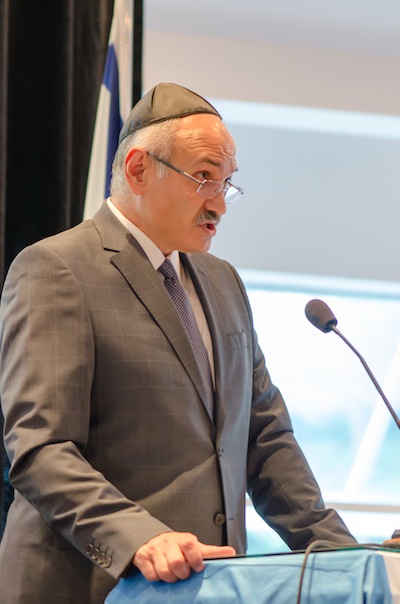
photo - Farid Rohani, a businessman, social activist and a board member of the Laurier Institution, speaks to those gathered at Temple Sholom
Farid Rohani, a businessman, social activist and a board member of the Laurier Institution, speaks to those gathered at Temple Sholom. (photo from JFGV)

The event featured a number of guest speakers, including Shunit Dekel, a member of Kibbutz Magen, and Farid Rohani, a businessman, social activist and a board member of the Laurier Institution. Dekel spoke via Skype from her home 4.3 kilometres outside of Gaza. Her kibbutz was forced into lockdown three times last week, because of the danger posed by the underground tunnels connecting it with Gaza. Rohani addressed the issue of antisemitism in recent social media. Through his own analysis of Twitter, he concluded that the coverage is remarkably lopsided and that “remaining quiet is a disservice not only to the values that we share as Canadians, but to order and what is right.”

The event was a collaborative effort between several local organizations: Canadian Friends of Ben Gurion University, Canadian Friends of Hebrew University, Canadian Jewish Political Affairs Committee, Magen David Adom, Congregation Beit Hamidrash, Congregation Beth Israel, Congregation Temple Sholom, Congregation Schara Tzedeck, Hillel BC, Jewish Community Centre of Greater Vancouver, Jewish National Fund, Or Shalom, State of Israel Bonds and the Centre for Israel and Jewish Affairs, Pacific Region.

At the end of the night, community member Bill Levine remarked, “The tone of the evening was respectful, and stressed our desire for a peaceful resolution. It was good to see the community react in the spirit of coming together.”

Format ImagePosted on July 28, 2014July 28, 2014Author Jewish Federation of Greater VancouverCategories LocalTags Bill Levine, Canadian Friends of Ben Gurion University, Canadian Friends of Hebrew University, Canadian Jewish Political Affairs Committee, Centre for Israel and Jewish Affairs, Christy Clark, Congregation Beit Hamidrash, Congregation Beth Israel, Congregation Schara Tzedeck, Congregation Temple Sholom, Farid Rohani, Hillel BC, Israel, Jewish Community Centre of Greater Vancouver, Jewish National Fund, Magen David Adom, Or Shalom, Shunit Dekel, State of Israel Bonds
Hundreds rally in support of Israel

Hundreds rally in support of Israel

Rally in support of Israel drew a few hundred people to the Vancouver Art Gallery on Sunday afternoon. (photo by Shahar Ben Halevi)

Nearly 300 people gathered around the Vancouver Art Gallery on Sunday, July 27, at noon, to show support for the state of Israel and for peace in the Middle East.

The rally – organized by a Facebook group of Israelis in Vancouver – went peacefully, and there were no apparent counter protests in the area. The supporters carried signs calling for an end to the conflict, and emphasizing that Israel is fighting terrorists and not the people of Gaza.

The rally was covered by several local media representatives, but there were no speeches. The crowd sang together a few traditional Jewish songs and ended the event with Hatikvah, the Israeli national anthem.

Format ImagePosted on July 27, 2014July 27, 2014Author Shahar Ben HaleviCategories LocalTags Israel
Gotta celebrate Gotta Sing!

Gotta celebrate Gotta Sing!

The PNE is hosting a celebration of the 20th anniversary of Gotta Sing! Gotta Dance! and, on Aug. 24, 4:30 p.m., there will be a show featuring 2014 participants in the program, Perry Ehrlich’s ShowStoppers and Sound Sensation troupes, as well as some past participants in these programs. (photo from Perry Ehrlich)

There are several anniversaries in Vancouver’s arts scene this year. It’s the 50th for the Arts Club and the 25th for Bard on the Beach, for example, but the one that hits closest to home is the 20th for the Jewish Community Centre of Greater Vancouver’s resident summer musical theatre program, Gotta Sing! Gotta Dance! (GSGD).

The brainchild of local lawyer Perry Ehrlich, this program grew from a relatively inauspicious start to become one of the premier children’s musical programs in the Lower Mainland. In an interview with the Independent, Ehrlich noted that it all started when he tried to enrol his daughter, Lisa, in musical theatre classes.

“I realized that when I was looking around at the various offerings that I could do a better job and, if I participated with Lisa, it would be an outlet for my creativity and a playground for my daughter and myself. I thought when my kids were finished, that would be the end of it. I never thought it would last for more than five or six years – but I fell in love with the kids and the process and here we are 20 years later!”

photo - Perry Ehrlich
Perry Ehrlich (photo from Perry Ehrlich)

Ehrlich, a pianist, has a strong musical background. While at law school at the University of Saskatchewan in Saskatoon, he played for dinner theatre at a downtown hotel and was the musical director of the faculty’s annual Legal Follies. He also was co-director of Sound Sensation, which rehearsed in Richmond. GSGD owes its name to that group: when Ehrlich was looking for new members for the group, he put an ad in the Vancouver Sun setting out the required qualifications, “Gotta sing, gotta dance.” When searching for a name for his “baby,” he was reminded of that ad and the rest is history.

Over the years, hundreds of youngsters from 9-19 have come to the JCCGV every summer from all over British Columbia, the United States, Europe and Israel to participate in one of the two three-week sessions. Each session culminates in a public performance at the Rothstein Theatre with a bespoke Broadway-like production penned by Ehrlich.

“By writing my own show, we get to do not 10 but 30 songs, all choreographed, so everyone of the kids gets to do something. My philosophy is to teach the kids to get along with each other and to work as a team to develop both personally and artistically – the younger ones work with the older ones and we are like a family.”

Ehrlich treats participants like adults and the program is set up like a school, six hours a day, and the kids are expected to behave responsibly and with respect towards their fellow students and the teachers. Ehrlich has high expectations for his charges and pushes the kids to their limits.

“I don’t want them to be second rate,” he said. “Mediocrity is not an option. With only 13 days from start to end of rehearsal and then three days of performance, this is a pretty intense experience.”

The teachers are a world-class staff with the likes of choreographer Lisa Stevens, actor Josh Epstein and musician Wendy Bross-Stuart. Noting that one of the dance teachers choreographed the Olympic opening ceremonies, Ehrlich said, “The kids are exposed to that message of excellence.”

His three keys to success? “To stand up, speak up and know when to shut up.”

In addition to the base program, Ehrlich runs a finishing school for two hours after each day of GSGD for serious students who get instruction in auditioning techniques from local professionals.

Ehrlich takes the crème de la crème from his annual programs and invites them to participate in a year-round group appropriately named – from what this writer observed while sitting in a rehearsal – ShowStoppers. This mix of energetic, talented young teens performs together up to 20 times a year at such events as the BMO Vancouver Marathon, the Santa Claus and Canada Day parades and the opening ceremonies of the Special Olympics. On Aug. 24, 4:30 p.m., there will be a 20th-anniversary performance at the PNE.

Andrew Cohen, who recently emceed Louis Brier Jewish Aged Foundation’s Eight Over Eighty event, is an alumnus, one of the founding members of ShowStoppers and now a faculty member of the program. “I remember looking forward to summer vacation every year knowing that I would be going to GSGD,” he told the JI. “It grounded me and taught me respect and the work ethic you need to succeed in the industry. It gave me an edge over other kids when it came time to audition for parts. Theatre is an incredible outlet for growing kids. It teaches them the necessary social skills, to have confidence and speak out and up for themselves.” As to the success of the program, Cohen said, “I would say that GSGD is synonymous with children’s talent in Vancouver.”

Parent Mark Rozenberg was effusive in his praise of GSGD, in which two of his children participated. “It allows kids with a passion for singing, acting and dancing to learn and to practise their passion. It is the most amazing program with some of the best instructors. When I sent my children off to the JCC every day in the summer, I knew they were in good hands.”

Nathan Sartore, a current ShowStoppers participant, could not contain his enthusiasm for the program. “It is such an important part of my life and means everything to me,” he said. “I can’t imagine my life without it.”

“I watch these kids coming in as shy, quiet youngsters and see them leave as confident performers…. I teach and expect the kids to make a full-out commitment but also to have fun and laugh.”

Ehrlich said that he was bullied as a child and feels that many young people involved in musical theatre have faced some sort of bullying for their artistic passions. “I see my job as providing a safe, happy, nurturing, learning space where all the kids can develop confidence and self-esteem,” he explained. “I watch these kids coming in as shy, quiet youngsters and see them leave as confident performers. They get the opportunity to work as a team and make lifelong friends in an environment where people are loving and caring. I teach and expect the kids to make a full-out commitment but also to have fun and laugh.”

Ehrlich is grateful to the community for its financial support of GSGD through scholarship funds like the Babe Oreck Memorial Fund and the Phyllis and Irving Snider Foundation, so that no child is turned away from the program for financial reasons.

“I am no different than any father who coaches basketball or baseball,” said Ehrlich. “I am doing exactly what they are doing, creating teams, teaching excellence, building confidence and skills. All of us, in our own way, are giving these kids something productive to do, not just hanging around the local 7-Eleven.”

Productivity aside, walk by the Rothstein Theatre on any given summer weekday and you will hear the sounds of joy coming through the doors. You gotta love it.

Tova Kornfeld is a Vancouver freelance writer and lawyer.

Format ImagePosted on July 25, 2014July 24, 2014Author Tova KornfeldCategories Performing ArtsTags Andrew Cohen, Gotta Sing! Gotta Dance!, GSGD Day, Josh Epstein, Lisa Stevens, Mark Rozenberg, Nathan Sartore, Perry Ehrlich, ShowStoppers, Wendy Bross-Stuart
Peretz Centre opens gallery

Peretz Centre opens gallery

Left to right: Simon Bonettemaker, Hinda Avery, Claire Cohen and Colin Nicol-Smith. (photo by Olga Livshin)

“We decided we’ll be the Peretz Painters,” said Colin Nicol-Smith, one of the collaborators of the inaugural art show that opened on July 16 at the new art gallery in the Peretz Centre for Secular Jewish Culture. The other “Peretz Painters” include Claire Cohen, Hinda Avery and Simon Bonettemaker.

Nicol-Smith knows both Avery and Cohen through the Peretz Centre, and Bonettemaker was his long-term business partner in their engineering consulting firm. In an interview with the Independent, Nicol-Smith said that the idea for the show and the gallery first came up after a conversation with Avery.

“She said that the lounge would be an ideal place for an art gallery. I agreed and put it in front of the board – I’m a member. The board agreed, too. So, I contacted the others, and we decided we would be the first to exhibit here.” The plan is for an annual summer show at the gallery. “All other months of the year the lounge is too busy,” Nicol-Smith explained.

The stories of the four Peretz Painters are as different as their art.

Cohen is a professional artist. She has a bachelor’s degree in fine art and a master’s in art therapy. Her paintings feature the theme of music. The instruments in the paintings blend and dance with other forms, producing multiple and complex associations. Architecture and flowers, people and history mesh with musical nuances – a string, an elegant cello neck, a snippet of notes – as lines and shapes flow into each other. The paintings vibrate with color. They are festive, celebrating the artist’s love of classical music. “Classical music is part of my life. I always listen to it when I paint,” said Cohen.

Art makes her whole and happy, and that’s why she went into art therapy. “I wanted to give more meaning to my art, help others with it,” explained Cohen, who has worked with private clients and addicted teenagers. “I tried to help them focus on expressing themselves through art. Addiction stopped them from feeling, but art is a tricky way to help one to open up. Talking about themselves is hard for them. But, through art, they can.”

According to Cohen, art helps all of us deal with problems, with voids in our lives, and Avery can testify to the therapeutic effect of art in her own life. A former academic who taught at the University of British Columbia, she has been painting full time since she retired. Her artistic journey started after a trip to Europe in search of her family roots.

“Many women in my family, the Rosen family, were murdered by the Nazis because they were Jews. No records exist, but I needed to know them, so I started painting them.” At first, she used old family albums and war photographs to produce her paintings. Her compositions resembled real life and were imbued with sadness, reflecting the Holocaust.

“I depicted the murdered women as grim resistance fighters, but it felt constrained. I wanted to distance myself from the sombre historical reality, wanted the women to win. My latest paintings are like giant graphic novels. The women transitioned into gun-slinging folks. They mock the Nazis. They are not victims anymore, not intimidated. I wanted to confront atrocities with my absurd revenge fantasy.”

The show has two Avery paintings on display. One is a giant panel of “Rosen Women,” dressed in bright yoga tank tops and fitted cropped pants in neon colors, laughing and brandishing their weapons at Hitler. The second is a small, black and white caricature of Hitler. The pathetic little man depicted doesn’t stand a chance against the droll defiance of the Rosen heroines. The artist’s humor keeps her family alive long after they perished in the Holocaust.

Nicol-Smith is another retiree who found an artistic second wind. “I always drew,” he said. “But, as a consulting engineer, my drawings were technical. After I retired 16 years ago, I wanted to paint. I studied painting for two years at Langara.”

He paints from photographs, his own or those taken by others. One of his best paintings, of a Vancouver beach, is based on a photo taken by his grandfather in the 1900s. Unfortunately, it is not in the exhibit. “My wife likes it so much she refused to allow me to sell it,” he said. “My series of paintings on display at the show, ‘Four Significant Figures,’ is comprised of four male images. I’m interested in the topic of a male body.”

Unlike Nicol-Smith, who retired to paint, his former partner, Bonettemaker, hasn’t retired yet. “I’m an architectural technologist, semi-retired,” he said. “I have been painting watercolors for years. As an artist, I’m self-taught, but my paintings are close to architectural designs, very realistic, with distinctive details: landscapes, seascapes, still life.”

Sharp lines and quiet, subdued colors characterize his artwork. His Vancouver streets and shores, totem poles and sailing boats blend reality with fantasy. “I combine photos and imagination in my paintings, sometimes use elements from several different sources in one picture.” All of his paintings are from the 1990s. He hasn’t painted in awhile. “I’m thinking about retiring,” he said. “Then I’ll have more time to paint.”

The Peretz Painters exhibit runs until Aug 13.

Olga Livshin is a Vancouver freelance writer. She can be reached at [email protected].

Format ImagePosted on July 25, 2014July 23, 2014Author Olga LivshinCategories Visual ArtsTags Claire Cohen, Colin Nicol-Smith, Hinda Avery, Peretz Centre, Simon Bonettemaker
Both TUTS shows worth seeing, why not see both?

Both TUTS shows worth seeing, why not see both?

When Fiona (Lindsay Warnock) asks her savior to take off his helmet so that she can meet her prince, Shrek (Matt Palmer) is reluctant. (photo by Milan Radovanovic)

An ugly ogre and a beautiful blonde. You wouldn’t think they’d have much in common, but the similarities stand out when you see Shrek: The Musical and Legally Blonde: The Musical back to back, as the Jewish Independent did this month at Theatre Under the Stars.

In Shrek, the title character was sent out into the world by his parents at age 7. A brave, kind, generous soul, he is feared and harassed (think pitchforks and torches) for his gruesome exterior. He chooses to live in an isolated swamp, alone. But, when Lord Farquaad exiles all the fairy-tale creatures from Duloc – because they are different/special/freaks – they end up in Shrek’s backyard. In need of a hero, they ask for Shrek’s help, which he provides, despite his complaining, because that’s just who he is. Unwillingly accompanied by his soon-to-be best buddy and faithful sidekick Donkey, who is also fleeing Farquaad’s soldiers (because he can talk – and talk he does), Shrek travels to Duloc. There, he makes a deal with Farquaad, who is also in need of a hero – to retrieve Princess Fiona, who has been locked in a dragon-guarded tower by her parents, who assure her that, one day, her prince will come. Farquaad’s intentions are anything but noble, however, and Shrek must ultimately save Fiona from her prince.

photo - Scott Walters as Emmett and Jocelyn Gauthier as Elle Woods work very well together on stage
Scott Walters as Emmett and Jocelyn Gauthier as Elle Woods work very well together on stage. (photo by Milan Radovanovic)

In Legally Blonde, we have Elle. When the musical begins, Elle has her prince and they are set to live happily ever after; that is, until her prince, Warner, dumps her to go to Harvard Law School, where he hopes to find a more serious and appropriate wife for someone of his station. A smart, caring and optimistic soul, she is ridiculed and discounted for her attractive exterior. Instead of running away, as did Shrek initially, Elle fights back, putting her nose to the books and getting into Harvard so that she can show Warner just how serious she is. While she doesn’t have to fend off dragons and soldiers, she must defend herself against unwanted advances and prove herself worthy, not only to her fellow lawyers but to herself. She, like Shrek, doesn’t have to fight alone, but is supported by a trio of besties from back home (who most often appear as a figment of her imagination, as her own Greek chorus, supplemented by other Delta Nu sorority sisters) and a new friend, Paulette. As must the fairy-tale creatures, Paulette also must find her voice, the confidence to stand up for herself and her rights.

Both age-old stories of finding the courage to be oneself, and proudly so, are creatively and humorously told. Though Shrek drags a bit in parts and Legally Blonde doesn’t quite measure up to last year’s production, both are a lot of fun and the talent of the TUTS actors and crews is clear.

Matt Palmer as Shrek, Lindsay Warnock as Princess Fiona and especially Victor Hunter as Lord Farquaad stand out in Shrek, along with great performances from Ken Overby as Donkey, Sharon Crandall as Dragon and John Payne as Narrator – and, truth be told, the entire cast of fairy-tale misfits. Shrek is a top-notch ensemble work in every sense, with the sets (Brian Ball), costumes (Chris Sinosich) and choreography (Julie Tomaino) almost characters themselves. Sarah Rodgers’ direction keeps things moving when they threaten to lull, and the actors’ comedic timing is brilliant, as are their facial expressions and body language.

Legally Blonde didn’t run as smoothly on opening night and, while Valerie Easton’s choreography is once again energizing – it was hard not to dance all the way back to the car after the show – there were a few scenes that seemed rushed, or ill-timed. Jocelyn Gauthier does a solid job as Elle, and she really is the star of the production, although she too is supported by a fabulous cast, notably the actors reprising their lead roles from last year: Cathy Wilmot as Paulette, Peter Cumins as Warner, Jewish community member Warren Kimmel as Callaghan (who seemed even better this year than last) and Scott Walters as Emmett, though Walters once again overplays the part – no one is that cheery … well, except for Elle, but it works for her, not so much for him. Then there’s Jacob Woike as the walking-porn UPS guy, Kyle – so funny.

There is really no reason not to go to TUTS this year. Two high-quality musicals with grade-A performers in an idyllic setting. Quadruple snaps!

Visit tuts.ca for information on showtimes and tickets.

Format ImagePosted on July 25, 2014July 23, 2014Author Cynthia RamsayCategories Performing ArtsTags Brian Ball, Cathy Wilmot, Chris Sinosich, Jacob Woike, Jocelyn Gauthier, John Payne, Julie Tomaino, Ken Overby, Legally Blonde, Lindsay Warnock, Matt Palmer, Peter Cumins, Sarah Rodgers, Scott Walters, Sharon Crandall, Shrek, Theatre Under the Stars, TUTS, Valerie Easton, Victor Hunter, Warren Kimmel

Posts pagination

Previous page Page 1 … Page 634 Page 635 Page 636 … Page 663 Next page
Proudly powered by WordPress