Interpreting time and place

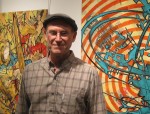
Derek Gillingham at the opening of New Work from the Road. (photo from Derek Gillingham)

Derek Gillingham’s solo show New Work from the Road at the Zack Gallery looks like a travelogue, where the artist’s moments and memories have been captured by a paint brush. The show consists of his abstract paintings of the last few years. “Abstract painting is much more challenging than figurative,” Gillingham said recently in an interview with the Independent. “Such a painting is its own world. I can’t refer to an object, an image when I paint. But shapes and colors fascinate me.”

He explained that his latest artistic trend emerged with the drawings he made in California a few years ago. “Because of my job for the movie industry, I was constantly on the move, never staying in one place for long. I couldn’t paint as I did before – like landscapes of British Columbia. I couldn’t get familiar with any area. No recognizable landmarks. So I went with what I heard and saw: not objects, but colors and music, the sounds of cars and subway tickets, candy wrappers and moss-covered walls. I’d walk from work along a street and see posters, hear songs teenagers play on their phones.

I’d come home and sketch. I made piles of sketches, just scribbles, swirls and smudges, shapes and colors.”

His California sketches gave birth to paintings that reflected the green and gold and warmth of the Pacific coast. There is always the ocean and profusion of greenery. Colors interact and morph into each other, nurturing the whole. Although there is no sense of location, the artist’s inner meditations manifest through the looking glass of his perception.

When he then moved to London, England, his creative tune changed, echoing his surroundings.

“London was cooler and harder. It’s a very energetic, brash, intense city. California is a much softer place. London is also much more urban. Even music is different.”

His sketches changed, too, and the paintings from London don’t have the flowing quality of his California pictures. No bubbles or waves. The canvases sport sharper angles and longer bands. The shapes are leaner, less lush, and the lines dart across the images at full speed, like the rhythms of hard rock.

“I would pass a restaurant on a street, see its red sign and think: I should remember this color. Then I would come home and slash such a red on the painting. My paintings are not chaos. There is balance and order there.”

One of his London paintings resembles a bunch of seaweed. “We were in a Japanese restaurant,” he recalled. “I looked at seaweed, its vivid color. It was so beautiful. I kept the colors and shapes in my head for this painting.”

Another London painting has an unusual name: “Two Women at the St. Paul Colony.” Gillingham explained its etymology. “We were in London during the Occupy movement. There was a camp of those people beside St. Paul’s Cathedral. One day, my wife went there to take some photos, just as I was finishing this painting. Then I checked the internet and learned that one of our friends, another woman, went there at the same time. The painting is not political, but the title seemed appropriate.”

Gillingham said he doesn’t consider his art to be political. “I don’t want to push any agenda. I have opinions, like everyone else, but I don’t transfer them into my paintings. Art shouldn’t be divisive. When I paint, I don’t set up to make someone believe or tell him what to think. It’s more about esthetics. If a piece of my art is going to hang in someone’s home, it’s going to affect people, and I’d rather it inspired something positive.”

His London period produced several large and beautiful paintings, upbeat and positive; as soon as he moved back to Canada, to Montreal, his art changed again.

“I never look back at a location, never revisit. A new place inspires a new theme, a new atmosphere. It always reflects the place.”

In Montreal, he and his wife lived in a small, furnished apartment, with no extra space and, unlike the London paintings (he had a studio in London), the Montreal series consists of very small multimedia pieces.

“Montreal is frenetic, everything is going on,” he said. “The city really has strong street art. There are posters everywhere, posters on top of posters, going back for years. Sometimes someone would try to remove them, and the slice would be a couple fingers deep, revealing layers of letters and colors and zig-zaggy forms. I fell in love with these accidental images. I wanted to incorporate them into my art. I started cutting off the slabs of posters and painted on top.”

His Montreal collages are angular and aggressive, despite their small size. The colors and shapes vibrate and overlap, fighting with each other for space domination.

Only two paintings of the show belong to Vancouver, but Gillingham has only been back in this city for a few months. A Vancouver series is still in development.

New Work from the Road opened on Jan. 8 and will continue until Feb. 8. To learn more, visit derekgillingham.net.

Olga Livshin is a Vancouver freelance writer. She can be reached at olgagodim@gmail.com.
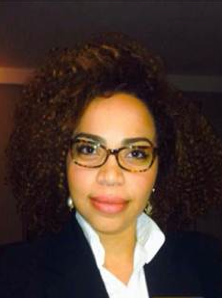
Israeli representative at UN

Rasha Athamni was the first Israeli selected to represent the nation as a youth delegate to the United Nations General Assembly in New York, serving during the 69th session from September through November 2014. The youth delegates program was started 1981 but, until then, Israel had not chosen to participate.

photo - Rasha Athamni was the Israeli youth delegate to the 69th session of the General Assembly, which ran from September through November 2014
Rasha Athamni was the Israeli youth delegate to the 69th session of the General Assembly, which ran from September through November 2014. (photo from undesadspd.org)

Athamni, 29, was raised in the Israeli Arab town of Baka Al-Gharbiyah, the youngest of nine children and the first in her family to graduate high school and university; her parents do not read or write. She earned a bachelor’s degree in psychology and English literature from Jerusalem’s Hebrew University and is currently working on her master’s in English literature. She also guides tours of Israel’s parliament, the Knesset. In her first interview with media, Athamni spoke with the Media Line.

TML: What prompted you to apply to become a United Nations youth delegate … and on behalf of the state of Israel, no less?

RA: Ever since I was a child, my biggest dream was to become a member in this UN society because that’s the ideal, the universality, people go out and help others that are in need. I am a citizen of Israel and I have a right to apply and to go through the interviews, and that’s what I did. When I got the acceptance letter, I was just thrilled. Hundreds applied after there was a call for applicants published on the Ministry of Foreign Affairs’ website. Only 12 or 13 were invited to go through the interview and I was one of them. And then, after the final decision, I got be the first and only youth delegate for Israel for the UN.

TML: Is there a distinction between Israeli Arabs and Palestinians living in Israel and, if so, what is the difference?

RA: Well, it’s a bit complicated – that’s the best adjective that I can use to describe it. It’s a question every Arab citizen in Israel has to answer sooner or later. On the one hand, my mother’s side is Arabic; my parents are Arabs. On the other hand, I live in the centre of Israel and I have an Israeli ID and passport. But, I’m not Jewish, so it’s very complicated. You really need to establish a sense of yourself that is solid enough to represent Israel, especially at the UN.

TML: How did you end up where you are today, studying for a second degree at Hebrew University?

RA: I was primarily motivated by my mother because, ever since I was a little kid, she told me it was very important for me to go to school because that would be the best [chance] that I would have in our society and that I should appreciate that because she herself couldn’t do it. All she really wants in life is that one of her kids becomes a doctor. I didn’t become a doctor. That was disappointment number one, but I did get a degree in psychology and English literature from the best university in Israel, and now I’m doing my master’s in English literature.

TML: How did you get involved with the Israeli government?

RA: About two years ago, the students association at the Hebrew University was looking for a coordinator for a coexistence project that brought together eight Jewish and eight Arab Israeli women students. I applied and got the job. It was a very fascinating year for me and for each one of those students that participated.

It’s very funny when you think about it. Even though they study the same courses and they go to the same classes, you’d see the majority of Jewish students would sit on one side of the hall and the minority on the other side, so there’s this psychological barrier between them. After they got to learn about each other and meet each other, then the hate recedes. That’s beyond nationality, ethnicity or religion. That’s when that barrier just disappeared and they started to sit and study with each other. The Jewish girl would go and teach the Arab girl Hebrew and the Arab girl would go and teach the Jewish girl English.

One of the girls used to work as a tour guide in the Knesset. I needed to support myself, so I got information from her and I applied for the job, and I still give tours in Arabic, Hebrew and English.

TML: How did your family react to that?

RA: My family is very apolitical. They grew up in a society where it was taboo to talk about politics because for them that meant either jail or exile. For me, now, that sounds like paranoia, being afraid to express your own opinion because of your background. There is some truth in that, but they just took it to the extreme. My family was really scared that my being involved in politics or social change or anything that has to do with the state of Israel could mean the demise of my image in my own community, and that’s a fear that they’re still experiencing. My mother, every time I call her, tells me that I shouldn’t do that and it’s never too late back out.

TML: Was there backlash from other Arabs or from Arabs who happen to be of Israeli descent?

RA: At the UN, no. They’re all very diplomatic. Whenever I introduced myself, they said, “Good job as the youth delegate of Israel,” even though that person was from Jordan, Yemen or Egypt. It just didn’t make any sense because they would attack Israel in the committee for human rights but they had no problem talking to an Israeli in the corridors.

TML: You said you represented Israel, responding to different discussions that go on in the United Nations.

RA: After I was picked to represent the youth of Israel, I had a two-month training period at the Foreign Ministry, then traveled to New York for three months, where my job was to summarize the meetings of the committee on human rights. I attended informal briefings at which UN delegates would discuss the terms and wordings of the resolutions, and would also go to events that the delegation would be invited to.

My most prominent moment came when I delivered a speech on behalf of the youth of Israel. This was at the opening of the first meeting of the human rights committee. When it was time for the youth delegation to speak, they spoke about the rights of the youth, why is it really important. Youth belong to a very strange category because they are not children and are not yet adults, so we tend to disregard their needs. A person needs to get a first degree and a second degree in order to just have the opportunity to apply for a job. These are just some of the topics that we covered, along with health, gender equality and education, which is very basic in our country but in other countries is a goal to strive for.

TML: Two of your passions are human rights and social responsibility. What issues were most challenging?

RA: Whenever I attended meetings of the committee for human rights, I had to sit in Israel’s space and, just sitting there, I felt terrified. On my first day, to my left there was Iran. In front of me was Egypt and Jordan, and behind me was Qatar. I felt what Israel feels like at the international level, being under attack even though this was my first experience hearing the attacks. What was interesting for me was how every country would attack Israel disregarding what they do within their own borders. You’d hear the delegation from Syria attacking Israel for violations on human rights, which doesn’t make much sense. A country representing their own people needs to address their own problems rather than pretending that everything is fine within their own borders, and then attack[ing] another country and join[ing] with others who are against it. That country most of the time happens to be Israel.

TML: As an Israeli citizen, how did that make you feel?

RA: It didn’t feel fair. There are always two sides to a conflict. It seemed that one side is more represented than the other side – that other side is Israel. I just felt that someone needs to be given a floor to express and talk about [the] good things that Israel is doing: the humanitarian assistance that Israel is giving to Gaza and the West Bank. There is a project called Save a Child’s Heart. Every Tuesday, a child from Gaza goes to Israel for heart surgery. There are also negatives, but you can’t just focus on that. There is much hope that is being missed when everyone focuses on the bad stuff.

Read more at themedialine.org.

Help soldier-students

Canadian Friends of Hebrew University (CFHU) is raising money to sponsor soldier-students pursuing their undergraduate degrees.

The Jewish calendar is full of remembrances and commemorations underscoring that, as a people, we find value both spiritually and culturally in reflecting and celebrating regularly. This year, the Hebrew University of Jerusalem marks 90 years of post-secondary education and research. Almost a quarter of a century prior to the establishment of the state of Israel,

Hebrew U was laying the foundations for a university, to facilitate higher learning and produce an educated population to build a well-rounded society.

Ninety years is a milestone for any institution. Given the difficult circumstances in which Hebrew U was established, there is even more cause for celebration. To honor this achievement, Canadian Friends of Hebrew University (CFHU) is raising money to sponsor soldier-students pursuing their undergraduate degrees who face financial insecurity as a result of having had to return to active duty with their units instead of earning money to pay for their education this past summer.

More than 1,000 Hebrew U students, many of them from combat units, had their lives put on hold during the Israel-Gaza conflict last year. All of these students had already delayed their entrance into university for three or four years to serve in the Israeli army. Finished with army service, they finally had the opportunity to attend Hebrew U and pursue their educational aspirations. However, during the summer months when they were working to fund their studies, they were called up to join their units and engage in active duty.

CFHU has recognized a tangible, significant way to help these students. Their duty to their country has interrupted their ability to finance their academic interests and CFHU is helping to eliminate the financial stress with scholarships to undergraduate students.

For the Soldier-Student Scholarship fundraising campaign, CFHU has formed a partnership with the elite undercover operation unit of Duvdevan. What better way to recognize the 90th anniversary of Hebrew U than to help students who protect Israel? The campaign will culminate in a celebratory event on Sunday, May 3, at Beth Israel Synagogue. The evening will feature a presentation from Duvdevan soldiers and will give the community an opportunity to understand what it means to be a soldier-student.

For more information about the campaign and the May 3 event, contact the CFHU office at 604-257-5133 or visit cfhu.org/news/the-soldier-student-scholarship-campaign.

Multiculturalism only solution

The murder of 12 at Charlie Hebdo and the murder of four at a kosher supermarket in Paris last week were not just examples of mass murder, violence to which we as a society have become sadly accustomed. These were deliberate attacks on the core values of a free, democratic, pluralist country.

We have long feared that the West might not respond in a stalwart way to such an incident, so the massive march in Paris Sunday, featuring world leaders, was an inspiration and a signal of hope that the people of France will stand on guard for the values of civilization that are epitomized by the rallying cry of that country’s revolution: liberté, égalité, fraternité.

What happens next will truly impact the future of our democracies. On the one hand, there is the potential that media will legitimately and understandably take baby steps in the direction of self-censorship, for fear that gun-wielding self-proclaimed editors will burst through the doors and kill everyone in range.

On the other hand, there is the potential that, in an effort to prove the opposite point, media (and now, with social media, everyone is a publisher) will saturate the discourse with material that is offensive to Muslims. Already, there has been a spike in attacks against mosques in Europe. Extremists on both sides could enflame this situation badly.

More optimistically, voices of reason, like those on the streets of Paris and at the Vancouver rally last week, may more positively affect the course of events.

Freedom of expression is paramount. In a democracy, where rights come with responsibilities, we would hope that people, including media, would use this right responsibly. Yet, even if they don’t – and it is both outrageous that we have to say it and that it is also at the absolute root of this discussion – there’s no case where gunning offenders down or bombing them is justifiable.

Freedom of expression is central to this discussion but, in a way that seems far too obvious to even state, the bigger issue is that people shouldn’t kill people. The four Jewish men who died at the supermarket are not martyrs to free expression. They are martyrs to just being Jewish.

Ultimately, events will probably lead more people in Europe to conclude, as many have already, that multiculturalism is a failed experiment. Certainly, multiculturalism is imperfect, as is any human endeavor. But it remains the best answer, given the unthinkable alternative, which is racial nationalism of the kind we have seen too much.

More bluntly, multiculturalism is unavoidable. We need to make it work. We cannot run to our corners and demand – what? – that they – whoever “they” are – stay on their side of the world and we – who are “we”? – should stay on ours? Because that is, effectively, the only alternative to multiculturalism. And that is plainly impossible, even if it were desirable in some cases. In today’s world, more than ever before, we are truly one people. We need to start acting in ways that reflect this reality.

There is a great deal of anger and incivility in the world today. In the car, in customer relations, certainly on the relative anonymity of the internet, the things people are saying to one another are rife with intolerance, divisiveness and rage. There are no laws that force us to be civil. Yet, there is a spectrum of the way human beings treat one another and many of us probably envision ourselves as more civil than we may deserve to self-regard.

Good citizenship is not only an obligation for newcomers, remember, it is a duty for all of us. As the people who marched in Paris demonstrated, like those around the world who have stood up, including here in Vancouver, acts of inhumanity are precisely the catalysts for us to redouble our own humanity.

E-books for deaf kids

A person – as opposed to an avatar – signs American Sign Language in the eMotion Stories app.

It is hard to beat the pleasure of sitting down with your children or grandchildren and reading them a bedtime story, whether that story is a classic like Goldilocks, a Yiddish folktale or even a book written by someone you know. This simple pleasure was not even an option until recently for families with deaf kids, as Israeli American, Eyal Rosenthal, 34, discovered.

While visiting family in New York, Rosenthal had a chance to read a bedtime story to his nephew before heading out to visit with a friend over coffee. Rosenthal told his friend about his nephew, and she told him about her niece, who was born deaf.

“I asked her how she reads to her niece,” said Rosenthal. “She said, ‘We don’t…. We can go to Barnes and Noble across the street and you can find some books with baby sign language or whatever, but you won’t find any actual story to read to a deaf child.’”

Learning of this inspired Rosenthal to look for a solution. “Being an Israeli, we tend to think we can solve everything,” he noted. And, in this case, he could – he created an app called eMotion Stories.

Coming from a high-tech background and being an investor/developer of apps, Rosenthal initially mulled over the idea of creating an avatar to sign the books for eMotion Stories, but found that it was much simpler and less costly to have a live person do it.

“It’s the placement of a sign, the body language within that,” said Rosenthal. “To try to get an avatar to do that is incredibly difficult and costly, and probably something that’s 10 years down the road.”

The other problem Rosenthal encountered was that sign language varies from country to country. “It’s not a universal language,” he said. “Each country, each region, actually develops on its own.”

While Rosenthal was able to overcome most obstacles by himself, there were two that stumped him – the sign language itself, as noted, and the development work of the videos. “One of the good things about being in Israel, especially in Tel Aviv, is there are developers everywhere,” he said.

Rosenthal found Go UFO, a company that was just getting started at that time. On connecting with the Go UFO team, Rosenthal said, “It was like two minds meeting. The moment they heard the idea, they were like, we love this, we love your passion for it, we want to help you create it.”

Choosing the stories to feature was the next challenge. Rosenthal decided to start with the Brothers Grimm.

Since the whole concept began with Rosenthal wanting to enable his friend to share a story with her niece, he opted to do the stories in American Sign Language (ASL). And, to find a signer for the e-books, he went to New York Deaf Theatre. As for the illustrations, a Go UFO team member’s father was an illustrator, and he offered to have some of his friends help out (making it possible for Rosenthal to afford the illustrations).

“It was interesting convincing people to help when you don’t have the money to pay them what they want and you have to successfully convince them to do it anyway,” said Rosenthal. “That took some learning.”

As of now, five e-stories have been created for the iPad. When downloading the free app, the e-book of The Ugly Duckling is included. Each additional story is $4.59. The stories available are The Ugly Duckling and Goldilocks and the Three Bears so far, with Little Red Riding Hood, Cinderella and The Three Little Pigs coming soon.

Rosenthal would like to produce five more books.

“The classic stories are ones that a parent can relate to because he/she read that story as a child and they can read it to their child,” he said. “One of the unfortunate facts I uncovered in the research is that the level of comprehension for deaf children is several levels below that of [hearing] children. This is a gap that widens through the years. One thing I was hoping was, at least, to be able to bridge that gap. When you’re 6 years old and you’re one year behind, it’s not the same as when you’re in high school and you’re … behind.”

One of the goals Rosenthal has for this coming year is to create a version in another language, one similar to ASL, the simplest example of which would be Canadian Sign Language.

“The guys at Go UFO are trying to create more of a platform where any country can simply add its sign language videos or an individual can add videos to a particular story and modify the text, since the illustrations already exist, to make it more broad,” said Rosenthal.

So far, the app has been downloaded 3,000 times.

“I’ve gotten emails from parents saying that they love it and when are more stories going to come out,” said Rosenthal. “Some were asking when an android version would come out.”

Rosenthal would like to create an android version, but that will require more funding, which he hopes to raise with a Kickstarter or Indigogo campaign.

Many people have been helping move the project along, such as members of the Israeli Society for the Deaf and the Hard of Hearing. Rosenthal has also been recently approached by a deaf Israeli actor who asked Rosenthal to let him know when things proceed on the Israeli front because he would like to help.

Rosenthal said that without the Go UFO programmers eMotion Stories would never have come to fruition. “I’m incredibly indebted to those guys,” he said.

For more information about the app, visit emotionstories.com.

Rebeca Kuropatwa is a Winnipeg freelance writer.

Red rocks, Jewish lullabies

Today’s Sedona Jewish community is spread out over the surrounding Verde Valley. (photo by Lauren Kramer)

“Whatever you do, please don’t write about vortex or New Age stuff!” I was socializing after Friday night services with congregants at Sedona’s synagogue when one of them, overhearing I was a travel writer, approached me with this earnest request. The “vortex stuff” was nonsense, she added – a real estate ploy that had gotten way out of control. Her warning: avoid the vortex at all costs.

I’d come to this Arizona city of 10,000 to check out the red rocks for which it is famous, and couldn’t resist stopping into shul for services. The synagogue was bustling with locals and visitors as Rabbi Alicia Magen’s melodic voice wafted through the sanctuary, serenading us with Sabbath lullabies as she strummed her guitar. After services, my husband and I joined the congregation for a kiddush, noshing on enchiladas and cheesecake as we chatted with locals. Most were retirees from afar who had settled in Sedona, lured by its combination of rugged good looks and the many amenities and festivals, created to cater to the two million visitors who come each year.

Some of them are only too happy to partake in the “New Age stuff” I’d been warned about, an industry spawned from the notion that vortexes, or spiritual energy points, are clustered around Sedona. Vortex tour brochures touted everything from spiritual growth and self-improvement to yoga and personal guidance at those sites.

But you either believe in that stuff, or you don’t – and, since I don’t, I chose to head out on horseback for a better view of the monolithic red stones that have made Sedona a tourism magnet. And it’s no exaggeration to say this: they truly are magnificent. The first time you glimpse them, as you head towards Sedona on Highway 179, you could easily be forgiven for distracted driving. You round a corner and there they are: striking, massive, dignified and unmistakably fiery red.

Later, on a bumpy pink Jeep tour that takes us closer to the red rocks, I learn that these are not mountains but sand dunes that rise up to 6,592 feet. The rocks get their blazing hue from hematite, a reddish form of iron oxide deposited as water seeped through layers of ancient sandstone millions of years ago. Time has carved spirals, hills and camelback shapes into the sandstone, structures that extend their arms to the sky and create a vivid backdrop that can’t help but startle and amaze. “No matter how long I live here, I never get tired of the view,” one congregant told me.

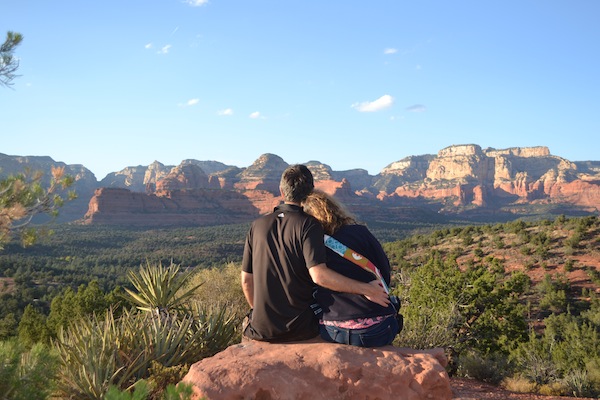
photo - The author and her husband appreciate Sedona’s red rocks, which are not mountains but sand dunes that rise up to 6,592 feet
The author and her husband appreciate Sedona’s red rocks, which are not mountains but sand dunes that rise up to 6,592 feet. (photo by Lauren Kramer)

The average age is 65-plus at Sedona’s Shabbat service; somewhat puzzled, I inquired if there were any children in the community. There are kids, indeed, I was told, but their families can’t afford to live in the city, where home prices start at $500,000 and climb to $2 million. Instead, they have established homes in the surrounding Verde Valley, in areas like Cottonwood, Camp Verde and Prescott. The Sedona Jewish Centre, whose facilities include the synagogue and a Hebrew after-school program, serves the entire valley.

With our Jeep bumping over rocky terrain in the Coconino National Forest, just minutes from Sedona’s retail strip, our guide pointed out agave plants, prickly pear cactus and Arizona cypress trees. Though it may look dry and arid, red rock country is biologically rich, with a range of different plant communities that support a huge variety of wildlife, from peccary herds to fox and coyote, bears, badgers and roadrunners. For archeologists, the ground below us is a living museum littered with fragments from the past, including pottery shards from the Sinagua people who resided in the area until 1400 AD.

Later, back in Sedona’s uptown cluster of stores, I sampled the fruit of the desert: syrupy sweet prickly pear ice cream and a plate of hot cactus fries, before ambling around the strip. Its stores are a touristy mix of art and pottery galleries and made-in-China souvenirs, interspersed with resort timeshare sales people inside so-called tourist info offices. So I cut short the window-shopping and instead, hit the road to try an adventure treetop experience called Flagstaff Extreme.

I admit, I was scared when I strapped on a harness and climbed ladders into the upper reaches of Ponderosa pine trees. I nearly talked myself out of the experience, and it was only my husband’s coaxing assurances that the obstacles looked scarier than they were, that kept me moving. But after a few minutes of navigating through the forest’s pines using swings, ziplines and bridges, my confidence soared. The wind was blowing through the treetops as I found courage I never knew I had. After completing each of the five levels of adventure, an exhilarating wave of achievement washed over me, propelling me forward.

On my final day in Arizona, we joined Mary McDowall for an ATV tour a half-hour from Sedona in Prescott National Forest. The owner of Arizona Offroad Tours, she took us 25 miles into the hilly Verde Valley, pointing out desert willows, manzanita, hollies and other desert shrubs along the way. “This is one of the most beautiful parts of the state,” she said, gesturing at the million-acre forest around us and the mountain plateaus in the distance. Clambering on the spanking new ATVs we powered up a dirt road, then took a sharp turn from it and zoomed noisily along a meandering, dry creek bed created by the swirling waters of flash floods during monsoon season. It was a striking contrast to the boutiques and gift shops we’d been browsing a day earlier in Sedona.

McDowall agreed. “You go to Sedona, you’re going to see Ferraris,” she said with a shrug. “It’s touristy. But if you’re an outdoor person, this is the place for you, because there’s nature everywhere.”

Lauren Kramer, an award-winning writer and editor, lives in Richmond, B.C. To read her work online, visit laurenkramer.net.

If you go:

Auschwitz survivors at 70th

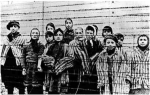
(photo by Alexander Vorontsov via Auschwitz-Birkenau State Museum)

More than 100 Auschwitz survivors from at least 17 countries will travel to Poland to participate in the observance of the 70th anniversary of the liberation of the Nazi concentration and extermination camp Auschwitz on Jan. 27, on the occasion of International Holocaust Remembrance Day. The official event will be organized by Auschwitz-Birkenau State Museum and the International Auschwitz Council. World Jewish Congress and USC Shoah Foundation – The Institute for Visual History and Education will be among the organizations supporting this commemorative event.

The main commemoration will take place in front of the Death Gate at Birkenau. The ceremony will be under the high patronage of Poland’s President Bronislaw Komorowski. Countries from around the world will be sending official delegations, some of which will include Auschwitz survivors.

“This anniversary is crucial because it may be the last major one marked by survivors. We are truly honored that so many of them, despite their age, have agreed to make this trip,” said Ronald S. Lauder, president of World Jewish Congress. “Few moments in the drama that was World War II are more etched in our collective memory than the day Red Army troops came upon, perhaps, the greatest evil of our time.”

“We have to say it clearly: it is the last big anniversary that we can commemorate with a significant group of survivors,” said Dr. Piotr M.A. Cywinski, director of the Auschwitz-Birkenau State Museum. “Until now, it has been them who taught us how to look at the tragedy of the victims of the Third Reich and the total destruction of the world of European Jews. Their voices became the most important warning against the human capacity for extreme humiliation, contempt and genocide.”

“On this special day, we want to show the survivors and the whole world that we, the postwar generation, have matured to our own responsibility for remembrance,” Marek Zajac, secretary of the International Auschwitz Council, added.

Lauder praised the efforts to preserve the site where at least 1.1 million people, most of them Jews, were murdered within less than five years. “Twenty-five years ago, when I saw the stunning truth of Auschwitz for the first time, every part of the former camp was disintegrating. Now, after a monumental effort, it has been preserved for future generations, and that is important in an age of Holocaust deniers.”

Twenty years ago, Lauder, along with Kalman Sultanik and Ernie Michel, raised $40 million from 19 countries in order to ensure that what remained in Auschwitz-Birkenau forever be preserved and bear witness for future generations. Lauder also financed the creation of the conservation laboratory at the Auschwitz Memorial, which preserves every shoe, every document, and every building that remains at the site.

The financing of the long-term preservation is continued by the Auschwitz-Birkenau Foundation. It was created in 2009 to collect €120 million ($151 million US) for the perpetual capital that will finance conservation work and preservation of all authentic remains of the former Auschwitz camp. To date, 32 countries have contributed more than €102 million ($128 million US). The foundation has started the 18 Pillars of Memory campaign to raise the remaining €18 million and it hopes to be able to announce the completion of the project on the day of the 70th anniversary of liberation.

Ahead of the event, World Jewish Congress has located Auschwitz survivors from at least 17 countries who are able to travel to Poland, especially from countries from which Jews were deported to Auschwitz during the war and from countries where significant numbers of survivors settled after the Shoah.

With the help of archivists from the Auschwitz-Birkenau State Museum, USC Shoah Foundation has identified the children from the historic photo seen above, taken by Red Army photographer Alexander Vorontsov who, in 1945, documented the liberation of the death camp. The surviving children are now between the ages of 81 and 86 and have been also invited to participate in the official commemoration.

“Faced as we are with the loss of living witnesses,” said Stephen Smith, USC Shoah Foundation executive director, “it is imperative we honor them and take their stories with us into the future so those who come after us will have no excuse to let such atrocities happen again. Survivors speak not only for themselves, but for the millions whose voices were violently silenced.”

Specialty camps work

In the early to mid-2000s, research estimated that only 10 percent of the Jewish youth population were being served by existing Jewish camps. There was concern that many Jewish youth were instead attending non-Jewish camps that offered more unique opportunities. Developing competitive Jewish “specialty” camps that combined traditional Jewish camp values with activities such as sports, outdoor adventure and fashion became a way to bring more youth into the Jewish camping world.

In 2008, with a $10 million investment from the Jim Joseph Foundation, the Foundation for Jewish Camp (FJC) launched the Specialty Camps Incubator (Incubator) to support the creation and development of five new Jewish specialty camps. A key purpose of establishing the new camps was to attract Jewish teens who were not attending other Jewish camps.

In 2009, the Jim Joseph Foundation engaged Informing Change to design and implement a multi-year evaluation of the Incubator, assessing whether and how the program was achieving its intended outcomes. Based on the success of the first Incubator, FJC and JJF partnered with the Avi Chai Foundation to establish the second Specialty Camps Incubator, introducing four new camps to the field in summer 2014.

The Incubator initiative started with a competitive application process for new specialty camps followed by provision of start-up capital and a range of supports to the five selected camps. Similar to for-profit business incubators, the Incubator used a cohort approach in which the camps learned together while building innovative, high-quality programs and attracting new customers. The Incubator provided six core program components to support the camps’ development: workshops, mentors, customized technical assistance, networking opportunities, peer/cohort learning and evaluation.

Informing Change’s evaluation of the Incubator and its camps from 2009 to 2013 addressed five questions that examined whether and how:

  1. The new camps had expanded available opportunities for Jewish youth to attend camp.
  2. The new camps had positively influenced camper attitudes and behaviors about living a Jewish life and broadened their networks of Jewish peers.
  3. The new camps had developed into sustainable and effective nonprofit camp organizations.
  4. The Incubator method was an effective strategy for developing and supporting new nonprofit Jewish camps.
  5. The different specialty camp models met JJF’s goals for the Incubator.

The evaluation focused on the cohort of camps as a whole and their aggregate results, rather than evaluating each camp individually. Informing Change provided annual results on camp growth and development to the individual camps as well as support to the camps when interpreting their results and comparing against the aggregate. Each year, the evaluation applied a mixed-methods approach to data collection, which included interviews, surveys, secondary data, observations and organizational capacity assessments. Evaluators surveyed campers both before and after camp; parent surveys were administered after campers had been home from camp for nine to 11 months.

The new specialty camps successfully developed their unique brands and reputations, which helped grow their enrolment. Data suggests that, during their short time of operation, the Incubator camps also successfully created a sense of community for their campers.

Enrolment: Incubator camps served a total of 2,713 unique campers in their first four summers of operation, with enrolment growing 138 percent from the first summer. Incubator camps helped increase the overall number of youth served by residential Jewish camps.

Retention: While the rate of camper retention varies in the five camps, Incubator camps as a group are retaining more than 50 percent on average of their campers from year to year. This is considered a high retention rate for specialty camps. Responses from non-returning campers and their parents suggest that many campers do not return to camp because they and their families are juggling large numbers of interests and commitments, not because they had a negative experience or were dissatisfied with the camp.

Recommending camp to others: Parents are highly satisfied immediately after camp and, a year later, 92 percent of parents and 81 percent of campers had recommended an Incubator camp to a friend. Almost one-third of campers had a friend actually attend an Incubator camp after their recommendation.

Satisfaction and belonging: 91 percent of campers felt like they belonged when they were at camp and 92 percent were very happy with their experiences at camp.

In the camps’ first three summers, 38 percent of all campers were attending a Jewish camp for the very first time, a markedly higher proportion than the national averages of 26-29 percent in other Jewish camps over these same three years. The Incubator camps also attracted teens who were not likely to attend any camp, Jewish or non-Jewish, and attracted youth who could be considered in the low to moderate range of Jewish affiliation. Of the campers who attended a session in 2012, 76 percent said the specialty was the reason why they first chose to attend the Incubator camp and it was also among the top reasons why they chose to return for another summer.

Overall, reports from campers and their parents suggest that the camps are helping shape youth in many ways: to be more positive and enthusiastic about being Jewish, to learn more about Judaism and being Jewish, to feel closer to other kids their age who are Jewish, to become more active in Jewish community activities and organizations, to improve their skills in the specialty offered, and to be more confident in themselves overall.

 – From New Jewish Specialty Camps: From Idea to Reality