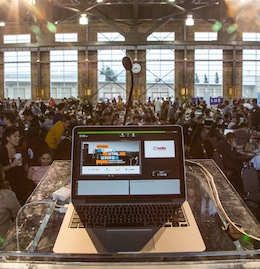
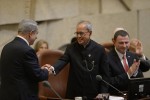
On June 14, the board and staff members of all the Jewish housing societies met to discuss the progress they have made, the issues they are facing both collectively and individually, and how they can work together to solve them. Attendees included members from societies for seniors (Louis Brier Home and Hospital and Weinberg Residence, Vancouver Jewish Building Society and Haro Park Centre), singles and families (Tikva Housing Society) and people suffering from mental illness (Vancouver Yaffa Housing). Though there have been discussions in the past, this Jewish Housing Forum was the first outlet that provided all the housing societies a medium to come together and voice their opinions, concerns and future goals.
There has been strong support from the housing societies, donors and the Jewish Federation of Greater Vancouver for the societies to initiate an open dialogue and find a way to amalgamate all of their strengths to provide the best support possible for those who need it most.
“The forum was a successful, and necessary stepping stone for the future of housing in the Jewish community,” said Susana Cogan, Tikva Housing Society’s development director. “Based on the feedback we’ve received, the overall consensus is that it was very productive and we’re looking forward to meeting in the near future to exchange developments prompted by this forum.”
Some of the issues discussed included communication among housing organizations, issues residents are facing (i.e., transition from independent living to supported living), lack of awareness of the societies’ services in the community, and donor funding. Upon breaking into groups to discuss these issues, participants agreed on a number of suggested solutions, such as more communication among societies, holding regular meetings to exchange information, the sharing of resources, the need to access more units for community members and working together when dealing with acquisitions.
All of these housing societies are continuing to excel independently, so exploring the ways they can work together demonstrated how they can better serve and help support the community.
Hannah Konyvesis a volunteer with Tikva Housing Society.
After having spent decades trying to visit Wilensky’s lunch counter, made famous by the Mordecai Richler novel and film The Apprenticeship of Duddy Kravitz, I finally made it to the weekday-only Mile End joint in Montreal a couple of months ago.
It’s a modest place with a tiny menu – two main course options, a few beverages and – for those seeking vegetables – pickles. As I finished my Wilensky’s Special (a fried bologna, salami and mustard sandwich on a kaiser) chased with a chocolate egg cream, I spotted a neighborhood fixture finishing his hotdog: Socalled (aka Josh Dolgin), the Yiddish hip-hop artist and music producer. He has been dubbed “hip-hop’s answer to Mordecai Richler.”
We made our way to a St. Viateur patio for coffee as we spoke about his latest album, his growing up in Gatineau, Que., his love for early Yiddish film, his views on Zionism, and the art of musical “sampling.” Our impromptu interview was interrupted frequently. Like the King of Kensington, Socalled seemed to know everyone in the neighborhood.
Socalled had been on my radar since my husband brought home his Passover album, The Socalled Seder: A Hip-Hop Haggadah, 10 years ago. In that album, ads for Manischewitz, along with Passover dinner table chatter, are sampled over a driving hip-hop beat; the track “The Ten Plagues” features the lyricist rapping that “sometimes bad things happen to bad people for a good reason, you dig?,” the “Miriam Drum Song” features an urgent fiddle, and the hip-hop single called “Who Knows One” is heavily klezmer inflected.
His latest effort, Peoplewatching, is perhaps more accessible musically, and is frequently quite beautiful, though whatever Jewish aspect is there is much more subtle. Still, Dolgin insists that his Yiddish interests influenced him. He explained that the track “Never See You Again” features a chord progression from an Abraham Ellstein song used in the wedding scene of the 1936 film Yidl Mitn Fidl (Am, A7, D7, F7, E7, Am – for readers with a piano or guitar nearby). There are a couple of bits of klezmer. And there is a sad and pretty song about Shabbat candles starting a fire near his Hutchison Street apartment in Mile End.
As for the sampling so integral to his music, Dolgin describes it as “giving you sounds with the atmosphere cooked in…. It’s archeological. It’s like cultural alchemy.”
My fellow Canadians in particular will no doubt be tickled by the final track, “Curried Soul 2.0.” Familiar to radio listeners as the theme to the CBC Radio nightly current affairs program As it Happens, “Curried Soul” is featured here in an extended version of the remix that CBC invited Socalled to produce. In a charming bit of hyperbole, Dolgin told a CBC interviewer that he was daunted and floored by the opportunity to tinker with the show’s theme because he “heard it every single day of my life.”
It’s not only Canadian listeners who have been privy to that storied evening broadcast: some Israelis have been featured on the show as well, including Meretz MK Michal Rozen and Tel Aviv-based pollster and political commentator Dahlia Scheindlin.
These days, beyond promoting his new album, Dolgin is busy with a Yiddish barbershop quartet he founded called Julius, in homage to the Oscar Julius Quartet. Many of the songs Dolgin’s quartet performs were originally in Yiddish translated into English, which Dolgin helps put back into Yiddish.
I was curious about what motivated Socalled to seek out Yiddish in the first place (a trip to a Salvation Army vintage record collection supplemented by a textbook called College Yiddish) and whether his continuing interest in the language and culture has anything to do with a rejection of Zionism – the nationalist movement which sought to “negate the Diaspora” in its urgent, Hebrew nation-building project (not so, in his case).
“I don’t believe in countries or nationalism,” Dolgin said, “but if we are going to live in a world with countries or nations, it’s not insane for the Jews to have a country.” He added, “I think Palestinians should have a home, too.” That said, he stressed that he is “more ashamed by how Canada has treated its aboriginal people. I’m more worried about the report on residential schools.”
Politics aside, I wondered whether Dolgin gets to speak any Yiddish these days. He does: at Yiddish festivals around the world, with an “old Jew he met in Russia” and, most often, with his Chassidic landlord. It’s Montreal’s Mile End neighborhood, after all.
Mira Sucharovis an associate professor of political science at Carleton University. She blogs at Haaretz and the Jewish Daily Forward. A version of this article was originally published on haartez.com. For an in-depth interview with Socalled, visit jewishindependent.ca/oldsite/archives/oct11/archives11oct07-01.html.
Alon Bar-David, co-founder and co-chief executive officer of Red Button. (photo from Red Button)
While cyberbullying is a relatively new phenomenon, bullying is as old as human history. From the playground to the office to cyberspace, it is remarkably transferable from one platform to another. But three young Israelis have developed a technology to reduce its progress on the latter front – the Red Button.
Winner of a “Stop Cyberbullying” competition held in Israel three years ago, the app’s red button, when pressed, sends a screen shot to one of the many volunteers who work with Red Button. If the content is deemed inappropriate, it is reported to the website – whether that is Facebook, YouTube, Google or JoeSchmoe.com – so that the content can be removed.
In some cases, the Red Button team has permission to remove the content; in other instances, the content is relayed to cyberbullying police, schools, business owners or even hospitals, if need be.
“When we published the Red Button and it went on air in December 2013, we saw for the first time just how cruel cyberbullying can be,” said Alon Bar-David, 27, co-founder and co-chief executive officer of the nonprofit.
In Boston, working with a business accelerator there to bring the app to North America, Bar-David told the Independent, “As soon as we published the Red Button, we received a lot of response, a lot of requests and we finally understood just how big the problem is and how big our solution needs to be.”
The app’s red button, when pressed, sends a screen shot to one of the many volunteers who work with Red Button.
When a user presses the button, an anonymous report is sent to the Red Button team. “They do not need to identify, they do not need to register,” explained Bar-David. “They only need to download it for free, press on the red button, and a screen print is sent to us.”
Currently, the app is available to Android users and it can be accessed via Google Chrome or Firefox. It can also be used as a web extension to the browsers. The company is working on an iPhone version.
Bar-David and the Red Button team receive hundreds of reports every day and there are dozens of volunteers who analyze them. When cyberbullying content is detected, the volunteers escalate the report to the appropriate place.
“Up until now, we’ve removed 95 percent of the [reported material] deemed to be cyberbullying,” said Bar-David. “We review the violence over the network in Israel. Before, no one was doing anything against the phenomena.
“We have access to many websites in Israel. We have a lot of power in our hands. We can really reduce cyberbullying.”
One of the most important ways Red Button is able to help is in suicide prevention. When the reports come in, they are directed to the suicide prevention police unit. “In 2014, we were able to help [prevent] more than 40 cases of attempted suicide and have a representative go to their home and save lives,” said Bar-David. “These are the only cases where an IP address is provided to police, so that they can get a location.”
Another big component is education. “We go to different schools every week and teach the kids what cyberbullying looks like, explaining what cyberbullying actually is,” said Bar-David. “Because most children, students, don’t know what cyberbullying is, they would not recognize it.”
The Red Button educators explain what it is. “More important than that,” he added, “they explain how to deal with the phenomena. They give them tools, the Red Button and a lot of other tools, and, every week, we go through different schools all over Israel.”
To find affordable, qualified staff, Red Button collaborates with Israeli universities. “The one that we have the biggest collaboration with is the Interdisciplinary Centre in Herzliya, Israel,” said Bar-David.
To generate interest from the general student population, the participating universities give school credits to the volunteers. There were more than 200 applicants last year to fill 50 spots.
“But the reason the students do it is because they think it’s important,” said Bar-David. “We only take students that really feel a connection to the issue we’re dealing with.”
As Red Button understands better than most, cyberbullying is a global problem. “We think that the Red Button should be all over the world because the cyberbullying phenomena isn’t just in Israel,” said Bar-David. “It’s a bigger issue all over the world, especially in the U.S. This is the reason we are here [in Boston]. We want to see the market here and see how to implement the Red Button here in the U.S.”
Bar-David is also interested in Red Button’s potential use in Canada. Noting that he just saw an article about cyberbullying on a Canadian news website, he said, “I understand if it gets to the news, that means the problem is very familiar in Canada. I hope we will be in Canada as soon as possible. Some people would like us there yesterday.”
For more information or to donate to Red Button, visit redbutton.org.il. While the site is only in Hebrew at the moment (the team is working on changing that), an English or Hebrew email can be sent to [email protected].
I’ve never really been able to meditate. At least not in the formal way most people depict meditation. There have been no ohhmmmm moments for this guy.
Oh, I’ve tried – with the most patient teacher I’ve ever known. But “calm” doesn’t seem to help me clear my mind. It actually opens the door for every possible thought to prance around like they own the place. Instead of walking out of a meditation session with a sense of peace, I’d walk out with a long to-do list of things I just remembered I had to do.
That said, several years ago I realized that I do have meditation’s version of a best friend (for me anyway) … ice hockey! While going through a challenge-filled time in my life I discovered that no matter what was going on in my noggin all day, the moment I stepped onto the ice to compete my mind immediately focused on one thing and one thing only – the game in front of me. My focus became singular for that minute or so shift.
I mean, who has room to think about stresses at work or home when your heart is being pushed to 170 bpm while being chased down the ice by a 235 lb dude on sharp blades? I was grateful I had that escape.
I found that kind of focus again recently when I took on the infamous Grouse Grind – Greater Vancouver’s natural supplement for addicts of torture and misery.
Other grinders looking happy!
Prior to this summer I had avoided the Grind for several years. With the exception of the cold beer that awaited at the top, I never enjoyed a darn thing about past climbs. However, now 25 lbs lighter and in much better shape than I was in my “why can’t we have nachos for breakfast?” days, I was actually looking forward to seeing how it felt this time around.
OK, well, it still seemed like a fairly torturous way to spend a Sunday morning (you were expecting me to love it, weren’t you!?). I pushed myself hard enough that throughout the final quarter I wasn’t sure if I’d die of an exploding chest or simply by passing out and falling backwards.
However, guided by pride (rather than beer), I creamed my old times with a solid 46-minute scamper. Aside from the personal sense of accomplishment and still-functioning lungs, what I really took from my excursion up Grouse Mountain was that discovery of another personal form of meditation.
Not more than 10 steps into the trek, my mind narrowed in on two simple things until the very end. I saw only the next step/rock I needed to take and heard only my breath – I don’t even remember the music playing in my headphones.
The half-way marker. Which arrives when most expect the finish to appear.
For 46 minutes I thought of nothing except what was right in front of me and the life that ran through my body.
I do wish I could find such life clarity in a less strenuous environment from time to time – say, bearing down on a bowl of chicken wings or buying shoes (don’t judge) – but I think it’s important for everyone to find their meditative niche and connect with it when time permits. Despite complete exhaustion and tight quads, I came off of the mountain feeling mentally refreshed in a way I hadn’t been in a long time.
Go out and find your cup of refreshing ohmmmmm. It’ll be worth it!
ידיד של ישראל: ג’ייסון קני מגיע לוונקובר באוגוסט לערב ראיונות של המרכז לענייני ישראל והיהודים בקנדה
שר ההגנה והשר לענייני הרב-תרבותיות בממשלת השמרנים של סטיבן הרפר, ג’ייסון קני, יגיע בחודש הבא לערב ראיונות מטעם המרכז לענייני ישראל והיהודים בקנדה. האירוע יתקיים ביום ראשון התשעה באוגוסט בבית הכנסת ‘טמפל שלום’, בשעה שבע בערב. זאת במסגרת ערבי ראיונות עם הראשים והמנהיגים של שלושת המפלגות הגדולות, לקראת הבחירות הפדרליות שיערכו ב-19 בחודש אוקטובר. קני ידבר בעיקר על החשיבות של קהילת היהודים באזור מטרו ונקובר והתמיכה הרחבה בישראל. לציבור הרחב תהיה אפשרות להעביר שאלות לשר קני, וניתן להזמין מקומות ישיבה לאירוע עד השישה באוגוסט.
שר ההגנה והשר לענייני הרב-תרבותיות ג’ייסון קני. (צילום: US Mission Canada Flickr)
השר קני נולד באוקוויל אונטריו ב-1968. הוא נכנס לחיים הפוליטיים ב-1997, ומכהן בתפקידי שר בשלושת הקנדציות האחרונות של הרפר.
כמו הרפר קני הוא ידיד קרוב מאוד לישראל והוא תומך במדינה לאורך כל הדרך. קני שנחשב למקורב של הרפר והוא גם שר בכיר בממשלתו, מועמד מוביל לתפקיד ראש מפלגת השמרנים ומועמדה לראשות הממשלה, לאחר פרישתו של הרפר. שר ההגנה ביקר בישראל מספר פעמים, והוא משתתף קבוע באירועים בקנדה של הקהילה היהודית והארגונים הישראלים. קני ביקר לאחרונה בישראל בראשית שנה שעברה, כחבר במשלחת של ממשלת קנדה בעת ביקורו הרשמי של הרפר. הוא ביקר אז במיזם של מיחזור מים אפורים שהוא פרוייקט של קק”ל, ואמר: “אנחנו גאים מאוד במה שקק”ל קנדה עושה. אין לכם מושג כמה זה מעודד לראות במו עייניי את המיזמים שאנחנו מקדמים עם קק”ל”.
בחודש יוני האחרון הגיע קני לביקור רשמי בפולין, אותו הוא פתח כנציג קנדה באירוע לזכר קורבנות גטו ורשה. השר ביקר גם במוזיאון להיסטוריה של היהודים בפולין.
נגמרה החגיגה: אחות שביזבזה שמונים ושישה אלף דולר שקיבלה בטעות הועמדה לדין
אחות מובטלת ממונטריאול שביזבזה אלפי דולרים שלא שלה, הועמדה לדין על גניבה ובית המשפט המקומי הרשיעה לאחרונה בדין. האחות בת הארבעים ושתיים ניגשה לסניף הבנק שלה במהלך שנת 2011, וביקשה מהטלר בסך הכל מאה דולר אמריקניים. בגלל טעות מביכה וחוסר עירנות מצד הפקיד בבנק קרדיט יוניון, הוא הפקיד בחשבונה לא פחות ממאה וחמישים אלף דולר.
האחות שקלטה מהר מאוד את דבר הטעות החליטה שלא לדיווח על כך לסניף בנק שלה. במקום זאת היא החלה לחגוג עם הכסף שלא שלה וביזבה בנדיבות שמונים ושישה אלף דולר. וזאת במהירות גדולה יחסית של תוך שלושים ושלושה ימים. היא הוציאה מחשבונה את הכסף בשטרות גדולים ובסכומים גבוהים, של בין מאתיים וחמישים דולר לאלפיים וחמש מאות דולר. וכל זאת עד קרידט יוניון שפתח בינתיים בחקירה ארוכה והבין שיש בעייה, החליט לקפיא את חשבונה. להלן רשימת ההוצאות החלקיות של האחות על חשבון הברון: טיול יוקרתי עם כל בני המשפחה בעלות של כששת אלפים דולר, שיפוצים נרחבים בדירה בעלות של כעשרים אלף דולר, תכשיטים ובגדים יקרים וארוחות שחיתות במסעדות.
אך מתברר של כל חגיגה יש סוף והבנק שכאמור פתח חקירה עלה על הטעות החמורה של הפקיד, ודרש בחזרה את מלוא הכסף. האחות סירבה להחזיר את הכסף והבנק הגיש תביעה נגדה לבית המשפט. לשאלת השופט העלתה הנתבעת טענה מגוחחת שקיבלה את הכסף כביכול מדוד שלא הכירה בספרד, לאחר שעורך דינו שלח לך מכתב בנושא. בית המשפט לא קנה את הגירסה הלא האמינה של האחות למקור הכסף שהגיע כביכול לידיה וכאמור הרשיעה.
Image from the movie Amy. Amy Winehouse died four years ago this month. (photo from epk.tv)
Amy Winehouse, the brash little Jewish girl with the great big voice, died four years ago this month. There are any number of ways to mark that unhappy anniversary and draw inspiration from the British singer-songwriter’s artistic legacy. Subjecting yourself to Amy, Asif Kapadia’s unattractive and superficial documentary, is not the recommended option.
Amy opened on July 10. Strewn with grainy video footage shot by Winehouse, her family and friends over several years, the film is conceived as an intimate, behind-the-scenes portrait of a very public, very talented figure. Given that Winehouse mined her troubled relationships for her pain- and yearning-filled lyrics, it makes sense to conflate her creative and personal lives. But, rather than highlighting Winehouse’s artistic courage and her commitment to confronting and conveying hard truths, Amy presents its subject as weak, insecure, volatile and vulnerable. In lieu of insight, Kapadia offers amateur psychologizing.
In Amy, filmmaker Asif Kapadia can’t resist focusing on Winehouse’s low points. (photo from epk.tv)
The list of culprits goes way back. When Amy was a toddler, her mother wasn’t strong enough to stand up to her or rein her in. (Had her mother set firm boundaries all along, who’s to say the free-thinking Amy wouldn’t have rebelled and run away as a teenager?)
Her father cheated on her mother for years before they divorced when Amy was an adolescent. We are left to conclude that this is the source of Amy’s neediness, promiscuity, vulnerability and poor judgment regarding men. (Mitch Winehouse resurfaces once her career takes off, which allows Kapadia to imply that he was more concerned with Amy’s income streams than with her health.)
Oddly, no other facts about Winehouse’s upbringing are deemed to be relevant, including what kind of work her parents did or how they instilled her Jewish identity.
We infer that the North London family was lower middle-class, without connections or access to opportunities for their children. From the playful, self-deprecating way Winehouse refers to herself in messages left on answering machines, it appears that she associated being Jewish with being a curiosity and an outsider.
Although lyrics were important to her, there was no literary component to Winehouse’s Jewish identity. Her musical idols weren’t Jewish wordsmiths such as Bob Dylan, Laura Nyro or Paul Simon but vocalist/interpreters Sarah Vaughan, Billie Holiday and Tony Bennett. (Bennett’s collaboration in the studio with an awestruck Winehouse on “Body and Soul” for his Duets II album – reportedly her last recording – is one of the more wrenching sequences in Amy.)
The film also casts some responsibility for the 27-year-old’s premature demise on her bad-boy lover and eventual husband Blake Fielder-Civil. She followed his lead into hard drugs out of some twisted combination of love, obsession and need.
Finally, Kapadia tosses the pressures of fame and the pursuit of the paparazzi into the mix. If Amy is starting to sound like the familiar, formulaic shape of an episode of VH1’s Behind the Music, your hearing is excellent.
The documentary’s big revelation – which is withheld until late in the film, giving it a sensationalist vibe – is that Winehouse was bulimic. Had Amy presented her illness as a defining (albeit secret) characteristic from childhood instead of withholding it for dramatic purposes, the documentary’s social utility would be infinitely greater.
Regrettably fulfilling the clichés of too many portraits of artists, Amy can’t resist being drawn – like the proverbial moth to a flame – to the sordidness, unhappiness and public embarrassment that denoted Winehouse’s low points.
Thankfully, what will remain long after the details of her life have faded into trivia on a Wikipedia page is that extraordinary voice. The best way to mark Amy Winehouse’s life is to listen to her music.
Amy is screening at Fifth Avenue Cinemas and Cineplex Odeon International Village. It is rated R for language and drug material. It runs 128 minutes.
Michael Foxis a writer and film critic living in San Francisco.
From left to right, Echoes artists Sidi Schaffer, Sorour Abdollahi and Devora. (photo by Olga Livshin)
The term “artistic brotherhood” was coined in the 19th century. Among the most famous of such brotherhoods were the Pre-Raphaelites in England and the Canadian Group of Seven, and every brotherhood was comprised of artists united by similar artistic principles. Recently, such an artistic union appeared in Vancouver, but it is a sisterhood, compromising Sidi Schaffer, Sorour Abdollahi and Devora. They call themselves Echoes.
The trio’s first combined show was at the Sidney and Gertrude Zack Gallery in 2008. It was a success, and they have repeated the experience twice over the years. Earlier this month, they opened their fourth show together. Called Three Echoes: Harmony through Art, it opened July 8 at Britannia Art Gallery.
Even though their initial collaboration started by chance, the artists have stayed together as a cohesive group because of their common outlook on life and art. Despite differences in their ethnic and cultural origins, their humanity and the ties of friendship transcend age and space, traditions and societies.
Schaffer was born in Romania, a child survivor of the Holocaust. She received her first artistic education in Israel, but Canada allowed her to thrive as an artist. At various stages of her creative development, she has tried different expressive formats, and now she blends them all. Her paintings have figures in them but they tend towards the abstract, hinting at multiple meanings and deep, complex emotions.
Inspired by nature and by her beloved Israel, Schaffer uses mixed media – painting, collage, glue, melted wax and a number of others – in her imagery. Her art minimizes the gap between abstract and figurative, between dreams and life. Playful and nostalgic, her paintings infuse the show with the elemental simplicity of her early childhood.
“We keep the name Echoes,” she said, “because our art is echoing our lives and our pasts, our different backgrounds, and our common present. We regard art in a similar way, although we’re inspired by different matters. Devora draws her inspiration from inside. I find inspiration in nature, while Sorour seeks hers in the rich cultural heritage of Persia.”
Like the other two Echoes, Abdollahi is an immigrant. She came to Canada from Iran in 2000. But, unlike the other two, she is not Jewish. Ancient Persian culture permeates her paintings with generational memories. “My paintings are a bridge between the old Persia and the young Canada, a negotiation between history and modernity,” she said.
Abdollahi’s paintings are as much a declaration of her inner manifesto as they are a mystery for viewers to explore, often on the visceral level. “Many old buildings in Iran have mysteries in them. A half-hidden corner. An invisible door. Architecture has layers, some showing, others not, through the centuries of history. I like to reflect that in my paintings. I say with my art: look, there is something here, but I don’t say everything. I let people guess and imagine.”
She explained that both her Iranian roots and her Canadian experience have influenced her works enormously, creating a conversation between the old and the new, juxtaposing West and East. “Ancient ruins play a pivotal role in my paintings,” she said. “They enable me to express the conflict between different cultures and societies…. My paintings capture the process of change and its effects through the use of layers and textures.”
Although her works’ essence leans towards the abstract, playing with bright colors and enigmatic shapes, there is always a core of reality in every painting, that hidden door through which we are invited to glimpse the artist’s private landscape.
“Our art connects us,” said Abdollahi of Echoes. “We complete each other as artists. Each one of us, like everyone else, in every city and country, is reaching for peace, for the world without borders between people and nations. We are trying to achieve such a world through our art.”
Devora is the one who brought Echoes together.
She met Schaffer during the Gesher Project, which the Vancouver Holocaust Education Centre website describes as a “project undertaken by Vancouver Holocaust survivors, child survivors and adult children of survivors. They met over a six-month period in 1998 to examine the impact of the Holocaust on their lives. They explored these experiences through painting, writing and discussion assisted by facilitators…. The project culminated with the mounting of the Gesher [Bridge] exhibit.”
Devora attended an art class with Abdollahi. Later, she introduced her two new friends to each other, and Echoes was born as an informal collective.
A transplanted American, Devora is a firm believer in dialogue between cultures. Her paintings are fully abstract, with colors flowing around each other, energy spiking, and whimsical forms unfolding into new revelations.
“My art reflects my personal search for clarity,” she said. “I am fascinated by dreams and fantasy and the interplay with the concrete and tangible. I am interested in what is hidden, how it informs what is revealed, and the tension and symbiotic relationship between the two.”
In her introductory remarks during the show’s opening, Devora talked about the closeness of the three Echoes members, despite their seemingly contrasting cultural foundations.
“When we go to an art show of some other artist, we always end up in front of the same painting, and our reactions are similar,” she said. “We have the same artistic taste. Our mutual experience as immigrants in Canada forms one of the many bridges that connect us. Our artistic ideas enrich each other, allow us a deeper understanding and lead to transformative commonalities…. Our esthetic communication is a model of a peaceful world, a microcosm of a greater ideal of partnership, a proof that it can be done.”
Three Echoes: Harmony through Art is on display until July 31.
Olga Livshinis a Vancouver freelance writer. She can be reached at [email protected].
The multiple-award-winning singer, songwriter, guitarist and producer is well-known to many in the Jewish community, having performed at Rothstein Theatre and in the Chutzpah! Festival a number of times, including opening for Idan Raichel last year. Her most recent CD is Hearts Up to the Sun, which has earned deserved praise. On her website, Capilano University’s Gary Cristall – who, among many other career milestones, was a co-founder of the Vancouver Folk Music Festival – describes Hearts: “Musically, it is as hot as Louisiana hot sauce and the horn arrangements sound like they might well have come from there. Babe’s voice is sounding as good or better than ever. The band is great. But the songs … wow! The songs mark a step forward. They are even better than the ones she won awards for with her last release, SideDish.”
The Jewish Independent recently interviewed Gurr about her work and its beginnings.’
JI: I understand that it wasn’t until you were in your 20s that you joined a band and set off on a musical path. How did you end up joining a band, and what type of band was it? What were you doing (or planning on doing) as a job/career at the time?
BG: I joined my first band when I was 25 and it was a jazz/pop band, which was very stupid and daring of me as I knew nothing of jazz music other than what I heard of my parents’ album collection. I was living in Victoria at the time and working as a dental assistant, which never really fit as a job for me, but when I graduated high school, my parents didn’t think music could or would ever be an option and so steered me toward something respectable like working with teeth. Nothing against teeth – we all have and need them but, ugh, not for me. I really wanted to be involved with music and so I auditioned for this jazz/pop band and, amazingly, they took me under their wing and taught me the ropes of being in a band and, on the side, the lead guitar player, Dave English, would give me lessons on how to play the jazz chords on the guitar. Later on, I also started to sing and joined various bands over the years, playing rock, jazz, folk and top 40, before I started to write my own music.
JI: What was it about music that made you so passionate about it that you wanted to create it and try to make a living at it?
BG: That is a hard thing to put a finger on. I knew from a very young age I liked music and would lay on the floor with my head near my parents’ stereo speakers listening intently to the music. But I guess the pivotal point was seeing the Beatles on The Ed Sullivan Show when I was a little girl – I just was completely wowed!
JI: You released Hearts Up to the Sun earlier this year, your fifth CD, I believe. How would you say your music/style has changed/evolved since your first recording?
BG: My music is a mash up of so many genres these days, pop, roots, blues, rock, world and a hint of jazz. I guess that is the result of the freedom one has when you are an independent artist and you have been around awhile, you just stop worrying about fitting in and create what you like, and then hope that you still have an audience for it.
JI: Do you have a specific creative process? If so, could you share how, in general, an idea becomes a song?
BG: I am fascinated by how a song will come to me – not that they are brilliant or complex but, still, it is a strange process, creativity. The music comes as a result of noodling on my guitar until I find something I like and the lyrics can be inspired by so many sources, some personal and others influenced by all that is happening around me.
JI: Could you tell me a bit about your band, how you guys got together, how long you’ve been playing together?
BG: I love the guys I play with, whether it is my three-piece or eight-piece band, they are all such talented players and so fun to work with. I have been playing with Nick Apivor, percussion/piano, for many years – I think we started to play in a duo in the late 1800s; actually, we met in our 20s. Then, I guess, violinist Tom Neville has been with me for about 10 or 12 years. The newer additions to the band are sax player Steve Hilliam, Malcolm Aiken on trumpet, Liam MacDonald on drums, Adam Popowitz on lead guitar and Darren Parris on bass.
JI: Are there any projects on which you’re currently working that you’d like to share with readers?
BG: There is a really interesting project that I will be involved with and we will be starting to workshop this summer, that puts together various dancers with a variety of musicians, but I am not able to talk about it yet – mum’s the word, for now.
JI: If there is anything else you’d like to add, please do.
BG: Another hat I like to wear is that of a record producer and I have been lucky enough to have produced a number of talented singers’ CDs along with my own. It probably is my favorite thing to do in the music business. I compare it to a painter who sits with a blank canvas with an idea and then takes that idea and expands and enhances it with colors and strokes or, in the musical sense, arrangements and various instruments and sounds. It is so exciting to hear a song come to life in the studio.
For information on Babe Gurr’s upcoming shows, visit babegurr.com.
Organizers estimate 180,000 people marched in the Tel Aviv Pride parade, June 12. (photo by Robin Perelle)
Alberto Lukacs-Böhm dabs a handful of birds onto the sunny sea-to-sky poster he’s painting for Tel Aviv Pride.
To live openly as a gay man in today’s Tel Aviv is to be free, he says. “It’s like to drink a fresh, clean water. That’s freedom.”
The 65-year-old is one of seven seniors gathered around a table at the Tel Aviv gay centre on June 11. The members of Golden Rainbow (Keshet Zahav) are chatting and painting as they finalize their plans to march together in the city’s 17th annual Pride parade the next day.
For Lukacs-Böhm, the path to freedom was somewhat complicated. Though he knew he was gay from a very young age, he married a woman in Hungary to avoid upsetting his mother, a circus illusionist who cried when he told her he’d kissed a boy at age 13.
He returned to Israel in 1988, the same year the country decriminalized homosexual sex. It was time, he says, “to take back my life in my hand.”
“From very young, everybody knows I’m a gay,” he explains, “[but] it was always complicated to be gay.”
“Is it still complicated to be gay?” I ask.
“Nooo,” he says, his face lighting up in an ear-to-ear smile.
“No whatsoever!”
“To speak about homosexuality or lesbian or transgender – it’s absolutely normal in Israel,” he says.
* * *
It’s day two of a five-day press trip to Israel, sponsored and entirely funded by the Israeli tourism ministry to show off Tel Aviv Pride to 43 journalists from around the world.
Day one began with an exuberant tour of gay Tel Aviv, led by Shai Doitsh, chair from 2012 to 2015 of the Aguda, Israel’s national LGBT task force. For the last decade, Doitsh has also been working with the tourism ministry and the municipality of Tel Aviv to market the city as a gay destination, a project he initiated in 2005, according to his LinkedIn profile.
Doitsh paints a rosy picture of Tel Aviv as one of the most accepting cities in the world, a year-round gay haven, where as much as 25 to 35 percent of the population may be gay, he claims.
Tel Aviv is a gay hub, both in Israel and throughout the region, he says, pausing repeatedly on Rothschild Boulevard and its surrounding streets to point out gay-friendly venues and the abundance of rainbow flags flying throughout the city for Pride.
Alberto Lukacs-Böhm, right, stands behind Golden Rainbow members Nitzan Aviv and David Goldstein, centre. (photo by Robin Perelle)
He lists the many rights and benefits enjoyed by gay Tel Avivim, such as protection from workplace discrimination (introduced throughout Israel in 1992); the right to serve equally in the military (considered deeply important in a culture that requires military duty and prioritizes serving one’s country); the right to adopt your same-sex partner’s children (though surrogacy and marriage remain off-limits under the purview of ultra-Orthodox rabbis who frown on gay families); and Tel Aviv’s gay centre and Pride parade, both supported and funded by the municipality.
The gay community has a strong presence in Tel Aviv and in the city’s secular politics, Doitsh says.
“Our movement and our fight for equality is definitely the most successful in Israel” among the country’s minority groups, he says.
* * *
Doitsh may have a vested interest in trumpeting Tel Aviv’s gay appeal, but every gay, lesbian and transgender Israeli I’ve interviewed in the last few weeks has echoed his assessment. The city genuinely welcomes and supports its LGBT community, they say, or at least those members who more closely match mainstream norms.
It’s also a bubble that bears little resemblance to the rest of Israel, they all agree.
“Being in Tel Aviv is a bit like being in New York and pretending you see the entire United States,” says Moshe Zvi who, with his partner Eyal Alon, has joined the crowd gathering in Meir Park for the city’s Pride parade June 12.
“It’s a state within a state,” Alon says.
“I call it a bubble of sanity,” Zvi says.
Organizers tell us that 180,000 people are expected to gather in Meir Park to march in this year’s parade, making it the largest Pride in the Middle East and Asia.
As the marchers begin to file out towards Bograshov Street, Alon and Zvi tell me about some of the tensions that simmer beneath Israel’s seemingly gay-friendly surface.
Though Tel Aviv is a more liberal, secular city, Israel’s relatively small ultra-Orthodox Jewish community wields a disproportionate amount of political power in the national legislature due to the nature of Israel’s coalition politics, which rely on small-party support to pass most initiatives.
The ultra-Orthodox hold “almost a monopoly on power concerning marriage, cemeteries, conversion,” David Goldstein says.
Goldstein, 73, moved to Tel Aviv five years ago from San Francisco, fulfilling a lifelong dream. Now a member of the Golden Rainbow group, he says he feels much safer here than in the United States. But Tel Aviv is a bubble, he readily agrees.
It’s a secular city founded by Jewish businessmen who wanted a city of their own, he explains. Jerusalem, in contrast, is a holy city. Tel Aviv is anything but, he says, though it’s holy to the gay community and others who encourage diversity and a cosmopolitan lifestyle – anathema to the ultra-Orthodox community’s strictly religious worldview.
“They’re a very closed community,” Zvi says.
Being gay is “illogical in their way of thinking,” Goldstein says. “They would say, ‘Oh, I’m so sorry to hear that you’re this way.’”
Though he doesn’t consider the ultra-Orthodox mean-spirited in their anti-gay views – it’s “not the hatred that I find among [the] American right-wing,” he says – their steadfast repudiation of gay families makes life outside Tel Aviv less hospitable.
In one of Israel’s few headline-grabbing anti-gay hate crimes, an ultra-Orthodox man notoriously stabbed three people in the Jerusalem Pride parade in 2005, as protesters, mostly religious Jews, lined the route. Jerusalem Pride persists, I’m told, but it’s both more political and more tense than Tel Aviv’s cheerful take on the event.
It is getting easier to come out in other parts of Israel, Alon says. But it’s still easiest in Tel Aviv, where the ultra-Orthodox community is smaller, wields less power and seems more resigned to surrender the secular city to its wicked ways.
* * *
Then there are the more obvious, if less willingly broached, tensions.
Of course, Tel Aviv is a bubble, says Tal Jarus-Hakak who, with her partner Avital, was a lesbian feminist in Israel long before their nine-year legal battle successfully set a precedent allowing gays and lesbians to adopt their partners’ children.
Tel Aviv may be a cheerful, colorful, tolerant city with beautiful beaches, clubs, an increasingly well-established gay community with more and more families and businesses, and “an amazing, vibrant” gay culture, they say, but 60 kilometres away there is war, violence and poverty in many areas of Israel.
I’m sitting with the Jarus-Hakaks on the deck of their Vancouver home a few days after my return from Israel, a country they left in 2006 because, despite all their attempts to change its policies through protest and democratic means, they found the pace of change too slow and life there too traumatic, especially raising three sons.
Staying inside the bubble of Tel Aviv is “a survival mode,” Tal says. But it can get uncomfortable, too.
“Is that why you moved here?” I ask.
It’s hard to live outside the bubble – with consciousness – but it’s hard to stay inside the bubble, too, she says. Many people would call us traitors for saying this, she adds, but we’re not speaking against Israel. We’re speaking for Israel, to try to do things differently, she says.
Hadar Namir says she doesn’t want to go back to Israel either. One of Israel’s pioneering lesbian activists, Namir has been on vacation in Vancouver since April.
“I’m not wishing to go back,” she says. “I’m not comfortable with the human rights situation in Israel. That, for example, Arab-Israeli citizens are remote from being equal – and this is authorized by the government for years.”
Namir, who spent 15 years working with Israel’s Association for Civil Rights, draws me a map of the country. She places Tel Aviv on the Mediterranean coast, adds Haifa further north and Jerusalem about 45 minutes east, inland. Then she adds the occupied territories.
Hadar Namir says she’s uncomfortable with the human rights situation in Israel. (photo by Robin Perelle)
The map, unlike anything I saw during our ministry-sponsored tours of Tel Aviv and Jerusalem, fills with fences and checkpoints, until it’s a messy, convoluted ink-blot puzzle. She tells me stories of families divided, cut off from each other and their land or forced to take long detours to tend their olive trees, if they can tend them at all. She says there are different legal systems in the occupied territories: one for Jewish people accused of committing a crime and a different system for Arab people. She talks about inadequate government support for Arab cities, and difficulty accessing health care.
“Some gay men say, ‘let not interfere our fight for LGBT rights with other fights.’ Not me. I don’t believe it,” she says.
“I don’t want to simplify things,” she hastens to add. “It’s much more complicated” than good Israelis and Hamas terrorists. “And I do understand the desire for a Jewish state,” she says.
But different people have different narratives, she says: Independence Day for some is considered a disaster for others.
* * *
One commonly repeated narrative in Israel and around the world is that Arab communities kill gay people, further distinguishing Israel as a gay oasis.
Most of the Israelis I met in Tel Aviv hesitated when I asked them if gay Palestinians would be marching in the Pride parade.
There must be some gay Palestinians here, Zvi and Alon say, after a brief pause.
“I don’t think it’s easy being a gay Arab anywhere,” Zvi offers. “As in everything, I think life in Israel is easier than life in Palestine.”
Alon mentions a gay Palestinian party in Tel Aviv, and some gay-known coffee shops in Ramallah. But they’re discreet, he says.
Karl Walter, one of our tour guides, says there likely are Arabs participating in the parade, but quietly. They wouldn’t be able to go home, he tells me, “because the Arabs would kill them.”
Arabs “crush” gays in Gaza and in Ramallah, he asserts.
The reality, says Samira Saraya, is more complicated.
Saraya lives in Tel Aviv as an openly gay Palestinian woman. She is also an actress, an activist and a nurse who, in 2003, co-founded Aswat, a group for gay Palestinian women. She also attended the first monthly gay Palestinian parties in Tel Aviv.
“It’s complicated to live in Tel Aviv and be an Arab as well,” she tells me by phone, a week after my return from Israel. “Living in a kind of militaristic society…. On the other hand, I really love the people around me. But the moment we get into politics, it’s complicated.”
I ask her if Tel Aviv’s gay-friendly embrace extends to gay Palestinians.
“If you are willing to bargain your identity, if you are willing to be more Israeli, less Palestinian,” she says. “It depends.”
I ask if she has faced discrimination within the gay community.
“Of course,” she replies. She recalls one experience doing outreach to high school students with a mostly Jewish LGBT organization and hearing a fellow presenter say he wouldn’t date an Arab.
In the gay community, she says, “they don’t see that there is a connection between being oppressed for your sexual identity and your ethnic identity.”
As for the common refrain that Arabs kill gays, she says it’s too easy to paint Israel as democratic and gay-friendly against a backdrop of Arab homophobia. She says she enters the occupied territories as an openly gay Palestinian and no one has ever hurt her.
“I go as a lesbian to Ramallah, as well, and to Nazareth, and do not face homophobia or somebody cursing me because I’m a dyke.”
Palestinian society is “chauvinist and homophobic,” she says, but there are Palestinian people in the occupied territories living their lives as openly gay and nobody is killing them. Some of her friends are even out to their families, she adds.
Though Saraya says many Palestinians who live in Israel go to Tel Aviv Pride, it’s almost impossible for gay people from the occupied territories to get permission to attend. “Less and less people are permitted to come to Israel,” she says. “There are checkpoints and restrictions and protocols.”
* * *
I ask Namir what she thinks of the Israeli tourism ministry flying me and 42 other journalists from around the world to Tel Aviv for Pride.
Tel Aviv is a genuinely gay-friendly city, she says, and the municipality really does support the parade, the community centre and even a shelter for LGBT youth. “I do believe the credit is there,” she says. “I’m totally respectful that the minute that we decided to go out of the closet in 1993, they were opening the doors to us.” But it’s still “pinkwashing,” she says.
Tal Jarus-Hakak agrees. The ministry brought you over to show “the nice part of Israel, how tolerant we are,” she tells me.
It’s “part of their propaganda to show Israel as a gem in this area” – the only democratic country in this area, she says.
But Israel is the only democratic country in that area, Avital interjects.
“But even if that’s the case, it does not take off of Israel the responsibility for what it’s doing in the occupied territories,” Tal replies.
“There’s nothing wrong about the parade in Tel Aviv and nothing wrong about people coming to the parade,” Saraya says. “What’s wrong is trying to use the parade to cover the other violations that Israel do every day. This is pinkwashing.”
Zvi isn’t so sure. He doesn’t think showing off Pride necessarily detracts from the Palestinian situation. “I think mindfulness is in order,” he says, “but I’m glad people are coming to Tel Aviv. God knows Israel could use some good publicity. Should Tel Aviv not get this kind of feedback? I want tourists to come here.”
Walter, our guide, vehemently rejects any suggestion of pinkwashing.
“The thing to understand is that the gay parade and all that we’ve accomplished is for us,” he says, “not for tourism. It’s not for show. It’s not a PR stunt. It’s the most visible expression of freedom in the world – the only free gay community in the Middle East. People tend to forget that. We don’t.”
Gay rights in Israel have nothing to do with the Palestinian situation, he says. “If anyone uses the term pinkwashing, you immediately know that he’s a racist and a homophobe. He doesn’t have the decency to say that my foes – they did something good.”
Tourism ministries in other countries also show off their best traits to visitors, Goldstein points out.
He, too, finds the pinkwashing criticism unfair.
“I think the critics of Israel – they’re really against Israel to begin with,” he says. “People who have an axe to grind and [are] trying to besmirch Israel any way they can. So, any good points, they say they’re doing it to fool the people. I think it’s a bit antisemitic to say that.”
* * *
Back in the seniors’ room at the Tel Aviv gay centre, Lukacs-Böhm cheerfully cleans up his paints and prepares for another day in his gay paradise.
“For me, [to] be free is to drink cold, clean water when I want and how I want,” he says, with a smile.
Robin Perelleis the managing editor in Vancouver of Daily Xtra, Canada’s gay and lesbian news source. This story first ran on dailyxtra.com on July 2.