Skip to content
  • Home
  • Subscribe / donate
  • Events calendar
  • News
    • Local
    • National
    • Israel
    • World
    • עניין בחדשות
      A roundup of news in Canada and further afield, in Hebrew.
  • Opinion
    • From the JI
    • Op-Ed
  • Arts & Culture
    • Performing Arts
    • Music
    • Books
    • Visual Arts
    • TV & Film
  • Life
    • Celebrating the Holidays
    • Travel
    • The Daily Snooze
      Cartoons by Jacob Samuel
    • Mystery Photo
      Help the JI and JMABC fill in the gaps in our archives.
  • Community Links
    • Organizations, Etc.
    • Other News Sources & Blogs
    • Business Directory
  • FAQ
  • JI Chai Celebration
  • JI@88! video

Recent Posts

  • Sharing her testimony
  • Fall fight takes leap forward
  • The balancing of rights
  • Multiple Tony n’ Tina roles
  • Stories of trauma, resilience
  • Celebrate our culture
  • A responsibility to help
  • What wellness means at JCC
  • Together in mourning
  • Downhill after Trump?
  • Birth control even easier now
  • Eco-Sisters mentorship
  • Unexpected discoveries
  • Study’s results hopeful
  • Bad behaviour affects us all
  • Thankful for the police
  • UBC needs a wake-up call
  • Recalling a shining star
  • Sleep well …
  • BGU fosters startup culture
  • Photography and glass
  • Is it the end of an era?
  • Taking life a step at a time
  • Nakba exhibit biased
  • Film festival starts next week
  • Musical with heart and soul
  • Rabbi marks 13 years
  • Keeper of VTT’s history
  • Gala fêtes Infeld’s 20th
  • Building JWest together
  • Challah Mom comes to Vancouver
  • What to do about media bias
  • Education offers hope
  • Remembrance – a moral act
  • What makes us human
  • המלחמות של נתניהו וטראמפ

Archives

Follow @JewishIndie
image - The CJN - Visit Us Banner - 300x600 - 101625

Month: April 2026

Rescue dog brings joy

Rescue dog brings joy

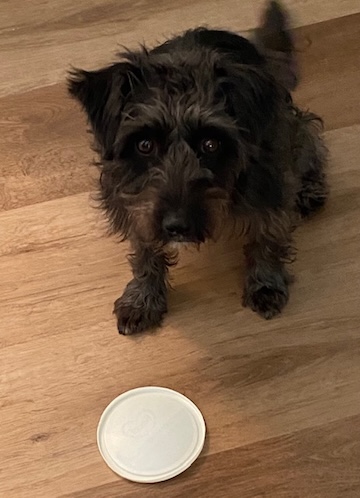
photo - Bo begs for more cabbage. A rescue dog, he is slowly learning to trust humans
Bo begs for more cabbage. A rescue dog, he is slowly learning to trust humans. (photo by Susan Kars)

My friend Susan Kars recently got a male rescue dog from Chile so, of course, I volunteered to come over and speak to him in Spanish. As my husband and I walked into her apartment, we were greeted by a small, black 2-year-old dog with a big growl. And then, all of a sudden, he fell asleep. 

“I  have always been a proponent of animal rescue,” my friend told the Jewish Independent. “I don’t feel that people should buy dogs when there are so many rescues out there … and rescue dogs show a different level of gratitude.”

Susan began walking dogs in 2008 for friends and recently felt that it was time for her to get her own. She believes that healing is part of Judaism. She is a member of Or Shalom, a Jewish Renewal synagogue. She started going there when Rabbi Laura Duhan-Kaplan was the congregation’s spiritual leader. 

“Rabbi Laura was amazing. She was really connected to a lot in the universe,” said Susan, who attended the celebration earlier this year of Duhan-Kaplan’s appointment as dean of the ALEPH Ordination Program, the Jewish Renewal seminary.

Susan decided that her new dog’s Spanish name, Bom Bom, wouldn’t work, that calling “Bom Bom” out in a park would sound too much like “Bomb! Bomb!” So, she named him Bo.

My friend volunteers at a supermarket for financially challenged folks and walks with Bo and one other dog once a day. 

She tried the Spanish doggie commands I gave her with Bo and had some success. She was and is very determined to heal this dog.

When we met Bo, the poor thing had just spent 30 hours on an airplane and this was his second night in his new home. Susan got him from an organization called Homeless Pets Canada. Unmentionable things had been done to him by humans and he was very suspicious of us. 

I asked Susan what kind of dog he was and she exclaimed, laughing: “He’s a mutt!” And that’s what he looked like until she gave him a haircut and a very long bath. Now, I’d say he looks like a very long terrier of some sort, but no one really knows. 

Susan has found that training a rescue dog is the most time-consuming thing she’s ever done.

“I left him twice in one day and came home to a full roll of toilet paper shredded all around the apartment. But you can’t get angry at them because they don’t do it to hurt you.”

That same day, Bo “took out a piece of the wall” by pulling at the leash that was hanging on the hook.

Susan put this down to separation anxiety and fear of being in a new place but, weeks later, she also acknowledged that Bo is mischievous. For example, a few weeks after our initial encounter, I was sitting in Susan’s kitchen while she was loading the dishwasher. When she opened a cabinet near the floor, Bo didn’t miss a beat. He grabbed a small plastic funnel in his mouth and marched out into the hallway.

“He’s a sly dog,” Susan said. 

Bo also acted up later in the evening. At first, everything was fine. He let me pet him for a long time, licked my hands and even sat down when I said “sientate,” which means “sit down” in Spanish. Then, I threw one of his toys for him to retrieve and all hell broke loose. He started barking and growling and trying to nip me.

Clearly this dog has post-traumatic stress disorder, I thought. And Susan agrees. But she is not allowing this to defeat her. She says it takes three days for a rescue animal to “decompress” and start to realize that they might be OK. It takes another three weeks for their personality to emerge and three months more for them to realize that they are safe and at home with a new life.

Bo already has started to give back. Recently, he comforted one of Susan’s friends whose dog was run over by a car and didn’t survive. Bo sat with the friend on the couch for a very long time. 

Susan’s advice to others who adopt a rescue animal is that they should know “this is a major life decision.” She is spending about $500 a month on a long list of items, including vet fees, insurance, food, toys, bowls, mats, a blanket, puppy pee pads, poop bags, leashes, grooming, treats for training and a camera to see what he’s doing when she’s away. Bo has a bad knee, so Susan has had to buy him joint supplements and a set of dog staircases.

It’s not only costly, but time-consuming to care for Bo. But, it’s also so rewarding.

“I smile every day,” she said. “I have something to smile about. When he’s in his round bed and he gives this big release of breath at the end of the day, it’s so satisfying to hear.”

And, my husband and I have something to be happy about, too, since we’ve officially been made Bo’s adopted aunt and uncle.

Since Bo can be a fierce little dog, Susan said she will be training him as a K9 for Israeli intelligence – just kidding! He’s most definitely a Jewish dog though, said Susan, because he goes “berserk” over challah buns. They are definitely his most favourite treat. She left one on a plate for her neighbour and Bo snuck behind her and scarfed it down in seconds.

If you want to adopt a rescue dog, “just know that the hard work is worth it,” said Susan. “You are saving a life and, by taking a dog into your home, there is room for another dog in the rescue centre.”

When she was volunteering for Vancouver Orphan Kitten Rescue Association (VOKRA) about 15 years ago, Susan made T-shirts that said, “Open your heart and empty a cage.” 

And that’s exactly what she’s done.

If you can’t adopt a rescue, Susan suggests donating to Homeless Pets Canada, the Society for the Prevention of Cruelty to Animals, VOKRA or other such organizations. 

Cassandra Freeman is a freelance journalist and improv comedy performer living in Vancouver.
Format ImagePosted on April 10, 2026April 9, 2026Author Cassandra FreemanCategories LocalTags animals, Homeless Pets Canada, pet adoption, rescue dogs, Society for the Prevention of Cruelty to Animals, SPCA, Vancouver Orphan Kitten Rescue Association, VOKRA
Art chosen for new museum

Art chosen for new museum

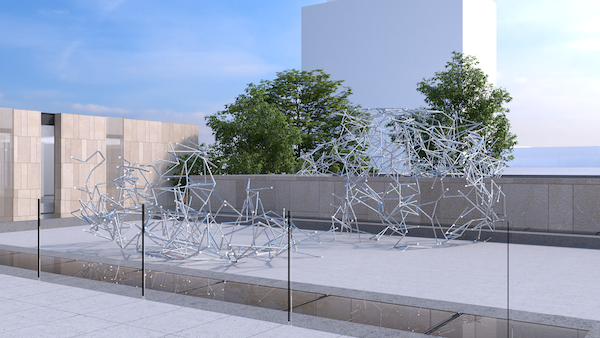
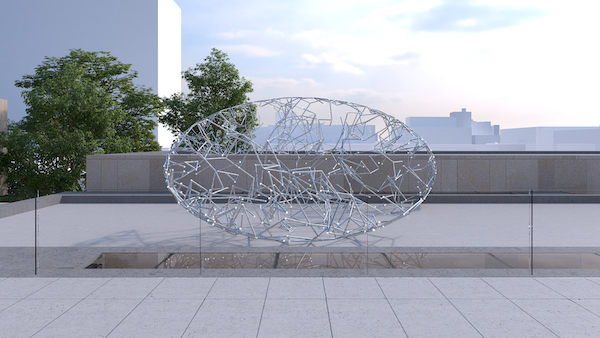
From a specific vantage point, the dispersed lines of Nicolas Baier’s Candelabra – winner of the Montreal Holocaust Museum’s public art competition for its new building – create the shape of a sphere. (photo from MHM)

The Montreal Holocaust Museum (MHM) has selected Montreal-based artist Nicolas Baier as the winner of its public art competition for its new museum opening in 2027. 

Baier’s artwork, Candelabra, will be installed on the museum’s rooftop terraces. The sculpture is a luminous, constellation-like network of polished stainless-steel lines and points of light set against the Montreal sky. The work is reminiscent of countless survivor stories about imprisonment in ghettos and concentration camps, where the only form of escape was looking to the night sky. Inspired by the human impulse to connect stars into meaningful patterns, the piece reflects bonds built between individuals, communities and generations.   

Rather than reproducing traditional constellations, Baier has created a new network based on astronomical data from the sky above Montreal. From a specific vantage point on the terrace, the dispersed lines create the shape of a sphere, evoking our shared planet and humanity. 

photo - Nicolas Baier’s Candelabra
Nicolas Baier’s Candelabra. (photo from MHM)

In a museum dedicated to Holocaust remembrance, Candelabra speaks to the fragility and resilience of human connection. The Holocaust was marked by the systematic destruction of Jewish life, the devastation of whole communities and the severing of social bonds. At a time when antisemitism and other forms of hate are on the rise, the sculpture serves as a reminder that societies are shaped by the networks we build and protect, and that, even in darkness, light endures.

The competition was held in accordance with Quebec’s Politique d’intégration des arts à l’architecture et à l’environnement des bâtiments et des sites gouvernementaux et publics, which mandates that approximately one percent of the construction budget of public buildings be dedicated to the commissioning of a work of art. 

The selection committee was composed of Marie-Blanche Fourcade (head of collections and exhibitions at the MHM); Adrian Sheppard (user representative); Renée Daoust (architect); Suzelle Levasseur (visual arts specialist); Stéphanie L’Heureux (ministry representative); Martha Townsend (visual arts specialist); and Helen Malkin (observer, chair and consultant for the new MHM). 

“Nicolas Baier’s proposal moved us because it expresses the importance of human connection,” said Rachel Gropper, Holocaust survivor and co-president of the museum. “In a place devoted to memory and education, this work reminds us that each individual life matters, and that together we have the responsibility to uphold compassion and hope.” 

To contribute to the MHM’s building campaign, Give Voice, go to museeholocauste.ca/en/give-voice. 

– Courtesy Montreal Holocaust Museum

Format ImagePosted on April 10, 2026April 9, 2026Author Montreal Holocaust MuseumCategories National, Visual ArtsTags art, Candelabra, development, fundraising, Give Voice, Montreal Holocaust Museum, Nicolas Baier, remembrance, sculpture
Reminder of hope, resilience

Reminder of hope, resilience

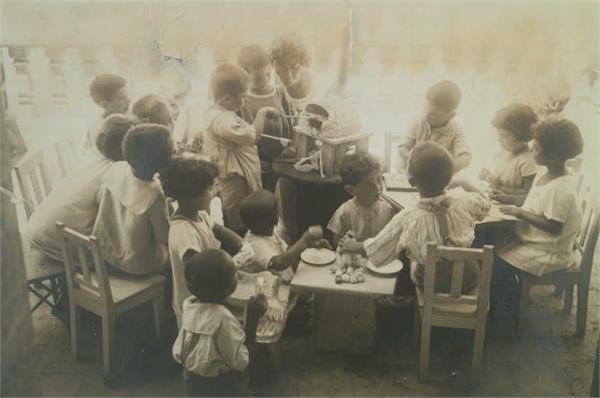
Kindergarten children preparing matzah, 1925. (photo by Joseph Schweigh, KKL-JNF Photo Archive)

In uncertain times like these, as the war with Iran continues, attention often turns to the traditions and customs that have carried generations through both hardship and renewal. Against this backdrop, Keren Kayemeth LeIsrael–Jewish National Fund (KKL-JNF) has shared some rare images from its photo archive documenting Passover across the years. The images, dating from before the declaration of the state of Israel, reflect enduring elements of Jewish life, including tradition, education and communal practice.

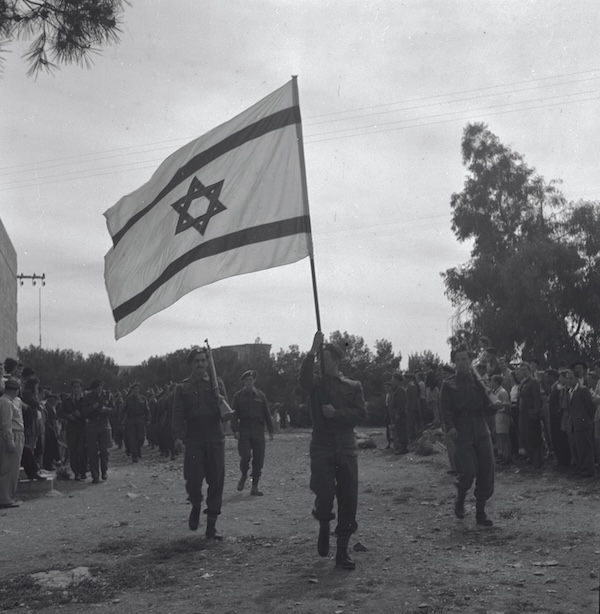
photo - A festive parade of Jewish soldiers during Passover in Jerusalem, 1948
A festive parade of Jewish soldiers during Passover in Jerusalem, 1948. (photo by Rudolf Jonas, KKL-JNF Photo Archive, KKL-JNF Photo Archive)

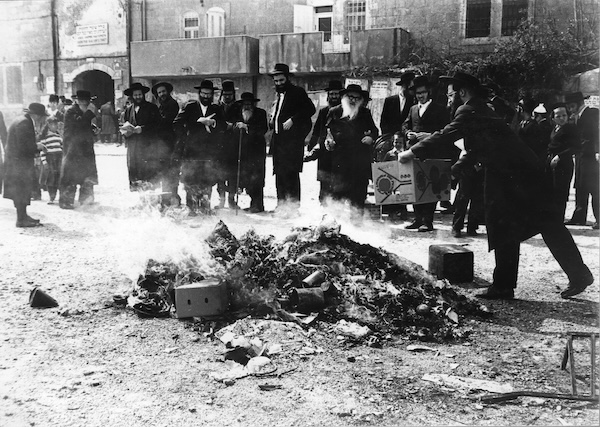
Among them are a photograph from the 1920s showing kindergarten children preparing matzah dough; documentation from a festive Passover parade for Israeli soldiers in 1948, the year of Israel’s independence; and families in Jerusalem’s Mea She’arim neighbourhood participating in the burning of chametz in 1983, a year marked by the effects of the Lebanon War. Though decades apart, the scenes show how holiday practices supported community connection and hope during periods of instability.

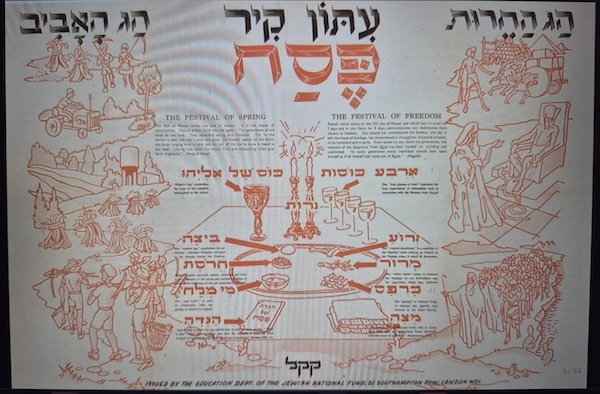
photo - A wall newspaper produced in the 1950s and 1960s by Keren Kayemeth LeIsrael–Jewish National Fund’s education department, which was displayed in Jewish schools in England
A wall newspaper produced in the 1950s and 1960s by Keren Kayemeth LeIsrael–Jewish National Fund’s education department, which was displayed in Jewish schools in England. (photo from KKL-JNF Banner collection displayed in the Central Zionist Archives in Jerusalem)

The archival materials also include a wall newspaper produced in the 1950s and 1960s by KKL-JNF’s education department, which was displayed in Jewish schools in England. The poster places the Exodus from Egypt alongside images of agricultural work, tree planting and communal life in the land of Israel, illustrating how Passover was given renewed meaning in the Zionist era as a bridge between a biblical narrative and a modern vision of national renewal.

photo - The burning of chametz in the Mea She’arim neighbourhood in Jerusalem, 1983
The burning of chametz in the Mea She’arim neighbourhood in Jerusalem, 1983. (photo from KKL-JNF Photo Archive)

“These photographs show how people held onto tradition, community and hope during uncertain periods,” noted Efrat Sinai, director of archives at KKL-JNF. “Viewed today, they highlight both historical experience and the sources of resilience that continue to shape Jewish life. Passover appears here as a living educational framework, a connection between Jewish communities in Israel and abroad, and a reflection of the strength of these communities across generations.”

KKL-JNF’s photo archive, which contains tens of thousands of historical photographs, serves as a living chronicle of life in the land of Israel and beyond. Together, these materials are a reminder that the story of Israel has never been defined by hardship alone, but also by its ability to hold onto hope, tradition and the promise of brighter days ahead. 

– Courtesy Keren Kayemeth LeIsrael-Jewish National Fund

Format ImagePosted on April 10, 2026April 9, 2026Author Keren Kayemeth LeIsrael–Jewish National FundCategories IsraelTags archives, history, Israel, Keren Kayemeth LeIsrael–Jewish National Fund, KKl-JNF, Passover, photography
The national food of Israel?

The national food of Israel?

RuhamaFoods’ Oven-baked Schnitzel, made by yours truly, the Accidental Balabusta. (photo by Shelley Civkin)

There has recently been some heated debate (in my living room) over what can accurately be called the national food of Israel. Family would claim it’s falafel. Outsiders would say hummus. Personally, I believe it’s chicken schnitzel. Or, as the Israelis call it: kreezpy schnitzel (heavy on the elongated “ee” sound and the “z”). Whatever you call it or however you pronounce it, it’s undeniably a culinary staple everywhere you go in Israel. Often accompanied by silky mashed potatoes and a fresh salad, there’s nothing quite like it.

Much as I love schnitzel, I detest the thought of frying food in two inches of oil. So, when I discovered a recipe for oven-baked schnitzel – on Instagram, of course – I jumped on it. There’s a popular Israeli-American content creator by the name of Ruhama Shitrit, who shares authentic Middle Eastern recipes on various social media platforms, through her brand, RuhamasFood. Her recipes are a mix of traditional and modern Mediterranean food, with marked Iraqi and Moroccan influences. Easy-to-follow and pretty much foolproof, you can’t go wrong with anything from Ruhama. Trying out her recipes, however, there was a non-schnitzel-specific learning curve for me, since I was unfamiliar with spices like ras el hanout and sumac. But I caught on pretty quickly.

Long story short (maybe not so short), I mentioned to my husband that I was thinking of making chicken schnitzel and he practically wet himself, he was so excited. And, even though I overcooked it slightly, the schnitzel was a solid eight out of 10. (I’m still getting used to my new oven, having discovered that it underheats by 10 to 15 degrees, so I always bump up the temp a bit.)

Formerly known to my friends and family as “the water-burner,” I have, to everyone’s astonishment, turned into Donna Reed. All I’m missing is the poodle skirt and kitten heels. Oh, and pearls. Now, with my dream kitchen, I love to cook and bake. Every. Single. Day. Harvey keeps saying, “Where did you hide my wife?” Not that he’s unhappy with Shelley version 2.0. His excitement when I produce a beautiful meal or “the world’s best cookies” keeps me pumped up and eager to keep on preheating that oven.

OK, OK, wait no longer. Coming to you live and direct from the Accidental Balabusta, is the one and only Oven-baked Schnitzel by Ruhama.

OVEN-BAKED SCHNITZEL

2 lbs of thin chicken breast cutlets
2 eggs
1 tsp sea salt
1/4 tsp black pepper
1 tsp paprika
1 tsp cumin
1 tbsp Dijon mustard
1 tbsp honey
juice from 1/2 lemon
2 minced garlic cloves
2 tbsp olive oil

for breadcrumb mixture:
1/2 cup Panko breadcrumbs
1 cup breadcrumbs
1/4 cup sesame seeds

for the baking pan:
6 tbsp olive oil
olive oil or avocado oil spray

1. Preheat the oven to 420˚F.

2. Using a mallet, pound out the chicken breast cutlets to about quarter-inch thickness (between two pieces of plastic wrap).

3. In a large bowl, put the eggs and all the spices and whisk them well.

4. Add the chicken cutlets and mix them really well so all the pieces are covered.

5. Coat each chicken cutlet with the breadcrumb mixture on both sides.

6. On a parchment paper-lined baking sheet, drizzle three tablespoons of olive oil. 

7. Place the chicken cutlets on the baking sheet in one layer. 

8. Drizzle three tablespoons of olive oil on top of the chicken cutlets.

9. Bake for 15 minutes, then flip them over and bake for 10 more minutes.

10. Spray the top of the cutlets with olive oil or avocado oil and transfer them to a convection broil at 450˚F for seven to eight minutes to get a nice golden colour.

I didn’t do this last step because I accidentally over-heated my oven to start with, so my schnitzels were already crispy (and overcooked) – but still plenty delicious, according to Harvey, the arbiter of all-things food-related. I know I can do better next time, now that I’m on a first-name basis with my finicky new oven. Life is trial and error, after all.

Plate the schnitzel with some lemon wedges and a side of mashed potatoes, rice, couscous or pasta, and you’ve got yourself a winner. Like they say, “Winner, winner, schnitzel dinner.”

I’m not a particularly intuitive cook, so I need the guidance of a seasoned cook to help me pair different spices with chicken, beef or fish. Left to my own devices, everything would be seasoned with salt, pepper and lemon juice, maybe a pinch of paprika. Until a couple of years ago, I’d never even used cumin, coriander or smoked paprika. But retirement, a big kitchen and lots of time on my hands has turned me into an inquisitive and relatively decent cook and baker (relatively being the operative word). I even bake challah buns when I have a few extra hours on my hands.

This is a revelation that Harvey is still attempting to wrap his head around. All he has to do is say the word cookie, and I’ve donned my apron and turned on the oven! I’m the culinary equivalent of Pavlov’s dog. I’ve been on a roll for the last couple of months, so my freezer is jammed to the hilt with cookies, muffins and soups. I’m like a Jewish survivalist. A family of four could live off my freezer for weeks, easy. No guns allowed.

My next culinary adventure might just be lamb kofta kebabs or maybe sheet pan kebab laffa. It’s like someone cast a spell on me and turned me into a fearless kitchen warrior. Six months ago, I’d never even heard the words laffa or kofta. Now, I’m throwing them around like I was born in the Middle East! Until recently, I thought laffa was something you scrub yourself with in the shower, and Benylin was something you take for a kofta. But, thanks to YouTube, Instagram and Pinterest, I have expanded my culinary vocabulary – and skills. The flip side is that I seriously must look into a 12-step program for social media addiction. You know you’re in trouble when you carry your smartphone or tablet into the bathroom with you, so that you don’t miss anything while, you know. Classic case of FOMO.

That being said, where would I be without these resources? I’d probably be eating Kraft Dinner and tuna noodle casserole. Alone. In the dark. While I’m definitely a slave to my e-devices, I do have to acknowledge their major role in my Accidental Balabusta journey. And, for that I am grateful. So is Harvey. Until next time. B’teavon. 

Shelley Civkin, aka the Accidental Balabusta, is a happily retired librarian and communications officer. For 17 years, she wrote a weekly book review column for the Richmond Review. She’s currently a freelance writer and volunteer.

Format ImagePosted on April 10, 2026April 9, 2026Author Shelley CivkinCategories LifeTags Accidental Balabusta, cooking, Ruhama Shitrit, RuhamasFood, schnitzel

Posts pagination

Previous page Page 1 … Page 3 Page 4
Proudly powered by WordPress