Skip to content
  • Home
  • Subscribe / donate
  • Events calendar
  • News
    • Local
    • National
    • Israel
    • World
    • עניין בחדשות
      A roundup of news in Canada and further afield, in Hebrew.
  • Opinion
    • From the JI
    • Op-Ed
  • Arts & Culture
    • Performing Arts
    • Music
    • Books
    • Visual Arts
    • TV & Film
  • Life
    • Celebrating the Holidays
    • Travel
    • The Daily Snooze
      Cartoons by Jacob Samuel
    • Mystery Photo
      Help the JI and JMABC fill in the gaps in our archives.
  • Community Links
    • Organizations, Etc.
    • Other News Sources & Blogs
    • Business Directory
  • FAQ
  • JI Chai Celebration
  • JI@88! video

Recent Posts

  • האלימות בישראל מורגשת בהרבה מגזרים
  • טראמפ עוזר דווקא לנושא הפלסטיני
  • New rabbi settles into post
  • A light for the nations
  • Killed for being Jewish 
  • The complexities of identity
  • Jews in time of trauma
  • What should governments do?
  • Annie will warm your heart
  • Best of the film fest online
  • Guitar Night at Massey
  • Partners in the telling of stories
  • Four Peretz pillars honoured
  • History as a foundation
  • Music can comfort us
  • New chapter for JFS
  • The value(s) of Jewish camp
  • Chance led to great decision
  • From the JI archives … camp
  • עשרים ואחת שנים להגעתי לונקובר
  • Eby touts government record
  • Keep lighting candles
  • Facing a complex situation
  • Unique interview show a hit
  • See Annie at Gateway
  • Explorations of light
  • Help with the legal aspects
  • Stories create impact
  • Different faiths gather
  • Advocating for girls’ rights
  • An oral song tradition
  • Genealogy tools and tips
  • Jew-hatred is centuries old
  • Aiding medical research
  • Connecting Jews to Judaism
  • Beacon of light in heart of city

Archives

Follow @JewishIndie
image - The CJN - Visit Us Banner - 300x600 - 101625

Tag: opera

Putting Hemingway to music

Putting Hemingway to music

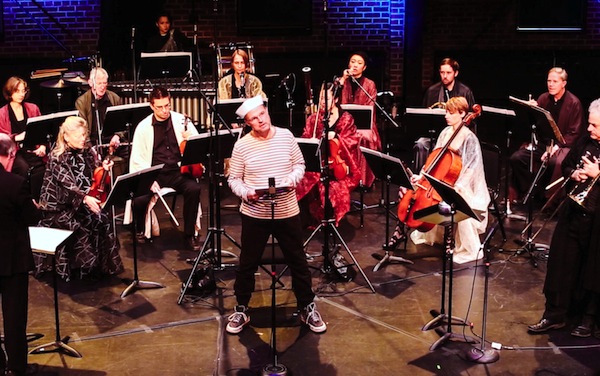
Turning Point Ensemble performs The Old Man and the Sea, directed by Idan Cohen, March 9 and 10. (photo by Tim Matheson)

“There’s something that I really love about these kinds of projects and the agenda that Turning Point holds – creating an operatic experience that is contemporary and designed to communicate music in a truly creative way. I hope this will attract not just the core of new music and opera lovers, but also those of us who are passionate for the arts and want to experience something different. This is what opera is truly about,” said Idan Cohen about Turning Point Ensemble’s Words & Music, which is at the Annex March 9-10.

The collaborative endeavour features the theatrical mini-opera The Old Man and the Sea by Rita Ueda, and Bee Studies, created by poet Renée Sarojini Saklikar and composer and musician Owen Underhill. Choreographer and opera director Cohen is directing The Old Man and the Sea.

“This past summer, I was invited by Rita Ueda and Mark Armanini, who run the AU Ensemble, to stage their concert at the Podium Mozaiek in Amsterdam,” Cohen told the Independent about how he met Ueda. “I had a wonderful time working with the ensemble and found the work they do highly inspiring. Rita’s work is very immersive and, in her scores, the musicians play a significant role as characters, fully engaged and active on stage. We found a deep foundation of understanding, and so Rita introduced me to Turning Point. It’s an honour to be working on such a beautiful piece alongside such an exquisite group of artists and musicians.”

The Old Man and the Sea, composed by Ueda with a libretto by Rod Robertson, is based on the short novel by Ernest Hemingway. The story centres around Santiago, an aging fisherman, who battles with a marlin. In the concert, baritone Willy Miles-Grenzberg sings the part of the Old Man (Santiago) and Turning Point co-founder and trombone soloist Jeremy Berkman musically plays the marlin.

“Rita and the librettist Rod Robertson have created a highly poetic rendition of Hemingway’s novel,” explained Cohen. “It’s quite condensed and, at the same time, leaves a lot of room to reflect on its different topics and themes. It creates a rendition of the story that is almost abstract – I love this quality in opera, when the poetic aspects of a story are drawn out through the layered richness of the written word, music and live performance. I connected to it on a very deep level.”
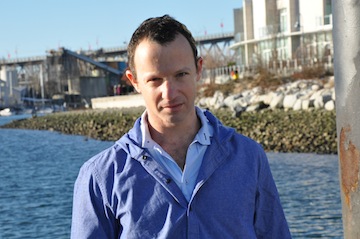
photo - Choreographer and opera director Idan Cohen focuses “on body language and sensitivities that are dance-related” in The Old Man and the Sea
Choreographer and opera director Idan Cohen focuses “on body language and sensitivities that are dance-related” in The Old Man and the Sea. (photo by Or Druker)

The work is so expressive, said Cohen, “and focuses on the journey of Santiago … and his connection to the sea. There are beautiful moments that ‘paint’ that through the language of music. Unlike my other work, there won’t be any dance in this production, but I do focus on body language and sensitivities that are dance-related. Santiago is a humble man, full of wisdom, close to the end of his days, and Willy Miles Grenzberg, portraying him, embodies the part beautifully.”

Cohen hopes that this staged concert will appeal to a wide audience – “whether you’re a new music lover, a literature, theatre or poetry enthusiast, there’s going to be something there for each and every one of us,” he said.

This type of production can be somewhat complex to direct.

“My role is often to bring different elements together in order to create the operatic experience,” said Cohen. “By nature, music is abstract and, since the musicians are so valuable in this opera and play a significant role, I wanted to come up with creative ways to support this special vision. Drawing that vision from the mind of the composer and librettist to the experience of the viewers can be quite a challenge at times, but the musicians of Turning Point are truly exceptional, best in their field, and they do wonders.”

In addition to the power of the music, The Old Man and the Sea has many powerful – and universal – themes. Cohen described it as “a story about human determination, strength and faith but, most of all, it is about fragility and humbleness. It reflects on our connection to nature, and that is very valuable in our times, when there is so much denial and violence in the way the human race treats its surroundings. Robertson relates to this in a rich way and creates a very relevant testimony. The opera reflects on these important topics through the drama of the music, to expose an extreme human condition. It is powerful in a way that I find not just poetic, but also very emotional.”

Following the performance of The Old Man and the Sea is the première of Bee Studies, which includes texts from Sarojini Saklikar’s Listening to the Bees, a book of science and poetry, and features soprano Dorothea Hayley.

According to the press material for Words & Music, a “special bonus of the evening is a performance of some witty and rarely heard songs from the 1930s, Duet for Duck and Canary and Frogs by the great unheralded Mexican composer Silvestre Revueltas, plus his most-heralded work, Ocho por Radio.”

Tickets for Words & Music, March 9-10, 7:30 p.m., at the Annex are $33 ($20 for seniors and students) and can be purchased at turningpointensemble.ca.
Format ImagePosted on February 22, 2019February 21, 2019Author Cynthia RamsayCategories MusicTags Hemingway, Idan Cohen, opera, Turning Point Ensemble
The power of music and love

The power of music and love

Ted Littlemore, in Orfeo ed Euridice, the research for which will be presented by Idan Cohen and Ne. Sans on May 13 at the Dance Centre. (photo by Ted Littlemore)

A relatively recent arrival in Vancouver, Israeli choreographer and opera director Idan Cohen is already making his mark. On May 13 – with the support of the Dance Centre, Arts Umbrella and Vancouver Academy of Music – Cohen and Ne. Sans will present Orfeo ed Euridice, a glimpse into Cohen’s reenvisioning of Christoph Willibald Gluck’s opera.

The myth of Orpheus is a story of love. Poet and musician Orfeo mourns the death of his wife, Euridice, and he determines to get her back from Hades. With the intervention of Amor (Cupid), the god of love, Orfeo heads into the Underworld, gaining entry by winning over the Furies with his music, and he is reunited with his wife. However, Amor has set a condition – Orfeo must not look at Euridice, or explain why he is not doing so, until the two are back on earth. It’s a condition Orfeo breaks when Euridice begins to doubt his love and begs for a glance to assure her. When he gives in, Euridice dies again and Orfeo, grief-stricken, resolves to kill himself so that he can be with her. In the face of such love, Amor intervenes once more, to save both Euridice and Orfeo, and return them to earth.

“This opera was created in 1762 and, for me, a significant part of directing a classic opera is the studying of the values that originally inspired the music and the performance,” Cohen told the Independent. “Looking at concepts of novelty and tradition and respecting those as the DNA of this creation was quite valuable in my creative process. At the same time, those are values that are violent, discriminative and often quite outdated. One clear example that I personally find fascinating is the fact that Orfeo ed Euridice was originally written to be performed by a male castrato. Nowadays, it is often performed by a female mezzo-soprano or a male singer singing in a falsetto technique, but, for me, the history of the castrato and the violence that history entails against the human body is an example of difficult questions and issues that are a part of the time this opera was created in.

“It is even more fascinating and relevant,” Cohen added, “since the mythological story of Orpheus presents to us a musician and a poet who had the ability to enchant all living creatures through his musical gift. Orpheus’s strength was art and, hence, he is the ultimate representation of art and the artist. So, in Orfeo, these values can be represented in the most honest, vulnerable way, exposing their inner human truth and the limits through which we define and accept artistic beauty.”

Cohen grew up in Kibbutz Mizra in the north of Israel, but lived in Tel Aviv for 10 years before coming to Vancouver with his partner about a year ago. “When we got here, I completely fell in love with the city, the nature, the people,” said Cohen.

“Besides the personal reasons that brought me here,” he said, “I’m finding Vancouver’s arts scene most inspiring, and the city was very welcoming to me. I’ve received this wonderful DanceLab residency at the Dance Centre, I have been creating for Arts Umbrella’s pre-professional program, led by Lesley Telford, and with Modus Operandi, directed by David Raymond and Tiffany Tregarthen. These great artists invited me to teach and create when I just got here, and I immediately felt at home.

“Also, for the past years, I have been interested in directing opera through dance and movement … [and] there is so much going on in the city both in opera and in dance – I feel I have something to contribute to this city’s rich arts scene by fusing the two. Historically, they do belong together.”

As well, said Cohen, “living in Vancouver makes traveling so much easier and, when you travel often, this can be very convenient and helpful. This June, I will present at the Seattle International Dance Festival with Ne. Sans, my new Vancouver-based society, and, on the following day, will catch a flight to go to Sydney to present work in Sydney and Newcastle.”

According to Cohen’s website, Ne. Sans “is a home for the research and creation of work that seeks to deepen and reconnect opera and dance.” And this melding “opens a whole new world of collaborative opportunities: a space that involves working with singers, dancers, musicians, visual artists and designers.”

“Directing an opera like Orfeo ed Euridice through dance is a huge task that requires a tremendous amount of preparation,” said Cohen. “This opera was created 256 years ago, but has kept its immortality through its beautiful music and a story so rich, layered and full of depth.”

As he enjoys exploring operas with dancers in the studio – “It’s a great way to get intimate with the music, through the body” – Cohen said, “I’ve started this process by creating a 20-minute duet that was inspired by Orfeo ed Euridice, using parts of Gluck’s music and the main ideas behind the story, and translating those to pure dance. The dramaturgy of that dance piece was inspired by the opera and its libretto [by Ranieri De’ Calzabigi]…. But, looking at it closely and breaking it apart in the studio presented an opportunity to create a more abstract version of the story, in dance form. Fortunately, it was very well-received and won an award from the Be’er Sheva Fringe Festival, in Israel’s Negev.”

The presentation at the Dance Centre “will be performed by 18 singers from VAM [Vancouver Academy of Music] Schola Cantorum chorus, conducted by Kathleen Allan; six dancers from Arts Umbrella’s pre-professional program; two amazing dancers/musicians, Ted Littlemore and Jeremy O’Neil; and mezzo Debi Wong [director of re:Naissance opera company]. It’s a rather big cast for what I’m hoping will be an honest, pretty direct sharing of the research and ideas that will then be transformed into the ‘real deal,’ the full opera production.”

The Orfeo ed Euridice presentation is open to the public and is free of charge. It takes place in the Dance Centre’s Faris Family Studio May 13, 3 p.m. RSVP to [email protected] to reserve a seat.

Format ImagePosted on May 4, 2018May 2, 2018Author Cynthia RamsayCategories Performing ArtsTags dance, Idan Cohen, music, opera, Orfeo ed Euridice
Festival fêtes Russian music

Festival fêtes Russian music

A scene from Vancouver Opera’s production of Eugene Onegin. (photo by Trudie Lee)

“I’ve sung a lot of Russian, and I love it,” Jewish community member and opera singer Leah Giselle Field told the Jewish Independent. Field will have a lot to love at this year’s Vancouver Opera Festival, which starts next weekend.

Russian White Nights, the second annual Vancouver Opera Festival, celebrates Russia’s luminous midsummer nights. Among the festival offerings is Eugene Onegin, based on the classic of Russian literature by Alexander Pushkin, which was turned into a lyric opera with a libretto co-written by Pyotr Ilyich Tchaikovsky with K.S. Shilovsky. The festival will also feature the première of The Overcoat, an opera based on Nikolai Gogol’s famous short story, as well as Requiem for a Lost Girl, an original chamber musical collaboration that explores themes around homelessness and violence towards women.

According to the press material, Eugene Onegin – which plays April 29 in the afternoon, and the evenings of May 3 and May 5 – promises “breathtaking music [and] choreography, lavish orchestrations and compelling arias.” Field will be playing the role of Larina, the mother of the two main female protagonists of the story, Olga and Tatyana.

“The libretto includes portions of the original verses of Pushkin,” Field said, noting that the score is one of her favourites. “Tchaikovsky originally thought it would be blasphemy to make Pushkin’s poem into an opera, but eventually he agreed. I love the Pushkin poem the opera is based on as well – it’s so environmentally evocative, it is so Russian, and it takes you into right into that environment.”

A number of Russians feature in the cast, including baritone Konstantin Shushakov (Onegin), soprano Svetlana Aksenova (Tatiana) and tenor Alexey Dolgov (Lensky). This new production has been created in collaboration with Calgary Opera and is directed by Tom Diamond and conducted by Jonathan Darlington. Eugene Onegin will be sung in Russian with English surtitles projected on a screen.

In addition to Eugene Onegin, Field will participate in a chamber music performance of Dmitri Shostakovich’s From Jewish Folk-Poetry Op. 70 on May 4, 5 p.m., at CBC Studio 700. This song cycle was written in 1948 by the Soviet composer, who initially wrote eight songs that were meant to reflect the hardships of being Jewish in the Soviet Union. In order to disguise this sensitive material, Shostakovich added three more songs depicting the “great life” Jews had under the Soviet regime. Despite these efforts, the censors were not fooled and refused to approve the work – it could not be performed until after Stalin’s death in March 1953.

On the lighter side, Field will also appear in a family-oriented original adaptation of Maurice Sendak’s Where the Wild Things Are, a student performance co-produced by Vancouver Opera and Delta School of Music on May 5, 1 p.m., also at CBC Studio 700. The production is one of four offerings aimed at children and/or teens on the festival’s Family Day.

Vancouver Opera general director Kim Gaynor, also a member of the Jewish community, is in her second season at the organization, which she came to after years working the festival circuit in Europe. Gaynor told the Independent that she has modified the Vancouver festival quite a bit from its first year, trying to take a more “out of the box” approach. This includes a more diverse and daring program with a mixture of classical and contemporary works, and the inclusion of chamber music. The festival will also include three films: the silent film Man With A Movie Camera on April 28, the 2001 CBC production of The Overcoat on April 29 and 1965’s Dr. Zhivago on May 1.

The festival starts on April 28 with an outdoor celebration at Queen Elizabeth Theatre Plaza that features Russian cultural performers, food trucks, market vendors, a circus presentation, a movie screening and a patio bar. Festivities that day will get underway at 2 p.m., and a highlight will be the re-creation of the pinnacle of white nights celebrations in Russia that evening. A 40-foot schooner with scarlet sails will serve as the stage for acrobatics, music and custom-designed projections on the 22-foot-high sails in a performance suitable for all ages. Scarlet Sails will also be offered April 29 and May 3 and 5.

The Vancouver Opera Festival runs to May 6. The full program and more information can be found at vancouveropera.ca.

Matthew Gindin is a freelance journalist, writer and lecturer. He is Pacific correspondent for the CJN, writes regularly for the Forward, Tricycle and the Wisdom Daily, and has been published in Sojourners, Religion Dispatches and elsewhere. He can be found on Medium and Twitter.

Format ImagePosted on April 20, 2018April 18, 2018Author Matthew GindinCategories Performing ArtsTags chamber music, film, Kim Gaynor, Leah Giselle Field, Onegin, opera
First Vancouver Opera Festival

First Vancouver Opera Festival

Caitlin Wood and Alex Lawrence star in Vancouver Opera’s The Marriage of Figaro. Jewish community member Leah Giselle Field performs the role of Marcellina in the production. (Emily Cooper Photography)

I am thrilled and honoured to have been chosen to lead Vancouver Opera into a new era,” said Jewish community member Kim Gaynor when her appointment as general director was announced prior to the start of this season. “Vancouver Opera already has a long history of excellent productions and a well-deserved reputation for innovation under Jim Wright’s exemplary leadership.”

As part of its vision for the future, Vancouver Opera is holding an inaugural opera festival April 28 to May 13. The event features a variety of vocal offerings for audiences, as well as workshops and other activities.

“Opera seasons are planned years in advance, so this festival was planned long before I joined VO,” Gaynor told the Independent. “However, I have brought 10 years’ experience managing the Verbier Festival in Switzerland and I am using this experience to shape the festival-going experience here. For example, we will have lots of opportunities to follow the development of young singers, and for audience participation, two things which were very popular in Verbier.”

Her resumé prior to managing the Verbier Festival includes managing director and co-founder of Austria’s Festival Retz, administrator of London, England’s Yehudi Menuhin International Violin Competition and head of marketing administration at London’s Royal Opera House. She has worked at Les Grands Ballets Canadiens de Montréal, the National Arts Centre Orchestra in Ottawa, L’Opéra de Montréal and Canada Council for the Arts.

photo - Vancouver Opera general director Kim Gaynor
Vancouver Opera general director Kim Gaynor. (photo from VO)

Gaynor, who was born and raised in Ontario, returned to Canada from Switzerland last year, arriving in Vancouver in September. She was here in time for another recent Vancouver Opera innovation – the smaller-venue, family-friendly production of Hansel and Gretel in November.

“Hansel and Gretel was a huge success with people of all ages,” said Gaynor. “The whimsical, enthusiastic performances from our young artists and the wonderful puppets charmed everyone who came. I heard so many stories about young people being literally on the edge of their seats throughout the whole performance, and this could lead to a lifelong love of opera. One thing I learned was that the intimacy of the smaller Playhouse theatre really appeals to audiences. They want to be nose-to-nose with the performers – up close to the action.”

The upcoming festival will offer more opportunities to get up close to the action, including a performance at Vancouver Public Library – called Opera Tales – featuring singers from VO’s Yulanda M. Faris Young Artists Program, who the audience will have a chance to meet after the show. One of these singers is Jewish community member Leah Giselle Field, who also will be performing the role of Marcellina in The Marriage of Figaro. (For more on Field, see jewishindependent.ca/fairy-tale-reimagined.)

Among the other festival offerings are a video installation by artist Paul Wong, performances by vocal stylist Ute Lemper and Inuit throat singer Tanya Tagaq, an evening sing-along with the Vancouver Bach Choir, a film night, master classes for young singers, forums and discussions, preview talks and happy hours.

“We believe that the festival format will attract a new and younger audience who likes fast and furious action, because there will be something going on all the time during the 16 days of the festival,” said Gaynor. “At the same time, we are convinced that our main-stage operas, Otello, Dead Man Walking and The Marriage of Figaro, will appeal to our traditional audiences, who may only want to attend for an evening or two. In our next season, 2017/2018, which has just been announced, we are offering a season and a festival, starting with the ever-popular Turandot in the fall and closing the season with a spring festival.”

Further explaining why the festival concept is being embraced by VO, she said, “Festivals are, by definition, a celebration and people, in general, love to celebrate. We will not only be celebrating opera, but the human voice and all of its expression, from throat singing to choral. Festivals offer the chance to mingle and meet lots of other people who share the same passion. This chance to come together with like-minded people creates an atmosphere which is hard to create in a normal season. But I don’t think festivals are a more attractive model, just a different model, and VO is in the mood for change.”

One of the attractions of moving back to Canada was that Gaynor would be closer to her mom, who lives in Oakville, Ont. One of the appeals of moving to Vancouver was the opportunity to be outside. While circumstances have made that difficult so far, she has found other fun things to do around town.

“Honestly,” she said, “it seems like it has either rained or snowed every day since I arrived (until about two days ago)! I am normally a person who loves the outdoors, so my highlights have been discovering the North Shore mountains and walks along the Seawall with my dog (a 3-year-old border collie). That was before I broke my leg badly at the end of January falling off my horse! I am also finding some great spots for brunch in my neighbourhood around Main and 12th, and have been discovering all of the fantastic cultural organizations in town.”

Gaynor was born in Hamilton, Ont., but the family moved to nearby Burlington when she was six months old.

“We lived almost in the country in Burlington, in a house with a big yard with a small forest behind. More importantly, we were less than a kilometre from a horse farm, where I discovered my passion for riding. My father was a passionate amateur pianist and we had a baby grand piano at home. I got my love of classical music from him.”

Gaynor’s father was a Holocaust survivor.

“My father was one of the 10,000 Jewish children who escaped from Western Europe to England on the Kindertransport,” she said. “He lived in London from 1938 until 1954, when he emigrated to Canada and met my mother, who is not Jewish. He even changed his family name, which was Geier, but sounded too German in postwar Canada and that, combined with his accent, was a handicap. So, he took the last name of his movie star idol – Mitzi Gaynor. Unfortunately, he died quite young, only 53 years of age.

“I know my father’s life was in every way coloured by having lost his family in this way but, like many Kindertransport children, he spoke very little about it to his children. I learned much later, after his death, that a part of his family escaped Austria and made it to Palestine. I was able to find them and went to meet them in 1996. I have often wondered how life would have been different if I had been born and raised in a Jewish family in Austria, or in London. But I have close ties still to the family who adopted my father in London, and to his relatives in Israel and this has enriched my life immensely.”

While she doesn’t “practise any religious traditions in a formal way,” Gaynor said, “I feel quite close to Jewish culture and traditions because of my family and friends, but also I have participated many times in Jewish celebrations, weddings, a few bar mitzvahs and even a bat mitzvah. I also remember some very poignant things from my childhood, such as my father criticizing my mother for not being able to make good matzah ball soup. Clearly, he had some things he missed from home!”

For festival tickets, call 604-683-0222 or visit vancouveropera.ca. For Tanya Tagaq tickets, contact Ticketfly at 1-888-732-1682 or ticketfly.com/purchase/event/1412206.

Format ImagePosted on April 21, 2017April 20, 2017Author Cynthia RamsayCategories Performing ArtsTags Holocaust, Kim Gaynor, music, opera
Fairy tale reimagined

Fairy tale reimagined

Taylor Pardell as Gretel and Pascale Spinney as Hansel in Vancouver Opera’s adaptation of the classic fairy tale. (photo by Emily Cooper)

While Vancouver Opera is presenting the fairy tale Hansel and Gretel Nov. 24-Dec. 11, cast member Leah Giselle Field is living one of her dreams.

Field first moved to Vancouver from Calgary – where her parents had moved from Montreal the year before she was born – for an undergraduate degree in opera at the University of British Columbia. “I left for a two-year master’s program in Ontario and then came back for my doctorate,” she told the Independent. “I came back to Vancouver several times during those years away, so I feel like I’ve been a Vancouver resident for the last 14 years.”

In fact, her connection to Vancouver goes back even further.

“Vancouver has always felt a little bit like home,” she said. “After the war, surviving members of my maternal grandfather’s family moved to Canada. My grandparents settled in Montreal, and my grandfather’s sisters settled in Toronto and Vancouver…. Growing up in Calgary, my family would take road trips to Vancouver over spring break and in the summers, and the time we spent with my great-aunt and my mother’s cousins’ families was formative. Friends of theirs have been part of family events and celebrations for decades, and it’s always fun to catch up during holidays. I’ve been part of the Congregation Beth Israel High Holiday Choir for the past few years and enjoy catching up with my BI family each fall.”

Her professional experience includes appearing “in the title roles of Carmen and Julius Caesar, and as Marcellina in The Marriage of Figaro, Suzuki in Madama Butterfly, the Principessa in Suor Angelica, and Jennie in Maurice Sendak and Oliver Knussen’s Higglety Pigglety Pop!” notes her bio. “She is a past winner in the Western Canada District of the Metropolitan Opera National Council Auditions and a 2015 semi-finalist in the Marcello Giordani Foundation International Vocal Competition.”

photo - Jewish community member Leah Giselle Field plays Gertrude, the siblings’ mother
Jewish community member Leah Giselle Field plays Gertrude, the siblings’ mother. (photo from Leah Giselle Field)

In Hansel and Gretel, Field, who is a mezzo-soprano, plays Gertrude, the mother. All of the principal singers in the show, including Field, are 2016-2017 participants in Vancouver Opera’s Yulanda M. Faris Young Artists Program.

“My experience with Vancouver Opera so far has really been a dream come true,” Field said. “I still have moments of disbelief that I get to do this every day, that I have the opportunity to work and learn with such wonderful colleagues within an organization that treats its singers with so much respect. The eight of us in the Yulanda M. Faris Young Artists Program [YAP] have become really dear friends – we had ‘YAPsgiving’ together last month (because Thanksgiving fell between Rosh Hashanah and Yom Kippur, I brought matzah ball soup, round challah with raisins, apples and honey, and honey cake) – and our bass-baritone always says, ‘Goodnight, family,’ on his way out the door.

“Being part of this production of Hansel and Gretel has been amazing…. We have exciting, fresh perspectives from the director, conductor and designers to work with, the stage management team has been incredible, and the performers are so caring and supportive. It has been exciting every day – seeing the show come together is such a thrilling experience.”

Vancouver Opera is billing their Hansel and Gretel as a “family-friendly production” for ages 6-plus.

“There are all sorts of factors that make this production more family-friendly than our standard conception of ‘opera,’” explained Field. “First, the subject matter is familiar: anyone who has heard the Grimm story – about the brother and sister lost in the forest who find a house made of sweets and outsmart the witch who lives there – already knows the foundation of our story.

“We’re also performing an updated translation of the original libretto, so audiences will be hearing our story in English. [And] Hansel and Gretel is … an opera that involves child performers – we have a chorus of 14 children,” she said.

“Beyond the traditionally family-friendly elements of the opera, we have the most incredible design concept enhancing our production. This is a larger-than-life, technicolor world that brings to mind the dream world Maurice Sendak’s protagonist Max imagines in Where the Wild Things Are. This show is a co-production with the Old Trout Puppet Workshop, so costume pieces, the set, hand-held puppets and multi-operator puppet costumes help create this realm of ‘everyday spectacular.’ It’s such a visually rich presentation that audiences of any age will be engaged by the complete realm of story they see and hear.”

In addition, the new production has been shortened – it will run approximately two hours and 20 minutes, with one intermission – and the “youthful cast of emerging opera stars” will be conducted by 24-year-old Scottish-born conductor Alexander Prior. The original score by German composer Engelbert Humperdinck (1854-1921) has been adapted to suit the relatively small size of the venue – Vancouver Playhouse – and will be performed by “a 14-member ensemble of the Vancouver Opera Orchestra, which includes strings, woodwinds, brass, percussion, a saxophone and an electric guitar.”

While Field’s focus is classical music, she said she also has some musical theatre, folk, jazz and pop music in her repertoire.

“Some of the music I’ve performed most includes Yiddish songs I learned in elementary school,” she said. “Whenever I can fit it into a program, I try to include ‘Oyfn Pripetchik.’ That’s always been a special song to me. When we learned new songs in Yiddish class, I would sing them over the phone to my grandfather in Montreal. He’d always say, ‘That’s very nice, Ketzeleh,’ but when I sang ‘Oyfn Pripetchik’ to him, he sang along. We had a party for his 90th birthday in 2010, and he got up to sing ‘Oyfn Pripetchik’ again with me then. I’m sorry to say he’s declined significantly in the past few years, but we still manage a sing-along every now and then.”

“Oyfn Pripetchik” is a song about a rabbi teaching his students the alef-bet, and it was written by Mark Warshawsky (1848-1907). In addition to folk songs, Field said that, since elementary school, she has “been interested in music and art suppressed under Nazism.”

“My maternal grandparents are Holocaust survivors and interwar European culture provides a fascinating snapshot of life and art amidst tragedy,” she explained. “Mary Castello, our pianist in the Yulanda M. Faris Young Artists Program, and I are beginning to plan a recital of suppressed music for the new year and hope to present it across the country.

“Jewish-Canadian composer Srul Irving Glick was commissioned by the CBC to write a song cycle for the great Canadian singer, Maureen Forrester,” she continued. “He used the translated text of children’s poems salvaged from Terezin for his cycle ‘I Never Saw Another Butterfly,’ and I had the honor of performing ‘Narrative’ from this cycle with pianist Richard Epp for UBC’s honorary degree conferral ceremony for Elie Wiesel.”

In addition to the recital planned for next year, Field said, “I’m looking forward to Vancouver Opera’s festival in the spring, and getting to play the bad guy in a production of Puccini’s Suor Angelica in Ottawa in February.”

For tickets to Hansel and Gretel, call 604-683-0222 or visit vancouveropera.ca.

Format ImagePosted on November 18, 2016November 18, 2016Author Cynthia RamsayCategories Performing ArtsTags fairy tales, Holocaust, opera, Yiddish music

Posts pagination

Previous page Page 1 Page 2
Proudly powered by WordPress