Once we’ve watched the videos of our new prime minister Bhangra dancing, scrolled through the rehashed pics of him shirtless at the weigh-in for his boxing bout against Senator Patrick Brazeau and perused the swooning of global commentators, we may turn our attention to Justin Trudeau’s policies in his first days as our leader-designate.
One of his first acts was to inform U.S. President Barack Obama by telephone that Canada would withdraw from combat missions against ISIS. This was a central part of Trudeau’s election platform and Canadians voted for him strongly, so this move was consistent with what he said he would do.
Canada’s role in the fight has not been insignificant, though we are by no means the foremost military in this battle. In the past year, six Canadian CF-18 jets have been involved in more than 180 airstrikes against ISIS targets. Trudeau promises this will end. He says, though, that Canada will remain a part of the 65-country coalition by increasing humanitarian aid and continuing to train Iraqi security forces.
On other matters of foreign affairs, Trudeau says that his government will restore diplomatic relations with Iran. We do not know yet whether the multipartite agreement intended to prevent Iran from constructing nuclear weapons will meet this objective. It will be years before we can conclusively answer this. But we wrote in this space when the Conservative government cut diplomatic ties with the Islamic Republic – long before negotiations over the nuclear program even began – that it was wrong to do so.
If you want to make peace, you don’t talk to your friends. You talk to your enemies. These were the wise words of Moshe Dayan. More to the point, from a practical standpoint, diplomatic relations will improve the situation for Canadians of Iranian descent and those with families there, who were probably punished more than the government in Tehran by the diplomatic break.
Continuing on foreign affairs, circling from ISIS to Iran and around to Israel – Trudeau spoke by phone to Israeli Prime Minister Binyamin Netanyahu four days after the election.
The specifics of the conversation are private, but Israel’s ambassador to Canada, Rafael Barak, said he is optimistic Canada’s friendship with Israel will be unchanged.
“Mr. Trudeau has been very consistent from the very beginning of his campaign, in expressing his support for Israel,” Barak told Canadian Press. “I’m sure maybe the style will change. But I don’t feel there will be a change on the substance. I’m really reassured.”
A Trudeau spokesperson said “there would be a shift in tone, but Canada would continue to be a friend of Israel’s.”
We will watch closely, of course, to see what “a shift in tone” looks like. As we noted in this space two weeks ago, the Liberal party ran an ad in the last days of the election campaign in Canadian Jewish News promising, “On Oct. 19, our government will change. What won’t change is Canada’s support for Israel.”
That is an unequivocal statement and it probably reassured a great many voters who believed a change of government was desirable but a change in approach toward Israel was not.
The importance of a potential “shift in tone” is that, frankly, tone is just about all we have to offer. The impact we had under the Conservatives – for better or for worse, depending on one’s politics – was based almost exclusively on our words.
Proud as we may be of our significant sacrifices and achievements during the First and Second World Wars, which we will mark next week on Remembrance Day, and significant as our contribution has been in Afghanistan, Canada’s impact on the global stage today is mostly one of principled voice. We are not a major military power. We have economic power, but less than our major trading allies. Agree or disagree with the content, former prime minister Stephen Harper showed that a Canadian voice – even a lonely one in the wilderness, as it often was when he defended Israel – can have powerful resonance.
Sirens always make me pause. I fall silent and count one off, praying that there won’t be another. Because two sirens, as we used to say, are not women in labor.
Distant memories from the Intifada segue into those of summer last. Somehow, the rise of conflict in Jerusalem always comes along with the rising temperatures. But after the emergency meetings, the touring politicians, the dramatic headlines, there comes the first rain, and everything calms down. Then the countdown begins for next summer.
Some, though, aren’t content with just counting the days. Jeremy made aliya from D.C. six years ago. A reserve paratrooper officer, he rides his bike to work, halfway across town, each time reassuring his mother, thousands of miles away, that he wasn’t anywhere near the most recent attack. Last month, he joined a crowd of 5,000 to watch Matisyahu, the famous Jewish-American rapper, perform beneath the Old City walls. “Jerusalem If I Forget You gets a whole new meaning these days,” he tweeted, referring to the ancient prayer borrowed by Matisyahu for one of his songs.
Michal is a mother of four. At night, after putting her own children to bed, she has been going downtown, where she volunteers for a group seeking out dialogue with angst-filled youth bent on revenge. To her ever-concerned sister, she vows never to leave Jerusalem, with its crisp, cool air and still-low crime rates. It’s her husband who drops off the kids at school the following morning, where they are taught about the complexities of living in a mixed city, where you have to defend yourself with one hand and reach out to your would-be enemies with the other.
Another person is Ibrahim, a Hebrew University law student, and also a resident of Ras el-Amud, a Palestinian suburb shaken by recent events. Intimidating glares by Hamas supporters notwithstanding, he goes online every day, trying to convince people to stop the cycle of violence. Despite the long-standing advice of friends to relocate to Ramallah or the United States, he clings on to his naïve faith that there’s still hope in this conflict. Meanwhile, he alerts the authorities to suspicious happenings and, a few weeks back, confiscated a knife off of a 15-year-old brainwashed neighbor kid.
Then there’s Batia. She is an ultra-Orthodox woman. Every day she walks to work at City Hall. Despite having recently bought a canister of tear gas as a precaution, she prefers to put her faith in G-d and in the ubiquitous policemen. Just before Shabbat, she often goes up to them, to deliver fish, meat and chicken and to make their shift a little more pleasant.
Jerusalem keeps going, not through pompous statements, but through the hard work and devotion of its people, some elected officials, some social entrepreneurs and some ordinary citizens, united by relentless optimism and a profound love for their city. When things started getting really bad, I put out a call for an emergency meeting of Jerusalem civil society organizations. Within three hours, representatives from 33 organizations sat around a conference table at City Hall. It came as no surprise; even during “normal” times, the amount of people willing to sign up for civilian “reserve duty” is astounding.
There are teenagers handing out Israeli flags. Elderly people handing out small gifts to security personnel. Psychologists supporting youth in distress, activists helping out local businesses, and a string of independent online campaigns. These ordinary citizens allow the city to keep on living its life: thousands of students going back to school, the basketball team fighting to retain its championship title, and Buzz Aldrin, the second man on the moon, joining 2,000 people at the International Astronautical Congress last month.
This energy, this drive to take responsibility and think out of the box, are precisely what is needed to resolve the complexity of current events. We have to crack down on violence, while empowering moderate leaders; fight incitement on both sides and defend the right of every man and woman for freedom of worship; and make sure East and West Jerusalem get their share in infrastructure investments.
It’s time for this fresh perspective to rise from the bottom up. We are tired of instant solutions, quickly denounced by this side or the other of the political map. We are tired of those who take turns making political gains out of our hardship. Jerusalem is a different place, and requires a different point of view. The one we, young people of Jerusalem, discovered 10 years ago, when everyone else said the city was lost, and we formed Wake Up Jerusalem.
From this point of view, there is a lot of good to see. And even more to do.
Hanan Rubinis a Jerusalem city councilor and a co-founder of the solution-oriented political movement Wake Up Jerusalem, which focuses on quality of life issues for all Jerusalem residents.
The Machal memorial, in Jewish National Fund’s Yitzhak Rabin Park. (photo from machal.org.il)
You would think that, after serving in the Second World War, you would just want to pick up where you had left your civilian life. Indeed, the vast majority of Jewish and non-Jewish Canadian soldiers did so. But some 300 Canadian fighters joined more than 4,100 volunteers from almost 60 countries to fight for and maintain Israel’s independence. They were referred to as machalnikim, machal being an acronym in Hebrew for mitnadvei chutz l’Aretz, or “overseas volunteers.”
According to Smoky Simon, World Machal chair, four interrelated factors impelled the volunteers to keep fighting: the Holocaust, the British deportation of Holocaust survivors, the Arab threat to wipe out Palestine’s Jewish population and the feeling of Jewish unity, particularly in times of major crises.
These veteran fighters provided inexperienced Israeli forces with much-needed military knowledge and leadership. For example, Torontonian Ben Dunkelman claimed that “Canadian pilots accounted for one-third of all Arab planes shot down in that war.” In fact, John McElroy, a Canadian Second World War ace, succeeded in doing just that.
Following Israel’s independence, Machal volunteers built the radar system for the then-infant Israeli army. According to Rabbi Dr. Joe Heckelman, in his 1974 book American Volunteers and Israel’s War of Independence, this “early warning” system identified intruder planes “at relatively great distances.” Until mid-1949, a significant number of Machal personnel worked on the radar unit, then called Squadron 505.
Other Canadians volunteered for other kinds of service. Thus, Toronto-born Leonard Fine, who had served for five years as a physical training instructor in the Royal Canadian Air Force, joined the Israeli 72nd Infantry Battalion of the 7th Brigade. Dunkelman commanded this brigade. The only two platoons of the completely English-speaking B Company successfully removed problematic Arab Liberation Army observers and snipers situated on the Kabul mountains, overlooking the small Arab village of Tamra. Canadian volunteer Sidney Leisure died in the shooting. A month later, Fine became the sergeant major of the support company.
Another former member of the Canadian Air Force also switched military careers in Israel. Montreal-born Willie Rostoker volunteered to staff immigrant ships, undaunted by the fact that he had no sailing experience. Rostoker was quick to learn, and started studying navigation and other seaman’s skills. He proved to be a very good helmsman. Between 1946 and 1948, he worked on several Aliya Bet ships, including Ulua (aka Chaim Arlosorof), which docked in Palestine on Feb. 27, 1947; Pan York (aka Kibbutz Galuyot), which arrived in Palestine on Jan. 1, 1948; Fabio (aka the Battle of the Ayalon Valley), which made it to shore on May 29, 1948; and the Kefalos (aka the Southerner), which steered into Israel on Nov. 23, 1948. In addition, before the ma’apilim (Jews who tried to enter Palestine during the British blockade) set sail on the Battle of the Ayalon Valley, Rostoker trained them. When the fighting ended, he made Israel his home.
Speaking of ships, David Azrieli reports in Rekindling the Torch: The Story of Canadian Zionism (2008) that, during this period, two Canadian corvettes were purchased as “freighters” – the Beauharnois, renamed the Josiah Wedgwood, and the Norsyd, dubbed Aliya Bet Haganah. Canadian Moishe Sokolov volunteered to sail with the Haganah. It was supposed to transport 1,200 refugees and return for more people. But, once in Yugoslavia, the crew learned it would be the last Aliya Bet ship allowed into Palestine. Hence, orders were to take as many refugees as possible: 2,600 boarded, with about half below deck and half on deck. According to information obtained from the World Machal website: “It was so crowded that the ones above could not get below, and the ones below could not get topside. It was a very difficult and dangerous trip for all, passengers and crew alike, but all the refugees got to Palestine.”
After Israeli independence, the vessels were reactivated and renamed the Hashomer (Guard) and the Haganah (Defence). The vessels engaged Egyptian warships, bombarded enemy positions and patroled the shoreline. Their biggest coup came on Aug. 24, 1948, when the former Canadian corvettes seized a huge cargo of arms intended for the Arab armies. In what was called Operation Pirate’s Booty, the Hashomer and the Haganah intercepted the Argiro, a ship sailing under the Italian flag. The Israeli crew members found 8,000 rifles and 10 million rounds of ammunition.
Canadian Machal volunteer Joe Warner, who is now 90 years old. (photo from machal.org.il)
Although not from a Zionist background, Canadian Joe Warner, now 90 (and going strong), joined the fighting because he felt “it won’t be worth being a Jew elsewhere if Israel did not survive.” He fought in southern Israel, in the Faluja area. The battles in which he participated helped free the Negev from Egyptian control of main roads. The combat – especially around the strong concrete police fortress of Iraq-Suidan – was intense. Years later, when Warner visited the Givati Museum established at that very spot, he found the captured Egyptian cannon his anti-tank unit had used.
Warner had been training as a pharmacist after his Second World War discharge. So, in Israel, he was called upon to be a pharmacist/ medic. He responded by setting up a first-aid station at Hazor, making use of medical equipment and supplies seized from the Egyptians. This early hands-on experience apparently served him well, as for 15 years he helped establish and manage Pfizer drugs in Israel.
In contrast to Warner, now 91-year-old Batya Wolfson Lam had a strong Zionist background. As a member of Toronto’s Shomer HaTzair, she had made aliya in 1947 or 1948. After three months of boring work on Kibbutz Sasa, she jumped at the call for volunteers to help in the fighting. She joined Machal, as the pay was slightly higher than the pay received by regular Israeli soldiers. She was assigned to the English-speaking air force codes and ciphers department. There, she received messages that she forwarded in secret code. She first worked at a station on Yarkon Street in Tel Aviv but, after a year, she opened stations in Jerusalem, Dorot, Yavniel and Haifa. She trained the staff for these locations. She served in the army for two years, returning briefly to Sasa. Then, she moved to Kibbutz Eindor, where she met her husband. Although her four children chose not to remain on the kibbutz, she has lived there for more than 70 years. She regrets that Machal volunteers haven’t received more recognition for their contribution to Israel.
Mention must be made of the Canadian volunteers who lost their lives in Israel’s fight for independence. They include both Jews and non-Jews. According to Heckelman and World Machal, they were George (Buzz) Beurling, Wilfred (Zev) Cantor, William (Willy) Fisher, Leonard (Len) Fitchett, Sidney Leizerowitz, Edward Lugech, Ralph Moster, Sidney Rubinoff, Reuben (Red) Schiff and Fred Stevenson. Two cousins, Harvey Cohen and Ed Lucatch, are not recorded to have joined any army unit; they disappeared without a trace.
Deborah Rubin Fields is an Israel-based features writer. She is also the author of Take a Peek Inside: A Child’s Guide to Radiology Exams, published in English, Hebrew and Arabic.
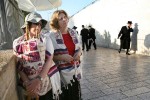
Anat Hoffman, right, and another member of Women of the Wall, standing at the entrance to the Kotel in January 2013, as Charedi men look away. (photo by Michal Patelle (Women of the Wall) via Wikimedia Commons)
For more than 30 years, Anat Hoffman has been fighting for individuals’ rights. Notably, her work with Women of the Wall, which won legal recognition in 2013 for women’s right to pray at the Kotel wearing prayer shawls and using a Torah. And her more than 10 years with the Israel Religious Action Centre, which has achieved government funding for non-Orthodox rabbis, earned multiple Supreme Court decisions recognizing Reform and Conservative conversions, and won a 2011 Supreme Court ruling making gender segregation on public buses illegal.
The self-described troublemaker will be in Vancouver Nov. 15-18, speaking to several community groups, as well as addressing the Jewish community as a whole on Nov. 16, 7:30 p.m., at Temple Sholom. Her topic – From the Back of the Bus to the Top of the Agenda.
“I’m talking about the achievements of a family of organizations – Women of the Wall, the Religious Action Centre, the Jerusalem Open House, the Association for Civil Rights in Israel, all sorts, we’re a cluster of organizations for social change, and I am such an admirer of my colleagues,” said Hoffman. “And we’re all looking at the same issues: how the monolithic interpretation of Judaism in the Jewish state is limiting and stunting our ability to enjoy Judaism and celebrate it.
“In this respect, more than any other, including security, economics … we must dialogue with the Diaspora Jews. You have a stake in it, and you have an opinion. Israel is way too important to be left to the Israelis.”
She doesn’t want Diaspora Jews to be silent, she said, because there are things that Israelis can learn from them. “I’m tired of Israeli arrogance, and the feeling that we know everything,” she said. “If we know everything, how come we are in the situation we are in today on our 67th anniversary? That’s number one: I am humbled by reality and I think we could use all the help we could get.
“The second thing is, I think it’s a joint project. I think it’s the most important project of the Jewish people…. The state of Israel, the fact that we have a sovereign Jewish state, is so exciting and so wonderful, and I think we’re involved in the most important dialogue in our lives – you and I. What are the values of the Jewish state? What are Jewish values anyway? Are they the values of the Book of Joshua – smite them, kill them, annihilate them? Or the values of Isaiah? Who do we listen to, and who do we act like? I’m an Isaiah person, he’s my steering committee. I read him for inspiration and I think if he were alive in Israel today, he’d be under administrative detention – the man had no mouth control.
“So, I am driven to speak to Diaspora Jews, involve them in this dialogue and tell them to stop being quiet. If you are quiet, don’t be surprised if Jerusalem turns into Tehran, don’t be surprised if you wake up one day and you’re ashamed to even be called Jewish because of what the Jewish state is doing. You have to make your statement known today – and, it turns out, the Israeli government is very sensitive to what Canadian Jews think…. You’re not using your fantastic nuisance value. You have so much of it and you don’t use it.”
Acknowledging that Canadians are “extremely harmony-seeking and somewhat conservative,” Hoffman said people should speak up “in whatever style fits you. If Israel arrests women wearing a tallis, praying out loud and trying to have a bat mitzvah at the holiest site of the Jewish people, if this is not something right, then you should mention it.”
The morning of her phone interview with the Jewish Independent, Hoffman had attended a b’not mitzvah at the Kotel, one girl had come from Brazil, the other from the United States. “I had to stand in front of them and explain that we don’t have a Torah scroll this morning because the rabbi [Shmuel Rabinowitz] refused to give me one for these two girls – he has 100 Torah scrolls for public use. I found a way to smuggle in a Torah, but I didn’t use it today. Why? Because I didn’t want to make the Jerusalem police look like horses’ asses today because they have other things on their plate,” she said, referring to the current spate of terror attacks.
Because of the security situation, Hoffman had written Rabinowitz to ask him to make an exception that one day, and to allow the women to use one of the Kotel’s Torahs, “so that we do not burden the police with our problem,” she said. “I didn’t even get an answer.”
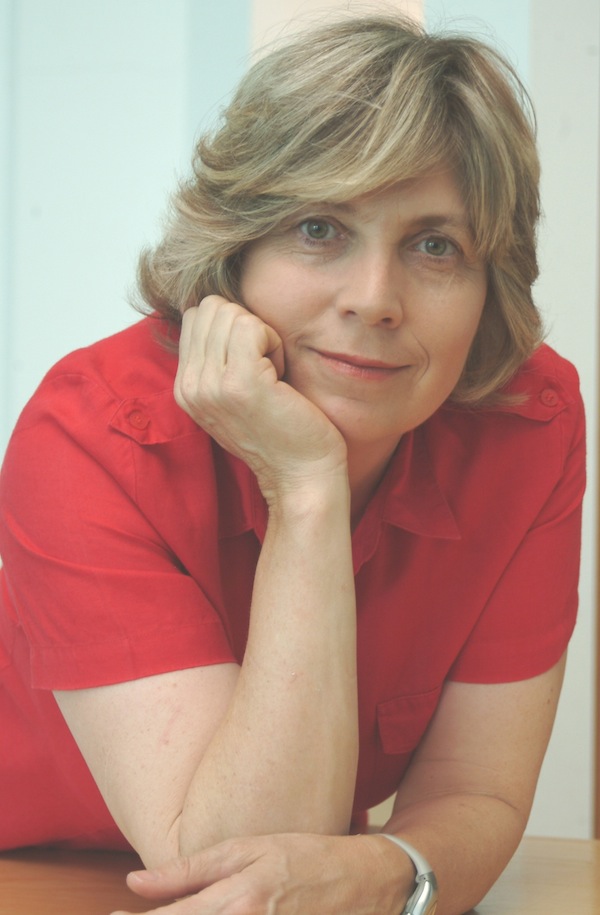
Anat Hoffman (photo from Anat Hoffman)
Despite “30 years of troublemaking,” Hoffman said she has never felt unsafe or isolated. “Not only am I not persona non grata, I was elected and reelected to the city council of Jerusalem endless times. I have 24,000 voters in this right-wing, ultra-Orthodox city. I’ve never felt threatened. My phone number is published in the phone book…. Israel is a democracy and as someone with a dissenting voice – I always was a member of the opposition – I think I was rewarded for this.”
On the issue of gender segregation in public spaces, Hoffman said victory could be declared. “We certainly don’t see new segregations going on, and the new ones are punished by the government now.”
Of the challenges that remain, she said, “Freedom of religion and pluralism, recognition of the Reform and Conservative movements, recognition of women in religion, the issue of the Wall – on these issues of pluralism, the religious establishment is very, very strong in resisting any change because any change would mean the breaking of their empire.”
Also on the morning of her interview with the Independent, former chief rabbi of Israel Yona Metzger was indicted for allegedly accepting some $2 million in bribes. “They have a corrupt system and they’re fighting to keep it because they are very spoiled and used to it, and there’s a lot of resistance to change in that power structure. That structure is the next frontier.”
Calling the Women of the Wall, “the Little Engine that Could,” Hoffman said, “We’re pushing for equality and, in the end, we will win. Am I going to see the end of this struggle? I’m not sure, it’s taking too long. But is it going to be won? There is no doubt in my mind that it will be won.”
Hoffman said she is pushing for a model she learned about in a Limmud South Africa conference a number of years ago. The presenter – Simonne Horwitz – shared stories about the small Jewish community of Saskatoon. In the winter, people help each other get to synagogue, she said, “and they don’t care if you’re Orthodox, Reform or Conservative. And the congregation, the building of the synagogue, it’s Orthodox if a majority of Orthodox show and it’s Reform if the most Reform show, and the one structure can become whatever it is that the people want it to be at that moment.”
Horwitz told the small community’s stories “with so much humor, so much joy,” said Hoffman. “I come from the largest Jewish community in the world, and I have a lot to learn from Saskatchewan, Canada.”
Hoffman said about Israel, “I want us to recognize all streams. I want our structures of religion to be able to be as pluralistic as possible. I want freedom in the market called religious services, and may the best rabbi win.”
Hoffman encouraged everyone to come hear her speak. “I would like to make sure that people who are not liberal, feminist, peacenik, that they know that they are very, very welcome to come dialogue with me. I’m very interested in speaking to more than the choir. I love to dialogue with people who are willing to look at their opinions and check them out with this Israeli. There are Israelis of many kinds. Israelis like me don’t come to your area very often, and I would very much like to dialogue with people who disagree with me, in a civilized manner. Even if you leave me with your same opinions, at least you’ve aired them out a little bit…. It’s a Jewish thing to do. We’re asked to leave our comfort zone a few times a year: when we leave home to build a sukkah, when we throw every piece of bread from our house…. So, I invite very much those people who are not in my natural habitat to come and talk to me.”
She also stressed that it is not regular Israelis who object to the changes she and her colleagues and supporters are demanding, but rather “the establishment that has so much to lose. And it’s all the folly of Israel. By giving one stream the political power, huge political budgets and the ability to monopolize all religious services in Israel, we’ve corrupted something so important for Judaism – the free spirit of criticism, the art of argument. All this is gone now because there’s only one way. Since when do the Jews have a chief rabbi? We never had a pope, never. We’ve always argued. We argued with Moses, Moses argued with God, the prophets argued with the kings, the kings wanted to resign, God resigns, Moses throws his hands up! We’ve always argued. The Talmud is one long argument. We come from a fantastic core of arguments. It all ended with the state of Israel, the argument ended, there is an establishment, the Orthodox establishment, and it’s so bad for orthodoxy, bad for Israel and bad for Judaism.”
Goldie Hoffman is set to play the character of Daphna in Bad Jews, a play by Joshua Harmon. It will be in Vancouver at Rothstein Theatre from Nov. 10-21, directed by Jay Brazeau and produced by Famous Artists Limited. For the Jewish Independent article on the play, which includes portions of the interview below, click here. For tickets, click here.
JI: How hard was it for you to put yourself into your “bad” shoes, or in what ways are you similar and different with respect to the Jewish spectrum than your character?
GH: I’m wearing my “bad Jew” shoes as we speak! In many ways, I think the play is actually poking fun at that very notion of being a “bad Jew,” as there’s really no such thing – or, if there is, well then, we’re all “bad Jews” in one way or another. There is no right way to be Jewish, either religiously or culturally and, as Jews, we grapple with what that identity means to us and how much we want it to affect our lives and sense of self.
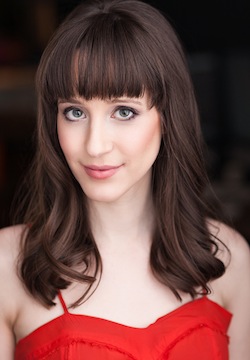
Goldie Hoffman (photo from Famous Artists Limited)
That reminds me of the Jewish saying, “two Jews, three opinions,” and that’s something that I think aptly describes Jews, but is something we should be proud of – that we accept and even thrive on debate, discussion, questions and, of course, the fact that we can openly poke fun at the religion and culture. There’s definitely something very Fiddler on the Roof-esque about this play and the characters – each character deals with their Jewish identity, changing times, and the weight of historical and cultural legacy and community, in their own way.
With respect to my character, in some ways I’m both my character Daphna and her cousin Liam, or at least have been aspects of both of them at one time or another. My experience and views about my “Jewishness” continue to change and evolve, so I’ve been all over the map. For instance, as a kid, I was raised Chassidic, and then as a teen I became non-observant, but was still a believer. Then I identified as “spiritually Jewish.” Now I no longer believe in Judaism, and I’m a secular humanist, but culturally or ethnically, I am definitely Jewish (whether I like it or not). I think this is something a lot of non-Jews have trouble understanding, because the term Jew can apply to both the religion Judaism, but also the Jewish culture, ethnicity, nation, and community, as we are such an old people that we predate these modern terms.
As for Israel, as you know, that’s such a sensitive and ambivalent issue for the Jewish community and something we all have different views on. For my character Daphna, Israel is extremely important and she plans to make her life there. I used to share her fervent Zionism as a teen, and even considered going to Israel as well, either to a kibbutz or to do one of their volunteer programs with Magon David Adom (their national emergency medical disaster, ambulance, and blood bank services as well as national aid society).
I am still a supporter of Israel, though not without my criticism, just like with other countries; but unlike Daphna, I don’t support Israel from a religious standpoint and don’t believe in the existence of holy lands. I can speak, read and write Hebrew (also some Arabic), and tend to really like and get along with Israelis and have a few friends and acquaintances in Tel Aviv who are in the arts scene. I think Israeli Jews are such a unique, interesting and strong people, and they’re very different from North American Jews. If I’m fully honest, I think they’re our cooler cousins, because they’re people who just “happen to be Jewish,” versus we here who are taught our Jewish identity and worry about how it squares up with our national one, and who are by and large much more sheltered and privileged than they are. I also think Israelis are better looking than we are, but I know that’s up for debate. But c’mon, all those people mixing from all those different countries and backgrounds? – you can’t compete with that!
I realize I’m sounding a lot like Daphna now in my praise of Israelis, but again, it’s from a different angle. As an artist, I’m specifically very impressed with Israel’s amazing and thriving arts, culture and film scene, especially given all they deal with on the international and domestic front. As I said, I’m not without criticism, but I do feel Israel is unfairly castigated and vilified in the world and held to unfair double standards. I’m unfortunately disillusioned about the possibility of peace there, and can’t help but think of Israel and that entire region with a tinge of sadness. Still, I’m definitely overdue for a visit and would love to perform live there or work on an Israeli film.
However, all that said, I struggle with the paradoxical dilemma of how to continue the survival of the Jewish people and Israel, while still supporting humanism, secularism, democracy, and the belief that mixing is a great thing for humanity. I think this is a major theme the play deals with and questions, and something most Jews can relate to, as well as many non-Jews with strong cultural and ethnic identities and communities.
JI: Characters that are a “type” can come off as superficial. In what ways have you tried to infuse your character with reality/humanity to prevent them from becoming stereotypes?
GH: I think it’s important not to judge your character as good or bad/ right or wrong. Humans are complex individuals and it’s important to remember that when you portray any character. In fact, generally in real life, we don’t set out to be wrong or behave badly. Most of us try to go through life making good choices, and when we make bad ones or hurt people, we often don’t intend to or don’t even realize the impact of our words and actions. When playing a character, I try to portray their point of view, as best as I can understand it. In fact, after first reading the play, I was actually offended when first seeing Daphna described as a “zealot” in online play reviews and synopses, because I see that term as quite negative, and I didn’t see (or want to see) her that way.
I feel I really understand where Daphna is coming from, even if I don’t share all her views. In fact, I’d go as far as to say, this is a character that is closest to me of all the roles I’ve ever portrayed – to the point where it’s scary and even embarrassing. As for playing a certain “type,” it’s true there is a certain stereotype and similarity many Jewish girls and women share, and yes, a lot of it does apply to me: brunette, outspoken, loud, animated, and yes, also stubborn and annoying – but also spunky, fun, caring, intelligent and funny (and clearly modest). Hey, let’s face it, get a bunch of Jewish girls in the room, and I challenge you to tell me many don’t look and sound like sisters. Daphna shares these qualities, too, but at the same time, we’re of course all individuals, and so our views and outlooks on life can be extremely different.
As far as her being real, to me Daphna already is a real person, and I can completely see and hear her, so I only hope I can translate that successfully to the audience. Aside from the parts of her that I relate to, I even know several “Daphnas,” especially being raised Jewish in both N.Y. and Montreal and now being in L.A. a lot – all big “Jew-towns.” There is a unique experience that Jewish girls and women have, which I relate to. For example, facing certain sexist traditions and customs (especially if raised Orthodox), family dynamics, rivalries, pressures and high expectations, and, of course, last but not least, we are aware of our brethren’s love of “shiksappeal,” which my character’s cousin Liam has. Though on that subject, having dated several non-Jewish guys, I say, “It’s all good, boys, ’cause it goes both ways.”
JI: How did you come to hear about Bad Jews and audition for it?
GH: Our director, Jay Brazeau, contacted me after speaking with director, writer, actor, producer Ben Ratner, who recommended me to him. Ben runs and teaches at Haven Studio, and I’ve trained with him a lot, working on many intense plays and scripts in multiple genres. So, it’s really thanks to Ben that I got this part, both because of his recommendation and also thanks to his training. I was then asked to read with Amitai (who plays Jonah) in front of Jay and our producer Bill Allman in an informal non-audition audition. “Don’t think of this as an audition, Goldie …” they said, and as I jokingly thought to myself, the unsaid continuation of that line was, “… but this read will likely affect whether or not you get the part.” Fortunately, I got the part, and I’m thrilled and truly honored to be playing such a fun role and being part of this ensemble.
JI: Are you going to get a perm to play Daphna?
GH: Oh no, you’ve just outed me as a straight-haired chick! I’m honestly still debating if I should get a perm or not. I’ve had friends with the real “Jew-fro,” and used to be jealous of them, even with their complicated product-regimen they had to wrestle with, and, of course they were jealous of my straight locks. We want what we don’t have, right? I may curl my hair each night, and I’ve been experimenting, burning my fingers, while I curl my hair trying to get it just right so it looks realistic and doesn’t have that “fake curls look.” I know some actors have used extensions for this part, but I want to be able to use my hair in the scene. So, as I write this now, I’m leaning towards a perm, but we’ll see.
JI: As I don’t think we’ve had the pleasure of interviewing before, can you share a bit about your background? How you’re a dual citizen, and split your time between Vancouver and LA? In what other shows Vancouverites might have seen you recently? Whatever else you might like to add.
GH: Ah, now to sum up myself and my background quickly. As you can tell, I’ve clearly mastered the art of being concise.
Long story short, I don’t have the typical North American Jewish experience, because I was raised in more than one. I was born in Brooklyn, N.Y., into a Chassidic family. My mother was from Montreal, my father from San Diego, and their youthful act of rebellion was to leave their secular Jewish lives, and join an ultra-Orthodox Chassidic movement in N.Y., much to the dismay of their families. Talk about being “bad Jews” and trying to define what that means.
They had us 10 kids quickly, one after the other, and I spent my childhood growing up extremely religious with strict kosher rules, dress codes, and no television, secular music or books (though we were sometimes “bad Chassidic Jews” and cheated with books, and also went as a family to see some movies in Manhattan) – a time I now refer to as the fun “cult days.”
Their experiment with ultra-Orthodox Judaism ultimately didn’t work out for us, and my parents divorced. My mother went back to Montreal to be with her family, and we kids along with her. My father is still Chassidic actually, but I’d say he has his own version of it, and he lives in Vegas now. He is quite a character, and that’s putting it mildly, as is my mother, even more so than in the “typical Jewish parents” way.
In Montreal, we re-integrated into “normal” North American Jewish lifestyles, starting out as Modern Orthodox, but then with varying and changing levels of observance, and each of us being allowed to do our own thing. When I graduated, I was actually going to study law, like all good, smart Jewish girls, but changed my mind at the last second about having a stable life in order to pursue performance and the arts instead.
I got accepted into Studio 58’s professional theatre acting program, so that’s what brought me out here. It was pretty scary because I knew nothing about Vancouver, I knew no one here, and had no money to scout out the city beforehand. After studying, I decided to stay here and started acting and doing comedy. Having been here for several years and because I’m a dual American-Canadian citizen, I recently decided to make the jump to L.A., too, since there is more opportunity there – and, of course, because you can’t beat all that sun and ocean. I love being on the West Coast, though I poke fun at it often, because in many ways I’ll always be a bit of a fish out of water here as an ex-East Coaster. My aim is to try to juggle both cities, L.A. and Vancouver, as much as possible taking advantage of the acting and comedy opportunities both cities have to offer.
As far as other performances Vancouverites may have seen me in, I played Connie in Raving Theatre’s production of My Big Gay Italian Wedding, which was put on at the Cultch. I also played Natalie, in the local independent feature dark comedy, Thirty One Scenes About Nothing, which won best picture at the Oregon Independent Film Festival (OIFF) in Portland. I also perform lots of live stand-up and sketch around town. Last year, I ran a weekly comedy variety show, called The Comedy Cabaret, along with co-host Ruven Klausner, in which we performed various comedy characters and acts. We formed a comedic partnership, previously called Schtuptown (a nod towards our Jewish heritage), now called The Goldie & Ruven Show, in which we perform live and create comedy shorts which are published online.
Exploiting the memory of the Holocaust and its victims is a far too commonplace event. Israel’s detractors accuse it of perpetrating a holocaust on Palestinians. Politicians and others frequently make inappropriate comparisons to the Holocaust. But when the prime minister of Israel – the man who refers to himself as the leader of the Jewish people – exploits the Holocaust, it is especially egregious.
Last week, at the meeting of the World Zionist Congress, Binyamin Netanyahu told a story that historians contend was cut largely from whole cloth. This much is true: in November 1941, the Grand Mufti of Jerusalem, Haj Amin al-Husseini, met with Adolf Hitler in Berlin. Al-Husseini opposed Jewish migration to the Holy Land and rejected the idea of a Jewish state there. Increased Jewish migration to Palestine strengthened Zionism and the grand mufti had been a vocal opponent of it – to the extent that Arab rioting he incited helped form British policy on the matter, closing the doors to Jews escaping Nazi Europe. The mufti and Hitler had mutual interests, but al-Husseini was concerned that Nazi antisemitism could drive more Jews to Palestine (although, by late 1941, this was largely a moot point).
In Netanyahu’s curriculum, though, it was the mufti who put the seed in Hitler’s brain to enact the “Final Solution.” (Perhaps the prime minister had recently read the book Nazis, Islamists and the Making of the Modern Middle East by Barry Rubin and Wolfgang G. Schwanitz, which is reviewed in this issue, but not any of its critiques.)
“Hitler didn’t want to exterminate the Jews at the time,” Netanyahu told the congress. “He wanted to expel the Jews. And Haj Amin al-Husseini went to Hitler and said: ‘If you expel them, they’ll all come here [to Palestine],’ … ’So what should I do with them?’ [Hitler] asked. [Al-Husseini] said, ‘Burn them.’”
There is no evidence that any such discussion took place. In fact, the Nazis’ exterminationist intent was already well formed before al-Husseini came to Berlin. The Wannsee Conference, which set out the plan for the “Final Solution,” was mere weeks away and its agenda was set before the mufti had tea with Hitler.
History suggests that al-Husseini was supportive of the Nazis’ plans, but he certainly was not their architect, as Netanyahu implied.
The prime minister’s speech raised outrage globally. Academics and experts in the Holocaust decried his rewriting of history. Critics claimed his remarks were meant to incite hatred against Palestinians at a time when Israel is condemning Palestinian incitement against Jews. Netanyahu was diminishing Hitler’s guilt for the fate of European Jewry, said others. Even Germany’s leader Angela Merkel reiterated her country’s responsibility for the Holocaust.
It is clear what Netanyahu was trying to do. He wanted to demonstrate that Palestinian antisemitism and incitement against Jews and Israelis go back a long way, and he is correct. But to do so, he apparently made stuff up and, far, far worse, exploited the history of the Holocaust and the memory of its victims to score political points. It was shameful, unbecoming his office, and certainly undermines any claim he has to call himself the leader of the Jewish people.
לתפקיד ראש ממשלת קנדה החדש והעשרים ושלושה במספר, נבחר ג’סטין טרודו, מהמפלגה הליברלית, במקומו של סטיבן הרפר מהמפלגה השמרנית. טרודו יקים ממשלת רוב לאחר שזכה בכארבעים אחוז מהקולות שיקנו לו 184 מושבים (לעומת 36 מושבים בבחירות הקודמות), בפרלמנט שכולל 338 מושבים. הרפר (56) ששימש ראש הממשלה במשך כתשע וחצי שנים, ונחשב למנהיג המקורב ביותר לראש ממשלת ישראל, בנימין נתניהו, קיווה שיצליח שוב להרכיב ממשלה חדשה ונכשל בגדול. הוא קיבל כשלושים ושניים אחוז מהקולות, שיקנו לו 99 מושבים (לעומת 159). הרפר הודיע שלא ישמש ראש האופוזיציה, אך ימשיך לייצג את אזורו בקלגרי. לדעת הפרשנים הוא יפרוש מהר מאוד מהפוליטיקה ויחפש עבודה בתחום העסקי. אין ספק שמרבית תושבי קנדה (שבעים ואחד אחוז לפי הסקרים) רצו בחילופי שלטון, תוך שהם מאסו במדיניות הנגטיבית של הרפר.
המפלגה הדמוקרטית החדשה נחלה מפלה קשה וזכתה לכעשים אחוז בלבד מהקולות, שיקנו לה 44 מושבים (לעומת 95). מפלגת הבלדנים של קוויבק קיבלה כחמישה אחוזים מהקולות, ועלתה ל-10 מושבים (לעומת 3), ואילו מפלגת הירוקים קיבלה כשלושה אחוזים מהקולות, עם מושב אחד (לעומת שניים).
הרפר ניהל מדיניות חוץ ניצית תוך שהוא מגן על ישראל בכל מצב, דבר שפגע ביוקרתה של קנדה בעולם, וביכולתה לשמש מתווכת בין ישראל לפלסטינים. טרודו צפוי לנקוט במדיניות יותר מאוזנת במזרח התיכון. לפני הבחירות הוא אמר: “הסכם הגרעין עם איראן הוא צעד בכיוון הנכון. עם זאת איראן רחוקה עדיין מלהצטרף לקהילה הבינלאומית לאור תמיכתה בטרור. האפשרות היחידה להשיג שלום במזרח התיכון היא באמצעות פתרון שתי המדינות, תוך שמירה על בטיחונה של ישראל”. טרודו ציין כי הקמפיין להחרמת ישראל הוא סוג חדש של אנטישמיות. על מדיניות הרפר הוא אמר: “העובדה שהרפר בחר להפוך את התמיכה בישראל לוויכוח פנימי, היא דבר לא טוב לא לקנדה ולא לקהילה היהודית בקנדה”.
טרודו (43) הוא ראש הממשלה הראשון בקנדה שגם אביו (פייר אליוט טרודו) היה ראש הממשלה. הוא נבחר למועמד לתפקיד לפני שלוש שנים, ומאז פתח בקמפיין בחירות חיובי וארוך, שכלל מפגשים עם מאות אזרחים בכל רחבי קנדה. עם זכייתו בבחירות הוא אמר: “הקנדים הראו שהם רוצים שינוי אמיתי ופוליטיקה חיובית. הם מאמינים שיכול להיות טוב יותר. אנו מייצגים את כל הקנדים על כל הגוונים שבהם, וניישם את מה שלמדנו בשיחות עם הציבור. לאור זאת בנינו את הפלטפורמה הזו, התנועה הזו. אתם רוצים ממשלה שתבטח בכם ואנו רוצים שאתם תבטחו בנו. זו תהיה ממשלה פתוחה שפעילותה שקופה, ותכבד את המוסדות השונים במדינה. אנו חוזרים להיות מה שקנדה הייתה בעבר”.
טרודו מתכוון ליצור גרעון תקציבי של כעשרה מיליארד דולר במשך השלוש השנים הקרובות, כדי שהממשלה תוכל לבצע השקעות גדולות מאוד בתשתית, לעזור למעמד הביניים ולחלשים, וליצור הרבה מאוד מקומות עבודה חדשים. ראש הממשלה החדש הבטיח להביא לקנדה עשרים וחמישה אלף פליטים מהמזרח התיכון עד לסוף השנה. וכן להפוך את עישון המריחואנה לחוקי. הוא גם מתכוון לטפל משמעותית בנושא התחממות כדור הארץ.
הרפר נכשל עם הקמפיין ההפחדה שלו שכלל הוצאת עשרים וחמישה מיליון דולר על מודעות וסרטונים נגטיבים נגד טרודו, אותו תיאר חסר ניסיון ולא מוכן לתפקיד. מרבית הציבור לא אהב את השלטון הכוחני והמרוכז של הרפר, שלא שמר על זכויות האזרח ואיכות הסביבה, ולא דאג לפליטים.
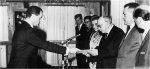
Ambassador Rolf Pauls of Germany presents his credentials to Israeli president Zalman Shazar on Aug. 19, 1965. (photo from picture-alliance/dpa via CIJA)
On Aug. 19, 1965, Ambassador Rolf Pauls of Germany presented his credentials to Israel’s president Zalman Shazar. The tension and solemnity of the occasion were evident in everyone’s faces. Formal intergovernmental relations were being launched between Israel and Germany in the dreadful shadow of the Shoah.
Three milestones paved the way for this historic rapprochement.
The Luxembourg Agreement of 1952, which constituted the Federal Republic of Germany’s assumption of responsibility for the consequences of the Holocaust.
The meeting in March 1960 between David Ben-Gurion, Israel’s first prime minister, and Konrad Adenauer, West Germany’s first chancellor.
The 1961 trial of Adolf Eichmann.
The Luxembourg Agreement formed the foundation for opening dialogue, which after long years of deliberate, mutual and courageous effort culminated in the meeting between Ben-Gurion and Adenauer. The Eichmann trial helped change the two countries’ perception of each other, making it possible to look forward to a different future.
This spring, we marked the 50th anniversary of the establishment of formal diplomatic ties between Germany and Israel on May 12, 1965, a landmark day in the history of both countries. These 50 years have been marked by the rapid development of relationships and contacts in all fields and the burgeoning of a friendship that has become part of the bedrock of international affairs.
Initiated by the pioneering efforts of the scientific community in both countries, German-Israeli ties now cover every possible field of human endeavor and achievement, from scientific research and technological innovation, to youth exchange programs, civic partnerships, municipal exchanges, cultural collaborations, sport, tourism, and so much more.
Today, a quarter of all Israelis have visited Germany, while more than 700,000 young people have participated in bilateral exchange projects. Meanwhile, a trade relationship worth a mere $100 million in 1960 has grown to $7.4 billion in 2013, making Germany Israel’s third most important trading partner, after the United States and China. Israel, in turn, is Germany’s second most important trading partner in the Near and Middle East.
At the governmental level, building upon the deep desire of both peoples, our countries have worked consistently to expand and deepen mutual trust and understanding, as well as the platforms for exchange and interaction that make it possible for these to flourish. Visits at the highest political levels – laden with meaning and symbolism – have developed into regular exchanges, including annual government-to-government consultations and close coordination between trusted partners.
At the core of Adenauer’s and Ben-Gurion’s efforts was the recognition on the German side of the need to demonstrate in the most concrete terms – to itself, to Israel and the Jewish world, and to the broader international community – that the country had detached from its Nazi past and was committed to the responsibility for that past. For Israel, close relations with Germany were a geopolitical imperative for the young state, a matter of securing its future in the family of nations, without forgetting the past.
The unique relationship built by our two nations in the five decades of our ties has helped both countries normalize our international standing, entrench our security and economic well-being and make meaningful contributions to global society. This success is founded upon three key principles: Germany’s ironclad commitment to the security of Israel, for which every Israeli is grateful; our mutual commitment to remembrance and education of the next generation; and our mutual understanding that the well-being of our people requires that we work together to build a safe and prosperous future for all.
German-Israeli relations are built on this dual commitment to the past and the future. A unique trust and a real friendship have been courageously fashioned out of the abyss created by the horrors of the Nazi era. We are proud of what our two countries have achieved together and full of optimism for what lies ahead.
D.J. Schneeweissis consul general of Israel to Toronto and Western Canada, and Josef Beck is consul general of the Federal Republic of Germany to Vancouver and Western Canada. This article was first published in the Canadian Jewish News and Das Journal. The Centre for Israel and Jewish Affairs, Pacific Region, and the German Consulate General in Vancouver are hosting a concert on Oct. 29 in celebration of the 50th anniversary year.
Days before the federal election, the Liberal party ran an ad in the Canadian Jewish News promising, “On Oct. 19, our government will change. What won’t change is Canada’s support for Israel.”
This message effectively echoes what Prime Minister-elect Justin Trudeau told the Jewish Independent in an exclusive interview in July. However, what candidates say and what elected officials do can sometimes differ. When the Liberal party was last in office, their approach to international affairs, particularly during votes at the United Nations, took a “go along to get along” approach that too often saw Canada siding with despotic regimes against Israel.
Jewish and Zionist voters may have thought that Conservative rhetoric on Israel was just that, rhetoric. But very shortly after Stephen Harper became prime minister, the Gaza war erupted and Canada became Israel’s most vocal ally on the international stage. Our country would remain such for nearly a decade.
Critics – inside the Jewish community and beyond – often saw cynical motivations in the Conservative government’s position vis-a-vis Israel. Either it was motivated by political expediency, Jewish votes and financial support or millenarian Christian theology. Harper repeatedly insisted that the government’s policy was motivated simply by the principle of standing by a democratic ally and the Jewish people, nothing more or less.
Whether the decade of Harper’s unapologetic support for Israel is the reason, or whether Canadians have come to the judicious conclusion that Israel is not the malevolent entity that some extremists proclaim, Harper’s view is now mainstream in Canada. So much so that the Liberal party felt obligated to promise that there would be no change in approach. Even the New Democrats, who have a history of harboring some of Canada’s most strident Israel-haters, officially takes a pro-Israel position.
The NDP’s collapse in Monday’s election may change that. It was during the NDP’s weakest period, in the 1990s, that anti-Israel extremists were able to seize the Middle East policy reins of the party. Leader Tom Mulcair steadfastly dragged his party back to a more reasonable position on the topic, but he will certainly be gone soon from the leadership and everything he did and stood for seems likely to be analyzed for a place to lay blame, whether deserved or not.
Of course, outside of a small cluster of voters, Israel and Palestine were not core issues. They were certainly not issues that turned the election. In the end, it was a desire for change and, perhaps, a backfiring of Conservative attack ads and rhetoric that led to the outcome.
The Conservatives blanketed Canada with ads promising us that Trudeau was “just not ready,” which lowered expectations so dramatically that when he was able to hold his own in successive party leaders debates, he could hardly help but exceed the low threshold the Conservatives had created for him among Canadian voters. This, combined with a comparatively positive Liberal campaign and the fact that, in the final days, it was clear that the Liberals, not the NDP, were to be the choice for change, seems to have created the perfect storm that led to the majority government.
We now have the opportunity to see if the Liberal party will indeed stand by its word. Liberals have repeatedly insisted that they are every bit as committed to Israel’s security as the Conservative government. Now they have a chance to prove it. If they do, it will be evidence that support for a Jewish, democratic state, our greatest ally in the region, is not a Conservative value, but a Canadian one.
How I miss those mundane headlines of my youth back in the ’Peg. Nothing more serious than potholes and (the more serious) urban decay of the city centre.
I even miss those mundane headlines of the local papers here in Israel from mere weeks ago. Nothing more serious than the stuck peace process, disputes with Obama, the Iran nuke deal, stray mortar shells from Syria and the like.
I used to love the quiet of those mornings. Sipping my Turkish coffee with the paper spread out in front of me. Catching up on those mundane Middle East headlines before waking the kids up for school, walking the dog and getting ready for work. A typical start to most days probably anywhere in the world.
Well, my world is not typical anymore.
As of late, the headlines blare the new insanity of terrorism in our midst. Random, lone wolf attacks – how random, how lone wolf? – shaking up our beloved routine. No longer so pleasurable reading the morning papers when the headlines shout about multiple terror attacks around the country. Alright, we might expect it in Jerusalem (don’t tell anyone I said that). But for stabbings and car attacks to take place in the cities of Ra’anana or Holon? Even in Tel Aviv. What the heck is going on?!
What is a car attack? It’s when a crazed terrorist rams his car into a crowd of waiting commuters at a local bus stop and then jumps out and starts stabbing the wounded and shocked. Have I disrupted your morning coffee?
This craziness has done more than ruin my beloved morning time. Not sure if it’s just me – I am kind of embarrassed to ask my friends – but I find myself looking over my shoulder much more frequently. Even when exiting the elevator of my condo, I kind of prepare myself for the worst; if I am with my dog, I will let him go out first, just in case (don’t tell my daughter that).
Of course, I worry more about my kids now. They, too, are also frightened. Especially my 14-year-old daughter. Even my son – with all the bravado of a pre-army teen – is, well, let’s just say, concerned.
I picked my daughter up from an after-school event the other day. Much of the activity took place outside. I had terrible visions. Fortunately, the area was more heavily guarded than usual. Not enough for a paranoid parent, but there were a number of police stationed at strategic points. Probably better not to think about it.
Do I want my son walking home from his friend’s this weekend at 3 a.m.? Or meeting his pals at the local ice cream parlor or mall after school? For sure not! Will he? Probably. Life goes on, he says. He just wants to have fun, as do most teens everywhere.
And take my wife. She called me from a business meeting in Tel Aviv today. The city was on high alert. Those dang terrorists again. Major throughways were blocked. Helicopters hovering overhead. The army moving about in full force. The White City in lockdown mode. Stores and malls shut their doors. People stayed inside. Luckily, my wife’s meeting took place at an excellent restaurant; at least she could enjoy a good lunch. Or could she?
Hmm. Looking forward to a quiet morning tomorrow with my Turkish coffee and newspaper; catching up on the insanity taking the country by force, and hoping it doesn’t become mundane.
Bruce Brown, from Winnipeg, lives in Israel with his Sabra wife and children. He actually doesn’t like Turkish coffee – his wife drinks it every morning with her paper – but took the poetic licence to describe himself as drinking the black goo while reading the headlines of his morning paper.