Skip to content
  • Home
  • Subscribe / donate
  • Events calendar
  • News
    • Local
    • National
    • Israel
    • World
    • עניין בחדשות
      A roundup of news in Canada and further afield, in Hebrew.
  • Opinion
    • From the JI
    • Op-Ed
  • Arts & Culture
    • Performing Arts
    • Music
    • Books
    • Visual Arts
    • TV & Film
  • Life
    • Celebrating the Holidays
    • Travel
    • The Daily Snooze
      Cartoons by Jacob Samuel
    • Mystery Photo
      Help the JI and JMABC fill in the gaps in our archives.
  • Community Links
    • Organizations, Etc.
    • Other News Sources & Blogs
    • Business Directory
  • FAQ
  • JI Chai Celebration
  • JI@88! video

Recent Posts

  • Eby touts government record
  • Keep lighting candles
  • Facing a complex situation
  • Unique interview show a hit
  • See Annie at Gateway
  • Explorations of light
  • Help with the legal aspects
  • Stories create impact
  • Different faiths gather
  • Advocating for girls’ rights
  • An oral song tradition
  • Genealogy tools and tips
  • Jew-hatred is centuries old
  • Aiding medical research
  • Connecting Jews to Judaism
  • Beacon of light in heart of city
  • Drag & Dreidel: A Queer Jewish Hanukkah Celebration
  • An emotional reunion
  • Post-tumble, lights still shine
  • Visit to cradle of Ashkenaz
  • Unique, memorable travels
  • Family memoir a work of art
  • A little holiday romance
  • The Maccabees, old and new
  • My Hanukkah miracle
  • After the rededication … a Hanukkah cartoon
  • Improving the holiday table
  • Vive la différence!
  • Fresh, healthy comfort foods
  • From the archives … Hanukkah
  • תגובתי לכתבה על ישראלים שרצו להגר לקנדה ולא קיבלו אותם עם שטיח אדום
  • Lessons in Mamdani’s win
  • West Van Story at the York
  • Words hold much power
  • Plenty of hopefulness
  • Lessons from past for today

Archives

Follow @JewishIndie
image - The CJN - Visit Us Banner - 300x600 - 101625

Tag: David Bluman

A new refuge from violence

A new refuge from violence

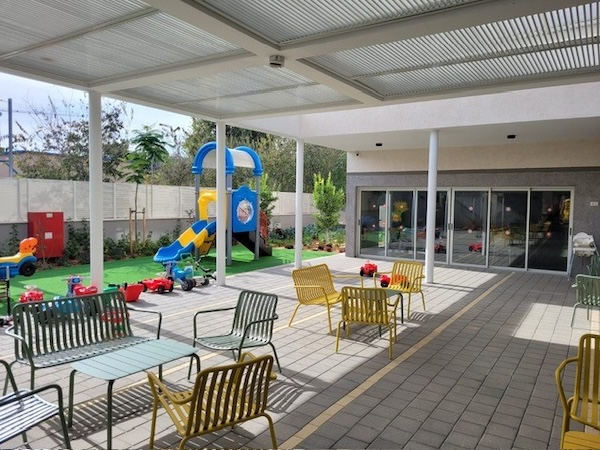
Western Canada House, a shelter for women and children escaping domestic violence, is now open in Rishon LeZion, near Tel Aviv. The project is a result of support from Jewish National Fund of Canada supporters in Vancouver and Winnipeg. (photo from JNF Pacific Region)

Western Canada House, a shelter for women and children escaping domestic violence, is now open in Rishon LeZion, near Tel Aviv. The project, a result of support from Jewish National Fund of Canada supporters in Vancouver and Winnipeg, provides a temporary home to families in crisis, as well as access to counseling services, programs for mothers to become self-supporting and assistance in finding permanent, secure housing.

The project was made possible by revenue from 2016 Negev Dinners in Vancouver and Winnipeg and was chosen by that year’s Vancouver dinner honouree, Shirley Barnett. The honouree of the Winnipeg dinner was Peter Leipsic. (An additional Vancouver connection is that Leipsic is the father of Dr. Jonathon Leipsic, who is, among many other things, a leader in the Jewish Federation of Greater Vancouver.)

Barnett said she was motivated to choose the project in part because it is a joint initiative with No2Violence, whose founder, Ruth Rasnic, Barnett had met previously. Rasnic, who was awarded the Israel Prize in 2009 for her life’s work, founded No2Violence in 1977, to enable women and children suffering from domestic violence to break away and start a new life – by providing them with shelter, professional help, vocational training and legal aid – as well as to raise awareness about domestic violence. The group now operates three shelters in Israel.

“When I was honoured by the JNF, they asked me what kind of a project I would like the proceeds to go to,” Barnett recalled. The agency provided a number of options and, based on her background in social work and her familiarity with Rasnic’s work, she chose this one.

“No2Violence is interesting,” Barnett said. “They are not a religious organization. There are other shelters in Israel that cater only to the Orthodox. No2Violence is nonsectarian and, in addition to that, it is open to women who are not Jewish. It is also open to women who do not have legal status in Israel, who have not been deported because their children have been born in Israel. So, their doors are open to women who have come from Sudan, women who have come from Russia, who have been trafficked into Israel by their Israeli boyfriends. That was also attractive to me.”
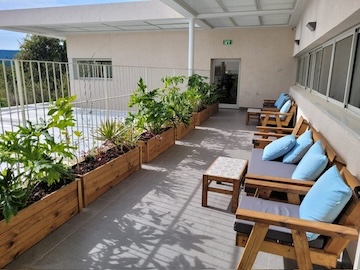
photo - Western Canada House, a shelter for women and children escaping domestic violence
Western Canada House, a shelter for women and children escaping domestic violence. (photo from JNF Pacific Region)

Rabbi David Bluman, director of youth engagement at Congregation Beth Israel, visited Western Canada House earlier this month as part of a joint mission to Israel by Beth Israel, JNF Canada and Congregation Har El.

“It’s a beautiful place,” Bluman said. “They have different areas for children to play. They have a communal kitchen where each family signs up at a different time to do the cooking for the group that’s there. It’s obvious that JNF Western Canada did a really good job, put a lot of money in to build that place. It’s beautiful.

“I don’t think anyone wants to be there, they need to be there,” said the rabbi. “JNF Canada has made it as welcoming as possible, making it so it’s like home for them while they are there.”

The shelter has capacity for 10 to 12 families, providing needed refuge in a country where, statistics indicate, as many as 70% of women and children experiencing domestic abuse cannot access alternative housing.

Michael Sachs, Pacific region executive director of JNF, visited the project last year to assess progress and is delighted that the shelter is now open and providing housing to families. There were delays in completion of the initiative, Sachs said, because of municipal bureaucracy. 

Format AsidePosted on April 26, 2024April 26, 2024Author Pat JohnsonCategories Israel, LocalTags David Bluman, Jewish National Fund, Jewish National Fund of Canada, JNF, Michael Sachs, Negev Dinner, Rishon LeZion, Shirley Barnett, Western Canada House
Shuls, past to present

Shuls, past to present

Left to right: Nico Slobinsky of Centre for Israel and Jewish Affairs, Pacific Region; His Excellency Balint Odor; Ezra Shanken of Jewish Federation of Greater Vancouver; and Andre Molnar, Hungarian honorary consul. (photo from Beth Israel)

On Oct. 15, Congregation Beth Israel hosted an exhibition of Eastern European synagogues, sponsored by the Hungarian government. In his welcoming address at the opening, His Excellency Balint Odor, Hungarian ambassador, explained that Hungary is currently heading up the International Holocaust Remembrance Alliance (IHRA).

“IHRA is very relevant today in fighting spiraling antisemitism across Europe and around the world,” he said. “The mandate of IHRA is to combat all forms of racism, hate incitement and antisemitism, as well as promoting Holocaust education. This year, IHRA has focused a great deal of effort on illustrating the depth of Jewish culture in the region, in particular the synagogue.”

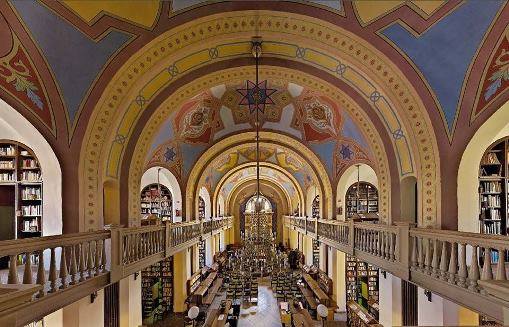
photo - The synagogue in Baja, Hungary
The synagogue in Baja, Hungary. (photo from exhibit catalogue by Rudolf Klein)

The traveling exhibit showcases renovated synagogues throughout East-Central Europe, from 1782-1944, some of which are still in use. Unlike in Germany and Austria, where the majority of synagogues were destroyed, many survived in Eastern Europe. From the 1970s onward, local municipalities restored and renovated synagogues. This work escalated following the fall of the Berlin Wall and the influx of foreign financial support.

The panels show a variety of different styles, ranging from cottage shuls to “palatial” synagogues. The richness and diversity of these places of worship are reminders of how vibrant Jewish life was in Europe prior to the Shoah.

The role of the presidency of IHRA offers Hungary the opportunity to confront its history and look back at the role the Hungarian state played in the genocide. Close to half a million Hungarian Jews perished during the Holocaust. Most of these people died in 1944 following the occupation of Hungary. At that time, every third victim in Auschwitz was a Hungarian Jew. Today, the Hungarian Jewish community is the largest in East-Central Europe. Most Hungarian Jews live in the capital, Budapest, which has some 20 working synagogues.

As Rabbi David Bluman said in his welcome of the ambassador: “The synagogues we see in this exhibit are not just the past, they are also the present for those who worship in them, and will be the future for European Jewry. This is very relevant for us here in our beautiful new synagogue – our present, our future.“

The exhibit was at Beth Israel from Oct. 15-20.

Format ImagePosted on October 30, 2015October 28, 2015Author Congregation Beth IsraelCategories LocalTags Balint Odor, David Bluman, Eastern Europe, history, Holocaust, Hungary, synagogues
Proudly powered by WordPress