The path to our destination

More than 100 years ago, no one could have imagined the destruction that would ravage the earth, nor the scientific breakthroughs that would transform it. Yet, in every generation there are rare visionaries who provide us with a blueprint for the future, and the 20th century was no different.

While Albert Einstein was publishing revolutionary theories that would change the world, in a small town in White Russia called Lubavitch (the city of love), Rabbi Shalom Dovber Schneersohn, the Rebbe Rashab and fifth Lubavitcher Rebbe (1860-1920), was advising us on what was to come.

On Passover in 1908, the Rebbe Rashab delivered a discourse – The Voice of My Beloved, Behold the One that Leaps over the Hills – which was later delivered by his son, Rabbi Yosef Yitzchak Schneersohn, the sixth Lubavitcher Rebbe. In retrospect, we can see how critically important were his words.

The Rebbe Rashab begins with a mystical analysis of the history of the empires that controlled the world. Based on various sources, including the Midrash and the writings of the great kabbalist Rabbi Isaac Luria, known as the holy Arizal, the Rebbe takes us on a journey to the time of Abraham. In the words of the Torah: “As the sun was setting, a deep sleep fell upon Abram: and a deep dark dread fell upon him. [G-d] said to Abram: ‘Know for sure that your descendants will be foreigners in a land that is not theirs for 400 years. They will be enslaved and oppressed. But I will finally bring judgment against the nation who enslaves them, and they will then leave with great wealth….’” (Genesis 15:12-14)

What was the dread that befell Abraham? The Midrash explains that he was shown the future empires that would control the world, each in their own way: the Babylonian, Persian, Greek, Roman and Ishmaelite empires.

The Arizal explains that these empires represent the different stages of refinement we achieve through the generations. He explains that everything in our material existence contains Divine “sparks,” i.e. spiritual energy. We are charged with the mission to redeem and elevate these sparks, thereby refining the material universe and transforming it into a vehicle for spiritual expression, its true purpose. Starting with the Egyptian empire, the archetype and root of all the exiles and empires, each subsequent empire symbolizes another stage in integrating matter and spirit. The process will conclude with the refinement of the last two powers, Edom (Esau) and Ishmael, leading to the Messianic age, a world where there is no more destruction and terror, and all children of Abraham serve the one G-d of Abraham in peace and harmony.

We now stand, according to the 1908 discourse, in the final stage, when Edom – the Western world, descendants of Rome – and Ishmael – the Ottoman Empire – dominate. The Ottoman Empire began to dissolve in 1908 and, a few years later, would join the powers who lost to the Allies in the First World War. The Arizal explains that the refinement of Edom and Ishmael, our work today, corresponds to netzach (endurance) and hod (humility/acknowledgement). Most of the 1908 talk elaborates on the practical application of these two features.

Two states of spiritual consciousness are possible. One, which personifies earlier generations, is a state of revelation, when the “Divine Face” is exposed and souls are aflame with passion. In a spiritually evolved environment, beings naturally gravitate toward the Divine when minds and hearts are attuned to the sublime, emotions are deeply felt and lives are dedicated to service. In such a state, the higher emotions of love (chesed), awe (gevura) and empathy (tiferet) reign.

The second state, which reflects our times, is a spiritual awakening that comes out of a void: when

G-d said to Moses that He would cover His face, there was no darker hour in history. In a state of spiritual darkness, our primary effort must be netzach and hod. Netzach is the determination and fortitude to overcome any adversary and challenge. Hod is a profound sense of acceptance and acknowledgement of a higher presence, rising from the depths of the soul. Both of these forces stem from the innermost essence of the human soul, which cries out in times of pain and discovers the greatest strength in times of challenge.

Both netzach and hod, in one word, are commitment. They are the unimaginable efforts we will exert when our lives or the lives of the ones dearest to us are at stake; the absolute faith in good even when facing death; the hope that can be elicited from each of us when our essential beliefs are challenged.

When the darkest and brightest moments of the 20th century were about to unfold, the fifth Lubavitcher Rebbe in 1908 and the sixth Lubavicher Rebbe in 1924 and 1949 told us that these are the two forces that we will need as we face the challenges ahead.

There is a moment of truth that comes from seeing the light, and there are truths that are born in darkness. When things aren’t apparent and there is no revelation, or oppressive forces consume us and want to extinguish the fire of the soul, then netzach and hod, which are rooted in the essence, surface with their unfathomable intensity. Even the greatest souls have their spiritual fluctuations but the essence remains steady and reliable.

All three discourses address times of prosperity as well. Standing in the early part of the century, the Rebbe’s primary focus is on the darkness. But, recognizing the century would also bring untold success and technological advancement, he addresses the best of times, briefly, in 1908. The 1924 and 1949 discourses elaborate more.

In 1949, the sixth Lubavicher Rebbe said, “Just as one needs unwavering fortitude in troubled times, the same is true in opposite times. When a person is blessed in all his endeavours, both at home and at work, and his heart is lifted to great and exalted heights, endowed with wealth and great success, with many investments and all the anxieties connected with absorption in business matters, despite all these distractions, his heart should not digress from his spiritual commitments, he should consistently maintain his commitments to ongoing, designated time for study and prayer, without any alteration – with the unwavering fortitude and resolution of netzach.”

If you think about it, it is absolutely brilliant advice and it captures the essence of all the suggestions you will ever read in personal growth manuals: never waver from your good actions and commitments to positive causes. Even when you feel down, overwhelmed or distracted, hold on with your dear life to the constructive things that you are connected with. It is this absolute dedication that will carry you through. It is this fortitude that will save your life.

Today, we’re blessed with freedom and many comforts. We also don’t live in a world of Divine revelation. Today, the darkness is within. Complacency and apathy are apparent. As we focus on outer success, it seems our inner lives suffer in direct proportion. It creates a profound void.

So, as we prepare to enter this year’s Passover, beginning on Monday evening, April 10, and celebrate the seder with family, friends and guests, let’s try to be persistent and accepting of our Divine mission, to know with a lightness of spirit and firm belief that, if we are consistent and absolute in our dedication and commitment, we will see the end of the exile and reach our destination: personal and global redemption.

Wishing everyone a happy and kosher Pesach!

– Excerpted from an article by Rabbi Simon Jacobson by local educator, writer and counselor Ester Tauby with permission. For the full piece, visit meaningfullife.com/acharei-calling-generation.

Adding meaning to life

When a group of eight couples in their 40s and 50s meet once a month to discuss different Jewish topics with Rabbi Yechiel Baitelman, co-director of Chabad of Richmond, no subject is off limits. The program is called Toward a Meaningful Life.

“I set the agenda for discussion each month, but if there are other subjects the group is interested in exploring, they’ll send me their questions ahead of time and we can have a meaningful, focused discussion when we meet together as a group,” said Baitelman.

The group of friends meets in the privacy of their homes, and rotates houses from month to month. The rabbi is open to any subject on which he can offer an insightful Jewish perspective. So far, topics discussed have included discovering your personal mission statement; marriage, love and intimacy; home and family; and purpose in life. Upcoming topics will include work; charity and wealth; pain, loss and anxiety; and religion and faith.

Jill Topp, a member of the couples group, values these sessions with the rabbi.

“He’s not judgmental at all, and we’re not even members of Chabad,” she said. “I love his style of guided learning, and what’s important to me is that he allows us to be the Jews that we are, and want to be.” She said they discuss issues related to being in healthy relationships of all sorts, from a Jewish perspective.

Debbie Aarons, another participant, said, “Our group is mixed, we’re not all Orthodox Jews, but we’re like-minded Jews and lifelong learners. Being part of this couples learning group sends a good message to our kids. It tells them that being Jewish is not just about going to shul once a week or a few times a year. It’s about continuing our Jewish learning and having meaningful conversations.”

Shay Keil, who also attends the group, finds it interesting to see how the other couples, who are his friends, respond to discussions about relationships from a religious perspective.

“It’s not something we talk about when we socialize, so it’s fascinating to hear their points of view on these topics,” said Keil. He commented that he finds it beneficial that they’re friends coming together, because it adds that social element to it. “I also like that our kids see us going on a Sunday night to a class that’s connecting us to Judaism, and that it’s not just about going to shul,” he added.

“As Jews, we struggle with all sorts of religious and other issues,” said Baitelman. “We’re a people that questions everything and wants to know why – or why not. Life is about purpose and meaning, and people want to understand their role in the world. So, during these couples classes, we explore all kinds of Jewish subjects and everyone has a chance to contribute. Hopefully, by the end of each meeting, couples have a better insight and understanding of Jewish topics, both personally and as part of the Jewish people.”

Anyone interested in joining this group, or starting one of their own, should contact Baitelman at 604-277-6427 or rabbi@chabadrichmond.com. This informal program is open to all Jewish couples, regardless of age or religious affiliation.

Share light of Shabbat

“We want to share Shabbat with those who are alone, or those who might have difficulty cooking for themselves. Plus, we want to help every Jew feel connected and part of the community,” said Rabbi Yechiel Baitelman of Chabad of Richmond, who started the Light of Shabbat program in 2011. “This is not tzedakah; it’s about making a connection with other Jews and helping them celebrate the mitzvah of Shabbos.”

With help from devoted community volunteers, full kosher Shabbat meals are cooked and delivered to those who are elderly, alone, recovering from illness, or homebound. Currently, deliveries are done every other week to about 10 people in Richmond. Each Shabbat box contains challah, grape juice and Shabbat candles, plus a meal of soup, salad, chicken, vegetables and dessert – all homemade. They even include a little card with the blessing for lighting candles, the Torah portion for the week and information about why Jews celebrate Shabbat.

“The boxes are personalized, depending on the needs of the recipient, so some boxes contain more than one meal,” said Grace Jampolsky, coordinator of the Light of Shabbat program. Chabad of Richmond has delivered 495 boxes to date.

“I like to bake the challah myself, but other volunteers make the soup, cook the chicken and vegetables, and bake the desserts,” added Jampolsky.

Richmond resident Courtenay Cohen and her friends, some of whom aren’t even Jewish, bake cookies, cakes and brownies for the Shabbat boxes. Cohen started volunteering a year or two ago. Asked why she recruited non-Jewish friends to help bake, Cohen said: “They’re very involved in their own religious community, but when I told them what I was doing, they wanted to help. It’s a great way to teach them about Judaism.”

Taking on a bigger role this year, Cohen now oversees the baking part of the Shabbat boxes. Not only does she bake, but she also helps pack the boxes and deliver some of them. “Delivering the boxes gives me a chance to visit elderly Jews and others in our community and make a person-to-person connection with them. It’s also a way to check in on them and make sure they’re living in safe and suitable conditions,” added Cohen. “Plus, they really love talking to young people.”

Pam, one of the Shabbat box recipients, said: “It’s fantastic! It’s very generous of Chabad to do this.” Pam said she especially likes when the kids decorate the boxes, and she enjoys the short visit with them. She said that, with the recent snow and an elevator that wasn’t working, she couldn’t leave her apartment for a week, so the Shabbat box was very helpful to have.

Rabbi Yeshurun Blumenfeld, along with his 6-year-old son and 4-year-old daughter, make volunteer deliveries of a Shabbat box to a couple in their 90s every other week. “Not only do I create an ongoing relationship with this couple, but it’s a way to teach my kids about the importance of doing mitzvahs,” said Blumenfeld, who added that promoting a mitzvah is a sanctification of G-d’s name.

Blumenfeld also shared a story of how, one day, when he was at a Richmond bakery buying challah for his family, he happened to bump into the wife of this elderly couple to whom he delivers a Shabbat box. She was shlepping a bunch of groceries, and he asked her how she was getting home. She told him she had called a taxi. He immediately said they should cancel the taxi, and he would drive her home himself. He said it was a very special moment for him, to make that connection with another Jew.

The Light of Shabbat program began in memory of Gavriel and Rivka Holtzberg, shluchim who started the Chabad House in Mumbai, India – the couple was murdered by terrorists in 2008.

Supporting the Light of Shabbat program is a huge mitzvah on many levels. And, as there are a lot of seniors and others in Richmond who would appreciate a good Shabbat meal, Chabad of Richmond desperately wants to expand the program, but needs more donors, sponsors and volunteers to sustain it. Their goal is to substantially increase the number of meals they deliver every week. Each filled Shabbat box costs approximately $25 to $28. To donate to the program on an ongoing or one-time basis, contact Baitelman at 604-277-6427 or rabbi@chabadrichmond.com.


Bringing light to darkness

MLA George Heyman addresses the crowd at the lighting of the Silber Family Agam Menorah (below) on Dec. 25. (photo by Glenn Berlow)

photo - Lighting the Silber Family Agam Menorah
Lighting the Silber Family Agam Menorah. (photo by Glenn Berlow)

There were many Chanukah celebrations that took place around the Lower Mainland last month. Here are but a sampling of the events that were held to mark the holiday.

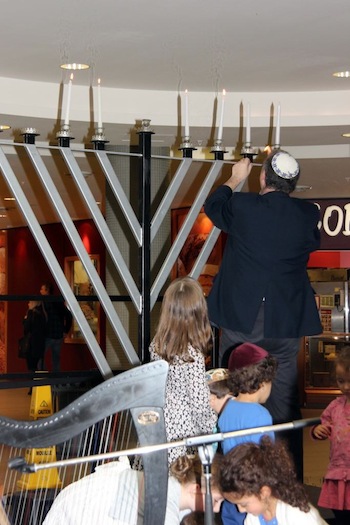
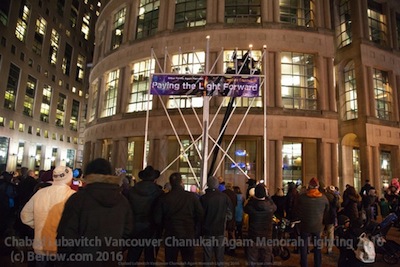
Despite the frigid weather, more than 200 people gathered on Dec. 25 for the annual lighting of Canada’s tallest menorah, the Silber Family Agam Menorah.

The menorah is usually placed outside of Vancouver Art Gallery but, due to construction, it was placed outside of the Vancouver Central Library on West Georgia Street this Chanukah. The program included greetings from MLA George Heyman, Rabbi Avraham Feigelstock, Herb Silber and Rabbi Yitzchak Wineberg. B.C. Premier Christy Clark sent her greetings to be read at the event as well.

– Lubavitch BC

* * *

photo - “Young and old joined together for an evening of lights, song, great food and amazing fun” at the Centre for Judaism’s Iron Chef Chanukah
“Young and old joined together for an evening of lights, song, great food and amazing fun” at the Centre for Judaism’s Iron Chef Chanukah. (photo from Centre for Judaism)

On Dec. 25, the third Iron Chef Chanukah took place, hosted once again by the Centre for Judaism of the Lower Fraser Valley.

photo - Iron Chef Chanukah 2016
(photo from Centre for Judaism)

“Rabbi and Simie Schtroks really know how to throw a party!” said chef Marat Dreyshner. “This was my third Iron Chef Chanukah competition and it gets better each year. Young and old joined together for an evening of lights, song, great food and amazing fun.”

“It was an evening that warmed my Yiddishe kishke,” one of the guests commented, echoing the sentiments of many.

After the competition, guests sat and shmoozed with Rabbi Falik and Rebbetzin Simie Schtroks into the night. A first-time attendee was overheard saying, “I am so glad that I came. This place really feels like one warm family. It really lifted my spirits.”

– Centre for Judaism

* * *

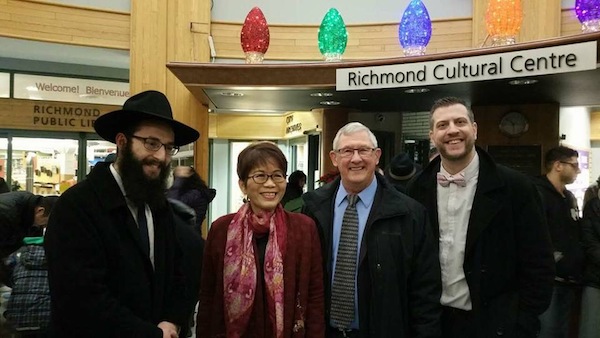
photo - Community leaders at the Dec. 26 menorah lighting in Richmond included, left to right, Bayit Rabbi Levi Varnai, MLA Teresa Wat, councilor Bill McNulty and Bayit president Michael Sachs
Community leaders at the Dec. 26 menorah lighting in Richmond included, left to right, Bayit Rabbi Levi Varnai, MLA Teresa Wat, councilor Bill McNulty and Bayit president Michael Sachs. (photo by Michael Sachs)
photo - Michael Sachs, president of the Bayit, lights the menorah outside of Richmond Public Library and Cultural Centre on Dec. 26
Michael Sachs, president of the Bayit, lights the menorah outside of Richmond Public Library and Cultural Centre on Dec. 26. (photo by Shay Rokach-Penn)

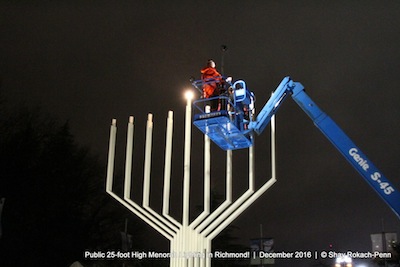
On Dec. 26, the third night of Chanukah was marked in the plaza of Richmond Public Library and Cultural Centre with a celebration that included the lighting of a 25-foot steel menorah designed by the late Arthur Erickson and fabricated by Ebco Industries Ltd.

MLA Teresa Wat was in attendance and addressed the more than 300 people who braved the difficult weather conditions to come out for the community event, which also featured kids entertainment and Chanukah treats.

Some of the companies and organizations involved were the Bayit synagogue (Rabbi Levi Varnai and president Michael Sachs), Chabad of Richmond, the City of Richmond, Richmond Public Library and Cultural Centre, and Helmet and Hugo Eppich from Ebco Group of Companies. Joe Dasilva was a main organizer.

– The Bayit

* * *

photo - Semiahmoo Shopping Centre was filled on Dec. 29 for the menorah lighting, which was done by Cantor Yaakov Orzech, and the awarding of the 2016 Lamplighter Award to Jason Aginsky (below), among other festive activities
Semiahmoo Shopping Centre was filled on Dec. 29 for the menorah lighting, which was done by Cantor Yaakov Orzech, and the awarding of the 2016 Lamplighter Award to Jason Aginsky, among other festive activities. (photo by Naomi Nelson)
photo - Cantor Yaakov Orzech lights the menorah
Cantor Yaakov Orzech lights the menorah. (photo by Naomi Nelson)

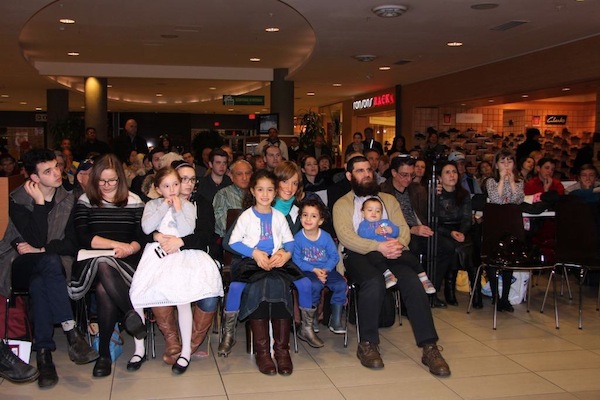
Approximately 120 people attended the annual Centre for Judaism’s public menorah lighting at the Semiahmoo Shopping Centre on Dec. 29.

MLA Marvin Hunt, White Rock Mayor Wayne Baldwin and councilors Dave Woods, Helen Fathers, Mike Starchuk and Rudy Storteboom joined the celebration and brought greetings from their cities and from the government of British Columbia. Rabbi Yitzchak Wineberg, director of Lubavitch BC, and his wife, Rebbetzin Henia Wineberg, also joined the Centre for Judaism’s Rabbi Falik and Rebbetzin Simie Schtroks for the evening.

photo - Jason Aginsky, the 2016 Lamplighter Award winner
Jason Aginsky, the 2016 Lamplighter Award winner. (photo by Naomi Nelson)

Although MP Dianne Watts was sick with the flu, she made sure to call Simie Schtroks prior to the event. She also sent a letter of greetings on behalf of the Government of Canada. In the letter, she stated her support for the Jewish people and the state of Israel, especially at this time.

Jason Aginsky was awarded the Centre for Judaism’s Lamplighter Award. Aginsky was the second-youngest participant in the B.C. Ride to Conquer Cancer in August 2016, when he rode the 250 kilometres from Surrey to Seattle over two days. He raised more than $4,000 for the cause.

Cantor Yaakov Orzech lit the menorah and sang Chanukah songs. Musical entertainment, including “The Baal Shem’s Niggun,” was provided by violinist Robert Rozek, one of his students, Rebecca Bukhman, and her mother, musician Rada Bukhman. The talented young harpist Adina Ragetli also entertained the audience with Jewish songs.

Not to be forgotten was a quick game of Let’s Make a Chanukah Deal, as well as doughnuts, chocolate gelt and dreidel glasses.

– Centre for Judaism

Shabbat Across UBC

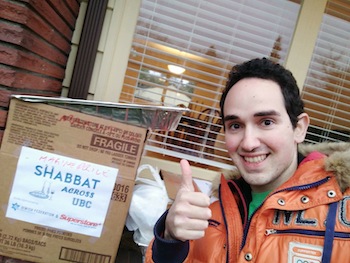
Chabad on Campus, student and other volunteers and Shabbat hosts made Shabbat Across UBC on Nov. 18 possible. (photos from Chabad at UBC)

On Nov. 18, more than 75 students celebrated Shabbat with Chabad on Campus at the University of British Columbia but, this time, they only arrived at Chabad after dinner. Instead of hosting the meal at the Chabad House as usual, there were six different dinners hosted by student volunteers in their residence buildings, after which the students met up at Chabad, where they shared dessert and got a chance to know one another.

photo - Chabad on Campus, student and other volunteers and Shabbat hosts made Shabbat Across UBC on Nov. 18 possibleRabbi Chalom Loeub, who runs Chabad at UBC with his wife Esti, delivered food and supplies, and the hosts invited their friends and neighbors and ran the meal.
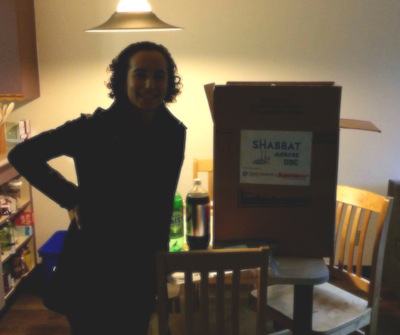
Cordelia Sank is a second-year UBC theatre production student, who volunteered to co-host a dinner in the Fairview Residence block. “Getting the chance to bring together all of the other Jewish students in my residence was very special and inspiring for me,” she said, “and I look forward to attending many more of these dinners in the future.”

photo - Chabad on Campus, student and other volunteers and Shabbat hosts made Shabbat Across UBC on Nov. 18 possibleThe event was a big success, drawing in both seasoned Chabad members and new students, some of whom were experiencing Shabbat for the first time. UBC president Santa J. Ono wrote a letter of congratulation, praising the event as a “wonderful initiative … to build community at UBC.”
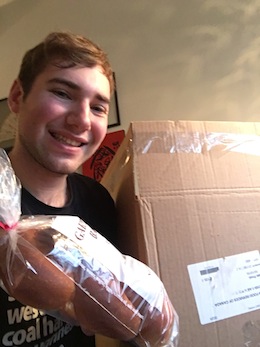
Hani Gorgy is a third-year exchange student visiting from Israel, who has attended many Shabbat meals, classes and programs at Chabad on Campus. “I’ve always felt that Shabbat dinner is a time of spiritual joy,” she said. “Being invited to Shabbat dinners here in Vancouver made me feel welcomed and safe. Meeting so many Jewish people here helped me feel like I’m part of the community.”

photo - Chabad on Campus, student and other volunteers and Shabbat hosts made Shabbat Across UBC on Nov. 18 possibleWeekly Shabbat dinners are only one of the programs that Chabad at UBC offers, including social programs, Torah classes, kosher meals on campus, support and holiday programming for the Jewish community at UBC and other colleges and universities across Vancouver.

The Shabbat Across UBC event was made possible by the sponsorship of the Jewish Federation of Greater Vancouver and the Marine Drive Superstore. Chef Menajem of Forty-One Catering created an impeccable spread, and the student volunteers and Shabbat hosts made this annual event a reality.

For more information about this or other events, contact the Chabad Jewish Student Centre at 778-712-7703, chabadubc@gmail.com or chabadubc.com.

Sydney Switzer is a fourth-year student at Emily Carr University and president of the Chabad Jewish Student Club.

Thousands gather

(photo by Mendel Grossbaum / Chabad.org)

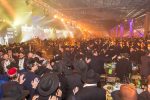
Rabbis dance with their colleagues at a banquet at the Brooklyn Marine Terminal Pier 8 on Nov. 27. They were among the 5,600 rabbis and guests from 90 countries who gathered in New York for the International Conference of Chabad-Lubavitch Emissaries, an annual event aimed at reviving Jewish awareness and practice around the world. This year’s conference carried added significance, as the North American Jewish community marked 75 years since the Lubavitcher Rebbe – Rabbi Menachem M. Schneerson, z”l – and his wife, Rebbetzin Chaya Mushka, z”l, arrived on U.S. shores from wartorn Europe in 1941. (Courtesy of Chabad.org)


Memorial to Mumbai terror victims

Israeli President Reuven Rivlin lays a wreath in memory of the victims of the 2008 Mumbai terror attack at the Chabad House. To Rivlin’s left is First Lady Nechama Rivlin. (photo from Israel Government Press Office via Ashernet)

Israeli President Reuven Rivlin and First Nechama Rivlin participated in a Nov. 21 memorial ceremony for victims of the 2008 Mumbai terror attack at the Chabad House – Rabbi Gavriel and Rivka Holtzberg, Bentzion Kruman, Rabbi Leibish Teitelbaum, Yoheved Orpaz and Norma Rabinovich.

Also at the ceremony at Taj Palace Hotel were Chennamaneni Vidyasagar Rao, governor of Maharashtra state of India, other senior state officials, leaders and members of the Jewish community, and members of the business and academic delegation who accompanied the president on his state visit to India.

“As we stand here, we say clearly that terror will never win…. Our values of democracy and freedom are strong and we will defend them with all our might,” said Rivlin. He added, “We must act and work together: to share intelligence and best practices, to keep our peoples safe, to protect our borders, our towns and cities. India and Israel stand shoulder to shoulder in this fight. This is our duty to the memory of the victims, and will be the legacy we leave for future generations.”

Soul-opening retreat experience

Let me start by saying that I grew up a secular Jew. As I’ve gotten older, my desire for more Yiddishkeit has increased tenfold. Long story short, I went from being a “High Holidays-only Jew” to someone who lights candles every Friday night, attends shul every Shabbos and goes to Torah classes regularly.

My latest quest to embrace Judaism took the form of the 2016 National Jewish Retreat. Sponsored by the Rohr Jewish Learning Institute and Chabad, this six-day retreat took place in Palm Desert, Calif. More than 1,400 Jews from all over North America settled in to the enormously lavish JW Marriott for Jewish learning and fun.

I’m stopping here because I know that when I got to Chabad, many of you shut down and/or entertained a plethora of preconceived notions and stereotypes: black hats, long coats, lots of rocking and davening, strict Shabbos rules. Think again.

Even I was skeptical, wondering whether I’d be judged for my “immodest” clothing, my limited Jewish observance and my lack of Torah knowledge. But, no sooner did I get there, than a variety of religious and not-so-religious folks introduced themselves and welcomed me warmly. From that point on, I was hooked.

The programs comprised 150 lectures and 75 speakers. Keep in mind the retreat was only six days long, so I had to choose my topics wisely. All told, I attended 29 lectures. And I even had time to go the washroom once or twice. From 9 a.m. till late into the night, I had the honor of learning from world-renowned speakers, listening to radio talk-show host Dennis Prager, attending a Dudu Fisher concert, viewing the stunning art of Barbara Hines, and enjoying Jewish comedian Robert Cait.

The main event, the retreat sessions, covered a wide spectrum of topics including practical lessons from the Tanya; discovering purpose and mission in life; Jewish medical ethics; the pursuit of happiness and gratitude; the relevance of G-d in 2016; handling personal struggles, pain and suffering; a challah bake; a talk about why bad things happen to good people; Jewish law; living with faith; the legacy of the Lubavitcher Rebbe; Israel’s inclusive army; the miracle at Entebbe; wine tasting; the historical relationship between Jews and Muslims; antisemitism; how to pray with passion and purpose; the future of Israel and Zionism; Jewish history and mystical prophesies; the feminist challenge of 2017; a farbrengen for women; and leadership. And that’s just the tip of the iceberg.

Focusing on the personal more than the political, historical or global, the sessions I attended were nothing short of awe-inspiring. Never having experienced intense spiritual Jewish learning like this, I was a human sponge. It sparked something visceral in me and my emotions ran wild. (Read: I’m emotionally incontinent and my tears overflowed early and often.)

My favorite sessions included a class on the Tanya, which is an early work of Chassidic philosophy and a “one size fits all” life manual. It’s basically the “GPS for life” and encourages us all to live with purpose and meaning.

I also attended a couple of sessions on the Rebbe and the secret of Chabad. While some people consider Chabad a radical sect of Judaism, it has actually become the mainstream, because of the Rebbe’s focus on outreach to Jews around the world. He considered outreach the key to continuing Yiddishkeit. The Rebbe was without doubt the most influential rabbi in modern history. A revolutionary figure and an inspiration, he created an “army” of shluchim (emissaries), who set up Chabad houses around the world to inspire Jews in Jewish traditions and education. As a result, Chabad is considered a “vanguard of change” and leaders in the community.

A session called The Pursuit of Happiness reinforced the idea that happiness and blessings are directly correlated. And, since happiness is a choice, we should direct our emotions towards positive things. In essence, we’re really products of our choices, not our circumstances.

Pain and Suffering was a session about transforming pain into growth. The speaker made a poignant observation about grief having “energy.” He posited that, when a person can harness that energy, they can change the world. He also pointed out, from studies, that people with faith have more resilience and strength. In his words: “You don’t know the power of faith until you have nothing left but faith.”

There were lots of social events at the retreat, too. I got particularly emotional during the challah bake, while lighting Shabbat candles with 600 other women, and singing and dancing after Havdalah with more than 1,400 Jews from my new Jewish “family.”

And then there was the gourmet kosher food. When I heard about the 24/7 tea room, I expected a small room with maybe some Danish and coffee, then I saw the football-field-length foyer with fruit, candy, chips, cookies, sandwiches and various beverages. That was during the weekdays. On Saturday night, at around 11 p.m., I experienced my first melaveh malkah meal: a lavish buffet that symbolically escorts the departing Shabbat queen. Imagine vegetarian burger sliders, innumerable cheesecakes, pastries, a crepe station, a pasta station, lox and bagels, an ice cream station, and more. At midnight, I thought to myself, “Do I keep eating or do I sleep?”

I came back bubbling with enthusiasm, anxious to tell my husband Harvey all about it. When the descriptions and tears of joy were done, he said: “So, I guess you drank the chicken soup.” You bet I did. And boy was I thirsty!

A huge thank you goes to Rabbi Yechiel Baitelman of Chabad of Richmond for encouraging me to attend the retreat. I could never have imagined how it would alter how I think and feel about being Jewish. Truly, it was a soul-opening experience.

Every single day was a blessing of inspiration and spiritual holiness for me. Sharing my stories from the National Jewish Retreat is my way of sharing the blessings. I only hope that you get to experience it for yourself one day.

Shelley Civkin recently retired as librarian and communications officer at Richmond Public Library. For 17 years, she wrote a weekly book review column for the Richmond Review, and currently writes a bi-weekly column about retirement for the Richmond News. She’s also busy exploring her Yiddishkeit.

New Jewish centre opens

Rabbi Meir Kaplan and his 3-year-old son Sholom Ber Kaplan check out the new Chabad Centre for Jewish Life and Learning on Glasgow Street, near Topaz Park, in Victoria on Aug. 24. (photo from Darren Stone, Times Colonist)

A new centre for Jewish worship, study and community engagement opened in Victoria Aug. 24, as the ribbons were cut on the Chabad Centre for Jewish Life and Learning.

The 10,000-square-foot building, at 2955 Glasgow St., across from Topaz Park, includes a synagogue, Hebrew school, library, kosher kitchen and daycare. The $3 million facility was designed by Victoria architect Bradley Shuya.

It’s the first new synagogue to open on Vancouver Island in more than 150 years. Congregation Emanu-El, at 1461 Blanshard St., opened its doors in Victoria in 1863, and is recognized as the oldest synagogue in continuous use in Canada.

The Chabad Centre follows a different tradition of worship than the modern community engagement of Congregation Emanu-El. According to the Chabad of Vancouver Island website, its style of worship arose about 250 years ago in Russia and is part of the Chassidic tradition.

Rabbi Meir Kaplan, director of Chabad of Vancouver Island and of the new centre, said it should not be understood as an organization for strict Orthodox Jews.

Kaplan noted that, while he wears a beard and some visible elements of traditional Jewish garb, attendees at the Chabad Centre are just as likely to dress according to their own tastes.

“All are welcome,” he said. “And that is who our community is made of – it’s not only for Chassidic Jews.”

The group behind the Chabad Centre is Chabad of Vancouver Island, which had its roots in the Kaplan household. About 10 years ago, activities were moved into the Quadra Elementary School annex, where the Jewish Education Centre was established.

The Chabad tradition has functioned on an “outreach” model for about 60 years, looking to connect with those who wish to learn about Jewish life and teachings, Kaplan said.

That makes it difficult for him to identify the number or size of the congregation – it doesn’t function as a distinct group but more as an agency forever looking outward.

Kaplan, who was born in Israel, was sent to Victoria with his wife, Chani, about 13 years ago. Since then, Chabad has gained enough supporters to start a separate synagogue, initially in rented premises and now in the new centre.

“What I am most proud of is this was built by the whole community,” Kaplan said. “It wasn’t just one person, but various members of the Jewish community supported us financially and in other ways.

“It’s an open centre for Jewish life.”

– This article is reprinted with the permission of the Times Colonist


New hand chime choir

Chabad of Richmond’s new Chabad Hand Chime Choir is looking for additional members. (photo from Chabad of Richmond)

“We wanted to have more creative activities for seniors, something music-oriented,” said Rabbi Yechiel Baitelman about Chabad of Richmond’s new Chabad Hand Chime Choir. “Music helps with focus, builds concentration. Many of our seniors always wanted to have music in their lives, acquire musical skills, but they never learned to play, for various reasons. Now, with this choir, they can play wonderful music, be part of a team.”

The choir was formed after the federal government approved Chabad of Richmond’s application for a New Horizons for Seniors grant. The choir officially started in May and the first intake for members took place soon after; the second intake starts this month, and the third will begin in January.

The rabbi said that the first concert of the group was a big success. “They played at our annual summer barbeque,” he said. “The music included some Jewish tunes, popular songs. They are recording a CD now.”

Hand chimes were chosen, said Baitelman, “because most of our participants can’t read music notations. With hand chimes, each musician only plays one note on his chime, a part of a chord.”

Many music educators consider hand chimes the best instrument for beginners. Essentially, a hand chime is a percussion instrument, an aluminum tuning fork with a small mallet permanently attached to the handle. The length of the tines of the fork is responsible for the sound, which is one clear note. When a musician moves his hand holding the chime in a certain way, the mallet strikes the fork, and the chime resonates. The sounds produced are melodic and breathtakingly beautiful, and they last until the musician “damps” the chime by holding it to his hand or shoulder, thus stopping the vibrations.

Hand chimes are fun to play and easy to learn, which contributes to the self-esteem of the player, which is why they are often used in music therapy.

Hand chimes are cousins to hand bells and an ensemble of hand bells or hand chimes is called a choir, even though the musicians don’t sing. Like hand bells, hand chimes have a long history, dating back to China thousands of years ago. Those ancient chimes were made of bamboo, and the sound was created not by a mallet but by hitting the chime against a stationary object. Later, a musician would play his chime by striking it with a stick.

Since then, numerous inventors and manufacturers have strived to discover the best material for the chimes’ split fork and the mechanisms attaching the mallets. Amid these endeavors, between the two world wars, several radio stations used hand chime tunes – a few notes – as their audio signatures. By the early 1980s, hand chimes finally arrived at the design the Chabad Hand Chime Choir – and many other groups – are using today.

The Chabad choir includes seniors in their mid-60s to seniors 90-plus, and each rehearsal session usually counts 10 to 14 people. “Not everyone can come every week, for health reasons,” the rabbi said, “but all the members of the group are very enthusiastic about their music.”

Ron Philips, chosen to lead the new group, has years of experience in a variety of musical fields. “We wanted someone who knew not only music but also musical therapy and working with seniors, and Ron Philips answered all our needs,” Baitelman said.

“I wear many hats,” Philips told the Independent. “I’m a composer and a musician, an arranger and a voice teacher. I play several instruments – piano, guitar, bass, drums, flute – and I write music for films and various music projects.”

Having loved music in all its forms since childhood, Philips graduated from Douglas College with a music degree. He was the composer behind a number of locally produced films, including the award-winning Complexity (2011). He was involved with the Richmond Community Orchestra and Chorus and has worked on many other projects where music and community interests intersected. At the moment, he runs the Steveston Music Centre.

“When I was asked to conduct the Hand Chime Choir for Chabad of Richmond, I was glad to take on this new experience,” he said. “I believe this Hand Chime Choir gives the seniors participating in it a new connection to music.”

No prior music experience is required to be part of the choir. “We accept anyone who comes, as long as they have the love of music, the desire to learn and the willingness to participate in a team,” said Philips.

Anyone interested in trying out for the Chabad Hand Chime Choir should call Chabad of Richmond at 604-277-6427.

Olga Livshin is a Vancouver freelance writer. She can be reached at olgagodim@gmail.com.