Skip to content
  • Home
  • Subscribe / donate
  • Events calendar
  • News
    • Local
    • National
    • Israel
    • World
    • עניין בחדשות
      A roundup of news in Canada and further afield, in Hebrew.
  • Opinion
    • From the JI
    • Op-Ed
  • Arts & Culture
    • Performing Arts
    • Music
    • Books
    • Visual Arts
    • TV & Film
  • Life
    • Celebrating the Holidays
    • Travel
    • The Daily Snooze
      Cartoons by Jacob Samuel
    • Mystery Photo
      Help the JI and JMABC fill in the gaps in our archives.
  • Community Links
    • Organizations, Etc.
    • Other News Sources & Blogs
    • Business Directory
  • FAQ
  • JI Chai Celebration
  • JI@88! video

Recent Posts

  • Story of Israel’s north
  • Sheltering in train stations
  • Teach critical thinking
  • Learning to bridge divides
  • Supporting Iranian community
  • Art dismantles systems
  • Beth Tikvah celebrates 50th
  • What is Jewish music?
  • Celebrate joy of music
  • Women share experiences 
  • Raising funds for Survivors
  • Call for digital literacy
  • The hidden hand of hate
  • Tarot as spiritual ritual
  • Students create fancy meal
  • Encouraging young voices
  • Rose’s Angels delivers
  • Living life to its fullest
  • Drawing on his roots
  • Panama City welcoming
  • Pesach cleaning
  • On the wings of griffon vultures
  • Vast recipe & story collection
  • A word, please …
  • מארק קרני לא ממתין לטראמפ
  • On war and antisemitism
  • Jews shine in Canucks colours
  • Moment of opportunity
  • Shooting response
  • BC budget fails seniors
  • Ritual is what makes life holy
  • Dogs help war veterans live again
  • Remain vital and outspoken
  • An urgent play to see
  • Pop-up exhibit popular
  • An invite to join JWest

Archives

Follow @JewishIndie
image - The CJN - Visit Us Banner - 300x600 - 101625

Mystery photo … Feb. 7/14

Mystery photo … Feb. 7/14

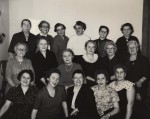
Pioneer Women group, Vancouver, B.C., 1960. (JWB fonds, JMABC L12600)

If you know someone in this photo, please help the JI fill the gaps of its predecessor’s (the Jewish Western Bulletin’s) collection at the Jewish Museum and Archives of B.C. by contacting [email protected].

Format ImagePosted on February 7, 2014July 23, 2014Author JI and JMABCCategories Mystery PhotoTags Jewish Museum and Archives of British Columbia, Jewish Western Bulletin, JMABC, JWB, Pioneer Women
Czech Torah “family reunion” in London

Czech Torah “family reunion” in London

Attendees at the 50th anniversary event in London. (photo from David Schwartz)

Behind the treelike doors of Temple Sholom’s aron kodesh are six beautiful Torahs, each with its own history. The Torah in the centre of the top row is known as our Czech Torah. It is one of 1,564 scrolls rescued from Prague at the end of the Second World War and brought to London, England, in 1964 by a group of dedicated volunteers: the Czech Memorial Scroll Trust (MST). We honor our Czech Torah each year by dedicating our afternoon Yom Kippur service to it.

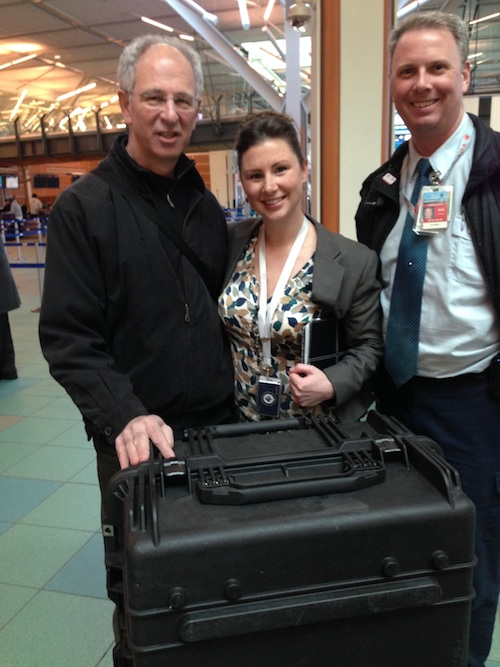
photo - Temple Sholom president David Schwartz, left, May Saunders, Air Canada manager passenger services at YVR, and Kevin L. Patterson, Air Canada customer service manager at the airport.
Temple Sholom president David Schwartz, left, May Saunders, Air Canada manager passenger services at YVR, and Kevin L. Patterson, Air Canada customer service manager at the airport. (photo from David Schwartz)

The Torah, on loan to the congregation from the MST, is officially known as Czech Memorial Scroll #1036, and it was brought to Vancouver in 1971 by Temple Sholom trustee David Huberman, who traveled to London on our behalf to chaperone the Torah to its new home.

Earlier this month, my wife Debby and I escorted Scroll #1036 back to London for something of a “family reunion,” celebrating the 50th anniversary of the Torahs’ arrival in London. In the years since 1964, most of the scrolls brought to London have found new homes around the world and, this month, for the first time, 53 of them were reunited.

It was a great pleasure to see the Torahs arriving, and a little humorous to see how different congregations found creative ways to safely transport these precious artifacts. One scroll from an American congregation arrived in a golf bag, while another was given free shipping and chaperone service from FedEx. Many congregations who were unable to attend in person sent large posters of their Torahs to include in the commemorative service.

photo - Torah in traveling case strapped into two seats, compliments of Air Canada.
Torah in traveling case strapped into two seats, compliments of Air Canada. (photo from David Schwartz)

Ours was the only one to come from Canada, and it was shipped in a hard-shell, foam-filled Torah case loaned to us by the Jewish Museum and Archives of British Columbia. Air Canada was also very supportive of our journey, supplying us with two complimentary seats for the large case. We were seated right behind it so we could keep an eye on it the whole way. Coincidentally, Air Canada’s Vancouver crew handled other unique cargo the same day – the Stanley Cup.

The tragedy of these extraordinary scrolls is that they are often the only surviving relics of some 153 Czech Jewish communities whose members were deported and exterminated in the Nazi death camps during the Second World War. Our Torah is one of 18 from the small town of Sedlcany, located 60 kilometres south of Prague in Central Bohemia. It was written in 1890.

In the years after the war, a rumor spread that the Nazis had planned to create a “museum to an extinct race.” According to the MST, this has little foundation in fact. They do know that a pious group of Jews from Prague’s Jewish community worked to bring artifacts and Jewish possessions of all kinds from Bohemia and Moravia to what had become the Central Jewish Museum in Prague. There, they preserved what little remained of Jewish communities, previously at the mercy of plunderers. The MST believes that this Jewish initiative was directly responsible for the subsequent conservation of the scrolls. All the curators at the museum were eventually taken to Terezin and Auschwitz. Only two of the curators survived, and the Czech Jewish community after the war was too depleted to be able to care for them. The pious group’s legacy was the catalogue of the vast collection in the museum, eventually to become the Jewish Museum of Prague, and the saved 1,564 scrolls.

For 20 years following the war, the scrolls remained in a disused synagogue in a Prague suburb until the communist government, in need of hard currency, decided they should be sold. A British art dealer learned of this opportunity in 1963 and worked with the rabbi of Westminster Synagogue, a Hebrew scholar and a generous donor, to bring the 1,564 scrolls to London. Many were in pitiful condition – torn or damaged by fire and water – a grim testimony to the fate of the people who had once prayed with them.

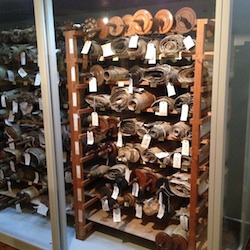
photo - The Czech Memorial Scrolls Museum at Westminster Synagogue in London, England, tells the story of the 1,564 rescued scrolls and their odyssey from Bohemia and Moravia to Westminster Synagogue and then on to new homes throughout the world.
The Czech Memorial Scrolls Museum at Westminster Synagogue in London, England, tells the story of the 1,564 rescued scrolls and their odyssey from Bohemia and Moravia to Westminster Synagogue and then on to new homes throughout the world. (photo from David Schwartz)

The Memorial Scroll Trust has given these precious scrolls a second life by restoring them and loaning them to more than 1,400 communities around the world, thereby spreading their message to new generations in diverse communities and institutions such as Temple Sholom.

The Feb. 9 Czech Memorial Scrolls Commemorative Service at Westminster Synagogue was sublime. It began with a procession of the 53 scrolls that had been brought for the occasion, mostly from around the United Kingdom and the United States. To the strains of Gustav Mahler’s 5th Symphony, each Torah was lovingly brought to the bimah, held by a member of its current community and its original hometown announced.

A video of the service can be viewed at youtube.com/watch?v= dSwdDCYI05A. Information about the MST is available at memorialscrollstrust.org.


David Schwartz is a lawyer and the president of Temple Sholom Synagogue.

Format ImagePosted on February 7, 2014April 27, 2014Author David SchwartzCategories WorldTags Air Canada, Czech Memorial Scroll Trust, Czech Torah, David Huberman, Prague's Jewish community
Holocaust survivor Peter Gary’s oratorio

Holocaust survivor Peter Gary’s oratorio

Peter Gary (photo from Peter Gary)

April is a month of miracles for Peter Gary. An April baby, he was born in Poland in 1924, where he first developed his love – and talent – for playing music and composition. Starting piano by age 5, he was accepted into the Franz Liszt Royal Academy at age 11, being chosen to attend classes with Bela Bartok, Zoltan Kodaly and Leo Weiner. In 1941, however, Gary and his mother were arrested by the Nazis. His mother was murdered soon after, trying to protect him. After surviving the Warsaw Ghetto, Gary, who was in his late teens, was sent to Majdanek, then Dachau and, finally, Bergen-Belsen. He was liberated from there in April 1945, just as he turned 21 years old.

Following more music studies in Paris and a career in medicine in California, where he eventually settled, Gary retired in Victoria, B.C. For many years, he chose not to speak about his Holocaust experiences. Instead, in the mid-1970s, he returned to his love of music to compose something that would help express the immensity of the losses he experienced and the loss of six million fellow Jews. A Twentieth Century Passion will at long last be performed – on April 2 at the University of Victoria. It took 40 years to bring this 500-plus-page piece of music to the stage. And it almost didn’t happen at all.

“Gary’s musical composition takes the form of an oratorio. A Twentieth Century Passion not only draws on the works of famous German composers such as Bach, Handel and Mendelssohn, but also represents a musical intervention to that tradition. Instead of portraying the gospel narrative of the Passion, this oratorio focuses on the emotions and suffering of European Jews during the Shoah.”

UVic has put together a booklet on Gary’s composition and describes its immense scope. “Gary’s musical composition takes the form of an oratorio. A Twentieth Century Passion not only draws on the works of famous German composers such as Bach, Handel and Mendelssohn, but also represents a musical intervention to that tradition. Instead of portraying the gospel narrative of the Passion, this oratorio focuses on the emotions and suffering of European Jews during the Shoah. The libretto includes a composite of stories and perspectives – of men and women, young and old – beginning from the end of the First World War up until the end of the Nuremberg trials. In particular, A Twentieth Century Passion remembers and honors the lives of the murdered children.”

April is a significant month for Gary in other ways, as well. He and his wife, Judy Estrin, will celebrate their seventh wedding anniversary the day before A Twentieth Century Passion is performed for the first time – just two weeks before the composer’s 90th birthday.

The couple met on JDate and decided to marry after a brief online courtship, Estrin told the Independent. “We finally met in December 2006. As Peter’s mother was murdered on Christmas Eve, that has always been a difficult time for him. We opted to ‘say our vows’ to each other at approximately the time that corresponded to her murder on Christmas Eve, including exchanging rings. For us, that is the day we were married.” However, “on April 1, 2007, in the rain, hail, sleet and snow, we had an outdoor wedding, under a chuppah in our yard, followed by a civil ceremony on June 1, 2007.”

Gary credits Estrin for having the tenacity to get his oratorio to the stage, and it wasn’t an easy task.

“I tried to get orchestras interested in the piece when we first were married, to no avail,” she said. “We agreed that we had to let go of the vision of having a performance of A Twentieth Century Passion in his lifetime – which was my promise to him when we married. So, we let go, with the provision that if the universe wanted him to experience his piece in his lifetime, the universe would make it happen.”

How the concert possibility came about

It was during a visit with two UVic students that Gary unearthed his score, long since put away. The students, Jason Michaud and Andrea van Noord, were part of UVic’s month-long I-Witness Holocaust Field School Project, a program co-founded in 2011 by Helga Thorson, associate professor in the department of Germanic and Slavic studies. The project, which “focuses on the ways in which the Holocaust is memorialized in Central Europe,” sees students spending the first week together in Victoria and then “three weeks on the road in Central Europe, where we visit the sites of former concentration camps, museums, monuments, cemeteries and other memorialization projects,” Thorson explained to the Independent. “Along the way, the students meet young Europeans who are also studying the Holocaust and engage in cross-cultural dialogues about the relationship between the present and the past.”

It was during a visit with two UVic students that Gary unearthed his score, long since put away. The students, Jason Michaud and Andrea van Noord, were part of UVic’s month-long I-Witness Holocaust Field School Project, a program co-founded in 2011 by Helga Thorson, associate professor in the department of Germanic and Slavic studies.

She added, “During the 2011 field school, [Michaud and van Noord] came up to me separately and said pretty much the same thing – without realizing that the other one had approached me, as well. They both mentioned that they wanted to work on some form of Holocaust remembrance and education when they returned to Victoria. After the field school program, the three of us sat down together and decided to found an archival project in which we would collect local stories of the Shoah in Victoria and on Vancouver Island. It was in this context that we visited Peter Gary.

“During this visit … we explained our ideas for the archival project. We told him that our project was different from other projects that had taken place…. It was not our intention to repeat the work that others had already done. Our project, called Building an Archive: Local Stories and Experiences of the Holocaust, was interested in collecting the stories of individuals whose lives were affected by the Shoah, either as told by themselves directly or as told by their children, grandchildren or great-grandchildren….

“It was during this visit when Peter got up, ran to the other room, and came back with a copy of his oratorio…. Van Noord took the oratorio and brought it around to various musicians and conductors. She was the one who brought it to the attention of Timothy Vernon, the founding artistic director of Pacific Opera Victoria, who has agreed to conduct the piece during the April 2, 2014, première.”

Thorson said the university is “amazed at the diverse material we have collected for our archival project to date: from Peter Gary’s musical composition, to copies of art that was created in Bergen-Belsen, to an interview with three generations of one family, to many other stories in myriad creative formats. The entire collection is remarkable in a community as small as Victoria. Peter Gary’s musical score and libretto comprise a special part of the university archives because, as an oratorio, this musical composition represents an ambitious project dedicated to Holocaust remembrance and memorialization.”

About the university’s interest in her husband’s work, Estrin said, “It wasn’t me who made this dream come true. There are so many miracles that have manifested along the way. Helga Thorson, her students Jason and Andrea from the first I-Witness Field School, Timothy Vernon agreeing to conduct without having ever seen the piece, so many people, so many miracles.”

The plans don’t stop with the April 2 concert, she added. “Now, we have to have all the funds in place to pay for the concert itself and to fund a scholarship that the University of Victoria has established for the field school, in Peter’s name. Once we get to some surplus funds, then we can think about establishing a process to bring the music to the world, free of charge, to anyone who wants to produce it. Then, we’d like to develop a curriculum for middle and high school students. Hopefully, we will also have enough excess funds to complete the documentary that is in process to document how this all came about. If an angel appears, the last wish in my vision is to be able to have Timothy Vernon conduct the piece and produce a CD. A big dream at the moment!”

She admitted, “There have been moments when it was totally overwhelming for Peter, which is why, after three fundraising events and a number of interviews, he is ‘off the hook.’ He is excited about it finally happening, although I suspect he has his moments of total disbelief, as it came close in the past but did not happen. We both hope that the piece makes people think and talk – about hate, about racism, and about antisemitism…. My hope is that after this world première performance, A Twentieth Century Passion will become the piece played around the world to memorialize and remember the Six Million, at least once a year, ideally played on Yom Hashoah.”

A fundraising event

One of the fundraisers was held in November at the home of Vancouver community members Dr. Michael and Linda Frimer, friends of Gary and Estrin, who came over from Victoria to participate. The Independent also attended the event, which featured music performed by cellist Eric Wilson and pianist Corey Hamm. Estrin spoke about her admiration for her husband and the life he’s poured into the music, and her delight at finally seeing the composition come alive this April.

Michael Frimer introduced Gary, noting, “He’s been our close, close friend for many years and an inspiration for our whole family. I’d say, the biggest inspiration for me, except for the 50 push-ups a day, is the fact that, from where he came, which is such a dark, dark place, he has such an amazing ability to look on the positive and the good, and to find the good where you would not expect it….

“This oratorio is really, I think, of potential historic significance…. This has been sitting for over 40 years now, and Peter’s been talking about it for so long. To have it finally come to fruition is amazing…. You think of Handel’s Messiah, which is a great piece of work written about this one Jewish rabbi, and it’s played every single year throughout the world, which is a wonderful thing, but I am hoping and I can see and envision this becoming something that is played on a regular basis in perpetuity in the capitals of the world to remember the lessons of this event that happened and the lessons that we have to take forward in the future.”

Peter Gary speaks about his work

Gary addressed those present, as well, and read selections from the oratorio’s libretto. “This is not about me,” he said. “The moment I put the last note down and put the double line, which means it’s finished, it has nothing to do with me anymore, it’s ‘it.’ And the next time, when Timothy Vernon, a very well-known Canadian conductor, raises his two arms, it’s his. It’s whatever his creativity, his insights [dictate]. Yes, we will have meetings and I will answer the questions, how do you envision this, but after that, it’s done. It has to exist and run on its own.”

Gary then read from notes he had written on his hopes for future generations. “How do you explain the inexplicable, the horrors that humanity brought and brings downs on its members? We are bombarded by the media in full graphic detail, in real time, the most horrific cruelty and suffering from time immemorial into our 21st century. The Shoah … was introduced to our history as a uniquely barbaric act. Unlike in wars before, it targeted strictly innocent children, women, men, the old, sick, for systematic torture and murder by the millions, not for what they did but who they were.

“Ever since the discovery at the end of World War Two of this permanent stain on human culture, without blinking an eye, we are still involved, as I’m speaking, and stoking the fires of death and destruction on each other. Is there a wonder why the public becomes bored as these acts are blaring at them from the pictures of newspapers, their television sets, computers and all other gadgetry of communication. Just to mention a few from the 20th century to the present: mass murder of the Armenians, Balkans, Congo, Sudan, Syria, Libya, many, many others.

“Back to the Shoah. We have been presented with vivid details from history books to films, novels, poetry, survivor personal testimonies, and some musical compositions, but only dealing with specific areas, like the piece on Terezin, which was the Nazi show camp. I have aimed, with A Twentieth Century Passion, to unify all those components. From history to the prisoners’ daily lives, their feelings, anxieties, fears, angers, of those abuse[d] … and, of course, always the unanswerable whys.”

“Back to the Shoah. We have been presented with vivid details from history books to films, novels, poetry, survivor personal testimonies, and some musical compositions, but only dealing with specific areas, like the piece on Terezin, which was the Nazi show camp. I have aimed, with A Twentieth Century Passion, to unify all those components. From history to the prisoners’ daily lives, their feelings, anxieties, fears, angers, of those abuse[d] … and, of course, always the unanswerable whys.

“This, I felt was only possible to achieve in the musical form of the oratorio,” he continued. “The oratorio, mass, requiem, Passion, comes to us in the Christian musical literature, in great compositions from Bach to Bernstein, Mozart, Beethoven, Dvorak, and many others. A Twentieth Century Passion was created incorporating all general and personal details in this musical form. In Latin, verba volant, scripta manent, words fly away, writing stays forever. I hope this music will bring for all times a memorial as well as a warning to humanity. I have begged over 66,000 young and old [as a survivor speaker] to stamp out hate, the most obscene word in the English language, if we want our children and grandchildren to survive on our planet.”

In an e-mail to the Independent, Linda Frimer shared her reflections on supporting their friend in bringing A Twentieth Century Passion to life. “We feel honored and privileged to have Peter in our lives,” she said. “Through the years, he has been an outstanding mentor and friend. He teaches, through his strength of character and noble heart, that one must never give in to the perpetrators of cultural genocide. By actively choosing to make his life a joy-filled creative service to humankind, he inspires others to give of themselves. The upcoming oratorio this April is the full flowering of the tree of his life, for through his composition he is ensuring that not only will those of all ages who perished in the Holocaust always be remembered, but the witnesses of the world, once hearing this, will be assured never to forget.”

The world première of Peter Gary’s A Twentieth Century Passion, conducted by Timothy Vernon, was scheduled for April 2. Unfortunately, it was cancelled.

Format ImagePosted on January 31, 2014April 27, 2014Author Basya LayeCategories MusicTags Helga Thorson, I-Witness Field School, Judy Estrin, Linda Frimer, Michael Frimer, Pacific Opera Victoria, Peter Gary, Shoah, Timothy Vernon, Twentieth Century Passion, Yom Hashoah

Limmud to hear from Ruth Messinger

Major studies like one from the Pew Centre last year suggest that fewer Jewish people are participating in Jewish-specific activities. This would seem like a difficulty for groups like American Jewish World Service, a humanitarian and emergency relief agency with a global mission but a distinctly Jewish vision.

On the contrary, according to Ruth Messinger, the agency’s president and chief executive officer, who will speak at the first annual Limmud Vancouver event Feb. 9.

photo - Ruth Messinger
Ruth Messinger will speak on Feb. 9 in Vancouver at Limmud. (photo from ajws.org)

Messinger said that the same studies indicate that Jews recognize it as a Jewish trait to pursue justice and to lead an ethical life. “What we want them to do is have a Jewish portal through which to do their work,” she said in a telephone interview from New York. Identifying “Jewish ways” of doing something, she said, can mean simply “that they can get some text basis for what they’re doing, they can do it as Jews in Jewish organizations.

“We like the fact that we can attract them to take their idealism and their energies and put them into a Jewish box and do the work with a Jewish organization. We think it strengthens their Judaism as well as their motivations towards the world,” she said.

While the projects AJWS takes on change realities of life for people in Africa, Central America and elsewhere, they can also influence opinions about Jews and Judaism.

“Much of the work that we do is in areas where there are very few Jews,” said Messinger. “Some of it takes place in areas where there are no Jews – and some of it takes place in areas where people have never heard about Jews, although I know that American Jews find that really hard to believe.”

Every place AJWS works, Messinger said, people become acquainted with Jews as people who respect their dignity, who are committed to social justice and to advancing human rights. “I can’t imagine a better way for the American Jewish community to be seen in this fairly troubled and divided 21st century,” she said.

Messinger recounted a story in which a farmer in Ghana told an AJWS volunteer – an American Jewish college student ending her stint in that country – that he had decided over the summer that he was a Jew. “And the college student, I’m happy to say, had the wisdom to say, ‘Oh, that’s absolutely wonderful, but can you tell me what you mean by that?’ The man said, ‘Yes, like you, I am somebody who wants to leave the world better than I found it.’”

AJWS does both grant-making to small, locally based groups around the world, as well as advocacy that aims to shape U.S. policy toward the developing world. But Messinger is emphatic that the visions of change come from the local community.

Messinger said government agencies and some large international foundations tend to sit in Washington, New York or Geneva and formulate answers to the lack of clean water in Central America or the lack of girls’ education in India.

“We are quite different,” she explained. “We help our grassroots organizations by letting them set the agenda of how they are going to do the work to change attitudes toward child marriage or to improve crop yields.… It is a Jewish value – again, it may exist in other faiths – but it is a Jewish value to believe that everyone is equally made in God’s image. If you actually believe that, then you should stop imagining that the solutions to the water problems in Kenya are going to come from world water experts. Some of them are going to come from the 450,000 Kenyans who depend on the water level in the lake being high enough for them to farm and herd and fish. So, for us, the notion of listening to the people on the ground actually comes from a value basis.”

How does an organization like AJWS operate in places where oppression of women, LGBT people or others is antithetical to the values of equality and human rights the organization champions?

“We do, of course, choose who we’re going to fund and we’re not going to fund,” she said. But finding groups that share AJWS’s vision is increasingly easy.

“There are women all over the world who are trying to figure out how to change their status, how to become more independent, how to be able to protect their daughter’s right to stay in school,” she said. “There are LGBT groups risking huge dangers in their communities to form an organization and to try to get some recognition. We find those groups – it’s not hard is what I’m trying to tell you – that are themselves challenging an entrenched cultural norm that doesn’t make sense to them and that doesn’t work in their experience. The people who want a different vision for their lives are already trying to make change in their own community.”

The benefits for local organizations partnering with AJWS are not only the funding and volunteer support they receive.

“Some of our organizations – on issues of violence against women and hate crimes against LGBT populations – some of our organizations find themselves often in significant danger,” she said. “We’re there when they get into trouble.… But I need to convey that these are people who would do this work anyway.”

Before heading AJWS, Messinger was a leading political figure in New York City, becoming the first woman nominated for mayor by the Democratic party. She is one of the more prominent presenters at the first-ever Limmud event in Vancouver. Limmud, the Hebrew word for learning, is a global phenomenon taking place in dozens of locations worldwide. The Vancouver event, which sold out in advance, features more than 40 separate presentations (three were featured in last week’s Jewish Independent), including such diverse topics as whether God has gender; reactions in the Talmud to the destruction of the Temple; and whether Dinah, Jacob’s only recorded daughter, should be considered the fifth matriarch. Participants will also have the opportunity to sing along in Yiddish, discuss and smell the 26 natural ingredients mentioned in the Torah, hear the tapestry of Jewish prayer with African melodies and the rhythms of Uganda’s Abayudaya Jews, and more. Full details at limmudvancouver.ca.

Pat Johnson is a Vancouver writer and principal in PRsuasiveMedia.com.

Posted on January 31, 2014April 27, 2014Author Pat JohnsonCategories LocalTags AJWS, American Jewish World Service, Limmud, Pew Centre, Ruth Messinger

Backlashes ensue in Canada and in Israel over words spoken

Images and symbolism mean a great deal in politics. This was presumably on the mind of Conservative Member of Parliament Mark Adler last week, when he hounded an aide to Prime Minister Stephen Harper to let him into the cordoned-off area adjacent to Jerusalem’s Western Wall, where Harper was to be photographed having a quiet moment of reflection against Judaism’s holiest site.

Adler, who later claimed he was making a joke, asked Harper’s handler to let him get a photo with the prime minister at the Wall, saying, “This, it’s the reelection. This is the million-dollar shot.”

Assuming that not everything Adler said was in jest, he was not speaking about the Conservative party’s reelection as government, but his own reelection in a swing riding with a large Jewish population (Toronto York Centre). The incident was particularly harmful – joke or no joke – because it seemed to confirm what many critics have posited about the prime minister’s visit.

Harper and his supporters maintain emphatically that the prime minister and his government’s stalwart allegiance to Israel is based on principle. Adler’s outburst appeared to be evidence that the most cynical political calculations were at play, at least for some members of the tour. Regardless, it is probably safe to say that, after nearly eight years of Harper’s prime ministership, any Jewish Canadian who is going to be influenced to vote Conservative based on Harper’s foreign policy has already been won over.

Meanwhile, Israeli Prime Minister Binyamin Netanyahu’s words early this week also sent people into a tizzy. Netanyahu appeared to moot the idea that, when a two-state resolution is realized, the Jews living in the West Bank should have the option of becoming citizens of the new Palestinian state.

Netanyahu’s intention, perhaps, was to draw global attention to the hypocrisy of accepted wisdom that Israel should be a multicultural society that respects minorities and that Israel should negotiate a “right of return” for Palestinians, while a “free” Palestine should be free of Jews. Realistically, of course, the idea of Jewish residents opting to remain in a new Palestinian state holds the potential for both comedy and tragedy. Not for nothing have Jews almost to a number fled every Arab-majority state in the region. Most settlers would not look fondly at their options under Palestinian rule. In fact, if Netanyahu’s trial balloon was meant to get a reaction from the world community, the sharpest response was from closer to home. His own cabinet minister, Naftali Bennett, responded with a single word: “Never.”

In any negotiation, wise participants put forward proposals that the other side is certain to reject, sometimes in an effort at appearing to compromise, sometimes to expose the other side’s pretense. Netanyahu’s latest gambit appears to be along these lines. But the Palestinians have demonstrated no willingness to entertain the idea of giving Jewish people citizenship in their new country. And the world community, for whom the words may have been expressed in the first place, will likely be unswayed.

However, Netanyahu’s own right flank appears to view his comments as the abandonment of the Jews of the West Bank. In the aftermath of the resulting backlash, one can almost imagine him taking a cue from Adler, who, after the incident at the Wall, confronted the reporters who conveyed the incident to voters back home: “You guys don’t get a joke, huh? It’s all said tongue-in-cheek. Tongue-in-cheek, guys, come on.”

Posted on January 31, 2014May 8, 2014Author The Editorial BoardCategories From the JITags Binyamin Netanyahu, Mark Adler, Naftali Bennett, Stephen Harper
Wallenberg Day honors heroes

Wallenberg Day honors heroes

Left to right, Henry Ross-Grayman, Thomas Gradin and Mayor Gregor Robertson. (photo by Wendy Fouks)

There was a full house at the Norman and Annette Rothstein Theatre for the community’s marking of Wallenberg Day on Jan 19. Sponsored for the first time by the newly formed Wallenberg-Sugihara Civil Courage Society, the annual event was the natural outgrowth of the placement of a plaque in Queen Elizabeth Park in 1986. It was revived at the 20th anniversary in 2006 as a cooperative effort between the then honorary Swedish consul, Anders Neumuller, and the Vancouver Second Generation Group.

Each year, the event pays tribute to courageous and heroic actions inspired by the Swedish diplomat, Raoul Wallenberg, and the Japanese diplomat, Chiune Sugihara. Both men, at grave risk to themselves, their families and their future, chose to follow their own personal moral code and save the lives of large numbers of Jews during the Second World War.

Mayor of Vancouver Gregor Robertson read a proclamation naming the day “Raoul Wallenberg Day in the City of Vancouver.” He said, “There are always heroes in our midst and elevating their place in society and celebrating and having discussion … is absolutely critical in a civil society.”

This year, the heroism of Englishman Sir Nicholas Winton was highlighted in the movie Nicky’s Family. This emotionally powerful film told the story of how Winton saved the lives of more than 600 Czech children just prior to the outbreak of  the Second World War. The film documents how his actions have inspired young people to engage in direct acts of tikkun olam.

British Consul Rupert Potter honored Winton, saying, “I have never introduced a film to quite so full a house as this, which, I think, is testament to the content and the importance of the subject and what the film represents….”

There was an especially moving moment when members of the audience who owed their lives to the heroic actions of people such as Wallenberg, Sugihara and Winton were asked to stand. This action made the impact of these men clearly visible, showing that one person can make a profound difference in the world.

Naomi Taussig, the cantor of Temple Sholom Synagogue, spoke about the miracle of how her father and uncle were saved by Winton. She said, “Where would I be but for the actions of a single man who chose to do something when he could have done nothing at all? I feel a responsibility to live proudly as a Jew, honoring my grandparents, Emil and Irma. I try to live kindly, with compassion and intention. Nicholas himself says we must live ethically, and do whatever we can – no matter how small. We must take action rather than believe we are too insignificant to make a difference.”

photo - Deborah Ross-Grayman
Deborah Ross-Grayman is a Wallenberg-Sugihara Civil Courage Society committee member.
(photo by Wendy Fouks)

I, too, owe my life to the actions of a diplomat. Against the orders of his government, Sugihara gave out visas to Jews, allowing them to escape certain death and travel to Japan. My mother was a recipient of such a visa. Had she not received it, I would not be here today. Last year, I traveled to Japan and had the honor of meeting with Sugihara’s granddaughter to express my deepest gratitude for the actions of her grandfather. It was a heartfelt meeting that I will remember for the rest of my days.

We need these stories to remind us of the inherent good that lives within people. We need to educate, to pay tribute, to remember and, finally, to inspire people today, as well as future generations, to act with courage and live their values in a way that contributes to the healing of the world.

The Wallenberg-Sugihara Civil Courage Society is passionate about wanting to leave a legacy encouraging others to engage in behaviors inspired by Wallenberg, Sugihara and people like Winton. We are looking for people who, at significant personal risk, have helped improve or save the lives of others by going against unjust norms or conventions. Over the coming year, the names of suggested individuals who meet the criteria (including being associated with British Columbia, even if their actions may have taken place outside of the province) will be reviewed. Next year, at the annual Wallenberg Day event, we hope to present an award for civil courage to acknowledge heroic acts in today’s world. For more information, contact the society at [email protected].

Deborah Ross-Grayman is an artist, writer and Sugihara survivor descendant committee member of the Wallenberg-Sugihara Civil Courage Society.

Format ImagePosted on January 31, 2014April 9, 2014Author Deborah Ross-GraymanCategories LocalTags Deborah Ross-Grayman, Gregor Robertson, Henry Ross-Grayman, Thomas Gradin, Wallenberg Day, Wallenberg-Sugihara Civil Courage Society, WSCCS
Surrey Mayor Dianne Watts visits Israel

Surrey Mayor Dianne Watts visits Israel

Surrey Mayor Dianne Watts, centre left, with the delegation in front of the Knesset Menorah. (photo from CIJA-PR)
 Last April, when Surrey Mayor Dianne Watts announced she planned to turn one square mile in her city centre into a leading centre for medical technology, the Centre for Israel and Jewish Affairs, Pacific Region, immediately started paying this leader attention.

“When we heard of her intention to create an Innovation Boulevard, we knew the mayor needed to tap into Israel’s spirit of ingenuity,” said Darren Mackoff, CIJA-PR director. Mackoff and his team helped organize Watts’ six-day trade mission to the Holy Land in December, a delegation that included individuals from the health-technology business sector and representatives from Simon Fraser University, the University of British Columbia and Kwantlen Polytechnic University – all of them key stakeholders in Surrey’s Innovation Boulevard.

In January, just a month after her return home, Watts signed a deal with Israel Brain Technologies, the first international deal of its kind secured since she and Innovation Boulevard co-chair, SFU neuroscientist and professor Ryan D’Arcy, announced the boulevard last year. Israel Brain Technologies, created by Israeli president and Nobel Peace Prize winner Shimon Peres, is a neuro-technology consortium. It unites Israel’s academics, neuroscientists and industry leaders under a single umbrella of brain research and innovation.

The IBT deal will give the City of Surrey access to some of Israel’s top thinkers and the development of innovative, life-saving medical advances, said Mackoff, but it will also give IBT the opportunity to engage in exchanges and partner on specific projects with their counterparts in Western Canada. “The outcomes of these joint ventures will undoubtedly serve the people of both Israel and B.C. well in the future,” he noted. In a press release, Watts said, “Israel and Surrey have common health-care challenges and share the goal of setting a new standard in medical care and innovation. By combining our remarkable pool of talents and expertise, I know that Surrey and Israel will together create groundbreaking and life-changing advancements in health care.”

Watts’ CIJA-led educational mission included 25 business meetings at Israeli universities, hospitals and centres of innovation, political briefings, tours of Israel’s most significant historic and contemporary sites, as well as a visit to Israel’s northern border with Syria, on the Golan Heights.

“In addition to gaining a strong understanding and appreciation for Israel and the challenges the Jewish state faces in the region, it was extremely important that Mayor Watts left Israel with tangible collaborative partnerships between the city, trip delegates and their counterparts in Israel,” Mackoff said.

The blizzard-like conditions in Jerusalem on the mayor’s day of arrival meant CIJA had to do some on-the-ground improvising and move the team to Tel Aviv at the last minute.

Mackoff traveled alongside the mayor and said she was tremendously moved and inspired by this visit. “The Jewish and pro-Israel community in Western Canada has a firm friend in Mayor Watts,” he reflected. “She saw firsthand what Israel is truly about – a country that has overcome tremendous obstacles to create a thriving democracy which is leading the world in scientific advancements.”

Due to personal circumstances, the mayor was unavailable for comment.

Lauren Kramer, an award-winning writer and editor, lives in Richmond, B.C. To read her work online, visit laurenkramer.net.

Format ImagePosted on January 31, 2014April 27, 2014Author Lauren KramerCategories WorldTags Centre for Israel and Jewish Affairs, CIJA-PR, Darren Mackoff, Dianne Watts, Israel Brain Technologies, Kwantlen Polytechnic University, Shimon Peres, Simon Fraser University, University of British Columbia
Ethiopian Jews say aliyah of Beta Israel isn’t complete

Ethiopian Jews say aliyah of Beta Israel isn’t complete

MK Pnina Tamano-Shata speaks to the audience at a convention held Jan. 1 concerning the fate of approximately 7,000 individuals in Ethiopia who are still waiting to be granted aliyah. (photo by Uri Perednik)

Last August, 450 new olim made the five-hour flight from northwest Ethiopia to their new home: Israel. According to those on hand to meet the new immigrants when they landed at Ben-Gurion Airport, the passenger roster for that hot August day constituted the last remaining members of Ethiopia’s ancient Jewish community, known as the Falashmura, or Beta Israel.

“The last group of the Jewish community of Ethiopia just stepped down from their plane,” said Eliezer Zandberg, as Israel’s newest immigrants joined weeping and elated relatives in the airport. Zandberg is the chairman of Keren Hayesod, or United Israel Appeal, which helped coordinate the aliyah of the Beta Israel. “This is the excitement, this is the whole story – returning to their homeland.”

While news agencies reporting on this aliyah assumed that the final leg of Operation Dove’s Wings last August carried Ethiopia’s last Jews, many aid groups remain adamant that the aliyah is not yet over. In the past five months, relief agencies, family members, advocates and rabbis from Israel and abroad have been calling on the Israeli government to return to Ethiopia and process the family members that have been left behind in two Jewish communities, Addis Ababa and Gondar. Both communities are located in northwest Ethiopia, and have been central receiving points for Ethiopian Jews hoping to make aliyah. According to several aid organizations that have recently been in Gondar, there are as many as 7,000 Jewish descendants that should have qualified for aliyah – many of whom are direct relatives of newly accepted olim in Israel.

On Jan. 1, 2014, while the rest of the world celebrated a new year, advocates for those remaining 7,000 got down to work. In Israel, members of the advocacy group Struggle for the Aliyah of Ethiopian Jewry (SAEJ) hosted a convention on the grounds of Ben-Gurion University in Be’ersheva. Some 200 members of Israel’s Beta Israel community, new immigrants and three members of the Knesset were there to discuss what has been termed a continuing humanitarian issue. A second convention was held a two days later in Tel Aviv, hosted by the relief organization South Wing to Zion, which was founded by Ethiopian human rights activist, Dr. Avraham Negusie. The mandate of both conventions was to highlight the needs of Ethiopian Jewish family members still waiting for aliyah approval.

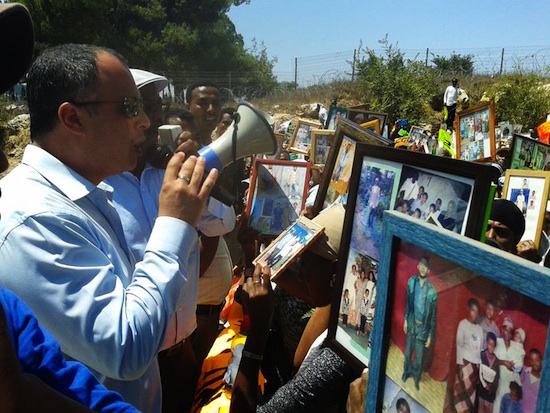
photo - Family members of those still in Ethiopia protest outside Netanyahu's office on Aug. 28, 2013.
Family members of those still in Ethiopia protest outside Netanyahu’s office on Aug. 28, 2013.
(photo by Uri Perednik)

According to Uri Perednik, who helped found SAEJ and helped organize the convention in Be’ersheva, MKs Pnina Tamano-Shata, Hilik (Yehiel) Bar and Shimon Solomon were briefed on the status of the remaining applicants in Ethiopia, and the events that have occurred since the August airlift. After members of the Ethiopian community in Israel staged a protest in front of Prime Minister Binyamin Netanyahu’s office on Aug. 28, the Knesset absorption committee agreed to look into reopening the aliyah for outstanding family members, Perednik said in an interview from his home in Israel. However, he added, there has been little resolved by the government, and members of Israel’s Beta Israel community are becoming increasingly frustrated.

Since the convention, all three MKs have called for the aliyah to be reopened, according to a statement released by SAEJ. Tamano-Shata has offered to forward a petition to the minister of interior, Gideon Sa’ar, while Bar and Solomon have vowed to pressure the government to admit the remaining family members.

“There is no doubt in the [Ethiopian Jewry’s] Judaism because their family is here in Israel,” said Bar. He expects an appeals committee will review the outstanding cases. “The committee will begin to check these cases, examine the paperwork, understand that [there] was a serious mistake here and finish this terrible saga.”

Perednik noted that records maintained by the Jewish community in Addis Ababa indicate that 415 community members have already died waiting for their aliyah papers to be approved. Since the Jewish community in Gondar is much larger than in Addis Ababa, he said, “the number of deceased [in Gondar] may be twice as big.”

“The Israeli government encouraged these families to leave their homes and villages in order to realize their dream of returning to the Holy Land,” wrote Perednik in his Times of Israel blog, referring to Israel’s initial efforts to rescue persecuted Ethiopian Jews in the 1980s. The Beta Israel of today “are members of active Jewish communities whose religious lives revolve around their synagogues, who maintain laws of family purity with their mikvahs, and who attend classes on Judaism, and are nonetheless alienated by the establishment.”

photo - Ethiopians at synagogue
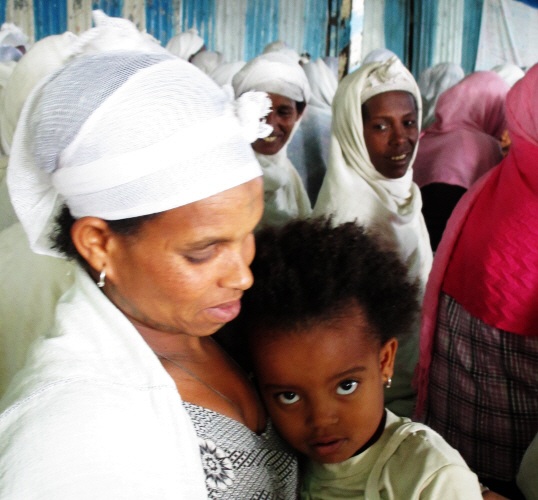
Many community members still in Ethiopia attend synagogue daily.
(photo by Rabbi Sybil Sheridan)

Some aid groups charge that the poverty and unemployment in Ethiopian Jewish communities are directly related to their nebulous immigrant status. “The situation is worse than most [for] most Ethiopians” in their cities, Perednik explained. He said the government’s encouragement for them to seek aliyah meant that they were forced to sell their property and quit their jobs in order to come to the cities in which they now live.

“About 80 percent of the people in these communities have family in Israel. I know many cases here in which there could be almost an entire family [living] in Israel – the mother, the father, brothers and sisters, and one sister or one brother is left behind. Or you could have all the children here [in Israel] and the parents left behind. Many of these people in Israel, brothers and sisters, are in the army and grew up in Israel, feel Israeli and Jewish.”

At the heart of the issue concerning the families’ immigrant status is the question of their Jewish ethnicity. In 2003, the government mandated that all future Beta Israel immigrants must be able to show matrilineal ancestry. Prior to that date, Beta Israel immigrants who could show either matrilineal or patrilineal heritage were eligible.

The problem with the change in the ruling, said Hila Bram, co-founder of the London-based relief organization Meketa, is that traditional Ethiopian Jewish communities still follow the patrilineal Jewish ancestry, and have done so for thousands of years. Patrilineal heritage is believed to have been common in early biblical times, and many of the cultural traditions of ancient Ethiopian Judaism are distinct from those followed by Ashkenazi, Sephardi and Mizrahi Jewish communities.

“The Jewish state has turned around and said we take you by the religion of your mother, whereas Western Judaism until the second century and Judaism in Ethiopia until now, take you [as Jewish] by your father,” Bram explained in an interview from her residence in England. “And that has really added to the confusion and to the problematic nature of all of this for Ethiopian Jews. By their society, you are the religion of your father, who is the head of the household.”

According to both Perednik and Bram, the cessation of Jewish Agency services on Aug. 28 meant the closure of all religious and educational services in Gondar, as well. Perednik said the remaining community members were devastated by the closure of the synagogue, given that it is used daily. Since the closure, the Ethiopian Jewish organizations Hatikvah and South Wing to Zion have stepped forward to raise the rental costs to keep the synagogue open. The Torah, which had been removed by the Jewish Agency, was later returned with Negusie’s assistance. The Jewish school has not been reopened. Students have been transferred to public schools, where there is no provision for Jewish education.

Since the Jan. 1 convention, effort has been stepped up by Beta Israel community members to convince the Israeli government to review the situation in Ethiopia. In December, an appeals committee visited Gondar to assess the situation, but the trip was delayed by snowfall in Israel, and Bram said that the team had only one day to assess the situation. The report is not due to be released for another month or two.

photo- As many as 1,600 families are said to still be waiting for aliyah in Ethiopia.
As many as 1,600 families are said to still be waiting for aliyah in Ethiopia.
(photo by Rabbi Sybil Sheridan)

SAEJ released a statement last week calling on the government to increase the immediate powers of the appeals committee and to accept those applicants who meet the following criteria: “They are descendants of Ethiopian Jews from [either] their mother or their father; they left their villages and have been waiting for years in Addis Ababa and Gondar; [they were] listed earlier with the Ministry of Interior; they live as Jews; and they have close relations in Israel: parents, children, brothers, sisters.”

The committee also made a formal appeal that the government change the terminology it uses concerning community members in Ethiopia. “[The] committee is protesting the government[’s] use of the derogatory name Falashmura.” The ancient name was ascribed to the community by non-Jews hundreds of years ago, and implies in polite context one who is a “stranger.” The community has elected the name Beta Israel, meaning “Children of Israel,” for members of the Ethiopian Jewish community in Israel who were granted aliyah earlier, and Zara Israel (Descendants of Israel) for those who are descendants of the original community and are awaiting aliyah.

Jan Lee’s articles have been published in B’nai B’rith Magazine, thedailyrabbi.com and Voices of Conservative and Masorti Judaism. She also writes on sustainable business practices for TriplePundit.com. Her blog can be found at multiculturaljew.polestarpassages.com.

Format ImagePosted on January 31, 2014April 9, 2014Author Jan LeeCategories WorldTags Avraham Negusie, Beta Israel, Eliezer Zandberg, Ethiopian Jews, Keren Hauesod, Pnina Tamano-Shata, SAEJ, South Wing to Zion, Struggle for the Aliyah of Ethiopian Jewry, United Jewish Appeal, Uri Perednik
Darcy Mann is VAG featured artist

Darcy Mann is VAG featured artist

“Poplars” by Darcy Mann.

The Vancouver Art Gallery’s Art Rental and Sales space is not yet a well-known feature, but the nonprofit program has been quietly promoting emerging and mid-career Canadian artists on the gallery’s main floor. According to the website, “Whether you are you staging a home for sale, have an empty wall in your board room or love contemporary art but can’t decide what to purchase, you’ll find what you’re looking for in the Vancouver Art Gallery’s Art Rental and Sales Showroom. With more than 1,000 works by 200 Canadian artists, Art Rental and Sales has the largest selection of copyright-cleared, original art for rent in British Columbia…. All the artwork in the rental program is consigned by the artists, who receive the majority of the fees collected. The remaining proceeds are donated to the Vancouver Art Gallery.”

photo - Darcy Mann
Darcy Mann
(photo by Olga Livshin)

Darcy Mann is the next artist to have a feature exhibit in the space. Her charcoal drawings of British Columbia forests have been so successful with both the rental and sales part of the program that VAG offered to feature her work for three months.

Mann hasn’t always focused on forest drawings. She started her artistic life with figurative compositions. In an interview with the Independent, she talked about her life and the evolution of her themes.

“I always liked art. When I turned 10, I got a birthday gift from my mother – a pencil and some drawing paper. It was the best birthday gift of my childhood, the only one I remember,” she said.

After high school, she continued her art education in British Columbia and Nova Scotia, and later received an MFA in Texas. In 1987, in the course of her graduate studies, she had to spend a term abroad and she chose Israel, an experience that made a huge impression on the young artist. She and her husband, who is also a professional artist, then went to New York, where they lived for 14 years. “That’s where we really understood what art was,” she said. “But, of course, we couldn’t make a living as artists. We both had daytime jobs. I worked for an advertising agency. We kept practising our art and participated in several group shows. There is a wonderful place there for Jewish artists – Synagogue for the Arts.”

When their firstborn son was three, they returned to Vancouver, but Mann didn’t return to work. With the support of her husband and his family, she became a stay-at-home mom and a full-time artist. “Many artists experience financial challenges. We are willing to sacrifice material things, to live simply, for the sake of our art and our kids,” she said.

“I stopped painting and began drawing when my son was born – [I] didn’t want the chemicals in the paints to interfere with nursing the baby,” she said. “I also switched to forest scenes from figurative. You need to do much less talking when you paint forest. I don’t like talking and I don’t like discussing my art or explaining anything.”

Even when her son was older and she resumed painting with oils, she concentrated on the large forest landscapes. But she never gave up on drawing.

“Paintings and drawings are both satisfying in different ways,” she explained. “They complement each other. Painting is fluid. You can move paint around, remove some, add some, use different brushes, layers. A painting can change. It is chaos. While drawings stick to order, drawings are solid. When you use pressed charcoal, it’s there, on paper. You can’t erase it. But I need both. When I paint, I miss drawing. When I work on a drawing, I need to paint.”

Mann paints in her Marpole studio. “I paint and draw from photographs. I love going out with my camera during summer and fall, when it’s warm outside. Especially fall – it’s when I take the most interesting pictures. Not in winter though – too cold.”

After printing her photos, she starts the next phase of the process – assembling collages. Once she has the photographs, “… to get an image I want, I have to separate the background from the foreground” of each image. “I go through dozens of pictures. It’s like solving a puzzle, selecting which pieces fit where. I cut the pieces and glue or tape them together. I do it all by hand – I don’t trust computers. The whole thing is like taking a ball of mixed-up necklaces and untangling them, before creating a new image.”

Mann’s paintings and drawings are straightforward on the surface, but the underlying mystery shimmers in most of her compositions, a hint of a story, a token of a concept, as if the artist didn’t really abandon the figurative but just concealed it behind a bush or in the midst of this thicket.

“For me, esthetics is the most important,” she said. “The best of my works happen when I allow myself to lose conscious control, when my hand and my intuition take over. The idea is still there, but not controlled by me.” That’s why she often listens to audio books when she is at her easel. “With an audio book engaging my thoughts, it’s easier to let the intuition fly.”

Several years ago, she answered the VAG Art Rental and Sales call for artists and sent them some of her forest drawings, thus beginning a long association. Mann is the featured artist at the VAG Art Rental and Sales Showroom from Feb. 3 to May 2. Her artist talk, on March 4, 7 p.m., is free and open to the public.

Olga Livshin is a Vancouver freelance writer. She can be reached at [email protected].

Format ImagePosted on January 31, 2014May 5, 2014Author Olga LivshinCategories Visual ArtsTags Darcy Mann, VAG, VAG Art Rental and Sales Showroom, Vancouver Art Galley

First-ever B.C. Limmud

Yiddish erotic poetry. It’s not a phrase that trips off the tongue, perhaps because Celia Dropkin may have been its only practitioner. There were Yiddish poets and writers in Eastern Europe and America who addressed risqué topics, but few, if any, in ways as explicit as Dropkin.

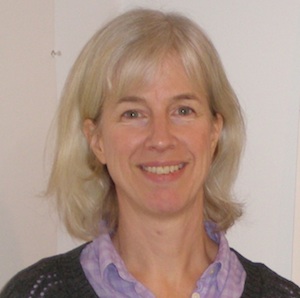
photo - Faith Jones
Faith Jones (photo from Faith Jones)

Faith Jones, a Vancouverite who teaches library science and who was previously a Yiddish bibliographer in the New York Public Library’s Jewish division, will discuss Dropkin and the craft of translating Yiddish erotic poetry at the first-ever Limmud Vancouver Feb. 9, one of 42 presentations on a hugely diverse array of topics over a full day. With two other scholars, Jones translates Dropkin’s work into English.

Dropkin (1887-1956) came to New York from Belarus in 1912, and immersed herself in the Bohemian life that was thriving there. It was at this time, as well, that she shifted from writing in Russian and began a career as a noted Yiddish poet and writer. This switch in vernacular appears to have been for practical reasons, not cultural or political ones, Jones explained.

“She wrote in Russian because she was educated in the gymnasium, in the Russian education system, and her literary influences were largely Russian,” said Jones. “To her – she came from a very poor family – being able to go to gymnasium was really quite an accomplishment and the Russian language was itself a status symbol. Her ability to use it artistically was something that she would have been very proud of.”

Once in New York, though, her audience would have been overwhelmingly Yiddish-speaking, and so it was probably a practical decision to switch. “I don’t think Yiddish to her was the beginning and end of being Jewish,” said Jones.

While nobody appears to have become rich writing poetry in Yiddish, Dropkin was comparatively a “commercial” success in terms of being widely read. She made some cash, particularly during the Depression, writing relatively mainstream short stories. Nevertheless, said Jones, “Her poetry was her real art, but you could not make a living on Yiddish poetry.”

Why, though, was this traditionally educated woman so apparently ahead of her time on sexual matters?

“She was educated in this different way – she was educated in a Russian way, not in a Jewish way,” Jones noted. “She also had a fair bit of freedom.” Dropkin’s father died when Celia was a child, and her mother was not particularly religious. The household appears to have been fairly open-minded and attuned to modernity. Her writing was different as well, Jones speculates, because she was a woman and also because she did not have the traditional Hebrew education that male poets of her time did.

“She was kind of freed because of being a woman,” said Jones. “She didn’t have a classical Hebrew education and so she was able to make up a different way of being a writer and wasn’t as constrained by expectations that, if you are a Jewish writer, your writing would be laced with references to the Bible and things like that.”

There were other poets writing about sexual matters, but in a much more veiled manner. A female Orthodox poet, for example, expressed her sensual ideas through depictions of hair, which would have resonance from an Orthodox female perspective. Dropkin was not so subtle.

“Dropkin had a poem, for example, in which it certainly seems to me that what she is describing is sadomasochistic sex. I don’t think she’s at all attempting to cover that up,” Jones said. “Other poets would just refer to the bed and some longing and maybe there is a stroke.”

Dropkin was published in the Yiddish journals of the day, despite the sometimes-scandalous nature of her work. “A scandal is always good for circulation,” Jones laughed. “So they were happy to have it. They were Bohemians, so they were going to publish that sort of thing.” There was a sense, among male critics and other poets, Jones said, that Dropkin’s work might bring disrepute to the Jews – even though, because it was written in Yiddish, only Jews could have read it. But criticism of Dropkin from other Jews, mostly male, was probably due to more straightforward reactions.

“It was shocking, a woman speaking about her physical body, her desires, her lust,” Jones said. “That was too much for them.”

Dropkin’s art, it seems, imitated her life. “She was really, really a Bohemian,” Jones said. “She really lived that life pretty fully, notwithstanding being married, which did not appear to have been any kind of difficulty. So, for example, I was able to meet with [Dropkin’s now deceased oldest son] many times and interview him, and I asked at one point, ‘Was your father at all upset by your mother’s sort of freewheeling life, having lovers, having a social life that was sort of separate from his?’ He said, ‘No it didn’t really bother him,’ and I had the impression that, you know, it went both ways.”

Jones warns attendees at next month’s Limmud conference that her session will not be appropriate for those who blanch at strong language and sexual imagery. But while the topic is erotic poetry and the craft of translating it, Jones said she has a broader ambition in presenting the topic.

“I would like people to think about re-envisioning our forbearers as people who were more like us. We need to really explore the people in our past and, as a historian, this is what I hope for most: that people will explore the past, understanding that these people were not like us, but in other ways were very much like us.”

***

About the same time that Dropkin was writing steamy poems in New York, the klezmer scene was heating up Montreal. Emily Lam, an independent researcher dedicated to the history of Jewish music in Montreal, will present on the subject at the Limmud conference – and some of her findings will surprise.

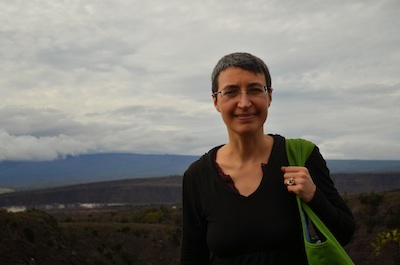
photo - Emily Lam
Emily Lam (photo from Emily Lam)

One of the first things to understand about klezmer music is that those who traditionally played it didn’t call it klezmer, Lam said. The word klezmer simply means musician. So when musicians were performing a tune, they called it by the kind of tune it was – a freylech, a doyna, a hora. For present-day practitioners of the traditional Jewish tunes, however, as for the rest of us, klezmer is a handy shorthand.

“It’s what they call it because everybody calls it that these days,” said Lam, who has interviewed as many Montreal musicians from the early part of the 20th century as she has been able to track down. Among these artists, mostly now in their 80s and 90s, the “true” klezmorim were those from Eastern Europe and the musicians who learned directly from those masters. What we call klezmer, according to Lam, is a music that represents “homeland and folk … synonymous with a particular place and time that was physically left behind, yet … instantly accessible through the music’s soundscapes, which connected the Jewish immigrant to their shtetl and the Yiddishkeit of their ancestral past.”

As klezmer has seen a dramatic revival in recent decades, Lam said her interviewees are pleased that the music is being performed and heard again, but they invariably say something is missing.

“Everybody is very happy that more people know about this kind of music, more people know about the history of it,” Lam said. “My interview subjects are happy that they still get to hear it if they choose to. They can go to concerts, they can go to festivals and events. They’re really happy about that. However, they feel that when they hear it, something about it isn’t the same. They always express that there is a lack of a certain feeling, a feeling within the music that they can’t hear, that they did hear with other musicians – their predecessors, their mentors. So when they hear things from the so-called revival, while they enjoy it, something about it is lacking and they always express … there’s just this feeling that’s missing.”

The progression of klezmer involved the original immigrants teaching it to their children, with a predictable downturn as the decades passed. “New immigrants want to carry on those traditions because that’s what they know,” Lam said. “There was a tradition that you learn this music and how to play it from your father and your uncles, relatives. The people that I interviewed were the children of the true klezmorim [the immigrants who brought the music from Eastern Europe]. They carried out the tradition but, obviously, as times change, people’s interests, especially children of new immigrants, what they wanted, how they see their lives, was different from Eastern Europe.”

Second-generation Canadians might have wanted the traditional tunes at their weddings, perhaps because their parents wanted it, but they also wanted more contemporary, popular music.

“As time progressed, there were less traditional tunes and more contemporary tunes,” said Lam. “It’s part of being an immigrant and having children in a new country. You try to instil these traditions. They’re going to choose their own path.”

But traditions can morph in unexpected ways. Weddings and bar mitzvahs may be a showcase for klezmer, but making a living in early- to mid-20th century Montreal as a musician meant being ready to take any gig that came along. Fortunately, klezmer can be a heavily improvisational musical form, similar to the vibrant jazz scene that was emerging in Montreal.

“If you were a klezmer, you were a versatile musician,” Lam said. “So [for] lots of Jewish musicians, especially going into the ’30s and onward, there’s lots of crossing over with jazz music in Montreal.”

Lam started her research during her undergraduate studies at the University of Ottawa, mentored by Prof. Rebecca Margolis, who specializes in Yiddish culture in Canada, among other topics. Lam, who grew up in Peterborough, Ont., is the daughter of immigrants who fled Vietnam during the war there. She does not directly attribute her interest in this subject to her family’s experience, but she sees a parallel. “I certainly can understand this sort of looking for something that reminds you of your homeland,” Lam said.

***

Many people can name the most famous Jewish baseball players – precisely because there have been so few of them. Despite this, there are striking parallels between the practice of Judaism and the practice of baseball, according to Vancouver rabbi and University of British Columbia faculty member Hillel Goelman, who will present at the Limmud conference.

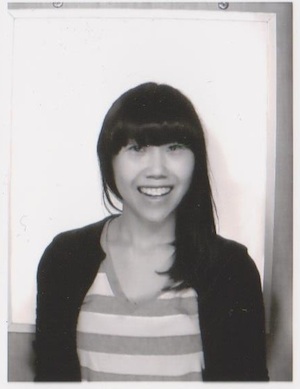
photo - Hillel Goelman
Hillel Goelman (photo from Hillel Goelman)

“I’m not going to just talk about Sandy Koufax and Hank Greenberg,” he said. “That’s not what the discussion is about. The discussion is that there are aspects of Jewish spiritual understandings, about deeper meanings of Judaism and some of the deeper meanings of baseball and that we can learn about one from the other.”

There is a teaching in Jewish spirituality that views everything as being at an intersection of time and space and a journey of the soul, said Goelman. “Our whole history is about a journey through space, whether it’s Abraham to Egypt, or the Jewish people coming out of Egypt, or making aliyah to the Land of Israel,” he said. “In Jewish spirituality, in kabbalah, we believe that there are different realms of reality and that each of those can correspond to another level of reality that you can get higher and higher and higher until you end up at the highest, which is getting back home, and home is in the wholeness and the holiness of the home space.”

Baseball is also about an individual’s odyssey, he said. “Baseball is really about the individual, where it’s the individual who scores the points, scores the runs. The ball doesn’t have to go into a hoop or a net or anything like that. It’s the individual who goes through a journey through space,” he said.

There’s also an intergenerational aspect, he added, in that Judaism is passed down from parents to children. The love of baseball is also conveyed transgenerationally. In addition, Judaism and baseball both have “two aspects of gaining knowledge,” Goelman said. One aspect focuses on the legalistic proscriptions – “what you’re commanded to do, commanded not to do, the appropriate behaviors” – the other is a very rich mythological lore.

“There is a mythology in Judaism, there is a mythology in baseball, that goes beyond the literal meaning of what’s happening,” he said. “Judaism gives us some very powerful metaphors and images and practices, which really resonate very deeply with us in terms of what is the Sabbath and why is that important and what are the High Holidays and why are they important, what is a bar mitzvah and why is that important, why is a wedding ceremony important. There is a lot of symbol and symbolism and mythology. And in baseball, as well, there’s a lot of symbol and symbolism and mythology. I think that’s why many of us find it so riveting.”

The recent news of New York Yankee Alex Rodriguez’s use of performance-enhancing drugs offers a vignette into another aspect of mythology.

“Here’s another giant among us who has fallen, who has succumbed to whatever kind of temptation it was, of ego, of achievement, of seeing himself above and beyond the rules,” Goelman said. “And this is sort of the karmic consequences of someone who exceeds the boundaries and doesn’t really understand the beauty and the mythology of the game.”

LimmudVan ’14 is the first annual Limmud event here. The phenomenon, which began in London, has spread to dozens of cities worldwide. The Vancouver conference, which sold out weeks in advance, will feature more than 40 separate presentations on a huge array of topics. See next week’s issue for more on Limmud. Full details at limmudvancouver.ca.

Pat Johnson is a Vancouver writer and principal in PRsuasiveMedia.com.

Posted on January 24, 2014April 27, 2014Author Pat JohnsonCategories LocalTags Celia Dropkin, Emily Lam, Faith Jones, Hillel Goelman, Jews in baseball, klezmer, Limmud, LimmudVan

Posts pagination

Previous page Page 1 … Page 659 Page 660 Page 661 Page 662 Next page
Proudly powered by WordPress