Skip to content
  • Home
  • Subscribe / donate
  • Events calendar
  • News
    • Local
    • National
    • Israel
    • World
    • עניין בחדשות
      A roundup of news in Canada and further afield, in Hebrew.
  • Opinion
    • From the JI
    • Op-Ed
  • Arts & Culture
    • Performing Arts
    • Music
    • Books
    • Visual Arts
    • TV & Film
  • Life
    • Celebrating the Holidays
    • Travel
    • The Daily Snooze
      Cartoons by Jacob Samuel
    • Mystery Photo
      Help the JI and JMABC fill in the gaps in our archives.
  • Community Links
    • Organizations, Etc.
    • Other News Sources & Blogs
    • Business Directory
  • FAQ
  • JI Chai Celebration
  • JI@88! video

Recent Posts

  • Story of Israel’s north
  • Sheltering in train stations
  • Teach critical thinking
  • Learning to bridge divides
  • Supporting Iranian community
  • Art dismantles systems
  • Beth Tikvah celebrates 50th
  • What is Jewish music?
  • Celebrate joy of music
  • Women share experiences 
  • Raising funds for Survivors
  • Call for digital literacy
  • The hidden hand of hate
  • Tarot as spiritual ritual
  • Students create fancy meal
  • Encouraging young voices
  • Rose’s Angels delivers
  • Living life to its fullest
  • Drawing on his roots
  • Panama City welcoming
  • Pesach cleaning
  • On the wings of griffon vultures
  • Vast recipe & story collection
  • A word, please …
  • מארק קרני לא ממתין לטראמפ
  • On war and antisemitism
  • Jews shine in Canucks colours
  • Moment of opportunity
  • Shooting response
  • BC budget fails seniors
  • Ritual is what makes life holy
  • Dogs help war veterans live again
  • Remain vital and outspoken
  • An urgent play to see
  • Pop-up exhibit popular
  • An invite to join JWest

Archives

Follow @JewishIndie
image - The CJN - Visit Us Banner - 300x600 - 101625

Government about halfway there in recognizing Jewish refugees

In 1948, there were an estimated 856,000 Jews in Arab and Muslim countries, from Algeria to Iraq. The estimated Jewish population in 2012 was 4,315 – 3,000 of whom are in Morocco alone.

Four months after the House of Commons Standing Committee on Foreign Affairs and International Development’s November 2013 report “Recognizing Jewish Refugees from the Middle East and North Africa,” Canada’s Cabinet accepted one of its two recommendations. The next day, on March 4, Parliament “concurred in” the report.

As the United States pushes for at least a framework for a peace agreement in the coming weeks, the Palestinian side will continue to use as a significant bargaining chip the millions (under the unique definition of “Palestinian refugee”) of people seeking a “right of return.” The parliamentary committee recommended that Canada officially recognize these displaced persons and, secondly, that our federal government “encourage the direct negotiating parties to take into account all refugee populations as part of any just and comprehensive resolution to the Israeli-Palestinian and Arab-Israeli conflicts.”

Responding to the committee’s recommendations, Cabinet made nice noises, concurring heartily with the first recognition, which is, ultimately, merely symbolic. On the second recommendation, the Conservative government resorted to diplomatic verbiage, saying, it “understands the positive intent underlying this recommendation but, at this time, Canada has offered its support to the peace process as presently structured.”

During the Israeli War of Independence in 1948-49, somewhere between 700,000 and 900,000 Arab Palestinians were made refugees. History – and the Arab countries in which these refugees found themselves – has not been kind to them. The 1967 war created more refugees, while placing those Arab Palestinians living in the Gaza Strip and the West Bank under Israeli control.

This history, which includes a definition of refugee known nowhere else in the world – one that is passed down from generation to generation, exacerbating rather than ameliorating the refugee situation – is well known. Yet, it is remarkable how many otherwise well-informed people are unaware of the Jewish refugees throughout the Middle East in the same era. To varying degrees, life for Jews in Arab- and Muslim-majority countries deteriorated rapidly after the 1948 war, and hundreds of thousands were either forced to leave their homelands or found it prudent to do so. The 1967 war finished the job.

But even the Jews who migrated to Israel during this period have often acknowledged that they were not comfortable assuming the role of historical victim. First of all, Jews who were forced from Arab and Muslim countries were welcomed (discrimination and economic disparities affecting Mizrahi Jews notwithstanding) by the new state of Israel, which they helped to build and strengthen.

Compared with the Arab Palestinians who had been displaced and who were, and still are, held in a form of statelessness, the Jewish emigrants were absorbed by Israel and the other countries to which they migrated, including Canada. More significantly, those who went to Israel joined a country that was absorbing refugees from Europe, whose experiences of statelessness had been more harrowing and catastrophic. Faced with new fellow citizens who had lost not only their material possessions and their ancestral villages, but also entire extended families, most of their civilization and even their mother tongue, the Jews who migrated from the Middle East and North Africa often found it best to keep their own tragic experiences closer to the vest.

Small nonprofit groups like JIMENA (Jews Indigenous to the Middle East and North Africa) have kept this history alive. On the political front, in 2008, the United States became the first (and so far only) country to official recognize the Jewish refugees. More than a year ago, Liberal MP Irwin Cotler tabled a motion that Canada should recognize these forgotten refugees. In the parliamentary committee hearings, Canadians, including some refugees themselves, told personal stories of this history.

The government is on the right track. It is a matter of righting the historical record and of simple justice that, when Palestinian refugees are considered in the process of reconciliation, so should Jews who were forced from their homelands in the same era. But it is necessary for Canada, as the vaunted “honest broker” we claim to be, to demand that Jewish refugees also be considered among the many difficult historical realities that must be resolved for a lasting and just peace to be realized.

Posted on March 14, 2014May 8, 2014Author The Editorial BoardCategories From the JITags Arab Palestinians, Gaza, House of Commons Standing Committee on Foreign Affairs and International Development, Irwin Cotler, Israeli War of Independence, Jewish Refugees from the Middle East and North Africa, JIMENA, West Bank
Pi Theatre presents Between the Sheets in actual classroom

Pi Theatre presents Between the Sheets in actual classroom

Caitriona Murphy, left, and Stephanie Moroz in Between the Sheets by Jordi Mand. (photo by Tim Matheson)

Twenty-something Torontonian Jordi Mand is a Canadian playwright coming off a huge success with her first full-length script, Between the Sheets, the story of a parent-teacher interview gone awry. Local company Pi Theatre, known for its innovative and site-specific work, will treat Vancouver to the Western Canadian première of the play in an actual classroom at Admiral Seymour Elementary School in Strathcona.

The action revolves around two characters, Teresa, a Grade 3 teacher, and Marion, the well-heeled private-school power mom of Alex. Marion rushes into the classroom at the end of an evening for an unscheduled interview. The conversation deteriorates into an accusation from the furious Marion that Teresa is having an affair with her husband of 24 years, Curtis. As one would expect, Teresa vehemently denies the charge until the incriminating evidence is literally thrown in her face – a folder of romantic e-mails. Oh my! The predicament makes for 60 intense minutes of theatre.

In a telephone interview with the Independent, Mand spoke about her career and work. Born and raised in the Toronto suburb of Richmond Hill, she attended Jewish day school and graduated from the National Theatre School of Canada. “Originally, when I went to theatre school, I thought I wanted to work in classical text and then, in my second year, a group of us adapted a novel and it was an amazing experience where we collaborated to create an independent piece of work. It started my writing heart to pulsate. When I graduated, I realized that acting was not for me. I hated the auditioning process and I was bored in rehearsal. Then I started to write and I realized that that was my passion and where I wanted to be.”

Mand has written a number of short plays but Between the Sheets is her first full-length work. “My idea for the script did not come from one particular thing but from a number of events in my life,” she said. “Some of the inspiration came from my personal health issues where I had to navigate the health system, which I found very difficult to do, and so part of Teresa’s experience with those same issues relates to that.

photo - Jordi Mand
Torontonian Jordi Mand is a Canadian playwright coming off a huge success with her first full-length script, Between the Sheets, the story of a parent-teacher interview gone awry. (photo by Will O’Hare)

“Another aspect of the play comes from the time I was the drama instructor at a Jewish day camp in Ontario and I worked with special needs campers. I became very close to one with Down’s syndrome, Alex. He was this amazing, miraculous creature but he had a very complicated relationship with his mother. The memory of that has stayed with me all these years and is reflected in Marion’s character.

“As to the classroom setting,” she continued, “it sort of goes back to my Jewish upbringing. I went to a private Jewish school and perhaps in my subconscious I wanted to play out some of my anxieties from that time. A classroom means so much to different people. It allows for a different dynamic and interpretation of what is happening in the script.”

Between the Sheets had its world première in Toronto in 2012. The National Post called it “a gripping new play, terrifically performed.” The Globe and Mail critic declared, “If you handed out report cards for shows, Between the Sheets would get straight As.” While one of the critics was surprised at the sexual connotations of the title in relation to a school drama, Mand said, “I was surprised to read that comment. That was never my intention. The title comes from the fact that the two characters are in a tremendous amount of pain and together they share those kinds of feelings that we only let ourselves think about while we are in bed just before we fall asleep. So, to me, the title symbolizes a place where our loneliness and pain catch up with us.”

The play has had international exposure, with a successful run in New Zealand and a remount scheduled for later this year. To date, it has been produced in a theatre setting. Mand is excited that Pi will be using an actual classroom for its production. “Pi has a reputation for using non-traditional spaces in really inventive ways,” she commented. “Using a classroom makes the room the fifth character – it is magical and will open up the audience experience in so many ways. It will solidify what happens in real time and people will be a part of it. I am really excited to see how it turns out.”

Mand is grateful for the opportunities that the production has brought her at home and abroad, and the impact the play has had. “In Toronto, teachers and principals would come up to me after the show and thank me for telling this story. The script really stirred something in people. Once they see the show, they will never be able to look at a classroom in the same way again.”

Between the Sheets runs March 14-26 at Admiral Seymour school, 1130 Keefer St. For times and ticket information, visit pitheatre.com or call 604-872-1861.

Tova Kornfeld is a Vancouver freelance writer and lawyer.

Format ImagePosted on March 14, 2014August 27, 2014Author Tova KornfeldCategories Performing ArtsTags Admiral Seymour Elementary, Between the Sheets, Caitriona Murphy, Jordi Mand, Pi Theatre, Stephanie Moroz

Amos Oz’s Between Friends is a tight collection of short stories

In the early 1950s, at the age of 15, Amos Oz moved to Kibbutz Hulda in central Israel. Idealists at that time still celebrated the kibbutz as a new form of community that would transform human nature. But the reality was something else. In Between Friends (Mariner Books, 2013, translated from the Hebrew by Sondra Silverston), the acclaimed Israeli novelist takes us to a fictitious kibbutz in 1950s Israel called Yikhat to meet several characters that were part of that world.

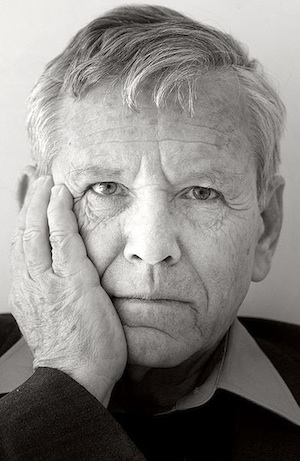
photo - Amos Oz in 2006.
Amos Oz in 2006.

With an eye for revealing details, Oz recreates a rich world of ordinary, well-meaning people with difficult pasts and passionate dreams. Their anxieties are not unique, stemming from tangled-up longings, failed relationships and unspoken thoughts. Their personal crises would not be out of place as part of daily life in any tightly knit community.

Oz, an acclaimed Israeli novelist who has been mentioned as a candidate for the Nobel Prize in literature, writes eight stories that are interconnected about the plain folks of the kibbutz – the gardener, schoolteacher, mechanic, electrician and others. They may have once believed they could change the world but, by the time we meet them, they are resigned to their quiet routines, which they undertake without complaint and, in some instances, with considerable pride. However, their emotional lives remain in turmoil, entangled in tussles “between friends.” A pervasive feeling of loneliness in the midst of neighbors they have known for years overshadows all other feelings.

Zvi Provisor is the first kibbutznik we meet. He is obsessed with reporting famines, earthquakes, plane crashes and other disasters from anywhere in the world. Most kibbutzniks dismiss him, with some affection, as the Angel of Death. Kibbutznik Luna Blank offers a sympathetic ear.

As their friendship grows, they meet in her room for coffee. One evening, she is, as Oz writes, so overwhelmed with compassion that she suddenly takes his hand and holds it to her breast.

“Zev trembled and pulled his hand back quickly, with a gesture that was almost violent. His eyes blinked frantically. Never in his adult life had he touched another person intentionally, and he went rigid whenever he was touched … a short time later, he stood up and left.”

In an interview with Haaretz after the book was first published, Oz said he wanted to look at the loneliness in a society where there is supposedly no place for loneliness.

“In a few of the stories, a situation is portrayed of ‘almost touching’: people very nearly touch, but something blocks it. Like [‘The Creation of Adam,’] in the painting by Michelangelo, where finger almost touches finger.

“I am very curious about loneliness and grace, or a moment of grace amid loneliness, because that is a description of the human condition.

“The stories are set on a kibbutz, but they tell about universal situations, about the most basic forces in human existence, about loneliness, about love, about loss, about death, about desire, about forgoing and about longing. In fact, about the simple and profound matters, which no person is unfamiliar with.”

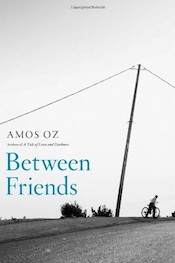
image - Amos Oz Between Friends book cover
Between Friends takes readers to the fictional Kibbutz Yikhat.

Not surprisingly, Oz portrays simple kibbutz life with some charm. Kibbutzniks translate Polish novels in their spare time and listen to classical music. Everyone takes his or her turn doing a shift in the dining hall.

Osnat is a quiet woman. She works all day alone in the laundry, beginning at 5:30 a.m. As we are introduced to her, Osnat’s partner Boaz has just told her that he has been in a relationship for eight months with another kibbutznik, the tall, slim Ariella Barash, who works in the chicken coop. Boaz has decided to move into Ariella’s apartment.

On Kibbutz Yikhat, the environment reinforces the characters that live there. Ariella has an old cat and young dog that treat each other much like the kibbutzniks relate to the other kibbutzniks. The young dog was frightened of the cat and would politely give it a wide berth, Oz writes. The old cat would ignore the dog and walk past as if the dog were invisible. Boaz shows some affection for the young dog. “But if the cat should jump onto his lap asking for affection, he heaves him off with such disgust that I cringe,” Ariella writes in a note to Osnat, several days after Boaz has moved in with his new love.

We are not told about Osnat and Ariella’s relationship before Boaz arrived on the scene. However, after Boaz starts living with Ariella,

the two women exchange notes. Osnat, who is not angry about the break-up, continues to worry about Boaz’s health. Ariella tries to justify her relationship with another woman’s partner.

With Oz’s poetic style, the chapter ends with a gentle breeze blowing, “just enough to cool a cup of tea.” A solitary figure abandoned by her lover, Osnat listens to “light music” on the radio and reads a book before going to bed. “Her nights are dreamless now and she wakes before the alarm clock rings. The pigeons wake her.”

Oz is well known as an outspoken advocate of a two-state solution to the Israeli-Palestinian conflict. Middle East tensions and Israeli politics pop up only as a backdrop to the kibbutzniks’ lives. He writes about the effect of events on the kibbutzniks, not much about the events themselves. The characters mention threats to the kibbutz but without any discussion of events.

We learn that Nahum’s wife was killed in a retaliatory raid and that his son was killed during an army incursion into the village of Deir al Nashaf. We are told nothing more about these confrontations. However, we can feel the impact of these tragedies when Nahum struggles as his 17-year-old daughter Edna, a few months before going into the army, moves in with David Dagan, a teacher her father’s age, as well as a longtime friend of her father.

David is a devout Marxist who speaks with authority about ideological issues as well as matters of everyday life. Nahum is an unsure father who does not have the confidence to confront David over the inappropriate affair.

Oz is extremely effective in bringing the reader right into the room with the characters he creates. We are in Nahum’s electrician’s workshop, where he sits, day after day, “shoulders stooped, glasses sliding down his nose, working on appliances in need of repair: electric kettles, radios, fans.”

We are taken to the doorstep of Edna’s dorm room, where Nahum has gone to bring a sweater she has left at his apartment. He listens to the music coming from the room, “a light, lengthy étude that repeated itself in a melancholy way.”

In later chapters, we hear the gossip about kibbutz secretary Yoav Carni. We see the futile efforts of Henia Kalisch as she tries to arrange for kibbutz support for her son to study abroad. Despite whom we meet, there is no escaping the sadness and loneliness that permeates the lives of so many people on Kibbutz Yikhat.

Our kibbutz visit ends with a funeral for shoemaker Martin Vandenberg, an enthusiastic advocate of Esperanto, the universal language that was to unify humanity.

Osnat is the last person to leave the cemetery. She lingers, feeling a sense of peace. In remarks that could be Oz reflecting on the entire book, Osnat feels as if this “hadn’t been a funeral, but a good satisfying conversation.”

Oz does not leave the kibbutz at that point, however. Osnat has a sudden desire to say more, one or two quiet words in Esperanto in tribute to Martin. “But she hadn’t had time to learn anything and she had no idea what to say.”

Media consultant Robert Matas, a former Globe and Mail journalist, still reads books. Between Friends is available at the Isaac Waldman Jewish Public Library. To reserve this book, or any other, call 604-257-5181 or email [email protected]. To view the online catalogue, visit jccgv.com and click on Isaac Waldman Library.

Posted on March 14, 2014April 16, 2014Author Robert MatasCategories BooksTags Amos Oz, Between Friends, Kibbutz Hulda, Nobel Prize, Sondra Silverston
Add hints of automation for unique and modern home design

Add hints of automation for unique and modern home design

Recessed LED home lighting can make a big statement, inside and out. (photo by Mark Whitehead) 

Customization, once seen as a luxury, can now be found in all facets of consumer products. The newest trend: controlling your home with your fingertips from anywhere in the world.

With the launch of everything electronic and motorized, handheld devices such as your smart phone or tablet are now able to control almost anything with the touch of a finger.  With the newest builds and renovations, home automation, in some form or another, is being specified into the design. Technology has catapulted the use of home automation to the next degree and has become more popular – and more affordable.

Home automation spans a wide breadth of components: from controlling a home’s lighting and window coverings by using a smart phone or tablet, to scheduling timers throughout the day, to turning on and off your central heating and home-entertainment systems. New builds and renovations are taking advantage of open walls, and the trend of installing hidden speakers, wireless routers and other normally obvious audio components into the walls makes the final interior design seamless. Even motorized tracks can be hidden within the ceiling, hiding drapery tracks, for example, which creates additional visual height with true floor-to-ceiling draperies.

Trending with window shades is the option for motorization, as well. The sleek and contemporary designs of roman shades, cellular blinds, even the newest in vertical blinds, can be motorized and fit in perfectly with contemporary home décor. And with many more affordable products on the market, consumers are able to have luxury items without paying the luxury ticket.

The popularity of LED lighting is making a huge impact in interior design. Custom LED home lighting has moved from just changing a light bulb to installing fully recessed indoor perimeter lighting, and even offers various outdoor applications, such as illuminating walkways, pathways and porch lights.

Kitchens are the heart of any home, and esthetic is just as important as functionality in the design of a great kitchen. Hardware mechanisms that provide soft-close drawers and cabinets add an extra bit of luxury to a kitchen’s everyday use. Whether choosing contemporary handles in clear acrylic and chrome, or streamlined and contemporary push-touch cabinetry instead, the selections of hardware are endless.

photo - The esthetic is just as important as functionality in the design of a great kitchen.
The esthetic is just as important as functionality in the design of a great kitchen.
(photo by Mark Whitehead)

Acrylic elements are also creeping into today’s homes in versatile ways other than in the kitchen. Resembling glass, acrylic gives the illusion of glass without the fragility and weight. One of the ways this medium is making a statement in contemporary interior home design is molded into contemporary sculptures. On its own or in a collection, acrylic sculpture can offer a focal point to any room. Some acrylic sculpture suppliers give the option of custom colors, adding an extra personal touch to a statement piece or collection. Especially when beautifully lit, acrylic sculpture brings simple elegance to the home.

Don’t forget about the importance of fabric in home design. This year, texture is big and the more layered the better! Mix different textures with bold patterns to make a statement, or mix soft and sleek textures to create a luxurious atmosphere. Fabrics enhance a room’s décor, creating soft, easy lines and offering points of visual interest. By playing with color and lots of layered textures, interiors are warming up to cheerful design and easy, comfortable living.

Michelle Diaz is a design assistant at RodRozen Designs. The firm, now celebrating its 10th anniversary, is proud of its achievements in the interior design and construction trade. Consisting of co-owners Derick and Steven RodRozen and a design team, RodRozen Designs strives to create uniquely stunning and luxurious homes throughout the Lower Mainland. For more information, visit rodrozen.com or email [email protected].

Format ImagePosted on March 14, 2014April 14, 2014Author Michelle DiazCategories LifeTags Derick RodRozen, LED lighting, RodRozen Designs, Steven RodRozen
Shockeling: an age-old tradition

Shockeling: an age-old tradition

Shockeling can help you achieve kavanah, intense concentration with Hashem through the medium of prayer. (photo by Ashernet)

The language of Yiddish is one of the most unique forms of expression. It is in fact untranslatable. Tomes have been written on it. Its vocabulary and expressions are so self-descriptive. Many words have found their way into the English vocabulary. Who can translate the word nu, or shlep, or bittere gelegte or … shockel? It is this last word in which I am interested here.

Shockel: a description of the rhythmic, swaying movement that Jews all over adopt when they are engrossed in prayer. I have been intrigued and bemused over many years of observation of how Jews pray, and this script is a description of the main styles that tend to be adopted. They are often reflective of the personalities of their users. The next time you go to shul, watch the men in prayer, and see if you can identify the styles. Try them out yourself, and maybe you will be able to choose one that really stimulates you into an attitude of devotion and prayer.

The simple shockel

This is a gentle rhythmic bow from the waste with a pelvic lunge as you straighten up – a very simple, easy-to-learn movement. But there are some variations, for instance, the simple shockel with head extension. Here, you proceed with the movements of the simple shockel, but it is done rather slower. The body tends to fall forward until the point at which it appears to overbalance, at which point the head is stretched forward very rapidly while the body straightens up. All in all, an intriguing movement, and very good for the cervical vertebrae, if you don’t put your neck out while practising it.

The friendly simple shockel with lateral movement

Here, instead of bending forward from the waist, you twist alternately to the left and the right, as if you are addressing a large audience. Combined with a head extension and a slight smile on the face, the incumbent gives the impression of being a really friendly fellow. A style that you may well want to emulate. But be careful of straining the vertebrae. It could take weeks to recover.

Charlie Chaplin

An entertaining variation of the friendly shockel with lateral movement, you stand with your feet slightly apart, toes pointed outwards – the further the better. (Some folks can do this movement with the toes pointed out about 90 degrees!) The trick is to keep the legs and back quite stiff. You bow from the waist to the left and simultaneously lift the right toe. Repeat to the other side. When accompanied by a glazed look in your eyes, the effect can be highly spiritual.

Walking on the spot

Now, here is an interesting movement. This overcomes the restrictions of keeping the feet together during the Shemoneh Esrei prayer, when you are not allowed to separate the feet. The movement consists of simply bending your knees alternately as you bend forward. A fine variation is to raise the toe of the leg whose knee is bending, simultaneously with the heel of the opposite foot. It’s very good exercise for the muscles of the feet, but needs practise to coordinate properly.

Alternate bowing with ankle twist

When I first saw this, I was very impressed, as it requires tremendous coordination of rhythm. It shouldn’t be done during the Shemoneh Esrei because it requires the feet to be slightly separated, but one wonders…. The technique is simple, but requires a lot of practise. With the feet slightly separated, you bow rhythmically to the left and right alternately, as in the simple shockel with lateral movement. But here is the catch. As you bow to the left, you raise the right ankle slightly, and similarly on the other side. Once you have mastered this movement, you proceed to move the raised foot in a circular, back-and-forth movement, similar to squashing a bug. A beautiful thing to watch, and one certainly worth the effort of learning.

The lunge

I first saw this style used in a Chassidic community in Israel. The congregant stands sideways with one foot ahead of the other, as if he is prepared for a fencing competition. He then proceeds to lunge forward and back in a rhythmic motion in time with his prayers.

The lunge with second thoughts

The basic lunge is very good for the lungs, if combined with proper breathing, but it reaches perfection in this variation. The operator goes into the lunge movement, but then draws up suddenly as if he has second thoughts, and draws himself back rapidly to an upright position. It imposes a tremendous strain on the back muscles, since they have to go into reverse at the very instant that the body has reached its maximum momentum in a forward direction, so be careful before attempting this shockel. If you work into it slowly, and perfect it, you could be the admired hero of the congregation.

The hula hoop

This is a relaxing movement, most suitable for use during intermediate prayers, while you are building up your spiritual resources for the Shema or Shemoneh Esrei. You stand upright with your feet slightly apart, and exercise a rotational movement as if you are trying to maintain a hula hoop in motion. It is particularly good for the stomach muscles, and will help tighten any slightly (or not so slightly) sagging abdominal area.

The vibrating calf

This movement is usually used by persons who are either in a hurry to get to the end of the service, or who are eagerly anticipating the arrival of Moshiach. It is executed by standing perfectly still, and rapidly vibrating the muscles of the calf from side to side. It may sound simple, but it can look pretty spectacular if done with finesse.

The drunken swagger

This movement is performed with ease if you have had a couple of tots of whisky prior to entering your house of prayer. However, I have seen it done very effectively by folks who are stone-cold sober. You need to stand with feet fairly widely apart, with knees bent, hips thrust forward and shoulders well back. The trick is to give the appearance that you are about to collapse backwards while you sway gently from side to side. A glazed look in the eyes contributes enormously to the effect.

The wanderer

This is more an expression of urgency than style. All congregations have their wanderers. They wander around aimlessly during the service, walking determinedly in one direction, and then stopping as if they have suddenly changed their mind, and then walking back again. Many of them wander around and examine every detail in the shul – the books, the seats, the cracks in the walls. Some even pick up objects and examine them. Some intone loudly as they meander. Others simply appear lost. I remember one wanderer who was actually scary. A rather big, heavily bearded guy who would fix me with a stare from the opposite side of the shul, and then start to walk determinedly in my direction. As he approached, his eyes opened wider and took on an aggressive look. He would come within a distance of about one foot, thrust his face into mine, and then abruptly turn around and wander back again. He would repeat this a few times during the service.

The helicopter movement

This is a rotational motion from the waist up. The upper body rotates in a circular movement, building up momentum, and the hands swing out to the sides, lifting up higher and higher as the rotational speed increases. (Of course, you need to know the prayers by heart for this version of the shockel.) At top speed, the effect is not unlike a helicopter blade rotating and, indeed, sometimes there is a very real fear that the operator will take off vertically. This one takes years of practise.

These descriptions should give you a renewed interest in and enthusiasm for davening. But be warned – it is easy to be distracted from the real purpose of it all, which is to achieve kavanah, intense concentration with Hashem through the medium of prayer. So, please take these descriptions in the spirit in which they were written.

Dr. Stan Shear emigrated in 2004 to Vancouver from South Africa, where he taught information systems at the University of Cape Town until his retirement. He also has officiated as a chazzan for the past 30 years, both in South Africa and Vancouver.

Format ImagePosted on March 14, 2014April 14, 2014Author Stan ShearCategories LifeTags prayer, shockeling

The message is universal

Six designs have been unveiled for a Canadian National Holocaust Monument to be constructed in Ottawa. The designs vary wildly, including a proposal by the renowned architect Daniel Libeskind, who designed Berlin’s Jewish Museum. Libeskind and his colleague Gail Lord propose a structure in the form of an elongated Star of David. Five other shortlisted design concepts are also under review by Heritage Canada.

These are powerfully moving proposals, each with a unique interpretation of memory and loss. Construction on the final design is anticipated to begin this year, with inauguration of the memorial in 2015. It will sit near the centre of the nation’s capital, opposite the Canadian War Museum.

A reasonable question might be why Canada is inaugurating a memorial to a tragic event on another continent. As a country, we continue to struggle with aspects of our own difficult history of conquest, violence, repression and victimization. Why a Holocaust memorial in our capital?

Here’s why: as a member of the Allied nations confronting Hitler’s Germany, Canada played a role in bringing the Nazi regime and the Holocaust to an end, albeit regrettably late. We also have some penance to do, having been one of the countries – including all Western countries except the Dominican Republic – that bears some responsibility for the Holocaust, having closed our doors to the desperate Jews of Europe.

But there is another, more important reason for a Canadian Holocaust memorial. We must remind ourselves that, while the Holocaust was unique in its intent and scope, it carries universal messages and lessons for future generations about the dangers of totalitarianism, intolerance, extreme nationalism and racialism, the perversion of science and myriad other lessons still inadequately assimilated. Above all, while the Holocaust was particular in its genocidal intent toward Jews, it was not as particular in its Germanness. While the instigators of the atrocities were German, they found enthusiastic supporters, to varying degrees, in every country they invaded – and even in places they didn’t, including Canada. And some Germans were among the bravest enemies of Nazism.

There are so many lessons to be learned from every aspect of the Holocaust that we may never do more than scratch the surface of how it happened, why people behaved as they did, what it means and how future such atrocities can be prevented. But we hasten understanding and the potential for learning vital lessons if we acknowledge that the Holocaust was perpetrated, above all, by human beings against other human beings. If we isolate the Holocaust as something that is uniquely German – or European – we lose the opportunity to understand that, at root, it was perpetrated by human beings with motivations not at all exclusive to a single nationality, time or place.  This is what makes Ottawa an ideal location for a Holocaust memorial.

Posted on March 7, 2014May 8, 2014Author The Editorial BoardCategories From the JITags Holocaust, Libeskind, memorial, Ottawa
Innovating a rich music revival – banjoist Jayme Stone

Innovating a rich music revival – banjoist Jayme Stone

Musician Jayme Stone. (photo from Jayme Stone)

Jayme Stone calls himself a banjoist, instigator and composer. His repertoire, which includes four albums – The Utmost (2007), Africa to Appalachia (2008), Room of Wonders (2010) and The Other Side of the Air (2013) – bridge myriad genres, including folk and roots music from around the world, jazz and chamber music. His latest endeavor is the Lomax Project, which he brings here for CelticFest Vancouver next weekend.

Music journalists have said that Stone’s music “sounds like nothing else on earth,” is “spirited,” “enchanting,” “adventurous” and “delicate, imaginative and unusual.” To get a true sense of what Stone is capable, however, and what his oeuvre sounds like, it might help to know more about from where he comes than to where he’s going.

More associated in North American ears with the sounds of Appalachia and bluegrass, the banjo also has a significant presence in traditional American folk and roots music, including country, blues and old-time. However, what we know of as the modern banjo has a longer – and more global – story to tell.

“Predecessors of the banjo and the blueprint for making and playing it came over with slaves from West Africa starting in the 1500s,” Stone told the Independent in an email interview. “It was, and continues to be, part of many African-American traditions, and African influence abounds in all forms of American music, including the blues, jazz, rock and roll and the many roots and branches of traditional music. From my perspective, each of these genres tells a unique story of how immigrant culture from the British Isles and Europe combined with African culture in a different way. The history of the banjo tells a similar story.”

Growing up in Toronto, Stone developed a love for music early but didn’t start playing banjo until his teens. “I was born and raised in Toronto but started playing the banjo at 16 when I moved to Vancouver for a spell. My parents had a good record collection growing up and my uncle Ian loved listening to music and played a little piano. We used to listen to old records with rapt attention, and he was the first person to turn me on to poetry, Eastern philosophy and ’60s culture.” Most significantly, perhaps, delving into those records introduced Stone to the inherent possibilities of his chosen instrument.

“I discovered the banjo at precisely the moment I got serious about studying music,” he said. “I had started playing country blues guitar having fallen in love with folks like Elizabeth Cotten, Mississippi John Hurt and Reverend Gary Davis. At that time, you could mail order cassettes of out-of-print recordings from the Smithsonian Folkways catalogue and I reveled in the discovery of these older artists and avidly read liner notes. In a short span, I heard the banjo in many settings, from southern old-time Appalachian music to Mike Seeger to Earl Scruggs to modern pioneers like Tony Trischka ad Béla Fleck.

“Béla came to play at the Orpheum Theatre in Vancouver and it turned my world upside down. I immediately wanted to play the banjo, but I also realized that you could play any kind of music on the instrument. It was thrilling to see both what a varied history the banjo had and how much music had yet to be played on the instrument. I loved the quirky physics of the tuning, its unique timbre and variety of playing styles. I’ve been hooked ever since!”

Stone’s musical lens is global and multidisciplinary in scope, as he explores songwriting and storytelling traditions from around the world. Bringing all the pieces together is a labor of love. “I’ve long been interested in music from around the world and like immersing myself in different approaches to making music,” he said. “I love the interaction and improvisational spirit of jazz; the clarity of melody and grit of folk music; the attention to detail and color in chamber music; the rhythmic variety of music from foreign cultures. It’s often these core elements that attract me, rather than simply the veneer of style, if that makes any sense. In a way, I like to bring different approaches into my own musical culture and sort of curate my own esthetic world, as if it were an art gallery with all different kinds of art hanging on the walls.”

His reputation for innovation, reinvention and collaboration stems from his role as an instigator. “At bottom, I really just love being engaged in listening to and learning about music. Since I sometimes hear things that don’t exist yet or have an inkling to combine things that aren’t obvious, I have to make that music so it exists in the world. Along the way, I’ve performed, made records, produced them for others and taught – it’s really all a natural extension of my passion for music and interest in sharing it with others. It’s often necessary for independent musicians like myself to wear many hats. I started using the word ‘instigator’ because I often kickstart and head up projects and collaborations. I’ve always been an upstart of sorts.”

Indeed, frequent collaboration has been integral to Stone’s career. Each album and project has been a shared effort, as they take listeners from the banjo’s roots in West Africa, to the music of Bach and Debussy, and along the Cinnamon Route through Persia and India and beyond.

“I really love collaborating,” Stone noted. “It includes so many things I enjoy: learning, sharing, creating, friendship and community. I also like working with musicians that have their own voice and sensibility – often people that play their instruments in unique ways. It just makes sense to collaborate because I could never write music that fully allows them express their personalities and idiosyncrasies. By collaborating, I get to draw on people’s uniqueness while also working it into a context that includes my own voice and approach. I have to be very organized, plan ahead and work with people who I trust. I’ve been doing this for a long time, so I’m pretty used to balancing all the elements and rolling with things when they go awry.”

Stone’s Lomax Project is named after Alan Lomax, the famed field collector of American folk and roots music, an ethnomusicological treasure trove, much of which is archived at the Library of Congress’ American Folklife Centre. Lomax is also well known for having produced radio and live concerts, as well as for his academic contributions and political activism, among other roles. It is fitting that Stone would pay homage to the multitalented and versatile Lomax, whose work was cross-genre, global and truly multicultural.

“Alan Lomax was a folklorist who began accompanying his father, John Lomax, on field recording trips through the American South in the early 1930s when portable recording technology first became available,” Stone explained. “They collected folk songs from people on plantations, penitentiaries, front porches, churches and schoolyards in the hopes of capturing traditional, rural, folk songs from people who made music for their own enjoyment rather than for commercial gain. Alan made field-collecting trips all over America and eventually all over the world for 60-plus years and recorded over 50,000 songs, in addition to taking photographs, making films and writing prolifically about traditional music. He was an incredibly strong-minded, dedicated and prolific cultural force.

“The idea of my project is to unearth songs that Alan collected and collaborate with some of my favorite musicians on new arrangements. We’ll recycle, re-imagine and rework these old melodies and lyrics and try to bring new life to the material.”

The artists with whom Stone will perform in Vancouver include multi-instrumentalist Eli West, fiddler Crittany Haas, singer and composer Moira Smiley and double bassist Joe Phillips. Other Lomax Project artists have included Tim O’Brien, Bruce Molsky, Margaret Glaspy, Greg Garrison, Julian Lage, and Pharis and Jason Romero.

Stone’s own cultural background is Jewish. “I am Jewish or, as I prefer to say, Jew-ish. My family on both sides are Jewish, and I grew up going to Hebrew school, synagogue, having a bar mitzvah and all that. It’s not something I kept up with in my adult life, and I looked more to Buddhist and yoga traditions in my late teens. Since having kids, my wife and I have been slowly coming around to incorporating more Jewish traditions back into our lives. We try to do Shabbat dinner every week and get together for some holidays with other like-minded, somewhat-on-the-fence, modern Jewish families and friends. I can’t say being Jewish has influenced my music per se, but it’s of course one of the many things that has shaped who I am.”

Finding the time to unwind might be difficult, but Stone has a rich life outside of music, too. “When I’m not working on music, I’m spending time with my family. I have an almost-four-year-old girl and a 10-week-old boy, so life is full. When I do find time to unwind, I like to practise yoga, do contact improv dance, read and hang out with friends. I love to cook and we usually make a big deal about meals at home.”

After CelticFest, Stone will play a concert at the Bach Music Festival of Canada with his Other Side of the Air collaborators. The concert will feature the quintet “playing a Bach fugue, a Trinidadian calypso, Bulgarian mountain dance and an Appalachian barnburner.”

And next on the list for Stone? “I’ll be recording the Lomax Project over the next year and an album will be out in the spring of 2015. It’ll include Grammy-winning songster Tim O’Brien, Bruce Molsky, Brittany Haas, Margaret Glaspy, Moira Smiley, Eli West, Julian Lage, Greg Garrison, Joe Phillips and others. We’ll be launching a Kickstarter campaign in the spring to fund the recording.”

Jayme Stone brings his Lomax Project to CelticFest Vancouver on March 14, 8 p.m., at the Vogue; March 15, 8 p.m., at Vancouver FanClub; March 16, 2 p.m., at Mahony and Sons Music Stage (Granville at Robson); and March 15, noon-4 p.m., at the Tom Lee Music City Stage (929 Granville St.) for a series of one-hour workshops with  Lomax  Project artists. For tickets and information, visit celticfestvancouver.com.

Format ImagePosted on March 7, 2014April 27, 2014Author Basya LayeCategories MusicTags banjo, CelticFest, FanClub, Jayme Stone, Lomax Project, Tom Lee Music
This week’s cartoon … March 7/14

This week’s cartoon … March 7/14

For more cartoons, visit thedailysnooze.com.

Format ImagePosted on March 7, 2014April 16, 2014Author Jacob SamuelCategories The Daily SnoozeTags Jacob Samuel, magician, thedailysnooze.com

A trailblazing woman – Hamutal Gouri

The Dafna Fund is Israel’s only women’s foundation, funding programs and partnerships with women’s groups across sectors in Israel. According to Hamutal Gouri, the fund’s director, “Our mission is to promote women leadership and women agents of change. We promote the agency of women from all walks of Israeli life, whether it’s public or political life, academia or the economy. We want to reach women from different walks of Israeli society, and help them to become agents of social change.”

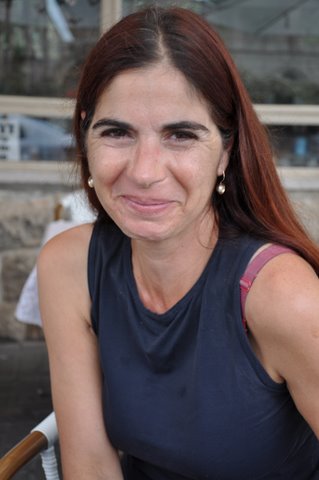
photo - Hamutal Gouri
Hamutal Gouri

Gouri will be in Vancouver on March 11 to speak at a New Israel Fund Canada event at Temple Sholom titled Trailblazing Women. The combination isn’t incidental. The Dafna Fund was founded in 2003 by then NIF board member Prof. Dafna Izraeli (z”l), who gave the fund its initial $1 million endowment. However, while the organization remains constituted under NIF and the two organizations share the same values, they have separate fundraising sources and are independent in decision-making, explained Gouri in her interview with the Independent.

Dafna Fund’s resources include the endowment, gifts from board members and strategic partnerships with foundations outside of Israel. Gouri noted that one of the main goals of Dafna’s resource development strategy is to introduce and promote giving through a gender lens to Israeli philanthropists and the Israeli public.

While Israeli society is deeply divided by religion, ethnicity and class, there are international metrics on the status of women in Israel, which place it mostly on par with other European nations. Gouri said there are two challenges that, while not unique, are specific to Israel compared to its Western counterparts.

“First, the lack of separation between religion and state – Jewish law in Israel prescribes personal status, marriage and divorce,” and the legal strength of certain religious laws lends strength to traditional religious notions that “women should be limited to the private sphere and not to the public sphere.”

Second, Israel is a society in conflict. “This also affects women,” said Gouri, “because women are not seen as having an equal stake in issues of peace and security. Security in the narrow military sense of the world is seen as a man’s thing; men usually hold positions of power in these areas. Women also have a different definition of security, but, in conflicts, the narrow military definition of security is seen as most important and is, therefore, emphasized.”

Dafna is currently supporting a project that addresses the second challenge via United Nations Security Council Resolution 1325. The resolution, which was adopted unanimously in 2000, emphasizes women’s participation and rights in peace negotiations and post-conflict settlements. In Israel, the spirit of the resolution was also anchored and expanded in legislation. Gouri said the goal of the project, titled 1325 Women Leading Peace and Security, is “to develop a comprehensive statement for a full implementation of the 1325 resolution. It’s about actually implementing the inclusion of women in all decision-making around peace and security.”

In collaborations with policymakers in Israel on women’s issues, Gouri is cautiously optimistic. “It’s a mixed bag,” she said. “There are politicians that are very open. First of all, we have more women Knesset members in this Knesset and more of them have feminist agendas. On issues of religion and state, and also on issues of employment, there are several vocal Knesset members that are very supportive: Aliza Lavie (Yesh Atid, an Orthodox woman herself), Merav Michaeli (Labor), Michal Rozin (Meretz), Orly Levy-Abekasis (Likud Yisrael Beitenu), Zahava Gal-On (Meretz), Adi Koll (Yesh Atid). I think the most important change was that Aliza Lavie, the chair of the Committee for the Status of Women, has changed the name to the Committee for the Status of Women and Gender Equality. This reflects the success of women’s organizations by the introduction of the concept of gender equality, and mainstreaming it.”

Dafna Fund is, of course, active in the political arena. Said Gouri: “We have established and are supporting a project called Women in the Public Sphere based at the Van Leer Institute in Jerusalem. They do research conferences around women in elected positions that work on a gender-equity agenda. We are also routinely supporting the work of women’s groups that are working on a regular basis with policymakers on gender equity.”

Gouri – who created the website Consult4good “to share information, thoughts and ideas about the things [she] is passionate about: social justice, human rights, equality and social transformation” – told the Independent that she is encouraged by some of the developments that have arisen from the social justice protest movement that swept Israel in the summer and fall of 2011. Apart from personally meeting with and supporting one of the protest leaders, Stav Shafir, in her successful run for the Knesset, Gouri noted a more general change in attitude that took place. “One of the important things is that women had role models, and it was women who were in leadership roles in the protests. Afterwards, people understood that if they lead change, they also need to be in the political arena – whether as elected officials, or working closely with elected officials.”

Remembering Shulamit Aloni, the Israeli MK, pioneering feminist and human rights advocate who recently died, Gouri said, “She was a great leader and a great politician. There were not many women politicians in her generation. She was also among the founding mothers of the human rights movement in Israel. She was among the first people to coin the concept that women’s rights are human rights. For women and men, she was a role model of a politician with a very broad agenda. Shulamit Aloni evolved, and saw the connection between different issues; her politics were not compartmentalized. She was a fascinating politician.”

In her talk at Temple Sholom on Tuesday, Gouri said she will be sharing stories of feminist leaders from specific and non-stereotypical cultural groups in Israel: Shula Keshet of the Mizrachi feminist group Achoti; Hanna Kehat of the Orthodox feminist group Kolech; and Fida Tabony Abu Dbai of the feminist Jewish-Arab community Mahapach-Taghir. To register for the event, which begins at 7:30 p.m., visit nifcan.org.

Maayan Kreitzman is a freelance writer living in Vancouver.

Format ImagePosted on March 7, 2014March 11, 2015Author Maayan KreitzmanCategories IsraelTags Dafna Fund, Dafna Izraeli, Hamoutal Gouri, New Israel Fund Canada, NIF, Trailblazing Women

Art space gets new director – Linda Lando

“I was in the right place at the right time with the right preparation,” said Linda Lando about her new position: director of the Sidney and Gertrude Zack Gallery.

photo - Linda Lando
Linda Lando (photo from Linda Lando)

Lando has unique qualifications for the job, having been an art dealer, with her own gallery, for 30 years. Now, she wants to share her knowledge of the arts with the Jewish Community Centre of Greater Vancouver and its gallery.

Lando didn’t dream of becoming a gallery owner when she was young. “It just happened,” she told the Independent. “After getting my degree in art history from UBC, I did some work for the UBC art gallery and worked for a local auction house. When Alex Fraser Gallery had an opening, I applied and got the job. I liked gallery work so much that I ended up buying the gallery. It was unintentional. It was never a goal of mine to run a gallery, but I loved it.”

Although her gallery has changed its name twice since – it is now Granville Fine Art on the corner of Granville and Broadway – Lando remains the owner. She intends to retain her client and artist lists, both of which she’s established over the years, but she is eager to explore the new venue, to dedicate half of her time to the Zack.

“I can’t see myself doing anything else but running a gallery, but I’m ready for something new, for community-minded work, away from the commercial art world…. Sometimes we have to rise above the monetary values and do something for the community.”

She had been searching for a new direction for awhile when she received a phone call from Reisa Smiley Schneider, the gallery’s recently retired gallery director. Schneider told the Independent: “We started talking about the recent changes in our lives, and she said she wasn’t sure what she was going to be doing in the next while and had to make some decisions about her gallery. We chatted for awhile, and then she said someone had suggested she apply for my position. I asked her how she responded to them, and she sounded like it was something she might consider. I proceeded to tell her how much I had loved my job over the 15 years I had worked there. I included some of the things that frustrated me as well, just to be realistic, but basically I encouraged her to apply and to do so soon, as the deadline for applications was in two days. I was delighted to hear that she was interested in the position, as it seemed a ‘win-win-win’ for everyone and every organization involved. What a gift to me to have Linda, a gallery owner for 30 years, take over as gallery director! I am excited to see how the gallery will soar under her direction.”

Lando elaborated, “I’ve known Reisa for some time, and she was always happy here at the Zack. She had a connection with people. When I learned about her retirement, I decided to apply for this job. Sitting all day at my commercial gallery could get lonely. Nobody comes there just to chat. But here, interacting is easy. Children come to the gallery. Someone offered me a chocolate. Nobody’s offered me chocolate at my gallery. Here, Reisa had created a warm, friendly place, and I’ll try to keep it [that way].”

She is already keeping that promise, maintaining a link between the past and the future of the gallery. Whoever comes through the door – an art lover to look at the current exhibition, a toddler to play hide and seek or a senior on the way from a class – Lando engages everyone with a smile and a friendly word.

“Running a gallery requires huge people skills,” she noted about her approach. “I have to keep my artists happy. The best part of the job is phoning the artists and saying that their painting is sold. I love it. It could be very disheartening, when you put up a beautiful show, and it doesn’t sell. But it’s not only about selling.” Her job is also about educating people, she said. She considers the educational aspect essential, both for a commercial gallery and for the Zack.

Keeping her clients happy is also paramount. “Anybody walking into the gallery with the intention to buy is in a good space with me. I have to build on that. Sometimes, people start by liking art and then they become collectors, passionate and knowledgeable about the art they collect. I have to keep up my research to be worthy of their trust. It’s all about trust. For the clients to trust my taste and my artists, I have to know what’s going on in the marketplace, what is a good investment, especially in regards to historical works. Before [the] internet, I often went to auctions and shows in Toronto. Now it’s easier – everything is online.”

Unlike sales of historical masterpieces, where the dealer’s personal taste counts for much less than marketplace demands and cultural traditions, in the modern arts, the dealer’s taste is utterly important.

“That’s why I like the Zack,” Lando added. “It’s not exactly a commercial gallery, no pressure to sell. But, of course, if paintings sell, it’s good for everyone, for the artists and for the JCC. I see it as my biggest challenge: finding good, quality art and making sure a certain calibre of artists wants to exhibit here. Plus, attracting serious buyers. Now, when collectors want to buy a painting, the Zack is not on their usual route. I’d like to change that, so they would consider the Zack when they are ready to make a purchase.”

Olga Livshin is a Vancouver freelance writer. She can be reached at [email protected].

Format ImagePosted on March 7, 2014May 5, 2014Author Olga LivshinCategories Visual ArtsTags JCC, JCCGV, Jewish Community Centre, Linda Lando, Reisa Smiley Schneider, Zack Gallery

Posts pagination

Previous page Page 1 … Page 655 Page 656 Page 657 … Page 662 Next page
Proudly powered by WordPress