Skip to content

  • Home
  • Subscribe / donate
  • Events calendar
  • News
    • Local
    • National
    • Israel
    • World
    • עניין בחדשות
      A roundup of news in Canada and further afield, in Hebrew.
  • Opinion
    • From the JI
    • Op-Ed
  • Arts & Culture
    • Performing Arts
    • Music
    • Books
    • Visual Arts
    • TV & Film
  • Life
    • Celebrating the Holidays
    • Travel
    • The Daily Snooze
      Cartoons by Jacob Samuel
    • Mystery Photo
      Help the JI and JMABC fill in the gaps in our archives.
  • Community Links
    • Organizations, Etc.
    • Other News Sources & Blogs
    • Business Directory
  • FAQ
  • JI Chai Celebration
  • JI@88! video
image - Weizmann Canada Physics Tournament 2025
image - The CJN - Visit Us Banner - 300x600 - 101625

Recent Posts

  • היהירות היא אחד האויבים הגדולים ביותר של ישראל
  • Vrba monument is unveiled
  • Music to build bridges
  • A better future possible
  • Anne Frank exhibit on now
  • Human rights in sport
  • Telling the story of an icon
  • Crawl bigger than ever
  • JCC Maccabi in Toronto
  • A way to meet fellow Jews
  • Time to include
  • Add Jewish joy to the mix
  • Reminder of humanity’s light
  • From the archives … editorials
  • Year-round holiday recipes
  • מדוע עזבתי את ישראל ואינני חושב לחזור ארצה
  • OJC hosts Oct. 7 memorial
  • A journey beyond self
  • Antisemitism a problem
  • Young man is missed
  • Orr action sparks complaint
  • Prison sentence for hate
  • Etgar Keret comes to Vancouver
  • New fall lecture series
  • Series explores music
  • Doc on Zapiro screens Nov. 6
  • Joy of shared existence
  • Community milestones … October 2025
  • MAID vs Jewish values
  • Cheshvan a great month, too
  • Bull, bear or bubble?
  • From the archives … a coin, etc.
  • מדוע האנטישמיות הולכת וגואה בעולם
  • New bio gives Vrba his due
  • Joy brighter than ever
  • When approaches differ

Archives

Follow @JewishIndie

Byline: Tova Kornfeld

Gotta celebrate Gotta Sing!

Gotta celebrate Gotta Sing!

The PNE is hosting a celebration of the 20th anniversary of Gotta Sing! Gotta Dance! and, on Aug. 24, 4:30 p.m., there will be a show featuring 2014 participants in the program, Perry Ehrlich’s ShowStoppers and Sound Sensation troupes, as well as some past participants in these programs. (photo from Perry Ehrlich)

There are several anniversaries in Vancouver’s arts scene this year. It’s the 50th for the Arts Club and the 25th for Bard on the Beach, for example, but the one that hits closest to home is the 20th for the Jewish Community Centre of Greater Vancouver’s resident summer musical theatre program, Gotta Sing! Gotta Dance! (GSGD).

The brainchild of local lawyer Perry Ehrlich, this program grew from a relatively inauspicious start to become one of the premier children’s musical programs in the Lower Mainland. In an interview with the Independent, Ehrlich noted that it all started when he tried to enrol his daughter, Lisa, in musical theatre classes.

“I realized that when I was looking around at the various offerings that I could do a better job and, if I participated with Lisa, it would be an outlet for my creativity and a playground for my daughter and myself. I thought when my kids were finished, that would be the end of it. I never thought it would last for more than five or six years – but I fell in love with the kids and the process and here we are 20 years later!”

photo - Perry Ehrlich
Perry Ehrlich (photo from Perry Ehrlich)

Ehrlich, a pianist, has a strong musical background. While at law school at the University of Saskatchewan in Saskatoon, he played for dinner theatre at a downtown hotel and was the musical director of the faculty’s annual Legal Follies. He also was co-director of Sound Sensation, which rehearsed in Richmond. GSGD owes its name to that group: when Ehrlich was looking for new members for the group, he put an ad in the Vancouver Sun setting out the required qualifications, “Gotta sing, gotta dance.” When searching for a name for his “baby,” he was reminded of that ad and the rest is history.

Over the years, hundreds of youngsters from 9-19 have come to the JCCGV every summer from all over British Columbia, the United States, Europe and Israel to participate in one of the two three-week sessions. Each session culminates in a public performance at the Rothstein Theatre with a bespoke Broadway-like production penned by Ehrlich.

“By writing my own show, we get to do not 10 but 30 songs, all choreographed, so everyone of the kids gets to do something. My philosophy is to teach the kids to get along with each other and to work as a team to develop both personally and artistically – the younger ones work with the older ones and we are like a family.”

Ehrlich treats participants like adults and the program is set up like a school, six hours a day, and the kids are expected to behave responsibly and with respect towards their fellow students and the teachers. Ehrlich has high expectations for his charges and pushes the kids to their limits.

“I don’t want them to be second rate,” he said. “Mediocrity is not an option. With only 13 days from start to end of rehearsal and then three days of performance, this is a pretty intense experience.”

The teachers are a world-class staff with the likes of choreographer Lisa Stevens, actor Josh Epstein and musician Wendy Bross-Stuart. Noting that one of the dance teachers choreographed the Olympic opening ceremonies, Ehrlich said, “The kids are exposed to that message of excellence.”

His three keys to success? “To stand up, speak up and know when to shut up.”

In addition to the base program, Ehrlich runs a finishing school for two hours after each day of GSGD for serious students who get instruction in auditioning techniques from local professionals.

Ehrlich takes the crème de la crème from his annual programs and invites them to participate in a year-round group appropriately named – from what this writer observed while sitting in a rehearsal – ShowStoppers. This mix of energetic, talented young teens performs together up to 20 times a year at such events as the BMO Vancouver Marathon, the Santa Claus and Canada Day parades and the opening ceremonies of the Special Olympics. On Aug. 24, 4:30 p.m., there will be a 20th-anniversary performance at the PNE.

Andrew Cohen, who recently emceed Louis Brier Jewish Aged Foundation’s Eight Over Eighty event, is an alumnus, one of the founding members of ShowStoppers and now a faculty member of the program. “I remember looking forward to summer vacation every year knowing that I would be going to GSGD,” he told the JI. “It grounded me and taught me respect and the work ethic you need to succeed in the industry. It gave me an edge over other kids when it came time to audition for parts. Theatre is an incredible outlet for growing kids. It teaches them the necessary social skills, to have confidence and speak out and up for themselves.” As to the success of the program, Cohen said, “I would say that GSGD is synonymous with children’s talent in Vancouver.”

Parent Mark Rozenberg was effusive in his praise of GSGD, in which two of his children participated. “It allows kids with a passion for singing, acting and dancing to learn and to practise their passion. It is the most amazing program with some of the best instructors. When I sent my children off to the JCC every day in the summer, I knew they were in good hands.”

Nathan Sartore, a current ShowStoppers participant, could not contain his enthusiasm for the program. “It is such an important part of my life and means everything to me,” he said. “I can’t imagine my life without it.”

“I watch these kids coming in as shy, quiet youngsters and see them leave as confident performers…. I teach and expect the kids to make a full-out commitment but also to have fun and laugh.”

Ehrlich said that he was bullied as a child and feels that many young people involved in musical theatre have faced some sort of bullying for their artistic passions. “I see my job as providing a safe, happy, nurturing, learning space where all the kids can develop confidence and self-esteem,” he explained. “I watch these kids coming in as shy, quiet youngsters and see them leave as confident performers. They get the opportunity to work as a team and make lifelong friends in an environment where people are loving and caring. I teach and expect the kids to make a full-out commitment but also to have fun and laugh.”

Ehrlich is grateful to the community for its financial support of GSGD through scholarship funds like the Babe Oreck Memorial Fund and the Phyllis and Irving Snider Foundation, so that no child is turned away from the program for financial reasons.

“I am no different than any father who coaches basketball or baseball,” said Ehrlich. “I am doing exactly what they are doing, creating teams, teaching excellence, building confidence and skills. All of us, in our own way, are giving these kids something productive to do, not just hanging around the local 7-Eleven.”

Productivity aside, walk by the Rothstein Theatre on any given summer weekday and you will hear the sounds of joy coming through the doors. You gotta love it.

Tova Kornfeld is a Vancouver freelance writer and lawyer.

Format ImagePosted on July 25, 2014July 24, 2014Author Tova KornfeldCategories Performing ArtsTags Andrew Cohen, Gotta Sing! Gotta Dance!, GSGD Day, Josh Epstein, Lisa Stevens, Mark Rozenberg, Nathan Sartore, Perry Ehrlich, ShowStoppers, Wendy Bross-Stuart
Naomi Steinberg’s Storytelling Festival is fast approaching

Naomi Steinberg’s Storytelling Festival is fast approaching

Naomi Steinberg (photo by Diane Smithers)

Clearly, creativity and community involvement run in the Steinberg family. In the April 25 issue of the JI, readers heard from Myriam Steinberg, artistic director of the upcoming In the House Festival. This week, her sister Naomi Steinberg talks to the JI about her work as the executive director of the Vancouver Society of Storytelling, which is hosting its 20th Storytelling Festival June 13-15 at various venues around the city.

The Storytelling Festival presents tellers and stories from across the spectrum of custom and culture and this year’s theme, A Cabinet of Curiosities, is in keeping with the festival’s mandate of multiculturalism and education. Close to 30 storytellers will be highlighted over the course of three days. There will be First Nations stories, a Persian epic called “The Shahnameh,” family time stories and a panel discussion on storytelling for social change.

Storytelling is the oldest form of social communication, the oral tradition of passing down fables, legends, fairy tales and myths from generation to generation. It makes us aware of our history, provides an environment to share experiences and can be an effective tool for education and change. Steinberg is passionate about her craft, which she emphasized involves being able to listen, as much as being able to tell.

“A teller is a visual artist who paints with words and carves air with her/his tongue.”

“I do not want to denigrate digital storytelling, but the oral format is its own high art form. A teller is a visual artist who paints with words and carves air with her/his tongue.” As far as the local Society of Storytelling is concerned, she said, there are two aspects to storytelling, the actual telling, the entertainment piece, and then its application in the community setting to encourage social change, the educational piece. “We run the biannual festival and then in the in-between years we focus on a community project,” Steinberg explained. “We are also committed to bringing storytelling into schools.”

Last year, the society was involved with the St. George Rainway Project, a community-driven initiative to recall an historic waterway in Mount Pleasant. Last fall, 13 student stewards were selected from Mount Pleasant Elementary School to guide the community through the area and tell the story of the lost stream within the street right of way along St. George Street from Kingsway to East 13th Avenue. Part of the project was to build a storyteller’s bench at the headwaters of the creek – to leave a legacy to the neighborhood. “It was a day of community engagement and learning and showed what green redesign of a block could bring,” Steinberg said. “It encouraged dialogue and debate amongst the residents of the area. It was a great success.”

Another project was based on the five elements: air, earth, fire, metal and water. “We worked in five different communities, each focusing on exploring one of the elements through storytelling and community participation,” she explained. “We ended with a bike/bus tour to each of the five areas to view the projects. It was a unique way of highlighting the outreach possibilities of storytelling.”

Storytelling is also about preserving one’s culture. Yet different cultures can put a different spin on the same story, an example of that, Steinberg noted, is the story of the North Shore Twin Peaks – known as the Lions. “In the 1880s, British immigrants, who constituted the majority of British Columbia residents, commemorated their colonial roots by naming the two peaks after the famous crouching Lions of London’s Trafalgar Square. However, even before one British foot touched West Coast soil, the aboriginal peoples had their own mythology of the ‘Twin Sisters,’ who helped save their tribe from extinction by making peace with a warring neighbor tribe and, for this deed, were immortalized and set forever in a high place as the two peaks.”

There was very little “the Wandering Jew” could carry with him to preserve his memory as he was forced out of his home in various countries, so he took his stories, with their wisdom, humor and pathos.

Storytelling knows no ethnic or cultural boundaries; every culture has its folklore. Judaism is no exception. There was very little “the Wandering Jew” could carry with him to preserve his memory as he was forced out of his home in various countries, so he took his stories, with their wisdom, humor and pathos.

The position of a storyteller was often revered in a society. Steinberg laughed as she talked about the night she told her grandparents that she was a storyteller, in response to a query about what she was doing for a living.

“I was afraid to tell them and was very surprised when they congratulated me for being part of an honorable tradition, that of a maggid. This was an endorsement at the highest level for me.”

Steinberg has traveled around the world telling stories and presenting workshops. Of all the stories she has told, her favorite is based on an Iraqi-Kurdish Jewish fairytale called “The Wonderful Healing Leaves” from a book of Jewish folklore edited by Howard Schwartz.

After four years with the society, Steinberg said she is leaving for a year and a half abroad to gather material for her upcoming Fringe Festival production that explores the French roots of her maternal grandmother.

About why people should come to the festival, Steinberg said, “They will get a deepened appreciation of Vancouver, its landscapes, its indigenous population and its various cultural communities. They will be entertained and they will see that storytelling is fun, educational and simple, you don’t need a lot of props to participate.”

As to the future of oral storytelling, Steinberg was emphatic, “Nothing replaces heart-to-heart, face-to-face, breath-to-breath interactions. Even when you are just listening to a story, you are using more than your ears, it is an emotional experience that involves your heart and soul. The digital world is not going to take over this form of communication, ever.”

For more information and a list of the festival’s storytellers and venues, visit the website vancouverstorytelling.org.

Tova Kornfeld is a Vancouver freelance writer and lawyer.

Format ImagePosted on May 30, 2014May 30, 2014Author Tova KornfeldCategories Performing ArtsTags A Cabinet of Curiosities, Fringe Festival, Howard Schwartz, Mount Pleasant Elementary, Naomi Steinberg, St. George Rainway Project, The Storytelling Festival
Ben Ratner takes risks on and off stage

Ben Ratner takes risks on and off stage

Ben Ratner (photo from Kindred Entertainment)

Ben Ratner is a man of many talents with an impressive resumé – boxer, musician, artist, stand-up comedian, actor, writer, producer and director – a Jewish Renaissance man, but more importantly, he’s down-to-earth mensch. On a rainy Saturday afternoon, Ratner sat down with the Independent in his shabby chic east side Haven Studio to talk about his current film and theatre projects.

Hot off his success with his award-winning film Down River, which he wrote, produced and directed, he is presently at the helm of the Canadian première of Tommy Smith’s White Hot, which opened May 8 and runs until May 17 at the Shop Theatre at 125 East 2nd Ave.

Down River is a tribute to his late friend and mentor Babz Chula, a local actor who succumbed to cancer in 2010 at the age of 64. “Babz was ageless, she could bridge the gap between a kid in a sandbox and a wise old lady wrapped up in her shawl. She was this petite little thing, but so full of life and energy. In 2003, she played my mother in the first feature film I wrote and directed, Moving Malcolm. We were very close,” said Ratner.

The film is a poignant mix of humor and drama and locally shot. It tells the story of four women, who all live in the same West End apartment building, three 20-/30-somethings (Gabrielle Miller, Colleen Rennison and Jennifer Spence, Ratner’s real-life wife) and a middle-aged divorcée (Helen Shaver), each struggling with a personal crisis; the younger ones searching for their identities and life purpose and Pearl, the older character, providing guidance in the midst of battling with pancreatic cancer. The film has been described as “eschewing cliché in a thoughtful, well-acted look at several generations of women at a crossroads in their lives.”

As to the Jewish aspect of the film, Ratner pointed out, “We never actually say that Pearl is Jewish in the film, but the hints are there, the menorah in the window in her apartment and the memorial service, which we shot inside the Or Shalom Synagogue.”

Chula’s presence is felt more than just as inspiration for the subject matter of the film. Pearl wears some of Chula’s clothes in various scenes, items from her apartment are used as props, the three young women each wear one of her signature bracelets, and Spence wears her “Coke-bottle glasses.” The letter read at Pearl’s memorial service is an abridged version of what Ratner shared with attendees at Chula’s celebration of life. Ratner’s own large-scale abstract canvases are used as the art gallery props. The addition of these personal touches makes the film intimate and engaging.

Down River has garnered more accolades than Ratner imagined it would. “We had 99-percent positive reviews and a warm response from audiences, and I saw how my film could affect people. They come out of the theatre smiling but blowing their noses. This story is not about dying, it is about living without fear.” Audiences voted Down River Most Popular Canadian Film at the 2013 Vancouver International Film Festival and critics named it the Best B.C. Film of 2013. It has been nominated for 13 Leos and is presently making the rounds of the North American film festival circuit.

photo - White Hot is on stage at Shop Theatre until May 17.
White Hot is on stage at Shop Theatre until May 17. (photo from Kindred Entertainment)

While Ratner is basking in the glow of the success of his cinematic opus, he is focusing his directing talents on the intimate world of black-box theatre with White Hot. The press release describes it as “a darkly comedic psycho-drama crammed into a love triangle between a troubled woman, her opportunistic husband and her trashed sister.” Ratner explained, “I am doing this play with my colleague, Loretta Walsh, who teaches with me in my acting studio. Her character is a great part for her terrific acting skills and brings the message that one should remain hopeful and strong and dignified no matter how brutal the circumstances. It is a dark play, unapologetically harsh, violent and sexually explicit. It is a risk for us to do the play. Not everyone is going to like it. But that is not going to stop us from going there.”

Ratner quoted playwright John Patrick Shandley (Doubt) in making his point: “Theatre is a safe place to do unsafe things that need to be done.” He continued, “ We could have done a crowd pleaser, but that is not what we are all about; this play will offend. However, I do not do theatre in order to aim for the middle. I need to do something to wake up this town and challenge the actors on a level that is not just about playing a part but finding some real humanity to it. There is no resolution at the end of this play, no answer, just an acceptance by the characters of the way things are.”

Not content with only personal success, Ratner is teaching future generations of actors in his studio. “Being a teacher is the most satisfying thing I have ever done. It enables me to have a purpose beyond my own gain. It allows me to give and not just take.”

And, there are plans for the future. “Long term, I will be teaching for the rest of my life. Short term, I want to make another film and reach bigger audiences. Down River was all about women. I am now working on another film that will be about men working through their mid-life crises.” In response to whether that topic is autobiographical (Ratner is 49), he laughed, “There’s always a bit of you in everything you write.”

For information and tickets to White Hot, visit kindredentertainment.com.

Tova Kornfeld is a Vancouver freelance writer and lawyer.

Format ImagePosted on May 9, 2014May 8, 2014Author Tova KornfeldCategories Performing ArtsTags Babz Chula, Ben Ratner, Down River, Haven Studio, Kindred Entertainment, Shop Studio, Tommy Smith, White Hot
John Lazarus’ The Grandkid plays at Gateway

John Lazarus’ The Grandkid plays at Gateway

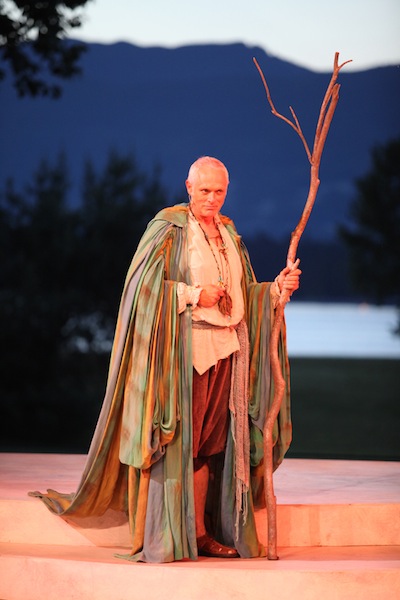
Richard Newman and Pippa Mackie in The Grandkid. (photo by David Cooper)

Former community member John Lazarus is a very interesting man. Dubbed by the media as one of Canada’s best-known playwrights,” his fertile mind has spawned the likes of Babel Rap, The Late Blumer and his award-winning Village of Idiots, which evolved from a play through a CBC Radio mini-series to a National Film Board animated short. His latest work, The Grandkid, the intergenerational story of Julius Rothstein and his granddaughter, Abby, opened at Richmond’s Gateway Theatre this week.

Montreal-born Lazarus graduated from the National Theatre School of Canada in 1969. The call of the West lured him to Vancouver, where he worked for 30 years as an actor, director, critic, broadcaster, playwright, screenwriter and teacher – including a stint at Studio 58, one of Canada’s leading theatre schools. For the past 14 years, he has been an associate professor of drama at Queen’s University in Kingston, Ont. Now, his newest creation brings him back to the West Coast.

The two-character play tells the story of an aging film professor, Rothstein, grieving over the recent loss of his wife, when his 19-year-old freshman granddaughter decides to move in with him to attend university. This leads to an intriguing social experiment and a new twist on BFF (best friends forever), as Julius and Abby become roommates and grapple with the timeless issues of youth and aging.

In a telephone interview with the Independent, Lazarus talked about his inspiration for the show. “I had friends where that living arrangement came up, their daughter moved in with Grandpa, and I listened with interest to their conversations about what was going on in the relationship. I was intrigued by the concepts of old age and youth and the stereotypes surrounding these two groups. I look around and see both people my age and young adults behaving very differently than depicted in the media and I wanted to write something to show how we can transcend the age differences and get along as a family.”

Developing strong characters is always essential, but especially so in a “two-hander,” as they have to hold the attention of the audience for the entire show. Lazarus believes that he has created two very likeable ones: “Julius is a hip old guy, easy-going, artistic, who is generally happy, but we see him when he is saddened after the death of his wife. He is an observant Jew and a liberal thinker, except when it comes to Israel, who he staunchly supports. He is tired of his career and he hopes that, with his granddaughter coming to live with him, she will inject a ray of sunshine into his life – and she does.” As to Abby, said Lazarus, “She is very idealistic, smart and wants to make a difference in the world. While the two love each other very much, they do clash over generational-gap kind of things.”

“My father, an insurance salesman, was a great storyteller and had a great sense of humor and irony. I remember thinking after listening to one of his stories, what a wonderful thing to do – to make people laugh.”

Lazarus often uses Jewish themes and characters in his repertoire. “I was brought up in a Jewish home and, while not observant, I feel culturally Jewish,” he explained. “My father, an insurance salesman, was a great storyteller and had a great sense of humor and irony. I remember thinking after listening to one of his stories, what a wonderful thing to do – to make people laugh. While I started off as an actor, writing became my passion. Although I don’t think of myself as strictly a writer of comedies, even in my serious plays humor sneaks in. To me, that is the Jewish essence of it, putting humor into every situation.”

Family and friends often provide ideas for his work and the needed conflict for the narrative. “When I was writing The Grandkid, I asked my wife what I could put into the story that would drive Julius crazy. She told me to give Abby a Palestinian boyfriend. I did not want to go there because I thought some might label the story racist so, instead, I gave her an Israeli boyfriend who has views on Israel that are diametrically opposed to those of Julius – that leads to some interesting dialogue.”

Some have suggested that the play is autobiographical. Lazarus laughed, “Definitely not. Yes, there are similarities between Julius and himself. Both of us are Ontario university professors, he film, me drama, but we differ in our views of politics and religion. I think, if we could sit down and have coffee together, we would have a very heated, but respectful, conversation.”

When asked why people should see the play, Lazarus reflected, “It makes you feel good about family and relationships. I guess you could call it a love story of sorts. It highlights the best parts of being young and being old, and how different generations can learn from one another. It will appeal to all age groups. Also, you could not ask for a better cast – Richard Newman, who I first worked with in the seventies, and Pippa Mackie, who I met in 2013 and encouraged to audition for the play because I thought she would be perfect for the part – and a terrific director, Natasha Nadir. It is good for a few laughs and you don’t have to be Jewish to enjoy it.”

In anticipation of being at the theatre on opening night, as the interview took place before the play opened, Lazarus said, “It is a culmination of a dream, to come to Vancouver and say, ‘Hello, here I am, I am back and here is my new play. I hope you enjoy it.’”

The Grandkid runs at the Gateway until April 26. For more information, visit gatewaytheatre.com or call the box office at 604-270-1812.

Tova Kornfeld is a Vancouver freelance writer and lawyer.
Format ImagePosted on April 11, 2014August 27, 2014Author Tova KornfeldCategories Performing ArtsTags Gateway Theatre, John Lazarus, Pippa Mackie, Richard Newman, The Grandkid
Actors’ journey to catharsis in This Stays in the Room

Actors’ journey to catharsis in This Stays in the Room

The cast of This Stays in the Room. (photo from horseshoesandhandgrenades.ca)

Baring one’s soul is always difficult. Imagine how it would be to share your angst and pain with a room full of strangers. This is exactly what four brave actors undertake in the world première of This Stays in the Room.

Horseshoes and Hand Grenades Theatre has partnered with PTC and Radix Theatre to bring this innovative mix of text, song, photography, video projections and choreography to the Downtown Eastside’s Gallery Gachet.

The company, as its press material states, “is a provocative and political group who are not content with holding a mirror up to society – they would rather conduct an autopsy on it.” This is the company’s first site-specific production and, by using a gallery venue, the audience is invited into a non-theatre space, removing the main barrier between the audience and the performers. To allow this intersection of theatre and visual art, the production set will remain as an installation during the run of the play for the general public to explore. The gallery is a collectively run space whose mandate is to encourage dialogue and promote social and economic justice.

The setting is intimate, rows of chairs on either side of a corridor with four decorated ones within the audience for the cast. The actors appear, two men, two women, each carrying a basket full of props. They sit among the viewers – you can reach out and touch them – and, one at a time, tell all. Four stories, four people, all very different and yet, in some strange way, hauntingly similar. An intense one hour takes you through the actors’ personal journeys, from trauma to the triumph of acceptance and forgiveness.

Part of the experience is the actors’ self-description as they draw themselves on a blackboard. Something visceral happens watching these four draw images of themselves on the board. They start off with simple stick people and then add layer upon layer of shape, form and color as they pictorially lay out their self-perceptions. The sound of the chalk scratching against the board picks up speed as they reach their finished images.

We meet Allan Morgan, 59 years old, gay, grappling with his sexuality and society’s homophobia, who puts a pink triangle over his face – he tells of his shame as a “chubby little boy” and his first homosexual experience. Then there is 30ish Robert Salvador, alcoholic, full of guilt over cheating on his wife and small daughter: he shares the story about a sex-free summer game he and his pals played in his teens, where falling off the wagon brought the punishment of being pelted with raw eggs. Next up, petite Manami Hara watching her elderly father deteriorate mentally and physically, feeling she abandoned him in his time of need, and, finally, pregnant Alexa Devine, harried mother of two, abused as a child.

Added to the mix are three stories of members of the creative team, whose talking heads are projected onto white lanterns hanging from the ceiling and the blackboards on either side of the audience. The poignancy and emotion of the disclosures are almost overwhelming at times. This is raw, in your face, reality theatre. It resonates with the audience because we have all been there, done that, and understand the feelings so openly expressed by this talented cast. At the end of the show, the faces of all of the audience members are projected onto the walls of the tiny room, each in a little circle – a reminder that we are all one.

With sound design by Noah Drew (whose Tiny Music was part of this year’s Chutzpah! Festival), lighting design by Andreas Kahre, video projection design by Cande Andrade and choreography by Amber Funk Barton, this multi-media mix comes together under the steady hand of director Mindy Parfitt.

This show is not for all: it is not a feel good, laugh-out-loud production but, as Parfitt notes, “It’s really about how we as individuals face the challenges in our lives, how we move forward and find some kind of forgiveness with ourselves and others.”

This Stays in the Room runs to March 30. Due to the adult content and language, it is not suitable for anyone under 18.

Gallery Gachet is located at 88 East Cordova St. Seating is limited. More information can be found at 604-729-5395 and horseshoesandhandgrenades.ca.

Tova Kornfeld is a Vancouver freelance writer and lawyer.

Format ImagePosted on March 28, 2014August 27, 2014Author Tova KornfeldCategories Performing ArtsTags Alexa Devine, Allan Morgan, Amber Funk Barton, Andreas Kahre, Cande Andrade, Gallery Gachet, Horseshoes and Hand Grenades, Manami Hara, Mindy Parfitt, Noah Drew, Robert Salvador, This Stays in the Room
Pi Theatre presents Between the Sheets in actual classroom

Pi Theatre presents Between the Sheets in actual classroom

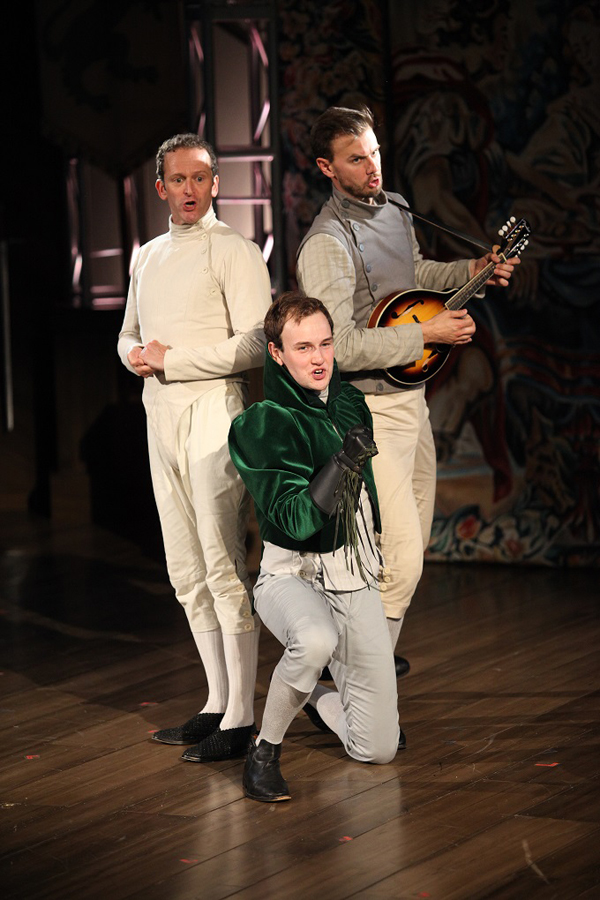
Caitriona Murphy, left, and Stephanie Moroz in Between the Sheets by Jordi Mand. (photo by Tim Matheson)

Twenty-something Torontonian Jordi Mand is a Canadian playwright coming off a huge success with her first full-length script, Between the Sheets, the story of a parent-teacher interview gone awry. Local company Pi Theatre, known for its innovative and site-specific work, will treat Vancouver to the Western Canadian première of the play in an actual classroom at Admiral Seymour Elementary School in Strathcona.

The action revolves around two characters, Teresa, a Grade 3 teacher, and Marion, the well-heeled private-school power mom of Alex. Marion rushes into the classroom at the end of an evening for an unscheduled interview. The conversation deteriorates into an accusation from the furious Marion that Teresa is having an affair with her husband of 24 years, Curtis. As one would expect, Teresa vehemently denies the charge until the incriminating evidence is literally thrown in her face – a folder of romantic e-mails. Oh my! The predicament makes for 60 intense minutes of theatre.

In a telephone interview with the Independent, Mand spoke about her career and work. Born and raised in the Toronto suburb of Richmond Hill, she attended Jewish day school and graduated from the National Theatre School of Canada. “Originally, when I went to theatre school, I thought I wanted to work in classical text and then, in my second year, a group of us adapted a novel and it was an amazing experience where we collaborated to create an independent piece of work. It started my writing heart to pulsate. When I graduated, I realized that acting was not for me. I hated the auditioning process and I was bored in rehearsal. Then I started to write and I realized that that was my passion and where I wanted to be.”

Mand has written a number of short plays but Between the Sheets is her first full-length work. “My idea for the script did not come from one particular thing but from a number of events in my life,” she said. “Some of the inspiration came from my personal health issues where I had to navigate the health system, which I found very difficult to do, and so part of Teresa’s experience with those same issues relates to that.

photo - Jordi Mand
Torontonian Jordi Mand is a Canadian playwright coming off a huge success with her first full-length script, Between the Sheets, the story of a parent-teacher interview gone awry. (photo by Will O’Hare)

“Another aspect of the play comes from the time I was the drama instructor at a Jewish day camp in Ontario and I worked with special needs campers. I became very close to one with Down’s syndrome, Alex. He was this amazing, miraculous creature but he had a very complicated relationship with his mother. The memory of that has stayed with me all these years and is reflected in Marion’s character.

“As to the classroom setting,” she continued, “it sort of goes back to my Jewish upbringing. I went to a private Jewish school and perhaps in my subconscious I wanted to play out some of my anxieties from that time. A classroom means so much to different people. It allows for a different dynamic and interpretation of what is happening in the script.”

Between the Sheets had its world première in Toronto in 2012. The National Post called it “a gripping new play, terrifically performed.” The Globe and Mail critic declared, “If you handed out report cards for shows, Between the Sheets would get straight As.” While one of the critics was surprised at the sexual connotations of the title in relation to a school drama, Mand said, “I was surprised to read that comment. That was never my intention. The title comes from the fact that the two characters are in a tremendous amount of pain and together they share those kinds of feelings that we only let ourselves think about while we are in bed just before we fall asleep. So, to me, the title symbolizes a place where our loneliness and pain catch up with us.”

The play has had international exposure, with a successful run in New Zealand and a remount scheduled for later this year. To date, it has been produced in a theatre setting. Mand is excited that Pi will be using an actual classroom for its production. “Pi has a reputation for using non-traditional spaces in really inventive ways,” she commented. “Using a classroom makes the room the fifth character – it is magical and will open up the audience experience in so many ways. It will solidify what happens in real time and people will be a part of it. I am really excited to see how it turns out.”

Mand is grateful for the opportunities that the production has brought her at home and abroad, and the impact the play has had. “In Toronto, teachers and principals would come up to me after the show and thank me for telling this story. The script really stirred something in people. Once they see the show, they will never be able to look at a classroom in the same way again.”

Between the Sheets runs March 14-26 at Admiral Seymour school, 1130 Keefer St. For times and ticket information, visit pitheatre.com or call 604-872-1861.

Tova Kornfeld is a Vancouver freelance writer and lawyer.
Format ImagePosted on March 14, 2014August 27, 2014Author Tova KornfeldCategories Performing ArtsTags Admiral Seymour Elementary, Between the Sheets, Caitriona Murphy, Jordi Mand, Pi Theatre, Stephanie Moroz

Amitai Marmorstein’s Superman dream flies

Amitai Marmorstein’s dream as an actor was to play a superhero. However, in an interview with the Jewish Independent in April 2011, he bemoaned the type of roles he was getting and said, “I can never play an action hero, but I often play younger boys.” Fast-forward three years and Marmorstein’s dream has come true – in a way. In the world première of Nothing But Sky, written and directed by local playwright Kendra Fanconi, Marmorstein takes on the role of Joe Shuster, one of the creators of the iconic DC Comics character Superman. The play runs Feb. 21-March 2 at Scotiabank Dance Centre’s Farris Family Studio.

photo - Amitai Marmorstein
Amitai Marmorstein plays Joe Shuster in Nothing But Sky.

Canadian-born artist Shuster teamed up with writer Jerry Siegel, whom he met in high school, and together they gave the world its best-known superhero. Originally depicted as a bald, ugly villain determined to rule the world, Shuster and Siegel morphed their creation into the handsome character we know today, modeled on swashbuckling actor Douglas Fairbanks Sr. The name of Superman’s alter ego, Clark Kent, was made up of a combination of names of then popular movie stars Clark Gable and Kent Taylor.

Superman was an instant hit as a defender of truth, justice and the American way. Unfortunately, Shuster and Siegel were poor businessmen and neglected to secure a copyright, leading to lawsuits with the publishers and the loss of their creation in the 1940s. Undaunted, they came together again in 1948 to create a new hero, Funnyman, a Jewish crime fighter who used humor and sarcasm to defeat his foes – or, as one pundit called him, a “crime-fighting meshuggeneh.” Unfortunately, Funnyman never caught on. Shuster and Siegel parted company, and Shuster experienced a low period, during which time his eyesight deteriorated and he was forced to take work drawing pornographic cartoons to make ends meet.

Marmorstein and Fanconi sat down to talk with the JI before a recent weekend rehearsal. Fanconi described the genesis of the production. “I had an acting teacher who said that movement is like a cartoon character,” she said. “I had just finished working on a project with kids where we meshed line drawings with video projections that interacted on stage, and I thought it would be fun to play with these two concepts – to tell a story through an evolving comic strip. So, I looked for a Canadian artist to showcase, and I found Joe Shuster.”

She set about researching the Jewish duo. “I fell in love with the story of Shuster and Siegel and their Superman. Contextually, he was developed just prior to the Second World War and at a time when Hitler was coming to power in Europe. Shuster and Siegel were these two nerdy little Jewish guys who came from immigrant families and who were bullied at school. They came up this character, who outwardly appeared to be meek and mild but had real inner power and [the] strength to conquer evil. Although Shuster felt that he was powerless to do anything about what was happening in Europe, by creating the superhero, he actually did something that changed the world.”

The third character in the show is Joanne Kovacs, who became the model for Lois Lane.   In real life, they were a love triangle and Kovacs ended up picking Siegel, although she later lamented that she may have made the wrong choice. Fanconi noted, “The story traces their 60-70 years together, through the pinnacle to their fall. I find it more interesting to portray people who are deeply crushed by life and who deal with their losses than those who do not have to deal with adversity. The Lois character is particularly strong, she is an early feminist full of bravery and bravado. She does not have bulletproof skin like the superhero, but she throws herself into various situations to get her story. Actor Dawn Petten does a fantastic job playing that role.”

cartoon - Writer and director Kendra Fanconi depicts her process for Nothing But Sky.
Writer and director Kendra Fanconi depicts her process for Nothing But Sky.

Projections, action sequences and animated characters are used to move through the development of the comic strip. “It is a beautiful but tragic story and we tell it through the form of a living comic book,” Fanconi said. “Keith Murray translated the comic book into a series of projections. It is a video design from beginning to end. It is like creating a comic, starting with a blank page in pencil and then moving through ink and then into color – an evolution – and the color adds emotional resonance. The animation [i]s provided by Paul Dutton of Academy Award-nominated Triplets of Belleville fame who has the last hand-drawn animation studio in Canada. His work is phenomenal.”

Marmorstein loved Superman as a kid. “I never thought I would get a chance to play him,” he said. “When I read Michael Chabon’s Pulitzer-winning The Amazing Adventures of Kavalier and Clay, based on the lives of Shuster and Siegel, I thought some day I’d like to play one of those guys. When I heard about the audition for this play, I was so excited. Usually, I treat auditions all the same and do not get too emotional about them; whatever happens, happens. But I fell head over heels in love with Shuster’s character and I really wanted the part so it was a very traumatic few weeks for me while I waited to hear whether or not I had landed the role. When I found out, I was ecstatic. Coming to work is a joy for me,” he continued. “I do not think of it as a job at all.” Marmorstein felt he was right for the Shuster character. “I relate to his character – someone who outwardly does not have confidence in himself yet, underneath, is very strong and powerful. Working with Robert Salvador [as Jerry] has been great. We really complement each other’s style.”

Fanconi noted that the show is not just for comic book fans but also for anyone who likes a good story. “My hope is that the audience will have moments of depression and moments of joy. If I had to use one word to describe the production, it is ‘dazzling.’”

But a word of caution, Nothing But Sky is intended for a mature audience and is not suitable for children. For video clips, visit theonlyanimal.com. Tickets are available at eventbrite.ca.

Tova Kornfeld is a Vancouver freelance writer and lawyer.

Posted on February 21, 2014April 16, 2014Author Tova KornfeldCategories Performing ArtsTags Amitai Marmorstein, Jerry Siegel, Joanne Kovacs, Joe Shuster, Keith Murray, Kendra Falconi, Nothing But Sky, Paul Dutton, Superman
Metro Theatre’s Deathtrap macabre, fun

Metro Theatre’s Deathtrap macabre, fun

Left to right: Melanie Preston, Drew Taylor, James Behenna, Don Briard and Deborah Tom, in Deathtrap at Metro Theatre. (photo by Tracy Lynn-Chernaske)

If you like rollercoaster rides, then Metro Theatre’s staging of Ira Levin’s Deathtrap as part of its 51st season is for you. This satirical thriller winds its way through more twists and turns than any ride at the PNE. Levin, who has penned such classics as Rosemary’s Baby, The Stepford Wives and The Boys from Brazil, steps it up a notch with this macabre mix of Monty Python meets Sleuth, with a twist of Macbeth thrown in for good measure. Stephen King called Levin, “the Swiss watchmaker of suspense novels.”

Deathtrap ran on Broadway for 1,800 performances over four years and garnered a Tony nomination for best play. In 1982, it was made into a film starring Michael Caine and Christopher Reeve.

The play-within-a-play format is based on the premise of an aging Broadway playwright, Sidney Bruhl, whose repertoire consists of one set, five-character thrillers, such as The Murder Game and Blind Justice. However, writer’s block has landed him in a dry spell and he has not had a hit for 18 years. He is reduced to teaching college seminars to aspiring writers – or “twerps,” as he calls them, while living off his wife’s fortune. A young student, Clifford Anderson, shows him a script that looks like it could be a smash hit.  It’s called Deathtrap, and guess what? It is a one-set, five-character thriller. Only Bruhl has seen the manuscript. When Anderson wants to discuss his work with his teacher, Bruhl sees a light at the end of his tunnel and tells his wife, Myra, of a killer idea to get his hands on the manuscript. He invites the young man to his remote New England retreat and tells him to bring all the copies of his play with him. Anderson has no family and has not told anyone where he is going. Need I say more? As in an Agatha Christie play, A Murder is Announced – but is it really?

Houdini handcuffs, a garroting, a body dragged out to be buried, a resurrection, a heart attack, a double murder and a clairvoyant who has a premonition about it all, are all part of the thickening plot. The audience cannot be sure that this is going to end well for anyone as it grapples with hidden meanings, plot reversals and deceit until the final coup de theatre.

The set is very simple – a quaint old colonial farmhouse with the attached stable converted into a beamed study for Bruhl’s writing, replete with a crackling fireplace. A desk with a manual typewriter sits front and centre.  The walls are covered with posters from Bruhl’s Broadway hits and an assortment of antique weaponry from those plays, including maces, swords, daggers and a cross-bow, visual spoilers, perhaps?

Community members Melanie Preston (who was profiled in the Jewish Independent, Sept. 10, 2010), playing Myra, Bruhl’s nervous wife, and Deborah Tom, as the Bruhls’ nosey Dutch psychic neighbor, carry the female roles. In an e-mail interview, Preston noted that, “The character of Myra is a wonderful challenge. When I first read the script, she surprised me, so I am trying to do the same for the audience, but it is always challenging to make someone real while honoring the script. I have worked hard to study my internal motivations with the other characters and to bring what Myra struggles with to life.”   Added to that motivation is the fact that Preston’s true-life significant other, James Behenna, plays naïve Anderson. “I have always wanted to work on stage with James again,” she said. “He is a very good actor, and it’s nice to have both a hubby and a boyfriend in the play.”

Tom said she has fond memories of her early acting days at Vancouver’s Peretz School under the tutelage of Lerner Bossman and Claire Klein Osipov, where she developed her passion for theatre. By e-mail she said she “fondly remembers the elaborate productions with beautiful sets and costumes performed in the auditorium of the old, one-storey building, with the aromas of all the goodies the babas were making in the adjacent kitchen. Everyone contributed and it is this sense of community that [I have] found here in our local nonprofit theatre organizations such as Metro.”

In this production, Tom plays Helga Van Torp, a renowned psychic. With her ersatz accent, she provides much of the comic relief. Drew Taylor is convincing as the suave but cunning Bruhl. His one-line witticisms are barbed with delicious bitterness as he complains that “nothing recedes like success.” Behenna’s Anderson is the perfect counterpoint to Bruhl’s sophistication.  Director Don Briard does quadruple duty, not only showing his thespian talents in a smaller role as Bruhl’s lawyer, Milgrim, but also as set, lighting and sound designer for the play.

On preview night, some of the actors had trouble with their timing and Tom’s accent needs some work, but all of this should improve over the course of the run. Some critics have labeled the play dated and a genre past its sell-by date. This reviewer does not agree – there is nothing like a good bout of murder and mayhem for one’s entertainment pleasure. Deathtrap runs until Feb. 8. Tickets are available at 604-266-7191 or metrotheatre.org.

Tova Kornfeld is a Vancouver freelance writer and lawyer.

Format ImagePosted on January 24, 2014August 27, 2014Author Tova KornfeldCategories Performing ArtsTags Deathtrap, Deborah Tom, Don Briard, Drew Taylor, Ira Levin, James Behenna, Melanie Preston, Metro Theatre

Posts pagination

Previous page Page 1 … Page 4 Page 5
Proudly powered by WordPress