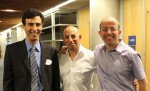
Unique, fun and giving gifts

Lisa Pozin’s co-op features changing vendors, constant quality, available at the store and online. (image from givinggifts.ca)

Owning a small retail business may seem unconnected to making our planet a better place, but each purchase made in Lisa Pozin’s gift shop makes a positive difference in someone’s life.

Pozin started the company Giving Gifts about four years ago online. “I have been working at Temple Sholom as a program director since I was at university,” she said in an interview with the Jewish Independent. “I dreamt about having my own store before but I’m not a risk taker. I had a job, then I had three kids in three years. When I was on maternity leave with my youngest one, I decided it was time. Renting a retail space is expensive, and I wasn’t sure it would work, so I started online.”
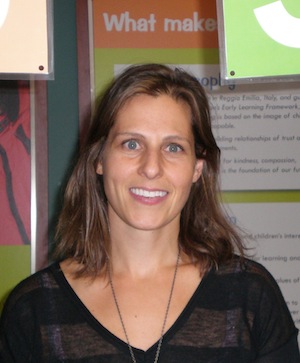
photo - Lisa Pozin owns Giving Gifts & Co. at 4570 Main St
Lisa Pozin owns Giving Gifts & Co. at 4570 Main St. (photo by Olga Livshin)

Although her university degree in criminology and anthropology never prepared her for entrepreneurship, her job at Temple Sholom gave her practical business experience. “I got involved with the Temple’s gift shop. I liked it, liked finding artists and producers of interesting items. It appeared I have a good eye for what other people would want to buy.”

For Temple Sholom, of course, the items for sale have to have a Jewish connection (sholomjudaica.ca), but for her own shop, Pozin concentrated instead on selling only fair trade and eco-friendly gifts.

“I’ve always been a conscientious shopper myself. I think it’s part of being Jewish – trying to make a difference. I wanted to contribute to changing the world through shopping. There is this movement ‘Buy to Change’; I wanted to be part of it, wanted people to find special products in my shop, products which help the world. I sell things that help someone make a better life.”

Each product line has meaning. “We have necklaces called Giving Keys,” Pozin offered as an example. “They are keys with a word engraved on them, ‘strength’ or ‘courage.’ They’re meant to be passed on. When you get this key, you must give it away at some point to a person who needs the message on the key. The necklaces are made by formerly homeless people in L.A.”

Giving Gifts carries scarves made in Ethiopia by women transitioning out of the sex trade. It sells a series from Barefoot Books, a small children’s book company run by two mothers.

Each of Pozin’s vendors contributes to charities and, through them, so does Pozin. Ten percent of every sale made in the store is donated to various charities. “Mostly, they are children’s charities,” said Pozin. “A couple years ago, I started a donation campaign and we built a school in Kenya.”

When she finally opened a physical shop about a year and a half ago – Giving Gifts & Co. at 4570 Main St. – Pozin set it up as a co-op. “It’s a new concept in retail,” she said. “Giving Gifts is a permanent vendor at the store. The other vendors change. Each vendor rents a space from me for a certain amount of time – one day a week or some such – and sells his products and everything else in the store. This way, I don’t have to be in the store all the time and I help local artisans, jewelry and clothes makers, to sell their things. One of my vendors is a florist. Another is a perfumer. We have a wonderful community.”

Pozin offers shoppers both variety and convenience. She maintains an online presence (givinggifts.ca) and her services include shipping. “We ship almost every day. People shop online for gifts from small towns all over B.C. Even in Vancouver, they sometimes don’t have time to come to the store during working hours, so we ship to them.”

The shop manages to sustain itself. Pozin spends two days there and the rest of the week she still works at the synagogue.

“I love my work as a program director at Temple Sholom,” she said. “I work with families and teens. I run a seniors yoga class. It’s wonderful to work there, but I love my store, too. I’m excited when people buy from me. Together, we make a difference. We support good values and benefit the planet. There are more and more stores like that coming up everywhere. I hope the store will be successful at some point soon.”

In less than two years, Giving Gifts & Co. has acquired an excellent reputation. Earlier this year, it was a nominee in City of Vancouver’s first annual Awards of Excellence, which were presented in June, and it also made it into the latest edition of the Lonely Planet tourist guide.

“From Bakelite antiques to artisan chocolate bars and handmade kids wear, it’s well worth a browse if you’re in the neighborhood,” reads the guide entry. “The vendors are changed every few months to keep things lively, so there’s almost always something tempting to buy.”

Olga Livshin is a Vancouver freelance writer. She can be reached at olgagodim@gmail.com.
 

On being a Sar-el volunteer

Gerald Lecovin on the production line at Matzrap Army Camp this past October. (photo from Gerald Lecovin)

Matzrap Army Camp, October 2014: It’s 8:15, time to work. Breakfast and flag raising are over. The Henna Hannahs are already on the job. This is the name I have given to the seven or eight elderly ladies who have been bused in from a senior citizens home, the color of their hair belying the rest of their bodies. They sit at a table, shmoozing while they place various combinations of medical supplies in small plastic bags, which are then sealed and placed in containers going out to the troops. They work steadily till lunch, which they are given before being bused back to their home. This is their – and our – contribution to Israel’s welfare.

We are 30 Sar-elniks, mostly Canadian, whose job it is to open containers, packs and medical vests coming back from the front. We empty them out, remove items that are no longer useable, replace the items and then repack everything. Containers are then sealed in plastic bags, put on pallets and shipped out. While they are replaced by more containers and the process repeats itself, there is a feeling of accomplishment every time a pallet leaves.

On this tour of duty, we were helped by groups of young solders training to be medics. There were 18-year-old women and, later, men who were from an elite Seal unit. The women were a reflection of Israeli society; Ashkenazim, Sephardim, Russians. Each with the ubiquitous cellphone. One day, one of the soldiers played songs for us by her favorite singers: Satchmo and Tony Bennett. Go figure! Comparing them to our kids of similar age was edifying.

Lunch is from 11:45 to 1:15. This is the big meal of the day. Salads, choice of hot meat entrée or vegetarian. By this time, the camp is jumping and we are eating with soldiers and staff. We return to work till 3 or 4 p.m., depending on the workload. Supper is at 5:45, and sometimes we have a lecture in the evening. This is our routine. Once a week, they plan an outing and we are bused to some site of interest.

Sar-el, which is an acronym for “service to Israel,” was conceived by General Aharon Davidi in 1983 when there was a need for laborers to bring in the crops as the soldiers were away fighting. Through his contacts in the United States, he managed to get 600 volunteers. Since that time, more than 50,000 people, of which 35 percent are Christian and 65 percent Jewish, have volunteered. About 3,500 from 60 countries come each year.

Originally, the age limits were 18 to 65, but when the general himself reached 65, he removed the upper limit. The oldest of our group was 92. People come for an average of two to three weeks; some for months. Of our group, only two were first timers. One was returning for his 100th time. I was a relative neophyte: this was my third time.

The feeling of being able to contribute to Israel in a meaningful way, and not just financially, is a strong magnet. I know this because I interview those volunteers that come from the West Coast and many of them contact me upon their return to share their thoughts.

For more information about Sar-el, visit sarelcanada.org.

Gerald Lecovin is a longtime resident of Vancouver, and has been active in community affairs. For the last 10 years, he has been Sar-el’s representative on the West Coast.

Netanyahu makes time for MDA Vancouver

On a private visit to Vancouver, Israeli First Lady Sarah Netanyahu took time to meet with local Magen David Adom volunteers. (photo from MDA Vancouver)

Israeli First Lady Sarah Netanyahu was in Vancouver recently for a private visit. As a means of recognizing both Vancouver’s all-volunteer efforts in support of Magen David Adom and the outstanding work of MDA itself in Israel, which also relies heavily on volunteers, Netanyahu expressed great pleasure at the opportunity to pose for a photo honoring the organization. MDA has been ranked by residents of Israel as the second most-beloved organization, with an approval rating of 86.8 percent, following the Israel Defence Forces, which scored a rating of 90 percent (see t-r-i.co.il/news/ni_131.pdf).

In a brief meeting with Netanyahu, there was discussion of her tour of MDA facilities and the time she spent with volunteers in Israel during Operation Protective Edge, including youth from the Greater Vancouver area who are serving with MDA in Israel as volunteer medics and were active during the operation. These volunteers include Bar Frenklach, Benjamin Mamon, Camille St-Cyr and Gal Ziv.

Netanyahu also learned of the ambulance recently inscribed with a dedication to Canadian Prime Minister Stephen Harper, whereupon she praised Canada as being a country with a very special place in her heart.


Local joins fight against ISIS

Vancouverite Gillian Rosenberg, 31, is the first foreign woman to join YPG, the Kurds’ dominant fighting force battling the Islamic State in northern Syria.

Rosenberg, who calls White Rock home, attended Maimonides Secondary School, where she was valedictorian in her graduating year, 2001. Shoshana Burton, one of her teachers at the time, remembers her as a shy young woman who “became very passionate when she recognized opportunities to be involved with the school’s annual mitzvah day, where we volunteered in the community. She was compassionate and was fascinated with Israel,” Burton said. “She was a good kid and I am really hoping that she is safe.”

Rosenberg studied aviation at the British Columbia Institute of Technology, where she graduated from a 64-week airport operations program in December 2003, according to Dave Pinton, spokesperson for BCIT. “It’s a course on how to run airports,” he said, adding that after completing it she enrolled in a part-time management degree program in 2004. She did not complete that course, he said, and the last course she took at BCIT was in January 2006. Sometime after that, Rosenberg moved to Israel and enlisted in an Israeli army search-and-rescue unit. On her Facebook page, she lists her experience as a former instructor at that Israel Defence Forces unit.

In 2009, Rosenberg was among 11 people arrested in a U.S. criminal case for her involvement in an international phone scam. An FBI statement from that year described it as a “phoney ‘lottery prize’ scheme that targeted victims, mostly elderly.” At that time, Israel’s NRG news site reported that Rosenberg had tried in vain to join the Mossad, Israel’s spy service. She was estranged from her parents and had landed in financial straits.

Extradited to the United States, Rosenberg served approximately four years in prison under a plea deal, according to court documents. At the time, she was represented by Israeli lawyer Yahel Ben-Oved. Speaking to Reuters, Ben-Oved said she had no knowledge of Rosenberg joining the Kurds, though they had spoken recently. “It is exactly the sort of thing she would do, though,” said Ben-Oved.

Former high school friends in Vancouver expressed mostly shock and concern for Rosenberg’s safety when they learned she had joined YPG. Another teacher who had known her in high school contacted the Canadian Jewish News with the hope that the Jewish community could coax her home.

On her Facebook page, Rosenberg posted photographs taken at Erbil International Airport in Iraq Nov. 2. Another, taken Nov. 5 from a vehicle en route to Sulaymaniya, a city in Iraqi Kurdistan, she said “kinda looks like anywhere in middle America.”

Lauren Kramer, an award-winning writer and editor, lives in Richmond, B.C. To read her work online, visit laurenkramer.net. This article was originally published on cjnews.com.      


Israelis buy more guns

Yoram Issachar, who owns a contracting company in Jerusalem with his father and two brothers, has carried a Baretta 765 for the past 25 years. He works in Jewish communities on land Israel acquired in the West Bank, employing 15-30 Palestinian laborers, and carries the gun for his protection. Now, after the attack in Jerusalem that killed four worshippers and a police officer, he plans to upgrade to a larger gun. Immediately after that attack, he said, he took out his gun and cleaned it to make sure it was ready for use.

“I want to buy a Glock because each bullet is larger, and it shoots faster,” he said. “It will give me more security if I need it.”

He’s only used the gun once. In 1992, several young Palestinians threw stones at his car as he drove through the Palestinian town of El-Bireh, damaging his car although he was not hurt. Angry, he jumped out of the car and pursued them, opening fire at their legs, although he did not hit them.

In the wake of a series of attacks that have left 11 Israelis dead over the past weeks, Israelis are lining up to get a gun licence. Those who already have licences are carrying their guns with them more often. The Israeli government has asked everyone who has a gun to carry them in public, to help reinforce Israel’s security situation, and some who would leave their guns at work, such as security guards, are urged to bring them home.

“People are nervous after recent events, and anyone who has a gun should carry it around rather than leave it at home,” Yakov Amit, the director of the gun licensing department for the Ministry of Public Security, told the Media Line. “We want as many people as possible to be able to respond to an attack.”

Amit said there are about 300,000 guns held legally in Israel – half of them by individuals such as Issachar who carry them for self-protection, and the other half by security guards at public institutions. Israelis must demonstrate a need for the gun, and pass a psychological test as well as a shooting test before they receive a licence. The licence must be renewed every three years.

In the past decade, there have been a series of incidents in which people have been killed by guns at home, either in accidents or intentionally. At least 16 women have been killed by their partners using licensed guns, since 2002, according to women’s groups. Yet, Israelis who carry guns say they make them feel safer.

“When I moved to Israel in 1976 from Memphis, Tenn., I brought two hand guns with me,” said Alon Kirschner, a physiologist. “In Tennessee, if you don’t have a gun by the time you’re 8, you’re considered a sissy.”

Read more at themedialine.org.


Startup conversations

Vancouver Israeli Tech Club Fall Meetup keynote speaker Daniel Friedmann of communications company MDA, left, with presenters Yaron Bazaz, co-founder of the app Downtown and a VIT organizer, centre, and Meir Deutsch of IKOMED. (photo by Baila Lazarus)

If you’ve ever tried to start a business, you’ll know how crucial it is to have the proper support around you. This includes finding the right management and staff, marketing and growth strategists and, not least, connections with investors. Add to that the challenge of being an immigrant, and the hurdles seem impassable.

It was out of this need to support startups that Yaron Bazaz, Eran Elizur and Ronen Tanne launched the Vancouver Israeli Tech Club and its affiliate Meetup group one year ago. Bazaz had seen in California the models of business “ecosystems” that support the tech community.

“They provided a stage for local entrepreneurs to present their companies and expose themselves to potential investors, employees, media, etc.,” said Bazaz. “We didn’t have this in Vancouver. This type of ecosystem is 80 percent of the success. When you start a company, what you need is the first co-founder, the first investor, employees that are not necessarily looking for the hefty salary but have the entrepreneurial spirit to see your vision and are willing to participate.”

Within the Vancouver Jewish community, interest in VIT has garnered the group almost 350 members, as well as sponsorship from the Jewish Federation of Greater Vancouver, the Centre for Israel and Jewish Affairs, and the tech hub Discovery Parks.

So far, VIT has held four networking events. At its most recent, which took place in November, Bazaz presented his app – in Beta testing – called Downtown. It allows crowd-sourced data to let users know where the highest concentration of hip, good-looking young adults can be found in the downtown club scene at any given time.

Meir Deutsch, chief executive officer of IKOMED, also presented. His medical device company aims to reduce “the exposure to ionizing radiation during minimally invasive medical procedures.”

Events also include keynote speakers who are local businessmen connected to the Israeli community. At the November event, Daniel Friedmann, president and CEO of global communications company MDA, presented on MDA’s work in satellite technology and spoke about Israel’s contributions to unmanned vehicles, especially in how information-gathering has changed.

“During the Cold War, everyone knew where to look [for enemies],” he told the audience of about 200. “Today, we don’t know where the bad guys are. We don’t know where to look.”

There are also too many factors to look at, he said, and it’s impossible for any one organization to have the human-power to keep tabs. So reconnaissance crafts, such as satellites and drones, as well as the software, have to be more technically adept at recording even subtle changes on the ground.

“If the software shows us where some cars have been moved, we can detect bombs that were placed on the road overnight,” explained Friedmann.

Entrepreneur Shahar Ben Halevi has attended all of VIT’s events.

“You learn about other entrepreneurs’ journeys and lessons they have learned on their path,” he said. “You can always learn more about life, about business, about setting goals and the right mind set to get them.”

Ben Halevi, who came to Vancouver nine years ago, is the founder of Cornfield Media, which has media projects in different stages of development.

“One is an online streaming platform for children’s stories on multilingual channels,” he said. “The service allows parents and children to read the same stories in different languages.” Ben Halevi has a book on Amazon and had a short in this year’s Vancouver Jewish Film Festival.

He said he’s taken away lessons from VIT on team building, courage, being visionary and how to turn your vision into reality. “How to be happy with what you achieved and not depressed about the things that you haven’t done yet.”

Baila Lazarus is a freelance writer, painter and photographer. Her work can be seen at orchiddesigns.net.

RJDS and AZIA lunch on the Eastside

Approximately 50 students from Richmond Jewish Day School and Az-Zahraa Islamic Academy distributed 1,000 brown bag lunches to the homeless and needy. (photo from Richmond Jewish Day School)

They huddled together to warm up on a frosty November morning, but the 50 Grade 6 and 7 students from Richmond Jewish Day School and Az-Zahraa Islamic Academy didn’t let the cold dampen their spirits. Their goal was to hand out warm clothing, blankets and 1,000 brown bag lunches to the homeless and destitute in the Downtown Eastside of Vancouver. With a long line of eager recipients, their effort was completed in less than an hour.

The food, sponsored by Save-On Foods Ironwood location in Richmond, included sandwiches made a day earlier by volunteers, juice boxes and yogurt. Store manager George Clarke said he was glad to supply the $4,000 worth of food. “This started last year when the schools approached us and wanted to bring random acts of kindness to the Downtown Eastside,” he said. “We’re happy to participate and I’m really pleased to see the project continue this year.”

“I learned there are a number of homeless people here,” said Askari Mehdi, a Grade 7 student at Az-Zahraa. “We’re just a small band of kids, but it’s nice to know we can make a difference.”

With the principals of both schools and members of the RCMP closely watching the interactions, the students actively interacted and distributed the food and clothing. “If our students were nervous, it melted away with the first kind word,” said Abba Brodt, principal at RJDS. “They were so excited to do a mitzvah…. We’re excited that they had the opportunity to work with their friends at Az-Zahraa again and bring more warmth and kindness into the world. You can’t teach this type of educational experience. You have to live it.”

Lauren Kramer, an award-winning writer and editor, lives in Richmond, B.C. To read her work online, visit laurenkramer.net. This article was originally published by the Richmond Review.

World musician at Rothstein

On Dec. 5, Lenka Lichtenberg will perform traditional and original songs at the Rothstein Theatre, self-accompanied on piano, guitar, harmonium and percussion. (photo from lenkalichtenberg.com)

Three new CDs in three years made in three different regions of the world, garnering at least as many awards and even more nominations. Toronto-based Lenka Lichtenberg has been on creative fire. She sent the Independent greetings from Prague earlier this month, as she was preparing for a concert there, and early next month, she will be in Vancouver.

The group Art Without Borders is bringing Lichtenberg here for a Dec. 5 solo performance at the Norman and Annette Rothstein Theatre.

According to its website, the nonprofit organization has two missions: “it strives to promote an understanding and appreciation for Czech culture through the arts both within and without the Czech community” and “it endeavors to cultivate dialogue between Canada and Central Europe.”

Lichtenberg’s work certainly forms cultural connections, and it greatly expands upon the dialogue. Consider only her most recent recordings, all of which bring together top-notch musicians from around the world to create music that blends multiple languages, cultures, melodies and rhythms: Songs for the Breathing Walls (2012) with the help of many international artists, Embrace (2013) with Canadian world-music group Fray and Lullabies from Exile (2014) with Israel’s Yair Dalal.

In addition, on her website, Lichtenberg has a virtual museum that displays some of what she has discovered about her family. Born in Prague, she didn’t find out she was Jewish until she was 9 or 10 years old. “It took me awhile to learn about my roots, as my mother did not say much about it; she did not know herself,” writes Lichtenberg. “My mother, while 100 percent Jewish, was brought up a Catholic by her family who left Judaism one by one. My great-grandmother described herself as ‘without faith’ already in 1919, and my grandmother and grandfather left Judaism some three to four years later. There were no signs of Jewish roots in the households, Christmas was celebrated. Not a completely atypical Czech Jewish urban family, I believe; assimilation was widespread. Then, the Holocaust … and my family was murdered. As an adult, I began learning.

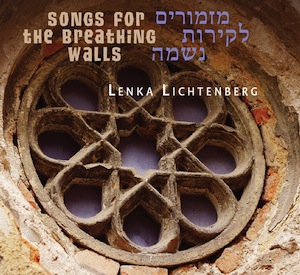
image - Songs for the Breathing Walls cover“The activities of the past 25 years of my life, since my first trip to Masada, have largely been an attempt to learn about, and honor, my heritage in ways available to me: as a Yiddish singer (picking up Yiddish as an adult) and musician, composer of music built in one way or another on Jewish traditions, and a singer of beautiful liturgy. My 2010-2012 project Songs for the Breathing Walls was the most determined milestone in my quest to honor and connect with the past – via the history of the wider Jewish community of Czech and Moravian lands.”

The album Songs for the Breathing Walls connects that past with the future, preserving traditional Hebrew liturgy and poems in contemporary arrangements that were performed live in 12 different synagogues, or buildings that were once synagogues or used as such (nine Czech and three in Moravia). The recordings were made from July 2010 through July 2011. “The journey ended in Terezin, where my mother’s family was incarcerated; for the first time, I walked in the halls of the building where my mother had lived for two and a half years,” writes Lichtenberg in the liner notes. Appropriately, the memorial prayer El Maleh Rachamim was recorded there. Several of the recordings are prayers from the Yizkor service, but they mix with an Adon Olam based by Dalal on a melody of Babylonian Jews, an Avinu Malkeinu arranged by Lichtenberg and other holiday or weekday prayers.

Mourning and hope, sadness and joy cohabitate easily in this beautiful, moving and meaningful recording, the idea for which came to Lichtenberg in 2009. Performing on consecutive days in synagogues in Plzen and in Liberec, she noticed a difference in sound, ambience and feeling, “a unique character stemming from something deeper than mere acoustics … perhaps something left behind by those who built these structures and filled them with their lives.” Her hope is that, in listening to Songs for the Breathing Walls, people “will be able to hear the ‘breathing walls’ as well, embracing those who lived among them, love, suffered, prayed for peace. Perhaps then, their memory will live on….”

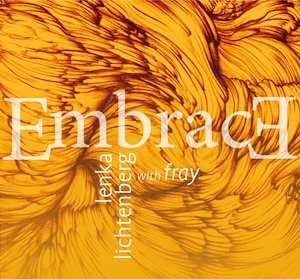
image -  Embrace coverIn all of Lichtenberg’s music, the memory and traditions of those who have lived before can be heard – they are celebrated, and merge with the memories, traditions and passions of Lichtenberg and the artists with whom she collaborates. A completely different mood infuses Embrace than Songs for the Breathing Walls, yet it too crosses temporal, cultural and geographic borders. Recorded in Toronto with Fray, co-led by percussionist Alan Hetherington, Embrace features lyrics inspired by religious texts, folk tales, poems, family and friends, with melodies rooted in the Middle East, North America, South America and India.

Lichtenberg is at home in many languages and musical styles, and every release highlights her talents, and those of the musicians with which she works, Lullabies from Exile being another example. It is one of the most distinctive collections of lullabies you’ll ever hear. With songs recorded in Israel, Canada and Czech Republic, it brings together Babylonian and Yiddish music, songs sung to Dalal and Lichtenberg by their mothers, literally intertwining them in eight medleys, each arranged from a song from each of their traditions.

image - Lullabies from Exile coverAs explained on Dalal’s website, the collaboration on this CD “was born before a joint concert in Kosice, Slovakia, when Lichtenberg played the album’s opening lullaby, ‘Yankele,’ for Dalal to see if he could accompany her on oud. Soon, Dalal was playing an Iraqi lullaby from his childhood [‘Wien Ya Galub’] that connected to Lichtenberg’s Yiddish song with a remarkably natural intuition…. While most of these lullabies are in Judeo-Iraqi Arabic and Yiddish, the concept grew to include songs in Czech, Slovak and Hebrew in order to reflect the artists’ personal histories, as well as English, to acknowledge the experience of the English-speaking Diaspora.” The CD also includes two non-medleys.

When the Jewish Independent first interviewed Lichtenberg (“Eclectic Jewish music,” Dec. 15, 2006), it was about her third CD, Pashtes/Simplicity, a collaboration with Brian Katz, in which she set the Yiddish poetry of Simcha Simchovitch to Jewish, jazz, Brazilian and other melodies. Having performed previously “in lounges, bars, in a rock band, more bars, and a cruise line,” she explained what she realized in Israel: “… I needed to change my direction and truly embrace my roots, my identity, which at that time was barely visible. I decided to ‘do Jewish.’ Being a musician, it meant dropping the kind of music I made my living with up to then in Canada and starting from scratch as a Jewish singer…. I concentrated on Yiddish, as I felt it would be closer to my true identity than Hebrew, even though my family, my mom and grandma, Holocaust survivors, didn’t speak a word of Yiddish. [They were] totally assimilated, as [were] most Czech Jews.” Lichtenberg, who had also been studying cantorial music for several years by 2006, described her experience with Jewish music as being “a growing process.”

While it is tempting, having listened to these latest recordings, to say that Lichtenberg’s Jewish music is all grown up, so to speak, written and performed with a confidence and skill that is remarkable, she seems like someone who will continually push herself to keep growing, experimenting in each new project. And, of course, she has several on the go. For more information about Lichtenberg, visit lenkalichtenberg.com. For tickets to her Dec. 5, 8 p.m., solo concert at the Rothstein Theatre, visit arwibo.org ($25) or the theatre box office at the Jewish Community Centre of Greater Vancouver ($28).

Buy book, help library

This year, Isaac Waldman Jewish Public Library’s annual used book sale takes place Nov. 23-27 at the Jewish Community Centre of Greater Vancouver. (photo from IWJPL)

For many of us, the Isaac Waldman Jewish Public Library is the go-to place when looking for that irresistible book to read. It’s also where we search for that compelling DVD on Jewish culture that other libraries are unlikely to carry. It’s the place where unique book launches are held, where we might send our kids (or ourselves) for Hebrew lessons and where there are discussions on Israeli politics, Jewish culture or Yiddish literature just about any day.

This month, the library revisits another tradition, with its annual book sale Nov. 23-27, 10 a.m. to 9 p.m., at the Jewish Community Centre of Greater Vancouver (concurrently with the Cherie Smith JCCGV Jewish Book Festival). The five-day event has been going on for almost 20 years and has become iconic for the library and its many patrons, said Waldman librarian Helen Pinsky.

“We sell literally thousands of books during that time,” she said. This year’s event will be no different. The library, with the help of volunteers, has been busily unpacking and cataloguing books that have been donated to them by patrons around the city.

“Some books come from the library because we have to keep everything circulating,” Pinsky explained. Older books that may no longer be read as frequently become great candidates for the sale, along with those that are donated by families and organizations. “We have assisted many, many people in downsizing.”

She added, “People wait for this event from year to year and tell us that this is one of the highlights of their book-buying.” Customers include not just members of the Jewish community, but many people from other Lower Mainland communities who rely on the sale for Judaic literature. “We also have a very huge following among the Christian community – people who know about it, and come in … to collect books that are valuable to them.”

And the money that’s raised is important, said Pinsky, who explained that many of the library’s financial engines are run on what is gained from the sale. Book purchases, operational costs and special presentations at the library all succeed, in part, because of the generosity of donors and the support of volunteers. “We have always relied on it as a very stable source of raising funds,” she said.

One of the benefactors of the sale is the library’s speakers series, which routinely hosts presenters from a wide variety of backgrounds. Pinsky said the library considers hosting presentations on the Holocaust and the experiences of concentration camp survivors to be one of its more important missions.

“We have been very conscious of [the need] lately, because the last of the survivors are coming to the ends of their lives,” she said. The library has previously featured presentations by local survivors and others who have wanted to share their stories. The book launches have often featured stories of individuals who have dedicated their lives to teaching younger generations. She said the library strives to offer “the kind of information that will help the community to constantly remember” the effects that the Shoah left in its wake.

Most of the library staff is volunteers. Pinsky said their service is essential not only to a smooth-running facility, but to the success of the book sale. Hannah Frankel, who unpacks and catalogues the donations, has been volunteering her time for four or five years. She said the popularity of the sale can be seen in the volume and quality of the donations. Just weeks before the event, donations were still arriving “in the hundreds.”

Frankel speculated that most of the donations are the result of “word of mouth” advertising. “People seem to know we exist,” she said simply.

For Frankel, ensuring that Vancouver has a strong and vibrant library is a large part of why she volunteers her time for the sale. “I just think it is important for the Jewish community to have a Jewish library,” she said.

Jan Lee’s articles have been published in B’nai B’rith Magazine, thedailyrabbi.com and Voices of Conservative and Masorti Judaism. She also writes on sustainable business practices for TriplePundit.com. Her blog can be found at multiculturaljew.polestarpassages.com.