Skip to content
  • Home
  • Subscribe / donate
  • Events calendar
  • News
    • Local
    • National
    • Israel
    • World
    • עניין בחדשות
      A roundup of news in Canada and further afield, in Hebrew.
  • Opinion
    • From the JI
    • Op-Ed
  • Arts & Culture
    • Performing Arts
    • Music
    • Books
    • Visual Arts
    • TV & Film
  • Life
    • Celebrating the Holidays
    • Travel
    • The Daily Snooze
      Cartoons by Jacob Samuel
    • Mystery Photo
      Help the JI and JMABC fill in the gaps in our archives.
  • Community Links
    • Organizations, Etc.
    • Other News Sources & Blogs
    • Business Directory
  • FAQ
  • JI Chai Celebration
  • JI@88! video

Recent Posts

  • Story of Israel’s north
  • Sheltering in train stations
  • Teach critical thinking
  • Learning to bridge divides
  • Supporting Iranian community
  • Art dismantles systems
  • Beth Tikvah celebrates 50th
  • What is Jewish music?
  • Celebrate joy of music
  • Women share experiences 
  • Raising funds for Survivors
  • Call for digital literacy
  • The hidden hand of hate
  • Tarot as spiritual ritual
  • Students create fancy meal
  • Encouraging young voices
  • Rose’s Angels delivers
  • Living life to its fullest
  • Drawing on his roots
  • Panama City welcoming
  • Pesach cleaning
  • On the wings of griffon vultures
  • Vast recipe & story collection
  • A word, please …
  • מארק קרני לא ממתין לטראמפ
  • On war and antisemitism
  • Jews shine in Canucks colours
  • Moment of opportunity
  • Shooting response
  • BC budget fails seniors
  • Ritual is what makes life holy
  • Dogs help war veterans live again
  • Remain vital and outspoken
  • An urgent play to see
  • Pop-up exhibit popular
  • An invite to join JWest

Archives

Follow @JewishIndie
image - The CJN - Visit Us Banner - 300x600 - 101625

Author: Pat Johnson

A peek at LimmudVan’16

A peek at LimmudVan’16

Eve Jochnowitz (photo from Limmud Vancouver)

Limmud Vancouver, a now-annual festival of Jewish learning, takes place Jan. 30 and 31. The “pan-denominational” event includes seminars, lectures, workshops and discussions on a diverse array of topics. This week and next, the Independent features a few of the presenters who will participate in the local version of the international phenomenon that has now reached more than 60 Jewish communities worldwide.

A national fish story

Eve Jochnowitz calls gefilte fish the national dish of the Ashkenazi Jewish people.

“Wherever you have Ashkenazic Jews, you have the Yiddish language and you have gefilte fish,” she said. “It’s like DNA. It’s in many different permutations and incarnations, but the gefilte fish pretty much goes wherever the Yiddish-speaking Jews go.”

A culinary ethnographer who hosts a Yiddish-language cooking show, Jochnowitz doesn’t want to tip her hand too much in advance of her presentation here this month.

“Let’s just say there are some very surprising variations on gefilte fish out there and let’s just say that the Ashkenazic Jews will come up with ingenious ways to have gefilte fish in the most unexpected situations,” she said in a phone interview from her New York home.

If there are so many variations, then what, at root, defines geflite fish?

“Usually it is made of freshwater fish; in Eastern Europe, most frequently carp, pike and whitefish,” she said. “The more carp there is, the more dark and the more fishy, more flavorful, it is. Some people like it to be more fishy, some people like it to be almost a tofu substitute with the fishiness very understated and the gefilte fish itself being more of a base for some horseradish or egg sauce or whatever it is you choose to put on your gefilte fish.”

It may or may not have matzah meal, it may or may not have sugar, she said.

“This is another very controversial issue with gefilte fish – should it be sweetened or salted or both?” she said. The term itself means “stuffed fish,” but stuffing a fish is very difficult and labor-intensive, so “most gefilte fish is not gefilte.”

Although she is a gefilte fish maven, Jochnowitz stressed that Ashkenazi food is not limited to the familiar.

“Yiddish food is a universe,” she said. “There is much more to Yiddish food and Yiddish cooking than just challah and kugel.”

Her other presentation at Limmud will focus on the little-known phenomenon of Jewish vegetarian cookbooks of the late 19th and early 20th centuries.

Two sides to the story

David Matas, a noted human rights lawyer who represents the organization Justice for Jews from Arab Countries, says the world needs to recognize that Palestinians are not the only refugee population that emerged from the war of 1948-49.
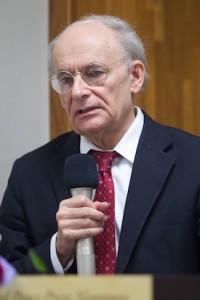
photo - David Matas
David Matas (photo from Limmud Vancouver)

“What we see is two refugee populations that were generated as a result of the Arab invasion to stop the creation of Israel,” he said. “The Jewish population is, in fact, more numerous than the Palestinian.”

The United Nations, with a few exceptions, has been concerned about the Arab refugees from that time, but not the Jewish ones who were forced from their native lands across North Africa and the Middle East, he said. Israel has also not taken a strong lead on the issue until recently, he added.

“Israel, on the whole, has not been a great advocate on this issue historically because there has been the Zionist mythos that people wanted to come to Israel rather than the fact that they came because they were refugees,” he said. “It’s only recently that Israel has itself adopted this position that these people are a refugee population and should be treated in any overall refugee settlement.”

There is also the fact that Jewish refugees have been given citizenship in Israel or other countries, while the Palestinian populations have largely remained stateless.

“The Arab population mostly has not been resettled and, in fact, they’ve grown because their descendants have been classified as refugees,” Matas said. “They’ve remained as a perpetual refugee population. There’s been an attempt to keep this population as a refugee population, as an argument for the destruction of the state of Israel.”

Matas and his organization believe both refugee groups should receive justice. Most likely, he said, a resolution might involve a compensation fund that wouldn’t necessarily come from Israel or the Arab states, but possibly from the United States or third parties willing to facilitate a larger peace settlement.

“That compensation fund would be available to people who were victimized from both refugee populations, as well as their descendants, or something like that,” he said. The idea of compensation for massive human rights violations is not new. “There’s been lots of experience with the Holocaust, amongst other [cases]. You’ve got a kind of jurisprudence and experience to draw on in order to make these programs work.”

While some commentators contend that the refugee issue can wait until later stages of any negotiated settlement, Matas disagrees.

“I think it’s important to bring it in at this stage of the negotiations,” he said. “This Palestinian notion that we are the refugees and the Jews aren’t plays into this false narrative there’s only one victim population when in fact there are two.”

A Polish journey

Jewish Canadians often travel to Poland in search of their family’s roots or as an exercise in history. Norman Ravvin travels there frequently, but he is as focused on the present as on the past.
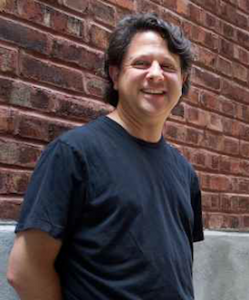
photo - Norman Ravvin
Norman Ravvin (photo from Limmud Vancouver)

“You can visit Poland on different terms,” said the Montreal academic and author. He will lead a session on traveling Poland that focuses on the major cities of Warsaw, Kraków, Lodz and Poznan, as well as his maternal ancestors’ hometown of Radzanow.

“The overall depiction will be of Poland as a place that is alive and contemporary,” he said. “Aspects of that are related to Jewish memory and parts of it have to do with contemporary Polish life and then the way that one feels as you go back to the ancestral place.”

Things are changing fast in Poland, Ravvin said. The end of communism, the integration into the European Union and the general march of time means things have altered significantly since Ravvin first toured there in 1999. One area of progress relates to Jewish and war-era history.

“In the last 25 years, they’ve become very effective at commemorating Jewish prewar life,” he said. “If you had traveled to Poland in 2000, this wouldn’t necessarily have appeared to be true, but now certainly it is true and, when you walk in Warsaw, the sidewalks are marked with these remarkable inlays which say this was the ghetto wall, so that you step over it and you actually feel that you understand the prewar and the wartime city and now the postwar city.”

Some of the efforts, he speculates, are for the purposes of tourism, but he also acknowledges Polish efforts at education.

“They’re doing a reasonable job of confronting how to live with the shadows of the past,” he said.

Ravvin’s mother’s family fled Radzanow in 1935 and all those left behind were murdered. The family made their way to Canada, eventually to Vancouver, where Ravvin’s grandfather, Yehuda-Yosef Eisenstein, was a shochet (kosher slaughterer).

Ravvin welcomes people to bring their own family history to his presentation.

“If they’re carrying their own version of this story,” he said, “they might warm that up in their minds, their own families’ Polish past, what they know about it, what they wish they knew, if they’ve gone, whether they might go, so that the possibility is the thing they’re considering and then maybe my talk will change the way they think about that.”

For this year’s Limmud schedule, visit limmudvancouver.ca.
Format ImagePosted on January 15, 2016January 15, 2016Author Pat JohnsonCategories LocalTags David Matas, Eve Jochnowitz, gefilte fish, human rights, Limmud, Norman Ravvin, Poland
Sponsoring Yazidi refugees

Sponsoring Yazidi refugees

Yolanda Papini Pollock, co-founder of Winnipeg Friends of Israel, which initiated Operation Ezra. (photo from Yolanda Papini Pollock)

The Jewish community in Winnipeg has ramped up its efforts to help the Yazidi people, including the sponsorship of families to the city.

“When you look at the plight of the Yazidi people, it kind of mirrors the Jewish reality of 1945,” said Al Benarroch, executive director of Winnipeg’s Jewish Child and Family Services (JCFS). “I’m not going to be one to say that it’s like the Holocaust, but the Yazidis have suffered, over the last 500-600 years, a very significant genocide.

“The Yazidi people have been displaced from that region of the world and have been heavily victimized, murdered and devastated in the millions. And they have nowhere to go to. So, our community and other communities across Canada have really taken this to heart saying, you know, it was a mere 70 years ago that we ourselves were in a similar situation.

“When we say ‘Never again,’ are we just talking about the Jewish people? We see that image of ourselves in the Yazidi plight, and we feel compelled to come forward and act on it. That’s been the message we’ve been putting forward in Winnipeg.”

The group that started this effort in the city is Winnipeg Friends of Israel (WFI), awakening the community to the Yazidis’ situation and the possibility of sponsoring Yazidi refugees to Winnipeg.

“When we heard about the Yazidi massacre in August 2014, we reached out to the Yazidi community,” said Yolanda Papini Pollock, WFI co-founder. “We wanted to hear about the Yazidi plight and support their community by raising awareness.”

WFI invited Nafiya Naso, a Yazidi spokesperson, to share her and others’ stories with the Winnipeg community at the Asper Jewish Community Centre in March 2015.

“After learning about the dire strait conditions of the Yazidis in refugee camps, it was clear to us that we could not sit aside and do nothing,” said Papini Pollock. “We decided to do more than just listen.”

The group initiated Operation Ezra with the goal of sponsoring at least one Yazidi family and of raising awareness of the Yazidis’ plight. They began by partnering with Bridges for Peace, Calvary Temple, the Mennonite Central Committee (MCC), and others. By December, $130,000 (enough for five-plus families) had been raised.

“When we heard Nafiya’s story, we recognized so many similarities to the plight of the Jewish people prior to the establishment of Israel and immediately empathized with her people,” said Papini Pollock. “The Yazidis are an ethno-religious minority and, just like the Jews, they are targeted solely because of their religious beliefs. Many genocide scholars perceive the Yazidis as victims of genocide. The Yazidis have been persecuted 74 times. At one point, there were more than 20 million Yazidis. Today, there are less than one million.”

The Jewish Federation of Winnipeg has helped raise the funds to sponsor as many families as possible and JCFS has taken on the responsibility of managing the resettlement and other services, allowing WFI to do what they do best – connecting on a personal level with people.

Since Operation Ezra was announced, the congregation of Shaarey Zedek has taken on sponsorship of two families under the initiative.

“Collectively, we’re talking about 35 individuals to date who have applications that are or will be submitted,” said Benarroch. “At this point, I think we’re talking about bringing in as many as 50 individuals.

“The more we fundraise, the more we can help. We’ve gotten a hold of many people who are donating furnishings, old televisions and bedding. Someone came forward and said they will donate through their manufacturing company quilts and coats. We are looking for warehouse space.”

The sponsorships are being done through MCC, as they are the only organization in the city that holds a sponsorship agreement with the federal immigration department. This is something Benarroch would like to see change, not due to any lack in MCC’s services, but as an added insurance. “Historically, there was Jewish Immigration Aid Services of Canada (JIAS),” he said. “Located in Toronto, they were the national office for Jewish immigration.

“Because it was a national mandate for that sponsorship agreement and the national office no longer exists, my understanding is that the sponsorship agreement had to be given up. So, now we no longer have a national sponsorship agreement for Canadian Jewish communities. God forbid if we should have a worldwide crisis and the Canadian Jewish communities would be challenged at a national level to take on Jewish refugees.”

While he has been exploring the options regarding making an application to have at least a local sponsorship agreement – “If history repeats itself, as it usually does, you should have that safety” – Benarroch stressed, “I think it’s been amazing to be able to work in partnership with those groups, with the Mennonite community. The Manitoba Multifaith Council sits at the table for Ezra. We get ourselves out there. It’s the right thing to do.”

Some of the most-asked questions by people considering joining the effort, Benarroch said, are “Who are the Yazidis? Are they Muslim? Are they Christian?”

His response is, “They are not Jewish, Christian or Muslim, yet they do share many interesting customs that have a foot in all of those religions. They celebrate their new year … I’m not an expert … in the spring, in their month of Nisan. We, as Jews, also have a month of Nisan. They pray several times a day towards the sun, much like Islam. Yet, they have no formal book or liturgy … no formal Koran, Torah, New Testament, whatever you’d like to call it. It’s an oral tradition.”

Papini Pollock, meanwhile, is finding it hard to wait for the first arrivals. “We will be involved in taking care of the families when they arrive to the best of our abilities,” she said. “We will work with the rest of the Winnipeg community to ensure the refugees have the most natural transition to Winnipeg and to Canada.”

For more information on Operation Ezra, visit jewishwinnipeg.org/community-relations/operation-ezra.

Rebeca Kuropatwa is a Winnipeg freelance writer.

Format ImagePosted on January 15, 2016January 15, 2016Author Rebeca KuropatwaCategories NationalTags Al Benarroch, immigration, JCFS, Jewish Child and Family Services, refugees, WFI, Winnipeg Friends of Israel, Yazidi, Yolanda Papini Pollock
Ruimy in Maple Ridge

Ruimy in Maple Ridge

Dan Ruimy (photo from Dan Ruimy via cjnews.com)

If there’s one thing Dan Ruimy is good at, it’s getting people together and promoting dialogue.

Ruimy is the new Liberal member of Parliament for the Pitt Meadows-Maple Ridge riding. A 53-year-old son of Jewish Moroccan immigrants to Canada, Ruimy’s parents, Andre and Jacqueline, moved to Montreal’s Cote-des-Neiges in the mid-1950s. There, they raised their five sons and ran Cantor’s Bakery in Cote-des-Neiges and a grocery store in Habitat 67. Ruimy attended synagogue with his family on the High Holy Days. Later, a career in food and beverage led him all over the country for 27 years, as he filled positions at McDonald’s, A&W and Quiznos.

All that traveling took its toll and by 2011 he was ready to settle down, get grounded in one community and find a place to call home. He chose Maple Ridge and purchased a secondhand bookstore that sold loose-leaf tea. Today, he is still the owner of Bean Around Books & Tea, and credits the tea and coffee shop as having played a pivotal role in his decision to enter politics.

“At Bean Around, I saw what happens when you include people in your community,” he reflected. “Having spent my life in the hospitality industry, my personality is all about social contact. At the tea shop, I saw there was a craving for that, so I’d introduce people to each other and help make connections. It’s quite an amazing thing to watch a 15-year-old engaging an 86-year-old in dialogue. When I started thinking about running for public office, I realized that this is what I could do for my community: create dialogue, bring people together and help people find solutions for the challenges they encounter every day.”

Ruimy feels strongly about community and what comprises it. “The Syrian refugees are a perfect example,” he said. “By including them, we become a stronger community. Isn’t that what Canada is all about? We’re a nation built on immigration. We shouldn’t shun people, we should welcome them with open arms, because that’s our future as well.”

Since being sworn in as a member of Parliament in November, Ruimy has hired extra staff for his shop to accommodate a busy schedule commuting to and from Ottawa. While he’s no stranger to traveling for work, it’s different this time, he said. “This is my home base now, I have a community to come back to. In the past, I’d come back to an empty place where I didn’t know my neighbors and wasn’t involved but, for the first time in my life, I can actually say I’m coming home.”

He plans to open his constituency office in Maple Ridge soon. It’s “tough” to be Jewishly affiliated in Maple Ridge, he said, given that there are few Jews living there. But, in Ottawa, he’s joined the Canada-Israel Inter-Parliamentary Group. “Having those roots is important to me, and I think we lose sight when we’re not involved in that part of our community,” he said.

Ruimy said the key issues he’ll be working on are homelessness, affordable housing, helping struggling seniors, and providing assistance to youth trying to find jobs. “There’s lots of opportunity in Canada but, for some reason, people have difficulty finding the programs,” he said. “I hope to be an agent of change and help bring those opportunities to young people.”

The most exciting moment of his parliamentary career to date was attending the first session in the House of Commons, he added. “For the first time, you’re seeing the 338 people who got elected and, at that moment, it sunk in how lucky I am to have been given this opportunity. It’s a privilege really and I feel proud that people sent me here to represent them, that they put their trust and confidence in me.”

Lauren Kramer, an award-winning writer and editor, lives in Richmond. To read her work online, visit laurenkramer.net. This article was originally published in the Canadian Jewish News.

Format ImagePosted on January 15, 2016January 15, 2016Author Lauren KramerCategories LocalTags Dan Ruimy, Liberals, Maple Ridge, Pitt Meadows
Conflict, romance on stage

Conflict, romance on stage

In a Blue Moon tours the Lower Mainland, and beyond. (photo by Barbara Zimonick)

From the première of Strange Bedfellows on Broadway in 1948 to today’s Skylight, audiences have enjoyed the plots of mismatched individuals thrown together who somehow weave a life for themselves.

Similarly, In a Blue Moon, the latest work of playwright Lucia Frangione and dramaturg Rachel Ditor, brings together the unlikely duo of Ava, a widow, and Will, the brother of Ava’s late husband, Peter. The play takes place in British Columbia, where Ava and 6-year-old daughter Frankie move to a cottage near Kamloops that Ava inherited. On arrival, they find Will living there between jaunts around the world to practise his photography.

Though Frankie takes a shine to her uncle, Ava’s and Will’s differences keep the two adults apart. Will is the charming, adventurous, carefree spirit enjoying life’s carnal pleasures, while Ava is a yoga-practising vegetarian with a “tsk-tsk” attitude, whose goal is to live healthily and set up an Ayurveda clinic. Her move to Kamloops is based loosely on the life of Frangione’s own uncle, who was a farmer who decided to become a massage therapist late in life.

Life in the rural cottage focuses on discussions between Ava and Will – their different views of life, their memories of Ava’s husband – and the presence of Frankie, whose emotions alternate between happy-go-lucky precociousness, enjoying time with her uncle, and confused anger around the death of her father.

Over time, the three become close, like their own small family, and it seems that Ava and Will might have a future together, but when Will’s former girlfriend enters the picture, that future looks like it will change irreversibly.

This play delves into some interesting dynamics between the lead characters, who seem to have an unbridgeable gulf between them, made worse by the different ways in which they reacted to the death of Peter, who had suffered from diabetes. Will didn’t know the extent to which Peter had ignored doctors’ warnings, even going so far as to stop taking medications and drinking and eating what he wasn’t supposed to. Ava admits she had lost respect for her husband because he had given up on staying healthy. As the severity of the disease worsened, Ava had to watch painfully as her husband slipped away.

Despite the gravity of the subject matter, there are many light-hearted moments in the writing, such as when Frangione pokes fun at some stereotypical holistic healing references (Ava tells her daughter that she has “undigested emotion”) or when Will tries a few yoga poses – and fails miserably.

Unfortunately, what could have been a solid, thought-provoking play is weakened by some less-than-stellar directing. Will delivers a performance of gruff indifference, where practically every line sounds like it should be punctuated with a grunt. Even when he’s reflecting on an old rolling pin that he’s kept over the years, his voice is more angry than nostalgic and he almost barks how the red handles please his sense of esthetic.

Ava’s delivery is quite flat, as well, with practically no raw emotion showing up until the second act, when her jealousy of Will’s ex causes her to drown her sorrows in alcohol.

The biggest redeeming aspect of the play is the set design, in which photographs are projected on a large circular backdrop that starts as a giant moon, but later looks like a massive window overlooking the cottage surroundings. Images of the actors enjoying the countryside together are also projected on this backdrop in short sequential bursts, making it seem as though these actors are real people outside of the play. It’s quite a unique and clever way to add another dimension to the activities on stage and was enjoyable to watch throughout the performance.

In a Blue Moon is an Arts Club on-tour show. It runs at Surrey Arts Centre until Jan. 23 (604-501-5566), Clarke Theatre in Mission Jan. 25 (1-877-299-1644) and at Evergreen Cultural Centre in Coquitlam Jan. 26-30 (604-927-6555). Contact artsclub.com or 604-687-5315 for more information.

Baila Lazarus is a freelance writer and media trainer in Vancouver. Her consulting work can be seen at phase2coaching.com.

Format ImagePosted on January 15, 2016January 15, 2016Author Baila LazarusCategories Performing ArtsTags Arts Club, Lucia Frangione, Rachel Ditor
Best interest of child

Best interest of child

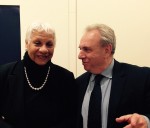
Keynote speaker Senator Anne Cools with Janusz Korczak Association of Canada president Jerry Nussbaum. (photo from JKAC)

The third session of the six-part Janusz Korczak Lecture Series “How to Love a Child” took place Nov. 25 at the Robert H. Lee Alumni Centre. Co-sponsored by the University of British Columbia faculty of education and the Janusz Korczak Association of Canada, this well-attended lecture – The Evolution, Current Status and Future of the “Best Interests of the Child” Principle in the Protection of Children’s Rights – drew people from all walks of life. Among the attendees were teachers, children’s rights activists, Janusz Korczak association members, the general public and students.

The lecture’s moderator, Dr. Edward Kruk, associate professor of social work at UBC, who specializes in child and family policy, opened the evening’s program, while I brought Dr. Janusz Korczak into focus by briefly discussing the fate of children in war zones, relating the topic to Korczak’s care of children during the Second World War.

The Hon. Anne Cools, senator for Toronto Centre-York and Canada’s longest serving senator, was the keynote speaker. Among her many accomplishments in social services, she founded one of Canada’s first battered women’s shelters. Her talk centred on what has been done in the best interest of the child. She spoke about the ramifications in her areas of expertise – domestic violence, divorce, child custody and shared parenting – and how the interaction of politics, government and the law provide a complex arena in which the child’s fate is often lost.

The three panelists that followed Cools each shed light on a different aspect of children’s well-being.

Beverley Smith, representing the field of child care, is a longtime women’s and children’s activist from Calgary. Among many honors, she received the Queen’s Golden Jubilee Award for her work. She spoke about working parents and daycare, including how this separates children from their loved ones and how the worth of a stay-at-home parent’s work (usually the mother) is undervalued by the government. In this context, she referred to Korczak, who, among other things, acted in the best interest of the child by advocating that children’s voices need to be heard on the subject of their own care and needs.

The second panelist, Cecilia Reekie, a member of the Haisla First Nation, is an adoptee. Sitting on many boards, her expertise is in the areas of aboriginal culture, truth and reconciliation. She represented the field of child protection, speaking from the heart and sharing her story with the audience. She said that she was lucky to eventually have been adopted by people who became caring and supportive parents, thus enabling her to grow and succeed in life. However, she said, many other aboriginal children have not had such luck. In fact, she said, “indigenous children are disproportionately represented in the child protection/welfare system across Canada.”

The final panelist, Eugenea Couture, is an author, mentor and advocate for child custody law reform. She is the recipient of the 2014 YMCA Power of Peace Medal and the 2014 Foster Children’s Day Award. Because of her own experience of having gone through divorce and child custody trials, she knows how divorce can become a war zone, the children its casualties. “How can we expect a child who is ripped from their family environment to feel worthy of love and belonging?” she asked. “It will not matter what they hear, because the backlash of taking them into care already speaks volumes of trauma.”

To register for the next lecture in the Janusz Korczak series – The Human Rights of Aboriginal Children, with keynote speakers Dr. Mary Ellen Turpel-Lafond, B.C. representative for children and youth, and Dr. Michael DeGagné, president and vice-chancellor of Nipissing University – visit jklectures.educ.ubc.ca. There is no cost to attend. The lecture takes place on Jan. 21, 7 p.m., at the alumni centre.

Lillian Boraks-Nemetz is a Vancouver-based author and a board member of the Janusz Korczak Association of Canada.

Format ImagePosted on January 15, 2016January 15, 2016Author Lillian Boraks-NemetzCategories LocalTags Anne Cools, Beverley Smith, Cecilia Reekie, Eugenea Couture, Janusz Korczak Association

Mein Kampf and free speech

Adolf Hitler’s manifesto of hatred against Jews, Mein Kampf, went on sale last week in Germany for the first time since 1945. The annotated edition proved a bestseller, we hope because people intend to take a critical look at the ideas that drove their country to apparent mass insanity.

The reissue has been controversial, not surprisingly, but, as a practical matter, banning material these days is impossible. Mein Kampf is available to anyone with an internet connection, so the act of banning it in recent years has been a statement of principle rather than an effective means of keeping it from interested eyes.

Nevertheless, the book is an historical document that should not be hidden away. The ideas it contains were the seeds of one of humankind’s greatest atrocities. This suggests it has a power that those who would ban it justifiably fear. Yet, again, since banning it is not feasible, better that the opportunity be welcomed to analyze it and try to understand, confront and negate the ideology it represents, which is clearly the intent of producing a heavily annotated edition.

In fact, news of the book’s reissue has already sparked some welcome, thoughtful reflections on the nature of antisemitism, ideological hatred and also the matter of free expression itself. One lesson is that words matter. They have power. This is certainly the undergirding reason the book has been banned in Germany for 70 years.

It may seem a conflicted philosophical principle we have taken on this page for many years to stand firmly in the court of free expression – the right of people to express themselves free of undue constraints by governments, mobs or the threat of violence – while contending at the same time that people should police their own self-expression. It is not conflicted; in fact, it is a primary tenet of democratic, pluralist societies. It is the axiomatic idea that with freedom comes responsibility.

The proof that words matter is evident every time a Jewish person is stabbed in Israel. Palestinian society is being saturated by calls to kill Jews, including publications that demonstrate the most effective means of stabbing a Jew. Of course, Palestine is not a democratic, pluralist society where freedom and responsibility are sides of a coin, so this may be one of the reasons Western voices have for decades given a pass to rampant incitement.

But, tragically, we see it far closer to home. Some of the language around the arrival of Syrian and Iraqi refugees to Canada has gone beyond the realm of what most Canadians probably like to imagine is our tolerant, liberal approach to “others.” At a welcoming event for Syrian refugees in Vancouver last week, an individual pepper-sprayed people milling about outside the venue. It seems an act of such deliberate cruelty to undermine the confidence and well-being of people seeking a better life. It is impossible to know the precise factors that motivated this attack, but we can be fairly certain that some of the language used recently about refugees and Muslims did little to dissuade a person inclined to violence that such behavior was unacceptable. Donald Trump, according to opinion polls one of the people most likely to be the next U.S. president, has made obscene, inexcusable statements about refugees and Muslims. Such words do not fall on deaf ears.

We are at a time in human history where the very nature of words seems to be changing. Everyone can send their opinions out into the world in ways never imaginable even two decades ago. At the same time, long-form reading seems to be declining precipitously and we, in Western societies at least, may be forming our opinions more on bite-sized slogans than on deep consideration.

It’s hard to pinpoint what it means that the erstwhile banned rantings of Mein Kampf flew off German bookshelves. Hopefully it means people aim to use this annotated version to critically assess their country’s history.

Posted on January 15, 2016January 15, 2016Author The Editorial BoardCategories From the JITags antisemitism, free speech, Hitler, Mein Kampf
Jews lit up 2015 silver screen

Jews lit up 2015 silver screen

Helen Mirren at the Moët British Independent Film Awards in December 2014. Mirren starred in two 2015 films with Jewish characters or themes. (photo by See Li via commons.wikimedia.org)

Jewish characters and themes popped up everywhere in movies in 2015, from high-profile Hollywood ensemble pieces to overlooked indies to popular documentaries. If this comes as news, you have a lot of catch-up viewing in store.

Just among recent releases, Trumbo exposed the persecution of Jews and the antisemitism of Hedda Hopper (played by Helen Mirren) in its depiction of the Hollywood blacklist, while Spotlight portrayed Boston Globe editor Marty Baron (Liev Schreiber) as a pivotal, principled figure in exposing the Catholic Church’s cover-up of sexually abusive priests. The Big Short painted Jewish fund manager Mark Baum (Steve Carell) as an obnoxious enemy of injustice who is conflicted about making out like a bandit in the 2008 economic crash.

That entertaining trio of movies is primed for Oscar gold, but two fall films with stubbornly brilliant Jewish protagonists were essentially ignored. Veteran director Ed Zwick (Defiance) and Tobey Maguire recreated chess maestro Bobby Fischer’s 1972 peak and valley in Pawn Sacrifice (jewishindependent.ca/chess-masters-decline), while indie filmmaker Michael Almereyda and Peter Sarsgaard revisited Dr. Stanley Milgram’s still-resonant 1961 obedience study and its fraught aftermath in Experimenter.

Yet another movie based on real events, Woman in Gold, traced the efforts of elderly Maria Altmann (Mirren, again) to recover the Klimt painting stolen from her family by the Nazis. The unusual Brian Wilson biopic, Love & Mercy, included a villainous portrayal of the Beach Boy’s controlling therapist, Dr. Eugene Landy (Paul Giamatti).

This is the perfect place to segue to documentaries, but first let’s acknowledge Son of Saul, which opens at Fifth Avenue Cinemas today (Jan. 15). The breathless concentration camp drama from Hungary is a lock to be nominated in the foreign language film category and is the favorite to win the Academy Award. (Another Eastern European film, Ida, the stark Polish saga of a young nun who discovers she’s Jewish, received the Oscar last year.)

The same prediction applies in the documentary feature category to Amy, Asif Kapadia’s dispiriting doc about singer Amy Winehouse’s messy life (jewishindependent.ca/amy-doc-a-dismal-portrayal). In the documentary short category, Claude Lanzmann: Spectres of the Shoah made the shortlist (jewishindependent.ca/filmmaker-as-subject).

As usual, a slew of docs with a Jewish hero or heroine received theatrical releases in 2015. Above and Beyond, about the Jewish airmen who defended the new Jewish state in 1948 (jewishindependent.ca/spielberg-opens-film-festival); Deli Man, about the past, present and future of Jewish delis; Seymour: An Introduction, about New York classical pianist-turned-teacher Seymour Bernstein (jewishindependent.ca/ hard-earned-wisdom); Iris, about N.Y. fashion icon Iris Apfel; The Outrageous Sophie Tucker (jewishindependent.ca/enjoy-an-afternoon-movie-with-jsa-vjfc); Rosenwald, about Sears chief executive officer and philanthropist Julius Rosenwald; and Peggy Guggenheim: Art Addict are all worth seeking out on Netflix or DVD.

I note in passing that Michael Moore invoked the Holocaust during a Berlin stopover in Where to Invade Next, while a Jewish grandmother popped up briefly in Laurie Anderson’s Heart of a Dog.

In the world of fiction, Sarah Silverman won kudos for her dramatic performance as an addicted (non-Jewish) suburban housewife in I Smile Back, but Jonah Hill (as reporter Michael Finkel) and James Franco earned brickbats for True Story. Seth Rogen did his part to set Jewish-Christian relations back a century with a ludicrously unfunny scene in a church in The Night Before. (Presuming anyone in his stoned audience remembers.)

The titular female protagonist in the indie dramedy Me and Earl and the Dying Girl is identified as Jewish by her name (Rachel Kushner) and a menorah on the living room table – and that’s all.

Gett: The Trial of Viviane Amsalem (jewishindependent.ca/the-three-trials-of-gett), Ronit and Shlomi Elkabetz’s blistering courtroom finale to their trilogy about a frustrated Sephardi wife and her family, was the most successful Israeli release of the year in the United States. Eran Riklis’ warm and witty A Borrowed Identity, adapted from Sayed Kashua’s memoir and now on Netflix, deserved a wider audience (jewishindependent.ca/dancing-arabs-screens), as did Nadav Lapid’s austere and unsettling The Kindergarten Teacher (jewishindependent.ca/small-sample-of-viff).

Arthouse movie-goers turned out for Christian Petzold’s restrained German thriller Phoenix, starring Nina Hoss as a survivor looking for her husband in postwar Berlin. Another German film, Labyrinth of Lies, inspired by the prosecutors who pierced the late-1950s veneer of secrecy, ignorance and denial and revealed the truth about Nazi war crimes, didn’t sell many tickets but did make the Oscar shortlist for foreign language film.

We lost several giants in 2015, notably the gifted performers and tireless social activists Theodore Bikel and Leonard Nimoy. Documentary master Albert Maysles (Grey Gardens, Iris) was 88 and Oscar-winning cinematographer Haskell Wexler (Who’s Afraid of Virginia Woolf, Bound for Glory) was 94.

Lia Van Leer, a Romanian émigré who founded the Jerusalem Cinémathèque (including the Israel Film Archive) and the Jerusalem Film Festival, and was so instrumental in the development and quality of the country’s movie output that she was dubbed the queen of Israeli cinema, was 90.

Pioneering Belgian filmmaker Chantal Akerman (Jeanne Dielman) left us, along with indie filmmaker Richard Glatzer (Still Alice) and documentary maker Bruce Sinofsky (Brother’s Keeper). Gene Saks, who directed many of the hit plays and movies penned by Neil Simon, was 93.

The marvelous actors Ron Moody (The Twelve Chairs) and Anne Meara (who converted to Judaism before she married Jerry Stiller in 1954) also passed away in 2015. So did Omar Sharif, the Egyptian leading man who was vilified at home for playing Jewish gambler Nicky Arnstein opposite Barbra Streisand in Funny Girl. In his memory, and as an antidote to the ongoing political discord, seek out a copy of Monsieur Ibrahim (2003), the poignant story of the friendship between a Jewish teenager and a Muslim shop owner (Sharif) in late-1950s Paris.

Michael Fox is a writer and film critic living in San Francisco.

Format ImagePosted on January 15, 2016January 21, 2016Author Michael FoxCategories TV & Film
This week’s cartoon … Jan. 15/16

This week’s cartoon … Jan. 15/16

For more cartoons, visit thedailysnooze.com.

Format ImagePosted on January 15, 2016January 15, 2016Author Jacob SamuelCategories The Daily SnoozeTags thedailysnooze.com
Children at camp age

Children at camp age

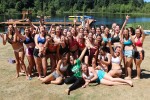
Grade 10 girls at camp. The author’s kids came back from camp inspired by the Jewish teens leading and caring for their group and wanted nothing more than to be ensconced in that same atmosphere the following year. (photo from Lauren Kramer)

My friend’s daughter is heading off to Jewish overnight camp for the first time ever, and her poor mom is terrified. “How will I know if she’s safe in the lake?” she wonders. “What if there’s a sexual predator among the staff members? What about her medications?”

She reminds me of myself some eight years ago when my kids first headed off to camp. The idea of not being able to protect my children myself was frightening and I worried incessantly that first week, calling daily to find out if my kids were sleeping well at night or crying with homesickness. I was certain it would be the latter. “She’s fine,” my daughter’s madrichah would tell me over the phone. “She’s found a group of friends, she’s busy all day long and at night she’s too tired to do anything but fall straight asleep.”

Her words were reinforced when they finally put my daughter on the line. From her voice I could tell the phone call was taking her away from something she’d much prefer to be doing. “Mom, everything’s OK, don’t worry,” she said. “See you in three weeks!” The phone line went dead.

So, I stopped worrying and started enjoying the blissful quiet, the sudden absence of laundry and the easiness of preparing meals for three people as opposed to six. The house stayed spotless for much longer and the hours of the day were mostly mine, and easily filled. The kids came back inspired with Jewish camp ruach, heart sore about their recent goodbyes to cabin mates who had become best friends. With shining eyes, they told stories about Israeli folksongs sung around the campfire at night, new tunes they’d learned for Birkat Hamazon and the fun they’d had raiding the boys’ cabin and pulling pranks. No sooner had they returned than they were counting down to next year’s summer camp.

With all this positive Jewish energy wafting over our home, the $1,000-per-week cost per child didn’t seem so exorbitant anymore. They’d come home with a shot in the arm of Jewish love, passion for Yiddishkeit and enthusiasm for kosher food. They were inspired by the Jewish teens leading and caring for their group and wanted nothing more than to be ensconced in that same atmosphere the following year. By comparison, the Jewish afterschool program they’d been enrolled in during the school year had generated moans of discontent and efforts to skip class on a regular basis.

I’m a big fan of Jewish summer camp and it was I who coaxed my friend to send her daughter in the first place. Surrounded by a non-Jewish milieu in their home community, with only a small Chabad presence in their town, I knew it would expose their little girl to the best of Judaism in a stimulating, fun, unforgettable environment. There would be music, good food, playmates, dancing, crafts and mischief – all the components of a brilliant summer. And it would ignite in their daughter’s soul a burning love for Judaism as she’d never experienced it before, and a desire to repeat the experience, again and again.

So, I consoled her fears with gentle encouragement, insisting that the staff were superbly vetted, the lake carefully watched by qualified lifeguards and the children’s swimming skills meticulously evaluated before anyone even stuck their toes in the water.

But it’s a process, this worrying, one all moms endure and one that can only be allayed when they hear the happiness in their kids’ voice, their impatience to get off the phone and their sheer love of camp when they return home afterwards. For the majority of kids, anyway. If my friends’ child is one of the small percentage that become desperately homesick and returns home early, I’ll be in the doghouse, big time.

Lauren Kramer, an award-winning writer and editor, lives in Richmond. To read her work online, visit laurenkramer.net. This article was originally published in the Canadian Jewish News.

Format ImagePosted on January 15, 2016January 15, 2016Author Lauren KramerCategories Op-EdTags camp
Shaping Israel’s tech future

Shaping Israel’s tech future

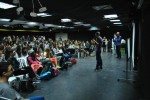
Nir Kouris addresses a Tomorrow Israel gathering. (photo from israel21c.org)

Nir Kouris is one of those hyper-accomplished young Israelis who cannot be described in a single phrase. Digital brand manager, tech evangelist, growth hacker, startup mentor, technology conference organizer, wearable-tech adviser, IoT enthusiast – these are all apt labels, but he prefers to call himself simply “a person who loves the future.”

He does not only mean that he loves futuristic technologies, though he really, really does. His passion is nurturing Israel’s future tech leaders by connecting them with peers and experts across the world.

In addition to NK Corporate Digital Strategy, the business he started in 2003 at age 20, Kouris got the ball rolling with eCamp, co-founded in 2008 to bring Israeli and overseas kids together for an American-style summer experience in technology. He founded Innovation Israel – a community for Israeli startups, entrepreneurs, investors, venture capitalists, angels and developers – together with Ben Lang, an American eCamper who moved to Israel five years later at age 18.

Kouris has organized Hackathon Israel, Tel Aviv Hackathon Day and World Hackathon Day, all attracting hundreds of young programmers. In 2014, he helped launch Israel’s first Wearable Tech Conference, headlined by Silicon Valley trendsetters.

Perhaps Kouris’ most ambitious endeavor is Tomorrow Israel, a movement to boost technology education and opportunities in Israel through worldwide collaboration.

“When I was 12, I read a book that changed my life, Dig Your Well Before You’re Thirsty,” Kouris told Israel21c. This bestselling guide to networking taught him, “If you want to be somebody, go to tech conferences.” And so he did.

“I was always the youngest person at these events and, at one of them, a Microsoft marketing manager asked me what I was doing there; I was only a kid. I promised myself to treat people equally, to listen to people of all ages, because nobody did that for me. That’s why I always dedicate time to young people,” said Kouris, who turns 34 in May.

At the Israeli Presidential Conference Facing Tomorrow, held annually from 2008 to 2013 at the behest of former president Shimon Peres, Kouris was dismayed to see no young faces among the distinguished presenters and few in the audience.

“I proposed creating Tomorrow Israel to take Peres’ vision into reality, a global movement connecting Israeli teens to others using the universal language of technology,” he explained. “I don’t believe in waiting for government officials and people with titles to take responsibility. I believe in regular people taking responsibility for our lives – not for fame, but because we really care and we love doing it.”

At first, Kouris rented venues to present workshops and lectures, and then Google Campus in Tel Aviv offered free space. Global technology gurus began accepting his invitations to Tomorrow Israel meetups, and he started sponsoring local and national conferences and hackathons for kids from Israel and elsewhere.

The Tomorrow movement has spread to Holland, the United Kingdom, India, America and Australia. Though there’s no official age limit, most participants are under 21.

“It’s not an age, but a way of thinking. We attract people wanting to make their countries better through entrepreneurship,” Kouris said. “It’s like a VC for people. Tomorrow is all about smart and good people because being a good person matters most.”

The Amsterdam municipality, Google for Education and other entities have approached Kouris about collaborating with Tomorrow. Members are forming teams and launching projects together via national and international Tomorrow Facebook groups. Kouris is proud that Israel is the nexus of this activity.

“Before Tomorrow, everybody heard the negative stuff about Israel and now they all want to come here to see our startup culture. We’re proving we can find new channels of communicating with the next generation of leaders and empower other nations to be startup nations,” Kouris said. “We have something strong and solid in our hands.”

eCamp becomes Big Idea

When Kouris was a teen in the early days of the internet, he’d sit at the computers in his school library in a village near Afula, earning money by registering and selling domain names.

During his military service, he was sent to work in American Jewish summer camps. “I was inspired to make something like that in Israel, combining the American camp experience with the Israeli tech story,” he related.

He co-founded eCamp after dropping out of college (“What I was learning in class was about the past, and I had to deal with the future”) and working briefly at a high-tech startup. Now called Big Idea, the camp is still going strong, but Kouris left after a year to build his branding consultancy and organize for-profit conferences supported by corporate sponsorships and ticket sales.

“Israelis usually don’t pay for conferences, so it has to be something exceptional you can’t get anywhere else,” explained Kouris, who says his favorite hobby is “meeting people smarter than myself.”

He’s persuaded big names like Robert Scoble, a top American tech evangelist, and Prof. Steve Mann, “the father of wearable technology,” to come to Israel along with participants from China, Europe and the United States. “They come on their own budget because they feel these conferences are the best,” Kouris said.

Kouris is planning two international confabs in Israel for 2016, one to present outstanding technologies to the world on behalf of Innovation Israel; the other a free Tomorrow gathering to introduce the established global tech community to the next generation.

The single Herzliya resident said he is “having great fun and traveling the world” as he helps shape the future of Israel.

Israel21C is a nonprofit educational foundation with a mission to focus media and public attention on the 21st-century Israel that exists beyond the conflict. For more, or to donate, visit israel21c.org. Visit israel21c.org/forget-tablets-the-next-breakthrough-is-wearable-audio to listen to Viva Sarah Press speak on TLV1 to Nir Kouris about Israel’s role in this trend.

Posted on January 15, 2016January 15, 2016Author Abigail Klein Leichman ISRAEL21CCategories WorldTags eCamp, Israel, Nir Kouris, technology

Posts pagination

Previous page Page 1 … Page 533 Page 534 Page 535 … Page 661 Next page
Proudly powered by WordPress