Skip to content
  • Home
  • Subscribe / donate
  • Events calendar
  • News
    • Local
    • National
    • Israel
    • World
    • עניין בחדשות
      A roundup of news in Canada and further afield, in Hebrew.
  • Opinion
    • From the JI
    • Op-Ed
  • Arts & Culture
    • Performing Arts
    • Music
    • Books
    • Visual Arts
    • TV & Film
  • Life
    • Celebrating the Holidays
    • Travel
    • The Daily Snooze
      Cartoons by Jacob Samuel
    • Mystery Photo
      Help the JI and JMABC fill in the gaps in our archives.
  • Community Links
    • Organizations, Etc.
    • Other News Sources & Blogs
    • Business Directory
  • FAQ
  • JI Chai Celebration
  • JI@88! video

Recent Posts

  • Story of Israel’s north
  • Sheltering in train stations
  • Teach critical thinking
  • Learning to bridge divides
  • Supporting Iranian community
  • Art dismantles systems
  • Beth Tikvah celebrates 50th
  • What is Jewish music?
  • Celebrate joy of music
  • Women share experiences 
  • Raising funds for Survivors
  • Call for digital literacy
  • The hidden hand of hate
  • Tarot as spiritual ritual
  • Students create fancy meal
  • Encouraging young voices
  • Rose’s Angels delivers
  • Living life to its fullest
  • Drawing on his roots
  • Panama City welcoming
  • Pesach cleaning
  • On the wings of griffon vultures
  • Vast recipe & story collection
  • A word, please …
  • מארק קרני לא ממתין לטראמפ
  • On war and antisemitism
  • Jews shine in Canucks colours
  • Moment of opportunity
  • Shooting response
  • BC budget fails seniors
  • Ritual is what makes life holy
  • Dogs help war veterans live again
  • Remain vital and outspoken
  • An urgent play to see
  • Pop-up exhibit popular
  • An invite to join JWest

Archives

Follow @JewishIndie
image - The CJN - Visit Us Banner - 300x600 - 101625

Author: Dave Gordon

Blue Jays CEO wants to win

Blue Jays CEO wants to win

Toronto Blue Jays new president and chief executive officer Mark Shapiro. (photo from Toronto Blue Jays)

The Toronto Blue Jays almost made it to the World Series in 2015. With spring training having just started, we’re crossing our proverbial fingers (in the most Jewish way possible) that we’ll see that same Blue Jay magic – and more – in the months to come. Eyes will particularly be on the new leader at the helm, Mark Shapiro, who officially joined the Jays as president and chief executive officer last fall.

Shapiro has arrived at a pivotal time for the franchise, which celebrates its 40th anniversary this season. Many are eager to find out in what direction he’ll take the team, but one thing is certain: he wants to win.

“Clearly, winning has to be the primary area of focus,” Shapiro told the Independent. “A relentless, obsessive commitment to building a winning team.

“Building a team isn’t just collecting talent,” he continued. “It’s about players that are committed, that are willing to take risks and commit to something bigger than themselves.”

He also said he wants to integrate more sports psychology into the team’s routine, and “build a business organization that obsesses about fan experience at every interaction and every touch point.”

Next on his list is Rogers Centre, which is in dire need of a renovation, one that may cost upwards of $400 million.

Shapiro, like anyone else who has experienced the dome, has been a fan of the awe-inspiring structure since his first Jays game, which was in 1989, soon after he completed his history degree at Princeton. “My memory is seeing this building and just being blown away at what an incredible engineering marvel it is,” he said.

Rogers Centre isn’t the only spot that needs an upgrade. The team’s spring training facility in Dunedin, Fla., is widely considered to be the worst in Major League Baseball. Shapiro has to choose between renovating or moving the Jays to a new facility when the team’s lease expires in 2017.

To make matters more difficult, team cornerstones José Bautista and Edwin Encarnación become free agents at the end of this year and the Jays’ stock of minor league prospects was depleted by last year’s trade deadline frenzy. Still, there’s every reason to believe Shapiro will hit it out of the park, given that he’s spent an entire lifetime surrounded by the game, its players, its strategy and its details.

Shapiro invested nearly a quarter-century with the Cleveland Indians, having worked his way up from player development to team president. It was there that the Sporting News named Shapiro Executive of the Year in 2005 and 2007.

His managerial style hasn’t changed all that much, he maintains. “If you have a moral compass and a set of well-defined values, those are going to be the determinacy of how you lead,” he said.

But baseball and Shapiro go farther back than Cleveland. Son of Baltimore attorney and sports agent Ronald M. Shapiro, the game was ingrained at a very early age.

“Baseball was a part of the fabric of my childhood growing up. It was a connection and a bond for me with my dad,” said Shapiro. “It’s hard to separate out baseball from my childhood, whether it was stickball, wiffleball, Little League or playing catch in the street. Maybe it was the fact that my dad, at some point in my adolescence, started representing Major League players and they started being part of my life. Baseball, informally or formally, was always a part of my life.”

Among his baseball heroes growing up was Baltimore Orioles’ Brooks Robinson, for “consistency, the way he treated people and his artistic style of play,” said Shapiro. Jewish ball player Al Rosen, aka “the Hebrew Hammer,” who played for the Cleveland Indians from 1947 to 1956, was also a role model.

The Hebrew Hammer wasn’t his only source of Yiddishkeit growing up. Shapiro said he was reared with a “strong Jewish identity,” associating most with the “education, culture, understanding of history, and the values intertwined in that history.” They include, he said, “work ethics, commitment to community, compassion and tolerance,” which, he said, were “defining attributes and values that were a part of my childhood.”

Shapiro and his wife Lissa Bockrath-Shapiro try to instil those same values in their children, son Caden, 13, and daughter Sierra, 11.

Even though today’s Jewish players are few and far between, every now and again Shapiro will run into a fellow Jew and shmooze.

“It’s obviously a rarity and, obviously, there’s a lot more front office guys, like Mike Chernoff [Cleveland Indians general manager]. When we saw a Jewish player, we’d always chuckle with pride at that player succeeding. It was a topic of conversation,” said Shapiro.

Cleveland player Jesse Levis and Shapiro used to kibbitz about being MOTs, members of the tribe. Since he began work in Toronto after the ball season was over, Shapiro has not yet met lone Jewish Jay Kevin Pillar.

Meanwhile, one item needs clarification. There’s been no shortage of times that Shapiro has been asked why he pronounces his name Sha-pie-roh instead of the usual Sha-peer-oh. For the record – and he wants to set the record straight – his name has always been that way.

“People say, ‘Are you trying to hide the fact that you’re Jewish?’ If I did, wouldn’t I call myself Smith?” he said with a laugh. “Come on, really, there’s got to be a better way to do that.”

The story is familiar to many: as immigrants coming through Ellis Island, there was a name change and a mispronunciation that stuck. Philadelphia and Cherry Hill, N.J., lay claim as the “only places in the world you’ll hear ShapIro spelled Shapiro, and you’ll hear Shapiro spelled Schapiro,” he explained.

To be sure, fans are less concerned about the name than they are about the game. And, if he could impart one message, it would be that he’s here to win.

“My favorite Blue Jays stories are waiting to be written,” he said.

Dave Gordon is a Toronto-based freelance writer whose work can be found in more than a hundred publications globally. He is managing editor of landmarkreport.com.
Format ImagePosted on March 18, 2016March 17, 2016Author Dave GordonCategories NationalTags baseball, Blue Jays, Mark Shapiro
Exploring winter landscapes

Exploring winter landscapes

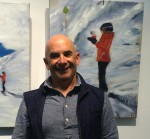
Ian Penn’s exhibit Winter Paintings: The Figure in and on the Landscape opened March 10 at Zack Gallery. (photo by Olga Livshin)

The theme of Ian Penn’s solo show at Zack Gallery is winter. The artist’s love for winter, for the mountains of British Columbia and for skiing reverberates through the gallery.

“I’m affected by the seasons, by my surroundings,” said Penn in an interview with the Independent. “I only paint current seasons. In summer, I paint summer; in the fall, I paint its rioting colors. In winter, I paint snow and skiing.”

Penn spends lots of his free time in the mountains. “Our whole family likes to ski,” he said. “When we first moved to B.C., we bought our first place in the mountains before we settled in Vancouver.”

Penn has been skiing since his youth in Australia, but it was cross-country skiing until he immigrated to Canada and saw the mountains. At the age of 35, he started alpine skiing – and loved it.

Around 2000, he went a step further. He joined the ski patrol in Whistler, volunteering part-time his professional skills as a doctor. He still does that. “I like the ski patrol community. They are nice people,” he said.

About the same time, he also became seriously interested in painting, which eventually led to a degree from Emily Carr.

Penn has a general fascination with landscapes, especially mountain scenes, as an art form. He has painted dozens of landscapes, in every season, and some of his favorite areas to paint are around Whistler and the Callaghan Valley.

“I was always interested in mapping a territory, but a map and a territory are not the same,” he explained. “The painting of a landscape is not the same as if you stand in that place, experience it with all your senses. Or with devices – photo cameras and cellphones. I wanted to capture that difference in my paintings. That’s why I started a series of diptychs. My diptychs are like a single painting in two parts.”

There are several diptychs on display in the gallery. One is a landscape, a vista with the majestic mountains and forest, with tiny human figures. The second affords a closer look. The human figure is larger, the artist’s focus has narrowed, and the people in these paintings are doing something, engaging with the mountains. They whip down the slopes on their skis. They stop to take photos. They enjoy the invigorating exercise and the beauty around them. They laugh and horse around.

Penn captures their movement in his paintings. His objects are not static. They don’t pose. They are just going about their business, and the artist is going about his.

“Initially, I wanted to paint on location,” he said. “I want to paint everywhere I go, but I couldn’t do that in winter. It’s too cold both for my hands and for the paints. Or it might snow. What I do when I’m in the mountains skiing, I take photos and make quick drawings.”

The drawings provide him with the first impression, the emotional subtext. The photographs he uses for details.

“All the details in my landscapes are accurate. The precision is important to me. I want to be able to navigate by them. I want the ski patrol to be able to use my paintings when they have to rescue someone,” he said, only half-joking.

Many of his paintings have personal stories attached, some of which are more obvious than others. In one painting, there was to have been a person but there isn’t; the close-up view is surprisingly empty of life. “He got erased. I erased him,” Penn said. “He was a vain fellow. He was dancing around, making selfies of himself with his cellphone, turning so he would get every possible angle. He didn’t notice anyone else, almost stepped on my ski. At first, I wanted to show it, as a portrait of self-absorption, but I disliked the fellow so much, I finally erased his figure from my painting. But, mostly, I want my paintings to tell your stories, not mine.”

The dominating color in all of the paintings is white, of course, overset by green forest and dark mountains. Only people provide splashes of color: a red jacket or a yellow parka.

“I use five different whites for the snow,” Penn said. “And then there are color patches reflecting the surroundings. Snow is never simply white. It’s complex and a challenge. It’s always different. And so is the sky: blue but different in each painting. But I never used black in any of these paintings. When I needed the dark, I mixed colors.”

Penn paints landscapes because they are endless. “Wherever I go, there is a new and amazing landscape waiting for me. Painting them, making drawings, photographing slows me down, allows me the time to look, to see the beauty around me.”

Winter Paintings: The Figure in and on the Landscape will be at the Zack until April 3. For more information about Penn and his work, visit ianpenn.com. An interview with Penn about his exhibit last year, called Pole, can be found at jewishindependent.ca/memorials-to-millions.

Olga Livshin is a Vancouver freelance writer. She can be reached at [email protected].

Format ImagePosted on March 18, 2016March 16, 2016Author Olga LivshinCategories Visual ArtsTags Ian Penn, landscape, winter, Zack Gallery
Kashua talks at U of W event

Kashua talks at U of W event

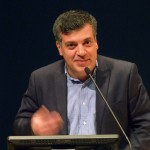
Sayed Kashua spoke in Winnipeg as part of the University of Winnipeg’s annual Middle East Week. (photo by Rebeca Kuropatwa)

On Feb. 25, as part of the University of Winnipeg’s annual Middle East Week, about 75 people came out to hear what guest speaker Sayed Kashua had to say on the topic The Arabs in Israel: The Inaudible Cry for Full Citizenship.

Born and raised in Tira, Israel, Kashua is an author and journalist. His three novels – Dancing Arabs, Let it Be Morning and Second Person Singular – have been translated into English, with the stories of his first and third novels being combined to become the film Dancing Arabs. Among other things, he is the creator of the Israeli TV show Arab Labor and the subject of the documentary Forever Scared. His 2013 talk in Vancouver sold out.

At the recent Winnipeg event, Global College executive director Dean Peachey and U of W president Dr. Annette Trimbee welcomed Kashua and the audience to the U of W’s Eckhardt-Gramatté Hall.

Kashua moved with his family to Champaign, Ill., a year and a half ago, finding the “noise” in Israel too distracting.

“When we arrived,” he said, “I taught my kids two things: that people here stand in line and that, if you’re asked where you’re from, just say you’re from Jerusalem … and, according to their response, you’ll decide if it’s east or west.”

When Kashua enrolled his kids at school, he found himself stumped by the forms when he came to the question about race, as Arab was not listed.

“I almost checked off ‘other,’ but I was so worried about losing my visa within three days of landing in the States…. I almost signed my kids as Asians, because I can easily prove that Jerusalem is part of Asia…. I didn’t know what to do. I raised my hand and the nice lady asked how she could help. I said I don’t know what my race is. She asked where I was from. I said Jerusalem. So, she said that I’m from the Middle East … so, I’m ‘white.’ That was the point that I knew I loved Champaign.”

For the first time, Kashua was part of the majority.

It was not until he went to the United States that he was asked about Islamophobia. As a secular Muslim, he had to think about the question, and he decided that the more important aspect to him was his nationality.

However, he recently found out at a parent-teacher meeting that his son was going to prayer. Kashua asked the teacher which religion or faith his son was following.

“The teacher said, ‘What do you mean? [He prays] with the Muslims. You are Muslims?’

“I said, ‘Yes, but I had no idea that my son prays.’ It was shocking for us, how the majority defines you, and how my son who is only 10 already realized he belongs to the group of Muslim kids in their school.”

Kashua then spoke of his greatest influence in becoming a writer – his illiterate grandmother who had lost her husband in the Israeli War of Independence.

“She was illiterate, but she was intelligent and sharp,” said Kashua. “She always told me bedtime stories. Maybe writing for me is just [a way] to keep telling myself bedtime stories. She told me wonderful stories, sometimes fairy tales. A huge part of her stories were about the war.”

According to Kashua, most Palestinians who became citizens of Israel after the war – farmers and those who remained in their villages – were or are illiterate.

“In 1948, most Palestinian villages, especially on the shore, were demolished,” he said. His grandmother had stories about her husband, “who was shot in the war, killed in 1948.” Kashua’s father was born in 1947, “so he was less than 1-year-old when his father was killed.

“She told stories about how she was trying to protect her son, sometimes running in the wheat fields, trying to cover him, when the bullets were whistling around her … escaping to the mountains,” said Kashua. These were, he added, “my childhood stories, and, to me, it’s history. It was never part of our education system, we belong to the Israeli education system. We are Palestinians, but also Israelis … became Israelis after the war of 1948. The war is never mentioned in our history books.”

It was not until after the war that Kashua’s grandmother learned that she no longer had land. To his family, he said, that was a bigger loss than losing their house.

“My grandmother, who used to have a lot of land, became a worker, picking fruit for Jewish bosses, sometimes in her own private land, picking fruit in fields she planted herself,” said Kashua. “That’s a very strong feeling I received as a boy, about being a refugee.”

When Tira became part of Israel people received Israeli citizenship. They lived under a military regime he said, until 1966, just a few months before what he described as “the occupation of the West Bank,” noting that “the military regime meant you couldn’t leave your village without permission from the military officer in charge.

“My father was telling us [that] only on Israeli Independence Day, you didn’t need a permit. Kids would jump onto trucks to go to another town, just to see, for a chance to go out. Of course, they were forced in their schools to celebrate Independence Day with Israeli flags.”

Even today, according to Kashua, conditions are different in east Jerusalem than in west Jerusalem. He said that Palestinian Israelis do not have equal rights, and are discriminated against in all aspects of life.

With Tira’s population at 25,000 now – growing from 1,500 in 1948 – Kashua said that poverty and crime there is hard to control.

“Maybe, at the beginning, people wanted to defend our identity, language, culture and tradition, but that’s no longer the case. We are trying to escape the ghetto, but there are so many laws that forbid us to do so. That’s the situation, you are completely segregated.”

Kashua described Israel as an “ethnocracy.”

“It’s democratic only if you’re Jewish,” he said. “If democracy is judged by how it treats minorities, Israeli democracy is facing a very big problem with the Arab minority…. We are still considered a national threat, a demographic problem.

“If you look at the history, you will see that, since 1948 until now, it was very rare that Arab citizens of Israel were activist against or being a real threat to the security of Israel. All Israelis know that reality and they know we are completely discriminated against when it comes to all aspects you can think of – land, the ability to move from your village. The sad thing is, sometimes the slave feels like he needs the master more than the master needs the slave. You have no idea how strong of a feeling it is when you don’t have even the ability to dream.”

Kashua was fortunate to find a Jew willing to sell him an apartment in west Jerusalem. They were the only Arab family living there and this was one of the reasons they moved to the United States.

Kashua believes that Palestinians want to be citizens of Israel and that they do not want to destroy the state, but they do want equal rights, as well as acknowledgement for the suffering they feel they have endured since 1948. This is something Kashua does not see as possible with the current leadership in Israel.

Rebeca Kuropatwa is a Winnipeg freelance writer.

Format ImagePosted on March 18, 2016March 16, 2016Author Rebeca KuropatwaCategories IsraelTags Israel, Israeli-Palestinian conflict, Middle East Week, peace, Sayed Kashua, University of Winnipeg

Must confront issues

Angela Merkel’s Christian Democratic Union suffered dramatically in state elections in Germany last weekend. The German chancellor’s party received a brutal admonishment from voters, who concurrently gave startlingly strong support to a far-right, anti-immigrant party that is almost brand new to the scene.

The election was a referendum, to a large extent, on Merkel’s liberal approach to refugees from the Middle East. Last year, 1.1 million refugees streamed into Germany after often perilous journeys from the eastern Mediterranean. At the current rate, this year could see even more arrive unless, as some even in Merkel’s own coalition argue, border controls are imposed.

Still, there is no question that Germans – and everyone else on the continent – are confounded by the challenges created by refugees flowing in from Syria, Iraq and elsewhere in the Middle East. Merkel is in the process of negotiating with Turkey a cash deal that would see Turkey offer an alternative destination for those set on Europe. Yet even that would not allay all the concerns among Europeans and others in the West.

Are there potential terrorists among the millions of people on the move? It would be a foolhardy terror leader who would miss the opportunity to plant some agents in the West when an opportunity so ripe as the current porous borders presents itself, so almost certainly. But terrorists will find their marks even if it is not so convenient – and many of the perpetrators of European terror in recent years have legitimately been in the countries they attacked. Some were even citizens. The seriousness of this potential should not be diminished, but neither should we lull ourselves into believing that stanching the refugee flow would eliminate the terror problem.

As we have noted previously, more prevalent dangers may come in the form of some refugees’ attitudes and approaches to women and minorities. Violence (most notably a huge number of sexual assaults on New Year’s Eve) and other anti-social behaviors being reported suggest that there will be a serious challenge integrating some refugees into societies where expectations of women’s and men’s behaviors are radically different than in Syria and Iraq.

Then there are the economic realities, which have been remarkably glossed over. Before 9/11, opponents of admitting immigrants and refugees could be depended upon to raise fears of unemployment and abuse of social services. Thanks to the real or inflated threat of Islamist terror, economics seems to have been eclipsed. Even Donald Trump, whose campaign plays on every imaginable fear of difference or diversity, has limited his hate-fueled anti-Muslim rhetoric almost exclusively to the terror motif. In his mind, evidently, Mexicans take jobs, Muslims are terrorists.

Yet neither Trump’s xenophobia nor Merkel’s open-handedness will solve the underlying problems of war and despair that drive people to risk their lives to reach Europe or the Americas. And even if that crisis were to be solved which, despite U.S. Secretary of State John Kerry’s efforts, seems remote, we need to remind ourselves of a larger issue still.

We are one world. A country may once have been able to close its borders and seal itself off from the rest of humankind. The 20th-century fate of the Jews of Europe is the most memorable reminder that this was once true. But no more. We can set policies and even build walls, but we are part of an irrevocably interconnected and interdependent world. Efforts to stop the advance of this reality will ultimately be futile, even if they were desirable.

We need to find a way to get along. There could hardly be a more simplistic statement, but it is nonetheless true. We need to find ways to coexist inter-culturally and intra-culturally. With those who are coming to Europe and North America, we need to engage in a deep and committed dialogue to find common ground and we must not be afraid, as Canadians so often are, of confronting cultural differences, because ignoring them will cause problems, not solve them.

Posted on March 18, 2016March 16, 2016Author The Editorial BoardCategories From the JITags Angela Merkel, antisemitism, elections, Germany, racism, refugees
A satirical vlog on Zionism

A satirical vlog on Zionism

A screenshot from the trailer for Avi Does the Holy Land. The vlog will appeal to some more than others.

Good satire depends not only on distancing the viewer from the object of ridicule, but on making them identify with it, if only just a little. For North American Jews who’ve grown up with affection towards Israel, a new video blog (or vlog) does just that.

Avi Does the Holy Land is a sendup of sex-drenched Zionism, a vlog that purports to tackle various hot-button aspects of Israel – “the most contentious state in the Middle East!” in the words of Avi, a “Canadian Jewess” who “went on a Birthright trip and fell in love with Israel.” (Haaretz has since revealed that Avi is Aviva Zimmerman, originally from Calgary, and now an Israel-based filmmaker.)

Through a website, a YouTube channel and a Facebook page, Avi covers such topics as how to beat terrorism, whether Palestinians are really oppressed or not, what to pack for Birthright, and the accusation, by Israel’s critics, of pinkwashing.

And, while Avi is a cartoonish, lipsticked character who perpetually seems perplexed by the sincerity of her interviewees, many of us will no doubt identify with at least a sliver of her carefree naiveté.

“Did I just give a blow job to a guy named Dudu?” she muses in one segment.

In my kibbutz-loving period of the early 1990s, it wasn’t a guy with the unfortunate name Dudu I fawned over, but another whose name in translation meant “ploughed field.” Giggling over his agricultural moniker while in ulpan class, my pals and I idealized his Zionist credentials.

In another scene, Avi wears a pink T-shirt emblazoned with an Uzi, the kind that pepper tourist shops throughout Jerusalem.

While I never wore clothing depicting an actual gun, I did rummage through the kibbutz lost and found one day and select a worn, burgundy T-shirt from a paratrooper, the kind Israeli soldiers design when they finish their basic training. (This one, from 1984, was extremely tame next to the tasteless ones appearing in more recent years – ones that promote rape and anti-Palestinian violence.) I later found the owner – a different strapping kibbutznik whose name meant cedar tree – but never did return it. Why would I? It had the perfect mix of soft fibres and Jewish power pedigree. All the better to wear while painting metal beams and bantering with the workers over never-ending tea-and-toast breaks in the kibbutz welding shop.

Avi Does the Holy Land’s web episode “Pride vs. Pinkwashing” is the most cutting in terms of political messaging. It involves alternating scenes of Avi doing what she “does best” – “dancing on a truck” at Tel Aviv Pride – and interviewing Rami Younis, a Palestinian writer and activist, over charges of Israeli pinkwashing. Calling Israel’s critics “belly-aching leftist sh–heads,” Avi muses over Younis being “hashtag superserious,” and finally suggests to him that perhaps if he drapes himself in a rainbow flag, Israel will treat him better.

It’s probably fair to say that I move in circles that are highly critical of the occupation and that, while I’ve taken a nuanced position on pinkwashing, still take the claim seriously. But I, too, have enjoyed a Tel Aviv Pride beach party, trying to order a vodka cocktail from a shirtless bartender and, in my distraction, confusing the Hebrew word for cranberries with that for paratroopers and enjoying my private little malapropism – a symbol of Diaspora idealization of Israel – for weeks after.

So is Avi “other”? Or is Avi “us”? For those who are distressed by the occupation and feel a gradual distancing from Israel through decades of government intransigence and illiberal moves intended to silence and intimidate human rights activists, probably a bit of both. And for those who don’t have a single critical word in their lexicon for the Jewish state, I’m really not sure. But I’d love to see their reaction.

Mira Sucharov is an associate professor of political science at Carleton University. She is a columnist for Canadian Jewish News and contributes to Haaretz and the Jewish Daily Forward, among other publications. This article was originally published on forward.com.

Posted on March 18, 2016March 16, 2016Author Mira SucharovCategories Op-EdTags Aviva Zimmerman, Israel, politics, Zionism

Holiday in which God hides

Purim is, by any account, a strange holiday. Jews dress up in costumes, get shickered to the point that they can’t discern a hero from a villain, and read one of the two books of the Torah where God doesn’t figure in the narrative. One might think that the point of the day is to “eat, drink and be merry” and celebrate the fact that an ancient Jewish heroine outwitted the Persians. It seems like the classic “they tried to kill us, they failed, let’s eat” holiday. But under its surface of masks lies something deeper.

Rebbe Nachman of Breslov taught that Purim prepares us for Pesach (Likutey Moharan 2.74). The connection is that Purim is about hidden miracles and Pesach is about revealed miracles. As winter begins to turn to spring around Purim, the powerful life hidden under the cold exterior begins to blossom and rise; around Pesach, spring is in full bloom and the smell of freedom is in the air.

Traditionally on Purim most people dress like characters from the story, as opposed to Batman or Darth Vader. The story of Purim is our story, after all. God’s name is never once mentioned in the Book of Esther because God is behind the whole story, a story of sequential coincidences leading to God’s presence and activity being revealed.

The Purim story has a series of reversals: the Jews go from helpless victims to warriors; Haman goes from powerful to powerless; Mordechai goes from weakness and danger to strength and security.

Esther, of course, whose very name means hidden (hester) goes from entrapped woman whose Jewishness is secret, to free, triumphant, openly Jewish heroine. All of these reversals are about God’s reality breaking into ours.

The message of the story is that God works in hiddenness. Our daily lives seem mundane only when our eyes have become jaded. As Rabbi Abraham Joshua Heschel said with characteristic beauty in Man is Not Alone: “The ineffable inhabits the magnificent and the common, the grandiose and the tiny facts of reality alike. Some people sense this quality at distant intervals in extraordinary events; others sense it in the ordinary events, in every fold, in every nook, day after day, hour after hour. To them, things are bereft of triteness; to them, being does not mate with nonsense.”

Purim is a celebration of the revelation of God in the overturning of what appears to us to be reality. What seems to be random (pur, a lottery) is shown to be anything but; what seems to be God’s absence is actually his presence. Often the only way for us to see God’s presence is to put aside our own opinions about what is good and what is bad in order to see deeper. Purim nods at this truth with its famous injunction to drink until we can’t tell the difference between Haman and Mordechai – an injunction, by the way, which most rabbis argue is better acknowledged with a symbolic wee drink rather than actually getting sloshed.

Rebbe Nachman’s point is that when we see God’s presence in the mundane details of our lives, then we will be prepared to see God in a way that is not hidden. When we see God’s presence in everything, then we are liberated min ha meitzar, from the narrow places that constrict us and weigh upon us. As Leonard Cohen writes in the song “Born in Chains,” we are “out of Egypt, out of Pharaoh’s dream.”

Matthew Gindin is a writer, lecturer and holistic therapist. As well as teaching holistic medicine, Gindin regularly lectures on topics in Jewish and world spirituality, and has a particular passion for making ancient wisdom traditions relevant in the modern world. His work has been featured on Elephant Journal, the Zen Site and Wisdom Pills, and he blogs at Talis in Wonderland (mgindin.wordpress.com) and Voices (hashkata.com).

Posted on March 18, 2016March 16, 2016Author Matthew GindinCategories Celebrating the HolidaysTags Megillah, Purim, Rebbe Nachman

Jewish Insurgent

image - JI Purim spoof newspaper 2016

Click to enlarge image. Happy Purim!

Posted on March 18, 2016March 16, 2016Author FreelancerCategories Celebrating the HolidaysTags BDS, Kahane, Liberals, Purim, spoof
Experimenter first rate

Experimenter first rate

Peter Sarsgaard in Experimenter. (photo from Magnolia Pictures)

It was neither random nor coincidental that groundbreaking social psychologist Stanley Milgram was Jewish, nor that his parents emigrated from Eastern Europe before the war.

“The Holocaust was a significant motivation to propel him into the areas he was searching, and he explicitly cited [it] as a background for trying to understand darker aspects of human nature,” said Experimenter writer-director Michael Almereyda. “He wasn’t enclosing or limiting how he saw the world, but the obedience experiments – which are his first experiments, how the film begins and what he’s best known for – were shaped by his speculation about human nature.”

Those 1961 experiments found that most ordinary people would reluctantly follow an order to inflict pain on another person from an authority figure who took responsibility. The controversial results, obtained the same year as the Eichmann trial though published later, suggested that Americans were capable of behaving in a not-dissimilar way than Germans and others infamously did.

Almereyda’s thoughtful, poignant and dryly comic Experimenter, starring Peter Sarsgaard and Winona Ryder, centres on the obedience experiments, the fallout and Milgram’s subsequent career. One of the finest American films of 2015 yet inexplicably overlooked, the DVD was released earlier this year and it can also be rented online.

Almereyda informs the audience of Milgram’s Jewishness from the outset, and provides several reminders in the course of the film.

“It seemed inappropriate to elide it or blur it or ignore it because it was a key part of his identity, as a man in the world but also as a scientist asking questions about human behavior,” he said. “I was aware of how deeply Jewish he was, that he married a Jewish woman who also was the daughter of immigrants, that there weren’t that many Jewish people in the community at Harvard and his friends tended to be Jewish, and how that sense of his identity was a huge part of who he was.”

As a Jew and a social psychologist, Milgram’s perspective was affected by the Holocaust.

“Milgram comes out with a very heavy quote talking about how, ‘during the Second World War, people were exterminated with the efficiency applied to making appliances,’” said Almereyda. “That’s a carefully worded and rather cynical statement, but its impact is resonant to this day. Genocide is a very efficient undertaking these days, and has been throughout the 20th century. You don’t have to be Jewish to be mindful of genocide, but we’re cognizant of that as one of the main shadows in recent human history, and he was trying to come to terms with it.”

A soft-spoken, self-described “displaced Midwesterner” and longtime New Yorker, the 57-year-old writer and director received a secular Jewish upbringing in Overland Park, Kan., before his family moved to Southern California when he was 13. His quirky independent films include Twister (starring Harry Dean Stanton and Crispin Glover), mood piece Another Girl Another Planet, vampire saga Nadja with Peter Fonda and Hamlet with Ethan Hawke and Bill Murray.

Almereyda researched and wrote the Experimenter script about seven years ago.

“It’s abidingly interesting and relevant and compelling,” the filmmaker mused during a visit last May when Experimenter played the San Francisco International Film Festival. “He left a lot of papers behind and they’re all at Yale and one can have access to them. I didn’t make up much of this movie. Almost everything, even the wacky, quirky things, is verifiably true.”

Almereyda confided that he originally wanted a Jewish actor to play Milgram, but was forced to relinquish that ideal.

“There is, as far as I know, no young Dustin Hoffman who’s a leading man right now,” he said with a smile. “Young Dustin Hoffman would have been a great Stanley Milgram.”

When Sarsgaard was suggested, Almereyda checked out his performance as Jewish man-about-town David Goldman in An Education (2009) and was instantly persuaded.

“He’s a very agile actor, he can do a lot of things and he believes that he could write a book,” Almereyda said. “You can’t say that about all leading men, you know. So whether he’s Jewish or not, he’s very equipped to play the part.”

Experimenter quickly succeeds in shifting the viewer’s mind from the lead actor’s ancestry to the more pressing question of how much empathy we feel for strangers.

“The film is meant to be a bit of a mirror, as Milgram’s work was [meant] to mirror human nature,” said Almereyda. “It’s meant to make you question your own behavior and your own life – not as an indictment but as a kind of exploration, because we can all be more conscious. That was Milgram’s hope. There’s a lot of ways that immoral or questionable or violent behavior is inescapable in life and in history, but the process of self-awareness is one way to turn the tide.”

Michael Fox is a writer and film critic living in San Francisco.

Format ImagePosted on March 18, 2016March 16, 2016Author Michael FoxCategories TV & FilmTags Almereyda, Experimenter, Milgram, Sarsgaard
Mystery photo … March 18/16

Mystery photo … March 18/16

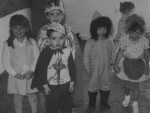
Eitz Chaim students enjoy the dressing-up festivities of Purim, 1989. (photo from JWB fonds, JMABC L.10948)

If you know someone in this photo, please help the JI fill the gaps of its predecessor’s (the Jewish Western Bulletin’s) collection at the Jewish Museum and Archives of B.C. by contacting [email protected] or 604-257-5199. To find out who has been identified in the photos, visit jewishmuseum.ca/blog.

Format ImagePosted on March 18, 2016March 16, 2016Author JI and JMABCCategories Mystery PhotoTags Eitz Chaim, JMABC, Purim
טייס הבריח סמים

טייס הבריח סמים

ברוס סימון (צילום: Vancouver Sun-Facebook)

טייס הבריח סמים כדי לעזור כביכול לישוב שלו. השופט לא קנה את הסיפור ושלח אותו לכלא

איש עסקים וטייס שהבריח סמים מקנדה לארצות הברית בטענה שהוא רצה לעזור לישוב הקטן בו הוא גר, לא שכנע את השופט האמריקני, ג’ונס ריצ’רד, שהטיס אותו לכלא. ברוס סימון בן החמישים ואחד נכלא לאחרונה לתקופה של ארבע שנים וחצי שנים, בכלא בסיאטל שבמדינת וושינגטון.

סימון עבר מהעיר לאנגלי לישוב קטן בשם ברלורן לפני עשר שנים. ברלורן נמצא בהרים בדרום מערב מחוז בריטיש קולומביה, מערבה מהעיירה לילואט (וכשעתיים נסיעה מעיירת הסקי ויסטלר). ברלורן מוכר באזור כיוון ששימש בעבר הרחוק קהילה של כורי זהב. הישוב ברובו נטוש וגרים בו כיום בסך הכל שישים תושבים עם עשרים ותשעה כלבים. במהלך 2011 נפתח שוב מכרה הזהב. הישוב נמכר בשנת 2014 ליזם סיני תמורת מיליון דולר בסך הכל.

סימון שמחזיק ברשיון טיס טען במשפטו שהתנהל בבית המשפט האזורי של סיאטל, כי הוא הבעלים של מינס הוטל וסליס פאב בברלורן, ושני עסקים אלה נחשבים למקומות התעסוקה הכמעט יחידים בישוב הקטן. המצב הכלכלי של העסקים היה לא טוב ולכן הוא החליט להבריח סמים (מסוג מריחואנה וכדורי אקסטזי) במסוק לוושינגטון, בסוף חודש יולי אשתקד. סימון הנחית את המסוק ליד אגם בייקר שבוושינגטון, שקרוב לגבול הקנדי. הוא העמיס את הסמים במשקל עשרים וחמישה קילו על ארבעה תיקים שחורים גדולים, והעבירם לרכב שטח. סוכני משטרת הגבולות האמריקנית שידעו מראש על המבצע של סימון, עקבו אחריו ועצרו אותו בטרם התניע את הרכב. הסוכנים האמריקנים התקשרו למשטרה הפדרלית הקנדית (האר.סי.אם.פי) שדיווחה להם, כי חודש קודם לכן (ביוני) סימון ניסה לחצות את הגבול מאבוטספורד לארה”ב עם מסוק שהתרסק. המשטרה הקנדית ציינה עוד כי המסוק התרסק באזור שידוע כנתיב להברחת סמים בין שתי המדינות. עוד התברר שלסימון עבר פלילי והוא לא יכול להיכנס באופן חוקי לארה”ב. במכתב שהועבר לשופט ריצ’רד באמצעות עורך דינו האמריקני, טען סימון כי הוא לא מכור לסמים והוא לא החליט להבריח את הסמים מתוך פחד, או מסיבות אחרות. לדבריו הברחת הסמים לא הייתה למטרות רווח אלה לנסות ולהציל את שני העסקים שלו, שהקהילה הקטנה של ברלורן תלויה בהם. עוד כתב סימון במכתבו: “אני הבעלים של הפאב והמלון היחידים בישוב ואלו העסקים היחידים שפועלים במקום, מלבד המכרה”. עם מעצרו של סימון סליס פאס נסגר (המלון ממשיך לפעול בשלב זה) ומסוקו הוחרם. השופט סירב לשחרר אותו על תנאי וכאמור שלח אותו לכלא האמריקני למספר שנים טובות.

מורה ששלחה עשרות הודעות טקסט לתלמיד פוטרה

מורה צעירה מאזור קימברלי וגולדן בבריטיש קולומביה קיבלה שיעור מאלף על התנהגותה החסרת אחריות. לאחר שהתברר למנהל בית ספרה כי היא שלחה עשרות הודעות טקסט (אס. אם. אסים) לאחד מתלמידיה בכיתה יא’, היא פוטרה מעבודתה ואיבדה את רישיון ההוראה שלה.

דפני ניל כך התאהבה באחד מהתלמידים והחלה לשלוח לו כחמישים אס. אם. אסים מדי יום. בהודעות ציינה כי היא נמשכת אליו. לאחר שהפרשה נחשפה ניל הודיעה לתלמיד שהיא יכולה להסתבך ולאבד את עבודתה וזה בדיוק מה שקרה. ההנהלה האזורית של בתי הספר הציבוריים ערכה ברור עם ניל שהודתה כי שלחה את הודעות הטקסט לתלמיד הצעיר, אך להגנתה טענה כי עשתה זאת בזמן שהייתה שיכורה. לאחר השימוע הוחלט לפטרה לאלתר וכאמור היא לא תוכל לשמש עוד כמורה.


Format ImagePosted on March 16, 2016Author Roni RachmaniCategories עניין בחדשותTags Bruce Simon, Daphne Neal, drugs, teacher, ברוס סימון, דפני ניל, מורה, סמים

Posts pagination

Previous page Page 1 … Page 521 Page 522 Page 523 … Page 661 Next page
Proudly powered by WordPress