
Kosher foods are branching out

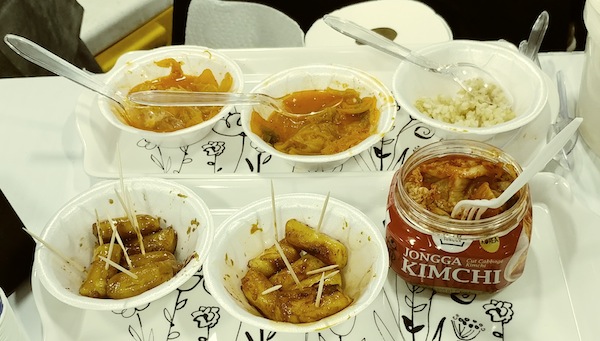
From kimchi to cast iron, more than 300 new products were on display at this year’s Kosher Fest. (photo by Dave Gordon)

At Kosherfest this year, there were such traditional Jewish staples as gefilte fish, matzot, bagels and cured meats. But cauliflower pizza crusts, organic tequila, vegan cheeses, kimchi and date-seed coffee were among 300 new products on display.

The two-day event in New Jersey was the 31st annual convention. It showed that kosher food does not necessarily hail from countries with large Jewish populations. In the hopes of grabbing a slice of the market, exhibitors came from around the world, including from South Korea, Australia, Italy, Brazil, Mexico and the Netherlands.

From Pakistan, Adnan Pirzada, the general manager of Dewan Sugar Mills, was exhibiting kosher-certified ethanol for companies to use in beverages and mouthwashes. Currently, they export to 30 countries and are seeking U.S. consumers. The certification is new to the 15-year old company, which produces 125,000 litres of ethanol a day.

“We wanted to tell people that there’s nothing not kosher that ever comes in contact with what we make,” he said, noting that “sometimes, non-kosher ingredients can be in foods and people not know it.”

An example of that came from Dakshin Thilina, the director of Nexpo Conversion, makers of kosher dried coconut milk powder and coconut oil in Sri Lanka. Nexpo supplies an Australian ice cream manufacturer and an organic chocolate manufacturer, and hopes to find U.S. distribution.

“There are three big players in Sri Lanka [in the coconut industry] and they all use sodium caseinate, an animal-based product, and that makes it non-kosher,” he said. “So, now, with vegan, organic and other aspects that make these popular, we needed to enter the market in a different way. We cut out the sodium caseinate and went with a pure organic powder. Without that component, it’s essentially lactose-free – the allergies people suffer from due to milk-based products is out and, because it’s non-dairy, kosher Jews can use it anytime, alongside meat.”

In Dubai, kosher catering is a one-woman show, and she was at Kosherfest.

Elli Kriel, a South African expat of seven years who lives in Dubai, began her company recently. “I was producing kosher food for our family and people started reaching out to me,” she said. “Travelers in particular, moving through the city, needed kosher food. I used to invite them to eat in our home, but I realized, as more and more people began reaching out, I was in a good position to offer kosher catering.”

She said Elli’s Kosher Kitchen’s launch was bolstered by the United Arab Emirates’ Year of Tolerance, announced in February, “a government initiative promoting the idea of diversity within the UAE and the tolerance for all religions and races.” It was then, she added, that the Jewish community was formally recognized and, “at that moment, I thought it was perfect to step forward.” There are about 150 people in the Jewish community, with tourists receiving food each day, she said.
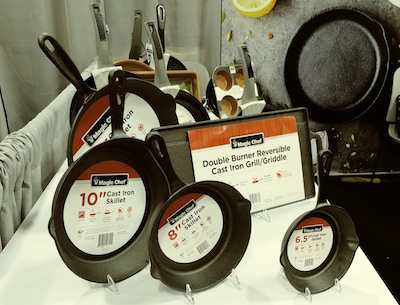
photo - Not everything exhibited at Kosherfest was a food product
Not everything exhibited at Kosherfest was a food product. (photo by Dave Gordon)

Kosherfest attracted about 6,000 attendees this fall, some 800 more than last year. With 360 exhibitors, roughly 300 products on the floor had been introduced within the last 12 months, said organizers.

A recent Quartz article elaborated that it is “fairly astounding that more than 40% of the country’s [United States’] new packaged food and beverage products in 2014 are labeled as being kosher, while it was on only 27% of packaged foods in 2009.”

Explanations for this include the public’s desire for assurance that a product does not include certain allergens, or traces of allergens, such as shellfish. Or an assurance that a product is vegetarian or vegan, as in the example of Oreo cookies, that once contained lard, prior to the producers’ switch to kosher.

Another example of food that contains ingredients that may surprise some consumers is cheese. Most cheeses contain enzymes and rennet (animal-derived), but the Sheese line uses coconut oil, palm oil and other vegan replacements. Hailing from Scotland’s Isle of Bute, the “cheese” is lactose-free, vegan, kosher, cholesterol-free and gluten-free, appealing to various dietary needs.

In light of bug infestations in dozens of supermarket vegetables and the challenge of washing them thoroughly so as not to ingest these non-kosher critters, Boston-based Fresh Box Farms came to Kosherfest with a solution. They’re growing and selling leafy greens that are hydroponically grown in a triple-sealed environment, using no pesticides, herbicides or fungicides. “It’s free of any pests. And we don’t wash our product, and the consumer doesn’t need to either,” said Jacqueline Hynes, senior marketing officer.

An online essay by Star-K, a kosher certification agency in Maryland, noted that some “35 million non-Jewish consumers of kosher products” buy them because of health and food safety concerns, “as a trustworthy means of ensuring that these criteria are being addressed.” Food production companies, it says, are increasing their lines of certified products, due to “more general cultural anxiety about industrialization of the food supply.”

Menachem Lubinsky, chief executive officer of Lubicom, the organizer of the event, said kosher foods today appeal to a “more health-conscious consumer. Now, it’s become almost fashionable to have vegan or gluten-free, so why not kosher? They don’t want any customer to be left out.”

By 2025, the kosher industry will reach some $25 billion US in sales a year, according to the Jerusalem Post.

Not everything exhibited at Kosherfest was a food product. One company sold kosher cast-iron cookware. Isaac Salem, president of New York-based IKO Imports, said their cookware differentiates itself from other such products, as its non-stick “seasoning” is created with a proprietary plant-derived oil base, rather than the typical animal fat, “which obviously can come from non-kosher sources.” He said their cookware holds up against competitors, and appeals to vegans, as well.

Consumers who keep kosher will also be able to enjoy something they’ve never had before. Promised Land Beverage Company’s Exodus Hopped Cider does not contain any leavened products or grains; rather, it has fermented apples and hops, add could double as a kind of beer.

“Now you can have beer at the seder,” said Yoni Schwartz, company president, “something unimaginable in the past.”

Dave Gordon is a Toronto-based freelance writer whose work has appeared in more than 100 publications around the world.

You take care now, y’hear?

I just realized that, lately, I had unconsciously changed the way I say goodbye, particularly when I am speaking with women. As a younger person, it wouldn’t have occurred to me to say “Take care!” when parting with people. What’s more? It’s happening even when I have casual interactions. I started thinking about where my new-to-me phrase comes from and where I’d heard it before.

I was out walking my dogs when one of them (the young, spry Setter mix) kicked me in the shin. I looked down, in pain, when I saw that she, too, was surprised. She’d slipped on the slick sidewalk and certainly hadn’t meant to hurt me. A man at the bus stop remarked how icy it was, and I agreed. I said, “Take care!”

Later, my household was in bed when we heard an ominous thump outside. My husband made a joke, we laughed and went to sleep. In the morning, I saw a thoroughly smashed car, its front end bashed in. It faced the wrong way on a busy street near our home. Across the intersection, there was a truck, also facing the wrong direction, somehow wedged into someone’s yard. It was slippery, indeed.

Often the habit of suggesting people take care is aligned with another statement though, something like, “Things are more dangerous these days.” However, our Torah readings from this time of year, in Genesis, remind us that things have always been dicey out there, particularly for women and for those in positions of less power in society.

For instance, when the three strangers tell Abraham that Sarah will have Isaac, she laughs (Genesis 18:12-15). However, this is quickly followed by Abraham’s question about why she laughed and she says, “I didn’t laugh.” Why? “Because she was frightened.” Why did she lie? Well, she was an old woman. Strangers told her something ridiculous and then she was asked to take it seriously. She was afraid. Sarah wouldn’t be the first or last woman to feel threatened and unsafe. If something like this situation happened today, I wouldn’t leave until I’d said, “Take care.”

Not much further along in Genesis, Abraham bargains with G-d, asking how many people in Sodom have to be righteous for G-d to save the city. Abraham has some power here. He feels emboldened to speak out, but he also gets to stay home rather than go to Sodom to try and fix things. Instead, two angels go to Sodom.

Lot takes the angels in as his guests, but when a crowd gathers to do the visitors harm, Lot suggests an unsettling exchange. He says that, rather than let the crowd “be intimate with them,” he’ll send out his two young daughters instead. He will sacrifice his daughters to be violated by the crowd (Genesis 19:8) rather than let his male guests be endangered.

Reading Genesis, I am reminded by how these dangerous situations, and particularly ones that threaten women, are not at all new. These are issues of power, control and sexuality. In a modern political comparison: we act as though the MMIWG (missing and murdered indigenous women and girls) report and its findings are new or different. In fact, violence against women, and specifically minority women in vulnerable situations, is a bad news story played on repeat. These threats are close to home, and they remain frightening.

When I hear myself telling a friend – a single mom whose father just died – to take care, I realize who I am echoing in my head. I hear older African-American women in my Virginia neighbourhood saying goodbye to me: “You take care now, y’hear?” I hear my mom sighing as she hung up the phone (it was avocado green, with a long cord so she could cook while talking) at home when I was younger. She said goodbye with a worried expression that her friend couldn’t see, saying “Bye! Take care.”

This is the closing comment of women, all over, who know that the world can be dangerous. We’re sending out our concern to those we love. We’re acknowledging that, sometimes, we must depend solely on ourselves, because it doesn’t look like anyone (including G-d) is stepping up to keep us safe.

Sometimes, Bereishit (Genesis) offers stories to dig into. I enjoy their meaty narrative. I love interpreting what it all means. Other sections cause me to sigh just as my mom did. In a world where women still don’t have any assurance of safety from war, crowds and violence, and where those who have less power are at the mercy of the powerful, it’s hard not to feel sadness. How little things change.

This also is a continuing opportunity for social justice. We can fight for a better place for everyone. We can seek out and care for those around us, rather than choosing to discriminate or discard lives, as Lot would have done to his daughters. In the meanwhile, I’m often slipping down the icy street, worrying and wondering over how I can spread a sukkat shalom (a shelter of peace) over those I love and care for. So, I’ll say what many wise women have said before me. You take care now, y’hear?

Joanne Seiff has written regularly for CBC Manitoba and various Jewish publications. She is the author of three books, including From the Outside In: Jewish Post Columns 2015-2016, a collection of essays available for digital download or as a paperback from Amazon. Check her out on Instagram @yrnspinner or at joanneseiff.blogspot.com.

The missiles continue

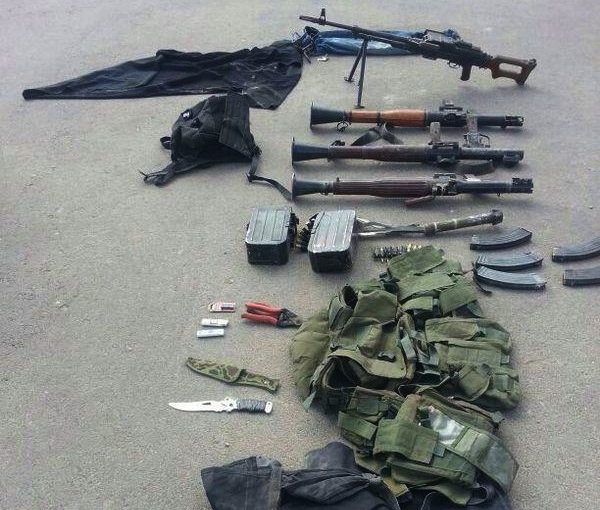
Weapons seized from terrorists who infiltrated Israel through an underground tunnel to carry out a massacre in an Israeli community. This photo was taken on July 19, 2014. (photo from flickr.com/photos/idfonline)

Part 2 of a three-part series, in which the author shares his diaries from the homefront, providing a glimpse of daily life under missile threat during Operation Protective Edge in 2014. For Part 1, click here; for Part 3, click here.

July 13, 2014

Day six. Woke up at 4 a.m. Browsed the headlines on my smartphone. Some talk about talk about considering talk about a truce. Fell back asleep. Rudely awoken at 6:11 – I angrily checked the time – by a siren. Incoming. So much for all the talk. My wife and I groggily made our way to our daughter’s room, our protective room.

Son Dor is enjoying Eilat. Returning by bus this evening. Maybe it makes more sense to take the afternoon bus. Think the skies are quieter in the daytime.

Sides still too far apart for a truce.

When Prime Minister Netanyahu talks about a long-term truce, what does he mean? With my son going into the army in two years, I don’t want another ceasefire like we had in 2008 and 2012, which allowed Hamas to rearm and wage new wars so soon after. Not acceptable. Our cabinet reconvenes today to further consider a ground offensive. What a job our prime minister has!

So much damage in Gaza. How can Hamas not cry uncle? Despite its macho threats, its salvos of rockets – more than 100 fired over the weekend – the impact to Israel is minimal. Largely due to a poor-quality arsenal. The constant pressures of our offensive. Our amazing Iron Dome. And the well-prepared and trained homefront (that’s us!).

July 15

Ceasefire to take effect at 9 a.m. Final terms to be agreed. Somewhat ass-backward. Shouldn’t terms be agreed first? What do I know? Hope it brings quiet. Peace.

Gazans needs new leadership. The classic choice of guns or butter, they need to decide if they want to continue being human shields in a war they cannot win.

My son returned from Eilat. Without incident. With a great tan and funny stories. But frustrated. Tossing the morning newspaper aside, he growled, “We’re crushing them. We need to continue until they are clearly defeated! This truce is bullshit. We’ll only face more missiles next year. You don’t stop when on the verge of victory. It allows your enemy to retrench and rebuild.” The rashness of youth has a point.

I left for work with a delicate sense of calm. Maybe I can worry less today. Alas, an hour into the ceasefire, missiles were again fired at Israel. Errant missiles? Or continued, self-defeating defiance by Hamas? Previous operations also had a number of false truces. Then there was quiet. To paraphrase from Sting, I only hope the Gazans love their children, too.

But another beat prevails. More and more missiles fired by Hamas since the ceasefire went into effect. The kids, alone at home, went scurrying to our safe room for a third time in the last hour.

From her Tel Aviv office, my wife sounds somewhat flustered. A mother’s distress. Loud booms heard overhead from the Fab in Kiryat Gat. My daughter called from the protective room. Safe. Frustrated. Not understanding what Hamas doesn’t understand about a ceasefire.

In the meantime, Israel is holding its fire. Hoping for the best. Preparing for the worst.

Anyway, I need to complete a report for work.

July 17

The war continues. The truce that wasn’t never took hold, despite Israel’s willingness. We’ve agreed to a five-hour unilateral, humanitarian ceasefire, to give Gazans a respite. Effective 10 a.m. today. We continue building our military reserve – 50,000 soldiers patiently await their orders.

We thwarted an infiltration. Thirteen terrorists heading towards a border community through an underground tunnel were stopped.

We continue rendering the Hamas war machine ineffective, while Hamas continues to subject Gaza to suffer Israel’s might. Uncertain where this leads.

Received a pretty frantic call from my wife and son. On their way to Tel Aviv, they witnessed an Iron Dome sound and light show – we shot down four missiles. They could almost feel the heat of the sky-high blasts. Scattering out of the car, they held each other as they ran for cover in a nearby shelter. Talking to me, their voices a mixture of exhilaration, excitement, fight. Then they continued their drive to work.

The true hero of this war is the Iron Dome. Probably one of the greatest military defence breakthroughs of the last hundred years. Can’t imagine the situation without it.

July 18

Fearful. Hopeful. Last night, at 10:38 p.m. (precisely), Israel embarked on a long-anticipated ground operation. For peace. I am fearful for our sons, brothers, fathers, some sisters, too. Trusting our nation will soon hammer Hamas’s swords back into plowshares (Isaiah 2:4).

We fell asleep around midnight, huddled in our den watching nonstop news. Reporting was spotty. Events happening very quickly. Full disclosure not a privilege. Lots of uncertainty – that word again – adding to fears and hopes.

Also concerned about our neighbours in Gaza, caught in the crosshairs of Hamas insanity. I like to think the majority of Gazans are innocent pawns, fiercely used by Hamas to terrorize Israel with crude and indiscriminate missile attacks. Israel makes a clear distinction: this war is with Hamas, not Gaza.

Hamas waited not a second after the humanitarian ceasefire ended to resume its barrage of missiles. They also fired a few during the ceasefire.

July 20

Updated my smartphone. Another brilliant Israeli application. Designed under extreme pressures. Called Code Red. Brilliant. Beeps with every missile attack, even advising the location. Seems everyone downloaded this app – the office can be quite noisy at times.

Went to Tel Aviv with the kids for lunch yesterday. Needed a break from our pressure-cooker existence. We hung out along Rothschild Boulevard. Lots of cool cafés and shops. With 50,000 reservists down south fighting for our security, quite a contrast.

There was a missile attack as I was leaving Rehovot this morning. I was outside the mall – running a quick errand – so sought cover in a doorway with five others. My daughter home alone. Called her. Asked if she wanted to come with me to work. “No, Dad, I’m fine. Be careful.” How quickly they mature.

My son is still going out evenings with his friends. I’d prefer he stay home, but teenagers will be teenagers, even in wartime.

July 21

Yesterday was a tragic day for Israel. Thirteen of our best, killed defending our country. Now 18 soldiers killed since the start of hostilities. A collective weeping. Each soldier someone’s child, sibling or parent. Taken from routine to defend life and country from this insanity from Gaza.

Again, Israel found Hamas terrorists attempting to infiltrate the country from their tunnels of hell. Intending to carry out a terrorist rampage in one of our border communities. Targets not soldiers, but innocent, unsuspecting families. Grandparents. Children.

Israel goes to great lengths to protect civilians in Gaza. When Israel targets terrorists hiding and firing from a civilian building, it first warns the local population by dropping leaflets, blaring the message on loud speakers, even making phone calls and sending text messages. Or, does a “knock on the door” – shoots small, precise, non-explosive ordinance at a roof to urge inhabitants to vacate before attacking. Israel aborts an attack if noncombatants are in harm’s way.

Hamas has different values. Not rational. Not humane. They urge and sometimes force Gazans into targeted areas. Hamas counters Israel’s pre-attack announcements by threatening retaliation, even execution, to those who heed the warnings. Hamas strategically locates command-and-control operations within hospitals, schools, mosques. This is their defensive shield. As our prime minister said, “They don’t give a whit about the Palestinian people.”

Our war is not against the people of Gaza, but against the terror organization ruling and subjugating Gaza – Hamas.

A mother was quoted today: “Knowing my son is entering this strip of land governed by such demons is frightening enough. Aware that he is doing so with a weapon in one hand and a law book in the other – representing the Israeli approach to asymmetrical warfare – is beyond my capacity as a mother to bear. Israeli parents, famous for over-protectiveness at the playground, must make their peace with such parental cognitive dissonance. It is a feat I wish on my enemies. Only then will there be hope of genuine coexistence.”

Bruce Brown, a Canadian-Israeli, made aliyah 25 years ago. He works in high-tech and is happily married, with two kids. He is the winner of a 2019 American Jewish Press Association Simon Rockower Award for excellence in Jewish writing.

טיול במזרח קנדה

נובה סקוטיה (Ron Cogswell)

 נובה סקוטיה היא מחוז מזרחי מבודד כמעט אי המחובר ליבשה ברצועה צרה שבו השתמר סגנון כפרי פשוט ותמים, כמו פעם. כך מפרסם יוסי רוזנבלום באתר של ווינט. מקור ההכנסה העיקרי נותר הדיג, ולפיכך ישנם אינספור כפרי דייגים אמיתיים ופעילים. בכל כפר ומפרץ מתנוסס מגדלור, וימי הסגריר הערפיליים מסייעים להבין את חשיבותם של המגדלורים האלה. במוזיאון המגדלור בדינגוול למדנו פרק מרתק על החיים בבדידות. המגדלור ניצב על אי המרוחק יום הפלגה מהאי השכן.

מפעיל המגדלור התגורר בו עם אשתו ושמונת ילדיו עשרים וחמש שנים בבדידות מוחלטת, שבועיים חופשה בשנה וניתוק של שישה חודשים ללא ספינות בגלל החורף העז. כל ארבע שעות, גם בלילה, היה עליו לצאת מהבית בקור מקפיא, למתוח את הקפיץ המכני ולוודא שהמגדלור לא כבה. בהרבה עיירות קטנות מצויים מוזיאונים על נושאים שונים וכדאי לבקר בה.

קהילות הקטנות, הבידוד והחורף העז תורמים לחיי קהילה ערים, והתושבים מאירי פנים וחפצי שיחה. לבית של מרי וג’ו, ליד פגיס קוב, נקלענו במקרה כי היה שם שלט של גלריה. הם אירחו אותנו בחום ובשמחה בביתם בן שני החדרים, וסיפרו שגודל הבית נובע מהצורך בחימום עז ובפינוי שלג.

ההפרדה המוחלטת בין דת ומדינה גורמת למוסדות הדת לקיים פעילות חברתית וקהילתית כדי לגייס כסף ולשרוד. כך הוזמנו לארוחת ערב כפרית המאורגנת על ידי הכנסייה האנגליקנית, ותמורת שבעים וחמישה שקלים נפרש בפנינו מזנון של אכול כפי יכולתך, עם שלל פירות ים שרק לפני שעות ספורות נשלו מהמים ולצידם סלטים וקינוחים.

המחירים בקנדה מפתיעים לטובה. בקצה הצפוני והנידח של נובה סקוטיה, במרכול כפרי המקבל את כל מצרכיו ממשאיות הנוסעות אלפי קילומטרים, מצאנו עגבניות אדומות, עסיסיות ועשירות בטעם שעלו כמחצית ממחירן בישראל.

אין במחוז בנובה סקוטיה מלונות חמישה כוכבים, אבל האירוח פשוט ומפנק. את לילותינו העברנו בפונדקים ובמלונות קטנים, לרוב על קו המים נהר, אגם או אוקיינוס, זכינו באירוח חם ושילמנו שליש ממה שהיינו משלמים על צימר בגליל.

טיול נופי וחווייתי כזה מצריך נהיגה מרובה. קשה לקלוט כמה הארץ גדולה, ואילו מרחקים יש לגמוע בדרך ממקום למקום. אבל הנהיגה קלה והכבישים מתוחזקים ומעולים. הדרך מלאה בשלטים המזהירים מפני מפגש עם איילים, אבל אנחנו פגשנו בדרך רק סנאים, דביבונים, כלבי ים ובעלי כנף מכל סוג ומין. את האייל הקורא החיה הלאומית של קנדה פגשנו רק על חולצות טי.

חופי מזרח קנדה משופעים בלווייתנים, ובשיט במעבורות המחברות בין האיים מקבלים תצפית נפלאה על משפחות של לווייתני בלוגה לבנים. בנוסף, בכל עיירה מציעים הפלגות לתצפית בלווייתנים, חלקן על סירות זודיאק שמהן ניתן לגעת ממש בחוטם הלווייתן, אבל גם בישיבה נינוחה על החוף במפרצים רבים אפשר לראותם מצוין.

איך אפשר לכתוב על קנדה מבלי להתייחס לסירופ המייפל? האדר, העץ הלאומי, מניב כמויות ענק של סירופ מייפל המזוקק במפעלים מוסדרים ובמבשלות ביתיות. הוא נמכר במגוון צבעים ודרגות איכות, כשהסירופים ממזקקות בוטיק בצבע חום כהה הם הטובים והיקרים ביותר. שווה לעצור, לטעום ולהצטייד לארץ. קשה למצוא סירופ באיכות כזו מחוץ לקנדה, והטעם באמת מיוחד. בנוסף, במחוזות הכפריים ולאורך הדרכים פזורות סדנאות רבות של אמנים מקומיים. ציירים, פסלים בעץ, יוצרים בזכוכית, קדרים, צורפים ועוד. בכל סדנה ניתן לקבל משקה חם, לרכוש מזכרות ייחודיות ששונות מהזבל התיירותי הנפוץ, וחשוב מכל להתחכך, לדבר ולהתרשם מהקנדים והחיים במחוזות כה רחוקים ושונים.