Importance of listening

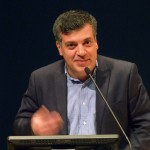
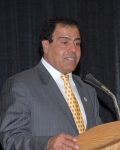
Dr. Izzeldin Abuelaish (photo by Bob Talbot)

I was born in Soroka Hospital in Be’er Sheva, southern Israel. My father, an Israeli-born Jew of Tunisian descent, began his residency in obstetrics and gynecology the following year. Joining him in the program was a Muslim-Palestinian doctor from Gaza, the first to do so in an Israeli hospital. Through their respective residencies, they grew to become close friends and remain so to this day. This is the story of how that doctor from Gaza taught me the advantages of remaining level-headed during disputes, by his mere demeanour and the way in which he converts misfortunes into valuable life lessons. This is the story of how Dr. Izzeldin Abuelaish changed the way I appreciate my parents, invest in my future and, most importantly, how I listen.

Dr. Izzeldin Abuelaish was born in 1955 in Jabalia refugee camp in Gaza, in conditions most of us can’t even comprehend. His school bag was an old, fibre bag, he owned a single pair of pants sewed from scrap materials and his school eraser was so valuable he had to wear it on a string around his neck. His mother, the “Lioness,” as he often refers to her, knew education to be the most powerful weapon of choice in their limited arsenal. Consequently, she pushed him to his limits, having him work in the mornings before school and in the afternoons. His teachers saw in him a passion and competence that could elevate him and his family out of their current conditions and, like his mother, pushed him to pursue his studies. He went on to receive a scholarship to study medicine in Cairo, he then went on to receive a diploma in OB/GYN from the University of London, accompanied by a subspecialty in fetal medicine in Belgium and Italy; and onwards to completing a master’s of science in health policy and management at Harvard University.

His road out of poverty was not smooth, but 2009 brought the worst wave of hurt to his life. Only a few months after losing his wife to cancer, Abuelaish’s apartment was shelled by an Israel Defence Forces tank during the Gaza War. His three daughters – 20-year-old Bessan, 15-year-old Mayar and 13-year-old Aya – and 17-year-old niece Noor were all killed. The entire tragedy was caught on live television, as Abuelaish had been communicating with Israeli media on the effects of war on Palestinian civilians. Destroyed and devastated, his wails were heard all over the world and, for the first time during the war, the Palestinian people had a human face, and a haunting shriek.

Despite this unimaginable heartbreak, Abuelaish refused to let hatred coerce him into visceral action. “Hatred,” the doctor said, “is destructive to the hater, not the hated.” In the face of such trauma and injustice, he remained calm and rational and channeled his anger into a fight for justice, not revenge. He knew that hatred would only hurt his interests and sway him off course.

Abuelaish had friends in the hospitals he worked at, colleagues, patients and others who cared for him deeply, my father being one of the many among them. Abuelaish knew not to let the loudest of political actions silence the intentions of citizens on either side of the border. He knew to listen, to speak out with kindness and courage and through action.

I was formally introduced to Abuelaish for the first time when he came to speak at my university. “You’re the son of Bentov?” he said to me. I replied with a smile and a nod. He was ecstatic to meet me, and I could barely believe I was in his presence. We were both baffled by the coincidence, and rejoiced in the opportunity. After the lecture, the professor and several students went to a nearby café to further discuss the tenets of his talk. He inquired on the well-being of my parents and I shared my vague childhood memories of him. Upon his departure, he left his card with me and asked me to contact him again. I have remained in close touch with him since.

In the summer of 2015, Abuelaish offered to let me work in his office, hoping I could write a research paper under his guidance. Sitting in his office at Dalla Lana School of Public Health at the University of Toronto, I gazed around the room, awestruck by the number of awards, photographs with world leaders, diplomas and gifts from supporters and friends that were on display. I remember most my reaction when I saw his bookshelf: the goliath volumes of medicine and politics were overshadowed by the collection of self-help books on overcoming trauma.

One morning, Abuelaish asked me to come with him to see the office of his philanthropic organization, Daughters for Life Foundation. After asking me whether Upper Canada College or University of Toronto Schools, both of which command some $20,000 in annual tuition, are better high school choices for his son’s education, he threw on the same black leather jacket he’s owned for at least a decade and a half, and we made our way to his 1998 Saturn SUV. The priorities he made clear that day and his mere demeanour ingrained in me a sense of proportion that drastically altered the things I hold dear in life. I am unable to articulate exactly how I felt driving in his car that day. I wanted to go home and burst into tears. His humility, his unending devotion to his children, his disregard for material goods. For the life of me, it took everything in my power not to shed a single tear during that car ride.

Before I met Abuelaish, I was an angry young man, easily swayed by inflammatory rhetoric and propaganda. I was arrogant, rigidly opinionated and impatient. When I met the doctor, my father’s friend, I saw a sobering display of the prowess of human endurance – an absolute refusal to remain defeated, even after many severe blows. I coined his philosophy “proactive pacifism,” as I could see no other way to describe it.

I began to realize the many unacknowledged fortunes in my life and the immense efforts my parents made. I also learned the value of listening and the importance of letting others voice their opinions unscathed by my bias. Most of us are quick to see differences, carelessly and lazily dividing people by economic, political and religious beliefs and doctrines. Instead of investing our energies into improving our lives, we spend it on putting or shutting down others, lest they make us work harder to maintain our place in the world or our opinions. Following the change of atmosphere in Europe and the United States, I think Canadians can learn from the valuable lessons of Abuelaish’s actions.

Instead of seeking revenge against those who have harmed him, he has chosen to empower those who have been harmed. In all of the self-help books and all of the various philosophies I have come across, I have never met anyone who embodies the “golden rule” as much as Abuelaish. I’m 20 years old and have had a life virtually devoid of struggle, in large part because my parents worked incredibly hard to provide me with all that I have. I did not fully appreciate this until I got to know Abuelaish.

After meeting him, I also saw the real benefits of allowing speech to flow freely and, when someone speaks, I now listen. As aggravating as that feels sometimes, I know that preserving this right, this freedom, is more important than my reaction to the words being spoken. I am now confident that proving a point means more than shouting out an opinion; it means putting my beliefs into action. After every conceivable reason to give in to hate, Abuelaish not only rose above his many adversities, he used them to fuel his goal of greater peace and cohesiveness between Israelis and Palestinians.

Abuelaish does not stand on the shoulders of giants; he guides them onwards. In 2011, he created Daughters for Life Foundation, which raises funds for academic scholarships for aspiring female students of Jewish, Christian, Muslim and other backgrounds from the Middle East. Abuelaish believes that, through the success of other young female students, he can bring to life the ambitions of the daughters he lost.

Abuelaish has accomplished more through dialogue than through dispute. As well, there are hundreds of Israeli and Palestinian children enjoying their lives due to his work as an obstetrician. Because of him, and the few others like him, I firmly believe in the prospect of peace in the region.

Abuelaish is far more than a mentor to me – he is my friend, he is family. The way he endures the many misfortunes in his life, the way he looks after his children, the way he helped me and the way he spoke of my parents are only examples. His many lessons transcend and translate into all aspects of life.

Following the recent election in the United States and a return of nationalist support across Europe, politics divide us now more than they have in a very long time. In an era of sound bites, protests and identity politics, it seems that most individuals have very little interest in listening to opposing viewpoints, lest these views betray their crafted narratives. We are eager to impose our opinions on others, convinced that mere criticism means that someone is an enemy of our noble cause or wants to harm us. This phenomenon is causing divides in parts of the world where diversity has been flourishing for decades. In these times, it would be wise for us to take a breath, to put things into perspective and remain coolheaded, regardless of our differences – or even our similarities, for that matter. If we invest our energies on improving ourselves, and encourage others to do the same, we should be able to get along, even if we disagree. These are just a few of the things I learned from my good friend, Dr. Izzeldin Abuelaish. As he has said, “The energy you want to waste on anger. Convert it to strength and determination.”

To learn more about Abuelaish, his book I Shall Not Hate: A Gaza Doctor’s Journey is available at various booksellers, including online, and the link to his foundation is daughtersforlife.com.

Gilad Kenigsberg-Bentov is a student at University of Western Ontario, where he is majoring in economics.
Israel’s complexities

Noa Baum, one of the presenters at this year’s Cherie Smith JCC Jewish Book Festival, is a professional storyteller who, in recent years, has dedicated herself to promoting peace between Israelis and Palestinians. She has taken a long road to get to where she is today.

Baum was born in the late 1950s in Israel and grew up in the “golden age” of Zionism, where, despite the many challenges and flaws of the young state, the shadow of controversial wars and of the occupation had not yet darkened the Israeli self-image.

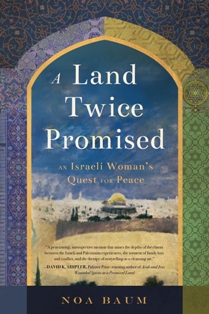
book cover - A Land Twice PromisedAs recounted in her 2016 debut work A Land Twice Promised: An Israeli Woman’s Quest for Peace, Baum grew up with both a deep love of Israel and a keen sense of Jewish vulnerability and the wounds of the Holocaust. The narrative she grew up with about Israel centred on the heroism of its citizen army (“our boys,” she repeatedly calls them) standing up to the bewildering, relentless hatred of the Arab countries. She was deeply shaped by the experience of living through the 1967 Six Day War and the 1973 Yom Kippur War as a child.
Over the years, she developed a more nuanced view. She came to face the existence of a hateful, right-wing extreme in Israel and was bitterly disappointed by the actions of the Israeli government in the 1982 Lebanon War, particularly Israeli complicity in the Sabra and Shatila massacre. Her brother, himself named after an uncle who died defending Israel, also suffered post-traumatic stress syndrome from the Lebanon War, leading to a lifelong struggle with mental illness.

When Baum left Israel to move with her husband to the United States to support his career, she left with her simplistic narratives shattered, but an enduring deep love of Israel and the Jewish people.

In her youth, Baum had passionately loved acting and storytelling and, in the United States, she became a professional storyteller. As a tale-spinner, she played it safe, however, presenting upbeat material and folktales and not touching on the conflicts and contradictions of modern Israel. All of that began to change when she nurtured a relationship with another mother, a Palestinian she calls “Jamuna” in the book. As a result of their friendship and the advice of storytelling mentors that she needed to stop shying away from difficult material, Baum began listening to Jamuna’s heart-wrenching stories of growing up Palestinian in the land of Baum’s dreams, with an eye to telling Jamuna’s stories.

“Hearing how the soldiers of the IDF, ‘our boys,’ were to a young Jamuna the source of terror and hatred, was heartwrenching,” Baum told the Independent.

Baum began touring with a one-woman play called A Land Twice Promised, wherein she delivered monologues from the perspectives of herself, her mother, Jamuna and Jamuna’s mother. The show aimed to bring healing and be a contribution toward peace. As one would expect, it was received in many different ways. Baum was called a “traitor” and told she “should be ashamed” of herself; others said she had described their own Israeli or Palestinian experience perfectly. Both Israelis and Palestinians said the show was not balanced enough. One woman from Nigeria said the show made her realize Jews were human beings; others said they’d never felt compassion for Israelis before seeing the show. Some said it was the first time they empathized with Palestinians.

“In the beginning, it was terrifying,” said Baum. “Audience reactions would throw me into bouts of anxiety.”

Gradually, she developed the ability to process the diverse reactions and became confident in what she was doing, and she continued to actively evolve the show based on audience feedback that she solicited.

In 2015, after doing the show for 14 years, Baum was approached by someone interested in making it into a book. It was an offer she couldn’t refuse, though she had never written before. “I’m not really a writer,” she said. “I come from the world of performance, I’m a speaking artist.”

Despite Baum’s lack of writing experience, A Land Twice Promised is a moving, lucid memoir that powerfully evokes the Israeli experience in the last decades, and Baum’s personal and familial struggles to come to terms with it.

The book provokes empathy and insight, and will lead most readers to embrace a view of Israel and the Palestinian conflict that is both complex and compassionate. The book has received favorable reviews and even won many commendations, including one from Pulitzer Prize-winning author David Shipler, writer of Arab and Jew: Wounded Spirits in the Promised Land.

Baum will speak at the book festival on Nov 29 at 6:30 p.m. For tickets and the full festival schedule, visit jccgv.com/content/jewish-book-fest.

Matthew Gindin is a freelance journalist, writer and lecturer. He writes regularly for the Forward and All That Is Interesting, and has been published in Religion Dispatches, Situate Magazine, Tikkun and elsewhere. He can be found on Medium and Twitter.

Dialogue heads east

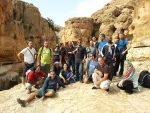
Belle Jarniewski (fifth from the left) is one of the co-founders, with Sumera Sahar (fourth from the left), Perry Kimelman and Dr. Rory Dickson of the Muslim-Jewish Dialogue Group of Winnipeg. (photo from Belle Jarniewski)

Started in Winnipeg last year after a visit from Rabbi Shaul Osadchey of Calgary’s Beth Tzedec, Belle Jarniewski and Perry Kimelman believe that a local dialogue group with Muslims and Jews will do a lot of good for both communities.

Jarniewski is chair of the Freeman Family Foundation Holocaust Education Centre, a position she has held since 2008. And, just recently, she began a two-year term as president of the Manitoba Multifaith Council, the first woman and the first Jewish person to hold that position.

“The Manitoba Multifaith Council had brought in Rabbi Shaul Osadchey of Calgary for its Multifaith Leadership Breakfast in 2015 and I was intrigued to hear how successful he had been in his own interfaith dialogue work and to hear how well he had reached out to the Muslim community there,” she told the Independent.

Jarniewski approached her synagogue with the idea of seeing if she could work with them to hold the kinds of events with which Osadchey had seen success, but received little interest. So, she decided to start a group independently of an institution.

photo - Belle Jarniewski
Belle Jarniewski (photo from Belle Jarniewski)

“Perry and I are also members of the Arab-Jewish Dialogue Group, which discusses (primarily) the Arab-Israeli conflict, but seems to eschew any real discussion of religion,” she explained. “Both of us have been active in interfaith work for quite some time and have many connections to wonderful people. We felt that was something that was missing. Once we realized that both of us had long been interested in starting just such a group, we put our heads together to see what would be the best way forward.”

Of course, to get the idea off the ground, they needed a Muslim partner or two. They found a perfect match in Sumera Sahar, a member of the Canadian Council of Muslim Women (CCMW). The second Muslim co-convener they found was Dr. Rory Dickson of the University of Winnipeg’s department of religion and culture. And, with that, the four set out to build membership, which is now a balanced mix of almost 40 Jews and Muslims (by invitation only). Members have been proposed by other members, as well as by the conveners.

“It is important that those who join are interested in dialogue with each other, are interested in religion and culture – our own and each other’s – and accept the very few rules we have imposed upon ourselves,” said Jarniewski.

These rules, she said, include “no discussion of politics – there is already another group established for that very reason – and, as well, both groups decided early on that we preferred not to involve clergy. If someone wishes to join, they must be referred through a member.

“We also have a closed group discussion through our private Facebook page, which seems to work very well. The ages of our members are from university through … well, I don’t ask … I would say in the 60s.

“The diversity of religion streams and origins of both Jewish and Muslim members contributes to some wonderfully rich discussions,” she continued. “The group is all about learning about each other’s religion and culture and each other, and getting to know one another. For far too long, Muslims and Jews have had, at best, a polite relationship with each other, but haven’t really gotten to know one another and learned just how much our two religions have in common.”

The group has held a number of evening get-togethers, learning about Sharia and halachah side by side. “The word Sharia evokes, for most Westerners, the most extreme form of Islamic law,” said Jarniewski, “but we learned that Sharia is far more complex than this simplistic interpretation.

“One night, we had Dr. Ruth Ashrafi talk about the role of women in Jewish law and Drs. Rory Dickson and Ahmet Seyhun lecturing on family law in Islam. On another night, we had a great discussion about halal and kashrut.

“At our very first meeting, one of our Jewish members, who hails from Iran, recited a Muslim prayer in flawless Arabic. What an icebreaker that was!”

Sahar told the Independent this group “is an important initiative and much needed, given the popular and often-unchallenged notion that somehow Jews and Muslims are historical and natural adversaries.”

Sahar is an executive member of CCMW’s Winnipeg chapter, the co-coordinator of a community food bank serving Arabic-speaking refugees and has recently been invited to sit on the board of the Manitoba Multifaith Council.

The core objective of the Muslim-Jewish dialogue group is that Muslims and Jews get to know one another directly without the filter of religious or political organizations. Sahar contends that most, if not all, group members believe that the group is a crucial step toward countering antisemitism and Islamophobia and, most importantly, to bridging communities.

Like Jarniewski, Sahar has made good friends and formed a much better understanding of the similarities both religions share, not just religiously, but also as minority religious communities.

“Being a minority community has its challenges, and both Jews and Muslims share similar anxieties and concerns,” said Sahar. “We share the struggle of gaining acceptance and inclusion without losing our religious values and identity. We are also subject to the question of representation – who speaks for us?

“Both communities are pluralistic and diverse but, as is the case with most minority groups, we are often represented in the media and popular discourse as a single voice. I was struck to learn that this issue is as much a source of frustration for the Jewish members of the group as it is for the Muslim members.”

The dialogue group has provided a platform to discuss such issues and suggest some strategies to overcome them. The convenors are pleased to see the sincerity with which group members have engaged with one another and are hopeful in their potential to build understanding.

“I feel that it is more important than ever to speak up when unfortunate statements are made in these rather difficult times that attack Muslims and Islam,” said Jarniewski. “These statements are generally mired in stereotypes and ignorance. It is important that our community realize they are received in the Muslim community in the very same way that the Jewish community is hurt by antisemitic comments.”

Jarniewski is well aware that, across Canada, there are Jewish-Muslim groups such as the one in Winnipeg who are coming together to engage in dialogue. “Little by little, groups such as ours will have a very positive effect,” she said.

Jarniewski quoted Catholic priest and Swiss theologian Hans Küng: “No peace among the nations without peace among the religions. No peace among the religions without dialogue between the religions. No dialogue between the religions without investigation of the foundation of the religions.”

Rebeca Kuropatwa is a Winnipeg freelance writer.

A year of diplomacy, terror

Prime Minister Binyamin Netanyahu kisses Adel Banita’s 2-year old son on the forehead in Hadassah Hospital on Oct. 5, 2015. Netanyahu was visiting Banita, who was stabbed by a Palestinian terrorist in Jerusalem’s Old City. Her husband, Aharon, 22, died later of his injuries. (photo from Ashernet)

The Jewish year 5776 could be probably best described as a year of diplomacy and terror. Despite the toll of death and misery being inflicted by radical Islamic terror groups around the world, Israel this past year has been relatively quiet in so much as it has not had an outright war with its neighbors. Terror, however, has been present, with the knife and automobile being the weapons of choice to inflict fear and mayhem on the long-suffering citizens of Israel.

Radicalized, mostly young, Arab terrorists have been responsible for murdering or seriously injuring innocent men, women and children by stabbings or ramming their vehicles into groups of people, usually standing at bus stops or hitchhiking posts. Death and injury have also been caused by throwing large stones at passing cars in the West Bank. In several instances, firearms have been used by terrorists to kill people enjoying an evening out. On Aug. 17, a terrorist from the West Bank shot dead four people and injured a further six individuals at a restaurant in Tel Aviv. Perhaps the most outrageous attack was the murder of 13-year-old Hallel-Yaffe Ariel as she slept in her bed in her home in Kiryat Arba on June 30.

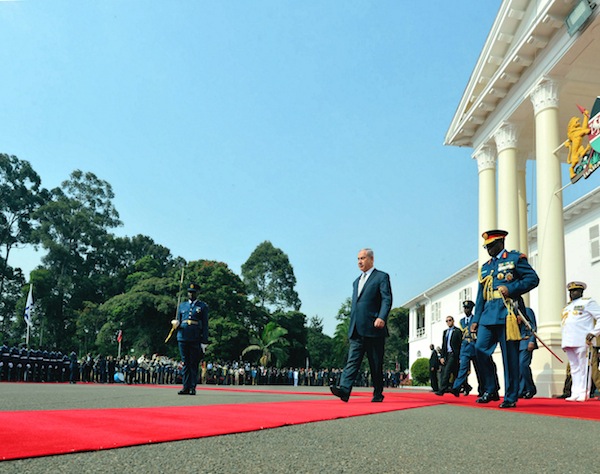
The year has been marked by intensive diplomatic activity, particularly as far as the African continent is concerned. Major countries, such as Kenya, Uganda, Ethiopia and Rwanda, played host to Prime Minister Binyamin Netanyahu this past summer. Their leaders have also visited Israel and trade agreements were signed. One African leader said the visit of the Israeli prime minister to Africa was to “reset Africa’s diplomatic relations with Israel.” Many African countries are anxious to use Israeli technology for water management and agricultural development. It is also worth noting that many African nations have also been victims of radical Islamic terrorism.

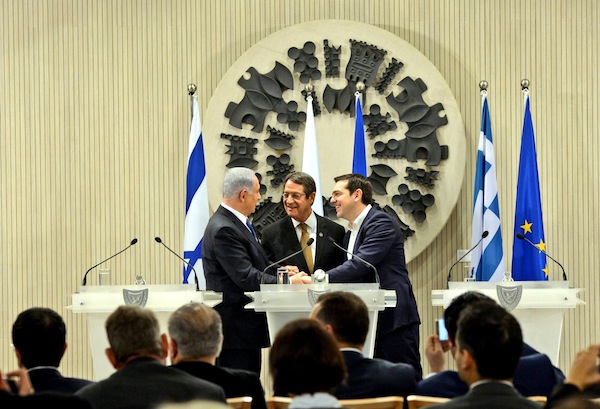
Israel’s Mediterranean neighbors were not forgotten this past year. Mutual interests of both energy and security have brought Greece, Israel and Cyprus closer. Greece and Israel have conducted military exercises in each other’s country, and the three countries are working together to maximize the natural gas deposits that have been discovered in the eastern Mediterranean.

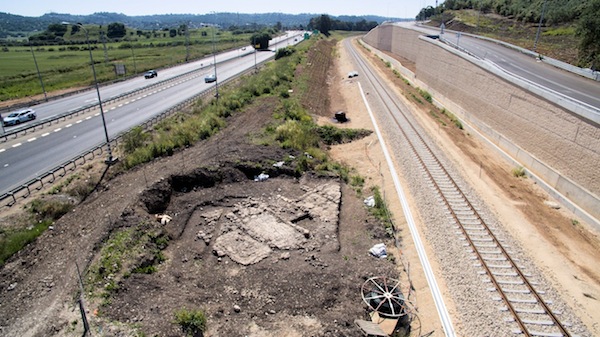
Despite the tensions in the Middle East, beneath the surface, much is happening between Israel and its neighbor Jordan. Perhaps the most significant long-term change is the soon-to-be-completed Jezreel Valley railway project. Apart from the advantage for Israelis living in the north and working in the Haifa area, the new rail link will enable Jordanians to have a Mediterranean trade outlet, via Haifa. The only link to the sea for Jordan at present is at Aqaba on the Red Sea.

Another project between Israel and Jordan concerns the rapid evaporation of the Dead Sea. Already the lowest point on earth, the sea level is getting lower every year. Also, the annual replacement of water from rivers in the north does not reach the Dead Sea. This river water is being used for agriculture and domestic purposes. In principle, the two countries have agreed to build a water feed from the Gulf of Eilat to the Dead Sea. On the way, the flow of water would power generators to produce electricity.

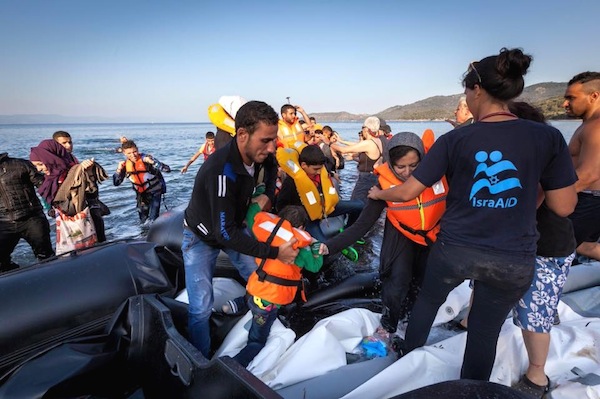
As regards her other neighbors in the region, the terrible humanitarian crises being played out in Syria and Libya have once again demonstrated that Israel will never turn her back on those in need. As thousands of refugees have been pouring onto some Greek islands via Turkey to escape the unrelenting wars in the Middle East and North Africa, Israel’s aid organizations and medical teams have been on hand to offer help and expertise.

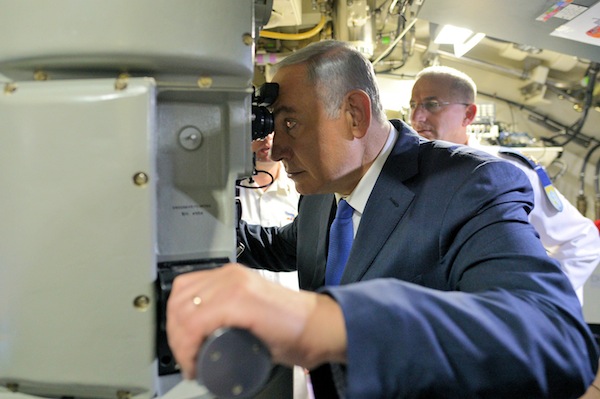
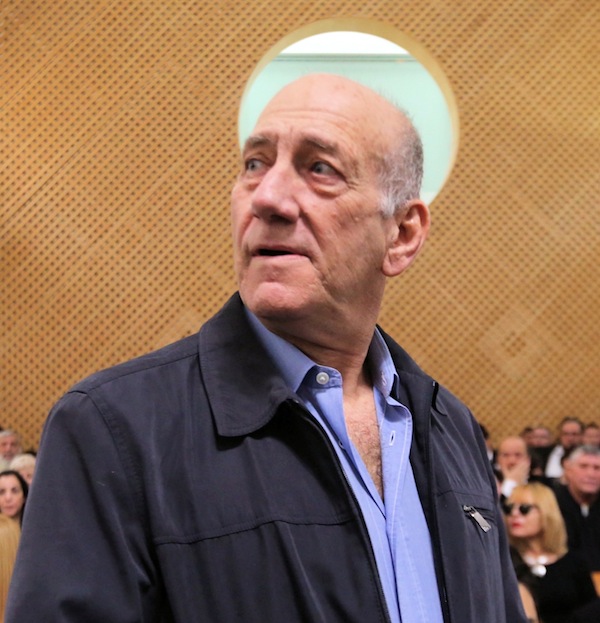
Among other happenings during the year, another state-of-the-art submarine was delivered during the summer from a German shipyard to augment Israel’s submarine fleet. And, finally, former prime minister Ehud Olmert was sent to prison after being found guilty of corruption and bribery. The positive side of this? The rule of law is the same in Israel for all of its citizens.

photo - Medical and rescue teams from IsraAID attend to Syrian refugees who have just landed in a rubber boat on the Greek island of Lesbos after the perilous crossing from Turkey
Medical and rescue teams from IsraAID attend to Syrian refugees who have just landed in a rubber boat on the Greek island of Lesbos after the perilous crossing from Turkey. (photo from Ashernet)
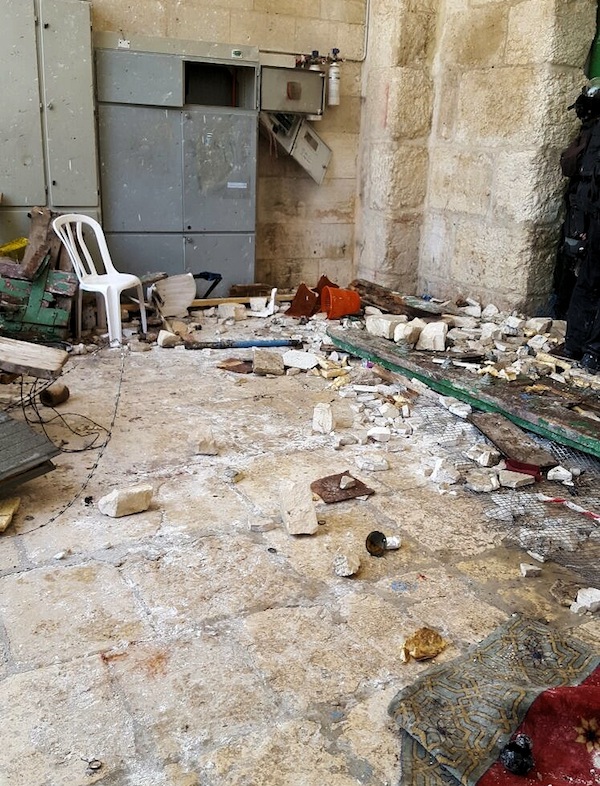
photo - The entrance to Al-Aqsa Mosque on the Temple Mount in Jerusalem after rioters tried to prevent police from arresting Arab stone-throwers
The entrance to Al-Aqsa Mosque on the Temple Mount in Jerusalem after rioters tried to prevent police from arresting Arab stone-throwers. (photo from Ashernet)
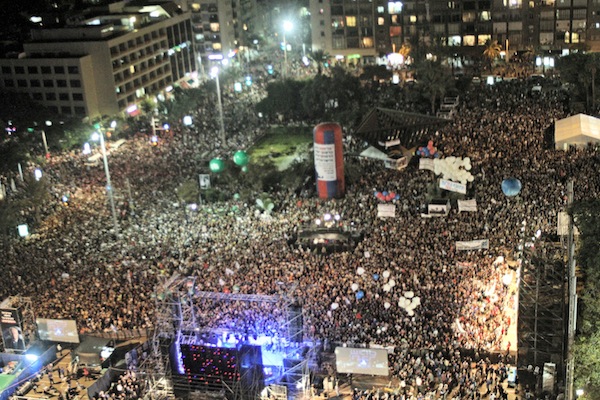
photo - In Tel Aviv in October 2015, thousands of Israelis came together to remember the 20th anniversary of the assassination of Yitzhak Rabin, who was murdered by Yigal Amir in this square
In Tel Aviv in October 2015, thousands of Israelis came together to remember the 20th anniversary of the assassination of Yitzhak Rabin, who was murdered by Yigal Amir in this square. (photo from Ashernet)
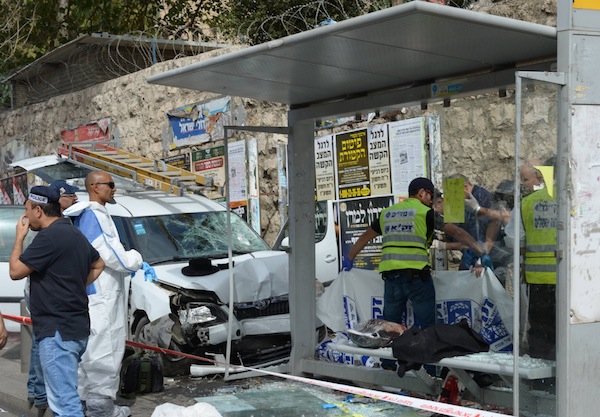
photo - A bus stop in Jerusalem’s Malkei Yisrael Street after a terrorist drove his car into the stop, killing one man, and then got out of his vehicle to stab others at random
A bus stop in Jerusalem’s Malkei Yisrael Street after a terrorist drove his car into the stop, killing one man, and then got out of his vehicle to stab others at random. (photo from Ashernet)
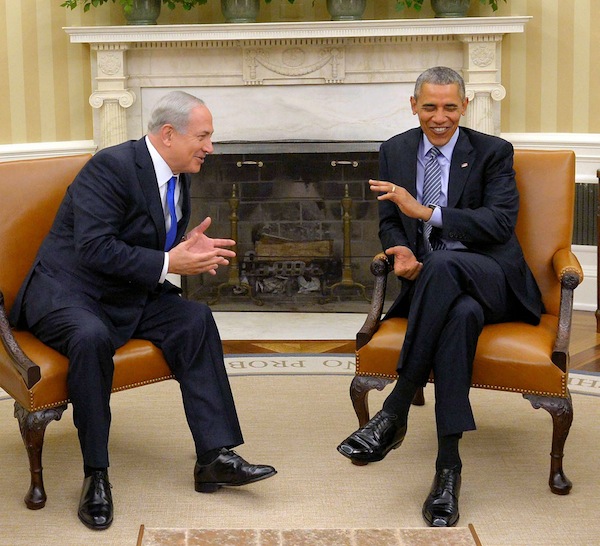
photo - Prime Minister Binyamin Netanyahu and President Barack Obama in Washington, D.C.
Prime Minister Binyamin Netanyahu and President Barack Obama in Washington, D.C. (photo from Ashernet)
photo - Prime Minister Binyamin Netanyahu looks through the periscope of the latest submarine to be delivered to the Israeli navy by the German government
Prime Minister Binyamin Netanyahu looks through the periscope of the latest submarine to be delivered to the Israeli navy by the German government. (photo from Ashernet)
photo - Prime Minister Binyamin Netanyahu, left, Cypriot President Nicos Anastasiades, centre, and Greek Prime Minister Alexis Tsipras at a meeting in Nicosia to cement trilateral relations
Prime Minister Binyamin Netanyahu, left, Cypriot President Nicos Anastasiades, centre, and Greek Prime Minister Alexis Tsipras at a meeting in Nicosia to cement trilateral relations. (photo from Ashernet)
photo - Former Israeli prime minister Ehud Olmert at the Supreme Court in Jerusalem following the court’s decision to uphold his prison sentence
Prime Minister Binyamin Netanyahu, left, Cypriot President Nicos Anastasiades, centre, and Greek Prime Minister Alexis Tsipras at a meeting in Nicosia to cement trilateral relations. (photo from Ashernet)
photo - The Tamar gas rig in the Mediterranean, off the Israeli coast
The Tamar gas rig in the Mediterranean, off the Israeli coast. (photo from Ashernet)
photo - Prime Minister Binyamin Netanyahu outside Government House in Kenya, stepping out to inspect the honor guard
Prime Minister Binyamin Netanyahu outside Government House in Kenya, stepping out to inspect the honor guard. (photo from Ashernet)
photo - The almost-complete Jezreel Valley railway that goes from Haifa to the Jordanian border
The almost-complete Jezreel Valley railway that goes from Haifa to the Jordanian border. (photo from Ashernet)
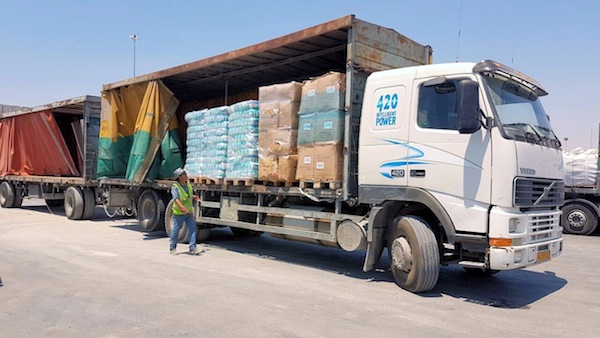
photo - Goods from Turkey enter the Shalom Crossing into Gaza with goods from Turkey. Recently, Turkey and Israel resumed normal diplomatic relations for the first time since the 2010 Mavi Mamara affair
Goods from Turkey enter the Shalom Crossing into Gaza with goods from Turkey. Recently, Turkey and Israel resumed normal diplomatic relations for the first time since the 2010 Mavi Mamara affair. (photo from Ashernet)

Seek Peace initiative

Steve McDonald, deputy director of communications and public affairs for the Centre for Israel and Jewish Affairs. (photo from of Steve McDonald)

Every day, a handful of the approximately 500 volunteers at Road to Recovery head to one of the crossing points in Israel, pick up Palestinians who have medical permits for appointments or treatments in Israeli hospitals, and escort them there and back. Entirely volunteer-driven, this is the kind of peaceful bridge-building that rarely makes the media headlines, but that the Centre for Israel and Jewish Affairs is hoping to highlight through its recently relaunched program, Seek Peace and Pursue It.

“This program is designed to encourage Canadian individuals and organizations who are concerned about the absence of peace in the Holy Land to rethink the issue by engaging in practical, positive initiatives that help build peace from the ground up,” said Steve McDonald, deputy director of communications and public affairs for CIJA. “Rather than getting distracted by destructive initiatives like the boycott, divestment and sanctions movement, Road to Recovery is exactly the sort of thing that will bolster Israeli initiatives to bring the two sides together and keep activists focused on positive engagement.”

The idea for Seek Peace was hatched by former CIJA executive Len Rudner in 2012, after the United Church of Canada declared it would boycott Israeli settlements. At that time, CIJA reached out to UCC leaders.

“We told them BDS does nothing to advance peace or improve life for average Palestinians, we don’t think it fulfils your own interest in helping Palestinians,” said McDonald.

The efforts were in vain and the UCC continued to advocate a boycott, something McDonald says was a betrayal of average UCC members in Canada, as well as an undermining of longstanding Jewish-Christian ties in this country.

One of McDonald’s tasks is to develop CIJA’s relationship with Christian churches and leaders in Canada, many of whom are interested in Israel and want to get engaged in peace-building activities. At the end of May, he will deliver a presentation at the Toronto School of Theology to Baptist, Anglican and Catholic representatives. His focus will be on one organization: Hand in Hand, a network of Jewish-Arab integrated bilingual schools focused on mutual recognition, inclusion and equality.

“There’s tremendous interest among some of our Christian partners for this sort of work,” explained McDonald. “When they see we’re pro-Israel but not anti-Palestinian, they are somewhat surprised that the organized Jewish community is so interested in peace. We want to show them there are constructive alternatives to BDS, positive ways we can be helping build peace.”

Seek Peace is not directly about fundraising, but rather about providing a catalogue of positive initiatives. The organizations featured include Heart to Heart, where Jewish and Palestinian Israeli youth live together in a camping environment for three weeks and tackle politics, culture and identity through dialogue. There is Project Rozana, which is about delivering medical access for Palestinian-Israeli children who need pediatric intensive care, and there is Tsofen, which promotes the integration of Israel’s Arab citizens into the high-tech industry. These are just a handful of the many constructive, peace-building programs that Seek Peace is trying to bring to the forefront, organizations doing impressive work that often goes unreported.

Within a few years from now, McDonald said he’d love to see churches and synagogues partner to host events that highlight one of these particular or similar causes.

“My goal would be for this to be taken on at a local and national level by our Christian friends,” he said, “but it’s not specifically for Christians – any community can get involved.”

In Vancouver, the CIJA team already has strong interfaith relationships and is well-positioned to pitch this project to its existing contacts, he added. “I think Vancouver is a place where there could be a lot of appetite for this kind of thing,” he said.

For more information on Seek Peace, visit cija.ca/resource/seek-peace-and-pursue-it.

Lauren Kramer, an award-winning writer and editor, lives in Richmond. To read her work online, visit laurenkramer.net.

Stop negotiating, says Pipes

Gina Faigen, daughter of the late Dr. Morris H. Faigen, who founded the annual Faigen Family Lecture Series, with this year’s speaker Daniel Pipes. (photo by Jocelyne Hallé)

Israel should stop trying to find a negotiated solution that provides a mutually agreeable resolution to the conflict with Palestinians, says Daniel Pipes, and instead declare victory and force the Palestinians into the realization that they have been defeated.

Pipes, a commentator and historian who is president of the Philadelphia-based Middle East Forum, made the comments in Vancouver May 9 at the fifth annual Faigen Family Lecture.

The idea of land for peace, in which Israel gives up concrete real estate for the “ephemeral idea” of peace, has failed, he said.

“We can all agree that the Israelis do not have more peace for giving up Gaza and parts of the West Bank,” said Pipes. “It’s not working.” Instead, he said, Palestinians view Israeli concessions as a sign of weakness and this has led not to increased peace, but to increased hostility.

“Rather than mediation and compromise and painful concessions, such has been the case, how about something different?” Pipes asked. “How about Israel wins and the Palestinians lose? How about Israeli victory?

“Victory is not a term you hear much,” he continued. “People talk about a peace process, negotiations, but this is a conflict, this is a war. It’s been a war for a century. And an end comes to a war when one side acknowledges that it’s lost, that the gig is up, that it cannot win.”

Germany lost the First World War, Pipes said, but they didn’t feel defeated. They wanted another round and they got it in 1939. After 1945, the Allies realized they had to demilitarize Germany and Japan, to demonstrate that they had been conclusively defeated.

“Defeat is sanitary,” said Pipes. “Defeat allows you to move on.… I think that’s what the Palestinians need. Not only for Israel’s sake – obviously for Israel’s sake – but also for the Palestinians’ sake. Only by being defeated can the Palestinians stop obsessing over harming Israel and instead start building their own polity, culture, society. It’s good for everyone, Palestinians as well.”

Pipes clarified: “I’m not calling for killing Palestinians.” The idea is to impose on Palestinians the sense that they have lost.

“There’s no point in getting into the details,” he added.

He would like to see Western governments adopt policies that would urge the Israelis to win the conflict.

“We don’t go to the negotiating table. It doesn’t work. We need to win,” he said. “Let’s give up on this failed, decades-old effort to have the Israelis give more and the Palestinians take more and give nothing in return.”

Questioned by an audience member on what victory would look like, Pipes said: “You’ll know that Israel has won when the Jews of Hebron have no more need for security than the Arabs of Nazareth … when an irate Palestinian writes a strongly worded letter to the editor.”

Pressed on how such a victory would be achieved, Pipes at first demurred.

“I did not talk about how to get there because I would encourage you to see things this way,” he said, before giving some examples.

“The other day there was shooting out of Gaza. The Israelis replied with shooting back into Gaza,” he said. “Wouldn’t it be more effective to cut off the water and electricity for a day? The next time two days? Wouldn’t that send a signal? Why don’t the Israelis do that? Because they don’t have a plan for victory.”

Until 1993, Pipes said, Israel strove for victory.

With the Oslo process that began in 1993, and after, Pipes said, Israel adopted a policy of appeasement. When that failed in about 2000, they adopted a policy of unilateral withdrawal from Lebanon and Gaza.

“And, since about 2006, there’s been no policy at all,” he said. “I think we should return – it’s not my idea – return to the old ways.”

Palestinians need to realize that their strategy isn’t working, he said.

“They’re engaging in suicide stabbings and other atrocities because they think this will help the Palestinians win,” he said. “If you can convince them there’s no chance of this working, why would a sane individual – and these are, they’re perfectly normal – why would they give up their lives? They believe that they are on a path to victory. Convince them that they are not on the path to victory and I think they will be less likely to engage in this kind of violence.”

Pipes acknowledged that people say the Palestinians will never accept defeat.

“But I say, the Germans did, the Japanese did,” said Pipes. An audience member noted that the Palestinians have an international support network that the Germans and Japanese did not.

“They do,” Pipes responded. “All those professors of English.… In the end, what really counts is, for example, water and electricity.”

While Israelis and Americans are trying to find creative ideas to hasten peace, “Palestinians aren’t playing around with creative ideas,” he said. “They’re killing.”

If the Palestinians can be convinced to give up the fight against Israel, Pipes believes that the rest of the Arab and Muslim world will similarly give up. He called Palestinians “the tip of the spear,” saying it’s hard to be more anti-Zionist than the Palestinians.

Though Pipes believes Arab and Muslim states may be tiring of losing to Israel, “I don’t see any fatigue at all” among leftists who are rallying against the Jewish state.

About the United States, Pipes said President Barack Obama seems to think that U.S. foreign policy before him has been a force for ill rather than for good in the world. Obama is making overtures to the traditional enemies of the United States, including Cuba and Iran, and paying less attention to allies, such as Egypt and Saudi Arabia, said Pipes.

Were Donald Trump to find himself president of the United States, Pipes worries that the “consummate dealmaker” would, like all his predecessors, fail at facilitating an agreement between the Palestinians and the Israelis.

“He would call them in, he would give them his instructions, they would reject him and he would blame guess who?” Pipes speculated. “I suspect he would turn against Israel.”

The Faigen Family Lecture Series – which is held in partnership with Vancouver Hebrew Academy – was founded by the late Dr. Morris H. Faigen, who passed away in 2012. The evening was introduced by his daughter, Gina, who said her father wanted a forum for conservative perspectives on Israel but also one where people with a more liberal perspective, like her, could engage.

EcoPeace crosses borders

EcoPeace Middle East is an Israeli-Jordanian-Palestinian organization dedicated to environmental peace building, primarily through water diplomacy. (photo from EcoPeace Middle East)

EcoPeace was created by Gidon Bromberg some 22 years ago after he made the connection between ecology and the lack of cooperation between the region’s various authorities regarding water issues.

At the time, he was studying for a master’s in environmental law in Washington, D.C. When he returned to Israel, he organized the very first gathering of Israeli, Palestinian, Jordanian and Egyptian environmentalists. On the second day of the meeting, in December 1994, an agreement was struck to create EcoPeace Middle East.

Bromberg has been working together with Jordanian Munqeth Mehyar since then and Palestinian Nader Khateeb since 2001 to create an Israeli-Jordanian-Palestinian organization dedicated to environmental peace building, primarily through water diplomacy, and to the advancement – through both top-down advocacy and community-led grassroots work – of cross-border cooperation concerning shared water resources, pollution issues and sustainable development issues. Half of their programming is bottom-up community work through the Good Water Neighbors (GWN) project, now into its 15th year of operation.

“The second half of our work is advocacy aimed at influencing the Israeli, Palestinian and Jordanian governments, as well as at garnering support from the international community in advancing dialogue and cooperation between them,” Bromberg told the Independent.

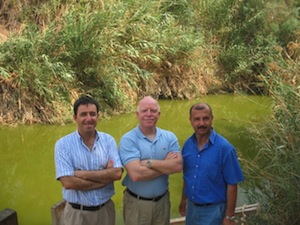
photo - The three co-directors of EcoPeace Middle East at the Jordan River. From left to right: Gidon Bromberg (Israel), Munqeth Mehyar (Jordan) and Nader Khateeb (Palestine)
The three co-directors of EcoPeace Middle East at the Jordan River. From left to right: Gidon Bromberg (Israel), Munqeth Mehyar (Jordan) and Nader Khateeb (Palestine). (photo from EcoPeace via commons.wikimedia.org)

The underlying assumption behind their efforts on all fronts is that regional cooperation is in each party’s best self-interest. “As altruism is not a common feature of foreign policy, particularly not in the midst of conflict, speaking to the self-interest of each side enables us to create political will for cooperation that ultimately serves the region as a whole,” said Bromberg.

Over the years, EcoPeace’s major areas of work have been focused on the rehabilitation of the Jordan River; a regional plan for sustainable development in the Jordan Valley; water and the peace process; Gaza’s water, sanitation and energy crisis; the water-energy nexus in the region; and the Red Sea-Dead Sea conduit.

Since its establishment, EcoPeace Middle East has seen many periods of extreme hostility and bloodshed in the region but, in the midst of that, has been able to make headway.

“Joint work of Israelis, Palestinians and Jordanians through EcoPeace’s programs has brought the leveraging of more than half a billion U.S. dollars in recent years for water supply and sanitation solutions in the GWN communities, all with a strong cross-border effect, i.e. removal of sewage from shared resources,” said Bromberg. “EcoPeace has also been able to convene Israeli, Palestinian and Jordanian government representatives together and generate dialogue between them around issues such as the Jordan River, at a time when no such meetings were taking place.”

At the community level, EcoPeace holds many cross-border youth gatherings every year, wherein kids not only learn about the interdependency of their and their neighbors’ water reality, but also about each other, in an effort to break down negative stereotypes.

One of the biggest achievements of EcoPeace in terms of bringing together people from the three countries has been the facilitation of relations between Jordan Valley mayors, who have rallied together to demand joint governmental cooperation toward rehabilitating the river.

“As far as positive ripple effects, very much due to our work, there is a growing realization amongst the various stakeholders, including decision makers, that regional sustainable development is crucial for geopolitical stability and for security in the region, for economic growth, public health and other aspects of life in the region,” said Bromberg.

EcoPeace’s notion of water as a political game changer in the region, for example, is slowly but surely becoming a part of the political discourse.

“The Jordan River is a good example of persistence that has recently started to pay off,” said Bromberg. “Ten years ago, when we were trying to convince the Israeli Water Authority (IWA) to release fresh water from the Sea of Galilee to the Jordan River, something which had then not happened for almost 60 years, one of the seniors raised his palm and said, ‘Gidon, when hair grows on this palm, that’s when fresh water will flow again from the Sea of Galilee to the Jordan River.’”

Nonetheless, by mid-2013, following years of advocacy by EcoPeace and others, the IWA released nine million cubic metres (mcm) of water into the river, committing to raise this volume to 30 mcm in the near future. This is only a drop in the bucket, however. Based on research commissioned for the project, the estimate is that 400 mcm overall is required to rehabilitate the river – and not all from the Sea of Galilee, which is in Israeli territory, but also from Jordan and Syria.

This is a very important first step, said Bromberg, who is certain of EcoPeace’s ability, with the help of many partners, to convince the relevant decision makers to allow for more significant volumes of water to flow into the river.

“Times now are particularly difficult in our region,” he said. “Hostility between Israelis and Palestinians has reached a whole new level, a frightening environment that, for the most part, does not react well to cooperation.”

Bromberg believes that, through providing youth in each of their communities with opportunities and cooperation with their neighbors, even this complex environment can be overcome.

For more information, visit foeme.org or facebook.com/ecopeacemiddleeast.

Rebeca Kuropatwa is a Winnipeg freelance writer.

Kids4Peace keeps growing

Kids4Peace youth present religious items to friends at an interfaith session. (photo from Kids4Peace)

Kids4Peace (K4P) started in 2002 as a two-week summer retreat/camp in the United States for 12 kids: four Muslim, four Christian and four Jewish. It is now a global movement that works year-round to “break down stereotypes and foster supportive, mature friendships rooted in spiritual values of equality and respect.”

K4P was the brainchild of a Vermont Christian, Dr. Henry R. Carse, who, at 18, left the United States, not wanting to be drafted into the Vietnam War. He moved to Israel and became a citizen. Having done his mandatory service in the Israel Defence Forces (IDF), he served in the IDF during the First Intifada (1987-1993). By the time of the Second Intifada (2000), he had been in Israel for about 30 years, was married and had four children. He wanted things to change so, with the help of some American friends, he created K4P, and the first camp took place in the States though Carse lived in Israel.

In 2004, Yakir Englander joined the organization as a volunteer. He did so for a few reasons.

A student at the time, Englander had grown up in Israel’s Bnei Brak area in a modern, Chassidic family. However, he left the Orthodox community at the age of 22.

“I decided to leave my community with a lot of love … some criticism, but mostly with love, and a huge desire to find more ways to be connected to spirituality and the divine,” he said.

When he left orthodoxy, he was drafted into the IDF, serving in an educational capacity, later spending most of his reserve time in a unit that had to identify dead bodies.

In his first month of studies at Hebrew University, in Jerusalem, in 2002, a bomb exploded and he found himself carrying the bodies of students, some of whom were American. He said that he felt lost, as did “many other Israelis,” feeling that the way toward change was through meeting with Palestinians.

“I went to a few meetings with different organizations,” he told the Independent, “but what I felt was that there’s this huge criticism of Israel in words and language that blames me. Yet, I didn’t have an opinion…. I didn’t know. It wasn’t just because I was Orthodox in the past. At the end of the day, there are many things we don’t know and also life is much more complicated.

“Another thing is that religion is always blamed as the reason for the conflict. For me, my religion was a source of love, a source that gave me energy, a source that gave me courage to go meet with Palestinians.”

When Englander heard about K4P, he joined as a Jewish advisor, and then later as a director until 2012.

Englander found it intriguing that two-thirds of K4P participants are Palestinians, both Muslim and Christian. “The fact that they are the majority in K4P, in a way, gives them the first opportunity to be in the majority,” said Englander. “This created new sets of power of dynamics, which are very interesting.”

About K4P’s goal, he said, “I think, today, when we hear the word ‘Islam,’ some people hear ‘ISIS.’ When some hear the word ‘Judaism,’ some people think ‘settlements.’ We want to change that.”

The transition is difficult, however, said Englander. He said some of the kids lose their bearings after the experience. “They no longer knew what to do or how to act, as they no longer hated Israelis or Palestinians,” he said.

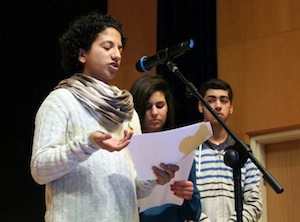
photo - Kids4Peace youth speak at annual Kids4Peace winter event
Kids4Peace youth speak at annual Kids4Peace winter event. (photo from Kids4Peace)

In 2006, K4P changed to a year-round model. Throughout his time there, Englander continued his studies, culminating with a PhD in gender studies, sexuality and Jewish theology. His schooling led him to Northwestern University. He became a Fulbright scholar, and spent a year as a visiting professor at Harvard Divinity School.

“During these years, I served as a vice-president for K4P International, working a lot on creating connections with many moms, rabbis, priests, government people, and doing a lot of lectures all over North America, including Canada,” said Englander.

Last year, Englander, together with the board, decided to end his term as vice-president to instead lead K4P graduates. Englander created a new program for 18-to-25-year-olds, working with them to shift from a dialogue-only model to a dialogue-to-action one.

“The idea with the kids and teenagers is we do a lot of dialogue and volunteering and other things in between, but we can’t put them at risk,” said Englander. “But, if you really want to create change, you must take some risk. So, dialogue-to-action is an answer for these needs.”

Children join K4P in Grade 6 for a six-year program with summer camps along the way. “It’s amazing to have two weeks together, but they work all through the year for six years, so it’s a very long process,” said Englander. “Because of this, it lets us dig deeper with them, step by step, in the conflict.”

For now, the program in Israel only operates in Jerusalem, due to financial constraints.

“Last year, the U.S. Institute for Peace gave us a very nice amount of money, so we have enough now for all the families who join K4P,” said Englander. “When the kids have a meeting, the parents, too, must come.

“We now have chapters in eight or nine cities around the world, with some [others] in the process of establishing chapters. Each one has two therapists, Israeli and Palestinian, who do the full journey with the parents and kids. So far, Toronto is the only Canadian chapter, but we also have [groups] in Houston, Seattle, New Hampshire, Vermont, Atlanta and a new one in Lyon, France.”

The Israeli chapter currently has about 150 kids, with the capacity to add another 65 new kids and their families this year.

“Hopefully, by next year, we’ll grow by 80 new families,” said Englander. “But, we also need to take into account that we are building a new program for 18-to-25-year-olds, with 15 amazing, serious young people. Some of them are graduates from K4P and some have parents who would never [have] consider[ed] sending them for K4P – settlers who grow up in settlements – [but] something very deep broke in them last year.

“It’s important for us that people will see Palestinians and Israelis together, hand in hand, helping in hospitals. But now, with the young adults, we want to take it further.”

Englander said that, in today’s situation, Israelis and Palestinians do not generally mix in public places. But, on Feb. 29, he said, K4P challenged that reality, having these young adults meet in a public space in Jerusalem.

“So, this group of people with a lot of courage decided they [were] going to do it,” said Englander. “Half of the meetings are going to happen in public spaces … that we choose very carefully … spaces where normal people from east Jerusalem and west Jerusalem are going to see them in their public space – Palestinians and Israelis together, body next to body, and dealing with the crucial, most important questions.

“We are planning to record and share these meetings,” he continued. “It’s very important to bring the voices and pictures to the world, to see how Muslims are opening themselves, how Jews are opening themselves – so they can see that it’s not just shalom/salaam, they care about their Jewish identities, their Muslim identities, their Christian identities … though they struggle with that, they still decide to work for peace.

“It’s a huge responsibility,” he said, “And, I will be honest and say that we feel a failure sometimes, thinking why didn’t we reach out to all the kids of Jerusalem and offer them this opportunity.”

Rebeca Kuropatwa is a Winnipeg freelance writer.

Adults ruin friendship

Samar, left, and Linor like each other from their first conversation. (photo from R2R)

If only adults could be as brave as children sometimes. The Israeli documentary Almost Friends screens as part of Reel 2 Real’s International Film Festival for Youth April 8-15. It shows just how insidious fear and racism can be, and how much a parent or grandparent can influence a child, for better and worse.

Bat mitzvah-age girls from two Israeli schools – a religious Jewish school in Tlamim and a mixed secular school in Lod – were brought together in a pen-pal program. For most, if not all, of the religious girls, this is their first exchange with non-Jews.

The success of the written exchanges leads to the Lod girls being bused to Tlamim to meet their pen pals. The teachers take the students through a couple of trust-building exercises and then give them time to interact. It is on this day that Arab-Israeli Samar and Jewish-Israeli Linor meet and become friends. They continue to write each other afterward, but the influence of Linor’s grandmother and mother overwhelms Linor and she stops writing. Samar’s concern for Linor’s safety, lest there be a terrorist attack if Linor visited her, consoles Samar over the loss of the friendship.

The most interesting development is Linor’s change of perspective. Initially, her mother is supportive of the pen-pal program and assures a then-worried Linor that there is nothing to fear from Arabs. Her grandmother is close-minded from the beginning, warning Linor that there will always be “a sting” in the Israeli-Arab relationship. Once Linor bonds with Samar, the ingrained distrust, racism, fear and insularity of Linor’s family presents itself. Their words sway Linor who, before the letter exchange, was calming her friends’ concerns about Arabs. After the negative reactions from her mom and grandmother, she is the one telling her friends how dangerous Arabs are, while one of her friends tries to convince her, “We’re alike. We’re brothers.”

There are many things powerful about this documentary. One is the reminder of how separate from each other most Arabs and Jews live in Israel. Another is how people who are kind and loving in so many ways can also be hateful and hurtful. But the documentary also reveals cause for hope – in both the religious girls’ reactions to their Lod peers and the friendships that do exist among Jews, Arabs and Christians in the Lod school.

Almost Friends is recommended for ages 13+. The hour-long film will be followed by a discussion with R2R artist-in-residence filmmaker Jessica Bradford and an R2R board member. It screens Wednesday, April 13, at noon, at Vancity Theatre. Tickets are $9 ($6 child/youth/senior, $5 each for groups of 10+) from 2016.r2rfestival.org or 604-224-6162.

Kashua talks at U of W event

Sayed Kashua spoke in Winnipeg as part of the University of Winnipeg’s annual Middle East Week. (photo by Rebeca Kuropatwa)

On Feb. 25, as part of the University of Winnipeg’s annual Middle East Week, about 75 people came out to hear what guest speaker Sayed Kashua had to say on the topic The Arabs in Israel: The Inaudible Cry for Full Citizenship.

Born and raised in Tira, Israel, Kashua is an author and journalist. His three novels – Dancing Arabs, Let it Be Morning and Second Person Singular – have been translated into English, with the stories of his first and third novels being combined to become the film Dancing Arabs. Among other things, he is the creator of the Israeli TV show Arab Labor and the subject of the documentary Forever Scared. His 2013 talk in Vancouver sold out.

At the recent Winnipeg event, Global College executive director Dean Peachey and U of W president Dr. Annette Trimbee welcomed Kashua and the audience to the U of W’s Eckhardt-Gramatté Hall.

Kashua moved with his family to Champaign, Ill., a year and a half ago, finding the “noise” in Israel too distracting.

“When we arrived,” he said, “I taught my kids two things: that people here stand in line and that, if you’re asked where you’re from, just say you’re from Jerusalem … and, according to their response, you’ll decide if it’s east or west.”

When Kashua enrolled his kids at school, he found himself stumped by the forms when he came to the question about race, as Arab was not listed.

“I almost checked off ‘other,’ but I was so worried about losing my visa within three days of landing in the States…. I almost signed my kids as Asians, because I can easily prove that Jerusalem is part of Asia…. I didn’t know what to do. I raised my hand and the nice lady asked how she could help. I said I don’t know what my race is. She asked where I was from. I said Jerusalem. So, she said that I’m from the Middle East … so, I’m ‘white.’ That was the point that I knew I loved Champaign.”

For the first time, Kashua was part of the majority.

It was not until he went to the United States that he was asked about Islamophobia. As a secular Muslim, he had to think about the question, and he decided that the more important aspect to him was his nationality.

However, he recently found out at a parent-teacher meeting that his son was going to prayer. Kashua asked the teacher which religion or faith his son was following.

“The teacher said, ‘What do you mean? [He prays] with the Muslims. You are Muslims?’

“I said, ‘Yes, but I had no idea that my son prays.’ It was shocking for us, how the majority defines you, and how my son who is only 10 already realized he belongs to the group of Muslim kids in their school.”

Kashua then spoke of his greatest influence in becoming a writer – his illiterate grandmother who had lost her husband in the Israeli War of Independence.

“She was illiterate, but she was intelligent and sharp,” said Kashua. “She always told me bedtime stories. Maybe writing for me is just [a way] to keep telling myself bedtime stories. She told me wonderful stories, sometimes fairy tales. A huge part of her stories were about the war.”

According to Kashua, most Palestinians who became citizens of Israel after the war – farmers and those who remained in their villages – were or are illiterate.

“In 1948, most Palestinian villages, especially on the shore, were demolished,” he said. His grandmother had stories about her husband, “who was shot in the war, killed in 1948.” Kashua’s father was born in 1947, “so he was less than 1-year-old when his father was killed.

“She told stories about how she was trying to protect her son, sometimes running in the wheat fields, trying to cover him, when the bullets were whistling around her … escaping to the mountains,” said Kashua. These were, he added, “my childhood stories, and, to me, it’s history. It was never part of our education system, we belong to the Israeli education system. We are Palestinians, but also Israelis … became Israelis after the war of 1948. The war is never mentioned in our history books.”

It was not until after the war that Kashua’s grandmother learned that she no longer had land. To his family, he said, that was a bigger loss than losing their house.

“My grandmother, who used to have a lot of land, became a worker, picking fruit for Jewish bosses, sometimes in her own private land, picking fruit in fields she planted herself,” said Kashua. “That’s a very strong feeling I received as a boy, about being a refugee.”

When Tira became part of Israel people received Israeli citizenship. They lived under a military regime he said, until 1966, just a few months before what he described as “the occupation of the West Bank,” noting that “the military regime meant you couldn’t leave your village without permission from the military officer in charge.

“My father was telling us [that] only on Israeli Independence Day, you didn’t need a permit. Kids would jump onto trucks to go to another town, just to see, for a chance to go out. Of course, they were forced in their schools to celebrate Independence Day with Israeli flags.”

Even today, according to Kashua, conditions are different in east Jerusalem than in west Jerusalem. He said that Palestinian Israelis do not have equal rights, and are discriminated against in all aspects of life.

With Tira’s population at 25,000 now – growing from 1,500 in 1948 – Kashua said that poverty and crime there is hard to control.

“Maybe, at the beginning, people wanted to defend our identity, language, culture and tradition, but that’s no longer the case. We are trying to escape the ghetto, but there are so many laws that forbid us to do so. That’s the situation, you are completely segregated.”

Kashua described Israel as an “ethnocracy.”

“It’s democratic only if you’re Jewish,” he said. “If democracy is judged by how it treats minorities, Israeli democracy is facing a very big problem with the Arab minority…. We are still considered a national threat, a demographic problem.

“If you look at the history, you will see that, since 1948 until now, it was very rare that Arab citizens of Israel were activist against or being a real threat to the security of Israel. All Israelis know that reality and they know we are completely discriminated against when it comes to all aspects you can think of – land, the ability to move from your village. The sad thing is, sometimes the slave feels like he needs the master more than the master needs the slave. You have no idea how strong of a feeling it is when you don’t have even the ability to dream.”

Kashua was fortunate to find a Jew willing to sell him an apartment in west Jerusalem. They were the only Arab family living there and this was one of the reasons they moved to the United States.

Kashua believes that Palestinians want to be citizens of Israel and that they do not want to destroy the state, but they do want equal rights, as well as acknowledgement for the suffering they feel they have endured since 1948. This is something Kashua does not see as possible with the current leadership in Israel.

Rebeca Kuropatwa is a Winnipeg freelance writer.