Celebration of Venice

Artist Iza Radinsky at Zack Gallery. (photo by Olga Livshin)

Just over 500 years ago, in 1516, the Venetian Republic forcibly moved 700 Venetian Jews to an island, the abandoned site of a 14th-century foundry. In doing so, they created the first ghetto. The word ghetto means “foundry” in the old Venetian dialect.
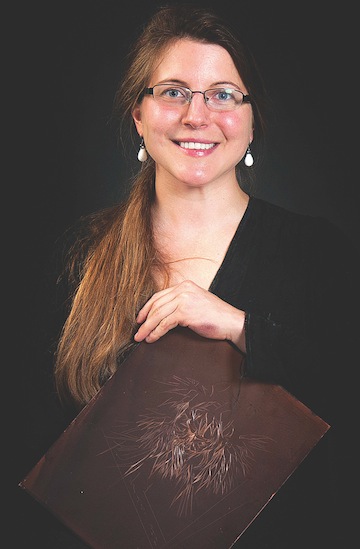
photo - Rachel Singel
Rachel Singel (photo from Rachel Singer)

The Venetian ghetto had two access bridges, both guarded at night, and boats also patrolled the canals. Despite the isolation and other restrictions, the republic was relatively tolerant. Inside the ghetto, Jews were free to practise their religion and traditions; they were not forced to convert, as was the case in Spain and many other places throughout Europe. The ghetto became known as a place of study and scholarship, and its population grew from 700 in 1516 to more than 6,000 a hundred years later. The area – which existed until 1797, when Napoleon conquered the republic and gave equality to all citizens – remains a centre of Jewish culture.

Many Jewish and Italian organizations in North America and Europe have commemorated the 500th anniversary of the Venetian ghetto in some way. Here in Vancouver, Zack Gallery, in conjunction with Il Museo at the Italian Cultural Centre, are presenting Stories from the Stones of Venice: The Art of Rachel Singel and Iza Radinsky. The exhibit was the brainchild of Singel, an artist, printmaker and assistant professor at the University of Louisville, in Kentucky.

“The year 2016 marked the 500th year since the establishment of the Jewish ghetto in Venice,” she said in an email interview with the Jewish Independent. “To honour the historical anniversary and the influence of this uniquely urban space, I worked onsite in Venice for two months to create a series of etchings illustrating the buildings, structures and streets of the ghetto.”

That was not Singel’s first visit to Venice. “I first went to Venice in 2012 for an artist residency,” she said. “I have had the opportunity to return to Venice every year since. My artworks have been increasingly influenced by Venice and its fragile state…. The last two years, I have also brought my students to the Scuola Internazionale di Grafica Venezia.”
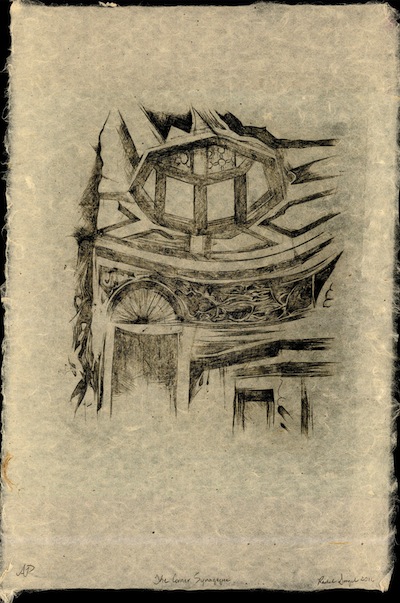
photo - “The Corner Synagogue” by Rachel Singel
“The Corner Synagogue” by Rachel Singel. (photo from Rachel Singer)

Singel has exhibited her 10 ghetto prints at the international school and at the Jewish community centre in Louisville.

“Each of the 10 images seeks to call attention to the Venetian ghetto’s importance, not only as an architectural complex within the confines of Venice, but also its worth internationally. Its structures are resonantly symbolic, representing the community’s resolute will to survive and prosper in what was an exceedingly hostile social environment.”

When Singel heard about the exhibition that was being planned at Il Museo – The Venetian Ghetto: A Virtual Reconstruction 1516-2017, which opened on July 25 – she looked into the possibility of engaging with their event. “I reached out to the Zack Gallery director, Linda Lando, about exhibiting my prints at the JCC,” Singel said.

Lando liked the idea of a Venice exhibition, but 10 small prints were not enough to fill the Zack, so Lando invited Radinsky, a local artist, to exhibit her paintings of Venice in the same show.

“Linda Lando saw five of my paintings of Venice before,” Radinsky said. “She asked me if I had more and if I would like to participate in a two-artist show together with Rachel Singel. I was happy to.”

Radinsky’s 14 large paintings and Singel’s prints form the Zack exhibit.

“I love Venice,” Radinsky said. “I first visited it in 2006, with my 86-year-old father. I was awed by the city. It was as beautiful as in the old masters’ paintings I admired as a child in the museums of Moscow and St. Petersburg, even better. Afterwards, every time I go to Europe, I visit Venice. It draws me. It’s quiet there, no cars. People walk and gondolas float on the canals. Nothing artificial, just earthy colours, red roofs, water and sky – and reflections in the canals.”
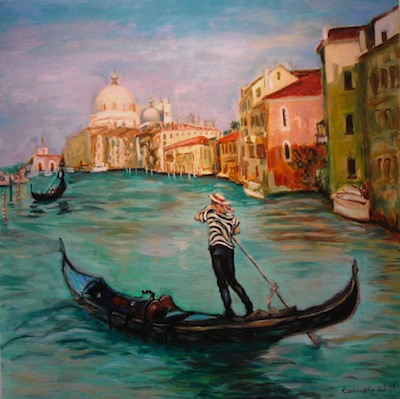
photo - “Gondolier” by Iza Radinsky
“Gondolier” by Iza Radinsky. (photo from Iza Radinsky)

In her paintings, gondolas and gondoliers look as intrinsic to the ancient city as the sunlight and shadows, the unique water streets and multiple bridges of Venice. The muted colours coalesce into one another, creating combinations that have no names. The sky and the water blend together, weaving one fantastic, living canvas.

“Venice is built on water,” Radinsky explained. “Because of the dampness, it’s hard to maintain the paint of the outside walls of the buildings. The paint often flakes off, and green mold grows close to the water. But gondolas – those look luxurious. Lots of gilt and bright colours, golden ornaments and lush fabrics and cushions for the passengers. Every gondola is an amazing piece of art. In the past, gondolas were part of the Venetian fleet. They could ram into an enemy ship, and their sharp iron bows could cut like knifes. Now, they are tourist attractions, and gondoliers are very friendly and knowledgeable. They wear special hats and traditional striped shirts. They have to study long and hard to learn manoeuvring in the narrow canals. They have to pass an exam and get a licence.”

The artist’s eyes glowed with enthusiasm as she talked about her beloved Venice. “I’ve been there four times already and I want to go again,” said Radinsky.

Stories from the Stones of Venice opened at Zack Gallery on July 27 and continues until Sept. 3.

Olga Livshin is a Vancouver freelance writer. She can be reached at olgagodim@gmail.com.
 

Mystery photo … July 21/17

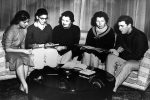
Beth Israel Sisterhood panel, 1977. (photo from JWB fonds; JMABC L.09864)

If you know someone in this photo, please help the JI fill the gaps of its predecessor’s (the Jewish Western Bulletin’s) collection at the Jewish Museum and Archives of B.C. by contacting archives@jewishmuseum.ca or 604-257-5199. To find out who has been identified in the photos, visit jewishmuseum.ca/blog.

Mystery photo … June 30/17

Beth Israel group reading, 1965. (photo from JWB fonds, JMABC L.09870)

If you know someone in this photo, please help the JI fill the gaps of its predecessor’s (the Jewish Western Bulletin’s) collection at the Jewish Museum and Archives of B.C. by contacting archives@jewishmuseum.ca or 604-257-5199. To find out who has been identified in the photos, visit jewishmuseum.ca/blog.

Jews under the rule of Timur

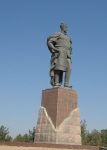
A statue of Amir Timur. (photo by Deborah Rubin Fields)

The 14th century was not a great time for European Jewry, to say the least – there were various kinds of persecution, including forced conversions, expulsions and massacres, especially in Western Europe. Yet, the Jews of what is now Uzbekistan got through this period relatively unmolested.

Turko-Mongol military leader Timur (Iron), who ruled from 1370 to his death in 1405, is also known historically as Tamerlane, from the Persian Timur-i lang (Timur the Lame), and Amir Timur (or Temur).

Timur conquered central Asia and parts of India – today’s Iraq, Iran, Afghanistan, Pakistan, Azerbaijan, Georgia, Uzbekistan, Turkmenistan, Tajikistan, Kyrgyzstan, large chunks of Turkey and Syria, and the northwestern portion of India. While it is estimated that his armies killed 17 million people, about five percent of the global population at the time, it seems he left Jews alone.

“Over the years, the moral justification for [Timur’s] campaigns … had evolved into a formality,” writes Justin Marozzi in Tamerlane: Sword of Islam, Conqueror of the World. “If the objects of his attentions happened to be Muslim, as they almost invariably were, then they had become bad Muslims. If they were infidels, so much the better.” Yet Michael Shterenshis, in Tamerlane and the Jews, contends that Timur did not consider Jews as infidels, at least not infidels needing to be violently eliminated, perhaps because they had no political ambitions and all they sought was Timur’s protection.

It would seem that Timur’s Jews were of more service alive than dead – which is a good thing, as Timur once reportedly constructed 28 towers from 70,000 of his enemies’ skulls, each tower consisting of 2,500 heads. According to Shterenshis, the ruler primarily used his Jewish subjects as taxpayers and skilled artisans. Jewish weavers and dyers contributed greatly to his efforts to rebuild the region and to reinstitute the abandoned Silk Road, which connected Europe to Asia.

Yu Datkhaev’s The Bukharan Jews is mentioned in Alanna E. Cooper’s Bukharan Jews and the Dynamics of Global Judaism. According to Cooper, Datkhaev argues that the term “Bukharan Jews” came to be after Timur moved several hundred Jewish families from Bukhara to Samarkand to assist in overhauling Samarkand, his designated capitol. These Jews reportedly lived near Timur’s recently rehabilitated and stunning Registan.

Timur’s Jewish subjects appear to have been loyal followers. Indeed, while Jews are not mentioned in his court history, there is a preserved letter from Herat physicians who ask the permission of Shah Rukh (one of Timur’s sons) to treat Timur’s injured soldiers. Significantly, they are offering their services to the state army, notes Shterenshis.

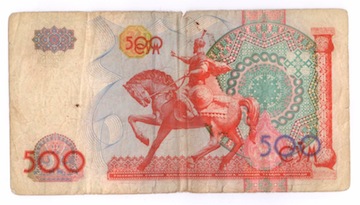
photo - Timur depicted on Uzbekistan’s 500 som note
Timur depicted on Uzbekistan’s 500 som note. (photo by Deborah Rubin Fields)

Timur seemingly responded in kind. He never issued anti-Jewish proclamations, laws, orders or restrictions. He never oppressed the Jews for being Jews, says Shterenshis. Under Timur, he adds, Jews were able to own houses and land, and they could be farmers – the regime did not impose upon Jews the role of moneylenders.

Jews under Timur’s reign were better off than the Jews of Europe and those in the Mamluk Sultanate, but were worse off than those who lived under the Mongols of China. Under Timur, Jews enjoyed a legal, but inferior status, writes Shterenshis. In contrast to their appointed role in other countries, Timur’s Jews were not particularly used as translators or envoys and their main occupations seem to have been as artisans, local merchants and doctors, says Shterenshis, noting that Jewish doctors under Timur did not enjoy the enhanced status they had previously, from the 10th to 12th centuries. Nonetheless, in local Jewish legends, Tamerlane is painted in a favourable light, says the historian, and is even supposed to have moved the Prophet Daniel’s remains to a tomb in Samarkand.

Some sources indicate that the Jewish presence in Samarkand pre-dates Timur’s rule. Tenth-century Samarkand (as well as Khorezm, Osh and Kokand) apparently hosted famous Jewish scholars, known in the singular as khabr, a word derived from the Hebrew chaver (friend or colleague), “which they used to distinguish themselves from ‘commoners,’” writes Irena Vladimirsky in “The Jews of Kyrgyzstan” (bh.org.il/jews-kyrgyzstan).

Indeed, the notion that Jews had been living in Central Asia prior to Timur’s rise to power is reinforced by the late-12th-century traveling Jewish chronicler Binyamin M’tudela (Benjamin of Tudela), who described this community as having as many as 50,000 members, among them “wise and very rich men.” Furthermore, the Samarkand community apparently appointed someone as nasi (head) of their community, who collected the requisite taxes of a recognized ahl al-demma (protected group).

In that period, Jews reportedly made Samarkand a major Jewish centre, and community members contributed to the construction of Samarkand’s aqueduct.

In the centuries after Timur, Jews came to dominate the region’s textile and dye industry, according to historian Giora Pozailov.

Uzbekistan’s aging Jewish population is now mainly concentrated in the cities of Tashkent, Samarkand and Bukhara. Even before the demise of the Soviet Union, Uzbek Jews began leaving, mainly for the United States and Israel. As the JTA article “Dwindling at home, Central Asia’s Bukharian Jews thrive in

Diaspora,” which can be found at ucsj.org, notes, Bukhara’s two synagogues almost never open at the same time, so that at least one of them has a minyan.

Deborah Rubin Fields is an Israel-based features writer. She is also the author of Take a Peek Inside: A Child’s Guide to Radiology Exams, published in English, Hebrew and Arabic.

Israeli food evolution

Chef David Polivoda (photo from David Polivoda)

When people reflect on Israel’s transformation since the establishment of the state in 1948, they often focus on geographic, political, economic and social changes. Slightly less tumultuous, but no less dramatic, has been Israel’s culinary development. In a country where people like to eat, and to eat a lot, the past 69 years has witnessed an amazing transition in Israeli food habits.

In the first years of statehood, for example, salad fixings were hard to come by, largely due to Israel’s tzena, or austerity program (1949-1959). Yet, even well after the lifting of the tzena, a salad meant finely chopped tomatoes and cucumbers, maybe with some onion and parsley, with a little lemon juice and olive oil. And this remains a classic Israeli salad. However, the days of such limited ingredients have come and gone.

While certain fruits and vegetables are, of course, seasonal – when you see ample supplies of strawberries and artichokes, you know Pesach is on the way – there is no end to the variety now available. Israeli farmers seem to have mastered the ability to grow just about everything. And this is just the tip of the iceberg, as former chef David “Poli” Polivoda explained about the evolution of Israeli food and palates.

First, a bit about Polivoda’s professional background. He began cooking shortly after his army service. Back then, he lived on a kibbutz by the Dead Sea, where he was part of a soldiers’ group that settled in the area. After his discharge, he studied carpentry and animation, but discovered – to the chagrin of the animation studio director – that his true vocation was cooking. He began his career in the Kibbutz Ein Gedi kitchen and, afterward, in its guesthouse.

Since then, Polivoda has worked in Jerusalem corridor guesthouses, on Magic One cruise ships, at the Osem food conglomerate, at various elite Jerusalem hotels, including the King David, and has done chef stints in Europe and in the United States. He also has been a restaurant inspector and now gives culinary tours of Jerusalem’s Mahane Yehuda.

photo - Chef David Polivoda’s sculpted fruit bowl
Chef David Polivoda’s sculpted fruit bowl. (photo from David Polivoda)

When he first started out, cooking as a profession was not highly regarded. Nowadays, there are countless cookbooks, culinary websites and workshops, televised cooking shows and chef competitions – his chosen profession has earned a “wow” rating. In Israel, Polivoda said there are several places to learn to be a professional chef and there are certificates and national (government) achievement-based licences, as well as more than one association of Israeli chefs.

When he was starting out, a typical meal in a nice hotel meant a steak dinner. Meat was, and still is, relatively expensive, and much of it is imported. Back then, there were few restaurants and the average Israeli’s financial situation did not permit dining out. At home, Israelis typically ate an evening meal of bread, salad, eggs, cheese and plain yogurt (pretty close to what people ate for breakfast).

Polivoda said kashrut limitations have resulted in a lot of creativity as far as food preparation is concerned. For example, Italian cooking has become very popular with Israelis, despite the prohibition against mixing milk and meat – in downtown Jerusalem alone there are at least six kosher Italian dairy restaurants. Israeli chefs have learned to successfully produce tasty meatless Italian dishes.

With respect to hotel meals, Polivoda said the meals are generally much larger than those most Israelis would eat at home. He said in a hotel restaurant, people eat at least a third more. In hotels, buffets are set up for breakfast, lunch and dinner and the focus is on a display of abundance, he explained. Salads were, and remain, an important part of the buffet, but, according to Polivoda, an economic reason lies behind the plentiful spread – a buffet means less wait staff is needed.

He explained that, while hotel management seeks a high level of prepared food, it wants to have it made as cheaply as possible. Thus, restaurants might lower their costs by using cheaper raw ingredients. Two examples of this are Israeli mock chopped liver made from eggplant, rather than from liver, and “Ben-Gurion rice” or ptitim, which are really tiny pieces of hard wheat, that is, pasta.

Still, Polivoda said it is the chef who makes the lasting impression on guests, not the eatery’s manager. And, he said, when people eat out today, they expect more than they did in the past.

Eating habits in Israel have changed for a variety of reasons.

First, Israel is economically better off overall. Many Israelis can afford to travel abroad and those who do come back want to re-experience the tastes they enjoyed during their travels.

As well, Israel now imports a wide range of food products, so people are exposed to more variety. Additionally, the Israeli food industry not only services the increasingly cosmopolitan local population, but has made major inroads in exporting agricultural products.

Finally, Polivoda noted that, on the one hand, Israelis are proud of their cultural background while, on the other hand, they try to turn everything into a business. One result is a broader diversity of choices, with more ethnic restaurants trying to cater to an increasingly diverse population.

However, it’s a tough industry, and Polivoda predicted that many restaurants would come and go, as there are people who go into the business without understanding how hard it is to stay afloat. Meals will become somewhat less plentiful, he said, also noting that there is much waste in the industry.

He presented two optimistic points: prices for dining out will decrease and, as the in-gathering of exiles continues, with newcomers wanting to enjoy something from their roots, ethnic food will continue to have a place in Israeli cuisine.

Deborah Rubin Fields is an Israel-based features writer. She is also the author of Take a Peek Inside: A Child’s Guide to Radiology Exams, published in English, Hebrew and Arabic.

Exploring Jewish Marseille

BirthWrong participants in Calanques de Morgiou. (photo courtesy Jewdas)

Marseille, a lively port city sloping down toward the Mediterranean Sea, has a long, rich history of immigration and multiculturalism – including a Jewish presence dating back 1,000 years. Today, France’s second-largest city is home to about 80,000 Jews, or almost 10% of its population, with both newer and centuries-old Sephardi and Ashkenazi communities.

Recently, a group of 30 self-identifying Jews and allies from Europe, North America, South Africa and Israel gathered in Marseille for the second edition of BirthWrong, an initiative started by the London-based collective Jewdas to explore and celebrate Diaspora histories and cultures. (The inaugural BirthWrong took place in Seville, Spain, in 2015.) We spent four days exploring the city and surrounding nature, meeting with locals and partaking in Jewish life, and found plenty to do for visitors.

The city’s Old Port is the classic starting point, with a spacious plaza, boat-filled marina and daily cruises shuttling visitors along the Calanques, a 20-kilometre series of fjord-like inlets surrounded by steep limestone cliffs. With a compact city centre, Marseille is easy and enjoyable to explore on foot; there are also trams, buses and subways. As in Vancouver, there are beaches in the heart of the city (Plage des Catalans, west of the Old Port) and near the centre (Malmousque, Plage du Prophète, Plages du Prado and Pointe Rouge).

In a city of 40 synagogues, the oldest and grandest is aptly called the Grande Synagogue de Marseille. Opened in 1864, it’s a three-storey Sephardi synagogue (with a basement Ashkenazi chapel) that hosts Shabbat services on Saturdays, followed by Provençal-style kiddush including green olives, anchovies and pastis, which is a local anise-based liqueur. The small congregation is predominantly Algerian-French Jews, and the impressive sanctuary – with the men’s section on the ground floor and women on the second floor – has shining marble floors, chandeliers, Romanesque arches and jewel-toned stained-glass windows. To attend services, be prepared to bring ID and have your bag searched, and women are asked to wear a dress or skirt.

A plaque outside commemorates that, in 1943, Jews were deported from the synagogue to Nazi death camps. In Marseille, 23,000 Jews were deported – with French police aiding the Nazis – and about 1,800 were killed in camps.

Prewar Jewish history in Provence dates back to the first century, with a more documented presence starting in the sixth century. After the Inquisition, Sephardi communities arrived from nearby Spain and Portugal and, in the Middle Ages, when the Vatican controlled the Avignon-Carpentras area, the Juifs du Pape (Jews of the Pope) acted as its financiers. At the time, Jews were banned in most other parts of present-day France.

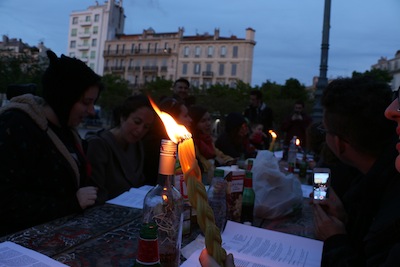
photo - BirthWrong participants take part in Havdalah
BirthWrong participants take part in Havdalah. (photo courtesy Jewdas)

Today, much of the Jewish community in Marseille came from Tunisia, Algeria and Morocco in the late 1950s and early 1960s, following the countries’ independence from France. The city is also home to large Italian, Armenian and North African communities (resulting in delicious cuisines to choose from).

A local guide, Lou Marin, gave us a custom walking tour of the city centre focused on 1939-1945, and has encyclopedic knowledge of Marseille’s history. He leads hours-long or multi-day walking tours with flexible rates. (Contact loumarin.mrs@immerda.ch or 33-486-954576 to inquire about a tour.)

Just outside the city, Calanques National Park offers more than 85-square kilometres of stunning coastal walks through pine forests, which were planted by the Romans, and ridges above the cliffs, with bushes of wild rosemary and thyme dotting the landscape. Our group did a four-hour hike with local guide Felix Altgeld (provenceapied.wordpress.com), who offers customized walks and has extensive knowledge of the local flora and geography.

Food-wise, Marseille is an affordable city within France, with ample fresh produce coming from sunny Provence and varied cuisines to relish, including North African kebab shops, Lebanese delis and 30 kosher eateries (including the pizza food truck L’imprévu). On Tuesday, Thursday and Saturday mornings, look out for the market in La Plaine plaza, a community institution with independent food stalls and other shopping. The neighbourhood, which holds an annual carnival and is filled with colourful street art, is fiercely resisting gentrification, and maintains an inspiring multicultural, multi-class spirit day and night.

We got the sense that many non-Jewish Marseillais are aware of Jewish history and culture. At the annual May Day rally, multiple locals (both Jewish and non-Jewish) approached our group to ask about our trip and the Yiddish songs we were singing. Both Marin and the local historian Alessi Dell’Umbria, who spoke to us about Marseille’s history, knew a lot about Marseille’s Jewish history and culture through both their work and their personal lives.

Given France’s culture of secularism – where religious identity isn’t generally part of public life – the local Jewish activists who hosted us found it refreshing and unusual to meet Jews who bring our religious identity to politics, wear Stars of David and kippot and are openly Jewish in public. We, in turn, were fascinated to visit a bustling but laid-back city with a rich left-wing history, near-constant sun and diverse communities carving out an inclusive collective identity.

Marseille is just over three hours from Paris by high-speed train (visit sncf.com/en).

Tamara Micner is a playwright and journalist from Vancouver who lives in London, England. Her work has appeared in the Globe and Mail, Wall Street Journal and London Review of Books.

Mystery photo … May 26/17

Beth Israel Sisterhood luncheon, 1983. (photo from JWB fonds, JMABC L.09853)

If you know someone in this photo, please help the JI fill the gaps of its predecessor’s (the Jewish Western Bulletin’s) collection at the Jewish Museum and Archives of B.C. by contacting archives@jewishmuseum.ca or 604-257-5199. To find out who has been identified in the photos, visit jewishmuseum.ca/blog.

Exhibit for the 150th

The ribbon-cutting at the launch of the Canadian Jewish Experience exhibit. From left to right: Dr. Mark Kristmanson of the National Capital Commission; Supreme Court Justice Michael J. Moldaver; Ottawa Police Chief Charles Bordeleau; Rabbi Reuven Bulka of Machzikei Hadas Synagogue; Catherine Bélanger, widow of the late member of Parliament Mauril Bélanger; Tova Lynch of CJE; Linda Kerzner of Jewish Federation of Ottawa; and Cantor Daniel Benlolo of Congregation Kehilat Beth Israel. (photo from CJE)

A new exhibit opened in Ottawa on April 2, to mark the contribution of Jews to Canada and to celebrate the 150th anniversary of Confederation. The Canadian Jewish Experience: A Tribute to Canada 150 is on display in the lobby of 30 Metcalfe St., just two blocks from Parliament Hill, and is open to the public daily from 9 a.m.-6 p.m.

The Canadian Jewish Experience is composed of specially created, bilingual exhibit panels illustrating nine major themes, such as contributions in war and diplomacy, public service, human rights, business growth, arts, culture and sport. A traveling version of the CJE exhibit will be available for display in other cities in Canada.

A parallel website has also been created to present more detailed information about the CJE exhibit topics and about many extraordinary Canadians. The website will provide information about venues for the lecture series and locations where the traveling exhibit can be viewed.

The Canadian Jewish Experience will also present a speaker series to highlight the contributions of Jewish Canadians to the development of Canada.

CJE has produced a special exhibit panel called Remembering Louis Rasminsky, which describes the work of Rasminsky, who was the first-ever Jewish person to be governor of the Bank of Canada. This will be on display at the Bank of Canada headquarters in Ottawa.

At the exhibit opening, CJE committee head Tova Lynch thanked donors from across Canada for the financial assistance they provided. In particular, she acknowledged its major donors: the Asper Foundation and Bel-Fran Charitable Foundation (Samuel and Frances Belzberg) from Vancouver.

“The CJE is an example of the tremendous love which Canadians have for our country,” Lynch added, praising the National Capital Commission for its cooperation. “Through our partnership with the National Capital Commission, CJE has an excellent downtown facility at the centre of events celebrating Canada’s 150th birthday.”

Lynch also noted, “Excitement is building as we approach Canada Day 2017. CJE will tell Canada’s Jewish story to many thousands of visitors to Ottawa in 2017.”

She pointed out that “Jewish Canadians have played a key role in all facets of life in Canada. Their accomplishments reflect the challenges and successes experienced by Canada in its first 150 years.”

The Jewish connection to Canada dates back to the mid-1700s. “The first Jewish Canadians arrived more than 100 years before Confederation,” noted Senator Linda Frum. “We’ve been here for a quarter of a millennium, but many Canadians don’t know the role we’ve played to make our country strong and vibrant. The Canadian Jewish Experience will help to change that.”

Ottawa Mayor Jim Watson said that the national capital is the appropriate home for the Canadian Jewish Experience. “In 2017, Ottawa will be at the centre of celebrating Canada’s 150th birthday and Jewish people have played a key role in all facets of life in the city. In fact, their accomplishments here reflect all the themes of the Canadian Jewish Experience, including being elected mayor.”

Other Jewish leaders and organizations who have assisted the Canadian Jewish Experience project include Victor Rabinovitch, former president and chief executive officer of the Canadian Museum of Civilization (now the Canadian Museum of History); the leaders of Jewish federations across Canada; and the Centre for Israel and Jewish Affairs. CJE is also supported by members of Parliament from all federal parties, Senator Frum, former senator Jerry Grafstein and Rabbi Dr. Reuven Bulka. Sandra Morton Weizman of Calgary is the curator of the CJE exhibit and virtual exhibit.

The CJE website is cje2017.com.


Travel along Incense Route

A sculpture of camels traversing the Incense Route in Avdat National Park. (photo by Kate Giryes/Shutterstock.com)

Close your eyes and travel back in time 2,000 years. You’re riding on the back of a camel laden with frankincense and myrrh from faraway Yemen, navigating 100 kilometres across the harsh, hilly Negev Desert to get your precious cargo to the Mediterranean ports.

For 700 years, from the third-century BCE until the second-century CE, this was the hazardous but hugely profitable task of the nomadic Nabatean people. Today, the small Israeli portion of the 2,000-kilometre Incense Route – a UNESCO World Heritage Site – is a fascinating trail filled with beautiful desert vistas and archeological discoveries.

The route includes the remains of the Nabatean towns of Halutza, Mamshit, Avdat, Shivta and Nitzana (another, Rehovot-Ruhaibe, is hidden by sand dunes), four fortresses (Katzra, Nekarot, Mahmal and Grafon) and two khans (Moa and Saharonim). You can see evidence of surprisingly sophisticated watering holes, agriculture and viniculture that the Nabateans innovated.

“The Roman and Greek empires controlled a lot of cities around the Mediterranean shores and, in all these cities, there were pagan shrines where they sacrificed animals. The smell was terrible, so the Nabateans brought incense for those shrines to cover the smell of the slaughter,” explained tour guide Atar Zehavi, whose Israeli Wild tours specialize in off-the-beaten-track jeeping, cycling, hiking and camel-back trips like the Incense Route.

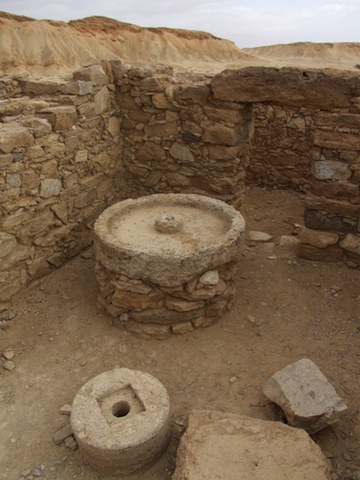
photo - At Moa, you can see an original pressing stone for olive oil
At Moa, you can see an original pressing stone for olive oil. (photo by Atar Zehavi)

“The route is surprisingly difficult because there were easier ways to go across the Negev. But the Nabateans wanted to stay hidden from other Arab tribes that might ambush the caravans, and they wanted to avoid being discovered by the Romans so they could keep their independence,” Zehavi said. “They knew how to harness the harsh desert conditions to their advantage, building water holes and strongholds others would not find. The Romans conquered Judea pretty easily but it took them another 150 years to conquer the Nabateans.”

Zehavi recommends a two-day “jeeping and sleeping” excursion along the Incense Route, also called the Spice Route. Start in the east, at Moa in the Arava Valley, site of an ancient khan (desert inn). From there, ascend the Katzra mountaintop, a stronghold overlooking the whole region. This will give you an appreciation for how hard it was to lead a caravan of camels up a steep slope.

“They’d travel 30 kilometres a day between khans. One camel carried 350 kilos of incense and only needed to drink once every 10 days or so,” said Zehavi, who has a master’s degree in environmental studies.

Even back then, camels wouldn’t have had much to drink at the third stop, the Nekarot River, a dry riverbed that once flowed through the Arif mountain range and northern Arava. The Nekarot is part of the Israel National Trail and boasts spectacular landscapes.

This leads you past Saharonim to the fourth stop, the town of Mitzpeh Ramon with its world-famous Ramon Crater (Makhtesh Ramon), which still has visible Nabatean milestones among its abundant flora and fauna, including the Nubian ibex. Ramon is the world’s largest erosion crater, stretching 40 kilometres and descending to a depth of 400 metres. It has unique geological structures, such as the Hamansera (Prism) of crystallized sandstones and the Ammonite rock wall embedded with fossils.

photo - An ibex at the Ramon Crater
An ibex at the Ramon Crater. (photo from PikiWiki Israel)

Camp out overnight in the crater, if weather and traveler preferences permit. A variety of hotels, from desert lodge to hostel to luxury, are also in the crater area. While in Mitzpeh Ramon, you may want to include the visitors centre and a nighttime stargazing tour.

The next morning, you’ll have a choice of trails for walking, jeeping or biking in the crater. A guided jeep tour is always a good option.

Getting back on the Incense Route, you go up Mahmal Ascent on the northern rim of the crater, a 250-to-300-metre climb to the Mahmal Fortress. Proceed northwest from there to Avdat National Park, site of a once-flourishing Nabatean city, where you can see shrines that were later turned into Byzantine churches.

Zehavi explained that, after the Roman Empire transitioned into Byzantine Christianity around 324 CE, incense was no longer needed, so the Nabateans started producing wine and desert agriculture, as well as raising Arabian horses.

“It’s amazing to see the way the harsh desert was colonized for agriculture through the use of highly sophisticated irrigation systems,” said Zehavi.

End your tour of the Incense Route at Avdat or go northwest to Shivta National Park and Halutza, or northeast to Mashit National Park near Dimona.

Israel21c is a nonprofit educational foundation with a mission to focus media and public attention on the 21st-century Israel that exists beyond the conflict. For more, or to donate, visit israel21c.org.

Women try to right wrongs

Elizabeth Cady Stanton – suffragist, social activist, abolitionist. Susan B. Anthony – social reformer, women’s rights activist. Ernestine Rose – who?

Bonnie Anderson taught history and women’s studies for 30 years at Brooklyn College and at the Graduate Centre of City University of New York. She has written three books on women’s history, the latest being The Rabbi’s Atheist Daughter (Oxford University Press, 2017).

When Anderson wrote Joyous Greetings: The First International Women’s Movement, 1830-1860, she learned about Rose, who was born in 1810 in Poland to an Orthodox rabbi and his wife. Her father taught her Hebrew and Torah but, by age 14, she had rejected Jewish beliefs and identified as an atheist. Betrothed at 15, she broke her engagement but her fiancé would not agree – he wanted her inheritance and brought a suit against her. At age 17, Rose went to the district court 65 miles away and presented her case personally, arguing that “she should not lose her property because of an engagement she did not want.” She won.

Moving to Berlin, Rose lived there two years before heading to Paris and then to London, where she embraced the belief system of Robert Owen, who had a utopian socialist vision; she became a disciple. Also in London, she met William Rose, a free-thinking atheist, jeweler and silversmith. They married when she was 20 and he was 23 and emigrated to the United States.

Rose became a pioneer for women’s equality and an accomplished lecturer, speaking to the public for the free-thought and the women’s rights movements.

“A good delivery, forcible voice, the most uncommon good sense, a delightful terseness of style and a rare talent for humour are the qualifications which so well fit this lady for a public speaker,” wrote a reporter in Ohio in 1852.

She lectured extensively, including against slavery, during her years in the United States, from 1836 to 1869, and became a U.S. citizen. She went back and forth to England between 1871 and 1874.

“She embodied female equality in both her everyday life and her political activism,” writes Anderson. “She was a true pioneer, working for the ideals of racial equality, feminism, free thought and internationalism.”

The book concludes with 44 pages of notes and eight pages of bibliography. Readers should find this biography of an “international feminist pioneer” a fascinating reading experience about an amazing woman.

***

In 2005, the movie Woman in Gold portrayed the story of a painting of Adele Bloch-Bauer I that was painted by Gustav Klimt in 1907 and owned by her and her husband. She died in 1925 and her husband fled Austria in 1938, ultimately dying in 1945. During the war, the Nazis seized the painting, which had ended up in a Vienna palace. The will of her husband designated Maria Altmann, niece, as heir and Altmann sued the Austrian government for the painting, and won the court battle. The painting was subsequently bought by Ronald Lauder and is now in the Neue Galerie in New York.

The novel The Fortunate Ones by Ellen Umansky (William Morrow/HarperCollins, 2017) alternates between Vienna in the 1930s and England in the 1940s, as well as Los Angeles in 2005 and 2006 and New York in 2006.

Rose Zimmer, her older brother Gerhard and her parents, Charlotte and Wolfe, live in Vienna in 1938. Unable to escape, they send Rose and her brother on the Kindertransport to England. Rose, 12, lives with a childless Orthodox Jewish couple; her brother lives elsewhere. By the time the war is over, Rose is living with a girlfriend and working; her brother is in the service and their parents’ whereabouts are unknown. Rose goes to college, is supported by her brother and his wife, meets a young man, marries and moves to Los Angeles, where she teaches.

In the background is Rose’s quest for a Chaim Soutine painting that was important to her mother.

Alternating with this story is that of Lizzie, a 37-year-old lawyer whose sisters live in Los Angeles, where their father lived and died. She meets Rose at her father’s funeral and learns of the Soutine painting. The work had been bought by her father and had hung in their home when she was a teenager, until it was stolen during a party.

A friendship blooms between the two women and Lizzie learns Rose’s background, that her parents were sent to a concentration camp and their home, along with the painting, seized. The “fortunate ones” are the ones who survived the war, but at what cost?

Lizzie’s story is far less interesting. She grew up in Los Angeles, her mother died when she was 13. She became lawyer, lives in New York, then moves back to Los Angeles after her father dies, and starts the search for the painting.

Both women have issues with loss and forgiveness. The novel is emotional, sentimental and suspenseful, and engaging enough not to want to put it down and to keep reading.

As to whether Umansky was influenced by The Woman in Gold in writing this book, she said she had not read the story or seen the movie, “although I was certainly aware of them and interested in the true events that inspired them.”

As to why she wrote the novel, she said, “That’s a hard one to answer in a few sentences! The contemporary story of Lizzie has its roots in something that happened when I was growing up in Los Angeles: my family was friendly with an ophthalmologist who lived lavishly and had a prized art collection, the crown jewels of which were two paintings, a Picasso and a Monet. In the early 1990s, those canvases disappeared without a trace. I was fascinated by the incident and, later, when the stories of Nazi-pilfered art came into the news, I began to imagine a storyline that brought both of these threads together.”

Sybil Kaplan is a journalist, lecturer, book reviewer and food writer in Jerusalem. She created and leads the weekly English-language Shuk Walks in Machaneh Yehudah, she has compiled and edited nine kosher cookbooks, and is the author of Witness to History: Ten Years as a Woman Journalist in Israel.