Skip to content
  • Home
  • Subscribe / donate
  • Events calendar
  • News
    • Local
    • National
    • Israel
    • World
    • עניין בחדשות
      A roundup of news in Canada and further afield, in Hebrew.
  • Opinion
    • From the JI
    • Op-Ed
  • Arts & Culture
    • Performing Arts
    • Music
    • Books
    • Visual Arts
    • TV & Film
  • Life
    • Celebrating the Holidays
    • Travel
    • The Daily Snooze
      Cartoons by Jacob Samuel
    • Mystery Photo
      Help the JI and JMABC fill in the gaps in our archives.
  • Community Links
    • Organizations, Etc.
    • Other News Sources & Blogs
    • Business Directory
  • FAQ
  • JI Chai Celebration
  • JI@88! video

Recent Posts

  • Eby touts government record
  • Keep lighting candles
  • Facing a complex situation
  • Unique interview show a hit
  • See Annie at Gateway
  • Explorations of light
  • Help with the legal aspects
  • Stories create impact
  • Different faiths gather
  • Advocating for girls’ rights
  • An oral song tradition
  • Genealogy tools and tips
  • Jew-hatred is centuries old
  • Aiding medical research
  • Connecting Jews to Judaism
  • Beacon of light in heart of city
  • Drag & Dreidel: A Queer Jewish Hanukkah Celebration
  • An emotional reunion
  • Post-tumble, lights still shine
  • Visit to cradle of Ashkenaz
  • Unique, memorable travels
  • Family memoir a work of art
  • A little holiday romance
  • The Maccabees, old and new
  • My Hanukkah miracle
  • After the rededication … a Hanukkah cartoon
  • Improving the holiday table
  • Vive la différence!
  • Fresh, healthy comfort foods
  • From the archives … Hanukkah
  • תגובתי לכתבה על ישראלים שרצו להגר לקנדה ולא קיבלו אותם עם שטיח אדום
  • Lessons in Mamdani’s win
  • West Van Story at the York
  • Words hold much power
  • Plenty of hopefulness
  • Lessons from past for today

Archives

Follow @JewishIndie
image - The CJN - Visit Us Banner - 300x600 - 101625

Tag: addiction

Effects of crystal meth

Effects of crystal meth

Winnipeg Mayor Brian Bowman speaks at the Nov. 22 forum Wide Awake. According to Ivy Kopstein of Jewish Child and Family Service of Winnipeg, he “is advocating to all levels of government for resources to deal with this health crisis.” (photo by Nik Rave)

“It is a significant issue in both Winnipeg and Vancouver,” Dr. Ruth Simkin told the Independent. “In Vancouver, it has been overshadowed by the opioid crisis, but is a significant problem there, too. It is seen in the Winnipeg Jewish community. I don’t have stats on its prevalence in this particular group, but it is likely similar to other populations.”

Simkin is a family physician working at a community health clinic in Winnipeg and part-time with the addictions unit/addictions consult service at the Health Sciences Centre (HSC) and Rapid Access Addictions Medicine (RAAM). The JI recently interviewed her about addiction; in particular, to methamphetamine, in light of a Nov. 22 forum in Winnipeg on the topic.

Wide Awake – An Eye-Opening Look at Methamphetamine in Winnipeg was held at the Asper Jewish Community Campus. It was co-presented by Jewish Child and Family Service (JCFS) of Winnipeg, Gray Academy of Jewish Education and the Rady Jewish Community Centre.

Amphetamines were developed in the late 1900s and used commercially from about 1930 for various reasons, including nasal congestion and to keep soldiers awake. Because of their adverse effects and addictive properties, however, their use became legally restricted in the 1970s.

Methamphetamine (crystal meth) belongs to the amphetamine class of drugs – stimulants that speed up the body’s central nervous system. Although not legally available in Canada, crystal meth has been used recreationally for a very long time.

“The initial effects of methamphetamine on the user are a sense of well-being or euphoria, increased energy and alertness, increased confidence and little need for food or sleep,” said Simkin. “Unwanted potential side effects include racing heart, dry mouth, nausea and vomiting, anxiety and restlessness. It can also produce paranoia, delusions and aggressive and violent behaviour.”

“Methamphetamine comes as a powder that can be used by ingesting, snorting, smoking or injecting,” explained Dr. Erin Knight, medical director of the HSC’s addictions program, who was a Wide Awake panelist. “It also comes in a crystal form (crystal meth). It is produced in illegal labs with fairly inexpensive and sometimes toxic ingredients. It may be made with ingredients from antifreeze, batteries and cleaning fluid.”

It is estimated that one percent of students in Manitoba from grades 7 to 12 have tried methamphetamine over the last year. It is easily accessible and inexpensive. Its price has dropped significantly in the last few years, from approximately $30 per gram to $10 per gram.

In her work at the HSC, it is common for Simkin to see patients who use meth, usually along with other drugs.

“It is a growing problem,” said Simkin about the use of the drug. “It is very accessible, cheap, has a prolonged effect on the user – six to eight hours if injected and 10 to 12 hours if smoked – and it is very reinforcing (addictive).

“As well, its effects are more unpredictable than other drugs. The number of users has doubled over the last few years. And, we’re also seeing a shift from individuals smoking meth to them injecting meth.”

According to Sheri Fandrey of the Addictions Foundation of Manitoba – who also was a Wide Awake panelist – drug mixing increases the potential for challenging behaviours and the possibility of a serious overdose. That meth is bought and sold in an unregulated market increases the risk that it may contain adulterants and contaminants that can cause further harm.

“There is no specific treatment in terms of medication,” said Simkin regarding addiction to meth. “There is some evidence for the use of motivational interviewing (MI) and rewards-based treatment.”

A recent Winnipeg Regional Health Authority (WRHA) report stated that, in the 2014-2015 fiscal year, 682 people who sought treatment at the Addictions Foundation  had used meth over the prior 12 months. A year later, that number had increased to 1,198. Meth was no longer being reported to be an occasional drug, and women were using more than in the past.

“As far as we know, meth use crosses all lines: rural/urban, high/low income and male/female,” said Simkin. “However, as with other substances, there are higher risk groups. These higher risk groups are students, low-income, rural, homeless, disenfranchised groups and people with co-occurring mental health disorders.”

Last year’s theme for Addictions Awareness Week, chosen by the Canadian Centre for Substance Use and Addiction, was “All Walks of Life.” Substance use issues and addiction do not discriminate by age, gender, class or religion.

Simkin said this is a complex and difficult issue, but suggested that having education programs in schools would be helpful, as are forums such as Wide Awake.

As a community, Simkin said there are several things that can be done to improve the situation:

1. Reduce the stigma around substance use in general, so people who need help aren’t afraid to seek it.

2. In terms of government, increase funding for detox beds and addiction treatment, including harm-reduction services.

3. Work on other determinants of health, like poverty, housing and education, as well as mental health, to try to prevent addiction in the first place.

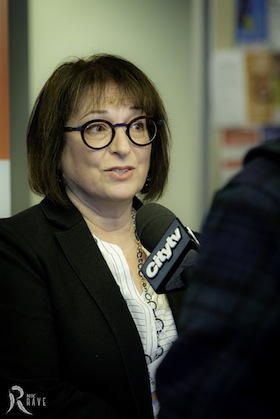
photo - Ivy Kopstein, coordinator of the substance use and addictions program at Jewish Child and Family Service of Winnipeg, answers a question from CityTV at the forum Wide Awake
Ivy Kopstein, coordinator of the substance use and addictions program at Jewish Child and Family Service of Winnipeg, answers a question from CityTV at the forum Wide Awake. (photo by Nik Rave)

Another resource now available in Winnipeg are the RAAM clinics that have been instituted recently by the WRHA to provide low-barrier access to resources for individuals needing help with substances abuse issues, including crystal meth.

“The City of Winnipeg and law enforcement are responding to the crisis on the streets and have included public education programs in all areas of the city,” said Ivy Kopstein, coordinator of the substance use and addictions program at JCFS Winnipeg. “Our mayor is advocating to all levels of government for resources to deal with this health crisis.”

“Emergency Medical Services (EMS) has now been given the authority to give meth users the antipsychotic drug Olanzapine,” Simkin offered by way of an example.

When a loved one has a substance abuse issue, it impacts the whole family, she said. Family members may feel stressed and anxious and it’s important for them to also seek support.

In British Columbia, the B.C. Centre on Substance Use (bccsu.ca) “is a provincially networked organization with a mandate to develop, help implement and evaluate evidence-based approaches to substance use and addiction.” Other resources include Crystal Meth Anonymous (crystalmeth.org), which is similar to Alcoholics Anonymous and lists a meeting place on Hornby Street in Vancouver, and Jewish Addiction Community Services (778-882-2994 or [email protected]).

Rebeca Kuropatwa is a Winnipeg freelance writer.
Format ImagePosted on January 18, 2019January 16, 2019Author Rebeca KuropatwaCategories NationalTags addiction, drugs, health, meth
Wilderness helps youth heal

Wilderness helps youth heal

BaMidbar students hike in all weather conditions, learning to live and care for themselves in outdoor environments. (photo from BaMidbar)

When she was 15 years old, now-camp director Jory Hanselman had some family members who were struggling with mental illness and addiction. At the same time, a couple of close friends passed away in pretty quick succession. Hanselman was struggling to cope, until her parents sent her to a wilderness therapy program.

“It was an extremely transformative experience for me,” Hanselman told the Independent. “I was there over Passover and so, while the program I was at was not in the least bit Jewish, my identity as a Jew was really central to what I experienced and got from it.

“I really connected it to the narrative, and thinking about finding my freedom from narrow places and overcoming obstacles I’ve faced in life. So, I looked into how I could become more involved in wilderness programs.”

In college, Hanselman spent summers at Ramah in the Rockies and saw firsthand the beautiful integration of Jewish learning via meaningful, outdoor-based experiences. And, when Ramah in the Rockies started exploring the idea of opening a Jewish wilderness therapy program, their director reached out to Hanselman, knowing that she had been working in the field. Hanselman was asked to provide input on how to build a therapy program.

“They decided they would move forward and officially create BaMidbar and so I came on board at that time, in September 2016, to help move the program from a space of ideas to implementation and actuality,” she said.

One great thing about its location – literally, in the wilderness – is that it’s only an hour-and-a-half drive from Denver, Colo. However, said Hanselman, “To give you a perspective, we are an hour drive from cell service in any direction.”

The therapy retreat is for Jews from 18 to 28 years old who are struggling with mild to moderate social and behavioural challenges, including depression, general anxiety, social anxiety and more. The young adults in the program have reached the tipping point where the issues are getting in the way of their being able to fully engage with the people and things around them in life.

“We also see lots of folks who have co-occurring substance abuse disorders, who are also using substances in addition to working through challenges associated with other mental health challenges,” said Hanselman.

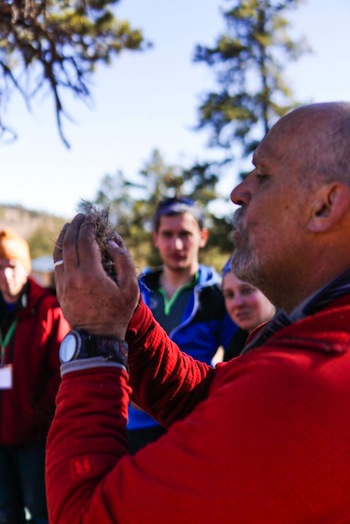
photo - Staff member Cliff Stockton teaches primitive fire building skills to students at BaMidbar
Staff member Cliff Stockton teaches primitive fire building skills to students at BaMidbar. (photo from BaMidbar)

“The idea of wilderness therapy (WT) is using wilderness- and adventure-based experiences as the vehicle for therapy, to grow. So, we joke a lot in the WT industry that it’s not about doing therapy in the wilderness, it’s about doing wilderness-based therapy. It’s not just going out and meeting with a clinician in a wilderness-based setting; it’s really using that experiential environment as a vehicle for working through different therapeutic concepts.”

The BaMidbar program involves the whole family. While students work with an individual therapist, their family is having weekly phone meetings with the therapist who, in turn, also works with the field staff to implement a treatment plan.

“So, our students are learning how to, for example, build a fire with friction, and they use this opportunity to build primitive skills to challenge themselves,” said Hanselman. “They learn what tools they need to work through and understand what they’re capable of.

“Wilderness-based experiences are used as metaphors and storytelling to support our students in connecting what is happening in the wilderness environment to life outside the program.”

The small-group environment at the camp is used as a way to help campers learn and rebuild communication skills and other tools.

“We provide feedback and strong support for them, as they determine how to have healthy emotional responses to different stressful situations, or anger management strategies, and things like that,” said Hanselman.

While there are many WT camps, BaMidbar is possibly the only one that uses a Jewish lens and framework in everything they do, including using the Jewish calendar as an opportunity to look at topics that are thematically relevant to campers.

“To give an example, for Passover last year, every day we had a theme we focused on that tied to the Passover narrative, as well as our student therapeutic journey,” said Hanselman. “Day One, we focused on our narrow place. Day Two, we talked about the story of Nachshon Ben Aminadav … jumping into the unknown and what it might look like to take a leap of faith and know that you need to change your situation, even if you don’t know what the future holds. Day Three, we looked at manna in the desert and talked about what sustains you physically, metaphorically, spiritually. Day Four, we talked about receiving the Torah on Mount Sinai and did a summit hike, talking about our personal value systems, what we live by, things like that.”

With BaMidbar being a kosher camp, Shabbat is a break from the routine, which, in this case, is wilderness. On Shabbat, they spend time in a cabin, while still studying texts through the lens of how they are relevant to one’s life. This is the perfect time, said Hanselman, to talk about family. For instance, “because, throughout Genesis, that revolves around challenging family dynamics…. I always joke that Abraham was the first wilderness therapy participant. He leaves everything he’s familiar with and goes off into the wilderness on this journey of self-discovery. So, we do a lot of programming around Shabbat.”

photo - BaMidbar’s program is rooted in Jewish ritual. Here the BaMidbar community celebrates Havdalah
BaMidbar’s program is rooted in Jewish ritual. Here the BaMidbar community celebrates Havdalah. (photo from BaMidbar)

BaMidbar (which means “in the desert” in Hebrew) is non-denominational and the organizers are dedicated to meeting every student where they are in their unique journey, recognizing and honouring that it can be very different for each individual.

“We are very dedicated to making sure that students understand that our goal is to explore meaning, values and purpose through a Jewish lens – not to tell them how to live Jewishly or what that ideal Jewish life might look like,” said Hanselman. “That’s not our goal. Our goal is to look at the wisdom Jewish tradition provides and to support students for whole health wellness.”

Participants can expect 10 to 12 weeks in the wilderness (Shabbat in a two-room cabin). Groups are small, with a current maximum of eight individuals, and the program runs year-round.

In winter, said Hanselman, “We fully outfit our students, so they receive all their gear from us. We make sure they have what they need to be safe and warm in a wilderness environment. We have a lot of staff practices around safety and support in that winter environment, and then we have tents that have wood stoves in them when it gets below a certain temperature.”

The camp fee is around $3,500 US per week. A nonprofit, the BaMidbar program offers scholarships and works with every family, regardless of their financial situation. Currently, about 75% of students receive scholarships provided mainly by private donors and foundations.

While BaMidbar has received many inquiries from Canadian families, they have not had any Canadian participants. “But, we can work with them – from Canada, or Israel, or other countries,” said Hanselman. “We just haven’t yet.”

For more information, visit bamidbartherapy.org.

Rebeca Kuropatwa is a Winnipeg freelance writer.
Format ImagePosted on January 11, 2019January 9, 2019Author Rebeca KuropatwaCategories WorldTags addiction, camp, healthcare, Judaism, wilderness therapy
Dealing with addiction

Dealing with addiction

Dr. Jenny Melamed (photo from Jenny Melamed)

“I’ve been in addiction medicine for at least 15 to 20 years now. I spend my time with people in addiction and recovery; that is all the work that I do. I believe in recovery and I believe in remission for the disease of addiction,” Dr. Jenny Melamed told the Independent.

Melamed, who now lives in Vancouver, was born and raised in Johannesburg, South Africa. She moved to Canada with her husband in 1987 – first to rural Saskatchewan, then to Vancouver. Her work with addiction began with a friend’s suggestion to try some work at a methadone clinic. She immediately was drawn to help people in this way and became certified in addiction medicine in the United States, then in Canada and internationally.

“I’ve got lots of initials behind my name,” said Melamed. “I’ve spent most of my time in addiction talking, doing person-to-person counseling. I don’t wear a stethoscope.”

According to Melamed, physicians were among the first abusers of prescription drugs. “It was thought that treating pain with opioids would not be addictive,” she said.

“Opioids are narcotics that act on opioid receptors to produce morphine-like effects, so we were prescribing it and, now, there are so many opioids out there. And we’re having these pill parties, where kids are taking pills from their parents’ cupboards – going to these parties where they’re putting them into these big bowls and they don’t even know what they are taking out. We’re looking at 13- or 14-year-olds that are trying these drugs. They’re finding it young.

“There’s not that much OxyContin available anymore,” she added, “as people are now scared of it.”

Melamed said there is no way to know for sure if a person will become addicted or not. Kids often take more than one possible addictive drug at these kinds of parties, she said, so they will likely not even know which one(s) affected them and what the specific effects were.

“For some people who take their first drink or take their first opioid, they will say that ‘the minute I used X, I felt calm for the first time,’” she said. “For some, it starts immediately. For others, it starts as weekend use at parties. Then, they start to use a little more during the week, and then they start realizing that, when they try to stop, they can’t. They’re actually dependent on this drug and are going through withdrawal. They can’t move away from it.”

Melamed said, “Addiction is a disease of escape. They’re using it to help them cope. I said to a young girl yesterday, ‘Why do you use?’ She said, ‘Sometimes, I just don’t want to feel.’ And that’s what it is. They learn from an early age, and the addiction part of the brain takes over and says, ‘I will help you through this.’

“We all live in a society where there’s a lot of stress and many of us, especially young people that have not developed coping mechanisms, turn to different modes of escape, as they are the easiest thing to do.

“The important thing to remember is that, when you come down from whatever high you used, you still have the stress, if not even worse, as now you’ve got to pay for your drugs. You may have blacked out or overdosed … but, in the spur of the moment, addiction is such an instant gratification that you don’t even think of it. You just think about self-medicating.”

Recovering addicts learn that there is no such thing as a cure from addiction. Addiction may go into remission in the same way that type 2 diabetes can go into remission, said Melamed. If one changes their diet and loses weight, etc., they may not have to use insulin anymore, but, if they gain weight back, change their diet or lifestyle, the diabetes will flare up again.

“So, you get the person who is out with buddies and somebody says, ‘You want to try this heroin?’ not knowing there’s fentanyl in there,” she said. “And they die, because the brain tells them that they can try it just once. And they actually believe that they can go back to being a social user, or a social drinker.

“They don’t understand that this is a chronic disease that is with them for the rest of their life. And, you know, when you say to a 15-year-old, ‘you’re not going to be able to use or drink for the rest of your life,’ it’s a very difficult concept and very scary … and that’s why the AA [Alcoholics Anonymous] concept of one day at a time is really important.”

While only about eight to 11% of people who use a substance become addicted to it, no one knows which substance will entrap them. But, one thing is for certain – it can affect any of us and the problem affects us all.

“I think the first thing we have to understand is that it doesn’t matter what religion we are, what our economic status is – everybody has a risk of addiction,” said Melamed. “We have some very wealthy families in the city who have lost kids to addiction. We have to move it out of the stigma.

“You have the concept of, ‘Oh, he’s a functional alcoholic, just drinks at lunchtime.’ And, we accept that. But, we shouldn’t accept that in any form. And, we also shouldn’t stigmatize it in any form. We need to talk to our children about it and be on top of it.

“In some ways, as a Jewish population, we feel like we’re a little different and protected,” she continued. “We’re not. The conversation has to happen at home. When I gave a talk here, at the Schara Tzedek, about addiction, the room was empty. We believe our kids would never do it.”

There are things you can do at home, in addition to talking with your kids about addiction. Any prescription drugs that are not being used should be returned to a pharmacy for proper disposal, and any medications that are being used on a regular basis should be locked up.

“You also should take a look at why you are using these medications,” she said. “Even as adults, our drug use is inappropriate.”

Melamed said one of the best ways to keep an eye on your kids is by making your home a welcoming space where they and their friends are happy to hang out. That way, they are comfortable being around you and you see what is going on.

“You need to know where your children are, who their friends are and what they are doing,” she said. “And, you cannot assume that, just because they are from the same socioeconomic status, that everybody’s good. It’s really important to know parents, their friends and to know what’s going on.”

Melamed is open to hearing from educators, schools, community groups and others who would like her to come and speak on addiction and its treatment.

Rebeca Kuropatwa is a Winnipeg freelance writer.

Format ImagePosted on December 7, 2018December 4, 2018Author Rebeca KuropatwaCategories LocalTags addiction, alcoholism, healthcare, Jenny Melamed, prescription drugs, substance abuse
Jewish take on health issues

Jewish take on health issues

Attendees engaged with panelists, left to right, Drs. Eric Cadesky, Brian Bressler and Jennifer Melamed at a Kollel event Jan. 29. (photo from Kollel)

A small but passionate group gathered at the Ohel Ya’akov Community Kollel Jan. 29 to engage with Drs. Brian Bressler, Eric Cadesky and Jennifer Melamed on the topic of Canadian Health Care Challenges Through the Jewish Lens, which focused on the legalization of marijuana, the treatment of addiction, the practice of harm reduction, the opioid crisis and medical assistance in dying (MAiD).

Cadesky, who chaired and moderated the event, is a family doctor in Vancouver and president-elect of Doctors of B.C.; until last summer, he was also medical coordinator at the Louis Brier Home and Hospital, a position he held for some eight years. Bressler is a gastroenterologist at St. Paul’s Hospital and a clinical assistant professor in the University of British Columbia’s department of medicine, while Melamed is co-owner of the Alliance Clinic, an addiction services facility in Surrey.

Bressler framed the conversation in terms of what he called the four principles of medical ethics for a healthcare provider: autonomy, respecting a patient’s choice and their right to understand and consent to treatment; beneficence, doing or recommending everything that could benefit a patient; nonmaleficence, taking into account all known risks to a patient and doing no harm, or the least amount possible, if harm is unavoiadable; and justice, making treatments available to all patients.

“I wouldn’t distinguish between those principles and Jewish ethical principles,” said Bressler. “I think they’re entirely consistent.”

Within this framework, the doctors’ dialogue with the audience took place.

One exchange was sparked by Melamed’s criticism of harm reduction clinics. “This is the dilemma we face,” she said, “is addiction insanity? Should we respect the patient’s autonomy even if the addiction has impaired that autonomy and they are not truly free to make decisions for themselves anymore because of the effects of the addiction?”

She said, “I refuse to accept harm reduction as the end result, as the highest result for my patients.”

Arguing that there “is really no such thing as a safe injection,” she said she believes such clinics are doing more harm than good.”

An audience member countered that recovery might be a realistic goal for working and middle-class patients, who have seemingly more to recover for; but, for addicts living in extreme poverty, who have a history of trauma and/or mental illness, they may not have a realistic chance of recovery. “With harm reduction, we keep them away from crime and treat them like human beings.”

The Kollel’s Rabbi Avraham Feigelstock said that, from a Jewish point of view, the community has a responsibility to do everything in its power to help a person recover. However, the question of how harm reduction clinics could go beyond their current purpose and move towards recovery was not pursued.

Discussing opioid use, Bressler expressed both a cautionary approach, based on his own practice (Crohn’s patients are at particular risk for addiction), and the opinion that it is important to focus on addressing the sources of pain, not just pain itself.

Both Bressler and Melamed were negative about the legalization of marijuana and its use in a medical setting. They said there was some evidence that marijuana was effective for a very limited number of conditions – neuropathic pain and nausea were mentioned – but that the risks of marijuana, such as cognitive impairment and a link to developing psychosis, were well-evidenced.

Melamed expressed concern about what she thinks will be the massive costs of policing marijuana intoxication, among drivers or industrial workers, for example.

When one person raised the potential of increased teen use of the drug, Melamed said teens were already using and she didn’t fear an increase, though she was concerned about the potential for increased use among adults.

Another audience member suggested the Jewish community should protest marijuana’s legalization.

The doctors took a less defined stance towards medical assistance in dying. Both Bressler and Melamed said they had personal and professional experience with it but did not take a stand in favour or against it, instead highlighting issues to consider. Bressler acknowledged the right of Canadians to MAiD but also pointed out that the practice conflicts with Jewish law.

Feigelstock said the general principle in Judaism is to prolong life but not necessarily to prevent death. “According to Jewish law, generally speaking, you may choose not to do things to prolong the life of someone who is dying,” he explained, “and you may give medicines to relieve suffering, which have the side effect of possibly shortening life, but you do not do something that will directly kill the patient. Every case must be dealt with separately, however, case by case; one cannot make general statements about what to do.”

Matthew Gindin is a freelance journalist, writer and lecturer. He writes regularly for the Forward and All That Is Interesting, and has been published in Religion Dispatches, Situate Magazine, Tikkun and elsewhere. He can be found on Medium and Twitter.

Format ImagePosted on February 9, 2018February 7, 2018Author Matthew GindinCategories LocalTags addiction, healthcare, Kollel, marijuana, medically assisted dying

Sukkah more than symbolic

As we celebrate Sukkot this week, we’ll be thinking about many things – notably, how lucky the vast majority of us are to have a solid roof over our heads. For most of us, the sukkah is but a symbol of our wandering in the desert all those years ago, a symbol to remind us to be humble, empathetic, grateful. However, for many living in Metro Vancouver, including members of our own community, homelessness is a reality.

Last week, we ran a good news story from Tikva Housing Society – residents were moving into the recently completed Storeys complex in Richmond. The Diamond Residences at the Storeys will house six singles (five of whom are seniors) and 12 families. Tikva Housing is also working with various partners on the development of 32 townhouses in Vancouver, and they anticipate accepting residency applications by early 2018. These new projects are in addition to Tikva’s Dany Guincher House, in Vancouver – which has 11 units for people with low-income, people with disabilities who are independent and families fleeing abuse – and the Esther Dayson Rent Subsidy Program.

There is a lot of which to be proud. However, there is much more to do. Last year, Tikva Housing reported a decrease in donations to its rent subsidy program of more than $15,000. As a result, the organization had to decrease the monthly subsidy it provided to singles, couples and families.

According to Tikva, more than 16% of Jewish Vancouver residents – more than 4,200 people – are low-income and at least 450 Jewish children under the age of 15 in Vancouver are “living in households that depend on income assistance.” Its 2015 report on housing in Metro Vancouver concluded a need for 1,827 affordable housing units in the Jewish community, including for “those under 65, low-income singles, couples and families.” Calling this “an unreachable goal,” the report nonetheless suggests some solutions, most of which the Jewish community is already pursuing, such as rent subsidies and partnering with other agencies to develop new projects.

Yet, the problem remains. And, of course, it is not a problem unique to the Jewish community. On Sept. 26, the final report on Metro Vancouver’s 2017 Homeless Count was released. On the night of March 7, more than 1,200 volunteers conducted surveys throughout the region, on the streets and at shelters, “to obtain a 24-hour snapshot” of the situation. The final report confirmed the preliminary results – 3,605 were homeless in the metro area.

While there were four percent fewer homeless youth in 2017 as compared to 2014, there were five percent more homeless 55 and older. Overall, there was a 30% increase in homeless since 2014, “and the highest number since 2002, when the first metro-wide count occurred.”

According to the report, “The three most cited barriers to finding housing were the high cost of rent (50%), a lack of income (49%) and the lack of availability of housing that suits their needs (30%).” More than 80% of respondents reported having “at least one health condition, including addiction, mental illness, physical disability or a medical condition/illness. More than half of the respondents (52%) have two or more health conditions.” More than 40% of respondents received income assistance, 28% a disability benefit; 22% were employed.

Following the local Walk for Reconciliation on Sept. 24, where some 50,000 people – including an organized Jewish contingent – gathered downtown to join in a “call to action,” it is sobering to learn that 34% of the respondents of the Homeless Count self-identified as indigenous/aboriginal. “Indigenous people continue to represent about one-third of the homeless population in the region,” states the report, noting that it’s the highest proportion found to date in a regional count and “constitutes a strong over-representation compared to the total population, where two percent identify as aboriginal as per the 2011 Census.”

In a statement of the obvious, Mike Clay, chair of the Metro Vancouver Housing Committee, said, “In order to stem growing homelessness, it is clear we need more affordable housing options.”

But additional solutions are also needed, given the systematic discrimination that still exists for First Nations people and the health conditions many of the homeless are facing – and not only the homeless. Just last week, the Independent ran an article on the impact of addiction in our community. Jewish Addiction Community Service (JACS) Vancouver estimates that as many as 5,000 Jews in our community need support, “whether grappling with their own addiction issues or the addiction of a loved one.”

The Homeless Count’s findings most likely underestimate the problem. The report references the “hidden” homeless, which includes people “who do not have a regular address of their own where they have security of tenure, and who may be staying temporarily in another household – often called ‘couch surfing.’” The Tikva Housing press release about the new tenants at Storeys noted, “One 83-year-old woman cried when she was told she would be moving into a studio unit, as she has not had a place to live for years and was sleeping on someone’s couch.”

Then there are the tens of thousands of people at risk of becoming homeless. Apparently, housing shouldn’t account for more than 30% of a person’s or family’s gross income, yet the Homeless Count report notes there were 56,000 Metro Vancouver households in 2006 that spent more than 50% of their income on shelter, and the number had increased to 62,355 by 2011. (More recent data weren’t available but, based on skyrocketing housing costs, we can guess that the number of households spending 50% or more of their income on shelter has also increased.)

There is much to contemplate as we gather in our sukkot this week. And, once the holidays are over, once we celebrate Simchat Torah, thankful for the Jewish texts and traditions that have shaped the moral compass of even the most secular of us in some way, there is a lot of work to be done.


Posted on October 6, 2017October 5, 2017Author The Editorial BoardCategories From the JITags addiction, homelessnes, JACS Vancouver, Sukkot, Tikva Housing

Compassion needed

“… what the Lord doth require of thee: only to do justly, and to love mercy, and to walk humbly with thy God.” (Micah 6:8)

Despite its solemnity, Yom Kippur is my favourite of the Jewish holidays. The ritual of atonement, the accounting for our soul’s transgressions, humbles and connects us.

When we ask God for forgiveness, what are we asking for? Not for His acceptance, nor His condoning of our transgressions. What we are seeking is His compassion: the recognition that we are human and that, to be human, is to have both divine potential and to be inherently flawed. Atonement humbles us; His compassion restores our dignity.

As a physician specializing in addiction medicine, I see and support people who truly believe they are unworthy of this compassion. Many people believe that addiction is not something that affects Jewish people. I can attest that Jews are as susceptible to this neurological disease as any other group. From the Downtown Eastside SRO (single-room-occupancy) hotels, to the extravagant homes of Shaughnessy, substance dependence is having a deep impact on our community as a whole.

Our failure to acknowledge the addiction issues within our community has forced people with substance dependence into hiding and fostered ignorance over compassion. Isolating drug users can be deadly. We know that, statistically speaking, the majority of the lives lost throughout the overdose epidemic have been people who have used drugs alone in their homes.

Is it possible for us to consider extending the compassion, the dignity that we desire to receive on Yom Kippur, to people who are dependent on drugs?

For most of my patients, drug use began as a coping tool, a way to manage physical or mental pain. Haven’t we all resorted to coping strategies at some time, sometimes constructive, sometimes foolish?

What is your coping mechanism? When you don’t want to deal with a situation, do you binge on Netflix? Do you eat junk food, work too much, smoke? Fiddle with your phone, endlessly scrolling through social media? Do you sometimes misuse a prescription medication to help you manage your thoughts or worries?

Have you ever experienced shame around your coping mechanism? Do you find yourself shutting the phone off when your spouse walks in the room? Eating differently when others are around?

Imagine if your coping mechanism was not easily hidden. Imagine if, when you realized that it had become a problem and you tried to stop, you plummeted into severe anxiety and physical withdrawal – convulsing, vomiting, sweating, aching everywhere – but you couldn’t afford the days or weeks it would take to withdraw because you had a job to do, a family to care for. So, you spiraled deeper, always in search of a way to manage your pain. Until, eventually, it became impossible to hide.

Drug addicts are our vulnerability and suffering made visible. Or, as Rabbi Shais Taub said, “Addiction is but the human condition writ large.”

Last September marked the launch of Jewish Addiction Community Services (JACS) Vancouver, an organization created to provide members of our community with support around the effects of addiction. Rabbi Paul Steinberg spoke at the opening event. His words continue to resonate: “… I pray that we can tear down our walls of fear and provide a safe place to express our vulnerabilities, truly embracing teshuvah as a real agent of transformation. If our congregations cannot be a place for the depressed, the addicted, the junkie or the ex-con, then what claim are we making on our Judaism? What kind of temple have we really built?”

This Yom Kippur, let us acknowledge and have compassion for the addict in all of us. Let us welcome those with substance dependence into our congregations, and into our hearts and prayers. If you know someone with an addiction problem, let them know that you are grateful for the effort they are making, an effort that reflects a persistent theme in the history of the Jews – escaping enslavement and finding freedom. We all have something to learn from their struggles.

And let them know they are not alone. Tell them about JACS Vancouver. For more information, visit jacsvancouver.com, email [email protected] or call 778-882-2994.

Dr. Alana Hirsh is a Jewish Addiction Community Service (JACS) Vancouver volunteer and program committee member.

Posted on September 29, 2017September 28, 2017Author Dr. Alana HirshCategories Op-EdTags addiction, JACS, Yom Kippur
How best to treat addiction

How best to treat addiction

The Feb. 22 panel discussion at Congregation Schara Tzedeck featured, left to right, moderator Dr. Auby Axler and panelists Rabbi Andrew Rosenblatt, Dr. Jenny Melamed, David Berner and Rebecca Denham. (photo by Zach Sagorin)

Approximately 5,000 Jews in the local Jewish community need support around addiction, according to Jewish Addiction Community Services Vancouver.

JACS offers various support programs for those battling addiction, and their families and friends, and organizes events for community education and awareness. On the evening of Feb. 22, at Congregation Schara Tzedeck, the agency partnered with Schara Tzedeck and the Jewish Federation of Greater Vancouver for a panel discussion on the fentanyl crisis and addiction in the Jewish community in general. Participating panelists were Rabbi Andrew Rosenblatt, addiction medical specialist Dr. Jenny Melamed, addiction therapist David Berner and director of services at JACS, Rebecca Denham; the moderator was Dr. Auby Axler.

“JACS Vancouver is a new agency trying to tackle a taboo and shame-filled topic that can ignite passionate responses and strong resistance,” explained Denham in an email. It is committed to supporting community needs relating to substance use, and values a diversity of perspectives on addiction treatment.

At the panel discussion, Rosenblatt spoke about some of the community concerns and the internal conflicts that some people experience when trying to determine the best approaches to addiction support.

Melamed, an addiction doctor who has been treating people with opioid addiction for 15 years, said, “People have been dying from heroin, people have been dying from all drugs…. There are many drugs out there that are as dangerous. Alcohol is one of the most dangerous drugs out there, 90% of the trauma seen in the [emergency room] after midnight is from alcohol. A heroin addict is a calm, sedated person who is nodding off in a corner, he’s not violent; he’s a danger to himself, and he’s not a danger to anybody else.”

She explained, “Addiction is a … disease situated in the primitive part of the brain…. The addiction goes and sits there and it says, ‘if you do not use me, you will die, you need me.’ This is where the team comes in…. We’ve got the ability to say, ‘I’m not going to listen to you anymore.’ But the power to overcome that is what is needed and it is strong and it requires meetings, it requires therapy, it requires a team, it really is a village to keep somebody sober in the long term.”

About 40 people attended the discussion and Melamed commented, “When you look at how big the Jewish community is and how small the attendance is here tonight … we live with our heads in the sand and we don’t realize how many of us have family members who are in addiction.

“We need to remove the stigma related to addiction. When we tried to get somebody in recovery to talk tonight, we couldn’t find anybody in the Jewish community who would come and stand up, because we put that big addiction sticker on people’s forehead. But we all know that it can happen to anybody. Yes, there is an enormous genetic component, a 40% genetic component when it comes to addiction, but there is trauma. Sexual abuse happens in any religion. Everything happens across the board.”

While the Downtown Eastside is often considered the centre of addiction and drug use, Melamed said this is not the reality. “The people on the DTES make up maybe one to five percent of the drug-using population. Seventy-five percent of people using drugs are what we call functional … nobody knows what is going on out there. If you can afford your heroin habit, then you’re OK until you overdose and it takes you over to the other side.”

Berner, founder and executive director of a residential treatment centre for drug addicts and alcoholics, has conducted almost 11,000 therapy groups.

“Addictions are coping mechanisms…. I’ve never met someone in addiction who hasn’t had a terrible upbringing, who hasn’t had severe trauma, serious trauma,” Berner said. “I’ve rarely met anyone who has addiction who hasn’t suffered physical or sexual abuse, or emotional-psychological abuse, or financial abuse.”

Berner posed the rhetorical question, “Can you change? No.” But, he said, “You can change the things you do, including picking up [drugs or alcohol].”

He said, “Every week I give a lecture, every Tuesday morning, and then do group therapy. One of the things I say week in and week out is, I don’t want to hear about your substance.”

Berner also commented on the government’s spending on addiction services in Vancouver.

“We’ve got harm reduction, that’s it!” he said. “And then prevention, treatment and the law are not only ignored officially … they are officially denigrated by the health department, by the ministry of health, and anyone that can make a decision.”

In response to an audience question – “How does the word recreational fit in with the level of risk that’s involved in drugs?” – Melamed responded, “I think you have to replace the word recreational now with Russian roulette because that’s the word we’re using. There is no safe use.”

“Even with marijuana?” asked another audience member.

Melamed said she knows, based on urine samples she has taken, that “some of the marijuana is laced with fentanyl.”

However, a man in the audience, identifying himself as a federal prosecutor who works with the police on narcotics, countered that assertion. “My understanding, after looking at various police files on where this has been reported, [is that] marijuana laced with fentanyl … is anecdotal. It is from people who have overdosed in a non-fatal manner and have reported it to hospital authorities, doctors, police officers, [saying] ‘all I used was marijuana,’ and this is to avoid, in my understanding, the stigma of being labeled a hard drug user…. There has been no actual seizure by police in B.C. of marijuana laced with fentanyl.”

However, the prosecutor added, “We see cocaine laced with fentanyl, we see a lot of heroin laced with fentanyl, we see methamphetamine laced with fentanyl.”

With Purim approaching, Rosenblatt noted, “Drinking on Purim happens a lot, especially in the Orthodox Jewish community, because there is a statement in the Talmud – a person is obligated to drink on Purim until they don’t know the difference between cursed be Haman, who is the villain of the story, and blessed by Mordechai, who is the hero.”

He said, “Maimonides says the way you should be happy on Purim is by spending most of your effort feeding the poor on Purim. Why? You would think that maybe Maimonides was democratic and would say something very nice like the poor deserve a holiday, too.… That’s not what Maimonides says at all. Maimonides says that there is no greater joy in the world than helping another person.”

“JACS was born out of a necessity and I think it is important to remind you that JACS is here to support you,” said Denham in wrapping up the event. “If a question doesn’t get answered tonight or if an issue gets triggered for you, reach out to us and we will support you just as the community has supported us. We wouldn’t be here today without the kind accepting spirit that runs deep throughout this community. From the support of the rabbinical leaders, professionals, individuals, family foundations, the support of the Federation … all of whom continue to strengthen JACS services … we are bringing this much-needed discussion away from shame and into a supportive light.”

To learn more about JACS Vancouver, Denham can be reached at [email protected].

Zach Sagorin is a Vancouver freelance writer.

Format ImagePosted on March 10, 2017March 8, 2017Author Zach SagorinCategories LocalTags addiction, fentanyl, health, JACS, Rebecca Denham, substance abuse

JACS Vancouver launch

When Paul Steinberg first read The Big Book, the “bible” of Alcoholics Anonymous, written by founder Bill Wilson, he scribbled disagreements in the margins. His sponsor later saw them and took him to task. “Do you really think you know more than Bill Wilson, who wrote a book that has saved the lives of millions of people?” he said. “Maybe it’s time for you to start looking for things you can connect with in the book, not things you disagree with!”

photo in Jewish Independent - Beit T’Shuvah Rabbi Paul Steinberg helps launch JACS Vancouver on Sept. 8
Beit T’Shuvah Rabbi Paul Steinberg helps launch JACS Vancouver on Sept. 8. (photo from beittshuvah.org)

Steinberg took the advice to heart, and a journey began. He is now the rabbi of L.A.-based Beit T’Shuvah, a Jewish centre for addiction recovery that integrates the wisdom of the 12-step program with Jewish spirituality, culture and community. He will be speaking at Congregation Beth Israel, together with Rebecca Denham of Jewish Addiction Community Services Vancouver, on Sept. 8, 7:30 p.m. The event, which officially launches JACS Vancouver, is called Opening the Door: A Conversation about Addiction in the Jewish Community.

Steinberg first came to Beit T’Shuvah, which this year celebrates its 30th anniversary, as a rabbi, a Jewish educator and an alcoholic looking for healing. After living there for five months in recovery, he began doing part-time spiritual counseling as part of the centre’s work therapy program. Eventually, he took on that role full time, then became the pulpit rabbi of the centre’s synagogue, a congregation with hundreds of attendees on Shabbat.

“The centre is unusual in many ways, one of which is in having a synagogue with a fully functioning congregational life on site,” Steinberg told the Independent. “The congregation is made up mostly of residents of the centre, alumni and their family members. Being so close to Hollywood, we have an amazing roster of artists and musicians who come to shul here – the music rocks.”

Steinberg’s rebirth was dependent on his discovering a deeper Judaism, and that is something he is passionate about sharing with other Jews in recovery. “We believe, as evidenced by the success of the 12-step program, that the spiritual is essential in recovery,” he said.

In 2014, Steinberg published the book Recovery, the 12 Steps and Jewish Spirituality: Reclaiming Hope, Courage and Wholeness, about his journey and the insights it afforded. He explained that, for many Jews, the 12 steps are uncomfortably associated with Christian spirituality, despite the open-ended approach to God in the method. “Some Jews recoil from AA for that reason. We need to give Jews access to the 12-step structure in Jewish terms,” he said.

“The addict’s world is very narrow, obsessive, self-centred. Opening up and surrendering to a greater power – whether that’s thought of as God, the universe, the Dao, the collective spirit – breaks that entrapment and allows change. It is the essence of a Jewish approach to recovery. On that ground, the disciplines of Jewish life – community, service, study, prayer – can do their work.”

Discomfort with the spirituality of AA is far from the only obstacle Jews struggling with addiction face. Steinberg said there is tremendous stigma around addiction in the Jewish community, especially around drugs and alcohol. As Rabbi Abraham Twerski discusses in the foreword to Steinberg’s book, AA groups were refused the use of synagogues for many years, reinforcing their habit of locating in church basements.

“The old saying was a shikker is a goy (a drunkard is a gentile),” said Steinberg. “Jews are not supposed to be alcoholics. The reality is that there are many Jews struggling with substance abuse, even very outwardly successful Jews. There are doctors, lawyers, businessmen and even rabbis. I was outwardly a success, but I was living a divided life. My life had to completely fall apart before I would deal with my alcoholism.”

Many struggling Jews do not know where to turn when they suffer from addiction. “It is amazing how few Jews will turn to their rabbi or their community for help,” said Steinberg. “The synagogue is all too often not seen as a place where you can air your dirty laundry, where you can be vulnerable.”

The desire to provide Jews with a place to find healing from addiction as Jews is what drove the creation of JACS Vancouver. “It is imperative to provide a safe place for Jews to get help, and to provide them with the Jewish tools they need for that healing to be successful,” said Denham.

“Addiction is an epidemic in North America,” said Steinberg. “It’s not just alcohol and street drugs; it’s also gambling, sex addiction, workaholism, pornography, opiate addiction. We need to face the brokenness in ourselves and our community without stigmatizing it, so that the healing can begin.”

To RSVP for the Sept. 8 event, email [email protected].

Matthew Gindin is a Vancouver freelance writer and journalist. He blogs on spirituality and social justice at seeking her voice (hashkata.com) and has been published in the Forward, Tikkun, Elephant Journal and elsewhere.

Posted on August 26, 2016August 25, 2016Author Matthew GindinCategories LocalTags 12 Steps, addiction, Beit T'Shuvah, health, JACS
Help for substance abusers

Help for substance abusers

Rebecca Denham, director of services for Jewish Addiction Community Service of Vancouver. (photo by Wendy Oberlander)

The first comprehensive effort to reach Jewish individuals suffering from addictions launched this month in Vancouver when the Jewish Addiction Community Service of Vancouver came into being. Its goal is to approach substance abuse issues – specifically alcohol and drugs – within a Jewish context.

The first two services being offered by JACS Vancouver are a support group for families living with substance abuse and navigational support, to help direct individuals and families to the right channels in the support system, whether they want access to recovery programs, counseling or other resources. But those services will expand rapidly to include community education and awareness building.

“We want to teach people how to identify when someone is in trouble with substance abuse, and to get them to the right services,” said Rebecca Denham, director of services for JACS, who will be providing assistance from an office at JHub in Richmond (8171 Cook Rd., Suite 212).

Denham is planning to do this outreach at schools, synagogues and camps by hosting events that promote awareness. “We want to start conversations” she said, “because that’s where it has to begin: people talking about addiction, where they’re seeing it and how substances are being used and abused.”

Calls for assistance are beginning to come in as Denham reaches out to Lower Mainland addiction service providers, psychologists and counselors to inform them that JACS exists and the kind of support it offers.

“We want to let people in the Jewish community know that there will be services that incorporate their traditions and values, and acknowledge that some of their circumstances may be unique,” she explained. If someone needs to enter a treatment facility, JACS would like to ensure they have access to kosher food and rabbinical support, if they want it. When they’re exiting such facilities, JACS can offer help on moving back to the community safely, and on how to attend Jewish events that may incorporate alcohol, for example.

Denham, an Ottawa native with 15 years’ experience in mental health, addiction and youth at risk, moved to Vancouver in 2010 and worked with Jewish Family Service Agency in its mental health outreach program. She is available to take calls for appointments Monday through Thursday, 9 a.m.-1 p.m.

JACS Vancouver will offer some of the programs provided by JACS Toronto, founded some 15 years ago. There are other JACS programs in cities including Winnipeg, Seattle and Chicago, and Denham is looking forward to partnering with Jewish services across North America and emulating some of their successful programs.

JACS Vancouver’s funders include the Jewish Community Foundation, the Betty Averbach Foundation, the Diamond Foundation, the Kahn Foundation, the Al Roadburg Foundation and the Snider Foundation, as well as private donors. For more information, call 778-882-2994 or email [email protected].

Lauren Kramer, an award-winning writer and editor, lives in Richmond. To read her work online, visit laurenkramer.net.

Alcohol use in Canada – data from Health Canada

The following are excerpts on alcohol use from the Canadian Alcohol and Drug Use Monitoring Survey, which was an annual general population survey of alcohol and illicit drug use among Canadians aged 15 years and older that ran from 2008 through 2012. There is much more information contained in this survey, which can be accessed at hc-sc.gc.ca/hc-ps/drugs-drogues/stat/_2012/summary-sommaire-eng.php. The Independent was referred to it by Rebecca Denham, director of services for Jewish Addiction Community Service of Vancouver.

In 2012, 78.4% of Canadians reported drinking alcohol in the past year. Similar to previous years, in 2012, a higher percentage of males than females reported past-year alcohol use (82.7% versus 74.4%, respectively) while the prevalence of past-year drinking among adults aged 25 years and older (80%) was higher than among youth (70%).

In November 2011, the Canadian federal, provincial and territorial health ministers received Canada’s Low-Risk Alcohol Drinking Guidelines, which consist of five guidelines and a series of tips. Low-risk drinking guideline 1 (chronic) is defined as people who drink “no more than 10 drinks a week for women, with no more than two drinks a day most days and 15 drinks a week for men, with no more than three drinks a day most days. Plan non-drinking days every week to avoid developing a habit.” Low-risk drinking guideline 2 (acute) is defined as those who drink “no more than three drinks (for women) or four drinks (for men) on any single occasion. Plan to drink in a safe environment. Stay within the weekly limits outlined [in guideline 1].”

In 2012, among people who consumed alcohol in the past 12 months, 18.6% (representing 14.4% of the total population) exceeded guideline 1 for chronic effects and 12.8% (9.9% of the total population) exceeded guideline 2 for acute effects. A higher percentage of males than females drank in patterns that exceeded both guidelines.

The guidelines were exceeded by youth aged 15 to 24 years at higher rates than among adults aged 25 years and older. One in four (24.4%) youth drinkers versus 17.6% of adult drinkers exceeded the guideline for chronic risk, while the acute-risk guideline was exceeded by 17.9% of youth drinkers and 11.9% of adult drinkers.

In 2012, for the first time, CADUMS asked about four harms people may have experienced in the past 12 months due to someone else’s alcohol use. Types of harm include being verbally abused, feeling threatened, being emotionally hurt or neglected and being physically hurt. One in seven (14.2%) Canadians aged 15 years and older experienced at least one of these harms as a result of another person’s drinking. Verbal abuse was the harm reported by the largest percentage of Canadians (8.9%), followed by being emotionally hurt or neglected (7.1%) and feeling threatened (6.3%), while being physically hurt was experienced by 2.2%.

Format ImagePosted on May 27, 2016May 27, 2016Author Lauren KramerCategories LocalTags addiction, alcoholism, Denham, drugs, JACS
Rehab centre fills gap

Rehab centre fills gap

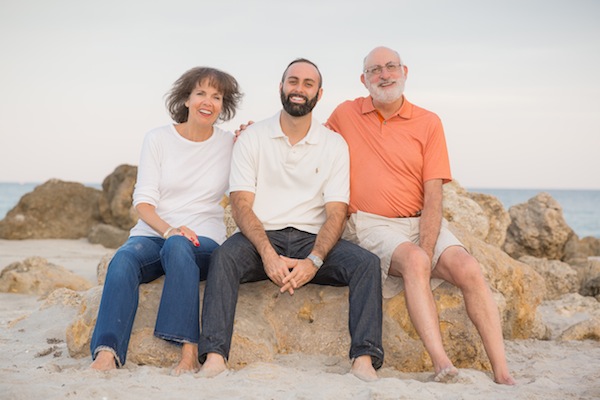
Ian Rabb with his dogs Samson and Ariel. (photo from Ian Rabb)

After falling prey to the habit himself, being rescued by his family and brought back home to Winnipeg for recovery, Ian Rabb began giving back – not just to his supporting family and the Jewish community, but to the greater community of Manitoba.

Rabb knew how the system worked from personal experience, had learned its flaws and, after recovery, set about to fix it.

“What I noticed then was a broken system in Manitoba, where there was no continuity of care,” said Rabb. “People didn’t have the ability to have extended stays in any kind of stable environment and, as I started doing my research and working in the program, I was appointed to the board of directors of the Addictions Foundation of Manitoba.”

With help from his brother, Jeff, Rabb determined that the biggest problem was the lack of a safe house where recovering addicts could take their time and realign their lives after completing their residential treatment program, which comprises a couple of weeks of rehabilitation. He opened Two Ten Recovery, a men’s house of recovery, as well as Destiny House for women. Today, there are three homes with a total of 33 beds.

“Our aim is to help people stabilize their lives and get them back to being fully self-supporting citizens, having a better prognosis or outcome when they leave,” said Rabb. “We allow them up to two years in our homes, where they have to be working and self-supporting within three months. Our success rate is at about 83%. What we’ve learned over the last number of years is the longer we can stay connected to someone post-treatment, coming out of a treatment centre, the better our success rates will be.”

It was six years ago that Rabb began hatching a plan to open a 24-hour, full-service drug and alcohol rehab centre. Once the Addictions Foundation closed their detox clinic, it became clear that a detox centre was also needed. Aurora Recovery Centre was established.

“I realized one thing very early on – that there was desperate need for a medical detox program where anyone could access medical services at any time, for any substance, and be provided with a service that would help them get off that substance, ultimately moving to the next step, addiction treatment,” he said.

Another thing that was critical in Rabb’s mind was to eliminate the wait time. “You don’t have time to wait when it comes to addiction treatment,” he said. “When someone’s ready for treatment, they need to be able to access a treatment facility. That doesn’t exist here. There’s months-long wait.

“All across Canada, because of the epidemic of addiction, even private centres are having severe wait times. So, ultimately we’re scrambling for places to send people when they need immediate help.

“The best centre in the world is just south of us, in Minnesota.

It was the first one ever started. Our model (at Aurora) is replicating the Hazelden model of addiction treatment.”

Aurora Recovery Centre is located on 28 acres of land along Lake Winnipeg, just north of Gimli. It will start as a 76-bed primary care centre, with 16 beds devoted to medical detox and emergency situations.

“We will be able to handle the ongoing problems here in Manitoba and hopefully will be busy enough to expand,” said Rabb. “We have lots of acreage there. We’re opening smaller with the plan of creating a full campus.”

To manage the centre, Rabb hired Peter Connelly, a Manitoba-born and -raised clinical director who has worked at the Minnesota Hazelden recovery centre for the past 13 years.

“I really believe that more services are needed, not only in Manitoba, but also in Canada,” said Connelly. “It’s an exciting project. It’s going to provide people who obviously need help with programs, so that’s really my reason for coming back. I certainly have a passion for recovery.”

Apart from the detox unit, which Connelly views as critical, his focus will be on the continuum of care, as he believes that after-care is of vital importance – the available services once clients have completed their in-patient treatment.

“The reality is that in-patient treatment is very difficult,” said Connelly. “It’s about people making a change, about people learning the tools of recovery and taking these tools into the outside world and using them to deal with life, on life’s terms.

“Addicts, alcoholics, need structure. They need to take responsibility and be accountable. Once they finish in-patient treatment, those are the challenges they face, so after-care is critical.”

This is an area that Aurora aims to focus on, with a number of programs that aid patients, including the option of extended-care programming, sober-housing on site, and continued follow-up with clients after they leave the centre.

“We will be developing an extensive out-patient program, so those who’ve been through the program can continue having group sessions and individual counseling after they leave,” said Connelly. “Through a number of programs that we’re developing and have developed, we’ll have clients come back yearly for an annual reunion.”

The facility is privately funded; participants and/or their family members will need to pay for their treatment. But, the cost is all-inclusive, with no added fees. “At the end of your stay, you certainly won’t be getting a bill for additional charges,” said Connelly. The cost is determined on a case-by-case basis, dependent on treatment and other factors.

At Aurora, the aim will be to have no wait time. “This is critical,” said Connelly. “We all have a tendency to procrastinate and the addict/alcoholic has a tendency to change their mind. When someone finally makes a decision they need to go, or a family member helped them with that decision, we need to get them into treatment as quickly as possible.

“As we move forward, I think people will see that the programming we offer is certainly needed. We’ll see what kind of relationships develop from there.”

Aurora began accepting patients on Oct.16. For more information, visit aurorarecovery.com.

Rebeca Kuropatwa is a Winnipeg freelance writer.
Posted on December 18, 2015December 16, 2015Author Rebeca KuropatwaCategories NationalTags addiction, alcoholism, Aurora, Ian Rabb, recovery, rehab

Posts pagination

Previous page Page 1 Page 2 Page 3 Page 4 Next page
Proudly powered by WordPress