Skip to content
  • Home
  • Subscribe / donate
  • Events calendar
  • News
    • Local
    • National
    • Israel
    • World
    • עניין בחדשות
      A roundup of news in Canada and further afield, in Hebrew.
  • Opinion
    • From the JI
    • Op-Ed
  • Arts & Culture
    • Performing Arts
    • Music
    • Books
    • Visual Arts
    • TV & Film
  • Life
    • Celebrating the Holidays
    • Travel
    • The Daily Snooze
      Cartoons by Jacob Samuel
    • Mystery Photo
      Help the JI and JMABC fill in the gaps in our archives.
  • Community Links
    • Organizations, Etc.
    • Other News Sources & Blogs
    • Business Directory
  • FAQ
  • JI Chai Celebration
  • JI@88! video

Recent Posts

  • Zionism wins big in Vegas
  • Different but connected
  • Survival not passive
  • Musical celebration of Israel
  • Shoppe celebrates 25 years
  • Human “book” event
  • Reclaiming Jewish stories
  • Bema presents Perseverance
  • CSS honours Bellas z”l
  • Sheba Promise here May 7
  • Reflections from Be’eri
  • New law a desecration
  • Resilient joy in tough times
  • Rescue dog brings joy
  • Art chosen for new museum
  • Reminder of hope, resilience
  • The national food of Israel?
  • Story of Israel’s north
  • Sheltering in train stations
  • Teach critical thinking
  • Learning to bridge divides
  • Supporting Iranian community
  • Art dismantles systems
  • Beth Tikvah celebrates 50th
  • What is Jewish music?
  • Celebrate joy of music
  • Women share experiences 
  • Raising funds for Survivors
  • Call for digital literacy
  • The hidden hand of hate
  • Tarot as spiritual ritual
  • Students create fancy meal
  • Encouraging young voices
  • Rose’s Angels delivers
  • Living life to its fullest
  • Drawing on his roots

Archives

Follow @JewishIndie
image - The CJN - Visit Us Banner - 300x600 - 101625

IDF soldier shares his story

IDF soldier shares his story

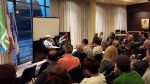
Jewish National Fund Pacific Region brought in IDF veteran Ari Zecher to speak. The talk, moderated by Geoffrey Druker, left, talked to a group at the Jewish Community Centre on Sept. 22. (photo from JNF-PR)

This Rosh Hashanah, the Vancouver Jewish community was visited by Ari Zecher, who served in the Israel Defence Forces Maglan special forces unit during Operation Protective Edge in Gaza this past summer.

Part of the Jewish National Fund’s High Holiday appeal to help build mobile bomb shelters in Israel, Zecher was invited to share his experience as a soldier and as a young Israeli during this tumultuous time. Speaking at the Jewish Community Centre of Greater Vancouver and at various synagogues, Zecher thanked the local Jewish community for its unfailing and ongoing support, and highlighted the need for young and fresh ideas to move Israel forward towards a peaceful future for future generations.

Ilan Pilo, Jerusalem emissary and executive director of JNF Pacific Region, said: “We are grateful to Ari for taking the time to interact with over 1,000 members across our community and for speaking candidly about Israel’s challenges and hopes. As in the past, this year, JNF will continue to dedicate its work to enhancing the invaluable bond between Israel and the Canadian Jewish community in general, and our Vancouver community in particular. JNF salutes everyone who has made, or will make, a donation towards the important cause of keeping children in Israel safe during such difficult and uncertain times.”

For more information on the JNF’s bomb shelter campaign, call 604-257-5155 or visit vancouver.jnf.ca.

Format ImagePosted on October 17, 2014October 17, 2014Author Jewish National Fund Pacific RegionCategories LocalTags Ari Zecher, Gaza, IDF, Ilan Pilo, Israel, Israel Defence Forces, Operation Protective Edge
Mystery photo … Oct. 17/14

Mystery photo … Oct. 17/14

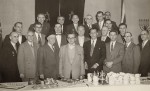
Group of men, Royal Canadian Legion, Shalom Branch No. 178, 1954. (photo from JWB FONDS; JMABC, L.14240)

If you know someone in this photo, please help the JI fill the gaps of its predecessor’s (the Jewish Western Bulletin’s) collection at the Jewish Museum and Archives of B.C. by contacting [email protected].

Format ImagePosted on October 17, 2014October 17, 2014Author JI and JMABCCategories Mystery PhotoTags JMABC, Shalom Branch

Lessons from Nobel Prize

Last week, Malala Yousafzai and Kailash Satyarthi were jointly awarded the Nobel Peace Prize. The former may be more familiar to most of the world than the latter but, in pairing the two, the prize committee was making some very blunt statements about girls, children and long-held international enmities.

Yousafzai is a Pakistani Muslim. When she was 11 years old, she began writing a blog for the BBC about life under the Taliban in the Swat Valley area of northwest Pakistan. Her family operated schools in the area and the Taliban banned girls from attending. She persisted – not only in attending school but in becoming an international voice for girls’ education. When she was 15, in 2012, a gunman boarded her school bus, asked for her by name and shot her. Yousafzai survived and continues her activism with more determination.

Satyarthi is an Indian Hindu who has devoted himself to the cause of children’s rights, particularly opposing child labor and advancing education for all. His organization has rescued and rehabilitated 80,000 child laborers.

The Nobel’s choice of Yousafzai and Satyarthi made a statement not only about the value of childhood and education, but by choosing laureates from the belligerent neighboring countries of India and Pakistan, they were also underscoring the need to overcome long-standing animosities for the greater good.

There are many reasons why children do not receive the education they deserve – intertwined factors of poverty, violence, oppression, forced early marriage and more – but gender is a particularly gnawing factor in many parts of the world. The more a country limits girls’ education, the more backward the country is – and not in the culturally relativist sense of backwardness that is no longer politically palatable terminology, but in objective, empirical, economic terms. The statistics are staggering.

Every extra year of education a girl in the developing world receives can increase her income 15 to 25 percent. When mothers are responsible for household income, there is a 20 percent increase in child survival rates. Every additional year of schooling a mother receives reduces infant mortality by five to 10 percent.

The more education a girl receives, the fewer children she is likely to have – and they are likely to be healthier and to go to school themselves. And education reduces the likelihood that a girl will be pushed into marriage in adolescence.

As is so often the case, oppression of one group harms the larger society. Ameliorating the oppression of some advantages the whole. A 10 percent increase in girls’ school attendance can increase a country’s GDP by three percent. If all the moral and human justifications do not persuade governments, the numbers should convince them that girls’ education is an economic benefit.

Israel is a case study. From before the state was proclaimed, women have played central roles and been leaders in all aspects of civil society. It is not a coincidence that Israel – a barren, resourceless nascent state in 1948 – has emerged as one of the world’s most successful economies. There are a number of obvious and less obvious reasons for this, but the inclusion of women is one of them.

This is not to suggest that everything is roses. Men still dominate professorships and the sciences in Israel. Arab schools in Israel receive fewer resources than Jewish schools, though efforts are advancing to close this gap. (Christian Arabs, though, statistically have better graduation exam results than Muslim or Jewish students and attend university in numbers above the Israeli median.) Israel is also investing large sums in revamping Charedi education to better prepare religious men and women for the workforce.

But girls in Israel are more likely than boys to graduate high school and continue to university. The high school dropout rate for boys is almost three times that of girls. More than 56 percent of students in university are female.

Of course, such is the state of the world today that what lessons Israel may offer will be rejected out of hand due to the source but, by selecting an Indian and a Pakistani, the Nobel committee was clearly making a statement that urgent issues must be addressed regardless of old antagonisms.

The Nobel committee was also clearly recognizing the impact that a single person – or two individuals – can have on the way the world thinks and behaves.

Posted on October 17, 2014February 24, 2016Author The Editorial BoardCategories From the JITags Kailash Satyarthi, Malala Yousafzai, Nobel Peace Prize

Circumcision evolution

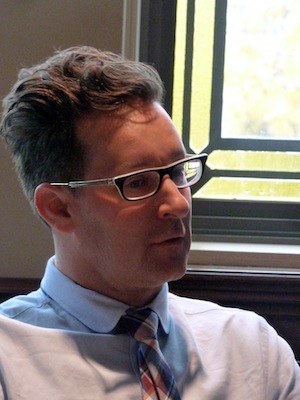
The “scientizination” of brit milah, circumcision, has had several implications, according to Dr. David Koffman, assistant professor, department of history, York University.

photo - Dr. David Koffman
Dr. David Koffman (photo by Rebeca Kuropatwa)

Koffman spoke at the University of Manitoba on Sept 19, hosted by the university’s Hillel Winnipeg. He centred his talk around the influence of the interdenominational New York Board of Rabbis, which was founded in 1914 to train and certify mohels. The board centralized, coordinated, promoted and professionalized Jewish circumcisions in New York state throughout the 20th century, he explained. They trained mohels in the newest surgical techniques, methods of asepsis and hygiene, newly developed clamps and devices, provided malpractice insurance and acted as a guild/gatekeeper for Jews entering the profession. By the mid-1960s, the board opened a school to train mohels.

“Its job was to control the narrative, to keep it Jewish in the face of changing norms in America,” said Koffman. “By the 1940s, the popularity of circumcision, long seen as Jewish barbarism, began to skyrocket among gentile parents for their newborn sons.”

Circumcision changed from being mainly a religious rite to a surgical procedure in the 20th century.

“Secular medicine’s enthusiasm for circumcision put Jewish medical men along with many other Jews in a bind,” said Koffman. “On one hand, the growth of endorsing opinion by experts about circumcision from a variety of medical subfields offered the most gratifying validation mohels and clergymen could ever hope for. Urologists, surgeons, gynecologists, even psychiatrists, indicated the right vilified by Christians in America no less than elsewhere before the 20th century. Mohels eagerly then sought medical training and certification and proudly fused religious rhetoric about brit milah with newfound medical rhetoric on health advantages.

“On the other hand, medicine’s capture of circumcision and its popularity among non-Jews presented an entirely new set of problems for religious Jewish leaders of the non-Muslim world. The penis, concealed in public, but revealed when naked in private, remained a key sign of Jewish difference where it mattered the most, to make more Jewish babies. Perhaps more threatening than the erosion of the boundary between Jews and gentiles was that science itself might strip the fundamental religious meanings….”

With respect to Christianity, Koffman explained, “During the Second Great Awakening, Christians turned to circumcision as the foil to the conversion experience. The reborn, or born again, were circumcised by accepting Christ … they were as un-Jewish as they could get. This was a metaphor of circumcision.

“Keep in mind that Jan. 1st in the Catholic calendar was the Feast of Circumcision, eight days after Jesus’ Dec. 25th birth.” This is a practice that no longer exists, however, as it was removed by the Church in 1960 and renamed the Solemnity of Mary, he added.

“There was a striking discord between Jesus and his followers that Jesus himself was circumcised,” he pointed out. “Most questions had little to do with the Jews…. Where, for example, did Jesus’ foreskin go? Was he reunited with it during the rapture?”

Turning to the science, Koffman said, “By the 1920s, circumcision was becoming the mark of high social standing for many, for it indicated that a mother had the ability and means to deliver her baby in a hospital by an attending physician.”

In the first two decades of the 20th century, civic planners argued that universal circumcision would help restrict the spread of tuberculosis, syphilis and other venereal diseases. Before this development, said Koffman, circumcision was, for Jews, at its core, “a sign of the holy covenant between God and Israel, as prescribed to Abraham in Genesis 10 … and [of] God’s promise to Abraham’s descendants.

“In essence, mohels ‘scientized’ milah but, in doing so, they invited new predicaments for the Jewish body. Embracing medicine achieved many short-term gains. It accrued medical status for mohels, insisting that they were on par with physicians.

“Perhaps most importantly, embracing the science of circumcision [made it possible] for American Jews to make a broad public reckoning of their historic contributions to medicine and science.

“The transformation of circumcision from ritual once exclusive to Semites to a medical procedure available to all also posed a threat to American Judaism because medicine for all its power hollowed milah of its mysteriously potent spiritual power. For the first time in Jewish history, there was a very real possibility of huge numbers of illegitimate milah, circumcisions performed on boys by someone other than a mohel, or at the wrong time, or in the wrong manner. The Jewish penis would grow to be indistinguishable from its non-Jewish counterparts. All this helps explain why the board worked so hard to represent mohels at hospitals, aiming to control its narrative.”

The board conducted research in the 1930s and 1940s about hospital-regulated circumcision, which required that mohels be certified. It encouraged public and private hospitals to make circumcisions available and encouraged hospitals to provide space to perform the rite, as well as educational materials to obstetrics and gynecology professionals about the benefits of circumcision.

“Jewish parents were increasingly having their sons circumcised in hospitals, paid for by insurance companies, instead of at home or at synagogue,” said Koffman.

“By the 1960s, religious justifications began to give way to the anxieties about the infant’s pain,” said Koffman. “Mohels, wearing their medical hats, assumed it a given or perhaps an integral part of circumcision.” One manual produced in the 1950s, entitled Welcome Home Mother and Son, included no fewer than eight references to pain and anxiety.

The board also supplied a steady stream of support materials to agencies, synagogues and rabbinical associations interested in promoting circumcisions in other states and countries. By the mid-1960s, the board positioned itself not just as a regulator of New York State, but as the custodian of the practice and an advocate of circumcision.

“Milah literature doubled down on the medical benefits, but also emphasized the theological benefits,” said Koffman.

“The great scholar Elliot Wolfson called Jewish circumcision ‘the cut that binds,’” said Koffman. “It’s a severance that connects Jewish boys to their fathers and grandfathers, to Jews across time and borders.”


Rebeca Kuropatwa is a Winnipeg freelance writer.


Posted on October 17, 2014October 17, 2014Author Rebeca KuropatwaCategories LifeTags brit milah, circumcision, David Koffman, Hillel Winnipeg

The indefatigable people

With antisemitism on the rise in France, England and around the world, and Israel once again facing strong headwinds, it seems like a good time to turn to history in search of some perspective on current events.

Earlier this year, PBS aired a popular two-part series on Jewish history written and presented by historian Simon Schama. The account was based largely on his book The Story of the Jews: Finding the Words 1000 BC-1492 AD (ecco, 2013), published last year in Great Britain. The second volume – from 1492 to the present – is expected this fall.

Schama, a highly accomplished, award-winning historian, has written 16 books and 40 television documentaries, focusing mostly on art histories and histories of France, the Netherlands, Britain and the United States. He has also written a book about Israel and the Rothschilds.
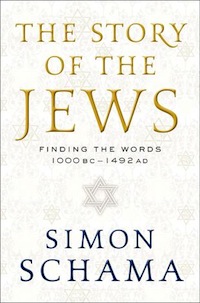
image - The Story of the Jews book coverIn The Story of the Jews, he abandons the distance of an academic historian right at the start. This is the story of his people, not an abstract theoretical exercise of writing history. He is emotionally invested in this project and his passion spills out on every page.

It is also clear from the beginning that he is foremost a storyteller. With incredible details, Schama delights the reader with engaging vignettes about both ordinary and powerful people. He recreates pivotal moments in history by describing the events in the life of individuals, from Sheloman, a young Jewish mercenary in service of the Persian authorities in 475 BCE, to Abraham Zacuto, a talmudist and astronomer who put together the almanac used by Christopher Columbus in 1492.

His chatty approach to history occasionally drifts sideways, as if he just thought about something else he has to tell you. It is sometimes difficult to keep up with him, as he jumps across centuries, from country to country, commenting about historical figures without much of an introduction.

Yet, the story he tells is compelling. Schama wanders through numerous far-flung Jewish communities offering fascinating glimpses of their lives and surprising perspectives on Jewish worship, relations with non-Jews and violence against Jews.

More than is usually acknowledged, the Jewish community has lived in harmony with paganism, Christianity and Muslim societies. Yet the portrait of Jewish history, as he presents it, is not pretty.

Despite periods of well-being, sometimes stretching over hundreds of years, the story of the Jews is an account of a people caught in a Sisyphean cycle of settlement, prosperity, persecution and devastation, over and over again, beginning in Egypt in the 13th century BCE.

Schama delves deep into the brutal rhetoric and cruel fantasies that provoked the recurring waves of murder and expulsion. Over two millennia, the venom spread from Egypt to Palestine and throughout the empires of Persia, Greece, Rome and Constantinople, through the Near East and the Iberian peninsula.

He shines an especially bright light on the vile attacks by the disciples and followers of Jesus, who turned Jews into god-killers and child murderers. He writes about Jewish moneylenders, international traders, tax collectors and confidantes of royalty who were once in favor and then were not.

Schama begins his story in Elephantine, an island in the Nile. The Persians in 525 BCE found a thriving, well-established Jewish community in Elephantine, with a temple that had many similarities to the First Temple in Jerusalem that had been destroyed 61 years earlier.

Documents describing Elephantine provide the first hard evidence of daily life of Jews in antiquity. The Elephantine community was wiped out by the mid-fourth century BCE.

Again and again, Jewish communities were decimated. England expelled its Jews in 1290; France issued edicts expelling Jews in 1306 and again in 1394. Spain followed in 1492 and Portugal in 1497. Schama identifies 29 towns under Christian rule across Europe that kicked out Jews between 1010 and 1540.

Many civilizations have thrived and then disappeared. But Judaism has always found a way to thrive and survive. Schama attributes the durability of Judaism to its devotion to words.

Judaism depends neither on its leaders, its places of worship nor its institutions. The Jewish people are the People of the Book; words are the invisible thread that binds Jews together over the millennia, Schama posits. And, according to his perspective, the Torah is the work of the religious and intellectual elite in the eighth to fifth century BCE, nearly 500 years after the Exodus was supposed to have happened.

Reverting to his role as academic, he notes that no evidence – archeological or otherwise – has turned up to substantiate the Exodus story. By his account, the Hebrew Bible is a picture of Israel’s imagined origins and ancestry that converges at some point with the reality of Jewish history.

The genius of the priests, prophets and writers, intellectual elites, was to make their writing sacred, in standardized Hebrew, as the exclusive carrier of YHWH’s law and historic vision, Schama writes. “Thus encoded and set down, the spoken (and memorized) scroll could and would outlive monuments and military forces of empires.”

The Hebrew Bible was fashioned to be the common possession of elite and ordinary people, he writes. The divinity was reflected in the words of the Torah, not in an image of a divine creature or a person. And the message of the Torah was not confined to a holy sanctuary. It is to be posted on the doorpost of every Jew and bound on the head and arms of all Jews as they prayed.

“No part of life, no dwelling or body, was to be free of the scroll-book … the Torah was compact, transferable history, law, wisdom, poetic chant, prophecy, consolation and counsel…. The speaking scroll was designed to survive incineration … the people of YHWH could be broken and slaughtered, but their book would be indefatigable.”

In other words, survival depends on, as his subtitle says, “finding the words” for Torah study and the story of the Jews.

Media consultant Robert Matas, a former Globe and Mail journalist, still reads books. Simon Schama’s book is available at the Isaac Waldman Jewish Public Library. To reserve it, or any other, call 604-257-5181 or email [email protected]. To view the catalogue, visit jccgv.com and click on Isaac Waldman Library.

Posted on October 17, 2014October 17, 2014Author Robert MatasCategories BooksTags antisemitism, Judaism, Simon Schama

“Temporary” occupation

It’s a question that defines the debate over Israel’s policies and the state’s grand strategy: do Israeli human rights organizations monitoring the occupation merely serve as a fig leaf, adding an ethical patina to what is a fundamentally immoral situation?

Four months into his new position as head of B’Tselem, having come from the Association for Civil Rights in Israel, Hagai El-Ad and I spoke by phone recently about this and other issues. [To read the JI’s interview with El-Ad, click here.]

Given that the Israeli occupation of the West Bank and Gaza was supposed to be “temporary,” El-Ad is well aware that “at some point the term loses its meaning.” So, as he took the helm of B’Tselem last May, the organization issued a position paper provocatively named 47 Years of Temporary Occupation. As El-Ad put it, B’Tselem is shifting its focus from “fighting against human rights violations under occupation to a strategy [emphasizing] that the occupation will forever violate the human rights of Palestinians.” To this end, B’Tselem is now trying to end the occupation – not just help manage it.

It’s a laudable goal. But how achievable is it?

B’Tselem is starting with some concrete steps, however limited. For one, they have recently announced that they will not cooperate with Israel Defence Forces military investigations around Operation Protective Edge. Calling it “theatre of the absurd,” El-Ad believes that the military investigation system is one intended to “always result in impunity.” And this protected military violence is a necessary “lifeline of the occupation.” Hence, the need to squelch it.

As far as the bigger picture goes, El-Ad was cautiously optimistic: probably a necessary blend for anyone in human rights work in the Israel/Palestine morass. He takes comfort from what he sees as B’Tselem’s mission being fundamentally buttressed by the very human rights discourse extant in Israel. That the concept of human rights is a “relevant currency” in Israeli politics gives the organization an important starting point by which to leverage societal consensus. Though without the clout or mandate to engage in electoral lobbying efforts, working to end the occupation must be done very much at arm’s length from the policy sphere. Still, it’s a start.

El-Ad adds that he invites others to see what they can do “in their own communities” to disrupt the idea of the occupation as “business as usual.”

OK, so most of us can agree that the occupation is an undesirable situation, but what about the argument, issued frequently by Israel’s most strident defenders, that the status quo is a security imperative? If Hamas didn’t launch rockets, the thinking goes, the war in Gaza wouldn’t have been necessary. And, if West Bank Palestinians didn’t seek to blow up Israelis, the checkpoints and night raids and (the various) separate roads could be dismantled. And we all know about the apartheid, uh, separation, ahem, security wall.

Trading off between security on one hand, and human rights and ending occupation on the other, is a false dichotomy, El-Ad explained. In Gaza, “we’ve encountered time and again the theory that using more and more force will provide the desired outcome. But that’s not really working.” When it comes to day-to-day military policing in the West Bank to ensure the safety of Israeli citizens, we all know the chicken-egg argument: the internal checkpoints would be unnecessary were there not settlements (illegal under international law) to protect, hence, B’Tselem’s claim, in its 47 Years of Temporary Occupation document, that settlements are “the heart of the matter.”

Now that the fighting in Gaza has died down, B’Tselem is reflecting on its work compiling data on casualties, monitoring international humanitarian law violations – including by Hamas – and collecting first-person testimonies, attempting to put a face to the Palestinians in Gaza. El-Ad is quick to note that the media coverage in Israel tended to be one-sided, with little coverage of the war experience for Gazans. As an antidote, B’Tselem relied heavily on social media and web coverage to get additional information disseminated, despite a hacking attempt that left their website site crippled for a few days.

After talking to El-Ad, I’m left with a strange combination of hope and cynicism. As someone who cares deeply about seeing an end to the occupation, I’m buoyed by the fact that the head of Israel’s most important human rights organization has this broader goal top of mind. At the same time, absent the apparent political will in the top echelons of the Israeli government, I can’t escape the belief that intelligent, passionate and committed Israeli change-makers like El-Ad are too often left clapping with one hand.

Mira Sucharov is an associate professor of political science at Carleton University. She blogs at Haaretz and the Jewish Daily Forward. A version of this article was originally published on haartez.com.

Posted on October 17, 2014October 17, 2014Author Mira SucharovCategories Op-EdTags B’Tselem, Gaza, Hagai El-Ad, IDF, Israel, Israel Defence Forces, Palestinians, West Bank
מדוע קנדה היא אחת מהמדינות המאושרות בעולם

מדוע קנדה היא אחת מהמדינות המאושרות בעולם

מבחינת הערים האיכותיות ביותר לחיות בהן, ונקובר נמצאת במקום הראשון
(Cynthia Ramsay :צילום)
1. Canada increases the current drive against ISIS threats  2. Representative of the Israeli consulate in Toronto to visit Vancouver 3. Why Canada is one of the happiest countries in the world

Posted on October 14, 2014October 28, 2014Author Roni RachmaniCategories עניין בחדשותTags ISIS, Israeli Consulate, Stephen Harper, דאעש, הקונסוליה הישראלית, סטיבן הרפר
Joyce Ozier’s explosive colorful expression

Joyce Ozier’s explosive colorful expression

Joyce Ozier’s exhibit, Making Panels panels panels panels, is at Zack Gallery until Nov. 2. (photo by Olga Livshin)

Splashes of colors hit you as you walk into the Sidney and Gertrude Zack Gallery’s latest show, Marked Panels panels panels panels, by Joyce Ozier. The green panels smile. The dark purple growl, “Notice us!” The blue looks like wings in the sky, soaring in joy.

Ozier is fascinated by color. In all of her creative pursuits, color has played a prominent role. With an education in art and theatre, she has always been drawn towards the unusual, the colorful and the non-standard. “I was interested in experimental things, in visual theatre,” she told the Jewish Independent.

She arrived with her husband to Vancouver in 1970, and subsequently co-founded Royal Canadian Aerial Theatre, an experimental theatrical enterprise. “We did outdoor events with audience involvement,” she said. “Our performances didn’t usually have a story, but they often had a message. We employed lots of imagination in our shows. One of our pieces had hundreds of colorful balloons. We created a moving sculpture out of them…. It was about beauty and pollution.”

The theatre was a step towards her current show, but it took many more years before the full connection would materialize. After a decade of producing shows, Aerial Theatre dissolved, and Ozier was ready for a new direction, although she wasn’t sure what that would be. She tried her hands at theatre administration, was one of the founders of what is now known as the Scotiabank Dance Centre, but her creativity demanded a more visual outlet.

“In the late 1990s, I founded WOW! Windows,” she said. “It was a display and design company, and we built it into an award-winning firm. We had many retail clients in the Pacific Northwest, but it started by accident. Of course, starting your own business is risky, but I’ve always had courage.”

Her son was a student at the University of British Columbia then. “He knew I was searching,” Ozier recalled. “One day, he came home and said, ‘The Royal Bank at the corner has terrible window displays. Why don’t you offer them to make their windows for free?’ I did. Later, I made photos of the windows, created a brochure and sent it to the other stores in town. I got my first offer the next day: to design windows for Wear Else. Their designer just left, and they liked my brochure.”

Ozier used her creativity to the max with her new company but she had to learn a lot. “You just take one step after another,” she said. “One of the lessons I learned was that retail display is not fine art. It’s a sales tool. The artist must make use of what the company is selling. But I used lots of colors in my windows.”

In 2009, she retired from WOW! Windows, but she still had a passion for colors and looked for a new way to find her expression. “I started painting. I never painted before, but I had an art education.” Never having been interested in realistic figurative art, she immersed herself in abstract painting.

“I wanted to paint large canvases, to work big, but there was a problem. To move such paintings, you need a truck. Then I thought: if I do it by several panels, I could fit a panel in my car.” That was how her current show at the Zack Gallery came into being.

“I always start with four panels,” she explained of her process. “I paint all the panels at once, trying to get them to balance. After awhile, I move the panels, shuffle them around, change arrangements, turn them sideways or upside down, and a new composition emerges. I paint some more. I never know where I [will] end up with each piece. It’s an adventure.

“Sometimes, I have to take one panel out – three panels work, but four don’t. I always know when the piece is finished. There is energy there I don’t control. It sweeps me along.”

Anything could be inspiration for a piece, a starting point. One piece, “Chefchaouen,” is inspired by a real place, the eponymous village in Morocco. The four panels of the painting form a mosaic of blue and white, of sky and snow.

“There is a story there,” said Ozier. “Everything is blue in that village, the houses, the streets. That village in the mountains was discovered in the 1930s by a group of European Jews escaping Nazism. They thought they found safe haven. They didn’t, but they didn’t know it then. They settled there and painted everything blue. Blue has a special meaning in Judaism, divinity and equilibrium. Later on, they found out that blue stucco also repelled mosquitoes. There are no Jews there now, but the color remains.”

Some of her other paintings have more poetic titles, like a symphony of grey called “Cloud Thoughts” or a smaller one-panel painting, “Summer Wind,” a quaint green explosion. “Coming up with titles is difficult. I have to think about them a lot,” Ozier said.

Her first solo exhibition opened at the Zack Gallery on Oct. 2 and continues until Nov. 2. To learn more, visit joyceozier.ca.

Olga Livshin is a Vancouver freelance writer. She can be reached at [email protected].

Format ImagePosted on October 10, 2014October 9, 2014Author Olga LivshinCategories Visual ArtsTags Joyce Ozier, Zack Gallery
CIJA-UJA host Toronto mayoral debate

CIJA-UJA host Toronto mayoral debate

At the debate are, from left, John Tory, Ari Goldkind, Doug Ford and Olivia Chow. (photo from cjnews.com) 

There wasn’t much focus on Jewish issues at the CIJA-UJA-hosted mayoral debate Sunday night, but Ari Goldkind, the race’s sole Jewish candidate, arguably stole the show with his caustic barbs directed at fellow candidate Doug Ford, particularly when he confronted the councilor on his brother’s past use of an antisemitic slur.

The debate, held at the Anne and Max Tanenbaum Community Hebrew Academy of Toronto’s Wilmington campus and attended by several hundred people, featured fringe candidate Goldkind debating alongside leading contenders Ford, John Tory and Olivia Chow.

The debate was moderated by National Post columnist Chris Selley, who gave each candidate several minutes to respond to questions on transit, taxes, community safety and conduct in city council.

Goldkind, a defence lawyer and the fourth-place mayoral contender, had the audience chuckling with one-liners such as “What does Ford stand for? Falsify. Overstate. Repeat. Deny” and “This campaign has turned into a reality show. It’s like the Kardashian show.”

He later took Ford to task for what he said was the former’s failure to apologize for an antisemitic slur uttered by his brother, Mayor Rob Ford – who made a conspicuous appearance partway through the debate – last March.

“Mayor Rob Ford called Jews the ‘K’ word,” Goldkind said. “And then he has the chutzpah to come in here tonight. He might get a free pass from the others on this stage, but not me. When you insult a whole people, you are not setting an example for the city.”

As the audience laughed and booed, Ford responded, “I have a Jewish doctor and a Jewish dentist … my family has the utmost respect for the Jewish community…. We look forward to working with the Jewish community, as we have for the last four years.”

He then added that he had already apologized on behalf of his brother for the remark, adding, “I’ve told [Rob] clearly that those comments were unacceptable.”

On the subject of funding proposed transit projects, Goldkind said, “I’m the only one on stage who’s open in saying we have to talk about taxes. If you believe Tory’s Smart Track plan is going to be free, or Ford’s ‘subways, subways, subways’ will be, or that Chow’s proposed tax increase [to fund transit] will only be on the wealthy, if you accept that math, they’ll earn your vote,” he said sarcastically.

He added: “I will ask each household in the city to pay 50 cents extra per day … then … instead of going to the provincial and federal governments with our hands empty, go to them and say, ‘the people of Toronto have spoken and we have a transit plan worth investing in.’”

Invectives aside, the four took turns laying out their respective visions for transit, with poll-leader Tory emphasizing Smart Track, his London, England-modeled surface rail subway plan. Meanwhile, Chow endorsed building light rail transit (LRT) and a downtown subway relief line, Ford called for subway expansion and Goldkind advocated for a downtown relief line, new LRT lines and replacement of the Scarborough subway line with LRT.

Regarding taxation, Ford and Tory both pledged to privatize garbage collection in the city’s east end.

Ford trumpeted his brother’s administration’s slashing of the vehicle registration tax. Chow said she would increase the land transfer tax for houses valued at more than $2 million and raise property taxes around the rate of inflation, and Goldkind suggested congestion fees and road tolls on certain highways to help pay for infrastructure improvements, as well as raising the land transfer tax on homes valued at over $1.1 million.

The candidates also addressed community safety and the recent spike in antisemitic incidents in Toronto.

Chow said the Toronto Police Service hate crimes unit could use more support and training to be able to better work with people, including those with mental health issues. She suggested that her plan to beef up after-school activities across the city could be a good antidote against “young people who get into trouble and get recruited by people who are full of hate.”

Tory brought up the need for better education for “the young and less young,” including more training for police and interfaith initiatives in the community.

Ford said that under his brother’s administration, the city hired more police officers and reallocated a number of officers to the Toronto Anti-Violence Intervention Strategy. He said the city needs more mentors for young people.

The Toronto mayoral election will take place on Oct. 27.

– For more national Jewish news, visit cjnews.com.

Format ImagePosted on October 10, 2014October 9, 2014Author Jodie Shupac CJNCategories NationalTags Ari Goldkind, Chris Selley, Doug Ford, John Tory, Olivia Chow1 Comment on CIJA-UJA host Toronto mayoral debate
Barrable-Segal brings printmaking to life

Barrable-Segal brings printmaking to life

Jocelyn Barrable-Segal (photo by Olga Livshin)

Jocelyn Barrable-Segal was raised by parents with two vastly different professional backgrounds: her mother was an architect and her father was a pilot. Following her own path, Barrable-Segal managed to combine the two in her own career. For 35 years, she has been a flight attendant with Air Canada. Several days each month, she flies around the world. The days she is not in the air, she is an artist, and you can find her at Malaspina Printmakers, a printmakers’ workshop on Granville Island, where she creates unique lithographs.

“Malaspina is an artist-run centre,” Barrable-Segal told the Jewish Independent on a recent visit. “It started in the early ’70s with three or four artists. Now there are about 60 of us.” She went on to explain that Malaspina is equipped for a dozen different systems used in printmaking, but she uses only one process, the ancient technique of stone lithography. “I love to draw,” she said, “and lithography is the only technique that requires drawing.”

Barrable-Segal does that drawing on stone. The technicalities of embedding an image into stone and later transferring it from stone to paper are not for this short article, but it’s important to point out that each image can have many layers, each layer introducing one additional color plus whatever details the artist wants to add or alter. The process is time consuming and labor intensive, but Barrable-Segal said she doesn’t conceive of working in any other art form.

“With lithographs, you can change the image if you change your mind, have layers of drawing and colors,” she said, “while in painting, as soon as you’re done, that’s it.” She also likes to be able to have several copies of the same print, although she never mass-produces them. “I make limited editions, no more than seven copies of one print.”

Her prints are mostly flowers or landscapes but they are never life-like. They hover between abstract and impressionism. “I’m attracted to metaphors,” she said. She uses multiple sources for her pictures, including photographs from her travels, but she transforms the imagery through the creative filter of her imagination, enriches reality with emotional and esthetic folds. Her artistic touch converts memory into art.

That’s why she keeps flying, to bring back more visual mementos, more nutrients for her lithographs, she explained. “I see different countries, and each happy place finds its way into my images. Of course, no photocopies.”

Frequently, she draws flowers and floral compositions. “I buy live flowers at the public market and look at them,” she said. “That’s how it starts.” Flowers are the predominant theme for her work in the In Wait show that recently opened at Burnaby Art Gallery.

“In Wait is a collaborative project of the Full Circle Art Collective,” she said. “There are seven of us in the collective, seven women: Heather Aston, Hannamari Jalovaara, Julie McIntyre, Milos Jones, Wendy Morosoff Smith, Rina Pita and me. We all met at Malaspina, but then some of us drifted apart. We reunited for this show.”

The inspiration for the show came from the story of Penelope, the wife of Odysseus, she said, and it took the artists three years from the idea to the vernissage.

“Penelope was waiting for her husband to return, but her suitors were insistent that he was dead and she should choose one of them. She said she would weave a shroud before she married again. All day long she wove and then, in the night, her ladies-in-wait would unweave what she had done. The shroud was never completed. She waited. We all wait for something in our lives. It’s a universal theme for women.”

For her, another sad theme overlaid the waiting – the theme of grief. Her parents passed away recently, and working on the show helped her deal with her sadness. “For me, grief associated with poppies. I needed to find solace. I drew lots of poppies for the show.”

Women friends and their collaboration and support were another aspect of the show that came from the story of Penelope and her faithful maids. “Each one of us would make a piece and pass it on to the others. The others would add something, change. They would say: what does it need? Perhaps this detail or line or color should be added.”

Sometimes three or four people would contribute to the image before it returned to the original artist. “When you get your image back with someone else’s input, you think: what do I do now? It’s different. How to keep the integrity of the image? How to bring our combined visions together? This way, you’re always creating.”

Art making is ingrained in Barrable-Segal’s life. “I started flying because I didn’t want to be a full-time artist. It’s not realistic, even though I have a master’s degree in fine arts. But I would never abandon art. I do it for myself. I would continue even if I didn’t sell anything. I always have my sketchbook with me. When I play golf with my husband, I’m not interested in the ball. I look at my shadow on the grass and think how it would look in a lithograph.”

In Wait is at Burnaby Art Gallery until Nov. 9. For more on Barrable-Segal, visit jmbs.ca.

Olga Livshin is a Vancouver freelance writer. She can be reached at [email protected].

Format ImagePosted on October 10, 2014October 9, 2014Author Olga LivshinCategories Visual ArtsTags BAG, Burnaby Art Gallery, Full Circle Art Collective, Jocelyn Barrable-Segal, lithography, Malaspina Printmakers

Posts pagination

Previous page Page 1 … Page 621 Page 622 Page 623 … Page 664 Next page
Proudly powered by WordPress