Skip to content
  • Home
  • Subscribe / donate
  • Events calendar
  • News
    • Local
    • National
    • Israel
    • World
    • עניין בחדשות
      A roundup of news in Canada and further afield, in Hebrew.
  • Opinion
    • From the JI
    • Op-Ed
  • Arts & Culture
    • Performing Arts
    • Music
    • Books
    • Visual Arts
    • TV & Film
  • Life
    • Celebrating the Holidays
    • Travel
    • The Daily Snooze
      Cartoons by Jacob Samuel
    • Mystery Photo
      Help the JI and JMABC fill in the gaps in our archives.
  • Community Links
    • Organizations, Etc.
    • Other News Sources & Blogs
    • Business Directory
  • FAQ
  • JI Chai Celebration
  • JI@88! video

Recent Posts

  • Zionism wins big in Vegas
  • Different but connected
  • Survival not passive
  • Musical celebration of Israel
  • Shoppe celebrates 25 years
  • Human “book” event
  • Reclaiming Jewish stories
  • Bema presents Perseverance
  • CSS honours Bellas z”l
  • Sheba Promise here May 7
  • Reflections from Be’eri
  • New law a desecration
  • Resilient joy in tough times
  • Rescue dog brings joy
  • Art chosen for new museum
  • Reminder of hope, resilience
  • The national food of Israel?
  • Story of Israel’s north
  • Sheltering in train stations
  • Teach critical thinking
  • Learning to bridge divides
  • Supporting Iranian community
  • Art dismantles systems
  • Beth Tikvah celebrates 50th
  • What is Jewish music?
  • Celebrate joy of music
  • Women share experiences 
  • Raising funds for Survivors
  • Call for digital literacy
  • The hidden hand of hate
  • Tarot as spiritual ritual
  • Students create fancy meal
  • Encouraging young voices
  • Rose’s Angels delivers
  • Living life to its fullest
  • Drawing on his roots

Archives

Follow @JewishIndie
image - The CJN - Visit Us Banner - 300x600 - 101625

Soup ladled with love

Soup ladled with love

Sharon Hapton (photo from Random House of Canada) 

When she first got together with friends to make soup for women and children fleeing domestic abuse in Calgary, Sharon Hapton recalled how the chef at the shelter broke down in tears when she saw their delivery of kosher-style chicken soup.

“The reason the chef was overcome with emotion was that there were Jewish women at the shelter at that time, and she knew how much it would mean to them,” she explained.

Hapton and her friends were overcome, too, but more with surprise than anything else. They were stunned to learn the shelter was accommodating Jewish women. “Not one of us had thought we were making soup for someone in our own community,” she admitted. “It was a humbling and defining moment to know that domestic abuse crosses all cultures.”

image - The Soup Sisters and Broth Brothers Cookbook  cover
The Soup Sisters and Broth Brothers Cookbook features recipes by acclaimed B.C. chefs, including Vikram Vij, Karen Barnaby, Rob Feenie and Lesley Stowe, among others.

That was five years ago and since then Hapton has been busy with Soup Sisters and Broth Brothers, her nonprofit social enterprise that organizes soup-making events in some 20 cities nationwide. She visited Vancouver on Oct. 8 to launch her second cookbook, The Soup Sisters and Broth Brothers Cookbook, featuring soup recipes by acclaimed B.C. chefs, including Vikram Vij, Karen Barnaby, Rob Feenie and Lesley Stowe, among others. Hapton’s favorite, though, is the recipe she grew up with, her mother’s potato leek soup. “There’s so much memory and nostalgia in it, it’s really delicious, simple and beautiful,” she says of the recipe.

The mandate for Hapton’s organization is to nurture and nourish women and children fleeing domestic abuse and family violence and seeking shelter in some 30 shelters across the country, including those in Vancouver, Burnaby, Surrey, TriCities, Kelowna, Victoria and soon Penticton, too. Participants pay $55 to attend an event in partnership with a cooking school, where they help to make up to 200 servings of soup under the guidance of a chef facilitator. Afterwards, participants enjoy a meal of soup, salad, bread and wine with other cooks in the kitchen. “It’s a night out where you learn about the shelter you’re supporting and enjoy the camaraderie in the kitchen,” Hapton said. Ninety-five percent of the participation fee goes to the culinary partner, which supplies the ingredients and the kitchen where the soup is made. By uniting with a culinary partner the organization ensures participants will receive good service, fresh ingredients and operational excellence as they make their soup.

Since March 2009, more than 500,000 servings of soup have been delivered to Canadian shelters, thanks to a network of 12,000 participants. Hapton said the need in women’s emergency shelters is endless. “Most of those shelters are unfortunately always full, typically with up to 50 women and children at any time.”

Soup Sisters and Broth Brothers has also been supporting youth in crisis, specifically kids aged 16 to 24 who are transitioning from being street involved. While women being housed in the shelters don’t tend to communicate much to the organization (perhaps because of security concerns, or the stigma associated with being a victim of domestic abuse), the kids are really communicative, she said. “We receive letters from them with thanks, telling us how the soup made them feel, and the results of a simple, simple gift are very tangible.”

Batches of fresh soup are delivered in containers adorned with handwritten labels. Quantities are supplied to last until the next event when soup is made, which can be up to a month away.

“My experience of being a soup maker led me to understand that soup is a very powerful way of taking care of people,” Hapton reflected. “I believed very strongly five years ago that this could be something bigger, and that’s exactly what has happened now.”

These days, she receives emails from people all over Canada who have heard or read about the program. When new communities show an interest in starting the program, she asks to meet three main coordinators for each group and helps them implement it.

“Every city, big or small, has a shelter,” she said. And many of them are now being supplied with tasty, fresh, regular batches of soup.

In Vancouver, Soup Sisters supplies soup to Kate Booth House, Imouto Housing for Young Women and Koomseh transition house, in partnership with the Dirty Apron Cooking School. The next soup-making event is Jan. 25, at 11 a.m. For more information, visit soupsisters.org or email [email protected].

Lauren Kramer, an award-winning writer and editor, lives in Richmond, B.C. To read her work online, visit laurenkramer.net.


Format ImagePosted on October 24, 2014October 23, 2014Author Lauren KramerCategories NationalTags Broth Brothers, Sharon Hapton, Soup Sisters

No more ice scraping

Who would have thought a solution to ice stickiness would come from a semi-tropical country like Israel?

Prof. Hanna Dodiuk heads up the department of polymers and plastics engineering at Shenkar College in Ramat Gan. She specializes in adhesion and adhesives science and technology, characterization and formulation of polymer adhesives, special coatings, surface and interfaces analysis, nanotechnology and aging of polymeric materials.

photo - Prof. Hanna Dodiuk
Prof. Hanna Dodiuk heads up the department of polymers and plastics engineering at Shenkar College in Ramat Gan. (photo from Prof. Hanna Dodiuk)

Born in 1948 in Krakow, Poland, to two Schindler’s List Holocaust survivors, the family made aliyah to Israel in 1949. Dodiuk served in the air force, and then studied chemistry at Tel Aviv University. In 1979, she joined the Israeli Armament Development Authority (ADA), also known as Rafael. From September 1991 to June 1997, Dodiuk was the ADA’s director of its materials and processes department.

Her research led to the creation of a surface to which ice cannot stick, a material she created while on sabbatical with a large bio company in Germany. “They invited me to develop surfaces that don’t adhere to anything, that are easy to clean, and that have super-hydrotropic surfaces,” she said. The company needed this to develop what Dodiuk referred to as “a microfluidic machine.”

“This small machine can only work with very small water droplets at minus-12 degrees,” she said. “To take such a little amount, you have to ensure the fluid is not absorbed on the surfaces.”

In her research, Dodiuk turned to biology and nature, studying how leaves react with water.

“While most leaves are weighted by water, lotus leaves, even if in mud and water, aren’t, so they remain fresh and clean forever,” she said.

Using a high-resolution microscope, Dodiuk found that the morphology of the lotus leaf is very unique. “It has small mountains of microns that have a very small circle in the diametre of a nano range, which is 10 to minus-nine metres. A water drop cannot enter the width between two nano particles, so it begins to fall off and slide. Therefore, the water doesn’t add weight.”

Dodiuk said this is not a new chemistry concept. It has been used in Teflon-like materials for years. But, while Teflon works well with oil, water can still get it wet and weigh it down.

Early on, Dodiuk found great success with the lotus leaf. Three years into the research, ADA asked her to help create a super-hydrotropic coating usable on glass to prevent ice from interfering with navigational systems by sticking and blocking the view. Dodiuk found a lab that would allow her to imitate ice adhesion in Quebec, where she conducted the experiments.

“We’re the only [technology] in the world that can reduce the adhesion of ice,” said Dodiuk. “You cannot avoid it totally, but you can reduce by a factor of 18. If you reduce the adhesion of ice by a factor of 18, you really avoid ice adhesion.”

This surface has numerous significant applications. “Airplane wings can take off, but the special coating that was so great at reducing the adhesion of ice was simply not durable,” she said. “If, for example, they were to apply very high winds, it would start coming off and nano particles would be lost, as the adhesion of the micro and nano particles wasn’t good.

“With the lotus plant, if its surface is damaged, it will repair itself. But, technology doesn’t know [how] to repair itself, so they had to find another solution. That is when the University of Massachusetts stepped in with funding and lab facilities.”

Aided by two university students in the plastics engineering department working to create a special film with the right properties at a very low cost, Dodiuk said they are now halfway to completion. The final product will be a stick-on film, like Scotch tape, but with nano particles on one side, not visible to the naked eye. It will be able to be applied to anything, from windows and wings of airplanes to car windows during the winter.

“We always laugh at the end of the day,” said Dodiuk. “Israel [doesn’t] have an ice-adhesion problem, yet we invented the solution.

“Once you talk about super-isophobic, easy-cleaning or self-cleaning [technologies], everyone is sold.

“Even with textile, it would be one that never gets dirty. For things to get dirty, the dirt has to adhere. If you avoid adhesion, you’ll stay clean forever. Can you imagine not needing to wash your things, as nothing will adhere to [them]?”

“Can you imagine all of New York and Vancouver never needing to be cleaned?”

The potential application possibilities are endless and multi-directional, with spin-offs that can be used in elemental technology, like car or high-rise windows with no need to clean off dust or dirt. “Can you imagine all of New York and Vancouver never needing to be cleaned?” asked Dodiuk.

“With this special coating, those windows will remain totally clean. Just a little bit of rain will take off all the dust. The rain won’t stick to the window, only to the dust.”

Through it all, Dodiuk emphasized, she succeeded in accomplishing all of this work, to date, in a “male-dominated environment. I really think [women] should go into science and technology. [Many women] are going into many areas today, but not science and technology.”

Rebeca Kuropatwa is a Winnipeg freelance writer.


Posted on October 24, 2014October 23, 2014Author Rebeca KuropatwaCategories IsraelTags ADA, Hanna Dodiuk, innovation, Israeli Armament Development Authority, science, Shenkar College
This week’s cartoon … Oct. 24/14

This week’s cartoon … Oct. 24/14

For more cartoons, visit thedailysnooze.com.

Format ImagePosted on October 24, 2014October 23, 2014Author Jacob SamuelCategories The Daily SnoozeTags Napoleon, thedailysnooze.com
Don’t let age fool you!

Don’t let age fool you!

He didn’t realize it at the time, but Norm Archeck has been a significant inspiration for me. A catalyst for some of my proudest physical accomplishments.

This story – of one friend motivating another to achieve fitness success – wouldn’t be anything special … if Norm wasn’t 84 years old.

Two and a half years ago, after I had already rid myself of my adult-life-long baby fat, I noticed Norm regularly coming to the front desk of the JCC and challenging anyone within shouting distance to do push-ups with him. Right there. Drop and give me 20. Or 40, in Norm’s case.
Caught in the crossfire one day, my male ego couldn’t refuse the challenge, so I threw in a quick 25. That same ego was forced to up that 25 to 30 the next day. This was really no big deal. Until a couple of months later I managed to push my body away from the JCC floor 111 consecutive times. Yes, in a row.

For the most part I stopped doing push-ups with Norm after that day. But only because I decided it was time to parlay those gains into a more rounded gym routine. Since then I have hit new personal fitness levels again and again, staring down my upcoming 40th birthday like it’s going to put 20 to shame.

Now, there is something to be said about right place, right time, right motivation. I was clearly ready to embrace Norm’s challenge that day. But without Norm it wouldn’t have happened the way it did.

Brushing off everything with a laugh or a smile, Norm is that guy the rest of us look at and say, “I hope I’m doing that when I’m his age.” So when he issues you a physical challenge it’s pretty hard to turn him down.

Throw in three knee replacements, a new hip, a win over colon cancer 15 years ago and open heart surgery seven years later and it’s hard not to smile when Norm says, “Come on, young man. Let’s do some push-ups!”

… in front of everyone you work with.

photo - Norm Archeck
Norm Archeck – you’ll have to train to complete his fitness challenges at the JCC.

“My friends say I’m a nut case,” he laughed while taking a break in the JCC fitness room. “That’s how I live my life. I forget about the things that are challenging me and live my life.”

Norm was an athlete in his younger days, always wanting to push the limits. As he aged his doctor told him that if he didn’t work out he might as well just fold up shop, so to speak.

“He says I wouldn’t be where I am today if I didn’t exercise. And he tells his other patients to just do what Norm does.”

More recently, just to change things up a little, Norm has taken on the plank – a popular core strengthening exercise – as his new daily JCC-front-desk activity.

Targeting an absurdly-long 5-minute plank, he’s come close many times while brushing off non-believers one minute at a time.

He tells a story of being at a relative’s house for dinner recently when his planking prowess was brought up at the table. A burly, middle-aged dinner guest called Norm to task.

“He laughed at me when I said I could do it,” Norm said. “He was kind of a big mouth. So he challenged me and I knew he would struggle. I did it for around four minutes and he quit around two. I get a call a month later and he tells me he has gotten to 2.5 mins.”

So if you are ever at the JCC and you see an old gent sitting on the floor by the front desk, he’s not filming a new “Help, I’ve fallen and I can’t get up” commercial. It’s just Norm, living his life on his terms.

Format ImagePosted on October 21, 2014October 23, 2014Author Kyle BergerCategories It's Berger Time!Tags aging, JCC, Norm, push-ups

Doctor trailblazes in Toronto

With its Centre for Bedouin Studies and Development, Israel’s Ben-Gurion University (BGU) encourages Bedouin students to enrol at the Negev university by providing financial assistance and programming aimed at retention and academic success. One of the first students to go through the BGU program is Dr. Rania Okby, who is currently doing a fellowship in advanced obstetrics in Toronto.

At the young age of six, Okby, who was born in Be’er Sheva, decided she wanted to become a pediatrician, because, she said, “I really loved my pediatrician. I never had any problems going there when I was a kid, and I kind of wanted to be like her.”

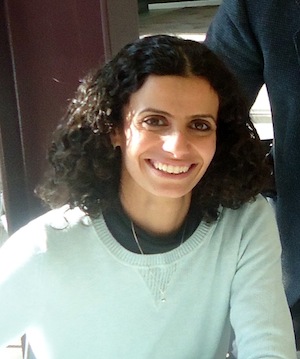
photo - Dr. Rania Okby at the Asper Campus in Winnipeg earlier this year
Dr. Rania Okby at the Asper Campus in Winnipeg earlier this year. (photo by Ariel Karabelnicoff)

Okby’s parents divorced when her father expressed his desire to marry another woman. “Polygamy is a common practice in the Bedouin community,” she told the Independent. “About 30 percent of Bedouin women are in a polygamy system. My mom didn’t agree to that. She said, ‘OK, whatever, you want to get married? OK. But, I’m going to leave the house.’ She left the house with six kids – four girls and two boys.”

Okby, while in high school, spent one day a week at BGU, part of the university’s recruitment programs for Bedouin high school students. One such program, Seeds of Medicine, helps identify the best students, those who have a chance to be accepted into medical school.

“We were two female students who did very well in the project,” said Okby. “We went through interviews like other candidates for medical school. And, that’s how I became a medical student.”

In her first year in medical school, Okby had the opportunity to help deliver a baby. “I remember how it felt to be part of giving birth, dealing with birth and helping women … so, I fell in love with obstetrics and gynecology … and that’s how I decided to do that,” she said.

As it happened, Okby went on to become the first female Bedouin doctor in the world.

“My whole family was proud I was accepted,” she said. “They saw how hard I worked. I studied in high school five days a week and then I went another day to study in the university. And, you know what? On the seventh day, I would volunteer on a few projects.”

Financing was not an issue, as BGU covered expenses and the university is supporting Okby while she is doing her fellowship in Toronto.

“Being at the university at large, the fact that there’s more and more Bedouins going to BGU – especially girls – because of the Centre for Bedouin Studies, connects the Jewish community with the Bedouin community in an interesting way,” said the doctor.

The way Okby sees it, “If you’re more exposed to different people or cultures, you understand that they are human beings, just like you. It doesn’t matter if they’re Jewish, right? So, being exposed to one another at the university, for sure, makes it better. And the more educated people are, the more they will hopefully accept one another.

“There are many friendships between Arabs, Bedouins and Jews. It’s normal, because if you’re in contact with people, you become more comfortable with them. There’s a lot of Jews who volunteer in the Bedouin community, and there are some Bedouin who volunteer in the Jewish community – not necessarily in their own community.”

What is paramount in Okby’s mind is, “Education, education, education. To become equal, we have to first become empowered. Bedouins suffer from very low social economic, education and health status … everything is lower. So, to become equal, we have to be empowered.”

Life in Toronto

During the first two months Okby was living in Toronto, a friend stayed with her, and the doctor’s mom also joined her during the second month. Since September, Okby has been living on her own, along with her two daughters, in an area referred to as “the Kibbutz.”

According to Okby, “There are about 35-40 families, Israeli families, in the area, and 97 percent of them are Jewish. Most of them are doctors who came to do their clinical fellowships, but some of them are post-doc. We live in the same area and most of our kids go to the same school, so the older kids help the new kids adapt to school.”

Okby’s youngest daughter just started Grade 1, and the parents had a party for all their kids who were starting first grade.

“Now, during Sukkot, everyone is celebrating,” said the doctor. “On exchange day, everyone who has things they don’t need brings them, and everyone picks what they need. We support each other, help each other, do trips and Friday night dinners together.”

Understanding the issues

Bedouins make up 25 percent of the Negev population. But, Okby said, “In labor and delivery, we’re about 55 percent, because we give birth to a lot of kids (the average is six to seven kids), we suffer from a lot of gynecological problems, we have a high rate of relative marriages and we have a high rate of malformation.

“We have three times the rate of neonatal deaths compared to the Jewish population. Forty percent of that is due to malformation, which is a result of relative marriages. Bedouin women [also] suffer from postpartum depression – 30 percent compared to 10 percent in Jewish society.

“It’s similar to the indigenous people here, in Canada. We have many of the same problems as the aboriginals.” This is one factor Okby plans to focus on when she returns to Israel. “The university is very interested in the issue, too,” said the doctor. “Maybe we’ll have a minorities health department or something like that to research it further, to make the situation even better for those kids and mothers.”

Rebeca Kuropatwa is a Winnipeg freelance writer.

Posted on October 17, 2014October 27, 2014Author Rebeca KuropatwaCategories WorldTags Abe Chapnik, Ben-Gurion University, BGU, Rania Okby
Vancouver NCSY welcomes Steins

Vancouver NCSY welcomes Steins

Rabbi Josh and Laura Stein with their daughter Yehudis at Niagara Falls. (photo from Josh Stein)

Josh and Laura Stein come from similar backgrounds – both grew up as unaffiliated Jews just a few kilometres from each other in Toronto, both became more interested in their Jewish heritage as teens through National Conference of Synagogue Youth (NCSY), and both ended up learning in Israel, where they met. Now, the married couple (along with their 10-month-old daughter Yehudis) has moved to Vancouver as Rabbi Josh Stein takes on a new role as the NCSY chapter coordinator in Vancouver, hoping to give back what they both gained from NCSY.

“I attended Jewish elementary day school and a public high school. I had no affiliation really,” he told the Independent. After becoming involved with an NCSY rabbi, he said, he learned about a Jewish heritage that he never had experienced before. After high school, Stein chose to spend two-and-a-half years in a yeshiva in Israel, where he became Orthodox.

“Going to Israel for the first time really opened my eyes to a different aspect of Judaism that I never experienced before,” said Stein. “That, coupled with a week in Poland [through a trip organized by his yeshiva], really opened my eyes to my Jewish heritage and kind of endowed with me the exploring of Judaism further from there.”

At the same time, his wife to be was going through a similar journey: she also had left her native Toronto to study in Israel, eventually meeting her husband through the same rabbi who they both met in high school and had sparked their Jewish quests.

After graduating with smicha, a bachelor of arts in Judaic studies, a bachelor of talmudic law and a teaching certification from the Israeli Ministry of Education, Josh Stein and his family moved back to Toronto. Recently, they found their next role, joining the Vancouver Jewish community.

“There are so many people who have helped us along the way in becoming Orthodox that we really felt that it was part of our duty to give back to the community and allow other students to be as fortunate as we have been in discovering our Jewish heritage,” said Stein.

As part of his new role, he’ll be organizing educational and social events for Jewish students in Vancouver, from Shabbatons to paintball sessions and weekly learning classes.

“Essentially, my job is to work alongside Rabbi [Samuel] Ross and bring in new energy to the younger kids coming in,” said Stein. They’ve already held the first Vancouver Shabbaton of the year, which brought together about 100 kids from Western Canada, as well as Seattle and Portland, to spend a Shabbat together in Vancouver.

“The kids had a blast, there was so much camaraderie and this feeling of being part of a greater community,” he said. They have also started weekly Torah High learning classes and have many programs lined up for the year.

NCSY, which has been in Vancouver for about 50 years (and is now in its 60th year nationally), aims to help Jewish teens discover and connect with their Jewish roots through fun, informative and educational programming and mentorship. Although Vancouver is known for its high intermarriage and assimilation rates, the number of Jewish youth involved in NCSY has grown in the past few years, which is one of the reasons why the chapter brought in the Steins.

“We brought them in due to sheer growth,” said Ross, NCSY Vancouver city director. “We are now seeing well over 200 kids a year. Perhaps five [or even two] years ago, kids were coming in here and there; now, the kids are coming in for two, three, four or five times every week for programs.

“In order to be able to continue our growth, we felt this was the right time to bring in the next couple who would complement what Gila, my wife, and I are presently able to offer.”

The Steins are looking forward to being part of the growth of Vancouver NCSY.

“NCSY to me is a family that unites our community as a whole. It’s an organization that really brings Jews together from all different aspects of life and makes them feel like they’re part of a family, no matter their religious level,” said Stein. “We hope to allow each student to find their own uniqueness about Judaism and internalize it for themselves.”

Vicky Tobianah is a freelance writer and editor based in Toronto. Connect with her on Twitter, @vicktob, or at [email protected].

Format ImagePosted on October 17, 2014October 27, 2014Author Vicky TobianahCategories LocalTags Josh Stein, Laura Stein, National Conference of Synagogue Youth, NCSY
Vancouver now home for Liran Kling

Vancouver now home for Liran Kling

Julia Glushko and Liran Kling at last year’s U.S. Open. (photo from Liran Kling)

Israeli tennis coach Liran Kling now calls Vancouver home. He moved here after being invited to do so by Canada’s No. 2 female tennis seed, Sharon Fichman.

Kling, 33, has played and coached tennis since he was a kid.

Born in Ramat Gan, he was one of the top junior players in Israel. After three years of army service, he attended College of Charleston in the United States on a tennis scholarship and then began coaching, in 2006, staying on for two years at the college before returning to Israel.

In 2010, Kling began coaching one of Israel’s promising young female players, Julia Glushko. Over four years, Kling helped Glushko become Israel’s No. 1 seed, a ranking she shares off and on with fellow tennis star, Shahar Peer.

After the 2014 Australian Open, however, Kling and Glushko parted ways. “It was a great experience for both of us,” said Kling of their time together. “We achieved a lot in the four years we worked together. There was just a mutual feeling that our partnership had run its course and we both felt it was time for a change. Julia is a great player and I wish her all the best in the future.”

 Moving to Vancouver

“When I stopped working with Julia, Sharon contacted me to see if I was interested in coming to work with her and her team in Vancouver,” said Kling.

“Sharon is Canada’s No. 2 player, after Eugenie Bouchard. She is ranked 127 in the world in singles and 90 in doubles. Her somewhat low ranking is due to the fact that she is coming back from knee surgery and, in the past, she had a number of wins against top 50 players, so we know she has the potential to do that and more.”

About working with Fichman, Kling said, “We believe she can be ranked among the top of women tennis.” He added, “Our Israeli background helps us find common ground and to develop a strong working partnership.”

Fichman was born in Toronto to Israeli parents and has an older brother who was born in Israel. She began playing tennis at age 5 and, at 13, became the youngest player to win Canadian nationals for girls 18 and under. Later, at 14, she became the youngest player in Canadian history to play on the Canadian Federation Cup team.

Before becoming a professional, Fichman was ranked as high as No. 5 in the world for girls 18 and under, winning the Australian Open and Roland Garros titles in doubles, and reaching the quarter finals in singles of two grand slams. As a professional, her career high ranking to date has been 77th in the world in singles and 48th in world doubles.

Fichman competed in the 2005 Maccabiah Games for Canada and won the gold medal in the women’s open singles event. She was the flag bearer for the Canadian Maccabiah Team.

“The Canadian Tennis Federation has been very supportive of me and my tennis career and I am proud to play for Canada,” said Fichman.

Kling and Fichman first met on the Women’s Tennis Association tour, when Kling was still Glushko’s coach. When Fichman began looking for someone to join her team in Vancouver, she said Kling was her first choice. “The fact that he is Israeli is simply a bonus,” she said.

“He is very observant and has a great eye for the game of tennis,” said Fichman about Kling. “As a former player himself, he understands what it takes to be successful as a professional tennis player, so I take a lot of confidence in his input and feedback on and off of the tennis court.”

Both Fichman and Kling are new to Vancouver. Fichman said both she and Kling “would like to be better introduced to the Vancouver Jewish community,” while Kling said, “I’m enjoying my time here…. As far as the winter season goes, I was told to bring an umbrella. I look forward to learning how to ski this winter.”

The two are working out of a tennis centre in Surrey.

Rebeca Kuropatwa is a Winnipeg freelance writer.

Format ImagePosted on October 17, 2014October 17, 2014Author Rebeca KuropatwaCategories LocalTags Julia Glushko, Liran Kling, Sharon Fichman, tennis
Food as delight and comfort

Food as delight and comfort

Yotam Ottolenghi is in Vancouver on Oct. 21 for a sold-out pre-Jewish Book Festival event to promote his newest cookbook, Plenty More. (photo from Yotam Ottolenghi)

Israeli-born chef, restaurateur and TV personality Yotam Ottolenghi has made a name for himself by bringing creative Middle Eastern and gourmet vegetarian cuisine into the homes of everyday cooks. His debut cookbook, Ottolenghi: The Cookbook, published in 2008, co-written with fellow Jerusalem native Sami Tamimi, features nearly 150 recipes selected from his restaurants. Ottolenghi has since published two other bestselling cookbooks, Plenty, which focuses exclusively on vegetarian cooking, in 2011, and Jerusalem, co-written with Tamimi, in 2012. The star chef and author is in Vancouver on Oct. 21 for a sold-out pre-Jewish Book Festival event to promote his newest cookbook, Plenty More, which was published this week by Random House.

“I always enjoyed food very much since I was very young, but never considered it as a career option,” Ottolenghi told the Independent. “But when I finished my studies at university, I decided to see if I could make it into the profession, so I enrolled in a culinary course in London in 1997 and really loved it. I thought it was very liberating and very immediately gratifying as opposed to the things I did before. It felt great feeding people and getting immediate feedback from them.”

After graduating from culinary school, Ottolenghi worked in various restaurants, but a defining moment arrived when he teamed up with a group of people and started a deli in London’s Notting Hill neighborhood that specialized in fresh food and pastries.

image - Plenty More book cover“I really enjoyed doing it, it became extremely popular very early on,” he said. “We made some nice vegetable dishes, things with pasta and grain that are deeply ingrained in the Middle Eastern food culture,” and it took off. Since then, he’s convinced millions around the world to open up their palates and culinary appetites and take a chance on Middle Eastern food.

In his newest book, Plenty More, vegetables are again the focus and he writes about his cooking methods and gives readers a glimpse into his process. “It was an organic process – the recipes are based on those I write for the Guardian newspaper’s weekend magazine – but the inspiration, or ‘penny-drop’ moment, came when I realized I wanted to organize the chapters around cooking methods rather than ingredients. Certain vegetables can get pigeon-holed – a courgette gets steamed, a squash gets roasted and so forth; focusing on the cooking method, instead, really allowed me to showcase how much more versatile vegetables are than this,” he said.

His next project is already in the works, he said. “I am working on a new book with our head chef at NOPI [in London] and we have plans to open a new Ottolenghi deli in East London next year. That’s keeping the big picture busy, and then the day-to-day work in the test kitchen continues on apace,” he said.

Ottolenghi said he hopes to continue immersing himself in the food world, and do the work that he loves to do – while preparing his own favorites, as well.

“What I love in food is the ability to surprise, delight and comfort all at once. My favorites will change depending on the context, so it will be meatballs cooked with dried Iranian lime one day and tinned smoked oysters tipped onto toast and eaten for breakfast the next,” he said.

Perhaps he’ll even gain a new favorite while he’s in Canada. “Festivals are just a great place to exchange ideas and enthusiasm with like-minded people so I’m looking forward to just being there, having a good time and learning about more ways I can get some great maple syrup into my cooking,” he said.

For more information about the Cherie Smith JCCGV Jewish Book Festival and a full schedule of events, visit jewishbookfestival.ca.

Vicky Tobianah is a freelance writer and editor based in Toronto. Connect with her on Twitter, @vicktob, or at [email protected].


Format ImagePosted on October 17, 2014October 21, 2014Author Vicky TobianahCategories LocalTags JCCGV Cherie Smith Jewish Book Festival, Sami Tamimi, Yotam Ottolenghi
Living in world with chesed

Living in world with chesed

Vancouver Talmud Torah Grade 7 students and some of their family members participate in this year’s Random Acts of Chesed Race on Sept. 28. (photo from VTT RAC Race Facebook page) 

“The world will be built with chesed.” – Psalms 89:3

In 2012, the Vancouver Foundation surveyed almost 4,000 people from across Metro Vancouver. The survey asked people what kinds of relationships they had, how deeply they engaged in community life, how committed they were to maintaining ties with the world around them. One out of every four respondents said they did not feel connected to others, nor to their community. In short, they felt lonely. When Vancouver Talmud Torah students heard about this, they decided to do something about it.

On Sept. 28 this year, as part of that continuing effort, VTT’s Grade 7 students took part in a RAC (Random Acts of Chesed) Race, designed to lift the spirits of people across the city. While Random Acts of Kindness is a worldwide organization, the chesed element began at King David High School here following the death of Gabrielle Isserow, a much-loved student who was known for her extraordinary kindness. It seemed only fitting that her passing be honored with a movement that inspires kindness to others.

At this year’s RAC event, 40 students were divided into 10 teams; more than 100 family members also took part. Their challenge: to help build a sense of community and connection by performing mitzvot, actions that could happen every day but, by and large, don’t. They included carrying someone’s groceries, cleaning up garbage off the street, giving a child a stuffed animal, giving up a seat on the bus to someone who looks tired; the offer of a hug, an invitation to dance; students freely offered friendly smiles, chocolates and compliments.

As VTT teacher and director of Jewish life Shoshana Burton explained, “In this RAC Race, we wanted to restore a sense of community, enhance a sense of connection to one another with humor and generosity.”

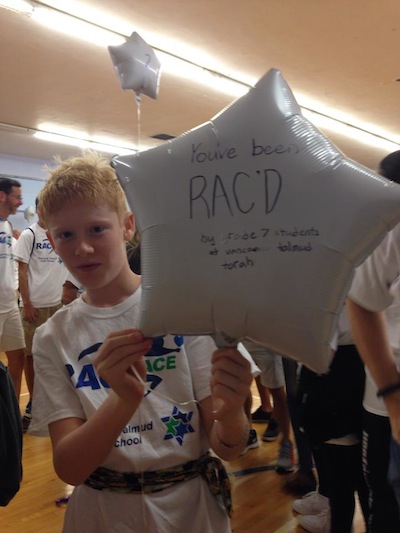
photo - Zevi Kline with a “You’ve been RAC’d!” balloon
Zevi Kline with a “You’ve been RAC’d!” balloon. (photo from VTT RAC Race Facebook page)

Each team was given specific directions about where to go and how to get there. The teams covered Richmond Centre, Yaletown, Kerrisdale and Mount Pleasant, among other areas. Backpacks were provided containing supplies for the day, including stuffed animals, Starbucks cards and cards that read, “You’ve been RAC’d!” Instructions were given about respecting others’ personal space and, from there, the students improvised with gusto. Challenged to drop their reserve, take initiative and show a little chutzpah, they rose to the occasion.

While some RAC recipients struggled with the notion that these acts of kindness were free, others danced, hugged, smiled and made bunny ears behind the kids’ heads in photographs.

“Take what you need” posters were also stuck on lampposts. Set up like a “for sale” notice, these posters had tabs for people to rip off but, instead of information about dog-walking, babysitting or items for sale, these slips offered passersby things like peace, freedom, encouragement, love and healing.

Parent Lisa Boroditsky was thrilled with the outcome. “It was so wonderful to see the kids connecting to strangers, interacting with community and spreading kindness. After all the laughs, hugs and smiles our group received, we feel like we made a few people happier today!”

Since the RAC Race, Burton said, the students just “keep coming.” Sometimes in groups as large as 20, they want to talk about our next project, she said, describing this student group as “unstoppable.”

When asked how the RAC program fits within the VTT curriculum, Burton explained, “Chesed is not a subject we study; it is the life we live.” Moreover, RAC is not bound to the classroom, she added. “RAC Race’s lessons were taught with real-world experiences. Students were encouraged to notice genuine needs that they might have not noticed before and to be compassionate in respectful ways.”

As an example, during the Sept. 28 event, student Joshua Switzer’s team came across a homeless man in Kerrisdale who looked “really depressed,” so they gave him a Starbucks gift card.

Said student Alisa Bressler, “When I’m walking around Kerrisdale, I am usually thinking just of myself. This time was different because we were there to help other people.”

An anonymous letter to Burton read, “You’ve opened a door in our hearts welcoming kindness. You make us eager to spread kindness, and also you teach us to be good people. How can we thank you more?”

“Kids continuously seek meaning and connections,” said Burton. “When they are provided with the opportunity to search for and recognize meaningful connections, they are empowered. They ask for more. They never cease to surprise me and always exceed my expectations.”

Concluded Burton, “I love how our school is tuned into the needs of the community now. Because of technology, schools’ roles are changing. It’s not only where we go for knowledge – it’s also a place to make connections and start building a caring community outside the walls of the school. These children will go out into the world with this in mind.”

Shula Klinger is a freelance writer living in North Vancouver.

Posted on October 17, 2014February 24, 2016Author Shula KlingerCategories LocalTags RAC, Random Acts of Chesed, Shoshana Burton, Vancouver Talmud Torah, VTT
21st-century furniture

21st-century furniture

An Eli Chissick-designed mirror, which will exclusively be available from SwitzerCultCreative in November. (photo from SwitzerCultCreative) 

You could say Renee Switzer got her love of the furniture business from her grandfather, who arrived in Canada from Poland in 1920 and opened a second-hand furniture store in Calgary. The tradition continued when her father entered the industry, too, with a company specializing in the manufacture of antique reproductions. Switzer worked in the family business until it was sold in 2010. A year later, she launched SwitzerCultCreative, motivated by a desire to create opportunities for Canadian designers.

“I love the furniture industry and the people involved in it, and I wanted to maintain the contacts I’d developed over the years,” she told the Jewish Independent. “After I moved from Vancouver to the Sunshine Coast in 2006, I discovered there’s a tremendous amount of homegrown talent that’s hidden away and needed to be developed and promoted, so that’s what I decided to do.”

Switzer builds and maintains business relationships between furniture designers, the craftsmen who create those designs and the clients who purchase the finished product. Her focus is modern, luxurious and sustainable 21st-century designs and her emphasis is on knowing every detail about the products she represents. That includes how pieces are made and finished, what materials are used, who creates and builds those pieces and why they are environmentally sustainable.

Among the collections she promotes is the Coupland Collection by Canadian novelist Douglas Coupland, the Baumhaus Collection by Jess and Nicolas Meyer, the Barter Collection from Kenneth Torrance and the AHRPA Collection created by Umberto Asnago, an Italian furniture designer.

More recently, Switzer was also determined to find an Israeli designer whose work would fit in with the collections she already promotes. “I really believed it was important to try and do something to counteract all the anti-Israel boycotts going on right now, boycotts that are nonsense,” the Roberts Creek resident said.

In an effort to find the right fit, Switzer began reaching out to organizations in Israel, making inquiries about different designers. When she saw the work of Eli Chissick, its high quality and focus on sustainability resonated with her immediately. “His pieces are unique and made primarily from salvaged woods,” she said of the 30-something award-winning designer. “He’s interested in sustainability and, though it’s hard to reduce the carbon footprint of a designer based in Tel Aviv, we are able to do that by making his pieces in North America.”

Chissick is a designer, artist and carpenter who is passionate about environmental sustainability. His latest series of recycled art is called “Wood-Con-Fusion” and each piece within the series began its life as an off-cut on the floor of a carpentry studio, destined for the scrap heap. “Eli is able to see the potential in the most unassuming pieces of fibreboard, veneer and Formica, and nothing goes to waste as he collects and sorts these pieces and presses them into sheets, which he uses to create unique pieces of furniture,” Switzer explained.

Two of Chissick’s designs are presently being manufactured in Vancouver and will be ready in November, licensed exclusively to SwitzerCultCreative. His five-foot mirror will sell for $2,800 and Switzer is confident it will quickly find a home.

Her buyers are primarily interior designers and architects for residential and hospitality projects all over North America through sales representatives with whom she has exclusive relationships and who believe in the products she represents. With no physical showroom in Vancouver, most of Switzer’s pieces are exhibited on her website, switzercultcreative.com. Her company also sponsors an annual design competition for students, where the winner has their design built and marketed for a year by SwitzerCultCreative. “Our aim is to promote unknown talent by providing a launching point for new designers to build their own brands,” said Switzer.

Lauren Kramer, an award-winning writer and editor, lives in Richmond, B.C. To read her work online, visit laurenkramer.net.

Format ImagePosted on October 17, 2014October 17, 2014Author Lauren KramerCategories WorldTags Eli Chissick, furniture, Israel, Renee Switzer, SwitzerCultCreative

Posts pagination

Previous page Page 1 … Page 620 Page 621 Page 622 … Page 664 Next page
Proudly powered by WordPress