

For more cartoons, visit thedailysnooze.com.

נעצר שודד הבנקים
ג’פרי ג’יימס שולמן, “הקופץ” (צילום: York Regional Police Service via nationalpost.com)
הפליליסט הקופץ: נעצר שודד הבנקים הקופץ הכי מבוקש בתולדות קנדה שעל ראשו הוצע פרס של מאה אלף דולר
שודד הבנקים הכי מבוקש בתולדותיה של קנדה נעצר לאחרונה דווקא בשוויץ. הפרקליטות הקנדית בפתחה בהליכי הסגרתו המסובכים והמורכבים, ואם יורשע הוא צפוי לשבת שנים רבות בבית הכלא הקנדי. איגוד הבנקים הקנדיים הציע פרס של לא פחות ממאה אלף דולר למי שימסור מידע על השודד, והצו לתפיסתו פורסם בכל רחבי העולם. משטרת ג’נבה עצרה את ג’פרי ג’יימס שולמן בן החמישים ושלוש, שמחזיק באזרחות כפולה (אמריקנית וצרפתית) בעת שנהג ברכבו באזור הדאון טאון שבעיר. המשטרה המקומית קיבלה מידע מוקדם על מיקומו של ג’יימס והוא נעצר על ידי שוטרים סמויים.
בחמש השנים האחרונות (מאז פברואר 2000) בהצליח שולמן לשדוד עשרים ואחד בנקים קנדיים שנמצאים בשני מחוזות: אונטריו (שנים עשר מהם באזור יורק) ואלברטה (ארבעה בקלגרי). הוא זכה לכינוי “הקופץ” כיוון שנהג להיכנס לסניפי הבנקים ולקפוץ מייד מעבר לדלפקי הטלרים, ובאיומי אקדח לשדוד את הכספות. בסך הכל הצליח שולמן לשדוד כמות גדולה מאוד של כסף, וזו הסיבה שעל ראשו הוצע פרס כל כך גבוה על ידי איגוד הבנקים. במשטרה הפדראלית (האר.סי.אם. פי) מסרבים בשלב זה לציין כמה כסף הוא גנב בסך הכל. שולמן “שעבד” לבד היה נכנס לבנקים כשהוא חבוש בכובע, ולעולם לא הפעיל אלימות נגד העובדים מלבד האיומים. העובדים מציינים שהיה לו מבנה גוף אתלטי למדי, ולפעמים היה אף מברך אותם לקראת החגים, ולאחר מכן מייד נעלם ברחוב הסואן. במשטרה מוסיפים עוד כי לשולמן היה סורק משטרתי והוא ניהל תחקיר מקיף ביותר על כל סניף של בנק (כולל שעות פתיחה, היכן יושבים הטלרים והיכן ממוקמות הכספות) בטרם שדד אותו.
הפליליסטית המזייפת: אישה זייפה מסמכים למימון הגדלת חזה ושאיבת שומן מהבטן
ברנדי בלור יכולה להתגאות בשדיים הגדולים שיש לה ובבטן השטוחה הסקסית שלה. אך היא לא תוכל להתגאות באופן שבו מימנה את שני הניתוחים הקוסמטיים, להגדלת השדיים, מתיחת הבטן ושאיבת השומן. בלור בת השלושים ותשע מהעיר קמלופס גנבה רישיון נהיגה של קשיש בן שמונים ושלוש, ובאמצעותו השיגה הלוואה בהיקף חמישה עשר אלף דולר, למימון שני הניתוחים. לחברת ההלוואות אשר מימנה השיגה את המימון לניתוחים היקרים, היא סיפרה שהקשיש הוא הסבא שלה. הקשיש קיבל מכתב מחברת ההלוואות בגין התשלום עבור הניתוחים. הוא הבין מייד שמדובר במעשה הונאה ופנה לתחנת המשטרה המקומית. לאחר שנתפסה על ידי המשטרה הודתה בלור בחקירתה במעשה הרמאות. כיוון שיש לה כבר עבר פלילי מפואר, שופט בית המשפט המחוזי שלח אותה במהירות לרצות תשעה חודשים בבית הכלא. היא קיבלה בנוסף גם עונש על תנאי למשך שנתיים. וכן היא תאלץ להחזיר לחברת ההלוואות שבעה עשר אלף דולר (שכוללים אף ריבית והצמדה).
בינתיים התברר שבלור לא נחה לרגע ובמקרה אחר היא גנבה אבנים יקרות בשווי של אלפיים וחמש מאות דולר, מחנות תכשיטים שממוקמת באחד הקניונים של קמלופס. הדיון בתיק הזה התקיים בבית המשפט לפני מספר ימים, כאשר בלור שוהה כבר בבית הכלא. ולכן מצלמת ווידאו הוצבה בתאה. השופט הוסיף לבלור עוד שלושה חודשים נוספים בפנים, והאריך את העונש על תנאי בשנה נוספת. כן הוטל על גברת בלור המכובדת להחזיר לחנות התכשיטים אלף דולר, שזהו המחיר הסיטונאי של רכישת האבנים היקרות. לא בטוח כלל שזה הפרק האחרון בסדרת המעשים הפליליים של בלור.

May on foreign, domestic issues
Green party leader Elizabeth May. (photo from Elizabeth May’s office)
“Let’s face it, Israel is a miracle in the world – in innovation, and science and technology, solar energy!” Green Party of Canada leader Elizabeth May told the Independent in an interview last week.
While the Green party passed a motion last year against the expansion of settlements in Israel, which they claim are illegal and pose an obstacle to a peace agreement between Israel and the Palestinians, May noted that there is a Green Party of Israel, and shared some of its accomplishments. She said her party supports Israel and the collaboration of Canada with Israel, particularly on science, technology and climate change.
She added, “I think that it really needs to be stressed that world peace depends on Canada playing a role where we command respect from a lot of different communities and support for the state of Israel has never marginalized Canada in the world, never. But, aligning ourselves with only one of the political threads of the Israeli body politic, basically being a pro-Likud country, reduces our influence in the world, for sure. And our influence in the world is needed for many things, including striving for peace in the Middle East – real, durable, sustainable peace, so we don’t have Israeli children or Palestinian children fearing for their lives.
“The Green party has always condemned Hamas, we condemn Hezbollah, we also want the response [to their actions] to be proportional, so it’s a very difficult issue and I don’t think it helps in our democracy when we can’t discuss it. I’ll clearly say that we draw a very strong line [between] any campaigns that criticize Israel, I think that’s legitimate, [and] any campaign that criticizes Israel but has at its base an even hidden agenda of antisemitism. I think we can spot that pretty quickly, and we’ve always condemned those.”
While prime ministers Stephen Harper and Binyamin Netanyahu opposed the Iran nuclear deal, May said, “We think it’s a good thing. We think that you can’t risk having Iran have nuclear weapons. You can’t take a chance on missing the opportunity for diplomacy to give you inspections – they are real. They’re not even going to implement the lifting of sanctions till Iran shows good faith and allows for inspections…. I think it’s important to say trust but verify.
“We also recognize that, if we’re going to solve the crisis in Syria, we have got to start making more alliances in the region and Iran could play a significant role. I think, obviously, that was on [U.S. President] Barack Obama’s mind in pursuing an agreement with Iran … we do not have enough natural enemies of ISIS [the Islamic State of Iraq and Syria] and extremism. Leaving Libya as a failed state was a mistake in the region, so we’re very concerned with the big picture, and maybe you have to take some water in your wine sometimes.”
If there were a Green government, May said she would consider deploying Canada’s military in action on foreign soil with a United Nations sanction, “which makes it legal under international law. We’re global, we have Greens in 80 countries around the world. We believe that you act within international law, with a UN approval. That’s one of the tragedies with the Libyan engagement, of course, was that we used the responsibility to protect with a UN sanction then, midway through, changed the mission to regime change, and we really contaminated the usefulness of responsibility to protect for future missions.
“… I could see Canada participating now in a mission that involved troops on the ground if it was to fortify the border between Syria and Turkey to stop the flow of black marketability. ISIS is funding itself in the millions through black-market operations, both its sale of black-market oil and its sale … of antiquities from the archeological and culturally significant sites they are looting. We should be using all of the tools at our disposal to stem the flow of money to ISIS….”
“But, for instance, I could see Canada participating now in a mission that involved troops on the ground if it was to fortify the border between Syria and Turkey to stop the flow of black marketability. ISIS is funding itself in the millions through black-market operations, both its sale of black-market oil and its sale … of antiquities from the archeological and culturally significant sites they are looting.
“We should be using all of the tools at our disposal to stem the flow of money to ISIS, but the recent figures – I saw today in the press that the number of recruits to ISIS has grown and, I have to say, of course! That’s why they wanted the West to come at them. If the West comes at them, that’s their best recruiting tool…. What they’ve done in terms of recruiting youth through social media tools, what they’ve done through brutal, sadistic and public murders, it’s unprecedented historically. Their brutality is not unprecedented historically but their techniques, like social media, are, so you have to ask yourself, why are they putting beheadings and tortures on YouTube? They want to recruit from the West and they want to excite Western nations to retaliate.
“And,” she added, “I think we have to ask ourselves, what’s Saudi Arabia doing? There’s certainly a lot of concern that Saudi Arabia is actually supporting ISIS. We need to have a significant effort involving all regional governments to end the war in Syria. If we have the focus on ending the war in Syria, shutting down ISIS becomes one of the many objectives.”
On security domestically, including Bill C-51, May said, “I supported that community and Jewish schools and facilities should have additional funding for security and that it should be government funded. C-51 is in another category altogether because C-51 actually makes us less safe against terrorists in every way.”
In 2012, with Bill C-38, she said, “Stephen Harper’s administration eliminated the inspector general for CSIS [Canadian Security Intelligence Service]. In 2015, they bring out C-51, which says CSIS can now – [with] what was in C-44 in December – is CSIS can … operate overseas and domestically, can collect intelligence and can act … [with] access to something that doesn’t exist in any other democracy anywhere around the world, which is access to a private, secret hearing to get a warrant for constitutional breach.”
With C-51, she said, there is no oversight. “It’s not a question of inadequate oversight,” she stressed. “Zero oversight of the RCMP, zero oversight of CSIS, zero oversight of the Canadian Border Services Agency, zero oversight of CSEC [Communications Security Establishment Canada]…. You take this together and – what a former MI-5 agent testifying to the Senate said was that – Canada has created a tragedy waiting to happen. If C-51 had been drafted as the legislative tool to implement the recommendations from the Air India inquiry, it wouldn’t look anything like it now looks. It would be about your intelligence agencies having pinnacle control, somebody know[ing] what everybody else is doing. Israel would never put in place a zoo like this. This is a three-ring circus with no ringmaster, and it’s dangerous.”
“We opened up our doors to ‘boat people’ from Vietnam. You could have made the same case – you could have said, there could be communist sympathizers who are sneaking into Canada. Now, the reality of the situation in Syria is that people are fleeing Syria because you can’t live there. The extent of the violence, there are very few areas of the country that are untouched by it.”
With respect to the refugee crisis, and balancing the acceptance of more immigrants with security, given that these refugees are coming from countries that inculcate antisemitism and anti-West views, May said, “We do apply security screens when people come to Canada. We always have. We opened up our doors to ‘boat people’ from Vietnam. You could have made the same case – you could have said, there could be communist sympathizers who are sneaking into Canada. Now, the reality of the situation in Syria is that people are fleeing Syria because you can’t live there. The extent of the violence, there are very few areas of the country that are untouched by it.
“I’ve helped some Syrian families reunite and I’ve known the extreme fear and terror that young men live under if they do not want to be captured by any one of the rival forces and forced into servitude,” she continued. “The military in Syria – whether it’s Bashar al-Assad’s forces … [or those that] oppose Bashar al-Assad – they’re all looking for people for their army. These young men that are fleeing, these young families that are fleeing, older people, are trying to get away from a war zone, and they are legitimate refugees. That said, we have a security screening process. They get interviewed before they come to Canada. We can create a situation where we know [through] ongoing surveillance and interviews for anyone. And, within the community itself, there’s a strong degree of networking that would not want someone coming here who posed a threat to them. We really can put in place effective security.
“Stephen Harper announced in January that we would accept 10,000 Syrian refugees and, having worked to try to bring refugee families to Canada, I absolutely say this is a system that was designed not to work. On one hand, he promised 10,000 refugees would be able to come to Canada; with the other hand, he made it impossible to accept them, which is devastating and tragic. I understand the fear, I’m not discounting it. I’ve been so impressed with the number of Jewish communities and religious leaders within the Jewish community who’ve called for us to accept more refugees. I think it matters. We call on accepting more but, obviously, not without security checks.”
May and the Green party have had to be innovative to get their ideas across during this campaign. When May was not invited to the Globe and Mail’s leaders debate on Sept. 17, for example, she countered with Twitter. Figures from North Strategic were cited in the media: “May was mentioned in 1,799 tweets in a 24-hour period leading up to the Calgary debate. That was about 300 more than NDP leader Tom Mulcair but fewer than Conservative leader Stephen Harper and Liberal leader Justin Trudeau.” May apparently gained 5,000 Twitter followers after the debate.
“… this may be the least fair election yet because the public expects to see all the leaders in a national televised leadership debate before the election is over, and … we are unlikely to have a single additional English language debate, and none that are broadcast nationally.”
“In terms of the fairness of the elections,” she told the Independent, “this may be the least fair election yet because the public expects to see all the leaders in a national televised leadership debate before the election is over, and it hasn’t been really explained in the media that, as things now stand, we are unlikely to have a single additional English language debate, and none that are broadcast nationally.”
In responding to a question about her party’s approach to the economy, May eschewed labels.
“Our solutions, and our view is, too, that we are not left or right,” she said. “If there’s a solution to a problem that comes from what we might say is a free-market, right-wing toolkit of solutions, like a pricing mechanism, we’ll use that, if it works. But, if you need a regulation, we’ll use regulation.
“So, our fee-and-dividend approach is less free market than Tom Mulcair’s cap-and-trade – he says the market will determine the price for carbon, I heard him say that the other night…. We’re pragmatic more than anything else. But, Greens around the world, where Greens have been in government, the kinds of programs we put in place really work…. We’re the only party left that opposes free-trade deals if they include investor-state agreements.”
As an example, she gave the Green party’s opposition to the Canada-China investment treaty. “It amazes me that it didn’t ever really get understood by the media, we never had a vote in Parliament on it, and we are trapped in the Canada-China investment treaty till the year 2045 without any real discussion of it and what it means to have the People’s Republic of China have the right to sue us for decisions we make they don’t like. I’m hopeful that, after this next election, with a minority Parliament, we can bring forward some legislation to require transparency, so that when China complains, there’s an obligation on governments to make that public, to make it known.”
The Independent has interviewed Liberal leader Justin Trudeau, Minister of National Defence and Minister for Multiculturalism Jason Kenney and has an invitation out to NDP leader Thomas Mulcair. The federal election is on Oct. 19.
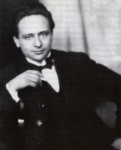
Ullmann’s last work
Viktor Ullmann, 1924. (photo from Arnold Schoenberg Centre Los Angeles)
The memories of City Opera Vancouver’s production of The Emperor of Atlantis in 2009 still resonate. Written by Viktor Ullmann (composer) and Petr Kien (librettist) in 1943-44 at Theresienstadt concentration camp, its stirring score and lyrics, both of which, remarkably, reflect hope for a positive future, stay with you. No doubt, Project Elysium’s Cornet: Viktor Ullmann’s Legacy from Theresienstadt will have a similar effect.
In two public performances (and one private), the group Elysium will present Cornet, the last work that Ullmann finished before he was deported to Auschwitz on Oct. 16, 1944, and killed there two days later. Set to excerpts from Rainer Maria Rilke’s The Lay of Love and Death of Cornet Christoph Rilke, it tells the “tale of a young soldier who experiences love and death in a single night.”
Combining recitation and piano, the piece will be performed by pianist Dan Franklin Smith, who is also music director of Elysium, with Gregorij H. von Leïtis, who is the group’s founder (in 1993) and artistic director, among other things. The evening will include Ullmann’s Piano Sonata No. 6, Op. 49, written in Theresienstadt in 1943, and a lecture by Michael Lahr, Elysium program director and executive director of the Lahr von Leïtis Academy and Archive. Project Elysium was created by Vancouver performer and producer Catherine Laub to bring Elysium to Canada.
“In honor of the 70th anniversary of the end of WWII, Elysium – an organization focused on performing music of composers persecuted during the Nazi regime – is coming to Canada for the first time to present a concert of Viktor Ullmann’s music. One of the concert dates will be the actual date 71 years ago that Ullmann arrived in Auschwitz from Theresienstadt and was immediately put to death,” Laub told the Independent. “The focus of the endeavor is not to dwell on the suffering and death of this artist but to celebrate a man who created beauty during an intensely painful time, and be uplifted by artistry that justly survives his shortened lifespan. In Michael Lahr’s words, ‘The adamant will to live, the unshakable hope that good will prevail no matter how horrible the attempt to crush it – this is the message of Ullmann’s music from Theresienstadt. Elysium offers Ullmann’s music as a powerful symbol of hope.’”
In addition to being a performer, composer and teacher, Laub has been a concert producer since she moved to Canada from the United States in 2006. She founded the Erato Ensemble, with William George, and has been involved on the production side with various other ensembles. Since the creation of the monthly Sunday concert series at Roedde House Museum in 2012, of which she is artistic director, she said, “I have started to focus more energy on being aware of which artists and which projects are poised to bring important gifts to audiences and communities in Vancouver. Project Elysium is the largest-scale project I’ve been involved with from an organizational standpoint, and it’s unique in that I’m not wearing my performance hat at all.”
The Project Elysium concerts, she said, “have been in the works since December 2013, when I reconnected with Gregorij von Leïtis and Michael Lahr on a trip to Munich. I first worked with them when I was fresh out of graduate school and participating in their young artist program. In the years since, I had become more familiar with the second part of their mission statement: ‘… fighting against discrimination, racism and antisemitism by means of art.’ It inspired me that here were people with a clear artistic mission as well as a humanitarian focus. In today’s world, where we all expect quick sound bites and instant gratification, it has to be clear why live performance and the arts – beyond big-budget Hollywood – are relevant and important. This seems like a clear answer to me, and it’s never been more important to be reminded of what happens to the world when we don’t listen to such messages.”
“Never forget.” This was one of the reasons that City Opera Vancouver decided to produce The Emperor of Atlantis.
Artistic director Dr. Charles Barber first encountered Ullmann’s music when he was in graduate school at Stanford. “I had made friends with Lotte Klemperer, daughter of the great conductor Otto Klemperer,” Barber told the Independent. “She and her father knew his work, and she introduced me to Ullmann’s broken life and unbroken promise. We listened to recordings together, and Lotte told me about his music and its time.”
Barber also knew Ullmann’s work through violin teacher Paul Kling. “He had played Ullmann’s music, knew it intimately, and was imprisoned with him at Theresienstadt. Prof. Kling considered Ullmann one of his teachers, and strongly believed in his genius.”
While Ullmann and Kien did not survive the Holocaust, Kling did, and, said Barber. “I felt an obligation to help maintain, in his name, the music that might have been.”
The choice of Atlantis, said Barber, had to do with “its unique story, its historical context and its relevance today.” City Opera presented it “in partnership with the Vancouver Holocaust Education Centre, and they were wonderful collaborators in bringing this British Columbia première to the Rothstein Theatre.
“City Opera specializes in chamber opera: the small forms, the intimate eloquence, the affordable advantage. Atlantis met all of these criteria, and more. The music is wonderful, the libretto is bold and vivid, the voice is favored and the audience was moved. It’s what we hoped to achieve, and it’s what we tried to honor.” (For more on the 2009 production, visit jewishindependent.ca/oldsite/archives/feb09/archives09feb06-01.html.)
While Barber, unfortunately, won’t be able to attend Elysium’s Cornet concert – he will be in Quebec City with COV, conducting its opera Pauline – he put the program into context. He said, “It highlights Ullmann’s gifts: concision, wit, superlative technical accomplishment, daring, and a strong foundation in European musical traditions.
“Ullmann’s significance in musical history is, alas, limited. He was one of the great lights in a musical generation destroyed by the Nazis. We will never know what his place would have been; we only know what it might have been. In his 46 years, he seems to have composed as many works. Only 13 survived him after he was killed at Auschwitz.
“His music works for me, and I think will for the audience coming up, because of its eclecticism. Ullmann was an authority on many sources, he drew widely upon them, but found a voice that was unlike others of his day. He was not an academicist. He wrote for real people, and presumed in them a shared awareness of musical and cultural traditions, and a desire to advance them – playfully, skilfully and imaginatively.”
“While it isn’t possible to rewrite history,” said Laub, “this project functions as a kind of musical ‘rescue mission,’ bringing recognition to a brilliant composer whose work was nearly lost to us. His story and his music allow us to make a more personal connection to a time that is almost too overwhelming to contemplate. This connection is essential as it helps us not only mourn but learn.”
Echoing these comments, Barber said, “These concerts will not be a funeral procession. Ears will be challenged, knowledge will be deepened, and awareness will be empowered.
“According to my teacher Paul Kling, the real Ullmann was a witty and profoundly learned man who delighted in sharing knowledge and in jolting listeners. What an irresistible combination.”
Cornet will take place Oct. 16, 8 p.m., at the Cultch’s Historic Theatre, and Oct. 17, 8 p.m., at Pyatt Hall. Tickets ($30/$20) are available from the Cultch box office, 604-251-1363, and tickets.thecultch.com/peo.
OK to disagree
Last week, at the annual parade of speeches by world leaders at the United Nations, Binyamin Netanyahu and Mahmoud Abbas were among those using the General Assembly podium as a pulpit for their respective cases. To say there is disagreement between these two individuals is an understatement. Netanyahu rightly condemned the hypocrisy of the world, and its ostensible parliament in which he was speaking, for its ludicrous obsession with the Jewish state while parts of the Middle East literally burn. Abbas offered the “laugh line” that the Palestinians no longer need to be bound by the terms of the Oslo process. The humor, such as it is, comes from the fact that the Palestinians never bound themselves to Oslo. While Israel had a long list of obligations under the peace process, the Palestinians effectively had only one, which they have ignored: stop inciting your people to genocide and prepare them to live in peace with their Jewish neighbors. To come to the UN and make the case that they have been forced by circumstances to abandon principles they never accepted in the first place is typical of the made-for-TV claptrap this annual performance has become.
In Canada, though, we have a different problem. While others in the world find it impossible to agree on much of anything, our political leaders are finding it tough to find much of substance upon which to disagree. Oh yes, when you watch the debates and the bombardment of partisan ads, it seems like there are chasms between the parties. There really are not. Some of the differences – the number of refugees we should take in, the recipe for economic advancement, approaches to social issues – mostly come down to nuance and decimal points.
There is such a thing as too much agreement. Is it a distinctively Canadian characteristic that our politicians should careen so insipidly to the middle of the road? An election campaign is the time when parties should be ferociously demonstrating their differences. Yet when we delve into the actual policies and plans, one potential government looks much like another. This may be, thankfully, due to the fact that we are among the most fortunate people in the world, blessed with natural resources, human wealth, economic and political stability and relative peace. That’s great.
But when we do see genuine differences of policy and approach, we also see a disparaging of exactly the phenomenon we should be encouraging. It emerges in the use of the term “wedge issue.”
We have heard this a lot in recent weeks. The Conservatives are accused of using issues like the niqab and Canada’s support for Israel as wedge issues. The implication is that the very discussion of these topics divides Canada in an unwholesome manner, that the issues are being raised solely for political gain.
Well, any issue raised in an election is raised for political gain. If opposition parties think the Conservative approach to Israel or the niqab or anything else is off base, they should advance their own case and let voters decide. That’s how election campaigns are supposed to work. It is a cop-out to deflect an issue outright by dismissing it as a wedge. If anything, an election campaign is precisely the time to accentuate differences. In a little more than a week, voters can decide who is right and who is wrong.
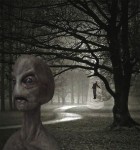
Help save us from zombies
Alien Contagion: Rise of the Zombie Syndrome tasks audiences with finding a downed UFO that has crashed on earth. Virtual Stage’s interactive adventure runs to Nov. 1. (photo from Virtual Stage)
For anyone who has dreamed of saving the world, now’s your chance. All you have to do is take part in Virtual Stage’s Alien Contagion: Rise of the Zombie Syndrome, which runs until Nov. 1.
Several shows have already sold out, with people keen to take on their mission. “This year, audiences are tasked to respond to a highly confidential NASA report about a downed unidentified flying object that has crashed on earth. The exact location is unknown,” reads the promotional material. “To add to the mystery, the alien pilot is reportedly injured, has escaped and is hiding in Vancouver. Furthermore, every NASA official sent to locate the UFO has returned in a zombie-like state … brave and adventurous audience members must find the downed spacecraft, quell the nearby zombie uprising and, ultimately, save the human race from the brink of extinction.”
This is the fourth annual interactive, smartphone-enabled theatre experience produced for the Halloween season by Virtual Stage.
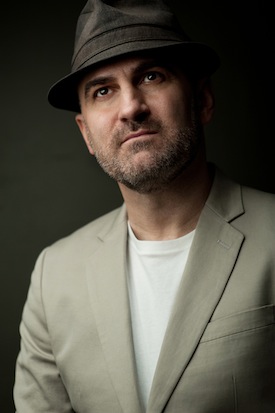
“The idea originated four or five years ago after I went to the West End in London, England, to see a bunch of theatre,” creator Andy Thompson told the Independent. “I saw all sorts of plays in many different styles of venues. I went to very fancy theatres. I went to small, edgy, Fringe-type theatres. I was even lucky to witness rare performances including Kevin Spacey playing Richard III, as well as the ‘real-life’ theatrical event of Rupert Murdoch getting pied in the face in the British House of Commons.
“The most engaged I felt as an audience member, however, was during an interactive play called The Accomplice. It took place on the streets of London and involved the audience being endowed as key figures in an adventure to recover stolen loot. It was so much fun! The piece was basically a crime drama, but I wondered how a horror-genre show could use a similar format. Add to the mix my interest in technology and smartphones and I quickly developed an idea for a smartphone-enabled, site-specific, roving, zombie-themed theatre adventure with audience members tasked with saving the world.”
Thompson said the series, which premièred in 2012, wasn’t meant be an annual event. “It was a huge creative risk ‘one-off’ event and I thought it could easily flop,” he said. “Needless to say, it came as quite a pleasant surprise when the show was so well received, selling out almost shortly after we opened. People just loved it. After I realized the popular appeal, I looked at how it could be designed as an annual series that is completely new each year.”
This is not Thompson’s first foray into science fiction. The Jewish community member’s credits include – but are in no way limited to – the three previous Zombie Syndromes, SPANK!, 1984 (an adaptation of George Orwell’s novel) and the sex-comedy musical Broken Sex Doll, which featured original music by fellow Jewish community member Anton Lipovetsky, as well as episodes of TV’s Fringe.
“It is so much fun to imagine the seemingly endless possibilities in the universe,” said Thompson about his interest in science fiction. “I often contemplate our reality on planet earth, which often feels like a far-fetched science fiction story idea. Consider: we are on a small planet, whipping through space, revolving around a star. Our star is merely one of billions of stars in the Milky Way galaxy. And, if that’s not all, there are billions of galaxies in the universe. So, by my rough math, that means there are at least 1,000,000,000,000,000,000 stars in the universe. Earth and our existence seem extremely small when put into this perspective. And that’s just when we look at ‘third-dimensional’ reality. I am convinced that there are tangible, intelligent realities on other vibrational frequencies that we are unaware of. Like the sound of a dog whistle, humans are just not currently attuned to be aware of them. Without a doubt, what Shakespeare said in Hamlet is certainly true: ‘There are more things in heaven and earth, Horatio, than are dreamt of in your philosophy.’
“Life is pretty mind-blowing when you really think about it. Science fiction allows us to imagine the possibilities. And, half the time, because our existence is so vast, we get to explore far-fetched ideas that cannot be definitively refuted. To me, it’s a great deal of fun.”
And a great deal of work. Alien Contagion: Rise of the Zombie Syndrome features “about 45 performers this year, as well as about a dozen crew and designers,” said Thompson. “The logistics are mind-numbing, but we have a great team and a lot of experience under our belts. We generally start planning the show a year in advance. Things progressively kick into higher gears over the spring and summer. The storylines are often collaborative. This year, my stepson Finn [Ghosh-Leudke] co-authored the story with Tyler Clarke and myself. I then wrote the script based on that story.”
The show is fully wheelchair accessible. However, it is rated PG-13 because of the subject matter, and children under 13 must be accompanied by a parent or guardian. For tickets and more information, visit thevirtualstage.org/tickets.

Adaptation beneficial
Camille Legg as Romeo, left, and Adelleh Furseth as Juliet share an intimate moment in Studio 58’s Romeo and Juliet. (photo by David Cooper)
Shakespeare’s Romeo and Juliet is such a well-known play, done so many times on stage and on screen, it’s hard to imagine an original interpretation, but Studio 58 of Langara College manages to shine new light on this ageless tale.
This production marks the beginning of the studio’s 50th season and director Anita Rochon has incorporated that into her vision of the play, setting it in 1965, the year Studio 58 was born. Music from the 1960s – the catchy tunes of Velvet Underground, Rolling Stones, Turtles and others – permeates the show. Older audience members will recognize their youth in these songs, as well as in the clothing, but these are only frills. The core of the play remains unaltered – the immortal and tragic love story between Romeo and Juliet.
However, there is one profound adjustment to the classical version: Romeo is a girl. Accordingly, the pronouns are switched in the text, and a son becomes a daughter. Other than that, the text is more or less authentic, albeit abridged, for the student performance, and the young actors handle the 500-year-old verses with professional panache.
The change benefits the show. For most people in 21st-century North America, family feuds – to the death, anyway – are the stuff of legend, while parental resistance to their kids’ gay or lesbian inclinations is still all too real. Some experience it firsthand or have friends who did; others are on the parents’ side of the equation or know someone who was. But everyone in the audience could relate to this aspect of Romeo and Juliet’s forbidden love.
Everyone could also feel the wonder, the breathtaking discovery of their first encounter. Highlighted by the expressive and inventive choreography of Jewish community member Tara Cheyenne Friedenberg, the first meeting of the lovers felt almost like a ballet, a lyrical and beautiful duet, with the corps providing a counterpoint. The visual echoes from such classical ballets as Giselle or Swan Lake were unmistakable.
On the other hand, the fight scenes by David Bloom, who also happens to be a Jewish community member, were ferocious, with some really scary moments, especially when Mercutio swings a broken bottle at Tybalt. Both young actors, Conor Stinson-O’Gorman (Mercutio) and Kamyar Pazandeh (Tybalt), infuse their stage duel with energy, but all I could think about was, What if someone missteps and hurts his friend? Fortunately, no accidents occurred, and both combatants expired safely.
Of course, the two female stars of the show deserve mention – both acted brilliantly.
Camille Legg, who played Romeo, excelled in her part. Her Romeo was young and naive, a girl on the brink of adulthood, and her wide-eyed innocence made her character’s belief in the power of love plausible. Romeo’s love is radiant and boundless; her grief, all-encompassing.
Adelleh Furseth as Juliet, while strong overall, lacked enough of the child-like nature that I attribute to the character. She portrayed a more mature, more sexy Juliet, more a woman than a girl. At times, she struck me as a character actor or comedian, funny rather than naively exuberant.
The humming chorus during the play’s last scene, the young lovers’ double suicide, was inspired and poignant.
In the director’s notes, Rochon writes: “… there are real people all over the real world who are falling in love as you read this, in spite of all kinds of opposition arising because of their gender, nationality, political affiliation or otherwise. Familiar stories, but each with its own beating heart.”
Romeo and Juliet runs at Studio 58 until Oct. 18. For tickets, visit langara.ca/studio-58.
Olga Livshin is a Vancouver freelance writer. She can be reached at [email protected].

Healing after trauma
A screenshot of Dr. Gabor Maté and Rita Bozi in The Damage is Done, from video by Patrick McLaughlin.
The Cultch often presents non-traditional shows that confront uncomfortable questions. This year, one such show, The Damage is Done by Rita Bozi, brings to the stage an examination of trauma and its psychological impact on individuals and families.
The Damage is Done combines theatre, dialogue, essay, video, music and dance. It features two performers: Bozi, and physician and author Dr. Gabor Maté, who has written on various psychological issues, including addiction. Bozi plays several characters in the show, while Maté plays himself.

“I comment on Rita’s actions on stage, like a Greek chorus,” Maté said in an interview with the Independent. “We are trying to find some meaning to the trauma endured in the past, the traumas our families went through, and to learn from it. If we don’t process trauma, it will control our lives. The after-effects of trauma influence how we see ourselves: either as victims, or it makes us overcompensate, try to appear more powerful than we are. Sometimes, people try to get away from the pain with drugs – that’s where addiction comes from.”
Maté explained that deep trauma is often transmitted through generations. It affects social units and families as well as individuals. “The children of Holocaust survivors often have elevated stress hormone levels. When a young mother is depressed, her baby suffers, even though everyone loves the baby and nobody wants it hurt…. The play is an exploration of how trauma works and how we can find liberation from it. Before we heal, we must find the problem, acknowledge it.”
He accepted this project despite a busy schedule and multiple speaking engagements because it touches on issues about which he has been advocating for years. “Medical schools don’t teach students about trauma and its psychological impact. When the young doctors start working, they feel the lack of that knowledge. They want a guidance of how to connect physical and emotional healing, and not many people talk about the subject.”
So, many professionals turn to Maté. His seminars are in such demand across North America that sometimes he spends days on the road. “In the last week, I had eight speaking engagements,” he said. In various American and Canadian cities, addiction workers, trauma specialists, therapists and educators, as well as family members and others, comprise Maté’s audience.
“I’m trying to answer the question, ‘Why?,’ the same question Rita asks in her play, so I provide the framework for her story. I think it’s very important. So many people suffer from trauma, physical and psychological. It’s impossible to separate the two. I’m not going to launch a second career as an actor, of course,” he added with a smile, “but it was an interesting challenge, something different. Besides, I like Rita.”
Bozi also spoke with the Independent. She explained that the show was years in development. Its most recent version premièred in Yukon last year. “This show is ultimately about compassions for ourselves and others,” she said.
Maté’s involvement in the project was paramount to her. “I attended several workshops with Gabor and I read his books. He once said, ‘We need to be asking not why the addiction but why the pain?’ As a therapist and a child of immigrant Hungarian parents who lived through the war, the Soviet occupation and the revolution, I have long been concerned with inherited historical trauma and its effect on families and offspring.”
She continued, “I wanted Gabor a part of it. Why mention him if I could have him? I had already been making a connection with Gabor through email over our shared Hungarian backgrounds…. He felt like kin. We were speaking the same language (apart from Hungarian) and we both felt the power of the mind-body connection affecting our lives.”
It took Bozi 12 years from the seed of the idea to the show itself. “I play out my family drama, and Gabor plays the poetic counterpoint. He helps my character come back to ‘self.’ He helps her understand her own experience of the family situation, her part in it and how to begin to transform the inherited pain. He brings his razor-sharp insights to the show and his ability to be concise about what is happening. He sees what is hidden, cuts to the chase and helps guide one to the pieces of self that were lost when trauma occurred.”
According to Bozi and Maté, healing comes from the ability to look at traumatic events from infancy and early childhood with humor and compassion – even though the damage is done, we can defuse its impact.
The Damage is Done will be performed at the Cultch from Oct. 20-24. Before that, Bozi and Maté are taking the show to Banff, where both their evening shows are already sold out. For more information about the local production, visit thecultch.com/events/the-damage-is-done-a-true-story.
Olga Livshin is a Vancouver freelance writer. She can be reached at [email protected].

A dinner to remember
Kyra Zagorsky as Emily and Patrick Sabongui as Amir in Arts Club’s Disgraced. (photo by David Cooper)
Politics and religion generally are considered taboo topics for discussion. But, sometimes, they can’t be avoided. This is the case in Ayad Akhtar’s Disgraced, now playing at the Stanley.
Akhtar puts four Manhattan 30-somethings – secular Muslim corporate lawyer Amir, his upwardly mobile artist Caucasian wife Emily, his African American female colleague Jory and her Jewish art gallery curator husband Isaac – together for what is intended as a celebratory meal with cocktails, fennel and anchovy salad, and designer dessert.
The progression to the fateful dinner starts rather innocently. The curtain rises on a very well- but half-dressed Amir (Patrick Sabongui) posing for Emily (Kyra Zagorsky, Sabongui’s real-life spouse) as she paints his portrait based on her inspirations from Middle Eastern art. The cozy domestic scene is interrupted by Amir’s nephew, Abe (Conor Wylie), previously known as Hussein Malik – he ditched his name to make life easier.
Abe entreats his uncle to assist a local imam who has been jailed, accused of helping finance Hamas. Amir, a self-declared apostate and proud of his apparent assimilation into Western society, wants no part of it, avowing his disdain for Islam and its culture. However, Emily and Abe pressure him into attending the court hearing, where his presence is noted by the media. Amir’s reported connection to an accused terrorist does not bode well for his partnership track at his firm of Leibowitz, Bernstein and Harris. Strike one.
As well, his law partners discover that he has misrepresented himself by saying that he was born in India instead of Pakistan and by giving his name as Kapoor instead of Abdullah. Strike two.
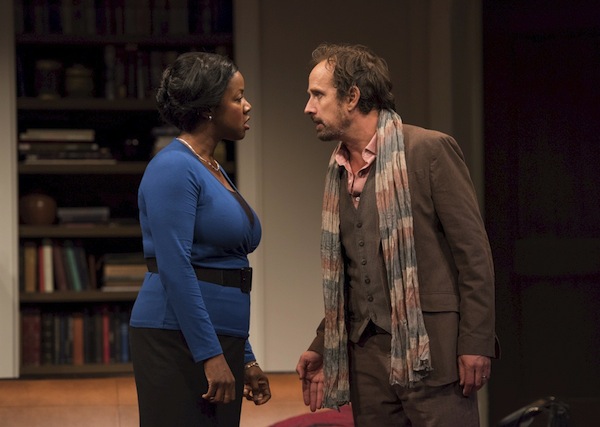
The fading chance of a partnership for Amir provides the background for the dinner party. The conversation starts with discussions about Emily’s new works that will be exhibited in Isaac’s gallery, the Whitney, but soon disintegrates into heated arguments over Islam. Emily defends the religion and culture while Amir declares it to be tribal, violent and totalitarian. He calls the Koran, “one long hate mail letter to humanity” and yet, in the next breath, he admits he felt some pride during the 9/11 attacks because it showed that, “we were finally winning.” Oh, oh, shades of an identity crisis … and strike three soon follows.
The play is very much a Greek tragedy with the hero’s downfall and the destruction of his “American dream.” Director Janet Wright noted in a media release that it “really hits you in the gut emotionally and leaves you questioning your own ideas and how you fit into our complicated society.”
All of the actors are very good. Sabongui is a standout as the suave, initially confident protagonist. Zagorsky develops her character from one of naivety to understanding with ease. Marci T. House and Robert Moloney provide some comic relief – and other food for thought – as Jory and Isaac, and Wylie competently portrays the confusion of a conflicted teen. The set is a swanky Upper East Side apartment with a view of the New York skyline – the mood lighting and easy music complete the effect. All in all, Disgraced is 80 uninterrupted minutes of intelligent, thought-provoking theatre that literally packs a mean punch.
Akhtar was brave to have written this critical piece, which appears to be somewhat autobiographical, and his courage and tough-minded approach have been rewarded with the play enjoying successful Broadway and West End runs and garnering the 2013 Pulitzer Prize for drama. Now, it is here for us to see, ponder and discuss – maybe over Shabbat dinner.
Disgraced runs until Oct. 18. For tickets and more information, visit artsclub.com or call 604-687-1644.
Tova Kornfeld is a Vancouver freelance writer and lawyer.

Forest can transform
Beyond the Edge by Lori Goldberg , part of the exhibit Urban Forest, which opens at the Zack Gallery on Oct. 15. (photo from Lori Goldberg)
“Urban Forest is a body of work exploring the relationship between urban dwellers and the natural world of the B.C. forest, and tying it into Jewish thought,” artist Lori Goldberg told the Independent about her new exhibit at the Sidney and Gertrude Zack Gallery, which opens Oct. 15.

The forest affords multiple experiences, which are often dichotomous, she explained, “freedom and fear spotlight fragments of light and cavernous darks, convoluted winds and soft silences. Trees collide with the sky, providing a protective umbrella that obscures the skyline of the cityscape. Those entering the forest shed layers of urban living as the drone of the city dims, senses awaken to the natural world, the forest breathes and comes to life.
“The paintings are narrative in style and explore the arena of the personal and the collective. Ordinary views and everyday objects come together in discordant co-existence and question the multiple, often contradictory, issues we face as members of a fragmented society disconnected from nature and from self.” In this way, the exhibit evokes the notion of tikkun olam (repairing the world), “which suggests humanity’s shared responsibility to heal, repair and transform the world.”
Goldberg will be in attendance at the Oct. 15 opening, which starts at 7:30 p.m. The exhibit is at the gallery until Nov. 8. To see more of her work, visit lorigoldberg.ca.