Peer support’s long history

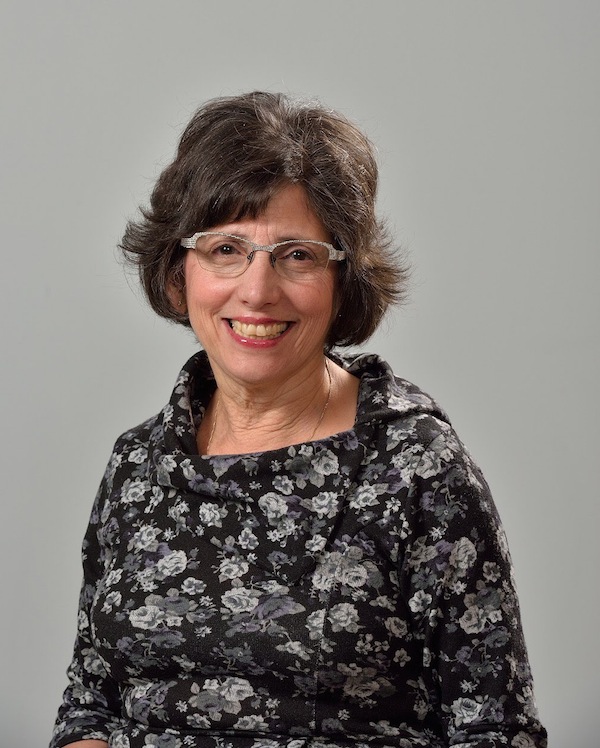
The Jewish Seniors Alliance of Greater Vancouver has invited Honoré France, a scholar on aging and expert on peer support, to speak via Zoom on Jan. 22. He will discuss the topic Discovering the Essential Importance of Seniors Supporting Seniors.

France, a professor emeritus in the department of educational psychology and leadership studies at the University of Victoria, will focus on the senior peer support training he developed. The training has been used by JSA for several years to help new volunteers learn how best to connect and liaise with isolated, lonely seniors in the community.

Among the topics France will cover are the early history of seniors peer support, strategies for self-care, information about memory, the value of exercise and the development of a healing presence.

Earlier this month, France shared some of his presentation with the Independent, including a peek at the origins of peer support during the beginning of psychiatry in the late 1700s – through French physician Philippe Pinel and hospital superintendent Jean-Baptiste Pussin. 

The talk will then move to more modern examples of senior peer support, including Indigenous approaches, and the development of group homes and inclusive treatment.

According to France, peer support is successful when various factors are in place, including effective approaches in helping aging populations and the promotion of the concept of self-help and independence among older people. 

Additionally, for peer support to be beneficial, people need to want to help themselves, there needs to be a reserve of talented older people who want to be helpful and, should someone have a problem or concern, there must be a willingness to seek out peers. 

After addressing various aging myths, such as the belief that dementia is inevitable, France will examine ways to stay mentally, physically and spiritually fit. He will explore nature as medicine, practices of letting go and cleansing, positivity (finding purpose and meaning), and mind-body activities like yoga, meditation, art and helping others.

France said he hopes that, by the end of the session, participants will “understand the developmental stage of aging and the central concept from Viktor Frankl about meaning and the crucial role it plays in healthy aging, and to follow their dreams as they age in the same way they did earlier in life.”

Frankl, an Austrian psychiatrist and Holocaust survivor, believed finding meaning in life to be the central human motivational force.

“Aging is natural and part of living,” said France, and people “can be in control physically, mentally, psychologically and spiritually. Aging is what you make of it and learning is a medicine and keeps you mentally fit.”

France emphasized that, no matter what a person’s condition in life is, they can live fully, consistent with their physical and psychological level. 

His talk will look at ways people can train themselves “to listen to others and to be like Frankl – optimistic, resilient, and always ‘moving.’ And, finally, [how to] develop a healing presence, as well as how to empathize at a deep level by bringing ‘light’ into the world to those in need.”

He added, “I will also provide some strategies for dealing with stress that I use. There will be a question period at the end, and Grace Hann will speak about the volunteer program at the Jewish Seniors Alliance along with one or two volunteers,” France said.

Hann is JSA’s senior peer support services trainer and supervisor.

Aside from his role at UVic, France is an artist, writer, therapist and consultant in the field of mental health. He has worked at the Shanghai University of Traditional Chinese Medicine, Addis Ababa University and the University of Massachusetts, where he graduated with a doctorate in counseling.

His academic interests include diversity, group processes and creative arts therapy. His current research involves reconciliation and residential schools, cross-cultural issues, creative arts, spirituality and eco-psychology (an intellectual movement to understand the relationship between humans and nature).

France has written several books and more than 75 academic articles on counseling issues and practices. Further, he has presented more than 80 scholarly book chapters around the world. He is currently re-writing and updating a 1989 publication on senior peer counseling, titled Senior Peer Support/Counselling Handbook: An Interactive Guide, which is set for publication this year.

On a personal level, he keeps active through gardening, playing squash and pickle ball, carving, building furniture and participating in strategic games, such as Go and chess. Currently, he is finishing up a novel based on his experiences hiking the West Coast Trail, his life teaching and backpacking around the world.

France’s talk is part of the JSA Snider Foundation Empowerment Series and the South Vancouver Seniors Network is a co-sponsor of the event. The Zoom starts at 11 a.m. The link to join it will be distributed through JSA’s email newsletter. Those interested in attending can also email office@jsalliance.org for the link. 

Sam Margolis has written for the Globe and Mail, the National Post, UPI and MSNBC.

Pinsky pens family memoir

In his ambiguously titled book Ordinary, Extraordinary: My Father’s Life, Vancouver lawyer and community leader Bernard Pinsky shares the biography of Rubin Pinsky. As the pages turn, the reader realizes that ordinariness and extraordinariness really do describe the tale of a life that veers from historically monumental to surprisingly, and gratefully, commonplace. 

image - Ordinary, Extraordinary book coverAt 1 p.m., Jan. 28, Pinsky will officially launch the book, in honour of International Holocaust Remembrance Day, at a prologue event to the Cherie Smith JCC Jewish Book Festival. He will present in conversation with Marsha Lederman.

Pinsky’s book is based on videotaped testimonies that his father, Rubin, gave in 1983 and 1990 to the Vancouver Holocaust Education Centre (which is co-presenting the Jan. 28 event), as well as family memories and what is clearly intensive research.

Rubin was born (probably) in 1924, about 100 kilometres north of Pinsk in what is now Belarus but was then Poland. Pinsky sets the stage beautifully, evoking shtetl life, where the smallest of the children slept atop the bakery oven in the tiny home after his father, Baruch, had baked challah and cakes during the day to eke out a meagre living.

After the German occupation, the Nazis quickly identified the men in the Jewish community who had leadership qualities and said they were needed for an important mission in a nearby area. They were marched just out of earshot and mass murdered. In a later selection, Baruch, his wife Henya and 10-year-old Rachel were marched off and never seen again.

Rubin and his sister Chasia were deemed useful for forced labour and spared the executions. Older brother Herzl had earlier been conscripted into the Red Army.

Every survivor narrative includes a series of unimaginable interventions, coincidences and happenstances, often made possible by acts of incredible daring by the survivor. Through a series of audacious escapades – they weighed off what appeared to be likelihood of certain death with the faint hope of survival – Rubin, Chasia and a few others escaped a selection process and fled to the forest. They lived off berries, roots, tree bark and what small game they could capture. In one instance, Rubin slew a timber wolf in a competition for the same rabbit. 

The group connected with a diffuse but apparently well-organized network of Jewish and other partisan fighters. Despite the challenges of mere survival, Rubin and Chasia participated in anti-Nazi actions that included cutting telephone lines, destroying railway tracks and undermining the establishment of Nazi garrisons.

Typhus swept through the Jews in the forest. In the winter of 1943/44, Rubin was delirious with fever and expected to die. In one of the terrible choices people were forced to make in such situations, the partisan cadre decided to leave him behind to save the group. Chasia refused to go. The two siblings hid in a ditch and, to the best of her ability, she nursed him back to comparative health.

Each of these unlikely survival stories makes one wonder how many similar stories did not have the relatively happy ending Rubin’s did, how many survivor testimonies or second generation narratives were never written because the fever did not break, or the hero did not take a risk on a faint hope, or any of a million chance escapes or saving miracles did not occur in time.

In July 1944, the forest in which Rubin and Chasia had hid, fought and barely survived was liberated by the Soviet army. Concentration and death camps were repurposed into displaced persons camps after the war and Rubin and Chasia were in Bergen-Belsen. Chasia left and searched for three weeks, eventually finding Herzl and bringing him with her to Bergen-Belsen, where the three surviving members of the family were reunited.

Zionists tried to recruit them to go to Palestine, but Rubin knew that would be a continuation of the conflict, uncertainty and fighting he wanted to put behind him. 

“Rubin therefore made up his mind,” writes Pinsky. “He needed a skill or trade in demand in America. He and Herzl made a pact. They would study together, each in a different trade, and go together to the New World. They would help each other and never be separated again.”

The story of how Rubin and Herzl (in the New World, he would be known as Harry) were able to migrate to Canada is another example of chutzpah – an hilarious drama of subterfuge – that has to be read to be believed. Chasia, whose marriage in the DP camp did not last, joined them soon after.

Rubin married Jenny Moser in 1951 and they would have three children: the author, Bernard, his older sister Helen and younger brother Max – all now mainstays of the Vancouver Jewish community. Rubin’s life in Canada was that of a hardscrabble entrepreneur – and not without its seemingly miraculous near-misses and fortunate endings.

As an appendix, Pinsky shares writings from a 2012 family roots trip back to Gzetl, where a dedicated teacher is keeping alive the memory of Gzetl’s Jews.

Pinsky’s memoir is indeed a story both extraordinary and ordinary, of what human resilience can summon in a world turned upside-down – and how the strength developed in unimaginable adversity can carry a survivor through challenges when life becomes, in comparison, ordinary. 

Register for the event at jccgv.com/jewish-book-festival/events.

Ventanas return to city

Tamar Ilana & Ventanas play at the Rothstein Theatre Feb. 3. (photo by Ali Wasti)

The Chutzpah! Festival and Caravan World Rhythms co-present Tamar Ilana & Ventanas on Feb. 3, 8 p.m., at the Rothstein Theatre.  Founded in 2011, Ventanas interweaves flamenco, Sephardi and Balkan music and dance. They have released three albums and have toured extensively throughout North America. They have been nominated for four Canadian Folk Music Awards.

The six-piece Toronto-based music ensemble is fronted by vocalist and dancer Tamar Ilana. They perform in more than 20 languages, including Ladino, Spanish, Bulgarian, Macedonian, Hebrew, French, Romani and Arabic, drawing inspiration from worldwide themes such as migration and the questioning of one’s identity.

Ilana is a powerful and versatile Canadian singer and flamenco dancer of mixed descent, renowned for her ability to sing in multiple languages and collaborate with various artistic communities from around the world. Her childhood was spent gathering songs from small villages on the edge of the Mediterranean and dancing flamenco. (For more, see jewishindependent.ca/ventanas-come-to-b-c and jewishindependent.ca/ventanas-to-play-at-folk-fest.)

Ventanas’ band members are from across the globe and, together, in true Canadian fashion, they and Ilana intertwine their musical cultures to create an all-encompassing world of their own in which they lead audiences down the less-traveled paths of the Mediterranean, mixing in contemporary interpretations of ancient ballads, original compositions and new choreographies, inviting audiences of all backgrounds into their music.

For tickets to Tamar Ilana & Ventanas ($40 regular, $34 senior/student), visit chutzpahfestival.com or call 604-257-5145. 

– Courtesy Chutzpah! Festival

What is life’s purpose?

In her graphic memoir, Artificial: A Love Story, Amy Kurzweil tackles many existential questions, framed around her father’s quest to resurrect his father using artificial intelligence. Kurzweil participates in the Cherie Smith JCC Jewish Book Festival Feb. 12.

The purpose of life, of art, what it means to be human, to love and be loved, the value of relationships, our mortality. In a very personal story, cartoonist and writer Amy Kurzweil explores not just universal questions but the biggest of questions in her new book, Artificial: A Love Story.

Kurzweil participates in the Cherie Smith JCC Jewish Book Festival Feb. 12 in two separate sessions: one about the choice of the comic form to tell a story, the other titled Art & Artificial Intelligence.

In Artificial, readers are invited into another part of Kurzweil’s world. Her debut graphic memoir, Flying Couch, was also family-focused, centring around her maternal grandmother’s story. As she writes on her website, “At 13 years old, Bubbe (as I call her) escaped the Warsaw Ghetto alone, by disguising herself as a gentile. My mother taught me: our memories and our families shape who we become. What does it mean to be part of a family, and how does each generation bear the imprint of the past, its traumas and its gifts? Flying Couch is my answer to these questions, the documentation of my quest for identity and understanding.”

image - Artificial: A Love Story, by Amy Kurzweil, page 21
Artificial: A Love Story, by Amy Kurzweil, page 21.

Kurzweil continues to grapple with these questions in Artificial, this time from the paternal side. Her father, Ray, an inventor and futurist, is building an AI tool that will allow him, basically, to resurrect his father, who died of a heart attack in 1970, at the age of 57. Ray has saved letters, articles, music and other material relating to his father, Frederic, a pianist and conductor, who fled Austria in 1938, a month before Kristallnacht, to the United States, saved by a chance encounter. Amy is helping her father sort through boxes upon boxes of material and computerize the information. She even chats with “her grandfather,” as the AI program is being developed.

“My father taught me … that, someday, robots would be made of memory,” writes Kurzweil. Of course, the creation of a Fredbot has functional, ethical, emotional and other challenges, and Kurzweil – in words and images – presents them with sensitivity, intelligence and creativity. Each page of Artificial is attention-grabbing and the level of detail on some pages is remarkable. Kurzweil meticulously re-creates correspondence, typed and handwritten, newspaper articles and other documents, emails and texts, but she also captures, for example, the doubt on her father’s face during a conversation and the concern she has for her partner when he’s undergoing some medical tests. Readers learn about the people asking the questions, not just the questions themselves.

As for the answers? There are multiple ones. Of her father’s project, his quest to conquer mortality using technology, Kurzweil writes that her father’s definition of infinity is, “Computers become so small and dense that they become intelligence itself. Humans who do not grow up or grow old and seal our stories. Our stories wake up and keep writing themselves. This future sounds like liberation from the sadness of a story’s end. But it also sounds terrifying.”

That Kurzweil isn’t completely convinced of the merits of her father’s project, even though she loves him dearly and is helping him try and accomplish it, makes Artificial a satisfyingly complex and relatable story. It is a love story on many levels, and one well worth reading. 

The Cherie Smith JCC Jewish Book Festival runs Feb. 10-15. For the program guide and to purchase event tickets, visit jccgv.com/jewish-book-festival.

Gertrude Stein and Alice B. Toklas “visit” the Jericho Arts Centre

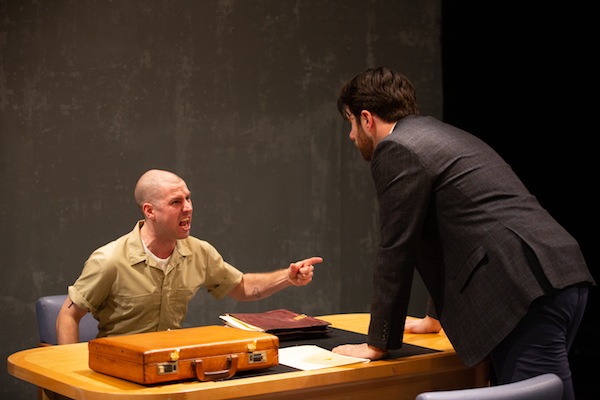
photo - Kelsi James as Alice, left, and Tanja Dixon-Warren as Gertrude in Gertrude & Alice
Kelsi James as Alice, left, and Tanja Dixon-Warren as Gertrude in Gertrude & Alice, by Anna Chatterton, Evalyn Parry & Karin Randoja. (photo by Nancy Caldwell)

Gertrude Stein and Alice B. Toklas “visit” the Jericho Arts Centre to tell of their 40-year relationship, of friendships with iconic artists, of Alice’s overwhelming devotion to Gertrude’s genius and how, as two Jewish lesbians, they survived in Paris in the Second World War. They want to find out how their lives are – or are not – remembered.

Lois Anderson directs the United Players production at Jericho Arts Centre Jan. 19-Feb. 11. For tickets, visit unitedplayers.com/gertrude-alice.

– Courtesy Jericho Arts Centre

Judges slap down Knesset

Israel’s government pushed the country’s Supreme Court into a corner – but instead of weakening the judicial system and putting more power into the hands of the government, which was the aim of the coalition’s judicial reform package, the gambit incited a showdown that made the court stronger than it had been a year earlier.

That is the synopsis of a leading Israeli legal scholar. Yaniv Roznai, associate professor and vice-dean of the Reichman University’s law school and co-director at the Rubinstein Centre for Constitutional Challenges, was speaking virtually to North American audiences hours after Israel’s Supreme Court released a landmark decision Jan. 1. During the presentation, which was organized by UnXeptable, the international group that emerged in opposition to the judicial reforms, Roznai said the court also now has more legitimacy among the public, according to opinion surveys.

The 250,000-word written decision, with contributions from all 15 Supreme Court justices, represents the first time in Israeli history that the high court struck down a component of the Basic Law, which is effectively Israel’s constitution. The opinion overturned legislation the Knesset passed in July curbing the ability of judges to use “reasonableness” as a legal standard.

One justice wrote that Israel’s limited system of checks and balances means that the cancellation of the court’s ability to freely judge decisions by governments and ministers removed much of the ability of courts to defend individual and public interests.

While subjective, the idea of reasonableness has been a legal doctrine in Israel since the 1980s and was used a year ago to prevent Prime Minister Binyamin Netanyahu from appointing Aryeh Deri, the leader of the Shas party, from serving in cabinet because Deri had been convicted of tax fraud and bribery. The court declared it was not reasonable to appoint a convicted felon to lead a government department. This was the apparent impetus for a significant raft of legislation intended to reform the judicial system – proposals critics have called a “judicial coup.”

The reasonableness doctrine is available to the court if judges believe that elected officials did not take into account all relevant considerations before making a decision, or that those considerations were not given appropriate weight. It has been invoked numerous times on significant and less momentous government decisions.

In response to mass protests throughout 2023, the government at least temporarily backtracked on some of its judicial reform proposals, including efforts that would allow the Knesset to overturn court decisions by a majority vote and to give the government more direct control over the appointment of judges. That left the reasonableness doctrine as the remaining portion of the broader judicial reform proposal – and its rejection by the court is a blow to Netanyahu’s government. It also reopens the divisive topic, which has been largely dormant since the terror attacks of Oct. 7, possibly inviting social division at a time of national trauma.

Critics of the legislation, which passed the Knesset in July, argued that eliminating the reasonableness doctrine would allow the government to fire senior civil servants such as the heads of law enforcement agencies, making it easier to subvert the rule of law. Israel’s attorney general, for example, oversees the public prosecution system and determines whether politicians can be indicted on alleged crimes.

Since Israel has no formal constitution, the Basic Law serves as an alternative. However, whereas the American, Canadian and most other national constitutions have complex, in some cases almost impossible, amending formulas, Israel’s Basic Law can be amended by the Knesset by a majority vote. Therefore, Roznai said, “The only real check on political power is the attorney general and the judiciary, and the [Netanyahu government’s] reasonableness amendment was aimed to weaken precisely those two bodies.”

While the decision to overturn the law was close, with eight of the 15 justices in favour and seven opposed, three additional judges agreed that the court has the authority to strike down basic laws, but argued the time was not right.

The government defended the legislation by arguing that the idea of reasonableness was too arbitrary and, therefore, gave the court too much scope to intervene in areas the government considered the purview of the legislative branch. Critics, including Attorney General Gali Baharav-Miara, responded that the law eliminated guardrails that protect Israeli democracy.

Roznai, speaking Jan. 2, expressed mixed emotions about the court’s decision.

“I’m happy but, on the other hand, I’m a bit sad,” he said, noting that the entire controversy could have been avoided, “if the government had only worked a bit more gently, in a more clever manner. They could have enacted a more balanced amendment and then the court would not interfere.… I do not object to a reform in the judicial system. I think that any governmental system needs reform. In the education system we need to reform, in the health system we need reform, and also in the judicial system we need reform. But we need good reform. We need balanced reform. We don’t want something that would completely destroy the judicial system. We want something that would improve our systems and our democracy.”

A process that engaged different sectors of the society and tried to find a consensus on some of these issues could have resulted in constructive reforms, he said. Instead, millions of people took to the streets and polls showed that 80% of Israelis were opposed to the proposed judicial changes and a political schism has wrenched Israeli society amid a war.

Two days after Roznai spoke, UnXeptable hosted another event for North American audiences, featuring Dr. Tomer Persico, a research fellow of the Shalom Hartman Institute and former Koret Visiting Assistant Professor of Jewish and Israel Studies at the University of California Berkeley, where he was also a senior research scholar in the Centre for Middle Eastern Studies. He is a social activist advocating for freedom of religion in Israel.

Persico warned of cataclysmic impacts on global perceptions not only of Israel but of Jews if the trajectory of Israeli politics does not change. The current Israeli government, he said, includes individuals who are expressing ideas about the treatment of the people of Gaza that advocate ethnic cleansing and even genocide. Amichai Eliyahu, who was Israel’s heritage minister, was suspended from cabinet after saying that dropping a nuclear bomb on the Gaza Strip was “one of the possibilities” the government is considering. 

While the pro-democracy groups and individuals who were rallying against the government before Oct. 7 have closed ranks in a show of unity and determination since the Hamas terror attacks, these recent statements – including reports that the government is considering moving Palestinians from Gaza to third countries and returning Israeli settlers to the enclave – make this fragile unity difficult, said Persico.

Most Israelis tell opinion pollsters they want new elections and a different government. Persico warned that approaches to internal and external affairs by the current government might not only further tarnish Israel’s reputation in the world, but Judaism’s. Former governments have failed to find common ground with Palestinians to create a two-state solution, he said, but even the hawkish past administrations publicly expressed support for the concept. With the current government seemingly giving up on the idea and some voices in the coalition speaking of expulsions of Palestinians, Israel is on a path to becoming more of an international pariah, he said.

“There will be a breaking point between Israel and the liberal West and that includes liberal Jews,” he said. “I really fear that Judaism itself is going to be stained by the mark of the occupation.… It might materialize that that Judaism itself will be stained in the same way as Christianity has been stained by the Crusades, the same way as Islam has been stained by Islamic terrorism and ISIS.” 

Learning, living coexistence

Hand in Hand (Yad b’Yad) is a group of Israeli schools where Jewish and Arab students learn together. Its co-founder, Lee Gordon, was in Vancouver last month (photo from Hand in Hand)

Lee Gordon, co-founder of Hand in Hand (Yad b’Yad), a group of Israeli schools where Jewish and Arab students learn together, spoke at Vancouver’s Or Shalom Synagogue and met with members of the community at large last month.

“We are always eager to have more friends and supporters for what Hand in Hand is doing, especially in the current very dark situation in Israel and in Gaza,” Gordon said in an interview with the Independent. “Hand in Hand is a beacon of light in a place where coexistence is not widespread enough.”

Gordon, who first moved to Israel in the 1980s, launched Hand in Hand with Amin Khalaf in 1997. The first classes started in September 1998 with 50 students on two campuses, in Jerusalem and in the Galilee. Today, there are more than 2,000 students, who study in Hebrew and in Arabic, on six campuses throughout Israel.

The bilingual schools were established to combat the threat posed to Israel by growing social alienation and lack of trust between Jewish and Arab citizens. Education, in the view of Hand in Hand’s founders, was – and still is – instrumental in changing this.

Gordon, who lived in Israel for 20 years before returning to the United States, became involved in Jewish-Arab dialogue while pursuing a master’s degree in social work from Hebrew University. Though the university was integrated, he observed, there was not a great deal of interaction between Jewish and Arab students, aside from weekly dialogues in which Gordon and others from the two groups would engage on campus.

While those meetings were clearly a step in the right direction, he felt they were lacking. “Dialogue is superficial. People can have lovely feelings afterwards but don’t see each other again,” said Gordon, who is currently the director of American Friends of Hand in Hand. 

Later, when working on a fellowship project through the Mandel Institute, Gordon spent time looking at schools in Israel and analyzing what makes them succeed or fail. In the backdrop was the reality that the school system in Israel is completely segregated, even in mixed communities, such as Jerusalem and Tel Aviv.

“I started building a rationale for a school being a wonderful venue for bringing Arabs and Jews together, because it is not just for one hour a week. Once students are in school, they are there all day, all week, all year, and have a chance to truly get to know the other,” Gordon said.

Realizing that he needed an Arab partner for his goal of creating an integrated school to reach fruition, Gordon was introduced to Khalaf, an educator whose hope was for his children to grow up feeling as equals in Israeli society.

Hand in Hand was officially registered in spring 1997 and, for a year, Gordon and Khalaf scouted the country, trying to locate an ideal spot to start the school.

“We knew we wanted one in Jerusalem but also wanted a backup,” said Gordon. “We settled on an area in the Galilee where the Jewish and Arab towns are close together.” 

When the first schools opened in fall 1998, the primary challenges consisted of hiring teachers, raising funds and recruiting Jewish students.

“We knew Arabs, as the minority, would flock to our schools, it would be seen as a step up for them,” said Gordon. “Jewish parents would be more of a struggle. We wanted our schools to be accredited and not be viewed as boutique, esoteric schools lacking legitimacy.”

photo - Hand in Hand kids
(photo from Hand in Hand)

Though never without obstacles, as the schools grew each year, it became easier to recruit new parents because Hand in Hand presented an attractive educational possibility – students were learning two languages in a vigorous academic environment, they were happy and the class sizes were smaller.

Even today, Gordon admitted, Hand in Hand still has to work harder to recruit Jewish parents, particularly after the Hamas attacks on Oct. 7.

“This is the worst war of the four since Hand in Hand has been in existence,” he said. “Jewish families often know someone who was killed or taken hostage, and many of the Arab families have relatives in Gaza.”

While there were concerns that Jewish families might withdraw their children from classes following the attacks, that has not happened yet.

“Bringing people together is really the only way there is any hope of this conflict ending because it is not happening on political levels,” Gordon said.

Multiple researchers have shown that there are many benefits from bilingual education, such as more empathy, better academic performance and improved engagement. Beyond those benefits, Jewish and Arab students at the Hand in Hand schools develop close friendships, which start through childhood sleepovers, birthday parties and play dates. Moreover, adults have formed long-lasting bonds with one another.

“Many parents have spoken of how they have been transformed by the experience,” Gordon said.

Hand in Hand schools are public, recognized and overseen by the Israeli Ministry of Education, and open to all parts of the Arab and Jewish populations in Israel. Government funding is supplemented by philanthropy and parents’ fees.

Besides Jerusalem and the Galilee, Hand in Hand operates schools in Haifa, Jaffa, Kfar Saba and Wadi Ara.

For more information about Hand in Hand, visit handinhandk12.org. Canadian residents can make a tax-deductible donation to Hand in Hand through the Jerusalem Foundation of Canada, 1-877-484-1289. 

Sam Margolis has written for the Globe and Mail, the National Post, UPI and MSNBC.

Focus during distracted times

As a freelancer, I often find interesting work opportunities that don’t pan out. I spent time in December applying for an editor gig that involved editing summaries of literature to provide students with educational support. I used to think these supports were “cheating,” using these kinds of guides, but now I know differently. Students with special needs deserve access to these stories. I recognize that every student has the right to learn, read great pieces of literature and access education, even if they struggle along the way. So, I dutifully filled out the form, sent off my CV and submitted an application. One application question irked me. “What’s your favourite piece of literature and why?”

Two things bothered me. One is that this response had a word limit on the form, so nobody could wax eloquent about whatever they chose. The second thing is that, as someone in mid-life who reads voraciously, I thought it was ridiculous to ask what someone’s all-time favourite was. I couldn’t possibly name only one, but I thought about it. I’ve been reading Talmud daily for about four years. I must like it. Further, it has helped me gain a lot of insight into the ancient world, and reflects further on ancient cultures, law systems and storytelling.

I tried to fit this into the form, but I had reservations. The organization had a big “We do not discriminate” statement on its page but, after Oct. 7, I wondered if I was risking something to say that the Babylonian Talmud was my current favourite. My concerns might have been warranted. On Dec. 25, in the morning, I received a vague form email telling me my application hadn’t been successful. My household laughed about the timing of the form letter. What were they indicating? That Jews should work as usual on Christmas, a North American statutory holiday? Or that my choice of literature was so egregious they couldn’t wait for a business day to reply? Perhaps something else about my qualifications didn’t meet their needs. It’s best not to work for a place that isn’t a good fit. Although this part-time gig had great potential, I wasn’t a contender. That’s OK.

This experience made me reflect on my lifelong relationship with reading. I’ve always loved to read. One of my undergraduate majors was in comparative literature. A  favourite moment during my graduate work in English education came when the professor put different things on a table and asked us to list which things were “literature.” The professor included newspaper articles, fiction and nonfiction, plays and song lyrics, advertisements, and more. Her point was that we often couldn’t predict what piece of writing would stand the test of time. Further, all of us would have different answers to this question about how to define literature and its meaning. She was right.

Since Oct. 7, I’ve had a hard time focusing. For a long time, I couldn’t read a book. Don’t get me wrong – I’ve been glued to the news and social media, reading many articles and much political analysis. I listened to completely “fluffy” fiction audio books as I cooked but, eventually, I had to stop renewing a book I’d checked out from the public library. It was nonfiction, a book about the US Great Migration called The Warmth of Other Suns, by Isabel Wilkerson. It was well-written and engaging. I felt like apologizing to the author. I couldn’t focus enough to remember the various narrative threads or finish it.

Later, on Dec. 25, I managed to complete reading On the Way Home, the short diary of Laura Ingalls Wilder, which recounted her trip from South Dakota to her new home in Mansfield, Mo., in 1894. This brief chronicle transported me, giving me a window into travel during a period of US history that I could only imagine. Was it literature? Perhaps, because it worked the way literature should. I spent time in my imagination in a different place and time. It offered a brief respite. Perhaps it’s the start of being able to focus on reading again? I can only hope.

I wondered why I’d made it through this (admittedly short) volume I’d found at a neighbourhood Little Free Library. It made me reflect on what aspects of literature are valuable and what allows us to focus on it. Perhaps it’s about escape or the imagination. Maybe it helps us learn about relationships, history and culture.    

Four years ago, I resolved to start Daf Yomi, reading a page of Talmud a day, on Jan. 5. It was my birthday and close enough to the start of the secular new year to be a “resolution” that truly stuck. After four years of reading a page a day, I am still immersed in this experience. Even though I read mostly in English, and barely skim the surface of each page, I’d argue this is a good read. I’ve learned a lot, but it has taken work and research to make meaning. Sometimes, I have to struggle with finding connections with the rabbis who lived 2,000 years ago. Even as the rabbis struggled with practical issues, I sometimes have to read commentaries and make a leap to figure out how the issues applied then as compared to today. 

Great literature is about history and context, as well as mystery, and it’s all there, wrapped up for us like a big gift in Jewish literature. Religious texts like Torah and Talmud, as well as all the other Jewish stories that came afterwards, add meaning and depth to our lives. Surprisingly, I haven’t had trouble focusing on these narratives.

Here, too, is another lesson that literature is teaching me – we Jews are a small people but have incredibly rich literary and spiritual resources. As Israel struggles physically with war, these texts remind me what we’re fighting to maintain. Doing the work to understand these texts offers us so much history, context and tradition, I’m grateful to have the opportunity. It’s the least I can do when so much is at stake. 

Joanne Seiff has written regularly for CBC Manitoba and various Jewish publications. She is the author of three books, including From the Outside In: Jewish Post Columns 2015-2016, a collection of essays available for digital download or as a paperback from Amazon. Check her out on Instagram @yrnspinner or at joanneseiff.blogspot.com.

Pride in being “just a Jew”

There is an age-old question that frequently nags at us along our journey of life: “Who am I?” I’ve struggled with it, and perhaps you have as well. When you ask yourself “Who am I?” you probably start by listing superficial things about yourself. In my case, I’m from Argentina, I play music, and people say I have a great sense of humour. Even though I always knew who I was on the surface, a deeper layer eluded me. There is still more to learn about myself.

When I was young, well, younger than now, I constantly pressed my father with the similar question that was scrambling in my head: “Who are we?” I was trying to find a simple way to get my answer, to avoid spending my own time navigating the question so I could do something (seemingly) more productive, like playing video games. I figured that, by asking my dad, I may very well be who he is, given I’m his son, an extension of him, in many ways. But, every time, my father would reply in the same cryptic way and always with a smile on his face: “Son, we are Jews.”

I was never quite able to comprehend why he couldn’t just give me a plain answer, rather than that infuriating, puzzling and annoying explanation. I was not going to give up and, with my insistent character, I continued asking. I posed the question from different angles, wanting him to elaborate, but he would just say, “Uriel, it’s simple. We are Jews. You and I are solely Jews.”

When my dad couldn’t satisfy my curiosity, I turned to my school’s rabbi, Rabbi Stephen Berger. When I asked Rabbi Berger, his answer was just as confusing and mysterious. He kindly stated that he could not provide me with the answers I sought; I had to embark on this road of self-discovery myself, with the help of my loved ones. Then, about halfway through the year, he introduced me to StandWithUs Canada, an organization that would help me better understand who I was by putting me in touch with other Jewish teenagers from around the world.

I now realize why I couldn’t access a fast-food solution to a philosophical question. I finally found the answer I’d been seeking.

Last August, as I joined 190 of my peers from high schools throughout the United States and Canada at the StandWithUs conference in Los Angeles, I found myself on a path leading to enlightenment that has reshaped my understanding of Jewish identity. The sessions were informative and interesting, but it was when we reached the segment focusing on what Jews were before the dark chapters of persecution during the Holocaust – they were highly contributing members of society, and more – that everything started to click.

A single statement truly hit home: Jews have been forcibly expelled from about 109 countries throughout history. It was a stark reminder that, regardless of our accomplishments and contributions, we would always be seen as “Just a Jew.” It became clear that the essence of being Jewish transcended any specific occupation or societal role. We are a resilient and diverse community with a history of triumphs and tragedies. 

This knowledge instilled a sense of pride in my identity, not as a limitation but as a source of strength and unity. Thanks to StandWithUs Canada, I learned that, at the end of the day, embracing who we are, with all our complexities and contributions, is a powerful testament to the enduring spirit of the Jewish people. I felt a sense of pride but a pride that could be taken away from me at any moment. This is when I decided to become a more invested member of the community by being on the board of NCSY, the Orthodox Union’s youth group.

Talking to politicians and people who can truly make a difference became an essential component of my advocacy. I understood how dialogue and education could change people’s perspectives. 

My aim in sharing the history of the Jewish expulsions and the resilient spirit of our community is to raise awareness and foster understanding. My tool against bigotry and ignorance is teaching. I am committed, every day, to teaching people about the rich history of the Jewish people.

Uriel Presman Chikiar is in Grade 12 at King David High School and is a board member of NCSY.

Most magical place on earth

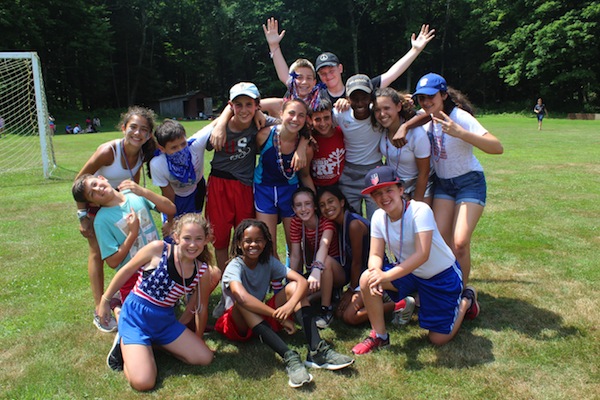
Mairav Robens-Paradise, right, has found her community, and so much more, at Camp Miriam. Her closest, deepest relationships are the friendships she has made through camp. (photo from Camp Miriam)

Last summer was my 11th year at Camp Miriam. Even before my first year, in 2012, I dreamed about sneaking onto the school bus parked in the Jewish Community Centre of Greater Vancouver parking lot as we dropped off my older brothers to go to what I understood to be the most magical place on earth. Over a decade later, I can confidently say that description is an understatement.

I grew up attending public school, where my siblings and I made up the majority of the Jewish population. I don’t recall my immense excitement to go to camp being consciously related to my Judaism, but unbeknownst to 8-year-old me, it would forever alter my connection to my sense of self and my community. Camp Miriam fostered the environment that allowed me to grow into my Jewish identity. At camp, you are surrounded with people who all relate to their Judaism in different ways, both culturally and religiously, and are given the tools and safety to form that unique, personal relationship.

I am currently in my second year of university at McGill, in Montreal, living with two friends from camp. It has been incredibly important to me to have a Jewish community nearby, especially over the past several months, and my roommates are just a fraction of the connections Camp Miriam has given me.

The strength of the friendships I have made over my years of involvement with the camp overpowers any other facet of my life. The values we learn, the skills we practise and the tools we gain at camp equip us to manage complex interpersonal relationships, resolve conflicts and gain independence. Whether it’s learning how to tie knots for camping, defusing relational tensions or discussing social justice, chanichimot (campers) and madrichimot (counselors) alike do so in a secure and empowering environment. Now, as a student who lives away from home, Camp Miriam and its extensive community keep me tethered and grounded to my Judaism and my personal values.

Camp Miriam’s unique structure as a youth-led camp provides empowerment to its entire community. Over the last two years working as a madricha (counselor), I have been trusted with a multitude of responsibilities. Last summer, I had a tafkid (role) that consisted of organizing the programming that occurs during Shabbat. Some of our traditions every Friday include everyone dressing in their nicest clothes and competing for the cleanest cabin award. These small but significant means of welcoming in Shabbat in fun ways foster an exploratory environment for kids to form their connections to Judaism at their own pace.

As a kid, my favourite part of Shabbat was rikud (dance), when all of camp gathers for Israeli dancing. Now, as a madricha, my favourite part is Havdalah, which is a ceremony held every Saturday night to signify the end of Shabbat. Last summer, we introduced live music to our Havdalah tradition, which we listen to while everyone is gathered in a circle watching the ceremonial candle burn. These shared moments all contribute to creating an incredibly strong community of Jewish youth.

As I’m writing this article, I’m sitting in the living room of a member of my national kvutzah (age group/cohort), surrounded by the company of 18 other Jewish members of Habonim Dror North America, the larger movement that Camp Miriam is a part of. This experience really encapsulates what Camp Miriam has given me as a Jew. The closest, deepest relationships I have are the friendships I have made through camp. It’s just not about making friends, learning and forming your identity, but also about finding your community. As I look around, I come to realize – I owe a lot to Camp Miriam. 

Mairav Robens-Paradise is a second-year student at McGill University in Montreal. Last summer was her 11th year at Camp Miriam.