Win for inclusion

The Ramah Camping Movement and the Ruderman Family Foundation have announced the winners of TIPTOE (The Inclusion Project: Through Our Eyes), an inclusion-themed video contest for participants from Jewish camps. The goal of TIPTOE is to increase awareness of the inclusion work happening at Jewish camps across North America. The Ruderman Family Foundation has awarded cash prizes to the top three winners and is making donations to the inclusion program at the winners’ camps.

Campers and college-aged staff members who participated in a North American Jewish summer camp program in 2014 submitted videos that showed their view of inclusion of children with disabilities at their Jewish camp. Representatives from the Ruderman Family Foundation and the Foundation for Jewish Camp selected the winners based on three criteria: demonstrating inclusion, creativity and visual appeal.

The top three winners are:

  • First place ($1,000): Simone Rotman, Oakland, Calif. A $1,750 donation is being made to Ramah California.
  • Second place ($500): Jenna Freeman, Los Angeles, Calif. A $1,000 donation is being made to Ramah California.
  • Third place ($250): David Sharif, Los Angeles, Calif. A $500 donation is being made to Camp JRF.

“This contest proves that the people who really get the importance of inclusion are the ones who experience it firsthand,” said Jay Ruderman, president of the Ruderman Family Foundation. “The wonderful videos submitted by Jewish campers across the country show that the inclusion of children with disabilities makes the camping experience a better one for all campers.”

According to Rabbi Mitchell Cohen, national Ramah director, “We received many inspirational and creative videos that clearly demonstrate the importance of inclusion at Jewish camps across North America. As we share these videos with the larger Jewish community, we hope that they will promote further discussion, raise awareness, and encourage all of our camps to become more inclusive.”

The top 10 videos can be viewed on the contest website or by searching social media for #TIPTOE2014.

Ramah is the camping arm of Conservative Judaism. The Ramah Camping Movement is a pioneer in the field of inclusion for Jewish campers with a wide range of disabilities. Tikvah, Breira B’Ramah and Camp Yofi comprise the National Ramah Tikvah Network of programs. For more information, visit campramah.org.

Seven sins of weight loss

Hands up if you like to eat!

Now hands up if the fact that you like to eat has made you want to throw the other half of the apple pie you just ingested across the room because IT WON’T LET YOU LOSE THE WEIGHT YOU ALWAYS WANTED TO LOSE!

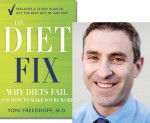
Recently, as part of the Jewish Book Festival at the JCC, Dr. Yoni Freedhoff, known (maybe only by me) as Dr. Diet, presented about his new book The Diet Fix. The book details why more than 90% of diets fail, leaving people with frustration and/or apple pie all over their living room. (For a review of the book, see jewishindependent.ca/jewish-book-fest-in-a-week)

As someone who personally struggled with excess weight for most of his adult life – likely as a result of too much McDonald’s for most of his teenage life – before managing to kick it back to the drive-through a few years ago, I was intrigued to listen to and meet Dr. Diet to see what new concepts he could teach me. I wanted to see what he could tell me that, quite frankly, I hadn’t already learned from my dear friend Google.

While he didn’t get into the meat and potatoes (or cake and cookies) of dieting tricks, strategies and science, he did talk a lot about the psychology of dieting and how our society responds to it. More of a what-NOT-to-do presentation.

The good doctor presented what he called the seven deadly sins of dieting. Essentially, this is a list if misunderstandings or misdirections society has placed on the path to eating healthy and losing weight.

In no particular order (except for the one he presented them in), here they are for your consumption.

1. If you’re not hungry, you’re not losing weight. WRONG!
Starving yourself isn’t the key to weight loss, Freedhoff explained. As a matter of fact, he suggested that waiting until starvation kicks in before feeding yourself will more likely make bad cookies…I mean, choices (darn auto-correct!).

2. You must make sacrifices to lose weight. WRONG!
If you are constantly making sacrifices you aren’t likely to make this work on any long-term basis. It should be a choice of preference, not a sacrifice.

3. You need willpower to succeed. WRONG!
The reality is that we only have a limited supply of willpower. So if we are depending on that for success we are likely to fail at some point. Try having a long, hard, stressful day at work, then coming home looking for willpower in the crunchy, salty snack cupboard.

4. You should accept blind restrictions. DON’T DO IT!
A lot of people follow fad diets. They read that this new Garcinia Cambogiolawala plant can help you lose weight if you eat only that and a pickle for five days straight.

Despite my undying faith in pickles, if you don’t know why or how a diet will work, don’t do it!

5. You need to sweat it out. SO WRONG!
Reality weight loss shows like Biggest Loser preach that if you’re not pushing your self to barf-inducing levels you won’t succeed. On the contrary, Dr. Freedhoff said, if it’s not enjoyable, much like point #2 and #3, it’s not likely to last long.

As a point of perspective, he added that it takes running a full marathon to burn 1 pound of fat. Yet it takes only one hour sitting on your tuchus at the neighborhood pub to put it back on. The line, “You can’t outrun your fork” is one I will use again and again from now on.

6. You need perfection to succeed. WRONG AGAIN!
According to Dr. Freedhoff, people accept doing their best in just about every facet of their life except dieting. When someone is on a diet they believe they must be perfect in order to succeed. Obsession leads to unrealistic expectations. Once again, it won’t last. And you don’t need to call them cheat days. Maybe just try “living life days!”

7. We must calmly remain in denial. DENIED!
We avoid dealing with our true feelings about how we are struggling with our weight or eating habits. If we fool ourselves about what we really want to do or can do we are just denying ourselves the chance to find confidence in our abilities to succeed. The consequences of struggling are guilt, shame and despair. Which often leads to? Binging!

Bottom line: It seams that what the Diet Doctor is saying is that it’s more important to tackle our weight issues with our heads than it is with a program or a set of diet rules.

Set clear goals that you know you can work with long term and take them on one step at a time. Otherwise, well, we’ll see you again at the next diet meeting!

עמר ארבל – היוצאות דופן והחדשניות

עמר ארבל (צלם: Gwenael Lewis)

עמר ארבל שנולד בירושלים שנחשב לאחד האדריכלים והמעצבים הבולטים כיום בקנדה

עמר (בלי וו) ארבל בן ה-37 נחשב כיום לאחד האדריכלים והמעצבים הבולטים ביותר בקנדה, ובזכות עבודותיו היוצאות דופן והחדשניות הוא רכש לעצמו גם שם עולמי. ארבל זכה ביותר מ-30 פרסים חשובים וזה הרבה בהתחשב בגילו הצעיר. עבודתיו מוצגות במוסדות האמנות החשובים ביותר בעולם בהם בניו יורק, לונדון ומילאנו. ויש לו לקוחות בכל קצוות העולם כולל מהמזרח הרחוק.

בעצם ארבל במשולב מעצב תעשייתי, מעצב תאורה ואדריכל בתים. ולמרבית ההפתעה הוא פועל בוונקובר, שנחשבת לעיר שרחוקה מעיצוב, קריאטיביות ואמנות. “ממש מדבר תרבותי כאן ואתה בוודאי נחשב לחלוץ”, אני אומר, בראשית הפגישה עימו בסטודיו הגדול שלו, שממוקם בקומה שישית במבנה תעשייתי צבוע לבן, ומלא חללים משונים שלא נגמרים. ארבל: “אכן זה מדבר ולאף אחד כאן לא אכפת מאמנות ועיצוב. למרות הכל זו עיר יפה ורגועה ומשפחתי כאן ולכן זה ביתי”.

ארבל עבר עם הוריו ואחותו מירושלים לוונקובר בגיל 13. המשפחה חילונית ולהורים נמאס מתהליך ההתחרדות והחיים במתח בישראל. הוא מסביר כי דווקא בוונקובר יכל היה ליצור דברים חדשים למרות שאין כאן קהילת יוצרים, ואין לקוחות שעבודותיו יעניינו אותם. “לא היה ממי ללמוד כאן, לא ללכת עם זרם מסויים או להתנגד לו. התחלתי מאפס וזה אילץ אותי לחפש חדשנות תוך ביצוע מחקר מקיף ללא השפעה מהסביבה. העסק שהקמנו כאן הוא הקהילה היוצרת שלנו ואחד מפרה את השני”.

לאחר שסיים אדריכלות באוניברסיטת ווטרלו ורכש ניסיון מעשי בברצלונה, חזר לוונקובר ועבד כשכיר בשני משרדי ארדריכלים, ב-2005 פתח בקריירה עצמאית. אחד מסיפורי ההצלחה הראשונים שלו הוא כיסא מיוחד שעיצב. ארבל טוען שהפרוייקט נכשל אך תלוי מי שואלים. הוא יצר רק 20 כיסאות כי נגמר לו הכסף והם נחטפו על ידי אספנים שונים. שני כיסאות מוצגים קבוע במוזיאון אטצ’נום בשיקגו ובגלריה לאמנות של ונקובר. ארבל: “עוד כשכיר בשעות הפנאי התחלתי להשתעשע בניסיונות בחומרים שונים בהם ניפוח זכוכית”. הוא מראה לי יצירות שנולדו מהנסיונות שלו, מחזיק בגופי תאורה משונים ויפים ומלטף אותם כמו ילד שעבר ממשחקי לוגו, למשחקי יצירה ועיצוב, תוך שהוא מקבל השראה מהחומרים עימם הוא עובד. כך החל המסע הארוך והמעניין שלו לעיצוב גופי תאורה חדשניים. ב-2005 נולדה החברה לעיצוב ‘בוצ’י’ בה הוא שותף עם היזם רנדי בישוף’, שאחראי על הצד הפיננסי, שהביאה לעיצובי התאורה, הרהיטים ומוצרים נוספים של ארבל – הכרה בינלאומית והצלחה מסחרית. “אצלנו התהליך מתחיל מהאיכויות הפנימות של החומרים ולא מהרעיון. קודם כל אנו מבצעים ניסיונות כימיים ומכניים במוצרים שכמחציתם אגב נכשלים. ולאחר מכן מגיע שלב העיצוב והפיסול, ובסוף היישום הטכנולוגי. כך שאנו שולטים בכל התהליך מתחילתו ועד סופו. כמעט את כל המכונות הייצור בנינו בעצמנו. וזאת בניגוד למעצבים אחרים שמשאירים את היצור לגופים אחרים”. בוצ’י שמוצריה נחשבים לאיכותיים ויקרים נמכרים בכל העולם. בחברה מועסקים כ-40 עובדים ויש לה סניפים בלונדון וברלין.

ארבל שהושפע מאוד מהבאוהאוס הגרמני יודע שבתל אביב יש הרבה בתים בסגנון זה. במקביל לעבודתו בבוצ’י הוא מעצב בתים, ולדבריו שני התחומים דווקא משתלבים זה בזה ותורמים זה לזה. הפרסים לא מעניינים אותו ולעומתם חשובים לו ההישגים. בהם: מייצג תאורה מרשים בגובה 30 מטר, שכולל סבך של עשרות חוטים ומנורות צבעוניות, שהוצב באולם הכניסה למוזיאון וקיטוריה ואלברט בלונדון. מייצג תאורה שנראה חללי ומורכב מסט מנורות בשלל צבעים וגדלים שמוקם בכניסה למרכז לעיצוב לומינייאר בשיקגו (ארבל נתבקש גם לקיים הרצאה בשיקגו). ובית יחודי בצורת משולש שבנוי על 100 קורות ענקיות מעץ, שעיצב לא הרחק מכאן – בעיר סרי, וזיכה אותו ‘בפרס רון תום להישגי תכנון מוקדמים’. ארבל עיצב גם את המדליות לאולימפיאדת החורף ונקובר 2010.

לסיום אני שואל מתי ביקר בישראל והאם ירצה לעבוד בה?. ארבל: “לפני כשש שנים ביקרתי בארץ. ישראל מאוד מעניינית מבחינת עיצוב, אדריכלות וקריאטיביות. ובצלאל נחשב למוסד ברמה גבוהה מאוד. אולי יום אחד אעצב בארץ בית בגלל הרגשה סנטימנטלית שלי ולא דווקא מהבחינה מקצועית”.

Campaign nears $8m

Harvey Dales, 2014 Federation annual campaign general chair, speaks at a Jewish Federation of Greater Vancouver donor event. (photo from  Jewish Federation of Greater Vancouver)

As he tallied up the fundraising dollars earlier this month for this year’s Federation annual campaign, Harvey Dales noted with satisfaction that almost $7 million had been pledged in Vancouver since the campaign began in September. With a month to go until it wraps up in January, he’s aspiring to reach the $8 million mark.

“Our campaign had been relatively stagnant for the past few years, with only slight increases,” he reflected. “This year, which is my last year as campaign chair, I felt it was important to reach the $8 million mark because there are just so many needs.”

Dales and his team established a matching fund, where six donors promised a total of $125,000 in matching funds; that meant every unrestricted dollar of increase to the campaign made by any other donor would be matched. Another matching campaign was established with a focus on 20-to-35-year-olds, this one a two-for-one match.

The two matching funds have been so successful that Federation found itself on the verge of running out of matching funds a few weeks ago. “We went out and raised further funds, another $30,000, to top up the fund and ensure we could continue with the matching,” Dales said. “We’re still seeking additional funds for the match fund, and I’m very confident it will bring us to our $8 million goal.”

For the first time in many years, each one of Federation’s divisions has seen an increase in the dollars pledged compared with gifts from the same donors last year. That includes major donors, men’s philanthropy, women’s philanthropy, community and young adults. “The gifts that have come in have been incredible,” he told the Independent. “One individual who hadn’t made a gift before pledged $750. Another newly wedded couple explained they’d really stretched their budget by giving us $360 last year, but this year they were giving us $540 because of the matching funds.”

“I believe it’s so important for the community to know how vital Federation is,” he continued. “It’s our social needs network for the community, whether it’s funding for social services, education, youth, outreach or seniors. Both here, overseas and in Israel, there are so many recipient agencies that rely on Federation for the bulk of their funding to provide desperately needed services.”

Vancouver’s community is extraordinary for how many individuals commit to volunteering and canvassing for the annual campaign, he added. “In campaigns in other cities, the canvassing is done by professionals, but here in Vancouver our community is just so involved.”

To contribute to this year’s campaign, visit jewishvancouver.com.

Lauren Kramer, an award-winning writer and editor, lives in Richmond, B.C. To read her work online, visit laurenkramer.net.

Portraying the mess of life

Claire Hesselgrave as D in Wide Awake Hearts. (photo by Eric Chad)

“I want love. I want only love,” confesses C, a playboy, amid a lengthy list of his shortcomings. A rare, vulnerable moment of honesty? Or is he merely reciting his lines in a movie scene?

Such is the nature of Wide Awake Hearts by Brendan Gall, now playing at Little Mountain Gallery. One is never certain of what is real, or personal, and what is being acted for public consumption.

Of course, being a play, everything is scripted and for entertainment, however, within Wide Awake Hearts are four characters whose professional and personal lives overlap to an indistinguishable degree. Apparently named according to when they first speak/appear, A (Sean Harris Oliver) is married to B (Genevieve Fleming) and he hires his best friend C (Robert Salvador) to perform opposite her in a new movie that he has written and is producing. By the time D (Claire Hesselgrave) arrives on the scene to replace a recently fired editor, the tensions are high, and the line between what is part of the film and what is “actually” happening between the characters is well and truly blurred.

Despite being an editor, part of whose job, as D states, is to make sense out of the senseless, D’s presence only adds to reality’s murkiness. First of all, editors can only work with what they are given, what’s been shot; they can’t create anything, she explains, they can only interpret. And she’s not an objective outsider, which makes her job that much more difficult. D has been in a long-running on-and-off-again relationship with C. Meanwhile, C is in love with B, and A is jealous of what he believes is happening between C and B. As D laments, “Sometimes, the mess wins.”

That mess is life, not Wide Awake Hearts, which is a sharply written, insightful play. Tempers and desires run hot and C’s confession is one of the few quiet, calm moments that, along with the occasional biting (funny) comment, break the tension. Each character has a monologue that also serves to narrow the focus, slowing the pace before it once again ramps up.

All four actors do an excellent job of working in the intimate space of Little Mountain Gallery, sometimes a foot or two away from the audience as they perform, for example, a raucous sex scene. Director Brian Cochrane and stage manager Breanne Jackson deserve kudos for that, too, as does Sabrina Evertt for her set and props, as well as for her costumes; sound designer Jay Clift’s work is only noticeable when it should be. For the most part, everything comes together such that being in the audience is like being a voyeur, part of the action yet removed from it.

The production team being so small, it would a shame not to mention Eric Chad (projection designer), whose talents could have been exploited more; assistant director Jamie King; and publicity and front of house, Angie Descalzi. This combined Hardline Productions and Twenty Something Theatre effort, in which everyone involved seems to be doing double or even triple duty, delivers as much or more than many larger, more flush productions.

Wide Awake Hearts is at Little Mountain Gallery, 195 East 26th Ave., until Dec. 20, Tues-Sat, 8 p.m. Tickets are $22 plus service charge from brownpapertickets.com, with $15 matinées Dec. 13, 14 and 20, 2 p.m. For more information about the production companies, visit hardlineproductions.ca and twentysomethingtheatre.com.

Laughter guaranteed

Left to right, Josh Drebit, Donna Soares, Allan Zinyk and James Long in Cinderella: An East Van Panto. (photo by Emily Cooper)

If Canada wants to be an energy super power, it’s going to have to run some pipelines through some plays. Well, some pantos. Starting with Cinderella: An East Van Panto, now on at the York Theatre until Dec. 28.

As with the inaugural East Van Panto last year, which took Jack & the Beanstalk to strange and hilarious new heights, this Cinderella is only loosely based on the fairy tale. In this version, Ella – Cinderella is only a mean nickname given to her by her wicked step-hipsters (not a typo) – loses her mother in a tragic food truck accident. Her father directs his grief to improving safety standards and is awarded for his efforts with the Mike Duffy Food Truck Safety Award, or something along those lines. He falls in love with the Government of Canada representative who presents him the medal. Marriage soon follows, the father is offered a senatorship, which takes him to Ottawa, leaving his beloved Ella – played wonderfully as the straight man to everyone else’s wackiness by Donna Soares – in the hands of her stepmother.

In true panto fashion, Ella’s new family is played by Allan Zinyk as the matriarch and Josh Drebit and James Long as her sisters. As they order Cinderella about, the audience gets to boo every meanness, and cheer Cinderella’s every win. While Jewish community member Drebit ably pulls off the fishnets, his comedic talents really shine as Feral Cat. Drebit, Long (as Rat) and Dawn Petten (as Old Crow) are about as far away from Disney cartoon birds and other forest animals as one can get, but “the other vermin,” three young actors as mice, are absolutely adorable – and, in a panto, the audience is allowed to “ooh and ahh” at their cuteness.

Zinyk also plays bad guy Ronald Grump, costumed in a business suit and an awful wig that’s only marginally worse than that worn by the character’s inspiration, Donald Trump. King Grump decides to hold a ball (there are lots of ball jokes, FYI) to celebrate the opening of Grump Towers (plural, even though there’s only one). At the ball, there will be a beauty pageant – a speed-dating marathon, actually – to find a wife for his son, played by Petten channeling Justin Bieber. (Petten also plays the hippy narrator/canvasser, Len Til, to perfection.)

And this brings us back to pipelines, and the spills that the suit-wearing, hard-hatted forewoman notes “only happen in movies and on the news.” As the chorus (pipe)line is passing through Cinderella’s family home, sadly, there is a spill – a spill that Cinderella must clean up before she can go to the ball. With the help of her vermin friends and, in one of the funniest scenarios to be conceived, a vacuum-harmonica-playing David Suzuki (played by Zinyk, you have to see it to believe it) and her B.C. Ferry Godmother, the belle gets to the ball.

But does she marry her prince? You’ll have to go to the panto for the answer – and for all the witty, weird, Vancouver-specific humor, the inventive costumes (Cinderella’s gown appears like magic), the charming music, the fitting choreography, the inspired sets and props, the bold and beautiful backdrops.

With Cinderella, the creative team of playwright Charles Demers, musician Veda Hille and director Amiel Gladstone have improved on what was already an intelligent, silly, energetic, crowd-pleasing formula. The lead actors in this year’s production are joined by the very talented chorus of Bailey Soleil Creed, Sean Sonier (who rocks a tutu) and Alexandra Wever, as well as the children who share the roles of the mice.

If you’re wondering what to give that person on your Chanukah list who has everything, at least 99 percent of non-Grumps would enjoy this show. For times and tickets, visit thecultch.com or call 604-251-1363.

Estrin captures essentials

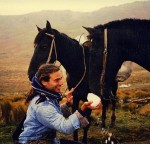
Avie Estrin in Colombia. (photo from Avie Estrin)

On Dec. 4, Avie Estrin’s solo show Blessed People opened at the Sidney and Gertrude Zack Gallery. Many of Estrin’s photos are taken in far-away places. There are Tibetan lamas gardening and a Yemenite bride in her fantastic headgear. An old man in a turban looks as if his perceptive eyes can see straight into your heart. A group of yeshivah students dance in the street. A young girl peeks out from behind a large heavy door. The door is ajar, and only fragments of the girl’s face are visible, but there is joy in her curious eyes. She has escaped her handlers, if only for awhile, and relishes her fleeting moments of freedom. Each picture tells a story.

In an interview with the Independent, Estrin talked about his life with photography, its challenges and rewards.

JI: What prompted you to mount an exhibit of travel photos? Do you shoot photos locally?

AE: Interesting question. I never understood this exhibit as a travel theme per se. While there are images from everywhere, a good number are taken right here, in Vancouver and the Lower Mainland. On the other hand, if “travel” is what others see, I’m OK with that. I can’t dictate what the show is about, since in the end it’s about what you see, not what I think I saw. I would only say that for me, it’s about real people, it’s about real life. It’s about all of us.

JI: Tell me about this show.

AE: The photos span from the early ’90s to as recently as six months ago. Photos were taken with an array of different cameras, from an old-fashioned SLR to early digitals, but nothing more modern than 2004. While I was always very particular about quality, my equipment is modest and minimal.

Photos range from hiking the Himalayas to horse trekking the Andes and Amazon basin, to more domestic venues right here in Vancouver. I could go on about harrowing experiences forging flooded rivers on horseback in Ecuador or negotiating at gunpoint with Colombian guerilla in the outback. While it makes for great storytelling, the real point is that, by and large, my experiences were joy-filled encounters with gracious peoples from across cultures, people who embraced me, brought me into their homes and shared with me the little they had. I hope the exhibit illuminates this sentiment in some small way.

JI: What do you look for in a frame?

AE: Whatever the subject, I am looking for what is essential to it. I don’t for a moment deceive myself that whatever I am experiencing in a given moment can be accurately represented or reproduced in a static concrete format … with any degree of authenticity. But if I can capture just a fragment of whatever the catalyst in that ephemeral moment, that indefinable but quintessential essence of a thing, then maybe I have done it some justice.

JI: Is there a connection between photography and your profession?

AE: It’s been said before, “all things are connected.” When we attempt to compartmentalize our lives, we are merely hanging veils between our bedrooms. The common thread is not so much what we do but how we do it.

JI: You write poetry, too. Are your poems and your photos linked?

AE: To answer this question I would simply recommend going to the exhibit, seeing the work, reading the poems, and then you decide.

JI: Do you ever use Photoshop?

AE: Photoshop? What’s that? Seriously, without getting too technical or mundane, there is no such thing as “untouched” digital photography. The moment you take a jpeg image with your point and shoot, your camera’s firmware is instantly doing a circus act to compress that eight mega-pixel shot you took down to a one or three megabyte image. Aside from losing at least 60 percent of the original image data, you are also letting your camera indiscriminately dictate what 60 percent to throw away. Even in raw format, there is no getting away from post-processing. For better or worse, the days of “untouched” photography are gone forever.

JI: Do you give copies of your photos to your subjects and, if so, do you offer them free of charge?

AE: Various images in Blessed People were taken in the pre-digital era, so showing people immediate results was in many cases not an option. I had a strict practice of sending people hard copies of their images, but often practicalities. such as remoteness, non-existent postal services, etc., didn’t allow for this either. As to charging people for the privilege of capturing their image … isn’t there something in halachah against that? There should be.

JI: What are the biggest challenges and rewards of your work?

AE: I have no idea what a real travel photographer does. For me though, doing is reward in and of itself. Doing without intentionality isn’t “doing” at all. It’s merely a happening. And intentionality implies challenge; otherwise, it would be a redundant endeavor. I love challenge. I love to do.

Olga Livshin is a Vancouver freelance writer. She can be reached at olgagodim@gmail.com.

Out-of-bounds tactic stinks

Anti-Israel groups have used dubious tactics over the years, but they stooped to unprecedented depravity recently when someone Photoshopped a photo of emaciated Holocaust survivors.

A Facebook page with 91,000 followers (at press time) posted a picture of survivors, presumably taken at the time of a camp liberation, manipulated to appear to be holding signs with terms like “Stop the Holocaust in Gaza,” “Israel Assassins” and “Stop US aid to Israel.” At the bottom, a caption reads, “Whatever happened to ‘Never again?’” The image received hundreds of likes and many shares, including from organizations that have until now posed as legitimate voices for Palestinians.

The picture is instantly offensive for obvious reasons. But it is additionally repugnant on a number of grounds, beyond the explicit desecration of historical memory.

Anyone who can equate the Israeli-Arab conflict with the Holocaust – and, further, depict the Jews of Israel as the instigators and perpetrators – holds a view of contemporary and historical events so removed from fact that their opinions should be discarded from the discourse. The problem is, they’re not.

In fact, the meme of Israel perpetrating a holocaust against Palestinians is rampant. On social media, in the comments sections of mainstream media, in conversations with moderately informed neighbors and friends, the concept is almost inevitable.

You may have heard of Godwin’s Law, the theory that, the longer a political discussion (on any topic) continues, the greater the likelihood someone will compare someone or something to Hitler or Nazis. A parallel – call it Godwin’s Corollary – could almost be written in stone: Whenever two or more people engage in discussion of Israel’s actions, someone will inevitably accuse the Jewish state of having learned from the masters, or of doing unto others what was done unto them in Europe.

The concept is appalling and, yet, it seems to be irresistible. It has been said that Jews are like everyone else only more so. Throughout the history of Jews as scapegoats, others (as well as some Jews in the past and today) project onto the Jewish people the sins of humanity and then proceed toward the inevitable end that scapegoating demands. How perfect for our cynical time that we should have a modern fable that so succinctly and conveniently proves our assumption that even the victims of the most venal atrocities can – and would – in a generation or two turn around and perpetrate the same on others.

This ahistoric fable implies that, because Jews are Nazis, they deserved the Holocaust and whatever other retribution is seen fit to dispense. And, if Israel is the “reward” for the Holocaust, then it can be taken away as appropriate punishment, as well. That the “facts” do not in any way approach reality is irrelevant. It is a fable intended to teach a moral lesson, and truthiness is beside the point.

There is another fault almost as grievous. Anti-Israel groups often employ the Jewish historical experience against the Jewish state – routinely employing Holocaust and Nazi imagery, along with other culturally appropriated concepts like apartheid. To a fair observer, these thefts of the experiences of others would be an admission that the bare facts of the Palestinian experience are not enough to convince and so they must be dressed up in masquerades of the historical traumas of others. But fair observers are not driving this discussion. The more ghastly the accusations that can be thrown at Israel, the more voraciously they are adopted by the haters.

At the very same time, these voices do everything in their power to negate the Jewish historical experience as a justification for Jewish self-determination and Zionism. Any reference to the Holocaust that might aid Israel’s case is hollered down as exploitative, as bringing a knife to a fist fight, as too weighty an historical weapon to introduce to the contemporary context. The Holocaust, in today’s environment, can be used against the Jewish people, but to raise it in a way that could justify Jewish strength or self-defence is ruled out of bounds.