
Skip to content
  • Home
  • Subscribe / donate
  • Events calendar
  • Business Directory
  • FAQ
  • News
    • Local
    • National
    • Israel
    • World
    • עניין בחדשות
      A roundup of news in Canada and further afield, in Hebrew.
  • Opinion
    • From the JI
    • Op-Ed
  • Arts & Culture
    • Performing Arts
    • Music
    • Books
    • Visual Arts
    • TV & Film
  • Life
    • Celebrating the Holidays
    • Travel
    • The Daily Snooze
      Cartoons by Jacob Samuel
    • Mystery Photo
      Help the JI and JMABC fill in the gaps in our archives.
  • Community Links
    • Organizations, Etc.
    • Other News Sources & Blogs
  • JI Chai Celebration
  • JI@88! video

Recent Posts

  • SFU honours Gloria Gutman
  • Lifting people’s spirits
  • Wedding a ray of light
  • Indigeneity and Zionism
  • Rule of law broken: councilor
  • Football and its roles
  • The burden of defence
  • Fish Café returns after fire
  • All right in what goes wrong
  • Nuns & mermaids at TUTS
  • Camp offers holiday retreat
  • Students and mentors inspire
  • Once-in-a-lifetime trip
  • 100 dancers, one heart
  • Money for the sciences
  • What “Jewish food” means
  • Have a cookie, schnitzel too
  • Federation now across BC
  • Israel fighting for its existence
  • Deal strengthens Iran
  • Patriotic belonging diminishes
  • A campaign to engage
  • Upstanders’ first live event
  • Responding to Carney
  • Having your own home
  • Music a family tradition
  • Musical to warm heart
  • Community milestones … June 2026
  • Sharing her passion for Israel
  • Or Shalom reopens its doors
  • JFS from past to future
  • Need holistic approach
  • Sharing stories, advice
  • Journalist shares fears
  • Skills to live together
  • Road to independence

Archives

Follow @JewishIndie
image - CJN box ad Rockowers 2026

Tag: Rothstein Theatre

Idan Sharabi has been dancing all his life

Idan Sharabi has been dancing all his life

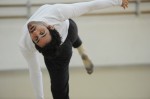
Idan Sharabi will be joined by three other dancers when he comes to Vancouver for Chutzpah! (photo by Tami Weiss)

From running around barefoot as a child to dancing for audiences around the world, Idan Sharabi has never stopped moving. “Dancing is the only action I have been doing all my life,” he told the Independent – and we in Vancouver can see him in action at Chutzpah! early next month.

The festival runs Feb. 22 to March 9, and Idan Sharabi & Dancers opens for eight-member Italian contemporary dance company ImPerfect Dancers in performances on March 6, 8 and 9. While based in Tel Aviv-Yaffo, Idan Sharabi & Dancers are an international group: accompanying Sharabi to Vancouver are Ema Yuasa (Japanese), Rachel Patrice Fallon (American) and Dor Mamalia (Israeli). Sharabi himself has studied in Tel Aviv (Thelma Yellin High School of the Arts) and New York (Juilliard School), performed with Nederlands Dans Theatre (NDT) in The Hague and Batsheva Dance Company in Israel, and had his work shown in – among other places – Israel, Switzerland, the United States, Japan, Italy and Canada (Montreal and Toronto).

“I have loved every person I have met from Canada. I have had a great connection with them immediately. There is something I like about Canadians!”

The Chutzpah! show will bring Sharabi to Vancouver for the first time. “I have been many times to Montreal but never anywhere else in Canada,” he said. However, “I have loved every person I have met from Canada. I have had a great connection with them immediately. There is something I like about Canadians!”

Idan Sharabi & Dancers will be coming to Vancouver from a residency in Holland. “Right after, we go to Rome to perform in the Food for Thoughts event [hosted] by the European Dance Alliance of Valentina Marini and, after, to teach repertoire workshops and master classes at the Contemporary Dance School Hamburg, in Germany,” said Sharabi, who has known and collaborated with each Mamalia, Yuasa and Patrice Fallon for some years now.

“Dor and I have worked together for the past 2.5 years,” Sharabi told the Independent. “We met back when I created for him and others in The Project of the Israeli Opera House, in 2011. Since then, we’ve been good friends and inspiring each other to create.

“Ema had danced with me in NDT and we created a lot together there: both Adar and K’zat (two pieces of our repertoire were made back then with her). She joined the group in 2010, when we had just started in Israel with our first show, when we weren’t yet settled at all. It was the show Home, which I had created for five dancers and, only two years later, I was able to start Idan Sharabi & Dancers as a traveling and performing group. It took those years, but Ema stuck with me through it, even though she lived in Holland – it was done by e-mails, phone, Skype. We made it happen, and she joined us again, since August 2013, in the Copenhagen Summer Dance Festival of the Danish Dance Theatre, who invited us to perform Adar there.”

Last but not least, Patrice Fallon and Sharabi met each other in 2011 at the Springboard Danse Montreal program. He has worked with her since then. “I was invited by Yuri Zhukov recently to create for his company ZDT [Zhukov Dance Theatre] in San Francisco, Calif., and I insisted on him auditioning her for the company,” explained Sharabi. “She got it and came to do my project there – we created together Spider on a Mirror. Everyone was happy with the decision to bring her, as she is definitely a great and very physical, groovy dancer with an open mind and heart, and then I realized she should definitely join us every time, whenever it’s possible.” The Chutzpah! show will be the first time that Patrice Fallon joins the full group of Idan Sharabi & Dancers in performance – she will also be with them during their residency in Holland prior to their coming here.

Born in Rishon Le Zion, Sharabi moved with his family to Mazkeret Batya when he was four years old. “It was like a tiny town,” he said of where he grew up. “Back then, everybody used to know each other and you got really close to your neighbors. The whole town was like a big neighborhood. Now, there is a road to it but when I was a child, there was no road yet for cars to drive on, and we used to run there barefoot, there was just sand. Actually, I don’t remember many cars … inside the village. We could basically use the ‘road’ (the sand) to lie down on, we would play there.”

Sharabi said he grew up in a traditional Jewish home. The youngest of three children, he went to synagogue with his father and brother every Friday night, and there was always Shabbat dinner, at least until he was in his mid-teens. “No one from my family works formally in the arts,” he said, “but they are all very creative, and especially my mother, who writes stories and poetry – but never to be published.”

Asked when he first discovered dance, Sharabi shared, “I always remember dancing and moving around as a kid. In general, as a kid, I was weird, according to the stories and my overall feeling. My mom says I was telling her things like there is movement inside plants, that the flower I was holding in my hand is not only what we see. She also says my father tells her that he can never understand me and he thinks my mom and I understand each other because we are both ‘crazy.’

“So, movement, and even exploration, was always there. I first started dancing in a class when I was about 12 years old.”

Sharabi also shared the recollection of a vacation at a hotel where his family stayed every summer. He participated every night in a dance activity for kids. “I think it was called Disco-Kid or something,” he said. “Apparently, according to the stories, I stayed there every day after the other kids left and kept moving around with one of the entertainment team of the hotel, and made myself – and her – memorize movements. By the end of the week, I had a little dance I had choreographed for us! Then, she brought my parents to watch me when I was dancing.”

“I don’t know how to describe how dancing makes me feel, but I can say for sure that dancing is the only action I have been doing all my life.”

A year later, he said, he was studying dance. “I don’t know how to describe how dancing makes me feel, but I can say for sure that dancing is the only action I have been doing all my life.”

One of Sharabi’s recent creations – with two other members of the group – is Nishbar, which means both broken and breaking, and the work has “a lot to do with feeling broken … breaking down or breaking up,” explained Sharabi. He said, “Everything we create in the group is personal on a certain level and people are touched in the creation process. I feel the moment when there is no inspiration for myself or the dancer, it stops there.”

“I realized how we always have our first stage in the process, which is playing a lot of games in the studio, getting to know the dancers, their personalities, their insecurities, the natural movement approach, their ideas of things, their creativity or the lack of it. Mainly, you see the reasons for one to dance almost right there on the spot.”

Sharabi and Mamalia recently were inspired to choreograph a work for Israel Ballet, at the ballet company’s invitation to Sharabi. “It was a very interesting process,” he said. “I realized how we always have our first stage in the process, which is playing a lot of games in the studio, getting to know the dancers, their personalities, their insecurities, the natural movement approach, their ideas of things, their creativity or the lack of it. Mainly, you see the reasons for one to dance almost right there on the spot…. This is something I always start with these days. In my group, I can sometimes just start with a lot of improvising with the dancers, or just watching them improvise and [encouraging] them towards different directions, giving them more and more tools to develop, things that I think of at the moment, leaving the freedom for them to develop other things…. I love this kind of process because I always learn so much from it.”

At the Chutzpah! Festival, Idan Sharabi & Dancers will be presenting a première formed from a couple of different parts of their repertoire. Called Makom, Sharabi explained, “Dor is a dear friend and so I talk to him a lot. I realized at a certain point that I simply love talking to him, I love how witty, funny, easygoing and open and sensitive he can be. I decided to start recording our talks. It became small interviews I would make with him before rehearsing. I asked him stuff in English instead of Hebrew because I started thinking [I would like] to use the material. He didn’t think we would do such a thing and it definitely surprised him to hear himself on the soundtrack. Then we went through a whole process of discovering his voice and the sound it creates in space and time. The textures of his voice and the meanings of what he had said were almost always connected.”

About the future, Sharabi said, “We might travel to Malta this summer. I go a lot to Europe to teach and create for companies as a freelance choreographer and this has created interest recently from a lot of companies to join my company with theirs, and so we do a lot of collaborations.

“We are booked to perform Nishbar and more works from our repertoire in Jerusalem, in Beit Mazye Theatre, in May. After, [we’ll be] in Herzliya with another show with the orchestra there. Poliphony invited my group for this collaboration. Artistic director and conductor Gil Shohat had met me recently and expressed his interest in my work to live music. I loved the idea and we are going to work on that as soon as we step in Israel again.”

ImPerfect Dancers and Idan Sharabi & Dancers are at the Rothstein Theatre on March 6, 8 p.m.; March 8, 2 p.m. and 8 p.m. (evening includes a talkback); and March 9, 4 p.m. Note: There is partial nudity. Tickets ($20-$28, plus taxes and service charge) are available at chutzpahfestival.com, as is the full festival schedule.

Format ImagePosted on February 21, 2014April 16, 2014Author Cynthia RamsayCategories Performing ArtsTags Chutzpah! Festival, Dor Mamalia, Ema Yuasa, Gil Shohat, Idan Sharabi, Idan Sharabi & Dancers, ImPerfect Dancers, Makom, Nishbar, Poliphony, Rachel Patrice Fallon, Rothstein Theatre
Children’s Hearing and Speech Centre celebrates 50th

Children’s Hearing and Speech Centre celebrates 50th

The Children’s Hearing and Speech Centre of British Columbia. (photo from childrenshearing.ca)

Imagine not being able to hear. The silence. The isolation. Now imagine the sounds of kids singing, playing, asking questions at story time – even though they are deaf or hard of hearing. These and other happy sounds filled the halls and classrooms of the Children’s Hearing and Speech Centre of British Columbia when the Jewish Independent recently toured the centre, which just celebrated its 50th year.

Founded in 1963 as the Vancouver Oral Centre for Deaf Children by a group of parents with educator Hilda Gregory, CHSC’s mission statement describes the facility as “a family-focused clinical and educational centre that teaches deaf and hard-of-hearing children to listen and talk, giving them the skills and confidence they need to achieve their fullest potential.”

According to the centre’s website, “Gregory was one of a handful of deaf educators who believed that even children with profound hearing losses, wearing hearing aids, had enough residual hearing that they could learn to listen and talk. The model of small classes and individual sessions … is the one we still use today.”

When the centre was started by Gregory, explained Janet Weil, executive director/principal of the CHSC, “There were no services for children under the age of 5. Hilda opened the first preschool for deaf children in Western Canada. What she did wasn’t radical. There were programs throughout the world teaching deaf children how to speak. What she did do was create a place where deaf children, with the very best amplification (hearing aids) available and focused educational strategies, could learn to listen and talk. Parents were key, and so parent education was a requirement. Parents were very involved. They knew [it was] something special, and they did everything they could to support the well-being and sustainability of the centre.

“Things have changed,” she said about developments over the last 50 years. “Children with profound hearing losses weren’t being identified as DHH [deaf or hard of hearing] until they were sometimes 3 or 4 years old; and, with a more moderate loss, until they were in school and it was obvious they were missing things.” Technological changes since the centre was started, however, “include newborn screening, which identifies a hearing loss at birth, [and has been] mandated in B.C. for all newborns as of 2009. There is a small window of learning when the child is very young. Neural plasticity means a child can access auditory information with prescriptive hearing aids and cochlear implants. The first three years are critical to get information to the brain that can be processed with relative ease. It makes all the difference for typical language and speech development – [it] impacts everything, especially reading.”

Weil’s uncle, born in the early part of the 20th century, was deaf. There was “no access to amplification, but my grandmother worked diligently with him to learn to talk,” said Weil. “He went to Stanford, graduated with a degree in English literature and became an editor of college textbooks. [He] never learned to sign, was a lip-reader and talker; very active in the San Francisco Jewish community. My mother was also a teacher of the deaf, so it’s really the family business.”

About how she landed in Vancouver, Weil said, “I was recruited to the centre in 2010. I had been a teacher of the deaf in the SF [San Francisco] Bay area for many years, a consultant to schools for the deaf in the U.S., and was the early childhood education director at the Brotherhood Way JCC in San Francisco for six years.”

The Children’s Hearing and Speech Centre of British Columbia offers programs that are not offered anywhere else in Western Canada, she said. “We see children from birth through Grade 12,” she said about what makes CHSC unique. She explained that its “various programs address individual needs,” and the goal “is to integrate the children into the mainstream of school and society with learning readiness skills and confidence.”

“What we know about the brain and sensory learning underscores our commitment to a team approach that includes occupational therapy; weekly sessions for identified children to address processing, balance, motor skills, learning differences. On-site audiology services make sure children have ongoing access to sound.”

The centre has a “cognitively based curriculum that fosters critical thinking and independence,” she added. As well, it recognizes that many of the deaf or hard-of-hearing children at the centre – more than 40 percent, she said – have additional learning needs. “What we know about the brain and sensory learning underscores our commitment to a team approach that includes occupational therapy; weekly sessions for identified children to address processing, balance, motor skills, learning differences. On-site audiology services make sure children have ongoing access to sound.”

Weil sent the Independent a document she had written about CHSC’s work with sensory integration. About the children who have additional learning needs, she wrote, “In addition to having a hearing loss, they also have vestibular dysfunction. The vestibular system, which sits insides the cochlea or inner ear, can be compromised when there is a hearing loss. The vestibular system influences nearly everything we do. That is why it is often referred to as ‘sensory motor integration.’

“For deaf and hard-of-hearing children, it impacts auditory language processing so that children have difficulty discriminating likenesses and differences in what they hear, as well as an inability to comprehend what is being said in a noisy environment, follow directions and express themselves with ease.

“Occupational therapists work with children to strengthen their vestibular systems, which improves their ability to play and learn,” she wrote.

In addition to occupational therapy, CHSC offers “speech and language therapy, parent education and support, before- and after-school care, music education and summer camp,” according to its website. First Words is CHSC’s program for children from birth to age 3; preschool and “language acceleration programs provide group and one-to-one sessions addressing each child’s specific learning needs. Small, individually focused, on-site classes begin at age 3 and continue, if recommended, through the primary grades.”

To help with children’s transition out of the centre, into public school or post-Grade 12, Weil explained that there are social groups for the kids, there are workshops for the high school to post-secondary jump, and the centre provides itinerant teaching services to children in independent schools. Some graduates participate in fundraising activities, she added.

One of CHSC’s itinerant students is Rina Pinsky, 15, who is in Grade 10 at King David High School. The youngest of four children, Pinksy told the Independent that she was diagnosed when she was 2 years old. “The type of hearing I have is called bilateral profound hearing loss, which means I am completely deaf in both ears,” she said. “On my left ear, I have a cochlear implant and I use an FM system at school, which helps me hear teachers better.”

She started going to the Children’s Hearing and Speech Centre when she was 3 years old, and left after Grade 1. “Since then,” she said, “I’ve had a hearing resource teacher from there. I still go back to the school to visit or volunteer for events.”

“I went to CHSC to learn how to talk, listen, and how to interact with other people. Now, with all of that support, I am doing well in school and I’m able to be independent. I read from the Torah at my bat mitzvah in 2011, I am part of United Synagogue Youth (USY) and I have been to two Jewish summer camps (Camp Solomon Schechter, 2007-2012, and Camp Miriam, 2012-present). All of this would never have happened if it weren’t for the staff at CHSC.”

About how the CHSC has impacted her life, Pinsky said, “I went to CHSC to learn how to talk, listen, and how to interact with other people. Now, with all of that support, I am doing well in school and I’m able to be independent. I read from the Torah at my bat mitzvah in 2011, I am part of United Synagogue Youth (USY) and I have been to two Jewish summer camps (Camp Solomon Schechter, 2007-2012, and Camp Miriam, 2012-present). All of this would never have happened if it weren’t for the staff at CHSC. I see Tricia [Eckels] twice a week at my school. We work on homework, editing papers, talking about my cochlear implant and FM system. Sometimes, we talk about current events.”

When asked to share something about her interests and/or extracurricular activities, Pinsky told the Independent, “I love to cook and bake, which makes me want to go to culinary school after high school. Once a week, I do hip-hop at the Jewish Community Centre [of Greater Vancouver]. Traveling is one of my favorite things to do.”

Pinsky is one of the hundreds of students that CHSC has taught since it opened. Among Weil’s “blue sky” plans for the centre is reaching out to more children, with more training programs for new teachers and satellite programs (classes outside of Metro Vancouver). This would be in conjunction, of course, with maintaining the services currently being offered. The third annual Family Concert, for example, will raise funds to support CHSC’s audiology program. “We do not receive government funding for this critical service,” explained Weil, “so we must fundraise to be able to provide this vital service that ensures our children are always able to hear.”

The family event has grown from one to two performances, both of which this year will feature children’s entertainer Jennifer Gasoi, a two-time Juno nominee whose Throw a Penny in the Wishing Well was nominated for a 2014 Grammy for best children’s album. (For interested readers, the Grammy ceremony takes place this Sunday, Jan. 26, 8 p.m., and will be televised.)

“What an idea,” said Weil about the fundraiser, “having a music concert to support children who are deaf and hard of hearing because they can listen and sing and make music. A great way to highlight what is possible…. A great way to reach out to families in the community for a fun day and to let them know something about what we do.” The event at the JCCGV’s Rothstein Theatre will also feature clowns, games, auction items and face painting.

Weil said the suggestion to invite Gasoi came from committee member Marla Groberman.

“Marla worked with Jennifer’s parents, Dr. Ivan and Laurie Gasoi, and it was agreed upon,” said Weil. Given the local connection and the fact that many of the production committee members are involved in the Jewish community, Weil said that the JCCGV “seemed like the perfect place to have the concert.”

The concerts will take place on April 12, at 10:30 a.m. and 1 p.m. Early-bird tickets (until Feb. 28) are $13.50/$16.50, or $50 for a family of four (two adults and two children under 17). For tickets and information, visit childrenshearing.ca.

Format ImagePosted on January 24, 2014April 27, 2014Author Cynthia RamsayCategories LocalTags Children’s Hearing and Speech Centre of British Columbia, Hilda Gregory, Janet Weil, Jennifer Gasoi, Rothstein Theatre, Vancouver Oral Centre for Deaf Children

Posts pagination

Previous page Page 1 Page 2 Page 3
Proudly powered by WordPress